Tony Blair confirms in his memoirs, A Journey, that Bashar al-Assad was correct to believe that George W Bush’s White House was deadly serious about destroying the Syrian state. Phils Sands of the National writes:
Describing the former US vice president as an advocate of “hard, hard power”, Mr Blair said Damascus was next on Mr Cheney’s hit list.
“He would have worked through the whole lot, Iraq, Syria, Iran, dealing with all their surrogates in the course of it – Hizbollah, Hamas, etc,” Mr Blair wrote in his autobiography, A Journey. “In other words, he thought the whole world had to be made anew, and that after September 11, it had to be done by force and with urgency.”
Syria’s correct assumption that powerful US forces wanted to attack it had profound implications, domestically and in Iraq. Although no friend of Saddam Hussein, Damascus had every reason to want the American occupation to fail and, therefore, no incentive to stop Islamist militants crossing the border to fight US troops. For years, US military officials complained that insurgents entering from Syria were among their most deadly opponents, playing a key role in undermining US attempts to build a Washington friendly Iraq.
Faced with this very real US threat, the Syrian authorities also moved to quash growing domestic dissent, arresting and jailing dozens of pro-democracy activists. That crackdown continues to this day.
We do not know who killed Rafiq Hariri, but President Bush’s intention to overturn the balance of power in the region included convincing Hariri to act as a spearhead in the US led attempt to make the world anew. We can only conclude that US ambitions had a lot to do with Hariri’s murder. The White House wanted to destroy Hizbullah, weaken Iran and Syrian, and eventually overturn their states. This gave all three regional powers a compelling interest in thwarting American plans. The fastest and most sure method of doing this was to eliminate Lebanon’s Prime Minister. After all, was he not the tent-post holding up the modern Lebanese state? Rafiq al-Hariri was Mr. Lebanon. He had been the architect — almost single-handedly — of the modern Lebanese state. He patched up the age old alliance between Sunnis and Christians that had formed the original cornerstone of the Lebanese National Pact, but had come apart with the civil war. He found an accommodation with the Shiite community and Hizbullah within that framework. He used gobs of Saudi money, his ample personal charm, and uncommon international connections to grease the wheels of Lebanon’s new convivienda.
Destroying Hariri dissolved the glue that held together Lebanon’s waring communities. Hariri knew that President Bush and Jacque Chirac were gambling with his life. His reluctance to face down Syria and Hizbullah is well documented. Of course, Bush and Chirac coated their entreaties with promises of aid, assurances that they would bring along the Saudis, and insistence that this time, realities had changed. Syria was a house of cards, they insisted; Bashar al-Assad, a paper tiger; and Hizbullah, a puppet that could be easily eliminated. America would follow through. 9-11 had changed America and changed the world. President Bush and Dick Cheney’s soaring ambition did not ignite the car bomb that killed Hariri, but in many ways it set the region on fire. For Hariri, it was the beginning of the end. Fortunately for Lebanon, the insecurity that followed Hariri’s death enduring for only a short period. In Iraq, the instability that engulfed the country following the destruction of its state continues today; the killing is far from over.
In 2006, Hassan Nasrallah gave a speech in January 2006 in which he tried to explain the context of Hariri’s murder. This is the first paragraph of the post I wrote about it, entitled: “Who Killed Hariri? The “Pushed Against the Wall” Thesis” as elaborated by Nasrallah”
Who killed Hariri? This is the question that runs through Hassan Nasrallah’s interview with al-Hayat. Nasrallah, the leader of Hizbullah, absolves Syria of responsibility, but he also tries to explain the context which led to Hariri’s murder. He blames Walid Jumblatt’s intransigent refusal to reconcile with the Syrians in December 2004 and join a Hariri government under Lahoud for leading to Hariri’s death. It is in this context that Hariri’s murder, according to Nasrallah, becomes understandable. In his explanation of the context, Nasrallah elaborates the “Pushed to the Wall” thesis…..
It is well worth going back to that speech today in the light of the International investigation and revelations made by Tony Blair.
BEIRUT — A Lebanese Shiite cleric known as a critic of Syrian-backed Hezbollah has been arrested in Syria on suspicion of spying for Israel, a high-ranking Lebanese security official said on Thursday.
“Sheikh Hassan Msheymish was arrested in July in Syria based on data Lebanese police intelligence had sent to Syrian authorities indicating that he was implicated in collaborating with Israel,” the official told AFP.
Msheymish was still being interrogated by Syrian authorities as preliminary information gathered by Lebanese intelligence indicated he may have spied on targets in Syria, the official said.
The cleric’s son, Ali Msheymish, told AFP there was no proof to the allegations against his father.
“These are unfounded accusations. How come we still know nothing of the results of the investigation two months after his arrest?” he asked, while confirming the Shiite cleric was a vocal critic of the Shiite militant group Hezbollah.
“His continued arrest is with the approval of political parties, especially Hezbollah,” he said.
The sheikh’s family told AFP in July that Msheymish had been detained while on his way for a pilgrimage to the Muslim holy city of Mecca in western Saudi Arabia.
A judicial source, meanwhile, said two Lebanese nationals and two Palestinians have been charged in military court with collaboration with Israel, including a telecom ministry official, Toni Boutros.
The other Lebanese, Joseph Kassis, is on the run, he said.
More than 100 people have been arrested in Lebanon on suspicion of espionage since April 2009, including several telecom employees, members of the security forces and active members of the military.
Many of the suspects are accused of having helped Israel identify targets during its devastating 2006 war with Hezbollah.
Five of those tried have been sentenced to death for spying for the Israeli intelligence agency Mossad.
Lebanon and Israel remain technically in a state of war, and convicted spies face life in prison with hard labour or the death penalty if found guilty of contributing to Lebanese loss of life.
Posted by Joshua on Wednesday, September 1st, 2010
Gen. Yuri Ivanov, 52, deputy head of GRU
According to a new Israeli book (excerpted below) General Mohammed Suleiman was assassinated by two Israeli snipers. A number of analysts quoted by Nicholas Blanford in Time Magazine argued that he was killed by Syrians due to factional squabbles within the regime. The same thing was said about the assassinated of Imad Mughniyeh. It would seem that both were taken out by Israel, perhaps with some US intelligence assistance. This raises questions about who may have killed Major-General Yuri Ivanov. He was the deputy head of Russia’s foreign military intelligence arm known as GRU which is thought to operate the biggest network of foreign spies out of all of Russia’s clandestine intelligence services. He disappeared from the coast of Lattakia and his body washed up in Turkey.
WASHINGTON (AFP) – The United States is pushing for peace talks between Israel, Syria and Lebanon, US envoy George Mitchell said, as the Israelis prepared to resume direct negotiations with the Palestinians.
Wider peace talks between Israel and its northern Arab neighbors, which have been in perpetual conflict with the Jewish state since its creation in 1948, are seen as vital to any lasting peace in the region.
“With respect to Syria, our efforts continue to try to engage Israel and Syria in discussions and negotiations that would lead to peace there and also Israel and Lebanon,” said Mitchell, US President Barack Obama’s Middle East envoy.
“You will recall that when the president announced my appointment two days after he entered office, he referred to comprehensive peace and defined it as Israel and Palestinians, Israel and Syria, Israel and Lebanon, and Israel at peace with and having normal relations with all of its Arab neighbors,” Mitchell said, before adding: “And that remains our objective.”
The US envoy was briefing journalists ahead of Thursday’s resumption of direct peace talks between Israeli Prime Minister Benjamin Netanyahu and Palestinian leader Mahmud Abbas.
Top level talks in search of an elusive Middle East peace deal broke off in December 2008 when Israel invaded the Palestinian Gaza Strip to halt militant rocket fire on its south.
Ambassador Chas W. Freeman offers a different take. Speaking in Norway, he suggests that Europeans pressure the US and Israel to follow international law: “America’s Faltering Search for Peace in the Middle East: Openings for Others?”
DAMASCUS, September 1 (Xinhua) — Oxford Business Group (OBG), in its recently issued report, hailed Syria’s economic performance, the official SANA news agency reported Wednesday.
In its annual report, OBG elaborated the remarkable progress achieved by Syria in liberalizing its economy.
“The successful steps taken by Syria in liberalizing its economy have been matched with its achievements on the international stage,” SANA quoted the report as saying.
It also said Syrian government efforts to establish an active public-private partnership have led to the increase in investment projects and other economic activities.
Syria’s annual growth rate has reached 5.5 percent during 2009 while its GDP has increased to 31 billion U.S. dollars in the same year. Private sector’s contribution to GDP reached 65.5 percent in 2009 compared with 64.7 percent in 2008.
Aug. 31 (Telegraph) — Major-General Yuri Ivanov, 52, was the deputy head of Russia’s foreign military intelligence arm known as GRU which is thought to operate the biggest network of foreign spies out of all of Russia’s clandestine intelligence services.
His badly decomposed body was found washed up on the Turkish coast by local fishermen earlier this month after he disappeared in the Syrian coastal resort of Latakia further south. The Russian army’s in-house newspaper, Red Star, did not report his death until last Saturday when he was quietly buried in Moscow.
The circumstances of his death are reminiscent of a John Le Carre novel and have therefore fuelled theories that he may have been murdered in Syria and his body then thrown into the Mediterranean where it drifted for days.
According to the Kremlin, he was on holiday in Syria and died in a tragic swimming accident. However, other reports have suggested he was on official business and the location where he is reported to have disappeared was only about fifty miles from a strategically vital Russian naval facility in the Syrian port of Tartus which is being expanded and upgraded to service and refuel ships from Russia’s Black Sea Fleet.
The facility is Russia’s only foothold in the Mediterranean Sea, and Mossad, Israel’s national intelligence agency, is know to be concerned that Moscow will use the upgraded facility as a base for spy ships and electronic espionage directed at the Middle East. The port is also close to the Turkish port of Ceyhan, a terminal for the Baku-Tbilisi-Ceyhan oil pipeline which is seen as a lifeline for Georgia, against whom Russia fought a short war in 2008.
The long road to Syria
Ynetnews special: New book reveals full story behind bombing of Syrian reactor by Israel
…Assassination in Syria
On the evening of August 2, 2008, 11 months after the bombing of the reactor, a festive dinner was held on the terrace of a summer house in Rimal al-Zahabiya, north of the Syrian city of Tartous. The summer house was adjacent to the shore and had a magnificent view. The terrace overlooked the sea and served as a refuge from the summer’s high humidity. The guests were close friends of the house’s owner, General Mohammed Suleiman, who had traveled there for a weekend break.
Suleiman was President Assad’s top aide on military and security matters. He was in charge of the reactor’s construction and its security. Government circles in Damascus referred to him Assad’s shadow. His office was located in the presidential palace, next to Assad’s, and few knew him in Syria and abroad. While Suleiman’s name was not mentioned in the media, Mossad and Western intelligence agencies knew him and his actions well. The 47-year-old Syrian was an engineering graduate of Damascus University. During his studies he befriended Basil Assad, then-President Hafez Assad’s firstborn son and Bashar Assad’s older brother. After Basil’s death in a road accident, his father was sure to bring Suleiman close to himself and his heir. In 2000, Hafez Assad died and his son Bashar was elected president. With his rise to power, the young president made Suleiman his confidant and close advisor.
Suleiman played a unique role: He was a member of the Syrian research board, which dealt with the development of missiles, chemical and biological weapons and nuclear research and development. As part of his job, he was Syria’s contact with North Korea. He coordinated the transfer of the reactor’s parts to Syria and was in charge of security arrangements for the North Korean scientists and technicians involved in its construction. The reactor’s bombing was a serious blow for Suleiman, but not a lethal one. After overcoming the initial shock, he began to plan the construction of an alternate reactor, for which a location had yet to be determined. Suleiman’s new mission was much more complex and difficult than before, since he was now aware that he was on the Israeli and American intelligence agencies’ radars.
Ahead of the next phase of his secret mission, Suleiman took a few days off and traveled to his summer home. A vacation and dinner with his friends was the best medicine for the pressure he was under. From his seat by the table he watched the waves lazily crawling up the shore. But what he didn’t see, at a distance of some 150 meters (165 yards) from the terrace, was two figures waiting, motionless in the dark water. They reached this point from a far off distance in a ship that dropped them off some two 2 kilometers (1.2 miles) from Suleiman’s house. From there they dived until they neared his home. The two were professional snipers, possessing a wealth of experience and nerves of steel. They carried their weapons in water-proof covers. When they reached the shore they immediately spotted Suleiman’s house. The information they received from their country’s intelligence agency was accurate. They identified the building and the terrace, scanned the people seated at the table and focused on their target: The general sitting opposite them, among his guests.
Around 9 pm the snipers returned to test their aim and range. They watched Suleiman, sitting on a chair at the center of the table surrounded by his friends. It was crowded around the table, which forced the snipers to reset their focus and aim at the host’s head. They continued to hide in the water. Then the signal was given. The two emerged from the water to the shore, moved closer to the house, aimed their rifles and shot Suleiman simultaneously. The hit was lethal. His head was first jolted back and then collapsed forward on the table. Those present did not understand what had happened, because they didn’t hear a sound – the rifles were equipped with silencers. Only after they noticed the blood flowing from Suleiman’s head did they realize he had been shot. A commotion broke out on the terrace, which enabled the snipers to flee via a pre-planned escape route. The Sunday Times reported a slightly different version, saying the snipers were IDF Flotilla 13 commandoes who arrived in Tartous on a luxury yacht belonging to an Israeli businessman, carried out their mission, and vanished.
Syria’s official bodies were shocked. The government initially kept quiet and did not address the reports of an assassination. There was much embarrassment. How did the hit team make it to northern Syria? How did it flee the site? Was there no place left in Syria where the regime’s heads could feel safe? Days after the incident a brief official statement was released saying, “Syria is holding an investigation to find those responsible for this crime.” But Arab media extensively reported on the affair from day one and raised speculations about the identities of the perpetrators. Arab newspapers focused on elements that had an interest in assassinating the general, and were quick to point to Israel. They also claimed that Israel carried out the assassination because of Suleiman’s involvement in the construction of the reactor Dir al-Zur. While Arab media sang Suleiman’s praises, Western intelligence agencies had a completely different reaction to his death. In the capitals of the free world, no one shed a tear over the general’s untimely passing.
Article written by Michael Bar-Zohar and Nissim Mishal, authors of recently released book “Mossad – The Great Operations.”
01 Sep 2010, Source: Reuters
* Bellemare says hasn’t drafted indictment yet
* Rejects accusations that U.N. investigation is politicised
* Says Hezbollah evidence being assessed
BEIRUT, Sept 1 (Reuters) – The U.N. prosecutor investigating the killing of Lebanon’s former premier Rafik al-Hariri said he would not rush to indict suspects, dampening expectations of imminent indictments which had raised tensions in Lebanon.
“Let me state clearly that the indictment has not been drafted yet,” Daniel Bellemare said in an rare media interview published by the website NOW Lebanon. “I will only file the indictment when I am satisfied there is enough evidence”.
Media reports had said that Bellemare could issue indictments this month against members of the Shi’ite guerrilla group Hezbollah in connection with the 2005 bombing which killed Hariri and 22 other people. Hezbollah leader Sayyed Hassan Nasrallah, who has denied any Hezbollah involvement in the killing and called the U.N. tribunal an “Israeli project”, stepped up his criticism in recent weeks. That raised tensions in the unity government led by Hariri’s son, Prime Minister Saad al-Hariri, who supports the U.N. court.
Bellemare rejected accusations that the five-year investigation was politicised. “We operate in a political context. But the decision that will be made is not a political decision,” he said.
HEZBOLLAH EVIDENCE ASSESSED
Asked if he would file any indictment by the end of the year, Bellemare said he was “very optimistic” and was moving as fast as possible. “Let’s say as soon as possible, but not sooner than possible,” he said.
He said video footage provided by Hezbollah, which Nasrallah said showed that Israeli drones had surveyed the route taken by Hariri’s motorcade before the bombing, was being assessed and was “not being taken lightly”. “If somebody comes to me with credible evidence that shows me that I may not be on the right path, whatever path I am on, then of course I will look at that material. That is exactly what we are doing,” he said, adding he did not know whether Hezbollah’s evidence would further delay any indictment.
Bellemare declined to say whether his team had questioned any Israelis. “What I am saying is that we are reviewing all the possible existing evidence.”
When Bashar al-Assad came to power, Mohammad al-Abdallah believed things in Syria would finally change for good. Ten years later, he tells the story of a personal desillusionment.
By Mohammad al-Abdallah
“… Netanyahu wasn’t voted in by the right wing to divide East Jerusalem or to resolve, even symbolically, the problem of Palestinian refugees. The distance between his positions and the minimum claims of the pragmatic Palestinian camp can’t be bridged. Even when he talks about a willingness to accept the two-state solution, and even when he makes promises to surprise, he reverts to a long list of positions that don’t allow him to reach a historic compromise.
Abbas can’t implement a peace agreement with Israel because as long as Hamas retains control of Gaza, Gaza won’t be part of the solution, and there can’t be any “safe passage” between the West Bank and Gaza. In addition, it won’t be possible to work out land swaps between Israel and the West Bank because the area designated for them is the region surrounding the Gaza Strip, and no Israeli government would agree to hand over land adjacent to Gaza while it is still under Hamas control.
This situation means we need to pursue a different line of thought, which will lead us, at this stage, to a solution that isn’t ideal, but which is far better than the continuation of the current situation: a partial agreement.”
Juliette Verhoeven and Lisalette Dijkers of Hivos and the University of Amsterdam announce a new website of the Knowledge Programme Civil Society in West Asia. It deals with Syria and Iran in particular with the goal of “generating and integrating knowledge on the roles and opportunities for civil society actors in democratization processes in politically challenging environments,” which is a mouthful. Both Heydemann nad Atassi have excellent articles on the site.
The Uncertain Future of Democracy Promotion, by Steven Heydemann
Review of Policy Paper Beyond Orthodox Approaches: Assessing Opportunities for Democracy Support in the Middle East and North Africa
Democracy promotion has had a tough decade, nowhere more so than in the Middle East. Ten years ago, the democratic optimism that followed the end of the Cold War was in relatively good health. Today, after a decade of authoritarian reversals, a sustained “backlash against democracy promotion,”[1] and authoritarian resurgence from Russia to Africa to Latin America, post-Cold War optimism has given way to a darker, more sober assessment of democratization’s limits. The Middle East in particular, with not a single experience of transition from Morocco to Iran, has been the crucible of hard-won lessons about the durability of authoritarian regimes and their resilience even in the face of quite extraordinary pressures.
Steven Walt on the direct peace talks between Israel and the Palestinians is appropriately pessimistic. Peter Harling and Robert Malley in Foreign Affairs argue that Obama must not use a simplistic measure for friends and enemies in the Middle East. They should not push Turkey, Qatar and even Syria aside because these countries refuse to follow the US on the Israel issue. ( See excerpts below) Their advice is sound, but unlikely to do much good. With elections approaching, Obama has made every effort to close the gap between his administration and Israel. He is expending no political capital on countries such as Turkey and Syria. He has allowed the Republicans to freeze his effort to appoint ambassadors to both countries. In effect, Obama has allowed pro-Israel representatives to punish both countries for opposing Israeli policies in the region. The present lobbying by the US to stop French and Russian military sales to Lebanon and Syria is a case in point. Walt suggests that the peace talks are also dishonest as they will end up providing cover to Israeli settlers to carry on their expansion while nothing but hot air and false promises are left to create the illusion that the US is doing something to promote international law or fairness in the effort to create a Palestinian state.
If you want to understand what direction the region is really moving in, read Max Blumenthal’s, How to Kill Goyim and Influence People: Israeli Rabbis Defend Book’s Shocking Religious Defense of Killing Non-Jews (with Video) – A rabbinical guidebook for killing non-Jews has sparked an uproar in Israel and exposed the power that a bunch of genocidal theocrats wield over the government.
New Round Up
Beyond Moderates and Militants
How Obama Can Chart a New Course in the Middle East
By Robert Malley and Peter Harling
Foreign Affairs, September/October 2010 – Extracts
In the Middle East, U.S. President Barack Obama has spent the first year and a half of his presidency seeking to undo the damage wrought by his predecessor. He has made up some ground. But given how slowly U.S. policy has shifted, his administration runs the risk of implementing ideas that might have worked if President George W. Bush had pursued them a decade ago. The region, meanwhile, will have moved on.
It is a familiar pattern. For decades, the West has been playing catch-up with a region it pictures as stagnant. Yet the Middle East evolves faster and less predictably than Western policymakers imagine. As a rule, U.S. and European governments eventually grasp their missteps, yet by the time their belated realizations typically occur, their ensuing policy adjustments end up being hopelessly out of date and ineffective………….
The alternative is for the United States to play the role of conductor, coordinating the efforts of different nations even as it preserves its privileged ties to Israel and others. For example, Egypt and Saudi Arabia, together with Qatar and Turkey, could spearhead efforts to bring about Palestinian national reconciliation consistent with a continued U.S.-led peace process. Turkey, assuming that it mends its ties with Israel and maintains its newfound credibility in Arab countries, could serve as a channel to Hamas and Syria on peace talks or to Iran on the nuclear issue. Under the auspices of the United States, Iraq’s Arab neighbors and Iran could reach a minimal consensus on Iraq’s future aimed at maintaining Iraq’s territorial unity, preserving its Arab identity, protecting Kurdish rights, and ensuring healthy, balanced relations between Baghdad and Tehran. Washington should intensify its efforts to resume and conclude peace negotiations between Israel and Syria, which would do far more to affect Tehran’s calculations than several more rounds of UN sanctions. Syria also could be useful in reaching out to residual pockets of Sunni militants in Iraq…..
For the United States, adapting to new patterns of power would at a minimum mean accepting the need for internal Palestinian reconciliation and acknowledging that a strong, unified Palestinian partner is more likely to produce a sustainable peace agreement than a weak, fragmented one. The United States must take into account the concerns of different Israeli and Palestinian constituencies (for example, acceptance of the Jewish right to national self-determination and recognition of the historic injustice suffered by Palestinian refugees); acknowledge that meaningful Israeli-Syrian negotiations have become a necessary complement to Israeli-Palestinian talks, not a distraction from them; and grasp the necessity of including new regional actors to help achieve what is now beyond the ability of Washington and its allies to do on their own: giving legitimacy and credibility to an Israeli-Palestinian accord.
It will not be easy for the United States to undertake such a strategic shift, nor will it be risk free. Traditional allies, feeling jilted, might lose confidence or rebel; newfound partners, getting a whiff of U.S. weakness, could prove unreliable. Still, hanging on to an outmoded policy paradigm does not offer much hope. The likely consequences would be increased regional divisions, increased tensions, and increased chances of conflict. Obama began his presidency with the unmistakable ambition of turning a page. To succeed in the Middle East, he will have to go further and close the book on the failed policies of the past.
(The following four extracts are taken from Syria Report)
Government Provides Update on Works on the Tigris River Project
30 August 2010
A Syrian state official has announced that the very first phase of works on the project to divert water from the Tigris River was about to be completed.
Samir Moura, the head of the Water Resources Department in the Governorate of Hassakeh, where the Tigris lies, said that concrete works around the main pumping station in the project would be completed by the end of September.
The works are only worth SYP 252 million (USD 5.36 million), while the total cost of the Tigris Water Diversion Project is about SYP 150 billion (USD 3.20 billion). The works being done represent therefore only a tiny portion of the total but the fact that Mr Moura’s statement was published on the front page of Tishreen, a state daily on August 25, shows the need for the Government to publicise the advancement of works.
In June last year, as the country faced the consequences of a third consecutive year of drought, the Government announced that it would be accelerating works on a 30-year long project to use water from the Tigris River to irrigate some 150,000 hectares of land.
The Tigris River, which is sourced in Turkey, does not enter the Syrian territory as such but lies over the Syrian-Iraqi border. As a consequence Syria can use a small share of the River’s water but hasn’t done so yet.
The project to use the water from the Tigris has been discussed for decades. In April 1980, the Syrian Government actually signed a study and design contract with Agrocomplect, a Bulgarian engineering firm specialized in the field of irrigation, land-reclamation, water supply, and hydro technical and agro-industrial construction. However, budget constraints led to an indefinite postponement.
Besides irrigating directly some 150,000 Ha of land, part of the water will also be used to support another 60,000 Ha irrigation project that is supposed to be fed by the Khabour River, a tributary of the Euphrates. The Khabour has almost completely dried up because of upstream works by Turkey.
A new private university, the country’s sixteenth, has opened in Syria.
The National University is located in the Governorate of Hama, south of the city of the same name. The university is the second private institution to open in the Governorate after the Arab Private University for Science and Technology, which opened its doors in July 2009.
NU will start with two faculties, business management & finance and architecture & construction planning. Three new faculties will be opened in the coming years to teach IT engineering, food industries and health science. When the entire facility, which spreads over 200,000 sqm, is completed, NU will accommodate up to 3,000 students. The investment cost of the project was not disclosed.
NU is an investment by more than 125 investors from Hama. Private universities were allowed to set up in Syria in August 2001.
Government Cancels Deal for Private Sector Management of State-Owned Cement Plant
29 August 2010
Altoun Group has withdrawn from the contract it had won earlier this year to invest in, and develop, a state-owned cement plant.
In a letter sent to the Ministry of Industry, Altoun justified its decision by the fact that the Government had not given it the formal go ahead to begin works months after the signing of the contract. Syria’s cement market is growing on the back of strong investment in the real estate market by local and regional investors. Two large private sector plants are under construction, the first by France’s Lafarge and the second, Al-Badia Cement, by Italcementi in joint-venture with Syrian and Saudi investors.
Syrian-US Trade Reaches USD 440 Million in Six Months to June
Bilateral trade between Syria and the US reached USD 440.5 million in the first six months of this year as Syrian exports reached a 19-year high, thanks to an increase in the sale of oil derivatives.
The spiritual leader of Shas, one of the parties within Israel’s governing coalition, called on God to strike down all Palestinians on the eve of direct talks between the Israeli and Palestinian governments.
Kuwait’s al-Rai daily says Lebanon-based group, Syrian army have created a joint military command, dividing potential war fronts.
The Lebanon-based Shi’ite militant group Hezbollah and the Syrian army have initiated a significant military cooperation in joint preparation for the possibility of a future armed conflict with Israel, the Kuwaiti daily al-Rai reported on Monday.
Bashar Assad
The report came as Syrian president Bashar Assad urged Lebanon’s Prime Minister Saad Hariri earlier Monday to support Hezbollah and maintain calm in the divided country.
Speaking with al-Rai Monday, sources have indicated that Hezbollah and Syria have formed a joint headquarters meant to orchestrate the cooperation between the two forces, which is to be commanded by two officers – one from the Syrian military and one from Hezbollah.
The joint command, the report said, would ensure full cooperation in land, sea, and air warfare, as well as take care of the positioning of anti-aircraft missiles in both Lebanon and Syria in order to confront the possibility of an Israeli nuclear assault.
Recent exchanges between the two organizations reportedly included trading information regarding strategic sites within Israel, including airports and other facilities, as well as dividing up the prospective war fronts between themselves.
The report also stated that Damascus and Hezbollah also worked together on the possibility of joint artillery strike against Israel, as well as drawing up a collective plan for the defense of vital Lebanon, Syria sites in case of an Israeli attack.
The two organizations also reportedly shared information gather by Hezbollah following the Second Lebanon War in 2006, including military conclusions and tactics.
The al-Rai report also stated Syria’s contentment with Turkey’s recent announcement that it would ban Israeli warplanes from entering its airspace, since it prevents the possibility of an Israeli airstrike from that direction.
When Joshua Landis recommended to me Elaine Imady’s book, I wasn’t sure that I had time for it. I had a large backload of books on my desk …. Now that I have read the book I realize how far from getting it right I was. …
Damascus Stock Market is up 52.5% YTS. 3rd best performing after Mongolia and Srilanka’s, which were up about 65% YTD.
Investments in Syria’s Industrial Cities Increased Sharply over the Last 12 Months (Syria Report)
The combined value of the investments in Syria’s industrial cities reached SYP 441.7 billion at the end of the first half of this year or an annual increase of 70 percent. Read
“The Syrian Colony, Washington Street,” by W. Bengough, depicts a turn-of-the-century street scene This is not what the lower west side of Manhattan would look like if the much-debated Islamic community center were built two blocks from the World Trade Center site. This is what it looked like decades before the World Trade Center was even envisioned. This is its heritage. not far from the focus of the current debate over an Islamic center.
To be clear: this neighborhood, called Little Syria, was south of what would become the trade center site, while the Islamic center would be to the north. And Muslims, chiefly from Palestine, made up perhaps 5 percent of its population. The Syrians and Lebanese in the neighborhood were mostly Christian.
But it is worth recalling the old sights and sounds and smells of Washington Street as a reminder that in New York — a city as densely layered as baklava — no one has a definitive claim on any part of town, and history can turn up some unexpected people in surprising places.
Syria sex trade uncovered
Saturday, August 28 ABC News Video
A well done and heart breaking video story – a must see. Iraq – What a mess and the US is declaring victory.
Tony Karon has an excellent piece, “Two Minutes to Midnight? Cutting Through the Media’s Bogus Bomb-Iran Debate,” on Tom Dispatch. Here is a good quote from David Kay that he uses:
Israel is engaged in psychological warfare with the Obama administration — and it only partly concerns Iran… [B]eyond Iran, of probably greater importance to the current Israeli government is avoiding the Obama administration pushing it into a choice between settlements and territorial arrangements with the Palestinians that it is unwilling to make and permanent damage to its relationship with the U.S. Hyping the Iranian nuclear program and the need for early military action is a nice bargaining counter… if the U.S. wants to avoid an imminent Israeli strike, it must make concessions to Israel on the Palestinian issues.
The agreement in question is for P-800 Yakhont missiles, a highly accurate Russian weapon with a 300-kilometer range capable of carrying a warhead of up to 200 kilograms.
Jack Matlock has begun to blog. He was ambassador to Russia and served on the NSC under Reagan. He weighs in on Goldberg:
Iran, even with nuclear weapons, does not pose an existential threat to Israel, as fanatics claim. Iran’s leaders, though unprincipled hoodlums, are not suicidal and Israel’s reported hundred or so nuclear weapons are sufficient to pose an existential threat to Iran.
I do not believe that Bibi Netanyahu is as deranged on this issue as Jeffrey Goldberg pictures him. He is a master manipulator, and I believe that he and his Likud-minded colleagues are using the issue to distract attention from Israeli policies that are making the peace process impossible: the continuation of settlement activity in the West Bank and the illegal isolation of the Gaza strip. These are policies that make a true settlement with the Palestinians impossible. They are policies that empower Iranian diplomacy in the area, even in Arab countries which traditionally fear Iranian influence.
The most serious existential threat to a Jewish state in Palestine comes from the policies of the existing Israeli government. All the bru-ha-ha about an alleged “existential threat” from Iran is most likely designed to deflect U.S. and world attention from that fundamental fact.
… Both the Irish and Middle Eastern conflicts figure prominently in American domestic politics — yet both have played out in very different ways. The United States allowed the Irish-American lobby to help steer policy toward the weaker side: the Irish government in Dublin and Sinn Fein and other nationalist parties in the north. At times, the United States put intense pressure on the British government, leveling the field so that negotiations could result in an agreement with broad support. By contrast, the American government let the Israel lobby shift the balance of United States support toward the stronger of the two parties: Israel….
Israel is planning to attack Hezbollah arms depots and weapons manufacturing plants in Syria, the Kuwaiti newspaper Al Rai reported on Saturday. The report is based on Western sources who asserted that Israel has increased its military force level along the northern border in the Golan Heights and Mount Dov areas.
Istanbul (dpa) — The United States has warned Turkey of possible sanctions against Turkish firms doing an increasing amount of business with Iran, … The warning comes at a time of strongly expanding economic ties between Turkey and Iran, and after Turkey had voted against the UN Security Council resolution in June on new sanctions against Tehran.Turkish Minister of State Hayati Yazici was cited as saying that Turkey aims to achieve a trade volume with Iran in the coming year to 20 billion dollars. Last year’s trade volume was 5.5 billion dollars.Among other steps, the countries plan to double, to four, the number of customs control points on their joint border.
“…The nomination of Frank Ricciardone to be the next U.S. ambassador to Turkey is being held up in the Senate and the GOP has no intention of allowing a vote on the nomination any time soon.
A spokesperson for Sen. Sam Brownback, R-KS, confirmed to The Cable that his office has placed a hold on the nomination, which was reported out favorably by the Senate Foreign Relations Committee last month. Brownback is preparing a letter now to Secretary of State Hillary Clinton explaining the reasons for his objections.
Brownback’s office declined to specify the contents of the letter, but multiple GOP senate aides from other offices said that there was widespread support throughout the caucus for Brownback’s position and that there was nothing specific the administration could do to convince Ricciardone’s detractors to allow his nomination to proceed. If Brownback did release his hold, it’s likely another one would surface soon after. “He’s just the wrong guy for this sensitive post at this time and the hope is that the administration will recognize that he won’t be confirmed this year and nominate someone better,” said one senior GOP aide close to the issue…”
The Caspian region is becoming enmeshed in a web of overlapping political, military, trade and energy interests of countries extending from Asia, to the Middle East, to Russia, to Europe. Given the rising instability of Middle East energy supplies, the Caspian basin has emerged in prominence as an alternative resource for the world’s growing energy consumers. It is estimated that the Caspian Sea is home to the world’s largest reservoir for oil and natural gas after the Persian Gulf and Russia [1]. Historically, Russia had a monopoly of influence in the region during the Soviet era, but after 1991 the United States began making inroads into the region to reduce Russia’s influence over the newly formed independent states [2]. In recent years, both China and the European Union have stepped up their presence and have become active players in the region. Other new players albeit smaller but with increasing footprints include countries such as India, Japan and South Korea. Of the various players, China has the fastest growing presence in the region—driven by its voracious energy appetite but also enabled by the Shanghai Cooperation Organization (SCO) framework. As China embarks on its “look west” development Silk Road Strategy, Syria’s “look east” policy appears to be converging with Chinese interests at the Caspian Sea. The interplay of China’s growing footprint in the Caspian region via its modern Silk Road—reinforced by Syrian President Assad’s nascent “Four Seas Strategy”—will have important implications for the United States, the European Union and other allies. ….
Syria’s Four Seas Strategy
While China is moving west towards the Caspian Sea, Damascus is concurrently moving eastward. Since 2009, Bashar al-Assad has been promoting a “Four Seas Strategy” to turn Damascus into a trade hub among the Black Sea, Mediterranean Sea, Persian Gulf/Arabian Sea and the Caspian Sea. Aligning Syria with countries that lie on these shores—Turkey, Iran, and Azerbaijan (The Weekly Middle East Reporter, August 1, 2009)—Assad peddled this idea in May 2009 with Turkey, stating that “Once the economic space between Syria, Turkey, Iraq and Iran become integrated, we would link the Mediterranean, Caspian, Black Sea, and the [Persian] Gulf … we aren’t just important in the Middle East…Once we link these four seas, we become the compulsory intersection of the whole world in investment, transport and more.” He described Syria’s nexus of “a single, larger perimeter [with Turkey, Iran and Russia]…we’re talking about the center of the world” [17]. Syria can thus act as a means of access for EU countries to markets in the Arab world and western Asian countries [18]. Assad discussed this vision with Medvedev in May this year, and in August 2009 he received Iranian supreme leader Ali Khamenei’s blessing when he presented this strategy [19].
To this end, Assad is taking steps to expand the Arab Gas Pipeline (AGP) to pipe gas from Egypt and Iraq via Syria, and connecting with Nabucco pipelines to Turkey onto Europe.
AGP currently links Egypt with Jordan, Syria, Lebanon, and a new 62 km link between Syria and Turkey was signed in 2009 to be completed in 2011 (Forward Magazine, February 2010). This would provide a much-demanded supply of gas to northern Syria, and as gas becomes available form other sources (primarily Iraq), it will ultimately serve as a supply route to Turkey and the EU. Syria’s long-term aim is to be a transit state for Egypt, Iraq, Iran and Azerbaijan (Eurasia Review, June 29). In 2009 Assad visited Azerbaijan—the first Syrian president to visit since Azeri independence in 1991—and signed 19 cooperation agreements and MOUs on economic, political and commercial fields. This included a deal for Azerbaijan to export 1.5 bcm of gas annually to Syria via Turkey in mid 2011 (World Bulletin, July 2; The Turkish weekly, June 29). It is also eyeing a role in the Nabucco gas pipeline project, while Russia’s Gazprom considers joining the Arab Gas Pipeline that will feed gas from Egypt, Iraq, and Azerbaijan into Nabucco (Pipeline International, May 12). Another Russian company, Stoytransgaz, has been involved in the construction of the first two stages of the AGP, building a gas processing plant in central Syria and another 75km south of Al-Rakka (World Bulletin, July 2; The Turkish Weekly, June 29).
Implications
China’s Silk Road Strategy is linking up with Syria’s look east policy at the Caspian region. The region is a key source for feeding various pipeline projects: Azeri gas to the first stage of the Nabucco pipeline to Europe, which will eventually connect with the AGP to the Middle East; Turkmen and Kazakh gas via the Central Asia-China Pipeline and the Kazakhstan-China Pipeline to China; and Turkmen gas to Afghanistan, Pakistan and India via the TAPI pipeline to South Asia. Concurrently, a new Eurasian regional security architecture based on energy security appears to be emerging, with Turkey, Syria and Iran in the Four Seas Strategy to connect with the Shanghai Cooperation Organization. In 2007 an Iranian Fars News Agency article, entitled “Inevitable Iran-Turkey-Syria-Russia Alliance,” discussed how this “union of four” would challenge U.S. policies in the Middle East (Fars News Agency, November 5, 2007). Likewise, Russia and China may be taking steps to use the SCO to build a new regional security architecture that reinforces each other’s territorial integrity while retrenching Western influences [20]. As Russia is steadily increasing its Black Sea Fleet (Reuters, July 12; Christian Science Monitor, May 19), gaining a foothold in the Mediterranean via the Syrian port Tartus and forming a Black Sea military alliance with Turkey and Ukraine to be signed in August 2010 (RIA Novosti, June 28; Vestinik Kavkaza, June 29; World Security Network, July 7), China is increasing its footprint in the Caspian region via the SCO and Silk Road of pipelines, rail and highways [21]. Once again, there appears to be a new “great game” around the Caspian region and the Greater Middle East.
Daniel Luban has written a timely and well-researched article <http://www.tabletmag.com/news-and-politics/43069/the-new-anti-semitism-2/> in Tablet on what he calls, the “New Antisemitism,” the anti-Islamic bigotry that is on the rise in the United States. Using the term “New Antisemitism” to describe this bigotry is much more appropriate than using it to describe anti-Zionism or anti-Israelism;
Discussion of this poll is contained in an excellent piece about Israel’s desecration of Muslim graveyards. No coincidence that the world’s most popular leaders are the most belligerent towards the US and Israel:
If some politicians and intellectuals in the West still think of a peace process that isolates Hamas and Iran, or divides the region’s resistance groups, then they are wasting their time. The pulse of the people in the Middle East has overtaken them and is heading in a different direction.
A survey conducted recently by Shibley Telhami of the University of Maryland presents a window on the new reality in the Middle East for the benefit of those on the other side of the Atlantic who have failed miserably to understand the aspirations, strength and will of the people of this region. Telhami’s poll indicated that Turkish Prime Minister Recep Tayyip Erdogan tops the “new real world order” popularity stakes with 20% of the votes, followed by Venezuela’s Hugo Chavez with 13%; close behind Chavez with 12% is America’s current bête noir, Iran’s President Mahmoud Ahmadinejad. What was described as particularly bad news for the White House is that 77% of those surveyed believe that Iran has the right to possess nuclear energy and 57% of them consider that a nuclear Iran would be better for the Middle East. Israel, remember, stands unopposed at the moment as a nuclear power in the region.
Discussion of this poll is contained in an excellent piece about Israel’s desecration of Muslim graveyards. No coincidence that the world’s most popular leaders are the most belligerent towards the US and Israel: http://www.intifada-palestine.com/2010/08/why-is-israel-afraid-of-our-cemeteries/
If some politicians and intellectuals in the West still think of a peace process that isolates Hamas and Iran, or divides the region’s resistance groups, then they are wasting their time. The pulse of the people in the Middle East has overtaken them and is heading in a different direction.
Ignatius in the WaPo: “… It’s a classic piece of diplomacy: One side is responding to one letter of invitation; the other is responding to a subtly different request. It’s a finesse that has succeeded in getting both to the table, but it also highlights the huge differences that exist between the two sides — and could scuttle the talks.
The Obama administration is also finessing the question of whether the moratorium on Israeli settlement-building, which is set to expire in late September, will be extended. Administration officials had hoped Netanyahu he would agree to an extension as a confidence-building measure before the talks started. But he hasn’t given any formal assurance. Now, American officials are evidently hoping that once talks are rolling, the Israeli prime minister won’t want to blow them up by resuming settlement activity — and won’t want the political onus of being seen as having undermined the U.S.-led peace effort.
The Arab side has feared that Netanyahu would drag out negotiations without delivering major concessions. In a nod to Palestinian President Mahmoud Abbas, Friday’s announcement said there would be a one-year time limit on the talks.
After opening meetings in Washington on Sept. 1 and 2, U.S. officials plan to move the talks to a venue where the parties can bargain without intrusion. Camp David in Maryland and the Wye Plantation on the Eastern Shore have provided such hideaway meeting places in the past. This time U.S. officials have looked at a range of sites, from White Oak in Florida to retreats in the Middleburg area of Virginia. The final location hasn’t been set, but senior officials favor a spot that’s relatively close to Washington.
The opening of direct Israeli-Palestinian peace talks will be a milestone for President Obama, who came to office with high hopes that he could achieve a breakthrough but quickly discovered the pitfalls of peacemaking. It’s the culmination of a process that included unusual outreach to the Arab world, including his speech in Cairo last year. It also follows the withdrawal of the last official U.S. combat troops from Iraq and Obama’s defense of the right of Muslims to build a mosque in the neighborhood of “ground zero” in lower Manhattan — all steps aimed in part at engaging Arab and Muslim critics of the U.S.
From the first, the administration has been divided over the question of whether the talks should be framed by an opening statement of principles (as the Arabs wanted) or be open-ended (as the Israelis insisted). In the end, they appear to have had it both ways.
But if it was this hard to get people to agree to come to the table, that surely doesn’t bode well for the larger issues that need to be resolved.”
ALEPPO, Syria — For five years, Chavia Ali’s attempts to start a disability rights group were thwarted — by prejudice, a lack of money and the Syrian government’s stranglehold on civic life. The government gave her a license, but prevented the group from meeting because of what Ms. Ali believes was a whisper campaign against her, a Kurd with a growing profile.
Chavia Ali has helped Zahra Sheikhi of the village of Ayn al-Arab, who is blind, become more confident. Ms. Sheikhi has learned to play the tanbour and hopes to move away from home.
Then everything changed.
Last year, Ms. Ali was told that a third of her budget would be paid by a group led by Asma al-Assad, the wife of the Syrian president, Bashar al-Assad. Now Ms. Ali, 29, is everywhere, giving television interviews, speaking at ministry conferences and having her picture taken with the first lady.
The reversal of her group’s fortunes is part of an overture that government officials have described as a new embrace of civil society.
But the embrace is complicated. Even as doors have opened for a few people, like Ms. Ali, they have shut with increasing frequency on activists demanding greater political rights, according to human rights lawyers here.
The Syria Muslim Brotherhood: Leadership Transition from Bayanouni to Shaqfa
By Aron Lund Syria Comment, Aug. 21, 2010
I saw the note about the Muslim Brotherhood in your latest blog post. However, what’s really worth pointing out — it’s mentioned briefly in the Khaleej article — is the fact that they’ve elected a new general inspector and top leadership. Ali Sadreddin el-Bayanouni held the post for 14 years, but has now, or so it seems, gracefully stepped aside. I interviewed him in London last year, and he told me he wouldn’t run for a new term since that was not allowed constitutionally, and indeed it seems he stuck to his word. That deserves some recognition, I think, considering how rare it is to see Syrian opposition parties (not to mention ruling parties) change their leaders at mandated intervals. I can think only of Riad el-Turks SCP/SDPP having done so before, but I hope it catches on. The opposition’s calls for democracy become rather more credible if they’re actually practicing democracy in their own organizations…
Mohammed Riad Shaqfa
On the other hand, things may not be as settled as they appear. El-Quds el-Arabi [Aug 2] reported that the new GI, Mohammed Riad Shaqfa is backed by a hawkish faction of “war veterans”, centered around his deputy, one Farouq Teifour from Hama. Everyone they name in the new leadership is from Hama, interestingly enough, since Bayanouni was said to be backed by an Aleppo faction, and there was a three-way faultline between Damascus-Aleppo-Hama in the group during the 70s. On the other hand, both Shaqfa and Bayanouni deny any sort of internal “coup” in el-Sharq el-Awsat [Aug 8] and appear to try to minimize differences.
Be that as it may, it would be a shame if it’s true that Bayanouni’s line has lost influence. He deserves a lot of credit for having spent his time as GI pushing for moderation of their sectarian message and trying to find common ground with both the secular opposition and with the regime. Sadly, the regime did absolutely nothing to encourage this, effectively slapping Bayanouni in the face when he gambled on reconciliation in Spring 2009 by “suspending opposition activity” over the Gaza war and ditching Abdelhalim Khaddam.
el-Quds el-Arabi claims that the “suspension” communique and the regime’s cold shoulder response in 2009 was the final straw that led to a “hawkish” counter-faction taking over. If that’s true (again, I don’t know, and I hope not), this has been amazingly poorly played by Assad — actively burning bridges to people with influence in the conservative Sunni majority might comfort the most isolationist and hardcore elements of the regime, but it’s certainly not what Syria needs. The country will never get safely past the 80s unless there’s some form of public reconciliation involving both the regime and the MB.
Aron Lund,
Sweden
Aron writes:
I’m a Swedish freelance writer, mostly on Middle Eastern issues, with a special fascination for Syria. I spent much of 2005 studying Arabic at Damascus U, and really learned to love the country. Hope to be able to go back for a longer stay some time!
My book (the one I interviewed you for) is being published next month. It’s called Drömmen om Damascus (The Dream of Damascus), and it is published by SILC Förlag. As far as I can tell it’s the first book on Syrian politics in Swedish ever, so it’s about time… It’s intended to be sort of a non-specialist introduction to Syrian politics, focusing on how Hafez constructed the modern state, on Bashar’s first decade, the rise and fall of the Damascus Declaration, and on the various opposition movements. I’ve been interviewing opposition leaders in- & outside of the country for the past two years, incl. people like Khaddam, Bayanouni, Turk, Seif, Abdelazim, and many others.
Aron added in a note:
I just want to underline again that this is newspaper speculation. I’m not privy to their internal politics, and I personally don’t know which version is true. Unfortunately I think there’s good reason to suspect that el-Quds el-A has it about right, but that’s just guessing from what I’ve heard and read.
Further information on Bayanouni (by Landis)
Bayanouni and Khaddam
Ali Sadreddine Bayanouni (??? ??? ????? ????????) was born in 1938 in Aleppo and brought up in a religious family, where his father and grandfather were both well known Muslim scholars. He joined the Muslim Brotherhood while in secondary school, in 1954, and went on to receive training as a lawyer. After spending time in prison, he emerged to become the deputy leader of the Brotherhood in 1977. He left Syria two years later and eventually settled in Jordan, where he remained for twenty years. Britain accepted him as a political refugee in 2000, after the Jordanian authorities requested he leave the country. In 2005, he joined with secular leaders of the Syrian opposition to call for elections and freedom in Syria in what was called the Damascus Declaration. In March 2006 he joined Abdel Halim Khaddam in forming the National Salvation Front in an attempt to unite with defectors of the Syrian Baath Party, as well as the secular opposition. The stated principle upon which all elements of the opposition seemed to agree was the need for elections and pluralism in Syria. This was new. Shortly after the Bush administration in the United States was replaced by President Obama’s, which did not place such heavy emphasis on the “Freedom Agenda” but instead called for engagement with Syria, Bayanouni broke with Abdel Halim Khaddam and the NSF was effectively dissolved.
I have been told by reliable sources that Khaddam’s daughter-in-law traveled to Syria this spring to see if a possible pardon could be arranged for her father-in-law and extended family. Her efforts were in vain. Some 22 members of the Khaddam extended family were required to leave Syria and lost their property following Abdel Halim’s Khaddam’s announcement in 2005 that he expected the downfall of the Syrian regime in six months and would work to promote that end by leading Syria’s opposition from France.
I have returned from Vermont and having no internet. I thank Alex for helping keep SC hobbling along while I was off line. Here are a few articles of interest that appeared over the last two weeks. Best, Joshua
Iraq says it has agreed to allow its neighbor, Iran, to build a natural gas pipeline to Syria through Iraqi territory.
The Economist’s latest Business summary of the MENA states includes this happy quote. – (See the entire summary copied below)
Aside from Qatar, the only country to improve it overall rating in the region was Syria, which has moved up over the past year to B from CCC. Syria ran into difficulties with its external debt in the 1990s and was obliged to restructure its loans from the World Bank. More recently it signed a deal in 2005 to reschedule about US$13bn in debts to Russia (much of which was written off). Consequently Syria now has a relatively small burden of external debt, and ac debt-service ratio of only 1%.The economy is showing robust rates of growth, and the role of the private sector is increasing thanks to recent structural reforms….
Is Syria the Next Hot Market? Watch this report by Lara Setrakian
A survey conducted in secret because of a ban finds most of more than 1,000 respondents are unhappy with political and economic conditions and want emergency rule to end.
A survey of Syrians, conducted in secret because of government prohibitions, shows strong dissatisfaction with prevailing political and economic conditions. Though that may not be a surprise, the fact that any kind of opinion poll could be conducted in Syria, was certainly an eye-opener, the study’s authors say.
Elias Muhanna (QifaNabki) flagged this inteview with Robert Baer in NowLebanon: (Via FLC)
How did Iran’s role evolve in Lebanon over the last decade?
Baer: In 1982, the IRGC [Iranian Revolutionary Guard Corps] arrived in Lebanon with the express purpose of driving out the Americans and the French. Having forced them to withdraw their forces, Iran consciously turned its energy to driving out the Israelis. Currently, Iran is supporting Hezbollah’s shift to becoming a force for stability. Iran intends to prove that it is not only a revolutionary, anti-colonialist force but also one that can govern – or, in Hezbollah’s case, a backer of a local force that can govern.
You say in your book that Iran was able to win the hearts of the Lebanese and Palestinian people by adopting national causes they can relate to, i.e. the struggle against Israeli occupation. Did the end of Israeli occupation over Lebanon weaken the Iranian argument of legitimacy?
Baer: Yes, the Iranians have a reduced role in Lebanon now that the war is more or less over. But the point remains the vast majority of the people in the Middle East look at Israel as an occupying military power, and the irreducible fact is that Iran (and Hezbollah) took it on and won. Samson and Goliath; that distinction will serve Iran for a long time.
Do you believe that Syrian President Bashar al-Assad’s visit to Lebanon with Saudi King Abdullah a few weeks ago is an indicator of Saudi’s attempt to curb Iran’s power over Lebanon? How successful was that?
Baer: The great divide in the Middle East is Saudi Arabia and Iran. If Saudi Arabia’s influence in Lebanon were to completely vanish, it would be a great loss. What Saudi Arabia is trying to do now is bring Syria back into its fold, counting on [it] for helping with Lebanon. Without Syria, Saudi Arabia doesn’t have a chance in Lebanon.
How far would such an alliance go? Is it threatening for Hezbollah?
Baer: Syria will never abandon Hezbollah. The Party of God is an integral piece of its armature of military defense, and no amount of Saudi money will change this reality.
In your book you spoke at length about Hezbollah military commander Imad Mugniyah, describing him as “freelancer,” someone Iran could not completely rely on. What type of relations did Iran maintain with Mugniyah before his death? What about his role within Hezbollah?
Baer: Mugniyah was a fighter. He bridled at Iranian caution and wanted to carry the war to the West Bank and Gaza – and even Western Europe. At the same time he was considered untouchable in Tehran, an icon of the Islamic Resistance.
What is your take on his assassination in Syria in 2008?
Baer: I’ve heard all the theories, but in all honesty I don’t have an answer.
How do you view accusations of the possible involvement of Hezbollah members in the 2005 assassination of Rafik Hariri?
Baer: Let’s wait until the evidence comes out.
Could party members be involved without the knowledge of Hezbollah or Iran?
Baer: I’ve been in and out of Lebanon for 25 years, and I have to admit there’s no better country in the world for making and hiding conspiracies. I can make a convincing case that Arafat assassinated President Bachir Gemayel [in 1982 through the Syrian Social Nationalist Party], but most people would scoff at the idea. Sometimes we never get answers.
Do you think that the argument of Hezbollah’s possible involvement in the Hariri assassination would serve Israel’s objectives? How would this translate across the Middle East?
Baer: I don’t see a clear case that Hariri’s assassination served anyone’s interests, neither Syria’s nor Israel’s. Both countries need a stable Lebanon, with a strong central government. Taking the decision to assassinate Hariri must have involved an extraordinary set of circumstances – ones I can only speculate on.”
Steven Heydemann has a smart assessment at the Channel: “The real deal for Lebanon.” He explains why a Saudi-Syrian-Hizb deal to keep Hariri in power and preserve Lebanon’s calm and economic growth as a winner for the US.
This year’s tourist season in Lebanon has been even more hyped than most. Fadi Abboud, the tourism minister, predicted a 20 per cent increase on last year’s nearly 2m visitors, and pitched this summer as “probably the best in our history”. …
Lebanon Grants Palestinians Work Rights: Lebanon’s Parliament passed a law allowing the country’s Palestinian refugees the right to work in the same professions as other foreigners.
MORE SYRIA ECONOMY
Economist Intelligence Unit – Business Middle East
Business Middle East
The world economy is well into recovery, albeit with some developed economies looking like they might slip back into recession (not our core forecast, however). The global financial system has received a severe battering, and analysis of the various risks within markets remains as important as ever. The Economist Intelligence Unit’s Risk Ratings Review provides such information for 120 countries, using a rating system from AAA to D. Included in these monthly reviews are assessments of banking sector risk, currency risk, and sovereign risk, which feed into a rating for overall country risk. Also included are political and economic structure risk ratings, which inform the other assessments. Ratings for the MENA states vary considerably, with the Gulf Arab states and Israel figuring among the top-ranked countries, while the likes of Sudan, Iraq and Yemen are in the bottom cluster.
PageExcerpt:
The MENA region in general weathered the recession reasonably well. The main exception was the emirate of Dubai, which has been obliged to restructure about US$23.5bn in debts owed by Dubai World, a government-owned conglomerate with heavy exposure to the real estate sector. Thanks to the support of Abu Dhabi and of the UAE federal government, the Dubai debt crisis has been contained. Nevertheless, we maintain a cautious outlook, and we have kept the UAE’s risk rating at BB, the lowest in the Gulf Co-operation Council (GCC). The ratings of three other GCC member states—Saudi Arabia, Bahrain and Kuwait—also remain constrained owing to their banking sector risk, stemming from the Saad/Algosaibi defaults (see page 4) and the collapse of a number of Kuwaiti investments. Qatar, by contrast, has moved back up to an overall A rating, the highest in the region, mainly owing to the exceptionally strong position of the state’s finances. Israel has also edged up the ranking as a result of a marginal improvement in banking risk.
At the other end of the scale, Yemen has also seen a significant fall in its ranking, dropping from B to CC in the space of two years. This is in light of the country’s worsening fiscal position, mounting pressures on the local currency and the increased threat to security, with a rebellion in the north, unrest in the south and growing activity by al-Qaida. Yemen has now resorted to seeking financial support from the IMF (see page 3).
Aside from Qatar, the only country to improve it overall rating in the region was Syria, which has moved up over the past year to B from CCC. Syria ran into difficulties with its external debt in the 1990s and was obliged to restructure its loans from the World Bank. More recently it signed a deal in 2005 to reschedule about US$13bn in debts to Russia (much of which was written off). Consequently Syria now has a relatively small burden of external debt, and ac debt-service ratio of only 1%.The economy is showing robust rates of growth, and the role of the private sector is increasing thanks to recent structural reforms.
Other countries to have registered improvements to some of their ratings include Turkey (currency risk moving from B to BB as the economy has emerged swiftly from recession) and Jordan (sovereign risk up to B from CCC following signs that the economy was not as severely impacted by the recession as earlier feared). Algeria’s sovereign risk has slipped to BB from BBB, largely owing to an increase in its fiscal deficit and a worsening of the investment environment.
The countries in the middle of the regional rankings have remained relatively stable in our risk assessment, with Egypt, Libya, Morocco and Tunisia all retaining the BB overall rating that they had one year ago. This reflects the relatively effective way in which these countries have dealt with the global recession. In Egypt, for example, real GDP growth has steadily increased since it bottomed out at 4.1% in the second quarter of 2008/09 (July-June fiscal year), reaching 5.9% in the fourth quarter of 2009/10, and 5.3% over the fiscal year as a whole.
Ranking by risk
The Syrian banking sector appears to be in rude health, reporting record figures at a time when many banks in the region are still absorbing the impact of the global financial crisis. In July 2010, the Central Bank of Syria released figures showing that bank assets in the country have topped $40bn for the first time.
With banking expanding across a number of business lines, growth levels have outstripped neighbours in the region. Both state-owned and private banks have been performing strongly this year. While the former still dominate the sector, accounting for 74.5% of banking assets ($31.5bn), the most impressive growth has been witnessed among the latter. Indeed, year-on-year (y-o-y) asset growth increased by 29.04% among private banks, with an impressive expansion rate of 5% for the first quarter of 2010 alone. This compares to state-owned bank asset growth of 9.5% and 1.3% for annual and quarterly increase, respectively.
The uptick in private sector banking is welcome news as the government looks to encourage further competition in the sector and broaden the scope of private financing, for both government projects and private enterprise. The central bank signalled its intent in this regard in January 2010 when it increased the ceiling for foreign ownership stakes in local banks from 49% to 60%. The 14 existing private banks in Syria all have foreign participation, although none of this comes from outside the Arab world.
It is expected that the central bank’s new regulation will encourage additional foreign participation in the sector. A number of companies have already expressed an interest in the Syrian market, with particular and persistent attention from Turkish financial institutions. Türkiye ?? Bankas?, Ziraat Bank, and two state-owned Turkish banks, Halkbank and Vak?fbank, have all been eyeing the Syrian market this year.
However, the high cost of opening a Syrian affiliate is proving to be an obstacle for many foreign entities. Alongside the foreign ownership reform in January, the central bank also introduced a measure raising the minimum capital requirements of affiliates from S£1.5bn ($32.15m) to S£10bn ($214.4m) for conventional banks and from S£5bn ($107.2m) to S£15bn ($321.5m) for Islamic financial institutions.
The move, ostensibly aimed at making local institutions more robust, has made potential investors somewhat wary. Türkiye ?? Bankas? and Vak?fbank have said that the high capital requirements mean that they are only likely to open representative offices rather than full affiliates. Furthermore, in mid-July the general manager of Halkbank, Hussein Aydin, told the Turkish press that “Damascus was too expensive to invest in,” and that the bank would rather focus on the Balkans.
However, most private sector banks seem to be making healthy profits and all the indicators point to a thriving sector. Indeed, the banking industry has become increasingly aggressive and ambitious, helping to drive the whole Syrian economy forward. The total loan portfolio of the sector, excluding loans made to the central government, increased 14.7% y-o-y to $22.1bn, according to the central bank’s latest statistics.
The majority of this growth was recorded in the private sector, with private conventional banks’ loan portfolios increasing by 33% and private Islamic banks by 64%. This growth has impacted all sectors of the economy. With the exception of wholesale and retail trade, bank financing has increased across all economic activities, with agriculture recording the biggest jump in lending of 59.2% in the first quarter of 2010 compared to the same period of the previous year. Mining and manufacturing and building and construction also recorded double-digit growth in bank financing.
Such figures illustrate the growing confidence and ambition of the sector. They are also a reflection of government incentives and regulations to encourage banks to support economic development. For example, in May 2009, the central bank took a decision to encourage lending to the manufacturing sector by reducing banks’ reserve requirements based on increased lending.
Following the success of this measure, a similar regulation governing lending to small and medium-sized enterprises (SMEs) went into force from July 2010. Under the decision, banks will be offered a discount in their reserve requirements on a sliding scale dependent on increased lending to SMEs up to a discount level of 5% of reserves for a lending ration of more than 45% to SMEs.
Through this combination of government oversight and private sector involvement, the Syrian banking sector is building momentum. With deposits to the sector also increasing dramatically, the financial industry is buoyant. All indicators are moving in the right direction, and while the record peak in assets is currently seen as something of a landmark, it is likely to be soon forgotten as it is surpassed and new heights are reached.
Syria, while a rich tourist area, has much of its reconstruction wealth devoted to apartments, which can cost about $2 million. While Syria and its neighboring countries have had their conflicts in the past, this money should go to a transnational rail line to not only increase tourism, but regional trade as well.
ISRAEL
U.S., Israel Build Military Cooperation
Amid Fitful Diplomatic Relations, White House Fosters Defense Ties to Reassure a Pivotal Ally, Advance Mideast Peace
By CHARLES LEVINSON in WSJ
TZEELIM, Israel—While the U.S. and Israeli diplomatic relations weather their choppiest phase in years, behind the scenes, military commanders from the two countries have dramatically stepped up cooperation.
The intensified partnership is part of the Obama administration’s broader policy of boosting military support for American allies in the Mideast amid heightened tensions with Iran and its allies such as Hezbollah and Hamas, according to U.S. officials. The Obama administration believes it may also help induce Israeli Prime Minister Benjamin Netanyahu to make concessions in talks with Palestinians, these officials said.
U.S. military aid to Israel has increased markedly this year. Top-ranking U.S. and Israeli soldiers have shuttled between Tel Aviv and Washington with unusual frequency in recent months. A series of joint military exercises in Israel has included a record number of American troops.
This month, about 200 U.S. Marines joined a battalion of Israeli soldiers for an all-night march through the Negev desert, the culmination of three weeks of joint drills. As dawn approached, they crept up on a mock village, an Israeli military-built recreation of a typical Palestinian hamlet, used for combat training.
Explosions, triggered by pyrotechnics engineers, shook the night. Soldiers from another Israeli unit, playing the role of Arab guerrillas, crouched in the fake village’s narrow allies and empty cinderblock homes. They rattled off rounds of blank ammunition from machine guns at the invading U.S. and Israeli forces.
Behind a dune on the village’s edge, a U.S. Marine company commander conferred with his Israeli counterpart before the two barked orders—the Marine in English, the Israeli in Hebrew—to soldiers scattered behind them. As dawn gave way to the Negev desert’s grinding August heat, the forces battled house-to-house in mock battle, as Israeli and Marine generals watched on from the sidelines.
The exercise was the biggest U.S.-Israeli joint infantry exercise ever, according to officials. By comparison, at the same exercise last year, there were only around 20 U.S. Marines involved. In the fall, there will be an even bigger joint infantry exercise involving tanks and armored vehicles, officials said.
Two joint U.S.-Israel committees, the U.S.-Israel Joint Political Military Group and the Defense Policy Advisory Group, which were established years ago and had fallen into disuse, have been beefed up with senior officials, including Undersecretary of Defense for Policy, Michele Flournoy, the top-ranking civilian at the Pentagon, Israeli and U.S. officials said.
The military cooperation began to intensify even as diplomatic relations between Washington and Israel frayed. The effort stems from policy directives the White House gave the Pentagon early in Mr. Obama’s presidency to “deepen and expand the quantity and intensity of cooperation to the fullest extent,” according to a senior administration official.
Officials in Washington and Israel continue to say they haven’t ruled out a military strike against Iran amid Tehran’s nuclear standoff with the West. But the new cooperation appears to be part saber-rattling at Iran and part reassuring Israel that the U.S. is fully committed to its security.
The senior U.S. official said President Barack Obama felt the increased military support is necessary to assure Israel’s security against mounting regional threats, including Iran and its allies: Syria, the Gaza-based Hamas and Hezbollah in Lebanon. “History has shown that Israel is more willing to take risks for peace when it feels it is capable of addressing its security needs,” the official said.
U.S. military aid to Israel reached a high of $2.78 billion in 2010, up from $2.55 billion in 2009. It is slated to jump to $3 billion in 2011. The Obama administration has also requested an additional $205 million to fund a short-range rocket defense shield.
Washington’s stepped-up military support comes amid similar moves to strengthen military ties with America’s Arab allies in the region, including those that don’t maintain ties with Israel.
This week, the Obama administration said it intended to provide new Patriot missile batteries to Kuwait. And Washington is readying a $60 billion sale of advanced F-15 fighter jets and attack helicopters to Saudi Arabia.
* The letter from President Bush to Prime Minister Sharon of April 14, 2004, was a return to the key elements of U.S. policy since 1967 developed under President Johnson – the idea that there would be no return to the situation before June 1967; that the so-called ’67 borders were incapable of providing Israel with adequate defense and would change. The Bush letter makes no reference to the ’67 borders. It refers to “the armistice lines of 1949.”
* President Bush stated U.S. policy in a speech in the Rose Garden on June 24, 2002, where he called for “new Palestinian leadership.” It included the understanding that peace was not going to be made as it had been made with Jordan and Egypt, because Israel and the Palestinians were more deeply intertwined. Security for Israel depended also on what happened inside Palestinian society.
* The “incitement” issue is not trivial or marginal. In the case of Israel and the Palestinians, the location of the border and what is on the other side of that border are equally important. President Bush said that the Palestinians needed institutions of statehood where those who are in charge of education policy are not nursing ancient hatreds. Israel should not back away from the incitement issue because it is a security issue.
* Similarly, those who back away from the idea of defensible borders are making a huge mistake. Presumably they think defensible borders are too much to ask for. But there will be no peace with the ’67 lines, as has been understood since 1967. Clarity about the fact that those lines will change actually promotes peace. The point is to reflect the reality on the ground and establish the basis for a peace that can last. We need to stick to the basics and what is most basic is security. Click here to read the full article.
A huge trove of newly declassified documents subpoenaed during a 1962-1964 Senate investigation reveals how Israel’s lobby pitched, promoted, and paid to have content placed in America’s top news magazines with overseas funding. The Atlantic (and many others) received hefty rewards for trumpeting Israel’s most vital – but damaging – PR initiatives across America. The relevant documents are now online.
“…My interpretation of the facts, for what it’s worth, is a little different:
President Obama came into office determined not to use force against Iran — partly because he faced two other wars in the Middle East, but mostly because he was determined to engage Iran and saber-rattling would have been inconsistent with that approach.
By the end of his first year, however, he reached the conclusion that engagement had failed and that it was time to put force back on the table. In January he began to do so. That’s when Gates traveled to the Gulf and delivered a message from the President to the leaders there: “The President is determined to prevent Iran from acquiring nuclear weapons.”
This shift in rhetoric was backed by the deployment of missile defense systems to the Gulf and a bolstering of the U.S. force presence there. The rhetorical shift was made public by NSC Adviser Jim Jones in a speech to the Washington Institute for Near East Policy in the spring.
It was also backed by a Pentagon study of the requirements for a U.S. strike on Iran’s nuclear facilities (foreshadowed in David Sanger’s New York Times’ article about Secretary of Defense Gates’ memo to President Obama). The conclusion of that study was that, in the words of one senior White House official, “The Iranians are not ten feet tall — we can do this.”
And it was backed by what Denis McDonough (the chief of staff of the National Security Council) said to you – that Iran’s nuclear program poses a grave threat to Obama’s vision of a new multipolar world order based in part on the twin pillars of nuclear disarmament and non-proliferation.
The Israelis started to pick up on this shift, approving of the fact that “the Pentagon had done its homework” and noting the change in Obama’s rhetoric. Their focus now shifted to putting salt on Obama’s tail. Hence Defense Minister Barak’s multiple visits to Washington in the last four months.
The Israelis today are more relaxed than your article allows. This is in part because of the shift in Obama’s posture but also because the sanctions are beginning to bite and the Iranians are having real problems with their centrifuges. One of the same generals you quote explained to me at the end of June how far the Iranians were from achieving their objective of a robust breakout capacity.
My interpretation doesn’t change your bottom line that if all these efforts fail and Obama doesn’t take action then the Israelis likely will. But it does lower the odds of Israeli action in the next year substantially below your “better than 50 percent” estimate. Indeed, I would argue that, if current trends continue, it’s actually more likely that the United States will bomb Iran than Israel. …”
Syrian President Bashar Assad warned on Sunday “the prospects of war and confrontation are increasing”. The President was marking the 65th anniversary of the creation of the Syrian army.
“Syria reiterates its willingness in the just peace and consolidating bases of security and stability in this vital region of the world … and this will not be realized except by the restoration of the whole usurped rights according to the relevant international resolutions … the first factor of peace is preserving dignity, sovereignty and not abandoning any bit of soil or drop of water”
Relevant international resolutions, dignity and sovereignty were at stake today as Lebanese and Israeli troops exchanged fire after Israeli soldiers used a crane to remove a tree on the Lebanese side of the border between the two countries in an apparent violation of UN resolution 1701. Israel claimed that the tree was on the Israeli side of the border and that this is not he first time its soldiers uprooted trees along the border in order to improve visibility and accused Lebanon of provoking the fight. Lebanon said the Israelis crossed onto Lebanese soil despite calls from the U.N. and Lebanon to stop. When the Israelis persisted, Lebanese troops opened fire with small arms and rocket-propelled grenades.
The Associated Press later published a photo showing Israeli soldiers removing a tree on the Lebanese side of a security fence along the border.
Later today, Hezbollah chief Hassan Nasrallah explained why his fighters were asked to refrain from helping Lebanese army soldiers while they were attacked by Israel’s helicopters, tanks and artillery. Nasrallah told his audience that he knew that had he decided to get involved, some people would have accused him of being a tool in the hands of President Assad who warned on Sunday that the region is going to war, or that they would have accused Hezbollah of trying to escalate the military conflict in order to escape the rumored indictment of Hezballah members in the Hariri tribunal, or accuse the Lebanese resistance of trying to outshine the regular Lebanese army.
Nasrallah later made it clear that next time there is an Israeli attack on the Lebanese army, where his fighters have a presence, he promises that “the resistance will not stay quiet” no matter how others will interpret their involvement.
If the next routine Israeli violation of Lebanese sovereignty does not flare into a full fledged war, the Hariri assassination’s UN backed tribunal can provide another clear path to war.
For years Syria was portrayed as the prime suspect behind the Hariri assassination. The accusations were part of an intense, long term, campaign by the Bush administration, Israel, Saudi Arabia, France, and other countries to discredit, weaken and isolate Syria.
Recently, those accusations are shifting to Hezbollah. Syrian and Saudi leaders feared that Lebanon’s fragile national unity might not survive the rumored mention of Hezbollah by the UN tribunal and the anticipated escalation in international pressure to dismantle or punish Hezbollah, the kind of pressure that Syria knows so well.
President Assad and King Abdullah, leaders of the two most influential countries in Lebanon, tried during a historical visit to Beirut to ask their Lebanese allies to stay calm no matter what they read in the upcoming UN report.
If the rumors blaming Hezbollah for the Hariri murder did not introduce enough uncertainty, today, Hezbollah Chief Hassan Nasrallah accused Israel of the 2005 assassination.
“I accuse the Israeli enemy of the assassination of (former) Prime Minister Rafiq Hariri and … I will prove this by unveiling sensitive information at a press conference on Monday”
Earlier last week President Obama made it clear the United States should not be expected to play a constructive role in deescalating tensions in the region. He announced he is renewing a Bush administration measure to freeze the assets of persons who work with Hezbollah militants and “infringe upon” Lebanese stability.
“While there have been some recent positive developments in the Syrian-Lebanese relationship, continuing arms transfers to Hezbollah that include increasingly sophisticated weapons systems serve to undermine Lebanese sovereignty,” Obama said in his message to Congress.
“The danger posed by the lack of communication channels between the resistance camp and the Israelis explains why British Prime Minister Cameron, a recent guest at the White House, last week went to Ankara to urge Turkey to maintain its ties with Israel and use its ties to the likes of Syria to facilitate communication that could mitigate an outbreak. Turkey has been pilloried in some quarters in the West — and certainly in Israel — for its diplomatic rapprochement with Syria, Iran and Hamas, but Cameron’s appeal was a tacit admission that the continuing Bush-era policy of refusing to engage with the region’s designated radicals has sharply diminished the ability of the U.S. and the European Union to influence events in the Middle East.”
America’s Arab allies are among those disappointed by Washington’s continued hostility towards Syria. Tariq Alhomayed, editor of Saudi Arabia’s largest and most liberal newspaper, Asharq Alawsat wrote an opinion piece yesterday in which he expressed his bewilderment :
“… on the eve of the Saudi monarch’s visit to Syria a US State Department spokesman issued a strange and provocative statement, calling on the Syrian President to listen carefully to what King Abdullah has to say about the Syrian – Iranian relationship. In Damascus, a Saudi official [commenting on this] told me “can this be true…what does Washington want?”
Meanwhile in Israel, Prime Minister Netanyahu warned that pushing Israel to extend the freeze on its settlement activities in the west bank will lead to the collapse of his coalition government. If Mr. Netanyahu feels that an extension of a freeze, and not the dismantling, of those settlements is enough to destroy his government, then what exactly is he prepared to offer the Palestinians or Syrians in any upcoming peace negotiations that everyone is trying to start?
Given this unprecedented degree of Israeli “generosity” and American paralysis, will the next Middle East conflict erupt when Israeli troops decide to cut down the next tree in southern Lebanon?
Hasan Nasrallah has refused to discuss Hizbollah’s response if some of its members are indicted in the assassination of Rafiq Hariri. Wael Hamzeh / EPA
BEIRUT // The potential indictment of Hizbollah members by an international tribunal investigating the 2005 murder of the former prime minister Rafiq Hariri will not cause widespread civil unrest in Lebanon, the current prime minister and son of the slain leader has said.
Saad Hariri, in an interview published yesterday in the daily Al Hayat, also said any named suspects that may be members of Hizbollah will be regarded as rogue elements of the Shia militant group.
Mr Hariri made the statements in an effort to reassure the country that any indictments of Hizbollah members by the Special Tribunal for Lebanon would not lead to a return of sectarian violence between Sunni supporters of the Hariri family and the mostly Shiite supporters of Hizbollah.
The prime minister was said to have informed the Hizbollah leader, Hasan Nasrallah, during a meeting in May that the indictments – expected later this year – would include several members of the Shiite militant group….
“Mr Nasrallah called the indictments “a dangerous plot that is targeting the resistance”.
“We are not at all afraid, nor are we worried. We know how to defend ourselves,” he added.
Mr Nasrallah, who spoke for about an hour and answered several questions, refused to discuss how Hizbollah will react should the indictments be issued….. “As long as the probe does not look into the possibility that Israel is implicated, we believe it is biased,” he said. “Never has the investigation considered the hypothesis that Israel had the means and the motive” to assassinate Hariri…..
Mr Nasrallah used his press conference to imply that the March 14 movement has been duped by the United States and Israel into an overreaction to Hariri’s murder. He called on the movement to re-evaluate its positions now that it seems certain, he said, that Syria will not be directly accused in Hariri’s murder….
Special Tribunal of Lebanon and the Rafiq al-Hariri Investigation
“I agree with Qifa Nabki (aka Elias Muhanna) that this is probably the most important speech by HN in the last year – although if there is indeed war in the coming months then I would say HN’s articulation of how they view the coming conflict may have been more important…. But in any case, I would take issue with the key statement by QN
“…There is no desire anywhere — except among certain politicians in the Kata’ib and Lebanese Forces — to use the STL as a battering ram against Syria or its allies in Lebanon.”
The sectarian danger presented by the investigation is greater than some people, such as Elias Muhanna, seem to realize: the Special Tribunal for Lebanon indictments will not put pressure only on Saad Hariri. Read the following excerpts which suggest that there is evidence of a connection between the Hariri murder and the other killings.
SPIEGEL (Follath): “And, once again, there was evidence of involvement by the Hezbollah commando unit, just as there has been in each of more than a dozen attacks against prominent Lebanese in the last four years.”
UN 8 (Brammertz): 78. In addition (…) the Commission’s findings suggest that there may be a link between the group claiming responsibility for the Hariri killing and the group that claimed responsibility for the attacks on Samir Kassir, Gebran Tueni and Pierre Gemayel.
81. Communications analysis conducted so far has helped confirm the Commission’s hypothesis that a number of individuals may be relevant to the Hariri case and one or more of the other cases.
UN 10 (Bellemare): “25. The Commission can now confirm, on the basis of available evidence, that a network of individuals acted in concert to carry out the assassination of Rafiq Hariri and that this criminal network, the “Hariri network”, or parts thereof, are linked to some of the other cases within the Commission’s mandate.”
(T_desco’s emphasis)
In short, Shi’ites are seen targeting leaders off all other sects. Will this lead to an additional motive being suggested for these attacks, i.e. 1. revenge on behalf of Syria: 2. stirring up sectarian tensions to ignite a civil war?
-2-
– STL may be adopting a ‘lobster cooking’ strategy (first indicting 3, then 20, then…?), expecting Hizbullah to sit still while the heat is being turned on
– the ‘rogue elements’ theory is obviously absurd
– final indictments could still target leadership
– or, they could point to an ‘International Hezbollah’ i.e. (Mughniyah)
– or even Revolutionary Guards and Iran.
-3-
– expect new Siddiqs!
– the ‘findings’ will be based on more than just communication analysis
– e.g. the link between phones and ‘secret’ commando unit has to be human intelligence
– witnesses could identify the person who bought the 8 phone cards (Ghamlush)
– or the 2 persons who bought the van, etc.
– as a result the indictment will be convincing for March 14, Hariri, the Western media, etc.
Syrians are flocking to the Turkish city of Gaziantep for its Western goods, including at the Sanko Park mall.
GAZIANTEP, Turkey — Well-heeled Syrians had already been coming to this ancient industrial city, drawn here by Louis Vuitton purses and storefront signs in Arabic. But local shop owners say Israel’s deadly raid on a Turkish-led flotilla to Gaza in May has solidified an already blossoming friendship between Syria and Turkey, the new hero of the Muslim world.
“People in Syria love Turkey because the country supports the Arab world, and they are fellow Muslims,” Zakria Shavek, 37, a driver for a Syrian transport company based in Gaziantep, said as he deposited a family of newly arrived shoppers from Aleppo, which competes with Damascus for the title of Syria’s largest city and is about a two-hour drive from here. “Our enemy in the world is Israel, so we also like Turkey because our enemy’s enemy is our friend.”
The monthly pilgrimages of tens of thousands of Syrians to this southeastern Turkish city — which intensified after the two countries removed visa requirements last September — are just the latest manifestation of the growing ties between Turkey and Syria, part of the Turkish government’s efforts to reach out to its neighbors by using economic and cultural links to help it become a regional leader.
Turkey’s shift toward the Muslim world — from the recent clash with Israel to Prime Minister Recep Tayyip Erdogan’s description of Iran’s nuclear program as peaceful — has prompted concerns in the United States and Europe that Turkey, an important NATO ally, is turning its back on the West.
But in Turkey, where 70 percent of all exports go to Europe, businesspeople insist that the government’s policy of cultivating friendly ties with all neighbors reflects a canny and very Western capitalist impulse to offset dependence on stagnating European markets while cementing Turkey’s position as a vital economic and political bridge between east and west.
Indeed, most Arab states, including Syria, enthusiastically support Turkey’s bid to join the European Union, viewing Turkey as a vital intermediary to Western markets that might otherwise be off limits. At the political level, Turkey’s influence in the Middle East is also deeply enhanced by its strong Western ties — a fact recognized by Syria’s president, Bashar al-Assad, who shocked many in the Turkish capital this month by warning that the latest crisis between Israel and Turkey could undermine Ankara’s role as a mediator in the region.
Only 10 years ago, relations between Syria and Turkey were strained, with Turkey accusing Syria of sheltering Kurdish separatists and Syria lashing out at Turkey over water and territorial disputes. Syrians also harbored historical resentments of Ottoman subjugation, while many secular Turks, defined by the Western orientation of Turkey’s founder, Mustafa Kemal Ataturk, saw Syria as autocratic and backward.
With the recent elimination of border restrictions, however, Turkish exports of everything from tea to textiles to diapers are booming, along with a newfound ardor.
“Today, Arab countries that once resented us want to be like us, even if they are looking to Turks more than we are looking to them,” said Emin Berk, a Turk who is coordinator of the Turkey-Syria Trade Office here.
Trade between Turkey and Syria more than doubled from $795 million in 2006 to $1.6 billion in 2009, and is expected to reach $5 billion in the next three years. Last year the Middle East received nearly 20 percent of Turkey’s exports, about $19.2 billion worth of goods, compared with 12.5 percent in 2004. In Iran, Turkish companies are making products including fertilizer and sanitary products for women. Iran, in turn, is an important source of energy to Turkey.
Here in Gaziantep — whose past is so intertwined with Syria’s that it was part of Aleppo Province during the Ottoman Empire — the signs of the new honeymoon between Turkey and Syria are everywhere.
Every Friday, several thousand Syrians descend on the center of town. Lured by bargains and Western brands, most head immediately to the Sanko Park shopping mall, the largest in town, where their lavish shopping sprees have made them coveted customers. In the city’s bazaars, pistachio vendors summon passers-by in Arabic, while Arabic courses for Turkish businessmen are flourishing. Marriages between Turks and Syrians have become more common.
In Syria, meanwhile, where the alliance with secular Turkey represents a move away from its courtship with Iran, Turkey’s blend of conservative Islam and cosmopolitan democracy is increasingly viewed as a model in the younger generation. Turkish soap operas and films are attaining cult status, while “Made in Turkey” labels near the cachet of Paris or Milan.
On a recent day at the gleaming Sanko Park mall, Mays al-Hindawi Bayrak, a chic 27-year-old Syrian who was buying a Pierre Cardin shirt for her Turkish husband, observed that for Syrians, Turkey had become synonymous with European modernity. After Turkey recently lashed out at Israel, she said, her 21-year-old brother told the family he wanted to apply for Turkish citizenship.
“In the past, many Turks thought that all Arab women wear burqas and that all the men drive camels to work,” she said. “Now, we are getting to know each other better.”
Turkish businesspeople here say that regardless of whether the governing party’s politics is driving economics or the other way around, what matters is that the new openness to the east is enhancing the bottom line.
Cengiz Akinal, managing director of Akinal Bella, a large shoe manufacturer, said that the Islamic-inspired politics of the governing Justice and Development Party had helped ease relations with Arabic clients. The company, which exports a majority of its shoes to Europe, increased its exports to Syria by 40 percent last year.
Mr. Akinal, whose ancestors imported leather from Syria during the Ottoman Empire and produced shoes for the sultans, recently shifted part of the company’s manufacturing to Aleppo and Damascus, where monthly wages are about half those of Turkey. But he said Syria was still decades behind Turkey when it came to quality standards and technical know-how.
“Turkey may be 15 years behind Europe, but Syria is still 30 years behind Turkey,” he said.
Indeed, businesspeople say the shift toward the Middle East is forcing them to change the way they do business after decades of trying to cultivate Western European attitudes. Mr. Akinal noted, for example, that negotiations with Arabic corporate clients over price were reminiscent of a Middle Eastern bazaar rather than a boardroom.
“With Europeans, you can have a deal in a half an hour,” he said. “With Syrians, I sometimes spend the whole day bargaining.”
While most people here welcome the Syrian invasion, some Turks complained that the Syrians were pushing up the prices of everything from hotels to designer dresses. Others lamented that Syrians’ religious conservatism was out of place in secular Turkey.
“We are more liberal than they are, and it can sometimes be uncomfortable when the women arrive covered from head to toe and the men leer at you,” said Deniz, a Turkish teenager in ripped jeans and a T-shirt, who declined to give her last name for fear of antagonizing her Syrian boss.
I received this opinion piece by Elie ElHadj and agreed to publish it, although I have edited it for length. You can read his original full article here. I hesitated before agreeing to publish it because the opinions expressed are controversial and stated powerfully; the open discussion of religious topics is often frowned upon in Syria because of the potential for stirring up sectarian hard feelings. I decided to publish it anyway, because debate is good and because the recent law to ban the niqab has raised the larger issue of how the Syrian government and society should deal with the larger issues of private schools and Islamic education. I stress that the views expressed in this article do not reflect those of Syria Comment’s editors; although, I recognize that some of its conclusions are shared by many, if not most, Syrians. It is part of an on-going debate. I hope to be able to publish an opinion piece defending the spread of Islamic schools in Syria in the not distant future. (That is a challenge to those readers who will disagree with the views expressed in this article. Joshua Landis)
In a madrasa at the Zahra mosque in suburban Damascus, students in the oldest group, 15 to 17, taking an English language class in addition to religious training. Photo by Jeroen Kramer
Stop Wahhabi Indoctrination of Syrian Youth
By Elie Elhadj, July 25, 2010
for Syria Comment
The Website ALL4SYRIA reported (in Arabic) on July 17, 2010 that private Islamist elementary schools have been proliferating in Syria. The title of the article: Secrets and Background Behind the Decision to Ban the Wearing of the Niqab in Syria’s Schools and Universities Taken by the Office of National Security. The article may be accessed on:
http://all4syria.info/content/view/29490/80/
A Summary of the ALL4SYRIA article
Islamist groups in Syria have succeeded in controlling most private elementary schools (up to sixth grade), estimated to be around 200 schools (presumably in Damascus) with approximately 25% to 30% of all elementary schools enrollment. The article revealed that teachers are all women, don the Niqab (black covering of face and body), and belong to Islamist proselytizing groups, typically led and controlled by women. ALL4SYRIA added that classroom teaching material contravenes Ministry of Education curriculum and textbooks, that young children are instructed to insist that their mothers must wear the Niqab so that they avoid burning in hell’s fire, that large amounts of money have been paid by Islamist organizers to purchase secular private schools from their owners; for example, Dar Al-Faraj, Dar Al-Na’eem, Omar bin Al-Khattab, The Arab Islamic College, Ummat Al-Majd, Al-Yaqzah…).
Significance of the report
Such a development is disconcerting. Syria must be vigilant. At the core of Islamist teaching, just like Wahhabi teaching, is indoctrination and brainwashing in fanaticism. Sunni Islamists, Syria’s included, embrace Wahhabi extremism with all their being. Their speech and actions are akin to being members of a religious cult. If allowed to go unchecked, such a development would cause irreparable damage to Syria’s way of life and to its multi-ethnic multi-religion harmony, including discrimination against and persecution of the country’s many religious minorities and sects, particularly the ruling Alawite minority, which orthodox Muslims regard as heretics.
To appreciate the consequences of Islamist teaching one need not look beyond the Saudi educational curriculum to see its effects on Saudi youth and Muslim youth in Islamist/ Wahhabi sponsored schools elsewhere. While Saudi textbooks might not be seen in Syria’s classrooms, the dogma, dictums, values, attitudes, and beliefs imparted through the words, mannerism, dress, and personal behavior of Islamist teachers would, nonetheless, mold impressionable young children with Arabia’s seventh century culture.
Content of Islamist education
Students in Wahhabi controlled schools are taught to denigrate other religions and Islamic sects, including other Sunnis. Starting with the First grade, children are taught that Jews, Christians, and others are destined to be consumed in hellfire. As the children grow up, the same message is honed more explicitly. Fourth graders are taught to hate the polytheists and infidels. Fifth graders are taught that someone who opposes God, even if he/she were one’s own brother/sister becomes his/her enemy. In Sixth grade, students are taught that Islam bans the mourning of the dead tradition that Shi’ites venerate (Center for Religious Freedom of Freedom House with the Institute for Gulf Affairs, Saudi Arabia’s Curriculum of Intolerance, with Excerpts from Saudi Ministry of Education Textbooks for Islamic Studies, 2006.
To put overall Saudi school curriculum in perspective, it is helpful to describe some of what the older students learn. Eighth graders are taught that building mosques on graves, even by Muslims, is the work of polytheists and unbelievers. In Ninth grade, teenagers are taught in apocalyptic terms that violence against Jews, Christians, and other non-believers is sanctioned by God. Tenth graders are taught that, in law, the life of non-Muslims as well as women is worth a fraction of that of free Muslim men. Eleventh graders are taught that Muslims do not yield to Christians and Jews on a narrow road out of honor and respect (the Prophet reportedly said: “Do not initiate greeting the Jews and Christians, and if you encounter one of them on a road you should force him toward the narrow side” The Six Books, Sahih Muslim, tradition 5661, p. 1064 and Sunan Abi Dawood, Ibid., tradition 5205, p. 1603). Twelfth graders learn that the spread of Islam through jihad is a religious duty, that jihad is the summit of Islam, that through jihad Islam’s banner was raised high, that jihad is one of the most magnificent acts of obedience to God.
Islamists/Wahhabi education emphasizes the belief in predestination.
Outside the classroom, Islamist/Wahhabi propaganda promotes an anti-Western agenda—Westernization results in the loss of Islamic ideals and practices, encourages the introduction of Western political systems, political parties, and parliaments, which interfere with social cohesion and consensus, brings misery and suffering to Muslims, undermines Muslim conduct, leading to mixing of the sexes, opening of nightclubs, discarding of the veil, charging of interest on bank loans, and celebration of non-Islamic holidays such as Christmas, Mother’s Day, and Labor Day. (Madawi Al-Rasheed, A History of Saudi Arabia, Cambridge University Press, 2003, 191).
Islamist/Wahhabi doctrine denounces Arab nationalism and socialism, as atheistic innovation. Abdulaziz Bin Baz, Saudi Arabia’s former grand mufti (1993-1999), called Arab nationalism an atheist jahiliyya (the pre-Islamic age of ignorance and darkness). Ibn Baz described nationalism as “a movement of ignorance whose main purpose is to fight Islam and destroy its teachings and rules” (Ibid. 190). As for the Arab military-ruled republics that since the 1950s have adopted nationalism as a basis for Arab unity and as a political objective, Ibn Baz branded them “the enemies of Islam.” Saudi history textbooks highlight that Arab nationalism is “European in origin, Jewish in motivation . . . [and] represented as a conspiracy promoted by the West and Zionism to undermine the unity of Muslims” (Ibid. 191).
Islamist/Wahhabi education engenders hostility towards all those who hold different religious beliefs or political or national aspirations. Opponents are viciously attacked as kuffars (atheists), orientalists, or agents of the CIA and Mossad, deserving death. Islamist/Wahhabi education is designed to enslave the faithful through superstitions and irrationalities in order to prolong the dictatorship of the coalitions that typically govern Arab countries; namely political families and the ulama class.
What should Syria do?
Syria can take four actions. First, trace and cut off the flow of funds that sustains Islamist groups. The source is most likely to be Syria’s home grown Islamists and Syrians who had worked or are still working in Saudi Arabia and who embraced Saudi Islam plus rich Saudis on a mission to spread the Islamist creed around.
Secondly, proselytizing groups, like other Islamist organizations, must be declared illegal and their financial backers prosecuted.
Thirdly, teachers who deviate from the Ministry of Education’s curriculum must be punished.
Fourthly, promulgate a twenty-first century personal status law befitting a supposedly “secular” country like Syria to replace its current antiquated Shari’a based laws and courts for Muslims and spiritual courts for non-Muslims. A country that claims to be “secular” should become truly secular. Syria’s government appeasement of Islamists is like riding a tiger. The tiger may someday devour the rider.
Post Script addendum:
It should be noted that the word “Islamist” refers only to the tiny minority among individual Muslims who are extremists in their religious fervor and beliefs; specifically, the Hanbalite Wahhabis. The word “Islamist” does not apply to the 95% of Sunnis who follow the other three schools of jurisprudence (Hanafites, Maliktes, and Shafiates). This great majority is moderate, enlightened, and tolerant. On a macro level, the word “Islamist” refers to extremist Islamic states, not to moderate Islamic countries. While Egypt, Indonesia, Malaysia, Syria, and Turkey, for example, are Islamic countries, Saudi Arabia is an Islamist country.
Syria: A decade on
Syria, Volume 185 Oxford Business Group
21.07.2010 This month marks the tenth year of Bashar Al Assad’s presidency of Syria, a decade of steady reform which has seen greater economic freedoms extended to several sectors – notably banking and financial services – as part of a transformation from a socialist to a “social market” economy.
Al Assad was sworn in on July 17, 2000 at the age of 34, just over a month after the death of his father, Hafez Al Assad. While the younger Al Assad has presided over a reform process that has delivered sustained growth, recent developments have created new national challenges and exposed older ones that still need to be addressed.
A three-year drought has strained the agricultural sector in the east, and major industries in the north such as textiles were hit hard by the global downturn. Longer-term issues hampering growth are a slow decline in oil production, a delayed reform of state enterprises and high levels of corruption.
Syria’s measures to tackle graft, such as the high-profile arrest last year of Hassan Makhlouf, the former Customs chief, have improved the country’s image, and it climbed 21 places to 126th of the 180 countries surveyed by Transparency International’s 2010 Corruption Perceptions Index.
However, improving the overall competitiveness of the Syrian economy will take time, and it was ranked 94th out of 133 in the World Economic Forum’s 2009-10 “Global Competitiveness Report”, tying for last place among Arab states with Mauritania. Decades of underinvestment in infrastructure need to be addressed, as do outdated business practices and attitudes.
However, the Syrian government has been working hard over the past decade to attract foreign investment, particularly through major laws introduced in 2007 that dealt specifically with the rights and obligations of overseas companies. The laws provided assurances in repatriation of earnings and capital, as well as the import of capital goods, which are seen as prerequisites to attracting foreign direct investment (FDI).
Since the implementation of the laws Syria has jumped to the top of its regional list for FDI, according to a September 2009 report by the UN’s Economic and Social Commission for Western Asia, with net flows rising by 43% in 2008 to $1.3bn.
The government has also worked to use Al Assad’s growing international stature to attract investment from Syria’s large expatriate community. A recent tour of Latin America saw the signing of a $100m trade and development fund agreement with Venezuela, which is home to a large Syrian diaspora. Al Assad’s first tour of Latin America also included visits to Cuba, Argentina and Brazil, the latter of which is home to a population of Syrians numbering between 2m and 3m.
During Al Assad’s two-day visit to the country in late June, five agreements and memos of understanding were signed between Syria and Brazil in various areas of cooperation. Brazil has also expressed its support in establishing a free trade zone between the Southern Common Market and Syria, which would help Latin American countries reach markets in the Middle East. Al Assad also made a stopover in Argentina, where the two countries traded support for Argentina’s claim to the UK’s Falkland Islands and Syria’s claim to the Golan Heights.
In addition, Al Assad’s government hopes to generate investments worth $77bn from the private sector over the next five years, and business practices in Syria have begun to evolve, partly due to support from international partners such as the EU and the UN. Firms have meanwhile benefitted from greater institutional support and backing. Civil society has also started to play an economic role, under the sponsorship of Asma Al Assad, the first lady, with Syria now a regional leader in areas such as microfinance.
The Washington Institute for Near East Policy’s Robert Satloff and the Middle East Policy Council’s Chas W. Freeman, Jr., squared off Tuesday at the Nixon Center to debate whether Israel is really a strategic asset or a strategic liability for the United States. Here are some excerpts.
On the overall question of whether America’s relationship with Israel is worth it:
Robert Satloff: My job today is to make the case why Israel and that relationship is a strategic asset. I will go even further. I will argue that Israel and the US-Israel relationship is — both in objective terms and compared to any other relationship we have in the ME — a strategic bonanza for the U.S.: not just an asset, but a downright bargain … I don’t think there’s anyone in this room who would disagree with the contention that there is no country in the Middle East whose people and government are so closely aligned with the U.S. … We share a way of governing, ways of ordering society, ways of viewing the role of liberty in individual rights and ways to defend those ideals. Now, some realists tend to dismiss this as soft stuff with no strategic value. I disagree. The commonality of culture and values is at the heart of national interests.
Chas Freeman: Clearly Israel gets a great deal from us. It’s pretty much taboo in the U.S. to ask what’s in it for Americans; I can’t imagine why. What’s in it and what’s not in it for us to do all these things for Israel? I think we need to begin by recognizing that our relationship with Israel had never been driven by strategic reasoning. It began with President Truman overruling his strategic and military advisors, in deference to political expediency … There’s no reason to doubt the consistent testimony of the architects of major acts of anti-American terrorism on what motivates them to attack us … Some substantial portion of the many lives and the trillions of dollars that have we so far spent in our escalating conflict with the Islamic world must be [measured against] the costs of our relationship with Israel……
On the effect of the peace process:
RS: First, I would argue that a strong Israel with a strong U.S.-Israel relationship at its core has been central to what we now know as the peace process and second, in historical terms, the peace process has been one of the most successful U.S. diplomatic initiatives in the last half century. In the words of one knowledgeable observer, “The peace process has been a vehicle for American influence throughout the broader Middle East region, and has provided an excuse for Arab declarations of friendship with the U.S. even as Americans remain devoted to Israel. In other words, it has helped to eliminate what otherwise might be a zero-sum game.” … Oh, I forgot to mention that observer I mentioned earlier as praising the peace process for eliminating the zero-sum game in the Middle East: Chas Freeman. Thank you, Chas.”
CF: There’s all the time we put into the perpetually ineffectual and basically defunct peace process … I think one of the reasons that there is no support of any kind from the Arab world for George Mitchell’s efforts to recreate or revive a dead peace process is that there’s no confidence in the ability of the U.S. to play a mediating role. We are, in the famous words of one member of the previous peace-making exercise, Israel’s lawyer…..
President Barack Obama’s campaign of wooing Israel reflects a fundamental about-face in U.S. policy in the Middle East. U.S. priorities have changed: At the top are the intensifying problem of Iran and concerns about the change of leadership in Egypt and Saudi Arabia. Under such circumstances, Israel is perceived as a “vital ally,” in the words of U.S. Assistant Secretary of State Andrew Shapiro, and not an obstacle to warmer ties between the United States and the Muslim world, as was the view at the start of Obama’s tenure.
The Americans have a supreme interest in the Middle East; it’s an available and inexpensive supply of oil that powers the economies of the United States and its allies. Protecting it depends on preserving “stability,” which relies on totalitarian regimes whose survival depends on the United States. In turn, defending these regimes provides important markets for the U.S. defense industry.
Since taking responsibility for the defense of the Middle East from Britain, and with the announcement of the Eisenhower Doctrine in 1957 following the Suez Crisis, the United States has fought off every element that sought to undermine regional order and threatened the oil supply – from Gamal Abdel Nasser and his Soviet patrons to Saddam Hussein and Osama bin Laden.
Israel has played a varying role in American strategy……
DAMASCUS July 22 (Reuters) – Pedestrians at a busy thoroughfare in the Syrian capital were stunned on Thursday when two Westerners appeared inside a coop in front of a KFC restaurant to protest the U.S. chain’s treatment of chickens.
The two activists, members of the international People for the Ethical Treatment of Animals (Peta) were swiftly rounded up and deported.
Non government-sponsored demonstrations are virtually unheard of in Syria, which has been controlled by the Baath Party since 1963.
A placard on the cage urged a boycott KFC because it said its chickens were “confined, tortured, scalded”.
“We got our message across. KFC has to implement an animal welfare policy in Syria. The way the chickens are bred and transported is very cruel,” said Ashley Fruno, a U.S. national.
“Protests have helped KFC change its policies in Canada, but not elsewhere. Our effort is worldwide,” said Jason Baker, who is from Vancouver.
The two staged similar protests in Cairo and Beirut and Peta is planning one next in Jordan.
The KFC manager at the site declined to comment but one employee confirmed that the chickens are sourced from a local supplier.
The regional KFC franchise is owned by the Kuwaiti conglomerate Al-Kharafi.
“A prominent Syrian source told Al-Hayat that the very important day that Damascus has witnessed and the meetings that were held in it, have clearly shown that the region must draw up its own destiny and build its future with its own hands. The source was quoted as saying: “Things in the region cannot be finalized in one session or overnight. This takes time but the important thing is that the whole process be put on the right track. Syria believes that the situation are working and progressing in an efficient way and in the best interest of Syria, Lebanon, Iraq and the whole region…”
“Al-Hayat has learned that a private meeting took place between Lebanese Prime Minister Sa’d Hariri and Turkish Foreign Minister Ahmet Davutoglu in Damascus in addition to the business lunch that Syrian President Bashar al-Assad held in their honor. The Turkish foreign minister also met with Iyad Allawi in the Turkish embassy in Damascus and visited Al-Sadr in his place of residence in one of Damascus’ hotels. Palestinian sources told Al-Hayat that the Turkish minister had also met in the Syrian capital with Hamas politburo chief Khalid Mish’al….
“… little has changed in the way Syria views Lebanon from the days when the Syrian army was in the country. For President Bashar Assad, Lebanon is there primarily to serve Damascus’s regional interests, regardless of whether this undermines its sovereignty.
…..Hariri’s recent announcement that Damascus would pursue border demarcation was a red herring. The Syrians will delay all progress in defining the Shebaa boundaries, and have little incentive to clarify borders elsewhere because, as the stronger party, they have imposed a status quo that is generally in their favour.
A defence agreement also has yet to be completed between Lebanon and Syria. That’s not surprising. Mr Assad’s regime continues to send weapons to Hizbollah, defying UN resolutions, and any credible defence agreement would have to address that in a serious way. We shouldn’t hold our breath…..
Syria will also will try to gain politically from possible indictments that may be issued by the Special Tribunal for Lebanon set up to punish those responsible for Rafiq Hariri’s murder. Syrian mouthpieces in Beirut have urged Saad Hariri to torpedo the tribunal by declaring it politicised……..
The notion that Syria has reconciled itself with a sovereign Lebanon is an illusion. Mr Assad doesn’t have his army in the country anymore, but a Syrian military return could not be ruled out in the aftermath of a devastating war between Hizbollah and Israel.
Such a war, it if occurs and lasts longer than the 2006 conflict, would have repercussions to Syria’s advantage. The damage wrought would discredit the Lebanese state; a conflict would wreck the UN security architecture in south Lebanon; Hizbollah, if it is not defeated outright, and it cannot be, would fight on and come to be viewed in the Arab world, Israel and the West as a major nuisance needing to be brought to heel. Mr Assad could be tempted to use all of this to engineer a Syrian military comeback, arguing that Syria alone can stabilise Lebanon.
Mr Assad lost Lebanon in 2005, and it never went down well with the Syrian leader that he squandered a valuable inheritance his late father had spent years fighting to earn. The Syrians are systematic. In the past year they have co-opted or isolated their Lebanese foes……. Hariri, encouraged by his Saudi Arabian sponsors, has gone along with this, mainly to counterbalance Tehran’s influence. The Lebanese prime minister knows that this complex game may have dire consequences. He is under no illusion about Mr Assad’s intentions, but has swallowed the bitter pill of reconciliation with Damascus to defend himself against his most immediate worry, Hizbollah.”
“Political observers can only admire the way in which Damascus is bringing together its regional political cards, and its proficiency in dealing with the contradictions and conflicting forces [in the region], as well as its ability to overcome crises that seem grave and capable of toppling any regime. The best example of this can be seen in what happened over the past few days. At the same time that dozens of cooperation agreements were being signed during Lebanese Prime Minister Saad Hariri’s visit [to Damascus] following years of tense relations with Lebanon and the March 14 Alliance, Syria was also holding meetings between Iraqi rivals Iyad Allawi and Muqtada al-Sadr, in what appeared to be western-backed Syrian mediation to help solve the deadlock with regards to the formation of the new government of Iraq, which is a process that has been stalled for months.
Egyptian authorities say smugglers have cut through the underground steel wall meant to prevent entry into Gaza.
“It’s a big failure,” he said of the undertaking. A second Egyptian official also said the wall had been breached in hundreds of places….”
A powerful group of ex-army leaders say their country is being overrun – and they blame King Abdullah
They moan that 86,000 Palestinians have received Jordanian passports unconstitutionally since 2005, that too many Palestinians are now in the Jordanian government, that corruption and a rigid adherence to American-Israeli policies are laying the groundwork for Israel to expel the West Bank Palestinians across the Jordan River. They have no time for the Jordanian-Israeli peace agreement.
Former General Ali Habashneh, Colonel Beni Sahar and Major General Mohamed Jamal Majalli interrupt their beef and chicken and “humous lahme” with expressions of fear and anger about the future of Jordan. Habashneh runs the Jordanian army’s pensions committee and has 140,000 ex-army personnel and their families on his books; his voice is not to be taken lightly by King Abdullah of Jordan and his government. These are the king’s men. But they are fierce nationalists. And they are patriotic enough to have sent an open letter to King Abdullah, expressing their fears that Israeli plans for the West Bank and “a fifth column of collaborators” within Jordan who support US policy in the region – their identity is left dangerously unspecified – may destroy their country.
The Jordanian government, appointed by the king, has shown “extreme weakness”, the letter says, towards Israel and America. “Recent [Jordanian] cabinets… have already begun to implement a covert… political quota system by placing Palestinians – including some who have yet to complete the full legal requirements of citizenship – in key positions at the pinnacle of the state apparatus.” This is the first serious opposition to emerge against King Abdullah since he succeeded his father, Hussein, who died in 1999….
The ex-army officers see a “silent transfer” of Palestinians across the Jordan river….
“We think the people around the king are not bringing up these issues,” one of the men at the table says. “After the Rifai government was established, the head of the senate became Palestinian, the head of the judicial system became Palestinian. There were changes in the army command. The Palestinian head of the Aqaba special economic zone did not have citizenship 10 years ago. Our letter said that personnel in government should have received their jobs through parliament.”….
We are trying to get all our forces together to hold a national conference by the beginning of the new year, to decide on a strategic movement which will protect this country and remove the influence of the Israelis and Americans.”….

 confirms in his memoirs, A Journey, that Bashar al-Assad was correct to believe that George W Bush’s White House was deadly serious about destroying the Syrian state. Phils Sands of the National writes:
 We do not know who killed Rafiq Hariri, but President Bush’s intention to overturn the balance of power in the region included convincing Hariri to act as a spearhead in the US led attempt to make the world anew. We can only conclude that US ambitions had a lot to do with Hariri’s murder. The White House wanted to destroy Hizbullah, weaken Iran and Syrian, and eventually overturn their states. This gave all three regional powers a compelling interest in thwarting American plans. The fastest and most sure method of doing this was to eliminate Lebanon’s Prime Minister. After all, was he not the tent-post holding up the modern Lebanese state? Rafiq al-Hariri was Mr. Lebanon. He had been the architect — almost single-handedly — of the modern Lebanese state. He patched up the age old alliance between Sunnis and Christians that had formed the original cornerstone of the Lebanese National Pact, but had come apart with the civil war. He found an accommodation with the Shiite community and Hizbullah within that framework. He used gobs of Saudi money, his ample personal charm, and uncommon international connections to grease the wheels of Lebanon’s new convivienda.
 Destroying Hariri dissolved the glue that held together Lebanon’s waring communities. Hariri knew that President Bush and Jacque Chirac were gambling with his life. His reluctance to face down Syria and Hizbullah is well documented. Of course, Bush and Chirac coated their entreaties with promises of aid, assurances that they would bring along the Saudis, and insistence that this time, realities had changed. Syria was a house of cards, they insisted; Bashar al-Assad, a paper tiger; and Hizbullah, a puppet that could be easily eliminated. America would follow through. 9-11 had changed America and changed the world. President Bush and Dick Cheney’s soaring ambition did not ignite the car bomb that killed Hariri, but in many ways it set the region on fire. For Hariri, it was the beginning of the end. Fortunately for Lebanon, the insecurity that followed Hariri’s death enduring for only a short period. In Iraq, the instability that engulfed the country following the destruction of its state continues today; the killing is far from over.
 A rare glimpse from inside the prison: father and son al-Abdallah
 Their advice is sound, but unlikely to do much good. With elections approaching, Obama has made every effort to close the gap between his administration and Israel. He is expending no political capital on countries such as Turkey and Syria. He has allowed the Republicans to freeze his effort to appoint ambassadors to both countries. In effect, Obama has allowed pro-Israel representatives to punish both countries for opposing Israeli policies in the region. The present lobbying by the US to stop French and Russian military sales to Lebanon and Syria is a case in point. Walt suggests that the peace talks are also dishonest as they will end up providing cover to Israeli settlers to carry on their expansion while nothing but hot air and false promises are left to create the illusion that the US is doing something to promote international law or fairness in the effort to create a Palestinian state.
 Egyptian dissident Saad Eddin Ibrahim endorsed Gamal Mubarak’s


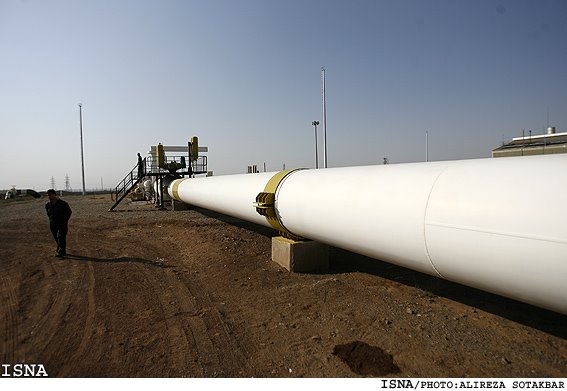
 Elias Muhanna (QifaNabki) flagged
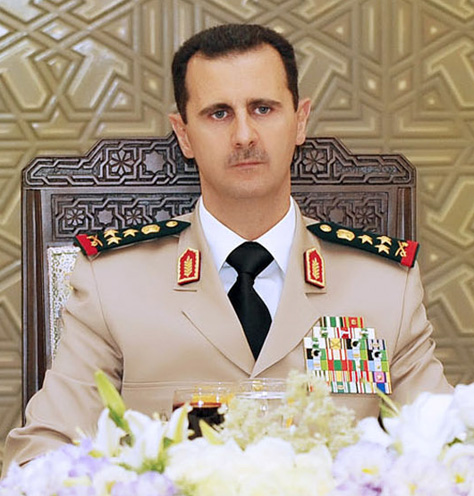


 Syrians are flocking to the Turkish city of Gaziantep for its Western goods, including at the Sanko Park mall.
 “People in Syria love Turkey because the country supports the Arab world, and they are fellow Muslims,” Zakria Shavek, 37, a driver for a Syrian transport company based in Gaziantep, said as he deposited a family of newly arrived shoppers from Aleppo, which competes with Damascus for the title of Syria’s largest city and is about a two-hour drive from here. “Our enemy in the world is Israel, so we also like Turkey because our enemy’s enemy is our friend.”


