President Assad’s Speech: Most of the Western press disparaged the President’s third speech for being defiant and more of the same. The opposition joke about how the speech was sponsored by Dettol, the anti-bacterial disinfectant, because of the President’s use of the term “germs” to describe its enemies.
Addendum: numerous readers have written to correct me: The President did not call his opponents “Germs.” Rather he said: “Conspiracies are like germs which increase every moment,” … “the solution is to enforce the immunity of our bodies investigating the domestic points of weakness as to repair them and that the solution is to sort our problems out by ourselves.”
Expectations in many quarters were that he would lay out a road-map for regime change and structural reform.

Pro-Assad demonstration in Damascus after Assad Speech
Bourhan Ghalioun, an opposition leader who insists that dialogue with the government remains necessary, explained that Syrians expected the president to move quickly toward democracy by eliminating the constitution’s article eight, which establishes the Baath as “leader of state and society,” and take steps toward a constitutional convention and interim government.
President Assad did not oblige his opponents; nor did he loosen his hold on power. Instead, he enumerated a number of reforms that he and his government will study, most important of which is a new Party Law, a draft of which is now on the web for public discussion.
Sami Moubayed has written a detailed article about the draft Party Law in English on the Huffington Post – “The Road to Democracy.” He explains:
The new political party law is very important, … Its first breakthrough is that it acknowledges that the ultimate aim of any political party — unlike those in the NPF — is to “come to power” and rotate in the executive and legislative branch. The status of “ruling party,” therefore, can no longer be monopolized by the Baath. Parties with a religious, tribal, or ethnic agenda, however, will not be allowed to operate in Syria. This clause was meant to prevent the rise of Islamic groups like the Muslim Brotherhood, who have been outlawed since they waged war against the state back in 1979-1982. ….
The new law says that all parties need to be given equal access to all Syrian media, both the private and state-run — which is also groundbreaking since traditionally, it was only the Baath that had access to Syrian TV and Radio. Finally, any party is entitled to issue its own publication, without even applying for a license. It gets that right automatically once the political party is licensed by the Party Affairs Committee [which will be established and chaired by the Minister of Interior]….
Some have argued that technically the Baath Party would be illegal under these proscriptions because it has an “ethnic agenda.” It defines Syria as Arab. By contrast, the Antalya opposition declared that “the Syrian people are of many ethnicities: Arab, Kurd, Caldean, Assyrian, Syriac, Turkmen, Chechen, Armenian and others.” The Arab Nationalism of the Baath is being challenged by the new Syrianism of the opposition. Although secular Syrian nationalism harkens back to the Syrian Social Nationalist Party of Antoun Saade, it eschews the notion of a Greater Syria and authoritarianism that Saadeh embraced.
On the subject of the Party Law, one friend emailed me this Sunday evening: ”
Excellent discussion taking place now live on Syrian TV by the committee working on the Parties Law. Interesting stuff. Sounds promising… IF it gets implemented!
Walid Mualim promised that Syria would become an example of democracy in three months,
“We will offer an example of democracy,” Moallem said, when asked about his vision for Syria in three months. “There will be social justice, equality before the law and accountability.” His statements went beyond the vague promises of reform made by Assad in a nationally televised speech on Monday.
Much of the Syrian opposition – not the least of whom are the leaders living in the West, as well as many Westerner pundits – dismiss any Syrian solution that leaves the Assad family in power. They insist that the regime is playing for time and that the Assads are the problem. A number are calling for Western action against Syria. Ausama Monajed argued in an op-ed in the Washington Post today: In Syria, an opening for the West to bring about Assad’s downfall. His main argument is that the West should “stoke defections among Assad’s ranks” – presumably by using sectarianism and greed. He argues that Assad can “no longer rely on the Sunni majority.”
Many Syrians reject revolutionary change and react very negatively to opposition claims that Syria can be split along sectarian lines. They do not want to see whole-scale destruction of the government or state.They insist that dialogue is necessary and that the President can lead the way and must be given time. They insist that state structures have been dealt such a blow by the uprising that change is inevitable.
What do most Syrians believe? On whose side do they come down? These are questions that no one can answer with assurance. The government claims that it has the majority and has been able to get out demonstrations that are considerably larger than opposition demos. Photos of large pro-regime demonstrations held in all the major cities of Syria following the president’s speech on June 20 can be viewed here. The opposition counters that had it the advantages of the state, it would turn out larger crowds. Clearly the regime has many more supporters than the opposition would like to admit.
The opposition faces an uncertain future today. The regime is getting a second wind. There have been no major defections of officials, military personnel, or the business elite. Political scientists would argue that fairly large scale rebellions can be survived by states that do not experience major fishers within their upper ranks. Only when the elites begin to fight amongst themselves, are revolutions usually successful.
I was too quick to point out the deep sectarian divisions in Syrian society. I received much criticism from friends and anonymous critics for my willingness to dwell on religious issues. Having lived in Syria during the Hama uprising and in Lebanon for several years during the civil war – 1979-1981, it is perhaps not surprising to worry about sectarian distrust in the Levant. All the same, I take the point of my critics, Syria has not fallen apart along sectarian lines. Very little overt sectarian language has been used in this upheaval so far. Sheikh `Ar`aour and other Saudi Imams have resorted to the most nasty sectarian rhetoric, but it has not been taken up by their Syrian counterparts. Many of my Sunni friends have refused to come out against the Assads and remain quite critical of the opposition. They do not want to see Syria sanctioned or split apart along sectarian lines.
The Opposition meeting Scheduled at the Sheraton in Damascus is for Monday – tomorrow – seems to have hit a snag. The guardian says: “Plans for the first open opposition meeting in Damascus for more than a decade are in jeopardy, with Syrian authorities yet to give permission for the gathering…
Michel Kilo, Arif Dalila, Burhan Ghalioun will be headliners, including some 200 opposition figures are said to be willing to meet in order to discuss Syria’s future under the slogan of “Syria for all under a secular democratic state.”
Harder line opposition members are condemning this effort. They say that first:
“The killing must be stopped. Shabbiha must be withdrawn. Maher must be exiled. Key criminal figures should be tried. Allow people to demonstrate. Replace thugs with army and order no live bullets….”
Samir Aita added his voice to those speaking out about Syria’s future. He testified to the House of Commons this week, insisting that foreign intervention should be rejected by Syrians. He stressed that the process of change will be long and bumpy, but will prevail. He added his voice to those who rebuke activists calling for external intervention and rejected any sectarianism. He explained that the main drive for change is based on class and generation. He writes:
In Syria, the number of newcomers to the labor market reaches yearly between 250 and 300 thousands, while on average only 65,000 job opportunities are created, most of them informal employment. The unemployed, those occupied with menial activities, and those frustrated not being able to found a family are all asking today loudly and courageously for “freedom and dignity”. It is not only demographics, it is systemic double digits unemployment, low women involvement in the economic life, massive migration from rural to informal urban zones, and the setting of informal employment as a rule. The map of the uprising in Syria somehow reflects these aspects.
Armed militants are making their appearance among the opposition. The emergence of Jihadi groups poses dangers for the opposition movement. Hala Jaber in the Times of London explains in Syria caught in crossfire of extremists, and “Pro-democracy protests are being infiltrated by armed jihadists, provoking the army into lethal gun battles.”

Hala Jaber in Ma’arrat Al-Nu’man, Syria Published: 26 June 2011
They came in their thousands to march for freedom in Ma’arrat al-Nu’man, a shabby town surrounded by pristine fields of camomile and pistachio in the restive northwest of Syria.
The demonstration followed a routine familiar to everyone who had taken part each Friday for the past 11 weeks, yet to attend on this occasion required extraordinary courage.
The previous week four protesters had been shot dead for trying to block the main road between Damascus, the capital, and Aleppo, the country’s largest city. The week before that, four others were killed.
So enraged were the townspeople at the blood spilt by the mukhabarat, or secret police, that intermediaries had struck a deal between the two sides. Four hundred members of the security forces had been withdrawn from Ma’arrat in return for the promise of an orderly protest. The remainder, 49 armed police and 40 reserves, were confined to a barracks near the centre of town. By the time 5,000 unarmed marchers reached the main square, however, they had been joined by men with pistols.
At first the tribal elders leading the march thought these men had simply come prepared to defend themselves if shooting broke out. But when they saw more weapons — rifles and rocket-propelled grenade launchers held by men with heavy beards in cars and pick-ups with no registration plates — they knew trouble lay ahead.
Violence erupted as the demonstrators approached the barracks, where the police had barricaded themselves inside. As the first shots rang out, protesters scattered. Some of the policemen escaped through a rear exit; the rest were besieged.
A military helicopter was sent to the rescue. “It engaged the armed protesters for more than an hour,” said one witness, a tribal leader. “It forced them to use most of their ammunition against it to relieve the men trapped in the building.”
Some of the gunmen were hit by bullets fired from the helicopter. When it flew away, the mob stormed the front of the barracks.
A fierce gunfight ensued. Soon, four policemen and 12 of their attackers were dead or dying. Another 20 policemen were wounded. Their barracks was ransacked and set on fire, along with the courthouse and police station.
The officers who escaped the onslaught on June 10 were hidden in the homes of families who had been demonstrating earlier, the tribal leader said. He and his sons and nephews retrieved 25 men and drove them to the safety of their headquarters in Aleppo.
Last Friday I watched Ma’arrat’s latest demonstration for democracy. Only 350 people turned up, mostly young men on motorbikes who raced along the main road towards a line of army tanks parked in some olive groves. Among them were bearded militants.
They shouted provocation and were greeted with stoicism. Local people said the tanks had not moved since they had taken up position 10 days earlier.
The significance of the low turnout was not lost on the tribal elders who have been organising the protests, hoping political reform will bring government money to their neglected town of 100,000 people. Thousands of ordinary people who had backed them were now staying at home for fear that armed elements would pick another fight.
Reports of gunmen opening fire at protests in at least four towns appear to mark the emergence of a disturbing pattern in a country already torn by three months of protests that have left nearly 1,400 dead and spread trepidation among its neighbours, from Israel to Turkey.
Activists interviewed last week by The Sunday Times fear the gunmen — including some jihadists — could divide the opposition and give Syria’s security forces an excuse to continue firing on their own people.
Here is a Youtube film of a band of militants in Banias made by a member of the group.
NEWS ROUNDUP FOLLOWS:
The Guardian reports:
…Inside Syria, the president’s speech was accepted by many as a step in the right direction. Large and numerous pro-government rallies showed again President Assad is able to bring out the crowds. Opposition leaders dismissed these rallies as unimportant. Regime supporters argued that they prove that a majority of Syrians support stability and giving the government time to play out their reform promises and to carry out national dialogue. .. Hundreds of Syrians have fled to Lebanon after 20 people were killed in the biggest day of protests against President Bashar al-Assad……
Antoun Issa gives a good roundup of events in Syria for ABC news.
Syria has begun letting reporters into the country. The initial reports have been fairly positive. NPR, Sky, CNN
Sky News says “Protesters vociferous but still a minority”
CNN: Hala Gorani reports for CNN
Damascus, Syria (CNN) — Syria’s military spokesman says 1,300 members of security forces have been killed in the months-long unrest that has taken hold in the country, a charge that came as videos surfaced allegedly showing children killed in the violence. In an interview with CNN in Damascus, Maj. Gen. Riad Haddad also said 700 people, whom he described as terrorists, and their families had fled Syrian authorities to Turkey. Haddad offered no details about the killings of the security forces other than to blame the deaths on armed gangs. CNN cannot independently verify the claim…..
Meanwhile, Syrian state TV reported that some of the thousands who fled to Turkey to escape a military offensive have begun to return to their homes. About 730 people returned to the town of Jisr al-Shugur, SANA reported…..
At least 11 people were killed in Syria on Friday, activists said, as anti-government protests erupted across the country, a day after the army deployed within sight of the Turkish border, raising tensions with Ankara.
BBC “Syrian authorities also say they have eased restrictions to allow opposition figures to attend a conference in Damascus on Monday.
However, only independents – those not affiliated to opposition groups – will be allowed to attend. Signatories of the 2005 Damascus Declaration – a joint call for reform by Syria’s most well-known intellectuals and dissidents – are barred.”
Abdülhamit Bilici in Zaman:
The warmer it becomes to demands for freedom, the more Turkey will distance itself from the Assad administration. Or conversely, the closer it stands to the Baath regime, the greater its loss of prestige will be, both in Western and Arab public opinion. Thus, Turkey faces a challenging multivariate cauldron.
Syrian Troops Mass on Turkish Border
2011-06-23
June 23 (Telegraph) — Syrian troops massed on the Turkish border overnight, witnesses said on Thursday, escalating tensions with Ankara as President Bashar al-Assad uses increasing military force against a popular revolt…..
“The regime is trying to pre-empt unrest in Aleppo by cutting off logistics with Turkey. A lot of people here use Turkish mobile phone networks to escape Syrian spying on their calls and have family links with Turkey. There are also many old smuggling routes that people could use to flee,” one of the residents, a physician, told Reuters by telephone.
Refugees from the northwestern province of Idlib said armoured vehicles and troops were now as close as 500 metres to the Turkish border in the Khirbat al-Joz area. …
Central neighbourhoods of Aleppo, a largely Sunni city with a significant minority population, has been largely free of protests, in part due to a heavy security presence and a continuing alliance between Sunni business families and Syria’s ruling Alawite hierarchy.
But activists said security forces killed one protester in Aleppo on Friday and arrested 218 students at Aleppo University, scene of now daily protests, in the last three days.
A senior Turkish official said on Sunday that Mr Assad had less than a week to start implementing long-promised political reforms before foreign intervention began, without elaborating.
Globe Mail [Reg]: The EU must target Syria’s merchant class, 2011-06-23
The European Union, which intends to extend the list of Syrians banned from travelling to the EU and subject to asset freezes, is considering broader sanctions that would target selected Syrian companies doing business in Europe.
In the Presence of the Media and Diplomats, Syrian Army Exposes New Mass Grave (Syria Report)
Press Review Tishreen –
The state-owned Tishreen newspaper reported on June 21 that “a new mass grave was exposed to media representatives and more than 70 foreign and Arab diplomats when the Ministry of Foreign Affairs and Expatriates organized a field trip to the area of Jisr al-Shughour in northern Syria.
Assad reform pledge will not ease pressure on regime
Oxford Analytica, Monday, June 20 2011
President Bashar al-Assad addressed the nation on television today, justifying the regime’s crackdown and promising further reforms and a national dialogue. His vague promises are unlikely to have much traction outside the regime’s core support base. The unrest in Syria is intensifying, spreading and becoming more violent. The regime has responded with greater force, provoking even more internal violence and bringing international condemnation, including from Turkey. The external opposition has put aside its long-standing differences to try to support the disparate groups in revolt against the regime….
Impact
· The protests and violence have become endemic and will eventually contribute to regime collapse.
· Events in Syria will have serious negative impacts on its neighbours: Iraq, Turkey, Israel and Lebanon.
· Iran risks losing its only ally in the Arab world and its main route in support of Hizbollah…..
What next
The regime, dominated by Alawi military and security officers, will fight as long as it can, even if this means much greater casualties than the estimated 1,400 killed so far. Assad’s promises today of dialogue and further economic and political reform are too little, too late. They will not stop the protests, which will eventually combine with economic and external pressures to lead to the regime’s demise……
International pressure
Western countries, which have imposed targeted sanctions on Assad and his closest allies, have failed so far to win support from Russia and China for a UN resolution condemning Syria. Nor have they got the wholehearted support of the major Arab regimes that are mindful of Syria’s strategic importance for its neighbours:
· Saudi Arabia is deeply worried about Iranian ambitions in the region and does not want to drive Damascus into the arms of Tehran.
· Qatar is being assiduously cultivated by Damascus.
· There is no appetite in the West for military intervention though there could be further economic pressure.
· The neighbour that will most concern Syria is Turkey whose newly re-elected prime minister has condemned the regime’s “savagery “. Assad has sent two of his top security advisers to Ankara but they were told to end the repression “immediately”. There is no prospect of Turkish military intervention but Damascus does not want to lose its relationship with its largest trading partner built since the late 1990s.
The regime’s death throes could be long drawn-out and increasingly sectarian in character….
Outlook
The regime can survive the next few months but in the longer term there is little that it can offer in the way of concessions. Reform will undermine its foundations while its bloated and corrupt institutions are incapable of delivering what is required. Assad has left himself with almost no option but repression. The regime will eventually succumb to a combination of street protest, economic failure and external pressure. It will be a long drawn-out process, and there is a danger of it taking on a more sectarian tinge.
AP
The regime “still believes it can crush the protests,” said Rami Nakhla, a Syrian activist now living underground in Beirut who has spent months disseminating news and video clips sent from inside the country. “But it’s clear the regime has played all its cards and the protests are not burning out. They’re spreading.”
At the same time, the activists have not managed so far to draw in Syria’s middle class, resulting in protests that hopscotch across the country but seldom touch the largest cities.
The Assad regime has long used sheer brutality to hold together a fragile jigsaw puzzle of Middle Eastern backgrounds — Sunnis, Shiites, Alawites, Christians, Kurds, Druse, Circassians, Armenians and more. Sectarian violence is widely feared, and in the worst-case scenario the country could descend into a Lebanese-style civil war.
At the same time, Syria is an important geopolitical linchpin. It borders five other nations, has close ties to Iran and powerful militant groups, and controls water supplies to Iraq, Jordan and parts of Israel. Meanwhile, though Damascus and Israel are officially at war and Israel has occupied Syria’s Golan Heights since 1967, their quiet, behind-the-scenes contact has sometimes been key to preventing the eruption of fighting.
“People are afraid of what could happen if Assad falls from power,” said Elias Muhanna, a political analyst at Harvard University. At worst, it could become what he calls “an Iraq scenario,” with armed militias carving out ethnic fiefdoms.
It is a fear that Damascus has carefully nurtured in recent months, warning repeatedly that only Assad can keep chaos at bay. And while most analysts say Assad is exaggerating, few deny that such violence is a serious possibility.
That is why many opposition figures are putting their hope on an unlikely player: the Syrian army. Dissidents say they are in touch with many lower-ranking soldiers, and have publicly urged top-ranking officers to oust Assad in a coup d’etat.
“We don’t have other options right now,” said Radwan Ziadeh, a prominent Syrian exile and a visiting scholar at the Institute for Middle East Studies at George Washington University. “We need the army officers to take the initiative.”
Getting to that point, though, would require crossing a deep sectarian chasm.
Syria Dismisses European Sanctions, Says ‘We Will Forget Europe Is on the Map’
Agence France-Presse Jun 22, 2011
DAMASCUS — Syrian Foreign Minister Walid Muallem on Wednesday rejected foreign meddling in his country’s internal affairs while stressing Damascus is keen to maintain good ties with longtime ally Turkey.
“We are keen on maintaining good relations with Turkey with which we share a common border of 850 kilometres (528 miles),” Mr. Muallem told a press conference in Damascus.
“We don’t want to wipe away years of efforts to establish privileged ties,” he added. “I wish (Turkey) would reconsider its position.”
His comments came as Turkey has distanced itself from Syria over its brutal crackdown on a pro-democracy revolt that has threatened the authoritarian rule of President Bashar al-Assad.
Mr. Muallem, however, stressed that his country would not tolerate any foreign interference in its internal affairs.
“We can reach consensus despite opposing points of view,” he said. “No one outside (Syria) can impose on us their point of view.”
He said he did not believe the international community would launch a military operation against Syria.
Mr. Muallem also accused his French counterpart Alain Juppe of having colonial “illusions.”
“Mr Juppe is still living under the illusions of the French colonial era. He has no influence in Syrian affairs,” the foreign minister said.
France is spearheading attempts to get the United Nations to speak out against Syria’s deadly crackdown on protests.
On Monday, Mr. Juppe said in Luxembourg that Assad had reached “a point of no return.”
“Some believe there’s still time for him to change his ways and commit to a (reform) process,” he said. “For my part, I doubt it. I think that the point of no return has been reached.” Western governments have been circulating a draft Security Council resolution condemning Assad’s crackdown but Russia has warned it would veto such a move.
Turkey increases pressure on Assad
By Abigail Fielding-Smith in Beirut and agencies, June 21 2011 12:02
Turkey’s president, Abdullah Gul, has criticised his Syrian counterpart’s address to the nation, saying that it was “not enough”.
“[Bashar al] Assad should clearly and precisely say: ‘Everything has changed. We’re transforming the system into a multi-party one. Everything will be organised according to the Syrian people’s will and I will be carrying out this process’,” said Mr Gul…..
Sami Mubayed
…..Hardliners want to obstruct any reform process, either because they do not fully grasp the danger they face, or because they feel that any real reforms will do away with all the privileges they have enjoyed as Ba’athists for over 40 years. Their only reasonable argument is when asking: what to do with 55,000 employees of the state who are employed by the Ba’ath Party?
If the party loses its supremacy role, none of its organs can be funded by the state. The party pays wages, after all, through the state, to the Students Union, the Revolutionary Youth Union, the Ba’ath Party newspaper, Ba’ath Party administration officials, clerks, drivers, etc.
A real pluralist system does not threaten them, for now, because they remain the largest party with the highest organizational skills, and treasury. They currently stand at 2.8 million, and even if 2 million drop out if the party no longer rules, they would remain 800,000 – larger than any other in Syria.
In the new party law draft, it must be noted, which is due for release next week, any party that seeks official recognition needs to ensure 3,000 members at least. That clearly is exclusive to the Ba’ath – for now.
Ending Ba’ath Party rule would be a blessing in disguise for the Ba’athists. It would rid them of all opportunists who joined the Ba’ath for professional mobility and incentives, and keep a small core group of people who truly believe in the Ba’ath Party’s ideology. It would also give an impression that the state is serious about reform, and about changing from within.
ANOTHER DEEPLY DISAPPOINTING SPEECH BY BASHAR AL-ASSAD
By Andrew J. Tabler, CNN Global Public Square, June 20, 2011
Syrian President Bashar al-Assad’s speech at Damascus University on June 20 was another disappointing attempt to quell three months of anti-regime protests sweeping Syria. While recognizing some of the protestors had legitimate concerns, Assad continued to blame the lion’s share of the demonstrations on a “conspiracy” of “outlaws,” “vandals” and “takfiri extremists.”….
Algeria foreign ministry Mourad Medelci disagrees with the EU over Syria and Libya in their Luxembourg meeting, suggesting that the ARab League will not endorse an EU declaration.
When asked about the question of a country leader loosing legitimacy, he said that this decision can only come from the citizen and should not be submitted to external pressures.
He says he is preoccupied by what is happening in Syria, a brotherly country. What is happening is not acceptable. (Thanks Why)
L’Orient le Jour 20 june 2011
L’Union européenne et l’Algérie ont constaté leurs divergences lundi sur le sort à réserver aux dirigeants syrien et libyen, qui pour Alger est du seul ressort des peuples concernés et ne doit pas faire l’objet de pressions extérieures. Concernant le point de savoir “si tel ou tel leader doit ou pas perdre sa légitimité, qu’il s’agisse de la Syrie ou de la Libye, ceux qui sont principalement responsables pour répondre à cette question ce sont les peuples eux-mêmes” de ces pays, a déclaré le ministre algérien des Affaires étrangères, Mourad Medelci, lors d’une réunion avec l’UE à Luxembourg.
“Cette question n’est pas du ressort de l’Algérie”, a-t-il ajouté lors d’une conférence de presse, en réponse à une question sur la nécessité ou pas pour le président syrien Bachar al-Assad et pour Mouammar Kadhafi en Libye de quitter le pouvoir.
Dans le même temps, le chef de la diplomatie algérienne a assuré à propos de la Syrie que son pays était “très préoccupé par ce qui se passe dans ce pays frère”. “Ce qui s’y passe n’est pas acceptable, c’est clair”, a-t-il dit.
Syrians in London say they are being intimidated by embassy
It is behind The Times paywall (£1 for a day’s access), but here are the first three paragraphs as a teaser:
Members of the Syrian community in Britain say that they are being threatened and bullied by the Assad regime because of their role in anti-government protests.
Breaking their silence to speak to The Times, four Syrians living in London told of phone calls, visits to their homes and threats to their families in Syria by agents from the country’s notorious secret police.
Wasim, a construction worker, said that members of the intelligence service had visited his parents in the Syrian town of Deraa, where the uprising began three months ago. “They said to my parents: ‘Tell your dogs in London to behave. Don’t let them provoke us any more.’ My parents were very scared.”….
New Yorker: Syria: “Now It’s Turned Out to Be a War”
2011-06-20
A young man was loitering in the coast street of Latakia, the largest harbor town of Syria, late one night earlier this month. He said he was a biology student, twenty years old. It was already midnight, and he was listening to the noise of heavy…
When Assad was fêted at Richard III …
By Roheet Shah, Published: June 21 2011
My first encounter with Syria’s president Bashar al-Assad came in 2008, at a performance of Richard III at the national opera house named after his family. The performance did not start on time and, when a few people in the audience started to clap, I thought they were trying to get the performance to begin. However, when more people joined in the clapping and cheering, my attention was drawn to the back of the theatre, where Mr Assad and his wife were strolling through the crowd, eventually taking front-row seats to a standing ovation. As the play progressed, I remember watching the pair – sitting just 15ft away, with no visible security detail – laugh, chat and behave like any normal couple. When the play ended, they had another ovation, and cheers of support, as they left.
The incident was part of a scripted narrative that made the president feel loved by his people, and enabled the people to buy into a dream in which he was just a normal guy, living a normal life. In the four years I lived and worked in Syria, this narrative was constantly repeated; I was once at dinner at a local restaurant when the Assads walked in – again to applause – with the queen of Spain for an informal dinner amongst the masses.
Arrests for Graffiti Were the Spark of Syria’s Revolt, But the Fuse Had Been Burning for Years
By Associated Press, June 23 (Washington Post) — BEIRUT —
Bayan al-Bayasi, a 22-year-old student of Arabic literature had been steadily growing disillusioned with her president over the years, but like most Syrians raised on fear and submission, she kept silent. When the Arab protest wave reached Syria, she even defended Bashar Assad to her friends, saying she was sure he was a reformer at heart. It was her rising anger at the pictures of dead Syrians she saw every day on Arab satellite channels that drove her to join thousands of protesters packing a square on the Mediterranean coast.
In scores of interviews conducted by The Associated Press with protesters in the past two months, in Lebanon and Syria, by phone and in person, recurrent themes of complaint were corruption, nepotism and religious discrimination.
Al-Bayasi, whose highly religious, blue-collar family lives in the coastal village of Bayda, says the secular regime discriminated against devout Sunnis. “When I was a child, I remember crying over my uncles who spent 20 years in prison just because they were religious. They were just university students back then.”
“My brother, like most graduates of Bayda, can’t find a job, whereas students from neighboring (Alawite) villages are working in government institutions. Why?”
“I feel discriminated against because I wear the veil. When I walk to the university I get asked for my ID card, as if I’m a terrorist,” she said in a phone interview from her home in Bayda.
Alawites make up around 12 percent of the population of 22 million. Sunnis are 70 percent.
Leaderless and only loosely organized, the Syrian protest movement erupted in mid-March, just two weeks after Assad boasted to The Wall Street Journal that he was “in touch” with his people and that Syria was immune to upheaval.
Indeed, even after the movement spread through the Arab world, many Syrians clung to the image of their president, a 46-year-old, British-trained ophthalmologist, as a modernizer held back by hard-liners.
Assad’s regime may be shaken but he isn’t on his way out yet. There have been large counter-demonstrations in his support and he retains a base of support among the business elite and middle classes who have benefited from his economic policies. Besides, in Syria’s potentially volatile mosaic of sects and religions, Alawites and other minority groups fear being targeted if the Sunni Muslim majority takes over.
Nilesat warns “Wisal” and “Safa” Channels to cease instigating programs or risk cessation of broadcasting
Cairo– The Egytian satellite channel Nilesat issued warnings of final closure to the channels Wisal and Safa due to their broadcasting of programs that instigate sectarianism and attack religious beliefs in countries that receive the broadcast…. Nilesat also stated that they continue to receive many complaints regarding the two channels’ programs that incite sectarianism and attack the policies of neighboring countries.
At Open Democracy, Vicken Cheterian writes:
Syria is going through an uprising of socially marginalised regions, suffering from the absence of institutions and services, where the most obvious state presence has been the security agencies.
The context of this revolt is the weakness as well as the strength of the state. The Syrian regime portrays its major assets as opposition to great-power politics and support for anti-Israeli resistance. Its true chief resource is the fact that parts of the population still see it as a guarantee of stability and security. But this resource is fragile, and eroding under the pressure of the current violent confrontation.
The revolt that started in Deraa is, despite ferocious repression using live bullets, spreading rather than dying down. Several towns and cities remain under siege, with telecommunications shut down, highways blocked, and the country isolated from the outside world. A key question is how long such a situation can persist before the merchant class sees the regime as part of the problem rather than the solution; and whether, to avert this outcome, the Syrian authorities can learn how to use their most valuable (if now damaged) resource – the fact that they have come to represent stability and a defence against chaos?
“I do not care about who rules, or the type of regime” a Syrian friend who supports the status quo told me. “What I care about is that when my children go to school or university, I do not worry about their safety.” But today, he is worried about his family’s immediate safety.
Three months into the revolt, the regime seems at a loss. Bashar al-Assad’s third speech since it began, on 20 June 2011, offered little if anything new. “The authorities have fewer and fewer choices”, says a Damascus observer. “First, they tried to suffocate the incipient movement with heavy repression. That has clearly failed. Then the president announced reforms, the end to the state of emergency, but he said he would do reforms his way, according to his rhythm. This was taken very badly by the public, and the rebellion only spread further.”
Another analyst adds: “Neither repression nor the promise of reforms can calm the situation. Dialogue is declared, but dialogue with whom? We do not see it happening. How can it give any results?” When asked what the authorities can offer to the population to defuse the situation, the response is: “The only promise the president can give is to be the leader of a political transition”. But as Bashar’s latest speech confirms, the regime is managing the situation day by day – mixing repression here, the promise of dialogue there.
This is unsustainable over the long term. The security forces are over-stretched, and massive operations need resources. The state treasury cannot forever ensure such funding, especially as it has made costly economic concessions in other areas to appease popular anger: increased salaries and decreases in the price of diesel, even as Syria’s economy is in trouble and state revenues in free-fall.
Turkey apparently closed border near Kasab to prevent pro Assad Syrians from joining demo in Antioch
??????: ????? ????? ??? ????? ???? ????????? ?? ???????? ?? ????? ???????, ??????? ???? ?????? ?????? ???????
???? ??????? ??????? ????????? ????????? ?????? ??????? ?? ?????? ??? ??????? ??? ???? ??? ????? ????? ??? ???? ?? ???? ???? ?? ???????? ??????????? ?? ???????? ?????????, ???? ????? ????? ?? ??????? ?????? ???? ??? ??? ???????? ?? ???????? ?? ????? ??????? ???? ??????? ??????? ?????????? ???? ??????
Haaretz:
Two years ago, a senior representative of a large Western nation visited Damascus in order to discuss warming up relations. At the end of the formal part of the visit, Syria’s President Bashar Assad invited the guest for a quiet dinner that included both their spouses. They sat and talked through the night, off the record and with no advisers around. “My problem,” Assad confessed then, “is that each year half a million Syrians reach the age of 18. They don’t any have hope, or work.”
As his years in office accumulate, Erdogan is emerging as the most seasoned diplomat in the region, if not the world at large. His betrayal of Assad, who was his close friend until recently, is reminiscent of his past behavior toward Israeli leaders.
Former Mossad chief Meir Dagan has fantasized about replacing the minority Alawites in Syria’s ruling regime with the Sunni majority. Top Mossad and other security officials are now in favor of democratization in the Arab world, and no longer focus solely on the dangers of Islamization and the undermining of regional stability, as they were prone to do in the first six months of the year. During the high and low points of his tenure, Assad has proven that Syria is a key player in the regional balance of power. Should a Sunni, pro-American regime take hold in Syria, Israel would be able to resolve the dispute over the Golan Heights and develop a “northern arch” alliance with Syria and Turkey as a counterweight in its confrontations with Iran. Such an alliance could serve as a substitute, or supplement, for Israel’s damaged bond with Egypt.

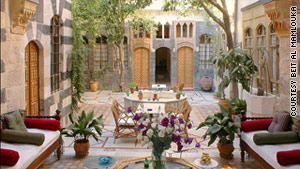 Many Opposition Members have argued that the business elite of Syria will abandon the regime down the road when Syria’s economic troubles grow deeper. I have asked a number of readers to explain how they think the Syrian business elite will react in the future.
 So What is going on with Souedie Crude, or as it is often called, Syrian Heavy Crude? Syria says it will cut exports by 37%.


 Then what are Alawis exactly?
 I asked a friend who joined the organized Foreign Press Corps visit to Jisr al-Shaghour to tell me what his take was on the visit. This is his account:

