Best of Comments on US Opening to Syria

MSK said:

Dear Josh,

And this is what I heard from my own sources withing the March 14 coalition:

Deciding to agree on Suleiman was a pre-emptive strike against March 8, and particularly Aoun. Suleiman had been proposed by March 8 in Summer, and rejected by March 14.

After Lahoud left Ba’bda without a new president elected, Aoun went into high gear again. By now accepting a constitutional amendment to allow Suleiman become president, March 14 has kicked the ball again over to March 8.

If Aoun rejects Suleiman, he will confirm what all his detractors have been saying for years – that he is only interested in himself becoming president and nothing else, even if Lebanon goes down.

If Hizbollah rejects Aoun, they will look like in Summer they were insincere (a.k.a. lying) and are now preferring a dangerous vacuum to an agreement with March 14 on Hizbollah’s own terms.

If Syria rejects Aoun = see “If Hizbollah rejects Aoun …” above.

At this point, nobody knows if Suleiman is pro- or anti- anything.

And the opposition DOES seem to have been caught by surprise and needs to now figure out how they will respond – which doesn’t look good for them, as they seem to prevaricating on their own proposal now.

As for the foreign powers having pressured March 14 … maybe yes, maybe no. My sources said that the “we accept Suleiman” move by March 14 was actually done in order to avoid pressure from outside.

That the Lebanese delegation @ Annapolis was surprised is not surprising – the deal was done by the Big 4 while the delegation was in Annapolis & everyone learned about it through the media.

–MSK*

PS: Josh, maybe we can have your source fight my source & then we’ll see who wins. ;)

GG said

MSK,

Tell your “source” in March 14 to put a gun to his head and pull the trigger. The guy is obviously as delusional as you.

His logic: M14 proposed Michel Suleiman to back Aoun into a corner, but Aoun proposed Suleiman in the summer and has accepted his candidature again? Where’s the corner? M14 are the one’s squirming because Houri says “yes”, but Jisr says “no”. And “we’ll never agree to amending the constitution” Geagea says he can now amend it, but Sanioura would rather cut his arm off than amend it. Wasn’t the in-fighting supposed to be by the opposition? Good plan M14! Where did it go wrong! Bunch of fools. If they really new what they were doing they’d be dangerous.

Qifa Nabki said:

I would discount “well-placed Lebanese sources.” I think GG is right about this.

The Lebanese, God bless ‘em, are often guilty of believing that their grandmothers’ kitchens are the center of the universe, and every deal made at their expense or behest must have implications involving very large land masses.

To be honest, I don’t see any clear-cut “winners” or “losers”, on all the various fronts that people have been talking about over the past couple of weeks. The opposition kinda “won” with Suleiman, but now they have to figure out how to deal with Aoun. M14 kinda “lost” with Suleiman, but at least they averted landing Aoun, and anyway Suleiman seems like a good fit for the times. Syria kinda “won” but the tribunal is still on course, and that could be used as a political weapon against it in the future.

I vote for us to stop talking about who “won” and “lost”. If only Middle Eastern politics were so simple.

EHSANI2 said:

Regardless of whether some want to admit it or not, Syria’s leadership has scored a massive win. The invitation to Annapolis and the admission of the world powers that the next President of Lebanon will not be from March 14th is a massive double strike for Damascus. Being invited to Annapolis is a big deal because it marked the official end of Syria’s isolation. France, Turkey, Saudi and, yes even the King of Jordan, all worked the phones and made the personal visits to Damascus before Annapolis saw the day of light. Damascus was courted by all the key players but for the U.S. This is because the White House did not want to admit defeat so publicly. It also did not want to be accused by its March 14th friends that they did the unthinkable and that is to cut a deal with the Syrians. Instead, Steven Hadley and Filtman continued to sing the same song while Feysal Mikdad was shaking hands at the conference on American soil. The U.S. continues its nothing-has-changed-with-Syria tape but even a 5 year old can tell that a lot has changed.

This brings us back to Damascus. Not only did it win but it is back to being the most courted girl in the neighborhood. Iran wants it to stay in its camp. Ditto for Hezbollah that depends on Damascus as the gateway to its main sponsor in Tehran. While Syria will not drop this long alliance just yet if ever, it has done just enough to tease the rest of the world about that possibility. Damascus is now in the brilliant position of asking for a price from both camps. Given the stakes, it is indeed the case that both are willing to meet its demands. Lebanon’s President was the first salvo. It is unlikely to be the last.

Bashar has earned his stripes. He has established his manhood and some. Hafez can be heard from his grave saying…. Bravo son. You are now officially a lion.

Qifa Nabki said

EHSANI,

Your post exemplifies what I find so interesting about the comments on this blog, many of them by people who are clearly very intelligent, and knowledgeable about Middle Eastern affairs.

Your analysis is brimming with pathos; you sound like a tear-filled grandmother waving her hankie at the returning war-weary young men of her village, who stand silhouetted against rising sun. Damscus is “the most courted girl in the neighborhood” … “in a brilliant position”… “a massive win”? Bashar “has established his manhood and [become]… a lion”???

This is just silly.

We grumble and moan for months about Syria’s isolation, seeing it as the source of all the problems with its economy, its human rights record, its belligerent dealings with Lebanon, etc. And then, when the isolation seems to be coming to a close, we start crowing about what a stud Bashar is for having withstood it?

I don’t think leaders like Hafez and Bashar deserve adulation. Maybe begrudging respect, the occasional compliment about wisdom or realism, but certainly not the french kiss of an endorsement that you’ve given above.

EHSANI2 said:

Dear Qifa Nabki (love the name),

Your comment was great.

Dear Alex knows very well the many criticisms that I have against the Damascus leadership. You picked on its way of handling the economy, human rights and Lebanon. Those who are readers of SC can testify to how much I agree with you and more. Those who are expecting an improvement in human rights in particular are likely to be severely disappointed. People like me who have long argued that Syria’s economic policies need a total revamp are as likely to be disappointed but not quiet as much as the human rights advocates. Things are “improving” on the economic front. The speed of the changes though is at a snail speed. It is still akin to giving a cancer patient 2 Advils in the hope that he/she will get better soon.

My accolades (if I sounded that way) are directed at Bashar’s survival skills, patience and focus. Hate him or love him, he has established his credentials as a Middle Eastern leader. To succeed as a Middle Eastern leader, having a stellar human rights record is not a prerequisite. Niether is having a brilliant economy or a respect for your weaker neighbors. Scandinavia this isn’t.

Survival, longevity and focus are the name of the game and the metric by which ALL Middle Eastern leaders are judged.

Those of us who live in the west are bewildered as to why our own society cannot make the transition to democracy, accountability and the rule of law. This is not exclusive to our region of course. Russia’s Putin is a perfect example judging by his speech last week.

Let us for a moment put ourselves in Bashar’s shoes. Yielding power is easier said than done. In a tribal and religious societies like ours, losing power is most likely going to be associated with losing your life and that of your tribe. Every step in the direction of democracy is seen as a step towards that slippery slope that will end in your losing the leadership. Bashar is no fool. He is fully aware that behind the clapping and the “Bil-Roh-Bil-Damm Nafdika-Ya-Bashar” a significant percentage of his populace will jump at the first slippage by his security services. Human rights are not a priority in such an atmosphere. Winning the Nobel Prize in this department is not exactly the goal here. Survival is. Based on this metric, my hat is off to Bashar. This is why I think that Hafez is congratulating his son from his grave for proving that he has passed his first (and very tough) test as a lion. I say that he passed his test rather than his final exam because I don’t think that Damascus is totally out of the woods yet. As I said to Majedkhaldoun earlier, the tribunal still looms ahead. “IF” that report fails to offer the killer punch, the lion would have passed his final exam.

Offended said:

Junblat: let’s concede our defeat.

why-discuss said:

I do not agree that US wants to attack Iran. The US wants to weaken it by isolating it so it could be able to deal with it politically in a position of strength.
The wind has changed for Iran. Except for Iraq, its influence seems to have decreased in Arab countries.
Hezbollah is neutralized as they will be no war with Israel for a while. In the Lebanese crisis, Hezbollah had to choose between lebanese nationalism and the role of client to Iran, they choose to be Lebanese before all.
Hamas ( another circumstantial ally of Iran) is been ostracized and sanctioned by Israel without much complaints whether from Arabs or Europeans.
Like Hezbollah, Syria had a choice to appear as a Iran’s client or as Arab nationalist. It preferred to go to Annapolis to join the arab family.
The Lebanese crisis lost its momentum after Annapolis where it became clear that Syria could be tamed and included in a large deal between Arabs and israelis. Syria went to Annapolis despite Hamas and Hezbollah objections (and Iran’s). In Lebanon, the M14’s wishes for an elusive pro-US president became less relevant and a moderately pro-Syrian and popular president less of a threat, in the contrary…
With such developments, Iran apparently is loosing most of its cards in the region, except for Iraq.
The US has now more leverage to pressure Iran politically about Iraq and the nuclear issue, especially after the failure of the European-Iranians negotiations.

MNA said:

Michelle Suleiman was brought to the Chief of Army position by Syria and was also maintained in this position for 9 years. After Naher al-bared fighting, he acknowledged Syria’s support to the Lebanese army knowing that, after all, it was only Syria and not the Lebanese government or the west that supported it with fuel, spare parts, equipments, and maintenance. Let’s face it; he is pro-Syria, which does not necessarily make him a Syrian puppet. His election is definitely a win for Syria; I would even venture to say that had Syria still been in Lebanon, he would have been the next President after Lahood.

As for Hezbollah, those who say that it is the rebellious child of Syria could not be more wrong, Nasrallah is a very smart and pragmatic individual, he is perfectly aware of the importance of Syria’s support to his group. Iran’s support is extremely important, but without Syria, this support, financial or military, would not find its way to him. Nasrallah needs the strategic depth that Syria provides to his group. Syria was the only Arab state that backed it and still backing it, without this support, Hezbollah would not have any Arab umbrella, and Let’s not forget that during and after the summer war of 2006, both Israel and the US were stating that most of Hezbollah’s missiles were Syrian made, and the very effective Russian anti-tanks came from the Syrian army depot and not from Iran. Few months back, Hezbollah announced that during the war, Syria gave him the decision and timing of it entering the war. It also played a host country to more than 300,000 of al-dha7ye residents who fled the war. Since the war of 2006, Israeli, American, western, and Arab intelligences have been talking about Hezbollah intensified rearmament, where do you think this is coming from or thru? It certainly did not come from Israel or the sea or fell off the sky. Certainly Hezbollah can not do without this support; Syria’s support is a life line to Hezbollah.

Hamas and other Palestinian factions are in the same ship as Hezbollah. Iran’s support is very important, but they can’t fight Israel from Tehran. Syria has been a strong supporter, an ally and a base for the longest time. Just recently, Hamas and other Palestinian factions had to choose between upsetting Syria by attending the Anti-Annapolis conference that Iran was calling for or upsetting Iran by refusing to participate; they chose the later.

As for its participation at the Annapolis meeting, Syria is sending messages to all concerned, and to its allies before its enemies. The message to Hezbollah and Palestinian factions is this; Syria still independent in its decisions and policies and a key player and don’t forget that your big brother and true ally is Syria and not Iran. The message to Iran is: don’t act as if Syria is a satellite state of yours and talk over Syria’s head to Saudi Arabia, EU etc… about Lebanon and other regional concerns and give concessions so to gain leverage in your nuclear standoff; Syria can at any time greatly diminish any influence that you have in Palestine and Lebanon or greatly intensify it. Syria wants Iran to compromise on Iraq and stop its exclusive support to the Shiites on the account of Sunnis and baathists and stop encouraging the idea of federalization. Syria believes in the Arab entity of Iraq as well as its sovereignty and unity. The message to its rivals and enemies, including Arab states is: although Syria is in alliance with Iran, It is definitely not a satellite state of Iran. Syria is only interested in Iran’s support to the Palestinian cause (Lebanon and Golan Heights) and not in its influence over the entire area or in its nuclear ambitions; Syria is the only regional power that is capable of limiting Iranians influence in the region thru limiting its influence in Lebanon and Palestine and if you don’t address Syria’s regional interests and concerns in Iraq, Lebanon, Palestine, and Israel, Syria will have no choice but to work even closer with Iran. By participating, Syria appeared flexible and a party with whom you can do business with. It definitely distanced itself from the Iranian nuclear issue and showed the Americans, Israelis and the so called “moderate Arabs” on one hand and Iran on the other hand, the importance of Syria to both.

What did Syria benefit from attending the Annapolis meeting? We still don’t have the full picture, but based on what we know so far, It seems that it has managed to break the isolation with some Arab and European governments, It lowered tension with the US and gave the state dept in the US more fuel to combat the neocons concerning policy toward Syria, and finally the nomination and possible election of Michelle Suleiman in Lebanon. What did Syria loose? Not clear…

Will Syria ever get back the Golan Heights from Israel?? It all depends on the following:
1- How serious Iran is regarding its nuclear, regional and Iraqi ambitions
2- How serious the US and allies are about stopping these ambitions
3- How Iran on one hand and the US and its allies on the other hand view the importance of Syria being neutral or in either camp.

Whatever scenario turns out to be, I believe Syria will not abandon its allies, but will work to include them in any peace arrangement

GG said ;

Innocent_Criminal,

….All you have to do is listen to Geagea on LBC and Hariri’s jokers on Mustaqbal. It beggars belief! Anyone with an ounce of common sense can see that M14 are in disarray. This is not directed at MSK, but I would be insulted if a friend / source fed me nonsense thinking I was stupid enough to believe it.

Finally! Thank you for re-iterating my point. All it does is screw over March 14, nothing else; so Syria has achieved nothing. What was Josh trying to demonstrate by the paragraphs of claims that Syria was sitting pretty? By the way, Butros Harb and Nassib Lahoud are also on good terms with Syria, as is Michael “Syria leaves Lebanon over my dead body” Daher. Now if he was elected I would become a fully paid-up, card carrying member of the conspiracy cult.

Qifa Nabki,

Thank you too. Finally, someone else sharing reality with me; however, I do think your point that “The opposition kinda “won” with Suleiman, but now they have to figure out how to deal with Aoun. M14 kinda “lost” with Suleiman, but at least they averted landing Aoun,…” is a little too simplistic.

True Hizbullah’s ideal candidate is not Aoun, but … if you take a trip to Dahiya and other Hizballah strongholds you’ll notice a large and growing support for Aoun. Moreover, at Mousa Sadr’s remembrance day celebrations a couple of months ago, organised by AMAL, there were almost as many FPM flags as there were AMAL flags. How easily can Hizbullah drop him, especially when Hassan Nassrallah has actively nurtured a “my word is my bond” reputation? BTW these are my observations, not informed sources.

Second, an article in As Safir newspaper today claimed that Hariri has two options. First, accept Suleiman as president and a non-M14 PM, or accept Aoun as president and Hariri becomes PM. A recent piece by Sami Moubayed (“Bringing down the Republic” http://www.mideastviews.com/) would indicate that Hariri’s dilemma is not as easily resolved as you claim.

Bashmann said:

Josh,

I find myself agreeing with you, the US will not hit Iran, but Israel will.

GG,

You are right on. The regime in Damascus is up to their neck with Iranian investments and regional relevance and Hizbullah has become the rebelious child of Damascus. Many think the leverage by Damascus on Hizbullah is still significant, however I doubt this is the case at all.

AIG,

As GG mentioned, they went to Annapolis for the “free meal and board”. But in reality, Bashar is so far off the mark when it comes to returning the Golan Heights; he makes his father looks like a hero. At least in the final days of the late Asad, we almost made a deal with Israel. Today, I find your views to be more realistic than most esteemed analysts on this blog, Israel has no incentive whatever to giving the Golan back to Syria. And for those who think the US can influence Israel in this regard, I only say; keep dreaming.

Cheers

GG said:

Josh,

… Michel Suleiman will NOT be the next president! … I may be wrong, but I’m quite convinced of it (and not because Carlos Edde threatened to resign from M14). So I’ll be back later this month to either congratulate you on your analysis, or to hear what you told your source after he fed you false information.

BTW I wouldn’t pay any attention to Michael Young. Every article he’s written in the run up to the election point to a man obsessed with Michel Aoun – in an unhealthy way.

Nur al-Cubicle said: 

I just wanted to mention the press photo of Sarkozy greeting Olmert during his visit to Israel. Sarkozy fell into Olmert’s arms like a prodigal son and almost in tears. It was disturbing. He fell into his right arms…didn’t shake hands, no manly embrace, completely without the dignity of head of state.
As to Kouchner, the fellow is a loose cannon.

When a pair like this is calling the shots and imposing their pick on Lebanon it does not bode well. In fact, the quartet of Olmert, Bush, Sarkozy and Kouchner calling the shots is very unsettling. Wither Lebanon?

Observer said:

I agree with Nur as to the French. Sarko le premier as the French now call him has set himself the task of changing the culture of France. Well DeGaule once said about trying that: “le peuple vomira sa vache avant de changer”, He also has the illusion that the WASP culture in the US which holds everthing French with disdain will be easily overcome. He is in for a big set of surprises: a small country like Syria can put him in his place, the US will completely ignore him, Israel will use him and spit him out, and most importantly the French will clip his wings soon enough.

Now, I read today in the Daily Star that the Lebanese banks have been downgraded to B credit worthiness by the S&P and that the Lebanese bankers are furious about it. This means that the monies will start flowing out of the country and I expect that Lebanon will default on its debt and would make Argentina look like a picnic; unless of course the KSA is willing to bail it out. …

The Shia in Iraq have won this round in the civil war in the sense that they used the US to battle the Sunnis and marginalize them even further. The attempt by the Sunnis to turn the tables by cooperating with the US for now will turn out to be a mistake for the troops will come down and the Shia then will marginalize them even further if not outright massacre them. Then the nightmare of the KSA will start anew as they will have no other recourse to counter the Shia except through their Wahhabi jihadists and you know they just arrested 208 of them.

Iran keeps acquiring more cards in its hands for it knows full well that Syria will never trust the Israeli US French initiative. As we say in Damascus ” even the donkey learns from repetition”.

why-discuss said:

Observer

I agree with you in most of your points, except the one about Iran acquiring more cards. I think Iran is loosing many cards: Hezbollah is neutralized and is now getting into politics, there will be no war with Israel soon. Hamas is squeezed in total indifference of the arabs and the western world. The nuclear issue is starting to harm Iran economically, and is creating more tensions internally. Lebanon seems settled with a pro-syrian president that will tame Hezbollah quietly and let Syria have some influences in the geopolitical game. Iraq is gradually getting closer to US by signing a long term accord, despite the internal rifts. Syria is flirting with Condie. I think Iran is loosing its cards.

Observer said:

I agree with Ehsani’s analysis and estimation of the situation now.
Why-discuss: although Syria may have shown significant independence from Teheran in going to Annapolis I can assure you that the projects being built in Syria and the very close cooperation they are having in the military sphere is substantial. It would make the old soviet union look like a pygmy when it was selling Syria weapons and sending technicians. I would not be surprised that the real faction in power in Iran (khamenei and not ahmedinejad) has helped the Syrian strategy. Family members that visited Iran on both official and non official visits told me that this is the most solid country in this entire part of the world and that they are nearly self sufficient in most everything. Trains run on time there: can you imagine that in the ME.

why-discuss said:

Observer

Iran is heavily involved economically with Syria, because Syria is been snubbed by KSA, the US and Europe and that it represent a good entry to the arab world market, with cars etc..In foreign policy and investements, Iran is much strong. Technologically they are much more developped that any arab country. They have solid institutions and a compelx political system of check and balance. It appears that Iran is self sufficient and fairly solid politically, but the internal economical situation despite the oil revenue is very bad, inflation is very high and unemployement too. The country is ravaged by the very wide spread of drugs (Opium and worse) that you find more easily than wine around the corner, the social situation is getting worse every day. Prostitution is on the rise. I got that from a friend on mine who was there several times. I tell you this from personal contacts not with oficials, but with common people, middle class, taxi drivers, students that the iranians are very unhappy with the way they country is going. Would this affect the schedule of the train?, i don’t think so, because Iranians are hard working people with a sense of ethic of work, but the traffic jams in all large cities, the petrol restrictions, are not making the country pleasant to live. The only countries where an iranian can go easily is Turkey, Iraq and Syria. All other countries present heavy restrictions in issuing visas. Most young people want to leave to Europe and the US. That is not what I call a healthy country.

IsraeliGuy said:

Dear Alex,

I think that our differences stem from one critical issue.

You feel that the issues of Syrian alliances with Iran, Hezbollah and Hamas are just minor ‘technical details’, that can be sorted out or brushed away relatively easily in negotiations – while leaving these alliances mostly intact.

On the other hand, Israelis see them as real core issues.
Without addressing them in a genuine and satisfactory way, which will convince not only the Israeli leadership, but also the Israeli public opinion – a deal can’t be struck.

As I said before, we’re living in a different reality than the one we had in the 90’s.
Back then, Iran, Hezbollah and Hamas were relatively marginal issues in the context of a Syrian-Israeli peace.

This is no longer the case.
Today, these issues will be the ‘make or break’ foundations for any peace deal.

You may claim that there’s no inherent value for Israel in “flipping Syria” and I may claim that Syria doesn’t need the Golan, because it has enough land – but it doesn’t matter.

If Israel will not address the issues which are important to Syria in a satisfactory way and if Syria will not address the issues which are important to Israel in a satisfactory way – there won’t be a deal.

By the way… you’re right about one issue.
Flipping Syria is indeed a catalyst for desired change to Israel’s advantage.

In practice, we already have peace with Syria.
The border is quiet and there’s no fighting between the sides for a long time.

So if a peace agreement is signed tomorrow, the most significant changes we’ll see (compared to the current situation) will be:

* A formal paper
* 2 embassies: one in Israel, one in Syria

Therefor, the only real benefit that Israel can get from such a deal is if it draws a new Middle Eastern reality.

All the Israeli figures that you quote, present the same logic: “we’ll give the Golan and in return we’ll get a new geopolitical Middle East reality”.

None of these figures is willing to sign a deal with Syria, unless its alliances with Iran, Hezbollah and Hamas are part of the goods that Syria will deliver.

If you’re asking me, I don’t think that Syria will do so and therefor, the chances for such a deal are less than minimal.

Bashmann said:

Ehsani,

Hold your horses my friend, its not over ’till the fat lady sings.

In politics things change fast and today we are witnessing Syria being put up for sale to the highest bidder by the cub of the late lion you mentioned. The “the most courted girl in the neighborhood” you speak of is committing adultery and soon will be trialed for its sins. What you see as a success might be the doom of this regime. Bashar simply opened all his cards on this poker table and now is more vulnerable than ever before.

Don’t throw that winning party yet, more to come and soon.

Cheers.

Qifa Nabki said:

One more thing on Suleiman… The terms ‘consensus’ and ‘compromise’ candidate have been bandied around so much over the past few months that people have become extremely cynical about them, to the point that we are predisposed to analyzing the outcome of the standoff as a clear-cut win/lose situation. God forbid that Suleiman actually represent a compromise, much less a consensus.

However, based on my own discussions with family and friends in Beirut, I would tentatively suggest that there is a palpable sense of relief by people on both sides of the political divide. The Lebanese are cautious optimistic, for the first time in a year. Suleiman is an ambiguous character… ambiguous in a good way. He hasn’t slung any mud at anyone, he hasn’t called for the end of foreign interference on his way to a meeting with an ambassador, he has the respect of a very large segement of the population… In other words, he looks (and more importantly, smells) pretty clean. In short, he may well be a pretty decent compromise.

When Aoun finally gets around to accepting this, then Suleiman may even aspire to be a consensus candidate.

Alex said:

Bashmann,

Of course there is no final victory … and many things can go wrong … but the one you portray as an idiot (Bashar) won a big battle my friend. Lebanon is one of three battles he wanted to win … it was the first one. He won his first battle… and he is doing well on the other fronts.

The regime’s situation is much more promising than the way you want to see things.

You know why he won it? … because he was on the side of good … Syria’s candidate, Michel Sleiman, is the best thing that can happen to Lebanon under the current circumstances … exactly as Qif Nabki explained. While President Bush was issuing useless directives designed to scare any one from supporting Aoun and to instead accept his M14 candidates for president … while his ambassador in Beirut was meeting everyday with every Lebanese MP or religious or business leader and having the audacity to warn Syria against interfering in Lebanon … Bashar stopped mentioning Lebanon in public … his allies were right this time … they did not need his heavy involvement … Aoun and Nasrallah and Salim Hoss knew what to do.

You want to compare Bashar’s public positions on Lebanon lately to that of his strongest critics? … listen to this speech by Mr. Jumblatt (last part of the video clip) … and tell me if Bashar won or not.

ausamaa said:

Bashman,

The Old Lady is singing here, somewhat shyly, but loud and clear. But please do let us know when her voice reaches you in the far away galaxy you seem to be living in. Actually, the song was “performed” by the Feb 14 corner-stone Amin Al Gemayyel announcing their acceptance to “ammend the constitution” in order to elect General Michle Sulaiman to become Lebanon’s next President. Mabrouk to Lebanon.

As to: “don’t throw that winning party yet, more to come and soon”, I can only say at the risk of repeating myself for the hundrerdth time: Hope Springs Eternal! Keep looking out for those Israeli or US fighters heading to bomb Damascus International Airport to topple the “regime” or to “de-couple” it from its allies. Look hard and long enough, throw in some well-intentioned prayers for good measure, and those long-awaited fighters may appeare on the horizon somehow. If they don’t, keep looking anyway!

Lysander said:

Looks like while you all were talking about “flipping” Syria, Iran seems to be making a move on the cute Saudi girl across the bay…

(thanx to Arnold Evans at http://mideastreality.blogspot.com/

GCC chief confirms Ahmadinejad to attend Gulf summit

11 hours ago

DOHA (AFP) — The six-nation Gulf Cooperation Council (GCC) confirmed on Sunday that it had invited Iranian President Mahmoud Ahmadinejad to attend its summit this week, the first such invitation to the Islamic Republic.

Seems the Americans’ brilliant plan to isolate Iran from its Arab neighbors has taken a bit of a setback.

EHSANI2 said: 

When it rains it pours:

Syria and Iraq reopened a major border crossing today. This is what the U.S. second in command in Iraq said :

“We have seen a reduction in the amount of foreign fighters entering Iraq. it is probably been a 25% to 30% reduction that we have seen”.

He gave Syria credit for taking steps to limit the flow.

“We think Syria can do a bit more but we are pleased with the fact that they are taking some additional responsibility with their own internal security measures”.

majedkhaldoun said:


someone asked what was the price that Syria got in order to go to Annapolis? here comes the answer, King Abdullah of Jordan said today that he is arranging a meeting of five, Syria,jordan,KSA Egypt and Abbas,in other word rapprochement with KSA Abdullah,and Husni Mubarak,and Assad, practically in the last six monthes, there has been zero relations with Mubarak and KSA and Syria.
the fact that Syria sent Makdad to Tehran,and this quickly, indicate that Iran was very upset with Syria,in my humble opinion, I do not think that Syria can continue good relations with Iran and continue to depend on HA and Hamas, at the same time has close relations with Egypt and KSA, at the same time Syria can not abandone the arab line altogather.remember that when you prevaricate, you loose some power.

How the Lebanese Delegation was Blindsided at Annapolis

According to good sources, the Lebanese government was blindsided at Annapolis with the candidacy of Michel Suleiman as President 

As officials began to arrive at Annapolis and started circulating, E.U, and then Egyptian officials began to approach their Lebanese counterparts. “Congratulations on your new president,” they were informed.

The jaws of the Lebanese delegates dropped. It was the first any of them had heard of such news.

The Lebanese made their way to Secretary of State Rice to find out the truth of this breaking news. Secretary Rice played coy, claiming that the deal was the doing of the French and Egyptians. It was not clear to what extent she was on top of the latest deal making.

Kouchner is primary target of Lebanese contempt. They blame him for pulling the rug out from under them and fixing the deal behind their backs. It was their way of getting the Syrians to Annapolis. Egypt helped swing the deal. They had been in favor of Michel Suleiman from the start. The Saudis had fallen into line begrudgingly.

Faysal Miqdad, the Syrian Deputy Foreign Minister, was by all accounts very quite and subdued at the Annapolis meeting. He did not demand attention, but rather watched the proceedings with an air of satisfaction and anticipation. One reporter told me that the Syrian delegation was jubilant after it was over.

As one Lebanese said, “The French screwed us because they brought Syria to Annapolis. They decided the President of Lebanon without March 14.” 

When asked what is wrong with Suleiman. I was told. “He is an unknown person to March 14.”

The Fouad Seniora government had wanted, in order of preference, the president to be

  1. Nassib Lahoud
  2. Butros Harb
  3. Khoury 

Evidently, Saad Hariri had not been so much asked as told by the French that Michel Suleiman was to be given the go ahead to become president.

He caved to the French pressure because he has been faced with growing complaints from the Christians that the Sunnis are taking too much power. Hariri has been accused of hurting the Christians by allowing the presidency to remain weak. They are worried that Hariri will allow it to remain vacant now that Lahoud has gone.

The March 14 position of insisting that the president be elected by the parliament based on a vote from 50% of the deputies plus-one collapsed when Cardinal Sfeir announced that he would not accept this.

SO HOW DO WE EXPLAIN THIS? 

Why would France want Syria at Annapolis so much? Why would Washington allow itself to be dragged along? What about Saudi Arabia and Israeli?

— 

At this point I enter into the land of speculation. The above part of this story seems fairly well sourced and I trust it.

What follows is what some well placed Lebanese believe. I do not believe that the US can or will attack Iran, but many Lebanese do. It is how they explain what happened at Annapolis. This is what was told to me. The anxiety that Lebanon will be cut loose and sold down the river by the US and France is palpable.

"It is all about Iran," my informant explained to me.

The Lebanese feel certain that the US is planning to hit Iran this summer. 

France and Israel do not want the Assad regime to fall. They do not want Syria to get sucked into a conflict. If Iran is going to get hit, they do not want the radicals to be able to move. This means getting Syria safely off the Iran ship before it goes down. Syria had to be "flipped," no matter the price.

Kind Abdullah of Saudi Arabia called Bashar al-Assad to warn him that “this was his last chance” and that he had to find a safe port to weather the storm. “You have to move over to the Arab camp now.” The Saudis went along with the Michel Suleiman request begrudgingly. 

Turkey also played an important role in bringing the Syrians on board. P.M. Erdoghan called Bashar four times.

One Lebanese said, “When you hear Israeli P.M. Olmert saying such nice things to the Palestinians it is to shut them up so that should Iran get hit, the Middle East does not blow up. It is not because he wants to be nice to Palestinians.” 

“This is what the French have done.” I was told. “The hit on Iran is going to come at the expense of March 14. This is the only reason the French and Egyptians are doing this. They feel certain that Iran is going to get hit.”

“This is to get Syria out of Iran’s orbit. Israel does not want Bashar to fall. They pushed to get Assad to Annapolis. They do not want anything to lead to war with Syria or the toppling of the regime, which would only multiply chaos in the region. France shares Israel's concern about Syria. The Sarkozy presidency is with Israel. It is different now than it was under Chirac when Lebanon was a primary concern for France and Hariri had a good understanding with the president."

When I asked if the Michel Suleiman would become President and if his candidacy could get through the steps needed. I was told: 

"Iran wants a “faragh” or vacuum in Lebanon. Any president will be bad for Iran, because he will act as a restraint on Hizbullah. Thus, acting on Iran's orders, Hizbullah will not let a president be elected.”  

There is another explanation for the story of Annapolis and why the Syrians have been brought in from the cold by the Israelis and France. It is that the French have lost confidence in the March 14th government and believe that a compromise president for Lebanon, even at the price of amending the constitution, is better than enduring with no president at all. Israel does not feel that it can make a deal with the divided Palestinians and prefers to see what headway is possible with Syria, which is a state and has a leader who is in control, can deliver, and says he wants a deal. 

[I will be in Chicago over the weekend, giving a talk Sunday at 12:30 at the Syrian-American Congress with Samir 'Aita. It will be held at the South West Marriot Hotel in Burr Ridge.]

Lebanon Presidential Politics and the Brammertz Report

The 9th Brammertz report has been published. It does not tell us a lot that was not in previous reports. (thanks Why D.)

Here is what A.P. gets out of it:

UNITED NATIONS (AP)–A U.N. inquiry has made progress in linking people to the assassination of former Lebanese Prime Minister Rafik Hariri and is closely examining the possibility that two or more teams may have prepared and carried out the attack, the chief investigator said Wednesday.

While not identifying anyone, Belgian prosecutor Serge Brammertz said in his final report to the Security Council that progress by the U.N. International Independent Investigation Commission in the last four months has led to the identification of new "persons of interest" and new investigative leads.

"The commission has also deepened and broadened its understanding of the possible involvement of a number of persons of interest, including persons who have recently been identified by the commission, who may have been involved in some aspects of the preparation and commission of the crime or who may have known that a plan to carry out the crime was being prepared," Brammertz said.

"In addition to the progress made in linking various persons of interest to the commission of the crime, the commission has also established links between some of these persons," he said, adding that pursuing this line of inquiry will be a priority in the coming months.

Brammertz said the commission also confirmed its hypothesis that "operational links may exist" between the perpetrators of 18 other targeted assassinations and bombings in Lebanon, adding that confirming these links and establishing new links will also be a priority in the near future.

The most recent assassination, of Parliament member Antoine Ghanem on Sept. 19 – just three days after he returned to Beirut from a prolonged trip overseas – showed that the perpetrators were able to conclude their surveillance and arrange a car bomb on short notice, he said.

This and evidence from the Hariri probe and some other attacks confirms "that the perpetrators or groups of perpetrators had and still have advanced and extensive operational capacities available in Beirut," Brammertz said.

It reminds us that the investigation is still proceeding. Some, such as our very own Alex get the sense that the investigation is leading away from Syria. This is a line of inquiry that has been pursed by both T_Desco of Syria comment, who follows the court cases and arrests of the various Islamist groups in Lebanon, and Nibras Khazimi at Talisman's Gate, who translated the testimony of Faisal Akbar—the Saudi citizen who first confessed to a role in the Hariri assassination after he was arrested in January 2006 but then retracted his statement—which was published in the Lebanese daily Al-Akhbar.

Most observers believe Syria remains very much in the cross hairs of the investigation.

Brammertz has kept his cards very close to his chest. So far there is no indication of a smoking gun. The notion that most evidence is circumstantial is supported by the painfully slow progress the investigation has made and the fact that very few countries seem to have stepped forward to finance the court being set up in the Netherlands or the very expensive investigative team and support staff that will be needed to support it. If there were proof that Syria was involved in the assassination of Hariri, one suspects that various donors would have turned their pockets inside out get the evidence in front of the world as fast as possible.

Lebanese Presidential Politics

Here is how THANASSIS CAMBANIS and NADA BAKRI of The New York Times see it:

Syria, the most important outside influence over Lebanese politics, had hesitated until the last minute over whether to attend the conference.

Immediately after the talks, Syrian allies in Lebanon endorsed the first major political breakthrough. Analysts say the talks could thaw strained relations between Syria and the United States.

“The Syrians did not want to go to Annapolis, and without them the conference would have been a failure and would have weakened the Arabs,” said Talal Atrissi, a political analyst and sociologist at Lebanese University. “The Syrians traded their participation, which did not cost them anything, with a deal on the Lebanese presidency.”

Here is what  "friday-lunch-club" has to say:
Whatever has been 'discussed' between Commander Michel Sleiman and the main supporters of his candidacy (the Egyptians) is still very sketchy. The Head of Egyptian Intelligence, Brig. Omar Suleiman, is a man of very few words, therefore it is still early to know what (if any) perimeters have been discussed and agreed upon.
.
In Beirut, 'parties' are in deep discussing the immediate-post-election period: (1) the formation of a new government, (2) its composition (3) Hezballah's arsenal (4) relations with Syria and (5) the International Tribunal.
,.
Every time Sleiman inches towards M14, he loses equal 'Opposition'' support, and vice versa.
The stew is just about heating up 
  
…as Aoun threw back the ball of fire to the ruling clique, MP Samir Jisr (FUTURE) was quick to dispel any notion that MP Houri's (FUTURE) position represents the later ONLY!
.
Is Saad Hariri that "brilliant"? Is Ammar Houri a Maverick? Does the FUTURE movement group a bunch of yoyos? Take your pick. What is certain is this: Saad Hariri DID NOT CONSULT the die hard members of M14, and now they are pissed!
.
Please note that Carlos Edde (and the throngs of supporters) 'refuses' to amend the Constitution, and Hisham Melhem (brilliant as usual) said that "there is no evidence whatsoever of a COVERT US-Syrian deal"!! Evidence of a covert deal! Wow!

Lebanese Lawmakers Postpone Election of President Until Dec. 7 By: Massoud A. Derhally | Bloomberg News
Lebanese lawmakers delayed a vote scheduled today for a new president until Dec. 7 as the government and opposition try to agree on Army Commander Michel Sleiman for the post, a spokesman for the Parliament speaker said.

Nur al-Cubicle reminds us that there are still some possible hurrdles to overcome:

It doesn’t appear to be a “slam dunk” for Suleiman [via L’Orient-Le Jour – my translation]:

“The hard core opposition, Hezbollah and General Aoun, believe the rapid consensus among the majority on the candidacy of General Suleiman is an Franco-American-Egyptian «conspiracy» which they have decided to oppose.

Refusing any comment on Suleiman, General Aoun continued his consultations on Wednesday and announced upcoming massive «peaceful» demonstrations supporting his own candidacy.

For its part, Hezbollah and Amal seem to have sent out the word to reject the amendment of the Constitution and to demand the resignation of Mr. Fouad Siniora. Mr Siniora cannot, they believe, put forward draft legislation to amend the Constitution, as his government is not Constitutional.

Any other action would signify legitimization of the government on the part of the Opposition, a concession that would permanently discredit them.”

I suppose it is illegal to elect the chief of the army to the presidential slot.

By the way, how ironic. As Washington puts pressure on Musharraf to relinquish his army role, it high-fives a General+President in Lebanon.

Iraq Lacks Plan on the Return of Refugees, Military Says By: Michael R. Gordon and Stephen Farrell | The New York Times
As Iraqi refugees begin to stream back to Baghdad, American military officials say the Iraqi government has yet to develop a plan to absorb the influx and prevent it from setting off a new round of sectarian violence.

Is the Notion of Syria Getting Back the Golan a Pipe Dream?

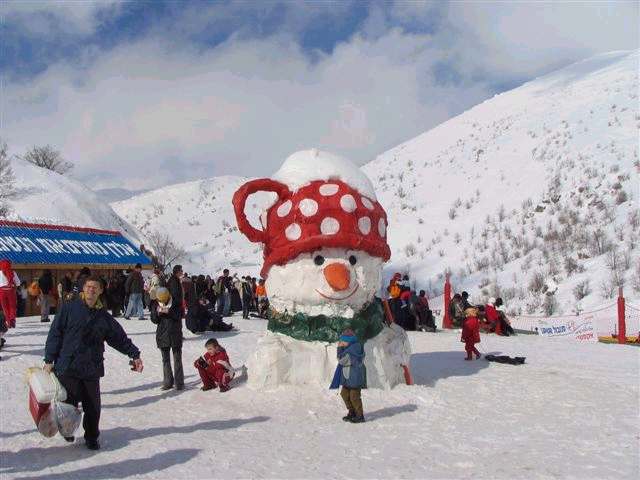
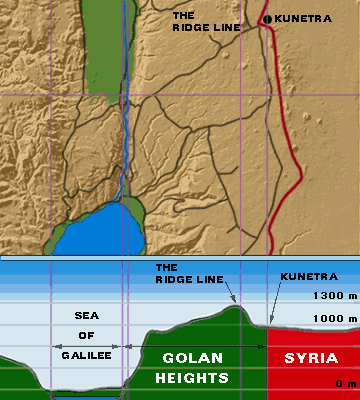
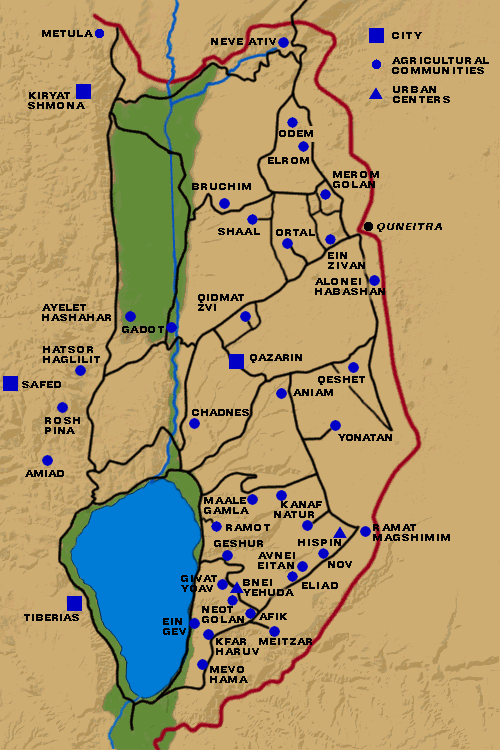
IsraeliGuy, a frequent commenter on SC, reminds us that the notion of Syria getting the Golan back is wildly unpopular in Israel, where the region's wines, skiing, and happy life-style have become a much-loved feature of Israeli life. Clinging to the Golan in Israel is not just about security, it is life-style. Israelis just want to have fun. Here are the poll findings:

padGolan Heights Winery, Kosher, Galilee, Israel

Golan is a brand representing affordable, young, quality wines providing excellent value for money.

Post Annapolis poll – some real figures from a real survey in Israel. From the article: “On the question of Syria, 62 percent said Israel should engage in talks with its foe, while 35 percent opposed.

But 69 percent said they opposed Israel giving up the Golan Heights plateau — captured from Syria in 1967 and demanded back by Damascus in any peace deal — in return for full peace, with only 28 percent supporting the move.”

To the full article, which includes more figures.

Here is what AnotherIsraeliGuy adds:

As I see it, there will be no war in Lebanon or Syria, for the next 5 years. Hizballah cannot afford a war and neither can the Syrian regime. Given that, Israel is not going to rush to make any deal with Asad. The deal Israel is looking for is a lease on the Golan and a flip. This is very far from the Syrian position. Barak has just said that he will not leave the government and induce elections because then Netanyahu will be elected. The chances of a deal with Syria in the next 5 years are slim to none.

What will happen to the wineries of the Golan Heights, a long term lease? (thanks why-discuss)

“…Prime Minister Ehud Olmert’s offer to Syria to return the Golan Heights in a directly negotiated land-for-peace deal again raises a big question for fans of Israeli wine. What might become of the Golan Heights Winery?

…Attention focuses on the 5.4m-bottle winery, because it is generally deemed Israel’s best. Its Yarden, Gamla and Golan labels are famous internationally. Yarden wines made their mark in America in the 1980s by inspiring a kosher wine revolution, reshaping preferences from sweet to dry.”

Speculation centers on a hope that Damascus might be open to a peace treaty that allowed the Golan Heights Winery and others to remain in operation on the plateau, perhaps under a long-term lease arrangement.

Aluf Benn sums it up in haaretz:

There is a new idea dominating public discourse: Israel will recognize Syrian sovereignty over the Golan Heights and hold the territory under a long-term lease agreement. The towns and military camps will stay in place, with a Syrian flag over them, and in the meantime we will see whether the Syrians behave themselves, conduct a neighborly policy and maintain a stable regime. This way we can stay on the Golan and feel as if it isn't ours, fulfill the Israeli dream of not being suckers, talk with the Syrians and give them nothing for it. Peace in return for peace.

The initiative of sovereignty/lease is backed by ministers Avigdor Lieberman and Meir Sheetrit. They were joined late last week by MK Ami Ayalon, who is a candidate for the leadership of the Labor Party and is trying to shake off his leftist image and outflank his rival, Ehud Barak, who nearly returned the Golan to Syria seven years ago. The three disagree on one thing: Lieberman is proposing a leasing agreement for a period of 99 years, Sheetrit will make do with 25 years, and Ayalon told Gidi Weitz in an interview for Haaretz Magazine he is talking about "50 or 80 years."

Those in the know and who are familiar with the detailed history of the negotiations with Syria say Damascus will not agree to such a proposal. They believe that at best it is possible to talk about a shared park over the territory in dispute, along the bank of Lake Kinneret, but not about maintaining Israeli infrastructure over the entire Golan.

Before Bashar Assad is asked about his opinion, it is worthwhile to point out four problems inherent in the leasing idea. "The British also leased Hong Kong." That is not accurate. Britain occupied Hong Kong during the Opium Wars and established there a Crown Colony with Chinese agreement for an indefinite period of time. Later the British leased more territory (the "new territories") for 99 years. At the end of the lease period, Britain restored to China the territory it had leased, as well as the colony. Unlike the Israeli occupation of the Golan, which brought about the displacement of most of the Syrian residents there and the destruction of their villages, the British kept the Chinese residents in place and even looked after their rights, and did not settle in their place farmers from Devonshire and Scotland.

Zubaida says:

Regarding the wineries, it may or may not be relevant that the Syrian Economy Ministry earlier this month authorised the import of wine, beer, cider, spirits and liqueurs as part of the government's avowed commitment to trade liberalisation.(Syria-News.com November 22nd)

“U.S. Seems to Soften Syria Stance,” by Solomon & Simpson

U.S. Seems to Soften Syria Stance
Diplomatic Shift Comes
As Peace Talks Expand;
'A Different Dynamic'

By CAM SIMPSON and JAY SOLOMON
November 30, 2007

WASHINGTON — Two days after the Bush administration moved to jump-start the Middle East peace process with talks in Annapolis, Md., there are signs that the new diplomatic campaign includes a shift in U.S. strategy: willingness to compromise with Syria, one of its most bitter regional rivals.

In strife-torn Lebanon — a nation where U.S., Syrian, Iranian and Israeli interests have collided for more than two decades — Washington's political allies agreed this week to end their opposition to the presidential bid of a candidate viewed as a Syrian favorite.

•  The News: The U.S. is signaling a new willingness to compromise with Syria, with its allies in Lebanon shifting strategy in a presidential vote after Damascus's decision to attend Mideast peace talks.
•  Background: The U.S. and its allies are striving to re-engage Damascus to break its alliance with Iran, Hezbollah and Hamas.
•  Positive Response: Syrian officials say the outreach could help stabilize the Middle East.

Even if the compromise doesn't break a yearlong deadlock over political control of Lebanon, it does seem to mark an important shift in U.S.-Syrian relations following the decision by Damascus to attend the Annapolis peace conference. It also appears the U.S. is holding out the possibility of even warmer relations with Syria if progress continues. The Bush administration is weighing support for a Russian initiative to hold Syrian-Israeli peace talks in Moscow early next year, a senior U.S. official confirmed yesterday.

Before Syria agreed to support the Bush administration's regional peace conference this week, the White House generally adhered to a policy of trying to isolate Damascus through financial sanctions and travel bans. The U.S. accuses Syria of supporting militants operating inside Lebanon, Iraq and the Palestinian territories.

A senior U.S. official involved in the new Middle East initiative said the Bush administration didn't advise its allies in Lebanon "one way or the other" on their decision this week to compromise. But the official did say that Secretary of State Condoleezza Rice went into the Annapolis conference hoping to advance both Israeli-Palestinian peace talks and a compromise on the Lebanese presidency.

"It would be going too far to say there's a sea change here," the official said of Damascus and Washington, "but there's definitely a different dynamic."

Lebanon has emerged as a principal theater through which Washington and its allies are competing for regional influence against Iran, Syria and their militant allies, such as the Lebanese militia and political party Hezbollah.

The White House has heralded Lebanon as among its success stories in the Middle East, as a pro-Western alliance of political parties swept to power in 2005 and forced Damascus to end nearly 30 years of military occupation. The Lebanese political bloc, known as the March 14 movement, has promoted Washington's calls for democratization of the Middle East, as well as many of its strategic and economic initiatives.

Over the past year, however, Syria's allies, principally Hezbollah, have pushed back and paralyzed Beirut's government in a sometimes violent battle for control over Lebanon's political system. This standoff intensified in recent weeks over the selection of the country's next president, a post that Beirut law requires be held by a Maronite Christian. Hezbollah and its allies have refused to convene a parliamentary vote to endorse March 14's candidates, raising fears of a split government, if not civil war.

In recent days, though, March 14 politicians, with Washington's consent, agreed to a compromise candidate for the presidency. Gen. Michel Suleiman, commander of the Lebanese Armed Forces, worked closely with Damascus during its military occupation of Lebanon and is already receiving support from some of Syria's Lebanese political allies.

March 14 leaders say the general's selection, while not their first choice, could help stabilize Lebanon, because of his leadership of a Lebanese military increasingly viewed as a unifying force in their country.

"Michel Suleiman is well-known to the Hezbollah and the Syrians," said Walid Jumblatt, a key leader of March 14. "If the Syrians don't want Suleiman, it means they don't want stability in Lebanon."

The concession on the Lebanese president comes amid a broader push by the U.S. and its allies to re-engage Damascus in other ways. American and Israeli strategists view this initiative as aimed at breaking Syria's alliance with Iran, Hezbollah and the Palestinian militant group Hamas, which have all increased their influence across the Middle East in recent years. It is also aimed at gaining greater support from Syria in cutting off militants infiltrating into Iraq.

U.S. and Israeli officials say they are also considering widening the initiative to directly address Damascus's claims to the disputed Golan Heights. This issue could be brought up at the Russian conference, according to U.S. officials.

Syrian officials are already responding positively to this outreach, saying it could potentially herald a stabilizing trend in the Middle East. [end]

All the major papers add their spin on Syria, which is the talk of the town

Deal signals a thaw in US-Syrian relations
MARK MACKINNON From Thursday's Globe and Mail

These are early days, with only the faintest stirring in the tea leaves that can be so impossible to read in the Middle East. But when the duelling parties in Lebanon are suddenly discovering a way to compromise and the Syrian regime says it invests "great hopes" in U.S. President George W. Bush, surely something is afoot.

Joshua Landis, Director of the Centre for Peace Studies at the University of Oklahoma and a Syria expert, said that the sudden acceptance by all sides of Gen. Suleiman – just one day after Annapolis – suggests that the U.S. had agreed to Gen. Suleiman's presidency as part of a deal to get Syria to attend the peace conference and lend its support to the talks between Israeli Prime Minister Ehud Olmert and Palestinian president Mahmoud Abbas.

Times: And the United States? “Look, a handful in the Arab League were saying they could not attend the conference unless Syria was put on the agenda,” a senior Bush administration official said. “So we put Syria on the agenda. What did it cost us? Nothing.”

However, American and Israeli officials said the time was not yet ripe for real peace talks with Syria. Prime Minister Ehud Olmert of Israel will have enough to do trying to get skeptics to agree to give up settlements in the West Bank and to share Jerusalem with the Palestinians, compromises Israel will have to make if the peace track with the Palestinians has any chance of working.

Trying to get the 12,000 to 15,000 Israeli settlers out of the Golan Heights, in addition, would make an already hard job close to impossible, Israeli officials said, and make it far less likely for Israel to start separate talks with Syria soon. Mr. Olmert echoed that with reporters before he flew home Wednesday night. “Conditions are not yet at the point” for talks with Syria, he said. “There’s enough that we will have to do that will be heartbreaking.”

Stephen J. Hadley, the national security adviser, said the ball was in Syria’s court.

“I think for Syria, there is a fundamental choice,” Mr. Hadley said during remarks on Wednesday night at a forum at the Johns Hopkins School of Advanced International Studies.

“Are they going to make a strategic decision, give up their support for terror, let Lebanon alone, support a new Iraqi government, rather than obstruct it and undermine it, and make a decision for peace?” he asked. “If they do, I think there are opportunities for them in the Golan Heights.

“The door is open to them.”

Syria upbeat on chance to reopen Golan issue
By Khaled Yacoub Oweis, Reuters – USA

The Middle East peace conference has boosted Syria's campaign to regain the occupied Golan Heights, even though no direct talks with Israel were initiated at the meeting, a Syrian official said on Wednesday.

In the first official Syrian reaction to the meeting in Annapolis, Maryland, Ahmed Salkini, official spokesman for the Syrian Embassy in Washington, said Damascus had made a diplomatic step forward by thrusting the Golan issue into the international spotlight.

Joshua Landis, a Syria specialist at the University of Oklahoma, said Syria had shown flexibility by attending the Annapolis conference.

"Syria has shown it is not as ideological as some in the U.S. administration (who initially opposed inviting it to Annapolis) had thought. Syria has sent a message to its Hamas allies that it is willing to bargain (with the United States)," Landis said.

Signs of US-Syria Thaw After Summit
By DONNA ABU-NASR and ANNE GEARAN
The Associated Press, November 29, 2007

ANNAPOLIS, Md. — Syria left a U.S.-hosted Mideast peace conference without a specific promise from Israel to restart stalled talks, but with signs the Bush administration is softening its diplomatic hard line against an Arab state that has played a role in past peace efforts.

Syrian delegates received warm handshakes and words of thanks from Secretary of State Condoleezza Rice, whose administration has largely shunned Syria since early 2005.At the close of Tuesday's speeches and meetings focusing on the Israeli-Palestinian conflict, Rice walked over to the Syrian delegates, according Imad Moustapha, Syria's ambassador to Washington.

“Syrian Track and Russian Mediator” by Ben Caspit

Here is a good take on Russia's proposed role in mediating Golan 

Syrian Track and Russian Mediator
Ma’ariv (p. 2) by Ben Caspit

A special envoy of President Putin has recently been delivering messages between Damascus and Jerusalem, in a dramatic Russian effort to revive the negotiations between Israel and Syria, reflecting growing Russian involvement in the peace process. The emissary is  Russian Deputy Foreign Minister Alexander Sultanov, who is also President Putin’s special envoy to the Middle East. 

Senior political sources last night told Ma’ariv that at least twice in the past few weeks Sultanov visited Damascus, where he spoke personally with Syrian President Bashar Assad, and that Sultanov also visited Jerusalem and Tel Aviv, where he delivered reports to senior officials, probably Prime Minister Ehud Olmert and his aides.

Apparently Sultanov is conveying messages between Assad and senior Israeli officials, including Olmert and Defense Minister Ehud Barak. Apparently Sultanov’s visits are being kept secret in order to avoid angering the Americans. It now emerges that Olmert’s sudden visit to Moscow in the dead of night a few weeks ago was also connected with this diplomatic demarche. Prime Minister and former foreign minister Yevgeny Primakov has also been in Syria and conveyed messages between Damascus and Jerusalem. 

At the same time, it has been learned that the Americans have probably agreed to the Russian demand and will allow a conference to be held as a continuation of the Annapolis conference, three months from now in Moscow. At this conference the international monitoring apparatus is intended to receive a report on the progress of the negotiations between Israel and the Palestinians, but the Russians also hope to open the Israeli-Syrian track officially at that event.

In the contacts with Damascus, Israel has been making discreet efforts to learn Syria’s position on whether it may agree to grant Israel a long-term lease over the Golan Heights. Israel also asked whether Assad is prepared, in a peace treaty with Israel, to take action against terrorism and abandon the axis that he established with Teheran.

In recent private conversations between Israel and Russia, the Russians have been saying, in the name of President Putin, that only Russia is capable of mediating between Israel and Syria. They say that President Assad trusts the Russian government, and especially President Putin. “We have real influence in Damascus and we can take steps to revive the negotiations with the Syrians under special conditions of trust,” one of the Russian diplomats said. Well-informed Israeli officials say there is truth to the Russian argument. “The Syrians suspect the Americans just as much as the Iranians do, and claim that all that interests Washington is bringing down the regime. With Moscow, in contrast, the dialogue is more transparent and intimate, and therefore reaches a business-like level,” one of the Israeli sources said.

Russia’s willingness to help on the Syrian track reflects Russian’s growing involvement in the Middle East in general. Recently there have been reports of closer relations between Russia and Saudi Arabia, which may include consultation and cooperation which did not exist in the past. It has also emerged that the Russians, who promised to suspend the supply of nuclear fuel rods to Iran for the nuclear reactor in Bushehr, have told their Israeli counterparts that they intend to supply these rods in the near future and will not violate their contract with Iran. The Russians say that the threat of an Iranian nuclear bomb lies not in the reactor at Bushehr, but in the facilities for enrichment of uranium by means of centrifuges. Nevertheless the Russian track is only one of Israel’s channels of contact with Damascus. Another important avenue to which President Shimon Peres referred is the Turkish track.

In the meantime it has emerged that there are substantive disagreements between Israel and the US administration over the timetable for the Iranian nuclear bomb. Israeli intelligence believes that Iran will pass the point of no return next year or at the beginning of 2009, but the Americans think that Iran is still a long way from achieving a military nuclear capability, and that the point of no return will not be before 2012, at the end of the first term of the next president, or that of his successor.

Russian Foreign Minister Sergei Lavrov , who met Defense Minister Ehud Barak in Washington, had a long talk with him on the Iranian nuclear issue.

Moscow May Host Middle East Follow-Up
(By Robin Wright and Michael Abramowitz, The Washington Post)

Russia and the United States are tentatively planning a second Middle East peace conference, in Moscow in early 2008, with major parties hoping to begin a comprehensive peace effort that would include direct talks between Israel and Syria, according to U.S., Russian, Arab and European officials.

Annapolis Round Up: Was Syria a Winner at Annapolis?

If Lebanese Chief of Staff Michel Suleiman becomes president of Lebanon, Syria will be a winner as a result of Annapolis. Lebanon as well.

Hariri's people announced today that they have reversed their decision to reject Lebanon's Army chief of Staff as president. The Future Movement is now backing Michel Suleiman for president. Here is the story: Lebanese majority backs army commander as president, in the Jerusalem Post.

This decision must be connected to Syria's decision to go to Annapolis. How? We don't yet know. Did Saudi Arabia broker it? Did France? Both? It is hard to tell. It is the right choice for Lebanon, given the circumstances.

Here is Amal Saad-Ghorayeb's analysis in the Daily Star:

Electing Suleiman "would signal a victory of sorts for the opposition, but a blow to Aoun," said Amal Saad-Ghorayeb, visiting scholar at the Carnegie Middle East Center. "Part of the rationale behind this was to get him to withdraw his candidacy and put him in a corner. One motive behind this is to prevent Aoun from becoming president, and the other is to find a solution."

US-Syrian relations will be the key geopolitical dynamic affecting Suleiman's chances, and the two sides seem to be smiling on his candidacy, Saad-Ghorayeb said.

"It appears very much to be a Syrian-American agreement," she said. "It's not because of Annapolis. We were witnessing some Syrian-American rapprochement before Annapolis. I think that the [rapprochement] process will continue for some time, as long as the Americans and Syrians are engaged in talks."

March 14 touting Suleiman represents a victory for the opposition, which had raised Suleiman's name as a compromise solution before declaring Aoun the opposition's presidential nominee, Saad-Ghorayeb said.

"It's basically everything the opposition wanted," she said. "This is the exact same initiative the opposition was proposing.

"It appears the US has backpedaled, as has March 14. It's a reversal of policy. Anyone who goes back a few weeks will see that."

Here is Alex's summary of an article by Randa Tekkidine in Al-hayat.  She strikes a very different tone than her usual Syria bashing heckle.

She is saying that although the original plan was that Syria would pay in advance (help Lebanon elect a pro west president) before France rewards Syria with improved relations, the Syrians managed to get what they wanted without paying in advance and without paying anything at all.

?????? ??????? ???????? – ???????
???? ??? ????? ?????? – 28/11/07//

???? ??????? ???? ????? ?? ????? ??? ?????? ??????? ?????? ??????? ?? ??? ????? ??????? ??? ????? ?????? ?? ??? ????? ??????? ???????? ??????? ?????????. ???? ???????? ??????? ???????? ??????? ?????? ?? ????????? ?? ?????? ???? ??????? ????????? ?????? ???? ??????? ?????????? ??? ??? ???????? ?? ?????? ???????? ?? ????? ?? ???? ??? ?? ???? ?????? ????. ??? ?? ??? ????? ??? ???????? ??? ???? ?????? ?? «??? ????? ?? ???? ??????? ?????? ???? ??????? ??????? ?????? ???????? ????». ??? ???? ??? ???? ?????? ??????? – ?????? ???????? ????? ????????? ????????? – ??????? ?? ????????? ??? ???? ????? ?? ??? ????? ????? ?????????? ??????? ?? ?????? ??????? ??? ???? ??? ?? ???? ?????? ?????? ???? ????? ????? ?? ?? ???? ??????? ????. ??? ???? ????? ????? ??? ??? ??????? ???????? ?????? ??? ?????? ???????? ?????? ????? ??????? ???????? ???? ????.

?????? ???????? ??? ?????? ?????? ??? ?? ??? ????? ?? ???? ????? ????? ??? ?? ??????? ??????? ?? ???? ???????? ???????? ??????? ???? ?????? ????? ?????? ?????? ???????? ??? ?????? ????? ??????? ?? ?????? ?????. ???? ??? ?????? ????? ????? ?????? ??? ?????? ?????? ????? ?? ?????? ???????? ??? ?????? ??? 30 ????? ?? ??????? ??? ?????? ??????? ???? ?? ??? ?????? ?????? ??? ??????? «??? ????» ? «???? ???». ????? ????? ???? ???? ????? ??????? ??? «??? ????» ???? ????? ????? ?? ?????? ????? ???? ?????? ?? ???? ?????? ?? ????? ???? ?????????? ?????? ???? ?????.

???? ?? ??? ??????. ?????? ??? ???? ?????? ??? ???? ????? ?????? ?????? ?? ???? ???????? ???? ??????? ??????? ???? ????? ??? ???????? ??? ?? ?? ????? ?????? ??? ????? ?? ??? ???? ????? ??? «??? ????»? ??? ??? ????? ?? ???? ??? ???????? ?????????? ??? ??????? ???? ???? ?????? ???? ?????????? ????????. ????? ??? ??? ????? ????? ??? ??? ??? ????? ?????? ?? ?????? ??????? ??? ?????? ??????? ????? ???.

???? ?? ?????? ?? ???? ???? ??? ??? ?????? ??????? ???? ??? ???? ???????? ???????.????? ??? ?????? ???? ??? ??????? ???? ???? ?? ??? ??????? ????????? ????????? ???? ?????? ??? ???? ?????? ???????? ?? ??? ?????? ??????? ??? ????? ?? ?????? ??????? ??? ??? ??? ?????.

??? ???? ???? ?????? ???? ?????? ??? ??? ??? ?? ????? ?????? ????? ?? «??? ????» ??? ??????? ?? ????? ?????? ???? ????? ???? ?????? ??? ????? ????? ?? ?????

????? ?? ??????? ?????? ?? «??? ????» ????????? ??? ???? ??????? ???????? ???????? ???????? ?????? ???? ??????. ??? ?? ??????? ??????? ???? ???????? ???? ???? ?? ??? ???? ???? ???? ????? ?? ????? ????? ??? ?????? ??? ?????? ??????? ????? ????? ????? ??????? ?? ?????? ?????????. ??????? ?????? ???? ?? ????? ??????? ?? ????? ?? ??? ?? ???? ?? ??? ????. ???? ??? ???? ????? ?????? ???? ????? ??? ???? ???? ??? ????? ????? ?????? ??????? ?? ?????: ?? ????? ???? ???? ???? ?? ??????????. ???? ??? ?????? ??? ?????? ?????? ?????? ?????? ?? ???? ??? ??? ???? ????? ????? ?????? ????? ??????? ????.

????? ????? ?? ?????????? ??????? ?? ?? ????? ???????? ???? ??? ????? ??? ??????? ??????? ????: ?? ?? ?????? ??????? ???????? – ??????? ?? ???? ???? ??????  

The Lebanese Al-Akhbar newspaper trumpets that Syria has gained other concessions. Idaf gives a summary in the comment section as follows:

France gave an official invitation to Syrian foreign minister Walid Al-Muallem to visit Paris and finalize the Lebanese president issue.

In addition, Paris said that a follow-up conference to Annapolis in Paris will take place on Dec 17 and another one in Moscow to discuss the Golan in early 2008.

As for the Palestinians and Israelis, how did they do?

Here are the two controdictory versions. I think Uri Avnery is more pursuasive, although I would like to believe Ignatius. Avneri actually makes a convincing argument; whereas, Ignatius gives us a "keep-hope-alive" pep-talk. Here are the two articles:

The Joke in Annapolis: How to Get Out? by Uri Avnery

How Annapolis Helps By David Ignatius, November 28, 2007; Page A23

Hugh Macleod interviews Palestinians in Lebanese camps to remind us that refugees in the camps continue to live a life of missery. They are keeping hope alive – but it is a different sort of hope.

Right of return – an unbending faith 
Palestinian refugees hold a key piece to Middle East puzzle
Hugh Macleod, Chronicle Foreign Service

Even though Palestinian and Israeli leaders agreed Tuesday to work toward a peace settlement by the end of next year, they will still have to confront an intractable issue – the right of Palestinian refugees to return…

Syria says it will normalize ties to Israel only after full withdrawal
Wed Nov 28, 2007 8:23am IST
WASHINGTON (Reuters) – Syria told a U.S. peace conference on Tuesday that Israel should pull out of occupied land before Arab countries would normalize ties with the Jewish state.

"The establishment of normal ties with Israel … must be the fruit of comprehensive peace and not precede it," Syrian Deputy Foreign Minister Fayssal al-Mekdad told a closed session of the conference in Annapolis, Maryland, attended by U.S. Secretary of State Condoleezza Rice.

"To phrase it clearly and decisively that this (normalization) comes after the total Israeli withdrawal from the 1967 Arab land," he said in a speech obtained by Reuters.

"We are sincere in seeking a comprehensive and just peace and posses the political will to achieve it."

Talks between Israel and Syria collapsed in 2000 after Damascus declined an Israeli offer to withdraw from most of the Golan Heights but not what Syria described as the full occupied territory.

Syria had made it clear that it would only attend the talks in Annapolis if the Golan was on the agenda. The demand was met by Washington which accuses Damascus of supporting militant Palestinian and Lebanese groups.

Mekdad reiterated the Syrian position that Israeli occupation of Arab land was the root of instability in the Middle East.

Turkey's Alevi question

As the current Turkish government slowly seeks ways of better accommodating the country's Kurdish minority, the relationship of the Alevi religious minority to the state has also come into question. Alevis, followers of a humanistic branch of Shia Islam, have in large part been suppressed by Ankara. The ruling moderate AK Party hopes to diffuse tensions by carving a clearer space for Alevi practice and belief in the country. Some Alevi groups, however, are suspicious of attempts at reconciliation with the state, seeing "assimilation" as a worse alternative to ostracism.

What Happened on Day One of Annapolis?

In this news round up on the Annapolis Conference, I begin with the significance of President Bush's opening remarks.

Here is the text of Bush's Speech on Monday, made at the opening ceremonies of the conference. Bush's words will probably be the most important aspect of the conference. We all want to hear him take "possession" of the peace process. He did not do this on Monday. Instead, he repeated the standard pablum of the last 7 years.

Bush's speech cannot be read as promising for Syria. Syria was not mentioned.

The stress was on Democracy – Democracy as a precondition for any concessions to Palestinians.

The only concrete help for Palestinians offered by Washington was to assist democratic "capacity building." Bush avoided any mention of UN Security Council Resolution 242, which is the basis of international law and has been the starting point for all previous peace efforts. He stressed that peace must come through a "negotiated settlement," which is code for the Palestinians giving up hunks of the West Bank and East Jerusalem. "Negotiated Settlement" rejects international law and the 1967 borders and accepts the concept of a solution based on the balance of power between Israelis and Palestinians, which is very lopsided in Israel's favor. It means Palestinians will have to accept further land loss. Many were hoping that Bush would backtrack on his previous promise to Israel that it would not have to return to 1967 borders and could keep settled parts of the West Bank. Bush did not backtrack. Instead he seemed to confirm his previous promise by not mentioning 242. Here is the key paragraph.

The Israelis must do their part. They must show the world that they are ready to begin — bring an end to the occupation that began in 1967 through a negotiated settlement. This settlement will establish Palestine as a Palestinian homeland, just as Israel is a homeland for the Jewish people. Israel must demonstrate its support for the creation of a prosperous and successful Palestinian state by removing unauthorized outposts, ending settlement expansion and finding other ways for the Palestinian Authority to exercise its responsibilities without compromising Israel’s security.

The only oblique reference to Syria was a reference to Lebanon. Bush stressed the important of cultivating "Democracy" in Lebanon, which is code for defeating Hizbullah and empowering Sunni Lebanese and Saad Hariri's Future Movement over Shiites, pushing out Syrian influence, and defeating the Lebanese opposition. He made no mention of Lebanese compromise or a negotiated settlement, which must have been music to the ears of the March 14 movement.

Bush to Syria: Leave Lebanon alone
Nov. 27 (UPI) —

U.S. President George Bush on Tuesday used a Middle East peace conference to warn Syria against interfering in Lebanon's effort to elect a new president.

Some 40 nations are attending the conference at the U.S. Naval Academy in Annapolis, Md., where Bush announced an agreement between Israel and the Palestinians to begin talks on a peace treaty immediately.

Toward the end of his remarks, Bush turned his attention to Lebanon, which has been divided by pro- and anti-Syrian factions. Bush urged the Arab world to let democracy prevail.

"The Lebanese people are (in the) process of electing a president. That decision is for the Lebanese people to make, and they must be able to  do so free from outside interference and intimidation," Bush urged. "As they embark on this process, the people of Lebanon can know that the American people stand with them and we look forward to the day when the people of Lebanon can enjoy the blessings of liberty without fear of violence or coercion."~

The following is a selection of articles:

Syria informed Mesha’l and Tehran that “Golan is a national priority, Hamidi, al-Hayat (Translation by mideastwire.com)

Ibrahime Al-Humaydi of Al-Hayat, an independent Saudi owned newspaper, wrote on November 27: “Knowledgeable sources confirmed to Al-Hayat yesterday on the eve of the convening of the international conference in Annapolis that peace with Israeli is a “strategic choice” for Syria. The sources stressed the importance of Israel “withdrawing from all occupied Arab lands” and the importance of the conference acting as a “launching pad” for negotiations along all the peace tracks. Palestinian sources announced to Al-Hayat that the Syrian foreign minister Walid Al-Muallem received yesterday the head of the Hamas politburo Khaled Mesha’l after he met with the Iranian ambassador in Damascus Hassan Akhtari. The sources added that Al-Muallem “explained to Mesha’l and Akhtari the reasons behind Syria’s decision to attend the conference”.

“The sources announced that Al-Muallem “focused on the status of the Golan Heights as a top national priority for the Syrians and that it is not right to convene an international peace conference without discussing the Golan issue whether it had a serious chance of launching serious negotiations or if it was just a platform for reciting attitudes and points of view”. Syrian officials pointed to the statement issued by the late Syrian president Hafiz Al-Assad ahead of the launching of the peace process in Madrid in 1991 in which he announced: “it is not right for the nation that a conference to solve the Arab-Israeli struggle be convened while the issue of the Golan Heights is not included in its agenda”. The Syrian delegation to the conference is headed by the deputy foreign minister Faisal Al-Miqdad…

“Syrian sources clarified to Al-Hayat that Damascus’s attitude is based on the fact that “peace was and still is a strategic option”. After the sources noted that the past seven years were distinguished by two things: the absence of the peace process from the agenda of the American president George Bush and the lack of a political will for peace in the government of the Israeli Prime Minister Ehud Olmert, they noted that the Syrian officials “remained steadfast in their attitude calling for resuming the peace negotiations and stressing the necessity of working towards just and comprehensive peace vis-à-vis the Israeli refusals and American obstructions”…” – Al-Hayat

Report: Bush, Rice won't address Golan issue
Jerusalme Post

Neither US President George W. Bush nor Secretary of State Condoleezza Rice will mention Syria or the future of the Golan Heights in their speeches Tuesday, Channel 10 quoted a State Department official as saying Monday.

However, the official said, Syria's delegate to the parley, Deputy Foreign Minister Faisal al-Miqdad, would be permitted to address the Golan issue if he wished.

The report comes after an editorial in the Syrian daily Tishrin published Monday declared that Syria would " attend the Annapolis conference in order to examine the US's commitment to peace."

According to the writer, the Syrians are pessimistic because of the Americans' past history.

"Syria agreed to attend the Annapolis conference but it is not naïve. [Syria] knows Israel does not want peace and is responsible for the seven-year hiatus in the peace process."

Syria's quest to regain Golan takes new shape
Reuters – By Khaled Yacoub Oweis
Under the gaze of an Israeli tank, Syrian bulldozers slice through rocky terrain to build roads just inside a ceasefire line separating the occupied Golan Heights from the rest of Syria.

Apartment blocks will follow for thousands of refugees on land facing their hilltop village of Adnanieh, which was lost to Israel in battle 40 years ago along with the rest of the Golan, a fertile plateau south of Damascus.

More than 1,000 flats for refugees from Adnanieh are planned, and infrastructure is being laid out for housing schemes facing other occupied villages, government engineer Hilal al-Ghaeb told Reuters.

"These projects are a message to Israel. The refugees will no longer be scattered in slums and camps all around Syria. Soon they will live here and stare right at their Israeli occupiers," Ghaeb said.

The Golan is at the focus of Syria's participation in the U.S. sponsored peace conference in Annapolis, Maryland, which starts on Tuesday….

Among Golan refugees, who number 600,000, counting their descendants, Annapolis meanS little.

"Israel is feeling very comfortable with U.S. support higher than ever and the Arabs in shambles. I look daily across this line and see Israeli settlers cultivating more of our land," Hassan Ibrahim said.  Continued…

The Annapolis Summit
Sami Moubayed
Annapolis Has No Legitimacy Without Syria
November 26, 2007: Washington Post Global

Syria finally decided on November 25 to attend the U.S. peace conference in Annapolis. This came only after the U.S. incorporated the Golan Heights issue into the conference agenda, after Syrian protests that it would not attend unless the occupied Heights were on the conference table. Had Syria not chosen to attend, the conference would have been doomed to fail. The reason is simple: the Americans cannot talk peace in the Middle East without Syria.

Not much has changed in terms of Syrian demands towards the Middle East peace process since Madrid, 1991. I’ll first detail the story here at length, because I believe it to be a prelude to what will happen at Annapolis on November 27.

On March 6, 1991, after the liberation of Kuwait, President George Bush Sr. gave his famed victory speech, saying: “We must do all that we can to close the gap between the Israelis and the Palestinians.” The Syrians believed him and showed enthusiasm towards what came to be known as the Madrid Peace Conference. The Israelis, led at the time by Yitzhak Shamir, did not. They were distracted by an international conference, co-sponsored by the U.S.S.R., which would bring them face-to-face with all of the Arab countries.

Seven days later, Bush sent his Secretary of State James Baker to meet President Hafez al-Assad in Damascus. Before the meeting, U.S. Ambassador to Syria Edward Djerjian advised, “Nobody can predict how long this meeting’s going to last. So be careful how much you drink. Assad will not leave the room. If you drink too much, the forces of nature will overcome you!”

After the meeting, Baker told the U.S. President, “Assad gave me the clear impression that he is serious about pursuing peace, but that he will be a tough nut to crack!” Assad told his American guest: “A peace conference should not be convened just once and then disappear. The conference should be re-convened whenever necessary.” Assad insisted that the U.N. co-sponsor the event, but Baker replied, “Mr. President, the Israelis will not accept the United Nations—they hate the United Nations.” Baker promised a U.S. guarantee to get the Israelis to withdraw from the Golan. The Syrians went along with that—and the rest is history. …..

The Syrians were, and still are, unimpressed by the Israeli conditions for peace, which included halting Syria's cooperation with Hamas, Hezbollah and Iran.

All of these recent events help explain why the Syrians are worried as they head off to Annapolis. Countries interested in peace don’t go around flying into their neighbor’s airspace without permission, especially when the two countries are in a state of war. They don’t fire missiles into other countries’ territory. The last time I checked, this was called ‘war-making’ rather than ‘peace-making.’ But despite all that, the Syrians have been committed to peace since Madrid and are willing to try Annapolis. But it’s doubtful that Annapolis will lead to a breakthrough, with George W. Bush in the White House, and Ehud Olmert in power in Tel Aviv.

The real goal at Annapolis
Mohamad Bazzi, Edward R. Murrow Press Fellow
November 27, 2007
Christian Science Monitor

This week's Mideast summit in Annapolis, Md., is bound to fail – unless the Bush administration makes sure that the gathering leads to renewed Israeli-Syrian peace negotiations. That could be the first step to ending Syria's isolation and giving its renegade regime fresh incentive to reform. …

The Annapolis summit is a crucial opportunity to woo Syria away from its increasing reliance on Iran and North Korea. Syrian President Bashar al-Assad can actually deliver on a peace deal with Israel – unlike the weak Palestinian president, Mahmoud Abbas, who lost control of the Gaza Strip to the militant group Hamas in June. The Israeli-Syrian peace track can move faster than Israeli-Palestinian negotiations, where the two sides are still far apart on the central issues: Israeli settlements, the fate of Palestinian refugees, and the final status of Jerusalem. ….

Syria's leaders have consistently said that full peace is possible, but only if they recover all of the Golan. In 2000, President Bill Clinton led marathon talks between Assad's father, Hafez, and then-Israeli Prime Minister Ehud Barak. Those discussions collapsed over a sliver of land that would have given Syria access to the Sea of Galilee, a major source of water for Israel. To reach a final settlement, the US must push Israel and Syria back to negotiations – without preconditions. ….

Mohamad Bazzi, who was Newsday's Middle East bureau chief for four years, is the Edward R. Murrow Press Fellow at the Council on Foreign Relations.

Condi's Road to Damascus | 11/27
GLOBAL VIEW By BRET STEPHENS Wall Street Journal

Remember Nancy Pelosi's spring break in Damascus? Condoleezza Rice apparently does not. When the House Speaker paid Syrian strongman Bashar Assad a call back in April, President Bush denounced her for sending "mixed signals" that "lead the Assad government to believe they are part of the mainstream of the international community, when in fact they are a state sponsor of terror." Today, said sponsor of terror will take its place at the table Ms. Rice has set for the Middle Eastern conference at the Naval Academy in Annapolis, Md.

[Bashar Assad]

Only at Foggy Bottom would Syria's last-minute decision to go to Annapolis be considered a diplomatic triumph. The meeting is supposed to inaugurate the resumption of high-level negotiations between Israelis and Palestinians, with a view toward finalizing a deal on Palestinian statehood before the administration leaves office. On a deeper plane of geopolitical subtlety, it is supposed to bring Israel and the Arab world together in tacit alliance against Iran.

This raises three significant questions. First, how does Syria's presence at Annapolis affect those goals? Next, how does Syria's presence affect U.S. policy toward Syria? And what effect, if any, will all this have on Syria's behavior in the region?

Much is being made of the fact that, in accepting the administration's invitation, Syria apparently reversed a previous decision, coordinated with Iran, to boycott the conference. This plays into the view that Syria can be persuaded to abandon its 25-year-old ties to Iran and return to the Arab fold, thereby severing the encircling chain that links Tehran to Damascus to southern Lebanon to the Gaza Strip. High-profile ridicule of the conference by Iran's Mahmoud Ahmadinejad (who called it "useless") and spokesmen for Hezbollah and Hamas add to the impression that Mr. Assad may be prepared to chart an independent course — all for the modest price of the U.S. agreeing (with Israel's consent) to put the issue of the Golan Heights on the conference's agenda.

It really would be something if the Syrian delegation could find their own road to Damascus on the shores of the Chesapeake Bay. But that would require something approximating good faith. The Syrians' decision to be represented at Annapolis by their deputy foreign minister — his bosses evidently having more important things to do — is one indication of the lack of it. So is the Assad regime's declaration (via an editorial in state newspaper Teshreen) that their goal at Annapolis is "to foil [Israeli Prime Minister Ehud] Olmert's plan to force Arab countries to recognize Israel as a Jewish state." And lest the point hadn't been driven home forcefully enough, the Syrian information minister told Al Jazeera that Syria's attendance would have no effect on its relations with Iran or its role as host to the leadership of Hamas and other Palestinian terrorist groups.

At best, then, Syria will attend Annapolis as a kind of non-malignant observer, lending a gloss of pan-Arab seriousness to the proceedings. At worst, it will be there as a spoiler and unofficial spokesman of Hamas, Hezbollah and Iran. If it's clever, it will adopt a policy of studied ambivalence, with just enough positive chemistry to induce the administration into believing it might yet be prepared for a real volte face, provided the U.S. is also prepared to rewrite its Syria policy. Recent attestations by Gen. David Petraeus, that Damascus is finally policing its border with Iraq to slow the infiltration of jihadis, suggest that's just the game they mean to play.

What price will the U.S. be asked to pay? Contrary to popular belief, recovering the Golan is neither Syria's single nor primary goal; if anything, the regime derives much of its domestic legitimacy by keeping this grievance alive. What's urgently important to Damascus is that the U.N. tribunal investigating the 2005 murder of Lebanese Prime Minister Rafik Hariri be derailed, before the extensive evidence implicating Mr. Assad and his cronies becomes a binding legal verdict. No less important to Mr. Assad is that his grip on Lebanese politics be maintained by the selection of a pliant president to replace his former puppet, Emile Lahoud. Syria would also like to resume normal diplomatic relations with the U.S. (which withdrew its ambassador from Damascus after Hariri's killing), not least by the lifting of economic sanctions imposed by the 2003 Syria Accountability Act.

No doubt the Syrians believe the U.S. can deliver on these items: Dictators rarely appreciate the constraints under which democratic governments operate. Yet there is no credible way the U.S. can deliver on the first demand, and only discreditable ways in which it could deliver on the second. The administration may be tempted to re-establish normal diplomatic relations and ease sanctions, which is about as much as it can do. Yet Damascus would view these concessions either as signs of niggardliness or desperation, and hold out for more.

Put simply, there is nothing the U.S. can offer Mr. Assad that would seriously tempt him to alter his behavior in ways that could meaningfully advance U.S. interests or the cause of Mideast peace. Yet the fact that Ms. Rice's Syria policy is now a facsimile of Speaker Pelosi's confirms Mr. Assad's long-held view that he has nothing serious to fear from this administration.

So look out for more aggressive Syrian misbehavior in Lebanon, including the continued arming of Hezbollah; the paralysis of its political process; the assassination of anti-Syrian parliamentarians and journalists; the insertion of Sunni terrorist cells in Palestinian refugee camps, and the outright seizure of Lebanon's eastern hinterlands. Look out, too, for continued cooperation with North Korea on WMD projects: Despite Israel's September attack on an apparent nuclear facility, the AP reports that North Korean technicians are back in Syria, teaching their Arab pupils how to load chemical warheads on ballistic missiles. And don't hold your breath expecting Syria's good behavior on its Iraqi frontier to last much longer.

In the meantime, we have the Annapolis conference, and the one-day photo-op it provides Ms. Rice. In the spirit of giving credit where it's due, the least the Secretary can do is invite the Speaker to the party.

“How Syria Decided to Participate at the Deputy F.M. Level,” by Hamidi

Ibrahim Hamidi explains "How Syria Decided to participate in at the Deputy F.M. Level

Here is a loose synopsis by JL: 

The decision only came after an intense series of phone calls between Syria's Foreign Minister Walid Moualem and the foreign ministers of Saudi Arabia, Spain, Turkey, and Egypt, all of whom pressured Syria to participate. Calls from Iran's President pressured Syria not to go.

Syria decided to go but the question remained at what level – the Foreign Minister, Deputy F.M. or Ambassador Imad Moustapha.

In the end, the middle road was decided on. In part this was because Michael Corbin, the US Charge d'affaires in Damascus, supplied the government with a finalized Annapolis schedule that included under the title of the third Tuesday session – "Comprehensive Peace" – two subheadings were added. One for the Syrian track and a second for the Lebanon track. This was an important element to the decision because Syrians can claim that the Golan is on the schedule, which has been Damascus' consistent demand from the beginning. Syrian authorities claim that they will use any legitimate foreign venue to raise the issue of the Golan and press for the execution on international law concerning this issue.

??? ???? ????? ???????? ?? ???????? ??? ????? ???? ???? ?????????

???? – ??????? ?????     ??????     – 26/11/07//

???? ????? ??? ???????? ?? ??????? ?????? ?????? ???? ???? ???? ?? ????? ???????? ?????????? ????? ????? ???? ???????? ???? ???????? ????? ????? ???? ??? ???? ????? ??????? ???? ???? ??? ?? ?????? ??????? ??????? «?????? ??????» ????? «?????? ??????».   

????? ????? ?????????? ????? ?? «??????» ??? ?? ???? ??????? ??????? ???????? ??? ??? ??????? ????? ??? ???? ???????? ?????? ???? ?????? ?????? ???????? ??????? ?????? ???? ?????? ????????? ????? ????? ????????? ??????? ??? ??????? ??????? ???? ??? ????? ??????? ????? ??????? ??????? ???? ???? ?????? ???????? ??????? ???? ????? ?????????? ????? ????? ??? ????? ????????.

????? ?? ??? ????????? ?????? ??? «?? ????? ??? ?????? ??? ????? ????? ???? ?????? ?????? ????? ??? ?????? ????????? ?? ???? ??»? ??? ??? ??????? ??? ???? ???????. ??? ??? ?????? ???????? ????? ????? ???? ??????? ?????? ??????? ???? ????? ????  ??? ??? ?????? ?????.

????? ????????? ???? ???? ???????? ??? ????? ?? ???? ????? ??????? ?????? ?? ??????? ?? ?????? ?? ?????? ???? ????? ????? ??? ?????? ?????? ???????? ??? ?? ???? ?????? ????????? ??? ????? ??????? ??"?? ???" ????? ???????? ??????. ???? ??????? ??? ??? ?????? ??? ??????? ??? ?????? ??? ????? ?????? ???? ??????. ??? ?????? ?? ??? ????? ?????? ?????.

????? «??????» ?? ?????? ???????? ???????? ????? ?????? ???? ???? ????? ????? ??????? ?????? ?? ????? ???????? ???? ?????? ?????? ????? ????? ???????? ????? ???? ???? ????? ?? ????????? ??????? ???????? ?? ????. ?? ??? ??????  ???? ????? ?????? ???? ?? ???? ??????? ??? ??????? ????? ??? ?? ?????? ??????? ?? ???????? ??????? ?? «?????? ??????» ????? ?????? «?????? ??????» ? «?????? ????????» ? «???????» ?? ????? ??????? ?????? ???????? ???? ???? ??? ??? ??? «????? ???? ???? (?? ??????) ??????? ????? ?? ??????? ????? ?????? ?????? ??????» ?? ?????????.

???? ????? ????? ????? ?? «?? ?????? ??? ??????». ????? ?? «??????» ?? ???? «???? ???? ?????? ?? ??????? ??? ???? ?????? ??????? ?? ???????. ???? ??????? ????? ?????? ??????? ???? ?? ???????? ??????? ?????? ?? ??????? ???? ?????? ???????? ??? ???? ?????? ??????? ?? ?????? ??????? ?????? ??????». ??????? ?? ????? ??????? ?????? ?? ??????? «???? ????». ?????? ??????? ??? ?? ???? ?? ?? ??????? «????? ???? ?????? ?????? ?????? ????? ?? ?? ???? ????? ????. ????????? ??????? ??????? ???????? ?? ??????? ?????? ?? ????? ???? ?? ?? ???? ??????? ?? ?? ???? ????. ???? ?? ??????? ????».

Landis on BBC World Service Explaining Why Syria is Headed to Annapolis

Landis on the BBC World Service Newshour explaining why Syria is going to Annapolis
 .
The Radio clip is about 4 minutes long: Syria to attend peace conference
Syria has accepted an invitation by the USA to attend the Middle East conference in Annapolis. Syria said it would only take part if the Israeli occupation of the Golan Heights was discussed. So why the change? Joshua Landis is the director of the Centre for Peace Studies at the University of Oklahoma.

Syria will join Mideast peace talks
Ziad Haydar and Richard Boudreaux, Special to The LA Times
November 26, 2007

U.S. officials initially rejected Syria's condition for coming to Annapolis, saying the conference would focus entirely on the Israeli-Palestinian conflict. But later they added a conference session to discuss a "comprehensive peace in the Middle East."

That was enough to satisfy Syria that it could use the gathering to demand a return of the captured territory.

"We received what we have asked for, which is the [conference] schedule, and on it is the 'Syrian-Israeli track,' " said a Syrian official who spoke on condition of anonymity. "Based on that, we decided to go."

Another Syrian involved in the decision said, "We have to use every opportunity we get to raise the issue of Golan. Wasting this chance will harm our efforts."

Hadley, in a conference call with reporters, said the Golan Heights was not specifically on the agenda but added that the Syrians were "free to address the issues that they want to address."

"There is, of course, a recognition that to get to a comprehensive peace there will have to be negotiations in the future in separate tracks involving, of course, Israelis and Syrians, Israelis and Lebanese," he said. "And there will have to be . . . discussion . . . about a broader Israeli-Arab reconciliation."

But he emphasized: "Those will all be future and separate discussions."

Israeli officials welcomed Syria's announcement. But they cautioned that a resumption of talks depended on a show of Syria's willingness to break from Iran's orbit and stop harboring Palestinian and Lebanese militants opposed to the Jewish state's existence….

Here is Col. Pat Lang's comment on Haydar's article, here

"… Syria has been seeking a way to talk seriously to Washington for long time. Israel's willingness to discuss the return of Syrian territory on the Golan Heights provides a chance to do just that.
I am still of the opinion that little will result from the Palestinian-Israeli meeting at Annapolis, but there is a real chance that the Syrian aspect of the festering mess that is the Middle East could be cleared up in the near future.
Syria is extremely uncomfortable with its hostile non-relationship with the US and would go a long way in attempting to resolve that situation.
Lebanon, the "alliance" with Iran, past support of terrorist groups, all of those things could be "in play" if the United States (and Israel) accept the concept of real reconciliation with Syria."

Controlled chaos
Karim Makdisi in the Guardian
November 24, 2007

At midnight on Friday, Lebanon entered the uncharted waters of a constitutional crisis as the outgoing President Emile Lahoud's term ended without the appointment of a successor. Earlier in the day, the scheduled meeting of parliament to elect a new president was postponed for the fifth time, this time to November 30, amidst an opposition boycott that prevented the two-thirds quorum required by the constitution.

Lebanon has now entered what is being called "controlled chaos", a precarious phase in which leaders of both the pro-US March 14 coalition and the opposition have pledged to intensify the search for a consensus presidential candidate over the coming week while toning down the provocative political rhetoric and sectarian venom that has featured so prominently in recent months. This deal has prevented, or at least postponed for now, what most Lebanese fear most: civil unrest which could lead to yet another war. The dangers remain very real amidst claims by the more extreme elements within the March 14 group that they retain the right to elect a president even in the absence of the two-thirds quorum – something the opposition claims will provoke conflict.

In the meantime, it remains unclear who has inherited Lebanon's presidential powers. In his final act as president, Lahoud transferred authority to maintain security and order to the Lebanese Armed Forces (LAF) to prevent a slide into what he considered a "state of emergency". March 14 members, including prime minister Fouad Siniora, dismissed this move as legally void, asserting that under the constitution it is the cabinet that automatically assumes the role of the presidency to avoid the dangers of a presidential vacuum. However, the opposition – which includes Hizbullah, General Michel Aoun's Free Patriotic Movement, parliament speaker Nabih Berri's Amal Movement, as well as Lahoud – have considered the Siniora government illegitimate since the resignation of all the Shia ministers last November, and will interpret any attempt by the Siniora government to use such authority as tantamount to a coup d'état.

The apparently irreconcilable political split in Lebanon may be illustrated by the debate surrounding President Lahoud's legacy. On the one hand, supporters of March 14 demonise him for being Syria's man in Lebanon and for not preventing Hizbullah's construction of what they refer to as a "state within a state" in southern Lebanon. They trace the current crisis to Syria forcing the extension of Lahoud's term for three years in 2004 which, they say, precipitated the assassination of former prime minister Rafik Hariri and Hizbullah's dragging of the country into war with Israel at the behest of Syria and Iran.

On the other hand, opposition supporters champion Lahoud's seminal role in protecting and defending the Lebanese Resistance, and in particular his legitimising Hizbullah's armed presence in the face of unprecedented pressure from March 14, the US and the UN security council via the insidious resolution 1559 that calls for disarming all militias. Moreover, Lahoud's status as former commander of the Lebanese army has solidified excellent relations in terms of cooperation and coordination between the army and Resistance during his tenure.

It is this second legacy which the US and March 14 perceive as a threat and thus share a common desire to destroy.

While the personal and sectarian dynamics of Lebanese politics (including the declining role of Maronite Christians in Lebanon that has so incensed Michel Aoun and even the Maronite Patriarch) should not be underestimated in terms of prolonging the current crisis, it is the larger US project to reconfigure the Arab (as well as larger Muslim) region – and the resistance this has engendered – that has played the decisive role. In this sense, Lebanon's constitutional predicament and effective state of emergency reflects the US failure to impose its will, and mirrors similarly botched US interference in Palestine, Iraq, Afghanistan, and Pakistan.

For Lebanon the US project means eliminating Hizbullah, one way or the other, so as to remove Israel's only genuine security threat and deprive Syria and Iran of leverage in their own negotiations with the US regarding the Golan Heights and nuclear arms respectively.

However, in light of the failure of the US-backed Israeli war to destroy Hizbullah last year, the US has for now shifted its strategy away from a military solution to co-opting the Lebanese state itself to pursue these tasks on its behalf – much as it has done in Palestine with Abu Mazen's recent declaration of war against Hamas.

By recognising March 14's disputed claims to executive authority (now apparently reinforced with the governments' assumption of presidential powers), encouraging it to reject the opposition's repeated calls for a national unity government, and supporting its call for the full implementation of resolution 1559, the US appears to believe it has accomplished the first stage of this strategy which has focused on removing the Resistance's official cloak of state legitimacy it enjoyed under President Lahoud.

The second phase of US strategy is to create what the Pentagon calls a "strategic alliance" with the Lebanese army – the only state institution that enjoys broad support from all Lebanese communities, regardless of sect or class – by transforming it into a force that would confront, rather than support, the Resistance. US military aid has been rising exponentially, as has the EU's; while March 14 has been working hard to instal officers loyal to its cause in a bid to reverse the army's pro-Resistance sympathies.

In this case, the key question is: how far will the US push Lebanon's delicate system if the opposition remains intact?

All eyes in Lebanon turn now to Annapolis to gauge the likelihood of a deal over Lebanon in case US-Syrian relations thaw. However, while Syria influences the opposition's demands in some aspects, it by no means dictates them. The core issues of the dispute – the role of the Resistance; the sectarian balance; the nature of the Lebanese state; the endemic corruption; the social and economic crises – should be meaningfully addressed by the Lebanese themselves.

In any case, it is more likely that Annapolis will represent another signpost in the US drive to solidify the de facto unholy alliance that has bound Israel and the so-called "moderate" Arab states under US patronage. In this case, it is difficult to be optimistic about prospects for Lebanon or the region.