Sarkozy: “Your last opportunity is Saturday.” Assad: “I Said No to Nukes.”

Sarkozy gives Assad ultimatum on holding Lebanese elections
By Yoav Stern, Haaretz Correspondent
Last update – 14:13 19/12/2007

French President Nicolas Sarkozy on Wednesday called on Syria to push the Lebanese Parliament to appoint a new president by Saturday.

Speaking to Syrian President Basher Assad by phone Wednesday, Sarkozy gave Assad an ultimatum, telling him to "use all your means and influence to bring this about. Don"t waste time with talk. I am expecting actions, and your last opportunity is Saturday."

Sarkozy said he offered no diplomatic incentives to Syria in pushing for them to advance elections in Lebanon.

Lebanese elections are set for Saturday, December 22nd, after they were postponed nine times, mainly because of a lack of agreement between the different groups on a candidate.

A tentative solution the crisis has been reached wherein the parliament will be required to allow (ret.) General Mishal Suleiman to run on the ballot. Sarkozy stated that only after this is done can deliberations over swearing in a new government can begun.

The anti-Damascus governing coalition had previously opposed the
nomination of Suleiman, who was appointed army chief when Syria controlled Lebanon and has good ties with Hezbollah.

The presidency has been empty since Nov. 23 when pro-Syrian Emile Lahoud's term ended. A series of parliamentary sessions called to elect his replacement have failed because there has been no agreement between the rivals on a candidate.

Agreement on a new president would defuse Lebanon's worst political crisis since the 1975-1990 civil war. Fears of a return to violence have eased since last week with both sides seeking to contain rather than escalate their standoff.

But the rivals have yet to agree on any of a number of possible compromise candidates, who must be Maronite Christians under Lebanon's sectarian power-sharing system.

Syria spurned atom smuggler approach in 2001: Assad
Wed Dec 19, 2007

VIENNA (Reuters) – Syria rebuffed a possible approach in 2001 from Pakistani-led traffickers in nuclear arms technology, President Bashar al-Assad said.

In an interview with Austrian daily Die Presse, Assad said an unnamed person delivered to Syria a letter purportedly from A.Q. Khan, the now-disgraced father of Pakistan’s atom bomb who supplied Iran, Libya and North Korea with nuclear parts and know-how.

“At the beginning of 2001 someone brought us a letter from a certain Khan. We did not know if the letter was genuine or a forgery by Israel to lure us into a trap,” Assad was quoted by Die Presse on Wednesday as saying.

“In any case, we rejected (the approach). We were not interested in having nuclear weapons or a nuclear reactor. We never met Khan.”

In September, Israel bombed a Syrian site that Western analysts said might have been a covert nuclear reactor under construction. Damascus said it was a minor military building.

Western analysts who examined satellite imagery of the Syrian site targeted by Israeli warplanes on September 6 said it may have contained a nuclear reactor under construction similar to North Korean design. They found it suspicious that the structure appeared to have been razed by Syria after the air attack.

“This was a military facility under construction. Since it was a military facility, I can’t give details. But that does not mean that this was a nuclear facility…,” Assad said.

Syria has said it is hiding nothing from International Atomic Energy Agency (IAEA) inspectors.

The IAEA has also studied before-and-after commercial aerial photos of the site and asked Syria for explanations. Diplomats close to the IAEA said Syria has not replied and the pictures alone were unlikely to yield conclusions.

(Reporting by Mark Heinrich; editing by Robert Woodward)

Lebanon and the Art of Kabuki Theater

Al-Hayat correspondents are on a jag, dinging Syria for the opposition's hard ball in Lebanon. Syria has made it clear for months now that it wants the opposition to get a third of the Lebanese cabinet to enable the opposition to block bills that it doesn't like. But is this Syria's fault?

The opposition, led by both the Shiites and Aounist Christians, insists on a "blocking third" of the cabinet. Now seems the time to demand such cabinet guarantees because the presidency is in play.

A blocking third agreement would be bad for effective and decisive government in Lebanon. It would guarantee that decision making on important issues remains paralyzed.

The only alternative to accepting some form of blocking power from the opposition, however, is to revisit the Taif Accord, Lebanon's consitution and the white elephant in the room.

So long as Shiites remain severely under-represented in parliament because of the faulty constitution, aggrieved parties will be able to demand revision of the constitution. After all, a constitution is useless, if it is not seen to be fair and acceptable by the crushing majority. Of course, Hizbullah has not said that it contests Taif. On the contrary, it has explicitly said that it will not bring into question the iniquities of Taif out of concern for social peace. It does not want to further alienate Lebanon's other sects or risked renewed civil war. All the same, Hizbullah's false modesty and apparent self-sacrifice is more than made up for by Hizbullah's demand for a constitutional work-around. In fact, tinkering with the constitution rather than fixing it suits Hizbullah just fine.

It allows Hizbullah and the opposition to wink at the entire constitutional issue, including the question of "resistance." So long as Hizbullah has a militia, it will not want to have a constitution that people actually respect. Both Hizbullah and the parliamentary majority are pretending that they want a constitution that works and is democratic. They do not. For the first, it would mean disarming. For the second it would mean carrying out a proper national census to replace the dusty joke of the 1932 census and giving up the sectarian set-asides and guarantees which make a mockery of real democracy.

The entire political and constitutional process in Lebanon is built on so many layers of hypocrisy and artifice that it requires winking. When Hizbullah chieftain Nasrallah proclaims that the parliamentary majority does not actually reflect the national majority, no one knows for sure if he is correct or not. When he calls the Future Movement's bluff and asks for a national referendum based on one man, one vote to decide who the president should be, the parliamentary majority casts down its eyes, does a soft shuffle for a few moments, and pretends Nasrallah is just ranting. Everyone winks. The problem is that no one in Lebanon knows what a real democratic vote would mean for the country. Most don't want to find out. They prefer the artifice and hypocrisy that is called "consociational-democracy." Consociational democracy is like the other double barrelled democracies of the Middle East – "People's" democracy of the secular dictators and the "Islamic" Republic of Iran. All are sham democracies. Why should one have to qualify or limit democracy – even with a term as euphonious as "consociationalism"?

President Bush and the scolds of March 14th proclaim that Syria is behind the paralysis that has beset the Lebanese political process, but they are acting in a form of Kabuki theater. The tragedy is real enough, but nothing is as it seems.

The Game of Delegation and Recanting in Lebanon al-Hayat

Walid Choucair – Damascus, based on what it has informed King Abdullah II of Jordan, refuses to be questioned about its role in Lebanon by a foreign side, especially an Arab, because it considers Lebanon to be its vital sphere of influence in which no outsiders are allowed to interfere.

Sarkozy and The Diplomacy of Planes al-Hayat

Elias Harfouche – The French President is assuming that the Syrians will wake up anxious tomorrow should the presidential elections in Lebanon fail to take place. Nicolas Sarkozy “warned” that tomorrow Monday is the “last chance” to elect a president for the republic or else…Syria may lose the “honor” of hosting him in Damascus!

Who's Responsible for the International "Retreat" in Support for Lebanon's Path of Independence? al-Hayat

Raghida Dergham – US President George W Bush is politically and morally responsible toward a small country called Lebanon because he took the initiative to make statement after statement in which he pledged support for this country's path toward independence and democracy and its standing up to extremism and plans to turn it into a base for Syria or Iran. Bush then let this country down with his frightening silence, which told those who had relied on his commitments that he was now unable to do anything….

The silence of Ki-moon and the Security Council about the transgressions is tantamount to a blessing for Syria and its destructive role in Lebanon, as it is a blessing of Iran and its financing and arming of Hizbullah. The Bush administration, the government of Sarkozy, the Security Council and the secretary general of the UN are the losers because they caved in to the blackmail, fear-mongering and bribery and they are going to pay a steep price.

Ibrahim Hamidi writes that Iraq's Vice Prime Minister Ibrahim Salih told al-Hayat that he wants Iraq to be the starting point of shared regional interests rather than the battle ground for contending teams of neighboring states. Syrian officials told him that Iraq must not be a cat's paw for threatening neighbors. Here is the al-Hayat article in Arabic.

???? – ??????? ????? – ??? ???? ???? ??????? ??????? ???? ???? ?? ???? ???»??????» ??? ???? ????????? ???????? ????? ?? ???? ?????? «???? ????? ??????? ????????? ???????? ????? ?? ?? ???? ???? ?????? ??? ???????»? ?? ??? ?????? ???????? ?? ????? ??? ???????? ??? ????? ?????? ???????? ?????? ??? ?? ?????? ?????? ????? ????? ?? ?? ???? ?????? «??????? ?????? ???? ??? ??????».

Assassination jars us's Syria detente Asia Times Online -By Khody Akhavi

Assad last week rejected claims that Syria's alliance with Iran would be weakened as a result of Damascus's participation at Annapolis. "I confirm, on this occasion, that relations will not be shaken for any reason or under any circumstances," said Assad, according to the Syria's state-run SANA news agency.

With leaders like these, who needs enemies? by Sami Moubayed

ISLAMIST GROUPS IN LEBANON
Gary C. Gambill*  
MERIA

The Israel-Hizballah War

…The 33-day American-backed Israeli military campaign that followed was largely designed to prevent this from happening. While the Israelis presumably recognized the futility of trying to change Lebanese Shi'a public opinion by force of arms (they had been down that road before), there was clearly an expectation that targeting Lebanon's economic infrastructure would turn Sunnis (and Christians) against Hizballah. However, despite the immense destruction visited upon Lebanon, the war failed to diminish significantly support for Hizballah among Lebanese Sunnis and greatly increased support for Hizballah among Arab Sunnis outside of Lebanon.

Nevertheless, the scale of destruction rendered Hizballah provocations against Israel politically unthinkable for the foreseeable future and the subsequent deployment of an expanded UNIFIL (United Nations Interim Force in Lebanon) force sealed off its access to the border. Deprived of an outlet for confronting Israel, Hizballah turned its attention to domestic affairs after the war, forging a united opposition front with the FPM and leading a Shi'a boycott of the government. This reorientation alienated many Sunni political Islamists who had been staunch supporters of the "resistance" during the war, for Hizballah was now committing the double sin of mobilizing Shi'as against a Sunni prime minister in league with secular Christians. Al-Jama'a quickly splintered, as Mawlawi and most of its senior leadership lined up behind the government, while Yakan and a substantial minority of its rank and file joined the opposition, under the umbrella group Jabhat al-Amal al-Islami (Islamic Action Front). Although the two rival factions of Tawhid (led by Minqara and Bilal Sha'ban) both reaffirmed their support for Hizballah and joined the IAF, a few former Tawhid "emirs" (e.g. Kana'an Naji) came out in support of March 14. On the other hand, Shahal and the vast majority of Salafi preachers now backed the government more firmly than ever.

The Rise of Fatah al-Islam

The March 14 coalition's struggle to preserve Sunni unity amid Lebanon's escalating postwar political crisis widened the latitude enjoyed by Salafi-jihadists, as Hariri was understandably reluctant to enter into a confrontation with fellow Sunnis. The Siniora government therefore did nothing to reverse Jund al-Sham's pre-war seizure of the neighborhood of Ta'mir adjacent to Ayn al-Hilwah or to prevent it from terrorizing the inhabitants. The militants finally allowed the army to deploy in Ta'mir only after Bahiya Hariri (Sa'd's aunt) paid them off in early 2007.

The Syrians exploited this weakness by allowing Arab jihadists to cross into Lebanon, most notably Shakir al-Absi, a Jordanian-Palestinian associate of Zarqawi best known for organizing the 2002 assassination of U.S. diplomat Lawrence Foley in Amman. During the summer and fall of 2006, Absi quietly recruited a small force of several dozen militant Sunni Islamists and trained them at facilities made available by pro-Syrian Palestinian organizations. After operating underground for several months, however, his men apparently "went native" in late November 2006, seizing control of three Fatah al-Intifada compounds in the Nahr al-Barid refugee camp near Tripoli and issuing a statement denouncing the "corruption and deviation" of the sclerotic Syrian proxy and the "intelligence agencies" it serves. Calling themselves a "Palestinian national liberation movement" and adopting the moniker Fatah al-Islam, they declared a holy war to liberate Palestine.

While Absi presented Fatah al-Islam as an all-Palestinian movement, most of the hundreds of volunteers who answered his call over the next six months were Lebanese and a substantial minority  were Saudis, Syrians, and nationals of various other Arab and Islamic countries. Astonishingly, this massive expansion took place with little interference from the government. Despite having been convicted in absentia for the Foley murder, Absi operated in the open, even playing host to journalists from the New York Times (which noted obliquely that "because of Lebanese politics" he was "largely shielded from the government").

While there is little evidence to support claims by investigative journalist Seymour Hersh and others that March 14 leaders encouraged the growth of Fatah al-Islam and other armed Islamist groups as counterweights to Hizballah, the coalition was clearly reluctant to pay the hefty political premium of confronting a well-financed and provisioned Sunni jihadist group operating within the protection of a Palestinian refugee camp. It was not until Fatah al-Islam robbed its third bank in the Tripoli area and U.S. Assistant Secretary of State David Welch visited Beirut to press the issue in May 2007 that Siniora finally sent the ISF into action with a pre-dawn raid on a Fatah al-Islam safehouse.

Siniora's failure to inform the army beforehand left Lebanese soldiers stationed outside Nahr al-Barid vulnerable to a withering reprisal hours later while most were asleep in their barracks (nine were found with their throats slit). Ironically, however, the deaths of 22 soldiers that day diminished the political expense of taking the group down by collectively horrifying the vast majority of Lebanese. Although a number of terror attacks outside the camp were carried out by sleeper cells established by Fatah al-Islam or under the direction of outsiders (culminating in the June 24 bomb attack in South Lebanon that killed six UNIFIL peacekeepers) as the army methodically isolated and destroyed Fatah al-Islam over the next three months, few Lebanese voiced objections. Even Asbat al-Ansar distanced itself from Fatah al-Islam and extinguished an abortive attempt to join the revolt by Jund al-Sham (which appears to have since disbanded and returned to the fold). Al-Qa'ida leaders abroad wisely chose not to endorse the ill-fated rebellion.

The Lebanese army's victory over Fatah al-Islam undoubtedly strengthened the coalition's leverage vis-à-vis other Salafi-jihadist groups. However, so long as the coalition relies primarily on support from the Sunni community, there will be political impediments to constraining their growth. It is telling that Dai al-Islam al-Shahal can beam with praise for Hariri even as he acknowledges having met twice with Absi prior to his apocalyptic confrontation with the state. There is a code of understanding among Salafists in Lebanon that accepts the formation of underground armed networks so long as they do not antagonize the authorities. Persuading them otherwise will be virtually impossible so long as Hizballah remains armed, which clearly will be the case for the foreseeable future.

* Gary C. Gambill, the editor of Mideast Monitor, has written extensively on Lebanese and Syrian politics.

Lebanon charges al Qaeda cell in church bomb plot

Lebanese judicial authorities charged 31 al Qaeda-linked individuals on Tuesday for plotting to attack a church and other religious sites in the Christian town of Zahleh in the eastern Bekaa Valley…

T_desco writes; "If the reports are all true, al-Boubou would link the Dinniyeh group, Fatah al-Islam, al-Qa’ida, the Danish consulate riots and (at least indirectly) even the German train bombs."

Lebanon Languishes: Bush and Sarkozy Threaten

This from "friday-lunch-club" on why Bush and Sarkozy are on the war path
Nicholas Nassif, in Al Akhbar, here
.
"… Aoun's "unfolded hand" included a National Unity government of 30 ministers, divided as such: 15 to M14, 4 to President Michel Sleiman (?) 5 to Michel Aoun and 6 Shia'as. [a 60-40% ratio] … Hezbollah & Berri DID NOT humor Aoun with the following: A shortened Presidential mandate and his (Aoun) refusal of Hariri's premiership. (Some believe, and perhaps rightly, that Hariri should be burdened with the rebuilding of confidence between Beirut & Damascus.)
.
Apparently, MANY in M14 did not like what they saw, and hurriedly called Washington through their usual conduits to ask for support. Consequently, Secretary Rice called Minister Kouchner while he was still in Beirut to tell him that his "draw" weakened the US allies in M14 and strengthened Hezbollah's hand … "
.
FLC knows Nassif's "source", and let's just say that it is as French and as Official as a Quai D'Orsay Ratatouille!

Posted By GPC to "friday-lunch-club" at 12/14/2007 10:43:00 PM

Sarkozy warns politicians have 'last chance' on Monday

US undersecretary for Near East affairs, David Welch, is expected to arrive in Beirut on Saturday.

Bush Urges Syria to Stop Interfering in Lebanon, Voice of America

Crackdown, Cranks, China, and the Cost of Gas Oil

Challenged, Syria Extends Crackdown on Dissent 
By THANASSIS CAMBANIS, December 14, 2007

Syrian authorities this week arrested more than 30 people who had been working for political change, escalating a crackdown on dissent just a week after critics elected a leadership committee in an unusually direct and public challenge to President Bashar al-Assad's authority.

A majority of those arrested were questioned and released, dissidents and human rights advocates said. But three of the most outspoken opposition leaders remained in custody on Thursday, and others had been summoned for questioning.

Last month, government security forces shut Facebook, the online host to a vibrant if virtual debate on the president. On Sunday, security agents began rounding up dozens of dissidents who had been meeting to create a joint opposition front, acting like a political party despite emergency laws that ban any group not connected with the government and ruling Baath Party.

The arrests followed Syria's participation in the Middle East peace forum at Annapolis, Md., which was seen in the region as a coup for Syria and a sign of a thaw in relations between Mr. Assad and the White House.

Emboldened by a sense that Syria's tough anti-American policies have paid dividends, human rights advocates say, the authorities have turned to closing the last channels of public debate.

"This goes back to what we've always seen as a problem, that the opening with the West has never been contingent on Syria improving its human rights records," Nadim Houry, who tracks Syria for Human Rights Watch, said. "It's contingent on Syria cooperating on Lebanon, Iraq and the peace process."

Dissidents and human rights advocates contend that the fact that intellectuals with no political organization, and with many leaders who are frail or in jail, still pose a threat is a sign that the government is weak.

Akram Bunni, a newspaper columnist and brother of an imprisoned human rights lawyer, was detained Tuesday; he still writes in Arab papers of the "moral bankruptcy" of Mr. Assad's rule. "They're concerned about public opinion," he said. "They don't want anyone, internationally or internally, to see that there are public figures who might be an alternative to the regime." …

Still, dissidents challenge the government, disobeying a ban on public meetings.

On Dec. 1, Riad Seif, a former businessman and member of Parliament and now an opposition spokesman, held a meeting with more than 160 advocates who had signed the Damascus declaration in 2005, calling on the state to lift emergency laws and allow free speech and political organization, Syrian rights advocates said.

In a challenge to the government, which prohibits independent political parties, the dissidents formed the National Council, electing a president and leadership committee. The group includes Communists, Islamists, former Baathists and Kurds. Younger dissidents schooled on the Internet have also spoken out, mostly on opposition Web sites and on Facebook groups. Some have ended up in prison, and others, like Ahed al-Hendi and Muhammad al-Abdallah, have fled to Beirut. "They are afraid because people online meet together, share ideas, criticize the regime," said Mr. Hendi, 23, who was held for a month after posting critical reports. "They are strong on one hand, but on another they are so weak they are afraid of an Internet cafe."

Despite contentions that the crackdown stems from insecurity, some Syrian analysts and diplomats say the Assad rule has staved off several crises and now feels strong enough to restore limits that once cowed critics.

"States around us are collapsing and there's a high perception of danger, but Syria is deterring the dangers," an analyst who spoke on the condition of anonymity for fear of government harassment, said. "The opposition doesn't pose a threat."

I am sorry I am not going to this conference.

Monday, December 17, 2007, 12:30 p.m.–2:30 p.m.

Hudson Institute
Betsy and Walter Stern Conference Center
Hudson Institute
1015 15th St, NW, 6th Floor, Washington, DC 20005

Wednesday’s assassination of Brigadier General Francois Al-Hajj marks the first act of violence in Lebanon since the end of President Emile Lahoud’s term on November 23, 2007 and the country’s ensuing political impasse over his succession. Despite general agreement between pro and anti-Syrian factions that General Michel Suleiman will fill the vacant presidency, infighting has delayed the parliamentary vote for the eighth time. As the country remains embroiled in a political crisis amid ongoing political assasiations since 2005, could the country teeter on the brink of sectarian violence? How can we understand Syria’s role in Lebanon’s recent political climate? How should the U.S. and European allies proceed? What can be expected for Lebanon’s fledging democracy?

Panel Discussion
DAVID SCHENKER, Senior Fellow in Arab Politics, Washington Institute for Near Policy
ADIB FARHA, Senior Policy Adviser, American Lebanese Coalition
TONY BADRAN, Research Fellow, the Foundation for the Defense of Democracy

Moderator
MEYRAV WURMSER, Director for the Center for Middle East Policy, Hudson Institute
To RSVP (acceptances only) please email [email protected] or call US +1 2029742400 Call

China leaves the US and India trailing  (Thanks Observer)
By M K Bhadrakumar
Dec 15, 2007 Asia Times

Hardly a week passes without Delhi taking stock of China's creeping "encirclement" of India.

The latest irritant is the massive Afghan tender for copper mines. China has never been a player in Afghanistan in modern history. Indeed, it is a needless provocation on the part of the Chinese to be so utterly fearless of the Taliban and al-Qaeda. While India prides itself as a major donor for Afghan reconstruction – building roads, bridges, hospitals, a Parliament building and even, intriguingly, public toilets – China marches ahead and wins the tender for the Aynak cooper deposit in Afghanistan's Logar province bordering Kabul, which is billed as one of the world's largest copper mines.

The project involves US$4 billion in investment by China Metallurgical Group, which will be by far the biggest foreign investment in Afghanistan and is estimated to provide employment for 10,000 people. Significantly, the project includes the development of a railway system linking Afghanistan to China.

Beijing-Tehran oil deal
These audacious Chinese are pole-vaulting across the impenetrable Himalayan ranges with merry abandon in their zest to globalize and integrate.

But the mother of all Chinese encirclement of India still remains largely unnoticed in Delhi – the Beijing-Tehran axis. There is wide recognition that if the United States hasn't been able to push through another tougher United Nations Security Council resolution against Iran over its nuclear program, that has been largely because of China's reluctance to concur.

But what happened last Sunday still came as a bolt from the blue. China Petroleum Corporation, better known as the Sinopec Group, signed a contract with the Iranian Oil Ministry for the development of the Yadavaran oil and gas fields in southwestern Iran.

The current estimation is that the project cost will be $2 billion. Under the contract, China will make the entire investment necessary to develop the fields. The first phase is to produce 85,000 barrels of oil per day and the second phase will add another 100,000 barrels. According to Iranian estimates, Yadavaran has in place oil reserves of 18.3 billion barrels and gas reserves amounting to 12.5 trillion cubic feet.

Iran is already China's third-largest supplier of crude oil, but the Iranians are simply delighted. Oil Minister Gholam-Hossein Nozari was quick to point out that the deal with China flies in the face of Washington's attempts to block foreign investments in Iran. Sinopec merely said, "We are very happy to sign this contract … China is willing to buy LNG [liquefied natural gas] from Iran and we hope to talk about an LNG project later." ….

India is, alas, facing collateral damage from the reverses that the United States policy is taking in the Middle East and Persian Gulf. Delhi's estimation that it was always safe to hitch its diplomatic wagon to the US-Israeli caravan in the Middle East region has been put to the test. Delhi must now confront the reality that playing poodle to Washington didn't help advance India's medium- and long-term interests.

The Indian security community lives in absolute thrall of Israel's capability to stretch its long arm and squash Iran. It was only logical to wait for the morning after Ahmadinejad to do any serious business with Iran. Meanwhile, Delhi assumed that calibrating its Iran policy in terms of US-Israeli thinking was simply the right thing to do. Thus, almost across-the-board cooperation with Iran got mothballed. The 25-year mega LNG deal, which the previous government in Delhi negotiated, has become moribund. The latest banking restrictions imposed by Delhi will discourage even normal trade and investment.

Delhi needs course correction
In the recent period, therefore, India put a deliberate distance between it and what it saw as the Iran-Syria-Hezbollah-Hamas lineup. But that didn't stop Delhi from voicing support for a two-state solution to the Palestinian problem. The rhetoric remains important for its resonance in Indian domestic politics, considering that India has a huge Muslim electorate which keenly follows developments in the Islamic world. The rhetoric is carefully crafted insofar as it sounds passionately supportive of the Palestinian cause and lends itself to free interpretation while it can cause no annoyance to Israel.

Indian diplomacy has a lot of catching up to do. In the short term, Delhi will have to pay a price for overlooking the geopolitical reality that Iran is the only really viable regional power in the Middle East and the Persian Gulf. Delhi's best hope is that true to their innate pragmatism, Iranians will let bygones be bygones. The pressure will begin to mount once full-fledged US engagement of Iran commences. Ahmadinejad has said, "It [NIE] is a positive step, a step forward … If they [Bush administration] take one or two more such steps, the issues will be totally changed and … the way will be paved for the resolution of regional and bilateral issues."

Second, ….

Conclusion

Clearly, Delhi's simplistic, one-dimensional view of the Persian Gulf lineup, imbued with the vision of the US neo-conservatives – that pro-West Arab regimes plus the US and Israel are fighting an epochal war with Iran – is untenable. The underlying flaws in India's Middle East policy, however, are difficult to jettison as long as the policy remains dovetailed to the US regional agenda. The specter of a Chinese arc of encirclement in the Persian Gulf may just be the stimulus needed for Delhi to seriously introspect where and how its policy floundered in figuring out the Persian puzzle.

M K Bhadrakumar served as a career diplomat in the Indian Foreign Service for over 29 years, with postings including India's ambassador to Uzbekistan (1995-1998) and to Turkey (1998-2001).

ANALYSIS-Syria faces subsidy crunch as oil exports drop
12.14.07
By Alistair Lyon, Special Correspondent

DAMASCUS, Dec 14 (Reuters) – Syria runs on cheap gas oil but can no longer afford to subsidise the fuel whose sulphurous fumes pervade the traffic-clogged streets of Damascus. State finances are already strained by depleting oil reserves that turned Syria into a net oil importer this year.

Economists say delays in tackling the subsidy burden when the economy was in better shape have made the problem worse.

"You cannot put it off indefinitely," said Nabil Sukkar, managing director of the Syrian Consulting Bureau. "And now we are losing the stable macroeconomic framework, unfortunately."

The government drew up solutions two years ago, but has yet to act, aware that subsidy cuts could fuel inflation and spark discontent among Syrians who rely on gas oil to run their vehicles, heat their homes and power their farms and factories.

But it also knows that leaving subsidies intact will worsen the budget deficit, itself a motor for inflation, and eventually compromise economic growth, put by the International Monetary Fund at 4 percent in 2006.

"Either way the result will be inflationary," Sukkar said. "The government also fears the social impact. In countries like Jordan, Yemen and even Myanmar, when they removed the subsidy on heating oil, there were demonstrations within a few days." Syria is a tightly controlled country where public unrest is rare and generally not tolerated by the security forces. The subsidy crunch is a key test of the economic reform programme encouraged by President Bashar al-Assad since he took office in 2000 after the death of his father Hafez al-Assad.

Abdallah al-Dardari, deputy prime minister for economic affairs, told Reuters in August that subsidies would start to be removed by the end of the year. So far prices of the gas oil — a kind of high sulphur diesel –are unchanged, although petrol has gone up this year. "We're expecting gas oil to go up too. When that happens it will affect everyone," said one Damascus taxi driver.

CRIPPLING COST

The subsidies cost a hefty 15 percent of gross domestic product, keeping low-paid Syrians above the poverty line but enriching smugglers who sell to nearby Lebanon, Turkey and Iraq.

The smuggling, estimated to cost the Syrian treasury some $800 million a year, is highly organised. A U.N. mission that investigated security on Lebanon's border with Syria reported in June that it had observed "permanent installations (pipes) for the smuggling of fuel crossing the border downhill to Lebanese lowland".

The Baathist government, committed to a slow liberalisation of the economy after four decades of state control, wants to phase out gas oil subsidies over five years from 2008, but has tinkered with plans to soften the impact on poorer families.

"They were not aware of how poor people had become and how they were incapable of taking any more hits," said Jihad Yazigi, editor of The Syria Report, an online economic newsletter. "The regime knows it has to lift subsidies, at least partly, but they don't know how. They don't have the social safety nets."

A flood of around 1.5 million Iraqi refugees into Syria has added to the burden as they too consume cheap gas oil and other subsidised staples such as sugar, tea, bread and water.

Dardari had floated the idea of cash handouts to families to compensate for higher prices. Another minister, sacked this month for unrelated reasons, promoted a smart-card scheme that would enable everyone to buy a limited amount of subsidised gas oil. Bigger consumers would have to pay market rates.


REFINING SHORTFALL

Syria, whose own refineries cannot meet demand, imports about 4 million tonnes of gas oil a year, about half of all the country's fuel consumption. The state sells diesel at the pump for $0.14 a litre, about a quarter of its import cost.

Plans to wean Syria away from its gas oil addiction by switching big power and cement plants to gas have moved slowly, partly due to delays in developing national gas resources.

Many enterprises produce their own power, with gas oil-fired generators, to avoid reliance on the shaky national grid. "We haven't built enough power plants," Sukkar said, citing heavy electricity cuts in the summer. "Unless we really rush to cope with this, we could have a serious electricity shortage."

Finance for such big projects, which in the past came from Arab development institutions, is harder to access these days. Syria could tap into a regional electricity grid linked to Egypt, Lebanon, Jordan, Turkey and the Palestinian territories, but this is a relatively expensive option, Sukkar said.

So far the Central Bank's foreign currency reserves have held fairly steady at $17-18 billion, but these could drain away if the subsidy hole is not plugged, especially now that Syria's oil import bill has outgrown its revenue from crude oil sales.

Syria, never a major oil exporter, produces around 380,000-400,000 barrels per day of crude and the International Energy Agency sees output slipping to 300,000 bpd by 2012.

Foreign direct investment in industry and agriculture, not just the real estate and tourism sectors that have absorbed most of it so far, could compensate for the revenue losses. But multinational investors worry about Syria's political disputes with the West and the U.S. sanctions imposed in 2004.

"There are a lot of political clouds around Syria," Sukkar said, mentioning problems over Lebanon, Iraq and Iran as well as the troubled relationship with the United States. "If these clouds were behind us, things could get better."

News Round Up (13 Dec. 2007)

Hopes Rise for Improved US-Syria Relations, NPR

Bush Warns Against Syria Interference, The Associated Press

According to Livni, Syria's role in the Mideast was "unconstructive," as it continued to supply weapons to Hizbullah, meddle in Lebanese politics and support terror organizations, including Hamas.

Economist Intelligence Unit – Business Middle EastThe Economist Intelligence Unit Ltd., 1 January 2008

Bourse on or off? The finance minister, Mohammed al-Hussein, on December 5th presided over the laying of the foundation stone for a new building that will eventually house the Damascus Stock Exchange (DSE). During the ceremony he said that the newly established stockmarket will start its operations ”soon” at a temporary location. This apparently contradicted an earlier statement attributed to Rateb al-Shallah, the chairman of the DSE, by the Middle East Economic Survey, a Cyprus-based newsletter, that the opening of the market, which had been scheduled for early 2008, had been postponed indefinitely owing to the shortage of companies eligible to be listed and to the need for more time to train staff and install equipment.

The new bourse building is part of the Eighth Gate development being carried out in the Yafour district of Damascus by a joint venture of Emaar Properties of the UAE and IGO, an offshore development venture owned mainly by Syrian business people. Anas Kuzbari, IGO’s chief executive, said that the stock exchange building will cost US$12m, excluding the land and electronic systems, and will have a built-up area 10,500 sq metres, including a trading hall accommodating 300 dealers. It is scheduled for completion in 21 months.

The inauguration of the site came at the end of a two-day capital markets conference in Damascus. Yasser Barnea, a board member of the Syrian Commission on Financial Markets and Securities, said that the market is forecast to handle trades totalling US$140m in 2008, rising to US$420m in 2013. He said that about 15 companies were expected to list in the first year, with dealing handled by seven brokerages.

Syrian-German cooperation results in world-market quality medicines

Between February and October 2007 a total of four Syrian pharmaceutical companies have been visited and checked by international EU accredited pharmaceutical industry inspectors from Germany together with their colleagues from Syria.

According to FLC, al-Akhbar's Moscow correspondent reported:

Putin asks Hariri to "rethink" his rhetoric with Syria as "investigation" points clearly to Al Qaeda
Accordingly, the Russian leader told Hariri that he is privy to certain aspects of the deliberations and details of the "Hariri investigation", and these show clearly that things are pointing in the direction of Al Qaeda.

By Alistair Lyon, Special Correspondent
13 December 2007, Reuters

BEIRUT, Dec 13 (Reuters) – The assassination of a man poised to become Lebanon's army chief risks drawing the military into a wider political battle already being waged over the presidency.

The army under General Michel Suleiman, who could be elected president by parliament on Monday if rival leaders can agree on the details, has stayed neutral during three years of political tumult involving Lebanon's pro- and anti-Syrian factions.

But ultimately the Western-backed ruling majority would like a strengthened army to take full charge of defending Lebanon's borders, once Hezbollah and Palestinian militias are disarmed.

This is anathema to Hezbollah, backed by Syria and Iran, which says its weapons are vital to deter Israeli aggression as long as Lebanon's armed forces remain weak and under-equipped.

"This assassination adds a note of extreme tension into the question of who will be the next head of the army — after all, people are now getting killed over this," said Paul Salem, director of the Carnegie Middle East Center in Beirut.

"It has brought to the fore the issue of the army's mission. If the United States and Syria had reached some accommodation on the presidency, it doesn't seem to extend to the army," he said.

Speculation abounds on the identity and motives of those who planted the car bomb that killed Brigadier General Francois al-Hajj as he drove towards the Defence Ministry in a heavily guarded district overlooking Beirut on Wednesday.

Few facts have yet emerged to back any of the media theories about the attack, which departed from a pattern of previous ones that killed nine anti-Syrian politicians and journalists.

Damascus denies charges by its Lebanese opponents that it was behind those assassinations, now under U.N. investigation.

Was the killing of Hajj, the first top army officer to be assassinated, belated revenge by al Qaeda-type militants for his role in the army's summer onslaught on Fatah al-Islam fighters based in the Palestinian refugee camp of Nahr al-Bared?

Others suggest his death was the work of Syria, warning the army not to tilt towards the United States or end its tolerance for the armed activities of the Shi'ite Hezbollah group.

Contrarily, could Hajj have fallen victim to forces unwilling to see the army led by an officer seens as chummy with Hezbollah and close to Christian opposition leader Michel Aoun?

HAND OF ISRAEL?

Damascus has discerned the hand of Israel in the death of a man whose car was blown up back in 1976 after he refused to join a pro-Israeli militia in his southern home village of Rmeish.

Or could Hajj's former Christian militia foes, the Lebanese Forces, have eliminated him before he could become army chief?

Asked about the idea that Islamist militants detonated the bomb that killed Hajj and his bodyguard, a security source said: "It is one of many possibilities, nothing is being discounted."

A puzzling element is how the assailants could plant their device in Baabda, a top-security suburb housing the presidential palace, as well as embassies and diplomatic residences.

"Army people are supposed to have the best protection," said Hilal Khashan, political science professor at the American University of Beirut. "But the attackers knew Hajj's movements."

Khashan argued that the killing of the 54-year-old chief of army operations was an "in-house" job carried out within the military or by groups with strong military connections.

"It was a coup within the army," he said.

No theory is too far-fetched for conspiracy-minded Lebanese, but most are hoping the shock of Hajj's killing will concentrate the minds of their politicians, still wrangling over how to amend the constitution to allow Suleiman to become president.

Disputes have persisted despite a broad agreement reached two weeks ago that Suleiman should fill the vacancy left when pro-Syrian President Emile Lahoud's term ended on Nov. 23.

The president, like the army chief, must be a Maronite Christian in Lebanon's sectarian power-sharing system.

Suleiman and Hajj won public acclaim and surging support for the army as a symbol of national unity during the Nahr al-Bared battles in which 168 soldiers and about 230 militants died.

Feuding leaders have said Hajj's killing shows the need to move swiftly to end the months-old deadlock over the presidency, but analysts said the conciliatory mood could be short-lived.

"There's a growing realisation this crisis must be settled, but it's not in the cards that we will have a president next week," said Sami Baroudi, a political scientist at the Lebanese American University, who blamed the opposition for the delay.

"Politicians are making statements to deflect public anger, but then each party will go back to its positions," he added.

.

Anti-March 14th General Assassinated

The blame game begins 

Brigadier General Francois al-Hajj, the Lebanese military officer tipped to take over the job of chief of the Lebanese Army should Michel Suleiman be voted President of the Republic, was assassinated.

The title I have used — "Anti-March 14th General Assassinated" is sarcastic. It highlights the irresponsible reporting that has followed most of the assassinations that have taken place in Lebanon over the last 3 years.

It has become normal practice among journalists to claim that an "anti-Syrian" politician was assassinated, which suggests that Syria was behind the assassination, when no evidence for blaming Syria is available. Then a paragraph is usually added to such reports that goes something like this:

Lebanon has seen a wave of assassinations since the killing of former Prime Minister Rafiq Hariri and 22 others in Beirut on Feb. 14, 2005.

United Nations investigators have said Lebanese and Syrian intelligence officials, including the brother and brother-in-law of Syrian President Bashar al-Assad, were implicated in the truck bombing that killed Hariri. Syria has denied any involvement in the attack.

The problem with such paragraphs is that "UN investigators" have not officially said that Syrian Intelligence Officials are implicated in the killing of Hariri. The first Mehlis report did not "officially" name any Syrian officers. It was discovered to have edits that were undo-able in Microsoft Word. Once reversed, the edits revealed that Mehlis had named Syrian officers. Someone — possibly Mehlis himself or someone higher up in the UN –had decided to edit the names out of the final published report. The first copy of the report sent out to journalists could be fiddled with to return to the earlier, edited version of the report. The problem with claiming that "UN officials" implicated Syrian officers is that it does not take into account any of the subsequent evidence that casts doubt on the primitive "unedited" version of the first Mehlis report.

The three witnesses used in the first Mehlis report, who were responsible for naming Syrian officers, were subsequently discredited and dropped by later reports.

Mehlis's reputation was badly damaged by his willingness to include these shoddy witnesses in his report, all of whom claimed to have been paid to implicate Syrian officials.

The UN never meant to print the names of the Syrians in the first place. It never included Syrian names in the subsequent reports. Brammertz, who took over the UN investigation after Mehlis resigned, has studiously avoided naming Syria as the prime suspect. He has certainly not named any Syrian officers.

Thus, it is extremely irresponsible for reporters to continue invoking the discredited and unredacted first draft of the early Mehlis report that "UN officials" decided not to publish instead of the many subsequent reports that do not name Syrian officers.

As an exercise in reverse irresponsibility, I named my article as I did.

Here is what "Friday Lunch Club" wrote about General al-Hajj:

Gen. Francois El Hajj, candidate to the LAF's command after Michel Sleiman, assassinated in Baabda

Gen. Al Hajj was known to FLC as a low profile, professional, exemplary and disciplined officer. On the wake of the January 23, 07' demonstrations, the World Council of the Cedar Revolution issued a plea asking that Gen. El Hajj and his officers be brought before a world tribunal and listed as "terror supporters." El Hajj, fought the Lebanese Forces under the command of Michel Aoun, and was among the critics of Gea'gea's visit to Michel Sleiman in Yarzeh. He is the same General El Hajj who answered M14's allegations of borders porosity, that the " the Lebanese Army is properly controlling its borders with Syria", obviously, not a man after M14ers' hearts!

Lebanon's March 14 officials blame the killing on Syria:

Lebanon blames Syria for deadly blast

Lebanese Prime Minister Fouad Sinioria says he believes the killing of an army commander was carried out to disrupt attempts to fill the country's vacant presidency. Lebanese army chief of operations General Francois El-Hajj was killed in a bomb attack in Beirut yesterday. He had been tipped to take over as head of the army from General Michel Suleiman, who is in line to become the next president.

Lebanese Communications Minister Marwan Hamade blames Syria for the attack. "We believe that all the institutions of Lebanon civilian and military have been targeted by the Syrian-Iranian axis," he said.

"And willing this to the statement by the Syrian vice-president yesterday telling his allies in Lebanon that they were stronger than ever and therefore calling them for attack." Syria has denied any involvement in the attack. AFP/BBC 

Syria's Champress argues that march 14 killed the General:

Massoud A. Derhally quotes Syria sources blaming Israel

Syria condemned the killing of Haj today. The official state-run news agency Sana cited an unidentified government official as saying the assassination targeted the Lebanese army and it was Israel that benefited from the killing of a national figure. The agency noted that Israel blew up Haj's car in 1976 in southern Lebanon after he refused to cooperate with its allies.

Nadim Ladki of Reuters has the best article on Brigadier General Francois al-Hajj, Bomb kills Lebanese general tipped for army chief

Farouk al-Sharaa: “The Worst is Over in Lebanon – Syria Army will Never be Back”

Farouk al-Sharaa, Syria's Vice President, just gave an important speech on Syria-Lebanon relations. (Some will look on it as a victory speech) Here is more info on Farouk Sharaa’s speech (Arabic):

The following is a brief synopsis written by Alex and an Arabic summary posted on Champress (thanks Alex)

He says that the worst is over for Syria in Lebanon .. the past two years were very difficult … the daily accusations are now over … the Syrian army and security forces will never be back in Lebanon … Syria asked France to allow the Lebanese to take their own decisions, and by now the decision making (to elect the next president) is really (80 to 90%) Lebanese … Syria’s friends and allies in Lebanon are stronger that ever .. no one can defeat Syria in Lebanon regardless of how much support from outside they get.

Basically Sharaa is confident that Lebanon is recovering and that Lebanese Syrian relations will be healthy and very special.

Syria seems to be planning on being very active this year .. the Arab Summit to be held in Damascus in March and a possible Palestinian summit in Damascus as well. Sharaa said he expects Syria will be achieving more of its national objectives in the future and that Syria will not be forced to accept any unreasonable demands.

????? ??? ???? ?????? ????? ???? ????? ?????? : ????? ????????? ???? ?? ????? ???? ….???????? ?? ???????? ???? ????? ????? ???????? ????????

????? ???? ?????? ????? ?????? ???? ?? ???? ???? ?? ????? ???? ??? ???? ???? ?????? ????? ??? ?? ?? ???? ?????? ??????? ??? ??????? ?????????? ????? ?? ?????? ?????? ?? ????? ?????? ?? ??????? ????????? ??? ????? ?? ????? ???? ??????????? ????. ??? ???? ????? ???? ??? ???????? ???? ??????? ???????? ?????? ??????? ???????? ?? ????? ??? ????? ???? ????? ???????? ?????? ????? ?????? ?????? ?????? ????? ??? «???? ?? ??? ?????? ??? ???? ???? ???? ????? ????????». ???? ????? ?? «?????? ????? (?? ?????) ???? ?? ?? ??? ???? ????? ?? ?? ??? ???? ??? ?????? ???? ?????? ??????? ???? ?????. ????? ??? ???? ????? ??? ?? ???? ?? ?? ??????? ??? ?? ??? ????? ?????? ????????? ?? ???? ???? ??????? ??? ??? ?????? ??? ?????? ??? ?????? ??? ?? ????? ??? ??? ?????? ???? ?????? ?? ???? ??????? ?? ?????». ????? ????? ?? ??????? ????????? «????? ?????? ??????? ???? ?????? ????? ??? ?? ????. ???? ????? ??? ????? ?????? ?? ???? ????? ?? ?????? ??? ?? ???????? ?????? ??? ??? ?????? ???????? ???? ??????? ???? ?????? ????????? ??? ?????? ????????? ???? ????? ?? ?????????? ????? ??? ???? ?? ?????». ???? ????? ?? «?? ????????? ???? ?????? ??? ?????? ???? ????? ?????? ??????? ????? ????? ????? ??????? ?????????? ????????»? ?????? ?? «???????? ??????? ? ????????? ???????? ??????? ?? ?????? ??? ???? ???? ???? ?? ?????? ????? ??????? ????? ????? ??? ???? ????? ????? ????? ????? ??? ??? ?????? ??????. ???? ????? ?????? ????? ???????? ??????? ??????????? ?? ?????? ??????? ???????? ????????? ??????? ?????? ????????? ????????? ??????? ???? ????? ????? ??? ???»? ????? ??? ?? ???? ?????? ?? ????? ????? ??? ?????? ????? ?? «????? ???? ???? ?????? ???? ??????? ???? ?? ?? ???? ?????? ??? ???? ?????? ?? ?????????. ???? ???? ?????? ?? ?????????». ???? ??????? ???????????? ??? ????? «????? ??? ????? ????? ??? ?? ?? ????? ????????? ????? ???? ?? ????? ????????. ??? ?? ??????? ???? ?? ??????? ??? «????? ? ????????? ? ???????» ???? ?? ?????? ?? ????? ??? ?? ??? ??? ????? ???? ?? ?????. ??? ????? ??? ????? ???? ?? ?????? ?????? ????».
???? ??? ???? ?? ?????? ???? ????? «???? ??? ?????? ???? ?? ?????? ??? ???? ??? ??????? (?????) ??? ????? ??? ???? ???? ????? ???? ?????? ??? ?(???) ????? ??????? ??????? ????? ????? ????? ?????? ????? ???? ???? ?????? ?? ????? ???????? ?? ????? ?? ???????? ????????. ?? ????? ??????? ??????? ?? ?? ??????? ???? ???? ?????????». ???? ????? ?????? ?????? ?????? ?????? ????? ??? «???? ?? ??? ?????? ??? ???? ???? ???? ????? ????????? ?????? ??? ??????? ????? ?? ???? ??????? ???????? ?????? ?????? ???? ??? ???? ??? ??? ????? ?? ??? ???? ??????? ??? ??? ??????». ???? ???? ?????? ?? «???? ??? ?? ???? ???????? ?? ????? ??? ??????? ??? ??????? ??? ??????. ??? ????? ????????? ????????? ????? ??? ?????? ???????? ????? ???? ??????? ?????? ??? ???? ???? ??? ?????????? ????? 80?90 ?? ?????? ??? ??? ?????? ??? 10 ??? 20 ?? ?????. ???? ?????? ?? ???? ????? ????? ???? ?????? ?? ????? ???? ?????? ????? ??????? ??? ?????? ????????. ??? ???? ?? ??? ?????????? ?????? ???????? ?? ?? ?????? ???? ?????? ??????? ??????? ???? ????? ??????? ????? ?? ?????? ?? ???? ??? ?? ???? ?? ???? ?????». ??? ??? ??? ???? ?? ???? ????? ?????? ????????? ???? ???? ???? «??? ??? ????». ???? «????? ????? ??? ??? ????? ??? ?????? ??? ???? ????? ??????? ????? ???? ???? ???? ?? ???? ??? ??? ??? ??????? ??? ???? ????? ????????? ?????? ??????? ????????? ????? ?? ????? ?????? ?? ???? ??????? ?? ???? ??? ?????? ?????? ????? ?? ?????? ????????. ??? ????? ?? ??? ?????? ??? ???? ????? ???? ?????? ?????. ???? ????? ???? ???? ????? ????????? ?? ?????????. ??? ???? ?????? ??????? ????? ???? ???? ????? ??????? ???????? ?? ??????? ?????? ?????? ????? ????????? ?????????? ????? ?? ??????. ?? ??? ?? ????? ?? ???? ?????? ???? ?? ??? ?????? ??? ??? ???? ?????? ???? ???? ????? ????? ??? ??????? ????????». ????? ????? ?? ????? ??? ??????? ????????? ????? ???? ???? ????? ??????. ???? «??? ???? ???? ???? ?????? ??????????? ?? ??? ??????? ??? ????? ??????? ?? ??? ?????? ???? ???? ??? ??????? ???? ????? ?????? ???? ?? ????? ??? ??????? ?????????? ???????? ???? ?? ???? ?? ?????? ?? ????? ???? ????? ?????? ??? ?? ????? ??????? ???????? ?? ??????? ???????? ?? ???? ??? ???????? ????? ??? ????? ??????? ???????????? ?????? ???????». ????? ????? ??? ?? ????? ???? ???????? ??????? ?? ?????? ?? ???? ?????? ?????? ????? «??? ?????????? ????? ????? ?????? ????? ????? ????». ???? «?? ?????? ????? ??? ??????? ??????? ?? ????? ?? ?????? ?????? ?????????? ????? ?????? ?? ??????? ????????? ?????????. ??? ??? ????? ????? ???? ?? ???? ??? ??? ???? ??? ?????? ??? ??? ??????? ?????? ??? ?????? ?????? ??????? ??????? ???????? ????? ??? ?? ????? ??? ??? ?????? ????? ??? ???? «?? ?????? ?????? ??????».
????? ????? «??? ?? ???? ????? ?? ???? ?????? ?????? ?? ?????????? ??? ????? ????????? ???? ????? ??????? ???? ??? ?????? ??? ???????? ?? ?????? ???? ?????? ??????? ?? ????? ??????? ?? ????????? ??? ???????? ???????? ???????? ????? ??? ????. ??? ???? ??????? ???? ?? ????? ??????? ?? ???? ?????? ???? ?? ??????? ???? ?? ?????? ??? ?????? ????? ?? ??????? ??????? ?? ????? ???? ??? ???? ??? ?????? ?? ?????? ???????? ????????? ??????? ??? ???? ?? ???? ??? ???? ???????? ?? ??????? ???????? ?????????? ?? ?????? ?????? ????? ???? ??? ?????? ??? ???????? ??? ??? ?????? ?? ????? ??????? ??????? ??????? ?? ???? ?? ???? ?????? ??????? ?? ????????»? ????? ?? «????? ??????? ??????? ????? ??? ??? ????? ?? ???????? ???????? ????????? ??? ??? ????? ????».

“Lebanon’s Exodus” by Rana Fil: Newsweek

Quick Quiz Question

The flight of Christians from the Middle East has been caused by…

a) the expansion of Islam in the Middle East
b) the rise of the modern nation state
c) the clashing crusades of George Bush and al-Qaida
d) the growth of a Jewish state in the Holy Land
d) the economic draw of wealthier Christendom
e) all the above.

The following photos are all thanks to Alex and Creative Syria

Lebanon’s Exodus
As Beirut's latest political crisis drags on, more and more Christians are leaving the country.
By Rana Fil | Dec 11, 2007 | Newsweek Web

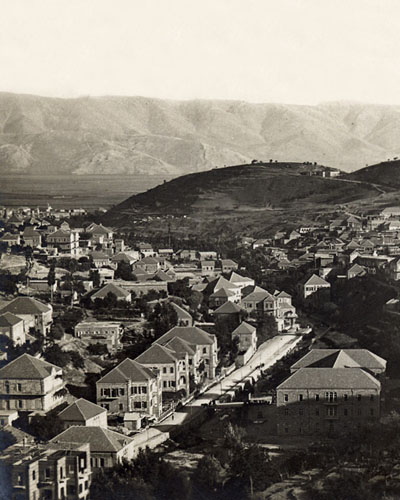
[Photograph of Zahle, in the Bekaa Valley in Lebanon,1940's. " The town occupies both sides of the valley ,which widens as it deepens, and finally opens out upon the plain to the south-east. Through the middle of the valley flows the sparkling little river of el-Barduny, which descends from the south-eastern end of Jebel Sunnin. There are several churches in the town, including one recently erected by the Protestant Community. Excellent schools, both for boys and girls, have been established , and are flourishing remarkably. The population is over thirteen thousand – all Christians, principally of Greek , Catholic and Maronite sects – and is steadily increasing. " [THE LAND AND THE BOOK, W.M.THOMSON 1886. Web photo taken from Camille-Alexandre Otrakji's site]

Lebanon's political stalemate was supposed to be resolved weeks ago. Instead it drags on, with Tuesday's parliamentary session to elect a new head of state now postponed for the eighth time since September. And as the impasse continues, Lebanese Christians are becoming increasingly frustrated with what they see as an unprecedented threat to their political influence. "It is the first time in the history of Lebanon that Christians feel so demoralized," said Elie Haddad, Greek Catholic Archbishop of Saida and Deir el-Kamar. "I have never seen such despondency, even during the civil war."

The trigger for Lebanon's latest crisis is the ongoing dispute over finding a successor to pro-Syrian President Emile Lahoud, whose term expired Nov. 23. Parliamentary leaders have tentatively agreed on compromise candidate Gen. Michel Suleiman—but are still squabbling over how to amend the constitution for the army chief to assume his new position. For the country's Christians, however, the dispute over Suleiman has an even deeper significance. Many see it as underscoring the subsidiary role played by Christian leaders in Parliament's two main factions: the ruling, pro-Western March 14 coalition led by Sunni Muslim Saad Hariri and the Hizbullah-dominated opposition led by Shiite leader Hassan Nasrallah. "Christian leaders are divided among themselves at a time when the Shiites are united and the Sunnis are united," says Rajeh Khoury, a columnist at the daily An-Nahar newspaper. "The more divided they are the weaker their role is in Lebanese politics."

For many Christians these developments are fueling a new rush to leave the country. Church leaders say they are growing increasingly alarmed at the accelerating pace of emigration and what Greek Orthodox Archbishop of Mount Lebanon, Georges Khodr, calls "a visceral sense of their disappearance through emigration." Haddad says that large numbers of Christians are selling out if they can afford to leave and that others are staying "with total resignation to the current situation." Other clerics echo similar sentiments. "We see people rushing for visas, and emigration continues unabated," said Msgr. Boulos Nasrallah, of the Maronite bishopric of Jbeil. "But we have faith that this is our country."

Nobody knows exactly how many Christians have left because of the political sensitivity over the collection of statistics. Christians now make up less than 40 percent of Lebanon's population—indeed, some estimates put it as low as 30 percent—and they fear that confirmation of their declining numbers will lead to Muslim demands for increased political representation. (Continue reading Lebanon’s Exodus)


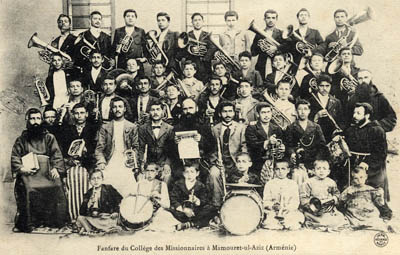
Post-card,ca. 1912, of an Armenian Missionary school band from Mamouret al-Aziz,known as Kharput, or Harput,[current Elazig], with a large Armenian and Syriac community prior to W.W1., located in Eastern Turkey, perched with its famous castle on edge of a hill. " The castle for all its frowning walls and bastions , is nothing but a heap of ruins within. I looked in vain for the dungeon s in which Sukman, the son of the Turkman officer, Ortuk,founder of the Ortukids dynasties, imprisoned Baldwin of Edessa and Jocelyn of Courtney in the early years of the twelfth century.The Crusaders, gathering together their forces ,seized the fortress in 1123,and held it until Balak, Ortuk's grandson, recaptured it." Gertrude Bell, Amurath to Amurath 1911. (From Alex's collection again.)

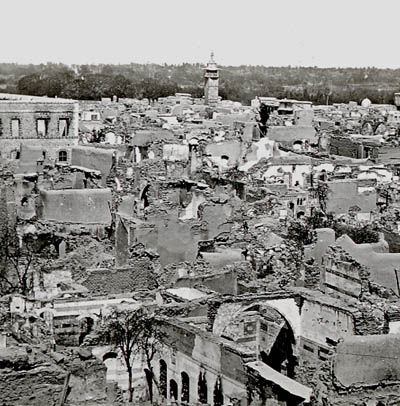
Glass-photo, ca 1860, of the destruction of the Christian Quarter in Damascus in 1860. The violent incident started on the 9th of July, when a mob of 20,000-50,000 from the Maidan, and Salihya districts of Damascus attacked, killed and pillaged the Christian Quarter and its inhabitants, 5,000 to 12,000 were estimated to have perished. The Greek Orthodox, the Greek Catholic and the Armenian churches were the first to be burned. The Russian consulate was the first to be attacked, followed by the French, then the Dutch, Austrian, Belgian and the American consulates. Abdu Costi, the American Consul was beaten and left for dead. The Prussian and the English Consulates were saved. "AN OCCASION FOR WAR, Leila Tarazi Fawaz, University of California Press, 1994". Abdul Qadir al-Jazairi, the exiled Algerian hero, along with his 1000 volunteers protected most of the Diplomats, and thousands of Christians in his houses. He was awarded the highest medals by the European governments. The building on the left is the French Lazarists Monastery and school burned by the attackers. (Photo thanks to Alex on the web)

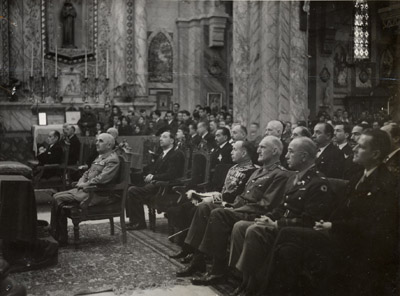
Photograph, ca.1942, by photo Gulbenk ave. des Francais, Beirut, Lebanon. The photo was taken on Christmas day, 1942. On its back, United States Col. Frank A. Derouin wrote "The Pontifical high mass at the Cathedral of Saint Louis des Francais, Beirut Christmas 1942. President Naccache of Lebanon, General Humblot (representing General Catroux, absent), diplomatic Corps etc. I am in the front row because representing Mr. Wadsworth, our diplomatic agent, who himself, was attending the parallel Anglo-American Protestant ceremony accompanied by captain MacBryde. The lady seated further is Mme Catroux". The Easter Monday mass, called the "Consular mass" was held at the Maronite Cathedral, since 1860, by the Consuls of the six powers that guaranteed the autonomy of Lebanon.

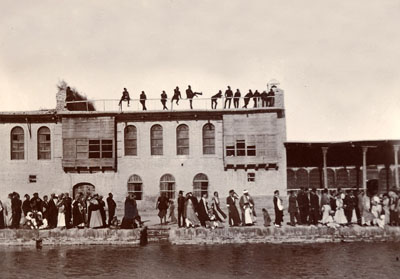
Photograph of the town of Amara in southern Iraq along the Tigris River, dated 1905, during the Ottoman period. Passengers are seen waiting for the steamer that traveled between Basra and Baghdad. The town had a large community of Mandeans [Knowledge, or Gnostic], also known as Sabians (Baptist), or St. John the Baptist followers. The Sabians, known for their gold and silver craftsmanship, were famed astronomers, physicians, and mathematicians, especially during the Abbasid Dynasty (8th-13th century). Their first prophet is Adam, and the last Yehia bin Zacharia (St. John the Baptist) Monotheist in their beliefs(azalyieen, believers in the Eternal Life), their language is Aramaic/Chaldean, and their main holy book is the Ginza (The Treasure) Raba. Urfa (also known as Raha, Urhai, Edessa) in northern Syria (now part of Turkey), was a major center for their Gnostic teachings, lasting well into the Islamic Era.

Most activists freed: Some Remain in Custody

Syrian activists set to be freed
By Lina Sinjab
BBC News

The Syrian authorities are expected to release the final members of a leading human rights group who were recently rounded up.
There was no explanation for the detentions on Sunday, the eve of the International Day for Human Rights.

About 30 members of the Damascus Declaration for Democratic Change were detained after a meeting they held in the Syrian capital on Saturday.

Most activists were released a few hours after the arrest.

Public gatherings by the group have been banned, and Sunday's arrest appeared to be an attempt by the Syrian authorities to enforce that rule.

The detention follows a meeting by 168 human rights activists on Saturday, at which they called for gradual and peaceful democratic change in Syria.

A leading member of the group told the BBC after his release that the move was a message to weaken the Syrian opposition movement.

The prominent Syrian writer Akram Al Bunni was arrested this morning (11 Dec 2007). The intelligence officers informed his family that he would be back home in an hour, but his fate is unknown until now. Akram, himself a former political prisoner for 17 years during Hafez Assad's rule. He is the brother of prominent lawyer and rights activist Anwar Bunni who was jailed in May 2006 and was sentenced for 5 years.

….

those who are still arrested: Samer Nashar- Osama Ashor from Aleppo Ahmad To'ma from Derelzor Jaber al-Shofi from Swaidaa Akram al-Bunni who was "taken" today morning other names, the information is still confusing about them.
all the best
SHRIL

Chinese imports put squeeze on Syrian merchants

Chinese imports put squeeze on Syrian merchants (Thanks Ehsani)
11 Dec, 2007, AGENCIES DAMASCUS:
Economic Times

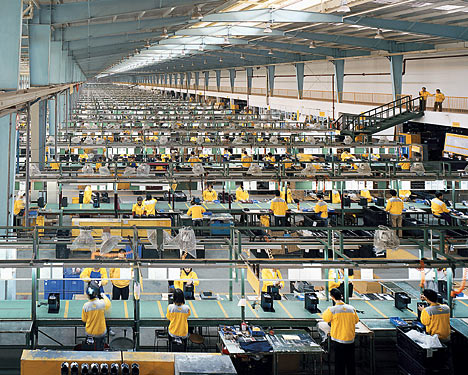
Syrian tailor Adel looked around at the sewing machines lying silent inside his once-thriving shop in Damascus and wondered whether this month's books would balance. He was forced to sack six of his eight staff in October in yet another example of the financial pressure put on Syria's small manufacturers by the influx of cheap Chinese imports. I couldn't carry on piling up these losses," he explained to AFP. "I used to make jackets at a cost price of around 900 (Syrian) pounds (18 dollars). Now you can find jackets at the market made in China which are a third of the price."

The phenomenon of cheap Far East-manufactured products putting the squeeze on small producers has long been recognised in the West, but is a new shock for Syrian manufacturers.

"Dozens of small workshops have been forced to close," the private weekly newspaper Al-Borsat Wal-Aswak said on December 2.

It denounced the "greed" of large traders who were growing rich at the expense of small shops, which are unable to compete with Chinese low prices.

"They make up to 400 percent profits. They flood the markets with Chinese products" without a thought for the social consequences, said the paper.

Scores of street stalls have sprung up under the banner of "Chinese Markets" throughout Damascus's commercial district, offering everything from arts and crafts items to hi-tech goods.

"For some, these products are synonymous with fashion, for others they are just junk," said George, a civil servant, delighted to see that his 250-dollar salary now allows him to splash out on a few extra luxuries.

It has become impossible to escape the power of the "Made in China" production steamroller. Chinese products have swept into every sector of Syrian commerce, including traditional craft goods.

"The Chinese copy everything. They make shoddy goods which people buy because they are cheap," said a trader on Kassaa Street, a commercial hub at the hear of the Christian district of Damascus.

Traces of the Chinese takeover during the Christmas period are to be found everywhere.

Shelves are full of garlands, silver-plated candles, gilded cherubs and Christmas tree baubles. And nothing seems to be without the tiny "made in China" sticker.

The arrival of this merchandise onto the Syrian market is relatively recent.

Damascus only approved Chinese imports in 2000, said a shopkeeper in Al-Harir silk souk where the precious fabric is slowly being replaced by plastic flowers and Chinese fakes.

And the future for China in Syria looks no less rosy. According to a Chinese diplomat the balance of trade between the two countries amounted to 1.7 billion dollars in 2007, of which only 100 million dollars was made up of exports from Syria to China.