Syria Stands by Lebanese Allies: France distraught: Lebanon in Continued Crisis

France is boycotting Syria until Syria pressures its Lebanese allies to accept the agreed upon candidate for President of Lebanon, Michel Suleiman. Syria and Lebanese opposition forces demand a greater share of the cabinet the new president would construct. Some are talking about renegotiating Taif, the constitutional arrangement that is seen by many of the opposition to be unfair.

Syria has a community of interest with Hizbullah and Aoun to demand a greater share in the cabinet – a blocking third. Syria cannot order Hizbullah to give up its gains or to leave itself vulnerable in a new government. Hizbullah claims that it helped 11 parliament members of the Hariri bloc to gain their seats in 2005 elections in a deal with Jumblat and Hariri that the two later went back on.

Both Hizbullah and Aoun believe they are the winners of recent wrangling within Lebanese politics and want those winnings reflected in a new government.  (I am off to NYC for New Years. Will write more about this on my return.)

Syria unwilling to pressure Lebanon allies: minister
Africasia, UK

Syria is unwilling to put pressure on its Lebanon allies in the crisis that has left it without a president for over a month, Information Minister Mohsen ..

Arslan attributes impasse to problems with Taif
Daily Star
Monday, December 31, 2007

BEIRUT: Lebanese Democratic Party leader Talal Arslan said the crisis around the presidential election was directly tied to  Taif Accord that ended the 1975-1990 Civil War. "Day after day, it is becoming clear to everybody that the presidential election crisis is certainly a by-product of the wrong implementation of the Taif Accord," he said at a news conference in his residence in Khaldeh on Saturday. Negotiated in Taif, Saudi Arabia, the pact was signed on October 22, 1989. Arslan stressed, however, that the opposition did not have plans to annul the deal. "We want to revisit the accord to achieve to major goals: putting an end to the fooling around with the Constitution and outlining the authorities of the executive power," he said. Arslan said that there were a number of problematic issues, which widened the gap between the opposition and the governing March 14 Forces. "The share of the opposition in the next government in addition to the fate and role of the resistance are crucial questions to be discussed even if they might cause a split among the Lebanese," he added.

France ends contact with Syria over Lebanese presidential election
The Associated Press
Monday, December 31, 2007

AIRO, Egypt: France is cutting off talks with Syria until Damascus shows its willingness to let Lebanon elect a new president, French President Nicolas Sarkozy said.

Lebanon’s Western-backed government and pro-Syrian opposition have been unable to break a deadlock over filling the presidential post, empty for a month, and many Western countries have accused Damascus of interfering in the process — a claim Syria denies.

“I will not have any more contact with the Syrians until … we have received proof of Syria’s intention to let Lebanon designate a president of consensus,” said Sarkozy at a press conference Sunday in Cairo after meeting with Egyptian President Hosni Mubarak.

Syrian Information Minister Mohsen Bilal called Sarkozy’s comments “surprising,” telling Syrian state television that Damascus was “working with France to reach an agreement on a president who represents all Lebanese.”

The French president spoke with Syrian President Bashar Assad as recently as the beginning of December to urge him to “facilitate” the election in Lebanon.

Sarkozy sent his chief of staff, Claude Gueant, to Damascus in early November, and Foreign Minister Bernard Kouchner met his Syrian counterpart Walid al-Moallem earlier that month on the sidelines of an Iraq conference in Turkey.

“France has taken the responsibility of talking with Syria,” said Sarkozy. “One must recognize today that we cannot wait any longer, Syria must stop talking and now must act.”…

That process has been complicated by the opposition’s demand for a new unity government that would give it veto power over major decisions….

Haaretz, 30/12/2007: UNIFIL steps up supervision to deter Hezbollah re-armament 

UN officials point an accusatory finger regarding Lebanon’s political crisis toward Syria, claiming that “Syria defeats every attempt at an agreement and pushes Hezbollah and its other allies in Lebanon to increase their demands all the time.” They say that Syria’s President Bashar Assad wants to demonstrate at any price that “nothing moves in Lebanon without him” and predict that as a result the crisis in Lebanon will continue for months to come.

The main problem, as the UN officials see it, is that not enough pressure is being placed on Assad. “He will only move if he senses a threat to the stability of his regime,” they said. “If the Americans were, for example, to send ships close to Lebanon’s beaches, that would send a clear message to Assad, but they’re not doing that.”

The Arab world is nearly the only means left for pressuring Assad. Next March an Arab summit is scheduled to convene in Damascus. The hope of many in Europe and in Washington is that prominent Arab states such as Egypt and Saudi Arabia will boycott the conference to send Assad a clear message telling him to stop interfering in Lebanon’s internal affairs.

Syria committed to peace: Ynetnews, Israel – Specter and Kennedy said Syria's role in the peace process was vital and called on President George W. Bush to be forthcoming in his dealings with Syria, …  

Israeli goal for 2008 – to isolate Syria from radical axis: Jerusalem Post, Israel – Dec 29, 2007 By HERB KEINON

Formulating a strategy for separating Syria from the "radical axis" is one of the Foreign Ministry's highest priorities for 2008, …

Ali Barazi Released from Jail: Assad Says Seven Other Seculars to Go Free

US Congressmen secure Syria pledge to free dissidents

Two visiting US Congressmen announced after talks with Syrian leaders on Sunday that they had secured a pledge that jailed dissidents would be freed and said they saw scope for progress in the peace process with Israel.

The upbeat note contrasted with that of US President George W. Bush earlier this month who ruled out direct talks with Damascus, saying: “My patience ran out on President (Bashar) al-Assad a long time ago.”

Senator Arlen Specter, a member of Bush’s Republican Party, and Congressman Patrick Kennedy, a Democrat, held talks with both Assad and Foreign Minister Walid Muallem.

Kennedy said that he had secured Assad’s undertaking that seven secular dissidents in jail for criticising the Damascus regime and its policy towards neighbouring Lebanon would all be freed.

“The president said that they would be released,” Kennedy told reporters.

“(He named) Akram Bunni, Walid Bunni, Jaber Shufi, Ali Abdullah, Fidaa Horani, Mohammad Yasser Aiti and Ahmed Tohmeh. The president assured me personally that they were (to be) released.”
…

Syria releases activist after five-month detention
Syrian authorities released a political activist after a five-month detention, a Syrian human rights organization said Saturday.

Ali Sadek al-Barazi was released Wednesday, even though a military court had ordered his release on Nov. 11, Abdul-Karim Rihawi, head of the Syrian Human Rights League, said in a statement.
…


“Syrian Americans: The Identity Balancing Act,” by Salma al-Shami

Syrian-Americans: The Identity Balancing Act
By Salma Al-Shami
Originally published in Forward Magazine, Damascus
December 2007

“What America does not ask is as important as what she does ask of new Americans,” wrote Reverend W.A. Mansur in the January 1928 edition of The Syrian World magazine. “She does not ask that you forget and not love the land of your early humanity; that you refuse to acknowledge your race and your love of your race; that you feel a sense of shame because of early material poverty; that you lose your love for the language of the homeland; that you make no reference to the talents and achievements of your race and homeland; that you see no beauty in the customs of your people.”K

Or does it?

In the wake of 9/11, the experiences of many Arab-Americans might suggest otherwise.

While President George W. Bush publicly declared, “These acts of violence against innocents violate the fundamental tenets of the Islamic faith,” fanatic American citizens drove automotive vehicles through mosques in Ohio and Florida. While members of St. Anne’s Episcopal Church in Virginia offered to publicly escort Muslim women who feared leaving their houses, the U.S. Congress passed the PATRIOT Act, a law allowing authorities to place wiretaps, keep watch-lists, hold secret trials, and conduct searches and seizures without warrants—measures that violate the constitutional rights of all American citizens.

Unfortunately, ignorant, vengeful voices overpowered statements supporting Arab-Americans. Media outlets were flooded with non-Arab Americans asking why the Arab and Muslim communities in the United States were not doing more to distance themselves from the crimes, condemn the perpetrators, and affirm their themselves as American first. 

But for many Arab-Americans, this latter task is impossible. Unlike the hyphen that can linguistically separate the duality of their identity, most Arab-Americans cannot so clearly demarcate the boundaries of their ethnic or nationalistic associations. A fluid fusion of cultures, their identity continuously adapts and responds to changing political environments.

In spite of the post-9/11 backlash, Arab-Americans continue to educate the public about their heritage and to fight for justice. Now, it is not America but Americans who were calling upon themselves to celebrate the lands, languages, and accomplishments of their ancestors.

Syrian-Americans lead such efforts on both individual and group levels. In the United States, they manage two balancing acts, first as members of the Syrian-American community and second as members of the Arab-American community. They strive to celebrate the uniqueness of their Syrian heritage while working as a part of one political unit with their fellow Arabs. The processes through which they form their identities are as varied and complex as those identities are colorful and distinct. They may not be the loudest community, but they are also not as silent as some critics claim.

According to the United States Census brief “The Arab Population: 2000,” Syrians comprise 12 percent of the Arab population in the U.S., the second largest nationality among Arab-Americans. The Syrian population grew by 10 percent between 1990 and 2000, and communities reporting Syrian ancestry were largest in California, Illinois, and New York.K “We the People of Arab Ancestry in the United States,” a Census 2000 Special Report, indicated that 59.2 percent of polled Syrians were American born and that 45.8 percent of them reported that they spoke only English at home.K

Economically, the Syrian community has fared well. In 1999, the reported median family income of a Syrian family was $58,204, surpassing both the Arab ($52,318) and national ($50,046) medians. Meanwhile, the poverty rate (by age) of the Syrian community was 11.3 percent, lower than both the Arab (16.7) and national (12.4) rates. 35.0 percent of Syrians report having a bachelor’s degree or more, which is higher than the national average (24.4) but trails the Arab population, of whom 41.2 report having a bachelor’s degree or more. The plurality of Syrians, 41.9 percent, work in managerial or professional capacities, followed by 32.5 in sales and office work, and roughly a quarter of the population working in various other industries.

More telling than such statistics about their current status in the United States, however, are Syrian-Americans’ perceptions of themselves. 

Talking to Syrian-Americans
BALANING ACT #1

“Identity cannot be compartmentalized. You cannot divide it into halves or thirds or any other separate segments,” wrote Amin Maalouf in Hawiyat Qatilah (1999). Several Syrian-Americans interviewed agreed.

“I have one identity, and that is Syrian-American,” says Wael El-Nachef, a second year medical student at Northwestern. “Ultimately, the two identities are inextricable.”

When asked if they saw themselves as Syrian-Americans or Syrians in America, most answered the question as a function of where they were born, the former referring to individuals born in the U.S. and the latter referring to expatriates. But some say that while association with the country where one is born and/or raised does not exhaustively define the parameters of identity, it is not completely inconsequential either.

“I feel more comfortable in the United States,” says Sara Suleiman, a sophomore studying political science and journalism at Northwestern University in Evanston, IL. “I’ve lived my whole life here. I am more accustomed to an American lifestyle.”

While Suleiman loves “waking up with the athan, being surrounded by extended family, the street vendors and shouting peddlers selling things,” she says she could not live in Syria, as she is too accustomed to the modern amenities she enjoys in the U.S.. Alternatively, Mazen Khabbaz, a Syrian expatriate studying Molecular and Cell Biology and Middle Eastern Studies at the University of California, Berkeley, expresses a responsibility to return to Syria after completing his college education. “I would like Arabs to go abroad and study and bring back their skills and knowledge to help their countries.”K

But identifying “home” to be in one country did not diminish the importance of the other. Of the Syrian-Americans interviewed, none could hierarchically categorize components of their identity and in fact reject the very notion of referring to multiple “identities.” Rather, they see themselves as having one identity with fluid components whose relevance and importance constantly shift with varying circumstances.

“When I’m in America, I’m always the Arab. But in Syria, I’m introduced as the American kid. You realize no matter where you go you’re identified by what is unique about you,” explains Sarab Al-Jijakli of New York.K “My childhood and fondest memories are from Damascus. My heart, heritage, and my blood go back there. On the other hand, I’m a New Yorker. My life, my home, and my professional career are in New York. I am forever destined to be connected to both worlds.”

Balancing Act No. 2: Syrian/Arab

Syrians comprise only .05 percent of the U.S. population, but as Arab-Americans they comprise .42 percent. While Syrian-Americans want to recognize and celebrate the diversity of Arab-American population, they are aware that highlighting differences potentially exacerbates cleavages in the community, thereby rendering it less effective in the American political arena.

What separates Syrians from other Arab-Americans? (Half)-jokingly, some say better food and prettier women, but more seriously, others add unsurpassed hospitality and a reputation for being a people “of their word.” Yet, despite such distinguishing characteristics, Aesop’s famed observation,  “united we stand, divided we fall,” is confirmed in the opinions of several individuals.

“If you want an Arab-American community, we need to stick together,” explains Marwan Kamel of Chicago, IL.  “The problem is that people tend to stick with their individual nationalities, Syrian, Egyptian, Lebanese etc. So when problems arise that affect the entire Arab-American population, [these smaller groups] start pointing fingers and blaming each other.  You see the same conflicts between groups in the Middle East replicated within the Arab-American community.”

Aside from these imported cleavages, the motivation behind immigrating and the environment into which individuals are trying to assimilate also provide explanations for the divisions in the Arab-American community. El-Nachef suggests that, “individuals have their own reasons for coming to the States, whether they’re refugees or fleeing civil wars or looking for jobs. So they have their own prerogatives for being active. If you’re here and you’re a successful professional, you might not want to be come politically active.”

Indeed, activist members within the Arab-American community criticize their fellow compatriots for limiting their civic involvement once they have met their professional aspirations and secured their financial comfort. While this criticism might be equally applicable to past generations of Arab-Americans, the political climate in the aftermath of 9/11 seems to have given further impetus for some members of the current Arab-America community to retreat into private life.

Overwhelmingly negative public sentiment towards this community and the constant probing of government agencies have caused some Arab-Americans to first affirm their loyalty to the U.S. and wait for rampant emotions to subside before responding to the ignorant and racist statements made against Arabs everywhere. With the clamor of sound bytes from foreign policy officials, a biased media, and racist members of the non-Arab American public raging in the foreground of American political life, some Arab-Americans see that organizational efforts and activism might be wasted on deaf ears.

But thus far there is no evidence to suggest that the majority of Arab-Americans feel this way. Moreover, a lack of organizational affiliations is not synonymous with a silent community, and in fact, attempting to judge the political activism of these Arab-Americans solely based on what they do at the collective level unjustly ignores what they accomplish on the everyday basis and at the individual level.

“It’s like Ché Guevara once said,” explains Kamel, “‘a revolution is not built by hundreds of thousands of people, but by one person talking to another.’ It’s much more effective to befriend other people and tell them you’re Syrian. Over time, they’ll see that what’s said in the news is not true.”

The activism of Syrian-Americans takes many forms. Suleiman regularly attends lectures and discussions relating to Arab-American issues. As a member of the American Student Medical Association, El-Nachef takes his activism to another level. “I don’t just focus on Arab or Syrian issues. I focus mainly on global health and human rights. I’ll talk about Iraqi refugees and Palestine, but I’ll also talk about health care and access to medicine. That way you show people that on a more fundamental level you have things in common with them.”

Arab-American activism is also prevalent at professional levels. Al-Jijakli is the co-founder of the NY chapter of the Network of Arab-American Professionals (NAAP), whose mission is to enhance social interaction between Arab-Americans, to explore their heritage and expose it to the public, to insure that Arab-American interests are being pursued in the political arena, to encourage community service, and to help foster and mentor the Arab student movement.

“Here we are not targeted as Syrians, but as Arabs,” says Al-Jijakli. “People in the U.S. are not informed, so it’s up to us to position ourselves as ambassadors for our home countries, to answer the questions, and to set the political agenda.”

Rallying the Syrian-American Community

In the spirit of activism, the Syrian American Congress (SAC) and the Syrian American Medical Society (SAMS) have mobilized and encouraged Syrian-Americans to take responsibility for improving their own lives and those of other Syrians living in the United States and in Syria.

Founded in November 2005, the SAC is a nongovernmental organization whose self-described mission is to be “recognized as a leading organization for the empowerment of Syrian Americans” and “to develop better understanding and cooperation between Syrian and American people.”

“We have a dual responsibility towards Syria, our motherland, and to the U.S., where we have progressed, gotten married, and sent our children to college,” says SAC president, Dr. Talal Sunbulli. “We see no contradiction between working for the Syrian people and for the American people.”
 
Thus far, the organization has worked towards achieving its goals by holding lectures called Hadith al-Sham, where topics such as the state of Syrian economy are discussed and where past speakers have included former U.S. Ambassador to Syria Theodore Kattouf and Syrian Parliamentarian Mohammad Habash. In the future, it would like to sponsor politician and professor exchanges between the two countries as a way of educating Syrian and American citizens about each other.

While acknowledging that the Syrian-American community is not yet as active as it can be, Sunbulli sees the SAC as an organization that can rally and channel the efforts of the Syrian-American community to get involved in political and cultural events locally and nationally. He mentions that the SAC has already established connections with American civic organizations such as United for Peace and Justice, a coalition of groups opposed to the Iraq War, and the Arab-American Anti-Discrimination Committee.

Sunbulli hopes that the organization’s efforts “will encourage newcomers from Syria to be active. In the past, there was a feeling that it was useless to do anything. But doing nothing will get us nowhere.”

This belief in the power of activism also motivates SAMS, whose objectives are to promote general health, disseminate medical information, and increase partnerships between physicians in the U.S. and Syria. With more than 600 members, SAMS provides free medical services and supplies to disadvantaged patients and runs workshops to transfer vital medical skills to Syrian physicians. An average of 150 medical professionals from the U.S. attend its annual conventions in Syria.

Dr. Thabet Al-Sheikh, who just finished his tenure as president of SAMS, explains that focusing efforts in Syria has contributed to the organization’s success. “Initially, it was thought of as a step backwards to [identify] the organization as Syrian instead of Arab-American. But focusing on one geographic area has allowed our program to grow from simply giving lectures in one city to all the SAMS today in five cities and at times more than 18 hospitals.”

Al-Sheikh is one of many volunteers who lead tutorial courses in Arabic on various medical procedures. Each year, he estimates he brings $200,000-$300,000 worth of donated equipment with him to SAMS’s annual conventions. After six years of giving courses, more physicians in Syria are independently able to implant such devices such as pacemakers and stents in patients.

SAMS’s efforts have won it recognition and acclaim in both Syria and the United States. The Syrian Ministry of Health and the Ministry of Education both consulted SAMS to help write the Continuing Medical Education policy for Syrian physicians. Furthermore, SAMS won the 2004 Humanitarian Service Award from the Florida Chapter of the American College of Cardiology (ACC) and the 2006 International Service Award from the national chapter of the ACC. Though presented specifically to Al-Sheikh, a cardiologist, he stresses that he accepted the awards on behalf of the organization. “You can’t make a difference of this magnitude individually.”

While not explicitly political in nature, the framework for activism as established by SAMS provides a model for types of interactions that can yield fruitful results in the future. “The medical profession allows you to touch people’s lives at the human level without letting politics interfere,” says Al-Sheikh. “Anything that is nonpolitical and successful will have political results, directly or indirectly.”

Syrian-Americans have much to accomplish in the years to come, but the magnitude of the tasks ahead of them should not overshadow their achievements thus far.  As Al-Jijakli explains, “Right now, many of us suffer from setting unrealistic expectations for ourselves. We’re in a state of infancy. Only when we mature will we be able to impact larger issues.”

To achieve their goals, Syrian- and Arab-Americans at large must continue to use machinery and of the American political system to advance their causes. In the U.S., the most powerful and effective voices are not the loudest ones: they are the most organized ones.

Syria Requires Arabization of Names

Ibrahim Hamidi, writing in al-Hayat, makes fun of the new Syrian law that requires all names to be pure Arabic.

Dr. Mahmoud al-Sayyid, the President of The Committee for Improving the Arabic Language, a committee established to meet the requirements of Syria having been selected as the "capital of Arab culture" for 2008, is in charge of policing this new law.

La Noisette restaurant is now named al-Bunduqa

Neutron is now Nawat

La Fontana is now al-Nafoura

Ibrahim warns parents of newborns to make sure that they choose pure Arabic names. No more Michel, Emile, Eduard, Joyce, Joel, or Mart. These are all popular names among Christians. Hamidi does not know whether these names are now illegal, but if the law is applied consistently, they will be.

The committee has also explained that actors and TV dramas will have to move away from the spoken language and common Syrian dialect to classical Arabic, which would destroy the popularity of many local shows. Hamidi mentions "Bab al-Hara," the massively popular TV series broadcast this Ramadan, which resurrected the local dialect and manners of Syria in the 1930s. Such a series could be made impossible to produce if new laws are enforced.

???? ?????? ??????? ????? ??????? ?????? ??????? ??????? ?????? ????????? … ???? ?? «?????» ???? ????? ???? ???????… ??????
???? – ??????? ????? ?????? – 28/12/07//

?? ???? ???????? ??? ???? ??? ????????????? ?? ???? ????? ???? ??? ?? ???? «?????????» ???????? ?? ?? ?????? ???? ????? ???? ?? ???? ?? ???? ???? ??? «????????». ???? ?? ????? ?? ?????? ????? ?????? ????? ???????? ????? ?????? ?? ??? ???? ??. ???? ??? ????? ??????? ??????? ????? ????? ????? ????? ??????? ??????? ?????? ???? ??? ??? ??????? ??????? ??? ???????? ??? ??????? ??????? ??????? ??? ?????? ???? ????? ???. ??? ??? ??????? ???? ??????? ???? «???? ????? ????? ???????» ??????? ????? ?????? ??????? ?????? «???? ????? ????? ???????» ????? 2008.

???? ?????? ?? ???? ?????? ???? ???? ???????? ??? ????? ?????? ?????? ?????? ???????? ???? ??????? ????? ????? ???? ??????? ?? ???????? ????????? ?????? ??????? ???????? ?»??? ??? ???? ???????? ?????? ???????»? ??? ????? ?????? ??? «????? ????? ????? ???????» ?????? ????? 1952.

?????? ????????? ???????? ??? ????? ??????? ???????? ??? ????? ????????? ??? ?? ???? ?????? ??????? ??? ???? ????????. ????? ?????: «??? ??? ??? ????? ??????? (??? ??? ????? ?? ????? ??????) ??? ?????? ??? ???? ????? ?????? ??????? ?????». ????? ??? ?? ?????? ??????? ?????? «???????» ??? ???? «??????» ?? ????? ???? ?????. ??? ?? ????? ?? ????? ????? «?? ??????» ???? ??? ????? «???????».

??? ???? ??? ????????? ????? ??????? ???????? ????? ?? ???? ??? ??????? ??????? ????????? ?????????? ?? ???? ???? ?????? ??? ?? «?????? ?? ?? ???? ?????? ????????? ????????? ???????? ??? ??????? ???? ??????? ???? ???? ?????… ???? ??? ??????? ???? ??????».

?? ??? ???? ?? ????? ?????? ?? ????? «??? ??????» ?????? ????? ???????? ???? ?????? «??????» ??? «??? ????» ??????? ?????? ????? ??????? ??? ????? ??? ??????? ?????? ??? ??? ??? ????? ???? ??????? ??????? ?? ????? ??? ?? ????? ?? ????? «??? ??????» ???? ??? ??? ??????? ???????? ????? ?????? ????? ???? ????? ?????? ??? ???? ?? ???? ?? «??? ??????? ??????? ?? ????? ????? ???????».

????? «????? ???????» ????? ?????? ?? ??????? ?????? ???? ???? ????????? ?????? ??????? ?? ?????? ??????? ?? ???????? ????? ??? ?????? ?? ????? ????????? ???? ???? ??? ???????? ?????? ?? ??????. ????? ??????? ????? ??? «???? ??: ???? ???? ????: ???? ??????. ???? ???? ?????? ???? ????: ???? ?????».

????? ?????? ????? ???? ????? ??????? ????? ?????? ???????? ??? ????? ????? ??????? ???? ??? ?????? ??? ?????? ?????? ??????? ??? ??????? ?? ?????? ??????? «????? ????? ???? ????? ?????? ?????? ????? ??????». ???? ?????: «??? ????? ??? ???????? ?????? ???????. ??? ??? ?????? ????? ???????? ?? ???? ????????. ?? ???? ??? ????? ?? ??? ??? ???? ???????? ?? ??? ????? ??????» ??? ?? ???? ???? ?????? ??????? ???????? ?????? ??? «??? ?????? ???? ??? ?????».

????? ???? ??????? ??? ????? ???? ???? ??? ????? ???????? ??? ???? ??????? ?? «????? ??? ????????» ???????? ?? ????? ????? ??????? ?????? ????… ???? ????. ????: «???? ?? ?? ??? ???? ??? ????? ?? ???????? ???????? ???????? ???????? ?????????? ???????? ?? ???? ?????» ????? ??? ???????? ?????? ???? ???? ????? ?????? ??????????.

??? ???? ??? ??? ?? ??? ?? ????? ???? ???? ??????? ???? ?????: «?? ????? ???? ?????. ??? ??????? ?? ???? ??????? ????? ???? ?????? ????? ????? ????? ??????»? ?????? ??? ?? ????? ???? ?????? ?? ????? ???? ??? «????????» ??????? ????????? ??? ?? ????? ?? ??? «????» ???? «???? ????»!

“Syrian expatriates return home in hopes of new wealth,” by Julien Barnes-Dacey

Syrian expatriates return home in hopes of new wealth
By Julien Barnes-Dacey | Contributor to The Christian Science Monitor
Damascus, Syria – December 27, 2007

Many Syrian-Americans are leaving for Damascus, lured by the opportunities offered by a newly open economy.

For Louay Habbal, sipping his latte in an upmarket coffee shop in Damascus, the US will always be home.

The warmth of the people, the possibility of achieving success from nothing, and the vast open spaces are unparalleled, he says, delight filling his face as he remembers 28 years spent in America working for a succession of leading banks, including Merrill Lynch and Riggs.

“America is the only country on earth where a foreigner is not called a foreigner,” he says. “It’s the only country in the world where you can land at [John F. Kennedy Airport] and within 24 hours be working, with a place to live and a license to drive.”

But, in January, Mr. Habbal uprooted his wife and two US-born children and returned to Damascus to establish a new bank.

President Bashar al-Assad’s economic liberalization policies have spurred many Syrian-Americans, like Habbal, to leave their comfortable American lives and return to Syria. “There are tremendous opportunities right now in Syria. Things economically are accelerating rapidly and every day there are new unorganized opportunities,” Habbal says.

New laws are easing over 40 years of private investment restrictions, opening up most economic sectors to private capital, dramatically loosening Syria’s tight foreign exchange regulations, and rationalizing tax rates.

According to the International Monetary Fund, nonoil GDP growth in 2006 was a strong 6 to 7 percent.

An estimated 20 Syrian-Americans play leading roles in Syriatel , the country’s leading communications firm. Others have set up IT companies, established manufacturing firms, and even opened high-end American-style cafes.

Expatriates are successful, says Syrian economist Samir Seifan, because they combine a Western work ethic with a native’s knowledge of the notoriously labyrinthine Syrian business system.

“The business mentality they bring and the experience of managing are important, but at the same time you need local experience. We have more bureaucracy than America, we have more difficulties, and we don’t have the mentality for business and a market economy,” he said.

However, readapting to life in the Arab world has been difficult for some.

“I will leave as soon as I find a job in the US again,” said one Syrian-American businessman, who wished to remain anonymous, as he complained about everything from the tightly controlled security regime to the lack of 24-hour supermarkets and gyms.

A key dilemma for those who stay has been one of identity. After years in the US, many have come to love a country widely condemned in the Arab world. But, faced with criticism, Syrian-Americans say they try to shine a positive light on America.

“I tell them that if you live in America you can never find as good a place in terms of lifestyle, freedom, options, and opportunities. There is no place on earth like America. Forget politics – in terms of the human condition and the living environment you cannot find a place like the US,” says Ghiath Osman, a senior project manager for Syriatel who spent 10 years in Silicon Valley.

Despite the fact that his loyalty was questioned after 9/11, and that he opposes the Iraq war, Habbal calls himself an “American ambassador.” “I tell people America is a good country with good but misguided people,” he says.

Precise figures on Syrians returning home remain unavailable. But they seem to be making an impact on the domestic economy.

Investment projects have increased by 250 percent since 2004, touching $9.2 billion last year. Much of this increase has been boosted by expatriates focusing their finances and expertise on Syria, says Bouthaina Shaaban, minister of expatriates. Se points out that investment projects constitute 26 percent of the GDP.

Foreign direct investment was also up 82 percent from 2004, touching $500 million in 2005, according to official Syrian figures. The ministry of expatriates, established in 2002, has pushed forward many rule changes, including easing military service for expatriate children, to draw Syrians home. It is now seeing the results, it says.

Five undeniable facts about the Syria that I saw / by Ehsani

I have just returned from a short one-week trip to Syria. As you may recall, I had once written a note on this forum describing how Syria was made up of two countries: one for the one million well to do and another for the other 19 million. I will offer below a summary of my updated impressions since. My observations are predicated on list of what I consider to be five undeniable facts about the Syria that I saw.The first undeniable fact that I have encountered on this visit is the ever-widening gap between the poor and the wealthy of Syrian society. While this phenomenon has been in place for years, one cannot but take note of the recent acceleration in this trend. What makes this subject matter particularly interesting is the fact that Syria is still a supposedly socialist country. One would have thought that such excessive wealth concentration is the hallmark of more capitalist societies rather than Baathist ones. Perhaps the observation below can explain the reasons behind this process:

The second undeniable fact that one cannot ignore is the way with which Bashar is changing his father’s long and heavy imprints on this country. For all practical purposes, Socialism is slowly but steadily being dismantled as an economic system. The new official title of course is “social market economy”. The word “social” is presumably still there to assure the 19 million Syrians that they will still continue to receive their subsidized necessities and the most basic forms of state assistance. What is most noticeable, however, is the speed with which the “market economy” part of the new economic paradigm is spreading in the country. The new “Aishti” clothing store adjacent to the Four-Seasons hotel proudly advertises on its outside window the following:

Prada men’s shoes – SYP 27,500
Brioni mens pants – SYP 22,000
Iceberg t-shirt – SYP 13,800
Armani dress for ladies – SYP 248,500

One cannot help but wonder how the late Hafez Assad would have reacted had he seen these prices displayed in his so-called Baathist capital

Syria’s push for increased investments:

The country is abuzz with the latest wave of foreign and domestic investments. The leadership has done an outstanding job in this endeavor. Not a week passes by without an announcement of a new wave of investments from Qatar, Kuwait, U.A.E. or Saudi Arabia. Similar announcements seem to come from domestic investors in the new “holdings” companies that have been set up. Those that have already taken the risk of investing have thus far been handsomely rewarded by having seen the value of their investments in real estate (mostly still empty land) rise rather dramatically. This has encouraged more investments and a virtuous circle of higher prices and more investments to take place. The third undeniable fact is that there is no going back in this trend towards opening up the country to foreign investments and a more liberalized economy.

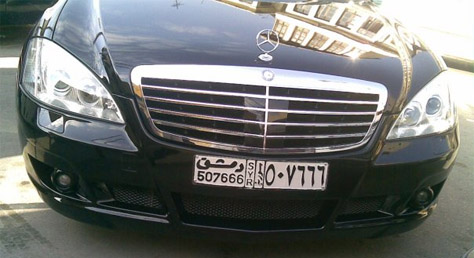
syrianbenz.jpg

carshow.jpg

syrians.jpg

Whether this trend has been driven by political necessity or by genuine belief in the merits of free markets is an open question. My suspicion is that it is more likely to be the latter. It is important to note that the pace of the economic reforms is unlikely to go in overdrive mode. Instead, it will more likely be of the sure and steady variety. The already wealthy will get even richer while the poor will struggle with higher inflation and falling real wages.

The fourth undeniable fact is that the country’s fiscal budget will continue to feel the stress in the years ahead. One cannot help but be struck by how little the very wealthy are taxed. It is imperative that this broken system receives a comprehensive overhaul. Similar taxation reforms are sorely needed in the real estate area. A major reassessment needs to take place in order to more accurately reflect the new market value of real estate pricing and hence taxes levied. 

The fifth undeniable fact is that while economic reforms will continue, political reforms are unlikely to follow suit at anywhere near the same pace. This leadership appears to be extremely comfortable with its ability to hold on to power. The young leader appears to be in an absolute control of his country. Those that refuse to believe this are denying what seems to be the obvious. In this atmosphere, the pressure to offer political concessions is close to nil. The late Hafez Assad had built an incredible security apparatus that has come to resemble a fortress. It did not take the new President much time to fully appreciate the value of this intricate system that he had inherited. It seems inconceivable that he will take any risk in this area. Calls for political reform will be viewed as nothing but a trap and a slippery slope that must be avoided. Human rights advocates, for example, are likely to be sorely disappointed with the government’s willingness to deliver.

Conclusion:

Bashar is steadily but slowly dismantling the old socialist nature of his father’s reign. He is too clever and too cautious to do this on faster scale. He is fully aware of the economic challenges faced by the vast majority of his people. Given the need to grow the economy and fix his country’s fiscal mess, opening the economy to foreign direct investments is a decision that is irreversible. The rich will continue to get richer in this environment. On the political front, Bashar is unlikely to loosen his grip and institute any significant reforms. Egypt has been down this before and it may well offer a similar model of more economic liberalism without the political reforms to match. Come to think of it, is the ultra successful economic model of Dubai any different?

The US Has NO Lebanon Policy

Comments by Landis 

The US has no Lebanon policy.

At least not one that can deliver a solution to the present stand off over the president and composition of the cabinet. US policy as it now stands seems designed purely to keep Hizbullah from getting into the government.

Who is in charge of Lebanon policy? The State department? Everyone I talk to who seems to know much about how policy is made indicates that the NSC is calling the shots, which means Elliott Abrams. He is an ideologue of the first order.

Even Jeffrey Feltman, who recently stepped down as Ambassador to Lebanon, complained bitterly about the lack of a defined Lebanon policy. Evidently, he wrote Washington almost two months ago to inform the administration that the balance of power in Lebanon had shifted toward the opposition. He asked for instructions on how to proceed, but got none. There is no plan.

It seems that Washington is merely kicking the ball down the road. The Bush administration does not want to be blamed for allowing Hizbullah to gain more authority in the government. To some, it would demonstrate that the Summer War of 2006, during which Israel pounded Lebanon in an effort to destroy Hizbullah, had backfired.

Others argue the opposite. If the plan is to draw Hizbullah into Lebanese politics in order to wean it away from resistance and maintaining its militia, it will have to play a role commensurate with its sway over the population. Hizbullah's militia has been extremely silent since the dust settled following the summer of 2006. Transforming Hizbullah into a "normal" political movement will not be easy, but what other alternative do the Lebanese have? What other alternative does the Bush administration have?

Prothero and Beaumont capture this dilemma in their excellent story:

Lebanon's new low as leader talks fail:
West keeps up the pressure after a tenth abortive attempt by political rivals to pick a President

Mitchell Prothero and Peter Beaumont in Beirut
Sunday December 23, 2007
The Observer

The US wants Michel Suleiman elected….

Hizbollah and the opposition have been demanding at least 11 ministries to exercise a veto to prevent any disarming of Hizbollah's military wing at the request of America and Israel. Bush recently dispatched diplomat David Welch to Beirut to meet pro-American leaders, a move pounced on by Hizbollah officials as proof that the government is collaborating with its enemies.

'No, Bush, your orders cannot be implemented in Lebanon and your tutelage is rejected,' Hizbollah's number two, Naim Kassem, said late on Friday.

The situation has been exacerbated by the attitude of MP Saad Hariri – son of the former Prime Minister, Rafik Harriri, who was widely considered to have been slain by Syrian agents in early 2005 – who has been leading the ruling coalition. He has surprised even some of his own supporters with his belligerence towards compromise, a position some of his allies believe stems from the US and French government positions. 'Bush and the French seem intent on keeping Hizbollah out of the government, they are telling us not to compromise,' one political veteran and supporter of Hariri confided anonymously. 'Saad still wants revenge for his father and appears all too willing to indulge this stalemate.'

Yesterday Hariri attacked Syria for its continued interference in Lebanon's internal affairs. 'The Syrian regime has gone too far in its efforts to destabilise Lebanon and to divide it, using what it calls "allies and friends". I find this shameful that some Lebanese allow themselves to be manipulated by such a regime which is known for terrorism, crime and corruption,' he said.

Calls to reopen Baghdad bridge between Sunnis, Shiites
Talks are underway to reopen the key bridge linking Shiite and Sunni districts of the Iraqi capital closed almost three years ago due to bloody sectarian violence, a top official said on Friday….

Israel Says No to Syria; Lebanon Says No to France

Israel, Syria message exchange ends in failure
By Barak Ravid
Haaretz, December 21, 2007

An attempt to exchange messages between Israel and Syria in recent months has failed. European diplomatic sources said that the reason for the impasse was the inability to reach an agreed-upon agenda for talks between the two countries. But in off-the-record conversations, several sources close to Prime Minister Ehud Olmert say that "the Syrian track still has higher chances of success when compared to the Palestinian track."

In the past few months, Israel approached Syrian President Bashar Assad via a number of friendly states, in an effort to evaluate the possibility of renewing direct contact. The main interlocutor in these exchanges has been Turkey, but Israel also made use of the good services of Germany, which still holds an open line of communications with Damascus.

Following a series of exchanges, the view in Israel is that the seriousness of Syrian intentions is still questionable.

European diplomats updated on some of the exchanges noted that "the bottom line was a negative one."

They pointed out that there was no agreement on an agenda for talks between the two sides, assuming such talks would actually take place.

"The Syrians wanted the talks to revolve only on the Golan [Heights]," the European diplomats said. "But Israel wanted to first talk about other issues that trouble it, such as [Syria's] ties with Iran and the support for Hezbollah and Hamas, and Syria did not agree."

Olmert may be interested in furthering the Annapolis process, but increasingly, senior officials feel that the Syrian track must be given a chance to move forward.

"It is a lot simpler and it is possible to achieve an agreement in a short time," one of Olmert's confidants said. "The only problem is that the Syrians are not sending positive signals."

Another source close to Olmert was more optimistic. "The fact that they [Syria] came to Annapolis and canceled the conference of terrorist groups in Damascus were positive and encouraging signals."

A statement from the Prime Minister's Office said that Olmert "is carrying out an evaluation of the Syrian track and that is still ongoing."

The Future of the Syrian-Iranian Alliance
Bilal Y. Saab and Bruce O. Riedel
Al Hayat, Friday, December 21, 2007

It is no secret that the Bush administration’s basic idea behind the Annapolis peace process is not so much to push for a peace agreement between Palestinians and Israelis but to gather the pro-US Arab states under the aegis of a peace process for the purpose of containing or at least balancing the rising power of Iran. While President Bush would very much like to be remembered as the American president who sponsored a solution to the seemingly eternal Israeli-Palestinian conflict in his last year in office, his priority and more urgent goal is however to prevent the mullahs of Iran from producing an atomic bomb and becoming the region’s bully.

By inviting the Syrians and including the issue of the Golan Heights on the conference agenda, some in Washington also hoped they could start a process that would aim at decoupling Damascus from Tehran, an outcome that could help Israel neutralize the military threats it is facing from Hizb’allah and Hamas. 

But unless Bush and Israeli Prime Minister Ehud Olmert are prepared for a new approach toward Damascus, partial measures and half steps will most probably draw Syria closer to Iran and convince it to stick to its role of peace spoiler whether between Israelis and Palestinians or between Israelis and Lebanese. History and pragmatic Syrian and Iranian statecraft suggest that the Syrian-Iranian alliance will outlive Annapolis and its aftermath.

Taking Syria away from the Iranian orbit is sound policy for obvious reasons that have been laid out by various officials in Washington and Arab capitals, but it is worth remembering why past attempts have failed and why this current one will most likely yield no different results. Throughout the 1980s, Americans and Arabs tried hard to convince Hafez Assad to break with Khomeini’s Iran. At the time, Assad had valid reasons to abandon his alliance with the Iranians: secure his country’s eastern flank with Iraq because of the prospect of a conflict with Israel; put an end to Syria’s marginalization in Arab politics with the consolidation of the Egyptian-Jordanian-Iraqi axis; Iranian activity and interference in Lebanon via Hizb’allah which threatened vital Syrian interests in that country; and finally Khomeini’s decision to stop delivering oil to Syria which severely impacted on the Syrian economy.

Despite all these reasons and the strenuous efforts by King Hussein’s Jordan, King Fahd’s Saudi Arabia, and Mubarak’s Egypt in summer 1987 to put considerable pressure on Syria to sever its links with Iran and mend fences with Iraq, Assad did not leave his Iranian friends in the cold. Assad was a strategic thinker. He understood that realignment with Iraq would do little to mitigate his country’s security concerns or further its regional interests. Iran and Syria obviously did not see eye to eye on all issues that concerned them, but they agreed on the most critical: US deployment in the Gulf threatened the two nations’ strategic interests. That was enough reason for them to firm up their alliance.

Today, there is no doubt that the Middle East’s strategic map is different. Also, Hafez Assad is gone and Bashar Assad, his young, ill-experienced and risk-taking son is in power. Nevertheless, the United States remains present in the Middle East, having become more involved than ever with its occupation of Iraq and its active promotion of a poorly designed democratization strategy, both of which unnerved pro-US Arab leaders. Today, US and Israeli policies and actions in the region are once again perceived by Iran and Syria as threatening to their national security. Both have seen their nuclear designs targeted, and reportedly set back by American pressure and Israeli airpower respectively. This is enough reason for them to shore up their alliance.

A peace deal between Syria and Israel is achievable, but it will require meaningful concessions and a win-win mentality from both nations. Israel will have to withdraw to the 1967 borders, including the northeast shore of Lake Tiberius. Syria will have to provide Israel with credible security guarantees starting with an agreement, which Hafez Assad agreed to in Shepherdstown and Geneva in 2000, on large demilitarized zones on both sides of the border. Fearing that giving up the Golan would undermine their own security, Israelis will be asking Washington (as they did in 2000) for a security package deal worth approximately $20 billion, if not more. Washington’s role will therefore be not limited to brokering a Syrian-Israeli peace agreement but also financing it.

In 2000, the Syrians believed (and still do) at Shepherdstown that the Israelis were in no position to impose conditions on them – breaking with Iran – to make peace and that withdrawal from the Golan was a legitimate right accorded to them by the United Nations’ Security Council Resolution 242. Territorial sovereignty, for the Syrians, is a non-negotiable right. There was always room for cooperation and compromise when it came to Lebanon and the Palestinians, but as far as Syria’s right to have good relations with Iran was concerned, the Israelis, as Syrian foreign minister Faruq al Shara' (now deputy president) kept insisting, were going too far. Today, when Israeli Prime Minister Ehud Olmert says that Syria "knows what to do" in order for the two nations to make peace, it is code word for Syria abandoning Iran and cutting its ties to Hizb’allah and Hamas. Syria might consider the latter but would find no reason to compromise on the former.

The Syrian-Iranian alliance, solid since the Iranian revolution in 1979, is not and has never been perfect. Its fault lines are considerable – especially in post-Saddam Iraq and post-Syria Lebanon – but the two nations’ ability to withstand serious setbacks, make periodic reviews of their relationship, and most importantly not compromise on issues involving national security proved that the Syrian-Iranian nexus is more than a marriage of convenience; it has indeed become a mature and institutionalized alliance which is not likely to be broken by virtual carrots and empty promises by Washington and now Moscow. Peace between Syria and Israel, if and when it happens, will most likely redefine the parameters of the Syrian-Iranian alliance but will not lead to its demise. Not bad as an end result.

* Bilal Y. Saab is Senior Research Assistant at the Saban Center for Middle East Policy at the Brookings Institution. Bruce O. Riedel is Senior Fellow at the Saban Center at Brookings.

Lebanon's Presidential Vote Delayed Again, Voice of America 

The speaker of Lebanon's parliament has postponed a vote on a new president for the 10th time, as lawmakers remain deadlocked over the shape of …

Top Hezbollah official blasts US President Bush, says Lebanon … International Herald Tribune

What Kind of Deal Should Lebanese Make? Bush, Sarkozy and Mualem Face Off

Bush: No patience for Syria's Assad

US President George W. Bush on Thursday ruled out direct talks with Syrian President Bashar al-Assad, saying "my patience ran out on President Assad a long time ago."

"So if he's listening, he doesn't need a phone call, he knows exactly what my position is," Bush said at a year-end press conference after being asked whether he would talk to Assad to work on ending Lebanon's political crisis.

"My patience ran out on President Assad a long time ago, and the reason why is because he houses Hamas, he facilitates Hezbollah, suiciders go from his country into Iraq, and he destabilizes Lebanon," said Bush.

Addendum: Qabalan for Election of Maronite President by The People, Naharnet

Lebanon's highest Shiite cleric called Thursday for the election of a president either on a consensus base, or directly by the people.
Sheikh Abdul Amir Qabalan, deputy head of the Supreme Shiite Council, made the remark after holding telephone consultations with Parliament Speaker Nabih Berri, Maronite Patriarch Nasrallah Sfeir, Free Patriotic Movement leader Michel Aoun and al-Mustaqbal Movement leader Saad Hariri, according to state-run National News Agency.

The presidential election, according to Qabalan, should be overwhelmed by "a spirit of consensus to find an exit out of the vicious circle."

"I am worried about the possibility of electing a president by simple majority, that is why I insist on a two-thirds quorum for the election session to safeguard the nation," Qabalan added.

"We want a consensus president and if direct election by the people is possible, then we support this option … and we do not object to having Maronite candidates so that the people can elect one of them as long as they have failed to agree among themselves," Qabalan added without further elaboration

Syria says working for end to Lebanon crisis
By Khaled Yacoub Oweis
Thu Dec 20, 2007 11:37am EST

DAMASCUS (Reuters) – Syria is working to help resolve Lebanon's presidential crisis, the foreign minister said on Thursday, responding to reports that France's patience was wearing thin with Damascus over a stalled presidential election.

In a rare session devoted to Lebanon with journalists, Walid al-Moualem said Syria wanted an election as soon as possible to fill the presidency, empty since November 23 when the term of pro-Syrian Emile Lahoud ended.

Mualem said the United States was obstructing a deal by ignoring the principle of consensus, not majority rule, as the main factor in Lebanon's sectarian political system.

"The American role in Lebanon should be sidelined because it is not balanced. Syria is playing a constructive role. We are facilitating a solution, but at the end the solution is a Lebanese one," Moualem said.

Foreign powers have historically had interests in Lebanon and the latest crisis has seen several countries intervening to reach a solution.

France has been leading efforts to mediate a settlement between the Western-backed governing coalition and the opposition, led by groups with close ties to Damascus. French officials have also intensified contacts with Syria.

Arab media on Wednesday quoted French President Nicolas Sarkozy as saying he expected action and not words from Damascus to allow the vote to succeed on Saturday.

Responding to questions about the reports, Moualem said: "We are keen to continue coordinating with France to reach a common goal of a consensus president in Lebanon and the formation of a national unity government."

Moualem said he was due later on Thursday to discuss Lebanon in a phone call with Claude Gueant, Sarkozy's chief of staff, who visited Damascus twice since November.

The election in parliament has been postponed nine times by differences between Lebanese leaders. The next parliamentary session has been scheduled for Saturday.

Acknowledging that Syria wields influence over its Lebanese allies, Moualem said Damascus was helping relay the demands of the Lebanese opposition on the composition of a new unity government to foreign mediators.

"Every day carries new opportunity to hold the presidential election, as long as consensus is achieved," he said.

"Syria does not exert pressure. It encourages and urges (its Lebanese allies)," Moualem said. "The position of the opposition groups is legitimate. They don't demand seats in the cabinet more than their share in parliament."

The camps have been unable to conclude a political deal expected to make army chief General Michel Suleiman president as there are differences over how to share seats in a new cabinet to be formed once he takes office.

(Writing by Tom Perry and Khaled Yacoub Oweis; Editing by Janet Lawrence)

The Hindu News gave a very different title to their coverage of the Mualem press conference:

Syrian Foreign Minister flays US stand in Lebanon's presidential vote crisis

Damascus (AP): Syrian Foreign Minister Walid Moallem criticized on Thursday the United States in the Lebanese presidential crisis, accusing it of allegedly blocking Syrian and French efforts to end the deadlock that has paralyzed Lebanon.

Moallem said Syria and France, whose foreign minister has been mediating among the Lebanese, both support the choice for Army Commander Michel Suleiman as a consensus presidential candidate the rival sides agreed on.

He claimed Damascus and Paris had also agreed that Suleiman's election in parliament should be followed by the formation of a national unity government.

Moallem said Welch's comments earlier in the week in Beirut “confirm that America does not support consensus and instead wants there to be a conqueror and vanquished in Lebanon.''

Moallem also dismissed Welch's accusations that Syria was the one blocking the Lebanese presidential election. “This is nonsense, he knows exactly who is blocking the election,'' he said of Welch.

“We in Syria want there to be elections in Lebanon at the earliest time possible,'' Moallem added.

The anti-Syrian ruling coalition in Lebanon has accused the opposition of obstructing the presidential vote under orders from Syria and Iran. In turn, the opposition claims pro-government groups in the parliament majority follow U.S. policies.

The opposition has demanded the ruling coalition agree on the shape of the future government ahead of the parliament vote, including the division of the posts in the next Cabinet. The ruling coalition says the opposition is setting conditions which are rejected by pro-government groups.

Moallem on Tuesday also backed those Lebanese opposition demands, saying a national unity government should be agreed on before Suleiman is voted in.

A unity government “is as important as electing a new president,'' Moallem said.

Here is what Naharnet writes:

Al-Hayat quoted senior sources in the majority as saying Welch has outlined that Syrian President Bashar Assad "refuses to facilitate the election of a president in Lebanon."

Washington "gave Paris time to carry out a last attempt with Damascus, But French President Nicolas Sarkozy realized that his Syrian counterpart has not delivered on his promises and commitments and that Damascus is hiding behind its allies in the opposition by implying that they are not against electing Suleiman, but they have political demands related to the formation of the government" that should rule when a new head of state assumes power, Welch was quoted as saying.

He added that Washington "did not give up its role in Lebanon, but wanted to give Paris a chance and it appears that the French capital has found out that Damascus does not want any agreement and does not want to re-consider its stand."

Welch, by his unscheduled return to Beirut on Tuesday, wanted to "relay a message to Iran and Syria that Washington would not give them a free hand in Lebanon, especially that the presidential crisis is just a step in a long political march," the sources said.

Welch's message was that "the international community would not stand idly by regarding attempts to block the presidential elections and has steps capable of pressuring whoever is blocking the election," the sources added.

Washington, Welch said, "would back any steps taken by the majority to prevent continued void in the presidency," noting that Lebanon would be a topic of "special interest" during U.S. President George Bush's forthcoming tour in the Middle East.

Hassan al-Quwatli, son of President Shukri al-Quwatli, Dies in Saudi Arabia

Hassan al-Quwatli, the oldest son of Syrian President Shukri al-Quwatli [1943-1949, 1955-1958] died in Saudi Arabia today.

I wrote to Sami Moubayed to get a obituary. This is the note Sami sent:

I welcomed this year's Eid with sad news, being the death of Mr. Hassan al-Quwatli, the eldest son of former President Shukri al-Quwatli, who passed away in Saudi Arabia. I am currently in the process of writing the scrip for an upcoming television series about the former President, and was just at the year 1935, the birth of Hassan, after which, Shukri al-Quwatli became lovingly called "Abu Hassan." One of the ballots in the elections of 1955 was actually discounted in Parliament, because a deputy wrote "Abu Hassan" instead of "Shukri al-Quwatli." I knew Hassan al-Quwatli well from my days at AUB. A graduate of Stanford University, he grew up under the towering influence of his father, but pursued a career that was very far from politics. His father insisted that he study abroad so as not to get special treatment, being the son of the President. He studied, if I am not mistaken (although I am not sure) petroleum engineering. He was married to his cousin from the Dalati family. His son Shukri died young, less than 20-years old. He has two other children, Adel and Aisha, who also went to AUB. He was always ready to help young researchers and academics who were studying the era of his father, and the politics of the National Bloc. The last time I saw him was at a memorial for Syria's late poet Nizar Qabbani, held at ESCWA in Beirut. He was very proud—almost with watery eyes—that young Lebanese students had liberated the town of Arnoun from Israel in 1999. Nine days earlier, Arnoun had been sealed off with barbed wire by Israeli troops and incorporated into occupation territory. The students stormed through the barricades, chanting patriotic songs and singing the national anthem. Ignoring the signs warning of mines, 2,000 students, with their bare hands, removed the barbed wire. They then raised the Lebanese Flag and danced with villagers on rooftops. Hassan al-Quwatli, who grew up with strong Arabist views, remained an Arab nationalist until the last moment. He loved Syria and adored Damascus. He will be missed by all those who knew him.

Shukri al-QuwatliBest, Sami