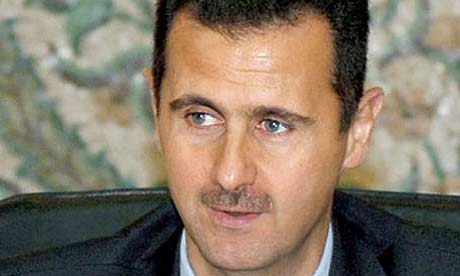
“Can Syria change its image?” by S. Farah

Can Syria change its image? The Power of Narratives.
By S. Farah for Syria Comment
24 November 2008

In an interview on National Public Radio, the great American author Norman Mailer explained his public image by saying, “People have outlandish ideas of me and are often surprised when they meet me. If I heard one remark over a thousand times in my life, it is that, you know, you are not the least bit who I thought you would be.” He blamed this false image on poor journalism. He said, “I am a measure of how bad and inaccurate the news is. The sad truth,” he went on to say, “Is that most journalists are mediocre writers. The mark of mediocrity is to look for precedents; so they look up the file on me and whatever was written about me before gets written again, therefore confirming the error.”

Poor journalism and transcribing precedents without examining the facts goes a long way in explaining Syria’s image. But Syria bares a responsibility as well.

For years Israel promoted a potent anti-Syria narrative — that Syria is a “brutal dictatorship that thrives on chaos”. They argued that Syria supports “terrorism” targeted against the only democracy in the Middle East — Israel — a narrative designed to distract western public opinion from Israel’s occupation of Arab land and its treatment of the Palestinians and Syrians under occupation. To gain further sympathy and western support, Israel also highlighted the tragic plight of the Jews during the Holocaust and emphasized the West’s “Judeo-Christian heritage”. With this, the focus shifted to Syria’s internal politics and Israel became a victim rather than the perpetrator of aggression through occupation.

And for many years Syria allowed its detractors to define her amidst a deafening silence from Damascus. Her political leaders were rarely accessible to the media and its embassies oversees were often described as “vaults”, a place were journalists were not allowed.

All this changed. Syria now has a very talkative, highly educated, and sophisticated cadre of politicians and foreign diplomats who are not camera shy. They are often multilingual and are armed with facts, bits and data.  They have been dispatched to set the record straight. Yet despite hundreds of interviews press appearances and talks at the various institutions, Syria’s image remains largely unchanged.

So how can we explain this stubborn resilience of Syria’s poor image? One explanation resides in the power of narratives.

According to Nassim Nicholas Taleb, the author of the best-selling book The Black Swan, narratives are what the brain uses to store and index information and facts. As we are faced with thousands and thousands of bits of information every day, the brain, like a computer, needs a way to arrange these bits into files. Narratives are what we use to summarize and make these trillions of details we encounter in a lifetime seem less random. One feature of narratives is that they are sticky, our brains clings to them. They are an integral part of the working biology of our brain. Another feature of narrative is they viciously affect the remembrance of facts, so we tend to remember more easily those facts that fit the narrative.

Today the only narrative about Syria is the one presented by its detractors. Syria never presented the world with her own competing narrative. Consequently, information that comes out of Syria today (including those presented by the Syrian politicians and diplomats) that fits the narrative, our brains will store, further emphasizing our established impressions of Syria, and the information that does not fit, confuses us and is neglected by our brain.

Even journalists usually seek information that confirms the narrative, and are doubtful when the information does not fit their preconceived notions. For example, a TV journalist reporting from Syria will find a giant poster of the president and present his or her report standing in front of it.

Many analysts and journalists are confused about what to make of Syria’s peace initiative toward Israel and the reforms carried out by President Bashar al Assad because they do not fit the established image of Syria. They usually doubt Syria’s intentions and explain its peace talks with Israel that are mediated by Turkey as a way for Syria to ease the western pressure on its government.

The Syrian government has allowed its citizens free access to the world’s information through unrestricted access to satellite TV and the Internet. The wife of the president has even helped organize a nonprofit effort to extend Internet access to rural Syria and cell phone companies are now offering high speed 3.5G wireless accesses to the Internet. Journalists will usually ignore this information because it does not fit the narrative of an oppressive dictatorship, yet ill-conceived and often unexplained government actions such as blocking Facebook or a rare political detention in today’s Syria will receive widespread coverage..

So can Syria change its image? The answer is yes. First Syria will have to provide the world with its own narrative. It is unrealistic to expect the public or a busy journalist who is faced with deadlines to examine and analyze a mountain of information. Syria will have to define the issues and what she stands for in a succinct and compelling way. Then she will have to promote this new narrative with programs and facts.

Ali Khan: Dispatch from Damascus 10

Dispatch from Damascus 10 (23/11/2008)
By Ali Khan

Qatana on ourskirts of Damascus: flikr by bodidly

Qatana on ourskirts of Damascus: flikr by bodidly

It is exam time again and the authorities seem to know and so have cut off the power supply. I am writing this with the help of a single candle that is threatening to go out. Unfortunately I cannot quite trace where the draft is coming from. Maybe it is flickering because of something else! The whole area is drenched in darkness. The sky has been looking ominously grey for the last two days and today it poured. The rains have stopped now but like in England there is an annoying drizzle that refuses to go away. Rainy weather does not flatter Damascus.

The city is normally so dusty that at the slightest hint of rain the roads become muddy. Obviously, the harder it rains the grimier the streets. All the dust from the various nooks and crannies of the old houses is washed into the street. The cobbled roads are mostly uneven so that one doesn’t know whether the next puddle is a missing stone or just a shallow dip in the road. On the bus back from the university it was nice to see the palm trees and shrubbery looking cheerfully green for a change and not bothered and dusty as usual. The vegetable sellers had decided to remove the covering from their shops. The bright red tomatoes, emerald green cucumber, fuchsia pink radishes and brown potatoes that normally look grubby proved distracting as I maneuvered my way around puddle of various sizes. Normally, a thin film of dust covers everything, including fruit and vegetables, and so it was a feast for the eyes to see all the colours.  Damascenes do not use pavements here and most of the time the pavement doubles as an extension of whichever shop happens to be on the roadside. This inevitably means that cars and people share the road and when it has rained people take the chance of getting soaked by a speeding servees or car. On the smaller streets people tend to be more stubborn and take their time in letting the car pass. The danger lies more with the cyclists who, like mad escaping hares, try to weave and squeeze through the smallest spaces while hissing at pedestrians to get out of the way. Some people also tie a small motor to their bicycle. Unfortunately, even though the riders might think that they are on a motorcycle, the cycles are generally rickety and so, all the more dangerous at high speeds.

A couple of friends and I were invited by a mutual Syrian friend to his village for one night. You might remember Rami from the last dispatch. His mother is form Halab (Aleppo) and so Rami was eager to introduce us to Halabi food, which of course, as a good son, he considers to be far superior to Shami (from Damascus) food. We have started having class on Saturdays and so if decided to leave on Friday as that was the only day free. After a short servees ride to Karajat Abbasiyeen, we took another servees to Dumaiyyara. The bus took off on the road towards Palmyra and Baghdad and then at some point turned off on a smaller side road. The suburbs looked the same as the last time I left Damascus in this direction. However this time it was interesting to see, how, as we went further from Damascus the car showrooms became smaller and had less well known brands. Initially huge signs screaming ‘Toyata, Honda, Hyundai, Nissan, Mercedes’ dominated the roadside but as we started to leave the urban sprawl behind, signs for Korean, Iranian and Eastern European car companies fought each other for space.

After leaving Damascus and driving for about twenty minutes or so one cannot help but see enormous smoke belching factories and the sad and wrinkled mountains in the background, trembling in the haze. The land on both sides was arid and was sparsely dotted with shriveled shrubs and the occasional olive tree. Rubbish was strewn everywhere and plastics bags took off and landed in the wind. Obviously all the ostensible effort of cleaning the streets in Damascus means that the area outside the city is completely neglected. The people too do not seem to care about littering and often one sees a hand reaching out of a wayward servees to get rid of a plastic cup or an empty chips packet. Some of the buildings look like copies of the Eastern Bloc and most of them look forbiddingly Stalinist in their architectural style. We passed the French Military Cemetery and I could not understand why it was located so far away from the city. The cemetery was enclosed by a wall and a worn out sign above the rusty gate informed us of its name. There were a lot of trees inside but it looked like no one had gone in for many years. The wall was spray-painted and a proclamation of undying love for Leila was followed by a declaration of loyalty to Hafez al-Assad. Even though Hafez al-Assad died a while ago, his name and photos are ubiquitous and often even accompany the photos of the current president, his younger son Bashar al-Assad. In fact a couple of times while speaking to people I have discovered that they were actually referring to Assad senior when they said president.

After driving through another weary looking town we finally reached Dumaiyyara. It was more of a town than a village and the only indication that a village once stood there was the occasional single story mud house with wooden beams protruding from above the door. Mostly the buildings were made of stone and had been designed by someone who had combined the easiest geometric shapes to produce various mutations of a cube. The street was not well maintained like the roads in Sham and everything was covered in dust. I think we were dropped off on the main street but most of the shops looked subdued and unused. One of my friends had already visited the town and so we marched off towards the house quickening our pace because of the thought of home made food. Rami met us outside. Instead of his usual Stefanel pullovers and jeans he was wearing a gallabiyya. His house too was built in the style of the others but it was more welcoming because of the two olive trees on either side of the door. On one side there were green olives and on the other there were black ones. As soon as the main gate clanged shut behind us I turned around to find a clean passageway with a large, warm and welcoming tan coloured door. Rami said ‘Ya Allah’ loudly before we entered to ensure that his sisters knew that we were coming. The inside of the house was built in the style of the semi-detached houses in England or the modern housing in some areas of Delhi. There was nothing in the style to suggest that we were in an Arab’s house and it seemed to be designed to fit a universal template. We could have been in any middle-class neighborhood in the world. We were led into a bright yellow living room. It was a pleasant change to be surrounded by bright colours rather than the monotonous stone buildings, dusty red earth and withered looking plants. On one side of the of the room there was a verse from the Quran written on wood and on the opposite side of the room was a picture of Rami’s grandfather surrounded by luscious greenery (amateur Photoshop job) and next it was his father’s engineering degree. We all collapsed onto the oversized sofas and switched on the television. Even though normally I would wander around or talk, I avidly watched Al-Jazeera international because I had not seen TV for more than two months. We sipped steaming Arabic coffee while we saw an interview with a Congolese rebel leader and then saw huge crowds in Baghdad protesting the new security pact. Al-Jazeera even had a statement from the spokesperson of Moqtada al-Sadr, something which I had not seen on Western or Indian news channels. The analysis was sharp and focused during the program and I was able to follow it all the more closely because I have been reading ‘Moqtada’ by Patrick Cockburn; a highly recommended read! Some of Rami’s friends came over and after the usual pleasantries I quietly asked Rami if I could take a picture. I am glad I caught the slight shake of the head followed by the lifting of his eyebrows. Rami, as you might remember, is Hanbali and his friends too seemed to be from the same school of thought. Some practitioners of Hanbalism frown upon photos and other things, which could be used to create images that in turn could be worshiped. I quickly put my camera away after pretending to look at some old pictures. After his friends left we took lots of photos! The only girl in our group had gone off to see Rami’s mother and sisters in the kitchen and obviously enjoyed their company because by the time she came back, she had already eaten and was looking very pleased with herself for having eaten before the men.

For dinner, a large tablecloth was spread out on the floor of the drawing room and Rami went in and out of the room, each time returning with bigger steaming plates of different food. When we had entered the house, the aroma wafting out the kitchen was so strong that I nearly followed the smell into the kitchen, a bit like the cartoon characters when they smell something good. The main dish was a steaming bowl of meat cooked in a tomato gravy with squash and some small kibbeh, made of potato and meat, was served separately with it. Both these parts were combined in the people’s plates depending on how much kibbeh they wanted. Obviously Rami insisted that we all eat at least three bowlfuls. Then the second dish came out. Even though the stomach was unwilling, thoughts of Indomie (Ramen) noodles and quick fry ups for dinner ensured that we ate more than we should have. The second dish was kibbeh bi-siini, literally kibbeh in a tray. A lot of work had evidently gone into the layered pastry and the meat inside was equally delicious and exquisite. I suppose it was the Syrian version of Shepard’s Pie. Just from eating the two dishes it seems to me that the Aleppans use more spices and flavours in their cooking than the Damascenes.  Apparently, Aleppo has the greatest variety of kibbeh in the Arab world and to me seems to rightly be a contender for the city with the best food! Of course, I have yet to go to Aleppo so, my opinions might change!! While we were polishing off the food we had managed to neglect the plates of salad and mutabbal, an aubergine based dip, and so I helped myself to a generous helping of both; always imperative to have fruit and vegetables too, as my mother would say!! After we were suitably satiated, we heaved ourselves back onto the couch and I tried to learn vocabulary but was distracted by TV5, the international French channel. While watching the TV I noticed that someone was peering over the screen that divided the living room into two parts. I looked to my friend and he silently indicated that they were Rami’s sisters.  Even though we were not allowed to see them, they definitely got a good look at us. As soon as our eyes would meet they would jump back, probably so that their brother would not notice and get upset.

After eating crunchy green apples and roasted watermelon seeds we decided that we would watch make Rami and my American friend watch Khuda kay Liyay, a Pakistani film. The film tries to show the brutality of both American and Islamic extremists and even though the content is original and thoughtful, the acting often makes one cringe. The story is about two musical brothers, one of whom gets mixed up with the Taliban and gives up his musical career and the older brother who goes to study music in America is wrongly arrested and imprisoned by the Americans. We piled into Rami’s room and watched the DVD . We were given piping hot cups of tea with fresh camomile, ginger and mint by Rami’s mother who came in front of us. She was wearing a pretty blue sequined hijab and a dress with rainbow stripes. The weather is cold in the evenings now and so the warm cuppa was exactly what we needed. Since it was the fifth or sixth time I was watching the film I went off to bed after a while but the next day I asked Rami what he thought. He said that the arguments presented about why music is not forbidden in Islam were weak and that he could have argued against the priest more effectively. What is interesting to me is that he did not say that the arguments were completely erroneous, as he is liable to say about things that he disagrees with. This was probably because the producers of the film had researched the arguments and received the approval of various notable clerics. This ensured that some parts of script were in conformity with the various books and sources of the Sunni schools of thought. Conversely, my American friend, who is also a part time film critic, had just about managed to put up with the acting and interestingly he said that the ‘idea’ of discussing whether music is permissible or not did not seem important to him. Of course, in poor, less developed and therefore less educated areas these are exactly the kind of issues that Muslims are often concerned by and are the issues that can reflect wider trends in a particular society. After a morning cup of coffee we set off for Damascus and as we managed to hail the same drafty and rickety servees we had taken the day before. The morning passengers were mostly students and manual labourers who periodically got off near various factories and workshops. The day was less hazy and so the rubbish lying all over the area was all the more visible.

I was struck by the battalions of satellite dishes on all the rooftops, as we entered Damascus from higher ground. They almost seemed to be straining forward, waiting for some kind of revelation as they all eagerly pointed in the same direction, noses up and ears spread out. The sky was forbiddingly grey again and I hurried home to take my laundry off the terrace! I too have a satellite but not of the receptive variety. I asked my landlord for a heater and it seems that he decided to make one himself. The heater has a wires wrapped around a ceramic block that in turn is nailed into a large salad bowl. When I plug it in, it initially looks like one of the old laser machines from the Thunder Bird series. I must go and sleep now! Until next week,

Ma’ as-Salaam!

Mazoot truck - old city Damascus

Mazoot truck - old city Damascus

Are There Non-Sectarian Parties in Syria: The case of the SSNP?

Antun Saade

Antun Sa'ade

“Are There Non-Sectarian Parties in Syria?”
By Joshua Landis

The following post originated in the comment section. I brought it to the front page not only because “sectarianism” is endlessly fascinating to our readers, but because it remains the central strumbling block to the formation of geographically based nationalism in the Middle East. I am responding to a comment by Nour:

Dear Nour,
You write:

The only truly secular parties in Lebanon are and have always been the Syrian Social Nationalist Party and the Communist Party. However, their ability to attract members has been historically hampered by the deep sectarian nature of Lebanese society which has only been strengthened and reinforced by the political system insisted upon by the sectarian, tribal chieftains of the country.

What about the Baath Party? Like both the SSNP and Communists, the Baath is secular and even anti-sectarian in ideology. Of course, it has not been so in reality.

I raise this question of the Baath, which is much more familiar to us, in order to challenge you on the other two – the SSNP and Communists.

Flag of the Syrian Social Nationalist

Flag of the Syrian Social Nationalist

I have always thought of the SSNP (Syrian Social Nationalist Party ) or PPS (Parti Populaire Syrien) as a party founded on a Greek Orthodox sensibility, even though it attracted many non-Orthodox. Yes, it builds on “Greater Syrian” nationalism, which is geographically based and not obviously sectarian, but hasn’t it appealed to Greek Orthodox first and foremost – as the anti “Arab” party? What I mean by “Arab” was understood by Greek Orthodox to be a code word for Muslim? It was attractive to other minorities, such as the Druze, Shiites, and Alawites as well, for the same reasons. They too were frightened of the Sunni ascendency. (Of course in the 1950s, the party developed a much more nuanced approach to Arabism, but I am talking about its origins here. Baathism later grew up to challenge the SSNP for the allegiance of many of these groups because it promised to establish an Arabism that was not dominated by the hegemonic Sunni moral outlook as was the National Bloc and its off spring.

At the time of the First World War, when the British were trying to appeal to the Arab Sunni majority by supporting the Hashemite version of Arab nationalism, which was infused with Sunni legitimacy, the Comite Central Syrien, a largely Greek Orthodox inspired organization grew up to challenge this conception of the M.E. It presented Greater Syria as the alternative to a Hashemite led Middle East and appealed to the French – particularly during the Paris Peace Conference after the War. People like Jacques Tabet, Chucri Ghanem and Semne, leading members of the movement – as well as the many chapters in the mahjar, Latin America, Europe and North America, did not want toe-picking backward Arabian Arabs to take over. They also depicted Arabism as a scary fanatical movement coming from the desert that wanted to re-impose a caliphate on the Middle East and had no conception of modern nationalism. They tried to scare Christian Middle Easterners and Europeans alike about the ultimate results of empowering a largely Muslim, neo-Umayyad, Arabism in the region.

When one scratched below the surface of the Greater Syria alternative, one found an imperial Byzantine sensibility and conception of history that had been built upon readings of the bible and sought to reunite regions of the Middle East where large populations of Greek Orthodox lived. Greater Syrianism didn’t just grow up as an anti-Arabist movement, it also emerged as an anti-Pheonicianist movement. It was an effort to present a nationalist conception of the region that suited the sensibilities and demographic of the Greek Orthodox in opposition to the largely Sunni and Maronite nationalist conceptions that were emerging.

Antoun Saade, whose father Khalil Sa’adah was a prominent Arabic-language journalist in Brazil, was well versed in this conception of the Middle East. I do not have proof that his father belonged to the Comite Central Syrien of the First World War era, but I would wager he did. He was a publisher and intellectual. Antoun grew up in a politicized and literate milieu.

He brought these ideas back to Lebanon in the 1930s and gave them an overlay of national socialism (fascism) which was the fashion of the time, replacing the liberalism of the original members of the Comite Central Syrien.

In short, what I am arguing is that all the “secular” parties of the Middle East, such as the SSNP, Baath, and Communit Parties, had a disproportionate appealed to various ethnic or sectarian groups and became “sectarianized” because the nationalist struggle in the Middle East could not be isolated from the religious and communal struggles that were and remain such a fundamental part of identity politics in the region.

Best, Joshua

Greater Syria

Greater Syria

“We will not allow another [IAEA] visit”

Syrian Girl by atsjebosma

Syrian Girl by atsjebosma

Syria Defends Destroyed Site As Non-Nuclear Military Base
AFP, 21 November 2008

Syria said Friday a building bombed by Israeli planes last year wasn’t a covert nuclear reactor, as Washington stuck to its allegations that it says are supported in a findings by the U.N. nuclear watchdog.

“We are talking about military bases, we are talking about military activities,” Ibrahim Othman, the head of Syria’s Atomic Energy Commission, told reporters after International Atomic Energy Agency inspectors briefed members about their first visit to the site in June.

Earlier on Friday, the U.S. envoy to the IAEA Gregory Schulte, had said the initial findings of the inspectors’ visit had served to harden the suspicions against Syria.

A four-page report circulated to IAEA board members on Wednesday “reinforces the assessment of my government that Syria was secretly building a nuclear reactor in its eastern desert and thereby violating its IAEA safeguards obligations,” Schulte said. “The report sharply contradicts a number of Syria’s claims and catalogs Syria’s repeated refusal to answer IAEA questions.”

The restricted report, a copy of which was obtained by AFP, said that “while it cannot be excluded that the building in question was intended for non-nuclear use, the features of the building…along with the connectivity of the site to adequate pumping capacity of cooling water are similar to what may be found in connection with a reactor site.”

Furthermore, traces of uranium had been found at the site which was razed to the ground by Israeli planes on Sept. 6, 2007.

“No such nuclear material had so far been declared in Syria’s inventory…. In principle, that sort of nuclear material should not exist there. It’s not usual to find man-made uranium in sand,” a senior U.N. official said.

Othman insisted that since the site was a military one, the IAEA had no right to inspect it.

No other country would allow any person to visit a restricted military site, ” just because he would like to see it,” Othman said.

….Syria “will continue cooperation with the agency, there’s no doubt,” he said, adding: “We will continue cooperation, we are member of the international community and we are a member of the IAEA.”

But it won’t sign the so-called Additional Protocol, which gives the IAEA greater inspection rights, Othman said…..

Syria all but rules out more U.N. nuclear inspection
AP, 21 November 2008

A senior Syrian official on Friday all but ruled out new visits by U.N inspectors probing allegations that his country had a covert program that could be used to make nuclear weapons.
Syrian refusal to allow inspections could doom the International Atomic Energy Agency’s efforts to follow up U.S. assertions that a site bombed by Israel last year was a nearly finished reactor that could have produced plutonium.

Syria allowed the IAEA to visit the site near the desert town of Al Kibar in June but has since turned down requests for more inspections.

“We will not allow another visit,” said Ibrahim Othman, the head of Syria’s atomic agency.

He said the IAEA had agreed with Syria that there would be only be one visit. The IAEA has said it agreed to make one initial visit, but has requested others.

The IAEA has said it suspects three other sites may have been nuclear-related and linked to the bombed location…

Ehud Olmert, ‘The Time Has Come to Say These Things’
New York Review of Books, Volume 55, Number 19 · December 4, 2008

On the eve of the Jewish New Year, Israel’s most popular daily newspaper, Yedioth Ahronoth, published an extended interview of lame-duck prime minister Ehud Olmert by journalists Nahum Barnea and Shimon Shiffer…. The following are excerpts from the Yedioth interview…

we have a window of opportunity—a short amount of time before we enter an extremely dangerous situation—in which to take a historic step in our relations with the Palestinians and a historic step in our relations with the Syrians. In both instances, the decision we have to make is the decision we’ve spent forty years refusing to look at with our eyes open.

We must make these decisions, and yet we are not prepared to say to ourselves, “Yes, this is what we must do.” We must reach an agreement with the Palestinians, meaning a withdrawal from nearly all, if not all, of the [occupied] territories. Some percentage of these territories would remain in our hands, but we must give the Palestinians the same percentage [of territory elsewhere]—without this, there will be no peace….

Yedioth Ahronoth: It seems that political leaders in Israel always reach this conclusion only when they themselves are no longer in a position to make this decision.

Ehud Olmert: Not in my case. I reached this conclusion when I was still able to do something about it. I established contacts with the Syrians in February 2007, long before the police opened investigations on me. And I engaged in them quietly. Throughout that period I made many efforts, sent envoys all over the place, and had various people working secretly on my behalf to convince the Syrians that I wanted serious talks with them. Today we’ve arrived at the point at which we must ask ourselves whether we really want to make peace or not.

I’m not saying that this is a simple question. One might argue, ostensibly with good reason, that, look, for thirty-five years, since the Yom Kippur War, we’ve lived on the Golan Heights without any violation of the cease-fire; and there’s none of the day-to-day friction with a civilian population, as in the territories—so why not carry on?….

Yedioth Ahronoth: Based on what you have said, you seem to think that the guilt falls entirely on [Israel].

Ehud Olmert: No. Our burden is ours; their burden belongs to them. I’m not suggesting we make peace with Syria simply by surrendering the Golan Heights. The Syrians know well what they must surrender to get the Golan. They must give up their connections with Iran, such as they are, and their connections with Hezbollah; they must cease funding terrorism, Hamas, al-Qaeda, the holy war in Iraq. They know. These things have been made clear to them.

Were a regional war to break out in the next year or two and were we to enter into a military confrontation with Syria, I have no doubt that we’d defeat them soundly. We are stronger than they. Israel is the strongest country in the Middle East. We could contend with any of our enemies or against all of our enemies combined and win. The question that I ask myself is, what happens when we win? First of all, we’d have to pay a painful price.

And after we paid the price, what would we say to them? “Let’s talk.” And what would the Syrians say to us? “Let’s talk about the Golan Heights.”

So, I ask: Why enter a war with the Syrians, full of losses and destruction, in order to achieve what might be achieved without paying such a heavy price?

…In the absence of peace, the probability of war is always much greater. A prime minister must ask himself where to best direct his efforts. Are his efforts directed toward making peace or are they directed constantly toward making the country stronger and stronger and stronger in order to win a war?

…What I’m saying here has never been said by a leader of Israel. But the time has come to say these things. The time has come to put them on the table.

I read the reports of our generals and I say, “how have they not learned a single thing?” Once, a very senior official told me, “They’re still living in the War of Independence and the Sinai Campaign.” With them it’s all about tanks, about controlling territories or controlled territories, holding this or that hill. But these things are worthless.

…The true threat we are facing today in the north, south, and east is from missiles and rockets. We will need to answer these threats but we will not find such answers within a range of two hundred meters.

…Our goal should be, for the first time, to designate a final and exact borderline between us and the Palestinians so that the entire world, the United States, the UN, and Europe can say, “These are the borders of the State of Israel, we recognize them, and we will anchor them with formal resolutions in the major international bodies. These are the recognized borders of Israel and these are the recognized borders of the State of Palestine.”

…Who seriously thinks that if we sit on another hilltop, on another hundred meters, this will make a difference for Israel’s basic security?………

Buthaina Shaaban: Syria-Israel deal is close. (Thanks to SASA for sending this.)
By Sasa, the Syria News Wire
20 November 2008

Buthaina Shaaban – adviser to the Syrian president and Nobel Peace Prize nominee – has revealed that her country is closer to a peace-deal with Israel than it has ever been during a public talk in Britain.

This year, Syria has had a series of indirect talks with Israel, on the return of the Golan Heights. It is the first time the two countries have talked since Shepherdstown in 2000.

“At Shepherdstown the problem was just the demarcation of the 1967 line (the future border),” she told a packed audience at the Diplomatic Academy of London. “Now, we started by trying to describe the 67 line, so the feeling is better than after Madrid.”… More at the Syria News Wire.

Syria has clear and comprehensive vision of Peace, Sha’aban Says
SANA, 21 November 2008

Presidential Political and Media Advisor Buthaina Sha’aban on Friday …. at a symposium titled “Syria is the key to solving Middle East problems”, …at the building of the Diplomatic Academy in Vienna.

“The problem in the region is a political one, it is an outcome of the Israeli continued occupation of the Arab lands and its non abiding by international resolutions… the problem is not religious as some western media depict,” Sha’aban added.

She said that the suffering of the Palestinian and Iraqi refugees is a result of the Israeli and US occupation.

For his part, Austrian State Secretary for Foreign Affairs Hans Winkler underlined in an interposition at the Symposium the important role of Syria in the Middle East and the peace process, saying “it is not possible to achieve peace in the region without Syria.”

A number of Austrian political and media figures, Arab Ambassadors, intellectuals and members of the Syrian Community in Austria attended the Symposium.

Iraqi Refugees in Syria Watch U.S. Security Negotiations
NAM, 21 November 2008

While the Iraqi parliament deliberates over the controversial security pact with U.S. forces that was approved by the country’s cabinet this week, Iraqis in Damascus are divided over the possibility of U.S. forces remaining in their country for another two years.

Many of the estimated one million Iraqi refugees here say they are eager to return, but they still feel the wounds of the sectarianism that has ripped their country apart in recent years. For refugees here, security in Iraq is a top priority, but many continue to be deeply critical of the ongoing occupation, leaving the community divided on whether security is a legitimate cause for U.S. forces to remain for another two years.

In Seyida Zaynab, the suburb of Damascus often dubbed “little Baghdad” for its largely Iraqi population, … I duck into the Sadrist office, the Syrian branch of the movement of mostly poor, anti-occupation Iraqi Shia. …“We refuse the agreement completely,” says the black robed Al-Qadimi. “The security pact is an agreement between two sides—the Iraqi government and the Americans. Neither side represents the Iraqi people, and no one else has any stake in it. We are an occupied country and the occupying forces must leave…”

Killing of al-Qaida Smuggler in Syria was Joint Syrian, U.S. Effort
By RICHARD SALE
Middle East Times, 21 November 2008

In spite of much angry public protest in Damascus, last month’s killing of top al-Qaida operative Abu Ghadiya, was in fact a joint operation between U.S. Special Forces in Iraq and Syrian intelligence, according to former and serving U.S. intelligence officials.

Abu Ghadiya, a smuggler who for years had moved money, weapons and insurgents into Iraq from Syria, was killed by a U.S. helicopter raid on Oct. 26. Seven civilians were killed with him, and the resulting furor was immediate: Russia and the Arab League strongly protested the raid, and Syria accused the United States of “criminal and terrorist aggression” and lodged an official protest, according to U.S. State Department spokesman Sean McCormack. Syria ordered the American School in Damascus closed.

But Syria’s alleged anger was calculated to conceal Syrian complicity in the operation. Although the attack is still officially “classified,” serving and former U.S. intelligence officials told the Middle East Times that Syria gave U.S. forces permission to fly into its airspace and even provided extensive targeting intelligence on Abu Ghadiya. “Syrian intelligence couldn’t have been more cooperative,” said a former senior CIA official…. 

Last May Abu Ghadiya and a dozen gunmen attacked an Iraqi police station in Qaim, killing 12, some of whom were beheaded.


Then, in early October, U.S. intelligence learned that Abu Ghadiya was planning another cross-border attack, and back-channel discussions with Syrian officials began.


Washington has long run a back channel to Damascus through Syria’s air force intelligence, the Idarat al-Murkabarat al-Jawiyya, U.S. sources said.


On Oct. 26, Syrian intelligence alerted U.S. forces in Iraq to Abu Ghadiyah’s whereabouts, at which time, U.S. Signals Intelligence (SIGINT) operatives began to track him, probably through his satellite telephone.

Four Blackhawk helicopters took off for the northeastern Syrian village of al-Sukkiraya, about five miles from the Euphrates river, an area where a compound of new homes was being built, according to U.S. intelligence officials.


At this point, the raid went wrong. As the U.S. Special Forces poured out of the aircraft, shots were fired and a gunfight broke out that lasted for 10 to 15 minutes. Abu Ghadiya was to have been captured and flown to Iraq for interrogation. Instead he was killed in the fighting, along with seven Syrian civilians, including four children, most of them members of the same family.


“There weren’t to have been any civilian casualties, no collateral damage,” a U.S. intelligence official said. “We wanted the [expletive] alive.” The U.S. raiding team carried off two captives for interrogation.


“The problem with these kinds of tactics lies with the fact that so many things can go wrong, and they usually do,” said Middle East expert Tony Cordesman. “You don’t want to solve one problem only to create a dozen others.”


But the praise of U.S. officials for Syria’s part was deeply appreciative. “The Syrians were perfect; they gave us the works,” said one U.S. official familiar with the incident…..

Your Attention, Please
By Brent Scowcroft and Zbigniew Brzezinski
Friday, November 21, 2008; Page A23, Wash Post

The election of Barack Obama to be the 44th president is profoundly historic. We have at long last been able to come together in a way that has eluded us in the long history of our great country. We should celebrate this triumph of the true spirit of America.

Election Day celebrations were replicated in time zones around the world, something we have not seen in a long time. While euphoria is ephemeral, we must endeavor to use its energy to bring us all together as Americans to cope with the urgent problems that beset us.

When Obama takes office in two months, he will find a number of difficult foreign policy issues competing for his attention, each with strong advocates among his advisers. We believe that the Arab-Israeli peace process is one issue that requires priority attention.

In perhaps no other region was the election of Obama more favorably received than the Middle East. Immediate attention to the Israeli-Palestinian dispute would help cement the goodwill that Obama’s election engendered. Not everyone in the Middle East views the Palestinian issue as the greatest regional challenge, but the deep sense of injustice it stimulates is genuine and pervasive.

Unfortunately, the current administration’s intense efforts over the past year will not resolve the issue by Jan. 20. But to let attention lapse would reinforce the feelings of injustice and neglect in the region. That could spur another eruption of violence between the warring parties or in places such as Lebanon or Gaza, reversing what progress has been made and sending the parties back to square one. Lurking in the background is the possibility that the quest for a two-state solution may be abandoned by the Palestinians, the Israelis, or both — with unfortunate consequences for all.

Resolution of the Palestinian issue would have a positive impact on the region. It would liberate Arab governments to support U.S. leadership in dealing with regional problems, as they did before the Iraq invasion. It would dissipate much of the appeal of Hezbollah and Hamas, dependent as it is on the Palestinians’ plight. It would change the region’s psychological climate, putting Iran back on the defensive and putting a stop to its swagger.

The major elements of an agreement are well known. A key element in any new initiative would be for the U.S. president to declare publicly what, in the view of this country, the basic parameters of a fair and enduring peace ought to be. These should contain four principal elements: 1967 borders, with minor, reciprocal and agreed-upon modifications; compensation in lieu of the right of return for Palestinian refugees; Jerusalem as real home to two capitals; and a nonmilitarized Palestinian state.

Something more might be needed to deal with Israeli security concerns about turning over territory to a Palestinian government incapable of securing Israel against terrorist activity. That could be dealt with by deploying an international peacekeeping force, such as one from NATO, which could not only replace Israeli security but train Palestinian troops to become effective.

To date, the weakness of the negotiating parties has limited their ability to come to an agreement by themselves. The elections in Israel scheduled for February are certainly a complicating factor, as is the deep split among Palestinians between Fatah and Hamas. But if the peace process begins to gain momentum, it is difficult to imagine that Hamas will want to be left out, and that same momentum would provide the Israeli people a unique chance to register their views on the future of their country.

This weakness can be overcome by the president speaking out clearly and forcefully about the fundamental principles of the peace process; he also must press the case with steady determination. That initiative should then be followed — not preceded — by the appointment of a high-level dignitary to pursue the process on the president’s behalf, a process based on the enunciated presidential guidelines. Such a presidential initiative should instantly galvanize support, both domestic and international, and provide great encouragement to the Israeli and Palestinian peoples.

To say that achieving a successful resolution of this critical issue is a simple task would be to scoff at history. But in many ways the current situation is such that the opportunity for success has never been greater, or the costs of failure more severe.

Brent Scowcroft was national security adviser to Presidents Gerald Ford and George H.W. Bush. He is president of the Forum for International Policy and the Scowcroft Group. Zbigniew Brzezinski was national security adviser to President Jimmy Carter. He is trustee and counselor at the Center for Strategic and International Studies. The two are authors of “America and The World: Conversations on the Future of American Foreign Policy.”

Syria hit by double blow on oil prices and falling supplies
By Anna Fifield
Financial Times, 20 November 2008

The decline in crude prices has taken oil-producing nations by surprise, but few will be hurt as much as Syria, which is grappling with rapidly falling supply. The double blow has huge implications for the economy.

“Energy is a problem,” says Nabil Sukkar, an economist who heads the Syrian Consulting Bureau. “Our energy-generating capacity is below demand and our oil reserves are falling, while our gas reserves have not been developed rapidly enough.” Dwindling Syrian resources are often cited by analysts as one of the main reasons the country needs to end its international isolation, a process that has now started with improved ties with Europe. David Miliband, UK foreign secretary, was in Damascus this week in the latest sign of a thaw in ties between the west and Syria.

While fighting off pressure from the US and other western states over alleged interference in Iraq, Lebanon and the Palestinian territories, Syria has struggled for economic survival.

The energy sector comprises a large chunk of its economy and oil revenues have funded a quarter of the expenditure in the nation’s huge public sector. Five years ago oil comprised more than half of Syria’s $29bn in income, but last year it contributed only $3.8bn to revenues totalling $22bn (€17.5bn, £14.6bn).

The International Monetary Fund says Damascus will face unsustainable budget deficits by 2015 unless it can find new sources of income.

The decline in oil production – it fell by 6.5 per cent to 394,000 barrels a day last year and is set to shrink further – will also weigh on growth, which has averaged 4.5 per cent in the past three years, due mainly to oil.

The IMF estimates that the non-oil parts of the economy contracted 7.3 per cent last year, worse than the 6.4 per cent shrinkage in the previous year. In particular, Syria’s agricultural sector has been suffering from the worst drought in 40 years, which has put 1m people at risk of malnutrition and caused more than 100,000 to lose half their livestock.

But encouraging the non-oil sector and developing new sources of growth will be difficult unless the energy shortages are solved, as Syria lacks energy supplies to power new industries.

Sectors essential for industrialisation – such as cement and steel – are among the worst hit by energy shortages. The government now requires anyone wanting to build an energy intensive factory to set up a power-generating plant, a sizeable investment that is hindering some from expanding just when Syria needs such products for construction.

Electricity power stations, fuelled primarily by oil and natural gas, are unable to meet demand. New plants are being built, including some solar power stations funded with Gulf investment. However, Syria’s plans to add 3,000MW of power-generating capacity by 2010 have been hindered by delays.

Some analysts see the energy crisis as a chance to shake up the economy and accelerate restructuring.

“They are well aware of the need to increase non-oil revenues and have taken a series of measures in this direction,” says Nassib Ghobril, head of research at Lebanon’s Byblos Bank. “So the sudden drop in global oil prices might accelerate the implementation of reforms.”

Already, reform-minded politicians are using the need for change in the energy sector to introduce sensitive ideas to Syria’s “social market economy”.

Abdullah Dardari, deputy prime minister for economic affairs, suggests the private sector should play a greater role in electricity supply. “We are developing a private partnership policy to bring in investments in the energy sector,” he says. “The essential prerequisite for a sustainable energy policy is to have the correct prices.”

Electricity and oil have been heavily subsidised for decades. The government expects to spend $7bn on energy subsidies this year.

Syria’s Economy May Expand 7% Next Year, Deputy PM Dardari Says
By Natalie Weeks
Bloomberg, 19 November 2008

Syria’s economic growth may reach 7 percent next year as it continues to attract investment from the Middle East and exports diversify away from oil, Deputy PrimeMinister Abdallah Dardari said.

The global credit crisis doesn’t “represent any serious risks” to banks in Syria, which have remained isolated from the worldwide system because of U.S. sanctions, Dardari said in an interview in Athens today.

“Demand for Syrian products could be affected, but if we find the right niche exports, and we do have them, and present ourselves as the place for real economy investments we can actually take advantage of the crisis,” Dardari said.

Economic growth in the nation of 20 million will accelerate from about 6.6 percent this year, Dardari aid. Inflation is expected to decelerate to 9.8 percent within the year, he added.

The Economist Intelligence Unit has forecast price growth will reach 16.8 percent this year from 12.2 percent in 2007 because of reductions in fuel subsidies and a 25 percent increase in
government salaries and pensions.

Syria is diversifying away from a dependence on oil. The country’s non-oil exports exceeded $12.5 billion last year, compared with less than $1 billion in 2000, spurred by regional demand for items such as textiles, pharmaceuticals, cotton and agricultural produce.

The U.S. imposed sanctions on Syria in May 2004, including a ban on trade transactions with the Commercial Bank of Syria, in an effort to halt exports to the country that is accused by President George W. Bush’s administration of aiding militants in Iraq and pursuing weapons of mass destruction.

Syria “doesn’t want to pin high hopes on dramatic change” as Barack Obama’s administration takes office in January, Dardari said. “We believe, we hope, that the approach of the new U.S. administration will be different toward the issues of the Middle East and Syria specifically.”

Report says Britain hammers out Damascus intelligence agreement
By Raed Rafei
Los Angeles Times, 19 November 2008

It’s another effort by a Western power to draw Syria out of its international isolation in hopes Damascus would loosen its strong ties with Tehran and groups such as Hezbollah and some Palestinian factions.

The U.K.’s Foreign Minister, David Miliband, made a landmark visit to Damascus on Tuesday. He’s the first British top diplomat to visit Damascus since 2001.

Before heading to Beirut, Miliband said that Syria had an “essential role” to play in the stability of the Middle East. This move might be seen as a sign that the U.K., after France, is warming up to the Syrians.

Milliband said that Syria had responsibilities in the region “in respect of counter-terrorism, in respect of Iraq, in respect of the Middle East peace process.” He urged Syria to resume talks with Israel…Apparently, the main focus of the visit was the reestablishment of high-level intelligence cooperation between the Brits and the Syrians…

Syria may invite Russian mobile carrier – minister
Reuters, 20 November 2008

Syria is considering inviting a Russian cellular operator into its market, Russia’s Communications Minister Igor Shchyogolev said on Thursday.

‘They have an idea to add one more mobile operator there. The participation of Russian companies in the Syrian mobile market is possible,’ Shchyogolev told reporters after a session of the Russian-Syrian Intergovernmental Commission.

Russia’s mobile phone market penetration currently stands at around 125.4 percent, according to market research group AC&M, suggesting the impressive growth rates in telecoms sales of the past years are now set to slow down. According to media reports, Syria’s cellphone penetration does not exceed 40 percent, and the market is split between Syriatel, owned by a Syrian businessman, and MTN Syria, part of Sub-Saharan Africa’s top mobile phone operator MTN.

Syrian officials have repeatedly said the country is going to auction off a third license…..

Russia: Syria won’t get Iskander for now
The Jerusalem Post, 20 November 2008

Months after offering Russia to deploy long-range ballistic missiles in his country, Syrian President Bashar Assad was informed this week that Moscow will not sell Iskander missiles to foreign clients due to production delays.

According to a report in the Russian news agency Novosti, the state arms exporter Rosoboronexport has decided that despite interest from a number of countries – including Syria, the United Arab Emirates and India – Moscow will not export the Iskander missile until the Russian Armed Forces are fully equipped with the system.

The Iskander missile – also known as the SS-26 Stone – is a short range, solid fuel propelled, theater quasi-ballistic missile system. According to reports, the Iskander missile has only been subject to test firing and will likely only become operational in four years.

The system was developed to carry conventional warheads for the engagement of small targets, fixed missile silos and anti-aircraft systems as well as command posts and critical civilian infrastructure facilities. The missiles are reportedly difficult to intercept.

In August, Assad visited Moscow where he spoke with President Dmitry Medvedev and reportedly discussed the possibility of allowing Russia to set up Iskander missile launchers in Syria.

Israel was concerned with the reports and feared that the missiles could be used in a future conflict in the region. In October, Prime Minister Ehud Olmert made a lightning trip to Moscow to urge Medvedev not to sell Syria advanced missile systems.

In May, a Syrian military delegation, led by Air Force Commander Gen. Ahmad Al Ratyb, visited Russia for talks about the possible procurement of the Iskander as well as the advanced S-300 anti-aircraft missile defense system.

Earlier this month, Medvedev threatened to deploy Iskander missiles in the Baltic enclave of Kaliningrad sandwiched between NATO members Lithuania and Poland in order to “neutralize if necessary” a proposed US missile defense system in Europe. Chief of the General Staff Gen. Nikolai Kakarov said that the military was prepared to deploy the missiles per Medvedev’s final order.

Syria: Al-Moallem, Stefani Discuss Syrian-Italian Bilateral Relations
SANA, 20 November 2008

Foreign Minister Walid al-Moallem discussed on Wednesday with President of the Foreign Affairs Committee at the Italian Parliament Stefano Stefani bilateral relations between the two countries and means of developing them….

Barack Obama’s election has raised hopes but the problems are still gigantic
By Richard Beeston
Times Online, 21 November 2008

….. American and Middle Eastern officials, along with regional analysts, believe that Mr Obama could restore full relations with Syria, begin to normalise US ties with Iran – suspended nearly 30 years ago – and breathe new life into the moribund peace process between Israel and the Palestinians….

The Nuclear Mess – Where Does it Leave Syria?

Washington Note: Bizarre Media Cycles for Bashar

Washington Note: Bizarre Media Cycles for Bashar

[Landis analysis] The UN nuclear investigation could be the new Hariri investigation for the “isolate-Syria” crowd. For several years the UN investigation into the Hariri murder gave neo-cons hope that they would be able to carry out regime-change in Syria on the cheap, by tripping up Syria’s leadership in a web of international sanctions, UN strictures, and legal snares. The Hariri investigation seems to have petered out and no longer inspires much enthusiasm, even in the most neo-con of circles. The American backed Israeli strike on the military plant on the Euphrates has opened up a new avenue for international probes. It is likely that Syria will reject further UN visits to Syria, which will leave the Security Council to decide whether to sanction Syria or not. The international community has lost its taste for hard ball, which the Bush administration used with such disastrous results.

All the same, the nuclear issue will give Obama’s new foreign policy team pause in re-engaging Syria. That may be all the anti-Syria crowd needs to trap the new administration in a cycle of confrontation. The first few months of the Obama presidency will be decisive in setting the agenda for the Arab-Israeli conflict. If Syria is ignored or if it senses that Obama may continue Bush hostility toward Syria, such as by pushing for a Lebanese confrontation with Hizbullah, blocking Iraqi rapprochement with Syria, teaming up with “moderate” against “trouble-making” Arabs, or by pampering Netanyahu obstructionism, Syria will consolidate its resistance alliances and become insensible to future backtracking by the West. Syrian distrust of the West’s intentions is so lively after eight years of Bush, that only a clean break from past policy will help lure it out of its defensive tuck.

It may turn out that the neo-conservatives have been successful at one thing, which is to push the center of US Middle East policy away from Israel and the traditional Arab-Israeli conflict toward the Gulf. With our troops on the ground, it may be too much to expect Obama to squander his domestic Jewish political capital, which he seems to have amassing with skill, on squeezing Israel. Perhaps the only hope is if Obama can get Hillary Clinton to accept the Secretary of State position so she spends her Jewish capital on a peace push.

The US will most likely continue to give international and political cover to Israel while settlers extend their grip on the West Bank. Hope for a two state solution is dwindling fast. Of course Obama will have to establish a mechanism to pretend to do something and perpetuate popular hopes that there is a solution, but I don’t suspect that the mechanism will mitigate Palestinian weakness. It may help bring the Saudis and “moderate” Arabs along on whatever course he decides on for security architecture in the Gulf. This is the direction indicated by the Saudi-Israeli dance over the “Arab” peace plan rather than pushing hard nosed negotiations directly between Syria and Israel.

U.N. Watchdog Finds Nuclear Threats in Syria and Iran
By JAY SOLOMON
The Wall Street Journal, 20 November 2008

United Nations investigators found “significant” traces of uranium used in reactors at the wreckage of a Syrian facility that Israel bombed last year, and Iran is rampingup production of nuclear fuel while denying investigators access, the International Atomic Energy Agency reported Wednesday.

The U.N. nuclear watchdog’s findings about nuclear development in Iran and Syria underscore the proliferation threats President-elect Barack Obama will face upon taking office in January.

Tehran is running nearly 4,000 centrifuges and plans 3,000 more, despite U.N. Security Council resolutions calling for a suspension, the IAEA said, and inspectors aren’t being given access to sites or documents connected to possible military components of Tehran’s nuclear program.

The Syria discovery, which had leaked out last week, bolsters Bush administration claims that Damascus was covertly developing a nuclear reactor. European officials said their governments have begun briefing Mr. Obama’s advisers on how to jointly address the Iranian nuclear challenge. They expressed hope that the arrival of Mr. Obama, who has pledged to engage Tehran and Damascus more directly than his predecessor, could jump-start stalled diplomacy….

Iran, Syria Fail on UN Nuclear Cooperation, IAEA Says (Update1)
By Jonathan Tirone
Bloomberg, 20 November 2008

Iran and Syria have failed to provide sufficient assistance with two separate investigations into suspected clandestine nuclear work, the United Nations atomic agency said.

“Iran has not offered any cooperation with the agency” to clear up allegations that it has sought to develop a weapon, the Vienna-based International Atomic Energy Agency said in a report.

A Syrian site bombed by Israel in September 2007 on suspicion that it was an undeclared atomic reactor had “significant” quantities of uranium particles, and shared some characteristics of a reactor, the IAEA said. The UN agency said it hasn’t yet received documentation to support Syria’s stance that it was a conventional military facility.

Files on the two probes, transmitted to the IAEA’s 35-member board of governors, may increase pressure on the Middle Eastern countries to cooperate more extensively with the investigations. Iran has been under UN investigation since 2003 for allegedly seeking to develop nuclear weapons, a charge it denies.

AFP, 20 November 2008

“While it cannot be excluded that the building in question was intended for non-nuclear use, the features of the building … along with the connectivity of the site to adequate pumping capacity of cooling water are similar to what may be found in connection with a reactor site,” the IAEA said in a restricted report, a copy of which was obtained by AFP.

Experts Urge Obama To Engage Early On Middle East
by Michele Kelemen
NPR, 19 November 2008

As President-elect Barack Obama’s transition staff looks at foreign policy, the Middle East and its many trouble spots will loom large. Some experts are advising Obama and his team to show early engagement in what they see as the region’s core issue: the Israeli-Palestinian conflict.

There are growing doubts that a viable Palestinian state could emerge to live side by side in peace with Israel. President Carter’s national security adviser, ZbigniewBrzezinski, told a group at the Aspen Institute that “the two-state solution is beginning to run out of room for implementation.” He added, “Presidentialinvolvement here is essential.”

European foreign policy officials have put the Middle East peace process at the top of their wish list for a new U.S. foreign policy approach. The European Union’s ambassador in Washington, John Bruton, has encouraged the Obama administration to take a hard look at Israeli settlement expansion in the West Bank. He argues that as Israelis head to the polls in February, they “need to know that there is an administration in Washington that wants the two-state solution to work, not just in theory, but in practice and soon.”….

At the Washington Institute for Near East Policy, scholar David Makovsky predicts that the incoming Obama administration will want to facilitate talks between Israel and Syria, now an ally of Iran. “I see the approach to be somewhat like Henry Kissinger did with the Egyptians in the 1970s,” Makovsky says. “Namely, Kissinger was very skillful in prying Egypt away from the Soviet orbit.”

The question for the next administration, he says, is whether it can do anything comparable with a “willing Israeli government in prying away Syria from an Iranian orbit?”

Iran Is ‘The Greatest Danger’

A former undersecretary of state for political affairs, R. Nicholas Burns, warns that Iran is a major threat — not just because of its nuclear ambitions, but also for its support of terrorist groups and its overall influence in the region. “Iran has influence in Iraq and Afghanistan, and sometimes uses it against American interests,” he says. Iran is “the greatest danger and the greatest problem for the new administration, and it is going to have to be dealt with in an early stage,” says Burns,…

The administration will be torn in many directions, but needs to focus on all of these issues, from negotiations with Iran, the Israeli-Palestinian peace process and a potential Israeli-Syrian track to helping Iraq as U.S. troops withdraw.

In the New York Observer, here (Via FLC)

“[Hillary’s] top, top, top advisers told me, ‘Steve, she will animate things in the Middle East—she will deliver a Palestinian state. Gold-plated,’” said Steven Clemons, a senior fellow at the New America Foundation in Washington.

Latest poll gives Likud big edge over Kadima
By Yossi Verter

Benjamin Netanyahu and Likud have had a good three weeks, with no major slips, with brand new faces and with a good press, while Kadima is bleeding and Labor is disintegrating.

The opinion polls are responding in kind: Likud opened a large, decisive lead of six MKs over Kadima. The right-wing bloc, led by Likud, is also firming up in comparison to previous polls, with 64 MKs versus 56 for the center-left. In effect, the right is much stronger than the center left, since its count also includes 11 MKs from the Arab parties: They will not be asked to join the governing coalition and in the current political climate their only use will be as part of a “preventive bloc” in the Knesset.

Secretary Condoleezza Rice Says it is all about Lebanon (Via to FLC)
Washington, DC November 18, 2008

QUESTION: Madame Secretary, Foreign Minister – British Foreign Minister Miliband has said today in Syria that Damascus has played a positive role in Lebanon and Iraq lately. What do you think?

SECRETARY RICE: I think we are all very much following what is going on in Lebanon, and I’m looking forward to listening to Mr. Jumblatt as he tells me about the preparations for the election. And we continue to support a democratic and sovereign and independent Lebanon, and everything that the United States is doing is to that cause. And anyone and any state that demonstrates its commitment to Lebanon’s sovereignty and independence should be welcomed to that cause. I just think it’s important to demonstrate it.

Dallying with Syria
Financial Times, 19 November 2008

First France, and now Britain. The courtship of Syria proceeds apace. There is, of course, nothing wrong with engagement, as the Bush years have taught us. Ideally, however, robust diplomacy should be harnessed to a coherent strategy. That is what is lacking in the cosying up to Bashar al-Assad and his regime.

Mr Assad owes his re-entry into polite geopolitical society in the first instance to Nicolas Sarkozy. ….

Report: Lebanese spy trained in Israel (Thanks Danilo)

….His mission in Syria also focused on scouting the city of Damascus, including Kfar Soussa where top Hizbullah commander Imad Mughniyeh was assassinated. Cities like Tartous, Hama, Allepo and Homs also were scouted….

Bilal Saab on Syria’s recent tactical readjustments in foreign policy, which appeared in the most recent issue of Jane’s Foreign Report.

Iran Has Enough Fuel to Make Atom Bomb, Experts Say: NYTimes, 2008-11-20

Iran aims for 2009 launch of nuclear plant
Reuters, 18 November 2008

Iran is aiming to commission its first nuclear power plant in 2009 after years of delays, the official IRNA news agency reported on Tuesday.

Russia has already delivered nuclear fuel under a $1 billion contract to build the Bushehr plant on the Gulf coast in southwest Iran. But the start-up timetable has frequently been put back because of issues such as a row over payments.

Russia agreed to build the plant in 1995 on the site of an earlier project begun in the 1970s by German firm Siemens. The Siemens’ project was disrupted by Iran’s 1979 Islamic revolution and the 1980-88 Iran-Iraq war.

“The commissioning stage of Bushehr nuclear power station has begun and we are hopeful the power station will be commissioned in 2009 as per the agreement we have had with the Russian party,” the spokesman for Iran’s Atomic Energy Organization, Mohsen Delaviz, was quoted a saying.

He did not give a more precise date.

“There is a good environment prevailing in our relations with the Russians and we are hoping they will honor their commitments,” he added.

Atomstroyexport, the Russian firm building the plant, said in September the plant was nearing completion and that it would start “technological work” in December 2008 to February 2009 that would put the plant on an “irreversible final” course.

Analysts say Russia has used Bushehr as a lever in relations with Tehran. It had previously said it expected the plant to start up some time this year.

Iran is at loggerheads with the West over its nuclear program that Tehran says has only civilian aims but which the United States and its allies say is a smokescreen for building atomic weapons.

Peres: Turkey, Iran offer differing models
AP, November 18 2008

…. “Many Muslims will have to make their choice between the Iranian school of domination and the Turkish school of cooperation,” Peres said in a speech at Oxford University.

Peres ignored hecklers declaring their support for a Palestinian state and told an audience of around 1,000 university students that Israel was negotiating with Egypt, Jordan and Lebanon to find peace in the Middle East…..

Earlier in the day, Peres had spoken on Syria and said making peace with Syria depends on whether Damascus is prepared to rein in Iranian-backed Hezbollah in Lebanon.

Peres said in a BBC radio interview Tuesday morning that Syria cannot expect Israel to withdraw from the Golan Heights while Iran furthers its influence in Lebanon with the help of Syria. Israel is not prepared to tolerate an Iranian presence on its border, Peres said…

Berri urges Kuwait to mediate between Syria, Saudi Arabia
By Hussein Abdallah
The Daily Star, 19 November 2008

Parliament Speaker Nabih Berri urged Kuwait’s emir on Tuesday to play a role in achieving a rapprochement between Syria and Saudi Arabia. Following talks with Sheikh Sabah al-Ahmad al-Jaber al-Sabah in Kuwait City, Berri said that relations between Arab states should improve, stressing that a “Syrian-Saudi rapprochement is a must.”…

Kuwaiti Speaker Jassem al-Khorafi, who attended the meeting, praised Berri’s concern for Arab unity as well as the “resistance’s victory against Israel in the summer war of 2006.”

Late on Monday, Berri told members of the Lebanese community in Kuwait that he was confident that the situation in Lebanon would improve, adding that Lebanese parties were committed to forging political reconciliations…

Iraq: “Worse than the occupation itself!” – On the US-Iraqi security agreement (mideastwire.com)

On November 20, Syria’s state-controlled Teshreen daily ran a column by Ezz al-Din al-Darwich saying that whatever one chose to call the US-Iraqi security agreement, it “contradicts with the sovereignty of countries and does not conform to the provisions of international law”.

“In addition, it provokes the fears of the Iraqis, or at least most of them, and pushes Iraq’s neighbors to raise dozens of questions about the content, the timing, and the short and long term purposes of this agreement.”

Some say it is merely a gift to outgoing US President George Bush, who caused Iraq’s problems.

“Iraq’s neighboring countries have the right to express their fears and to take necessary cautionary steps and exercise vigilance, since their experiences with the Americans are very bitter,” al-Darwich wrote, in a reference to Syria.

“The US raid on the Boukamal area in Syria is still in the minds of the Iraqis, the Syrians and all the Iraqi neighboring countries. Thus, the Iraqis affirm that this agreement is worse than the occupation itself.”

Petition will urge Damascus to free imprisoned dissidents
By Dalila Mahdawi
The Daily Star, 19 November 2008

The Samir Kassir’sEyes (SK EYES) organization announced on Monday that it was launching a petition calling for the release of 12 Syrian dissidents jailed for having signed the Damascus Declaration. SK EYES, which is dedicated to defending cultural and media freedom in the Arab Levant, was initiated by the Samir Kassir Foundation but officially launched as an independent organization earlier this month. It collects and distributes information about attacks against writers and journalists in the region.

Speaking at a press conference, internationally acclaimed Lebanese novelist and journalist Elias Khoury, who heads the SK EYES coalition of journalists, activists and intellectuals, told reporters “the campaign also aimed to support Michel Kilo and Mahmoud Issa, detainees who have still not been released despite the decision of the Syrian Court of Cassation to overturn their sentences”.

Kilo and Issa are both signatories to the Damascus Declaration, issued in 2005 by a number of Syrian opposition parties and intellectual figures seeking to “establish a national democratic regime [for] … change and peaceful political reform based on dialogue.” Since then, many of the Declaration’s signatories have been imprisoned, put under house arrest or dismissed from their jobs. In October, 12 of its signatories were sentenced to 30 months imprisonment for “inciting sectarian strife” in Syria.

Speaking to The Daily Star on Tuesday, Khoury said that “the oppression of culture and media is a sign of the decadence in the Arab world.” He added, “Without freedom in the region, its societies are condemned to become prisons.”

Ammar Abdulhamid’s al-Tharwa organziation has put together a most useful and enlightening series of interviews with poor Syrians. Also see the interview with David Commins: Syrian Identity Through History

Britain and Syria Resume Intelligence Sharing

[Landis analysis] Two pieces of important news. Al-Baradei claims that the traces of uranium discovered at the Euphrates bomb site do not mean there was a reactor. He has demanded greater Syrian and Israeli cooperation. The Syrians are unlikely to allow further teams of investigators to explore Syrian sites. 

Miliband in Damascus

Miliband in Damascus

Second, Miliband, Great Britain’s foreign minister, did two important things. He visited Damascus, which raises the pressure on Obama to revise US policy toward Syria. He has asked Syria to push harder for advances on the peace process – but this should be read in two ways – one as a genuine message to the Syrians, but two is a message to Washington to throw its weight behind the talks and to place the Syrian-Israeli peace negotiations high on its agenda.  Gordon Brown has already state that Mr Obama’s foreign policy priority should be the Arab-Israeli conflict.

The announcement that Miliband has re-established high level intelligence sharing with Syria is also significant. Secretary Rice and Foreign Minister Mu`allim discussed restarting intelligence sharing in May 2007 at Sharm al-Sheikh, but Syria asked the US to return an ambassador to Damascus as a sign of Syria’s cooperation. The US refused this gesture, forcing the US military “to take matters in their own hands.” Ultimately, the politicians in Washington forced the Defense department to settle the border issue militarily – hence the raid last month that killed eight Syrians. (We still have no proof that the Americans killed or captured the “facilitator” Abu Ghadiyya, whom they claim they snagged n the raid. I find it a bit odd that they have not shown us a photo of the man as they did with Saddam or his sons. Why all the secrecy about a raid they claimed as a stunning success and a person they have told us so much about?)

At any rate, the Syrians clearly offered the British the same offer they made to the Americans well over a year ago. The difference is that the British have been smart enough to take the offer, sending their foreign minister to Damascus as a gesture of good will and cooperation. So the British will now supply the US with Syrian intelligence. This will be awkward for the Americans; they will be dependent on the British for intelligence. Of course, if the Americans like the bits of intelligence they get from the Syrians, they will have to ask for more and will have to ask the Syrians to act on the intelligence or to deliver certain fighters. In this way, one can only presume that the Americans will start to negotiate with the Syrians indirectly. Just as the Syrians talk to the Israelis through the Turks, the US will talk to the Syrians through the British. The silliness of this will strengthen the Defense Department’s hand in insisting that Washington politicians do the right thing and grow up. It is just plain silly. Syria wants to help the US kill al-Qaida types, but the US refuses to say yes. How goofey is that? If Obama doesn’t send someone of stature to Damascus to fix this, I will eat my hat.

(By the way, Colonel Patrick Lang just visited the University of Oklahoma to give a lecture. It was very nice to meet him after years of reading his fine blog. He gave an excellent and sweeping lecture on the state of the Middle East. He was the head of the Defense Intelligence Agency’s Middle East stuff for some years, the head of human intelligence, was military attache in Saudi Arabia, Jordan and Yemen, a Green Baret and many other things to boot. 

Syria nuclear clues ‘not damning’
BBC News, 17 November 2008

… “There was uranium but it doesn’t mean there was a reactor… It’s not highly enriched uranium,” Mr ElBaradei added.

The US has said the target of Israel’s raid in September 2007 was a secret nuclear reactor built with North Korean help that was nearing completion. ….

The director of the UN atomic watchdog, has said a report he is due to present later this week on Syrian nuclear activity will “not be conclusive”. “We still have work to do,” …..”We need more co-operation from Syria… We need also co-operation from Israel,”…..

Britain re-establishes high-level intelligence links with Syria
November 19, 2008

Syria is known to have excellent intelligence on tracking the movements of Islamic extremists into Iraq Britain re-established high-level intelligence links with the Syrian authorities as David Miliband made his landmark visit to Damascus yesterday, according to senior Syrian officials. …

In their first phone call since the US election, Gordon Brown emphasised that Mr Obama’s foreign policy priority should be the Arab-Israeli conflict, which he sees as the key to other concerns in the region, including the threat of a nuclear Iran.

Joshua Landis, an American expert on Syria, said the visit was “a message from the British to Obama. Like the French, they want the US to push Syrian-Israeli peace. Negotiations between Syria and Israel began last May, but the Bush Administration was unhappy about the dialogue and refused to support them.”

Iran aims for 2009 launch of nuclear plant  Iran (Thanks FLC)

“…Atomstroyexport, the Russian firm building the plant, said in September the plant was nearing completion and that it would start “technological work” in December 2008 to February 2009 that would put the plant on an “irreversible final” course…”
Dennis Ross, Obama’s adviser on Middle East policy, issued a statement Sunday, saying “I was in the meeting in Ramallah. Then-senator Obama did not say this, the story is false.” The British Sunday Times said Obama expressed this sentiment during his visit to Israel and the Palestinian territories last July.
 Barack Obama brings hope of Iran talks, says Shimon Peres
By Richard Beeston
Times Online, 17 November 2008

The move, first raised earlier this year at a meeting in New York between the Foreign Secretary and his Syrian counterpart, Walid Moualem, was a key objective of the Syrian visit. The newly revived intelligence relationship could be hugely beneficial to Britain. Syria is known to have one of the best intelligence-gathering systems in the Middle East, in particular in tracking the movements of Islamic extremists into Iraq and around the region.

Israel believes that there is a chance for dialogue with Iran if Barack Obama succeeds in uniting the international community behind a common policy.

Shimon Peres, the Israeli President who arrives in London tonight, said that his country’s most implacable foe could be brought to the negotiating table depending on a new political climate and economic factors, in particular a falling oil price.

The veteran politician, who turned 85 this summer, also told The Times that he expected Israel to achieve peace with its Arab neighbours within his life time, and even predicted that he would one day visit Damascus and Riyadh.

His upbeat message will no doubt be dismissed by many in the Middle East as the musings of a lifelong optimist. Certainly no recent Israeli leader has expressed any positive view of Iran, whose nuclear policy and support for militant groups is regarded as the major existential threat to the Jewish state…

POSTGLOBAL: A Debate Blog on Foreign Policy and International Affairs
Iran losing clout in Iraq?
Foreign Policy, 16 November 2008

A sampling of the blog’s debate topics and authors:

SAMI MOUBAYED, Syria
Region’s Dynamic Will Change, Regardless of the Outcome
Peace isn’t likely, but a regional shake-up is…

YOSSI MELMAN, Israel
Missing from Talks: Sincerity
Neither Syria nor Israel is prepared or willing to make the necessary concessions…

MAZIAR BAHARI, Iran
Talks Poised to Bring Iranian Rebirth
Iran will gain ground in the tug-of-war with the United States…

“….The changes were mostly minor, according to people close to the negotiations, but may have allowed Iraqi politicians to portray themselves as driving a tough bargain. Lawmakers are wary of appearing too pro-American, and some faced pressure from Iran, which strongly opposes the accord, Iraqi officials and analysts said…”

The choice for Obama lies on the road to Jerusalem
By Philip Stephens
Financial Times, November 13 2008

..Yet here Mr Obama has promised least. True, he has made the right noises about throwing his authority behind a two-state solution. There is talk of the appointment of a special US envoy to take a permanent seat at the negotiating table. As yet, however, Mr Obama has given little sign that he is ready to invest the energy and political capital to broker a deal.

You can see why. The Annapolis process, the belated effort by the Bush administration to secure an accord, has gone nowhere slowly. This week the outgoing administration all but abandoned hopes of progress before Mr Bush leaves the White House.

Tony Blair, the United Nations’ special envoy to the region, displayed all his trademark optimism by insisting that a “platform” was in place for a final settlement. We have heard that one before.

The polls suggest that the Israeli elections are unlikely to deliver a coalition with the authority to strike a land-for-peace bargain with the Palestinians. Benjamin Netanyahu, the hawkish Likud leader, may emerge as prime minister. During his last spell in office Mr Netanyahu sought to derail the Oslo accords. I have heard it said that the one meeting that went badly during Mr Obama’s tour of the Middle East and Europe this year was his encounter with Mr Netanyahu.

For their part, the Palestinians remain divided in spite of the best efforts of Egyptian mediation. Hamashas so far refused to offer the recognition of Israel demanded by the international community. In the absence of a committed interlocutor on the Israeli side, it is hard to see what would prompt Fatah and Hamas to settle their differences.

So why should Mr Obama risk his reputation in such a cause? The answer comes in several parts…

In Lebanon, puritanical Sunnis and a reputed playboy team up in politics
By Borzou Daragahi
Los Angeles Times, 17 November 2008

When it comes to strange Middle East bedfellows, Lebanon’s latest politicalpartnership may be the most unlikely: The leader of one party has a reputation as a playboy with ties to neoconservatives in the Bush administration. The other group is widely viewed as a community of extremists whose puritanical strain of Sunni Islam inspired Osama bin Laden.

Lebanon’s Salafists, often equated with terrorists in much of the Arab world, have teamed with Saad Hariri and his mainstream Future Movement to become part of the country’s political order.

“They used to be very marginal,” Benedetta Berti, a terrorism specialist at the Fletcher School of Law and Diplomacy at Tufts University in Massachusetts, said of the Salafists. “Now, they have to be taken into account by any political movement. They have become a significant political force. Not by number, but in terms of the political impact they could have.”

The curious experiment, in one of the Arab world’s most democratic political systems, could have implications for the rest of the region. In Egypt, Tunisia, Syria and Algeria, Salafists are often tossed into dungeons.

“One of the main reasons Salafists join the jihadist . . . and terrorist groups is because of alienation and marginalization,” said Mustafa Allouch, a Future Movement lawmaker from Tripoli. “They don’t find any hope for expressing their ideas. It’s better to accept all types of ideas and put them under the light so they don’t grow in the darkness…”

In Now Lebanon: Additional confessions link Fatah al-Islam with Syria, according to TV news report

In Now Lebanon:  Miliband arrives in Beirut, says he is pleased with Syrian-Lebanese relations 

In McClatchy’s, here

“The status of forces of agreement between the United States and Iraq goes further than most people in the United States realize. It contains no provisions for the U.S. to leave behind a residual force recently mentioned by Barack Obama or the trainers that have long been part of the withdrawal discussions …Unless the agreement is amended, which would require the formal written approval of both sides, in three years there no longer would be any legal basis for U.S. armed forces or civilian contractors of the Department of Defense to remain in Iraq. If Iraq wants American forces to leave earlier, it could terminate the agreement with one year’s notice. The United States has the option to do the same…”

The Syrian News Agency says Assad expressed Syria’s deep concern over the “deteriorating situation in Gaza” during a meeting in Damascus Sunday with Arab League Secretary-General Amr Moussa. SANA said Assad stressed the need for the 22-member Arab League to take decisions at an Arab ministerial meeting in Cairo later this month to put an end to the Israeli siege.

Pact, Approved in Iraq, Sets Time for U.S. Pullout
By CAMPBELL ROBERTSON and STEPHEN FARRELL
New York Times, 16 November 2008

Iraq’s cabinet on Sunday overwhelmingly approved a proposed security agreement that calls for a full withdrawal of American forces from the country by the end of 2011. The cabinet’s decision brings a final date for the departure of American troops a significant step closer after more than five and a half years of war.

The proposed pact must still be approved by Iraq’s Parliament, in a vote scheduled to take place in a week. But leaders of some of the largest parliamentary blocs expressed confidence that with the backing of most Shiites and Kurds they had enough support to ensure its approval.

Twenty-seven of the 28 cabinet ministers who were present at the two-and-a-half-hour session voted in favor of the pact. Nine ministers were absent. The nearly unanimous vote was a victory for the dominant Shiite party and its Kurdish partners. Widespread Sunni opposition could doom the proposed pact even if it has the votes to pass, as it would call into question whether there was a true nationalconsensus, which Shiite leaders consider essential.

The proposed agreement, which took nearly a year to negotiate with the United States, not only sets a date for American troop withdrawal, but puts new restrictions on American combat operations in Iraq starting Jan. 1 and requires an American military pullback from urban areas by June 30. Those hard dates reflect a significant concession by the departing Bush administration, which had been publicly averse to timetables…

Barack Obama links Israel peace plan to 1967 borders deal
By Uzi Mahnaimi and Sarah Baxter
Times Online, 16 November 2008

Barack Obama is to pursue an ambitious peace plan in the Middle East involving the recognition of Israel by the Arab world in exchange for its withdrawal to pre-1967 borders, according to sources close to America’s president-elect.

Obama intends to throw his support behind a 2002 Saudi peace initiative endorsed by the Arab League and backed by Tzipi Livni, the Israeli foreign minister and leader of the ruling Kadima party.

The proposal gives Israel an effective veto on the return of Arab refugees expelled in 1948 while requiring it to restore the Golan Heights to Syria and allow the Palestinians to establish a state capital in east Jerusalem.

On a visit to the Middle East last July, the president-elect said privately it would be “crazy” for Israel to refuse a deal that could “give them peace with the Muslim world”, according to a senior Obama adviser…

Kissinger Says Clinton Would Be Outstanding at State
By Cherian Thomas and Julianna Goldman
Bloomberg, 17 November 2008

Henry Kissinger said Hillary Clinton, a leading contender to be the Barack Obama’s Secretary of State, would be an “outstanding” appointment.

“She is a lady of great intelligence, demonstrated enormous determination and would be an outstanding appointment,” Kissinger, who served in the post from 1973 to 1977 under presidents Richard Nixon and Gerald Ford, told the World Economic Forum’s India Economic Summit in New Delhi today.

New York Senator Clinton appears to be President-elect Obama’sleading choice for the job, according to a Democrat familiar with the matter. Clinton, who lost to Obama for the Democratic presidential nomination, flew on Nov. 13 to Chicago, where the two met.

“If it is true, it will show a couple of things,” Kissinger said. “It shows great courage on the part of the president-elect to appoint a very strong personality, who has an independent constituency, into a cabinet position. It also shows willingness on the part of Clinton to subordinate herself to someone whom she lost out to.”

Former President Bill Clinton declined to speculate today on whether his wife may be offered the job.

“If Obama did decide and they do decide to do it together, I think she’d be really great at being secretary of state,” the former president said after speaking at a symposium in Kuwait. “Whatever happens or doesn’t happen is between Obama and her…”

Professor Hired for Outreach to Muslims Delivers a Jolt
By ANDREW HIGGINS
Wall Street Journal, 15 November 2008

Muhammad Sven Kalisch, a Muslim convert and Germany’s first professor of Islamic theology, fasts during the Muslim holy month, doesn’t like to shake hands with Muslim women and has spent years studying Islamic scripture. Islam, he says, guides his life.

So it came as something of a surprise when Prof. Kalischannounced the fruit of his theological research. His conclusion: The Prophet Muhammad probably never existed.

Muslims, not surprisingly, are outraged. Even Danish cartoonists who triggered global protests a couple of years ago didn’t portray the Prophet as fictional. German police, worried about a violent backlash, told the professor to move his religious-studies center to more-secure premises.

“We had no idea he would have ideas like this,” says Thomas Bauer, a fellow academic at Münster University who sat on a committee that appointed Prof. Kalisch. “I’m a more orthodox Muslim than he is, and I’m not a Muslim.”

When Prof. Kalischtook up his theology chair four years ago, he was seen as proof that modern Western scholarship and Islamic ways can mingle — and counter the influence of radical preachers in Germany. He was put in charge of a new program at Münster, one of Germany’s oldest and most respected universities, to train teachers in state schools to teach Muslim pupils about their faith…

Syria heartened by Obama’s plan for Iraq: envoy
By Louis Charbonneau
Reuters, 14 November 2008

Syria said on Friday it was heartened by U.S. President-elect Barack Obama’s plan to pull U.S. combat troops from Iraq within 16 months of taking office since it reflects the desire of Iraq and its neighbors.

Damascus’s Deadly Bargain
by Lee Smith
Hudson Institute, 14 November 2008

….To better understand Syria’s motivations, I visited Abdel Halim Khaddam, Syria’s former vice president, in Brussels, where he was leading a meeting of the National Salvation Front (NSF), a Syrian opposition group. Having served under both Hafez al-Assad and his son Bashar, Khaddam is well-acquainted with the strategic and political exigencies driving the regime’s support for terror. “Fighting the Americans in Iraq is very dangerous,” he tells me. “But it also makes Bashar popular. Under the banner of resistance, anything is popular.”

Thus, it seems the first reason Syria backs these militants is because it wins public acclaim. As is the case in many countries across the Arab world, most Syrians distinguish between terror and resistance. They define the former as violence that hurts Syrians and Syrian interests–such as the Muslim Brotherhood’s war against the Syrian state in the late 1970s and early ’80s, for example. But resistance is the violence that the Syrian regime makes possible at the expense of other states–from Lebanon to Israel to Iraq–strengthening its position as the self-described “capital of Arab resistance…”

Assad urges Arab action to break Gaza siege
AP, 16 November 2008

Syrian President Bashar Assad has called for Arab League action to help break Israel’s siege of the Gaza Strip.

“No longer the pariah President,” by Peter Beaumont

No longer the pariah President - Bashar al-Assad - profile/Peter Beaumont

No longer the pariah President - Bashar al-Assad - profile/Peter Beaumont

No longer the pariah President
Peter Beaumont
guardian.co.uk, Sunday November 16 2008
The Observer, Sunday November 16 2008

David Miliband’s visit to Damascus this week indicates the new thaw in the West’s relationship with Syria. But while the leader’s charming wife boosts his carefully managed image, doubts remain about a much darker side.

Bashar Assad, President of Syria, is good at the people stuff. He pops his head around the door during an interview with his wife, then, all arms and legs, ushers you away, unexpectedly, for an informal chat. He talks smartly and engagingly. He talks about the prospects for peace with Israel. The dangers of the ‘War on Terror’. Relations with an increasingly bellicose US.

That was five years ago. Since then others have visited and drunk his coffee out of tiny bone-china cups in a palace largely used for ceremonial meetings, and got the same treatment. By and large they have emerged charmed by the gawky Assad and by his English-born wife Asma. And not a little baffled.

Forty-three-year-old Bashar Assad gives good interview. In such encounters over the years he has emerged as self-deprecating, thoughtful and concerned. Which leaves the conundrum over Bashar Assad and his Syria: which is how to square this carefully managed image, designed for media and diplomats, with the allegations that have been levelled against the police state he rules?

Since coming to power on the promise of reforming the paranoid state overseen by his father, Bashar Assad’s regime has been blamed for the 2005 assassination of Lebanon’s former Prime Minister Rafik Hariri in a car bomb – which he denies. He has allowed al-Qaeda in Iraq to set up bases on his territory for fighters heading across the border, resulting in last month’s cross-border raid into Syria to attack one such safe house – also denied, but increasingly less plausibly. Syria has been charged, too, with assisting the re-arming of Hizbollah after the 2006 Israeli war against Lebanon – which it does not dispute – and accused of setting up a joint project with North Korea to construct a secret nuclear reactor, subsequently bombed by Israel, which it still does.

It is a moot point, however, just how clumsy Syria has been – despite its designation in 2002 as being one of the second wave of Axis of Evil states, a powerful irritant for Bashar. For amid a sudden thawing of relations with Syria that will see Foreign Secretary David Miliband meet Bashar in Damascus this week – having already been courted by French President Nicolas Sarkozy – Syria will argue that far from having to move in its positions, what it always predicted has come true. As the ‘War on Terror’ has faltered, and the George W Bush era wound down, the world has been forced to turn back to Syria – and not vice versa. Back to a country where secret policeman follow you or stand watching at the street corners; and where as recently as last month the regime sentenced a dozen democracy activists to two and a half years in prison.

Yet the disconnect between the two Bashars remains, demanding an answer to the question – who is the real Bashar? Is he the accessible and visible President with his pretty young wife, who goes to the theatre, opera and cinema, in contrast with a father rarely seen outside of official events? Who dines in the restaurants of Damascus with his family and likes music and would like, as he once said, to improve his people’s lives with ‘the tool of democracy’? Or is he his father’s son: a leader surrounded by a tiny circle of family advisers – including his brother-in-law Asef Shawkat, husband of his elder sister Bushra – who is ruthless and astute, a great dissimulator capable of playing, and winning, a long game?

The reality is that there are no easy answers in a state that remains so secretive, and where the centre of power is so remote for most, confined to a handful of people. The result is that the majority of efforts at assessing the character of Bashar Assad – and his country’s trajectory – have devolved into a kind of Syrian-style ‘Kremlinology’, as much based on inference as hard facts based on a solid knowledge of the man. Emerging from this fog have been theories – one of which claims that Bushra and Asef Shawkat are the real powers in Damascus.

‘I think if you look at Bashar’s situation, he has inherited a lot of baggage from his father, Hafez,’ says one person who has worked with the family since not long after Bashar came to power, who is sympathetic to Bashar ‘irrespective of the dark recesses’. ‘I believe that what he has been trying to do is legitimise his presidency, not simply rely on what his father put in motion. I think he is playing a long game – and I do believe he can conceive of a future where he is no longer in power.’

But to what end? ‘If you look at what the First Lady is trying to do [in her social activism],’ he adds, ‘she makes it clear that it is in pursuit of the President’s vision. The problem is that no one knows precisely what that vision is.’

So it is most often to his father that Bashar is inevitably compared in attempting to understand the paradox of his rule. Thirty years in power, Hafez Assad built up a cult of personality around his rule that stood atop layers of loyalties constructed in the state’s rival centres of power. Brutal when it was required – not least in the slaughter of up to 20,000 during the Islamist uprising led by the Muslim Brotherhood in 1982 in the city of Hama – Hafez was also capable of a far more nuanced authoritarianism than neighbouring Iraq under Saddam, carefully sidelining threats to his rule.

With the death of his brother Basil in 1994, it was Bashar – who had trained to be an opthamologist in London, where he perfected his excellent English – who became his father’s political heir. What followed Hafez’s death in 2000 was a seamless transition that has been described as marking the emergence of the ‘first Arab republican hereditary regime’. The Damascus Spring that came after his confirmation as President by referendum was a short-lived experiment, the highpoint of which was the shutting down of Mezze prison and the release of hundreds of political prisoners. All that remains from those days is his request that the media not call him ‘immortal leader’.

But whether or not Bashar was serious in talking of liberalising Syria, the circumstances of his coming to power – shortly before 9/11 and the start of the ‘War on Terror’ – has been defining his rule so far. It was a conflict, he accurately predicted to The Observer a few months before the invasion of Iraq, that would lead to a quick victory in the first instance but subsequent chaos. Even Bashar could not have predicted the huge flow of Iraqi refugees that would head for his country, fleeing the consequences of the US war with the insurgency and sectarian violence. Since then Bashar has charted an oddly seesawing relationship with the US. He made Syria’s prisons available for torture of terrorist suspects at America’s behest – until the invasion of Iraq, that is – then with that war, flip-flopped.

The explanation is as much about how Syria sees itself as it is about Bashar. Despite its history of impoverishment, it conceives itself as an important regional player. It hosts Hamas and other anti-Israeli groups’ offices as much to remind the world that peace with Israel is impossible while Syria is ignored. Its own history of long being interfered in by its Arab neighbours, prior to Hafez’s rise, has resulted in a policy of interference in its neighbours’ affairs – including allegations that jihadis returning from the war in Iraq are targeted by Syria’s intelligence services as assets, before being allowed to return.

Syria also – encouraged by Bashar – sees itself as the ‘capital of Arab resistance’. According to Abdel Halim Khaddam, Syria’s former Vice President, now involved with the opposition National Salvation Front, who was recently interviewed in Brussels for the New Republic, it is an issue of national cohesion. ‘Fighting the Americans in Iraq is very dangerous. But it also makes Bashar popular. Under the banner of resistance, anything is popular.’

The necessity of such a policy – as well as the equally popular financial and logistical support for Hizbollah in the Israeli-Lebanon war of 2006 – is the existence of a fundamental contradiction in Bashar’s expressed but little acted on desires for an economically and politically reformed Syria, a consequence of which some believe would be the collapse of his regime, dominated as it is by the minority Alawite Shia sub-sect.

Reem Alaf, an associate fellow at Chatham House – and Syrian herself – believes that the result of the latest diplomacy to engage with Syria has been that Assad’s strategy has been shown to have worked in the long run. And while she believes that many Syrians are unhappy because Bashar Assad did not turn out to be more like King Abdullah of Jordan or President Mubarak of Egypt, Bashar is able to tap into a popularity born from a coincidence of agendas. ‘Syria is unique because both the regime and the people are concerned with the same issues: they agree over the Arab-Israeli conflict; they agree in supporting the Palestinians; they agree over the Anglo-US invasion of Iraq. I don’t know how you measure popularity, but in that sense he is supported.’

She is dubious, too, about the claims that others are more powerful than Bashar. ‘He runs everything, although there is not one person in charge for everything within his circle. It is one for all. There is no weak link.’

The Assad Lowdown

Born: Bashar Assad, 11 September 1965, in Damascus.

Best of times: Marriage to Asma (Emma) Akhras and birth of his three children. He has made a point of building up his wife’s social projects – particularly with the young – as a foil for criticism of the regime, with her role modelled on those of the First Ladies of Jordan and Morocco.

Worst of times: The assassination of former Lebanese Prime Minister Rafik Hariri in February 2005, in which his circle was accused of complicity. Bashar Assad himself twice refused to be interviewed in the subsequent UN investigation before finally complying, and has denied involvement. The murder led to the withdrawal of Syrian troops and agents from neighbouring Lebanon, following international pressure.

What he says: ‘When our interests have matched, the Americans have been good to us. When the interests have differed, they wanted us to mould ourselves to them, which we refused.’

What others say: ‘If we do not talk with [Bashar] Assad, there will not be peace in the Middle East.’ President Nicolas Sarkozy to President Shimon Peres during a visit to Israel.

The Times (GB): Barack Obama links Israel peace plan to 1967…
2008-11-16 05:23:17.340 GMT

……Peres was loudly applauded for telling King Abdullah of Saudi Arabia, who was behind the original initiative: “I wish that your voice will become the prevailing voice of the whole region, of all people.”

A bipartisan group of senior foreign policy advisers urged Obama to give the Arab plan top priority immediately after his election victory. They included Lee Hamilton, the former co-chairman of the Iraq Study Group, and Zbigniew Brzezinski, a Democrat former national security adviser. Brzezinski will give an address tomorrow at Chatham House, the international relations think tank, in London.

Brent Scowcroft, a Republican former national security adviser, joined in the appeal. He said last week that the Middle East was the most troublesome area in the world and that an early start to the Palestinian peace process was “a way to psychologically change the mood of the region”.

Advisers believe the diplomatic climate favours a deal as Arab League countries are under pressure from radical Islamic movements and a potentially nuclear Iran. Polls show that Palestinians and Israelis are in a mood to compromise.

The advisers have told Obama he should lose no time in pursuing the policy in the first six to 12 months in office while he enjoys maximum goodwill.

Obama is also looking to break a diplomatic deadlock over Iran’s pursuit of nuclear weapons technology. A possible way forward, suggested last spring by Dennis Ross, a senior Obama adviser and former Middle East envoy, would be to persuade Russia to join in tough economic sanctions against Iran by offering to modify the US plan for a “missile shield” in eastern Europe.

President Dmitry Medvedev signalled that Russia could cancel a tit-for-tat deployment of missiles close to the Polish border if America gave up its proposed missile defences in Poland and the Czech Republic.

Ross argued in a paper on How to Talk to Iran that “if the Iranian threat goes away, so does the principal need to deploy these [antimissile] forces. [Vladimir] Putin [the Russian prime minister] has made this such a symbolic issue that this trade-off could be portrayed as a great victory for him”.

Ross and Daniel Kurtzer, a former American ambassador to Israel, accompanied Obama on a visit to Israel last July. They also travelled to Ramallah, where Obama questioned Mahmoud Abbas, the Palestinian leader, about the prospects for the Arab plan.

According to a Washington source Obama told Abbas: “The Israelis would be crazy not to accept this initiative. It would give them peace with the Muslim world from Indonesia to Morocco.”

Kurtzer submitted a paper to Obama on the question before this month’s presidential elections. He argued that trying to reach bilateral peace agreements between Israel and individual countries in the Middle East, was a recipe for failure as the record of Bill Clinton and George W Bush showed. In contrast, the broader Arab plan “had a lot of appeal”. A leading Democratic expert on the Middle East said: “There’s not a lot of meat on the bones yet, but it offers recognition of Israel across the Arab world.”

Livni, the leader of Kadima, which favours the plan, is the front-runner in Israeli elections due in February. Her rival, Benjamin Netanyahu, the leader of Likud, is adamantly against withdrawing to borders that predate the Six Day war in 1967.

Ehud Olmert, the prime minister, last week expressed his support for Israel’s withdrawal from the West Bank Golan and east Jerusalem.

Iraq assures Syria on US raids
Sat, 15 Nov 2008 02:30:12 GMT

Syria’s Ambassador to the UN Bashar Ja’afari
Damascus has said that Baghdad in a message has assured Syria that US forces will not use Iraqi soil to carry out attacks into Syrian territory.

Syria’s Ambassador to the UN Bashar Ja’afari said on Friday that Iraqi Foreign Minister Hoshyar Zebari delivered the message to Syrian President Bashar Assad at a meeting in Damascus this week.

Ja’afari said that Syria is still not satisfied by the “American promise that this aggression will not be repeated.”

On the 26 of October, US commandoes in four helicopters attacked the Syrian village of al-Sukkariya some eight kilometers from the Iraqi border at about 5:45 pm local time (1445 GMT). The assault, which was carried out from inside Iraq, took nine civilian lives and inflicted injuries upon 14 others.

UN Secretary-General Ban Ki-moon also expressed in a report to the Security Council this week his “deep regret over the loss of civilian lives” because of the US attack on a house in the Syrian village of al- Sukkariya.

Ali Khan – Dispatch from Damascus 9

by Gooffey on flickr

by Gooffey, Damascus after a rain, found on flickr

Dispatch from Damascus 9 (15/11/2008)
Ali Khan

Before going to Lebanon I went shopping with some friends. We went to the up market area of Damascus, Shalaan, where all the branded clothes are sold. My Syrian friend Rami, wanted to buy a new sweater and had singled out a few places to go and find one. We went out of the old city. If one spends a long time within the confines of the old city, walking out of the Souk al-Hamidiyya is like stepping out of one Damascus and going into another. The traffic, the lights, the wide roads and the modern architecture all manage to surprise me every time. We went out of the old city, past the citadel and the statue of Salahuddin. The statue is quite big and depicts, as Tim Mackintosh-Smith astutely observed, Salahuddin on a horse with its’ tail slightly lifted as if it were about to defecate on the crusader underneath it.’ We crossed over the busy road, trying to dodge the traffic and also trying to ignore the maniacal servees drivers and the hail of abuse that is inevitable if you enter their field of vision. We reached the other side safely despite a shout of ‘you ass, you one eyed father of a beast!’ Someone had the bright idea of putting an over bridge on the next road and so we used it to get to Yusuf al-Azmeh Square. The Commercial Bank of Syria with its forbidding exterior stands opposite the famous Lebanese Audi Bank with its gleaming glass façade. We went past the famous Cham Palace hotel. Whoever named the hotel using the French sound of ‘ch’ as in Charlotte had evidently forgotten in his enthusiasm that in English the name would mean something entirely different and might even attract the wrong kinds of customers. Sham Palace would have been a wise choice. Sham is the Arabic name for Damascus and this whole area was once known as Bilaad al-Sham, the country of Sham.

The area where we went to was packed with shops. Each shop tried to outdo the next with bigger and brighter neon signs. I cannot remember the first store’s name but I do remember staring at the DJ who had set up an turntables, a huge subwoofer and 4 large speakers outside the shop. He was blasting cheesy pop songs and I heard Spice Girls for the first time in four or five years. Around him were a group of young men and women, all in leather jackets of various shades, smoking cigarettes. I was half expecting to see them leap into a choreographed performance to ‘If you wanna be my lover.’ Coloured lights illuminated the exterior of the shop and the owner had put two spotlights outside, which traced a path on the wall opposite the store and then beamed into the sky. The people living in the flats above must be extremely patient because the lights seemed more appropriate for a World War II film than the facade of a clothes shop. The second shop we went to was called Stefanel. The shop looked like a clone of Zara in Europe or any other chain store that tries to combine affordable prices with replicas of Karl Lagerfield’s clothes. We went in and climbed the lift to the first floor, though the see through lift did tempt me just a little bit. From what I have observed, young people in Syria prefer Western clothes to traditional Arab clothes a bit like their counterparts in India. I sat down on a comfortable stool while my friend tried on a number of different sweaters and then finally settled on a blue one with some subtle stripes. We paid and left and I noticed that the conversation between him and the cashier was conducted mostly in English. Earlier, Rami had told me to only speak to him in English in the shop. It is so unfortunate that people in our part of the world think that having the ability to talk in English automatically implies that the speaker is more cultivated and refined. Before we left, I managed to get a peek at the label of one of the jackets and it said: “Made in the Syrian Arab Republic, Idea made in Italy.” The second part was written in a bolder red font.

It seems that the Syrians too, like their other Mediterranean brothers, have a penchant for tight fitting clothes. Even the women wear outrageously fitted clothes and often women and girls wearing the hijab will wear a fitted shiny velvet overcoat or a tight sweater with boot cut jeans that seem to defeat the whole point of the hijab. As we walked out of the store and went towards Abu Shakir’s juice shop, which incidentally has the best fawakay, mixed fruit juice, in Damascus, my friend turned casually said to me that the area we were in was mostly frequented by the ‘Westernised’ upper classes of Syrian society. He then went on to tell me how he was ashamed that people wanted to wear Western clothes, listen to Western music and generally copy what he called ‘MTV’ culture. The irony of the fact that he had just bought something that said ‘Idea made in Italy’ seemed to escape him and not wanting to get into a prolonged discussion I quietly nodded and sipped my fawakay.

It is interesting talking to young people here. Often many of them seem to be torn between an aspiration to be ‘cool’ and therefore Western, in dress and habits and many also harbour a parallel desire to be Arab and to be rooted in their culture. What is even more interesting is that most of them cannot see how the two culture can co-habit in the same person and regard Arabness and Westerness as not only different but also conflicting. Wandering around Shalaan and Sahiliyya it is hard for me to imagine anyone from the throngs of shoppers, as the rabidly anti-Western people that are often depicted in certain Western media outfits. In fact even in the poorer areas like Seyyida Zeinab there seems to be an ever-present tension between the desire for Western clothes, music and food and the urge to reject all this and take pride in their Arab heritage. On the street that leads up to the shrine of Seyyida Zeinab it is common to find people selling jeans, T-shirts and bad copies of Puma and Adidas tracksuits. The other type of shop that can be found in every area of Damascus are lingerie shops. Despite all the proscriptions for immodest and revealing clothes it is inevitable that while walking somewhere, one will pass a store with red lace bras, purple velvet nighties and other equally revealing underclothes displayed prominently in the window. I still cannot understand how, in an area where so much emphasis is placed on a woman’s modesty, people can display such risqué clothes in their shop fronts. There is a whole area of the souk next to the Hamidiyya where one can walk for at least ten minutes without seeing anything other than ‘bridal’ and ‘lingerie’ shops. The variety of styles and colours of items on display makes Victoria Secret seem conservative. Some of the clothes women wear over their undergarments are often equally shocking! On my way to university I often see girls wearing fitted leopard print overcoats with shiny red trousers or jeans that seem to be two sizes too small accompanied with a pink frilly t-shirt that says ‘hot’ and a white hijab! The older ladies too seem to be under the illusion that they can pull off clothes that even Cindy Crawford would think twice about wearing. Of course most older women still wear loose black, brown or light coloured coats with a hijab but I have even seen them linger outside the raunchy lingerie shops. The other day at an Internet café, I saw two young women in conservative dress huddled over a computer looking at the Stefanel website, prodding each other gleefully when they particularly liked something.

Another friend of mine illustrates my point about the tension between choosing Western habits or Arab ones. Mustapha is from a village outside Damascus and is taking classes in the city. He spends a lot of time here. He is sensitive, kind and generous. Once when I mentioned that I liked the Oud, he came back the next day with a CD and gave it to me. Sometimes he talks about the various Western girls that he has liked or had a crush on. He even went to the extent of showing me a picture of him with his arm around a friend of his from Europe. One evening I was walking with him, on the way to meet an Italian friend of mine. We met her at the Roman Arch, halfway down the Street that is Straight and I introduced him to her. She offered her hand but he just smiled and put his hand on his heart. This did not particularly surprise me and I did not even think about it when it happened. However, later when I dwelt on it for a while longer, I did wonder why someone would do this. I suppose it might be the result of personal insecurities as much as it might be the need to portray his culture as distinct from that of the Italian. Rami, with whom I went shopping earlier, is also from outside Damascus and is from the Hanbali school of Sunni thought. This particular school of thought was founded Ahmad ibn Hanbal and some people regard it as the ideological progenitor for modern day Wahabism. Therefore people tend to be think of Hanbalis as slightly stricter than the other Sunni schools of thought but I have seen Rami shake a girls hand though he made it a point to say ‘goodbye sister.’

Mustapha has just arrived and is calling me down to the courtyard. He has bought me yet another CD. This one, an old compilation of Munir Bashir, an oud player, is apparently not easy to find. I am still overwhelmed by the genuine generosity of people here. A few days ago I invited some of the UN Peacekeepers over for tea. They bought Shrimp and all kinds of Indian spices and we cooked up feast. However, unfortunately the next day out of laziness I went to eat a shawarma with a friend. Yesterday I was woken up by a text message from the him. It said: “Has the shawarma shabbabed you yet?” It most certainly had. Shabaab is the Arabic word for young men but a few weeks ago when we were getting agitated that the same word in Arabic could have more than thirty different meanings we decided that we would use the verb ‘to shabaab’ in English to mean virtually anything. You can guess what it means in that text message. I am feeling better today. Until next week Ma’as Salaama!!

P.S I have changed the names of my friends in this

“Murder in Abou Kamal,” by Imad Moustapha

The following two articles are from Forward, a magazine published by Abdulsalam Haykal and edited by Sami Moubayed in Damascus.

Murder in Abou Kamal  
By Ambassador Imad Moustapha
Reprinted with permission of Sami Moubayed of Forward
November 14, 2008

The journalist from the Foreign Affairs monthly fidgeted in his seat as he sat in front of me. After all, he came to ask me the tough questions; it was I who was supposed to be in the hot seat. Our roles would abruptly switch, leaving him to ponder over a question even simpler than the one he posed. “Why are you not securing your border with Iraq?” he asked. 

“You think we can secure it?” I responded.

“Sure.”

“If we can secure it, then you surely believe that it is a securable border?”

“Of course,” he said, still sounding resolute. 

“Does the border not have two sides? If one expects minimally resourced Syria to solely secure the border, surely the US with its massive resources and superior armed forces can single-handedly accomplish the task, and with far better results, right? Now if you agree with me on this, then I want you to explain to me the following: why wouldn’t he US use its superior military resources to secure these borders from the Iraqi side and end this story once and for all? How come the US allows these borders to be a gateway for insurgents who freely cross these borders to harm their service men and women, when it is bound by duty to protect them? Instead, the US leaves this task to the Syrian state while criticizing Syria for ‘not doing enough.’ I need an explanation for this before you start interviewing me.” The answer I got was a complete silence. 

This was a telling reflection of the complaisance and naiveté with which the American public and media continue to handle issues pertaining to American foreign policy.  When discussing the Syrian-Iraqi border, no one asks the American administration, “what have YOU done lately?” No one poses the “tough” questions. Issues that require diligent and firm questioning of policy are continually rendered unchallenged.  Bafflingly, the lessons from the lies leading to the Iraq War have yet to register with the American mass media.   

The bottom line is that the Syrian-Iraqi border was never a priority for US troops.  They understood the struggle came from within Iraq, from Iraqis fighting what they perceived an occupation of their land. This border, and the issue of foreign fighters have always been a mere distraction and diversion mechanism to provide explanations of violence when all else fails. The bloody massacre on October 26 that killed eight innocent Syrian civilians was yet another example. However, this will prove as one of the Americans’ more costly tactics. 

Syria never amassed its troops at the Iraqi border in heed to American demands or to protect their soldiers. Syria did so first and foremost based on our national interest. As American policies fueled terrorism across our region, Syria was stuck between the hot-bed of religious extremism in Northern Lebanon and the post-occupation presence of al-Qaeda in Iraq. With the contagious characteristic of insecurity and instability, achieving stability in our neighborhood was a matter of paramount national interest. For this reason, we exerted all our efforts to end the political stalemate in Lebanon, and worked closely with the Iraqis in an attempt to help stabilize Iraq.   

Second, we secured the border for the sake of the Iraqis, whom we consider our Arab brothers and sisters with a long history of common heritage and strong ties. We would not allow anyone seeking to wreak more mayhem and cause more bloodshed in Iraq to come through Syria.   

In another miscalculated, belligerent act, the US undermined all our efforts aimed at achieving reconciliation and stability in Iraq. We have tolerated and ignored the baseless, constant American criticism of our efforts on the border for five years, due to our conviction in the necessity of securing these borders for Syria’s sake, and for Iraq’s. However, while we became accustomed to the long list of US lies pertaining to the Syrian-Iraqi borders we never expected that the burning desire of this administration to influence the presidential elections, and scare the US electorate, will translate itself to a criminal terrorist attack against defenseless innocent civilians. The US administration has thought that by portraying Iraq as a place in which the fight against al-Qaeda and neighboring rogue states is still a critical national security mater that needs the firm hand of a certain candidate, it will help tilt the US public opinion in his favor. 

If the Bush administration has undergone this atrocity to create a side show for the elections, and to help sway voters, then they very well might end up losing both the elections and Syria’s goodwill to help secure the Syrian-Iraqi borders. 

Imad Moustapha is Syria’s Ambassador to the United States

Twenty orphans and widows
BY Yaacoub Qadduri

Ali, aged 22, woke up early on October 26, 2008. It was a long day for his big family in the Sukariyya village in the town of Abu Kamal, near the Syrian-Iraqi border. His family included, in addition to his father, a total of 12 borthers and sisters. The day ended leaving Ali with only 7. The rest were killed by a US air raid on Abu Kamal. On the day of the funeral-one day after the attack-Ali seemed a broken man, grieved by the loss of his father and brothers. He watched the coffins collectively passing by, with undescribable sorrow and pain in his eyes. On the second day, however, he seemed stronger, surrounded by family and friends, who all grieved for his loss. He still could not speak about what happened, however, and his uncle Utawi Abdullah, offered to speak to us instead.

On the day of the raid, Dawoud (50) woke up early to go to work with his sons Faisal (34), Ibrahim (24), Olayan (18) and Suleiman (16). Ibrahim had one child-with another on the way-while Faisal had eight, making Dawoud the proud grandfather of many children. All of them left home with Dawoud, in the company of a family neighbor named Ahmad Khalifeh (20) at 7 am, driving a small truck for their routine job as construction workers. That was the only profession any of them ever had.

At the construction site on the Euphrates River, there was much work to be done. Construction for the home they were building-with two rooms-had only began three days earlier. Four US choppers came in shortly after the family had finished work in the early evening, flying on low elevation over the Euphrates. They opened fire on the construction site, and two planes landed, killing the entire family. US soldiers disembarked and walked through the pile of dead bodies, shooting them at close range with guns, to make double-sure that everybody was dead. Utawi recalled no less than 10 bullets were found in each corpse, after the Americans left the scene.

When asked if any member of his family was a member of al-Qaeda, as the Americans implied, or outlaws, as the Iraqi government said, Utawi shook his head angrily: “All of them were illterate. The only one among them who had received any kind of schooling had not reached past 4th grade! They worked in construction and none of them had ever left Syria with the exception of Dawoud, who had tried working in Kuwait 10-years ago, with no luck. He returned to his job as a construction worker in Syria.” He further explained, “We are laborers; we know nothing of al-Qaeda. They house they were building was intended to be a small residence, not a military site to threaten the security of the United States!” A man listening to Utawi at the condolence service where we were interviewing him added, “If there was terrorism in our area it would have surfaced a long time ago. The Americans get frightened from any kind of construction activity in our district. Frightened people do stupid things!”

Dawoud left behind young children-orphans-and the widows of his sons, who all add up to 20. His eldest grandson-the son of Faisal-is only 12. He is blind and so is his sister. Ibrahim’s wife is preganent with a child who will never see his father or grandfather. Overnight the survivor Ali has become the oldest in the family; the bread provider for all the 20 women and children, thanks to the United States. 

News Summary follows

How US claims about Syria became media facts
By Sharif Nashashibi
The Guardian, 14 November 2008

In any conflict, warring parties strive to convince the public that justice is on their side. The most effective way of doing this is through the media. It is imperative that journalists cast a critical eye on information they receive to avoid becoming unwitting tools in the propaganda war. In particular, they should not report claims as facts.

There were several fundamental failings in the British press coverage of the recent US raid into Syria. For example, Richard White in the Sun and the Independent correspondent Patrick Cockburn both reported as fact that the raid killed Abu Ghadiya, an alleged al-Qaida figure who smuggled fighters into Iraq.

Similarly, the Times diplomatic correspondent Catherine Philp reported as fact that American commandos entered Syria and fought “a brief gun battle with Abu Ghadiyah and members of his cell”.

Such news justifies the raid to readers because the target was important enough to violate the sovereignty of another country. However, Abu Ghadiya’s death, and the fight against him, were uncorroborated US claims. The news was not identified by the reporters as coming from American sources…

West queries IAEA aid for Syria during atomic probe
By Mark Heinrich
Reuters, 14 November 2008

Western powers have questioned an International Atomic Energy Agency offer to help Syria look into building a nuclear power plant while it is under investigation for alleged covert atomic activity, diplomats said on Friday.

But they said that whether the United States and close allies act to bar the “technical cooperation” project at an IAEA governors meeting in two weeks — a rare and politically divisive step — will depend on the findings of the agency’s first investigative report on Syria due next week….

Turkish-Syrian relations: The Erdo?an legacy (This is an excellent historical overview)
Today’s Zaman, 14 November 2008
By Sami Moubayed

The rise to power of Turkish Prime Minister Tayyip Erdo?an marks a new era in positive Turkish-Syrian relations. The new Syrian attitude towards Turkey represents a break from past: Syria considers Turkey a reliable partner for brokering a peace deal between Syria and Israel, and Turkey offers opportunities for political and economic cooperation for improving the welfare and security of two countries.

The Syrian administration considers Turkey’s partnership to be a key factor in its attempts to achieve integration into the international community, a solution of the problems with Israel, and the securing of territorial unity in Iraq.

…. Intensive diplomacy over the last six months has been aimed at getting the Americans to endorse the talks in Turkey. One method was to cuddle up to the Russians last August, at the height of the war in South Ossetia. Syrian President Bashar al-Assad went to Russia and made strong remarks in favor of the Russian war with Georgia, and more recently, sent a senior military delegation to Moscow to discuss military cooperation with the Russian Army. The aim was to tell the Americans, “Syria still has all its options open. It is in both America and Israel’s interest to invest in Syria’s readiness for peace at this stage, otherwise, if the wrong buttons continue to be pushed, the Syrians always have the Russian option on the table.” That message was badly received in Washington; rather than scaring the Americans into becoming proactive, it gave ammunition to the Bush Administration to further distance itself from the talks, claiming that the Syrians were not ready for peace.

Then came the Syrian effort at bringing the French to the negotiating table in Turkey. During his July 2008 visit to Paris, President Assad invited Nicolas Sarkozy to co-sponsor the talks with Israel. This September, Erdo?an met with Assad in Damascus, at a summit with Sheikh Hamad Bin Khailfa al-Thani and President Sarkozy. The Syrians and Israelis were willing to enter into direct talks, under both American and French sponsorship of the talks, along with Turkey….

Policy recommendations

The priorities of the Syrian government shifted after a terrorist bomb struck in the middle of Damascus on September 27, 2008, showing just how dangerous the situation is in neighboring north Lebanon and Iraq. All related parties should pay attention to the fact that the new priority on the Syrian agenda is internal security and combating trans-national terror networks operating in neighboring countries.

The Turkish government needs to invest in Syria’s desire for peace at this stage, which has arguably never been so strong since 2001, and which perhaps will not remain as strong …

The Syrians are uninterested in a rapprochement with the Bush White House, despite the latest meeting between Foreign Minister Walid al-Mouallem and US Secretary of State Condoleezza Rice. They also need a US Administration that publicly and actively supports the indirect talks currently underway in Turkey, hoping that they can become direct talks after progress is achieved. Turkey should play a role in getting the new US administration more actively involved in Syrian-Israeli peace.

Both countries have a strong mutual interest in preventing the annexation of Kirkuk to Iraqi Kurdistan, because this would enflame the ambitions of Kurds in both Syria and Turkey. Turkey, Syria and Iraq should be persistent enough to support a strong central government in Baghdad, making current Prime Minister Nuri al-Maleki less reliant on his Kurdish allies in Parliament. The more he feels isolated within the Iraqi political system, the more he will lean on the Kurds and appease them through implementation of Article 140 of the Constitution, vis-à-vis the future of Kirkuk.

The Syrians believed Erdo?an, when he promised to work with them, “to extract milk, even from the male goat!” Sustainability of cooperation is what matters now in bilateral relations between Syria and Turkey. Investment in the Syrian market, along with continued support for Syria in the peace process, are what the Syrians are looking for to keep the honeymoon going between Damascus and Ankara.

Vladimir Putin ‘wanted to hang Georgian President Saakashvili by the balls’ (thanks to FLC)
By Charles Bremner
The London Times, 14 November 2008

With Russian tanks only 30 miles from Tbilisi on August 12, Mr Sarkozy told Mr Putin that the world would not accept the overthrow of Georgia’s Government. According to Mr Levitte, the Russian seemed unconcerned by international reaction. “I am going to hang Saakashvili by the balls,” Mr Putin declared.

Mr Sarkozy thought he had misheard. “Hang him?” — he asked. “Why not?” Mr Putin replied. “The Americans hanged Saddam Hussein.”

Mr Sarkozy, using the familiar tu, tried to reason with him: “Yes but do you want to end up like [President] Bush?” Mr Putin was briefly lost for words, then said: “Ah — you have scored a point there…”

Archaeologists unearth 8th century church in Syria
By ALBERT AJI
AP, 13 November 2008

Archaeologists in central Syria have unearthed the remnants of an 8th century church, an antiquities official said Thursday. A Syrian-Polish archaeological team recently discovered the church in the ancient city of Palmyra, said Walid al-Assaad, the head of the Palmyra Antiquities and Museums Department. He did not say specifically when the church was discovered or the exact date the church was built.

He said the church is the fourth and largest discovered so far in Palmyra — an ancient trade center that is now an archaeological treasure trove.

The church’s base measures 51-by-30 yards, and archaeologists estimate its columns stood 20 feet tall and its wooden ceiling would have been about 50 feet high, al-Assaad said.

A small amphitheater also was found in the church’s courtyard where experts believe Christian rituals were practiced, al-Assaad said.

“In the northern and southern parts of the church there are two rooms that are believed to have been used for baptisms, religious ceremonies, prayers and other rituals,” he said.

Ancient Palmyra, located some 150 miles northeast of Damascus, was the center of an Arab servant state to the Roman empire and thrived on caravan trades across the desert to Mesopotamia and Persia.

Under the 3rd century Syrian Queen Zenobia, the city rebelled against Roman rule and briefly carved out an independent desert Arab kingdom before being reconquered and razed by the Romans.

Assad and Obama: a new beginning
By Elias Samo
The Daily Star, 14 November 2008

Like many countries, Syria is pleased with the passing of the Bush administration and the victory of the “globalist” Barack Obama. For Syria, which has been on the receiving end of President George W. Bush’s misconceived policies, the outcome of the elections was a blessing. For the past eight years – a dark period in Syrian-American relations – Washington used every conceivable means to break or bend the Syrian system, including economic embargo and political pressure. President Bashar Assad extended his hand in friendship to Washington, but President Bush chose to ignore the positive signs and increased the pressure and demands, actually dictates, on Damascus.

The problem was largely caused by Bush and the “old guard” around him who invoked their personal animosity toward Assad. This did not serve American interests. However, despite all the American threats, political pressure and economic embargo, the leadership in Damascus is confident and secure, surrounded by a sea of instability, thanks partly to Washington. To the east, the Americans are bogged down in a fragmented Iraq, to the west is a chaotic Lebanon and to the south the divided Palestinians and the contentious Israelis are deadlocked. Syria has a finger in each of these pies and Damascus can be either peacemaker or spoiler. Additionally, relations with Europe are improving: Damascus can barely keep up with the stream of official European visitors…

Israeli Bombs Are Source of Uranium at Shelled Site, Syria Says
By Massoud A. Derhally
Bloomberg, 14 November 2008

Israeli missiles are the source of traces of uranium that diplomats at the International Atomic Energy Agency say were found at a suspected nuclear site in Syria, according to Syrian Foreign Minister Walid al-Moallem.

“The basis of American complaint and allegations, presented to the IAEA seven months after the Israeli raid, is that a reactor was under construction, not operating, so where did the uranium particles come from?” al-Moallem said late yesterday, according to the state-run Syrian Arab News Agency. “Why has nobody asked about the content and type of Israeli shells used in destroying this building, in light of the U.S. and Israel’s use of uranium in their shells?”

IAEA Director-General Mohamed ElBaradei said Sept. 22 that United Nations inspectors, on a visit in June, hadn’t found any traces of nuclear material at the site in al-Kibar that was bombed by Israel in September 2007. U.S. intelligence officials, who suspected Syria of having a covert nuclear program in the 1990s, said they were certain the government in Damascus was building a secret facility with North Korean help in early 2007, according to Congressional testimony in April.

The IAEA will present findings on its investigation into the Syrian site to the UN agency’s 35-member board of directors before their next meeting on Nov. 27, ElBaradei said in Prague this week.

“I regret very much the fact that we were not allowed to investigate the issue before the facility was destroyed,” ElBaradei said Nov. 11 in a Prague press briefing. “The job has become much more complicated for us.”

Syria, which is a signatory to the nuclear Non-Proliferation Treaty, has denied the U.S. allegations. Israel’s government has declined to comment on the issue.

Al-Moallem said “leaks of information by some Western diplomats is a clear indication that the goal is to put pressure on Syria, particularly as the campaign came before ElBaradei reports to the board of governors. This means that the subject is not technical but political.”

Miliband lauds Syrian-Lebanese ties, but March 14 not so sure
The Daily Star, 14 November 2008

British Foreign Secretary David Miliband, who is expected to visit Lebanon next week, praised Damascus on Thursday for having opened diplomatic relations with Lebanon. “I think that in a significant way there has been important change in the approach of the Syrian government, notably the historic decision to exchange ambassadors with Lebanon,” Miliband told a news conference on Thursday.

Syrian President Bashar Assad issued a decree last month to establish diplomatic ties with Lebanon for the first time since the two states won independence from France in the 1940s.

Meanwhile, the Cabinet will convene on Saturday at the Presidential Palace in Baabda, with 32 items on its agenda.The Cabinet’s secretariat general received a request from Interior Minister Ziyad Baroud to discuss the outcome of his talks in Damascus earlier this week…

Emanuel Apologizes for Father’s ‘Arab’ Comments, but Press Doen’t Publish Except on Blogs

[Landis Comment] The ADC got a quite apology from Rahm Emanuel in a phone call, but he declined to meet with them until an undetermined “appropriate time in the future.” No time could be more appropriate than now, when the new administration is reaching out and the wound is fresh.

Rather inexplicable, the main stream press is soft balling Emanuel’s first big text. None are carrying it even on an inside page. It is relegated to the blogs. A sad commentary on the position of Arabs in American society. One can take comfort in Emanuel’s apology to Mary Rose Oakar.

Emanuel Calls ADC to Repudiate Negative Comments About Arabs

Washington, DC | November 13, 2008 | www.adc.org | Today, Congressman Rahm Emanuel, recently appointed White House Chief of Staff to President-Elect Barack Obama, called American-Arab Anti-Discrimination Committee (ADC) President Mary Rose Oakar to repudiate negative comments about Arabs made by his father Benjamin Emanuel .

In the phone call, Congressman Emanuel said, “From the fullness of my heart, I personally apologize on behalf of my family and me. These are not the values upon which I was raised or those of my family.” During the phone call, Emanuel added, it is unacceptable to make remarks such as these against any ethnic or religious group.

ADC President Mary Rose Oakar said, “We cannot allow Arabs and Muslims to be portrayed in these unacceptable terms. I welcome Rahm’s apology and his pledge to meet with our Community. I also thank our members and friends who responded who expressed concern about this matter. ”
MEDIA COVERAGE:

NEW YORK TIMES political blog (not paper): Emanuel Apologizes for Father’s ‘Arab’ Comments
November 13, 2008, 3:47 pm

Emanuel Apologizes for Father’s ‘Arab’ Comments, By Sarah Wheaton

Representative Rahm Emanuel, President-elect Barack Obama’s chief of staff, called the president of an Arab-American group today to apologize for comments his father made to an Israeli newspaper.

In the remarks, Benjamin Emanuel discussed the potential impact of his son’s new position on U.S.-Israeli relations.

“Obviously he’ll influence the president to be pro-Israel. Why wouldn’t he? What is he, an Arab? He’s not going to be mopping floors at the White House,” the elder Mr. Emanuel told the Israeli daily Ma’ariv, according to English-language reports in The Jerusalem Post and The Jewish Telegraphic Agency.

Calling the comment an “unacceptable smear,” the American-Arab Anti-Discrimination Committee had sent the younger Emanuel a letter (copied to Mr. Obama) calling on him to “disavow and repudiate these remarks publicly.”

“All we ask is to be treated in the same way as any other ethnic, racial or minority group,” said Kareem Shora, the A.D.C.’s executive director. “We’re not treating it as simply an Arab-American issue, we’re trying to treat it as an American issue.”

That led to Rahm Emanuel’s apology today.

“Today, Representative Emanuel called Mary Rose Oakar, president of the American-Arab Anti-Discrimination Committee, apologized on behalf of his family and offered to meet with representatives of the Arab-American community at an appropriate time in the future,” said Nick Papas, a spokesman for the congressman.

Before Mr. Emanuel made his apology, Mr. Shora said the structure of the elder Mr. Emanuel’s remarks made their meaning clear. “The sequence of the statement was very important,” he said, adding that the ‘Arab’ line “was not separated in any way” from the ‘mopping’ line. He said there would be public outcry if “Arab” had been replaced with the name of any other ethnic group.

Benjamin Emanuel is not yet available for comment, according to an associate at the office of Ari Emanuel, a Hollywood agent and the congressman’s brother, to whom a message on the father’s answering machine referred press calls. Mr. Obama’s campaign declined to address the issue.

TIME: (blog) RAHM EMANUEL’S FATHER PROBLEM

ABC NEWS: AMERICAN-ARAB ANTI-DISCRIMINATION COMMITTEE ASKS RAHM TO REPUDIATE HIS DAD’S COMMENTS

JEWISH TELEGRAPH AGENCY: ARAB-AMERICAN GROUP BLASTS EMANUEL’S DAD