Syrian Growth Figures; More Scary Drought Figures from the East

Dardari

Dardari

Syrian Statistics: A Guessing Game

Deputy Prime Minister Dardari informs us here that GDP is $60 billion. Gross Domestic Product is the most important economic indicator. This is 20% higher than what most have been led to believe and is more than double what it was in 2004. To have the country’s GDP more than double in 6 years is remarkable. This is faster growth than even China has experienced in the last six years.

Moreover, we are also told that inflation now is less than 3%. This is also substantially lower than what most have been led to believe. Both the budget as well as the trade deficit is also thought to be less than 3% of GDP. If these numbers are correct, Syrian government spending can afford to be much more expansionary than people thought. It is time for the economic team to allow the statistics office in charge of these numbers to make such data available to the public on a regularly. This would eliminate the guess works and the confusion that stems from analyzing the economy from the various speeches of members of the economic team.

Ehsani writes: If the Syrian government were to triple government salaries from $300 to $900 the cost to the government would be 14.4 BILLION Dollars or 28.8 % OF GDP – or less is we accept the new $60 billion figure.

Gen. Ray Odierno, told journalists that al-Qaeda in Iraq, which he blamed for Monday’s bombings, has “morphed into a covert terrorist organization.” Odierno said al-Qaeda in Iraq is currently controlled by five to 10 highly educated Iraqis with backgrounds in engineering and finance. Those leaders continue to take orders from Abu Hamza al-Muhajer, also known as Abu Ayyub al-Masri, an Egyptian militant thought to head the group. No longer able to control large areas in Baghdad and northern Iraq, the group has set up small, well-trained cells, Odierno said.(Washington Post)

Facts about Eastern Syria, which borders Iraq and Turkey, comprises the provinces of Hasakah, Raqqah and Deir al-Zor.
— Population growth is 3 percent a year and the majority of the population are under 15 years old.
— The region contains 40 percent of Syria’s farmland and accounts for 56-58 percent of its wheat production.
— The region’s wheat output fell to 1.3 million tonnes in 2008, when the worst drought in four decades hit, compared with 2.4-2.9 million tonnes a year between 2003 and 2007.
— Around 59,000 families each owning 100 head of cattle or less lost half their animals.
— Poverty levels hover around 80 percent.
— The region has a water shortage of 2.5 billion cubic metres a year out of the 3.5 billion cubic metre shortage for the whole of Syria.
— Officials did not estimate the number of people displaced by the drought. Independent estimates give a range of 300,000 to one million.
— The East received 30 percent of its average rainfall in 2008. No figures were available for 2009, but the officials said rainfall has improved.
— The government has started charging market prices for fuel and fertilisers, but still buys wheat and cotton at higher than market prices.

Sandstorm overtakes a village in northeastern Syria. (Photo by Rocco Palermo)

Sandstorm overtakes a village in northeastern Syria. (Photo by Rocco Palermo)

“It is no exaggeration to say that people are dying from hunger here,” said an official of the ruling Baath party from a village in the Jazeera area. The local authorities have repeatedly told the central government of the gravity of the situation but to no avail, he added on condition of anonymity. “Food baskets are not enough especially because corruption is rife and some of the food gets stolen,” he said. In June 2009, the government started distributing food packages containing flour, sugar, oil and other commodities to crisis-stricken families.

Eastern Syria grapples with drought, poverty
27 Jan 2010, Reuters
By Khaled Yacoub Oweis

DAMASCUS, Jan 27 (Reuters) – Syrian officials addressing a rare public forum have revealed the full impact of a drought that ravaged the 2008 wheat crop and displaced hundreds of thousands of people in the east of the country.

The officials recommended diversifying the eastern Syrian economy and finding alternatives to subsidised cash crops, whose cultivation has severely depleted water resources, mainly in the eastern region along the River Euphrates.

The officials, speaking at a forum that is a rare reminder of the “Damascus Spring” democracy movement snuffed out in 2001, recognised they faced a huge challenge, tackling high levels of poverty, unemployment and illiteracy, and low investment.

Rainfall in eastern Syria fell to 30 percent of the annual average in 2008 — the worst drought for 40 years — and al-Khabour, a main tributary of the River Euphrates, dried up, they told the meeting on Tuesday.

The region’s wheat crop fell by about half to 1.3 million tonnes that year, and the number of people displaced is estimated at between 300,000 and one million, though there are no official figures.

“We must plan an overhaul that includes an integrated economy, health and education, not just agricultural production,” said Hassan Katana, head of statistics and planning at the agriculture ministry.

Poverty levels stand at 80 percent and the region’s investment budget is only $17.4 million, according to Khader al-Muhaisen of the government-backed Peasants Union.

Infrastructure in the east, which accounts for the bulk of Syria’s grain and cotton output, has fallen into disrepair.

Illiteracy is rising because the education system has been neglected, and many of those displaced by the drought have moved to Damascus, Aleppo and Hamah where they live as squatters.

Syria was an important Middle East wheat exporter before the drought began in 2007, while the water table had already been depleted by the thousands of illegal wells sunk to irrigate subsidised wheat.

Official figures put national wheat output at 2.1 million tonnes in 2008 against 4.1 million in 2007, rising to 3.8 million last year.

STATE CONTROL

The state controls the production and marketing of wheat and cotton, part of the command economy imposed by the Baath Party when it took power in 1963, banned all opposition and imposed emergency laws that are still in force.

Katana said the government had already reduced the area allocated for cotton production because of the lack of water, but he did not expect cash-strapped farmers to obey the order. “All our agricultural resources have been used up. The real challenge is to develop strategies and knowhow to provide for new economic activity in this region,” Katana said.

Poverty is widespread in the east, although it produces all of Syria’s 375,000 barrels per day of oil and contains some of the world’s most important sites of antiquity, such as the Greco -Roman city of Dura Europos, called the “Pompeii of the desert”.

The region is also home to a substantial Kurdish minority, tens of thousands of whom have been effectively shut out of mainstream society since the 1960s when they were excluded from a national census.

Atieh al-Hindi, head of the National Agriculture Policy Centre, said the government subsidies policy had helped to improve living standards in the east but had contributed to its water shortage. Several speakers said part of the problem was that qualified experts such as Katana and Hindi were not consulted by the government when it set economic policy.

Meetings of the forum, organised by the Syrian Economics Society, were packed and lively events until 2001 when the ruling apparatus crushed a democracy movement that later became known as the “Damascus Spring”.

The event has since lost its lustre. Most of the seats in the auditorium where the debate was held were empty on Tuesday. Most of the Damascus Spring figures were jailed, including economist Aref Dalila, a regular speaker at the forum who was imprisoned for seven years and released in 2008.

Two tall sky scrappers and an intercontinental hotel to tower over downtown Damascus. The huge shortage of commercial retail space in Damascus is about to be addressed. Al Khrafi from Kuwait is financing these towers; it is in a joint venture with Syria Holdings (the holding company associated with the Joud family and not Rami Makhlouf).

26/ 01/ 2010
?????? ????? ??????? ?? ??? ??????? ????? ?? ???? ?? ??? ??????? ?????? ??? ????? ???? ?????.
?? ????? ?????? ?? ???? ??????? ?????? ??? ??? «?????» ?????? ???? ????? ?????? ??? ??? ???? ???? ???? ?? ??? ???????? ??? ????? ?????? ?? ???? ?????? ??????? ??? ?? ??????? ?? ?? ????????? ?? ?? ??????? ????????? ??????? ??? ?? ??????? ?? ????? ?????? ??? ?????? ???? ???? ???????- ??????? ???? ??????? ????? ??????? ?????.
??? ???? ??? ???? ??????? ?? ?????? ?? ???????? ??????? ?«???? ?????» ???? ??????? ???? ?? ??? ??????? ????? ?????? ??? ????? ???? ?????? ?????? ?? ??? ??? ???? ??? ??? ?????? ????? ?????? ???? ????? ???? ??? ??? ????? ?? ???? ????????? ?? ????? ???????? ???? ??????? ??? «?????? ???????» ?? ??????? ????????? ?????? ????? ??????? ??????? ?????????? ?? /5/ ????? ?? /4/ ???? ??? ???? ???????.?!

Jihadism, anti-Jihadism and Palestine
By Daniel Larison, The American Conservative, January 25, 2010

A lot of ink has been spilled since 9/11 trying to argue that bin Laden doesn’t really care about Palestine. But that’s always been silly — nobody knows what he “really” cares about, and it doesn’t especially matter since he talks about it a lot and presents it as a major part of his case against the United States. An Israeli-Palestinian peace agreement surely would not convince bin Laden or al-Qaeda and its affiliated movements to give up their jihad — but it would take away one of their most potent arguments, and one of the few that actually resonates with mass publics. Marc Lynch (via Andrew)

One of the reasons there has been a consistent effort to deny that Bin Laden has any “real” interest in the Israeli-Palestinian conflict is that such an interest, sincere or not, suggests jihadist groups are fueled by U.S. and allied policies, or at least that they successfully exploit U.S. and allied policies for propaganda purposes. Washington would then be faced with at least one of two unpalatable truths. Either our policies are correct and necessary, but strategically disastrous in their effects on Arab and Muslim public opinion and jihadist recruiting, or they are and incorrect and unnecessary while also being strategically disastrous. Washington would then have to decide if it wants to live with perpetual, low-level conflict occasionally exploding into major military campaigns every decade, or if it wants to make enough policy changes (and push our allies to make similar changes) to reduce that conflict to a bare minimum…..

Israel plans to repatriate ‘lost Jewish tribe’ in India
Jonathan Cook, January 26. 2010

A member of the Bnei Menashe community paints Israeli flags on childrenís faces for the Israeli Independence Day in 2009. Michal Fattal / Getty Images

Nazareth, Israel // The Israeli government is reported to have quietly approved the fast-track immigration of 7,000 members of a supposedly “lost Jewish” tribe, known as the Bnei Menashe, currently living in a remote area of India.

Under the plan, the “lost Jews” would be brought to Israel over the next two years by right-wing and religious organisations who, critics are concerned, will seek to place them in West Bank settlements in a bid to foil Israel’s partial agreement to a temporary freeze of settlement growth.

A previous attempt to bring the Bnei Menashe to Israel was halted in 2003 by Avraham Poraz, the interior minister at the time, after it became clear that most of the 1,500 who had arrived were being sent to extremist settlements, including in the Gaza Strip and next to Hebron, the large Palestinian city in the West Bank.

Dror Etkes, who monitors settlement growth for Yesh Din, an Israeli human rights group, said there were strong grounds for suspecting that some of the new Bnei Menashe would end up in the settlements, too.

“There is a mutual interest being exploited here,” he said. “The Bnei Menashe get help to make aliyah [immigration] while the settlements get lots of new arrivals to bolster their numbers, including in settlements close to Palestinian areas where most Israelis would not want to venture.”

The government’s decision, leaked this month to Ynet, Israel’s biggest news website, was made possible by a ruling in 2005 by Shlomo Amar, one of Israel’s two chief rabbis, that the Bnei Menashe are one of 10 lost Jewish tribes, supposedly exiled from the Middle East 2,700 years ago.

He ordered a team of rabbis to go to north-east India to begin preparing Bnei Menashe who identified themselves as Jews for conversion to the strictest stream of Judaism, Orthodoxy, so they would qualify to immigrate to Israel under the Law of Return.

The Bnei Menashe belong to an ethnic group called the Shinlung, who number more than one million and live mainly in the states of Manipur and Mizoram, close to the border with Myanmar. They were converted from animism to Christianity by British missionaries a century ago, but a small number claim to have kept an ancient connection to Judaism…..

Economics, NGOs and More

On Dardari/Raddawi again, all4syria has a couple of interesting articles: (thanks to Idaf for this)

Raddawi’s firing was a personal response from PM Otri for what he considered a direct personal attack by Raddawi.. it was Raddawi’s critical public lecture of the 10th 5-year plan, delivered 4 days after the PM presented a positive report on the outcome of the plan to the parliament that caused his dismissal.

PM Otri took it personally, it seems. It is not the first time Raddawi criticized the plan, but he is deliberately attacked the prime minister. The dispute did not reach the level of the president and he does not seem to have had a direct hand in the removal of Raddawi….. Ehsani should expect a less “painful” pace for reforms now. Dardari has one less excuse. Also read this English summary of Raddawi’s last lecture.

Milli Schmidt writes:

I wish to add a couple of points to the ‘economics’ discussion that have not been mentioned, but are important:

– as Ehsani points out, in the medium term, ‘liberalisation’ of the economy will lead to greater income disparity and poverty. It is likely that more people will seek to express their frustration publicly, this is of course one of the reasons the government is reluctant. More importantly however, in the Syrian context, the almost ‘default’ option for Syrians to express their frustration with the elite state and the way spoils are divided among elites (of all religions) is to fall back on their sectarian identity. This is incredibly dangerous. It is likely that growing popular frustration in Syria would lead to sectarian violence as this is the way people express discontent of all kinds (including economic discontent). Blame is nearly always placed on another group and confidence drawn from the fact that one belongs to the ‘right’ and good group. Ussama Makdisi in fact has provided a convincing analysis that class/economic discontent was a major reason for the militia politics of the Lebanese war (see his articles in MERIP) and I believe that a similar analysis can be made for Syria – ten, fifteen years down the line, when Jaramana has indeed become a slum, not a poor suburb. There is no national dialogue going in whatsoever about how to deal with the effects of economic ‘liberalisation’, there is no transparency, no explanation to the wider public about why the government is doing what, no calls even that everybody has to ‘tighten belts’ etc to improve the economy in the long term. In fact sectarian thinking is as strong as ever.

– The education sector remains a disaster with no real signs that the government is making it a priority to improve access to good, public, affordable education. The private unis have changed nothing about this. Positively, french and English are now being taught at primary level. The government faces a paradox here as it needs well educated, analytical minds – but people with minds like these can hardly thrive in the stifling, politicised working environment in Syria and even very patriotic people who possess such minds and education want to leave. The scramble for European/US visas also remains as strong as ever, perhaps more so than five years ago.

– the investment environment remains very unattractive for foreign investors, and there is no sign fo a concerted effort at all levels to change this. A friend of mine working at a JV between the Syrian gov and another Arab state confirmed that the non-Syria partners are getting very frustrated and are ready to pull the plug on the project, as, despite high level political support everything takes far too long. Foreigners cannot buy land in Syria, even long term leases are incredibly difficult to obtain. The government can intervene at any moment in surprising fashion: last month, all foreign banks, most of them are Lebanese, were informed that all employees, including the most senior management, have to be Syrian! all foreigners have to be replaced within nine months.there was no preview about it, no discussion, it was simply announced as a populist move. Disaster for the banks, and very bad sign for any other foreign bank wanting to invest in Syria.

– In conclusion, I believe that addressing the above are more important and should be tackled FIRST before lifting subsidies. Attract private investment first by strengthening judiciary, binding hands of ministries trying to interfere, gradually closing government factories, start cutting back interference of economic players close to the top. Then start cutting subsidies, or start, but very slowly. Otherwise the negative effects of liberalisation, unequal distribution of the increase in wealth, more corruption and displays of ostentatious wealth plus public discontent, will be much worse.

Signals of Change from Syria
Rami Khouri, Senior Fellow, The Dubai Initiative
Op-Ed, Agence Global
January 27, 2010

DAMASCUS — I have been traveling to Syria regularly for 40 years, and every time I visit Damascus I make time to go to the old city and the spectacular early 8th Century AD Umayyad Mosque. The timeless beauty and power of the place are always dazzling, no matter how many times you experience it.

Equally constant are the nature and direction of modern political rule in Syria, which has been under Baath Party guardianship since the early 1960s. Whether you like it or dislike it, Syrian policy under President Bashar Assad — as under his late father Hafez Assad — has been very consistent, changing only in response to intense internal or external pressures (such as its departure from Lebanon in 2005, or its gradual economic reforms in the past decade).

Today, we may be witnessing signs of a new strand of change in a society that does not change very often, this time in the civil society sector. At a conference here in Damascus I attended last weekend, organized by the Syria Trust for Development, Syria witnessed several simultaneous phenomena. It held an international conference on “the emerging role of civil society in development” that was based on an open call for papers, with participation by dozens of scholars from around the world. The few Syrians who presented papers were more analytical than propagandistic. Two keynote speakers were from the United States and the United Kingdom – hardly the sort of thing one expects from a country that defines itself as the throbbing heart of Arabism.

First Lady Asma Assad opened the conference by declaring that the state wanted to open more space for civil society to work, develop and partner with the government in designing and implementing development-oriented policies. We will learn from our mistakes, she said, and a law will be passed soon — after consultations with civil society — to provide non-governmental organizations the safeguards they need to operate effectively. She challenged them, for their part, to rise to the occasion and achieve higher levels of efficacy and professionalism. Her overall theme of partnership reflected a realization that the government alone could not provide all the expertise or services needed to develop the country at the pace that its citizens expect.

The same message was delivered more explicitly by the Deputy Prime Minister for Economic Affairs, Dr. Abdullah Dardari, who noted the weaknesses or limits of both the state and the market economy in achieving national developmental goals. Civil society and citizen participation through non-governmental organizations are critical for moving on Syria’s goals, ……

….The best hope now is that Syrians themselves will test the sincerity of their government’s call for a deeper, stronger civil society. If the state is sincere, this is a moment of some hope for Syria and its neighbors. If it is bluffing, this is the moment to call its bluff and find out.

Protected timeless treasures are great for tourism and a sense of historical identity; a prosperous modern state, on the other hand, needs dynamism, pluralism, citizen participation, a free flow of ideas, and the protective framework of the rule of law. We shall soon find out if Syria can master both sides of the national equation, as its new rhetoric suggests it seeks to do.

Syria to Introduce New NGOs Law, Establish a new Sector besides Public and Private Sectors
25 January 2010, Syria Report

A new framework law for Syrian NGOs is in the making and will alter significantly the way they work, Asma Al-Assad, Syria’s First Lady said.
Mrs Al-Assad was talking during the opening session of a two-day conference organized in Damascus by the Syria Trust for Development, a foundation chaired by the First Lady.

“The new law will represent a fundamental change in the way the sector is regulated and as such pave the way for a new and more enabling environment for these organisations. More significantly, it will be complemented by guidelines to ensure that its implementation is in line with the enabling spirit to help the sector achieve its objectives,” Mrs Al-Assad said.

The First Lady announced that a system of accreditation and governance will be introduced. “This [the system] will enable potential partners, donors and supporters to seek out organizations, which demonstrably meet clear standards of performance. In turn this will also encourage organizations towards greater transparency and better results,” she added.

Syria has among the lowest number of NGOs in the Middle East. Compared with some 3,500 and 2,000 NGOs in Lebanon and Jordan respectively, Syria has only some 1,500, the vast majority of them being charities. The number of NGOs has, however, increased by some 300 percent in the last 5 years, according to Mrs Al-Assad.

Dubai Helps Iran Evade Sanctions as Smugglers Ignore U.S. Laws
By Kambiz Foroohar

Jan. 26 (Bloomberg) — On a sweltering mid-October evening, horns blare as pickup trucks at Dubai Creek wharf jockey to deliver cargo bound for Iran. Televisions, cartons of toothpaste, car parts, refrigerators and DVD players stretch for about a mile on the dock along the murky waterway that snakes to the Persian Gulf.

“We’ll take anything as long as you pay us,” says Ali, a 24-year-old Iranian deck hand in an oil-stained T-shirt, as he pulls down a blue tarpaulin covering air conditioners, tires and tea bags headed for the port of Bandar Abbas, 100 miles (160 kilometers) across the Gulf. “We’ve taken American stuff — printers, computers, everything.”

Years before the world turned its attention to Dubai’s financial crisis, the second largest of the seven states in the United Arab Emirates was amassing clout — and money — as Iran’s back door to the West, Bloomberg Markets magazine reported in its March issue.

Iran’s biggest non-oil trading partner provides a stream of household items — from diapers and mobile phones to laptops and washing machines — as well as illicit items such as aircraft parts and computer chips that the U.S. says have nuclear and military uses.

The U.S. forbids American companies from sending anything to Iran, with limited exceptions, such as medical supplies, and has pressed other nations to stop doing business with the country. The Justice Department has prosecuted foreign companies that sell American goods with military uses to Iran.

‘Offshore Business Center’

The U.A.E. was the biggest importer of U.S. products in the Middle East and North Africa, the Government Accountability Office said in December 2007. It ships out as much as 80 percent of the material — and as much as a quarter of that heads to Iran, says Jean-Francois Seznec, a professor at Georgetown University’s Center for Contemporary Arab Studies in Washington. From 2005 to 2009, trade between Dubai and Iran tripled to $12 billion, according to the Dubai Chamber of Commerce. Iran’s main exports to Dubai are nuts, carpets and petrochemicals.

“Dubai is Iran’s offshore business center,” says Afshin Molavi, a fellow at the Washington-based New America Foundation, which analyzes public policy. “Dubai plays a huge role in Iran’s economy.”

Dubai’s porous borders enable Iran to snub the West. The Islamic Republic has disregarded United Nations Security Council demands that it cease work on its nuclear program, which the U.S. and its allies suspect is geared to giving Iran nuclear weapons. The U.S. State Department charges that Iran’s regime backs terrorist groups, including the Taliban in Afghanistan and Hamas in the Palestinian territories.

Sorry, those Facebook friends aren’t really friends

Oxford researcher revisits landmark social research and finds 150 remains the limit for real relationships…

Syria: Gear change
1 February 2010
Economist Intelligence Unit – Business Middle East

Will Syria’s new economy minister apply lessons from her stint as ambassador to Malaysia, or does her appointment mark a shift back to conservatism?
The appointment of Lamiya Meri Assi as economy and trade minister marks a further advancement for the role of women in the Syrian government—she will bring the number of female cabinet ministers to three—and her experience in one of the most dynamic Asian economies seems to suggest that she could bring some innovative ideas to Syria’s economic policy discussions. However, her promotion has come amid ructions among policymakers about the direction and the implementation of economic reforms that have been described as involving a shift to a “social market” model from a predominantly state socialist system. Her antecedents indicate that her economic approach lies on the more statist and conservative end of the spectrum—she worked as a deputy to the finance minister, Mohammed al-Hussein, a Baath party stalwart, prior to her diplomatic appointment in 2004.

Off message

The Syrian president, Bashar al-Assad, announced the appointment of Ms Assi on January 18th, a week after he had terminated the contract of Tayseer al-Reddawi as head of the State Planning Commission (SPC), a body that has been the driving force behind the reorientation of the Syrian economy towards a market-based system and which is currently drafting a new five-year plan to run from 2011. The decision was thought to reflect the growing animosity between Mr Reddawi and the deputy prime minister for economic affairs, Abdullah al-Dardari, who headed the SPC until 2007 and was the architect of the current plan. Mr Dardari has been a forthright advocate of economic liberalisation, which has frequently put him at odds with more economically conservative figures, including Mr Hussein, the powerful finance minister. Mr Reddawi has made a number of sharp criticisms of the state of the Syrian economy, most recently stating at a seminar in Damascus that consumption, rather than investment, had become the main engine of growth, and that the benefits of that growth had accrued disproportionately to a small minority whose consumption patterns tended to drive up imports and whose savings preferences accentuated capital flight. These remarks were taken by some as an attack on Mr Dardari’s record, although they could also be interpreted as being directed at the privileges enjoyed by Syria’s business elite by virtue of their close ties to the president. It has also been suggested that Mr Assad and Mr Dardari had developed misgivings about how effective Mr Reddawi was in persuading foreign investors, financiers and aid donors of the potential of the Syrian economy.

Following Mr Reddawi’s dismissal the prime minister, Naji al-Otari, put Mr Dardari in charge of the SPC on an acting basis. This arrangement did not last long, as Mr Assad has now appointed Amer Lotfi, the outgoing minister of economy and trade, to head the SPC. Mr Lotfi had been in his post since 2004, and previously taught economics at Aleppo university as well as being in charge of Baath party activities there. He did not make a great impact as a minister, as most of the key policy initiatives over the past five years were taken by Mr Hussein, Mr Dardari or by Adib Mayaleh, the governor of the Central Bank of Syria—these have included cuts to tax rates, the introduction of a new investment law, the launch of a stockmarket, cuts in energy subsidies, and pegging the exchange rate to the SDR.

Unfinished business

The government has enacted reforms to the financial structure of public-sector enterprises—aimed at giving their management more autonomy—but has so far eschewed privatisation. Other aspects of policy that have been marking time include plans to introduce value-added tax (VAT) and the award of a licence to a third mobile-phone operator. Mr Dardari had identified VAT as a critical element in the current five-year plan, in light of the chronic decline in Syria’s oil production, and had set 2008 as the year in which it was to be introduced. However, implementation is in the hands of the finance minister, who has not shown any great sense of urgency on the VAT question. Further development of the telecoms and technology sector has been awaiting the passage of a new sector law that would allow for the current system of build-operate-transfer (BOT) contracts to be superseded by a licence-based system, with an independent regulator. This would require a restructuring of the existing BOT contracts—one of which is held by a business controlled by the president’s cousin—which have proved to be highly advantageous to their holders, while delivering important revenue into the finance ministry’s coffers.

On balance, the changes that have been made since the removal of Mr Reddawi indicate that Mr Assad is content to continue with a cautious approach to economic reform, with public debate about policy options kept to a minimum.

Raad: The guilty conscious almost surrendered itself – As-Safir, 22/01/2010

Riad Raad made the following statement: Jeffrey Feltman says that in 2004, there was an Agreement between the U.S. and France for the Syrian withdrawal from Lebanon, and therefore the Security Council issued resolution 1559. Feltman also said that the two countries benefited from the assassination of Rafik Hariri in their implementation of the Agreement…..

The homes of former Syrian presidents – What has happened to them? See this wonderful site, which explores the homes of Syria’s presidents. Abid’s home became a shoe storehouse in Old Damascus, while Atasi’s has been transformed into a hospital! (Thanks Sami M.)

Gulfsands Jumps After Winning Rights for Syrian Yousefieh Field
2010-01-26, By Morwenna Coniam

Jan. 26 (Bloomberg) — Gulfsands Petroleum Plc, a U.K explorer operating in the Middle East and the U.S., rose to a four-year high in London trading after winning approval from Syrian authorities to develop the Yousefieh oilfield. Gulfsands advanced as much as 9.5 pence, or 3.4 percent, to 289.75 pence, the highest price since at least April 2005. The stock traded at 284.5 pence as of 9:40 a.m. local time, valuing the London-based company at 342.1 million pounds ($552  million). The explorer was granted a 25-year production license, with the possibility to extend it for a further 10 years, Gulfsands said today in a statement. The company expects to pump an initial 1,000 barrels of oil a day from the Yousefieh-1 and Yousefieh-3 wells combined, starting in early April, and targets about 6,000 barrels a day from the field by 2012. Gulfsands reported a first-half profit for the first time in five years in September after a jump in output at its Khurbet East field, which is in the same Syrian block as Yousefieh. Khurbet East is now pumping an average of 17,300 barrels a day gross, Gulfsands said in today’s statement, adding that Yousefieh probably has “lower reservoir energy.”

The Yousefieh field has gross proven and probable reserves of 11 million barrels of oil, according to a 2008 assessment, Gulfsands said. The company will provide an update on reserves at the start of the second quarter. It plans to install so-called down-hole artificial lift equipment in both Yousefieh wells, and will drill an additional development well this year. Gulfsands will start production at Yousefieh “as soon as practicable,” Chief Executive Officer Ric Malcolm said in the statement. “The early production data obtained will provide valuable information that will assist us in optimizing the development of the field.”

Rights group slams treatment of Mideast minorities
By PAUL SCHEMM
The Associated Press
Tuesday, January 26, 2010; 10:05 AM

CAIRO — A New York-based human rights organization criticized the governments of five Middle Eastern countries Tuesday, including close U.S.-allies Jordan and Saudi Arabia, for their treatment of women and minorities.

Human Rights Watch released the chapters of its 2010 World Report that deal with Jordan, Lebanon, Saudi Arabia, Syria and Yemen, accusing them of poor treatment of women, minorities and refugees.

“Middle Eastern governments need to recognize that the rights of minorities, refugees, and stateless persons need greater protections,” the group’s Middle East director, Sarah Leah Whitson, said in a statement.

The release of these latest chapters of the annual report follows Sunday’s description of the post-election crackdown in Iran and the mistreatment of migrant workers in the United Arab Emirates.

The chapters described a pattern of discrimination against minorities in the region, including Saudi Arabia’s treatment of its 2 million-strong Shiite population and Syria’s repression of its Kurds.

“Ecological Peace between Syria and Israel?” by Saleem H. Ali

Ecological Peace between Syria and Israel?
By Saleem H. Ali
for Syria Comment, 26 January 2010

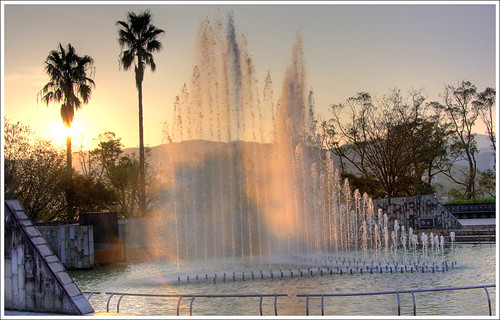
Fountain of Peace | Nagasaki Peace Park

Fountain of Peace | Nagasaki Peace Park

On January 7, 2010, Tel Aviv University hosted a unique conference on the role of ecological factors in peace-building between Syria and Israel. This was a bold initiative at a time when relations between the two countries have been strained by the Israeli government’s call for a referendum law on relinquishing any portion of the Golan and other annexed territories after the 1967 war. However, despite the cynicism of many on both sides of the border, the Porter Institute of Environmental Studies, under the initiative of an enterprising postgraduate student Shahar Sadeh, managed to convene a meeting to discuss the prospect. Even though Syrian participation at the meeting was not possible due to a prohibition of professional contact between the two sides, it was perhaps constructive to have Israelis discussing the issue independently since they are the occupying force in the region and would have to first resolve internal political differences on the issue.

I was asked to attend as the keynote speaker, given my previous research on such efforts worldwide and my background as a Pakistani-American who has explored such issues in the context of regional peace-building in South Asia. Some “Realists” might roll their eyes on such a prospect but the concept of “peace parks” is more than an idealist’s ramblings and has shown promise in resolving territorial disputes. Warring parties can be made to realize quite pragmatically that joint conservation is economically beneficial and also a politically viable exit strategy from a conflict. The US used such a strategy in the mid 1990s to resolve a decades-old armed conflict between Ecuador and Peru in the Cordillera del Condor region. The Obama administration’s deputy envoy to the Middle East, Fred Hof, has proposed the Golan peace park effort as a means of a peace-building with Syria as well in a formal paper written for the US Institute of Peace in 2008. In Hof’s plan, water guarantees to Israel which currently gets 30% of its water from the region) could be exchanged for return of sovereignty to Israel. So the idea is one which policy-makers are considering seriously and there are even detailed maps and plans that have been prepared to consider such a solution. Syrian-American negotiator Ibrahim Suleiman and former director-general of Israel’s foreign ministry Alon Liel discussed this prospect in 2007 when they met with the Israeli Knesset’s Foreign Relations and Defense Committee to develop a plan to establish a jointly administered peace park between Syria and Israel in the Golan.

Interestingly, the original Druze inhabitants of the region see themselves as distinct from Israelis and Palestinians since their religious group has its own culture and ethnic identity. The Golan Heights has a population of about 38,900, of which 19,300 are Druze, 16,500 are recently settled Jewish immigrants, and about 2,100 are Muslim. Golan is also an environmentally sensitive region with a cool and moderately wet climate that has allowed fruit orchards to flourish. Underscoring the unique environmental conditions of this area, Israel has allowed Druze farmers to export some 11,000 tons of apples to Syria each year since 2005.

This confluence of interests makes the region an ideal case for implementing a novel dispute-resolution strategy known as environmental peace-building. The strategy involves transforming disputed border areas into transboundary conservation zones with flexible governance arrangements. Such territorial arrangements are increasingly called peace parks. To some realist commentators this term may suggest idealistic or naive notions of conflict resolution, but it is championed even by military officers, such as retired Indian Air Marshal K. C. “Nanda” Cariappa, a former POW who has called for such a strategy to resolve India and Pakistan’s dispute over the Siachen glacier.

The proposal was initially motivated by Robin Twite’s work at the Israel-Palestine Center for Research and Information during the 1990s. Now the strategic plan for the effort has been laid out in detail and the momentum is there to move forward on this solution, which is feasible in the Golan given the demographics of the region. According to one plan, Syria would be the sovereign in all of the Golan, but Israelis could visit the park freely, without visas. In addition, territory on both sides of the border would be demilitarized along a 4:1 ratio in Israel’s favor.

When I visited the Golan after the conference, it also occurred to me that another possible solution was also to find a way to make the spectacular Mount Hermon area a particular conservation and recreation zone where Israelis and Syrians could visit without visas but when exiting from this special zone visas would be required. Israel already has a major ski resort on one side and Syria is planning to build a resort on its side of the divide. The summit of Mount Hermon is still under Syrian sovereignty and including this in the proposed peace territory would give Israelis an incentive to also come to the negotiating table since it would give them friendly access to a unique ecological region. This would be similar to the status of the eastern Sinai under the Israeli-Egyptian peace treaty or also similar to the status of Hong Kong and Macau in China whereby there are separate entrance concessions for these areas as compared to mainland China.

When one examines the status quo between Israel and Syria over the Golan Heights it is clear that neither side is willing, at present, to relinquish its claim to this vital region. Syria has a legitimate claim on the basis of recent history, while Israel has a claim based on the ruins of 29 ancient synagogues, and perhaps more consequentially as a security buffer. As argued by Rabbi Michael Cohen of the Arava Institute for Environmental Studies, “one way to break through this stalemate of legitimacy is to phrase the dynamic in a different way. That is to say, it is not so much that Israel wants to keep the Golan Heights, but that they don’t trust giving the Heights back to Syria.”

This understanding of the dynamic opens up possibilities for a new scenario whereby a third party is involved. In addition to the peace park proposal, it is also possible to set up a Druze Autonomous Area that is neither Israeli nor Syrian but jointly administered by a commission. Similar proposals have also been initiated by Friends of the Earth Middle East along the Jordan River, where there is already a “peace island” where Israelis and Jordanians can visit without visas and where the original peace treaty between the two countries was signed and which is currently under deliberations for expansion. This case is particularly intriguing since under the treaty there is an Israeli kibbutz which is allowed to grow crops on Jordanian sovereign territory. A Yale University architecture class has already been working on the design of the expanded park in collaboration with neighboring Jordanian and Israeli communities. There is also a marine peace park agreement between Jordan, Israel, and Egypt in the Gulf of Aqaba (which was established as part of the first round of Oslo negotiations). The Golan proposal is geographically much more significant in terms of its joint-management potential and also as a means for instrumental conflict resolution between two states that currently do not recognize each other.

The conference showed that the fractures are still quite acute. On the one hand there was a speaker from  the “settlers association of the Golan” who fervently opposed any land for peace. While on the other hand, there was also a resident farmer and academic scholar from the Golan Heights, Yigal Kipnis, who expressed a willingness to relocate if peace involved giving land back to Syria in exchange for security and joint environmental monitoring. Academics were also highly polarized in their approach to the issue with some resurrecting ancient narratives of Judaic habitation in the area while others acknowledging that under international law the territory was definitely “occupied.”

As the Obama administration considers its legacy in the Middle East, it should give priority to the Golan conflict and creative approaches to conflict resolution.  Using the environment in this context is very promising but we must also be cautious and appreciate that conservation has also been used historically as a means of land appropriation. Arabs are highly suspicious of conservation efforts in this context just as Native Americans have been suspicious of the US. National Park system, whose establishment often excluded them from their land. Thus any peace park must be one where access and economic development are concurrent with conservation.  At the same time, the resolution of the Golan conflict cannot be considered in isolation from the Palestinian issue for too long. Ultimately, to cement lasting peace the Palestinian issue will also need to be resolved. Otherwise, the peace between Israel and Syria might end up being just as cold as the one between Egypt and Israel has become of late.

Ultimately, ecology defies political borders and the governments of the Middle East will need to become aware of this natural reality. Many countries in the region are signatories to international environmental agreements as well such as the Convention on Biodiversity and the Convention on Desertification. Perhaps these agreements will provide another avenue to pursue ecological cooperation as well. At the end of the day, as erstwhile adversaries realize that they are inherently confined by their ecologies, the chances of cooperation are likely to rise. Even when there is a scarce and distributive resource such as water at stake, cooperation is possible if conservation goals are articulated in terms of the quality of the ecosystem. The Holy Land, and particularly the Golan, presents a diverse array of topographies, climatic zones and biodiversity which has the most potent potential for using ecology as an instrumental tool for conflict resolution.

Saleem H. Ali is associate professor of environmental planning at the University of Vermont and the author of Treasures of the Earth: Need, Greed and a Sustainable Future  (Yale University Press, 2009) and the editor of Peace Parks; conservation and Conflict Resolution (MIT Press, 2007).

——————————————–
Saleem H. Ali, Ph.D.
Associate Professor of Environmental Planning and Asian Studies
Rubenstein School of Environment and Natural Resources
University of Vermont,
153 S. Prospect St.
Burlington VT 05401, USA
——————————————–
Email: [email protected]
Ph: 802-656-0173
Fx: 802-656-8015

“The US Censors Syrian Internet,” By Idaf

The US Censors Syrian Internet
By Idaf, January 24, 2010
for Syria Comment

Sourceforge just became the latest US-based entity to censor Syria along with five other countries. Despite being one of the leading proponents of “open source” and “free” software, Sourceforge has succumbed to pressure from the US government to deny access to its products to millions of people. It is betraying its own values and its promise to bring products that are produced by everyone to everyone.

Sourceforge is only the latest Internet company to join Washington’s call to target Syrian citizens with sanctions. A long list of US based businesses have already denied their services to Syria’s increasingly Internet savvy youth. Microsoft refuses to provide technical courses and certificates to Syrian nationals, whether they live in Syria or anywhere else in the world. Google blocked the ability of anyone living in Syria to download their software tools. Cisco blocked sales of its infrastructure networking devices to Syria, RIM (Blackberry) has prevented its services from reaching Syria. Godaddy (and similar Internet hosting services) took down websites hosted on their servers by Syrians, regardless of content. US companies in the Gulf have reversed their decision to hire Syrian engineers, after their US lawyers warned them that they might be vulnerable to law suits by the US Treasury Department.

Ironically, the US government has long since outstripped the Syrian government as the main censor of the web for tech savvy Syrians. The Syrian government is all thumbs when it comes to censorship of the Internet.  Any smart Syrian will tell you his government’s efforts to block websites is practically useless. The overwhelming majority of internet surfers in Syria can easily bypass the efforts of government blocking through the use of proxy sites and free tools. US businesses have oddly become the real censors of the Syrian web.

Does this serve American interests? It is hard to see how. The stated objective of the policy is to “stop US technologies from reaching terrorists.” The only problem with this lofty goal is that all the  “terrorist” organizations that America accuses Syria of supporting are based outside Syria:  Hamas is in Palestine; Hizbullah is in Lebanon; and Iraqi insurgents live in Iraq. The US sanctions none off these countries. On the contrary, US IT corporations pour money into these three countries under CSR, development and market expansion plans. And besides, the technology of these companies reaches Syrians through third parties. Of course, the restriction make the technology more expensive and it annoys us, but we get it. Cisco routers can be purchased in Damascus; they are brought from Lebanon. Cheap Chinese knock offs are also easily obtained in the Syrian market. One can also argue that Washington’s policy is also counter-productive because it will cause long term damage to US businesses in these region.

Even more damaging for the US is the anger it instills in Syrian youth — after all, it is overwhelmingly college age Syrians and young professionals who are affected by this policy. When they try to update a program or download software and are notified that they cannot because they are suspected of supporting terror, they get angry and feel that their dignity has been affronted.

Secretary Clinton recently delivered a speech in which she stated: “We stand for a single Internet where all of humanity has equal access to knowledge and ideas.” She mentioned China, Saudi Arabia, and Egypt as countries that censor the Internet. But from the perspective of a young Syrians, the US is just as guilty.  Syrians hear US officials preach about “freedom of information,” but they experience a very different practice. To the average Syrian citizen, these policies seem to be unprovoked attacks on their rightful access to the Internet. They think of American restrictions exactly as they think about their own government’s efforts to block Facebook or YouTube.

US businesses are as guilty as the US government in the eyes of ordinary Syrians. These businesses are only playing it safe by following lawyers advice yet no federal lawsuit has ever been brought against any business making its online service available to Syrians. It strikes Syrians as completely hypocritical that Google is pulling out of the Chinese market because the Chinese government is requesting that it censor Internet search results, yet it thinks nothing of  “censoring” Syrians by banning them from hosting software projects on its servers, blocking downloads of its free software in Syria, such as the browser “Chrome,” and banning Syrian online publishers from receiving funds from Google’s  advertising services (AdSense), while allowing non-Syrian advertisers to target Syrians and encourage travelers to visit the beauties of our country. It just doesn’t make sense to us. Syrian youth believe that the US government and corporations are being capricious and mean.

All the same, Syrians manage to find creative ways to be active online in all fields despite the censorship of our own and America’s governments. See this article, for example: Founded by Syrian Entrepreneur, Google Acquires Admob for US 750 million.

Abdulrahman Idlbi, a Syrian student and entrepreneur, explains how Syria’s online community views America’s policy to be twisted in this article. American sanctions hurt US businesses, alienate Arab youth, and do nothing to combat terrorism.

[End]

Addendum: Here is a note I was forwarded by Alex

Subject: Open Souce Issue in Syria
Dear Mr. Alex,

I am the General Director of Advanced Tech company, one of the leading software companies within Syria. And I would like to share with you our point of view relevant to the act by SourceForge to block Syria and how that is hurting the private software development industry in Syria.

And since the proprietary software developed in the US is subject to export control which means that it is not possible to have it within the Syrian market, and hence not available to the Syrian private software development industry, the only other resource is open source. And such open source is widely used in several domains including education, health and finance sectors.

Consequently, it is unfair to deprive the Syrian private software industry from open source software, which might be developed any where in the world.

So I would appreciate if our problem can be heard and you can help in finding a solution to this as it is extremely important to develop the private software sector in Syria and help in turn to improve the standard of living for the Syrian people.

Yours truly,
Ammar ALALI: [email protected]

Tear down these virtual walls
Don’t let anti-freedom firewalls threaten the Internet’s impact on democracy.
(By Carl Bildt, The Washington Post)

NGO’s in Syria; Mitchell Should Resign; Egypt and Syria Feud; Assad to Libya

Is Syria ready to engage with NGOs?
By Lina Sinjab
BBC News, Damascus

Syria has sent a strong signal that it is ready to engage with non-governmental organisations (NGOs) and development organisations in order to promote a more active civil society in the country.

At this weekend’s pioneering conference in Damascus which drew many international delegates, Syria’s First Lady, Asma al-Assad, called on Syrian citizens to become more engaged in addressing the country’s social and economic challenges.

“The government is partnering with these organisations [NGOs] … to try and develop the best development strategy for the country. It is part of a broader approach to development, clearly based on the idea that one party cannot do it alone,” she told the BBC.

The concept of civil society is relatively new to Syria, where the government has long exerted tight controls over the involvement of NGOs in Syrian life.

The country has a small number of functioning NGOs in comparison to neighbouring nations: around 1,500 compared with 5,000 in Lebanon.

But their number is increasing, according to the Syrian government.

“This represents a political will. They wouldn’t have increased, otherwise. They wouldn’t have been involved or encouraged to be involved in sectors previously not encouraged,” Mrs Assad says.

‘Crucial role’

The keynote speaker at the conference, Lord Mark Malloch Brown, who is a senior advisor to the World Economic Forum, says that the region as a whole faces a “gathering storm” of societal problems, with poor economic growth, high unemployment, and low levels of education.

“Civil society should be a partner to the state and indispensible part of the development process,” he says.

In 2007 under the chairmanship of Mrs Assad, the Syria Trust for Development was established to work on rural development, female empowerment, and the promotion of Syrian culture.

The first lady believes that such organisations are playing a crucial role in areas that were previously perceived as the role of the government alone.

“Most importantly is the role these organisations are playing and the change they are influencing on the ground,” Mrs Assad says.

‘Real change’

Some are sceptical that the Syrian government will genuinely allow independent organisations to develop within the country.

Rami Khouri, director of Isam Fares Institute for Pulic Policy in Beirut and a delegate at the conference, said that that though the event was an important signal, only time would tell whether real change would happen.

“This is a moment where civil society and private sector have to challenge [the government] in a positive way to see how far the government is willing to open up the space.”

And some local organisations still find it hard to operate in Syria.

Mayya Rahabi, co-founder of a committee to defend women’s issues, says she doesn’t believe there is real civil society in Syria.

“We applied for the registration three years ago and we haven’t heard an answer,” Mrs Rahabi says.

The Syrian government is working on new legislation that – it claims – will make it easier for people like Mrs Rahabi to operate.

“I am hoping that this conference and this new law will allow us to operate freely – that real change will come, not just words,” Mrs Rahabi says.

Time for George Mitchell to resign
Sunday, 24 January 2010
Stephen M. Walt

If Mideast special envoy George Mitchell wants to end his career with his reputation intact, it is time for him to resign. He had a distinguished tenure in the U.S. Senate — including a stint as majority leader — and his post-Senate career has been equally accomplished. He was an effective mediator of the conflict in Northern Ireland, helped shepherd the Disney Corporation through a turbulent period, and led an effective investigation of the steroids scandal afflicting major league baseball. Nobody can expect to be universally admired in the United States, but Mitchell may have come as close as any politician in recent memory.

Why should Mitchell step down now? Because he is wasting his time. The administration’s early commitment to an Israeli-Palestinian peace was either a naïve bit of bravado or a cynical charade, and if Mitchell continues to pile up frequent-flyer miles in a fruitless effort, he will be remembered as one of a long series of U.S. “mediators” who ended up complicit in Israel’s self-destructive land grab on the West Bank. Mitchell will turn 77 in August, he has already undergone treatment for prostate cancer, and he’s gotten exactly nowhere (or worse) since his mission began. However noble the goal of Israeli-Palestinian peace might be, surely he’s got better things to do.

In an interview earlier this week with Time’s Joe Klein, President Obama acknowledged that his early commitment to achieving “two states for two peoples” had failed. In his words, “this is as intractable a problem as you get … Both sides-the Israelis and the Palestinians-have found that the political environments, the nature of their coalitions or the divisions within their societies, were such that it was very hard for them to start engaging in a meaningful conversation. And I think we overestimated our ability to persuade them to do so when their politics ran contrary to that” (my emphasis).

This admission raises an obvious question: who was responsible for this gross miscalculation? It’s not as if the dysfunctional condition of Israeli and Palestinian internal politics was a dark mystery when Obama took office, or when Netanyahu formed the most hard-line government in Israeli history. Which advisors told Obama and Mitchell to proceed as they did, raising expectations sky-high in the Cairo speech, publicly insisting on a settlement freeze, and then engaging in a humiliating retreat? Did they ever ask themselves what they would do if Netanyahu dug in his heels, as anyone with a triple-digit IQ should have expected? And if Obama now realizes how badly they screwed up, why do the people who recommended this approach still have their jobs?

As for Mitchell himself, he should resign because it should be clear to him that he was hired under false pretenses. He undoubtedly believed Obama when the president said he was genuinely committed to achieving Israel-Palestinian peace in his first term. Obama probably promised to back him up, and his actions up to the Cairo speech made it look like he meant it. But his performance ever since has exposed him as another U.S. president who is unwilling to do what everyone knows it will take to achieve a just peace. Mitchell has been reduced to the same hapless role that Condoleezza Rice played in the latter stages of the Bush administration — engaged in endless “talks” and inconclusive haggling over trivialities-and he ought to be furious at having been hung out to dry in this fashion.

The point is not that Obama’s initial peace effort in the Middle East has failed; the real lesson is that he didn’t really try. The objective was admirably clear from the start — “two states for two peoples” — what was missing was a clear strategy for getting there and the political will to push it through. And notwithstanding the various difficulties on the Palestinian side, the main obstacle has been the Netanyahu government’s all-too obvious rejection of anything that might look like a viable Palestinian state, combined with its relentless effort to gobble up more land. Unless the U.S. president is willing and able to push Israel as hard as it is pushing the Palestinians (and probably harder), peace will simply not happen. Pressure on Israel is also the best way to defang Hamas, because genuine progress towards a Palestinian state in the one thing that could strengthen Abbas and other Palestinian moderates and force Hamas to move beyond its talk about a long-term hudna (truce) and accept the idea of permanent peace…..

the two-state solution looking less and less likely, these other possibilities begin to loom large. Through fear and fecklessness, the United States has been an active enabler of an emerging tragedy. Israelis have no one to blame but themselves for the occupation, but Americans — who like to think of themselves as a country whose foreign policy reflects deep moral commitments-will be judged harshly for our own role in this endeavor.

The United States will suffer certain consequences as a result-decreased international influence, a somewhat greater risk of anti-American terrorism, tarnished moral reputation, etc.-but it will survive. But Israel may be in the process of drafting its own suicide pact, and its false friends here in the United States have been supplying the paper and ink. By offering his resignation-and insisting that Obama accept it-George Mitchell can escape the onus of complicity in this latest sad chapter of an all-too-familiar story. Small comfort, perhaps, but better than nothing.

Planting tree in West Bank, Netanyahu vows ‘we are here to stay’
By Barak Ravid and Avi Issacharoff, Haaretz Correspondents, and Reuters
Tags: Israel news, George Mitchell

Prime Minister Benjamin Netanyahu on Sunday attended a tree-planting ceremony in the West Bank town of Kfar Etzion to mark Tu B’Shvat (Arbor day) and said, “Our message is clear: We are planting trees here and we are here to stay.”

Netanyahu said Israelis would continue building in the West Bank and that those places will forever be an inseparable part of Israel.

“There is a national consensus regarding this issue in Israel, and this recognition is slowly permeating the international arena,” Netanyahu said. “Today’s tree plantingreinforces this international position.”

Obama’s envoy urges Syria, Lebanon to join Mideast talks
Haaretz

U.S. President Barack Obama’s Middle East envoy, George Mitchell, held his second meeting with Palestinian President Mahmoud Abbas in 48 hours in Amman on Sunday and pledged continued efforts to ensure the creation of a “viable” Palestinian state.

In remarks to reporters after the meeting, Mitchell said the United States would press ahead with efforts for the accomplishment of the “two-state solution.”

However, Mitchell said that Syria and Lebanon should be involved in the peace negotiations so that all countries of the region can enjoy “normal ties.” Abbas told Mitchell during their talks that the Palestinians were committed to reaching a peace agreement based on clear negotiations and a complete cessation of Israeli activity in West Bank settlements, according to the PA leader’s aides.

“We are frustrated but not disheartened,” a senior official said. “No breakthrough is expected but we are continuing with our efforts. There are still things we have not tried.” The Americans said Mitchell would continue in his efforts and did not plan to resign. …

Top leaders of Syria, Libya discuss regional issues
25 January 2010 | 00:02 | FOCUS News Agency

Damascus. The top leaders of Syria and Libya on Sunday held talks in Tripoli on the latest developments in the Arab world and the preparations for the upcoming Arab summit due to be held in Tripoli next March, Xinhua News Agency informs. Syrian President Bashar al-Assad, who arrived in Tripoli to pay a short work visit to Libya, and Libyan leader Muammar Gaddafi talked about the challenges facing the Arab nations, particularly the Israeli siege imposed on the Gaza Strip, the obstacles placed by Israel in the way of achieving peace in the Middle East and the latest developments in the region.

The two leaders urged all the Arab countries to act in solidarity and help the next Arab summit come up with outcomes in the interest of the Arab nations, adding that it is necessary to achieve the Palestinian national reconciliation to help strengthen the Arab stance. The two leaders affirmed their efforts to further consolidate bilateral relations in various domains, agreeing on forming a joint higher strategic council to push forward mutual cooperation in different aspects.

Today … Mubarak accused Hamas and Syria indirectly of interfering in Egyptian internal affairs … And he said “there is some Arab country that is conducting a campaign against Egypt and hosting Arab conferences which produced many accusations against Egypt. Their house is made of glass and I advise them to stop it.”

??? ?? 14 ???? ?? ????? ?????? ????? ??????? ?? ??? ?????, ??? ????? ??? ??????? ????? ?????, ????? ???? ????? ??? ????? ??? ??? ????? ??????? ???? ??????? ???? ???????? ?? ????? ????????? ?? ??? ?????? ????? ?????? ??????
??????? ???????.

?????????

Lebanon says it may respond to the banning Al-Manar in the US, by banning CNN and AL-Hurra. Also .. Alsyassa was banned on Sunday because of its editorial

?? ????? ?? ?????? ?? ????? ??? ???? ????? ?? ?????? ??? ????? ????? ???????? ???? ??? ????? ?? ????? «???????» ????????. ??? ??? ????? ??? ???????? ????? ???? ???? ????? «??? ???????? ???????? ?? ????? ??? ????? ????..» ???? ???? ??????? ???? ????? ????. ??????? ??????? ?????? ??? ??? ???????? ?? ?????? ?????? ?? «????» ??? «??? ????». ???? ????? ???? ?????? ??? ?????? ??? ??? ???? ????? ???? «???? ???? ???? ??? ????? ??????? ???????

Haaretz: Syria and Hezbollah have gone on alert anticipating an Israeli attack on Lebanon, the London-based A-Sharq al-Awsat daily reported on Friday. According to the report, Hezbollah has been monitoring with caution the reinforcement of Israel Defense Forces troops along the Lebanon border. Hezbollah’s deputy secretary general, Naeem Kassem, said the group was preparing to retaliate although it had no proof of any such Israeli plans. Syria has meanwhile begun to call up reserves troops, including nationals residing in Lebanon. The IDF responded to the report by denying any plans for renewing conflict against Lebanon.

Tourists Return to an Ancient Crossroads in Syria
New York Times by LIONEL BEEHNE, January 24, 2010

In September, tourism in Syria was up by more than a third from the same month a year earlier, and the recent loosening of visa restrictions with Turkey means that Aleppo is being flooded with traders and tourists from across the border.

“The whole infrastructure of tourism is improving dramatically,” said Joshua Landis, an American professor and Mideast expert who runs a popular blog called …

Sissi House can feel a bit stuffy -- French-only menus, no prices listed -- but its lamb kebab lathered in tangy cherry sauce is worth the visit. Photo: Bryan Denton for The New York Times

Len Davis writes: “I saw the article in the NYT with your site and thought you might appreciate this video I made in Aleppo at a felafel shop.”

KUWAIT 2ND BIGGEST INVESTOR IN SYRIA: REPORT
By NAM NEWS NETWORK Jan 24th, 2010

DAMASCUS, Jan 24 (NNN-KUNA) — A Syrian economic report on Arab and foreign investments from 1991-2008 showed Saturday that Kuwait came in second position among Arabs with the first place belonging to Iraqi investments, which also topped overall investments, while Lebanon and Saudi Arabia came in third and fourth respectively.

The report issued by the Syrian Investment Authority revealed that Iraqi investment projects within the specific period were at 40 while Kuwait had 32 projects, Lebanon with 25 projects, and Saudi Arabia with 24 projects.

In terms on volume, Saudi Arabia continued to dominate the charts on the Arab level with Syrian Pound (SYP) 103 billion, said the report. SYP one equals USD 0.02.

The report also indicated that the amount of foreign capital in Syria reached USD 900 million after it did not exceeded more than USD 180 million in 2003.

Finance projects saw an increase of 31 percent since 2008 with the number of projects reaching 273 projects with around SYP 210 billion pumped into in the projects.

Turkey topped investments which benefited from encouragement law with 41 projects worth SYP 18 billion. Kuwait had three projects in this category and the volume was at SYP 377 million.

Also Turkey topped foreign investors with 35 projects worth SYP 27 billion followed by Germany with 13 projects worth SYP 65.7 billion and the Iranian Investments in third with eight projects worth SYP 25.6 billion. –NNN-KUNA

“Syria: the prospects for political change” by Landis; Ilyas Maleh on his father

BBC World Service

Syria: the prospects for political change

Haitham MalehBack in the 1950s, as a lawyer and a judge, Haitham Maleh began promoting human rights in Syria. Haitham Maleh was arrested after an interview with opposition TV. In the 1980s he was detained without trial for seven years. Since then he has been tried three times by military tribunals and only last year, now in his late 70s, Haitham Maleh was arrested again.

The BBC’s William Edmundson spoke to his son, Ilyas.

Syrian President Bashir al-AssadBashar al-Assad became president after his father died in June 2000. It is nearly 10 years since Bashar al-Assad inherited the Syrian presidency from his father, Hafez al-Assad. So what are the prospects for change in the country?

.
Joshua Landis heads the Centre for Middle East Studies at the University of Oklahoma.

Al-Waleed Bin Talal: “Assad… we are getting him back in the fold”

Alwaleed Bin Talal to Charlie Rose last night: (Start at minute 11 in the video)

“Let me assure you and let me give you a quote from my friend Bashar Assad that Bashar Assad has all intentions to have peace in the region with Israel and has all intentions to have the Palestinians have peace and live in peace with Israel. And, you know, in the past, you know, the US was against him, France was against him, Saudi was against him, Israel was against him. He was isolated. He had no choice but to go to Iran. Right now we are seeing his links now with the US, his links with France, with Saudi. He was in Saudi last Wednesday. So really we are getting him back in the fold. So I can assure you that Bashar is going to play a very big role in getting the peace process moving.”….

What is your assessment of something happening between Syria nd Israel? I believe that President Obama must focus more attention on the Middle East problem. He has focused a great deal on health care, etc… I think Israel can have peace in a month or two with the Syrians and Palestinians if it wants to. …. Israel is the power in the region….

The Lebanesee situation is over right now. … Saad al-Hariri has visited Syria. The issue is over right now…. Syria has influence over Hizbullah, but let’s be honest, it is really Iran that has power over Hizbullah….

With Iran, you have to engage with them…

The normalization of relations between Lebanon and Syria was a boon for the entire region, French Prime Minister Francois Fillon said Thursday.

Senior minister to Haaretz: Chances for renewing peace talks are slim
2010-01-22, By Akiva Eldar

Exactly a year after trumpeting the appointment of former senator George Mitchell as his special envoy to the Middle East, U.S. President Barack Obama is holding Israel and the Palestinians equally responsible for the stalemate in the peace process.

In an interview with Time magazine marking his first year in the White House, Obama said neither side has been willing to make the bold gestures necessary to move the process forward.

A senior minister told Haaretz Thursday that the chances of renewing the peace talks are “slim.” According to the minister, Mitchell’s present mission is not likely to succeed either, as he will probably not persuade Palestinian President Mahmoud Abbas to renew the negotiations over the permanent status settlement. Nor is he likely to receive from Prime Minister Benjamin Netanyahu a clear answer as to whether he is ready to adopt U.S. Secretary of State Hillary Clinton’s formula to base Israel’s permanent borders on the 1967 lines.

The results of Mitchell’s meetings this week with Netanyahu and Abbas will determine whether Washington continues the efforts to bring the parties back to the negotiations table….

Diplomatic sources say that in view of the dead end in the Palestinian track and the American interest to stabilize the Iraq-Syria border, Obama may lend an attentive ear to Israeli figures Ehud Barak and Dan Meridor, who are trying to persuade the Americans to unblock the Syrian track….

MEPGS from Friday Lunch Club

….Some US companies are also beginning to look at investment in Syria. Once again to the chagrin, if not the surprise of US officials, the Baathist regime in Damascus has, in the words of one State Department veteran “…been successful in hunkering down and weathering the storm.” The announcement of the appointment of a new US Ambassador is expected any day now [Final approval awaits an OK from the White House]. Saad Hariri, the son of slain former Prime Minister Rafik Hariri, who most assume was assassinated by the Syrians, has made what one State Department veteran calls “his pilgrimage to Damascus to kiss the ring” [of President Bashar al-Assad]. With the Saudis wooing Assad, Syrian rehabilitation is nearly complete, says US analysts.

Even US Special Envoy, George Mitchell, is about to make a stop in Damascus on his latest Middle East foray. Although he also visits Beirut [“You can never too often show the Lebanese how much you love them,” notes one State Department official wryly], the main objective continues to be his pursuit of progress in restarting Israeli-Palestinian peace talks.

These talks have been stalled, say US officials, on account of the unwillingness of Palestinian leader Mahmoud Abbas to reenter talks until Israel agrees to a complete settlement freeze, including new construction in Jerusalem. ….

Syria’s Lebanese return validates Bashar Assad’s waiting game
By Nicholas Blanford

Libya to lay off 400,000 employees

afrol News, 22 January – Libyan authorities in their preparations for this year’s national budget have decided to lay off more than one third of the country’s civil servants within the next few years. In a bid to ease budgetary strains and encourage private sector investments, authorities nevertheless offer to pay three years of salaries.

The decision to lay off an estimated 400,000 state employees and army staff was presented during the 2007 budget works this weekend. Libya has more than one million civil servants, totally dominating the national workforce in a country of only 6.5 million inhabitants.

The Secretary of the General People’s Committee – or Libya’s Prime Minister, as he is usually referred to – announced the plan on national television during the weekend. PM Al-Baghdadi Ali al-Mahmoudi said it was necessary to cut back on the dinar 4 billion (euro 2.5 billion) spent on salaries over the national budget each year.

While the radical reform would have a quick effect on the composition of Libya’s workforce, budget spending on salaries would not diminish within the short term. PM Al-Mahmoudi promised that authorities would be generous with the many affected of the labour cut-backs.

The Prime Minister in his speech emphasised that those thrown out of the government workforce “will be paid their full salaries for three years until they can ensure their own businesses without being funded by the Public Treasury,” Libyan state media reported. “They also can get loans to create their own economic business where each loan reaches up to 50,000 dinars,” (euro 32,000) he added.

According to the budget committee, the programme not only was aimed at cutting Libya’s galloping public wage bill. It is also a conscious attempt at diversifying the Libyan economy, which still is totally dependent on oil revenues…..

Indeed, for the many Libyan that will lose their formerly safe and secure government jobs, there is little hope on the small private employment market. Official figures put the unemployment rate in Libya at 17 percent, but the real figure is believed to be much higher.

“The Real Debate the Syrian Economic Team Should be Having” by Ehsani

The real discussion that the Syrian Economic Team should be having
by Ehsani
for Syria Comment, January 20, 2010

The recent firing of Mr. Tayseer al-Reddawi as head of the Syrian Planning commission is a reminder that the country’s economic leadership team is in the midst of an intense intellectual battle as the new 5-year plan looms.

While the differences in opinion between Mr. al-Reddawi and Mr. Dardari are interesting, the sad truth is that they don’t go to the heart of the discussion that the country’s economic planners should be having. For a true and meaningful debate to take place, the subject of privatization and subsidies should reign supreme.

In December 2009, Mr. Dardari was quoted as saying that “over the past years, economic reforms in Syria focused on trade liberalization, enabling and encouraging the private sector to play a greater role in the economic and social development of the country.” During the same interview, he concluded that “only market economy systems have the openness and the ability to adjust and cope with change, and we trust that Syria is up to this challenge.”

While Mr. Dardari has championed the market economy and has pushed for a larger role in the private sector, he has steered clear of any meaningful discussion of what to do with the state-owned sector.

To be sure, it is not easy to be on the Syrian economic leadership team. It is hard to achieve your goals when your hands are tied behind your back. The reformers are largely aware of what needs to be done on the economic front. They must realize that the public sector is in a dilapidated state and that the subsidies program is a huge burden on the state budget. This is what the Prime Minister himself said back in November:

“The subsidies cost the government SYP 720 billion over six years which could have gone to development. How many power stations, irrigation projects and roads could we have built with these funds, which went to people that don’t deserve them and who smuggled subsidized products illegally to neighboring countries? We also wonder about the size of the tax evasion as well as the size of corruption which could be bigger than the numbers mentioned above. We don’t need to borrow from abroad or to dip into our strategic reserves. What is required instead is an action plan which can be followed on the ground because we have what it takes to be on the forefront of economic challenges as we are in foreign policy. We must do the same economically.”

For Syria to match her admirable foreign policy exploits with her economic policy performance, a meaningful and immediate public policy debate must start regarding both subsidies and the state-owned enterprises.

Some 260 enterprises are run by government ministries. While the Baath party adopted the social market economic model in place of socialism back in 2005, the constitution still lists socialism as the country’s economic system. While the Syrian economy has been significantly reformed since Bashar al-Assad came to power in 2000, state-owned enterprises have been largely immune from the reform process. Government run businesses include manufacturing carpets, tires, glass, shoes, cement, beer, dairy products and bottled water. The private sector is permitted to compete with some government industries but not with others. For example, the government prohibits competition in cotton spinning, the filling of bottled water, or the brewing of beer. Beer can be imported from Lebanon or Turkey but it cannot be manufactured locally by the Syrian private sector. This makes no sense.

The vast majority of state-owned enterprises lose money. Last month, Finance Minister Hussein explained that “the government decided to write off SYP 507 billion in loans to various state-owned companies and that this write-off was the fifth since 2000.” It is important that these credit write-offs be included in the calculations of the profit and loss statements from these companies. Proclamations about the future profitability of public sector industries must be regarded with skepticism. The majority of these companies are so bloated and inefficient that it is impossible for them to compete in a free market. For years, attempts to reform the sector have been met with disappointment. These inefficiencies will not be eliminated in the future, despite government promises. The government sadly remains undeterred in its attempts to engineer a turnaround in the sector.

Syria’s New Water Bottling Plants

This week, the Minister of Industry inaugurated the opening of a new production line for the manufacture of plastic bottle tops. This factory will be the sole supplier to the four bottled water fillers that the government also owns. Syria’s bottling plants will no longer be permitted to purchase closures from private suppliers as they have done in the past. The new government factory is now a monopoly selling to another monopoly. Anyone care to guess what will happen to costs?

The private company that used to supply the tops to the four government run bottlers employs 18 people. Its manufacturing capacity is identical to the new government closure company; it runs four line. The government entity employs 270 workers for the same production capacity. The head of the new company boasts that the new addition will add close to $US 1 million in profits. This means that the profit per employee will be $3,844. Remember that this is a monopoly; it can charge what it wants. If the privately owned company employing only 18 people could charge the same price, it would turn a profit of $57,658 per employee, a 15 fold increase. The Syrian taxpayer would also not be assuming responsibility for paying the pensions of 270 Syrians for life. The Syrian people and the state coffers are being asked to underwrite the employment of an extra 252 people. A recent survey shows that the majority of citizens would like to work for the government because of the job security and pension benefits. Is there any wonder why? These are secure jobs that demand little work and provide benefits for life.

The new bottle cap factory cost 4.79 million euros — money which should have been spent on more productive investments. This example is not atypical. Billions have been spent on similar companies. Rarely has there been an economic rationale for doing so. Syria is not a wealthy country. It is not blessed with endless reserves of oil or natural gas that it can use to finance fake employment projects. The Syrian government employs something close to one out of every five wage earners in the country. It is time to start a real discussion about the merits and viability of the state-owned sector and how Syria can begin to transition away from it. This ought to stop being a taboo subject.

My Recommendation:

The private sector remains too weak to employ the vast number of laborers at the state-owned enterprises that would enter the job market if the public sector were disbanded rapidly. The economy is too weak as it is to employ the hordes of young Syrians without jobs. There are close to 250,000 that enter the labor force every year. In order to that reverse the rising unemployment the economy needs to grow at something like 7 or 8% a year. Even if the state-owned enterprises were to retrench by 50%, close to one million jobs need to be found to absorb the government sector employees. This is a formidable challenge. It explains why the government has been reluctant to privatize.

While inflation has been high, the price increases have not come from excessive real growth but from the freeing of many administrative prices and the lifting of some subsidies. The foreign exchange value of the pound has been very stable because it is linked to the SDR. As the banking system expands and lends more, it is essential that monetary policy become more expansionary to help promote growth. Inflation should not be the monetary committee’s main concern now. Instead, higher economic growth must be the goal.

Interest rates should be cut. Close to US$ 25 billion or 50% of GDP currently sits in bank deposits. The Syrian Pound is stable against the dollar; in fact, it has appreciated against it. There is room for interest rate cuts that would lower lending rates and make parking savings in bank deposits less attractive. These funds need to be invested in riskier projects that will generate employment. The government must also accept a possible weakening in the value of the Syrian currency as a result of the interest rate cuts. This will help to discourage imports, promote exports and fix the every increasing trade deficit. The central bank and the monetary policy committee must play a bigger role in promoting economic growth. They must employ every instrument at their disposal to promote sustainable economic growth at a level high enough to generate some 300,000 private sector jobs a year. The government must complement the expansive monetary policy with a continued commitment to lowering taxes (though they have already been slashed to 20% from a high of 68%). It must also continue to lower fees and untangle red tape in order to stimulate investment.

In sum, the government must embark on a shock-and-awe economic growth policy. It must generate so much growth that the private sector becomes a true and viable engine. In the meantime, it must start a public and open discussion about the bloated and unsustainable public sector; it must start to familiarize the public with the word, “privatization,” and explain how market forces work. Many countries have traveled this path. Some have been more successful than others. Syria can learn from the mistakes of its predecessors.

A Word on Subsidies:

Current subsidies put pressure on state coffers. Some estimates have put the tab at close to 19% of GDP or US$ 9.5 Billion. While it is true that many lower income families need these subsidies to survive, it is also true that those who don’t need the help enjoy the same subsidies. While the government has addressed this problem with the latest measures regarding fuel oil (mazot), the administrative demands of the program are extremely burdensome. The new 5-year plan must look at reducing most subsidies. Savings from these programs should go to increasing government worker salaries. Once the state starts reducing its assets through privatization, the remaining government workers need to enjoy a three fold increases in salaries if corruption is to be tackled meaningfully. Corruption is now inevitable. Government employees earning less than $300 a month cannot live honorably. Mother Theresa would also have succumbed to corruption had she had been a Syrian government employee living on $300 a month with 4 children. Once these salaries are tripled, the current need for a subsidies program would diminish. Rural poverty can only be overcome by economic growth.

[End]

During the previous discussion on American sanctions and how they impeded economic progress in the country, a number of commentators made the remark that changing the economic performance of Syria is a task that belongs to the Syrian government itself and not the U.S. and its foreign policy. This note seeks to address that point.

Mitchell on the March, Muslim Brothers in Egypt, Makhlouf Man of 2009

U.S. seeks progress on Syria-Israel deal: George Mitchell
By Khaled Yacoub Oweis
Reuters
Wednesday, January 20, 2010; 2:49 PM

Syrian President Bashar al-Assad, who said Israel had to “declare frankly” it wants peace. George Mitchell, President Barack Obama’s Middle East envoy, said the U.S. sought what he described as comprehensive Middle East peace that included a deal between Syria and Israel and the normalization of relations between the two foes.

“Syria, certainly, has an important role to play in all of these efforts… and that was the topic of our discussion today,” Mitchell said in a brief statement.

He said he looked “forward to making tangible progress on our efforts toward peace and on the bilateral relations between the United States and Syria”….

Damascus has not hidden its frustration with the pace of ties with Washington. Syrian officials have said Obama should lift sanctions first imposed in 2004 for its support of militant groups and exert pressure on Israel to renew the peace talks…..

The official Syrian news agency said Assad told Mitchell that Turkey had an “important role” to play in reviving the talks and Israel had to “declare frankly” that it wants peace……

Syria wants an Israeli commitment to withdraw from the whole of the Golan based on a U.N. resolution stating the inadmissibility of the acquisition of territory by force. Israel said it was willing to resume the talks without preconditions.

Israel and its chief ally, the United States, want Syria to cool its ties with Iran as well as stop supporting the Palestinian Islamist group Hamas and Lebanon’s Hezbollah movement, and help sideline them as armed players.

A Syrian source said Assad would continue to show flexibility with Washington but only up to a point.

“The late Hafez al-Assad used to say that the Americans want us to commit suicide. Bashar has limits to what he can give the United States,” the source said.

Israelis reject George Mitchell loan guarantee ‘threat’
BBC, Sunday, 10 January 2010

Israeli officials have shrugged off a suggestion that the US could withhold loan guarantees to pressure Israel over the Middle East peace process. The finance minister said Israel did not need the guarantees, while the prime minister accused the Palestinians of holding up peace negotiations.

US envoy George Mitchell said this week the US could withhold loan guarantees to extract concessions from Israel. The guarantees allow Israel to raise money cheaply overseas.

Finance Minister Yuval Steinitz reacted by saying the Israeli economy was doing well. “We don’t need to use these guarantees,” he was quoted by Israeli media as saying.

“We are doing just fine. But several months ago we agreed with the American treasury on guarantees for 2010 and 2011, and there were no conditions.”….

The Muslim Brotherhood: new leadership, old politics
By Fawaz Gerges, The Guardian, January 19, 2010

There is no better way to take the temperature of Arab politics than to examine the state of the Muslim Brotherhood, the most powerful religiously-organised opposition movement in Egypt and the Arab world. With branches in several Arab and Muslim countries, the Brotherhood portrays itself as a more authentic, viable alternative to secular authoritarian rulers and religious extremists of the al-Qaida variety.

The recent election of a new leader, however, has utterly discredited those claims and exposed a serious rift within the 81-year-old Islamic organisation. After weeks of internal turmoil and infighting, the Brotherhood announced that it has chosen Mohammed Badie, an ultra-conservative veterinarian, as its eighth supreme leader since its founding in 1928, along with 16 members of its highest executive policy-setting “guidance bureau”.

Members of the old guard like Mahmoud Izzat, secretary general and gatekeeper of the Brotherhood’s finances and secrets, and Mohammed Akif, former supreme leader, who oppose opening up the organisation and democratising its decision-making, gained the upper hand. Ignoring the wishes of many younger members who called for transparency and respect for electoral rules, Izzat, Arif and their cohorts shoved the secretly-arranged results down the throats of opposition….

Islam is not the answer …
By Marwan Bishara, January 18th, 2010, al-Jazeera

laden1.jpgYou have probably heard of Osama bin Laden and al-Qaeda, but have you heard of Mohammed Badie and the Muslim Brotherhood?

If not, you should reconsider all of your assumptions about Islam and al-Qaeda’s terrorism and whether confronting or reforming Islam is the answer to the al-Qaeda challenge.

The Egyptian Muslim Brotherhood – which boasts an estimated half a million members and commands the support of about one third of the country’s population (there are no accurate public figures) – has over the weekend elected Badie, a 63-year-old scientist, as its leader or “guide”.

Imprisoned four times for a total of more than 13 years over the past four decades, the new leader belongs to the conservative wing of the movement and began his journey in prison with its hawkish leadership in the 1960s. However, pragmatic and disciplined, the movement’s reformists and conservatives have rallied around the new leader.

After his election, Badie spoke unequivocally about the Brotherhood’s peaceful pursuit of its social and political agenda and how under no circumstances would it seek power through violence.

Most of the other branches of the international Organisation of the Muslim Brotherhood adhere to the same principles as their Egyptian counterparts, except in cases of direct foreign military assault or occupation.

Two Interpretations of Jihad

For all practical purposes, al-Qaeda’s jihadi doctrine was established by disenfranchised members of the Muslim Brotherhood, such as Abdullah Azzam, the former head of the Jordanian Brotherhood who rejected the Brotherhood’s peaceful jihadi doctrine.

They abandoned the mother group after its leaders renounced revolutionary violence following painful confrontations against Arab regimes, and instead adopted religious, social and political preaching as a way to win hearts and minds in the Muslim world.

Many of these radical ‘brothers’ found their way to Afghanistan through the Brotherhood’s networks and later through their own ‘services bureau’ – all of which was supported by the CIA’s effort to reverse the Soviet occupation of Afghanistan at the height of the Cold War.

Once fully organised, al-Qaeda leaders like Ayman al-Zawahiri, formerly of the Egyptian Jihad, accused the Muslim Brotherhood of betraying the cause of Islam and abandoning their jihad in favour of forming political parties and supporting modern state institutions.

With the Soviet withdrawal at the end of the Cold War, al-Qaeda turned against secular or ”apostate” Arab regimes and against any form of Western presence (crusaders and Jewish) in the Muslim world, from Andalusia in Spain to Kashgar in China, in order to establish an Islamic caliphate.

On the opposite side, the Muslim Brotherhood maintains that Arab regimes are not their nemesis, even if they suppress and oppress the group all too frequently.

Instead, they seek constitutional reform and equality for all religions in rights and responsibilities…..

So what makes al-Qaeda so dangerous?

Clearly, Islam is not the answer.

Le Figaro: Lebanese Authorities Ban French Book on Hariri Murder from Entering Lebanon

The Lebanese authorities banned a French book titled La Liste Hariri from entering into Lebanon, the French daily Le Figaro revealed on Wednesday.
The book, written by French author Gérard de Villiers, included information hinting to the involvement of a top Shiite Lebanese leader in murdering the late premier Rafik Hariri in 2005.
The Lebanese General Security considered the information mentioned in the book as an accusation to Hizbullah with murdering Hariri, according to Le Figaro.

Rami Makhlouf Voted Business Man of 2009 in a “Syria Steps” poll.

????? ?????? ?????? ?? ??????.. ????? ?????? ????
???? ?????.. ??????? ?????????? ?????? ?? ??? 2009
03/01/2010

???? – ??????????

??? ??? ??????? ?????? ???? ????? ??? ??? ????? ????? 2009 ?????????? ?????? ?? ??????? ????? ???? ?????????? ????? ????? ????????? ??????? ?? ??????? ????? ????? ???? “????? ????”.. ???? ????? ????? ????? ????? 2009 ?????????? ??????.

????? ??????? ?????????? ??? ??? ??????? ????? ??? ???? 51% ?? ????? ????? ????????? ?????? ??? ??? ????? ??????? ?? ??? ???? ?????? ?????? ???? ?????? ????? ????? ?? ?? ????? ????? ??? ?? ??????? ?????? ?? ????? ?????? ??????? ?????? ??? ???? ?????? ???? ???? ?? ?????? ?????? ?????? ????? ???? ????? ?????? ????????? ?? ????? ???? ???????? ?????? ????? ????? ????? 2009 ?????????? ??????.

??? ??? ?????? ????? ???? ?????? ?????? 47.6% ???? ???? ?????? ?????? ???? ????? ????? ??? ????? ?????? ??????? ??????? ????? ????? ?? ??????? ??? ???? ??????? ?? ????? ???????? ??? ????? ????? ??????? ?????????? ??? ????? ??????? ????? ????.

???? ??????? ???? ????? ???? ?????????? ???? ?? ????? ???? ?????? ?????? ????? ?? ???? ???? ???????? ?? ?????? ????? ????? ???? ??????? ??? ????? ?? ??? ?????? ?? ??????? ????? ?????? ???? ????? ??? ????? ?? ??????? ?? ??????.

Mathew Levitt on Syrian Terrorism and Sanctions in MEForum

There is evidence that the Syrian accountability act and subsequent financial sanctions have dissuaded U.S. and some other businesses from investing in Syria. According to one report, General Electric, Mitsubishi, and the French power company Alstom all declined to bid on a Syrian government contract for the construction of power plants.[27] Mobile telephone provider Turkcell withdrew its bid to purchase Syriatel in August 2008 after the United States sanctioned Syriatel’s primary stakeholder, Rami Makhluf.[28] Sanctions have also crippled Syria Air, the state airline, by preventing the company from purchasing parts or planes for its Boeing fleet.[29] Meanwhile, U.S. sanctions under the Patriot Act against the Commercial Bank of Syria have deterred private Western banks from opening branches in Syria.[30] As Syria’s energy production levels decline, sanctions have also prevented major Western energy companies from making new investments there although other foreign companies have supplanted U.S. firms. One company, Gulfsands Petroleum, reportedly moved its principal office to London in order to circumvent U.S. sanctions against its local partner, Makhluf.[31]

News Round up (20 January 2010)

Britons are descended from farmers who left Iraq and Syria 10,000 years ago, study reveals
2010-01-20, Daily Mail (GB)
By David Derbyshire

Most Britons are direct descendants of farmers who left modern day Iraq and Syria 10,000 years ago, a new study has shown. After studying the DNA of more than 2,000 men …

…Syrians have expressed fear that their British cousins may return seeking to recover lost lands…

Mitchell meets with Assad, says Syria central to peace process

Syria economy: Gear shift
2010-01-19
FROM THE ECONOMIST INTELLIGENCE UNIT

The selection of Lamiya Assi as economy and trade minister marks a further advancement for the role of women in the Syrian government—she will bring the
number of female cabinet ministers to three—and her recent experience as ambassador to Malaysia, a dynamic Asian economy, seems to suggest that she could bring some innovative ideas to Syria’s economic policy discussions. However, her promotion has come amid ructions among policymakers about the direction and the implementation of economic reforms that have been described as involving a shift to a “social market” model from a predominantly state socialist system.

Ms Assi’s antecedents indicate that her economic approach lies on the more statist and conservative end of the spectrum—she worked as a deputy to the finance minister, Mohammed al-Hussein, a Baath party stalwart, prior to her diplomatic appointment in 2004. Her Malaysian connection could also signify a desire on the part of the Syrian president, Bashar al-Assad, to focus on securing investment from Asia, having failed to persuade the Obama administration to lift US sanctions.

Criticism not encouraged

Mr Assad announced the appointment of Ms Assi on January 18th, a week after he had terminated the contract of Tayseer al-Reddawi as head of the State Planning Commission (SPC), a body that has been the driving force behind the reorientation of the Syrian economy towards a market-based system and which is currently drafting a new five-year plan to run from 2011. The decision was thought to reflect the growing animosity between Mr Reddawi and the deputy prime minister for economic affairs, Abdullah al-Dardari, who headed the SPC until 2007 and was the architect of the current five-year plan. Mr Dardari has been a forthright advocate of economic liberalisation, which has frequently put him at odds with more economically conservative figures, including Mr Hussein, the powerful finance minister. Mr Reddawi has made a number of sharp criticisms of the state of the Syrian economy, most recently arguing at a seminar in Damascus that consumption, rather than investment, had become the main engine of growth, and that the benefits of that growth had accrued disproportionately to a small minority whose consumption patterns tended to drive up imports and whose savings preferences accentuated capital flight. These remarks were taken by some as an attack on Mr Dardari’s record, although they could also be interpreted as being directed at the privileges enjoyed by Syria’s business elite by virtue of their close ties to the president. It has also been suggested that Mr Assad and Mr Dardari had developed misgivings about how effective Mr Reddawi was in persuading foreign investors, financiers and aid donors of the potential of the Syrian economy. Following Mr Reddawi’s dismissal the prime minister, Naji al-Otari, put Mr Dardari in charge of the SPC on an acting basis. This arrangement did not last long, as Mr Assad has now appointed Amer Lotfi, the outgoing minister of economy and trade, to head the SPC. Mr Lotfi had been in his post since 2004, and previously taught economics at Aleppo University as well as being in charge of Baath party activities there. He did not make a great impact as a minister, as most of the key policy initiatives over the past five years were taken by Mr Hussein, Mr Dardari or by Adib Mayaleh, the governor of the Central Bank of Syria—these have included cuts to tax rates, the introduction of a new investment law, the launch of a stockmarket, cuts in energy subsidies, pegging the exchange rate to the SDR and allowing private banks to lend in foreign currency.

Unfinished business

The government has enacted reforms to the financial structure of public-sector enterprises—aimed at giving their management more autonomy—but has so far eschewed privatisation. Other aspects of policy that have been marking time include plans to introduce value-added tax (VAT) and the award of a license to a third mobile-phone operator. Mr Dardari had identified VAT as a critical element in the current five-year plan, in light of the chronic decline in Syria’s oil production, and had set 2008 as the year in which it was to be introduced. However, implementation is in the hands of the finance minister, who has not shown any great sense of urgency on the VAT question. Further development of the telecoms and technology sector has been awaiting the passage of a new sector law that would allow for the current system of build-operate-transfer (BOT) contracts to be superseded by a licence-based system, with an independent regulator. This would require a restructuring of the existing BOT contracts—one of which is held by a business controlled by the president’s cousin—which have proved to be highly advantageous to their holders, while delivering important revenue into the finance ministry’s coffers.

On balance, the changes that have been made since the removal of Mr Reddawi indicate that Mr Assad is content to continue with a cautious approach to economic reform, with public debate about policy options and economic performance kept to a minimum.

Egypt riled by Syria’s increasing role in the region
By Zvi Bar’el, Haaretz Correspondent

What happened to the reconciliation between Syria and Egypt supposedly in the works? There had been widespread speculation in the Arab media in anticipation of the Syrian-Saudi summit meeting last Wednesday, that the Egyptian president would go to Riyadh for the Syrian-Saudi summit meeting last Wednesday, to ease the four years of bad blood (starting from the Second Lebanon War) between the two.

The rift in relations between Syria and Saudi Arabia had lasted longer than that: five years. It began after the assassination of the Lebanese prime minister Rafik Hariri in February 2005, and ended only last October when Saudi King Abdullah mended ties with Syrian President Bashar Assad and agreed to visit Damascus.

Since then, Abdullah has been trying to persuade Egyptian President Hosni Mubarak to bury the hatchet with Assad, but has been unsuccessful thus far.

As the summit approached, it seemed as if the warring sides would shake hands in the Saudi capital, but then Mubarak learned that on the eve of his departure, Assad had held a telephone conversation with Mahmoud Ahmadinejad in Tehran and explained to him that “Egypt would have no choice but to recognize that opposition (such as that espoused by Hamas and Hezbollah) is the only way to get things done.”

That was enough for Mubarak to cancel his trip to Riyadh…..

The Egyptians are scrutinizing Assad’s moves warily in other arenas as well. His close relations with Turkey, declarations about establishing an Iran-Syria-Iraq-Turkey axis, strengthening of ties between Syria and Europe, particularly France, Assad’s control of Hamas’ decisions about Palestinian reconciliation, and the “historic reconciliation” with Lebanon which removed the threat of an international commission of inquiry into the murder of Hariri have complicated matters in Mubarak’s eyes.

Instead of Syria being isolated, Egypt may find itself pushed to the side. ….

Egypt also returned empty handed from a recent trip to Washington. Egyptian Foreign Minister Ahmed Aboul Gheit, and the head of intelligence, Omar Suleiman, returned some two weeks ago from the American capital without succeeding in persuading the administration there to demand a total freeze of construction in the Israeli settlements.

Saudi-Syria ties warm up despite Iran’s chill
Bilal Saab, Jane’s Intelligence Weekly, January 27, 2010

Introduction

Syrian President Bashar al-Assad traveled to Riyadh on 13 January 2010 and held talks with Saudi King Abdullah and other senior Saudi officials for three days. The Syrian-Saudi summit, which focused on Iran and Yemen, was the latest in a series of meetings aimed at boosting relations between the two countries. In October 2009, the two leaders met in Damascus where they agreed to encourage their allies in Lebanon and the Palestinian Territories to settle their political disagreements peacefully….

Iran and Yemen

Iran and Yemen dominated the conversation at this summit. Abdullah voiced Saudi concerns over Iran’s alleged involvement in the Huthi insurgency against Saudi forces and the Yemeni government. Riyadh has privately accused Tehran of arming and financing the Huthis, while Tehran has criticised Saudi military action against the rebels, calling it “state terrorism”.

United States intelligence officials believe that a Saudi-Iranian proxy war is taking place in Yemen. To bolster its position against Iran, Saudi Arabia is aligning itself with Syria, Iran’s main regional ally. However, currently there is very little that Syria can offer Saudi Arabia with regard to the issues in Yemen, other than to mediate between Riyadh and Tehran….

FORECAST

While Syria and Saudi Arabia seem to have reconciled their bitter dispute over Hariri’s murder, they still have a number of issues to resolve. While the tactical understanding over Lebanon will defuse tension in Beirut and contribute to regional stability, these short-term deals will be insufficient to drastically change the strategic landscape of the region. As long as Syria values its partnership with Iran more than its relationship with Saudi Arabia, any talk of a transforming of relations between Damascus and Riyadh cannot be taken seriously.

Full text of this article requires subscription to Jane’s Information Group.

Aluf Benn in Haaretz – Thanks FLC

“… No Israeli politician matches his steps to the political goings-on in the U.S. as much as Netanyahu. He dragged out negotiations over the settlement freeze and then decided it would last for 10 months and end in September – just in time for U.S. Congressional elections in which Democrats are expected to suffer heavy losses.

Netanyahu understood he must withstand the pressure until his right-wing supporters recapture a position of power on Capitol Hill and work to rein in the White House’s political activities. The election in Massachusetts, one of the most liberal states in America, will from this moment on be a burden for Obama.

Proponents of the peace process will view this as a missed opportunity for Obama, who spent his first year in office on fruitless diplomatic moves that failed to restart talks between Israel and the Palestinians. From now on, it will be harder for Obama. Congressional support is essential to the political process and in the current political atmosphere in the U.S. – in which the parties are especially polarized – Netanyahu can rely on Republican support to thwart pressure on Israel.

If Obama’s popularity continues to dive and the Republicans recapture at least one of the houses of Congress in November, Netanyahu and his partners will be able to breathe deep and continue expanding settlements in the West Bank and East Jerusalem.”

Syria’s Mufti tells U.S. scholars that Islam commands its followers to protect Judaism.
Haaretz

“If the Prophet Mohammed had asked me to deem Christians or Jews heretics, I would have deemed Mohammed himself a heretic,” Sheikh Ahmed Hassoun, the Mufti of Syria, was quoted as telling a delegation of American academics visiting Damascus.

Hassoun, the leader of Syria’s majority Sunni Muslim community, also told the delegates that Islam was a religion of peace, adding: “If Mohammed had commanded us to kill people, I would have told him he was not a prophet.”

Religious wars were the result of politics infiltrating systems of faith, he said, asking:

“Was Moses of Middle Eastern or European descent? Was Jesus a Protestant or a Catholic? Was Mohammed Shi’ite or Sunni?” According to the Mufti, the conflict between Israel and its Arabs neighbors has nothing to do with an Islamic war against Judaism.

“Before you got American citizenship, and I got Syrian citizenship, we were all brothers under the dome of God,” he said. Jews had once lived in Syria peacefully and with fair treatment, he added, explaining that his own grandfather had a Jewish partner. “Jews lived in Syria for years and they still have a role in Syrian society,” he said

Jerusalem Post: The peace process will resume, but why?
2010-01-19

Israeli-Palestinian final status talks will be renewed because the international community -particularly the United States but also the moderate Arab states – wants this to happen. Probably sooner rather than later a formula will be found for sitting the two sides’ negotiating teams down with US envoy George Mitchell.

Palestinian Authority President Mahmoud Abbas, currently the reluctant partner, will bow to the American and Arab will once he has extracted maximum preliminary concessions from Prime Minister Binyamin Netanyahu and US President Barack Obama. And Netanyahu obviously concluded some time ago that entering final status negotiations was the best way to avoid isolation: to maintain close Israeli-American strategic coordination regarding Iran as well as a modicum of coordination with Egypt and the moderateArab bloc while keeping most of the Israeli public behind him.

The real question should not be whether the talks will be renewed, but rather, why? Why do the US, Egypt and Saudi Arabia want negotiations to resume when they are doomed to failure and when failure, meaning a new crisis, could significantly worsen the situation? Why insist onnegotiations rather than face up to the strategic realities?

THE FIRST and most obvious of these is the three-state reality. There is little near-term prospect that Abbas will succeed in bringing Gaza and Hamas back into the fold of a single Palestinian partner for Israel. Hence he can negotiate only on behalf of the West Bank. But Gaza won’t go away: Hamas can easily sabotage an Abbas-Netanyahu peace process with a few sustained rocket barrages, while neither Egypt nor Israel appears to have a viable strategy for dealing with it.

The second reality is that, when he does negotiate, Abbas is certain to table a set of demands on issues like refugees, Jerusalem and borders that Netanyahu cannot and will not meet. …

The third reality is that the Palestinians are currently embarked on their most, indeed only, successful state-building enterprise since the Oslo process began in 1993, and it is largely a unilateral process: building, with international help, security, economic and governance institutions on theWest Bank. ….

Iraqi, Syrian tensions rise over Iraqi refugees in Syria
Jan 20, 2010

Damascus/Cairo – Iraq and Syria are in a public disagreement about the number of Iraqi refugees in Syria – with Iraq reporting 206,000 people while Syria maintained a figure of 1.5 million, regional daily Al-Hayat reported Wednesday.

Iraqi Minister of Displacement and Migration Abdelsamad Rahman Sultan said: ‘The latest statistics by the ministry indicate that there are only 206,000 Iraqi refugees in Syria,’ in a statement released by the government on Tuesday, but reported Wednesday.

The minister’s statement was a response to Syrian Deputy Foreign Minister Faisal al Meqdad’s earlier announcement that there are over 1.5 million Iraqi refugees in Syria.

Al Meqdad accused the Iraqi government of neglecting to provide assistance to the refugees in Syria on Monday.

‘Despite its large resources, the Iraqi government has only contributed 15 million US dollars to the support of its citizens in Syria,’ Al Meqdad said.

He also stated that relations between the two countries were unlikely to improve until Iraqi Prime Minister Nuri Al Maliki’s government is replaced with one more friendly to Damascus.

Iraqi parliamentary elections are scheduled for March 7.

The Iraqi National Accord, led by former Prime Minister Iyad Allawi, said the Iraqi government was ‘attempting to nullify the votes of refugees in Syria or tamper with them,’ Al Hayat reported.

Read more: http://www.monstersandcritics.com/news/middleeast/news/article_1526871.php/Iraqi-Syrian-tensions-rise-over-Iraqi-refugees-in-Syria