“When is the Financial Crisis Coming?” by Ehsani

I will be traveling to the Middle East for a week and will be unable to post or moderate. Joshua.

Ehsani Writes:

The Syrian economy will soon suffer from what I will call a “financial crisis”. This will occur as credit write offs mount. The banking system will soon be hit with a wave of defaults at both the corporate and retail levels. The former will come about as the larger companies decide not to pay the banks. Most of the credit that they have been offered comes in the shape of overdrafts, bills discounting and letters of credit. Banks are exposed to this and their exposure exceeds that at the retail level (car loans for example). Some of the banks are already fearing that a number of businessmen will default and leave the country. Another very important thing to watch is the possibility that some state banks will default on payments to the private banking system. I am led to believe that this has already happened and that no one dares make the information more public. For now, they are treating the default as a “delayed payment” and so on. The private bank involved is of course starting to think it is a default. The Central Bank has been approached. No one can speculate if it will be liable or not as it may open the floodgates for other public banks. As you know, I have always highlighted the fiscal pressures on the government. The number of state employees and subsidies are simply unsustainable. The government will not be able to raise enough revenues to pay for such liabilities. They cannot borrow from the domestic or external sectors to bridge this gap. The only thing they may do is print more money. This will lead to inflation and loss of purchasing power as the Syrian Pound loses value.

How long will it take for the above financial crisis and/or fiscal crisis to show up publicly?

My sources continue to say that the answers is “Months”. They have been saying this of course for months. My own prediction is that it will take another year or two before things truly unfold. One thing to remember always is that Syrians are poor and more importantly are used to living well below global standards. The country has been through economic hardship many times over its recent modern past. It will take a lot of further pain to cause many to revolt in massive numbers.

Assessing the Risks of Military Intervention
Posted on Syria National Council website. Discourages US military intervention
Thursday, 05 January 2012
Assessing the Risks of Military Intervention

Executive Summary
Syria’s stability and its role in regional security politics have become steadily more uncertain since early 2011. The country has now experienced eight months of popular protests. Despite a lack of political cohesion or unity of purpose among the country’s opposition forces, rural areas and smaller cities continue to experience increasingly armed unrest. Meanwhile, the regime’s crackdown on dissent has shown little to no sign of abating as the country’s Alawite-led praetorian security forces attempt to restore order and quash unrest.

The chorus of international pressure on Syria has steadily increased. The US and EU have bolstered unilateral sanctions regimes, turned to the UN to deepen international pressure and have openly called for President Bashar Al-Asad to step aside. Turkey, until recently one of the regime’s closest allies, has been one of Syria’s most vocal critics. Lastly, the conservative Gulf monarchies, which continue to have reservations about regional popular unrest, have nonetheless pushed ahead with Arab League efforts to further isolate Syria.

On the one hand, local and expatriate Syrian forces opposed to the regime are backed by the West, and key Arab and Sunni states such as Saudi Arabia and Turkey. On the other hand, the Al-Asad regime enjoys the support of its key regional ally Iran, support from Hezbollah in Lebanon, and strong international backing from Russia and China – countries that could play counter-revolutionary roles during what is increasingly looking like a “long winter of Arab discontent.”

A number of countries – including US NATO allies such as France and Turkey – increasingly entertain the prospect of creating a “humanitarian corridor” in Syria, potentially along the border with Turkey, to provide relief to both the Syrian population and dissident groups opposed to the Asad regime. These calls are echoed by Syrian opposition forces both in and outside Syria, including the so-called Free Syrian Army (FSA) and the Istanbul-based Syrian National Council (SNC).

These calls do not address the real world challenges of creating such a “humanitarian corridor”: joint and combined military operations to suppress Syria’s air defense network, the need to neutralize the country’s air force, eliminating Syria’s asymmetric deterrence by containing unconventional threats from long range missiles (potentially armed with chemical or biological agents) and instability along the Golan Heights. They also do not address the risk of eventually having to engage loyal Syrian ground forces (including large concentrations of Alawites) that see few prospects in a post-Asad Syria.

Some consider military intervention in Syria to be a potential next step in shifting the regional balance in favor of the US and its allies. There is little question that sustained military operations in Libya would have been impossible without American logistics, targeting, command and control and sheer military capacity. In the case of Syria, military intervention is similarly unlikely to succeed without US involvement. However, military intervention, in the Middle East, let alone near the epicenter of the Arab-Israeli conflict, always involves serious risks and the impact of the law of unintended consequences.

There now is only limited support in the US, Europe, and the Arab world for direct intervention in Syria. However, the same could also have been said in the lead-up to operations in Libya. There are also reasons why the US might directly (or indirectly) take the lead in such efforts. The withdrawal of US troops from Iraq has left many questions about the future role and influence of the US, especially in the context of strategic competition with Iran. Instability in Syria presents Washington with the opportunity to undermine Iran’s regional posture, weaken or change the leadership of one of its key regional allies and potentially to downgrade the Islamic Republic’s role in the Arab-Israeli conflict through Hezbollah.

Syria is not Libya. While the later may be geographically much larger, it is a mostly empty country with a small population and very limited military capacity. In contrast, Syria’s population is more than three times larger than Libya, has almost 30 times the latter’s population density and a much larger and far more capable military overall. All of these factors complicate any calculus on military intervention in Syria, whether in terms of the level of potential military opposition, or with regards to the risk of high civilian casualties.

Opposition forces in Syria do not control territory, nor do they currently have military resources at their disposal to mount more than hit-and-run attacks. Most attacks by the FSA, while potentially coordinated, seem to have limited tactical or strategic depth and have yet to present a serious challenge to units loyal to the regime. While Libya’s opposition forces were divided, Syria’s are far more so, with little unity or agreement on the use of violence as a means to an end, and discord about the potential role of foreign intervention. The bulk of the security forces remain largely loyal as decades of over-recruiting from mainly rural minority groups bares fruit in terms of a strong corporatist military culture.

As the US and its allies weigh options for their next-steps in their Syria policies, they need to consider a number of key military and political factors that shape the prospects for any form of direct intervention:

  • Syria’s military forces have many qualitative limitations, particularly in terms of modern weapons, combat readiness, and recent combat experience. They are, however, very large and months of protests, and concern over a potential Israeli strike on Iran, have made them more alert. They would need to acquire more modern and capable systems, such as major surface-to-air missiles (SAMs) and a new sensor and C4I network to defeat a major US-led air operation, but it would take a far more advanced operation than was the case in Libya, and Syria’s leverage over Hezbollah, and Syrian long range missiles, air and coastal defense systems, and chemical and biological stockpiles present another kind of challenge.
  • Despite defections and desertions, Syria’s praetorian military units may have little choice but to rally around the Asad regime. Given their limited prospects in a post-Asad Syria, heavily Alawite elite units with sizeable numbers of loyal Sunnis will likely perceive no alternatives to defending the regime in the event of wider intervention.
  • Armed opponents of the regime, such as the Free Syrian Army, are an important development. However, their size, structural limitations, their predominantly Sunni character and as-of-yet limited command and control and offensive capabilities mean that the FSA has limited prospects in the short term for presenting a meaningful counterweight or alternative to the Syrian military. It is far more likely that the group’s insurgency will be used as a platform by the Asad regime to weaken an already divided Syrian opposition.
  • Syria’s internal divisions are not new. However the Asad regime has managed to escalate Sunni-Alawite tension to the point that it has taken a life of its own and could be difficult to bring under control by any of the country’ political forces. This presents the risk that any escalation in Syria’s instability is likely to be sectarian, with real prospects for deepening divisions and broadening communal segregation. A divided Syria, once an unlikely worst case scenario for Syrians, grows increasingly probable as a result.
  • Given Syria’s relatively high population density and the close proximity of civilian and military centers, it is unlikely that airstrikes in or near major urban centers – even with advanced targeting – will result in fewer casualties than the number of Syrians the Asad regime is thought to have killed so far.
  • The Asad regime may react by pursing strategies that risk deeper regional destabilization as a means of deterring its regional and international opponents. It could also undertake desperate efforts to secure the future of the Alawite community. Syria’s potential responses – which include turning to regional proxies and its BCW-capable ballistic missile holdings – range in scale but all have potentially catastrophic consequences for Syria and the region. They also vary considerably based on what triggers Syrian escalation.
  • In the event of further escalation in Syria, there is no certainty that regional spillover effects can be contained. Lebanon, Jordan and Iraq are susceptible to instability, as are Israel and Turkey. The scale of Sunni-Shi’a regional acrimony, the stalled Arab-Israeli peace process and uncertainty about future political forces warrant a degree of caution.
  • The prospect of direct escalation in Syria may trigger kneejerk reactions from both Iran and its Lebanese ally Hezbollah. This includes deflecting attention from Syria and heightening the costs of intervention by escalating tensions with Israel. Should intervention take place, there is little to prevent Iran and its allies in Lebanon and Iraq from undertaking potentially destabilizing action in Syria not unlike the cycle of violence in Iraq in the wake of the US invasion.
  • Russia has emerged as a key player in balancing against further intervention in Syria. It is likely that Moscow will opt to heighten the stakes further through military posturing in the Mediterranean and “game-changing” military aid to Syria to deter the US and its allies from further escalating in Syria and raising the prospect of Libya-style intervention in the Levant. Other members of the so-called “BRICS” countries, crucially China, can also be expected to bandwagon with Russia at least at the level of the UN Security Council.

It could be argued that even without further escalation, a year of Syrian instability has been a critical setback not only to the Asad regime, but also to Iran and Hezbollah. Syria’s future will be governed largely by uncertainty and prolonged malaise. Given the range of risks, the US and its allies should consider carefully the potential costs and unintended consequences of further intervention in Syria.

????? ?????? ?? ???: ????? ?? ????? ????????..????? ?? ??????? ??????
Syria Politic
Thursday, January 05, 2012

Arab League seeks UN help in Syria

Those who fear change in Syria
by Stephen Starr on Jan 5, 2012 • 12:00 pm

Three Reasons the Syrian National Council has rejected unification with the National Coordinating Body for Democracy.- al-Jazeerah video in Arabic
Samir Nashar (SNC) – Michel Kilo – Abdal Aziz al-Khaiyr (NCB) debate

  1. They refuse to hold dialog with Assad because he has killed Syrians
  2. They want foreign intervention to stop the killing.
  3. The SNC supports the Free Syrian Army; whereas, the NCB does not

The case against military intervention in Syria
Marwa Daoudy – a lecturer at the Middle East Centre, St Antony’s College, the University of Oxford.

In keeping to its spirit and independence, the Syrian Revolution would remain just, powerful and legitimate….. foreign military intervention should, under all circumstances, be ruled out; domestically, resistance to the regime should also remain unarmed…..

The regime is still in control of the army and the security forces, despite a few thousand defections to the Free Syrian Army. To deter future dissent, tortured bodies have been found or returned to families. The regime’s increasing violence is also leading to the collapse of institutions and public authority. Declining incomes from oil sales and the public sector, and a freeze on trade with Turkey and the European Union are impacting on the population rather than the regime…..

The risk of civil war is looming. Syrians are now killing each other in isolated incidents on the basis of their uniforms, alleged loyalties and religious affiliations….. If the country was forced to accept an externally imposed no-fly zone or safe haven, the parts of the population that have so far kept away from the struggle would side with the regime in a surge of national pride and solidarity…..

Syrian Media Awaken Despite Clampdown
2012-01-05
By Alice Fordham

Jan. 5 (Washington Post) — BEIRUT — In the wake of a nine-month uprising, Syrian authorities are exerting ever-tighter control over the media, routinely censoring and detaining reporters, bloggers and photojournalists. But in spite of the risks, a flurry of new outlets has emerged to tell stories banned by the government of President Bashar al-Assad.

The magazines and journals — mostly produced outside the country and published online — offer an alternative to established newspapers and news channels in Syria…

MEMRI: U.S. Assistant Secretary of State for Near Eastern Affairs Jeffrey Feltman Calls for U.S. to Take Heed of Public Opinion, 2012-01-06

In a December 31, 2011 article titled “Embracing the New Year’s Opportunities for Change,” which appeared in the English edition of the London-based daily Al-Hayat, U.S. Assistant Secretary of State for Near Eastern Affairs Jeffrey Feltman praised …

Opposition Fails to Unify; More Calls for Intervention; The Arab League; First Political Defections

The Syrian Opposition tried to further unify its ranks this past week, but failed. Instead the various factions of Syrian National Council – the main opposition front that has met most frequently with Western government officials – fell into recriminations.

The problems started with the announcement of an agreement to unify both the NCB [sometimes call NCC] – National Coordination Body for Democratic Change [NCB] and the Syrian National Council [SNC] by Haytham Manaa and Burhan Ghaliun, the leaders of the two groups. Here is the first part of an announcement of the agreement put out by the NCB:

From the NCB – National Coordination Body for Democratic Change [NCB]
Agreement between the National Coordination Body for Democratic Change [NCB] and the Syrian National Council [SNC], to be submitted to the Secretariat of the Arab League as a joint political document for the Congress of the Syrian opposition that is expected to take place under the umbrella of the Arab League in January 2012.

Following talks lasting for more than a month involving the leadership of the NCB and the SNC, the parties agreed on the following:
1 – Rejection of any foreign military intervention that affects the sovereignty and independence of the country. The Arab intervention is not considered to be foreign.
2 – Protection of civilians by all legitimate means in the context of international human rights Law.
3 – Preservation and promotion of national unity of the Syrian people, and the refusal and condemnation of sectarianism, its mobilization, and all that leads to it.
4 – We are proud of the officers and Syrian soldiers who refused to obey the orders to kill civilians and peaceful demonstrators demanding freedom, and we understand the humanitarian and patriotic crisis of conscience which the regime has forced on them. We hold the regime fully responsible for this…

Following the announcement on Dec 31, there was a major movement to unseat Burhan within the SNC. Even some of his closest allies joined in the criticism.  Members of the Muslim Brotherhood attacked him for being a “dictator” because he didn’t send the agreement to the appropriate SNC committees before announcing it. Ghalioun quickly began to back away from the agreement, calling it a draft. Haytham Manaa is being badly criticized by SNC members for being willing to talk to the regime.

Much of the criticism came from opposition members who reject that declarations renunciation of foreign intervention. Both Manaa and Ghalioun have been outspoken opponents of outright foreign intervention, but increasingly the Muslim Brothers and others within the SNC and local coordinating committees want foreign powers to bring down the Asad regime. They want action and fear the present stalemate will continue for a long time unless foreign governments get involved.

See this criticism on al-Jazeera English by Ashraf al-Muqdad of the Damascus Declaration. He claims most opposition want intervention.

A new SNC website in English. It provides profiles of the members, although there are many misleading names. Many members continue to use false names because they fear reprisals from the regime. Also see this “Report: Who is the Syrian-Kurdish opposition? The development of Kurdish parties, 1956-2011.” I have condensed some of the most important paragraphs below.

NEWS ROUND UP

Washington Times Commentary: Opposition leader: Most Syrians want foreign military action, 2012-01-02
By Ben Birnbaum, The Washington Times

ISTANBUL — A Syrian opposition leader says most of his colleagues now support international military action to oust President Bashar Assad “but they might not be brave enough to express it openly.” Samir Nashar, a member of the Syrian National ….

Divide and Rule in Syria
The schisms of the Syrian opposition
The Majalla: The Leading Arab Magazine, Wednesday, 4 Jan, 2012

The Syrian opposition has so far failed to unite in the face of government violence and repression….

Here The Majalla provides a comprehensive outline of the various political groups and individuals in opposition to the ruling Assad regime.

Forces Competing for the Rule of a New Syria

Ten months after the outset of the Syrian revolution, no political alternative with popular consensus has crystallized. Even the opposition appears at odds, divided into Islamists, liberals and youth leaders belonging to many groups and committees. These groups are leading the protest movement on the ground along with the Free Syrian Army (composed of defected Syrian Army officers).

The problem facing the Syrian opposition forces in a potential transition period is the form of transition itself, and the many perspectives of a post-Assad ruling system. In fact, the situation of the opposition may suggest a competition between forces and figures that have emerged during the revolution, particularly two bodies: The Syrian National Council and the National Coordination Committee.

There are numerous ideological differences among today’s Syrian opposition, in spite of the coalitions forced upon them due to the developments of the Arab Spring and the current necessities of unity.

High-ranking Syrian official announces defection, January 4, 2012, Now Lebanon

Mahmoud Sleiman Hajj Hamad, head inspector at the Syrian Defense Ministry and first inspector at the Monetary Center of the Interior Ministry, told Al-Jazeera television that he split from the regime.

????? ???? ?????? ?????? ?????? ?????

A high-ranking Syrian official announced on Wednesday his defection from the regime of President Bashar al-Assad.

Syrian Uprising Raises The Specter Of Sectarian War

NPR – Deb Amos

It’s Time for Turkish Leadership on Syria, December 31, 2011

Sami Moubayed – Observers court controversy in Syria

… What we do know is that certain heavyweights in the Arab League, like Saudi Arabia, are not playing games in the Syrian crisis. What is also apparent is that the world has given Russia a green light to find a solution for Syria, in accordance with the US. This solution — loosely coined “the Russian Initiative” — will try to hammer out a deal for Syria, similar to the Yemeni one. The Syrians will not accept giving the glory of a solution to the Americans, Qataris, or Turks, and that is why this deal will be packaged and marketed as a Russian project, from A to Z. In Yemen, what happened was a win-win situation wherein neither side won or lost completely. The Russians are thinking of a similar outcome for Syria, but that can only see the light of day after the observer mission comes out with a report that perhaps — just perhaps — is satisfying for both the Syrian government, and the Syrian opposition. Only then will the Russians get real room to manoeuvre.

Iran sought to broker Syria deal between Assad, Muslim Brotherhood
By Ben Birnbaum, The Washington Times, January 3, 2012

ISTANBUL — A leader of Syria’s Muslim Brotherhood says Iran has sought to coax the Islamist group’s support for President Bashar Assad in exchange for four high-ranking positions in the Syrian government.

Mohammed Farouk Tayfour, the top political leader in Syria’s Muslim Brotherhood, told The Washington Times on Tuesday that Iran’s supreme leader — Ayatollah Ali Khamenei — sent three emissaries to Istanbul in late October to try to broker the deal.

“We refused to meet with them,” said Mr. Tayfour, one of nine members of the Syrian National Council’s executive committee, which is leading opposition to the Assad regime. “We told them [through a Turkish mediator] that Iran has been taking sides against the Syrian people…..

Time: Arab League Calls Meeting on Syria Monitors
2012-01-03

Time – (BEIRUT) — The Arab League on Tuesday called for an emergency meeting to discuss whether to withdraw the group’s monitors from Syria, where security forces are still killing protesters despite the observers’ presence, an Arab official said. The …

Syrian opposition groups plan for post-Assad era, December 31, 2011
Now Lebanon

Most Syrians ‘supportive of Assad’ – according to opinion poll of Doha Debates

Although the majority of Arabs believe Syria’s President Basher al-Assad should resign in the wake of the regime’s brutal treatment of protesters, fewer Syrians are supportive of an immediate leadership change.

According to the latest opinion poll commissioned by The Doha Debates, Syrians are more supportive of their president with 55% not wanting him to resign. One of the main reasons given by those wanting the president to stay in power was fear for the future of the country.

That level of support is not mirrored elsewhere in the region with 81% of Arabs wanting President Assad to step down. They believe Syria would be better off if free democratic elections were held under the supervision of a transitional government.

The poll’s finding support the result of November’s Doha Debate in which 91% of the audience called for President Assad to resign. If President Assad resigns, Syria’s relations with Turkey, Lebanon and the United States are expected to improve while relations with Iran and Israel will worsen, according to the opinion poll findings. The poll conducted by YouGov Siraj questioned more than 1,000 people in the Arab world between December 14 and 19.

????? ??????? ??????? ???? ????? ??? ??????? ?? ???? ????????? ???????? ?? ???????? ?????? ????? ?????? ?? ??????? ?? ???? ????? ???????? ????????? ????????.

As’ad Abou Khalil: The state of Syrian military/intelligence apparatuses: the mafias

I asked an informed Syrians to update me about the status of the Syrian military/intelligence apparatus. He says: The Army is different in its composition from the security apparatuses> The critical security apparatuses are led by `Alawite officers while the army is different in its sectarian composition but suffers from the same problems that afflict the security apparatuses in terms of the loyalty of many of its officers to mafias of corruption. The Syrian Army is certainly not a combat army and has lost much of its preparedness due to the internal Syrian situation especially after the withdrawal from Lebanon. Most officers were transformed into protectors of corruption and partners with it. And there local officers (in various provinces who occupy senior administrative positions) who are business agents for Mr. Rami Makhluf in the various provinces…..

DJ Syria’s Assad Has Only ‘Few Weeks’ Left In Control – Israel
2012-01-02

JERUSALEM (AFP)–The family of Syrian President Bashar al-Assad has only “a few weeks” left in control of the strife-torn country, Israeli Defense Minister Ehud Barak told laswmakers on Monday. “The Assad family has no more than a few weeks to remain in control in Syria,” Barak told the parliament’s prestigious foreign affairs and defence committee in remarks quoted by the committee spokesman. …

Azmi Bashara on Syria… Always interesting

Time for a Rethink in Syria
By: Ibrahim al-Amin
Thursday, December 22, 2011 , Al-Akhbar

Rather than trying to formulate reasonable demands, or a mechanism for translating the protest movement’s achievements into concrete gains; rather than taking account of sectarian, ethnic, tribal, political, and regional sensitivities, and pursuing dialogue even if accompanied by protests and clashes with the regime; these forces, especially those based offshore, looked for foreign assistance.

They did so with a single-minded fixation on Libya and the foreign intervention that took place there. They have worked tirelessly to mobilize international and regional support for a similar march of folly in Syria. Yet they avoid discussing it directly, and even make a point of denying that it is what they seek.

They know that it is not the option the Syrian people want. To be more precise, there is no consensus in favor of it. But one could confidently assert that the majority of Syrians reject it.

Yet the offshore opposition has tried shamelessly to replicate the Libyan model: The Syrian National Council was named with Libya’s Transitional National Council in mind.

They supported supplying weapons into the countryside on the pretext of protecting civilians, but had the rebels of eastern Libya in mind.

They were quick to call for protected areas, with Benghazi in mind. And they demanded international protection, hoping for another UN mandate for regional and international powers to provide that protection via military intervention.

Inspired by Libya’s revolutionary brigades, they blessed the creation of the Free Syrian Army. And they remain at the service of any foreign army that may be willing to join a war aimed at toppling Bashar Assad’s regime.

With characteristic irresponsibility, they have no qualms about exhorting the Syrian people to engage in a bloody confrontation with the regime. Their leaders can scarcely conceal their delight when announcing the rising numbers of fellow Syrians who have been killed, injured, or arrested.

‘World should bomb Syria’, Ynetnews Special
In first interview with Israeli media, two Syrian exiles urge world to wake up
Orly Azoulay, 12.28.11,

Why are you telling your story to the Israeli media? Do you wish to convey a message to the government in Jerusalem?

“We do it so that you bomb Assad’s palace,” Amar quips. “But seriously now: I’m not a captive of the myth that Jews run the world and America, but Israel does have power and influence. We are engaged in a public relations campaign worldwide to put Bashar Assad on trial for crimes against humanity and for war crimes. If Israel supports the move, it would be greatly helpful.

“The Syrian opposition and Israel share a joint interest. We have no ideological hatred for Israel or for Jews. I know that’s what you think, but it’s not the case. It’s true that for years they taught us to hate Israel and fight is, but many Syrians already realized that they are being taught to hate Israel to divert attention away from the oppression in the country. We realized that Assad senior and junior educated people to hate Israel in order to stay in power; to blind us with hate for Israel so that we don’t channel our energies to the fact that we live with no freedom or future.

“This is over. People got it. Assad still has his supporters, the Alawites who depend on him, because if he falls they will fall too. Yet among other groups, and there are very diverse ethnic groups in Syria, he lost support. In the army too there are thousands of defectors by now, and they left with their weapons. They are hiding away, getting organized, and at the right moment they will act.”

‘Most Syrians despise Iran’

We head to the computer. Amar opens his encrypted files, which contain photographs and videos smuggled by the rebels. On the screen we see protestors in the city of Homs burning Hezbollah flags with fury and also burning Hassan Nasrallah’s photos. This is a new phenomenon in Syria, which for years allowed the group to arm itself.

“In all protests thus far, an Israeli flag wasn’t burned even once,” Amar says. “This uprising demonstrates that the Syrian people’s hatred is reserved for Assad’s tyrannical regime and for those who support it and safeguard it. They realize that Hezbollah caused Syria grave damage.”

“They also burned Iranian flags in the protests. I can promise you that the alliance between Syria and Iran that threatens the Middle East will come to an end after Assad is gone. Most Syrians despise Iran, because it dragged Syria into becoming an ostracized state. The protestors are also burning Russian flags, because Russia supports Assad in the United Nations,” he says. “It’s not as though there are no disagreements with Israel. There are. A dispute over borders. The Golan is ours and we shall demand it back under any regime. Yet there is no hatred for Israel and for the Jews. We, the young people’ proved it.”

Iran has played a key role in assisting Assad. Both Rahim and Amar tell of Iranian-speaking snipers who do not speak Arabic being deployed across Damascus and helping in repressing the protests. Rahim adds that other Arab world protests, in Tunisia, Egypt, Bahrain and Libya inspired Syrian’s citizens…..

Israeli opportunity

A few weeks ago, Amar met with US Secretary of State Hillary Clinton. He presented to her, among other things, information about soldiers who defected and plan to launch a guerilla fight against the army. “To my surprise, she asked that the defectors lay down their arms,” he says. “That’s an odd request. Why didn’t they ask the rebels in Libya to lay down their arms? How can they do it if at any moment they can be fired at and murdered? It’s impractical.”

“I can’t understand why the Americans are silent,” Amar says. “We expected them to intervene. Militarily. To bomb the Syrian army from the air. They intervened in Libya and managed to prompt Gaddafi’s removal, and that is what we expect them to do to Assad now. Thus far, more people were killed in Syria than in Libya at the point where Obama decided to launch a military offensive in order to avert a greater massacre. NATO also bombed in Kosovo when it was necessary. Why this hypocrisy?”

“Obama urged Assad to leave, but he won’t leave out of his own accord. He’s a coward, he’s naïve, and he is convinced that he has support. He boasts that his children support him. His wife benefited him greatly over the years by providing, with her very presence, a moderate image in the eyes of the world, yet people who met her said she is very shallow and we don’t count on her to influence him to leave.”

Meanwhile, Rahim stresses that Syria is a secular state and that the West should not fear a radical Islamic takeover. “We have many groups, but we live with respect for each other. What’s clear is that the oppressive regime must pass from this world. Our slogan is freedom and dignity. This is what Syria deserves, and we hope that the world will help us, including Israel.”

These voices reached Israel too. Knesset Member Isaac Herzog, who is a member of the Knesset’s Defense and Foreign Affairs Committee, met with Syrian exiles in Washington in recent weeks and he suggests that we listen to them.

“We in Israel often complain that they don’t know us and don’t understand us. We should know that we too do not possess sufficient understanding of our neighbors, and when it comes to Syria we see total ignorance. Following these and other meetings, I can say that what’s happening there does not resemble any other change taking place in our region. The Syrians are a secular nation comprising a fascinating coalition of ethnicities.”

“In my view, following the Assad era there is a chance for positive processes vis-à-vis Israel as well, and they will require us to meet the challenge,” Herzog says. “The US and its partners, along with human rights groups, must grant the protestors more massive support, so that these processes mature as quickly as possible. Otherwise Syria will be plunged into chaos.”….

Report: Who is the Syrian-Kurdish opposition? The development of Kurdish parties, 1956-2011

KURDWATCH, December 31, 2011—The purpose of this essay is to analyze the current landscape of Kurdish political parties in Syria, including their protagonists, their political goals, their concrete political actions, and their significance for society. Given the current situation, a political analysis of the Kurdish parties, which form a significant part of the Syrian opposition, is of considerable importance. …

If President Bashar al?Assad and the Ba?th regime fall, the Kurdish parties will try to implement their political visions of a »new Syria.« What do these visions actually look like? Do they extend beyond Kurd-specific demands? Who is leading the Kurdish parties, and which supporters do they have at their disposal? What roll have the Kurdish parties thus far played in the revolution and within the Syrian opposition as a whole? ….

Lack of Democracy

The inner organizational structure of the Syrian-Kurdish parties blatantly contradicts the commitment to democracy. The numerous splits — mostly personal, in a few cases motivated by the program — make it clear that the various parties still have not managed to establish a structure in which it is possible to resolve conflict through discussion or, in case of doubt, through a majority decision within the party. Some party leaders have held this office since the formation of the party, in other cases, a successor was only elected or appointed because his predecessor died.49 Party mergers or splits offer yet another way to become head of a party. Furthermore in the Middle East, there is the classic example of the son taking over the office of his father — as, for example, Jamal Muhammad Baqi….

The Yekîtî represent an exception insofar as the chairmanship rotates every three years. The PYD elects a new chairman every four years. The ways in which party leaders are chosen reflects the tradition of the »original KDPS« — which was characterized by a lack of democratic structures.

The influence of Syrian politics since independence is also visible: Until 1970, regime change largely took place through coups, followed by the de facto one-party rule of the Assads.

While the lack of democratic legitimacy does not seem to be an issue within the parties, policymakers are well aware that the extreme fragmentation of political parties weakens their importance and serves to make them susceptible to the Syrian regime’s divide-and-rule politics. This background helps explain a phenomenon, observable since the 1990s, that is quasi diametrically opposed to the various factions of the KDPS: the formation of party alliances that make joint declarations or organize single activities……

many Syrian Kurds, both those in exile and those in Syria, complain about the fragmentation of the Syrian-Kurdish movement and are of the opinion that the parties have achieved nothing for the Kurds….

It is striking, however, that none of the Kurdish parties implement social projects, for example, education projects for women and youth, aid projects for the poor, environmental projects, etc….

large portions of the Kurdish population explicitly consider themselves Kurds or part of the Kurdish nation. In this respect, the parties have successfully practiced »identity politics.«….

With the exception of the PYD, it is generally true that all parties are very active in the Jazirah, in other words in al?Hasakah province, and are less active in ?Afrin. The largest portion of the Kurdish population lives in the Jazirah; moreover, the center of the Kurdish movement was located there as early as the time of
the mandate. This in turn is connected to the fact that a large number of the Kurds who became politicized in Turkey settled in this region starting in the  1920s…..

There are no reliable figures on the number of supporters of the individual parties. We only have self-reported numbers from several parties from the year 2009….

Programmatic Orientation

To begin with, the goals of the Syrian-Kurdish parties are noteworthy for the demands they do not make: None of the parties demand an independent Syrian-    Kurdish state or the inclusion of the Syrian-Kurdish regions in a united Kurdistan. None of the parties — and here the Kurdish movement in Syria differs from the  Kurdish parties in Iraq and Turkey — wants to claim the rights of the Kurdish population by force of arms nor have they ever propagated this.

There are  multiple reasons for this. First of all, the geographic and demographic conditions in Syria are poorly suited to supporting armed conflict or the demand for an independent state. With a share of approximately two41 out of twenty million, the Kurdish population is proportionately smaller than in Iraq and especially in  Turkey. Moreover, the three main Kurdish settlement areas — the Jazirah, the Kurd Dagh (Çiyayê Kurmênc), and ?Ayn al??Arab (Kobanî) — are geographically separate, which runs contrary to at least the classical concepts of statehood. In addition, at least in the most populous Kurdish settlement region, the Jazirah, there are no mountainous regions that would be suitable as areas of retreat for armed fighters. Though it would be possible in principle to organize as »urban guerrillas«, there are hardly any models for this in the Kurdish context.

At the same time, Syrian Kurds have been taking part in the armed conflict for the liberation of the Kurds in Turkey and Iraq for decades. Already at the time of the French mandate, Khoybun supported the battle on Ararat both militarily and with propaganda. Later, Syrian Kurds fought for KDP and PUK in the Iraqi- Kurdish liberation movement, as well as in the PKK. President Hafiz al?Assad allowed the Kurdish parties from neighboring Iraq and Turkey to operate with  relative freedom in Syria. Until Öcalan’s arrest in 1998, the PKK held training camps for its guerrilla troops in what, at the time, was still Syrian-controlled  Lebanon. To date, the KDP and PUK still have party offices in Damascus. In this way, Assad not only assured himself a means to apply pressure in negotiations  with neighboring states, he also succeeded in channeling the engagement of Syrian Kurds towards Iraq and Turkey and away from the Syrian-Kurdish question.

This strategy was also successful because despite countless defeats, the KDP, PUK, and PKK were consistently able to score victories against their respective  governments. When Öcalan joined the position of the Syrian government and declared that there was no Kurdish question in Syria, but rather that the Kurds in  Syria were actually refugees from Turkey, his position contributed to minimizing the followers of the Syrian-Kurdish parties and integrating the more radical  protagonists into his own armed movement.42 This weakened the Kurdish movement in Syria and helped prevent the development of an effective opposition —  including one that moved beyond an armed conflict.

The Syrian-Kurdish parties seek a solution to the Kurdish question by democratic means, respecting Syria’s territorial integrity.43 The main demands are the constitutional recognition of the Kurdish people as a second nation within Syria, as well as the  recognition that the Kurdish people in Syria are living on their historical territory.

The concrete rights that derive from this are not defined. Only the Progressive Party has a more careful formulation, describing the Kurds as a »part of the national Syrian structure.« In contrast, the Future Movement is the only party that explicitly points to the fact that Syria’s Kurds are “a part of the Kurdish people and their territory is a part of Kurdistan.” Furthermore almost all parties mention “self-administration” of the Kurdish regions as a goal, however, it is never explained what this self-administration actually entails. Only the Yekîtî demand “self-government”44 and explain that they are seeking an administrative unity of all Kurdish regions….

Although all of the parties claim to also have female members, politics in the Syrian-Kurdish parties remains a male domain…..

Until recently, the Syrian government has not accepted the Kurdish parties as negotiating partners. Talks have repeatedly took place between Kurdish figures, including party representatives, and Bashar al?Assad.64 From the perspective of the government, these talks served first and foremost to control the Kurdish parties, and thus also the Kurdish population. In the context of the events in al?Qamishli in March 2004, it becomes especially clear how the government tried to calm the »street« with the help of the Kurdish parties.65 Party leaders, however, were not invited to such talks as representatives of their parties. An invitation to appear as party representatives occurred for the first time in June 2011, after the continuing demonstrations had already put significant pressure on the government.66….

The fact that to date there have been almost no dissident demonstrations in ?Afrin, the bastion of the PYD, can primarily be attributed to the influence of the PYD, and therefore also to the influence of the PKK. The PYD does not appear to want to spoil its relationship with the government; if the regime should survive, the party could point to its loyalty and possibly improve its position in Syria.77 At the same time there are hints that the PYD is preparing itself to fill a possible power vacuum in the Jazirah that could arise after the fall of the government. In several cases, activists critical of the PYD have been kidnapped and tortured; members of other parties have been threatened.78 Even though publicly the Syrian regime is held responsible for the assassination of Mish?al at?Tammu, there are indications that the PYD was not only responsible for the first, failed attempt against his life — as he himself suspected — but also for his assassination.79…

As far as contacts between the Arab and Kurdish opposition are concerned, these have been formalized in several oppositional coalitions. The oldest of these is the Damascus Declaration, which was formed in 2005. On the Kurdish side, the Democratic Yekîtî, the Patriotic Party, the Equality Party, the Progressive Party, ?Abdulhakim Bashar’s el?Partî, Nasruddin Ibrahim’s el?Partî, the Left Party, and the Rêkeftin are represented. The Yekîtî, the Azadî, the Future Movement, and the PYD have stayed away from the Damascus Declaration because they do not believe its position on the Kurds goes far enough. The reservations rest primarily on the fact that the document does not contain a passage in which the Kurds are explicitly recognized as an independent nation along with the Arabs in Syria.80….

…the Future Movement, with its previous speaker Mish?al at?Tammu, was significantly involved in preparations for the National Rescue Conference. After the conference was held in Istanbul, however, at?Tammu too announced his party’s withdrawal. In a statement, he criticized, among other things, the fact that the participants did not keep toprearranged agreements and that in the closing statement in Istanbul the existence and the rights of the Kurds in that »part of  Kurdistan that was annexed to Syria« were not mentioned….

This vagueness reflects not only the Arab opposition’s fear of making overly broad concessions to Kurdish nationalism, but also and above all the vagueness of the Kurdish positions themselves. This vagueness — especially with regard to an overthrow of the regime — is also responsible for the fact that even though Kurdish party representatives are members of the Syrian National Council, an oppositional coalition formed in October 2011 in Istanbul, their political action is not yet publicly visible….

As opinions and sentiments within the Kurdish parties lean more and more towards the endorsement of a regime change, Darwish apparently continues to play a leading role, even though his party previously advocated for a moderate policy towards the regime. Parallel to this development, the Syrian National Council presented a draft of a political program on November 20, 2011 in which it pledges, among other things, that the constitution of the »new Syria« will guarantee the Kurds their »national rights,« as well as a just solution to the Kurdish question within the framework of the unity of the Syrian state.90 On the Kurdish side, criticism immediately came, first and foremost, from the PYD,91 which accuses the National Council of pursuing policies towards the Kurds that are no different than those of the current Syrian regime.92 At the moment, it remains to be seen which concrete political rights the Kurds will be able to negotiate in the »new
Syria« as a result of this pledge.  [Read the report]

Kurds: Interview with Leader of PKK military wing – ???? ???????  Murad Qraylan

Qraylan of the Kurdish Communist Party states that the PKK stands with the Syrian people for democracy against the Assad regime. He denies that the PKK is allied with Assad against Turkey. But he also states that the PKK stands against foreign intervention in Syria. He asks the Syrian opposition to unify its ranks and to continue peaceful opposition. He argues that armed opposition will complicate maters….

BY Abdullah ALghadawi,  ???? ?????? ???????? – ????? ????, ??? – ??????????? ?????????????? ?????????????

???? ?????? ??????? ?? ??? ?????? ?????????? ?? «????» :

??????? ?? ????? ???? ??????? ?????? ???????

??? ???? ?????? ? ???? ????? ??????? ( ??????)

[?????] [ ???? ????] [???? ?????] [???? ????????]

??? ???? ?????? ??????? ?? ??? ?????? ?????????? ???? ??????? ?? ????? ???? ??? ????? ??????? ?? ??? ?????? ??? ?????? ?????? ???? ?????? ??????????? ?????? ??? ??????? ???? ?????? ????? ??????? ???????.

???? ?? ??? ???? ?? ?? ????? ?????? ?? «????» ?? ????? ?????????? (PKK) ???? ?????? ????? ?????? ?? ?????? ??? ???? ?????? ????? ???? ????? ?? ????? ??? ??????? ???????.

???? ??????? ????? ????? ??? ?????? ?????? ?? ??? ???? ????????? ?????.. ???? ?? ??????:

• ???? ????? ????? ?????? ????? ????? ???? ???? ??? ??? ?????? ?????????? ??????? ???? ?????

?? ????? ???? ???? ???? ??????? ????? ???? ?????? ???? ?? ??? ?? ???? ??? ???? ?? ?????.

?????? ??????? ???? ???? ????????? ??? ???? ??? ????? ?????? ????? ??????????? ???? ?????? ?????????? ????? ???? ?????. ??? ????? 2003 ??? ????? ??? ?????? ????? ?????? ?? ?????.

• ??? ?? ?? ????? ????? ?????? ??? ???? ?? ??????

????? ??? ??? ???? ????? ?????? ?? ?????? ???????????? ????? ?? ???? ?????? ??????? ???????? ?? ??? ?????? ???? ??? ?????? ?? ????? ?????? ?????? ??? ?????? ?????? ???? ?????? ??? ????? ????? ?????? ??????? ????????? ????? ????. ?????? ??? ?? ???????? ?????? ????? ??????? ??? ??????? ??? ?????? ?????? ????? ???????? ?????? ??? ????? ?????? ??? ??? ?????? ?? ??? ????? ????????? ???? ?? ??? ??????….

The west has a duty to intervene in Syria
Those who continue to appease President Bashar al-Assad also have blood on their hands
by Nick Cohen

…The reason why is best explained by Michael Weiss, a …combative and unstoppably talkative New York intellectual with a loathing for totalitarians and their apologists in whatever form they come. Somehow, he ended up in the London offices of the Henry Jackson Society. The pro-democracy thinktank does much serious work but even its best friends would say that it is not always at the forefront of global political debate.

From this backwater, Weiss compiled a report (http://www.henryjacksonsociety.org/content.asp?pageid=35) on how American, British and French air power might combine with Turkish ground forces to create a safe haven in northern Syria, where mutinous troops from the Syrian army could build a fighting force. Nato officials have studied it, while Burhan Ghalioun, chairman of the Syrian National Council, described the report as a “crucial resource for understanding how a humanitarian intervention in Syria can still be carried out responsibly”….

The lazy talk about the Middle East being a unified “Arab world” or a part of a unified “Muslim world” ignores the real divisions. The region is a mess of competing sectarian and ethnic interests. In Syria, they have combined to produce an apartheid state, in which Assad’s Alawite Shia minority controls the police, army and intelligence agencies. The first weeks of the revolution were joyously anti-sectarian as the Syrian National Council refused to become a weapon for the avenging Sunni majority.

To beat the opposition and survive, Assad has to play his equivalent of the race card. He has to rally the support of his tribe by telling the Allawite and Christian minorities that they must unite behind him or face extermination. To make certain his prediction comes true he burns down the house just to make sure. He is organising the sectarian cleansing of Sunni neighbourhoods and trying to turn his desperate bid to hold on to power into a Sunni-Shia civil war……

A response to Cohen by Syria News Wire, “Beating the drums of war”

Baath Party to have meeting in order to “change its leadership,” get ride of “opportunists,” and develop a new position about “new developments” in Syria…. spirit of renewal… The Baath is a strong party; one cannot generalize based on particular problems that arise here and there…”

?? ???????? ????? ???? ????? ???????
???? ???? ????? : ??????? ????? ???? ????? ?? ?????? ?????? ?? ?????
03/01/2012

Justin Raimondo writes:

“As the intensity of the anti-Syrian propaganda war picks up in the ‘mainstream’ media – which focuses on alleged atrocities committed by government forces while maintaining a soft focus on the violence of armed rebel groups…”

City Room: Little Syria (Now Tiny Syria) Finds New Advocates, 2012-01-02
By DAVID W. DUNLAP

Jan. 1 (New York Times) — In 1891, Yusuf Sadallah arrived in Lower Manhattan from the town of Baskinta, in the part of the Ottoman Empire that is now Lebanon. Going by the name of Joseph Sadallah, he set up a trading shop on Washington Street, where other immigrants from the Levant – Syrians, Lebanese and Palestinians – had created a vibrant Arab quarter known as Little…

John Kiriakou was a CIA officer from 1990 until 2004, and senior investigator on the Senate Foreign Relations Committee from 2009 until 2011.
Syria….

Haytham Maleh speaks about torture in the Syrian prisons to “al-Hiwar” TV program. Talks about Muhammad Nasif, Muslim Brotherhood, life in various prisons of the 15 security branches, especially Kafrsouse, rape, humanity.

Robert Fisk

What drove the Arabs in their tens of thousands and then their millions on to the streets of Middle East capitals was a demand for dignity and a refusal to accept that the local family-ruled dictators actually owned their countries. The Mubaraks and the Ben Alis and the Gaddafis and the kings and emirs of the Gulf (and Jordan) and the Assads all believed that they had property rights to their entire nations. Egypt belonged to Mubarak Inc, Tunisia to Ben Ali Inc (and the Traboulsi family), Libya to Gaddafi Inc. And so on. The Arab martyrs against dictatorship died to prove that their countries belonged to their own people.

Arab League Enters Syria as Violence Rises. Syria’s Deficit Spending Explodes but Government Hangs On

Arab League monitors are visiting a number of restive Syrian towns and cities, including Hama, Idleb, and Deraa.

Though Syria has made some concessions to the monitors since they began work Tuesday, government forces have at the same time been pressing ahead with attempts to put down peaceful protests in Hama, Homs and other parts of the country. Activists said at least 39 people have been killed by security forces in the two days since the observers arrived.

The government released 755 prisoners following a report by Human Rights Watch accusing authorities of hiding hundreds of detainees from the observers. It was the second concession in two days to the Arab League.

On Monday, the army pulled some of its troops back from the city of Homs after bombarding it for days and killing scores of people. It allowed the monitors to visit and as they came, tens of thousands of protesters poured into the streets, chanting calls for the execution of President Bashar Assad.

The crisis in Syria was officially internationalized when members of the Arab League’s observer force arrived in Syria last Thursday. The following day, two car bombs exploded in front of state security offices in Kfar Sousa, Damascus, killing 44 and injuring another 100. The issue of who was responsible for the attack remains in dispute. Three days later, a second group of Arab League monitors arrived in Syria as violence in the central city of Homs intensified. Charged with monitoring the Syrian government’s implementation of the Arab League’s peace plan, the monitors have thus far been met with mixed emotions and varying levels of violence and disorder.

20% Deficit next year? Economy – EHSANI writes:

I think this Syria Steps article is extremely important coming from an economics expert at Damascus University. Usually, a budget deficit of nearing 10% of GDP starts to become a problem. This note claims the following:

1- Tax revenues next year will be less than half of what they were (50% drop).

2- Income from oil sale and the public sector will also drop.

3- The budget deficit as a result will be syp 529 billion out of a total budget of syp 1326 billion. In other words, 40% of expenditures will be unpaid for by revenue.

4- The resulting deficit of syp 529 billion is nearly $9 billion or 18% of GDP and this is assuming a GDP of $50 billion. The actual deficit/gdp ratio could top 20%.

5- The government has no access to credit markets. It never developed a local bond market and it can never access the international credit markets.

6- And here is the shocking solution: Force powerful companies, banks and even large car dealers to lend to the government especially that many made “enormous profits during the economic reform and liberalization process”. The way to do this would be through “tashreei” or passing laws that specifies the amounts, rates and tenor of these loans per company and even “individual”.

7- let me summarize it in simple terms: The state is only able to collect 60% of every syp it spends. It cannot borrow to bridge the gap. The only way to bridge the gap is to go to those companies, banks , car dealers, etc. that are thought to have benefited in the past and force them to lend to the state at rates and amounts that the government itself specifies.

The value of the Syrian Pound to the US Dollar has stabilized in the last few days on the back of the decision of the Central Bank to bring the national currency’s official rate closer to its black market value. The US Dollar now trades at around 59 Pounds per US Dollar from above 60 Pounds at the end of last week. (From Syria Report)

Government to Cut Overhead Expenses by 25 Percent – by Jihad Yaziji at Syria Report, 26-12-2011

The Syrian Prime Minister has issued instructions to all State administrations requiring them to reduce all their overhead expenses by 25 percent, excluding salaries.

The letter, which was issued by Adel Safar on December 18, says that the cuts must be made in various accounts including transport, stationery, office equipment, subscription to publications, staff bonuses, advertising, public relations and maintenance of equipment.

Both investment and current expenses are targeted by the measure.

The 2011 budget approved at the end of last year projected a budget deficit of 5.8 percent of GDP. However, a range of expenditure measures has been approved since last March by the Government in a bid to appease the protesters that have been taking to the streets across the country, leading to a significant hike in expenses. There is no estimate on how much these measures are going to increase the fiscal deficit.

The Syrian President also enacted last week the 2012 budget that forecasts a 58 percent increase in expenses to SYP 1,326 billion. This large increase is mainly due to the fact that expenses previously not accounted for in the state’s budget, namely energy subsidies, are now taken into account. The actual year-on-year difference in expenses with this year is ‘only’ 15 percent, according to the Minister of Finance.

The deficit should rise to SYP 335 billion in 2012. On the basis of this year’s Gross Domestic Product, the deficit would represent some 12 percent of GDP. It is not clear whether the 25 percent reduction in expenses required by the Government enters into account in this budget.

Current expenses are inceasing to SYP 951 billion and investment allocations standing at SYP 375 billion.

Many analysts had predicted the Syrian economy would collapse on the back of the political unrest, the economic downturn and the significant hikes in Government expenses. However, to this date the Syrian authorities have managed to keep a lid on inflation and to limit the decline of the Syrian Pound

Because of the absence of any data and the overall lack of transparency it is difficult to explain the performance of the Government. The decline in investment and spending has reduced imports and therefore reduced pressure on the national currency, while the good raining season has led to good crops, which in turn helped limit price increases.

Other analysts argue that the Government has been receiving outside help in the form of capital transfers from Iran or Iraq but there is no tangible evidence to confirm these assertions.

However, the closing weeks of 2011 have been difficult with the first large scale shortages of heating oil and domestic gas affecting Damascus. The Syrian capital is also facing daily power cuts of up to 3 hours, while until mid-November it was still largely void of any cut.

The last few weeks of the year have also seen increasing calls for strikes and boycotts. While the impact of these calls are discounted by Damascus-based analysts, in the countryside and many other cities they are relatively well enforced contributing to the general decline in business activity and government revenues.

Military repression in Homs is changing. Video of two T72s shelling Bab Amro sent by Thomas Pierret

This seems to be the first recording of tank fire or shelling of a Syrian city by a tank or heavy artillery. Earlier claims of tanks shelling Hama or ships shelling Latakia cannot be verified.

U.S. quietly preparing to support Syria opposition: report, December 29, 2011, The Daily Star

BEIRUT: White House officials are quietly preparing options to aid the Syrian opposition, Foreign Policy magazine reported.

In a blog posted Wednesday, the current affairs publication quoted two administration officials as saying the National Security Council (SNC), a body that aids the U.S. president in weighing national security policies, has commenced an informal, quiet interagency process of discussing options to assist the Syrian opposition.

Only a few select officials from the departments of State, Defense, Treasury and other agencies are engaged in the discussions headed by NSC Senior Director Steve Simon, the magazine reported.

The two officials, who were not taking part in the NSC meetings but familiar with the proceedings, said options being considered include setting up a humanitarian corridor or safe zone for civilians in Syria along the Turkish border, providing humanitarian assistance to the Syrian rebels, offering medical aid to Syrian clinics and engaging more with the external and internal opposition.

The interagency is now looking at options for Syria, but it’s still at the preliminary stage,” Foreign Policy quoted one official as saying. “There are many people in the administration that realize the status quo is unsustainable and there is an internal recognition that existing financial sanctions are not going to bring down the Syrian regime in the near future” the official said…..

Antiwar.com: Obama Secretly Preparing for Syria Intervention, 2011-12-29

Members of the Obama Administration are confirming tonight that the National Security Council has been instructed to begin seeking options for US intervention in Syria, including what they call the “unlikely” option of setting up a no-fly zone. …

….Abdo said many students in Idleb had stopped going to school and were instead on the streets calling for the downfall of the 41-year-old Assad family dictatorship.

“We are planning to close the international roads which link Aleppo with Damascus, Lattakia with Aleppo, and Idleb with Turkey in the near future,” he said. “We will do everything that hurts the Assad regime….

SNC president Dr. Burhan Ghalioun addresses the nation on Christmas and New Year -“The regime must be stopped by any means possible…”

U.S. arms sale to Iraq will proceed: Despite the recent political turmoil in Baghdad, the United States will sell nearly $11 billion worth of equipment and training to its military.

Syria’s Torture Machine – BBC 4

An investigation into the detention and torture of Syrian civilians, featuring shocking video evidence of men, women and children being subjected to beatings, whippings and more elaborate…

Des Libyens épaulent les insurgés syriens Figaro – Libyans have gone to Syria to fight.

Syria’s deep divide A group of Syrians gather in The Cafe to debate their country’s future. al-Jazeera

Max Weiss brings us Tha’ir Deeb interview on Jadaliyya

MA: What do the Syrian people have to do, in terms of escalation, in order to put an end to this regime, the most tyrannical in the Arab world? Put differently, when might this regime surrender?

TD: What the Syrian people need to do is continue the revolution, without violence, sectarianism, and asking for international intervention. This path, which seems long and heavy with casualties, is in fact the shortest and has the least casualties. What the Syrian opposition needs to do is to stop wasting time and jumping around from one place to another. It has to dare and put forward visions and practices right here and now in order to help dismantle the stumbling blocks of the Syrian people’s intifada. One stumbling block, for example, is the notion that the intifada is a “rural” one, meaning that it is “regional” and limited to certain classes and segments of society, that it needs to become more urban and adequately patriotic, with an acceptable platform and a clear program. The opposition also needs to stop imitating other experiences in spite of the importance of benefitting from them. A lot of people thought our trajectory was going to be similar to that of Egypt and Tunisia. However, with the exacerbation of this barbaric repression, they proceeded to pander to the Libyan model instead of standing first and foremost with the Syrian model—which has no equal…..

The Syrian Model

MA: You mentioned distinguishing the Syrian revolutionary model and how it differs from the Tunisian, Egyptian, and Libyan models. Can you elaborate on this?…..

Syrian unrest forces Hamas to plan for uprooting leadership across Mideast,  Associated Press, December 28

RAMALLAH, West Bank — Alarmed by bloody unrest in Syria, the Hamas militant group has pulled out many of its lower-level cadres from its Damascus headquarters and made contingency plans to move its leadership to locations across the Middle East, senior Hamas members have told The Associated Press.

NCB Announcement

The National Coordination Body for Democratic Change in Syria [NCB] reports that a meeting was held in Cairo in the past two days between delegates of the NCB and the Syrian National Council [SNC], to continue the work of unifying the Syrian opposition. The atmosphere between the delegates was positive and co-operative during two sessions, and as a consequence they established a basic understanding about the tasks and rules for the expected transitional phase regarding multiple political and procedural aspects.

The most important agreement under discussion between the two delegations was to establish a Syrian General Congress under the auspices of the Arab League, to bring together representatives of the opposition of both of the blocks outside and inside Syria, public figures and independents, as one opposition group so that a Committee would emerge with a unified voice to officially represent the opposition in all forums…

The NCB Delegation in Cairo
27 December 2011

Suicide Bombing Changes Nature of the Syrian Revolution

From Foreign Affairs

Two suicide bombs outside of government security locations in Damascus killed 40 civilians and soldiers and wounded 100 according to Syrian Deputy Foreign Minister Faisal Mekdad — as reported by the government’s Syrian Arab News Agency (SANA).

The attacks have come after one of the most violent weeks since the beginning of the Syrian regime’s crackdown on uprisings nearly ten months ago, and was the first such assault seen in the capital of Damascus.

Iraqi political leaders canceled crisis talks scheduled for today and Prime Minister Nouri al-Maliki threatened to end power sharing in the government after Baghdad saw a series of violent blasts.

Al Jazeera’s Rula Amin reported that: “The capital has been relatively quiet. If the government is trying to say this is the work of protesters or even al Qaeda sympathizers, the attack is in the heart of the capital and that makes the government look very vulnerable.”

Meanwhile, the British-based advocacy group, Avaaz, reported it has evidence that the death toll since the beginning of the government crackdown has reached 6,237civilians and soldiers, which includes 917 government forces, 400 children, and617 people whose deaths were a result of torture.

Opposition activists claim the government staged the attacks as part of a scheme to convince the Arab League delegation that arrived in Damascus on Thursday that there is no government crackdown, but that violence in the country has been the work of “armed terrorist gangs.”

I was asked by journalists today what I thought about the notion that the Syrian government planned the car bombs to provide a pretext for their increasingly violent crackdown on the opposition. It reminds me of the notion that Washington was behind the World Trade Center bombing to provide a pretext for invading Iraq. I don’t give either much credibility. Both fit a rather perverse “qui bono,” or “who benefits” text, but I shouldn’t think that either are likely. I am only surprised that we haven’t seen the use of suicide bombing sooner.

The context of the bombings are the growing frustration of the opposition. The Assad regime remains strong compared to opposition forces. The external opposition leaders – the NSC – do not have a strategy for bringing down the regime that is realistic. Following this week’s Tunis meeting, the SNC demanded immediate foreign intervention to protect the Syrian people and stop the regime. At the same time it demanded that opposition groups within the country forgo militarization. The SNC snubbed the Free Syrian Army which has been trying to put together a military option.  There is no likelihood that Western powers will intervene in Syria anytime soon. As the death-rate rises, opposition frustrations are also rising, increasing the probability that radical groups will begin to carry out suicide operations in an attempt to break the stalemate.

Law and order are also breaking down in Syria, which means that we should expect the spread of radical groups. The Syrian state, being one of the most intrusive and repressive in the Middle East, was able to thwart radical groups. As its capabilities decline, so will its ability to keep such groups from penetrating Syrian society. But the real reason for such bombings is the desperate political situation.  Until Syria produces an ability to resolve its conflicts by political means, the chances are that the daily diet of suicide bombings that have become a part of political life in Iraq, will also become common in Syria.

Benzene prices were raised in Syria from syp 44 to 50 (13.6 percent). This is further sign of the breakdown of the government’s ability to provide for the people as it used to. Sanctions are working.

Wash Post

…. Tabler added that the increasing militarization of the revolt and the exiled opposition’s growing support for armed action creates a policy dilemma for the United States. “We don’t have a policy for dealing with the fact that many people are taking up arms,” he said.

IRAN EMBASSY IN DAMASCUS CONFIRMS KIDNAPPING OF FIVE IRANIAN TECHNICIANS IN SYRIA – MEHR NEWS AGENCY REUTERS

The Syrian authorities detained the prominent figure Abdul Azeez Al-Khair for a day while he was leaving the country at Damascus airport to travel to Cairo. He was going to participate in discussion with the Arab League as a member of the delegation from the National Coordination Body – NCB, that includes Haytham Manna, Saleh Mohammed and Rajaa Al-Naser. Although released, he has had his passport taken from him to keep him from joining opposition members abroad.

Jerusalem Post: 50 US experts implore Obama to press Syria harder, 2011-12-21

Around 50 US-based experts on Middle East policy and strategy signed an open letter to President Barack Obama this week imploring him to demonstrate greater leadership on the Syria crisis. Their petition calls for tougher sanctions, greater contact …  Tony Badran issued the letter….

Seth Cropsey, a fellow at the Hudson Institute and a former US national security official, said he personally supports the deployment of special forces to the country. “Military intervention could be useful in the form of special operations forces that would help organize, train and equip groups that oppose Assad,” he told the Post. “I support the use of such forces, as well as intelligence assets” to help unseat the Syrian president,” said Cropsey, who also signed the petition….

Aljazeera doesn’t Broadcast SNC: After Syria signed the Doha agreement allowing the Arab League observers into Syria, Aljazeera didn’t broadcast the SNC conference form Tunis. The Aljazeera adviser on Syria who is close to the SNC is now also showing on Alarabiya.

Thomas Pierret writes “Un nouveau billet sur son blog: Islam et politique en Syrie: Les mystérieuses Qoubeysiyyat divisées face à la révolution

Syria Steps -corruption and import tariffs. ???????: ??????? ?? ?????? ???????..?????? ???? ????? ?????? ???????

Corruption at Commercial Bank: See this article by Sham Times

A friend writes: “4 years ago, I met the general manager of one of the new private banks in Aleppo. We talked about staffing. He said his problem was recruiting senior people from the commercial bank of Syria. Why I asked. He said that their salaries are around syp 20,000 a year. He would entice them by paying them between syp 75,000 and 100,000 a month. None would come because they make multiples of that at the commercial bank of Syria outside their salaries. Every loan they make, they get paid a chunk personally.”

????? ????? ?????? ??? ???? ??????? ?????? War between Mayale and Dergham people at the Commercial Bank ??????? ??????? ????????? ???? ????? ?????? ????????…?? ????…!?

Azmi Bishara shreds the SNC to pieces (without mentioning it) for how it begs for Arab and international intervention and how it uses tashbee7 against other opposition.

Assessing Assad – Foreign Affairs
The Syrian leader isn’t crazy. He’s just doing whatever it takes to survive.
BY BRUCE BUENO DE MESQUITA, ALASTAIR SMITH | DECEMBER 20, 2011

….Following the logic we set out in The Dictator’s Handbook, we believe Assad has been misunderstood and maybe, just maybe, even misjudged. In the book, we argue that no leader — not even a Louis XIV, an Adolf Hitler, or a Joseph Stalin — can rule alone. Each must rely on a coalition of essential supporters without whom power will be lost. That coalition, in turn, counts on a mutually beneficial relationship with the leader. They keep the ruler in office, and the ruler keeps them in the money. If either fails to deliver what the other wants, the government falls.

Assad is no exception. Just as he said, it is not his government. He cannot do whatever he wants. He might even be a true reformer, as many in the Western media believed prior to the Arab Spring, or he may be the brute he now appears to be. The truth is, he is doing what he must to maintain the loyalty of those who keep him in power. …

The Alawites make up 70 percent of Syria’s career military, 80 percent of the officers, and nearly 100 percent of the elite Republican Guard and the 4th Armored Division, led by the president’s brother Maher. In a survey of country experts we conducted in 2007, we found that Assad’s key backers — those without whose support he would have to leave power — consisted of only about 3,600 members out of a population of about 23 million. That is less than 0.02 percent….

CFR: Why Syria’s Regime Is Doomed, 2011-12-22
Dennis Ross

Amid mounting violence that has killed more than five thousand in Syria, it is “almost inevitable” the regime of President Bashar al-Assad will collapse, says Dennis Ross, a former senior Middle East adviser to President Obama. “When a regime is ..,.


Opposition Meets in Tunisia as Arab Observers Enter Syria and Deathrate Rises

As the economic situation in Syria deteriorates steadily and the death-rate rises with an increasingly militant opposition, there seems no resolution in sight to the fighting in Syria. The Arab League is sending observers to report on the violence, but it is unclear whether they will act as a balm or catalyst to the conflict. Both regime supporters and opposition may well try to demonstrate wherever the observers turn up.

The SNC has met in Tunisia in order to announce a unified opposition statement, which is carried in full below. The opposition has shown increasing unity, although many important differences over strategy and objectives continue to divide its ranks.

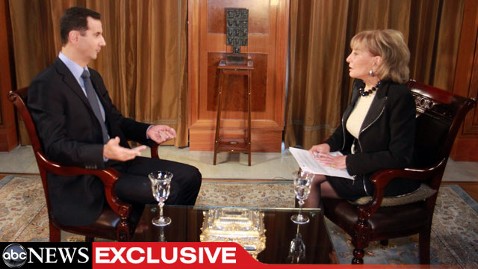
Law and order are slowly collapsing in Syria, along with reliable supplies of basic goods and services. The opposition is becoming more capable, more numerous, and better armed; more Syrians are despairing of the Assad regime and believe the president lives in a cocoon. The international community has isolated Syria and continues to tighten sanctions and force western companies to withdraw from the country, which is causing the economy to contract rapidly. Syria’s GDP has shrunk by almost 30% in dollar terms since the start of the year — from $55 billion to $37 billion dollars, as the Syrian pound has collapsed from 47 to 62 to a dollar. Heating oil has all but disappeared from the market place; people are cold. Cooking oil is scarce and electricity in many cities is cut for hours on end during peek usage periods. Municipal elections, by all accounts, were a bust. It is hard to see how they can change much so long as article 8 of the constitution – the article guaranteeing the supremacy of the Baath in society and politics – remains in force. Syrian opposition forces asked their followers to boycott them. The notion of reform is dead. The opposition is determined to bring down the regime, not reform it. Anyway, Assad has shown no inclination to cut the authority of the patronage network and security forces that sustain his regime in power. One must assume he will fight to the end, that was the thrust of his recent ABC interview with Barbara Walters.

What we are witnessing in Syria, is not the clash of two titanic and centralized bodies: the state and the opposition. Instead, we are seeing the steady erosion of state authority and national institutions, as the opposition, which remains largely organized on a local basis undermines central authority at many points. Neighborhood committees and armed groups are forming in ever greater number. Most use the word “coordinating” in their title, but few relinquish local authority. They prefer to keep decision-making local and in their own hands. Some of this is for practical reasons. Spies are everywhere. I am told by good sources that one of the leading reasons why Aleppo has been so quite is that the local coordinating committees recently discovered that their efforts to put together surprise demonstrations were being foiled by informants. One recent opposition statement admitted that their ranks have been riddled with informers.

The opposition remains divided over central issues of strategy – especially over how to deal with the armed opposition to the regime. The Syrian National Council claims to have gained control over the Free Syrian Army, which claims, in turn, to have control over some 15,000 defectors and armed elements in Syria. This alleged hierarchy is by most accounts fictional. The opposition groups and cells in Syria – whether peaceful or armed – are working on their own. According to the New York Times “factionalism has been hindering the drive to topple Assad.”

Current Events in Syria
Illinois Public Radio, Host: David Inge
Radio Show – Go to six minutes to start interview about current situation in Syria

Pro-Assad demonstrators on Monday after announcement of Arab League Deal. Notice that they are fewer than in the past, when the square and side roads were packed

Qatari Foreign Minister Hamad bin Jassim (C) is now a key figure at the League

Members of the Free Syrian Army at a safe-house on northern Lebanon’s border with Syria.

Syria To Cut Public Spending To Head Off Crisis
2011-12-20

DAMASCUS (AFP)–Syria has decided to slash public sector spending in a bid to head off a crisis for an economy that has taken a beating due to months of unrest and sanctions, media said Tuesday.

Prime Minister Adel Safar has issued an order for the public sector to reduce spending by 25% in a move designed at “limiting waste,” Al-Baath newspaper reported.

The cuts would be included in the 2012 budget and concern “fuel, maintenance, bonuses and transport expenses” that are usually allocated to civil servants, the report said.  Western powers have imposed sweeping economic sanctions on Syria, where the United Nations estimates more than 5,000 people have been killed since March asthe regime cracks down on a popular revolt.

Syrian Unemployment at Twice Previously Estimated Level – Syria Report

The Syrian Minister of Labour and Social Affair said last week that unemployment in the country stood at between 22 and 30 percent, a rate more than twice previously estimated levels….

Radwan Habib made this statement at the end of a Government meeting last week saying the new findings were the result of a field survey conducted by his administration. Until now, the Government put unemployment rate at 9 percent, well below the estimates of most independent analysts.

Gathering data on unemployment in Syria is difficult because few workers are registered with Social Security and Job houses but also because of cultural differences. In rural areas for instance, women working on cultivating land are rarely counted as workers, rather they consider themselves house wives.

Mr Habib did not give more details on the finding of the survey and did not say for instance whether the figure had been impacted by the current crisis engulfing the country. He did not say either why for so long the Government admitted to much lower figures. The fact that the margin is so high – between 22 and 30 percent – also casts serious doubts about the quality of the survey.

Syria Imposes Death Penalty For Arming “Terrorists”, 2011-12-20

DAMASCUS (AFP)–Syrian President Bashar al-Assad has signed into effect a law imposing the death penalty on anyone arming “terrorists,” state media said Tuesday, amid mounting clashes with rebel troops.

“The law provides for the death penalty for anyone providing weapons or helping to provide weapons intended for the carrying out of terrorist acts,” the official SANA news agency said. The Syrian authorities contend that nine-month-old protests are the work of “armed terrorists” not civilian demonstrators as maintained by Western governments and human rights groups.

SYRIAN NATIONAL COUNCIL NEWS

The Syrian National Council (SNC) held its first plenary meeting and conference in Tunis in December 17-18, 2011. The participants paid tribute to the Syrian people’s patience and the heroes who continue to demonstrate peacefully for dignity and freedom. The regime’s tactics, including the darkest of scenarios, to drag the nation into a civil war, have failed.
The council also called upon members of the Army and concerned citizens, who have yet to join the Revolution, to get involved in this cause.The SNC discussed key issues, including its own responsibilities, and concluded with the following outcomes:

At the Organizational Level:

  • The conference discussed and approved the Political Program of the SNC and the bylaws and regulations governing the ongoing relationships among its various institutions. The conference also restructured the SNC offices to promote the active participation of all political entities, including the driving forces of the Revolution and the independent national figures that have joined the SNC. The role of women in the SNC was also emphasized.
  • The SNC vowed to continue all efforts to promote national unity, and to expand national efforts to guarantee the success of the Revolution and provide a means to achieve its humanitarian objectives, including freedom and dignity.

At the Domestic Level: 
The SNC renewed its commitment to the Syrian people and to the achievement of their goals. This includes the primary objectives of the Revolution:

  • First, the ouster of the regime and its figures, along with all of its symbols and pillars.
  • Second, the establishment of a new Syria as a democratic, pluralistic, civil state, where all citizens – men and women – are treated equally under the rule of law.
  • The SNC reaffirmed its commitment to recognize the Kurdish national identity under the constitution. The Kurdish cause is an important part of a national issue of concern to the country as a whole.  Within the framework of unity in Syria, the SNC will resolve the injustices toward the Kurdish people by recognizing their national rights and compensating those affected.
  • The SNC stressed its commitment to recognizing the national identity of the Assyrian Syrians under the constitution, and called for a solution to this issue within the framework of national unity.
  • The SNC emphasized its rejection of any discrimination against any components of Syrian society, regardless of religious sect or ethnicity (including Arabs, Kurds, Turkmen, Assyrian, Syriacs, and others), in the context of national citizenship.
  • The SNC pledged to make every effort to meet the demands of the Syrian people, including relief requirements in disaster areas, as they continue their peaceful Revolution and successful civil disobedience such as the Strike for Dignity.
  • The SNC and its institutions call on the Arab League, the United Nations, and the international community to take urgent action with regard to the protection of Syrian civilians and activists by creating safe havens and protected zones.
  • The SNC pledged to support the Free Syrian Army, recognizing its honorable role in protecting the peaceful Revolution of our people.
  • The SNC emphasized its commitment at all levels – media, economic, political, and diplomatic – to stifling the regime until its ouster.
  • The SNC reaffirmed its vision of the transitional period and the general principles for the new Syria, which seek to realize a general consensus. The SNC called on all Syrians to unite in confronting injustice and tyranny and to join the Revolution in crafting the future of Syria.

At the International Level:

  • The SNC emphasized its concerns with regard to cooperation with the members of the Arab League, the international community, and other international organizations to achieve the objectives and wishes of the Syrian Revolution. The SNC warned that the regime continues to disregard and circumvent the initiatives and sanctions imposed upon it. The SNC also stressed that the regime must not be granted any additional deadlines or chances.
  • Moreover, the SNC urged that all countries and citizens bear a moral and humanitarian responsibility toward the Syrian people, who are facing the worst of crimes against humanity. The SNC emphasized that it is in the best interest of foreign countries to stand with the Syrian people and not with a faltering regime.
  • The SNC stressed that the new Syria will restore national sovereignty to the occupied Golan Heights and support the complete and legitimate rights of the Palestinian people. This will lead to true stability in the region, as opposed to the repressive regime that threatens the stability and unity of the state, and prompts international intervention in Syria’s internal issues. The regime alone bears responsibility for the events in the country.

Burhan Ghalioun, leader of the SNC, recently ran into harsh criticism from supporters for stating that the future government of Syria would cut ties with Iran and Hizbullah and would “bank on our special relationship with the Europeans and western powers in helping us in reclaiming the Golan as fast as possible.” None of those statements appear in the latest policy statement. When the SNC was formed three months ago, it was stated that the executive – Ghalioun would serve a three month term. It is unclear whether the SNC has cleared up this sitution. A recent Wall Street Journal interview with Ghalioun carried this on the topic:

WSJ: The council’s leadership is assigned for three months terms. When does the current term end and who will lead a transitional government?

Mr. Ghalioun: To respect democratic principles, the president has a three months term, and it can be extended. My term began in October for three months. Extension is something that will be discussed—it’s a possibility.

Syria’s Opposition: What If We Offered Assad Immunity…?
By Rania Abouzeid / Time, Tunis Sunday, Dec. 18, 2011

…..The FSA was not represented at the Tunisian conference. “What for?” said one conference organizer, when asked about the rebels’ absence. “Riad al-As’ad is in charge of maybe five guys.” (See why Syria’s dissidents fear for their safety.)

“The FSA is an empty cardboard box,” said another participant. “It means nothing. And besides, if we want to try and win over the army, why would we bring the FSA here?”

Still, the FSA, unlike the SNC, has tremendous support inside Syria. There are increasing calls by protesters and defectors alike for weapons to take on Assad’s ruthless forces. Unless the SNC presents a viable alternative, the Syrian uprising may slip out of the political realm and into an all-out civil conflict, with dangerous sectarian undertones. “What difference can the SNC make if it gets international recognition and loses its legitimacy among the protesters? And what difference can the FSA make, if it fails to get all the emerging paramilitary groups to accept the authority of its Military Council and its leader?” Ammar Abdulhamid, a U.S.-based Syrian dissident who has been critical of the SNC said recently. Abdulhamid has criticized the SNC’s “lack of transparency” and claimed that several independent Syrians who wanted to attend the conference in Tunisia “as monitors” were not allowed in. “So long as SNC leaders remain more preoccupied with winning international recognition than they are with internal cohesion or outreach to their own people, they are destined to become as irrelevant and cut-off from realities as Assad is today,” he said.

Interview with Louay Hussein on FSA, civil war, sanctions, Turkey and an opposition upcoming conference: Louay is a long time opposition activist. He was first arrested in 1984 while finishing his fourth year of philosophy studies at Damascus University. He was released from jail in 1991. Earlier this year he successfully organized the first opposition conference to be held in Damascus (Samiramis conference) and launched “Building the Syrian State” political current (???? ???? ?????? ???????)

REPORTING ON SYRIA

Stratfor Challenges Narratives on Syria, December 20, 2011,
By Sharmine Narwani, Senior Associate, St. Antony’s College, Oxford University

… Inherent Bias in Syrian Data?

The problem with information that originates from opposition groups is that there is a clear interest in disseminating “beneficial” data and underplaying “damaging” statistics. And that dynamic applies to the government too – which is why we take Syrian regime pronouncements with a grain of salt.

You don’t see the Syrian opposition taking an active role in publicizing the slaughter of rank-and-file soldiers, for instance – except to claim these forces are being shot for deserting the army. Twitter is abuzz right now with news that more than 70 of today’s 100+ dead are “deserters.”

Nor do you hear about the numbers of pro-regime civilians killed by the armed opposition – some of them allegedly while “demonstrating” in support of the Syrian regime.

Now, this does not mean that the Syrian opposition lies outright to gain sympathy and foreign support – mostly because the “opposition” is not homogenous and comes in different shapes, sizes and flavors.

But Strafor clearly questions the intent of some of these groups based on very recent evidence of disinformation campaigns:

The Stratfor article focuses primarily on opposition efforts to create the impression in the past few weeks that there is a significant split within President Assad’s own clan and within his Alawite minority sect, members of which man the top jobs in the country’s armed forces and key government positions.

Among these high-profile gaffs are a December 10 report alleging that “Syrian Deputy Defense Minister and former chief of military intelligence Asef Shawkat had been killed by his aide and former General Security Directorate chief, Gen. Ali Mamlouk.”

Stratfor posits that the unfounded “image of two senior-ranking Sunni members of the regime drawing guns on each other” helps to create ” a compelling narrative” for groups that wish “to undermine the perception that al Assad’s inner circle is united in the effort to suppress the opposition and save the regime.”

In yet another example, a December 9 statement published in the Saudi-owned Asharq al Awsat by the previously-unknown “Alawite League of Coordinating Committees” which claims to represent the Alawite community in Syria, “rejected any attempt to hold the Alawite sect responsible for the ‘barbarism’ of the al Assad regime.” Stratfor says the planted story gives “the impression that the Alawite community is fracturing and that the al Assad regime is facing a serious loss of support within its own minority sect.”……….

Three videos that have been circulating

Syria Observatory of  Human Rights accused of false reporting by Nizar Nayouf. Its leader was long a major source for Western reporters on Syria.

FREE SYRIA ARMY NEWS

Inside Syria: the rebel call for arms and ammunition
Exclusive: With Syrian rebels desperate for arms, Ghaith Abdul-Ahad finds smugglers doing a roaring trade selling guns and bullets

Hussam is a soldier in the Syrian army. His brother and two cousins are fighting for the rebels.

“I would defect tomorrow if you could protect my family,” Hussam said. “But if I defected they would arrest my father and my brothers and the whole family wuld have no income. The regime is still in control.

“I am as low as I can be, my morale is below zero. I don’t know what to do, my family and people are getting killed – yet still there are no defections in the army.

“When they say the Syrian army is an ideological army they are right. The political officers and the Ba’ath party and the Assad family control the army. Even if a general did defect, he wouldn’t defect with his tanks and soldiers, he would defect on his own. So arming of the revolution is a mistake, it will not be strong enough to stand against the army and resist properly.

“With my artillery unit I could sweep through Benish in one hour. When the officers and the regime tell the soldiers that the villagers are armed, they will come in scared and shoot at everything.

“But when soldiers know that they are facing unarmed civilians, they are human beings after all. How many bullets were fired when they toppled Mubarak? Zero. Now everyone is armed, fine. But what’s next?

“If you want officers to defect give them a no-fly zone, give them a safe haven, where they can take their families.”….

Hameed: He later joined the Free Syrian Army under the command of Colonel Reyadh Assad.

“We did nothing there [in Turkey], just sat in our tents and watched TV and sometimes gave press interviews. I told them I hadn’t defected to sit in a tent, I wanted to fight. They kept telling me to wait, that they had a plan, but nothing happened.”

After three months in Turkey Hameed ran away again; this time he arranged for the rebels to smuggle him back into Syria.

“There is no such thing as a Free Syria Army,” he said. “It’s a joke. The real revolutionaries are here in Syria in the mountains.”

On Zawiya mountain, I met another defected officer. He had taken leave from the army to see his family, and when he reached his village he joined the fighters in the mountains.

“The regime can’t reach my family,” he said. “That’s why I could run away.” Most soldiers couldn’t defect because they feared for their families if they did. “The army is under the strict control of the political officers, who ensure we live in cocoon where we can’t see what’s happening outside.” Soldiers were not allowed to watch the Arabic news channels, just the propaganda served up by state TV, he said. “The political officers tell us every day that we are fighting armed gangs paid by the Americans and the Saudis.

“If only they would impose a no fly zone,” he said, “then the whole army would split.”

“The Free Syrian Army: Syria’s Future Army of Liberation?”,
By Nicholas A. Heras in Siyese

Syria is in a state of civil war. Whether a de jure or a de facto civil war, an escalation of the civil conflict that has already cost the lives of over 4,000 Syrians is imminent. Thus far, the Syrian armed forces, and their appendage Alawite militia the Shabiha, have maintained a violent superiority over the protesters and rebellious population of Syria. Unfazed by this balance of violence, one opposition movement, the Free Syrian Army, is ready, willing, and able to take up arms to defeat the Al-Assad government.

The Free Syrian Army is composed of mainly Arab Sunni Muslim former soldiers from the Syrian army. Led by Col. Riad Al-Asaad, the Free Syrian Army claims to number between 10,000-20,000 members, and growing. Most of its rank-and-file defected from the Syrian army because of crises of conscience towards using lethal force against Syrian civilians protesting the Al-Assad government. It is organized into 22 “battalions” that operate throughout Syria, although recently the Free Syrian Army has been mobilizing with particular intensity in and around the front-line central-western cities of Homs and Hama, and in the northwestern region of Idlib….

The Free Syrian Army, acting upon the insistent advice of the Syrian National Council, has reduced its operations to defensive actions, in order to lessen the risk of an all-out civil war and put the burden of offensive actions and the bloodshed that would result from them on the Syrian military. This willing defensive tactical stance adopted by the Free Syrian Army indicates that it is ready to march to the same beat as the Syrian National Council,….

The rise of the Free Syrian Army,
By Chris Zambelis in Asia Times

Syrian Army Defectors Reportedly Kill 27 Soldiers.
By NADA BAKRI, December 15, 2011

BEIRUT, Lebanon — The armed insurgency against the government of President Bashar al-Assad of Syria has become more organized in recent weeks, with defectors launching attacks that have become bolder and in some cases more sophisticated, according to activists and residents inside the country and in exile.

The latest attack took place on Thursday at dawn, when military defectors killed at least 27 soldiers,…

One opposition leader in exile, whose assertions could not be immediately confirmed, said that weapons were also being smuggled to Syria from Lebanon, Turkey and Iraq, and that defectors were now better armed and financed.

The attacks in recent weeks have escalated around Dara’a, in the south, and in Hama, a tense city in central Syria where vast protests gathered earlier this year before security forces retook the city in August.

Discontent is greater in these areas, observers say, where a majority of the people are poor Sunni Muslims who have suffered under government neglect, a longstanding drought and a sense of disenfranchisement by a government dominated by Alawites, a heterodox Muslim sect to which Mr. Assad belongs.

This week alone, the observatory reported four deadly attacks against government troops in Hama and Dara’a Provinces, including an ambush on Wednesday that killed at least eight members of the security forces.

“Where else are we going to find government forces vulnerable?” said Ammar al-Wawi, a former soldier reached by phone in an area near the Syrian-Turkish border. “Confrontations will happen in hot spots and where there are protests, discontent and serious opposition to the regime.”

Mr. Wawi said he left the army in March, after the uprising started. He and some other fighters said their initial goal was to ambush and kill soldiers who were headed to crush protests. For months, the government has intermittently cracked down on restive cities, sending in tanks, killing civilians and making arrests, according to activists.

Though the Free Syrian Army — a group of mainly army defectors whose commanders are based in Turkey — claimed to have staged most of the recent attacks, some activists and American officials disagree over the degree of coordination. Many of the attacks themselves often seem haphazard.

Estimates of the numbers of defectors vary wildly. An Obama administration official, speaking on condition of anonymity, estimated their total at 1,000 to 3,500. The official said that armed civilians had apparently joined some of the defectors.

Some activists have suggested that parts of Dara’a and Hama Provinces have become so hostile that security forces are finding it difficult to enter them.

A town near Dara’a called Hirak has witnessed daily antigovernment protests in recent weeks, and residents there say that it has become off limits for security forces.

An opposition activist who did not want to be identified said that about 800 fighters, mainly army defectors, were based there.

“The regime hasn’t attacked once in recent weeks,” said Anwar Fares, a human rights activist from Dara’a. “They have been attacked on the outskirts of the town several times, so they are now scared and stay away.”

Mr. Fares said an increasing number of Syrian civilians were joining the defectors, especially people who had lost family members in the government’s crackdown.

27 Dead After Syrian Government Forces, Defectors Clash

… Analyst Harling said, however, that growing ranks of defectors are now often inflicting casualties on government forces that “exceed the number of victims among protesters.” He added that the “dynamics on the ground appear to be shifting in favor of the insurgency.”

Harling insists that he sees “ominous trends” pointing to “regionalization of the Syrian conflict.” Despite those trends, though, he argues there is “no strong, tangible evidence that a regional proxy war has started yet.” Syrian forces, meanwhile, continue to target defectors whom they see as a growing threat.

Free Syria Army Will Retaliate if 21 Members are Executed

The Free Syrian Army, which has waged a rebellion against the government of President Bashar al-Assad since June, said it had received information that 21 of their number are to face a firing squad within the next 24 hours.

The rebels said they would retaliate against government forces and militiamen loyal to the regime in the city of Homs, an opposition stronghold, if the executions take place.

“I have a personal message for the army: If the army executes these men, there will be a very harsh retaliation against them here in Homs,” Abdul-Razaq Tlas, the commander of one of two rebel battalions in the city, told the Daily Telegraph.

OTHER NEWS

Top story: U.N. High Commissioner for Human Rights Navi Pillay told the U.N. Security Council that Syrian President Bashar al-Assad’s crackdown against domestic protesters “constituted crimes against humanity,” and that Syria should be referred to the International Criminal Court. Pillay also revised the U.N. estimate for the death toll during the nine-month-old uprising, saying that more than 5,000 people had been killed, including 300 children. Another 14,000 people are believed to have been arrested, while 12,400 people had fled to other countries, she said.

Syrian workers hold general strike; voter turnout is low in local elections – From Foreign Policy

Syrian opposition activists said most of Syria’s capital of Damascus has been shutdown, and shops throughout the country were closed in the largest general strike since the protest movement began in March…. At the same time, the county is holding local elections for 17,588 seats in Syria’s 1,337 administrative units. Overall, voter turnout is expected to be very low as opposition activists have called for a boycott and many residents fear leaving their homes to go to the polls. The voting comes amid one of the fiercest clashes since the start of the uprisings between government forces and defectors loosely aligned into the Free Syria Army (FSA). Syria’s 12th Armored Brigade, based in Isra, a town 25 miles from Jordan in the south, stormed the town of Busra al-Harir, where the FSA was allegedly hiding and waging attacks. Inan escalation of international tensions, French Foreign Minister Alain Juppe made a statement accusing Syrians of being behind the attack that wounded five UNIFIL peacekeepers in southern Lebanon last week, though he offered no evidence. Meanwhile, the Arab League will meet on Saturday to discuss Syria’s conditional acceptance of a peace plan involving international monitors.

Economic Impact of Strike Difficult to Assess – from Jihad Yazigi’s Syria Report

Business activity remained apparently normal in central parts of Damascus and Aleppo on Sunday, although other parts of the country appeared to be complying with calls for a general strike by the Syrian opposition.

The Struggle for Syria in 2011, Middle East Security Report 2, December 12, 2011
By Joseph Holliday
Executive Summary

This paper provides context for understanding the cycles of violence in Syria. The first section provides a brief historical overview of sectarianism in Syria in order to understand its role in the current conflict. The second section provides a framework for understanding the operations and strategy of the Assad regime. The paper then analyzes regime security operations in seven regions: Dera’a province; Damascus; Homs and Hama in central Syria; the coastal region; Idlib province; the Arab east; and the Kurdish northeast. The paper concludes with an examination of regional and international responses to the conflict…..

Syria Holds Local Polls as Violence Continues, By: Al Jazeera and Agencies | Al Jazeera

Syrian opposition officials in London reported that Deputy Minister of Defense of Syria Assef Shawkat, husband of Bushra Assad, was killed during an argument with his aide General Ali Mamlouk. Stratfor is reporting this, which seems like unreliable gossip or misinformation to me.

Blogger, Rami al-Jarrah, describes his escape from Syria, 12 Dec 2011

Rami al-Jarrah, who was blogging and tweeting from Syria under the pseudonym “Alexander Page,” just fled the country after his real identity became known to the intelligence services. Upon his arrival in Qatar he almost got sent back to Syria but thanks to a swift outpouring of support on Twitter, he was allowed in….

Syrian minister of petroleum claims smuggling and hording is main cause of scarcity.

??????: ?????? ?????? ????????? ??????? ????? ???????? ?? ????? ???? ??????? ??????

Factional splits in Syrian opposition hinder drive to topple Assad New York Times
Posted: 10 Dec 2011 05:00 AM PST

The New York Times: Even as the government of President Bashar al-Assad intensifies its crackdown inside Syria, differences over tactics and strategy are generating serious divisions between political and armed opposition factions that are weakening the fight against him, senior activists say. Soldiers and activists close to the rebel Free Syrian Army, which is orchestrating […]

New Parties Announced

More and more opposition parties and groups are announcing themselves each week. For example, Murhaf Jouejati, a Washington DC based academic and member of the SNC, announced the formation of a new political party – The National Consensus Movement.  A new Islamic Front announced itself in Cairo a few days ago. The Kurdish parties are sitting on the sidelines. They don’t trust Turkey, which has been sponsoring opposition groups, and they don’t trust Arabs, who are suspicious that Kurdish demands for “national” recognition and autonomy are but a prelude to calls for independence. The minorities remain fearful of the possible tyranny of Islam. They insist that their liberties will be steamrolled by the growing strength of Islamic parties. Many see the Arab Spring to be a thinly disguised “revenge of the Sunnis.

??????? ????? ?????? ?????? ?????? ?????? ?? ???????

????? 14 ?? ????1433?? 10-12-2011? ?????? 08:18 ? ??? ??????? 05:18 ? ??????

????? ???????:? ??? ??????? ????? ????? “?????? ?????? ??????” ???? ????? ???? ?????? ??????? ????? ?? ??????? ???????? ?? ????? ??????? ??????? ??? ??????? ???????? ???? ?? ??? ????? ?????? ??????? ?????? ?? ?????? ?????? ??? ?????? ??? ???? ?????? ??? ??? ???? ?? ?????.

????? ????? “???????” ??????? ??? ?????? ???????? ?????? ?????? – ???? ?? ?????? ?? ????? ????????? ??? ????? – ????? ?? ??????? ????????? ??????? ???? ???? ??????? ???????? ??????? ???????? ???????? ???? ???? ??????? ????????? ????? ?? ???? ??????? ??????? ????????.

????? ????? ?????? ????? ????? ???????? ?? ????????? ??????? ?????? ?????? ??? ??? ??? ?????? ??????? ????????? ???????? ???? ??????? ????? ????????? ??? ??? ????????? ??????? ?????????? ??????? ???????? ?????? ???? ???????? ????????? ?????? ???????.

??? ????? ?????? ???? ????? ??????? ??????? ????????? ??????????? ???????? ????? ???????? ?????? ????? ??? ????? ?????? ????? ????? ?????? ???? ????? ??????? ?????? ??? ?????? ?? ??????? ?????? ??? ??????? ?? ????? ????? ???? ?????? ?? ??? ???? ?? ?????? ???????.

???? ??????? ???? ????? ??????? ???? ?????? ??????? ?????? ?????? ??????: “?????? ??? ?????? ????? ???? ?? ????? ????? ???? ?????? ???? ???? ????? ????????? ?????? ????? ???? ??????? ???? ????? ????? ??????”.

????? ??????: “??? 60 ????? ??? ?????? ??????? ??????? ???? ????? ???? ????? ????? “????????” ???? ?????? ????? ?????? ????? ?????? ?????? ????? ????? ?????? ???? ???? ??? ???? ??? ?? ?? ??????”.

????? ?? ???????? ?? ????? ????? ?????? ??? ?????? ????? ????? ?????? ?? ???? ????? ?????? ?????? ?????? ??????? ????? ?? ???? ????? ??????.

Jerusalem Post: ‘No substitute for US leadership on Syria’

2011-12-12

WASHINGTON – Syria is too important a country for its crisis to be handled by any actor other than the United States, experts on Mideast geopolitics and national security said late last week at an annual policy conference in Washington. The US and …

Tony Badran – a fellow at the Foundation for Defense of Democracies, the Washington think tank that organized the event – said neither the Arab League nor Turkey wield the necessary military or diplomatic clout to end a nearly nine-month government crackdown said to have killed at least 4,000 people.

“Syria is a pillar of the Iranian axis. Only the US can do this – it can’t be outsourced,” Badran said. “The US acting like a human-rights NGO just won’t cut it.”

Turkey, which shares a 900-km. border with Syria, has raised the possibility of creating a buffer zone along their the frontier, but has also shrunk from the prospect of large-scale military action.

Andrew Tabler, a Syria expert at the Washington Institute for Near East Policy, said military operations in the country would present difficulties not encountered in this year’s NATO intervention in Libya.

“Unlike Libya, Syria has a massive air defense system. The US could handle it, but not the Turks,” he said.

Current and former US officials from both sides of the aisle called for Washington to show greater leadership against Syrian President Bashar Assad.

Rep. Eliot Engel (D-New York) said America must honor its responsibility as the champion of freedom-seeking peoples worldwide.

“People care what the US says and look to it as a beacon of democracy. Shame on us if we shirk that duty,” said Engel, who in 2003 sponsored the Syria Accountability Act….

Bashar al-Assad Isn’t Going Anywhere (Voluntarily)

Max Fisher – Atlantic

Though some media critics were disappointed by Walters’ interview, it did lead Assad to reveal his intentions. His message to the world, delivered through one shrugging denial or smiling falsehood after another: I’m not going anywhere.

Friend Writes: Electric cuts in Aleppo now 6 hrs a day – three in morning and three in evening.

The weather in Aleppo is very cold. Since Mazzout is in short supply, many are trying to economize on use of heaters. They are buying electric ones for single rooms. Unused parts of the house are left without heat. So many people are doing the same that the electric grid cannot keep up with demand. Just now, Aleppo has been over three hours without electricity. My sister’s daughter is doing her school work under candle light. When i called they were so fed up staying home without light that they decided to park the car in the middle of the city and sit inside it to pass time till the electricity is back.

??? ???? ???????? ???? ????:”??? ????? ????? ??? ?????? ??????? ????? ??????? ???? 2010 (24) ????? ?? ????? ??? ????? ???????? ??? ?? ??? ????? ??????? (70) ????? ?? ????? ??? ?? ??? 2030 ?????? ?????? ????? ??? ??? ?????? ????? ??????? ?? ??????? ????????? ?????????? ??????? ????? ?? ?????? ???????? (28) ????? ?? ????? ??? ?? ??? ????????? ????????? ???????? ??? ????? ?????”.

 ????? ?????? ?? ????? ????? ?????? ?????? ?????????? ?? ?????? ????? ????? ?????? ????? 1.7 ??????? ?.? ?????? ??????? ?????? ????? ??? ?????? ?? ??? ????? ???????? ???? ?????? ????? ?????? ??? ?????? ??? ????? ????? ???????? ??? ???? ?????? ?????? ??????

Many argue that Syria is fine since it has low debt, but simply to upgrade the electric grid will cost the country $28 billion. This is more than 50% of GDP. Its like saying that the American economy needs $7 trillion to upgrade its electricity. Syria has low debt but that is largely because it has resisted making improvements to its antiquated infrastructure. Syria needs a massive modernization campaign.

Until the Tunisia conference Hytham Mannaa was against SNC. He’s with the NCC. Walid Bunni left the SNC. Those division seem to be on the mend.

Read Juan Cole’s Hizbullah Leader Condemns Syrian Opposition

Republicans Decry Obama Israel Policy in Bid for Jewish Vote

Gingrich called for the overthrow of Iranian President Mahmoud Ahmadinejad and Syrian President Bashar al-Assad, saying the U.S. should push for regime change in Iran and Syria. He vowed to move the U.S. embassy in Israel from Tel Aviv to Jerusalem, a sensitive topic in peace talks between Israelis and Palestinians. And, if elected, he promised to appoint John Bolton, former U.S. ambassador to the United Nations, as secretary of state, prompting wild applause from the standing-room-only audience.

National Coordination Body for Democratic Change has produced a draft document of proposals for the creation of the Syrian General Congress. The NCB delegation is currently in Cairo working with the Arab League to unify the ranks of the Syrian opposition.

The draft proposals present a critical opportunity to put an end to the multiple and various voices of the democratic opposition, to build a core foundation for the struggle to overthrow the regime with all the supporting infrastructure, and a program for transition and the building of the pluralist democracy based on citizenship, law and respect for the rights of persons and groups, and to ensure the preservation of fundamental freedoms, social justice and territorial integrity within the homeland of Syria, which is part of the Arab world.

The National Coordination Body for Democratic Change refuses the call for external military intervention, and will not accept the participation of any person involved in economic or political crimes. Participants in this conference should agree to reject and resist any form of sectarianism or the mobilization of sectarian violence, militarism and exclusion. The conference is presented as the basis upon which to unite the efforts of the opposition forces and figures across a broad base upon the principles of consensus and democracy.

The National Coordination Body for Democratic Change proposes that the Preparatory Committee will include members of the SNC, NBC, Kurdish representatives, trades unions and public figures.

AL-ASSAD IN COMPLETE DENIAL, By Andrew J. Tabler

How Turkish perceive women and religion: a revealing survey of modern Turkey.

“The findings of a 2011 survey by a team of academics from Istanbul’s Bahçesehir University revealed hints about the related Turkish mental paradigm: 33 percent of Turks think women deserve to be beaten; 60 percent (both male and female) think women should obey men and surprise, surprise, 81 percent identify themselves as religiously devout. A separate study in 2010 had found that 25 percent of Turks think it would amount to sinning if women and men worked in the same office.”

In Syria, Expelling the Peacemakers
By STEPHANIE SALDAÑA, Op-Ed Contributor, Published: December 8, 2011, New York Times

SEVEN years ago, I stood in the chapel of a monastery in the Syrian desert and stared up at a wall of frescoes from the 13th century.

Nearby, a burly man in a gray habit was explaining the paintings to a family visiting from a neighboring village. “That’s Mariam, may peace be upon her,” he said, pointing up. He moved his hand toward the bearded portrait of a man. “And that’s Ibrahim al-Khalil, may peace be upon him.”

Though it may seem like a mundane story, it was anything but ordinary. The visitors, who had climbed a flight of some 350 stairs to arrive there, were Muslims. The man describing the frescoes to them was Father Paolo Dall’Oglio, an Italian Jesuit priest who was speaking to them in the local Arabic dialect.

The frescoes he was pointing to were Christian, but he was identifying the figures using their Arabic names from the Koran. It was a remarkable moment, and the message it contained was simple: Despite their differences, Muslims and Christians believe in the same God.

Last week, the Syrian government issued an order that after 30 years in the country, Father Dall’Oglio would be expelled.

Father Dall’Oglio founded the community of Deir Mar Musa in 1982, at the height of the Lebanese Civil War. He had hiked out into the desert in search of a ruined Byzantine monastery. After spending 10 days praying in the rubble, he was inspired to rebuild the monastery and to found a community of monks and nuns dedicated to prayer, silence and hospitality. The Syrian monastery, situated between Iraq, Lebanon, Israel and the West Bank, would symbolize peace. The community would welcome each Muslim visitor as a sacred guest, just as Abraham, in both the Bible and the Koran, had welcomed the angels of God. ….The devastating fate of the Christians in Iraq has already served as a warning. Father Dall’Oglio’s expulsion, if it is carried out as planned, will send a clear message to all of them — that the regime’s support of Christians is not unconditional. Those who dare mention the oppression of the Assad regime or who advocate for a dialogue to change the country will be deemed members of the opposition.

This puts local Christians in a bind. To seek change may put their community at risk. Yet to remain silent in the face of injustice will surely reduce Christianity to an identity, a sect, and not a living faith seeking to follow the message of the gospels. It will also strain a relationship between Muslims and Christians in Syria that has existed for over a thousand years. ….

Syria Added to Higher-Risk Shipping Zones By Marine Insurers

Raising the stakes: Russian military support for Syria, By James M. Dorsey

Russia is stepping up military support for Syria; reinforcing its opposition to international efforts to force President Bashar al-Assad to halt his eight-month-old crackdown on anti-government protesters. In so doing, Russia is turning the Syrian crisis into an international test of wills….

CFR.org: Assad’s Revelations, 2011-12-08

Jerusalem Post: Analysis: Word of caution on Assad’s fall, 2011-12-13

Defense Minister Ehud Barak was reported this week as predicting that the regime of Bashar Assad would fall within weeks. Certainly things are not going well for the Assad family dictatorship. The bloodletting continues as the Free Syrian Army and …

Pro-regime Aleppo Industrialist has Factory Burned Down an Aleppine writes:

“AL OULABI SAW THE FIRE UPON ARRIVAL, HE HAD A HEART ATTACK AND DIED ON THE SPOT. HE WAS ONE OF THE BEST KNOWN BUSINESS PEOPLE IN HALAB. HE WAS A MEMBER OF MAJLIS AL SHAAB AND “MAHSOUB AL NIZAM”

???????? ???? ??? ???? ???? ????? ?????? ???

???? ???? ?? ????? ( ???? ???)..??????? ????? ? 500 ????? ????..????? ???? ??????, 13/12/2011 – syriasteps

 ???- ???– ??????????:

 ?? ???? ????? ???? ???? ?? ???? ( ???? ???) ??? ??? ?? ????? ??? ?????? ???? ??? ???? ?????? ( ???????).

????? ?? ?????? ?????? ???? ???? ????? ?? ???? ???? ????? ?? ?????? ????? ????? ????? .   ??? ???? ????? ??? ?? ?? ????????? ?????? , ?? ?? ????? ( ???? ???) ????? ???? ???????? ?????? ????? ???? ????? ???? ?? ???????, ??? ?? ??????? ???? ????? ??????? ???? ?????? ???? ????? ?? ???? ??????.


INTERVENTION IN SYRIA: ASSESSING THE OPTIONS
By Steven Beasley, Michael Eisenstadt, and Jeffrey White

Without external intercession, the violence in Syria is likely to escalate, with destabilizing consequences for its neighbors, particularly Lebanon and Iraq…..

Syria Added to Higher-Risk Shipping Zones By Marine Insurers, 2011-12-13

By Michelle Wiese Bockmann

Dec. 13 (Bloomberg) — Marine insurers added Syria to a list of countries deemed higher-risk for shipping, and removed Qatar, the Ivory Coast, and parts of Mindanao, the Philippines.

The Joint War Committee, which represents Lloyd’s of London underwriters and other insurers, listed Syria as a higher risk on a notice to members published Dec. 8. The declaration lets underwriters charge an additional premium based on the value of ships calling in the area.

(CNN) — Pressure is growing for world leaders to respond to Syria’s brutal crackdown on anti-regime protests.

Alawite political figure speaks out against sectarian violence

Amman: A Syrian Alawite centrist political figure said on Tuesday that four of his relatives were shot or kidnapped in sectarian violence threatening to undermine a nine-month pro-democracy uprising.

In a rare named testimony about sectarian killings that have racked the central city of Homs in the last few weeks, Mohammad Saleh told Reuters the four were targeted because they were Alawites, the same sect as President Bashar Al Assad.

“The violence by the regime has provoked counter violence. But a crime is a crime and it has to be condemned,” said Saleh, a former political prisoner, by phone from Homs, a city of one million, 140km north of Damascus.

“I went to jail for a civilised Syria, not to replicate the values of the regime,” said Saleh, who spent 12 years in jail for his opposition to Al Assad’s father, the late president Hafez Al Assad, from whom Bashar inherited power in 2000.

A FORMER senior diplomat yesterday became one of the most senior Syrian regime insiders to openly denounce the government of President Bashar al-Assad, calling on the international community to protect civilians.

Mohammad Bassam Imadi, previously Syria’s ambassador to Sweden, fled to Turkey with his family 10 days ago. He told The Times that many inside the Syrian government secretly wanted Mr Assad to fall.

“People even high up aren’t loyal to the government, but they can’t do anything,” he said. “They are scared for their lives and families. I have so many friends who have said this to me.”

He said their resentment had been driven by the regime’s failure to grant reforms in the early stages of the uprising.

Obama, Arab allies eye no-fly zone that could ‘paralyze’ Syrian military

US says Assad regime in Syria is doomed, urges opposition to prevent sectarian strife,
By MATTHEW LEE, 14 December 2011, Associated Press Newswires

WASHINGTON (AP) – The Obama administration is predicting the downfall of Syrian President Bashar Assad with a senior official likening his authoritarian regime to a “dead man walking” over its brutal crackdown on pro-reform demonstrators and increasing international isolation.

The State Department official, Frederic Hof, told Congress on Wednesday that Assad’s repression may allow him to hang on to power but only for a short time. And, he urged the Syrian opposition to prepare for the day when it takes control of the state in order to prevent chaos and sectarian conflict.

“Our view is that this regime is the equivalent of dead man walking,” said Hof, the State Department’s pointman on Syria, which he said was turning into “Pyongyang in the Levant,” a reference to the North Korean capital. He said it was difficult to determine how much time Assad has left in power but stressed “I do not see this regime surviving.”

The Syria Crisis: Assessing Foreign Intervention
December 15, 2011 | By Scott Stewart, Stratfor

The ongoing unrest, violence and security crackdowns in Syria have been the subject of major international attention since February. Our current assessment is that the government and opposition forces have reached a stalemate in which the government cannot quell the unrest and the opposition cannot bring down the regime without outside intervention…..

US interference in Syria could bring about another Iraq
By Charles Glass, The Evening Standard 15/12/11

The withdrawal of most United States forces from Iraq this week is anything but the end of American military involvement in the Middle East. The latest focus of Washington’s attention is Syria, where the United Nations says 5,000 people have been killed since the uprising erupted in March. Before American (and probably British) soldiers are asked to give their lives in another Arab country, they are entitled to ask important questions. Is Washington attempting to install a democratic government in Damascus? Or is it seizing the opportunity to bring down Iran’s main Arab ally in advance of an American or Israeli attack on Iran?

History has not been kind to Syria’s desire for change
The National 16/12/11, Charles Glass

A dog in Lebanon, an old joke goes, was so hungry, mangy and tired of civil war that he escaped to Syria. To the surprise of the other dogs, he returned a few months later. Seeing him better groomed and fatter than before, they asked whether the Syrians had been good to him. “Very good.” “Did they feed and wash you?” “Yes.” “Then why did you come back?” “I want to bark.” It is impossible not to sympathise with Syrians’ desire to be treated like adults. The Syrian regime is not alone, of course, among Middle East dictatorships in regarding their people as subjects rather than citizens. Under the portrait of the great dictator, little dictators grant some supplicants permits, demand bribes from others and abuse the rest. Syrians can identify with what Italians under Mussolini used to say: “The problem is no

t the big dictator. It is all the little dictators.” Little dictators, though, thrive under the big dictator. But all dictators are at risk from changed international circumstances, a spark (like a self-immolation in Tunisia) or the sudden realisation that the regime is vulnerable. People in Syria have reasons to demand change, as they have in the past. I hope, for their sake, that things turn out better this time.

Syrie : l’islam dans la révolution
Par Thomas Pierret

Syrian blogger Razan Ghazzawi’s release came after an international campaign

Assad’s Parallel Universe Suggests a Long Struggle

Assad’s ABC Interview with Barbara Walters – The parallel universe.

This interview suggests that President Assad continues to see his fight to be against terrorists and external plots, as he has argued from the beginning. He denied that he is killing his own people and suggested that more Syrian soldiers have been killed than Syrian innocents. Whether he remains convinced of his rectitude, whether his primary motivation is to hang on to power, or whether he is simply frightened of the consequences of yielding authority to his opponents, Assad gave no indication that he is having second thoughts about his position or is ready to yield. One must conclude that Syria’s fight will be a long one.

Syrian Muslim Brotherhood leader, Mohammed Riad Al-Shaqfa, told ash-Sharq al-Awsat two days ago,”I believe that the al-Assad regime will collapse within the next few months. … the [Syrian] regime’s days are over. It is gasping its final breaths….; he wants to portray himself as being in charge of Syria’s land, sea, and air, but he is a liar, and is not in charge of anything but himself.”

This seems to be wishful thinking. Assad remains in control of the Syrian military, which is strong compared to the opposition. Economic sanctions are beginning to exact a terrible toll on the Syrian people. Most have no heat because mazoot (feul oil) is scarce or non-existent in most regions of Syria. The Syrian pound has fallen below 62 to a dollar from 47. This means that Syrians have lost over 25% of their worth and purchasing power. Price hikes are everywhere and dramatic.

Aleppo’s economy has been hammered by the freezing of trade with Turkey. Many Syrians have made trade with Turkey their livelihood over the past decade. Prices of all Turkish products (cloths in particular) jumped 30-40% overnight in response to the new 30% tariff that has been placed on Turkish goods entering Syria. “They are sawing off the branch they’re sitting on,” Turkish Economy Minister Zafer Caglayan told reporters in televised remarks from Istanbul. “These aren’t moves that a country with such a need for cash and a seriously pressured economy should be making.”

Locally produced Syrian goods are much inferior in quality to those imported from Turkey. A number of key Syrian industries have been shuttered due to Turkish competition, so the new tariffs are causing real scarcities in some goods.

Turkey responded today by suspending its free trade accord with Syria. It has slapped a 30% tariff on Syria’s imports and opened 2 additional crossings to Iraq in order to assist efforts by local merchants to bypass Syria in trade with the Gulf and Egypt.

Despite Promises From Assad, ABC News Crew Encountered difficulties – New York TImes Blog

President Bashar al-Assad held his first interview in Damascus with a U.S. reporter since the start of the Syrian uprisings,telling Barbara Walters that he did not order a government crackdown on protesters. Assad said that he had the support of the Syrian people and denied the credibly of the United Nations reports estimating the violent death of more than 4,000 people. He claimed that the majority of people killed since March have been government forces. He admitted that some mistakes had been made, but were undertaken by individuals, claiming that as president he does not “own” the army. The U.S. State Department spokesman, Mark Toner, responded to the interview stating “I find it ludicrous that he is attempting to hide behind some sort of shell game [and] claim that he doesn’t exercise authority in his own country.” Meanwhile the government committee advising on drafting a new constitution announced new provisions that would ban “discrimination between political parties.” However, the amendments further entrench Assad’s rule by legalizing his presidency by lowering age requirements and advancing his military rank to commander in chief of the Syrian military and armed forces.

 Assad said: “I’m president. I don’t own the country, so they’re not my forces.” “There’s a difference between having a policy to crack down and between having some mistakes committed by some officials. There is a big difference,” the reporter quoted Assad as saying.

The next day, his spokespeople were denying that he meant what he said: ASSAD REMARKS DIDN’T AIM TO DODGE RESPONSIBILITY: SPOKESMAN. 2011-12-07

Turkey downplays Syrian transit route for Middle East trade
Dec. 7, 2011 (Xinhua) — Turkey’s economy minister

downplayed Syria’s significance as a transit route for Turkish trucks carrying goods to Middle Eastern and Gulf countries. Zafer Caglayan said: “We have three alternative routes through Alexandria, Beirut and Iraq and possibly a fourth through the Suez Canal.”

“We moved yesterday evening to take advantage of these alternatives and all of a sudden the Syrian government decided to let Turkish trucks into the country,” he added. He noted that Syrian customs officials have forced Turkish truck drivers to form long queues keeping them waiting at the border gates with Turkey but on Wednesday trucks were allowed in.

“By-passing Syria is a piece of cake. But we did not to want to choose that path. We want to use Syria as a transit route and allow Syrian economy to make money out of it,” Caglayan said. Syria did not permit the entrance of Turkish trucks at the Babel Hawas Border Gate and began working on their computer systems on December 1, the day when Syrian officials suspended a free trade agreement between Turkey and Syria.

Guardian (GB): Sectarian bloodshed worsens in Syria amid uprising
2011-12-06

ELIZABETH A. KENNEDY Associated Press= BEIRUT (AP) — Dozens of bodies were dumped in the streets of a Syrian city at the heart of the country’s nearly 9-month-old uprising, a grim sign that sectarian bloodshed is escalating as the country descends … Up to 50 people were killed in Homs on Monday, but details about what happened in Syria’s third-largest city only came to light Tuesday with reports of retaliatory attacks pitting members of the Alawite sect against Sunnis.

The sectarian violence is a dire development in Syria, and one that opposition members say plays directly into the regime’s hands. Since the uprising began, Assad portrayed himself as the lone force who can ward off the radicalism and sectarianism that have bedeviled neighbors in Iraq and Lebanon.

Opposition figures have accused Assad’s minority Alawite regime of trying to stir up trouble with the Sunni majority to blunt enthusiasm for the uprising. …. Thirty-four of the dead were shot execution-style, their bodies dumped in a public square, according to Saleh and others who monitor the violence, including the British-based Syrian Observatory for Human Rights.

Saleh said all were from the predominantly Sunni district of Jabb al-Jandali. He said Alawite gunmen had raided the district after an Alawite was found dead earlier.

A Homs government official confirmed only that 43 bodies were found Monday in Homs. He asked that his name not be published because he was not authorized to speak publicly.

The reports could not be independently confirmed. Syria has banned most foreign journalists and prevents the work of independent media.

With 4,000 people dead across Syria in the uprising, the conflict is no longer just a matter of government forces firing on peaceful protesters looking to topple Assad’s autocratic regime.

The government also has been facing strong resistance from army defectors who have taken refuge in Homs. But sectarian overtones are building as well, because the uprising has unearthed long-simmering grievances that are now exploding into violence.

WSJ: Hamas To Move Base Out Of Syria
2011-12-06, By Joshua Mitnick

Hamas ordered the departure of nearly all its staff at its Damascus headquarters by next week following pressure from Turkey and Qatar, two regional allies trying to isolate Syrian President Bashar al-Assad amid an eight-month crackdown on antiregime protests, according to a Hamas official. The Islamic militant group’s parting of ways with Mr. Assad marks the latest blow to the regime. Damascus has hosted Hamas since the Palestinian group was forced out of Jordan in the late 1990s. Leaving Syria also distances Hamas from Iran, an ally of Mr. Assad that has provided the Palestinian militants with money, training and military hardware.

Over recent months, Tehran has urged Hamas not to relocate, the official said. (This story and related background material will be available on The Wall
Street Journal website, WSJ.com.) Hamas will establish new headquarters in Cairo and Qatar to replace its operations in Syria, the official added. At the same time, Hamas leader Khaled Meshal is scheduled to meet with King Abdullah II of Jordan to discuss upgrading its presence in the kingdom. …

GENEVA (AFP)–The U.S. ambassador to Damascus will return to Syria Tuesday evening, Washington said. “Ambassador Robert Ford has completed his consultations in Washington and is returning to Damascus this evening,” a senior state department official said.

French ambassador returns to Damascus: ministry: “Eric Chevallier returned to his post in Damascus on Monday following the consultations for which he was recalled,” the ministry’s deputy spokesman, Romain Nadal, told AFP

Clinton: Syria must do more than remove Assad
2011-12-06

The United States on Tuesday calls for a new regime of tolerance and freedom in Syria as forces loyal to President Bashar al-Assad battle fighters infiltrating the country.
Clinton: Syria must do more than remove Assad …

From: State Department Press Office
Sent: Tuesday, December 06, 2011 11:17 AM
To: State Department Press Office
Subject: REMARKS – Secretary Clinton – Meeting with Syrian National Council

Secretary of State Hillary Rodham Clinton
At Meeting with Syrian National Council

December 6, 2011
Intercontinental Hotel
Geneva, Switzerland

SECRETARY CLINTON: Well, first, let me begin by saying that it’s an honor to meet with all of you, the president and senior members of the Syrian National Council. I look forward to our discussion and hearing from each of you. I am particularly interested in the work you are doing about how a democratic transition would proceed. Fred Hof, my special coordinator, has told me that you’ve put a lot of work into that paper, and there are many very constructive ideas in it, because obviously, a democratic transition includes more than removing the Asad regime. It means setting Syria on the path of the rule of law and protecting the universal rights of all citizens regardless of sect or ethnicity or gender.

Second, we will discuss the work that the Council is doing to ensure that their plan is to reach out to all minorities, to counter the regime’s divide-and-conquer approach, which pits ethnic and religious groups against one another. The Syrian opposition, as represented here, recognizes that Syria’s minorities have legitimate questions and concerns about their future, and that they need to be assured that Syria will be better off under a regime of tolerance and freedom that provides opportunity and respect and dignity on the basis of the consent rather than on the whims of a dictator.

And we certainly believe that if Syrians unite, they together can succeed in moving their country to that better future. We are well aware that there is a lot of hard work to be done. There are many Syrians in exile who are committed to helping their country make this transition. And there are many Syrians in their homes and neighborhoods and communities who are struggling against the violence and the repression to realize that better future as well.

I think Syrians both in exile and inside Syria are behaving with great courage and commitment and are inspired and motivated by the aspirations of freedom and democracy that are sweeping the Arab world.

So I look forward to hearing from each of you in our time together this afternoon. Thank you very much.

Embargoed Syrian Crude To Flow To India – Shipbrokers
6 December 2011
11:25
Dow Jones International News
— Indian refiner HPCL provisionally charters a tanker to take Syrian crude to India, shipbrokers say.
— Exports of Syrian crude have dried up since the imposition of an EU embargo in September.
— Syria has around 150,000bpd of crude to export, most of which traditionally goes to Europe.

Why Iran might be worried by Hillary Clinton’s meeting with Syria exiles – Christian Science Monitor
Howard LaFranchi, Staff writer / December 6, 2011

The subject of the Geneva meeting between Hillary Clinton and Syria exiles was the transition to democracy. But the group’s leader has been warning Iran a post-Assad Syria could be far less friendly….

Syria Places 30% Tariff on Turkish Goods; Conditionally Accepts Arab League Observers; Syrian Muslim Brotherhood: “To Hell with Syrian Identity”

Syria struck out at Turkey in response to Turkish sanctions by imposing 30% tariffs on Turkish imports. This will bring trade to a standstill between the two countries that had expanded their trade to well over 2 billion dollars a year. Syria also pulled out of the Barcelona Agreement for EU Partnership in reaction to EU sanctions.

Aleppo and Damascus consume more than half of Syria’s mazoot (fuel oil). Many believe this is because they smuggle so much outside to countries where its price is much higher. In Turkey, mazoot costs six times more than the official price in Syria.

Syria Says It Accepts Arab League Observer Request
By ALBERT AJI and BASSEM MROUE Associated Press
DAMASCUS, Syria December 5, 2011 (AP)

Syria has accepted an Arab League request to send observers to the country in an effort to end its eight-month crisis, a move that could ease Arab sanctions on Damascus, the Foreign Ministry said Monday.

The Syrian statement came after Damascus announced it conducted mass military maneuvers over the weekend in an apparent show of force as President Bashar Assad’s regime defies pressures over its deadly crackdown on opponents.

The ministry’s spokesman, Jihad Makdissi, told reporters that Foreign Minister Walid al-Moallem “responded positively” to the League demand and sent a letter to the organization’s chief Nabil Elaraby on Sunday night.

There was no immediate reaction from the Arab League, which has already suspended Syria, to Damascus’ announcement.

But Makdissi said that al-Moallem’s message to the League combined some “minor amendments that won’t affect the essence of the plan,” stressing that Damascus is still insisting that the protocol be signed in Damascus rather than at the League’s headquarters in Cairo.

“It is a right step on the road to a solution,” Makdissi said.

“To hell with Syrian [identity]! We do not recognize Syria”
Interview: Zuhayr Salim, Speaker of the Muslim Brotherhood in Syria:

KURDWATCH, December 4, 2011—Zuhayr Salim (b. 1947) is a writer and lives in London. In an interview with KurdWatch, the speaker of the Syrian Muslim Brotherhood speaks out about the Kurdish question in Syria.

KurdWatch: On May 17, 2005, the Muslim Brotherhood spoke at length about the Kurdish question in Syria for the first time. This was the first statement by a Syrian political party about the Kurdish question in Syria. You describe the Kurds as »a genuine part of the fabric of the Syrian people«, living on its »historic territory«. You further explain that in a state under the rule of law, the Kurds must participate in power. What remains of this vision today?

Zuhayr Salim: We are seeking a state under the rule of law. Every person who lives in Syria or was born there must enjoy the same rights, regardless of whether he is an Arab, Kurd, Muslim, Christian, Sunni or Alawi. This stance will not change. Everyone must be convinced that he is equal. So, for example, an Alawi cannot think that he has more rights than a Sunni. And an Arab cannot think that he has more rights than a Kurd. And vice versa. That is a patriotic approach. The cultural and ethnic characteristics of each group, for example, customs and rituals, must be respected and accepted. KurdWatch: Yes, but not an Arab as it is written on the identity card.

…… KurdWatch: In Syria, a Kurdish citizen’s identity card states that he is a Syrian-Arab citizen, even though he is a Kurd and not an Arab. Will this also be the case in the new Syrian state?
Zuhayr Salim: A counter question: What is the status of a Turkmen living in Iraqi-Kurdistan?

KurdWatch: He is an Iraqi-Turkmen. He is not designated as a Kurd.
Zuhayr Salim: In Syria, a Kurd is also a Syrian.

Zuhayr Salim: Do only Kurds live in Iraqi-Kurdistan? Or do Arabs, Turkmen, Armenians, and Assyrians also live there? The general identity is that of the majority. With one condition: The identity of a group that defines itself as a minority must not be negated. We are not talking about minorities. Nevertheless, there are people who say that they do not belong to the majority. The identity of the majority is the identity of the state. The minorities have the right to enjoy their own rights. I don’t see a contradiction here. If an Arab lives in Zakho or Erbil in Iraqi-Kurdistan, then he is called an Iraqi-Kurdistani. That just isn’t a problem. Why shouldn’t we grant to others that which we want for ourselves?

KurdWatch: Kurdistani isn’t an ethnic term, but rather refers to the Kurdistan region. In contrast, Arab is an ethnic term and applies to members of the Arab nation. And the Kurds are definitely not Arabs.

Zuhayr Salim: To be Arab is not an expression of citizenship, but rather an expression of identity.

KurdWatch: Why don’t we forgo the label »Arab« and speak only of Syrian identity?

Zuhayr Salim: No, no. To hell with Syrian [identity]! We do not recognize Syria. Who created Syria? Sykes-Picot. Is that true or not?

KurdWatch: Yes, that’s true.

Zuhayr Salim: You and I do not recognize Sykes-Picot. You [Kurds] feel that you have been treated unjustly by Sykes-Picot. We also feel that we have been treated unjustly by Sykes-Picot. Syria is a temporary phenomenon, a state that exists only temporarily. Our goal is the creation of a state for the entire umma. A Kurd will be ruler in this state, for he will be supported by a people that numbers anywhere from thirty-five to forty million.

KurdWatch: Are you talking now about an independent Kurdish state?

Zuhayr Salim: No, about an Islamic state for everyone. Arabs, Kurds, Turks, Circassians, and all others will live there……

Riad Shaqfa interview – Head of Muslim Brotherhood:

Bashar al-Assad is mentally unbalanced – Syrian Muslim Brotherhood chief,  05/12/2011
By Mohammed Al Shafey

Istanbul, Asharq Al-Awsat – Asharq Al-Awsat spoke with Syrian Muslim Brotherhood leader, Mohammed Riad Al-Shaqfa, on the sidelines of the Arab – Turkish Media Forum in Istanbul earlier this week. Al-Shaqfa spoke about the situation in Syria, his hopes for the future of the country, and the Muslim Brotherhood’s plans for the post-Assad era.

The following is the full text of the interview:

[Asharq Al-Awsat] Do you believe that the pressure being exerted on Damascus – whether we are talking about the international or Arab League pressure – will ultimately lead to the collapse of the al-Assad regime?

[Al-Shaqfa] We hope that all countries around the world put pressure on the arrogant [al-Assad] regime until it is completely isolated and has no choice but to responds to the will of the people. I pray for the end of this suppressive regime, and the [al-Assad] regime will collapse; it is only a matter of time. As the Prophet Muhammad said “the pens have been lifted and the ink has dried.” [i.e. what will come to pass has already been written]. The al-Assad regime will collapse within the next few months. The Syrian people will accept Turkish military intervention to protect them from the forces of President al-Assad, but not western military intervention. However I personally do not want to see any foreign military intervention [in Syria] because the Syrian people have the will and commitment to isolate and oust the Syrian regime, particularly if the international community intervenes and real sanctions are imposed on the Syrian regime and it is [internationally] isolated with the world recalling their ambassadors from Damascus. In this case, it would be easy for the Syrian people to overthrow the al-Assad regime, and so we want the Arab and Islamic states to intervene to protect the Syrian civilians…..

Economist

COULD economic collapse bring down Bashar Assad’s regime even when mass protests have not? Pressure on the economy is mounting from every direction. On November 27th the 22-country Arab League took an unprecedented decision to impose economic sanctions on a fellow member. It voted to stop trading with the Syrian state in all but essential goods, to ban Arab investments in Syria, to freeze assets held by senior members of the regime abroad, and to end dealings with Syria’s central bank. Three days later Turkey, one of Syria’s biggest trading partners, said it would follow suit.

Meanwhile, American and European Union (EU) sanctions are starting to bite. A ban on oil imports, applied by America in August and the EU in September, is costing Syria $400m a month. The shrinking of foreign-currency reserves, estimated at some $18 billion when the crisis began in March, is making trade increasingly tricky. The Banque Saudi Fransi, a Saudi bank, has announced it is selling its 27% interest in one of Syria’s private banks. Foreign investment has halted. International credit cards no longer work. The Syrian pound has fallen on the black market to its lowest point yet. To prevent even more unrest, the government has brought back some subsidies on staples. Tourism, which accounted for over 10% of GDP in 2010, has virtually disappeared.

Officials sound less confident that Syria can weather the sanctions. In recent years, thanks to a tentative liberalisation policy, the country has come to depend more on the global economy than before. “If you’ve always been North Korea, you may be able to stay closed,” says a Damascus businessman. “But you can’t open up and shut the doors again.” Syria’s foreign minister, Walid Muallem, reacting angrily to the league’s decision, threatened to close transit routes between Arab states.

No one knows how long Syria can continue to pay its bills. In September the government sought to shore up foreign reserves by banning imports. Prices of various goods immediately rocketed. Ten days later, facing outrage among business people, the government did a volte face. In any case, not all of Syria’s neighbours will ban trade. Iraq, its second-largest trade partner after the EU, says it will not apply sanctions. Some of Lebanon’s banks are likely to act as a haven for Syrian money. The Assad regime and its business friends say they will look to other countries, such as China and Russia.

But that may not be easy. “Until two weeks ago we didn’t have any contacts with a bank in either country,” says a financier. Early in the uprising, the IMF predicted that Syria’s economy would shrink by 2% this year. But local analysts think sanctions may push that figure into double digits. Inflation is steadily rising. Insurance companies are loth to cover business.

Ordinary Syrians will suffer first as the cost of food soars and queues for fuel for heating and cars snake round buildings. But dissidents welcome the sanctions. The hardship they inflict is a lot less severe than the regime’s bullets and batons—and may in the long run be more powerful.

Foreign Policy Brief

U.N. official calls for “urgent” actions in Syria as death toll far exceeds 4,000

In an emergency meeting held by the United Nations Human Rights Council, Navi Pillay, U.N. High Commission for Human Rights, called on the international community to take “urgent and effective measures” to protect Syrian civilians and pushed for Syrian President Bashar al-Assad to be tried before the International Criminal Court. The meeting was called by the European Union, and supported by the United States and Saudi Arabia, following an independent commission of inquiry report that found evidence of security forces committing crimes against humanity. Meanwhile, the Free Syria Army is gaining strength as Syrian army defections escalate, with forces believed to number between 1,000 and 25,000. While initially the group acted primarily to protect unarmed civilians and protesters, offensive actions taken by the FSA have increased, evidenced today in an attack on a Syrian air force intelligence base. Navi Pillay, characterized the declining situation as a civil war and placed an estimate of the number of people killed in the nine month long uprisings at 4,000. However, she stated, “the information coming to us is that it’s much more.”

Headlines

Ranks of Free Syrian Army gain strength

Syrians’ fear recalls dark days of Assad the elder

Syrian activists initially had hoped to avoid reliving history by organizing a different uprising that would be characterized by peaceful protests, attempts to cut across sectarian lines and, in the early days, demands for reform rather than a leadership ouster.

But painful parallels with the past became undeniable this summer, the day before the Muslim holy month of Ramadan began, when security forces laid siege to Hama and killed dozens of people.

Now talk of history repeating itself is a common topic of discussion, Dima said.

“These tactics are played and replayed. These are the tactics they know; they are not very imaginative,” said Murhaf Jouejati,

Jordanian Debate on Syrian Crisis Degenerates into Brawl; Syrian Political Analyst Accuses Free Syrian Army of ‘Working for the Mossad’; Syrian Cleric Weeps at the Thought of the Wounded in Syrian Demonstrations… MEMRI Daily-December 4, 2011

Analysis: Syria opposition labors for united front

Jerusalem Post

Doubts abound over cohesion, inclusiveness of Syrian National Council, Free Syrian Army; dissident to ‘Post’: Reports of SNC’s Islamist sympathies are overblown. Fragmented for months, Syria’s opposition is showing signs it may be …  questions remain over the internal cohesion of each organization as well as its inclusiveness – whether it represents the broad mosaic of Syrian society or narrower sectarian interests. The Sunni-majority SNC touts its inclusiveness, noting that its membership includes Christians and Kurds. But in an email to The Jerusalem Post, a spokesman for the Washington- based Kurdistan National Assembly dismissed those Kurds in the SNC as “opportunistic.”

“Yes, there are a few opportunistic individual Kurdish expats being used as stooges, but the Kurdish street does not support them – period,” he said, adding that the majority of Syrian Kurds view his own organization and the Syriabased Kurdish National Council as their legitimate representatives.

Critics have also described the SNC as Islamist-heavy, but one US-based Syrian dissident who supports the council said both charges – sectarianism and religious fundamentalism – are overblown.

“There are a lot of rumors, and many of these stem from the regime. The SNC leader is Burhan Ghalioun – he’s a leftist and he’s pretty powerful,” the dissident told the Post on condition of anonymity. “I think the SNC will give more room for minorities and secular people. We’re working now to strengthen the secular bloc inside the SNC.”

On Friday Ghalioun told the Wall Street Journal a post-Assad Syria would cut or curtail the close ties the country has nurtured for decades with Iran and its Lebanese proxy Hezbollah. “Our future is truly tied to the Arab world and the Gulf in particular,” he said, dismissing Damascus’s bonds with the Islamic Republic as “abnormal.”…

Analysis: Army defectors complicate Syria uprising
San Francisco Chronicle – ?Dec 3, 2011?

Nov. 21, 2011…. the defectors could make it harder for the West to give strong diplomatic support to a movement that so far has been largely peaceful….

The Cutting Edge – The Washington Institute

…. The Asad regime cannot survive without killing, and the FSA has changed the game from one in which the regime was free to kill its citizens at will and without cost, to one in which it faces an armed opposition and is suffering losses. Increased demands on government forces and further civilian deaths will produce more defections, and these processes will in turn escalate the fighting.

Because the FSA is an increasingly important player that will likely influence the outcome of events in Syria, the United States and its partners should make contact with its members and learn as much as possible about the group. Questions concerning its nature, its potential as an armed force, and the role of Islamists can be resolved through such contact as well as intelligence work. If the results are positive, then the FSA should be assisted ….

   ? ????? – ?????? ?????? ????????? ???????  Jamal Barout

Waging Nonviolence—a discussion about the Syrian resistance movement by Gene Sharp, the foremost theorist of nonviolent conflict alive today

Religion/Morality, Syria/Resistance: For Syria, What is “Left?” (Part 2 of 3)
Bassam Haddad.  . . .

A conversation among friends . . . and not necessarily for everyone…. the free and unfettered voices of the Arab masses is the fountain of resistance (without quotations marks) to both domestic oppression as well as external designs and domination. Judging by the courage of protesters’ bare bodies against rifle and metal, who needs anything else to make oppressors and occupiers tremble?

Syrian Elite Smuggle Out Billions, New Report Finds – Wall Street Journal Blog, 2011-12-02

As Syria teeters on the edge of revolution, the ruling elite are likely diverting millions in illicit capital out of the country, according to a forthcoming report by Global Financial Integrity. The report, titled “Illicit Financial Flows from …

the ruling elite are likely diverting millions in illicit capital out of the country, according to a forthcoming report by Global Financial Integrity.

The report, titled “Illicit Financial Flows from Developing Countries over the Decade Ending 2009,” found that Syria lost $23.6 billion to corruption, crime and tax evasion from 2000-2009, a practice it said has likely accelerated as President Bashar al-Assad’s regime is gripped by violent unrest. The report will be released later this month, according to a news release Thursday.

GFI Economist Sarah Freitas, who co-authored the report, said the study also found evidence that bribery, kickbacks, and corruption increased dramatically in Syria from 2005 to 2009.

“In a country with a per capita GDP of just US$2,891 in 2010, these outflows represent a loss of US$1,048 for every Syrian citizen,” Freitas wrote in a blog post on the website of the Task Force on Financial Integrity and Economic Development. “It’s no wonder that Syrians are discontented.”

The study drew on data from the World Bank and the International Monetary Fund on external debt and trade mis-pricing to calculate illicit capital leakage….

Carnegie Endwmnt: The Next Move for Syria – by Paul Salem, 2011-12-02

With Tunisia and Egypt holding democratic elections as their transitions move forward, Syria continues its descent into violence. In a video Q&A, Paul Salem says that even with Syrian demonstrations spreading and additional sanctions from the Arab … “Syria not yet in civil war… Yes, there is likely to be a violent transition…..I don’t think the the risk of long term civil war is high.”

Inside the City of Fear; James Harkin is one of the few non-Syrian journalists to get into Homs., 5 December 2011, Newsweek International

Burhan Ghalioun, Leader of Syria’s Main Opposition Group, Interview with Wall Street Journal. (Dec. 1, 2011)

Burhan Ghalioun, the leader of the Syrian National Council, Syria’s main opposition group, spoke with The Wall Street Journal Wednesday at his home in south Paris. It was his first major interview as SNC president. Below, an edited transcript.

The Wall Street Journal: Do you feel there is momentum, despite criticisms that the Syrian opposition didn’t organize as quickly as the Libyans, building for international recognition of the Syrian National Council?

Burhan Ghalioun: The SNC today is a key player in forming world opinion and policy on how to deal with the Syria issue. We are in continuous discussions with our friends and they consult us and ask for our opinion on every decision they make with regard to Syria.
We’ve agreed with the Arab League on including additional strands of the opposition. I think the SNC has made some major achievements in the past two months. And its presence encouraged Arab and international countries to chart a serious policy to stop the killings going on in Syria and putting a limit to the regime.

I feel there is a serious acceleration of events towards Syria and the measures that were taken puts the Syrian regime in the position of a fallen regime, a regime that is impossible to sustain its existence. We were asking our friends in Europe and the world to get to a point that illustrates to the public in Syria that there is no intention whatsoever in keeping Assad in power.

WSJ: Why haven’t any governments formally recognized the council as an alternate government to Damascus?

Mr. Ghalioun: There are complicated legal issues that need to be resolved. They tell us that the situation in Libya was different because the Libyans had territory, an army, governance. They can recognize us politically as the representative of the Syrian opposition but not as the legitimate alternative yet, or else they have cut off the path of any relations with the regime.

WSJ: Are you modeling yourselves on the Libyan rebels?

Mr. Ghalioun: We believe the Syrian situation is completely different than the Libyan. We still believe we can count on the state agencies and ministries and their functions, and our civil servants.

WSJ: How is the SNC funding its operations?

Mr. Ghalioun: Up until now, the council has been funded by donations from generous Syrian businessmen. We have been promised help from several Arab states. We are open to receiving donations. Among them are the Libyans for example. They don’t have the liquidity now but they have pledged. Even counting donations inside Syria, around 90% are from businessmen.

WSJ: What are you lobbying international governments for?

Mr. Ghalioun: We asked for economic sanctions; we asked for coordination between the Arab League, the EU, Turkey, and the West. We asked the support of these countries at the U.N. Security Council. I asked the Lady Ashton to create a financial fund to support the Syrian people. She replied that this is an important mater and would be discussed.

We asked them to send a message to the regime with warnings that there is no way out. We asked to apply pressure on Russia and China and to make use of all civilian protection measures. This is why foreign minister Juppe called for a humanitarian corridor.

WSJ: You’ve openly called for the protection of civilians in Syria. Can you clarify what proposals are on the table and where they stand?

Mr. Ghalioun: The main obstacle is the Security Council – the veto by Russia and China. All suggestions and proposals are ways to evade or bypass the veto and find a way to protect civilians. Our main objective is finding mechanisms to protect civilians and stop the killing machine. If a humanitarian corridor is able to achieve this, then that is important. We think the use of these mechanisms collectively will help in weakening the regime.

WSJ: How might a corridor or buffer zone be enforced without a Security Council resolution? Will all scenarios entail foreign intervention?

Mr. Ghalioun: We say it is imperative to use forceful measures to force the regime to respect human rights. But this doesn’t mean military intervention to topple the regime. This is different than the organized military intervention that happened in Iraq for regime change. We count on Syrians to bring down the Syrian regime. We want the international community to stop the oppression of the Syrian people.

WSJ: Which scenarios are most viable now?

Mr. Ghalioun: These are measures that must be discussed collectively in the international community, between the Arab states, the Europeans, the U.S. The choices are tied to the capabilities of nations that are willing to help the Syrian people. The council will be discussing with all sides—the Arab League and the western nations and Turkey—to see which mechanisms are most viable and which can best serve the Syrian people.
There is no developed plan yet. There are options offered at the international level, we are discussing it with our friends, but nothing has been decided yet on the regional or international level.

WSJ: It seems like talks over civilian protection and other intervention options have picked up recently, over just the last week from French Foreign Minister Juppe and others. Have talks accelerated and where are they headed?

Mr. Ghalioun: Yes, there is a great acceleration. We are in contact with our friends; we will meet with the foreign minister of Turkey who is thinking of this with the Europeans to discuss the developments in what he mentioned as a no-fly zone. We don’t still have sufficient information on these quick and many discussions between parties that are happening on the Syrian situation between the Arabs, Turkey, and the West.

WSJ: Are they more threats than planned proposals at this point?

Mr. Ghalioun: These matters are still in negotiation. But threats sometimes develop into plans.

WSJ: Is a no-fly zone a possible resolution from your discussions in the past few weeks, as these talks continue?

Mr. Ghalioun: The decision is related to curbing Russia’s use of the veto [at the Security Council]. The guarantee of Russia not using its veto would be the lack of foreign intervention. The matter is now one of extended negotiations: how to convince Russians to participate in some kind of intervention that would not transform into a Libya-style military intervention. The case must be made for this intervention to be one within the bounds of civilian protection, and create the necessary conditions for the Syrians themselves to decide and not make the decision on their behalf.

WSJ: Have the Russians indicated a shift in position?

Mr. Ghalioun: We met with them ten days ago and I think the Russian position has evolved relatively and will continue to develop. We convinced the Russians that we do not want Syria to be involved in a full scale military intervention and that we want Russia to be involved in all decisions on humanitarian intervention, if it fears that it will be marginalized. We asked them to participate in the context of a Security Council decision that will ward off a NATO intervention in Syria.

This is what I told the Russians: we came here to ward off foreign intervention, not to legitimatize it. If we wanted military intervention, we wouldn’t have come to Russia. We came to Russia to put pressure on your friends in Syria to accede to a negotiated, peaceful solution.
Negotiation does not mean settling or talks with the regime; it’s a negotiation on a transfer of power. These are negotiations with the regime towards the government that represents the people, not a settlement with the regime.

WSJ: What are the prospects of a negotiated transition from the Assad rule?

Mr. Ghalioun: I think the Arab League gave the final chance for a negotiated solution. Unfortunately, the regime rejected this and closed the door on a negotiated solution for now. We are among a different set of options today.

WSJ: Has Mr. Assad been offered asylum?

Mr. Ghalioun: Assad got several offers of asylum. The Arab League and Turkey offered Assad to help find him a safe haven. It is clear that he wants to continue and I believe he is not mature and he doesn’t have a grasp on reality. He is delusional.

WSJ: You met this week with the leadership of the Free Syrian Army. Have you decided to endorse the dissident army and what is cooperation like between the groups?

Mr. Ghalioun: We went there for two objectives; to coordinate its plans with the council to fulfill the council’s strategy and the strategy of the peaceful revolution. We told them we want them to focus their operations on the protection of civilians and not to perform offensive attacks on the military. We told them offensive operations can lead to two armies in the country and push us to civil war.. But defending innocent civilians is a duty of these defected soldiers.

Our second objective was to help the army to organize all the forces carrying arms in cities and neighborhoods to avert the potential of armed elements that we don’t have control over. We do not want, after the fall of the regime in Syria, armed militias outside the control of the state. They assured us that they will implement our agreement and abide by our request not to launch any offensive operation. They also assured us what happened recently [alleged attacks on state forces] may have been different groups. We will investigate this.

Let us be clear: there are no Salafist armed groups in Syria. Those carrying arms are mostly members of the dissident army. The armed groups are defected soldiers. But they are not all organized. After they defect, they often disappear into different neighborhoods as they struggle for their safety. They need salaries, they need guarantees for protection, they need livelihoods. That is the way everyone will be brought together.

WSJ: Would you help finance or arm the Free Syrian Army?

Mr. Ghalioun: There has been no arming of the Free Syrian Army, they are defecting with their light weapons. If they want arms, and if it is to protect themselves, then yes. But we are a political body, we are not going to get involved in arming the FSA despite the fact that we acknowledge that they need to protect civilians and themselves.

WSJ: How was the Syrian National Council formed and could it widen its base?

Mr. Ghalioun: The council was formed as a coalition between seven different political entities. These entities presented names of different people that would represent them. The representation in this way does not in fact adequately represent women and some minorities. We strive now, and we discussed in our last meeting, to open up the council to new political forces and personalities to improve the participation of minorities and of females.
We are aware of the importance of minorities, even beyond proportionately, to ease their fears. We believe they should even be overrepresented in the SNC so they are assured they are partners in the future life of Syria. Syrians have a national identity beyond the sectarian divide. Syria’s national identity would be weaker and poorer if it didn’t have this beautiful pluralism between Arabs, Kurds, and sects.

WSJ: What is the role of Islamist groups in Syria’s opposition?

Mr. Ghalioun: I don’t think there is a real fear in Syria of a monopoly of Islamists—not even 10%. In this regard, Syria is different than the other Arab nations. The Syrian Muslim Brotherhood has been in exile for 30 years and their internal coordination is non-existent. The people who are protesting and society in general, are pious. But not every Muslim is an Islamist. This is a big mistake [in perception]. Being someone who prays or fasts doesn’t mean you want an Islamic state. Islam in the form of the Iranian state has been defeated in the Arab world. All Islamist movements now want to copy the Turkish model.
The model we really need to look at is Tunisia. The Nahda party won the majority—but they went for a coalition government.

WSJ: The council’s leadership is assigned for three months terms. When does the current term end and who will lead a transitional government?

Mr. Ghalioun: To respect democratic principles, the president has a three months term, and it can be extended. My term began in October for three months. Extension is something that will be discussed—it’s a possibility.
The transitional government will be formed by the SNC and it will also include others from the opposition, technocrats, and military leaders who don’t have blood on their hands. A transitional period of a year is needed to assure parties can prepare and organize, and also draft a new election law.
It should be clear that the regime and the state are separate. We don’t want the state to collapse. We want to make use of the different agencies of the state and make them function. A national reconciliation committee will be formed during this period. Intelligence and security services will also be brought under control. There will be the release of all political prisoners. And prosecution will start for those who were committed and involved in crimes against humanity in Syria. They will be brought to justice.

WSJ: Have you attempted any negotiations with Alawites as part of a potential transition process? What has been the feedback?

Mr. Ghalioun: Many lines of communication are open with many Alawites in Syria, and many strongly oppose the policies of the regime. But they’re very scared, they fear double persecution; they are afraid because the regime’s revenge will be hardest on them. The regime made the Alawites, as a sect, appear suspect or affiliated to the regime’s atrocities; this is not the case. On the contrary, this regime treated the Alawites the worst and those from the Alawite community that benefited from this regime make only a tiny percentage. The worst thing the regime did is recruiting their youngsters and militarizing them.
Alawites should be equal before the law, to have jobs in the economy, and have the chance to be employed in various sectors beyond in the security or army apparatus.

WSJ: How will the council alleviate fears among Syria’s religious minorities, beyond Alawites?

Mr. Ghalioun: We know there are major pressures on all the sects—even the Sunnis—from the regime so it can maintain the narrative it wants. They’ve essentially been held hostage by the regime. We are working hard with spiritual leaders on this. We recently met the head of international relations at the Vatican. We have requested a meeting with the pope. We are also planning a meeting with the orthodox patriarchs in Russia. We are in contact with various spiritual leaders on the grounds to boost the participation of minorities in the revolution.
The program of the SNC is built on criminalizing discrimination and that all Syrian citizens are equal before the law. There will be no discrimination between majority and minority on the base of religion in the new Syria; it will be a political majority.
The best assurance the role of minorities can be given is that they will not be viewed as minorities but as citizens. We want to avoid the Iraqi model and the Lebanese confessional model that emphasizes the sectarian divide.

WSJ: You’re a native of Homs. Do you see Homs as already having slipped into civil war?

Mr. Ghalioun: There is no civil war in Homs and there will be no civil war in Syria. There are some negative reactions, there is great tension, but there is a huge will on behalf all parties not to slip into sectarian conflict.
Despite all the sectarian policies the regime used, Homs still maintains some kind of coexistence. The coordination committees inside keep raising banners ‘no to sectarianism.’ There is true resistance on the grassroots level to counter the regime’s attempts. We need to stay aware.
In many cities where the sects coexist, spiritual leaders have created committees to work on this, in Homs and other places. We have called for the creation of local councils to try to extinguish the flame of any sectarian tension.

WSJ: Is a Alawite coup still possible in your view?

Mr. Ghalioun: It’s very possible, these options are still open. The public is waiting for this moment to hear this good news.

WSJ: Will the state security apparatus be dismantled as part of a transition period?

Mr. Ghalioun: There are now several security arms and our plan is to gather all these agencies under the ministry of interior where they are all subject to the law. In their current form, they are now militias; at the foremost of them are the ‘shabiha’ who are paid mercenaries subject to no law and no order. All of these people will be subject to the law. A new Syria will not be a revengeful Syria; we will follow the pattern of South Africa. The most important lesson from that experience is the reconciliation council. People will not be punished unless they are found to have perpetrated acts of shooting or killing.

WSJ: What are your views on federalism and what will the nature of a new Syrian state be?

Mr. Ghalioun: All parties are calling for a civil, democratic pluralistic state treats its citizens as equal in front of the law. Civil is a version of secular — secular in the way that it assures it is neutral towards religions and sects, and assures the separation of state and society. The exact term “secularism” has a negative connotation in the Arab world, so we prefer use the term “civil.”

WSJ: Would Shari’a law be accommodated?

Mr. Ghalioun: The source of legislation will be the parliament, and if the parliament is made up of a majority of Muslims, it will reflect their culture or propensities. In today’s Syria Shari’a is one of many sources of legislation. This is one way of satisfying religious sentiment of the people. We want a true democratic system that represents the wills and aspirations of its citizens.

WSJ: Syria currently has a strategic relationship with Iran and Hezbollah. How would a new Syrian government position itself vis-à-vis these governments? What would relations be like?

Mr. Ghalioun: The current relationship between Syria and Iran is abnormal. It is unprecedented in Syria’s foreign policy history. A new Syria will be an indispensable part of the Arab League and it will work on improving the role of the Arab League and the role of Arab states regionally, specifically because they took a historic and unprecedented decision to back the Syrian people.
Syria is the center of the Arab Orient. It cannot live outside its relationship with the Arabian Peninsula, the Gulf countries, Egypt and others. We need economic and investment support from our fellow Arabs the future. Our future is truly tied to the Arab world and the Gulf in particular. In the future we will need a lot of serious financial and economic support to rebuild Syria.
Our relations with Iran will be revisited as any of the countries in the region, based on the exchange of economic and diplomatic interests, in the context of improving stability in the region and not that of a special relationship. There will be no special relationship with Iran.
This is the core issue—the military alliance. Breaking the exceptional relationship means breaking the strategic military alliance. We do not mind economic relations.

WSJ: Is there a sense on how the support of Hamas and Hezbollah would change?

Mr. Ghalioun: Our relationship with Lebanon will be of cooperation, and mutual recognition and exchange of interests and seeking with the Lebanese to improve stability in the region. As our relations with Iran change, so too will our relationship with Hezbollah. Hezbollah after the fall of the Syrian regime will not be the same. Lebanon should not be used as it was used in the Assad era as an arena to settle political scores.

WSJ: Would there still be a major priority on reclaiming the Golan Heights?

Mr. Ghalioun: We hope that the political and geopolitical conditions will be more conducive to reclaiming the Golan through measures of negotiation. The Golan is a real indicator of Syria’s sovereignty and stability; there is no doubt it will be returned. We are banking on our special relationship with the Europeans and western powers in helping us in reclaiming the Golan as fast as possible.

WSJ: Do you have open communication with Hezbollah or Hamas?

Mr. Ghalioun: Many opposition members wanted to meet with Hezbollah and Iran, and present their case and explain this wasn’t a foreign conspiracy. But the continued position of Hezbollah, and the negative role their media outlets played, closed this door.
We do have channels with the PLO.

WSJ: Is there a concern over how the state’s stockpile of chemical and biological weapons will be handled?

Mr. Ghalioun: This is an important matter and will be part of the general discussions on armaments in the country later in the future and how we progress in the negotiations on the Golan front. As a principle, we are against the presence of any weapons of mass destruction and nuclear proliferation.

WSJ: How long can the regime survive under the protracted unrest and sanctions, in your view?

Mr. Ghalioun: I believe the regime will be able to continue to finance itself up to a limit. The Iranians are helping and supporting Assad. We think the situation of those serving around the regime will deteriorate a lot. They will give up their support for Assad. That is the primary objective of sanctions: to force those around the regime to drop their support.
All of the businessmen are annoyed because of Assad’s handling of the situation and bad governance. They blame him for what’s happening.
The logical estimates for the government’s foreign exchange reserves is between $7 billion and $8 billion. The economy has contracted by at least 10% this year.

We’re not fortune-tellers but I think the regime has entered a tunnel it can’t exit. The matter will take months. There isn’t even a 1% chance that Assad will survive. The only way he can carry on—if he does—is to continue the killing. They know if they stop killing they’re over.

WSJ: What is your view of the U.S. role on Syria?

Mr. Ghalioun: Only recently we started to see countries realize they are very late and have to support change. The Americans aren’t far removed from what happens. They are participating in creating Western, European, Arab, and Turkish public opinion. I believe they are choosing a back seat strategy of cooperation. This is a good strategy, and I think Syrians want international cooperation and cooperation among the Arab states and the international community to guarantee the stability and sovereignty of their nation. We want Arabs to have the first role.

I think a big part of Syrian public opinion prefers that Arab nations lead the way on Syria. They truly fear what happened in Iraq.
The Syrian people will never forget those who extended their hand to help them rid of their dictatorship. The Syrian people also would love to be friends with all nations. I think the new Syria will contribute greatly to the return of regional stability and the birth of common development with Arab nations and the region. The only exception is those countries that still harm the Syrian peoples and take some of their rights. We are looking for a region where cooperation, prosperity, and peace flourish.

WSJ: Many were surprised to see protests sweep through Syria this year. Why do you think it happened?

Mr. Ghalioun: There’s a deep change in the Arab psyche. No one can tolerate any longer the rule of regimes that have lost their legitimacy in the eyes of people. In the past ten years people’s aspirations changed. The idea of an Islamic state or nation reached a deadline. The general trend in the population in the last ten years was towards democracy. All these attempts to democratize or reform brought no fruit.
People in Syria were terrified of the security services. Tunisia and Egypt brought new horizons, new light to the Syrian. When the volcano erupted it was clear there was an accumulation of disappointment that couldn’t be quelled. This explains the courageous determinations of protesters today. Freedom for Syrians today comes before bread, before life.

WSJ [Reg]: Syria Would Cut Iran Ties, Opposition Leader Says
2011-12-01

Free Syrian Army getting attention

Turkey has slapped sanctions on Syria and floated the idea of a cross-border military operation, shortly after the Arab League imposed its own sanctions on the Syrian regime.
From China Hand at China Matters

According to Milliyet, as cited by IRNA, France has sent its military training forces to Turkey and Lebanon to coach the so-called Free Syrian Army — a group of defectors operating out of Turkey and Lebanon — in an effort to wage war against Syria’s military.

The report added that the French, British, and Turkish authorities “have reached an agreement to send arms into Syria.”

The Turkish daily said that the three have informed the US about training and arming the Syrian opposition.

According to Milliyet, a group of armed rebels are currently stationed in Turkey’s Hatay Province near the border with Syria.

The report comes as an earlier report had revealed that the British and French intelligence agencies have reportedly tasked their agents with contacting Syrian dissidents based in the northern Lebanese town of Tripoli in order to help fuel unrest in Syria.

Reports also said that French intelligence agents have been sent to northern Lebanon and Turkey to build the first contingents of the Free Syrian Army out of the deserters who have fled Syria.

ASAD’S ARMED OPPOSITION: THE FREE SYRIAN ARMY
By Jeffrey White at WINEP

The growing armed opposition movement against the Asad regime is becoming an increasingly important element in the Syrian equation.

The Free Syrian Army (FSA), the armed opposition group that has emerged to confront the Asad regime, appears to be gaining in strength and effectiveness, and Damascus now faces both peaceful and armed resistance. So far, the FSA has proven resilient in the face of regime measures to suppress it.

ORIGINS IN DEFECTION

The FSA was formally announced on July 29, but it can trace its origins to well before that. The group’s formation was a reaction to regime brutality against peaceful mass protests. Desertion from the Syrian army increased as individual soldiers and small units refused to obey orders to shoot unarmed demonstrators or simply decided to abandon the regime. Although not all of these soldiers have joined the FSA, numerous media reports indicate a steady flow of defectors into the group’s ranks.

Defectors include individuals of all ranks, from conscript to brigadier general, and from a wide variety of combat units and organizations, including key regime props such as the Republican Guard and the intelligence services. Some small units have defected as a group, and several battalion-size defections have been reported but not confirmed. In at least some cases, the defectors took their weapons with them. And in most cases, they appeared to join local FSA elements.

Easing the process of defection and FSA unit creation is the fact that the personnel in question are moving from a military organization to a fairly well organized quasi-military force. Based on available evidence, the FSA has a chain of command, organizational and rank structures, and named units.

ORGANIZATION AND FORCES

The FSA appears to be a relatively flat organization, with a command and headquarters in Turkey, possibly a set of regional or area commands with subordinate groups in Syria, and, according to media reports, one or two combat elements in Lebanon.

Command and control appears to be relatively loose, with the Turkish headquarters providing general direction and the units in Syria exercising largely independent control over their operations. Earlier this month elements of two units in the Damascus area — the Abu Ubaydah al-Jarah Battalion and the Muawiyah bin Abi Sufyan Battalion — reportedly cooperated in an action against regime forces, suggesting at least some degree of coordination. Command and control is exercised through a variety of means, including cell phones, email, Facebook, and, presumably, couriers. The regime has reportedly captured a number of sophisticated communications devices from “armed terrorists,” including Thuraya satellite mobile phones, very high and ultra-high frequency (VHF/UHF) devices, and Inmarsat mobile communication satellite systems.

The FSA’s order of battle (command structure, units, deployment, strength, and equipment) is becoming somewhat clearer over time. The group claims to have as many as twenty-two “battalions” operating against the regime; media reports indicate sixteen such battalions are active, with four additional battalions probably active. Yet the number of fighters associated with each battalion — assuming the term is even used in a consistent way — is uncertain. FSA battalions are reportedly led by junior officers, in most cases lieutenants and captains, suggesting formations with 100 to 200 or even fewer personnel. The battalions appear to be independent formations, although higher-level formations may exist. In the Homs area, for example, the Khaled ibn al-Walid Brigade appears to comprise several subordinate battalions.

FSA membership appears to consist largely of experienced military personnel — a cadre of officers and noncommissioned officers with, in some cases, social connections to local families and clans, towns and neighborhoods. In other words, they know how to use weapons and are fighting on terrain they know.

The total number of FSA personnel is uncertain. The group’s leadership has claimed ten to fifteen thousand, but this seems too high. A more likely range is in the low thousands, consistent with the number and likely size of the battalions.

FSA weapons seem to be mostly small arms (rifles, light machine guns), rocket-propelled grenades (RPGs), some heavy machine guns, and various explosive devices. RPGs are being used effectively against the regime’s armored vehicles, especially the relatively lightly armored BMP infantry fighting vehicle variants that have been heavily employed by the government. These types of weapons are generally well suited to the primarily urban fighting waged so far in Syria. Weapons sources include the defectors, reported smuggling (especially from Lebanon, but also Turkey), and capture of materiel during engagements with regime forces.

DEPLOYMENT AND OPERATIONS

The FSA is operating throughout Syria, both in urban areas and in the countryside. Forces are active in the northwest (Idlib, Aleppo), the central region (Homs, Hama, and Rastan), the coast around Latakia, the south (Deraa and Houran), the east (Dayr al-Zawr, Abu Kamal), and the Damascus area. The largest concentration of these forces appears to be in the central region (Homs, Hama, and surrounding areas), with nine or more battalions reportedly active there.

Most FSA operations seem to be small-unit actions involving anywhere from a few to a few tens of personnel. The fighting in Rastan and Homs in September and October appears to have included somewhat larger actions. Operations have included defense of local areas, ambushes of convoys and vehicles, attacks on regime positions and facilities, attacks on regime security forces and militia elements, attacks on regime officials and military officers, intervention against regime forces attacking demonstrators, and road closings.

The FSA has also fought at least three serious “battles”: for Rastan/Talbisah (September 27-October 1), for Homs (October 28-November 8), and for Kherbet Ghazalah (November 14). These actions featured sustained engagements with regime forces, and although the FSA broke off the fighting in each case, it was able to inflict losses and generate more defections. The regime was also forced to deploy large combat formations (division or brigade equivalents) in serious combat operations. The FSA’s actions are compelling the regime to deploy forces throughout the country and fight, not just continue to shoot unarmed civilians.

OUTLOOK

The Asad regime cannot survive without killing, and the FSA has changed the game from one in which the regime was free to kill its citizens at will and without cost, to one in which it faces an armed opposition and is suffering losses. Increased demands on government forces and further civilian deaths will produce more defections, and these processes will in turn escalate the fighting.

Because the FSA is an increasingly important player that will likely influence the outcome of events in Syria, the United States and its partners should make contact with its members and learn as much as possible about the group. Questions concerning its nature, its potential as an armed force, and the role of Islamists can be resolved through such contact as well as intelligence work. If the results are positive, then the FSA should be assisted wherever outside aid would be both possible and effective. Arms, advice, training, and money could be provided through clandestine channels, if nothing else. These modest steps could help provide the Syrian people with a means of self-defense, give the United States additional influence on the situation, and put further pressure on the regime and its forces, perhaps hastening the conflict’s end.

* Jeffrey White is a defense fellow at The Washington Institute, specializing in military and security affairs. The Washington Institute for Near East Policy

Last exit for Syria: Alawite coup
By Abdullah Buzkurt, Wednesday, 30 November 2011

The key to unlock the way to a palace coup is the breakup of the “Alawites unity” as they dominate the army, intelligence, security, business elite and the government — all the key pillars of the regime. Just as the Alawites co-opted Sunni military leaders during their rise to power in the ’60s, the Sunnis need Alawite leaders to ensure the fall of the Assad family from power. The army was dominated by the Alawite officers who compose some 80 percent of the officer corps. In the last nine months, Assad has also engaged in a purge campaign of Sunni officers on a wide scale, fearing that they might revolt. Some of these joined the Free Syrian Army operating bases in Turkey and have launched attacks against Assad’s army.

Conscripted soldiers are mostly Sunnis and make up a 300,000 strong force in the Syrian army. Sunnis dominate the second corps in the army and are led by Circassian Sunni Muslim, while the remaining two corps in the land forces are led by Alawite commanders. Even if the ranking officer is Sunni in one division, the deputy is always an Alawite who has the real power and say in that division. The elite force called the Republican Guard is an all-Alawite force led by Assad’s younger brother Maher al-Assad, who has been cracking down on the opposition. He also commands the Fourth Armored Division and the Presidential Guard. The bulk of the security and intelligence apparatus in Syria is controlled by Bashar al-Assad’s uncle, cousins, brothers-in-law and nephews.

Assad knows that once the unity among Alawites is in disarray, his fate will be sealed. That is why he has even called upon retired Alawite generals to work for him in order to secure their support and to prevent them from joining forces with the opposition. Assad’s nightmare scenario comes from the amplification of tribal and sectarian fighting within the Alawite community. The secretive community is divided along sectarian and ethnic lines, with four major sects as well as four main tribes. They are further divided into clans. For example, Assad comes from the Numaylatiyya clan of the Matawira tribe. The historical bitterness and rivalry among tribes and clans may potentially produce figureheads to challenge Assad’s family.

Landis Comment: Bashar al-Assad is not “from the Numaylatiyya clan of the Matawira tribe,” as the Abdullah Buzkurt asserts. Rather, he is from the Kalbiyya tribe. Hanna Battatu claimed that Assad was from the Numaylatiya section of the Mutawira, but he was incorrect. Patrick Seale straightened this out. Nikolaus van Dam has also confirmed this. Talk to people from the region and they will confirm it as well. One has to be leery of assertions about the number of Alawi officers in the top ranks of the military, and other such specialized knowledge. These numbers do not exist and are based on guesses.

Syrian foreign minister in Saudi Arabia for crisis talks
2011-11-30 12:16:09.830 GMT

Beirut (DPA) — Syrian Foreign Minister Walid al-Moallem arrived Wednesday in the Saudi city of Jeddah to attend an emergency meeting on the violence in his country, the broadcaster Al Arabiya reported. The meeting of the Organization of Islamic Cooperation, to be held later Wednesday, was “to urge the Syrian authorities to stop bloodshed, halt targeting civilians, and implement political reform,” the grouping said in a statement.

Der Spiegel: Syria’s Christians Side with Assad Out of Fear
2011-11-30

Print E-Mail Feedback 11/30/2011 The Tolerant Dictator Syria’s Christians Side with Assad Out of Fear By Bastian Berbner AFP Two Syrian Orthodox priests wait for the arrival of Russian Orthodox Patriarch Kirill in Damascus on Nov. 12, 2011. A …

Qatar suspends Syria flights
2011-11-30 Ramadan Al-Fatash

Damascus (DPA) — Qatar’s state-owned airline, Qatar Airways, said it was stopping its flights to and from Syria starting Wednesday as part of a package of sanctions imposed by the Arab League on Damascus over its violent clampdown on its opposition. The airline said in a statement released in Damascus that the suspension would be in effect until November 28, 2012.

“Travel companies have to make the necessary changes and notify passengers as of today,” it added. On Sunday, the Arab League slapped sweeping economic sanctions – including halting trade links – on the Syrian government for failing to endorse a plan to allow Arab monitors into the country to observe the situation, a move some say might convince the government to stop its crackdown.

Syrian Pound Falls to 59.4 to the Dollar

The Syrian pound is trading at 59.4 to a dollar today. It has lost 25% of its value since March, when the per-revolution equilibrium was maintained at 47 per-dollar. Only a week ago, the pound was at 54 to a dollar. The Arab League announcement of its possibly stiff sanctions has taken much of the remaining wind out of the Syrian economy. In talking to Syrians over the last two days, I have heard everyone say that a very somber mood of isolation prevails among Syrians. Many of the minorities claim that Syrians are evincing a spirit of solidarity in the face of the latest round of sanctions, but that the general mood is one of profound isolation. Businessmen will be counting the days until change. In the meantime, most will be hemorrhaging money.

Arab Airlines have not been completely banned from landing in Syria yet. The resolution says a committee headed by Qatar with Saudi, Egypt, Jordan, Algeria, Sudan, Oman as members will decide in a week on the date of the flight ban and other details, include what to exempt from sanctions.

An Anbar Faction in Iraq for support of the Syrian revolution has been announced. This militia has been supposedly been formed with to object of targeting buses that carry Shiite militiamen from al-Mahdi, Sadr’s militia, to Syria. We are told that Sadrists have been flocking through Deir Azzour- Anbar border point to support the Assad regime. Many videos were propagated showing the Anbar Faction targeting passenger buses protected by the Iraqi Army.

Turkey to impose ‘step-by-step’ sanctions on Syria
29 November 2011, Tuesday / SERVET YANATMA

Foreign Minister Ahmet Davuto?lu attended the Arab League meeting on Syria in Cairo on Sunday. (Photo: Today’s Zaman, Mehmet Ali Poyraz)
Turkey has opted to impose step-by-step sanctions on Syria over its brutal crackdown on eight-month uprising that claimed thousands of lives as the Arab League endorsed a set of sanctions on Sunday to push Syrian regime to stop its bloody clampdown.

Turkey says it will follow the Arab League sanctions but it failed to deliver its own sanctions despite Prime Minister Recep Tayyip Erdo?an’s promise in September that Turkey will press ahead with sanctions on the Syrian regime.

Arab states agreed on Sunday to impose economic measures – the toughest against a member state – that include a travel ban on top Syrian officials and a freeze on assets related to Syrian President Bashar Assad’s government.

“Turkey has taken up the issue of sanctions in line with the decision made by Arab League on Sunday. We have been working on our own measures for a while. Our priority at this stage is that these measures are implemented as soon as possible,” ?brahim Kal?n, Erdo?an’s chief foreign policy adviser told a Turkish network on Monday.

Muallem Says Sanctions Have No Impact on Day-To-Day Life
2011-11-2, By Shaji Mathew

Nov. 28 (Bloomberg) — Syrian Foreign Minister Walid Al-Muallem said Arab League sanctions on the country will have no impact on day-to-day life, though they may affect some luxury goods. He said Syrians should trust their economy.

Russian Mediterranean Navy Mission Not Linked to Syria, RIA Says
2011-11-29, By Henry Meyer

Nov. 29 (Bloomberg) — Russia’s dispatch of warships to the Mediterranean is part of planned exercises and isn’t linked to the unrest in Syria, RIA Novosti reported, citing Nikolai Makarov, the head of the Russian military’s General Staff. Izvestia reported yesterday that Russia will send three warships to its naval base in Syria next month, including the country’s only aircraft carrier. The naval mission to Syria, which has been an ally since the Soviet era, will prevent NATO military involvement in the Middle Eastern country, the newspaper cited former Russian naval chief Victor Kravchenko as saying.

Isolating Syria, Arab League Imposes Broad Sanctions
NEIL MacFARQUHAR and NADA BAKRI

The sanctions against Syria, backed by 19 member states meeting in Cairo, reflected widespread frustration among Arab governments that Damascus has refused to put in place a peace treaty it accepted three weeks ago as the toll from its crackdown on antigovernment demonstrators continues to mount.

“The position of the people, and the Arab position, is that we must end this situation urgently,” said Sheik Hamad bin Jassem al-Thani, the foreign minister of Qatar and the league’s current chairman. “It has been almost a year that the Syrian people have been killed.”

The immediate catalyst was Syria’s refusal to admit Arab civilian and military observers to oversee the peace agreement, ending a military crackdown that the United Nations says has claimed more than 3,500 lives since March.

The stated aim of the sanctions was not regime change, but to press Syria to comply with the peace plan it had ostensibly accepted.

The league “is trying its best to get the Syrians to accept the political solution that it is offering them,” said one diplomat involved, speaking anonymously in line with his government’s guidelines. “But the Syrians keep maneuvering and haggling, and it is just not going to work. They don’t get it. They still want to play as if they are in the driver’s seat.”

The sanctions include a travel ban against scores of senior officials, a freeze on Syrian government assets in Arab countries, a ban on transactions with Syria’s central bank and an end to all commercial exchanges with the Syrian government.

They carve out an exception for important consumer goods, to try to lessen the impact on ordinary Syrians, although those exceptions were not yet spelled out. A ban on all flights from Arab nations will not be enforced yet because of objections from Algeria, diplomats said. The league said it would reconsider that measure in a week.

The sanctions are due to take effect immediately, the Qatari foreign minister said, and the resolution encouraged similar action by the United Nations.

Turkey also threw its support behind the sanctions. “Nobody can expect Turkey and the Arab League to remain silent on the killings of civilians and the Syrian regime’s increasing oppression of innocent people,” said Foreign Minister Ahmet Davutoglu, who attended the Arab League meeting.

But two other neighbors, Iraq and Lebanon, two of Syria’s largest trading partners, signaled that they would not participate, opening potentially significant gaps in the restrictions.

Iraq abstained from the vote and Lebanon “disassociated” itself from the resolution.

Economists estimate that about 50 percent of Syria’s exports go to the Arab world and 25 percent of its imports originate there, much of that from its immediate neighbors. Iran and Russia would also probably provide aid to Syria to compensate for lost government revenues.

Libya to arm rebels in Syria
Ruth Sherlock
November 27, 2011, sydney morning herald

MISRATA, Libya: Syrian rebels have held secret talks with Libya’s new authorities, aiming to secure weapons and money for their insurgency against Bashar al-Assad’s regime, it has been revealed.

At the meeting, which was held in Istanbul and included Turkish officials, the Syrians requested assistance from the Libyan representatives and were offered arms and, potentially, volunteers.

”There is something being planned to send weapons and even Libyan fighters to Syria,” a Libyan source said, on condition of anonymity. ”There is a military intervention on the way. Within a few weeks you will see.”
Advertisement: Story continues below
Demonstrators, draped in white cloths with red colouring symbolizing blood, hold a placard during a protest against the government of Syria’s President Bashar al-Assad after Friday prayers in front of the Syrian consulate in Istanbul November 25, 2011. Turkey said on Friday it could tolerate no more bloodshed in Syria and it was ready to take action with Arab powers if President Bashar al-Assad failed to take steps towards ending the crackdown on pro-democracy demonstrators. The placard reads, “We condemn the attack on our pilgrims”.

It has also emerged that preliminary discussions about arms supplies took place when members of the Syrian National Council – the country’s main opposition movement – visited Libya earlier this month. ”The Libyans are offering money, training and weapons to the Syrian National Council,” said Wisam Taris, a human rights campaigner with links to the council.

The ministry of economy and trade and also finance had their websites suspended today. SANA’s website is down as well. (were hosted in canada)

?????? ?????? ???? ?????? ????? ??? ???? ???????? ?? ?? ??????

??????? ???????
????

?????? ???? ??? ??????? ??????? ??? ?????? ??? ?? ?????? ??????? ????? ??? ???????? ????? ??? “????????? ??????? ?? ??? ?????? ???? ??? ??? ??? ????? ???? “.?

??? ????? ?????? ?????? ????????? ?????? ???? ????? ??? ???? ???????? ????????? ?? ?? ???? ?????? ???? ???? ????? ??????? ???? ?? ???? ?? ???? ??? ???????? ?????? ????? .

? ???? ????? (??????? ??? ???????????) ?? ???? ????? ??? ???? ???? ?? “????????? ???????? ??? ??? ???? ?????? ?????? ?????? ?????? ?????????? ??????? ????? ????????? ??????? ?? ????? ??????? “.
????? ???? ?? ????? ????? ??? ????? ????? ????? ??????? ????? ????????? ?????? ????? “?????? ??????? ??????? ?? ??????”? ?????? “????? ?? ????? ?? ????? ??? ????? ????? ???? ?????? ?? ??? ????? ?? ?????? ?? ??????? “? ????? ??? “????? ????? ???? ????? ????? ???? ????? ?????”.

??? ?????? ?? ???????? ?????? ??? ????????? ???????? ?? ?????? ?????? ?? ?????? ?? ??????? ???? ??? ??? ??? ??? ????? ??????? ?? ???? ????? (?????? ?????? ??????? ??????? ?? ?????).

??? ??? ??? ??? ??????? ?? ???? ????? ??????? ??????? ??????? ??????? ???? ????? ???????? ?? ?????? ??? ????? ???? ?????? ????????? ????? ????????? ??? ?????? ?????? ????? ?? ????? ??????? ????????? ???? ?? ?????.

economic sanctions on Syrian regime’s internal structures of power.
Armand Hurault argues that sanctions will destroy regime patronage structures and hasten its fall.

The BBC’s Paul Wood was smuggled into Homs were he met military defectors

“They’re asking for RPGs (rocket propelled grenades) in al Bayadah,” said the young fighter, naming another district in Homs.

“Assad’s armoured vehicles are coming and they have nothing to stop them.”

“Give them five or six of ours. God willing we will find some more,” replied the man in charge, sitting cross-legged on the floor.

This conversation took place in the Bab Amr quarter of Homs.

The man giving the order for the RPGs to be sent had an M-16 automatic rifle, complete with sniper sight. The weapon did not have a scratch on it. It was brand new, just smuggled from Lebanon, they said.

We had entered Syria the same way the M-16 had, from Lebanon, with men running guns to what is a growing insurgency.
Avoiding patrols

Passage was arranged for us by the Free Syrian Army, or just “Free Army” as it calls itself, a force comprised of defectors from the government forces.

DOHA, Qatar, November 28, 2011 /PRNewswire/ —
Sunday, November 27, 2011

Motion: This House believes that President Assad must resign – passed by 91%
to 9%

The reputation of Syria’s President Bashar Al Assad came under sustained attack at the latest Doha Debate, where more than 90 percent of the audience called on him to resign.

The session provoked tense and often bitter exchanges between panelists, who argued that Assad should stay and reform, and young, predominantly Arab debaters who repeatedly condemned the killing of more than 3,500 people at demonstrations in Syria and the wide-ranging abuse of human rights.

In response to suggestions that the uprising was initiated by foreign powers – a version of events, touted widely by the regime – one female audience member
declared: “This is a Syrian revolution and it’s insulting to keep insisting that it was inspired outside.”

At the end of the session 91 percent voted for the motion: “This House believes that President Assad must resign” – the single, highest margin of victory in the seven-year history of the debates…..

Syria’s Muslim Brotherhood to Follow Turkish Model, Shun Iran’s
2011-11-28, By Massoud A. Derhally

Nov. 28 (Bloomberg) — Syria’s Muslim Brotherhood would follow the quasi-secular Turkish republic were it to gain power should President Bashar al-Assad’s regime fall, said Mohammad Shafka, the exiled leader of the outlawed Syrian group. “We are impressed with the Turkish governance system and we are not keen on the Iranian model,” Shafka said in a telephone interview from Turkey today. “We don’t want to impose anything on the people.”….“This regime is stubborn and it knows that any step toward reform will mean its end,” Shafka said. “We want protection for the civilians, though we prefer it from the Arabs. If that’s
not possible, then from the international community.”

November 28, 2011 by sks
Filed under News, Syria, Syrian Revolution

Agreement has been reached between the National Coordination Body for Democratic Change [NCB], the Syrian National Council [SNC] and individuals to form a preparation committee that will draft a common political framework for a Syrian Conference that it is proposed will be held under the auspices of the Arab League in the coming days.
22 November 2011

The National Coordination Body for Democratic Change – NCB reports that it has been following with great interest the recent statements by French Foreign Minister, Alain Juppe, and in particular those made on Wednesday, 23 November 2011. The NCB said that while it appreciates the position of the French government and the leftist French parties which is supportive of the Syrian people, reports suggest that the French Foreign Minister shows limited knowledge of the Syrian reality and the political map of Syria, for example comparing the situation to that in Libya and talking about creating a human corridor. The NCB was surprising to learn that one opposition group – the Syrian National Council, was identified to be the negotiators on behalf of the Syrian people, when this does not reflect reality. This approach contradicts the European and international approach which aims to work with all democratic Syrian forces. The NCB notes that this approach by Alain Juppe has come at a sensitive time as the opposition is trying to form one umbrella group through dialogue in order to represent an inclusive and more credible front. They call on the French government to take a responsible position and constructively listen to all the forces of democratic opposition, and avoid creating obstacles to unity.

The National Coordination Committee for Democratic Change is communicating with all those concerned with the Syrian situation, with parties and non-governmental organizations, and governments. It has thanked the French left parties whose position supports the revolution of the Syrian people in its rejection of external military intervention, and which is eager to communicate with all Syrian Democrats, without exception.

Damascus. 24 November 2011, http://www.ncsyria.com

The Arabs Gang Up Against Syria: Stop the Killing or Foreigners May Intervene
By: Rania Abouzeid | Time

Syrian Pound Falls to 56 per Dollar

As Banque Saudi Fransi announced that it was quitting the Syrian market, Al-Baraka Bank said that it was planning to expand its presence in the country. [From Syria Report]