Iran

ANNALS OF NATIONAL SECURITY: Preparing the Battlefield, by Seymour M. Hersh

Late last year, Congress agreed to a request from President Bush to fund a major escalation of covert operations against Iran, according to current and former military, intelligence, and congressional sources……

Secretary of Defense Gates met with the Democratic caucus in the Senate. (Such meetings are held regularly.)

[Illustration caption: Operations outside the knowledge and control of commanders have eroded “the coherence of military strategy,” one general says.]

Gates warned of the consequences if the Bush Administration staged a preëmptive strike on Iran, saying, as the senator recalled, “We’ll create generations of jihadists, and our grandchildren will be battling our enemies here in America.”

Gates’s comments stunned the Democrats at the lunch, and another senator asked whether Gates was speaking for Bush and Vice-President Dick Cheney. Gates’s answer, the senator told me, was “Let’s just say that I’m here speaking for myself.” (A spokesman for Gates confirmed that he discussed the consequences of a strike at the meeting, but would not address what he said, other than to dispute the senator’s characterization.)…

When it came to the Iraq war, Fallon said, “Did I bitch about some of the things that were being proposed? You bet. Some of them were very stupid.”

The Democratic leadership’s agreement to commit hundreds of millions of dollars for more secret operations in Iran was remarkable, given the general concerns of officials like Gates, Fallon, and many others. “The oversight process has not kept pace—it’s been coöpted” by the Administration, the person familiar with the contents of the Finding said. “The process is broken, and this is dangerous stuff we’re authorizing.”…

When I arrived at CENTCOM , the Iranians were funding every entity inside Iraq. It was in their interest to get us out, and so they decided to kill as many Americans as they could. And why not?

They didn’t know who’d come out aheadThey didn’t know who’d come out ahead, but they wanted us out. I decided that I couldn’t resolve the situation in Iraq without the neighborhood. To get this problem in Iraq solved, we had to somehow involve Iran and Syria. I had to work the neighborhood.”

Fallon told me that his focus had been not on the Iranian nuclear issue, or on regime change there, but on “putting out the fires in Iraq.” There were constant discussions in Washington and in the field about how to engage Iran and, on the subject of the bombing option, Fallon said, he believed that “it would happen only if the Iranians did something stupid.”

Fallon’s early retirement, however, appears to have been provoked not only by his negative comments about bombing Iran but also by his strong belief in the chain of command and his insistence on being informed about Special Operations in his area of responsibility. One of Fallon’s defenders is retired Marine General John J. (Jack) Sheehan, whose last assignment was as commander-in-chief of the U.S. Atlantic Command, where Fallon was a deputy. Last year, Sheehan rejected a White House offer to become the President’s “czar” for the wars in Iraq and Afghanistan. “One of the reasons the White House selected Fallon for CENTCOM was that he’s known to be a strategic thinker and had demonstrated those skills in the Pacific,” Sheehan told me. (Fallon served as commander-in-chief of U.S. forces in the Pacific from 2005 to 2007.) “He was charged with coming up with an over-all coherent strategy for Iran, Iraq, and Afghanistan, and, by law, the combatant commander is responsible for all military operations within his A.O.”—area of operations. “That was not happening,” Sheehan said. “When Fallon tried to make sense of all the overt and covert activity conducted by the military in his area of responsibility, a small group in the White House leadership shut him out.”……

Talking to Iran Is Our Best Option
(By Ivo Daalder and Philip Gordon, The Washington Post)

…. McCain's argument that talking to Iran would only embolden it ignores the fact that 7 1/2 years of refusing to do so have left Iran stronger and closer to a nuclear bomb. That argument, combined with McCain's claim that "there is only one thing worse than military action against Iran, and that is an Iran with a nuclear weapon," implies that if the current policy does not work, the only option will be to bomb Iran. While virtually no Europeans advocate bombing, some insist that Iran accept their objective — suspending uranium enrichment — before opening negotiations. The origin of this stance — Iran's refusal to abide by a previous agreement it had with Europe to suspend enrichment — is understandable, but it no longer makes sense. Normally, objectives are the subject of negotiations, not a precondition for them. There is no reason this case should be any different.

In fact, the Europeans are, for all intents and purposes, already negotiating with Iran. All of them, as well as the Russians and Chinese, have full diplomatic relations with Tehran. The Europeans have — together with Moscow and Beijing and on behalf of Washington — repeatedly presented Iran with a list of benefits it would receive if it agreed to suspend enrichment, and they have spent countless hours discussing these ideas with the Iranians.

The right approach now is to end the anomaly of the United States not sitting at the table and to abandon the fiction that this dialogue is not a negotiation. Does anyone think that the six-party talks involving North Korea could have made any progress if the United States had refused to participate ….

Number of abortions rising in Middle East, experts say: BEIRUT (LA Times)-

Unmarried and pregnant, Ranya gathered up her courage and confided to a friend that she was considering a drastic step: an illegal abortion.

She braced for criticism. But to her surprise, her friend disclosed that she had had one too.

Ranya asked another friend, who also said she'd had an abortion. And another gave her the phone number of a doctor in Beirut who would perform the procedure on the sly. The doctor used no anesthetic. The pain lingered for days, but the guilt engulfed her weeks later.

"It doesn't make me feel guilty because of Islam," said Ranya, 29, a short, brown-haired artist, struggling with her words. "It's a very complicated guilt to explain. I tend to philosophize things. I feel guilty in a weird way. It crosses my mind all the time."

Despite legal and religious restrictions against abortion in much of the Arab world, changing social values and economic realities as well as demographic shifts have contributed to an apparent increase in the number of the procedures in the Middle East.

"There's definitely an increase compared to 10 to 15 years ago," said Mohammed Graigaa, executive director of the Moroccan Assn. for Family Planning. "Abortion is much less of a taboo. It's much more visible. Doctors talk about it. Women talk about it. The moral values of people have changed."…

New Books by Evelyn Shakir, Keith Watenpaugh, and Sabrina Marvin

The tales in Evelyn Shakir’s Remember Me to Lebanon: Stories of Lebanese Women in America are set in various eras, from the 1960s to the present and occasionally hark back even to the turn of the twentieth century.  Protagonists range in age from a teenager who resists her father’s understanding of honor, to an elderly woman who returns from the grave for one last try at whipping her family into shape.  Most of the stories dramatize personal issues involving negotiation between generations and cultures.  But others have a political dimension—one is set against the backdrop of the Lebanese civil war; another is a response to 9/11, narrated by a woman who keeps watch all day on the Arab family next door.  (Remember Me is published by Syracuse University Press.)

Here are some review excerpts:

“Evelyn Shakir’s first collection of short stories is a delight. . . .  The stories in Remember Me to Lebanon are beautifully told, with an ear for language and a sympathetic heart.  The people are real, and their problems, for all their ethnic color, are universal.”

Also see Evelyn Shakir’s non-fiction Bint Arab:  Arab and Arab American Women in the United States (1997), which is based largely on interviews (and is still, as far as I know, the only full-length study of this population).  Drawing on primary sources such as club minutes, census records, and dozens of interviews, she explores the experience of late 19th- and early 20th-century immigrants, mostly Christian peasants from Lebanon and Syria, and their American-born daughters. Later, she moves on to the well-assimilated granddaughters. The work concludes with Muslims who have emigrated over the last quarter century from many Arab countries, particularly Palestinians. While attempting to correct stereotypes of Arab women as passive and downtrodden, Shakir gives voice to women caught in a tug of war, usually within the family, between traditional values and the social and sexual liberties permitted women in the West. Leavened with personal reminiscences by the author, this work introduces a gallery of spirited women. Essential for all scholars and students of America's social and religious diversity.?

Here are some excerpts from reviews of that book.

“A landmark contribution to the field of Arab American studies”—Middle East Women’s Studies Review

“Essential for all scholars and students of America’s social and religious diversity”—Library Journal

“A gem of a book”—Journal of Palestine Studies

“A sweeping mosaic, rich and colorful in human experience”—Al Jadid

~~~~~~~

Keith David Watenpaugh. Being Modern in the Middle East: Revolution, Nationalism, Colonialism, and the Arab Middle Class. Princeton: Princeton University Press, 2006. xi + 325 pp. Illustrations, maps, bibliography, index. $37.95 (cloth), ISBN 0-6911-2169-9.

Reviewed for H-Levant by Eyal Zisser, Department of Middle Eastern and African History, Tel Aviv University
H-NET BOOK REVIEW: Published by [email protected] (January 2008)

The Rise and Fall of the Arab Middle Class in the Middle East: Between Modernization, Nationalism, and Revolution

One of the great modern landmarks of the city of Aleppo is the Baron Hotel. The Mazloumians, a wealthy Armenian family of hoteliers, established this fixture on the city's main street at the beginning of the twentieth century. The story of the hotel from the time of its founding is, to a large extent, the story of the city of Aleppo in the twentieth century, as many of the period's most significant events occurred in or were otherwise connected to the hotel and its guests. It can, in fact, be viewed as a silent witness to Syria's transition from Ottoman rule to the French Mandate, to Syrian independence, and finally, to the long rule of Hafiz al-Asad. Among the dignitaries who stayed at the Baron Hotel were Mustafa Kemal (Atatürk), who housed his staff in the hotel during the Ottoman Army's retreat from Syria, and General Edmund Allenby, who took rooms in the hotel immediately after the British Army entered Aleppo in October 1918. Both Faysal I (during his brief reign as king of Syria) and T. E. "Lawrence of Arabia" resided in the Baron Hotel. Many other famous figures were its guests as well. Some years later, the presidents of Syria adopted the custom of staying at the hotel whenever they visited the north of the country. Al-Asad followed this custom during his first official visit to Aleppo as president of Syria.

Thus, it is quite appropriate that Keith David Watenpaugh's _Being Modern in the Middle East_ mentions the Baron Hotel in connection with several major junctures in the modernization of Aleppo and the emergence of that city's middle class, topics that stand at the book's thematic center. For example, Watenpaugh relates the story of a meeting between Gertrude Lowthian Bell and the Christian banker Nicola Homsi in 1905, shortly after the hotel's opening. According to Bell's own testimony, the Greek Catholic archbishop of Aleppo also joined the meeting. When Bell asked the two men what lay in store for their country, the archbishop replied, "I do not know. I have thought deeply on the subject and I can see no future for Syria, whichever way I turn."[1] Watenpaugh also relates the story of Lutfi Fikri Bey, a deputy in the Ottoman parliament of Dersim and a supporter of those forces (the liberal entente) opposing the Young Turks' Committee of Union and Progress (CUP). During the parliamentary election campaign of 1912, Bey came to Aleppo, where he was greeted by a stormy demonstration organized by local CUP supporters. As a result, he took refuge in none other than the Baron Hotel.

In 1988, Patrick Seale published his _Asad of Syria_, a political biography of the Syrian ruler with whom Seale had close personal ties.

However, Seale's narrative recounts more than the life of Asad, as it also tells the story of the Syrian state from its beginnings to the mid-1980s. Seale mentions the Baron Hotel as well, placing it squarely in the context of Aleppo's transformation in the twentieth century:

"Once a great trading city at the crossroads of caravan routes, larger and richer than Damascus, Aleppo had been in relative decline since the First World War when it was severed from its sea outlet at Alexandretta and from its hinterland in present-day Iraq and Turkey…. It suffered from poor sewerage, poor municipal services, and its main street where the historic Baron's Hotel stands became a shabby ghost of the elegant thoroughfare it had once been."[2]

Indeed, the accounts of Seale and others depict two Aleppos: one is a dynamic metropolis facing the future and inviting progress, the other a sleepy town finding it difficult to recapture its past glory. Arguably, Aleppo's declining state throughout the twentieth century is matched by a comparable decline in the status and condition of Syria's middle class during the same period. Watenpaugh's study focuses on this social group, which he depicts as the most energetic and leading force in early twentieth-century Syrian society, however battered and weakened it would subsequently become. Nevertheless, the issues of modernization and Westernization continue to represent a major challenge to Syrian state and society today as they did nearly a century ago.

These issues, which are critical to understanding the history of the Middle East in general and Syria in particular, are central to Watenpaugh's book. First, there are the questions of modernity and the modernization of Aleppo's population. Second, of course, there is the relationship between modernity and Westernization, and between these phenomena and the adoption of Western values and outlooks. Third, in the shadow of these issues, there is the question of the emergence of the middle class in Arab society, or more specifically, in Syrian society during the first half of the twentieth century. Finally, there is the question of the extent to which the middle class was in fact the backbone of Syrian society in this era.

Watenpaugh's major contention in this regard is summarized in the following statement: "in the crucible of the Young Turk Revolution of 1908, World War I, and the imposition of colonial rule, a discrete middle class emerged in the cities of the Eastern Mediterranean that was defined not just by the wealth, professions, possessions, or levels of education of its members, but also by the way they asserted their modernity. To claim modernity, they incorporated into their daily lives and politics a collection of manners, mores, and tastes, and corpus of ideas about the individual, gender, rationality, and authority actively derived from what they believed to be the cultural, social and ideological praxis of the contemporary metropolitan Western middle classes" (p. 8).

Watenpaugh has chosen to make his case against the background of Aleppo's experience during the years 1908-46, that is, from the Young Turk Revolution of 1908 until Syrian independence. During this transitional period, the region experienced a number of major changes:

the destruction of the Ottoman Empire, the imposition of European mandates, and the emergence of independent states. Naturally, these transformations were accompanied by ideological shifts from "Ottomanism"

to "Syrianism" and "Arabism," from liberalism to radicalism, and the persistent role of Islam, albeit in various forms.

Watenpaugh's study vividly describes the aforementioned phenomena.

Despite the fact that each chapter stands alone as an independent research topic, all are woven together into a single, though multifaceted, story. Another of the book's virtues is its placement of fundamental, yet comprehensive, theoretical propositions at the core of its discussion. In addition, Watenpaugh supplies the human face of historical events and processes, using a variety of sources to vividly illustrate the story of the social stratum and the city that serve as his book's focus.

Arguably, Watenpaugh could have expanded his theoretical discussion of the definition of modernity. Perhaps his analysis of the character and essence of the region's middle classes during the first half of the twentieth century could have benefited from even greater expansion.

After all, previous scholars have dealt at length with many aspects of the question of the appearance of the middle class (effendia) in various regions of the Middle East. For example, it would be instructive to compare the case of Aleppo with those of Cairo or Alexandria, since events in Egypt have so often inspired developments elsewhere in the region.

Nevertheless, Watenpaugh's book makes important scholarly contributions to an understanding of a number of issues. First, he presents the story of the Syrian urban middle class. It should be remembered that Syria's history during the first half of the twentieth century has been written and told mostly through the eyes of the notable families constituting the urban elite. Syria's post-World War II history has been written and told mostly through the eyes of those social forces, mainly members of the `Alawi community and the Sunni rural population, that came from the periphery to the center, eventually taking control of the state. Thus, Watenpaugh's study brings to the fore Syria's urban middle class, whose voice and presence have so far been missing from that country's historical narrative. Second, Watenpaugh reconstructs important debates within Syrian society about liberal and Western values, as well as identifies some of the main protagonists in these debates. This is an important service, for much of the scholarship to date has focused on the words and deeds of the proponents of various forms of Syrian, Arab, and pan-Arab nationalism, chief among them the founders and leaders of the Ba`th Party and Syrian Social Nationalist Party (SSNP, also known as the PPS). Perhaps, it was natural for scholars to concentrate on the views espoused by these (subsequently dominant) political forces, and be inclined to see the course of Syrian history as almost inevitably leading to the seizure of power by advocates of these more radical visions of Syria's future. Thus, Watenpaugh's book makes an important contribution to our understanding of Syrian history by giving appropriate expression to these–until now largely ignored–voices advocating liberalism and Westernization.

Reading _Being Modern in the Middle East_ prompts questions about other social groups in the vicinity of Aleppo during the period under discussion, like members of several minority communities and the Sunni rural population of the outlying region. These populations and social forces are absent from almost all studies of Syrian history prior to the mid-1950s, even though they were destined to occupy the center of Syrian politics in subsequent decades. It would be quite instructive, of course, to seek evidence in the earlier period that this significant historical development was in the offing. Some movement in this direction can be found in Michael Provence's _The Great Syrian Revolt and the Rise of Arab Nationalism_ (2005). Provence mentions the social origins of Michel `Aflaq and Salah al-Din al-Bitar, who were destined to found the Ba`th Party. These two figures were sons of grain merchants who had strong connections with the Hawran province. Awareness of the economic connection between the Hawran and the Maydan quarter of the city of Damascus might cast light on the path by which the 1920s revolt spread along the Hawran-Maydan route from the Druze Mountain to Damascus, and it might also help to explain and clarify the connection of the Atrash family, or at least several of its sons, to the Ba`th Party. All this raises the issue of the links and relationships between the Syrian center and periphery, which were always much deeper and more complex than previously thought. Thus, the Syrian center should not be viewed only from the angle of the notable families that dominated it, nor should the center and the periphery be conceptualized as mutually exclusive spheres.

Watenpaugh discusses the events of the stormy 1930s in another interesting chapter, "Middle-Class Fascism and the Transformation of Civil Violence." The issues discussed therein merit particular mention precisely because they have received so little scholarly attention in the past. Watenpaugh quite appropriately revisits old questions, investigating the degree to which Fascism and Nazism found adherents in Syrian society, as well as exploring the political and social significance of the turn to violence and radicalism. Syrian intellectual life during this period requires fresh, more thorough historical investigation. Watenpaugh's study represents a first important step in that direction.

I began this review by noting that the second half of the twentieth century was marked by the decline of Aleppo, and indeed the whole northern region of Syria. In addition, previously significant social and political groupings were marginalized or even disappeared from view. The interesting question is: What does today's Aleppo with its millions of residents have in common with the small-town (one hundred thousand

residents) Aleppo of the early twentieth century that is the focus of Watenpaugh's _Being Modern in the Middle East_? In this regard, we must note again the large-scale migration to Syria's cities and its political center that occurred in the second half of the twentieth century.

Against this background, we can better understand Syria's more recent historical development, in other words, the collapse of the old social order, appearance of military regimes, and establishment of the Asad dynasty that survives to this day. The new groups moving to the cities brought with them the message of the Ba`th. However, large numbers of the Sunnis living in the slums of Aleppo adopted the views of radical Islam. Indeed, Aleppo became a focus of Islamist rebellion, against which the regime took repressive measures in 1976-82. However, those Islamist sentiments still survive, hidden beneath the surface.

We were given a reminder of the surviving vigor and importance of the question of liberal thought in Syria, as well as the rise and fall of the Syrian middle class during Bashar al-Asad's first years in power. At that time, the young ruler lent his support to the so-called Damascus spring, a very brief period of political openness during which cultural and political forums and salons were allowed to operate. One such forum, which arose in Aleppo, was named after `Abd al-Rahman al-Kawakibi, whose earlier participation in several of Aleppo's well-known salons is mentioned in Watenpaugh's book. The Syrian authorities quickly shut down the later "al-Kawakibi" salon, which was led by `Abd al-Rahman's relative Salam al-Kawakibi. Ultimately, Salam was forced to leave Syria and become a political refugee, just like his famous relative, who was pursued by the Ottoman authorities of his day.

Watenpaugh's book makes an important addition to our knowledge of Aleppo's history, joining Abraham Marcus's study The Middle East on the Eve of Modernity: Aleppo in the Eighteenth Century (1988), in illuminating several issues critical to Middle East history. In effect, Watenpaugh's fascinating book can be viewed as a kind of introduction to the trajectory of Middle East during the past century, oscillating between extremes, from Western liberalism to extreme nationalism to Islamic radicalism, as well as alternating between conservative and progressive impulses. Watenpaugh examines these matters in a specifically Syrian context, but it has value beyond the parochial. It also relates the story of the rise and fall of a middle class whose presence could have heralded the emergence of civil society.

In sum, Being Modern in the Middle East is an important, interesting, and instructive contribution to the history of ideas, while also being social and cultural history at its best. It is the laudable result of years of research. Overall, it reflects the author's empathy with his subject, a quality that definitely contributes to the depth of his insights and conclusions.

Notes

[1]. Gertrude Lowthian Bell, _The Desert and the Sown_ (London: W. Heinemann, 1907), 267.

[2]. Patrick Seale, _Asad of Syria: The Struggle for the Middle East_(London: I. B. Tauris, 1988), 450.

~~~~~~~
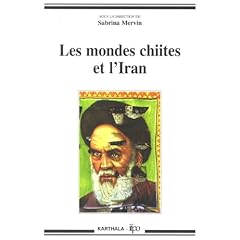
Les Mondes Chiites et L’Iran [The Shi‘ite World and Iran],
edited by Sabrina Mervin. Paris: Karthala-IFPO, 2007

Mervin, who is chargée de recherches at CNRS and a member since September 2004 of the l'Institut français du Proche-Orient (Beyrouth), has gathered together first class academics and experts in the field to write on the major debates and Shiite communities of the Middle East. The authors include Oliver Roy on the impact of the Iranian revolution on the Middle East; Laurence Louer on Shiism in the Gulf states; Joseph Al-Agha has a wonderful article, “Hizbullah’s Conception of the Islamic State, 87-112; Peter Harling on class and millenarianism in the Sadrist movement in Iraq; Mohsen Mottaghi on "Soroush, un itinéraire intellectuel;" Sabrina Mervin on "Transnational Intellectual Debates;" and many more.

Here is the French blurb: 

Ce livre réunit des spécialistes des aires géographiques concernées. Il offre un parcours au cœur de ces contextes multiples, où être chiite ne correspond jamais exactement à une même réalité sociale et culturelle, malgré des références communes, doctrinales et politiques. L'exportation de la révolution, qui fut longtemps le paradigme de l'influence iranienne sur les mondes chiites, a fait son temps, même si dans certains cas, tel celui du Hezbollah libanais, son héritage est évident. Quel rôle joue réellement l'Iran dans les chiismes en construction, à Istanbul, Bakou, Boukhara et Tachkent, ou encore chez les chiites de Dakar ?. Le " modèle iranien " n'est plus seulement, et, parfois plus du tout, celui d'un islam politique révolutionnaire. Du clerc rebelle Muqtadâ al-Sadr en Irak aux écoles religieuses où étudient de jeunes Pakistanaises, l'influence iranienne se décline sous de multiples formes. Pour les mondes chiites, l'Iran reste un formidable laboratoire d'idées

News Round Up (28 June 2008)

[Landis Comment] Here is the latest Stratfor analysis (copied below). I am always amazed that they are read by so many. I presume their analysis on other things than Syria-Lebanon must be good? Their Syrian scoops are almost invariably wrong. Seemingly, they are linked into the Lebanese right wing propaganda chain or their Syrian opposition partners in DC because they unquestioningly repeat the silliest things. In this report about an impending life and death struggle between Hizbullah and Damascus, Stratfor analysts insist that Damascus "will likely employ its Islamist militant proxies in Lebanon to move against Hezbollah."

This is silly. One must presume that Stratfor concludes that Fatah al-Islam is a Syria proxy, that Fatah al-Islam could begin to challenge Hizbullah militarily, and that Syria would respond like this. This is to misread the regional map badly.

Must likely Syria and Hizbullah will coordinate efforts to move toward peace with Israel. Yes, a Syria-Israel peace will cause strain between Syria and Hizb, as it will with Iran, but in all likelihood, the three allies will move together toward such an eventuality, coordinating and adjusting to new realities as they develop. A few Hizbullah leaders may reject accommodation with a Jewish state in Palestine on principle, but Nasrallah will not be among them. Hizbullah understands that it is Lebanese just as Hamas understands that it is Palestinian.Here is the Stratfor analysis for what it is worth.

Summary: There are a number of indications that peace talks between Syria and Israel are continuing to advance despite the political instability of the Jewish state. This progression could have grave implications for Hezbollah.

Analysis: Unnamed French officials leaked in Asharq Al-Awsat daily newspaper on June 26 that Syria is prepared to “reconsider” its relations with Iran — a core demand that Israel has placed before Syria in their ongoing peace negotiations. The report stated that Damascus and Tehran do not see eye to eye on a number of regional issues, with the secular Syrian regime more interested in circumscribing Hezbollah’s power in Lebanon and preventing Iraq from becoming an Iranian-dominated religious state. It has now been a full day since that report was leaked without a peep from Syria to deny the French claim, indicating that the peace talks taking place between Israel and Syria are actually getting somewhere.

The French, in particular, are more than ready to make sure these talks culminate in a Camp David-style agreement as France prepares to take the EU presidency July 1. With a mission to bring Paris back into the geopolitical limelight by integrating itself abroad in regions where French legacy already runs deep, French President Nicolas Sarkozy is eyeing the Levant for a major foreign policy success and has wasted no time in latching onto the Israeli-Syrian negotiating process. Arrangements are already being made for face-to-face meetings between Syrian President Bashar al Assad and Israeli Prime Minister Ehud Olmert when the two travel to Paris on July 13 for a Mediterranean Union summit.  

The French are also busy reassuring the Syrians that Israeli domestic politics are not going to get in the way of the peace talks. While skeptics of the negotiations have focused on the point that Olmert is negotiating from a position of weakness given a bribery scandal that threatens to topple him from power, French diplomatic circles are pumping the Syrian state-controlled press with reports claiming that the main political players in Israel, including far-right Likud leader Benjamin Netanyahu, are also in favor of keeping the peace talks alive.

Syria appears to be feeling confident enough about the Israeli political situation to keep on trucking with the negotiations. Though Olmert is still in a precarious political position, the negotiations with Syria do not depend solely on him being in power. In fact, Labor leader Ehud Barak, as well as several high figures in Israeli political and military circles, sanctioned the negotiations when the channel between Israel and Syria opened in the fall of 2006. And with Barak’s recent decision to stave off party primaries and keep the ruling Kadima coalition intact, Syria can find comfort in knowing there is enough degree of continuity in the Israeli political spectrum to keep the talks going.

But while the diplomatic chatter continues, real progress in a Syrian-Israeli political deal will primarily be seen on the ground in Lebanon. An Israeli-Syrian rapprochement will have to involve Syria’s cooperating in trimming Hezbollah to size. As Stratfor has written before, a great deal of distrust has been brewing between Syria and Hezbollah ever since the February assassination of Hezbollah chief commander Imad Mughniyah in Damascus, and Syria has given a number of indications that there will be no love lost between itself and the Shiite militant group should Israel move on a deal.

When Syria feels it has received the proper assurances to move on the deal, it will likely employ its Islamist militant proxies in Lebanon to move against Hezbollah (not to mention Syria’s own security forces if and when the circumstances call for it). A number of Syrian and Saudi-backed Islamist militant groups — operating under a variety of shadowy names that are designed to sow confusion — have been popping up recently in Lebanon’s Palestinian refugee camps.

Hezbollah, anticipating a Sunni militant campaign against the Shiite group, has been put on guard and is already digging its heels in for a bloody fight.

Lebanon’s Druze community also needs to be watched. The Druze, led by Walid Jumblatt, are not at all enthralled with the idea of the Syrians and the Israelis working toward a deal that would reassert Syria’s hegemonic presence in Lebanon. The Druze, along with large segments of Lebanon’s Maronite Christian and Sunni population that form Lebanon’s anti-Syrian coalition, have benefited from having the Syrians live in diplomatic isolation ever since the 2005 assassination of former Lebanese Prime Minister Rafik al-Hariri that drove Syrian troops out of Lebanon.

Syria has since steadily rebuilt its security presence in Lebanon, and has even reportedly stationed troops on Lebanese soil in the remote hills north of the town of Rashaya al Wadi. The anti-Syrian communities see the writing on the wall, and are searching for ways to derail the peace talks and keep the Syrians at bay. But at the end of the day, they are minor players in this game. Lebanon is a severely fractured state that is beholden to the interests of outside powers.

If the Syrians are laying the groundwork to move back into Lebanon under a broader diplomatic understanding with Israel, there is little the Lebanese can do to unravel the process. As is the nature of Lebanese politics, the best option in the end is for these factions simply to switch sides and align once again with the enemy to stay politically afloat.

Hezbollah does not have that option, however. If a deal is to move forward, Syria must move against Hezbollah (not to mention Hamas and Palestinian Islamic Jihad). The best option the Shiite group has to jeopardize the peace talks is to carry out a major attack inside Israel to destroy the credibility of the already-weak Israeli government in the negotiations. But such a move comes with big risks. A significant Hezbollah attack inside Israel would almost surely invite a powerful Israeli military response, particularly by a government that wants to set the record straight on the 2006 Israeli-Hezbollah summer conflict. Either way Hezbollah moves, it is being set up for failure.

CFR.org: Washington's Policy of Isolating Syria Hurting U.S.
By
Mona Yacoubian and Scott Lasensky of the U.S. Institute of Peace
2008-06-27

Washington's attempt to isolate and undermine the Assad regime has largely failed, concludes a new Council Special Report. The Bush administration's policy of "new economic sanctions, a diplomatic boycott, and increasing contacts with the Syrian opposition," has not compelled Damascus to "change course and comply with Washington’s…demands." Instead the authors advocate working with Syria where U.S. and Syrian interests may overlap. They argue that "the benefits of engagement with Syria are derivative of broader U.S. goals in the region:" seeking stability in Iraq and Lebanon, promoting peace and stability between Israel and its Arab neighbors, and heading off Iranian influence. They explain that "engagement with the Syrians would rely on a variety of diplomatic tools…balancing rewards for sustained cooperation with severe consequences for continued Syrian intransigence."

A new law for foreign ownership in Syria, law number 11, was signed this week by the president. http://www.syria-news.com/readnews.php?sy_seq=78666. It amends the 1952 law. The new law deprives the foreigner from passing along his possessions to children. The other surprise in the law is that the foreigner can only own a single property, which must first be approved by a long legal process involving the minister of interior. This is a compromise bill which seems likely to satisfy few. Although it permits foreign ownership of property and real-estate, it makes the process onerous and subject to bribery and shenanigans, which seems all too normal these days.

Liz Sly is the hot new thing in Lebanon. Her stories out of Damascus are fun and find a new twist on the regular gruel. Since when did the Chicago Tribune try to compete in the Lebanon market? Her site explains: "Liz Sly is the Tribune's Middle East correspondent based in Beirut, and has spent most of the past few years reporting from Iraq and Afghanistan" Welcome to Liz!

An ancient city reborn
By Liz Sly
Chicago Tribune correspondent
June 26 2008

Upwardly mobile young Syrians are snapping up and restoring Ottoman-era homes at dizzyingly high prices, making Damascus' Old City the hottest of housing markets

DAMASCUS, Syria; Wanted for renovation: a centuries-old wreck, Roman features a plus. Must have a courtyard, a fountain and a rooftop terrace with a view of the ancient minarets and church spires rising from what claims to be the oldest continuously inhabited city in the world……..

Syria glitters, but glare hides woes
Troubled ties with U.S., dwindling oil reserves affect psyche of nation

DAMASCUS, Syria — In the evenings, the glitterati of Damascus gather at Z-Bar, a zinc and crystal confection perched on the roof of one of the city's hotels. As the cocktails flow and the music pumps, the green neon lights of a dozen mosques twinkle down on the revelers from the nearby mountainside.

By day, any one of a half-dozen cafes serves flavored lattes to trendy young Syrians. The latest European fashions are on sale in newly opened stores. Shiny glass offices house private banks, and flashy late-model cars zip among the battered yellow taxis.

Despite the Bush administration's efforts to isolate Syria for allegedly supporting terrorism, the country is flourishing—at least on the surface. In the eight years since President Bashar Assad took office, Syria has opened up its economy to private ownership and foreign investment, breathing new life into a country long stifled by its Baathist socialist rules.

An oasis in the Mideast

A nearly fourfold increase in tourism since 2001 has seen foreigners flocking to the spruced-up streets of Damascus. And while its neighbors struggle to contain sectarian and religious conflicts, Syria boasts that it remains an outpost of secularism, a bastion of tolerance in a region of growing extremism……….

Bolton on Bush's North Korea deal in McClatchy's:  "I think it's a very sad day. … It reflects the collapse of the Bush doctrine," said former undersecretary of state John Bolton, a leading hawk on proliferation issues…."

Bookings on Refugees (pdf):"Iraqi Refugees in the Syrian Arab Republic: A Field-Based Snapshot,"
by Ashraf al-Khalidi, Sophia Hoffmann and Victor Tanner
June 2007

Table of Contents 

BACKGROUND: VIOLENCE AND DISPLACEMENT IN IRAQ..5 The 2003 Invasion..5 Samarra and After.6 Getting Worse?.7

IRAQI REFUGEES IN SYRIA..8 Timeline of Arrivals Since 2003..9 Iraqis in Syria: Who Are They?..11 Reasons for Departure.16 Why Syria?..20 Getting to Syria..22 Where in Syria are the Iraqis?.23

HOW IRAQIS LIVE IN SYRIA.27 Documentation.27 Housing..29 Are families together or split up?..30 Health…31 Education..33 Income and Livelihoods..34 Vulnerable Groups..37 Contacts with Iraq..39 Assistance..39 

IMPACT ON SYRIA..40
CONCLUSIONS: VIEW TO THE FUTURE…42

Desperately Seeking Sanctuary
Posted June 26, 2008 | Huffington Post
By James Denselow

The United States continues to woefully fail to deliver in its responsibility to refugees forced from their homes by the repercussions of its 2003 invasion of Iraq.

Ambassador James Foley, the State Department's coordinator for Iraqi refugees, is in Syria today as part of a four-nation Mideast tour to boost the numbers of Iraqi refugees coming to the U.S. to meet the Bush administration's goal of accepting 12,000 by the end of September. The US government only managed to let in 1,608 in the 2007 fiscal year, despite a target of 7,000.

According to the UN Refugee Agency and the International Organization for Migration, there are over 5 million Iraqis had been displaced by violence in their country, the vast majority of which had fled since 2003. Over 2.4 million vacated their homes for safer areas within Iraq, up to 1.5 million were living in Syria, and over 1 million refugees were inhabiting Jordan, Iran, Egypt, Lebanon, Turkey and Gulf States.

An often unnoticed tragedy hidden beneath so much of the bloodshed emanating from Iraq is the targeted killing and subsequent flight of minority groups from the country. Those without militias or sufficient numbers to protect themselves are amongst the most vulnerable. Palestinians living in Iraq, often there as a result of multiple previous displacements, have found themselves trapped in their thousands in and around the desert of the Syrian-Iraqi border.

As the violence against Palestinians in Iraq continues, the number of refugees in al-Waleed camp has increased to more than 1,700 today….

Syrian archaeologists have unearthed a hieroglyph close to Damascus which dates back to the pharaonic period around 1,300 years BC, the official SANA news agency reported on Saturday. "The antiquities department has discovered a hieroglyph on the outskirts of Damascus, 25 kilometres (15 miles) east (of the capital), engraved into a basalt stone slab (measuring) 70 by 50 cm (28 by 20 inches)," SANA said.

[Landis Comment] Assad's attempt to get the Indians to build a top-flight university in Syria is insteresting. Better education will remain a key Syrian reform. Unfortunately, India is already spread too thin. A member of India's Treasury Department recently asked me what India should do to boost economic ties between Syria and India. I suggested that India should send business professors to staff the new business departments in the private universities of Syria. Indians have no language problem as they speak English fluently. They are good businessmen and have top-flight universities. Their presence in Syrian univerities, I suggested, would help shift the Syrian frame of reference from the West to the East.

New Delhi June 24: Syria has requested India to set up an Indian Institute of Technology in its capital Damascus to help upgrade its technical manpower, becoming the second country after Singapore to seek an IIT on its soil.

India has told Syria it will consider the proposal, but is unlikely to agree to launch its premier technical education brand in the West Asian country any time soon, top government officials have revealed.

Syria made the request during the official visit by its President, Bashar al-Assad, to India last week, sources said.

The proposal, submitted to India by Syrian technology and telecommunications minister Emad Sabouni accompanying the visiting President, says an IIT would help the strife-torn country develop its technical manpower, sources said.

“Syrian officials are clearly impressed by the strides made by the IITs, and by the contribution of these institutes to India’s development. One official even referred to the IITs as a ‘shining example for Asia’ during the consultation,” a senior technical education officer at the ministry of human resource development said.

Under the proposal, Syria will provide land and will subsidise the institute, sources said. The remaining funding and teachers and their requirements are to be provided by India, under the proposal.

The “massive” demand for an IIT degree in West Asia would make the institute profitable for India, the Syrian delegates argued, sources said.

Earlier this year, the Joint Entrance Examination for admissions to the IITs was held at a Dubai centre, in addition to venues in India, for the first time. Dubai is the only foreign JEE centre, and was set up to meet an increasing demand from West Asian students.

Any decision on Syria’s proposal for an IIT will be taken by HRD minister Arjun Singh, under India’s education policy framework.

But the ministry is not yet ready to set up a full-fledged IIT beyond India’s shores, sources said.

The UPA government has announced eight new IITs to be set up during the Eleventh Five Year Plan (2007-12). At least six of these — in Rajasthan, Andhra Pradesh, Bihar, Punjab, Orissa and Gujarat — are set to start offering courses from this year, while the Centre is trying to launch a seventh, IIT Himachal Pradesh, before the academic session starts.

Nicholas Blanford is excellent at explaining the reasons for fighting in the North of Lebanon between Alawites and Sunnis.
Can Lebanon douse political fires?
Fighting in Tripoli is indicative of rising Sunni-Shiite tensions as the formation of a new government hits an impasse. Religious leaders called for calm Wednesday.
By Nicholas Blanford

… Take Jabal Mohsen and Tebbaneh – two quarters living cheek by jowl in the center of Tripoli, Lebanon's second-largest city. The residents of both districts have been feuding since the 1975-90 civil war when they fought on opposite sides. Today, the residents of Jabal Mohsen, who are mainly Alawites, an offshoot of Shiite Islam, are supporters of the opposition led by the militant Shiite Hezbollah.

The most popular political party in the Tebbaneh district is the Sunni Future Movement, the largest component of the March 14 parliamentary coalition. But many residents here adhere to the Salafi school of Islam, some of whom believe an ideology that brands Shiites – including Alawites – as apostates. …

[Alawites of Jabal Mohsen] blame the outbreak of fighting on the residents of Tebbaneh, saying that militant Salafi clerics had been stirring up Sunni extremists with fiery anti-Shiite sermons. Foreign jihadi militants have infiltrated Tebbaneh and are being armed and paid by Saudi officials and leaders of the Future Movement, they claim, echoing a prevalent rumor in Lebanon.

"We are besieged today. If we leave Jabal Mohsen, the Sunnis beat us and steal our cars," says a man who would only identify himself as "Ali from the Jabal." "The Future Movement …burned 15 of our houses last night. They don't want peace."

Rifaat Eid, the head of the opposition-allied Democratic Labor Party and a prominent Alawite, says that the community is placing its faith in the Army to impose order.

"If the Lebanese Army hits back at troublemakers then we will have calm," he says from his office in Jabal Mohsen. On his desk lies a pile of posters with the portraits and names of four members of Mr. Eid's party who died in the clashes this week. On a wall behind him is a picture of Hafez al-Assad, the former president of Syria and the father of Bashar al-Assad, the current head of state. The Assad family belongs to the Alawite sect that also dominates the Syrian regime. Their coreligionists in Lebanon have long maintained close political ties to Syria.

"We [Alawites] are a minority and no minority wants to make problems with the majority [Sunnis]," he says. "But we have to defend our families, wives, children. Anyone coming to kill me, I will drink his blood."

Down the hill in Tebbaneh, the rubbish-strewn streets are almost deserted except for a few young men carrying walkie-talkies. Lebanese soldiers order several youths to dismantle a barricade of oil drums and sandbags. Above it flies a black flag bearing a quote from the Koran.

Here, the accusations and strident claims of residents are an echo of those heard in Jabal Mohsen: Iranians are fighting alongside the Alawites, Hezbollah is arming them, residents of Tebbaneh are beaten and robbed if they leave their neighborhood, Jabal Mohsen started the fighting and will not stop.

"The first one we killed in the fighting was a Shiite Iranian," says Mustafa Abbas, a fruit and vegetable salesman. "They only fought hard because the Iranians were with them."

Few here on either side believe that the fighting is over. "We are poor people here in Tebbaneh, but we work and buy weapons, work and buy weapons. We have to defend ourselves," says Mohammed Mahmoud, a resident. "But in the end, it will be we poor people who suffer most of all."

Continuing political tensions in Lebanon have fanned the glowing embers of rivalry and resentment between Jabal Mohsen and Tebbaneh, triggering two days of vicious fighting earlier this week that left at least nine people dead and over 50 wounded.

Bomb in north Lebanon causes scores of casualties

BEIRUT, June 28 (Xinhua) — At least one person was killed and scores were wounded in a bomb blast that rocked an apartment building in Lebanese northern city of Tripoli early on Saturday, local Naharnet news website reported. Police was quoted as saying that the blast, reported at 5:30 a.m. (0230 GMT), struck the entrance to a building in Syria Street of Tabbaneh district. Medical sources said that most of the casualties are children, women and elderly people. The blasted building is located in Tabbaneh area which is mostly inhabited by pro-government Sunni supporters. The report said that snipers in the neighboring, pro-opposition area of Baal Mohsen, opened fire at gunmen in Tabbaneh streets, adding that rescuers were facing difficulties in their jobs due to sniper fire targeting the streets.

To get a sense of how sectarian tensions are being stirred up in Syria read the article in Assarq Alawsat: "Religious and Political Shiism in Syria," 28/06/2008, by By Manal Lutfi. The Muslim Brothers and Abdel Halim Khaddam claim that Iranian religious influence in Syria is a provocation to Sunnis and stirring up sectarian hatred and anxiety.

“We Salute Syria” for its “Generosity” and “Cooperation,” said James Foley

US official hails Syria refugee aid
25 June, 2008, AFP

DAMASCUS: Senior US official James Foley yesterday held talks in Syria on the growing needs of some 1.5mn Iraqi refugees in the country and praised Damascus for its “generosity.”

“We salute Syria, the government and its people for its generosity in welcoming” Iraqis who fled the US-led 2003 war, said Foley, the State Department co-ordinator for Iraqi refugees. “We recognise the considerable burdens that are shouldered here by the Syrian government and its people… (and) are appreciative of the co-operation that we have on this issue,” he added.

Foley made the remarks after talks with Syrian Deputy Foreign Minister Faysal Meqdad — the second meeting since last October – “to assess the needs of the Iraqi’s refugees… and the burden that we face.” “It is the conviction of the US that we have a deep responsibility to… these refugees,” said Foley who is on a regional fact-finding mission. – AFP

The US and Siniora seek to push back against Hizbullah and the Opposition

(Analysis by Joshua Landis)

Hizbullah will not return to the status quo ante. Ensuring that the Lebanese Army will not challenge it new position within Lebanon will remain Hizbullah's main demand in ongoing negotiations over a new government. 

The following story in the LA blog (copied blow) strikes me as sound analysis of the Lebanon situation. Paul Salem, who is always smart, has been trying to explain cabinet paralysis in terms of Hizbullah-Syria tensions over the last few weeks. Intra-opposition rivalries and anxieties are not causing major splits withing opposition ranks. The opposition gets along and its alliance is solid, even as the three principal associates must make sure that they are on the same page.

Other analysts are blaming the cabinet paralysis on Aoun's stubbornness and ego, which is undoubtedly a problem.

But the real factor, as suggested in an LA Times blog post, is that Hizbullah and the opposition will not return to the status quo ante. The US and Siniora are acting as if they can relegate Hizbullah's presence in the new government to a few insignificant cabinet positions that will be shunned by Western diplomats and dignitaries. This is what Hizbullah had before it walked out of the government in 2006.

Hizbullah just swept aside Hariri's people in West Beirut and threatened to take Junblatt's Mountain stronghold and deal a blow to his Druze militia. This was done at considerable cost to itself. It will not be content without making considerable gains. Hizbullah will demand that the resistance can no longer be challenged. The US persists in acting as if it can blithely continue to build up the Lebanese army as an instrument to undo Hizbullah.

A number of journalists and analysts have asked me in the past few weeks if Hizbullah and Syria have become over-confident since Doha. I would say the reverse is true. It seems that the US has not understood the significance of Hizbullah's actions in West Beirut and the extent of the Lebanese army's complicity with Hizbullah.

The refusal of the US to absorb the extent of its failure means that further conflict is probably inevitable. Hizbullah will be forced to make it clear once again that its position in Lebanon cannot be challenged by the West or its allies in the Lebanese government.

Sami Nader nails Hizbullah's concerns on the head. It cannot afford to work at cross-purposes with the army. It will insist that the Army appreciate its position in Lebanon. How that can be demonstrated is not clear, but having the Ministry of Defense in the hands of someone who will not challenge Hizbullah if not in the hands of an ally will be important.

[End]

LEBANON: More violence and worry
LA
Times Blog by Raed Rafei in Beirut

Nasrallah_wipesDespite the fanfares of peace over the last few weeks, the Lebanese are realizing that it is still premature to celebrate the end of their troubles.

It is true that a high-profile political accord was reached in Doha last month putting an end to a descent into civil violence. But the recent renewal of armed clashes in some parts of the country, and the delay in forming a national unity government, are raising questions about the intentions of the feuding political parties.

Hezbollah appears to intent on consolidating its political victory. The militant organization will make up one-third of the of new government. But Hezbollah is now pressing to ensure that it controls all of the country's security institutions.

In a speech on Saturday, Hezbollah's Foreign Relations officer, Nawwaf Al-Moussawi said: "There won't be at the head of any security apparatus in Lebanon or any army position someone who does not enjoy the trust of the resistance… Nobody will be able to appoint at any position someone whose allegiance to the nation is doubtful or who is conspiring against the resistance."

Some analysts think that with talks between Syria and Israel on the horizon, the regional political machinations are not in Hezbollah's favor. According to Paul Salem, director of the Carnegie Middle East Center in Beirut, Hezbollah pushed in May for a new political situation favorable to them:

"Hezbollah is concerned about Syrian Israeli talks. They have an interest in a normalized and stabilized country where the balance of power is in their favor. This would prevent Israel from attacking them and Syria from selling them off." 

For Sami Nader, a professor of International relations at Beirut's Saint Joseph University, Hezbollah's main challenge today is to ensure "harmony" with the army: "The core issue today for Hezbollah is the country's security system. In 2005, Hezbollah lost its complete harmony with the army. They now want to regain their full trust in the allegiance of the army to them."

One dispute blocking the formation of a government is Hezbollah's refusal to accept that the Ministry of Defense remains in the hands of Minister Michel Murr; he is regarded as too pro-US by the Hezbollah-led opposition.

In the face of Hezbollah's growing sway, its western-backed opponents are attempting to minimize their political losses in the current process of dividing of power.

But amid the continuing political struggle, violence continues in the country awakening old-time rivalries. According to the national news agency, 10 people were killed in the last two days in the north of the country as a result of heavy clashes between supporters of the western-backed majority and a pro-Syrian group allied with Hezbollah.

The battles, where mortars, rocket-propelled grenades and machine guns were reportedly used, have reportedly quieted down since the Lebanese army redeployed its troops in the streets.

— Raed Rafei in Beirut [end]

AFP)–The White House Monday said Syria must fully cooperate with U.N. nuclear experts on a mission to inspect a mysterious site bombed by Israel last year. The team is to submit its findings to the U.N. watchdog's next regular board meeting in September.

IHT, here.  EU Studies Iran more Sanctions "…The bloc is also studying sanctions against Iran's oil and natural gas sector, but such a step would probably take several months to carry out, diplomats say…"
.


French President Nicolas Sarkozy said Sunday, at the start of a three-day visit to Israel that Middle East peace cannot be achieved unless Damascus is brought to the negotiating table.
"If we do not talk with [Syrian President Bashar] Assad there will not be peace in the Middle East," Sarkozy told President Shimon Peres during their meeting. Sarkozy is on his first presidential to Israel, accompanied by his spouse, Carla Bruni. The French president landed in Israel Sunday afternoon and was welcomed with a red-carpet reception, as Peres and Prime Minister Ehud Olmert eagerly awaited him along with a full army band and honor guard.

In his welcome speech, Olmert said, "In all my meeting with the French president I have encountered a deep understanding for the security needs of the State of Israel and the complex challenges it faces, as well as a personal, strong and unconditional commitment to Israel's security and the preservation of its qualitative edge in the region.

For his part, Sarkozy said that he "has always been and would always be a friend of Israel," though quickly turned his attention to the staggering peace efforts between Israel and the Palestinians, saying: "I believe that the path to peace lies there before us, that the path to peace is not blocked. I have come to bring my support and that of France and the European Union, your partners in the negotiations.

"An agreement is possible, tomorrow, and that agreement would allow the two peoples to live side-by-side in peace and security," he added.

Sarkozy stressed that the peace process between Israel and the Palestinian Authority should progress. "Those who will make peace in the end will be Israelis and Palestinians," the French president said.

"Only the Jewish people who have suffered so much know and understand how important it is for the Palestinians to establish a state of their own,"
Sarkozy added.

Referring to the settlements, Sarkozy said that, "I am a true friend of Israel and have never been ashamed of it, but it must be said loudly  the decision to build in East Jerusalem is not good for Israel."

On the question of Iran, Sarkozy described it as a matter of primary
importance for the entire world "and Israel is not alone in this matter. We will protect Israel and we will stand by your side."

Peres discussed Syria with Sarkozy and applauded him for inviting Syrian
President Bashar Assad to a meeting of the Mediterranean nations in Paris on July 13.

"I do not know if Assad and Olmert will sit at the same table but this is an important process," Peres said. "Tell Assad that he needs to learn from [former Egyptian president Anwar] Sadat and come to Jerusalem for face-to-face talks with Olmert."

Sarkozy agreed and said that, "I intend to mention this to Assad during our meeting the day before the conference." The French president noted that, "In addition to negotiations, there needs to be a change of mentality in Syria."

At a joint press conference with Prime Minister Ehud Olmert later Sunday evening in Jerusalem, Sarkozy said that Paris supports every initiative for peace in the Middle East and would never compromise on Israel's security.

France has promised Israel that it would put the brakes on its rapprochement with Syria until Damascus shows willing to distance itself from the axis of extremists, in particular Iran.

Sarkozy: No more 'yellow patches' for Jews
2008-06-23 08:55 (New York)

JERUSALEM, June 23 (UPI) — French President Nicolas Sarkozy praised Israel Monday as the only place in the world where Jews "will never be forced to wear a yellow patch." Speaking before the Israeli Knesset, Sarkozy said there was a special bond between France and Israel and honored the country's role as a the Jewish homeland by quoting a Bible verse, Ynetnews.com reported. Quoting the Book of Numbers, Sarkozy said, "Then the Lord said to Moses, 'Go up this mountain in the Abarim range and see the land I have given the Israelites,'" adding that Israel provides "the only place in the world where everyone is certain that Jews will never be forced to wear a yellow patch, where Jews will not be banned from traveling on buses, visiting the cinema and theater and holding certain roles." Earlier Monday, Sarkozy and his wife, Carla Bruni, visited the Yad Vashem Holocaust Museum in Jerusalem, accepted a Israeli-made bottle of wine and received two candlesticks as a gift from the Knesset speaker, said.

 Ready for peace? — Shlomo Ben-Ami

Good relations between an Arab state at peace with Israel and Iran are not necessarily a bad thing. Syria’s stance might limit, rather than extend, the reach of Iran’s strategy of regional destabilisation

The resumption of peace talks between Israel and Syria after eight years of sabre-rattling is not a diversion from the political troubles of Israel’s lame-duck prime minister. Nor are the talks a Syrian ploy to avoid facing an international tribunal on the assassination of Lebanon’s former prime minister, Rafik Hariri. An Israeli-Syrian peace deal is strategically vital for both sides, and both sides know it.

The two major formative experiences of Syria’s Ba’ath regime have been Hafez al-Assad’s loss of the Golan Heights in the 1967 war with Israel, and the loss of Lebanon by his son, Bashar, who was forced to withdraw his army under irresistible American-led international pressure. Recovering the Golan Heights and protecting Syria’s vital interests in Lebanon are not only major strategic concerns for Syria’s president; they are also crucial to the regime’s drive for national legitimacy, and to Bashar’s assertion of his own leadership.

Peace with Israel is not Assad’s priority. Rather, it is the prerequisite without which superior goals — rapprochement with the United States, legitimisation of Syria’s special status in Lebanon, and avoidance of a potentially devastating war with Israel if the Golan Heights are not recovered by peaceful means — cannot be attained. Indeed, the regime has hinted that it may be willing to compromise on the issue — the delineation of the 1967 border along a tiny piece of land on the Eastern shore of the Sea of Galilee — that wrecked the negotiations eight years ago.

An Israeli-Syrian peace is a weighty strategic necessity for Israel, too.

Syria should forge Arab unity

By Duraid Al Baik, Foreign Editor
Gulf News: June 22, 2008

It is clear by now that Syria has managed to get out of diplomatic isolation imposed on the country and the ruling regime by the West following the assassination of former prime minister, Rafik Hariri, in February 2005.

that Syria has managed to get out of diplomatic isolation imposed on the country and the ruling regime by the West following the assassination of former prime minister, Rafik Hariri, in February 2005.

that Syria has managed to get out of diplomatic isolation imposed on the country and the ruling regime by the West following the assassination of former prime minister, Rafik Hariri, in February 2005.

??? ???? ??????     ??????     – 20/06/08

?? ??? 1977 ???? ?????? ?????? ???? ??????? ???? 16 ?17 ???? (??????) ?? ???? ????? ?? ??? ?????? ?? ???????? ????????? ??? ??? ??????? ????? ???? ??????? ???? ?????? ?????? ?????? ?????? ???? ????? ?????? ?????? ??? ????? ???? ???? ?? ??????? ??? ??? ????? ????? ???? ?? ??????? ????????. ??? ?? ??? ????? ??????? ?? ??? ??????? ?? ??????? ??????? ??? ?????? ?????? ??? ???? ?????? ????? ??????? ??????? ?????? ????? ???? ????? ????? ??????.
???? ??? ???????? ?? ??? ?????? ???????? ??????? ??? ?????? ????? ?????? ?? ?????? ?????? ??????? ??? ?????? ??? ???? ????? ?? ????? ??? ???????? ?????? ????? ??? ?? ????? ??????? ??? ????? ??? ?? ??? ?????????? ????????? ?????? ???? ??????? ??????? ??????? ?????? ??????? ????????.

…..

?????? ????? ?????? ???? ????????? ?? ?????
https://exchange.ou.edu/owa/redir.aspx?C=b79d26b0d4e84f86b0093c0af5e6d982&URL=http%3a%2f%2fwww.all4syria.biz%2fDetails.aspx%3fArticleId%3d13835

????????? ??????????? ???????????
http://www.all4syria.biz/Details.aspx?ArticleId=13811

Intense clashes involving automatic weapons, mortars and rocket-propelled grenades resumed in the Bab al-Tebbaneh and Jabal Mohsen areas of Tripoli on Monday, and involved mostly Sunni March 14 partisans and Alawite members of opposition-affiliated groups.

A security source told The Daily Star on Monday that the intensity of clashes and "reported incidents of sniper fire" forced the Lebanese Armed Forces (LAF) and Internal Security Forces (ISF) to halt an initial deployment in the neighborhoods before waiting for "political cover" from local figures.

With both camps trading jabs over the deployment of the LAF in the conflict zones, a well-informed source said that the LAF presence, "while not welcomed enthusiastically, was tolerated in Bab al-Tebbaneh, in contrast to a more difficult move toward Jabal Mohsen."

U.S. Network Falters in Mideast Mission 

By Craig Whitlock
Washington Post Foreign Service
Monday, June 23, 2008; Page A01

CAIRO First of two articles

The Egyptian bureau of al-Hurra, an Arabic-language television network financed by the U.S. government, boasts a spectacular view of the Nile River and the capital's bustling streets. But inside, all is quiet. …

"If some problem happened on the air, people would just joke with each other, saying, 'Well, nobody watches us anyway.' It was very self-defeating." …. "It's a glitzy operation, a costly operation, with very little impact." …..

In 2004, when an Israeli airstrike killed the spiritual leader of Hamas, Sheik Ahmed Yassin, virtually all Arabic news channels interrupted their regular programming. Al-Hurra continued with a cooking show. ….. The most recent figures show that an estimated 25.8 million adults in 13 countries, with a combined population of more than 200 million, tune into al-Hurra at least once a week, according to the Broadcasting Board of Governors, the U.S. agency that oversees it. It is difficult to verify those numbers, however. …. Arab journalists and viewers say al-Hurra has a basic problem: It is boring. …..

Salameh Nematt, a Jordanian journalist based in Washington, said that al-Hurra, like many of its competitors, has ignored controversial issues such as financial corruption involving Arab leaders and the use of torture by security forces. "Al-Hurra would have been the number one station in the Arab world had they done one-quarter of what they should have covered," Nematt said. "People say if it's an American station, nobody will watch it. That's crap. If it's an American station that does a good job, everybody will watch it."…

According to former al-Hurra staffers, Harb filled the newsroom with Lebanese employees, many of whom had thin journalistic credentials. Anchors spoke in heavy Lebanese dialects, turning off viewers from other countries. On-air reporting errors were common. "He hired his friends — this was the problem — and they didn't have any experience," said Magdi Khalil, a former producer who clashed with Harb. "I told him, 'We need to improve the quality.' He said, 'No, no — we need to fill the air.' He had no idea what being a news station means." …  Harb said it wasn't easy to persuade leading Arab journalists to come to Washington to work for a station funded by the U.S. government. … "In their view, al-Hurra was a propaganda channel which only really covered Lebanon," Register said. "They wanted me to help it become more like a real newsroom." There were a lot who were just there for the paycheck and the green card."

In an interview, James K. Glassman, chairman of the Broadcasting Board of Governors since June 2007, acknowledged many of the problems. "Some of the basics had not been well established," said Glassman, who is a former publisher of the New Republic as well as a former business columnist for The Washington Post. "I'm not sure it was clear to all the journalists what the rules were." He said training has increased since then and the caliber of work has improved.

In June 2007, Register was forced to resign after the Wall Street Journal editorial page disclosed that al-Hurra had broadcast the unedited speech by Hasan Nasrallah, the Hezbollah leader.

Since then, al-Hurra's news operations have been led by Daniel Nassif, another Lebanese native. Nassif had previously served as news director of Radio Sawa, a U.S.-financed FM radio station that broadcasts pop music in the Middle East. Before that, he had worked for a Washington-based advocacy group that sought to end the Syrian military occupation of Lebanon.

Nassif described his position as a "consultant and activist" who helped Lebanese generals and other anti-Syrian figures meet U.S. lawmakers and policymakers. He said that he stopped doing advocacy work in 2002 after he was hired by Radio Sawa and that his lack of formal journalism experience had not hindered him.

"You don't have to go to Columbia Journalism School to be a good journalist," he said.

In Israel, a truce with Hamas is greeted with fear and anger.

Column One: Israel's darkest week

The Olmert-Livni-Barak-Yishai government's liquidation sale of Israel's strategic assets opened officially this week. Iran's proxies have pounced on the merchandise.

The first asset sold was the security of southern Israel. The Olmert-Livni-Barak-Yishai government's "cease-fire" with Hamas transferred all power to determine the fate of the residents of southern Israel to Iran's Palestinian proxy. ….

But the Olmert-Livni-Barak-Yishai government apparently doesn't care. Israel's leaders actually don't want anyone to isolate or boycott Hamas anymore. The government's reported negotiations regarding the deployment of an all-Arab "peacekeeping" force in Gaza in a later phase of the "cease-fire" make clear that Israel is pushing for Hamas's international legitimization. …

Israel's decision to embrace Hamas is so outrageous that even the US State Department apparently hasn't had a chance to get its bearings….

This week the government conducted its second round of negotiations toward the surrender of the Golan Heights to Syria. Speaking of the surrender talks to a group of Israeli diplomats, Terje Roed-Larsen, the UN Secretary General's Special Envoy for the implementation of UN Security Council Resolution 1559, condemned the move, arguing just by holding the negotiations, "Israel has given Syria a huge gift, without thus far receiving anything in exchange." ..

In its rush to obliterate Israel's defensive positions, the Olmert-Livni-Barak-Yishai government apparently doesn't care that Iran may well attack Israel with nuclear warheads launched from a post-withdrawal Golan Heights. What is most important to the government is to make Syria look good. And so, following the second round of negotiations with the Syrians, Olmert practically got down on his hands and knees to beg Assad to meet with him face to face when they visit Paris together next month…..

Far from displaying alarm or anger over US Secretary of State Condoleezza Rice's decision to visit Beirut and give the US's blessing to the new Hizbullah-controlled Lebanese government, Prime Minister Ehud Olmert joined her defeatist bandwagon. He announced that he wishes to open negotiations with Iran's Lebanese proxy and to that end he is willing to surrender strategically critical Mount Dov – or what Hizbullah refers to as Shaba Farms – to Hizbullah. So eager is Olmert to surrender, that even after Hizbullah's puppet Prime Minister Fuad Saniora rejected his offer, he reiterated it. …

As the Israeli public stares at the wreckage and danger that has marked this disastrous week, hopefully it understands that this is what happens when we elect bad leaders. All of this was eminently predictable in 2006 when Kadima and Labor both ran for office on capitulationist platforms. Choices have consequences. And we will be suffering with the consequences of the 2006 elections until its winners are finally thrown from office.

The Syria Comment Hall of Fame

Posted by Qifa Nabki

Well, the results are in. Using several supercomputers and a sophisticated algorithm, two researchers, Bala Manyake and Amtihke Jad, with the Stockholm-based think tank SADDANA (Society for Advanced Data Analysis) have been able to determine the addiction level of different contributors to Syria Comment's discussion pages. If you've ever wondered just how serious your habit is, you can finally put a figure on it. (Note that these figures only reflect levels of addiction since September 2006, when the site moved to its current home at WordPress. Prior case history cannot be ascertained.)

Category A: Total Number of Comments

Grand Order of the Mulukhieh (2300+)

1. AnotherIsraeliGuy = 2319 comments

Esteemed Order of the Shish Tawouq (2000-2300)

2. Alex = 2047

Noble Order of the Kafta bi-Tahini (1000-2000)

3. Ausamaa = 1396

4. Norman = 1372

5. Qifa Nabki = 1345

6. Shai = 1173 

Honorable Order of the Mujaddara (500-1000)

7. Akbar Palace = 962      

8. Offended = 752           

9. Ehsani2 = 712             

10. Enlightened = 668 

11. Naji = 613 

12. Why-Discuss = 605

13. T_Desco = 518

14. SimoHurrta = 517

15. Ford Prefect = 509 

National Order of the Falafel (100+)

16. Honest Patriot = 481

17. Wizart = 452

18. Atassi = 384

19. MSK = 374

20. Majhool = 334

21. Zenobia = 331

22. Observer = 311

23. Nour = 267

24. IDAF = 242

25. Nur al-Cubicle = 235

26. Innocent_Criminal = 181

27. Joshua = 172

28. trustquest = 131

29. Bashmann = 129

30. KingCrane Jr. = 54


Category B: Frequency of Comments (per day)

Benefactor (over 5 per day)

1. AnotherIsraeliGuy = 8.6

2. Shai = 7.8 

Patron (2.0 – 4.9 per day)

3. Naji = 4.8

4. Qifa Nabki = 3.7

5. Alex = 3.2

6. Ausamaa = 2.2

7. Norman = 2.2 

Sustainer (1.0 – 1.9 per day)

8. Akbar Palace = 1.5

9. Honest Patriot = 1.2

10. Offended = 1.2

11. Enlightened = 1.1

12. Ehsani2 = 1.1

13. Why-Discuss = 1.0 

Donor (0.5 -0.9)

14. Majhool= 0.9

15. Ford Prefect = 0.9

16. Nour = 0.8

17. SimoHurrta = 0.8

18. Wizart = 0.8

19.  T_Desco = 0.8

20. MSK = 0.7

21. Atassi = 0.6

22. Observer = 0.6

23. Zenobia = 0.5 

People who have a life (0.1-0.4)

24. Nur al-Cubicle = 0.4

25. IDAF = 0.4

26. Innocent_Criminal = 0.3

27. Joshua = 0.3

28. trustquest 0.2

29. Bashmann = 0.2

30. KingCrane Jr. = 0.1 

News Round Up (20 June 2008)

Asma In India
Asma Al-Assad in India

Barak: Only US can help Israel-Syria talks; Syria: No chance of …Ha'aretz

Israel and Syria are unlikely to hold direct peace negotiations before the end of the year, especially without the involvement of the United States, Defense Minister Ehud Barak was quoted as saying yesterday.

US diplomat to visit Syria on Iraqi refugees: (AP)

Ambassador James Foley, the department's coordinator for Iraqi refugees, will travel to Syria on June 23-26 as part of a four-nation Mideast tour to boost the numbers of Iraqi refugees coming to the U.S. to meet the Bush administration's goal of accepting 12,000 by the end of September.

"He will assess the needs of Iraqi refugees in these countries and look at ways to enhance programs that provide assistance to refugees and help resettle the most vulnerable in third countries," said Kurtis Cooper, a department spokesman.

Foley also will visit Turkey, Jordan and Lebanon, but the Syria stop will be the highlight because it is home to the largest number of Iraqi refugees and because of strong U.S. objections to Syrian policies in Lebanon and its support for anti-Israel groups.

The United States does not currently have an ambassador in Syria and trips there by senior U.S. officials are unusual. Foley's visit to Damascus will be his second as the Iraq refugee coordinator. Last year, he went to Syria and won approval for a small number of U.S. immigration agents to go there to interview Iraqi refugees.

Cooper said the trip did not imply any change in U.S. policy toward Syria,

Seeds of hope in crisis-strewn Mid East BBC

In May, Lebanon seemed to be slipping into a new civil war. Now a Lebanese friend in Beirut tells me that people are partying like there's no tomorrow….

Shia Hezbollah has resisted the temptation to turn the screw tight on its Sunni rivals. They have been seriously weakened by Hezbollah's victory on the streets, but they are still in power.

Syrian leaders in upbeat mood despite IAEA visit (20 June 2008)
Reuters by Alistair Lyon, Beirut

The attitude is not wait-and-see," said Taqi. "We have to produce the necessary momentum so that when the new U.S. administration comes it will find something to work on, and not treat the Middle East as the Bush administration treated it."

Washington, grappling with the Iraq war and other setbacks to Bush's "freedom agenda", has seen nations like Turkey, Qatar, Egypt and others step in as mediators in Middle East conflicts to fill what al-Taqi called "a vacuum in American vision". 

Syria, whose troops left Lebanon in 2005, was delighted by last month's Qatari-brokered deal among rival Lebanese leaders which translated a military victory won by Hezbollah and other Syrian allies against U.S.-backed factions into political gains.

"The Syrians were thrilled to see them wiping away the facade of U.S. power," said Joshua Landis, a Syria expert at Oklahoma University. "It was clearly very sobering for the Americans, who are trying to figure out where to go from here."

Thaw Between Syria and Israel Puts Hezbollah on Front Burner 19 June 2008
By Nathan Guttman in the Forward – New York, NY, USA

“Syria is bending over backward right now to be accommodating to Israel and France by pushing Hamas to compromise and by pushing the Lebanese opposition to moderate their demands,” said Joshua Landis, a Syria scholar at Oklahoma University. Syria and Israel are finding common ground on the issue of Hezbollah, Landis added, but while Israel would like Damascus to break altogether with the terrorist group, Syria believes it can encourage Hezbollah to focus on politics.

Nur al-Cubicle writes:

Meanwhile, relations are not so good between the Arab League and Israel:

“A sharp verbal exchange occurred yesterday in Petra between Arab League Secretary General Amr Moussa and Israeli President Shimon Peres, When Peres gave a speech at a working lunch, he called upon Arabs to “follow the path of peace in the example of Anwar Sadata and the late King Hussein of Jordan”. Mr. Moussa stood up and chastised Peres, “We haven’t heard anything about Israel’s opinion on peace. All you talked about was King Hussein and Anwar Sadat. What is your opinion on the Arab peace initiative? Oh, yes, you’re a master talker but you can’t go on fooling us forever, we’re not dumb!…Stop building those colonies!…Mr. Moussa then left the room….”

Via L’Orient-LeJour

The paper also reported that according to opposition leader Mohammad Raad, Condoleeza Rice, having flown to Beirut unexpectedly, has urged a delay in forming the government for “pending a certain event”

Qifa Nabki Comments:

It seems Michel Aoun is back to proving why he is so good for Lebanon.

All and sundry flay Aoun for bid to curb premier's powers
Daily Star staff
Thursday, June 19, 2008

BEIRUT: Sunni leaders from across the political spectrum slammed Christian opposition leader MP Michel Aoun for demanding that the authorities of the premier be amended. Former Prime Minister Omar Karami, a staunch opposition supporter, criticized Aoun for seeking to transform the prime minister into "a junior aide."

Karami made the remark during a news conference on Wednesday to express opposition to a call that Aoun made one day earlier to amend the premier's powers.

He said Aoun's call aims at "stripping the prime minister of all the powers gained by the Taif Accord."

"This is totally unacceptable," Karami added.

Read the rest here.

In addition to Karami, Hoss and Miqati also slammed Aoun for this pulpit preaching. It seems the opposition also has little patience for a megalomanical spoiler.

I'm beginning to think that, but for Aoun, HA, Amal, and the FM would have solved all of their problems back in 2006.

Oil prices rose $3.07, to $135 a barrel. Analysts speculated that the rise resulted from media reports of increased tensions between Israel and Iran which could, in the long run, decrease the supply of Middle Eastern crude.

"U.S. Says Exercise by Israel Seemed Directed at Iran – NYTimes.com"

Iran on Its Heels
In Tehran's Setbacks, an Opportunity in Iraq
By Vali Nasr
Thursday, June 19, 2008; Page A19

For the first time since 2003, Iran has stumbled in Iraq. Prime Minister Nouri al-Maliki's decision to confront Moqtada al-Sadr's Mahdi Army in Basra and Sadr City last month caught Tehran off guard. The Mahdi Army lost more than face: It surrendered large caches of arms, and many of its leaders fled or were killed or captured. Crucially, the militias lost strategic terrain — Basra and its chokehold on the causeway between Kuwait and Baghdad and Iraq's oil exports; Sadr City and the threat it posed to Baghdad security. Visiting Basra this month, I saw city walls covered with pro-Maliki graffiti. Commerce is returning to the city center. Trouble spots remain in both places, as Tuesday's car bombings show, but the Mahdi Army's unchallenged hold has ended…..

Iran has also managed to bolster the Iraqi army. The dissolution of Iraq's military after the fall of Saddam Hussein was a strategic victory for Tehran. Yet after all the talk of standing up an army that could confront the Sunni insurgency, it was not by fighting al-Qaeda in Mosul but the Iranian-backed Mahdi Army in Basra that the Iraqi army found its footing.

Iran still has considerable influence in Iraq. It may reconstitute the Mahdi Army and pick up the fight against America, using special groups of the type suspected in the Baghdad car bombing Tuesday. It may also try to use nationalist opposition to the U.S.-Iraq "status of forces" agreement to its advantage. But Tehran will find it difficult to regain lost turf in Baghdad or Basra, or to go back to happily supporting Shiites both at the center and in the militias. It will have to choose whether it is with the state or the sub-state actors.

That debate is unfolding in Tehran. In not-too-subtle criticism of the Quds Force's handling of Iraq, even Tehran's conservative press heaped praise on Maliki during the Basra operations. Some calls for expelling Sadr from Iran even made it into the media.

Washington needs to see this as an opportunity not just for Iraq but for U.S. relations with Iran. The U.S. and Iraqi governments should build on recent gains. Stepped-up action against Mahdi Army cell…..

It is a frequent refrain in Washington that the United States needs leverage before it can talk to Iran. In Iraq, Washington is getting leverage. America has the advantage while Iran is on its heels. Engaging Iran now could even influence who wins the Iraq debate in Tehran.

NYC Mayor Bloomberg defends Obama before Jewish audience

NEW YORK (AP) — New York Mayor Michael Bloomberg is urging Jewish voters to denounce the online rumor that Democratic presidential candidate Barack Obama is secretly a Muslim with a hidden agenda.

Bloomberg was speaking to members of a Jewish group in Boca Raton, Florida on Friday. The mayor says in prepared remarks that the rumor campaign is "cloaked in concern for Israel" but threatens to undo the strides that Jews and Muslims have made together.

Obama is Christian but has noted that some of the rumors about him have also been insulting to Muslims. Political independent Bloomberg has not endorsed anyone yet in the presidential race. His defense of Obama could help the Illinois senator in Florida, which is home to many Jewish voters

“Language Atlas of Syria” reviewed by Nikolaos van Dam

Here is a wonderful book review of the "Language Atlas of Syria".

The Reviewer, Dr. Nikolaos van Dam is Ambassador of the Netherlands in Indonesia and author of The Struggle for Power in Syria: Politics and Society under Asad and the Ba’th Party (London & New York: I.B. Tauris, 1996) (downloadable for free in Arabic).

I have posted my review of his book, which was published in 1998, in the previous post.

His book is among the four best books on modern Syrian political history. Alongside Patrick Seale's two books and Hanna Batatu's, Ambassador van Dam's is a must read.

????????????? ???????????? ??? ???????????????????

 ??? 17 ?????? 2008

ALL4SYRIA.ORG, 17 June 2008

Book Review

LANGUAGE ATLAS OF SYRIA

Peter Behnstedt, Sprachatlas von Syrien I, Kartenband & Beiheft, Wiesbaden: Harrassowitz, 1997, 1037 & 242 pages. Sprachatlas von Syrien II: Volkskundliche Texte, Wiesbaden: Harrassowitz, 2000, 661 pages. [Language Atlas of Syria Part I: Maps & Accompanying Volume. Part II: Ethnographic Texts].

Reviewed by Nikolaos van Dam (1)

Dr. Peter Behnstedt’s Language Atlas of Syria and its accompanying volumes contain an enormously rich wealth of information on Syrian Arabic dialects, to be enjoyed most particularly by the real connoisseur. This monumental work uncovers a linguistic, social and cultural diversity of Syria, which is not generally known. Apart from the Arabic dialects of Syria, other spoken languages are dealt with in the linguistic maps as well. The Accompanying Volume (Beiheft) to the Atlas provides explanatory notes to the linguistic maps. It also contains word lists on the various Arabic dialects, as well as on New West Aramaic, Turoyo, Assyrian, Kildani, Turkish, Kurdish, Circassian, Chechen, Armenian and Greek, which are the languages which Behnstedt came across during his research. The 518 large and highly detailed linguistic maps are of great benefit, even to those who have not mastered the German language, the original language of this publication. This is the first and perhaps last time that such a highly diverse collection of Syrian Arabic dialect materials has ever been published. Various dialects may not survive the present generation of speakers and may have already begun to disappear.

After publishing the well-known Atlas of Egyptian Arabic Dialects (2) together with Dr. Manfred Woidich – a project of some ten years of painstaking research – , it was originally Behnstedt’s more “modest” intention to produce a “Language Atlas on the Surroundings of Aleppo”.  His new project eventually led to the publication of this impressive Language Atlas covering the whole of Syria, simply because he “could not resist” studying the entire country after all.

Arabic dialect research is not held in high esteem in Arab nationalist Syria, if only because dialects are generally seen as “degenerate” deviations from the classical standard language, al-‘Arabiya al-Fusha, which is the unifying language of all Arabs. Nevertheless Behnstedt did not encounter any problems in doing his field work in Syria, like he had before experienced continuously in Egypt (fayditu ??). On the contrary, the atmospheric circumstances for his research were not only ideal, he was also able to freely interview Alawi, Christian or Isma’ili women in the coastal mountains without any problems, just as well as women in all of eastern Syria among the sedentarized Bedouin (Beiheft, pp. 9-10).

Behnstedt identifies some twelve main dialect groups which can be sub-divided into more than 60 subtypes, all having their own specific combinations of phonological, morphological and lexicographical profiles. They are classified according to regions, cities, neighbourhoods, villages, urban/rural, mountains, semi-deserts, Bedouin tribes (Shammar, Rwala, Baggara), Shawi, mixed Bedouin/sedentary, religious communities (Sunni Muslim, Christian, Alawi, Isma’ili, Druze, Shi’i), and so on.

This detailed division is the result of research conducted in 508 locations (including the 85 which Cantineau discussed in his earlier work, mainly in the Hawran) (3). Research was done on basis of 1214 question questionnaires, of which 250 were purely lexical. This meticulous method has allowed Behnstedt to produce enormous amounts of data. To illustrate: he identified 49 different forms and pronunciations of the word for the fruit “orange” (burtaq?l, burugd?n, mirdagh?n, etc.); 66 for “peach” (durr?q, dirro’en, dirray’ne, etc.); 45 different forms for the imperative of ktb (“write”): kt?b, i?tub, uk?tbam, etc.; 58 forms of the imperative of ‘kl (“eat”): k?l, ?il, ?klin, etc.; 114 variants for “a piece of bread”: khubza, laqam, shuqfi, kisra, etc.; and 80 variants for the expression “last year”.

Behnstedt’s Atlas provides an interesting overview of the regions in which the qaf is really pronounced and where it has transformed into hamza, g, k, and so on (to mention just one of the 518 linguistic maps). The phoneme qaf is being appreciated differently among Syrians. According to Bernard Lewin (1969), the Alawis interviewed by him were qaf-speakers who ridiculed the “weak” hamza-speakers of Hama (4). Sami al-Jundi, writing his memoires in the same period (1969), noted that after the Ba’thist takeover of power in 1963, “caravans of villagers started to leave the villages of the plains and mountains for Damascus”, where “the alarming qaf started to predominate the streets, coffee houses and the waiting rooms of the ministries…” (5). (It should be noted here that the qaf is not so much a “sectarian” characteristic of “Alawi, Druze or Isma’ili dialects”, but rather a rural feature also present in the speech of Sunnis, Christians or anyone else living in certain areas.) Behnstedt, on the other hand, noted an opposite trend in 1996, notably that the pronunciation of qaf as hamza was also seen as a prestige pronunciation, which was advancing in various areas and cities. He mentions Hama as a typical dialect island in this respect. Later generations of the above-mentioned “qaf villagers” have to a great extent adapted to a more Damascene type of Syrian Arabic without the qaf.

Mustafa Talas notes in his memoires the use of “hint“ (“you”) instead of inte by people from the mountainous regions of Lattakia, and quotes an Alawi officer as saying to him: “wallah yahmik hint wa Hafiz al-Asad” (“may God protect you and Hafiz al-Asad”). “It is the habit of the inhabitants of Lattakia, in particular in the mountains, to replace the ‘alif with ha’, which is permitted in the language of the Arabs”, according to Talas (6). Behnstedt’s Atlas map 251 provides a detailed overview of the 17 different forms of the second person singular masculine and feminine and shows that in Syria “hint“ is exclusively used in the coastal mountains and the rural areas around Hama.

The Ethnographic Texts (Volkskundliche Texte) in Volume II are not only of great interest to linguists, but also for cultural anthropologists or anyone with a particular interest in fascinating intricacies of traditional Syrian society.  They deal with a wide variety of topics such as folktales, magic and sorcery, traditional medicine, agricultural techniques and instruments, food, falcon hunting and hunting falcons, weddings, kidnapping of a prospective Christian bride, looking for truffles, camels, sheep, Bedouin traditions (dealt with extensively), blood revenge, and a whole range of other detailed subjects.

Each dialect type is introduced by a grammatical description, the length of which depends on whether it has been described extensively before and whether it is more or less well-known. For that reason dialect material from some of the more important dialects (taking their number of speakers into account) is not included in Volume II, such as the dialects of Damascus (described extensively by Bergsträsser, Grotzfeld and others), Hama (by Lewin), Deir al-Zor (by Jastrow), or other places such as Soukhne (described in a special monograph by Behnstedt himself). Many grammatical details about the Christian (and other) dialects of Aleppo and its surroundings have already been published by Behnstedt in the Zeitschrift für Arabische Linguistik (Journal of Arabic Linguistics) and are therefore not repeated here either. Texts from Aleppo, on the other hand, are relatively strongly represented in the Ethnographic Texts, because the phonology of the Aleppine dialect had, according to Behnstedt, not yet been adequately treated before, and because these texts contain interesting ethnographic material which would otherwise be lost.

Behnstedt interestingly notes that the dialects in the semi arid areas and desert fringes of Palmyra, Soukhne and Qiryaten may well have retained an older Arabic pre-Islamic linguistic substratum (p. 204). Behnstedt also notes that among the Christians of Aleppo two different Arab dialects are being spoken. In an earlier publication (7) Behnstedt interpreted one of these vernaculars as a linguistic “relict island” (“Reliktinsel”), but he later concluded that the Christians in the Harat al-Arba’in of Aleppo are the descendants of forty Lebanese families from Bsharre, who settled in Aleppo in the seventeenth century.

The Ethnographic Texts should be considered as complementary to Behnstedt’s other academic works. He does not like to repeat himself. Neither does he want to repeat or duplicate the research of others. Behnstedt, who is one of the most experienced researchers active in Arabic dialect geography in the world, has a strong preference for original work and the untrodden path. This makes his work special among the special.

The grammar of some of the more “eccentric” Syrian Arabic dialects (“Extremdialekte”), such as those of Palmyra, Soukhne, Taybet al-Imam and Mhardi (both near Hama), is dealt with in some detail. At times it turned out to be impossible, however, for Behnstedt or his assistants to record “authentic” speech. This happened among others with the dialect of Taybet al-Imam, which is described by Behnstedt as “one of the most ridiculed” in Syria, because of its radical transformation of verbal and pronominal forms, which has apparently been the result of sedentary and Bedouin dialects merging together. Instead of the 1st plural imperfect n?kul (“we eat”) the vernacular of Taybet al-Imam produces n?ka (sic!); instead of the more common 3rd plural hinne (“they”), it has masculine hinhan and feminine hinhin; instead of the 2nd plural feminine tishrabu (“you drink”), the local dialect produces tishrabni (which would normally mean “you drink me”), and so on. Something similar happened in Palmyra, where Behnstedt never really heard the Palmyra dialect being spoken as described by Cantineau (8), and the recordings made for him locally only resulted in long texts of Honoratiorenpalmyrenisch (i.e. Palmyra Arabic having few dialectal elements). Some of those interviewed only produced long texts of almost “completely neutral Syrian Arabic”, in which only the real expert could still detect some specific Palmyrene characteristics. The question remains, of course, whether such idiosyncratic dialects have survived at all.

One of the real tests to find out whether or not one is really able to understand pure colloquial Arabic is by listening to Arabs who use their own dialect when addressing one another while not being aware that they are being listened to by an outsider. As soon as such an awareness arises, however, there is the inclination to switch to a different type of spoken Arabic which goes more in the direction of a “neutral” koine or Syrian Arab lingua franca. This makes this type of linguistic research so difficult, as Behnstedt experienced time and again. Moreover, people speaking so-called “extreme dialects” are not only inclined to renounce their original vernaculars by speaking a variety containing fewer dialectal elements, at least in the presence of an outsider, but they also tend to make “hypercorrections” (qanam instead of ghanam; or astaqfirull?h, m?n ghallak h??? instead of astaghfirull?h, m?n qallak h?? ), and so on.

When transcribing his sound recordings, Behnstedt generally prefers, where appropriate,  to note the sound pairs i – u (e, o) phonetically, instead of the phonological representation of schwa ? (i.e.  e and o are then only recognized as ‘allophones’ of the phoneme /?/, and both sounds are represented only by ?  in a purely phonological transcription). Behnstedt only notes the schwa ? when he is really sure of having heard it (“ich schreibe was ich höre” – “I write down what I hear”). Sometimes it took him more than 33 hours to ascertain whether it should be i – u or schwa ?. (According to Professor Otto Jastrow 33 hours would be sufficient to make a basic analysis of an Arabic dialect). It is easier to afterwards substitute schwa ? for i or u, than the other way around. Various other scholars have often chosen the schwa ?, but it is difficult to know how one should exactly pronounce it, if one is unfamiliar with the precise conditioning that results in the different phonetic values of this phoneme. In this respect Professor Manfred Woidich has cynically noted that it is the dialectologist who makes the dialect” (Beiheft, p. 24). Behnstedt asks himself, by way of an example, how a student of “Syrian Arabic” should know how to pronounce “k?ll s?ne“  (every year). As [kul sune], [kul s?ne], [kel sune], [k?l s?ne], [kil sune], [kil s?ne], [kul sine], [kil sine], [kel sone], or [kol sene]?

"Syrian Arabic" language courses offered to foreigners usually present a type of vernacular which is not really a pure dialect but rather a kind of general educated “Syrian Arabic”, which is close to one of the major types of Arabic spoken in Syria, usually that of Damascus. When a book or language course is described as being “based on the dialect of Damascus”, it usually means that it is not the original dialect itself but something which in various aspects is close to it. Over the last decades a certain kind of leveling and general “Syrianisation” has taken place with respect to various dialects, as a result of which a generally accepted kind of well educated urban Syrian Arabic has emerged, parallel to the original vernaculars.

For those who want to dig much deeper, and want to enjoy the linguistic intricacies of Syria beyond the more “general Syrian Arabic”, Behnstedt’s study is highly rewarding, and unveils the linguistic wealth of Syria, which is generally quite invisible to one who is only skimming the language’s surface. (At the same time it may be noted that Syrians, and Arabs in general, do not attach much importance to this subject.)

Those who want to listen to some of the original sound recordings made by Behnstedt and others can download them on the internet from the highly interesting Semitic Sound Archives of the Ruprecht-Karls University in Heidelberg, Germany: http://www.semarch.uni-hd.de/index.php4 .

(1)   Dr. Nikolaos van Dam is Ambassador of the Netherlands in Indonesia and author of The Struggle for Power in Syria: Politics and Society under Asad and the Ba’th Party (London & New York: I.B. Tauris, 1996) (downloadable for free in Arabic: http://www.democracy.org.nz/mideast/index.htm).

(2)   Peter Behnstedt & Manfred Woidich, Die ägyptisch-arabischen Dialekte, 5 Vols, Wiesbaden, 1985-1999.

(3)   J. Cantineau, Les parlers arabes du Horan, Paris, 1946

(4)   Bernard Lewin, Notes on Cabali: The Arabic Dialect Spoken by the Alawis of “Jebel Ansariye“, Göteborg, 1969, p. 8.

(5)   Sami al-Jundi, al-Ba’th, Beirut, 1969, pp. 136-7.

(6)   Mustafa Talas, Mir’at Hayati, Vol. 2, Damascus 1995, p. 567.

(7)   Peter Behnstedt, “Christlich-Aleppinische Texte“, Zeitschrift für arabische Linguistik, Vol. 20, 1989, pp. 43-96.

(8) J. Cantineau, Le dialecte arabe de Palmyre, Beirut, 1934.

“The Struggle for Power in Syria” by Van Dam reviewed by Josh Landis

Book Review 

NIKOLAOS VAN DAM, The Struggle for Power in Syria: Politics and Society under Asad and the Bacth Party London: I. B. Tauris, 1996). Pp. 240. $24.50 paper.

Downloadable for free in Arabic: http://www.democracy.org.nz/mideast/index.htm).

REVIEWED BY JOSHUA LANDIS, Department of Near East Studies, Princeton University
International Journal of Middle East Studies, Vol. 30, No. 3 (Aug., 1998), pp. 447-449
Published by: Cambridge University Press

Only a handful of important books have been written on modern Syria; and Nikolaos Van Dam's The Struggle for Power in Syria is one of them. When it first appeared in 1979 with the subtitle, Sectarianism, Regionalism and Tribalism in Politics, 1961-1978, it rapidly set the terms for future debate on Syrian politics. With the recent publication of a revised edition, Van Dam, who has served as the Dutch ambassador to Syria, Egypt, and Turkey, has conscientiously updated his book. He has re-worked the original six chapters and the footnotes, and added three new chapters covering the last twenty years of Assad's rule. The bibliography is the best of its kind and should be the starting point for any student wishing to research Syrian politics. Although the book is twice the length of the original, it contains only a merciful 140 pages of text, making it ideal for serious undergraduate classes and indispensable to any Middle East collection.

The passage of eighteen years has only confirmed the intelligence of Van Dam's original thesis. He has demonstrated elegantly and simply that the coups and factionalism in Syrian politics of the 1960s must be understood in terms of identity politics rather than of class. At that time, Bacthist regimes were trumpeting their elimination of sectarianism and tribalism as meaningful social referents in Syria.

Arab nationalists, inclined to accept such claims, theorized about Arab unity and socialism as if an age of liberation were at hand. Ac-ademics, too, were swept up by the post-revolutionary optimism. Many deployed such Marxist categories as the "rural middle class," "Bonapartist state," and "bureaucratic authoritarianism" as if to suggest that the military dictatorships that had become so commonplace in the Middle Eastern landscape were not as bad as they seemed. Some even argued that they were a pre-requisite to economic development and offered a way out of the destructive embrace of inter-national capitalism. Van Dam took a more sober view.

For Van Dam, dictatorship in Syria was not as much a product of economic necessity as of social fragmentation. Culturally, Syria was too divided to support a pluralistic state. "A clear relationship existed," Van Dam writes, "between political stability and the degree of sectarian, regional and tribal factionalism in the political elite" (p. 139). When the power centers of the state, such as the upper ranks of the security forces and the military, have been divided among diverse sectarian and regional factions, as they were in the 1960s, Syria has been unstable. When "one all-powerful political faction" dominates, as has been the case since Hafez al-Assad took power in 1970, Syria has experienced stability (p. 137). Almost all of Assad's closest lieutenants are not only 'Alawis, they are also members of his family or tribe, or they come from his hometown of Qardahah. Relying on primordial ties for political loyalty has been a simple necessity of power politics in Syria-and the root of Assad's success. That is to say, it takes a village to rule Syria.

The original chapters in The Struggle for Power in Syria remain the most compelling, for they explain how a complete re-shuffling of Syria's social and political hierarchy followed the cAlawi-led Bathist coup of March 1963. 'Alawi officers, with the assistance of other minority officers from the Syrian countryside, broke the political monopoly held by the Sunnis in a series of purges that led up to the second Bathist coup of 1966. The minority factions could not preserve their alliance following the downfall of the Sunnis. Neither their shared Bathist ideology nor their common background of rural poverty was enough to stem the tide of sectarian distrust sweeping through Syrian politics.

In 1966, the `Alawis purged Druze officers following a dramatic standoff, which was re-solved only after Assad surrounded the Jabal Druze with artillery and threatened to level the region. Next, the Ismailis were swept from senior military positions. By 1970, most senior non-'Alawi officers had been dismissed or arrested for having supported abortive coup at-tempts. As Van Dam points out, "this did not mean that hardly any" non-`Alawi officers were left in the army; rather, "it meant the end of their role as significant power groups" that could threaten the 'Alawi domination of the state (p. 61). The last episode in this decade of upheaval was a battle between two cAlawi factions, one led by Assad and one by Salah Jadid. Assad's superior ability to cultivate regional and tribal loyalties within the military secured his victory. In these chapters, Van Dam demonstrates to the satisfaction of this reviewer that sectarian politics and primordial loyalties are the keys to understanding the major stages in the devel-opment of the contemporary Syrian state.

That said, it should be noted that a number of fine academics remain unconvinced, most notably Raymond Hinnebusch. He insists that "class provides the crucial key that drives change" in Syria, and that sectarian politics are secondary, surfacing only "when class conflict recedes" (p. 141).

The three new chapters continue the story of Syria's sectarian struggles up to the present. Two of the chapters deal with the rise of Syria's Sunni Islamic opposition, and its demise following the fateful Hama massacre of 1982. The final chapter, titled "The Power Elite under Hafiz al-Asad," touches on a number of topics, not the least of which is the question of what will happen when Assad dies.

Little of this material will be new to those who have read Patrick Seale's biography of Assad. Many episodes of Syrian history under Assad are not discussed in any detail, in particular those relating to public and foreign policy such as the 1973 war and Syria's involvement in Lebanon. The reason for these omissions, Van Dam explains, is that "Syrian policies as such had nothing to do with the sectarian composition of the power elite" (p. 137). What is included is prescribed by Van Dam's original thesis.

In his analysis of the Hama massacre, for example, Van Dam explains that the troops who destroyed the Sunni city were largely cAlawi in composition and that their commanding of-ficers were CAlawi almost to the man. He notes that the choice of Hama for the regime's bloody showdown with its opponents was not coincidental, for Hamawis had been responsible for much of the past mistreatment of 'Alawis. Revenge provided the motive for some of the ex-cesses of Hama. If Hama is the yardstick by which scholars and statesmen continue to measure the brutality of Assad's regime, it seems that Van Dam is critical but understanding. He does not try to clear up the controversy over the number killed, but repeats that somewhere be-tween 5,000 and 25,000 perished. If the Muslim Brotherhood had toppled the regime, or if Syria had slipped into civil war as Lebanon did, Van Dam suggests, matters might have been much worse. He points out that the majority of Syrians may well have supported Assad, even if grudgingly, in light of these bleak alternatives. Assad succeeded in breaking the back of the opposition at Hama, we are told, even if he may have "sown the seeds of future strife and revenge." It is clear that like many Western and Israeli statesmen, Van Dam respects Assad for his ability to survive and for his mastery of Syrian politics.

All the same, Van Dam is not optimistic about the prospects for meaningful economic re-form in Syria, or about the possibility of a Velvet Revolution in the future. He points out that Assad's anti-corruption campaigns have been ineffectual because the president refuses to dis-cipline his security chiefs, many of whom are the worst offenders. He doubts that the country can make a peaceful transition to a post-Assad government, because Assad has allowed his re-gime to become ossified. No purges have been carried out, and few top personnel have been changed in the last twenty-five years. Consequently, no new generation has been groomed for power or schooled in the art of government.

Only the president's son, Bashar, seems to be in line to inherit authority from his father. Other members of Assad's inner circle have likewise been grooming their sons to succeed them. He notes that the Sunni majority has not given up its "negative attitude towards 'Alawi religion and 'Alawis in general," and adds that he finds it "very difficult to imagine a scenario in which the present narrowly based, totalitarian regime .. . can be peacefully transformed into a more widely based democracy." The key to Assad's success has been his ability to rule through his metaphorical village. Whether the dynastic principle that Assad and his men have been pushing will catch on in Syria is an open question. Van Dam gives us little reason to believe that Syria is developing the political institutions or broader national identity that may someday replace the parochial loyalties and narrow prejudices that now define politics in Syria.

“Syria’s Assad Says More Groundwork Needed Before Olmert Meeting”

Syria's Assad Says More Groundwork Needed Before Olmert Meeting
2008-06-19 08:05 (New York)tell
By Bibhudatta Pradhan and Massoud A. Derhally

June 19 (Bloomberg) — Syrian President Bashar al-Assad said negotiators must do more groundwork in order for any meeting he may have with Israeli Prime Minister Ehud Olmert to have a chance of producing progress toward peace.  A meeting “would have no meaning without technocrats laying the foundation,'' Assad told reporters in New Delhi today on an official visit. "This isn't like drinking tea.''… His remarks came as Olmert told the Paris daily Le Figaro that the two leaders may meet during a July 13 summit of Mediterranean leaders in France.

Washington's choice: subdue Iran, secure Iraq
Paul Rogers in Open Democracy
In managing its unfinished business with Tehran and Baghdad, the George W Bush administration seeks to bind the region – and its successor.
16 – 06 – 2008

The decision over Iran, put crudely, is whether and when to go to war in the attempt to counter and/or disable Iran's nuclear-power developments. The signs that this prospect is returning to active consideration in the White House have been accumulating for weeks (see "Iran and the American election", 5 June 2008). ….

The strongest supporters of military action against Iran are on the neo-conservative right, both within the administration (principally vice-president Dick Cheney) and in the media (notably the Weekly Standard). They are dismayed at evidence of Iran's increasing influence in the region, and at its extension of diplomatic and trade links to a range of countries; Iran, for example, has applied for membership of the Shanghai Cooperation Organisation (SCO), which includes China and Russia (see Anna Fifield, "For oil-rich Iran, friends are not proving hard to find", Financial Times, 27 May 2008).

The prospect of a grinning Mahmoud Ahmadinejad outlasting the administration that for so long excoriated him would be a form of humiliation as well as confirmation of deep policy failure. What makes it even more exasperating is the ever-stronger view that the Iraq war is winnable. The neocons, and more generally hardliners inside and outside the administration (such as former United Nations ambassador John Bolton), would regard victory in Iraq as hollow if the regime in Iran – which they have always seen as the real threat to the US's regional interests – survives and thrives.

The head of the Inter-Press Service's Washington bureau, Jim Lobe – one of the more astute White House-watchers – focuses especially on Dick Cheney's obsessive desire to avoid leaving a pivot of the "axis of evil" unscathed and defiant as the Bush administration's eight years in office near their end. Lobe has over the past two years expressed scepticism when talk of a war with Iran has arisen, but this time confesses to genuine concern (see Jim Lobe, "Hawks still circling on Iran", Asia Times, 9 June 2008). ……

Middle East serves US some humble pie
By Sreeram Chaulia in Asia Times
20 June 2008

A series of new developments raises doubts about whether the US can still be the ultimate intersection in the Middle East through which all roads must cross. The just-hammered ceasefire between Hamas and Israel to halt violence across the Gaza Strip lacked American inputs and bypassed Washington's stated goal of marginalizing the democratically elected Islamic militant movement.

The reason why Egypt could mediate the ceasefire without apparent American backing is because both parties to the conflict had confidence in the contextual neutrality of Cairo. If Egypt had taken the advice of its American friends and brought in American wishes through backdoor channels, Hamas and possibly even Israel would have walked out of the dialogue process. The hostile and punitive policies of the George W Bush administration towards Hamas ruled out any chance of Washington itself being a mediator or facilitator of the negotiations.

A similar logic underlies the "indirect peace talks" being held in Turkey between two long-time antagonists, Israel and Syria, the first in eight years. Turkish mediation is palatable to Syria and Israel due to Ankara's general non-involvement and neutrality in Arab-Israeli disputes. As the only non-Arab Muslim country in the region besides Iran, Turkey is viewed favorably in Tel Aviv. Ankara is also acceptable as a third party for Syria as a means of breaking free from the American stranglehold that denies Damascus the chance to normalize relations with so-called "moderate states" of the region. …

The most startling departure of a client regime from the American patrimonial grip is the announcement that Saudi Arabia has signed a massive $4 billion arms deal with Russia, breaking the American monopoly over military hardware supplies to the kingdom. The Saudis had earmarked $12 billion for defense upgrading this year and the revelation that one-third of it was awarded to Russian companies dismayed Washington to no end. …

So weak is the US in its current state of dependency on Saudi Arabia to overcome the staggering price of oil that it could not convince Riyadh to spurn the Russian arms manufacturers. In fact, in a bid to placate Riyadh, the Bush administration is mooting a new civilian nuclear cooperation agreement with the Saudis against stiff opposition from Congress. … Washington thinks that it must stoke Saudi Arabia's nuclear program in order to keep the "balance of terror" in the region.

Iran's shadow also looms heavily on the US's difficulties in getting Iraq's Nuri al-Maliki government to acquiesce in the new "Status of Forces" agreement….. Maliki's threat of asking US troops to go home at the end of the year when their United Nations mandate expires might be political posturing for domestic consumption, but it certainly adds to the erosion of American traction in the region….

Last, but not least, in the saga of depleting American hegemony in the Middle East is Washington's loss of face in last month's stand-off between Hezbollah and pro-Western forces in Lebanon. Hezbollah emerged as the victor…

It is still early to conclude that the Middle East is the graveyard of Pax Americana. The flow of localized negotiated settlements could clog and return to old stalemates, necessitating grand "roadmap for peace"-style solutions that Washington espouses. …. However, the paradox that the world's largest possessor of diplomatic resources and skills has to rely on its military machine and the loyalty of despots to remain relevant in the Middle East speaks of how poorly Washington harnessed its cachet under George W Bush.

Shai, an Israeli, writes in the comment section:

This cease-fire that has gone into effect this morning (1.5 hours ago) is not a result of no-option for the IDF.  In fact, many in the Israeli army are ready to roll into Gaza in a large scale operation.  I believe there are two main reasons for not seeing such an operation right now:  First, Hamas did negotiate well through Egypt and made Israel look like the aggressor if it should refuse the offer.  And second, the Israeli government wants to be able to tell the Israeli people "You see, we tried our best", before going in again.  All the newspapers are readying Israelis for, what they call, an inevitable eventuality which is clash with Hamas.  This cease-fire, unlike perhaps others in the past, is meant to be the last "test" for both sides, before a major operation is authorized.  Trust me (and you know my opinion on these operations), the IDF really IS preparing to go in, and it really WILL do so in an instant should the cease-fire terms be broken by Hamas, Jihad, or even Israel itself.  Everyone knows the price Israel will pay by going in, and this is why the government is trying to avoid it as long as it can.  But Hamas also knows it'll suffer heavy losses, not to mention many many innocent Palestinians, and it too wants to avert such a catastrophe.

Personally, I don't think the attack on the Syrian installation was "cowardly".  I think it was foolish, and it gambled on almost everything we tried to do with Syria behind the scene over the past 3-4 years.  Syria could have, after all, attacked back.  At the very least with missiles.  And then we'd be at war.  But Bashar chose not to, thank god, and therefore many on my side are claiming he is weak.  I think that's a dangerous assumption to make, and I'm truly hoping that we Israelis won't avoid making the necessary decisions in the coming 1-2 years (giving back the Golan), and instead push Syria into such a corner, from which it could only come out through war.

As for Iran, I wouldn't rule anything out just yet, though I do believe an attack is unlikely.  Even if the U.S. doesn't attack, Israel still might.  I hope it doesn't, but there are enough hardline advisors to the PM, and his trouble with the Talansky investigation could, in theory, cause him to authorize a terrible operation that would distract the public long enough to make him look good (protectorate of Israel against nuclear threats).  I agree with you – the way the IDF traditionally fights, it is indeed very weak against HA and Hamas.  But against regular armies, regular targets, etc., it is still the strongest in the region.  If god forbid it went to war against Syria, or Iran, it would fight much better than against some armed militia.  By the way, it should be assumed that the IDF has been learning its lessons from Lebanon 2006, and that it will not fight the same way next time.  Translating that into action, it probably means it will do far greater damage to civilian targets, and take a far greater toll next time around.

U.N. atom watchdog faces tough search mission in Syria

The following article by Yasin Hajj Salih, one of Syria's smartest commentators, is entitled: Traitorising Nationalism and Apostasising Religion. He compares religous fanatics who declare fellow Muslims apostates to Nationalist fanatics who declare fellow nationalists treasonous.

All4syria.org ??????? ????????? ??????? ????????

????? ????? ????

????? ???? ?? ?????? ???? ????????? ????????? ?? ????? ????????? ????? ??? ?????? ????? ?? ???????? ????????? ????? ??? ?? ??? ????? ?? ????? ????? ?????? ??????????? ?????? ????? ??????