Emanuel’s Father Calls Arabs Floor Cleaners

It will be interesting to see if Emanuel feels compelled to say anything about his father’s statement. Probably not. So far it hasn’t been quoted in the main stream press. Some say his pro-Israel views and loyalty to his boss may actually benefit Obama’s ability to make peace in the Middle East and pressure the Israelis.  “Israelis will not be able to pull the wool over his eyes,” and “complete loyalty to his boss [Clinton] made the Israelis afraid to talk near him,” Haaretz’s Natasha Mozgovaya and Anshel Pfeffer write.

Most pundits, however, believe Emanuel’s appointment does not augure well for an Arab-Israeli peace.

In an interview with Ma’ariv, Emanuel’s father, Dr. Benjamin Emanuel, said he was convinced that his son’s appointment would be good for Israel. “Obviously he will influence the president to be pro-Israel,” he was quoted as saying. “Why wouldn’t he be? What is he, an Arab? He’s not going to clean the floors of the White House.””

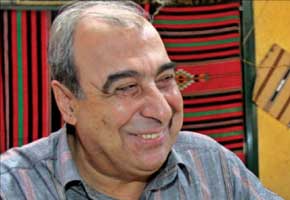
Rahm Emanuel

Rahm Emanuel

Barack Obama once joked at a charity dinner that when Rahm Emanuel severed his middle finger, it almost rendered him mute. Obama, criticized by Republicans during the campaign for his contacts with Palestinian advocates, named in Emanuel a person with strong family ties to Israel.

Benjamin Emanuel participated in the Irgun, a pre- statehood group seeking independence for Israel. As he was putting up posters to promote the resistance, he was struck on the head by a British officer’s baton, a wound that is still visible today. Benjamin’s brother, Emanuel, was killed, and he changed the family name from Auerbach to Emanuel in his honor.

It was a competitive family. Emanuel’s mother jokingly calls her middle son, “Rahmbo.” When he was 17, Emanuel severed half of his middle finger while working at an Arby’s restaurant.

Haaretz on Emanuel, “U.S. Jews laud Obama pick of Rahm Emanuel for chief of staff ”

“Choosing Rep. Emanuel is a sign that President-elect Obama is learning from the mistakes of the two most recent Democratic Presidents, who brought in Washington outsiders to run the White House, and did so at their own peril – often finding themselves in battles with the Washington Democratic establishment. Emanuel’s selection will avoid such ‘freshman mistakes’,” The UJC official continued.

“Rep. Emanuel is also a good friend of Israel, coming from good Irgun stock, davening at an Orthodox synagogue, and sending his children to Jewish day schools,” Daroff concluded.

Ira N. Forman, Executive Director of the National Jewish Democratic Council (NJDC), echoed Daroff’s approval, saying in a statement Thursday that “Obama made an outstanding selection. Emanuel has been a forceful and effective leader within the Democratic Party. His voting record and leadership in support of the U.S.-Israel relationship are outstanding.”

“Emanuel has deep Jewish roots and strong ties to the Jewish community. Emanuel, the son of an Israeli immigrant, has a proven commitment to Israel’s security and served as civilian volunteer on an Israeli military base during the Persian Gulf War of 1991,” the statement continued.

“We congratulate Emanuel and look forward to continuing to work with Emanuel in his new role in the Obama administration.” Forman added.

Emanuel, a hard-charging Chicagoan, accepted Obama’s offer for the job after struggling over family and political considerations. By moving into a top White House job for a second time, Emanuel will have to put aside hopes of becoming speaker of the lower chamber.

The son of a Jerusalem-born pediatrician who was a member of the pre-state Irgun, Emanuel was a key figure in the administration of former President Bill Clinton, where he was known for his blunt management style. His selection is a shift in tone for Obama, who chose more low-key leadership for his presidential campaign.

In the tense talks with the Palestinians at Wye Plantation in 1998, the Israeli team headed by Prime Minister Benjamin Netanyahu was especially wary of one of President Bill Clinton’s aides – Rahm Emanuel. His fluent Hebrew, his instinctive grasp of the “Israeli” mind set and above all his complete loyalty to his boss made the Israelis afraid to talk near him.

Ten years later, Israel’s next prime minister will meet Emanuel in a loftier post, as Obama’s chief of staff.

“He has a kind of directness and coarseness that is very familiar to Israelis,” a veteran Israeli diplomat told Haaretz yesterday. “But it doesn’t necessarily bring him closer to us. One thing is certain – Israelis will not be able to pull the wool over his eyes.”

ALEXANDER COCKBURN on Emanuel

Emanuel… represents the worst of the Clinton years. His profile as regards Israel is explored well on this site by lawyer John Whitbeck. He’s a former Israeli citizen, who volunteered to serve in Israel in 1991 and who made brisk millions in Wall Street. He is a super-Likudnik hawk, whose father was in the fascist Irgun in the late Forties, responsible for cold-blooded massacres of Palestinians. Dad’s unreconstructed ethnic outlook has been memorably embodied in his recent remark to the Ma’ariv newspaper that “Obviously he [Rahm] will influence the president to be pro-Israel… Why wouldn’t he be [influential]? What is he, an Arab? He’s not going to clean the floors of the White House.”

Working in the Clinton White House, Emanuel … He favored the war in Iraq, and when he was chairing the Democratic Congressional Campaign Committee in 2006 he made great efforts to knock out antiwar Democratic candidates. On this site in October and November, 2006, John Walsh documented both the efforts and Emanuel’s role in losing the Democrats seats they would otherwise have won.

In 2006 Emanuel had just published a book with Bruce Reed called The Plan: Big Ideas for America, with one section focused on “the war on terror”. Emanuel and Reed wrote, “We need to fortify the military’s ‘thin green line ‘around the world by adding to the U.S. Special Forces and the Marines, and by expanding the U.S. army by 100,000 more troops. …Finally we must protect our homeland and civil liberties by creating a new domestic counterterrorism force like Britain’s MI5.” Recall that Obama has been calling throughout his recent campaign for an addition of 92,000 to the US Army and US Marine Corps.

Emanuel and Reed had fond words for the mad-dog Peter Beinart, neocon warrior theoretician for the Democrats, roosting Marty Peretz’s The New Republic, and author of The Good Fight where Beinart explained why a tough new national security policy is as essential to the future of of progressive politics as a united front against totalitarianism and communism was to the New Deal and the Great Society. …

Walsh took a hard look at the 2006 Democratic primary race between Christine Cegelis and Tammy Duckworth in Illinois’s 6th CD, a Republican District, which had elected the disgusting Henry Hyde from time immemorial. In 2004 Cegelis, who iwas only mildly antiwar, ran as the Democrat with a grass roots campaign and polled a remarkable 44 per cent in her first run. It was not too long before Hyde decided to retire, and the field seemed to be open for Cegelis in the November poll, in 2006.

Enter Rahm Emanuel, who promptly dug up a pro-war candidate, Tammy Duckworth. Although she had both her legs blown off in Iraq, she remained committed to “staying the course” in Iraq. Duckworth had no political experience and did not live in the 6th District. Emanuel raised a million dollars for her and brought in Joe Lieberman, Barak Obama, John Kerry, John Edwards and Hillary Clinton to support her. Despite all this help and with the Cegelis campaign virtually penniless, Duckworth barely managed to eke out a primary victory by a measly four percentage points.

To win the House, the Dems had to win 15 seats from the Republicans. Walsh identified 22 candidates hand picked by Emanuel to run in open districts or districts with Republican incumbents. Of these, nine adopted a US “must win” in Iraq position and only one of Rahm’s candidates was for prompt withdrawal from Iraq.

Then, after the election, Walsh assessed Rahm’s supposed brilliance in winning back the House. “Looking at all 22 candidates hand-picked by Rahm, “ Walsh wrote, “we find that 13 were defeated [including Duckworth], and only 8 won! And remember that this was the year of the Democratic tsunami and that Rahm’s favorites were handsomely financed by the DCCC. The Dems have picked up 28 seats so far, maybe more. So out of that 28, Rahm’s choices accounted for 8! Since the Dems only needed 15 seats to win the House, Rahm’s efforts were completely unnecessary. Had the campaign rested on Rahm’s choices, there would have been only 8 or 9 new seats, and the Dems would have lost. In fact, Rahm’s efforts were probably counterproductive for the Dems since the great majority of voters were antiwar and they were voting primarily on the issue of the war (60 per cent according to CNN). But Rahm’s candidates were not antiwar. … [read the rest]

Daily Star Editorial:

Instead of panicking over fears that his administration’s approach to the peace process will be decided by at least two high-profile men, Dennis Ross and Rahm Emmanuel, whose pro-Israeli sentiments are a matter of public record, we should be preparing to make the best of whatever situation arises.

The presence of Ross, for instance, does not necessarily mean that he will influence policy. It would guarantee, however, that if Obama means to honor his campaign pledge to tackle the Israeli-Palestinian conflict early, he would have a walking repository of information at his disposal. Ross was at the heart of then-President Bill Clinton’s repeated bids to strike a peace deal in the 1990s, and although those efforts ultimately failed, knowledge of why they failed will be crucial to any future attempt. In addition, both Ross and Emmanuel would be useful “cover” for the inevitable cries of “anti-Semitism” that will result if and when an Obama administration has to pressure an Israeli government to accept a fair agreement….

The challenge for Arabs and Muslims, therefore, is not to stand around and wait for the new president to make all their dreams come true. It is to forget virtually everything they know about past American heads of state and figure out how to talk to this one.

Stephen Zunes on Emanuel: “Is Obama Screwing His Base with Rahm Emanuel Selection?”

Emanuel was a major supporter of the Iraq War resolution that authorized the invasion of Iraq. Indeed, he was the only one of nine Democratic members of Congress from Illinois who backed granting Bush this unprecedented authority to invade a country on the far side of the world that was no threat to the United States at the time. Even more disturbingly, when asked by Tim Russert on “Meet the Press” whether he would have voted to authorize the invasion “knowing that there are no weapons of mass destruction,” Emanuel answered that he indeed would have done so, effectively acknowledging that his support for the war was not about national security, but about oil and empire. Not surprisingly, he has also voted with the Republicans in support of unconditional funding to continue the Iraq War and has consistently opposed efforts by other Democrats to set a timetable for the withdrawal of U.S. occupation forces from that country and related Congressional efforts to end the war.

At a time of record budget deficits, Emanuel has been a passionate supporter of increased spending for the Pentagon and has resisted efforts by fellow Democrats to trim excesses in the Bush administration’s bloated military budget. For example, he has repeatedly voted against amendments to cut funding for Bush’s dangerously destabilizing missile defense and even voted against an amendment to identify unnecessary Pentagon spending by examining the need, relevance and cost of Cold War weapons systems designed to fight the former Soviet Union.

A major hawk regarding Iran, Emanuel has also voted against Democratic efforts to prevent the Bush administration from launching military action against that country and has joined the administration in exaggerated claims about Iran’s alleged nuclear threat. He is not opposed to nuclear proliferation if it involves U.S. allies, however. Emanuel has consistently voted against a series of Democratic amendments that would have strengthened safeguards in the Bush administration’s nuclear cooperation agreement with India to prevent U.S. assistance from supporting India’s nuclear weapons program.

Emanuel is also a prominent hawk regarding Israel, attacking the Bush administration from the right for criticizing Israel’s assassination policies and other human rights abuses. He was also a prominent supporter of Israel’s 2006 attacks on Lebanon, even challenging the credibility of Amnesty International and other human rights groups that reported Israeli violations of international humanitarian law. Emanuel’s father had emigrated from Israel in the 1950s, where he had been a member of the terrorist group Irgun, which had been responsible for a series of terrorist attacks against Palestinian and British civilians in mandatory Palestine during the 1940s. Emanuel himself served in a civilian capacity as a volunteer for the Israeli army in the early 1990s.

It is unclear how serious of a blow Obama’s selection of Emanuel is to those who hoped that Obama might actually steer the country in a more progressive direction. It’s easy to see it as nothing less than a slap in the face of the progressive anti-war elements of the party

 Hiring Emanuel shows Obama’s hand

…. Whether it’s ripping up contributions of political donors who lacked the good survival sense to write a bigger check, or mailing a dead fish to express his extreme displeasure or repeatedly stabbing a steak knife into a table to punctuate a list of Democratic politicians he was putting on a “dead” list, Rahm Emanuel mastered hardball long before Chris Matthews peddled it on TV. Would Emanuel be displeased by the above description? Nope. He revels in the legend….. If you hire an enforcer, are you, de facto, an enforcer, too? Yes.

A new Syrian law which bans Kurds from owning property without the consent of the authorities has stirred unrest in Kurdish regions. 
 Nearly 200 rallied in the Syrian capital in protest to a decree issued by the President Bashar Al-Assad forbidding the sale without prior authorization of land and property in border areas.Reports indicate that Police detained 192 of the demonstrators including eight leaders from political parties.


The protestors were, however, released a day after to ‘reassure them that the decree was not aimed at the Kurdish population but applied to all of Syria’s border regions,’ a human rights group, the National Organization of Human Rights in Syria, said in a statement.


Persuading the Uncertain and Punishing the Recalcitrant: Al-Qaeda Seeks to Absorb Iraq’s Awakening Councils By Murad Batal al-Shishani

There are indications that al-Qaeda’s struggle with Iraq’s U.S.-sponsored tribal Awakening Councils is far from over. An attack on the Baquba home of Awakening Council militia leader Shaykh Abdul Karim Hassan al-Dahlaji on October 29 left three family members dead and 14 others injured. A police source, speaking on condition of anonymity, said the raid was likely to have been carried out by al-Qaeda. Four days later, a roadside bomb killed Shaykh Abbas al-Tami and his family near Baquba, the capital of Diyala province. The shaykh was the head of the Majmaa tribe and a prominent Awakening council leader. These incidents appear to be part of a strategy imposed by al-Qaeda in Iraq (AQI) in their fight with the Majalis al-Sahwat (Awakening Councils). READ FULL STORY

IDF concludes drill simulating war with Syria and Lebanon
By Amos Harel
Haaretz.com, 7 November 2008

The Israel Defense Forces Northern Command concluded a large-scale exercise yesterday which simulated a double-front conflagration with Syria and Lebanon.

The drill, codenamed “Shiluv Zro’ot III” (Crossing Arms III), was the second largest of its kind since the end of the Second Lebanon War in 2006. The exercise drilled the Israel Air Force and the Home Front Command in dealing with protocol and problem-solving missions under the simulated firing of thousands of rockets and missiles into the heart of Israel’s population centers.

In addition to the Northern Command, the air force and the home front command, Crossing Arms involved the IDF Military Intelligence directorate and the general staff. Unlike headquarter-level exercises from the past, Crossing Arms entailed the deployment of troops on the ground, comprising mainly reservists.

Additionally, helicopter gunships and airplanes were sent on mock raids and evacuation missions. The aircraft did not fire live ammunition, according to army sources.

During the drill, the striking aircraft were under orders to focus on imaginary long and medium-range missile launchers. The responsibility for knocking out shorter range rockets lay on ground troops that were ordered to carry out an on-paper invasion into Syrian and Lebanese territory.

Speaking before subordinate officers, Chief of Staff Gabi Ashkenazi said that the importance attached to Crossing Arms III stemmed from the fact that it involved all IDF operational arms, and from the fact that it was put together in a way which internalized the lessons of the Second Lebanon War.

During the exercise, Ashkenazi flew aboard a Boeing Integrated Defense Systems AH-64D Apache Longbow attack helicopter. He also went aboard an Israel Navy submarine. Other visitors included President Shimon Peres and Defense Minister Ehud Barak.

Major-General Yishai Bar – who commanded one of the drill’s assault armies under Northern Command Chief Gadi Eizenkot – announced his retirement during the drill. Yishai said he will retain his position as commander of the IDF’s all-purpose reserves army, but will do so as a reservist himself.

Restoring America’s standing
By Mark A. Heller
The International Herald Tribune, 7 November 2008

….Obama will have to make good on his campaign pledge to restore America’s standing in the world, which has taken a fearful beating in the last five years.

He has already accomplished a good part of that task just by not being George W. Bush. …Whatever he does, Obama will be hard pressed to overcome the resentment caused by the perceived habit of the United States, as the biggest kid on the block, to act with insufficient regard for the role of international institutions and international law.

In late October, a cross-border raid by U.S. forces on foreign fighters in Syria suspected of aiding the insurgency in Iraq was denounced by Syria and a few others as a violation of Syrian sovereignty. For the most part, however, Syria’s complaint elicited little sympathy, probably because the Syrian regime had itself, over the previous four decades, directly or indirectly (through the use of proxies) violated the sovereignty of every one of its five neighbors…

More than 1.5 million Kurds comprising nine percent of the total population live in Northern regions of Syria bordering Turkey and Iraq. 

Sami Moubayed Sets the Record Straight

Sami Moubayed at Kalamoon University

Sami Moubayed at Kalamoon University

Sami Moubayed asked Syria Comment to publish this clarification of his opinions and position

Clarification by Sami Moubayed

The Israeli press and several newspapers, wires, and Internet sites, have commented on an article I wrote last Friday for Asia Times Online entitled, “Abu Hussein’s invitation to Damascus.” They mistakenly claimed that my views represent the official stance of the Syrian Government. That is incorrect. My views in no way represent the official positions of the Syrian government but I firmly support its foreign policy, with regard to the Arab Israeli conflict, Syrian-US relations, and most importantly, restoration of the occupied Syrian Golan Heights. Additionally, I NEVER said that Syria was willing to work for the disarmament of Hizbullah or Hamas. Anything to that effect was the product of the wild imagination of journalists, editors, and activists who wished to put words in my mouth; words that I never said. What I said was that Syria was willing to find peaceful solutions to the problems of the Middle East, based on international legitimacy and UN Security Council resolutions, which produced the Madrid Peace Conference. Our main goal as Syrians, government and public alike, is to restore the occupied Golan Heights; and this is a reality that everybody must accept, prime on the list being president-elect Barack Obama.

The 10-points mentioned in the article, as requests from Mr. Obama, are my own analysis and interpretation of the future of billateral Syrian-US relations. Being an independent writer, historian, professor, and political analyst, who has worked in the public life of Syria for the past 10-years, I believe I am able to express my own views, which might overlap with those of my government, vis-à-vis regional peace and stability. Any views expressed by Syrian writers are strictly their own. Only views expressed by Syrian officials reflect the official position of the Syrian Government.

Obama Dispatches Malley to Syria?

[Addendum: Mon. Nov. 10, 2008] An assistant to Robert Malley has written me the following note denying the truth of any part fo the following story:

A quick word to stress that the story about Rob Malley visiting Egypt and Syria to deliver a message from the president-elect are a pure fabrication. The “aides” quoted in the piece are equally fictional. I would greatly appreciate if you could post this to correct the record.

Original post below:

Will Obama appoint Robert Malley, a director of the International Crisis Group, as a point man on the Middle East? If he does, it is a sign of restored sanity and promise for the future.

Malley is one of the few Americans who has taken the time and energy to understand Syria’s point of view and make contacts in Damascus when this was not easy to do. He was compelled to clarify that he had no official link to the Obama campaign in January, when some accused him of terror sympathising because he met with Khalid Mishaal, the head of Hamas.

Here is a quote from Martin Peretz taken from Mondoweiss‘s coverage of the issue:

“Martin Peretz says, with relief, that [Obama] is not [an Obama advisor]:

There are all kinds of spooky rumors that a man named Robert Malley is one of Obama’s advisers, specifically his Middle East adviser… Malley, who has written several deceitful articles in The New York Review of Books, is a [further hogwash removed for the sake of the tranquility of the Sabbath]… Malley is not and has never been a Middle East adviser to Barack Obama. Obama’s Middle East adviser is Dan Shapiro.

The following article does not spell our when the Malley trip is to take place or if it is refering to a past trip. I don’t think we can trust this story yet. The first version of this article, copied below, first appeared in the World Tribune?

In First Mideast Policy Initiative, Obama Sends Adviser To Egypt, Syria
By David Bedein, Middle East Correspondent

Jerusalem – The Middle East Newsline has confirmed that Presidential-elect Barack Obama has dispatched his senior foreign policy adviser Robert Malley to Egypt and Syria to outline the Democrat’s policy on the Middle East.

Mr. Malley, who served in the Clinton administration, relayed a pledge from Mr. Obama that the United States would seek to enhance relations with Cairo as well as reconcile differences with Damascus.

“The tenor of the messages was that the Obama administration would take into greater account Egyptian and Syrian interests,” an aide to Mr. Malley said.

The aide said Obama plans to launch a U.S. diplomatic initiative toward Syria, regarded by the Bush administration as a leading supporter of the al-Qaida insurgency in Iraq. Mr. Obama, unlike President George W. Bush, has also ?supported Israeli peace negotiations with the regime of Syrian President Bashar al-Assad.

Mr. Malley, his aides said, met both Egyptian President Hosni Mubarak and with Mr. Assad to explain Mr. Obama’s agenda for the Middle East.

These aides said that Mr. Obama told Mr. Mubarak that the United States would maintain military and civilian aid and sell advanced F-16 aircraft to Cairo. Egypt has not ordered F-16s in nearly a decade.

Mr. Malley, in his capacity as a senior advisor to President Clinton at the failed Camp David talks between Israel and the Palestine Liberation Organization, incurred the wrath of many Israeli officials when he laid some of the blame for the failure of the Camp David talks on Israel.

Syrians stare terror in the face by Sami Moubayed in Asia Times

State television showed what it said were 12 members of the Islamist militant group Fatah al-Islam, confessing that they had helped plan the suicide car bombing.

The interview sent shivers down the spine of most Syrians, who were horrified to hear that there was something called a “Syria branch” for al-Qaeda. These people looked like ordinary Syrians. They came from places like Aleppo, Homs and Damascus. One was a 24-year-old smuggler of gasoline between Syria and Lebanon. Another was a dental expert, while a third was an information technology expert. A fourth was a student at one of the private schools that recently started operating in Syria. Some of them said that they had baby children.

Originally it was believed that the terrorist who drove an automobile into the premises of a security building on the road to Damascus International Airport had come from Iraq. The license plate was Iraqi and most of the militants who had carried out attacks in Syria since 2003 came from the wilderness of Iraq.

It was too abstract for Syrians to believe that their countrymen could plot such a bloody crime against innocent fellow Syrians. The Thursday broadcast proved them wrong.

The new information confirms that the terrorists were a mixture of Syrians, Lebanese and Palestinians, operating not directly with al-Qaeda, but a sister organization called Fatah al-Islam, which is based in neighboring Tripoli, Lebanon.

The suicide bomber himself was a Saudi named “Abu Aysha”, whose picture was also shown on Syrian TV. This group wanted to “harm the Syrian regime” and had several targets on their hit list, including the central bank of Syria. They also had a hit list that included an Italian and a British diplomat, both based in Damascus.

One of the men who appeared on TV was Abdul-Baqi Hussein, head of security in the Syria-branch of Fatah al-Islam, and Wafa Abbsi, the daughter of Fatah al-Islam founder Shaker al-Abbsi. They said the car was in fact stolen from Iraqis and loaded with 200 kilograms of explosives at a farm on the outskirts of Damascus.

Very troubling was the confession of Wafa, the only woman among the group, who spoke with her husband Yasser Unad. They seemed the most disturbed among the group of terrorists. Wafa said her father received money transfers to conduct his military activities from the Future Movement of Lebanese parliamentary majority leader Saad al-Hariri. Her father never trusted Hariri, Abbsi implied, saying that he feared that the latter would “trade him” for a cheap price. Wafa, whose first husband was a Syrian killed on the Syrian-Iraqi border, came to Syria with her second husband – also a Syrian – and was arrested with the terrorist team after September 27.

Wafa’s tale takes us back to an earlier argument made by veteran US journalist Seymour Hersh, who wrote in The New Yorker that Hariri, the US and certain figures in Saudi Arabia were responsible for creating Fatah al-Islam. Speaking to CNN International’s Your World Today in May 2007, Hersh said that all three parties wanted a Sunni military group in Lebanon to combat Hezbollah – which was backed by Iran – in the event of an outbreak of Sunni-Shi’ite violence. While Hersh was speaking, violence was ranging in the infamous Naher al-Bared camp in northern Lebanon, between Fatah al-Islam and the Lebanese army. Those battles, which lasted for weeks, led to the killing of about 400 people. ….

Naturally, the anti-Syrian team in Lebanon writes off the entire story as a hoax. They claimed from day one that Fatah al-Islam was created by the Syrians. That is difficult to believe, since his prison record in Damascus – along with Syria’s history of combating Islamic fundamentalism – would certainly prevent it from engaging in such a risky scheme with such a notorious terrorist. Additionally, the terrorist bombing of September 27 adds proof that if anything, Fatah al-Islam is certainly not allied to Damascus. On the contrary, it is bent on destroying Syria. …(read the rest)

Qifa Nabki writes on his blog:

….Why doesn’t Sami just state the obvious, namely that nobody really has any idea what Fatah al-Islam is. All the theories are more or less outlandish, ranging from Seymour Hersh’s spooky conspiracy tale in The New Yorker (which I’m convinced he heard from a Lebanese service taxi driver and later had ‘confirmed’ by Michel Samaha), to the notion that it was created by the Syrian mukhabarat and controlled directly from Damascus. Who knows what is really true? There is nothing resembling actual proof, just more or less glorified conspiracy theories supported by anonymous sources and government-sponsored confessions…. (read the entire article)

[Landis comment] Sami Moubayed is not a government employee; none of his income comes from the government. Yoav Stern writes in the article copied below that his “analyses are considered the official standpoint of the Syrian government.” Of course, Sami is well connected and a good journalist so he has a keen sense of what Syria’s official position is, but it is misleading to consider his opinion the official standpoint of the Syrian government. Independent journalists like Sami exist in Syria. His last article, ““American dream expelled from Syria” ,copied on Syria Comment, was a critique of the government’s closing of the “American School” in Damascus. It did not reflect the official standpoint of the Syrian government in any way.

Like any Syrian journalist, he must figure out where the red lines are, but he has latitude to express his opinion and to dissent from the official line, as he did in his last article. Sami was invited to come to Washington in August as part of a three man team of “second track” diplomacy precisely because he is not a government employee. The reason that he was included is that Imad Moustapha, the Syrian ambassador in DC, likes and respects Sami. He knows that Sami is an effective and smart opinion maker who is read by people like Stern and his Haaretz counterparts; he would put Syria’s best face forward. It was Sami’s first visit to the US. The same was true of Samir Saifan, who also participated on the team. He is an independent businessman, economist and consultant who understands Syria’s needs and is in constant contact with government officials, but he is not an official voice of the government nor paid by it.

Hamas praises Obama, hopes for ‘new page’ in relations with U.S.
By Yoav Stern, Haaretz Correspondent, and Associated Press, 07/11/2008

Hamas strongman Mahmoud Zahar says he hopes the election victory of Barack Obama will open a new page in relations between the U.S. and the Muslim world.

However, Zahar says he does not expect immediate change in U.S policy toward Hamas. The Bush administration is boycotting the Islamic militants, along with most of the international community.

Hamas refuses to renounce violence or recognize Israel. Last year, Hamas seized Gaza by force, and Zahar was instrumental in the takeover.

He said Friday that “we hope, we hope, that Obama opens a new page with the world, including the Muslim world.” But citing what he believes is undue Israeli influence on U.S. policy, he said he doesn’t expect Obama to talk to Hamas, at least at the start of his presidency.

Meanwhile, a Syrian analyst on Friday said Syria would be prepared to restrain the militant activities of Hezbollah and Hamas if a U.S. administration led by President-elect Barack Obama shifts its policy toward Damascus.

In an article published on Friday on the Asia Times Web site, Syrian analyst Sami Mubayed called on Obama to endorse the renewed peace talks with Israel to ensure their success.

Mubayed, whose analyses are considered the official standpoint of the Syrian government, urged Obama to “normalize” relations between Washington and Damascus.

Such “normalization” of ties would include dispatching a new U.S. ambassador to Damascus, the first since the deterioration of the states’ ties in 2005.

Syria would also demand that the economic sanctions against it be dropped, a change in Western rhetoric toward Damascus and compensation for the recent deadly U.S. air strike in which eight Syrians were killed.

Damascus also seeks a further role in matters regarding Iraq. “Obama must recognize that no problem can be solved in the Middle East without Syria,” Mubayed wrote.

In exchange for U.S. implementation of these demands, Syria would be ready to use its weight in the region against the militant activities of Hezbollah and Hamas, and would work in tandem with Western powers to find a solution to the Iranian nuclear issue.

Mubayed said that Syria has nicknamed Obama “Abu Hussein” – in reference to the president-elect’s middle name.

“When all this is done, Syria will be ready to open its arms to Abu Hussein and to accept him maybe as an honored guest in Damascus, as we did with Jimmy Carter and Bill Clinton,” wrote Mubayad.

Helena Cobban on the Obama team

Source: U.S. meant to capture militant killed in Syria
From Nic Robertson
CNN Senior International Correpondent

LONDON, England (CNN) — The U.S. forces who killed a top militant in Syria last week intended to capture him, but he and his bodyguards were killed in a gunbattle, a Saudi source with access to detailed intelligence told CNN.

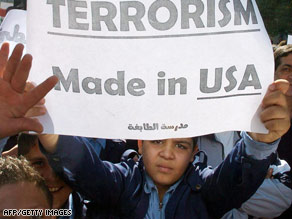
Palestinian refugee schoolboys in Damascus protest the U.S. attack in Syria, which called the strike barbaric.

Palestinian refugee schoolboys in Damascus protest the U.S. attack in Syria, which called the strike barbaric.

U.S. officials last week confirmed that an American airstrike from Iraq into Syria killed Abu Ghadiya, described as a kingpin in al Qaeda’s smuggling of foreign fighters into Iraq.

Abu Ghadiya’sbody, initially taken away by U.S. Special Forces operatives for identification, has been returned to the Syrians, the source said.

The officials — who did not want to be named because they were not authorized to speak to the media — also said members of his network were killed as well. The U.S. military has not officially confirmed the October 26 strike in the town of Abu Kamal.

The Saudi source said U.S. forces picked up Abu Ghadiya’s presence at the Syrian location in the morning of October 26 and acted quickly against him.

Abu Ghadiya’s name emerged many times during Saudi interrogations of al Qaeda suspects, the source said, noting that a profile emerged of the militant as an important part of the logistical chain in al Qaeda’s network.

He had been an effective and persuasive recruiter of Arab fighters intent on attacking U.S. forces in Iraq, and had been described as a Baathist, a member of the political movement that ran Iraq during the Saddam Hussein era, the source said.

The source said Abu Ghadiya used Baathist money to smuggle fighters, and pay off Syrian generals to ignore the cross-border activities. The Saudi source said plenty of Baathist money is stashed away, hidden before the 2003 invasion.

Thousands of people demonstrated last week in the capital of Syria to protest the U.S. airstrike — that Damascus says killed eight civilians, according to reports from the country.

Syrian Foreign Minister Walid al-Mouallem last week condemned the strike as “terrorist aggression,” said civilians died in the incident, and called the claim that Americans were targeting militants a lie.

Iraq’s government also denounced the attack, which was launched from its territory.

Syria has said it has tried to secure the sprawling desert border. But it immediately withdrew its border guards from the region after the strike, leaving border posts empty and forcing Iraq to secure the areas where foreign fighters crossed the border.

LA Times:

The Lebanese daily Assafir called Obama the “candidate of change based on all criteria,” and wrote that “the democratic candidate Barack Obama stands on the right side of American history with all his positions and his attractiveness.”

An opinion piece in the newspaper predicted that the new U.S. president, whoever he is, will lead a more pragmatic policy in the Middle East:

“Tomorrow a new American era starts marked by political pragmatism whether led by Obama or McCain after the world has rejected policies of force, arrogance and chauvinism that led to wars and economic catastrophes … Americans will vote tomorrow. Will the snake only shed its skin or will the problems of the world push it back into its pit?”

The official Syrian newspaper, Al-Watan, published an op-ed piece entitled, “Who is less bad … Obama or McCain?”

“Nobody should bet on a radical change in Washington’s foreign policy towards the Middle East,” said the article, adding that the U.S. had been showing a clear bias toward Israel for decades.

It concluded that Obama’s election might improve the U.S.-Syrian relations but would not end disputes between the two countries.

— Raed Rafei in Beirut

Syria’s Second Chance, by Roula Khalaf, Middle East editor, Financial Times

[E]ight years after Bashar al-Assad took over upon the death of his father Hafez, Syria [is] still struggling to decide in which direction it wanted to go, politically and economically. The economy rumbles on with a massive unemployment rate, rampant inflation and dwindling oil reserves. …

Meanwhile, Syria’s behavior in the region—whether in Lebanon, where it is alleged to have been involved in the killing of Rafiq Hariri, the former prime minister, or in Iraq, where it was accused of sending foreign fighters to join the insurgency—has angered foes and friends, leaving hardly anyone to argue Damascus’ case. But Syria now has a second chance. Nicholas Sarkozy, the French president, traveled to Damascus in September, opening the door to rehabilitation. [Last] week Walid al-Muallem, the Syrian foreign minister, [was] in London. A new U.S. president will soon be in office, and could engage with those whom the Bush administration was determined to isolate. Access the full article>>

Sarkozy and Obama
By Judah Grunstein
World Politics Review, 5 November 2008

Nikolas Gvosdev wonders out loud whether Nicolas Sarkozyis hoping to play trans-Atlantic interlocutor between America and Russia. I’ve argued before that a good deal of Sarkozy’s conciliatory posture towards the U.S. — which has gotten him accused here in France of an Atlanticist alignment with Washington — was in fact a gambit designed to make Paris the fulcrum upon which American-EU relations pivot.

Sarkozy has been very careful to balance his gestures towards Washington with demands for concessions (NATO vs. EU defense, for instance), and has also not been reluctant to oppose American positions (on NATO expansion, for instance) when it was both in his interest and he had sufficient support to come out on top.

But I think Gvosdev is onto something, and it goes beyond the Washington-Paris-Moscow conduit. His suggestion brings to mind the possibility that France’s recent insistence upon engaging Syria has been in anticipation of an end to America’s isolation of Damascus. (It’s interesting to note that the Syrian ambassador to the U.S. suggested that a McCain administration would have supported engaging Damascus as well.) Certainly the progress Sarkozy and French Foreign Minister Bernard Kouchner have made in restoring French-Syrian relations will put them in good position to help smooth the way for Washington.

But on the back end (because when it comes to quid and quo, Sarkozy’s a pro), my hunch is that he’s going to do everything he can to make sure that Obama’s willingness to engage Iran directly does not undermine the enormous efforts that have gone into maintaining a very firm and consistent EU3 negotiating position on Tehran’s nuclear program, perhaps even pushing for an American presence at jumpstartedP5+1 talks with Iran before any bilateral channels are opened up between Washington and Tehran.

Libya to Start $20 Million Syrian Cement Project, SANA Reports
2008-11-06

By Nadim Issa
Nov. 6 (Bloomberg) — A Libyan delegation will visit Syria next week to commence a $200 million cement plant, the Syrian Arab News Agency said, citing Syrian Finance Minister Mohammad Al Hussein.

Jonathan Steele in the Guardian, here

“…In this arc of conflict – Iran, Iraq and Afghanistan – Obama’s approachis preferable to Bush’s or McCain’s. The century-old paradigm of Republicans as the party of realism and the Democrats as the party of ideologues was turned upside down by the neocons. Bush led an administration of crusaders and took the country to disaster. Obama offers a return to traditional diplomacy. ….

Egypt, Jordan and Saudi Arabia will resist this. They will tell Obama that a US retreat hands victory to a resurgent Iran and Shias everywhere. But it is not a US withdrawal that will help Iran. Bush’s war has already done that, since it was bound to empower Iraq’s majority community. The best way to prevent Iran’s strong relationship with the government in Baghdad from becoming a regional threat is for the US to engage with Iran and forge a new relationship…

The challenge for Obama is to show the world whether he is ready to offer Tehran a grand bargain rather than a big bang…”

Syrian TV shows men ‘confessing’ to deadly bomb blast

Posted by Alex.

DAMASCUS (AFP) — Syrian state television on Thursday broadcast statements by men it said were Fatah al-Islam militants, in which they admitted carrying out a bomb attack in September that killed 17 people.

The men included Abdul Baqi al-Hussein, described as the head of security in Syria of Fatah al-Islam, who said the aim of the attack was to “harm the regime in Syria.”

confession on Syrian Television

confession on Syrian Television

The television programme also showed a photo of a man said to have been the suicide bomber in the September 27 attack in Damascus, naming him as Abu Aysha al-Saudi — ‘The Saudi’.

Last year, the army in Syria’s neighbour Lebanon fought a 15-week battle with the Al-Qaeda-inspired Fatah al-Islam in the Palestinian refugee camp of Nahr al-Bared near Tripoli that left 400 people dead, including 168 soldiers.

However, Fatah al-Islam chief Shaker al-Abssi managed to flee the camp and vowed revenge attacks against the Lebanese army. Before the deadly camp siege in Lebanon Abssi served a prison term in Syria for having links to Al-Qaeda.

On September 27, a car bomb exploded near a Shiite shrine in southern Damascus killing 17 people and wounding 14 others, in one of the deadliest attacks in Syria in a dozen years.

The car, packed with 200 kilos (440 pounds) of explosives, blew up near a security checkpoint on a road to Damascus international airport at an intersection leading to the Sayeda Zeinab neighbourhood.

All the victims were civilian passers-by.

Among those on the Thursday night broadcast was a woman Syrian television said was Wafa al-Abssi, daughter of the Fatah al-Islam chief.

The men who spoke in the programme said they had carried out a series of armed robberies to finance the September attack. They also said the car used in the bombing had been stolen from an Iraqi.

Sayeda Zeinab is popular among Shiites from Iran, Lebanon and Iraq who go there on pilgrimage to pray at the tomb of Zeinab, a grand-daughter of the Prophet Mohammed.

The blast was the worst to rock Syria since February when Hezbollah commander Imad Mughnieh was killed by a car bomb in Damascus.

Since May, Lebanon’s northern port city of Tripoli near the Syrian border has also been rocked by deadly sectarian violence between Sunni supporters of the government and their Damascus-backed rivals from the Alawite community.

More details in Arabic here.

“Obama Aims to Engage Foreign Allies, Adversaries,” by Jay Solomon

Obama Aims to Engage Foreign Allies, Adversaries
By JAY SOLOMON – WSJ, NOVEMBER 6, 2008

WASHINGTON — President-elect Barack Obama’s foreign policy will focus on wooing longstanding U.S. adversaries while rebuilding alliances in Europe strained during the nearly eight years of George W. Bush’s presidency.Mr. Obama and his advisers are studying ways to engage Iran and Syria, countries that are viewed as central to American hopes for stabilizing Afghanistan and Iraq and forging a broader Middle East peace.

The Obama camp also is developing plans to heal tensions between the U.S. and the broader Muslim world. Aides said Mr. Obama may make a major speech in an Islamic capital during his first 100 days in office.

During the campaign, Mr. Obama pledged to make a sharp break from the Bush administration’s interventionist and often unilateral approach to the world-an approach that was honed after the Sept. 11, 2001, attacks.

The president-elect alluded to that pledge in his acceptance speech Tuesday night. “To all those watching tonight from beyond our shores, from parliaments and palaces, to those who are huddled around radios in the forgotten corners of the world…a new dawn of American leadership is at hand,” he said.

Mr. Obama also has vowed to move beyond the Bush administration’s hostility toward the United Nations and other international bodies that stand to check U.S. power, such as the International Criminal Court.

He is likely to face myriad obstacles in his quest to reorient American foreign policy at a time of shifting global power centers, say U.S. diplomats and strategists. As a candidate, Mr. Obama applauded recent drives by the U.S. and its allies to use engagement and economic aid to end the nuclear programs of Iran and North Korea. Those efforts have largely foundered, and the new president could face major proliferation crises in those nations during his first year, say Bush administration officials.

Obama advisers said in interviews during the campaign that engaging U.S. adversaries is important in part because the tactic shifts the onus for any failure onto the other side. “There’s no guarantee that diplomacy will succeed…but it strengthens your hands with other people” if it fails, said James Steinberg, a former Clinton administration official who has been touted as a possible national-security adviser under Mr. Obama.

Vice President-elect Joe Biden warned during the campaign that foreign powers or terrorists could challenge the new president during his first months in office, a statement that defeated Republican Sen. John McCain tried to exploit. Among the fears are that Tehran could seek to provoke a standoff with the U.S. military in the Persian Gulf or that North Korea could test-fire missiles.

Stalled diplomacy could pressure Mr. Obama to pursue some of the same hard-line tactics as his predecessors. On the campaign trail, the senator regularly said he would leave “all options on the table” in confronting the nuclear ambitions of Iran. And Mr. Obama said he maintained the right to use unilateral military strikes to hunt down al Qaeda leaders inside Pakistan.

“Many people think that the Bush administration is leaving and it’s back to the good old days…but its problems were also a symptom of changes in the world,” Charles Kupchan, a senior fellow at the New York-based nonpartisan Council on Foreign Relations, said before Tuesday’s vote. “Some things will change, but many won’t.”

The Obama administration could have a bigger impact in Syria, which is pursuing indirect peace talks with Israel. Wednesday, Syria’s information minister, Mohsen Bilal, said he hoped Mr. Obama would “change U.S. policy from one of wars and embargoes to one of diplomacy and dialogue.”

Mr. Bush had greater success building ties with Asian powers. Trade with China has surged during his two terms, and he sealed a nuclear deal with India. Some Asian countries are watching Mr. Obama with concern because he has expressed skepticism about free-trade agreements.

Write to Jay Solomon at [email protected]

Obama and the Middle East

[Landis Comment]  Syria is expecting change with Obama’s election. The Syrian people were overwhelmingly in favor of Obama. The Syrian leadership are Obama fans as well because he promises to draw down the US involvement in Iraq within the next two years, re-open regular US communication with Syria, and follow the recommendations of the Baker-Hamilton report, which stressed on the importance of resolving the Arab-Israeli conflict. Of course it will take at least a year for Obama to sort out his Middle East team and for Israel, Iran and Lebanon to sort out their new leadership in elections that are scheduled to take place this coming year.

Highlights from Democratic nominee Barack Obamas acceptance speech from Grant Park in Chicago, Illinois after election results came in Tuesday, Nov. 4, 2008.

Barack Obama's acceptance speech from Grant Park in Chicago

Not only Syria welcomes Obama. Many US allies also look forward to change, having realized that Bush’s foreign policy has badly radicalized the region and delivered few gains.

Syrian courts have pardoned two of Syria’s most prominent prisoners, Michel Kilo and Mahmoud Issa, in what seems to be an effort to turn a new leaf. Hopefully they will be released as promised and both Syria and the US can re-establish relations on sounder and more cooperative footing.

Michel Kilo and Mahmoud Issa, Opposition leaders pardoned by Appeals Court, FOUNDATION FOR THE DEFENSE OF PRISONERS OF CONSCIENCE,  Sunday 2 Nov 2008

Michel Kilo

Michel Kilo

In an unexpected development, the Penal Chamber of the Appeal Court in Damascus agreed today to give the writer Michel Kilo (more background below page) and Mahmoud Issa(left), a Communist Labor Party member and human rights activist, a pardon amounting to a quarter of the total sentence they were previously condemned to serve. Both men were arrested in 2006 following their involvement in moves to advocate Democracy in the country. Kilo and Issa were both prominent signatories to the Beirut-Damascus Declaration.

Read Syria Comment’s Michel Kilo the Patriot

AFP: Nov. 4: Prominent Syrian journalist Michel Kilo, seen here in 2005, and translator Mahmud Issa, who ought to have been released from jail on Sunday, are still behind bars, human rights figures said on Tuesday.

ABC News: French President Nicolas Sarkozy was even more glowing in a letter to Obama:

“In choosing you, the American people have chosen the path of change, openness and optimism. Your election raises immense hope in France, Europe and beyond: the hope of an open America.”

Nelson Mandela, as qualified as he is complimentary in his comments, gushed, “Your victory has demonstrated that no person anywhere in the world should not dare to dream of wanting to change the world for a better place.”

In the Middle East, ‘everybody’ is with Obama
MARK MACKINNON
From Tuesday’s Globe and Mail, November 4, 2008

DAMASCUS — Bassem Suweida drops his voice out of habit when discussing politics, even though it was today’s election in the faraway United States that the 45-year-old waiter was about to weigh in on, not the closer-to-home intrigues of Bashar Assad’s regime.

“Of course we are with Obama. Everybody in the Middle East is with Obama, because everybody hates Bush,” Mr. Suweida explained, almost whispering, during a break in serving mezze at an upscale restaurant hidden deep in the stone warrens of the walled old city of Damascus. “Will Obama be any different? That’s the question everybody is asking. We don’t know, but we hope so.”

Hope. It’s the word that Barrack Obama has built his campaign for the U.S. presidency around, and it’s the word that defines him, even here in the capital city of a country that many Americans likely consider to be an enemy.

There’s yearning across the Middle East – at least outside of Israel and Iraqi Kurdistan – for a new face in the White House, and John McCain doesn’t fit the bill. He’s seen both by the governments of this region, as well as the legendary “Arab street,” as too close to the policies of George W. Bush. And the eight years the latter spent as the most powerful person in the world are viewed here as an unmitigated disaster.

Syrian Information Minister Mohsen Bilal on Wednesday voiced hope that Barack Obama’s election will help change US foreign policies and bolster Middle East peace. Syria, which has long had a rocky relationship with the United States, hopes that Obama’s election victory will contribute to “a change in US foreign policy,” Bilal said, as quoted by the official SANA news agency.
Qifa Nabki writes:
2009 has the potential to be a massively transformative year. It is the year of potentially momentous elections.

Israel will hold legislative elections on Feb 10, 2009.

Iran will hold presidential elections on June 12, 2009.

Lebanon will hold parliamentary elections in May or June 2009.

Depending on the results (Likud vs Kadima, Iranian conservatives vs. reformists, March 14 vs. March 8), we may see the region lurch decisively in one direction or another.

(I actually don’t think the Lebanese elections will make that much of a difference, given that all parties are more or less back to business as usual. Israel and Iran’s elections will have a much greater influence on Lebanese [and Syrian] politics than the Lebanese elections themselves.)

Beyond Right and Left, Fareed Zakaria | Obama can redefine how the West governs. | PostGlobal: What the world wants from him

A Reluctant Middle East
By Amr Hamzawy, Al Ahram Weekly, Issue No. 920, 30 October – 5 November 2008


As far as Washington is concerned there are four aspects to the crisis in the Middle East.
 
Firstly, it is exacting an enormous political price — especially the US military presence in Iraq — in terms of military expenditure, loss of life and the daily attrition on the US army.

Secondly, the US, in its capacity as a superpower striving towards universal hegemony and keen to secure its vital interests in the Middle East, is no longer able to manage regional conflicts in a manner that furthers the pursuit of its aims and curtails the threats to its interests. After two Bush administrations, which sought to redraw the map of the Middle East in order to eliminate or marginalise forces antagonistic to its policies in the region, Washington is incapable of controlling conflicts in Lebanon, in Palestine between the PA and Hamas and between the Palestinians and the Israelis, and in Iraq. Nor has it been able to settle its multi-tiered problems with Iran. On every front in the region it is encountering increasing competition from states opposed to the US or from resistance organisations.

Thirdly, US policies in the region are in the grip of a severe credibility crisis. I am not talking about the campaign to spread democracy, to which the Bush administration had hardly adhered before the Hamas victory in the Palestinian legislative elections in 2006 and that it abandoned entirely afterwards. Rather, I am speaking of the conventional role that Washington has played since the end of World War II, which is to protect its allies — Israel above all — and to steer the collective security arrangements in the Gulf in order to safeguard the flow of oil. Many of America’s allies have begun to question the efficacy of Washington’s polices and, in some cases, now believe these policies cause more problems than they solve. Such reactions are closely connected with the Bush administration’s military adventurism and its poor, if not negative, results, as well as with the administration’s unbounded bias in favour of Israel to the detriment of Arab interests.

Fourthly, in spite of the unprecedented magnitude of the US military presence in the region, America’s manoeuvrability and available pressure tools have declined. Of course, Washington remains a leading player in Iraq, the Gulf, Palestine and Lebanon, but it can no longer move independently. It would be wrong to think that only Iran, Syria, Hamas and Hizbullah are acting outside of the framework of US policies. Long-term allies such as Saudi Arabia, Egypt and Jordan are exploring courses of their own in order to buffer themselves against the negative repercussions of US policies. ….

The failure of US policies andthe decline in Washington’s influence drove its regional allies to search for alternative strategies less dependent on the superpower. This has exacerbated the crisis Washington faces in the Middle East. Perhaps the clearest manifestation of this development is found in its allies’ reluctance, if not outright refusal, to fall in line with the Bush administration’s incessant drive to — indeed obsession with — pushing tensions in the region towards perilous confrontations in the hope of producing decisive victories. Today, Washington’s allies in the Gulf refuse to treat Iran solely as a source of threat and instability that can only be contained by force. Instead, as Riyadh’s attempts to coordinate with Iran over regional concerns such as Lebanon indicate, they are seriously exploring ways to work with Iran so as to avert the spectre of another war in the region and, simultaneously, regulate Iran’s regional aspirations. Egypt, for its part, has stepped up diplomatic efforts to bring the security situation in Gaza under control, to maintain calm between Israel and the Palestinian factions, and to promote a national dialogue between the PA and Hamas. It is a course that contradicts the American premise that Hamas is a terrorist organisation that needs to be eliminated. Indeed, Israel, while encouraging confrontation against Iran and still refusing to deal with Hamas, has entered into Turkish-mediated negotiations with Syria. Neither Tel Aviv nor Ankara, Washington’s two key allies in the region, seem overly concerned with the disgruntlement this may have caused in Washington…..

An Open Letter to Barack Obama
Between Hope and Reality
By RALPH NADER

Dear Senator Obama:

In your nearly two-year presidential campaign, the words “hope and change,” “change and hope” have been your trademark declarations. Yet there is an asymmetry between those objectives and your political character that succumbs to contrary centers of power that want not “hope and change” but the continuation of the power-entrenched status quo.

Far more than Senator McCain, you have received enormous, unprecedented contributions from corporate interests, Wall Street interests and, most interestingly, big corporate law firm attorneys. Never before has a Democratic nominee for President achieved this supremacy over his Republican counterpart. Why, apart from your unconditional vote for the $700 billion Wall Street bailout, are these large corporate interests investing so much in Senator Obama? Could it be that in your state Senate record, your U.S. Senate record and your presidential campaign record (favoring nuclear power, coal plants, offshore oil drilling, corporate subsidies including the 1872 Mining Act and avoiding any comprehensive program to crack down on the corporate crime wave and the bloated, wasteful military budget, for example) you have shown that you are their man?

To advance change and hope, the presidential persona requires character, courage, integrity– not expediency, accommodation and short-range opportunism. Take, for example, your transformation from an articulate defender of Palestinian rights in Chicago before your run for the U.S. Senate to an acolyte, a dittoman for the hard-line AIPAC lobby, which bolsters the militaristic oppression, occupation, blockage, colonization and land-water seizures over the years of the Palestinian peoples and their shrunken territories in the West Bank and Gaza. Eric Alterman summarized numerous polls in a December 2007 issue of The Nation magazine showing that AIPAC policies are opposed by a majority of Jewish-Americans.

You know quite well that only when the U.S. Government supports the Israeli and Palestinian peace movements, that years ago worked out a detailed two-state solution(which is supported by a majority of Israelis and Palestinians), will there be a chance for a peaceful resolution of this 60-year plus conflict. Yet you align yourself with the hard-liners, so much so that in your infamous, demeaning speech to the AIPAC convention right after you gained the nomination of the Democratic Party, you supported an “undivided Jerusalem,” and opposed negotiations with Hamas– the elected government in Gaza. Once again, you ignored the will of the Israeli people who, in a March 1, 2008 poll by the respected newspaper Haaretz, showed that 64% of Israelis favored “direct negotiations with Hamas.” Siding with the AIPAC hard-liners is what one of the many leading Palestinians advocating dialogue and peace with the Israeli people was describing when he wrote “Anti-semitism today is the persec!
 ution of Palestinian society by the Israeli state.”

During your visit to Israel this summer, you scheduled a mere 45 minutes of your time for Palestinians with no news conference, and no visit to Palestinian refugee camps that would have focused the media on the brutalization of the Palestinians. Your trip supported the illegal, cruel blockade of Gaza in defiance of international law and the United Nations charter. You focused on southern Israeli casualties which during the past year have totaled one civilian casualty to every 400 Palestinian casualties on the Gaza side. Instead of a statesmanship that decried all violence and its replacement with acceptance of the Arab League’s 2002 proposal to permit a viable Palestinian state within the 1967 borders in return for full economic and diplomatic relations between Arab countries and Israel, you played the role of a cheap politician, leaving the area and Palestinians with the feeling of much shock and little awe.

David Levy, a former Israeli peace negotiator, described your trip succinctly: “There was almost a willful display of indifference to the fact that there are two narratives here. This could serve him well as a candidate, but not as a President.”

Palestinian American commentator, Ali Abunimah, noted that Obama did not utter a single criticism of Israel, “of its relentless settlement and wall construction, of the closures that make life unlivable for millions of Palestinians. …Even the Bush administration recently criticized Israeli’s use of cluster bombs against Lebanese civilians [see www.atfl.org for elaboration]. But Obama defended Israeli’s assault on Lebanon as an exercise of its ‘legitimate right to defend itself.'”

In numerous columns Gideon Levy, writing in Haaretz, strongly criticized the Israeli government’s assault on civilians in Gaza, including attacks on “the heart of a crowded refugee camp… with horrible bloodshed” in early 2008.

Israeli writer and peace advocate– Uri Avnery– described Obama’s appearance before AIPAC as one that “broke all records for obsequiousness and fawning, adding that Obama “is prepared to sacrifice the most basic American interests. After all, the US has a vital interest in achieving an Israeli-Palestinian peace that will allow it to find ways to the hearts of the Arab masses from Iraq to Morocco. Obama has harmed his image in the Muslim world and mortgaged his future– if and when he is elected president.,” he said, adding, “Of one thing I am certain: Obama’s declarations at the AIPAC conference are very, very bad for peace. And what is bad for peace is bad for Israel, bad for the world and bad for the Palestinian people.”

A further illustration of your deficiency of character is the way you turned your back on the Muslim-Americans in this country. You refused to send surrogates to speak to voters at their events. Having visited numerous churches and synagogues, you refused to visit a single Mosque in America. Even George W. Bush visited the Grand Mosque in Washington D.C. after 9/11 to express proper sentiments of tolerance before a frightened major religious group of innocents.

Although the New York Times published a major article on June 24, 2008 titled “Muslim Voters Detect a Snub from Obama” (by Andrea Elliott), citing examples of your aversion to these Americans who come from all walks of life, who serve in the armed forces and who work to live the American dream. Three days earlier the International Herald Tribune published an article by Roger Cohen titled “Why Obama Should Visit a Mosque.” None of these comments and reports change your political bigotry against Muslim-Americans– even though your father was a Muslim from Kenya.

Perhaps nothing illustrated your utter lack of political courage or even the mildest version of this trait than your surrendering to demands of the hard-liners to prohibit former president Jimmy Carter from speaking at the Democratic National Convention. This is a tradition for former presidents and one accorded in prime time to Bill Clinton this year.

Here was a President who negotiated peace between Israel and Egypt, but his recent book pressing the dominant Israeli superpower to avoid Apartheid of the Palestinians and make peace was all that it took to sideline him. Instead of an important address to the nation by Jimmy Carter on this critical international problem, he was relegated to a stroll across the stage to “tumultuous applause,” following a showing of a film about the Carter Center’s post-Katrina work. Shame on you, Barack Obama!

But then your shameful behavior has extended to many other areas of American life. (See the factual analysis by my running mate, Matt Gonzalez, on www.votenader.org). You have turned your back on the 100-million poor Americans composed of poor whites, African-Americans, and Latinos. You always mention helping the “middle class” but you omit, repeatedly, mention of the “poor” in America.

Should you be elected President, it must be more than an unprecedented upward career move following a brilliantly unprincipled campaign that spoke “change” yet demonstrated actual obeisance to the concentration power of the “corporate supremacists.” It must be about shifting the power from the few to the many. It must be a White House presided over by a black man who does not turn his back on the downtrodden here and abroad but challenges the forces of greed, dictatorial control of labor, consumers and taxpayers, and the militarization of foreign policy. It must be a White House that is transforming of American politics– opening it up to the public funding of elections (through voluntary approaches)– and allowing smaller candidates to have a chance to be heard on debates and in the fullness of their now restricted civil liberties. Call it a competitive democracy.

Your presidential campaign again and again has demonstrated cowardly stands. “Hope” some say springs eternal.” But not when “reality” consumes it daily.

Sincerely,
Ralph Nader

Barack Obama wins 77 percent of Jewish vote, exit polls show, By Haaertz

Despite the tense rift between Republican and Democratic Jews over the course of the 2008 U.S. presidential campaign, exit polls on Tuesday showed that Barack Obama received about 77 percent of the Jewish vote.

These numbers were higher even than the 2004 election, when Democratic candidate John Kerry received 74 percent of the Jewish vote. Al Gore received the highest percentage of Jewish votes in 2000, with 79 percent.

Jeremy Ben-Ami, executive director of the J Street lobby group on Tuesday called Obama’s victory a sign that the campaign waged against him by Republican Jews comprised “baseless smears.”

“American Jews resoundingly rejected the two-year, multi-million dollar campaign of baseless smears and fear waged against him by the right wing of our community,” he said. “Surrogates and right-wing political operatives in our community stopped at nothing in their efforts to sway Jewish voters against Obama.”

Addendum: I have erased a photo included with a crazy article that insisted that Obama is the son of Malcolm X. I thought it was funny and demonstrated some of the stranger aspects of the race. Some of my readers did not see the humor in it.

Black Man Given Nation’s Worst Job
November 5, 2008 | The Onion

WASHINGTON—African-American man Barack Obama, 47, was given the least-desirable job in the entire country Tuesday when he was elected president of the United States of America. In his new high-stress, low-reward position, Obama will be charged with such tasks as completely overhauling the nation’s broken-down economy, repairing the crumbling infrastructure, and generally having to please more than 300 million Americans and cater to their every whim on a daily basis. As part of his duties, the black man will have to spend four to eight years cleaning up the messes other people left behind. The job comes with such intense scrutiny and so certain a guarantee of failure that only one other person even bothered applying for it. Said scholar and activist Mark L. Denton, “It just goes to show you that, in this country, a black man still can’t catch a break.”

“American dream expelled from Syria” by Sami Moubayed

About 40 different nationalities from all around the world are represented in the school population. 80% of the high school students are bilingual. All faculty members are certified teachers and 74% have masters degrees. Nearly one hundred percent of DCS graduates are now attending, or have graduated from, colleges or universities around the world.

About 40 different nationalities from all around the world are represented in the school population. 80% of the high school students are bilingual. All faculty members are certified teachers and 74% have masters degrees. Nearly one hundred percent of DCS graduates are now attending, or have graduated from, colleges or universities around the world.

American dream expelled from Syria
By Sami Moubayed
Asia Times, Nov. 4 2008

DAMASCUS – A belated victim of the United States raid into Syria on October 27 was the American school in Damascus. The institution has been a controversial satellite of US interests in Syria since its founding more than a half-century ago, and it has often been featured as political football during the two nations’ turbulent, often bitter relationship.

The American school in Damascus, known as the Damascus Community School (DCS), was one among many US academic institutes that started appearing in the Middle East in the mid-20th century. Unlike the American University of Beirut (AUB), a missionary school, or the American College in Aleppo, northern Syria, DCS was part of American initiative fostered by then-US secretary of state John Foster Dulles during the Cold War in 1956.

There was no US ambassador in Syria at the time of its founding – as is the case today – and relations were tense. The White House, under president Dwight D Eisenhower, had accused the Syrian government of transforming Syria into a Soviet satellite. Yet a key architect of the school’s opening was Syria’s ex-foreign minister Salah al-Din al-Bitar, ironically also one of the two founders of the Baath Party.

The school’s unlicensed status, certainly illegal for a full-fledged school as far as the Syrian legal system was concerned, went unnoticed from the 1950s and it remained part of America’s policy of promoting American ideals in the Arab world to challenge the rising trend of communism.

An earlier American school did exist in Syria, founded by Howard Bliss in the 1920s, but DCS was different. It was founded by the American government, not under any agreement between the Syrian and American ministries of education, but directly by secretary of state Dulles.

As part of America’s foreign policy in the Arab world, DCS was for many years a success, helping to promote America as a land of opportunity, freedom, and dignity to hundreds of Syrians. It marketed the American dream and its graduates went on to American universities in the US, who returned home to promote America.

Everyone in Damascus is debating the decision of Syrian Prime Minister Mohammad Naji Otari to close down DCS, and the American Culture Center (ALC) in the wake of the US raid on the town of Abu Kamal, on the Syrian-Iraqi border, which left eight Syrian civilians dead. Some say it is a wise symbolic gesture to show just how angry the Syrians are with the US administration, but others claim that it has targeted the wrong people, with the 200 Syrian students enrolled at DCS set to suffer rather than the US government.
The school, which has been given a grace period until November 6 to shut down, has refused to comment on the ordeal, promising its students homeschooling for the remainder of the academic year, until a new president comes to power in the White House. If the victor is Democratic candidate Barack Obama, they feel symbolic steps will be taken to mend bridges with Syria which could lead to the re-opening of DCS.

The 200 Syrian students at DCS will need to find other schools to complete their schooling, and the US, which attaches a great importance to its cultural mission in the Arab world, will be badly affected by the closure. It has lost the chance to coach 200 potential ambassadors who could have defended America to the rest of the world and worked on mending Syrian-American relations.

Syrians who studied at DCS from the 1970s to the 1990s, when Syrian-American relations were experiencing turbulence, had the luxury to defend the America they learned about at school. They were brought up learning about the entrepreneurial spirit of men like Henry Ford and Walt Disney, the leadership of former president Abraham Lincoln and civil rights leader Martin Luther King, and the wisdom of former president Franklin D Roosevelt.

They learned US history, and memorized the preamble of the US constitution, along with the Bill of Rights and the 10th Amendment. The American school in Damascus not only promoted American history, it promoted the American way of life, much sought after during the 20th century by Arabs and Syrians.

Valentine’s Day, a novelty in Syria until the late 1980s, was brought to Damascus by DCS. On Valentine’s Day Syrian students at DCS would exchange flowers in the morning, and attend a chaperoned dance party at night. Their wearing of red roses for love, white for friendship, and pink for affection were blasphemy as far as many Syrians watching the scene were concerned.

But Valentine’s Day has now become not only the norm, but also a much-anticipated social and commercial event in the capital, where entire streets are colored in red, and roses sell like hotcakes every February 14. Not only did DCS teach Syrians about Valentine’s Day, but everything from prom nights, school trips to Greece and Italy, and movie nights on campus to Sloppy Joe sandwiches, made up part of its cultural curriculum.

The entire concept of electives during high school was also new to Syrians, who were used to compulsory, rigid Syrian education, modeled after the French curriculum. Student committees were formed at DCS, along with student elections, and a national honors’ society. The school invested in young people, bringing out talents through sports and sending them to athletic tournaments around the region, or in extra-curricular activities like drama and debate clubs.

DCS offered students a variety of courses in subjects like world religion, computer design, and politics, and did not force them to wear uniforms – a far cry from the khaki military uniform worn by students from state-run schools.

The school was not big, with only 385 students in its 2007-2008 year, and charged an astronomical tuition fee by Syrian standards, with annual fees of around $12,000 for students in grades 9-12. Even well-to-do Syrians have found the price exceptionally high, and often prefer to send their children to the local French or Pakistani schools in Damascus.

When US president Bill Clinton came to Damascus in 1994, he was scheduled to speak to Syrian and American students at DCS, and acknowledge how important such schools were for building bridges in the Middle East. DCS was directly affiliated to the US Embassy, with any sitting ambassador being chairman of its nine-man board.

When Syrian-American relations plummeted in 2005, the Syrians began to seriously toy with the idea of closing down DCS, and authorities threatened to not renew the residence permits of American teachers at DCS. A 12-year-old Syrian schoolgirl from the famous Samman family of Damascus then tragically died while on a DCS field trip to Palmyra, some 215 kilometers northeast of Damascus.

The accident was a result of human error – no doubt – but many Syrians blamed it, at the height of Syrian-US tension, on the American imperialists.

Minister of Education Ali Saad responded by passing strict laws which prevented any Syrian students from enrolling at DCS, and he stressed the words “no exceptions”. The school’s status was put into serious doubt, with authorities asking why it had been able to operate for nearly 50-years with no license from the Syrian Ministry of Education.

As a temporary measure to “authorize” the school, ministry authorities forced it to add four courses – all copied from the Syrian curriculum – in Arabic, for Syrian students. They included Arabic, and social studies, but not the Syrian course “patriotism”, which teaches Baathist ideology. Even Syrians with dual nationality at DCS had to take the courses.

School authorities objected to the plans, but were forced to either to accept them or close down. They eventually agreed, and additionally had to accept a new co-principal, representing the Ministry of Education, who was tasked with ensuring the Syrian requests were carried out.

For now, all of that has become history – as could American cultural influence in Syria. Last week, hundreds of thousands of protestors took to the streets of Damascus, chanting anti-American slogans. There was no Syrian in his right mind who could defend America, now that it been caught red-handed, killing ordinary Syrians.

The US has yet to come up with a logical explanation for its Syrian raid, apart from contradicting declarations from military personnel. One was that they had “no knowledge” of the attack. Another was that the Americans were “investigating” the raid, yet investigations are usually carried out when a mistakes occurs or after a minor skirmish.

It is clear that a high degree of preparation went into the raid, on different political and military levels. Adding insult to injury was the statement made by a military official in Washington DC claiming the raid targeted a logistic network for foreign fighters in Iraq, working with al-Qaeda.

The name floating in press reports is that of Abu Ghadiyah, a militant from Mosul who is part of the terrorist network of Abu Musaab al-Zarkawi, the former “prince” of al-Qaeda in Iraq.

The list of the dead from Abu Kamal proves that there was no Abu Ghadiyah among them, and not a single “foreign fighter”. All of them were Syrian: Dawoud Mohammad al-Abdullah and his four children, Ahmad Khalifeh, Ali Abbas Hasan and his wife. What kind of a “terrorist cell” is gunned down in broad daylight and does not fire back a single bullet in defense?

The US attack lasted for minutes, but its aftershocks will be felt in the region for a whole lot longer. And its intensity will depend on the Syrian response, which to date, has been restricted to closing down DCS, and reducing the number of troops patrolling the Iraqi border.

John Foster Dulles – who attached a great amount of importance to DCS – would probably been angered by this sad end to the school he helped build.

Sami Moubayed is a Syrian political analyst [who went to DCS]

[Addendum by Landis]As far as I can tell, Sami is the only Syrian journalist working in Syria who writes  English flawlessly and with great facility. As someone who has spent much of his life trying to develop proper language skills, I know how hard it is and admire Sami’s ability to write in English and his willingness to stay in Syria. There are, of course, many Syrians who are bilingual, but most of these are either not in Syria or they are not journalists.  The US State department seems not to have one employee who speaks Arabic well enough to represent the US effectively on al-Jazeera. 

Syrian authorities have asked the staff of the American school and cultural center in Damascus to leave Syria within 48 hours, Lebanese radio reported Monday.

A week ago, Damascus ordered the closure of the facilities, in what appeared to be a response to a U.S. commando raid inside Syria on October 26.

Maysaloun– A blog written by Wassim – Is in favor of the School closing.

The Damascus Community ‘School’

I have always resented the Damascus Community School, or the “American School” as it is called locally. There was something about it that annoyed me immensely, firstly in that the only people who could afford to put their children there were very rich people with more money than sense, secondly their children grew up to be little Americans. During my last few trips to Syria I had noticed that the wall surrounding the school has gotten higher and higher to the point where it now looks like a mini-fortress, much to my approval. I don’t believe it should be a target but I do believe that the students who go there must be made to recognise that there is something abnormal about their attending classes there, that they are not the same as other students elsewhere, and they are not. …. I hope its closure becomes permanent.

Next US president may have shot at Israel-Syria deal,  AFP Nov. 4, 2008

Egypt and other key Arab states look constantly for a US-brokered solution to the Palestinian problem, which they see at the core of the region’s troubles and central to restoring US credibility.

The problem, Miller and other analysts say, is that such a solution seems as distant as ever and it might make more sense to open doors with Syria.

Patrick Clawson, an analyst with the Washington Institute for Near East Policy, suspected that Obama would like to try to draw Syria away from its ties to Iran in order to work with the West in securing a peace deal with Israel.

A McCain team would share an Obama administration’s “real excitement and enthusiasm” about such a prospect but “may be much more skeptical” and spend less effort on it, Clawson said by telephone.

Aaron David Miller, a former adviser to both Republican and Democratic secretaries of state, said the deal he and other former US officials let slip from their grasp between 1993 and 2000 is back within reach.

“There is a very real possibility of an Israeli-Syrian agreement,” Miller, now a public policy scholar at the Woodrow Wilson Institute, told AFP in a telephone interview.

Miller, who said he is associated with neither campaign, insisted it is a “fantasy” to think such an agreement would drive a wedge between Damascus and Tehran….

Peter Beinart, an analyst with the Council on Foreign Relations, also suspected Obama would support the prospect of a deal with Syria while a McCain administration would balk with skeptics in its midst.

Bush’s Final Violent Outburst Causes Exasperation

[Landis analysis] As Barack Obama prepares himself to become president elect, George Bush has sought to broaden the war on Terror by sanctioning cross border raids and what many are calling a Bush Doctrine II.

This aggressive policy, hastily pushed forward in the twilight of the Bush presidency, has all the signs of weakness and desperation. Already, both Pakistan and Syria are pushing back. Iraq has promised not to sanction further raids. The international community has condemned the new policy. Although the Bush neocons are having a last minute boost, their eleventh hour shooting spree cannot conceal the systemic failure of the Bush doctrine. The use of violence over diplomacy has left America weaker in almost every sphere.

Khalid Mishaal is in Beirut meeting with Bush’s closest ally in the region, Saad Hariri. Hariri has already met with Nasrallah, the leader of Hizbullah, who Bush people revelled in calling the “A” team of terrorists. To make matters worse, Washington’s NATO allies are talking about negotiating with the Taliban in Afghanistan.  

What ever happened to Good and Evil? France has led the way for Europe to re-engage with Syria, despite Washington’s admonitions. The PLO and Hamas are once again talking about a coalition government, because no one believes the PLO can actually lead the Palestinian people. The Bush administration stands all alone in its insistence on coloring the world black and white. It has the fire power to continue its stubborn blindness to the end, but at what price to American prestige?

Khalid Mashaal in Beirut: Meshaal: Palestinians are for everything that serves Lebanon and we are against settling us in Lebanon

Pakistan’s Zardari Tells U.S. Officials Drone Raids Must Stop: 2008-11-3

“The focus should be more on enhanced coordination and intelligence-sharing,” Zardari told the U.S. officials today when they met at his residence during a visit to Pakistan, according to a Pakistani government statement. The cross-border raids from Afghanistan have killed Pakistanis and destroyed property, “creating a credibility gap” as members of the public pressure their leaders to explain the U.S. actions, Zardari said.

Syria Report – Economy:

  • 2009 Budget to Rise to USD 14.73 billion: Syria’s 2009 budget is expected to stand at SYP 685 billion in 2009, an annual increase of 14 percent in nominal terms but almost unchanged in real terms. Read.
  • Oil & Gas: Syria Moves Ahead with Akkaz Pipeline: Syria is moving ahead with plans to build a gas pipeline linking its gas network with the Akkaz field in Iraq. Read

Der Spiegel: Are More Cross- Border Attacks on the Way?: By Cordula Meyer and Bernhard Zand, 2008-11-03

The US commando attack on al-Qaida operatives in Syria has raised some uncomfortable questions. How broadly can self defense be interpreted? And will the US conduct more operations like this in the immediate future? … Bruce Riedelhints that more such attacks may be on the way, particularly, he says, since the Bush administration won’t be around to deal with the aftermath of any such operations.

Rights Group: Syria Bans Three From Travel In Crackdown

DAMASCUS (AFP)–Syria has banned a journalist, a researcher and a filmmaker from leaving the country as part of a crackdown on human rights activists, a Syrian human rights group said Sunday….

“The author and journalist Khaled Smaysem was informed of the travel ban ( against him) upon his recent return from the United States, where he took part in” an international exchange program, the statement said. “A few months earlier the authorities had forced him to shut his Internet news site, ‘Syrialife’, without any explanation.”

…The authorities Friday prevented HassanAbbas, a researcher, translator and teacher, from traveling to France to attend a seminar on European-Mediterranean cultural cooperation. In 2006, the Syrian authorities had lifted a previous travel ban imposed on Abbas, who is employed by a French institute in Damascus specializing in Middle East affairs….

The group Monday reported that Syrian filmmaker Mohammed Malas was banned from traveling to Paris for work. It said that the 63-year-old film director was at Damascus airport late last month preparing to fly to Paris when he was told he could not leave, in line with the list published by the security services…. Malas, who is working on a children’s film for Al-Jazeera television, told AFP that he had met with the security services in Damascus to discuss his position on freedom of speech and human rights. In the past he directed a documentary on Syrian political detainees.

Lebanon arrests cell suspected of working for Israel’s Mossad since 1980s, Haaretz

authorities are investigating a possible link between the ring and the assassination of Mughniyeh, who was killed in a car bombing last February in Damascus. The Lebanese investigation also revealed that the cell has been monitoring sensitive security areas in Damascus, reports said.

Some of the Lebanese army’s past statements regarding covert Israeli activities in Lebanon have turned out to be reliable.

Now Lebanon:

As-Safir newspaper reported on Monday that army command’s intelligence directorate had completed investigations into the two arrestedbrothers Ali and Youssef al-Jarrah, suspected of spying for Israel, under the supervision of the Prosecutor General Office.

A Palestinian leader in Central Bekaa told As-Safir that Ali al-Jarrahbecame a member of the Popular Front- General Command and that before resigning and moving to Fatah al-Intifada, he was granted military passage permission between Beirut and Damascus, which has been renewed repeatedly.

The leader also said that Jarrah often moved over the Syrian territories easily to meet with Palestinian factions’ leaders.

[Landis Comment:] Yoav Stern makes a sweeping statement about Jihad Makdissi’s short note published on Syria Comment. In fairness to Makdissi, he did not write that Syria rejects the Saudi peace plan, as Stern writes in his headline. He questions Peres’ and Barak’s motives in raising it as a new initiative. As Ambassador Moustapha made quite clear in his interview on SC: “It is important to understand that any Syrian approach to peace with Israel falls under its endorsement of the Pan Arab Peace Initiative. Therefore, any long-term relationship with Israel will ultimately fall within a broader Arab strategic plan.”

Syria rejects Israel’s calls to pursue Saudi peace plan
Yoav Stern, Haaretz Correspondent

Syria has rejected calls by President Shimon Peres and Defense Minister Ehud Barak to pursue the , a plan touted by the moderate Arab elements across the Middle East.

The initiative, a broad proposal for a comprehensive solution to the Arab-Israeli conflict, calls for Israel’s withdrawal from territories captured in 1967 in return from normalized relations with the Arab world.

Syrian embassy spokesman in London Jihad Makdissicalled Israel’s recent revival of the initiative “another attempt to bluff and evade peace.” Makdissi made his remarks in a letter to leading Syrian blog Syria comment. In his letter, he said that any pan-Arab initiative would not let anyone but Syria negotiate with Israel over the fate of the Golan Heights, which Israel captured from Syria in the 1967 Six-Day War…..

“The Prospect Of An Odd Couple,” By Kevin Peraino | NEWSWEEK

Waiting for a Chance: Obama with Netanyahu during a July meeting in Jerusalem

…. So why is Netanyahu surging in the polls? Partly because the Likud leader was one of the few secular Israeli politicians to push back against Ariel Sharon’s “disengagement” plan from Gaza. Netanyahuhas long opposed unilateral measures, and when Hamas seized power just months after the withdrawal, many Israelis thought events proved Bibi right. There also aren’t many appealing alternatives; Ehud Barak is viewed as a has-been, and Livni is weakened by her role in the 2006 Lebanon war. As for Obama, it is yet to be seen how the dovish American would work with a hard-line Israeli counterpart. At the King David meeting, Obama smiled and tried to find common ground. Still, according to the Israeli source, “They didn’t really go into the details.”

Ami Isseroff:

In the worst case, Bibi Netanyahu, the Likud and its right-wing partners will come to power. Israel will have an obstinate government that will very likely face a US ally bent on wringing concessions from Israel as it beats an ignominious retreat from Iraq. 2009 will be a bad year for Israel, the Palestinians and the peace process in all likelihood. As for Shas, don’t worry about them. No matter who is in power, it seems they always get their money in the end.

We may well have Bibi Netanyahu to kick around some more, or more likely, it is he who will kick around the rest of us.

Israeli attorney-general greenlights Olmert’s bid of talks with Syria, 2008-11-03

JERUSALEM, Nov. 2 (Xinhua) — Israeli Attorney-General Menahem Mazuz on Sunday greenlighted outgoing Prime Minister Ehud Olmert’s bid to resume indirect talks with Syria, turning down calls for him to examine Olmert’sauthority, local daily The Jerusalem Post reported.

LIKUD SUBMITS BILL TO BLOCK OLMERT NEGOTIATIONS WITH SYRIA
2008-11-03

Jerusalem (dpa) – The hardline opposition Likudparty submitted a bill to parliament Monday, which if passed would make it illegal for any Israeli transitional government to conduct peace talks and give up territory.

Steve Clemons:

“….This raises the question of why Israel and the United States don’t work to classify factions of settler extremists — organizing to propogateviolence — as terror organizations or terror-supporting individuals. Such classification of these groups and/or individuals would allow the freezing of their financial assets in the United States and would create penalties for those who aided and abetted in their violence. Some very wealthy Americans are financing some of the expansionist settler activity in occupied Palestinian territories — and creating penalties for this assistance could be one way of squelching the violent dimensions of settler activity…”

Israel Will Halt Funds to Illegal Settlements By ISABEL KERSHNER in NYTimes

The decision is one of a series of measures announced by Prime Minister Ehud Olmert in response to a rise in violence by extremist Jewish settlers in the West Bank.

Maliki to show neighbours US-Iraq military pact
Agence France-Presse – 01 November, 2008

Iraqi Prime Minister Nuri al-Malikisaid on Friday he will submit the text of the controversial security pact with the United States to all of his country’s neighbours.

He would do so after Baghdad receives a US reply to five proposed amendments made by Iraq, a statement from his office said.

Maliki “will dispatch delegations to Iraq’s neighbours, including Turkey, to show them the security agreement after receiving the American replies to the proposed modifications,” he was quoted as telling Turkish President Abdullah Gul in a telephone conversation…

Iraqi city wants US raids on Syria – Telegraph

Nineveh, the province surrounding Mosul, has a 227-mile border with Syria.

Mosul’s continuing turmoil barely registers outside the country. Even visitors to the city of 1.7 million view it as a distraction from the overall picture of falling violence in Iraq.

Khosro Goran, the vice-governor, said: “We have an open border with Syria and our neighbours are actively encouraging the terrorists.

“The majority of people don’t believe that Obama or McCain have a choice for a new American policy. President Bush removed Saddam and has been blamed for all the killing in Mosul. The American job is not finished because our enemies are backed by neighbouring countries.”

An American raid on a Syrian compound it believed was housing al-Qaeda operatives last month triggered calls for repeated sweeps beyond Iraq’s western borders.

An intelligence officer in Mosul said leading lieutenants of the late dictator Saddam Hussein and Islamists were directing attacks in Mosul from Syria.

The debilitating influence of the insurgent factions has sapped confidence within the security forces operating in the city, according to Captain Nabeel Mutlak, a policeman in Mosul since 1996.

Terrorist penetration of all ranks is so pervasive that his off-duty colleagues are regularly assassinated in cold blood, mostly in the street or at markets when shopping with their families.

A ‘loaded’ American provocation of Syria
By Abd al Bari Atwan of al Quds

….We do not expect the Syrian government to abandon its position of self-restraint, and risk provoking the raging American bull with wounds in the closing months of this defeated administration. It is behaving as other countries in the region and the world are, biding its time until the curtain is lowered on one of the most hostile American administrations towards Arabs and Muslims ever, in the hope that a new administration would learn from their mistakes and choose a policy of dialogue rather than confrontation in the Middle East.

“Obama’s historical uprising” by Abd al Bari Atwan of al Quds (Thanks to Mideastwire.com)

On November 3, the Palestinian-owned Al-Quds al-Arabi daily carried the following opinion piece by Chief Editor Abdel-Beri Atwan: “So far, one third of the American people have already voted and the polls confirmed that Barack Obama was ahead of his Republican opponent John McCain by more than ten points. This means that next Wednesday, unless a disaster were to occur, he will be crowned the new president of the United States. By electing Obama, the American people would have staged the greatest uprising in their modern history, an uprising against racism, class division, the extremist right wing and the Evangelists and against all types of slavery.

“All we have learned about American policy during the last two decades is now in the past and we are standing at a historical crossroads that might never be seen again, one in which a poor black man paved his own way toward heading the biggest superpower in history through the ballot boxes and despite the rejection of the ruling institution… Obama’s quasi certain victory will constitute a safety raft to America and the Americans and will achieve national reconciliation between the Americans themselves and between them and the entire world,

Syrian Officials Deny Syrian Complicity in Raid

This weekend Israeli Ronen Bergma, intelligence correspondent for Yedioth Ahronoth, Newsweek, and The London Times (Uzi Mahnaimi) are carrying the claim that Syria was complicit with America in the cross border raid. Here is how Uzi Mahnaimi put it (More copied below):

Sources in Washington last week revealed to The Sunday Times an intriguingly different background to the events in Sukariyeh.

According to one source, the special forces operation had taken place with the full cooperation of the Syrian intelligence services. “Immediately after 9/11, Syrian intelligence cooperation was remarkable,” said the Washington source. “Then ties were broken off, but they have resumed recently.”

I find this story unbelievable for several reasons.

First: Why would Syria agree to work with the Bush administration after all the bad blood between them and in its waning days?

Second: Why would Syria give permission for special forces to carry out a cross border raid? They could have helped the US to capture Abu Ghadiya on the Iraqi side of the border? It doesn’t make sense, unless the US was intentionally trying to embarrass Syria.

Third: It is imposible to believe the Syrians would give permission for a cross border raid that was guaranteed to make the regime look weak – even if a family of eight were not killed by accident – but who doesn’t plan for posible accidents on such a risky undertaking?

Forth: In May 2007 at Sharm al-Sheikh, Rice asked to send two US generals to Syria to restart intelligence sharing for better policing on the border. Syria asked that the US send back its ambassador in recognition or the cooperation and Syria’s positive role. Rice said no. Why would Syria now — in the final hour of the Bush administration — say yes? Especially as Bush has been very hostile to Syria in between, helping Israel to bomb it in Sept 2007, trying to get the AEIA to inspect, pushing the UN Hariri investigation forward, trying to get the Lebanese government to shut down Hizbullah and actively trying to stop Israel from re-opening peace negotiations with Israel. Trying to stop Sarkozy from visiting Damascus, etc. The US has been extraordinarilly hostile to Syria. Why would Damascus want to reward it for such hostile behavior? Syria is riding the Bush administration to its end. The frustration and even anger of Washington that Syria is doing quite well despite Washington’s best efforts to squeeze it economically, diplomatically, through international law  through various international agencies, and by helping Israel to bomb it is probably closer to the reason for this parting shot. No doubt Bush is also eager to saddle Obama with a new aggressive military doctrine and practice that will be extremely difficult to stop.

Jihad Makdissi, the spokesman- Syrian Embassy London, has this to say in an email to Syria Comment this morning:

Dear Joshua,

This is a nice try by the Timesto justify their raid. Syria, of course, wasn’t coordinating and the proof is the Syrian reaction to the attack: we aired the photos on Syrian TV the next day; we published the full names of the victims; and we also allowed the TV crew from Al-Jazeera to go film and interview people on the spot. I was approached in London by Senior British journalists who told me that this leak originated from so called Israeli experts and unnamed DOD sources. This would seem to clarify the real aim.”

Ahmed Salkini, the spokesperson for the Syrian embassy in Washington confirmed this: He writes:

I agree with Jihad. This is an absurd notion spun by certain circles in Washington to try to justify the attack.

To think that Syria would allow the US to undertake such an operation on its soil, taking into account the political context for the past few years is unreasonable. I would not waste my time if I were you, Josh

Here is more of the London Times story:

Abu Ghadiya was feared by the Syrians as an agent of Islamic fundamentalism who was hostile to the secular regime in Damascus. It would be expedient for Syria if America would eliminate him.

The threat to the Syrian government has made the regime of President Bashar al-Assad jittery. In September a car bomb exploded in Damascus near its intelligence headquarters. Many of the 17 victims were Shi’ite Muslim pilgrims at a nearby shrine.

The Washington source said the Americans regularly communicate with the Syrians through a back channel that runs through Syria’s air force intelligence, the Idarat al-Mukhabarat al-Jawiyya.

In the time-honoured tradition of covert US operations in the Middle East, this one seems to have gone spectacularly wrong. The Syrians, who had agreed to turn a blind eye to a supposedly quiet “snatch and grab” raid, could not keep the lid on a firefight in which so many people had died.

The operation should have been fast and bloodless. According to the sources, Syrian intelligence tipped off the Americans about Abu Ghadiya’s whereabouts. US electronic intelligence then tracked his exact location, possibly by tracing his satellite telephone, and the helicopters were directed to him. They were supposed to kidnap him and take him to Iraq for questioning.

John Bolton on Friday in Daily Star

“linked his country’s phase of transition to instability in Lebanon. In an interview with the Al-Arabiyya satellite news channel, Bolton expressed fears for “stability and democracy in Lebanon” and “the government of Prime Minister [Fouad] Siniora.” These fears were rooted in the role Syria and Hizbullah may jointly play in Lebanon, he said. “This transitional period in the United States and Israel may have been difficult on the Lebanese state,” Bolton told Al-Arabiyya”. – The Daily Star

Syria and `the law of the jungle’
In `serving the interest of all parties,’ `People misuse their authority to do ugly things’
By Olivia Ward, Nov 02, 2008

Canadians Abdullah Almalki, Ahmad El Maati and Muayyed Nureddin are seized in transit and shipped to a Syrian detention centre – the same notorious prison where Canadian engineer Maher Arar was brutalized – interrogated and tortured.

The three, and Arar, then suspected by Ottawa and Washington of plotting terrorism, are later released and returned to Canada – collateral damage of the “war on terror” launched by the United States after 9/11.

Meanwhile, President George W. Bush lashes out against Syria as a “state sponsor of terrorism,” and the American Congress ratchets up sanctions against Damascus. The U.S. warns Israel against peace moves with an enemy it considers an adjunct to the axis of evil.

Last Sunday, the U.S. launches a helicopter attack on a Syrian border village near Iraq, killing eight.

The contradiction glares: How can Syria, a country earmarked as an ally of terrorists – and noted for its violations of human rights – end up as a dumping ground for people Washington wants interrogated to assist in the war on terror?

The release of former justice Frank Iacobucci’s report last month on the “rendition” of the three Canadians has thrown the dilemma once more into the public domain, highlighting the disconnect between Washington’s co-operation with Syria in violations of human rights and its fierce public opposition to the autocratic Damascus regime.

Canada, too, has condemned Syria’s human-rights record, though less stridently. But Ottawa’s criticism of Damascus pales beside that of its closest ally.

A 2003 U.S. State Department report written around the time the Canadians were held in Syria details some of the practices of Syrian intelligence services: beatings, electric shocks, rape, pulling out fingernails, and whipping prisoners bent onto a wheel-like frame. It’s a gamut of torture that tallies with widely available reports by international human-rights organizations.

“The only reason why you would deliver someone to Syria is because your country doesn’t have a record of torturing suspects, and Syria does,” says David Cole, a Georgetown University law professor and co-counsel for Maher Arar in his suit against U.S. officials.

“It’s the law of the jungle,” says Moshe Ma’oz, an emeritus professor at Hebrew University in Jerusalem and an expert on Syria. “Strange as it seems, people misuse their authority to do ugly things. They look on it as serving the interest of all parties.”

That was true till 2003, when the U.S. invaded Iraq, to the chagrin of neighbouring Syria, which worried about a domino effect in the region, an American attempt to reconfigure the Middle East, and the possibility that it might be next on the U.S. hit list.

But the period between Sept. 11, 2001 and the March 20, 2003 invasion was a fertile one for Washington-Damascus co-operation, experts say. It was then that many of the “renditions” of terrorism suspects occurred.

“Right after 9/11, there was tremendous intelligence-sharing between Syria and the U.S.,” says Murhaf Jouejati, a Syrian-born professor of Middle East Studies at the National Defense University in Washington. “Syria may have been one of the U.S.’s closest partners in the war against al Qaeda.”

It was a period of strange bedfellows and common interests. The U.S. needed ears in the Middle East. Syria, a moderate Muslim country looked on as an enemy by radical Islamists, needed support in its efforts against al Qaeda.

And with its own Middle Eastern interests to defend – including occupation of Lebanon and backing of the Lebanese militant faction Hezbollah – it had much to gain by joining the U.S-led “war.”

“It was a matter of preserving its own interests by fighting fundamentalism, and at the same time trying to show the U.S. the distinctions it makes between al Qaedaas an international terrorist organization and others which are fighting Israel – like Hezbollah and Hamas – and which Syria considers national liberation movements,” Jouejati says.

Washington turned a blind eye to those distinctions. But it, too, benefited from the Syrian intelligence partnership: among other things, getting early warning of a pending al Qaedaattack on the headquarters of its Bahrain-based fifth fleet, and information that helped to bust the Hamburg terror cell that was the base for the 9/11 attacks. The FBI was also given approval to open a station in Aleppo, where mastermind Mohammed Atta once lived.

It was at that time when Syria opened its arms – and torture cells – to suspects delivered by Washington’s “rendition” program for interrogation – a program so secret that no dates, numbers of suspects or results are known.

But the cozy relationship chilled with the 2003 Iraq invasion.

“When America attacked Iraq, the Syrians were very displeased,” says Joshua Landis, an authority on Syria.

“They started supporting the opposition. But they were relieved to see that the opposition was quite healthy inside Iraq, and that America would be bogged down there. That allowed them to move back toward America, and they tried to resume intelligence-sharing.”

The turnabout suited Washington’s beleaguered security services, which badly needed information on the ground. But the Bush administration gave a cold shoulder to Syrian overtures.

“It was very different from the days of George Bush senior and (President) Bashar Assad’s father, Hafez,” says Landis. “In the first Gulf War, they came to a happy understanding. They divided up the Middle East, with Hafezagreeing to support the effort to liberate Kuwait from Saddam Hussein and saying, `You can have the Gulf if we get Lebanon.’ So a deal was struck.”

The deal included American tolerance for Syria’s occupation of Lebanon, where it supports the Shiite Islamist faction Hezbollah, a sworn enemy of Israel. As a result, Washington avoided using the “o” word, and spoke of a Syrian “presence” in Lebanon. It regarded the country as Damascus’s sphere of influence.

Syrian-American co-operation survived Hafez Assad’s death in 2000, and the ascendancy of his son. “In his father’s time, Syria sent troops to the first Gulf War coalition and participants to the Madrid conference,” says David Lesch, a professor of Middle East history at Trinity University in Texas, and author of a Bashar Assad biography, The New Lion of Damascus. At the 1991 conference, Israel was in face-to-face talks with Syria for the first time.

But although the younger Assad signed up for the “war on terror,” he would not follow his father’s example by joining a new war against Iraq. And when insurgents began to infiltrate the Iraqi border from Syria, relations with Washington skidded to their lowest point.

“By 2005 and 2006, relations had deteriorated so much that the Bush administration was trying to isolate, if not overthrow, the Syrian regime,” says Lesch.

The 2005 assassination of pro-Western former Prime Minister Rafik Hariri brought new accusations against Syria. And the 2006 war between Syrian-backed Hezbollah and Israel in Lebanon boosted tensions – while Damascus saw the result as victory for Hezbollah.

The kind of co-operation that had oiled the wheels of Washington’s rendition program was long gone. But in the dying days of the Bush administration, there have been tentative attempts to revive the diplomatic relationship – in spite of last week’s helicopter raid.

“There was some communication at the UN General Assembly meeting between (Secretary of State) Condoleezza Rice and the Syrian foreign minister,” says Lesch.

With other Western countries interested in normalizing relations with Syria – including France, whose President Nicolas Sarkozy travelled to Syria – “Bashar Assad has successfully broken out of his isolation,” Lesch says.

Turkish-mediated, indirect talks with Israel have also begun, without the encouragement of the U.S. But, Lesch adds, with a new American president in office next year, there is a potential for Syria to once again play “a more central role” in the international community.

Whether the new chapter in American politics will lead to a rethink of the war on terror – and its widely publicized violations of human rights – is still to be decided.

As is the role that Syria might play in it.

Imad Moustapha on Raid: Newsweek & FP

FP interview with Imad Moustapha:

Imad Moustapha:  last month in New York in September, while we were attending the U.N. General Assembly meetings, [U.S. Secretary of State Condoleezza] Rice out of the blue requested a meeting with our foreign minister. So we sat with her, and the meeting was pleasant. Two days later, this meeting was followed with an extensive, in-depth meeting with Assistant Secretary of State David Welch. Every issue was discussed, and in general the overwhelming tone of the meeting was very positive. He told us clearly that the United States was reevaluating its policies towards Syria. We thought, “Things [are] finally starting to move in the right direction.”

And suddenly, this [raid in eastern Syria] happens. I don’t believe the guys from the State Department were actually deceiving us. I believe they genuinely wanted to engage diplomatically and politically with Syria. We believe that other powers within the administration were upset with these meetings and they did this exactly to undermine the whole new atmosphere.

Interviewed by FP, here (H-t FLC)

“…Do we know why? Of course not. The only analysis we have is that they are doing this for pure domestic political reasons that have everything to do with the elections and the electoral campaign. They want to come out with a story. But we are still waiting for the U.S. administration to come out and tell the American people: “We killed [Abu Ghadiya], and here is the proof that we killed him.” We have presented our side of the story. We have published the photos of the eight people that were killed, their names, and what they were doing. This is our side of the story. Let the United States come with its side…”

Syria’s ambassador to Washington, Imad Moustapha, in an interview Thursday with Foreign Policy, complained that the Syrian government had approached the United States about cooperating to seal the Syria-Iraq border from foreign fighters — only to be repeatedly rebuffed by U.S. officials. This claim gained more credence today, as ABC News published an “exclusive” report revealing that Gen. David Petraeus had proposed visiting Syria shortly after assuming command of U.S. forces in the Middle East. The general’s proposal, however, was quickly rejected by Bush administration officials.

This is less of a scoop than ABC would have its readers believe.

Joshua Landis, an assistant professor of Middle Eastern studies at the University of Oklahoma who is sympathetic to the Syrian regime, reported back in August that General Petraeus tried to visit Syria in December 2007. However, there are signs that Petraeus remains skeptical about Syria’s stated desire for cooperation. Landis reported that “there are real issues at the border,” and that Petraeus’s interest in going to Syria stemmed in part from a desire “to read Syria the riot act about compliance [on border security].”

Moustapha also revealed in the interview that Sen. Joseph Lieberman personally assured him that a John McCain administration would be be inclined to sit and talk with Syria. Check it out.

Newsweek’s Dan Ephron interviews Syria’s Ambassador to the US

Imad Moustapha : The only version is what actually happened. Four U.S. helicopters penetrated Syrian territory. They attacked a small residential house in the Sukarieh village. Two helicopters started firing from above while two helicopters landed. The criminals [U.S. troops] came out of those helicopters shooting on everyone that was there. Those who were already injured on the ground, they just shot them again to make sure they’re dead and left. Only one woman and a man survived. The rest were all killed, one father and his four sons, a husband and wife and a fisherman.
.
Don’t these incidents point to a security breakdown within Syria?
I wouldn’t say at all it’s a breakdown in security. We’re a country surrounded by a hammer and a hard place. We have two major occupations surrounding us, the Israeli occupation of the Arab territories and the American occupation of Iraq. The whole region is troubled by extremism.
.
Were the people in the house armed?
No, they were not armed. They were civilians, they were defenseless residents of that village who were working on constructing a small house, a village-type house.

What about reports that an Al Qaeda operative nicknamed Abu Ghadiyah was among the dead?
Absolute rubbish. This is just a small addition to the huge series of lies [that America has told] about what is happening in and around Iraq.

Then why did the United States launch the raid in the first place?
For the past five years they have fabricated a huge amount of lies about the role of Syria in the violence in Iraq and how infiltrators are coming from Syria to Iraq. But they never ever did anything like this. In the last six months they have publicly admitted that the situation has improved dramatically in Iraq. Syria has done everything possible to try to secure the Syrian-Iraqi border and then this unprecedented criminal attack happens. Give me an explanation.

What ‘ s your explanation?
It has everything to do with domestic politics here in Washington, D.C. It has nothing to do with what’s going on in our region.

How does this affect domestic politics in Washington?
There is a slight possibility—but we don’t believe this is serious—that they got terribly wrong intelligence. But we don’t believe that they think there really was an Al Qaeda activist there. What we believe is that for purely domestic reasons, the United States of America decided to escalate the conflict and tension in the region because certain politicians here are saying that U.S. troops should not really be in Iraq, they should be in Afghanistan fighting Al Qaeda. So now they [the Bush administration] want to circulate a story saying Al Qaeda is not only in Iraq, so we need to maintain our troop levels in Iraq, we need to attack neighboring countries. We believe in Syria that it’s a purely domestic political issue in America that led to this crime.

You ‘ re saying there are no infiltrations of jihadis from Syria into Iraq?
Prior to the United States invasion of Iraq there was not a single Qaeda activist or man in Iraq or Syria. Now, the whole region—Iraq, Saudi Arabia, Jordan, Egypt [and] Lebanon—are suffering from these extremist groups that were spawned as a natural reaction to the U.S. invasion of Iraq. So today Syria is caught between two troubled areas. The northern part of Lebanon has become a hotbed for extremist Salafi fundamentalists and there are terrorist groups there. They have attacked targets in Syria in the past. And of course Iraq is a hotbed of extremism and of terrorist groups like Al Qaeda. Now, can they cross into Syria? Of course it’s a possibility. We have 600 kilometers [370 miles] of open borders, desert borders with Iraq. We have done everything possible within our capacity to try and secure these borders. We have asked the United States many times for help to [secure] these borders but we were always turned down.

What kind of help?
We told them, as an example, that we need some technological means to control these borders: advanced telecommunications systems, night-vision goggles, things we really need to improve the situation. They never listened to our request. We have done what we can. We increased the number of our troops along the Syrian-Iraq border from a few hundred before the invasion to tens of thousands presently. This is a huge burden on us. Meanwhile, 1.5 million Iraqi refugees have crossed into Syria. If some of them are recruited by extremist or terrorist organizations, how can we control this? We did not invite them to leave their country and come into Syria. It’s the United States building democracy and prosperity in Iraq that created the largest exodus in the history of the Middle East. We are also cooperating with the Iraqis themselves. We have bilateral committees on security and intelligence issues, and this raid will also jeopardize our cooperation with the Iraqis. However you look at it, this is very bad.

What about the Syrian general who was killed on the coast a few months back? Who killed him?
I don’t know. There’s an ongoing investigation.

The United States has said in the past, 90 percent of suicide bombers in Iraq cross through Syria. How does that square with what you ‘ re saying about your efforts to seal the border?
Ninety-nine percent of the suicide bombers in Iraq are Iraqis. This is a fact. Now, is there 1 percent that might be coming from outside Iraq? Yes. But this does not mean we are allowing this to happen. If you think we’re responsible for every outsider who penetrates these borders, I can give you lists of thousands of people we caught trying to cross these borders. We are doing everything possible to try to seal these borders, but we can’t hermetically seal a desert.

Prior to this infiltration, it had looked like relations were thawing somewhat between the United States and Syria. Is that perception accurate?
Contacts with the administration had been improving in the last six months. Only a month ago, back in September in New York, Secretary [of State Condoleezza] Rice requested a meeting with her Syrian counterpart. She sat with us and said that the United States wants to engage with Syria, wants to re-evaluate its relationship with Syria. And we thought that was a very positive sign. And suddenly this raid happens out of the blue.

What is the state of Syria ‘ s indirect talks with Israel? The Israeli prime minister gave an interview a few weeks ago saying he understood that Israel would have to part with the Golan Heights for peace. In that case, why aren ‘ t the two sides closer to an agreement?
For a simple reason: this has to do with the domestic political scene in Israel. As you know, [Prime Minister Ehud] Olmert resigned. His successor failed to form a government. As far as we are concerned we had three successful meetings in Istanbul. We agreed that both parties want to have peace. The political desire for peace is there. And the principle is land for peace. The Israelis understood that in order to make peace with Syria they need to return the Golan to us. And we thought it was a very good starting point for the peace negotiations.

The United States had no role in the Turkish-brokered negotiations?
The U.S. tried in every way possible to convince the Israelis not to sit and talk to us, but they failed. They were successful at the beginning—this is what the Israelis told us. But then they decided not to heed the voice of the Bush administration and to sit down and talk with us. We are optimistic. The three rounds of talks were very successful.

Did the Israelis commit to withdrawing all the way to the line of June 4, 1967?
Olmert did say this.

In a newspaper interview or through proxies in the talks?
I’m not going to get into details. I’m only going to tell you that we are very satisfied with the three rounds of talks.

What about the Israeli demands? What did the Syrian side say about Israel ‘ s demands vis- à -vis Syria ‘ s ties with Iran and support for Hizbullah? How clear was Syria on these issues?
The Israelis know us very well. Historically, whenever we signed an agreement, we fully respected and fulfilled our obligations. On the other hand, we’re not going to negotiate with Israel our relations with third countries. We’re not telling the Israelis, for example, that we are unhappy with their relations with Georgia so they have to sever the relations.

Who killed Imad Mugniyah , the Hizbullah military commander who died in a car bombing in Damascus in February?
Israel killed Imad Mugniyah. Do you have any doubt?
Do you?
No, I don’t have any doubt.
Is that the conclusion of the Syrian investigation?
I can tell you yes.

Who Authorized the Syria Raid? By Noah Shachtman at Wired