Waging Peace in Atlanta, by Britta Froelicher

Posted by Alex

Waging Peace in Atlanta

By Britta Froelicher

Director of the American Friends Service Committee’s Middle East Peace Education Program

Written for Syria Comment / 12-16-2008

Is peace about to break out between Syria and Israel?   Are the talks sponsored by the Turkish government going to lead to a lasting peace agreement between the two countries?  Will the Golan Heights be returned to Syrian control soon?  What part can Turkey play?  What about the new Obama Administration?  And how would this affect the regional balance?

Over seventy people gathered in a fully packed room in Atlanta to learn answers to these questions on December 16th.  The panel discussion featured the Honorable Imad Moustapha, Syrian Ambassador to the USA, and David Cuthell, Executive Director of the Institute for Turkish Studies at Georgetown University, and was moderated by Dr Maia Hallward of Kennesaw State University.   The event was jointly organized by Britta Froelicher, Director of the American Friends Service Committee’s Middle East Peace Education Program, and Tarik Celik, Director of the Istanbul Center.  A second event scheduled for January 13, 2009 will feature the Honorable Reda Mansour, Israeli Consul General, and a similar format.

Syrian Ambassador Imad Moustapha

Dr. Mustapha gave details about his role as Syria’s representative in the US during the Bush years and the challenges of what he described as the lowest point in American-Syrian relations.  He reminded listeners that, while American Secretary of State Condoleeza Rice has stated that “Syria is the source of all problems” in the Middle East, in the three major conflicts in the region – Iraq, Palestine, and Lebanon – Syria is not the occupying or invading power in any of them.

He reviewed the recent history of peacemaking efforts between Syria and Israel.  Syria and Israel are in a continuing state of war, he told the audience, and Israel continues to occupy the Golan Heights.  Over a quarter of a million Syrians are, according to the Ambassador, internal refugees from the Golan, while another 46,000 Syrians live under Israeli occupation and have almost no rights.
Despite this, he said, Syria remains committed to its strategic initiative for peace.  Its goal is to recover lands through peaceful means.  “Syria,” Dr Moustapha said, “believes it should give non-violence an opportunity.”

“For the past fifteen years,” he said, “Syria has not wavered on being willing to negotiate peace.  Israel has been the party that refused peace talks.   We lack from the Israeli side the presence of an Israeli leader who lacks the presence and the leadership to make peace with its northern neighbors.”
So far, he told the crowd, a peace treaty has almost happened twice. Yitzhak Rabin agreed to the principle of land for peace, putting this down in writing and gave to President Clinton in what Moustapha referred to as the ‘Rabin Deposit’.  Israel, at that time, was willing to withdraw from entire Golan in return for peace and peace talks began. The bilateral issues were not that contentious and a draft peace agreement quickly began to form. Unfortunately, the Rabin assassination led to collapse of peace talks and Prime Minister Netanyahu vehemently rejected the idea of land for peace.

Later on, Ehud Barak revived the same ideal of land for peace when he came to power in Israel.  The Rabin-era draft agreement was not used so the process started from zero. Again, the US served as broker and a second draft peace agreement was drawn up.  However, once again, Israeli politics intervened.  Barak stated that he was unwilling to lose an election by making peace first yet lost the election and no peace was made.  Then, Ariel Sharon became Prime Minister and, again, the categorical rejection of the notion of land for peace became Israeli policy while, under the Bush Administration, American views towards the peace process altered.  After the American invasion of Iraq in 2003, Syrian-American relations collapsed and, according to Ambassador Moustapha, the Americans began to advocate a policy of “isolation and regime change” towards Syria.

Into this atmosphere, Moustapha recalled, Israeli Prime Minister Ehud Olmert began sending messages to the Syrians through intermediaries that he wanted peace talks and was stalled by the opposition of the Bush administration.

The discrediting of President Bush allowed an opportune moment for one country, Turkey. Turkey is well positioned in this role due to excellent relations with both Israel and Syria.  “Syria,” Moustapha stated, “is only allied to its own national interests and the Pan-Arab cause.”  Even so, Turkey is currently Syria’s largest trade partner and shares a long common border.  Dr. Moustapha also referred to the extraordinary personal chemistry between the leaders of Syria and Turkey, calling them “unprecedented” and stating that , on a personal level, the closest leaders to Syrian President Bashar Asad, were Reccep Erdogan, the Prime Minister of Turkey, and Sheikh Hamad bin Khalifa Qatar.

Dr Cuthell expanded further on Turkish Syrian relations and what Dr Moustapha had described as “wasted decades bickering and small petty hostilities with Turkey,” as well as on Turkish-Israeli relations. For many years, Turkey’s relations with Israel were based on what Cuthell called “a common anti-Arab view”.  During the Cold War, Turkey largely ignored its southern neighbors. That has changed in recent years as Turkey’s role with the Arabs has shifted. As Turkey has become more Islamicly oriented, Israel has “taken a fall”. Further, during the Intifada, Turks saw an explicitly Arab point-of-view and that won over a lot of people.   “Disdain for Arabs has decreased”, he noted.  At the same time, Turkey was deliberately working to improve relations with all its neighbors.

The current Justice and Development Party government began rethinking Turkey’s foreign policy and took note of Turkey’s central location.  With Syria, two of the key problems were water rights and the Kurdish issue.

“Turkey has an abundance of water,” Dr Cuthell pointed out and could use it as a tool for dealing with its neighbors.  Both speakers referred to how, when the Turks began building dams on the headwaters of the Euphrates, the Syrians became deeply concerned that their access to waters from the river would be limited. In 1998, the two countries came close to war over this. However, in recent years, the “whole issue vanished due to the growth of goodwill to manage bilateral issues,” Dr Moustapha noted.  “Turkey is now willing to give more water than requested.”  Where a will for good relations exist, he pointed out, such issues are always solvable.

In addition, in the 1990’s, Turkey accused Syria of giving haven to Abdallah Ocalan and others in the armed wing of the Kurdish separatist PKK guerilla movement.  When the Syrians made clear that they were no longer willing to do so, solutions became viable.

While Turkish-Syrian relations were becoming increasingly friendly, Turkey maintained its close connections to Israel.  Rather than seeing this as a hindrance, Ambassador Moustapha said, the Syrians saw an opportunity: “instead of trying to persuade Turkey to break relations with Israel, we think it is better to get the Turks to use their good office to try and find a solution.”  He characterized this as part of the general Syrian view that rather than persuading pro-Israel supporters to turn against it, it makes more sense to get them to support the Israeli peace camp.

In this context, the meetings in Istanbul between the three states promise a great deal.  Turkey has a topnotch diplomatic corps that engages in dialogue and will talk to anybody and is seen by both as an honest broker; historical ties and credibility are there on all sides.  The talks appear to be about to resume.  In a document released on December 15, the Syrian government has outlined their definition of six Geographical points that define the Golan Heights, including the eastern shoreline of the Sea of Galilee.  Disputes over this area led to a breakdown of talks in 2000. The area of square miles was controlled by Syria until 1967, the Syrians point out, though the Israelis argue that, under the British mandate, it was a part of Palestine. Israeli Prime Minister Ehud Olmert is once again preparing to travel to Istanbul to further peace efforts.

Many in the audience wondered if is it possible for Syria and Israel to achieve peace without the US serving as an honest broker. “I have a problem with the term honest and impartial applying to the US,” Dr. Moustapha responded. “The chief four negotiators of the US during the Clinton Administration, Dennis Ross, Martin Indyk, Robert Malley, and Aaron David Miller, none of them claimed to be impartial. Of course, the US is absolutely pro-Israel. When the US tries to negotiate between Israel and the Arabs, it always does from a pro-Israel point. The US opposes any occupation except for Israel and the US will blindly support Israel … we do believe, despite that, there is a role for the USA and without it peace cannot be achieved. It hasn’t happened yet because of American opposition. The Turks were able to kick-start the peace process and were willing to take the risk. The Turkish ambassador reminded me yesterday how upset the US was when they learned of the talks. Even in Syria, the belief is that the USA is the only country with leverage on Israel and, had it not been for the US veto, there’d be a stack of UN resolutions. Had any other country done what Israel has done in Gaza, the whole world community would visit it with its wrath.  … We still need the US to come and play a role in the peace talks.  The US is morally responsible for Israeli actions and … since the invasion of Iraq, the USA has decided to become a part of the region. Now the US has a double responsibility to the region.”

Dr Cuthell noted that the US has very little role as interlocutor but will clearly have a role as guarantor of any peace agreement. At the present time, though, he said that the US doesn’t have credibility in the region. Certainly, he noted, the US cannot offer troops to guarantee a peace but could offer verification. He stated that he “expects a tremendous rebound for the US in the coming year” and thinks that the USA can regain credibility in the region.  All parties are looking for an America that is committed to using diplomacy and solving problems.

Both speakers noted that, if peace comes between Israel and Syria, Lebanon will definitely benefit. “The Lebanese and Syrian tracks are intertwined,” Dr Moustapha stated.  “Most probably, peace between Israel and Syria will lead automatically to peace between Israel and Lebanon.  Israel will never know security as long as a policy of occupation remains.  The only way for Israel to secure its northern borders is by ending the conflict and signing peace agreements with Syria and Lebanon.”
The two speakers, however, clashed over the role of Iran in Lebanon.  “Iranian influence has potential to create a lot of mischief,” Dr Cuthell noted.  On the other hand, Dr Moustapha said he was “unsure how the Iranian presence is destabilizing when the President of Lebanon just said the opposite.”  He further wondered, “why should Syria be ashamed of having good relations with Iran?  What did Iran ever do to us?” and recounted the past of Arab-Iranian relations.  He contrasted this with Israeli policy in Lebanon, bringing attention specifically to the use of cluster bombs dropped in mass numbers in 2006.  “From Morocco to Saudi Arabia and Yemen, “ he reminded the audience, “Hezbollah is highly regarded as a national liberation movement.  The overwhelming majority of Arabs are very proud of Hezbollah.” 

Over all, both speakers seemed to feel that the potential for real peace was strong, especially with the presence of a new American administration. However, Israeli politics might yet again prevent it. “In the past Israeli foreign policy has fallen victim to domestic policy,” Ambassador Moustapha noted. “If Kadima and its allies win, then Tzipi Livni will become Prime Minister, and then peace will go ahead. On the other hand, if Bibi wins, then there will be no peace talks at all. However, many prominent Jewish figures in the USA have told me that despite Netanyahu saying there are no peace talks, these are only electioneering …. And Netanyahu has to deal with the new American president.” 

Both expect to see a real will for peace emerge and definite steps towards confidence building on all sides.  If this happens, they expect that Turkey will play the role of an honest broker; the historical ties and credibility are there with both parties. Probably, the US will not play nearly as central a role as in the last century. But conversations towards real peace will likely emerge.

“Turkey will probably be the place,” the Ambassador said, “where these conversations happen and where we can look for peace in the Middle East.”

SYRIAN GOVERNMENT TO BAN SMOKING IN PUBLIC PLACES

Posted by Alex,

Damascus (dpa) – The Syrian government announced on Tuesday that it will adopt an anti-smoking law “to protect people from the negative consequences of smoking on health, economy and environment”.

The law prevents smoking in public places and prohibits advertising of all tobacco products, reported the Syrian official news agency SANA.

Local statistics indicated that smokers represented 15 per cent of the population, or three million Syrians, with an average of one cigarette pack smoked a day.

Syrian smokers spend about 26 billion Syrian pounds (about 562 million dollars), on smoking, and each smoker spends around 8 per cent of yearly income on the habit.

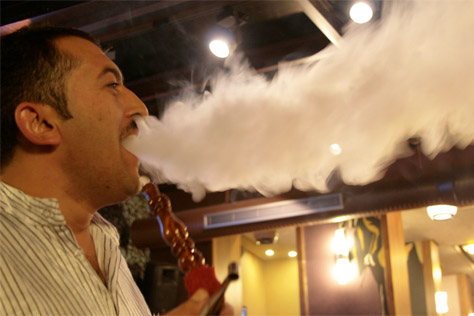
Will the government ban include a ban on Argeeleh smoking?

Will the government ban include a ban on Argeeleh smoking?

Decision will probably be quite unpopular with smokers.

Decision will probably be quite unpopular with smokers.

Sources:

Charles Fred’s photostream

Pzambrano’s photostream

Obama likely to appoint Ross, Kurtzer and Indyk says Haaretz

Alistair Lyon captures the zibdeh of the Bush shoe story: ANALYSIS-Iraqi shoe-thrower captures Mideast rage at Bush: Reuters, Alistair Lyon

The hurling of shoes at U.S. President George W. Bush on his farewell visit to Iraq strikes many in the Middle East as a fittingly furious comment on what they see as his calamitous legacy in the region.

Arab and Iranian TV stations have gleefully replayed the clip, sometimes in slow motion, of an Iraqi reporter calling Bush a “dog” and throwing his shoes at him — the Middle East’s tastiest insults — at a Baghdad news conference on Sunday.

The affront was a twisted echo of the triumphal moment for Bush when joyous Iraqis used their footwear to beat a statue of Saddam Hussein toppled by U.S. invading troops in 2003.

“It indicates how much antagonism he’s been able to create in the whole region,” former Egyptian Foreign Minister Ahmed Maher told Reuters, adding that the incident was regrettable.

Bush had harmed America’s reputation and the friendship many had felt for it. “Despite past mistakes in its policies, there was always a redeeming factor. In this particular case, there doesn’t seem to have ever been a redeeming factor,” Maher said.

Muntazer al-Zaidi, who works for independent al-Baghdadiya television, has shot to local stardom for his attack on Bush and his cry: “This is a goodbye kiss from the Iraqi people, dog.”….

Some Palestinians, whose hopes of independent statehood have withered in the eight-year Bush era, relished the moment.

“A shoe company in Hebron claimed the attack on Bush and they will give the attacker shoes all his life,” runs one joke being exchanged on mobile telephones in the Gaza Strip…

London Times reports some palestinian families so poor they eat grass

“We had one meal today – khobbeizeh,” said Abu Amra, 43, showing the leaves of a plant that grows along the streets of Gaza. “Every day, I wake up and start looking for wood and plastic to burn for fuel and I beg. When I find nothing, we eat this grass.”

PRESS FREEDOM IN JORDAN: A gift from the king
By Tim Sebastian Published: December 12, 2008 in the IHT

AMMAN: An odd thing happened the other day in the Arab world. …. King Abdullah of Jordan gathered together the chief editors of Jordan’s main newspapers and told them: “Detention of journalists is prohibited.”… “I do not see a reason for detaining a journalist because he/she wrote something or for expressing a view.”

And yet it’s hardly surprising that local journalists were unimpressed. …More than 20 laws continue to govern media conduct in Jordan… No single statement from the royal palace can airbrush away years of harassment and interference. Besides, the king’s statement comes in the same year that his country has been downgraded by the Paris-based organization “Reporters without Borders” in its 2008 Worldwide Press Freedom Index. Jordan now stands at 128th position out of 173 countries – six places lower than last year…..So was the king serious about pushing through improvements?….

Syrian Court Overrules Release Of Dissidents, Dow Jones, 2008-12-15

DAMASCUS (AFP)–A Syrian court has ordered two leading dissidents to remain behind bars after accepting a prosecutor’s appeal against a lower court order for their release, a human rights lawyer said Monday.  “The Court of Cassation upheld the application of the Damascus prosecutor general for the release of (Michel) Kilo and (Mahmud) Issa to be stayed,” Khalil Maatouk told AFP.

Kilo, a journalist, and Issa, a translator, were among seven activists arrested in May, 2006, and jailed for three years a year later for signing a petition calling for Syrian recognition of Lebanon’s independence. They ought to have benefited from a law providing for the early release of all prisoners who have served three-quarters of their sentences and been freed on Nov. 2.   But the prosecution appealed against an order by the court of appeal for their release under the law. They will now serve their prison sentences in full.

Kilo and Issa were convicted in May 2007 on charges of having “weakened national sentiment” and for “undermining the image of the state.”  They were also accused of fomenting sectarian strife.

Carter Visit to Beirut and Damascus:

See Borzou Daragahi’s coverage in the LA Times. It is excellent as usual.

“Carter was in Beirut over the last few days meeting with Lebanese officials and other luminaries. He also appeared before an overflow crowd at AUB.”

Arabs concerned that Hillary Clinton will tilt the incoming administration of President-elect Barack Obama strongly toward Israel need not worry, says Jimmy Carter.

The future secretary of State’s pro-Israel stance will be balanced out by Obama’s national security adviser, Gen. Jim Jones, who Carter said will adopt a more nuanced view toward the Israeli-Palestinian conflict. Jones helped train Palestinian security forces, leading to one of the most successful recent experiments in Palestinian autonomy.

From Reuters: Dec. 12

Carter said that while Obama had picked Hillary Clinton as secretary of state and Rahm Emmanuel as White House chief of staff, there was hope in his choice of retired Marine Gen. James Jones as national security advisor.

“As far as Rahm Emmanuel is concerned, yes, he is closely affiliated with Israel… But I think that another hopeful sign is that General Jim Jones will be his national security advisor,” Carter said.

Clinton had “been quite close to AIPAC’s position in the past,” Carter added, in reference to the American Israel Public Affairs Committee, a pro-Israel lobby group.

“But I think that Jim Jones is thoroughly familiar with the situation in Palestine,” Carter said. Diplomats say Jones was critical of Israel in a confidential report this year on how Israelis and Palestinians had met security commitments.

Obama to base his Middle East policy on army of envoys
By Barak Ravid, Dec 14, 2008, Haaretz

Jerusalem has received various reports in recent weeks indicating that American foreign policy in the Middle East and in Southeast Asia after president-elect Barack Obama takes office will operate on the basis of special envoys who will report directly to Obama and his designated secretary of state, Hillary Clinton.

Obama and Clinton’s transition teams are maintaining secrecy and minimal ties with Israeli diplomats. Obama and Clinton also directed their people not to take part in the policy debates of the Brookings Institution’s Saban Center forum, attended by Israeli politicians and officials, which took place earlier this month in Washington, D.C.

However, senior government sources in Jerusalem said that the information they have received indicates that the new administration is planning a hierarchy of about five special envoys to various regions, overseen by a kind of “super coordinator,” who would answer directly to the president and the secretary of state.
Advertisement

The sources said that the new policy is part of Obama’s and Clinton’s understanding that all the conflicts in the Middle East and Southeast Asia are to some extent connected to the Iranian nuclear program and withdrawal from Iraq. Therefore, it is important to operate in a number of parallel but coordinated channels to attain achievements on all fronts.

The most prominent name in consideration for the top coordinator post is Dennis Ross, who served as President Bill Clinton’s special envoy to the Middle East. Ross’ name has also come up as a possible senior adviser to Hillary Clinton.

The envoy to the Middle East would oversee the peace process between Israel and the Palestinians, negotiations between Syria and Israel and the situation in Lebanon.

Short-listed for this job are Colin Powell, who was President George W. Bush’s secretary of state during his first term; Dan Kurtzer, U.S. ambassador to Israel from 2001 to 2005; and Martin Indyk, who is close to Hillary Clinton and who served as U.S. ambassador to Israel from 1995 to 1997 and from 2000 to 2001.

The other four envoys would be: to Iraq to liaise with the Iraqi government on U.S. troop withdrawal; to Iran to oversee the beginning of dialogue and participate in international discussions on an incentive package; to Afghanistan and Pakistan to stabilize the security situation; and to North Korea to watch over denuclearization and the lifting of international sanctions.

Israeli Uncensored News explains that the US quarrel with Syria over nuclear inspections is welcome because it may prevent progress on peace negotiations and stall possibility of the Golan’s return. Their editor writes:

 “On a positive note, any international confrontation with Syria freezes the Syrian-Israeli peace talks which would cost Israel the Golan Heights and half the Lake Kineret, her only significant water source.”

Iraq urges Obama to talk to Iran, Syria
AFP, 11 December 2008

US president-elect Barack Obama and his future administration must open dialogue with Iran and Syria to “solve” long-standing issues plaguing the Middle East, the Iraqi government said Thursday.

“I call on the new administration to open a dialogue with Iran to resolve the exceptional problems which are affecting stability in the region,” government spokesman Ali al-Dabbagh said in a statement released at the outset of an international conference in Washington….”Whether the US would like Iraq to initiate that dialogue with Syria, we are ready.”

But the outgoing administration of President George W. Bush has cut nearly all diplomatic ties with Damascus,….”Without having that dialogue between Iraq and its neighbors, between the US and the region, I think we will not solve the problems between Iraq and its neighbors,” Dabbagh said.

In a televised interview Sunday, Obama confirmed he wants to hold talks with Iran, stating his readiness to end a 30-year stand-off between Washington and Tehran.

“We need to ratchet up tough but direct diplomacy with Iran,” Obama said, promising a “set of carrots and sticks.”Despite security improvements in Iraq this year, some US officials continue to accuse Iran of financing, arming and training Iraqi Shiite militias — a claim Tehran denies.

But the number of Iranian-made explosively formed penetrators (EFPs) in Iraq has decreased appreciably in recent months, indicating Tehran’s support for Iraqi insurgents is waning, according to US Army Lieutenant General Thomas Metz.

EFP attacks, which can penetrate heavy armor, are down to “a dozen, 20 in Iraq in a month from maybe 60, 80,” Metz told reporters …

A Syrian embassy in Beirut – the Syrian embassy would be located in the Beirut area of Ramlet al-Baida and the Lebanese embassy in the Damascus neighborhood of Abu Rummaneh…

Book Review

ENEMY MINE, the National
For years, Gilles Kepel has risen above the patter of news-hour terrorism experts. Max Rodenbeck reads the French scholar’s latest book, in which he observes the violent symbiosis between jihadists and their foes

Ali Khan – The Golan and Quneitra

 Israeli sources and the U.S. Committee for Refugees reported that the local population fled, whereas the Syrian government indicated that a large proportion of it was expelled.

Israeli sources and the U.S. Committee for Refugees reported that the local population fled during the 1967 War, whereas the Syrian government indicated that a large proportion of it was expelled.

Dispatch from Damascus Special Edition 3-The Golan and Quneitra
Ali Khan, (07/12/2008)


Ever since I had met the UN peacekeepers at the Indian Embassy, I wanted to go and visit their base and the Golan Heights. The officers at the Embassy were very helpful in getting me the required permissions. Luckily, I managed to get a ride on a diplomatic car, which inevitably makes things a bit easier. My co-passenger was Astad Deboo, one of the most famous and accomplished performers of Indian modern dance. He was in Syria for a concert as part of the various cultural programs that have been so popular and have pushed Damascus onto the international stage as the cultural capital of the Arab World 2008. There have been music concerts, theatre, exhibitions with pieces loaned from the V&A in London and many other events. I hope that this momentum will last and carry forward into the forthcoming years. There are many Iraqi artists in Damascus who have fled the war and have carved out a niche for themselves but their voices and work needs to get international exposure and this can only be done if all the energy put into making this year Damascus’ year, is channeled into future events.

Other Syrian artisans seem to have also benefited and while watching the BBC this morning I was relieved to see a story on the thriving art scene in Damascus: an important and refreshing change from the usual political stories that are so widespread in the West. I have read stories on the Internet about how some people find Syria a stifling and restrictive as far as artistic expression is concerned. While I agree that there is always a lot of scope for changes and reform, particularly about freedom of expression, these can only be brought about gradually and systematically and will inevitably take time. In a country like India, which is often referred to as the biggest democracy in the world, we have systems of bureaucracy and governance that are at worst retrogressive and at best archaic but even there the change cannot happen overnight and might even take a few generations to take place. India, like Syria, is still recovering from the effects of brutal colonisation. One of the main methods used by colonial regimes to facilitate their rule, was to break and fragment societies so that a minority could rule a large group of people. Individuals and social or religious groups that can be played off against each other do not present a danger to the colonial governments. This inevitably leads to a fractured society in which the goal of the individual becomes survival. To a large extent, I feel that colonized countries often find it hard to develop as quickly as they are expected to because people are reduced to day-to-day survival. If society was to be viewed as a tapestry, then one could say that the intermeshing threads which bind together to create the whole are torn apart by colonialism. In order to weave this tapestry again, society needs to be re-created with new institutions, new ideas and new people. In India, we are stuck with old systems, old and often foreign ideas and people whose worldview is shaped by the occurrences of fifty years ago. Therefore, inevitably the change that we want and need, will take time and it will be a slow process, possibly even taking a few generations to finish. I do not want to seem to be defending current actions and policies but I do feel that the reforms we desire in India will only come about when new generations and new institutions replace older ideas. Change cannot happen overnight.

It is strange how one meets people in the most unpredictable places. I could not have imagined sharing a car with Mr. Deboo of all people while going to Quneitra. However, I could not have asked for better company. All the more so because we started talking in Urdu so that our conversation and observations would remain private. Our driver was a smartly dressed man who gave me the same talk that I have received from so many people, particularly those affiliated with the establishment, whom I had met in Damascus. He told me how he thought that Western people had no culture, except one of violence and war, and that they promoted sectarianism while there are no such communal problems in Syria. He was happy that Syria was ‘hosting’ the 2 million odd Iraqi refugees. When I asked if the prices of food and accommodation had increased as a result, he fell silent. I did not want to be antagonistic but a lot of Syrians I had talked to, particularly those from Damascus proper were shockingly negative about the refugees and I just wanted him to know that people like me who visit Damascus are not unaware of some of the realities. Apart from his party line comments, he was a gentle and warm man.

We left Damascus late in the morning and headed south. Mr Deboo and I talked at length about the recent carnage in Bombay and since he has lived in the city for so long, his loss was all the more personal and painful. Despite the sad conversation, it was a pleasant change to hear the jolly, slightly anglicised Parsi English accent. In between our conversations I would ask our driver about the villages we were passing through. The landscape was gradually becoming greener and more fertile. We reached new Quneitra after an hours drive and the new town was not much different from the other villages we had passed on the way. There was a main street lined with shops. The town was less dusty than Dumaiyyara, which I had visited a couple weeks earlier. Children had just finished school and little boys in their blue uniforms skipped down the street while the girls, in light pink hijabs, huddled together and giggling listening to music on someone’s mobile. Bored looking farmers sat on overturned crates surrounded by vegetables in Styrofoam boxes. Once in a while they would look around, shout something unintelligible and then relapse into their sphinx like states. I think there must be a common language for all the vegetable vendors in the world, particularly the ones that walk around selling fresh vegetables from door to door. The deep guttural proclamations coupled with the crescendo of their voices seem to me to be the same from Lucknow to Damascus.

After a short while we reached a UN check post that was manned by a single UN Peacekeeper in the distinctive blue beret. He was wearing dark glasses and as we drove by, he raised his eyebrows, nearly imperceptibly, in acknowledgment of my wave. We drove for about 2 kilometers more and then were stopped at another checkpoint. This time the post was manned by about 6 Syrians who wearing black leather jackets and looked like they hadn’t slept for a week. A portly man came up to the car and asked for the passes. The pass was a small piece of paper and he scrutinized it from various angles and read it so carefully that it almost seemed like he was reading a papal bull. I had read it earlier and all that it said was that “Approaching military zones is strictly prohibited” and of course it had our names and nationality. There was a small footnote at the end asking us to return the pass without making any copies of it. Predictably, he pretended to have found some small hitch and after a short exchange with the driver, he eventually waved us through. As we were pulling out of the check post another leather-clad man with a rather prominent belly got into the car and then turned around and said hello to us. Our driver told us that this was our ‘guide’ and that we should ask him any questions we had.

We drove in to the village and the first thing I saw was a roundabout with rubble lying around on all sides. Initially it was strange to be driving on such well-maintained roads while everything around us was reduced to rubble. Until 1967 the whole area was undisputedly Syrian and after the 6-day war Israel captured the area and defended it in the Yom Kippur war in 1973. In 1981 it unilaterally annexed the entire area, about 450 square miles, in a move that was condemned internationally and was declared illegal by different UN resolutions, not that those are taken very seriously by anyone. The area is mentioned in the infamous UN resolution 242 listing all occupied territories. Conflict is not new to the area. Around 800 BC, after the end of the United Monarchy the area was actually fought over by two Jewish kingdoms and King Ahab of Israel defeated Ben-Hadad I. According to Jewish scripture the area is part of the Canaan. It was also fought over by the Aramean kings of Damascus, Alexander the Great, the Romans and then in the 16th century it was controlled by the Ottomans, who retained power over it until WWI.

Quneitra

Quneitra

Now, Quneitra is a ghost town. Apparently, when the residents of Quneitra were evacuated, Israel made sure Israeli builders to whom the contracts had been given removed anything that could be taken apart or unscrewed. All that remains is concrete and rusted steel girders. We drove straight to the border outpost where Syrian control finishes and UNDOF (United Nations Disengagement Observer Force) patrolled land begins. The force was established in 1974 and they try to maintain the delicate peace that exists now. There has been no military confrontation for the past thirty years. At the border there were two trailers and a concrete building. “We will win this fight as our cause is just” was stenciled onto the wall and the quote was attributed to President Bashar al-Assad. A lone boyish looking soldier in an oversized uniform paced up and down next to the barrier as a UN Toyota Land cruiser crossed into the Syrian side. The UN officers stopped and Syrian soldiers searched the car. One of the UN peacekeepers at the Diwali party had told me that he had once gotten a lecture from a Syrian soldier because he absent-mindedly still had a crisp packet that be had bought in Israel. The foil had Hebrew letters on it and anything with even the slightest hint of being Israeli was strictly prohibited. The officers got out of the car and they turned out to be Indians. One was a Sikh with a UN blue turban and the other wore just a blue beret. They were on their way to Bosra and wanted to know the way. We said hello but only got a curt reply with a slight nod of the head in return. They were certainly not as warm as the sergeants and privates I had met in the Diwali party.

Our ‘guide’ led us towards the gate. There is a small covered platform on the side with a good view of the UN base, as well as the Israeli communications towers on the hill opposite. The Israeli base, though far away, looked imposing and at first glance one could see how technologically superior they were. Our guide told us that starting from 10 meters in front of us, the entire area was mined. The whole area is so green and fertile.  I thought to myself that it was because of the abundant water and good soil that Israel refused to let the region go. The argument that it was part of Biblical Israel, Bashan, just seemed like a ruse. I think that about a third of Israel’s fresh water also comes from the Sea of Galilee which is in the region. The guide went onto tell us about how the Israelis had built a nightclub cum casino near the border and that it was really used by them to fornicate and meet ‘bitches.’ He said this in such a serious and sure manner that I had to try very hard to suppress my laughter. The way he pronounced ‘beetches’ was particularly amusing. I turned around to look at Jabal Sheikh, named so because a patch of snow that is permanently on the peak of the mountain gives it the look of an old man wearing a keffiyeh,  so that they did not see my face. We were then ushered into the Lieutenant Colonel’s office and were offered a cup of Arabic coffee followed by extra sweet tea. The Lieutenant Colonel was a bald, chubby man with rosy cheeks and no mandatory moustache. He didn’t speak much and as he sat behind his desk, which had piles of papers, his oversized military cap, a well-thumbed copy of Oxford English Dictionary and mementoes left by various UNDOF countries. I imagined he looked like a Russian officer sitting in some obscure border in Kamchatka after the October revolution without any idea of what was happening outside office! He was very polite and showed a spark of life when Mr. Deboo was introduced to him and he was told that the latter was a dancer from India. When I was introduced his eyes reverted back to their distant and disinterested gaze. Perhaps he had already met Indians studying Arabic at Damascus University! After exchanging the usual pleasantries we downed our cups of tea and went out.

The guide then took us to an olive plantation. Representatives of various countries of the world have planted the trees as a gesture of peace and a symbol of hope. We were shown Cuba’s tree and of course the Indian one. In the distance on top of the mountain, the Israeli base loomed threateningly and Mr. Deboo and I joked that they were probably looking at clear pictures of our faces as we walked around and maybe the bees buzzing around us around were actually little robots! From there we drove to the Mosque and I asked if I could take pictures. The guide nodded vigorously and said that I should show people at home what the ‘Israelis had done.’ The mosque was a shell. The roof had caved in. We walked in and in the main prayer niche I saw graffiti. Someone had written ‘Viva Turkmen’ in big letters. On the other walls there was graffiti in some sort of Slavic language. Inside someone had written ‘Chechen Republic’ in big red letters. Next to it ‘Khalid’ had sprayed a proclamation of his love for Aman. I am sure Aman was a girl but just maybe he meant peace! I didn’t know what to think of it. On the one hand it violated the sanctity and holiness of the mosque. On the other hand the mosque was no longer used and since it was ruined by war, a sign of love, no matter how superficial seemed strangely appropriate. We got back into the car and drove to the Hospital via the church. The Church is right next to a Syrian guard post and so I had to be careful taken pictures. The interiors were covered in graffiti and all the doors and windows had been removed. The floor was covered in rubble and the shaft of lights coming in through the round windows spot lit little patches of concrete. The hospital is used as one of the most vivid reminders of how the village suffered. The whole building is covered in bullet holes and there is a sign above the entrance that read “Destructed by Zionists and changed it to firing target.” I saw a soldier in one of the frameless windows but as soon as our eyes met he ducked out of view. Next to the hospital are two UN bases. I was initially planning to meet my peacekeeper friends there but the ‘guide’ and the colonel had insisted that this was not possible and it was strictly forbidden for anyone to interact with the UNDOF personnel. Apparently there are still 5 families that live in the destroyed village. I asked our driver why they continued to live here when they could move to new Quneitra. He didn’t have an answer and the ‘guide’s’ answer that they wanted to live on their land did not really make sense.

The whole area is eerily peaceful with moss, conifers and wild grass growing amidst the rubble. It was hard to imagine people uprooting other people’s lives so entirely and I wanted to believe that the rubble was the result of a natural disaster and not human greed for power. The whole village has been demolished thoroughly and methodically. The twisted girders and contorted steel rods of the houses almost seem to express the pain and anguish of their owners suffering. We drove out of Quneitra and as we were leaving the guide pointed out a restaurant and urged us to eat there. It was lunchtime but neither of us thought it at all appropriate to eat surrounded by such devastating reminders of human suffering. According to him a lot of Syrians come to eat there because it has very good food. I couldn’t see any cars outside. As we drove out of Quneitra, the guide got out at the outpost, shook our hands warmly, apologised for not allowing us to meet the Peacekeepers and then said goodbye. The Land Cruiser hummed as we sped away. There was not much conversation on the way back. I stared out of the window at acres of grape vines and the wise looking Jabal al-Sheikh. It is saddening to see how so many of today’s conflicts are caused by unrelenting avarice, the desire to control natural resources, and a myopic view of history and religion. While the elite fight all over the world to advance their own interests, it is always the poor and the weak that silently bear the burden and often pay for the greed of others with their lives.

How much destruction will it take for people to wake up and realise the irreversible damage we are causing to the world and to each other? My friend told me that approximately 35 million soldiers have died in the wars of the 20th century. I do not even want to try and work out the number civilians killed deliberately or as ‘collateral damage.’ But, the violence is only becoming more and more widespread. The recent tragedy of Bombay, and the aftermath with India and Pakistan becoming more and more bellicose, is yet another reminder of how precarious the survival of our world is!

Ma’as Salaam!

Economy: Syria Avoids Recession

 Syrian chef Ahmad Zeidan prepares gourmet Aleppine dishes at the Mirage hotel in the historic city of Aleppo October 21, 2007. With silk road fame and cosmopolitan prosperity, todays Syrian city of Aleppo was the culinary capital of the Middle East before cultural and commercial decline took its toll. Syria is opening up its economy in the last few years after decades of nationalisation and state control and reviving interest in the citys cuisine. Picture taken October 21, 2007.

Syrian chef Ahmad Zeidan prepares gourmet Aleppine dishes at the Mirage hotel in the historic city of Aleppo October 21, 2007. With silk road fame and cosmopolitan prosperity, today's Syrian city of Aleppo was the culinary capital of the Middle East before cultural and commercial decline took its toll. Syria is opening up its economy in the last few years after decades of nationalisation and state control and reviving interest in the city's cuisine. Picture taken October 21, 2007. REUTERS/Khaled al-Hariri

[Landis Comment]

The Economist forcasts that Syria’s real GDP growth will fall from 4.8% in 2008 to 3.6% in 2009, and recovering slightly to 4.1% in 2010. 

The World Bank Report Provides a lower estimate for Syria’s GDP Growth. A bi-annual report by the World Bank has forecast growth of 2.5 percent in Syria’s Gross Domestic product next year. Read

The following economic and political reports suggest that Syria is fairly well isolated from the world recession. For once, Damascus’ habitual reform footdragging paid off handsomely. The fact that the long promised stock market has yet to be launched has saved Syrian businessmen money and headache.

The terrible run up in commodity prices that threatened to force so many more Syrians into the poor house during the first half of 2008 was largely reversed during the second half. The recession has moderated the price of basic goods and inflation.

The collapse of commodity prices has a down side, however. Oil price declines will hit Syria’s government budget hard, both because of Syria’s own diminishing supplies but also because of the smaller price. Less revenue will flow into the government coffers also because the Gulf countries, which do most of the foreign investing in Syria, will hold tight to what money they have.

Here is what the Economist predicts:

 Export earnings will decline by 13% in 2009–owing to the steep fall in oil prices as well as an easing in global agricultural prices–but will grow by 5% in 2010 as cotton (which together with textile products represents about 15% of exports) and some other commodity prices strengthen slightly. We forecast reasonably good harvests over the outlook period, but if drought persists it will have a significant impact on wheat and other food exports. Oil production is increasing at a number of small fields but declining at the larger, mature fields. As a result, overall production will remain relatively flat, averaging 374,000 barrels/day (b/d) in 2009 and 376,000 b/d in 2010.

WORLD BANK

Here is what the World Bank says about Syria in the latest “Doing Business” report issued a few days ago. 

“Syria was the second biggest reformer in business start-up in the region” but still ranks at 137 globally in “doing business.” Syria issued a new company law and commercial code that took registration out of the court, introduced statutory time limits and made using lawyers optional. But along with these reforms, Syria also made starting a business more difficult: a 33% increase in its minimum paid-in capital requirement.

Forty-nine economies, of which 10 are in the Arab World, simplified start-ups and reduced costs. These are among the 115 economies—more than half the world’s total—that have reformed in this area over the past 5 years. The Arab economies reforming in this area are Egypt, Jordan, Lebanon, Mauritania, Oman, Saudi Arabia, Syria, Tunisia, West Bank and Gaza and Yemen…..

The third most popular were reforms to ease trading across borders. Four Arab countries reformed in this area: Djibouti, Egypt, Morocco and Syria. In all 3 areas, administrative reforms increased efficiency and transparency….

Who is reforming in 2007/08?

Syria introduced a new commercial code that simplified business start-up by abolishing the court and lawyers’ involvement in the registration process. At the same time, reforms in the tax directorate further simplified tax registrations for new business. The entry of private banks into the Syrian market sped up the issuing of Letters of Credit. This led to a reduction of 2 days in document preparation time for both exports and imports….

Arab economies WHO reformed consistently IN the past 5 years

Syria reformed 3 years in a row. It reformed in 3 areas: starting a business, trading across borders and paying taxes…..

Starting a business

Syria introduced a new commercial code that simplified business start-up by abolishing the court and lawyers’ involvement in the registration process, while reforms at the tax directorate further simplified tax registration for new business…..

Syria’s business start-up reforms have not followed a straight path. In 2006, Syria reduced its stamp duty from 1.5% to 0.5% of capital. In 2007, it made business registrations more expensive by requiring Limited Liability Companies (LLCs) to publish their memorandum of association in the official gazette. In 2008, it passed a new law and commercial code, opening the door to electronic processing. Syria also tried to harmonize its laws with laws around the world. Furthermore, Syria’s 2008 reforms included detailed explanations of legal forms while abolishing of the concept of a “closed company” in order to encourage formation of LLCs. As a result, the following aspects of business registration were also reformed:

  • Court involvement in the registration process was abolished
  • Decisions regarding companies’ memorandum of association were given a statutory time limit of 2 weeks
  • Lawyers’ involvement in the drafting of the memorandum of association was abolished and replaced with a standard version
  • Publication of the entire memorandum of association was no longer necessary; companies could simply publish a copy of their registration certificate.
  • At the same time, a new directorate of taxes with reduced tax registration processing times helped further improve Syria’s business environment.

Paying taxes

In 2006, in an effort to encourage foreign and domestic investments and increase tax collection, a new tax law was issued lowering taxes. This was accompanied by the Tax Evasion Law and other laws that carried stricter enforcement measures, including imprisonment. Moreover, the tax administration has been reformed in Syria. Tax forms were unified in 2004 and were further simplified in 2007 to conform to the new tax laws. In September 2006, preparations started for a new VAT to be enacted later in 2008 or 2009….

Which Arab economies reformed in 2007/08?

Djibouti, Egypt, Morocco and Syria reformed. Syria eased up the entry requirements for private banks which then sped up the issuing of letters of credit. This led to a reduction of 2 days in document preparation time for both exports and imports in Syria…..

Which Arab economies reformed in the past 5 years?

While Djibuti, Egypt, Morocco and Syria continued their reforms. looking back, Algeria Jordan, Tunisia, Saudi Arabia and United Arab Emirates also reformed.

In 2005, Syria started modernizing its customs offices in order to implement an electronic data interchange system, simplify procedures, increase transparency and improve the productivity of its staff. By 2006, IT divisions in several customs directorates were set up, helping to roll out new IT equipment and software (specifically, ASYCUDA from EDI), starting in four main locations. So far, two data input centers have been set  up in Damascus and Lattakia to allow traders to submit declarations electronically. In 2008, these customs reforms were fortified with the easing up of entry requirements for private banks which then sped up the time it took to issue letters of credit…..

[end] 

FROM THE ECONOMIST INTELLIGENCE UNIT
SYRIA: Political outlook for 2009-10

The president, Bashar al-Assad, is expected to remain in power in 2009-10 and there is no significant threat to his rule. However, there will be ongoing tensions within the ruling elite, exacerbated by external pressures.

  • Mr Assad will continue the push to reduce Syria’s political isolation, but any open interference in Lebanon would work against this, alienating new interlocutors such as France’s president, Nicolas Sarkozy. 
  • There is unlikely to be progress on negotiations with Israel, owing to a lack of public and parliamentary support in Israel for returning the occupied Golan Heights to Syria and the forthcoming Israeli elections in February 2009.
  • Syria’s drive to increase investment and boost tourism will be affected by the global economic slowdown, with real GDP growth falling from 4.8% in 2008 to 3.6% in 2009, and recovering slightly to 4.1% in 2010. 
  • Inflation will decline sharply from its 2008 peak, averaging 7.2% in 2009 and 8.4% in 2010, as the global slowdown depresses global commodity prices. 
  • The current-account deficit will widen in 2009, to around US$1.2bn (2.1% of GDP), increasing to US$1.4bn in 2010.

DOMESTIC POLITICS: Mr Assad and his ruling Baath party are expected to retain a secure grip on the country, supported by key elements in the security services, but significant challenges will nevertheless arise in 2009-10. The core of the elite is largely drawn from Mr Assad’s Alawi sect, who are acutely conscious that any move against him would risk endangering their hold on power. However, there are still tensions within the regime, accentuated by external pressures such as the UN investigation into the killing of Rafiq al-Hariri, a former Lebanese prime minister, and the International Atomic Energy Agency investigation of allegations that a Syrian building bombed by Israel in 2007 was part of a secret nuclear programme.

INTERNATIONAL RELATIONS: Syria’s international isolation is expected to continue easing over the outlook period, although gains could easily be reversed. The progress is largely a result of an apparent shift in its approach to Lebanon, including an agreement to establish formal diplomatic relations for the first time. Syria’s engagement in indirect talks with Israel, brokered by Turkey, has also prompted a cautiously positive international response.

The early fruits of these developments have included financial assistance from Gulf Arab states and a visit to Damascus, the Syrian capital, by the French president, Nicolas Sarkozy. However, Syria’s relationships with the region’s heavyweights, Egypt and Saudi Arabia, remain severely strained and there is no obvious catalyst for improvement over the outlook period.

A rapprochement with the US will also be difficult, although it is now more likely, as the president-elect, Barack Obama, has said that he is willing to talk with enemy states, including Syria. However, Syria still considers Lebanon to be within its sphere of influence and so could get entangled in fresh controversy both in the run-up to the 2009 Lebanese parliamentary election and in its aftermath, especially if the anti-Syrian “March 14th” coalition were to gain ground. A further threat is the UN Special Tribunal for Lebanon investigating the assassination of Mr Hariri, which is scheduled to begin on March 1st 2009, as senior Syrian officials are likely to be among the suspects.

POLICY TRENDS: Syria is expected to continue with a process of gradual liberalisation of its centrally planned economy, a process that has been led by the deputy prime minister for economic affairs, Abdullah al-Dardari. The overriding policy challenge will be to offset the impact of the recent (albeit temporarily checked) decline in oil production by making established businesses more dynamic and encouraging entrepreneurship and investment, particularly in sectors that can boost export earnings. As financing will be difficult to secure in the context of the global economic crisis, Syria’s spending will be constrained by its revenue, which will require fiscal prudence. The reduction in fuel subsidies in May 2008 was a significant step in that direction, but the simultaneous increase in public-sector salaries largely offset the fiscal benefits and both moves risk stoking inflation.

Although the introduction of a value-added tax (VAT) has been approved in principle, and would diversify government revenue, its implementation has been delayed repeatedly, and will now not be implemented before 2010.

INTERNATIONAL ASSUMPTIONS: World GDP growth (at purchasing power parity exchange rates) is expected to slow sharply to 2% in 2009, owing largely to the impact of recession in the US and many other OECD economies, before recovering to 3% in 2010.

The Economist Intelligence Unit has revised down its forecast for the benchmark dated Brent Blend to an average of US$65/barrel in 2009 and US$68/b in 2010, far below the July 2008 peak of US$147/b. The slowdown in the global economy will also hit the prices of other commodities, particularly food–most of the dramatic food price rises of 2008 will be reversed during 2009 and industrial materials prices will fall sharply.

ECONOMIC GROWTH: Global factors, including a downturn in key export markets, will lead to a slowdown in Syria’s real GDP growth, from an estimated 4.8% in 2008 to 3.6% in 2009, despite a partial recovery in agricultural exports (following the drought and poor harvest this year). Foreign investment will not be as strong as previously expected owing to the global economic crisis, and despite growing opportunities resulting from Syria’s increasing economic openness and improving international relations. Growth will strengthen slightly in 2010 to 4.1% as exports markets begin to recover. Growth in private consumption is likely to weaken in 2009-10, because of a drop in disposable incomes (owing to the cuts in fuel subsidies and to inflation) and a decline in the contribution from Iraqi refugees as they run down their savings, find it more difficult to enter the country and return home in growing numbers.

INFLATION: Consumer price inflation, which we estimate will have averaged 14.7% in 2008, is expected to decline but remain relatively high in 2009-10. It will take some time for the secondary effects of the rise in fuel prices (owing to the reduction in subsidies) and the 25% increase in government salaries and pensions to work their way through the economy. However, we forecast that lower fuel prices in 2009 (which may be partly offset by a further cut in subsidies) and an easing of non-oil commodity prices will help to bring down inflation to 8.6%. Any significant return of Iraqi nationals to their homeland could lower it even further by reducing demand pressures, although that is more likely to happen in 2010, when we forecast inflation will ease further to 7.6%.

EXCHANGE RATES: The Syrian pound has been pegged to a basket of currencies based on the IMF’s special drawing rights since October 2007, resulting in a marked appreciation against the US dollar. Although the new regime is less rigid than the previous peg to the dollar, the authorities remain unlikely to let the pound float freely, because they place a high priority on exchange-rate stability. The dominant position of the state-owned banks and the Central Bank’s control over foreign-currency transactions (even as some laws are relaxed) mean that the regime is well placed to control the value of the currency. The pound has declined slightly from its May 2008 peak of SP45.8:US$1, and we do not expect any substantive change over the outlook period, with the exchange rate forecast to average SP46.4:US$1 in 2009-10.

EXTERNAL SECTOR: The value of exports will be significantly affected by the change in oil prices (as oil still represents around one-third of total exports). We forecast that export earnings will decline by 13% in 2009–owing to the steep fall in oil prices as well as an easing in global agricultural prices–but will grow by 5% in 2010 as cotton (which together with textile products represents about 15% of exports) and some other commodity prices strengthen slightly. We forecast reasonably good harvests over the outlook period, but if drought persists it will have a significant impact on wheat and other food exports. Oil production is increasing at a number of small fields but declining at the larger, mature fields.

As a result, overall production will remain relatively flat, averaging 374,000 barrels/day (b/d) in 2009 and 376,000 b/d in 2010. However, the net impact of oil prices on the trade balance is limited because Syria is now importing around the same value of refined products as it exports in crude oil.

Non-oil exports are continuing to benefit from the relaxation of foreign-exchange controls, which has led to more exports moving out of the black economy and being officially recorded. Import spending growth will ease over the outlook period, owing to falls in commodity prices. Overall, the trade deficit will widen to about US$2.3bn (4.1% of GDP) in 2009, increasing slightly to US$2.6bn in 2010.

[end]

SYRIA: Foreign policy successes constrained by caution
Wednesday, December 3 2008
Oxford Analytica

EVENT: Lebanese Christian leader Michel Aoun today travelled to Syria, meeting Syrian President Bashar al-Assad — the first time since fighting a bitter ‘war of liberation’ against Syria in 1989-90.

SIGNIFICANCE:Upon Aoun’s return from exile after the 2005 assassination of former Prime Minister Rafiq al-Hariri and subsequent Syrian withdrawal, he sided with Syrian allies against the Western-backed government. Today’s visit to Damascus highlights Syria’s success in retaining strategic influence in Lebanon, despite its bloody past involvement and ignominious departure.

ANALYSIS: In recent years Syria found itself almost completely isolated, with the stability, and perhaps even the very existence, of the regime becoming increasingly endangered. In addition to constant worries over Israel’s intentions, the Syrians were concerned about the intentions of the Bush administration, which did not hide the fact that regime change was, if not a central objective, at least on its ‘wish list’.

Defiance.However, neither isolation nor perceptions of danger brought policy change. On the contrary, Syria continued playing for high stakes in Lebanon, persisted in its recalcitrance on Iraq, and tightened ties with Iran and Hizbollah. This apparent stubbornness was driven by a number of considerations:
  • The regime deeply distrusted the Bush administration, suspecting that it desired regime change; it did not believe that the US administration was prepared to pressure Israel or otherwise satisfy Syrian aims.
    *It calculated that any concessions would be met by increased demands that Syria would ultimately be unable to meet, similar to the case of Saddam Hussein’s Iraq; the regime resolved not to show any sign of weakness.
  • It benefited from being seen publicly to oppose the Bush administration, wildly unpopular in Syria and the region; the shaky legitimacy of President Bashar al-Assad was consolidated by his opposition to US and Israeli projects.
  • Relations with the Bush administration reached a low point on October 26, 2008, when US helicopter-borne commandos attacked a farm near the Syrian village of al-Sukkariyya in the Abu Kamal area, not far from the border with Iraq. US sources claimed that an Iraqi al-Qaida activist named Abu Ghadiyya was killed in the attack.
Rapprochement.However, just a week after the US attack, Barack Obama was elected president of the United States. Damascus welcomed Obama’s election and expressed the hope that the US elections would mark the beginning of a new era in relations between the two countries. Such hope was founded on a number of preceding developments:
  1. Lebanon. The events of May 2008 in Lebanon, which witnessed a demonstration of force by Syria’s allies, highlighted Syria’s dominant role; this was reinforced by the Syrian diplomatic contribution to negotiations in Doha that led to a relaxation of tensions in Lebanon
  2. Israel.Nearly simultaneously with the Doha Agreement, it was announced that Israel and Syria had been pursuing indirect peace talks with Turkish mediation. Although the announcement was received frostily by the Bush administration, Israeli strategic thinkers appeared to have concluded — particularly in the wake of the disastrous 2006 conflict with Hizbollah — that weakening the perceived ‘Iranian axis’ required transforming Syria’s foreign policy orientation.
  3. Europe. The developments in Lebanon and Israel encouraged European players to re-engage. French President Nicolas Sarkozy took the lead, inviting Assad to Paris in July and then convening a summit with Assad in Damascus together with the emir of Qatar and the Turkish prime minister. Since then, a regular procession of European foreign ministers have passed through Damascus, with Syrian Foreign Minister Walid al-Mouallem once again welcome in most European capitals. Syria’s long-frozen EU partnership agreement is to be signed soon; human rights objections are long forgotten.
  4. Back-channel discussions. Despite mutual recriminations, the leadership kept its channels to the United States open, and succeeded in encouraging a number of key Democrats to re-evaluate US Syria policy. Zbignew Brzezinski, Nancy Pelosi and John Kerry all visited Damascus and met Assad; they appear to have been encouraged by the prospects for rapprochement.
Objectives: The new situation presents Syria with a golden opportunity to advance its interests. Key objectives are to:
  • ensure the stability of the regime and remove any possible US threat to its existence;
  • get back the Golan Heights;
  • restore and legitimise Syrian influence in Lebanon;
  • see an end to the US presence in Iraq and prevent the emergence of an Iraqi entity hostile to Syria;
  • and obtain economic and political advantages from an improvement of relations with Europe and the United States.
Prospects for achieving these goals look good on the surface:
  • The most grandiose ambitions of the Bush administration with regard to regime change are dead, and the prospects for a rapprochement under the Obama administration appear promising.
    *The United States is closer than ever to leaving Iraq.
  • Israeli Prime Minister Ehud Olmert is amenable to a peace agreement in which Israel would return the Golan Heights.
  • In Lebanon, the assumption that Syria could be removed completely from the scene has been shown to be groundless.

However, although further diplomatic and economic successes are likely, there is a significant likelihood that the full potential of the situation will not be grasped:

  • Syria’s foreign policy has long been characterised by caution, indecisiveness and passivity; bold gestures such as Egyptian President Anwar Sadat’s visit to Jerusalem in 1977 are unknown.
  • *Negotiations have long been characterised by a hard-line, unwavering, all-or-nothing approach.
  • Unlike Sadat’s Egypt, which abandoned the Soviet Union for US sponsorship, Syria is not interested in a wholesale strategic shift; the main concern is to guarantee the status quo, with a minimum of concessions on domestic matters or relations with Iran, which Syria sees as counterbalancing the West and thus creating space for independence in decision-making.
  • The return of the Golan Heights, which is the one prize that could tempt Syria thoroughly to reorient its foreign policy, depends on an Israeli domestic political situation that seems increasingly inclined to the Right.

Outlook. Syria has returned to the limelight and will be the focus of intensive diplomatic activity for the foreseeable future. Syria’s importance will also grow in light of parliamentary elections in Lebanon scheduled for May or June, which could further increase the power of Syria’s allies. At the same time, it is doubtful that Syria’s dialogues with the West will augur a dramatic change in policies. After all, the experience of recent years has taught Assad that it was precisely his stubborn adherence to his positions that extricated him from isolation and consolidated his power.

Therefore, there is no reason for him to alter or abandon the stances he has taken, especially now that there are no obvious threats or constraints on Syria compelling him to do so.

CONCLUSION: Syria’s foreign policy achievements in 2008 are considerable, and look set to continue into 2009. However, while the regional and international situation is becoming more favourable, the leadership may well not take full advantage of the opportunity for transformation, preferring the safety of the status quo.

From the Economist

Syria economy: Outlook – Impact of public-sector reforms to be mixed
EIU ViewsWire, 10 December 2008
COUNTRY BRIEFING: FROM THE ECONOMIST INTELLIGENCE UNIT

Syria is expected to continue with a process of gradual liberalisation of its centrally planned economy, a process that has been led by the deputy prime minister for economic affairs, Abdullah al-Dardari. The overriding policy challenge will be to offset the impact of the recent (albeit temporarily checked) decline in oil production by making established businesses more dynamic and encouraging entrepreneurship and investment, particularly in sectors that can boost export earnings. As financing will be difficult to secure in the context of the global economic crisis, Syria’s spending will be constrained by its revenue, which will require fiscal prudence. The reduction in fuel subsidies in May 2008 was a significant step in that direction, but the simultaneous increase in public-sector salaries largely offset the fiscal benefits and both moves risk stoking inflation. Although the introduction of a value-added tax (VAT) has been approved in principle, and would diversify government revenue, it has been delayed repeatedly, and it will now not be implemented before 2010.

Syria’s fiscal deficit is expected to widen to around S£173bn (US$3.7bn, or 6.7% of GDP) in 2009, before easing to S£137bn (4.7% of GDP) in 2010 as oil prices increase and tax revenue grows. Although fuel subsidies were reduced in 2008, public-sector salaries and crop purchase prices were both increased, largely offsetting the fiscal savings. The remaining fuel subsidies are still a significant fiscal burden, particularly as Syria imports much of the refined products that it uses. When VAT is introduced—now officially delayed until 2010 and likely to be at a rate of around 10%—there will be a considerable boost to tax revenue. The government may receive windfall revenue in 2009-10 from the conversion of existing mobile-phone contracts into longer-term licences and from allowing a third operator to enter the market.

The Economist Intelligence Unit expects the fiscal impact of the government’s public-sector reform plans, which include the transformation of state-owned enterprises into autonomous companies with their own budgets, is likely to be mixed. Although direct state revenue would fall, these firms would be required to pay corporation tax and would no longer receive state subsidies, probably resulting in a net positive impact on the public finances. The Central Bank of Syria is expected to continue to implement a process of monetary reform and gradually obtain greater autonomy. It began to issue Treasury bills on a trial basis in July 2008, and this is expected to become a regular feature over 2009-10 in order to finance development projects and ultimately the fiscal deficit. There are also plans to launch a local bond market, increasing the number and sophistication of monetary tools available to the Central Bank and helping to contain the inflationary impact of budget deficits. The Central Bank is likely to continue to reduce the restrictions on foreign-currency transactions, a process that it started in early 2008, in order to facilitate investment. These measures should also help to slowly develop and modernise the banking sector.

The Central Bank of Syria is expected to continue to implement a process of monetary reform and gradually obtain greater autonomy. It began to issue Treasury bills on a trial basis in July 2008, and this is expected to become a regular feature over 2009-10 in order to finance development projects and ultimately the fiscal deficit. There are also plans to launch a local bond market, increasing the number and sophistication of monetary tools available to the Central Bank and helping to contain the inflationary impact of budget deficits. The Central Bank is likely to continue to reduce the restrictions on foreign-currency transactions, a process that it started in early 2008, in order to facilitate investment. These measures should also help to slowly develop and modernise the banking sector.
Carter in Damascus as US and Israel try to Pressure Syria on UN inspections

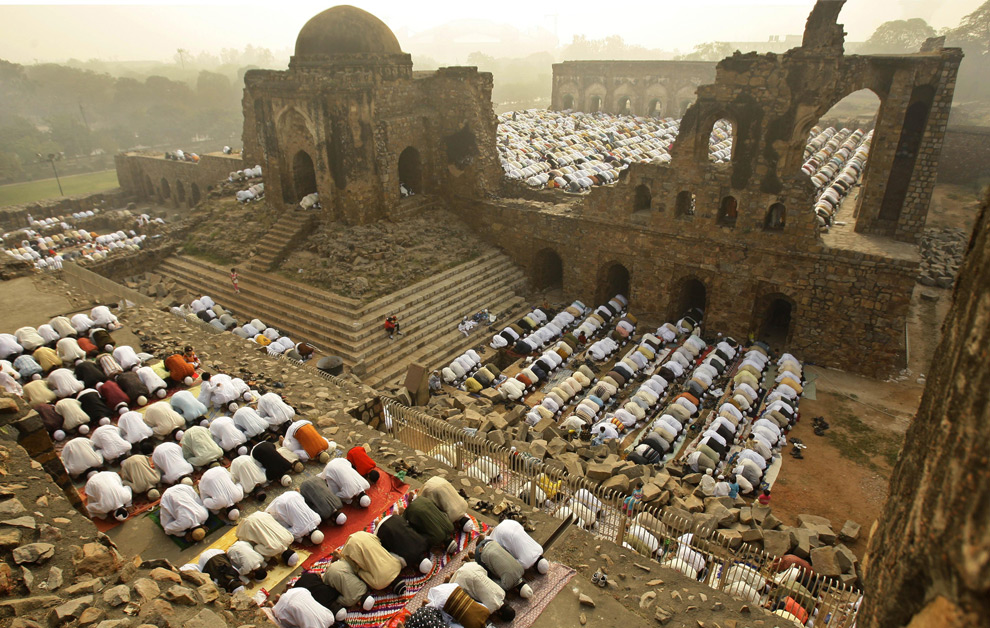
In New Delhi, India, Muslims offer Eid al-Adha prayers at the Ferozshah Kotla Mosque on Tuesday, Dec. 9, 2008. (AP Photo/Gurinder Osan) See the rest of the Eid pictures: Here

In New Delhi, India, Muslims offer Eid al-Adha prayers at the Ferozshah Kotla Mosque on Tuesday, Dec. 9, 2008. (AP Photo/Gurinder Osan) See the rest of the Eid pictures: Here

Carter in Damascus with Assad

Carter in Damascus with Assad

Ex-President Carter is in Damascus today– Saturday –  for talks with Syrian President Bashar al-Assad. In Lebanon Carter stressed that steps taken by both Israel and Syria would be “a major step forward to achieve peace in the region.” He told the reporters that diplomatic ties between Lebanon and Syria should speed up, adding “I am proud of the development in relations between Lebanon and Syria.” He expressed hope that “peaceful, transparent and democratic” parliamentary elections would take place in Lebanon next spring, urging the Lebanese to vote and choose their leaders without external pressure.

Syrianews is reporting that Carter told Assad that the Obama administration will send an American ambassador to Damascus.

?????:??? ?????? ??????? ????????? ??????? ????? ?????? ??? ???? ??????? ????????

Israel Responds to IAEA’s Letter on Syria’s Site Wall Street Journal

The International Atomic Energy Agency’s letter of Dec. 3 (“Probing Syria’s Nuclear Project“) defending the agency’s record in investigating Syria is astonishing, but not surprising. Each time the agency comes under political criticism for handling of a Middle Eastern country’s flagrant breaches of its obligations under the Nuclear Non-Proliferation Treaty or its safeguards agreement, the agency immediately resorts to publicly invoking Israel’s name…..  Nothing should stand in the way of the agency’s search for evidence. The claim that Israel is withholding critical information on the site is nothing but a smoke screen. Targeting Israel is a poor excuse. It will not absolve IAEA of its prime duty to get to the bottom of Syria’s nuclear activities…..

Does Syria need nuclear power?”,  Middle East Online. Syrians trapped between urgent need for alternative fuel and US double standards on nuclear energy.

US, UAE close to nuclear cooperation deal. Middle East Online

The United States and the United Arab Emirates (UAE) are close to clinching a deal for civilian nuclear cooperation, State Department spokesman Sean McCormack said Friday. … McCormack was commenting on a report in the Wall Street Journal that said the Bush administration plans to sign a nuclear cooperation deal with the UAE, the first such pact with a Middle East country.

US shows Syria yellow card, Sat, 13 Dec 2008

The US ambassador to the International Atomic Energy Agency has warned that Syria might face punitive measures over its ‘nuclear program’.

Citing an al-Sharq al-Awsat interview with Gregory L. Schulte, the Israeli daily Yediot Ahronot quoted the US diplomat as saying that Damascus should decide whether it wants to cooperate on its alleged atomic program until March or it will face punishment. “The international agency is giving the Syrians an opportunity to cooperate, and they have an extension until the next meeting to cooperate,” Schulte said on Saturday.

“I hope the Syrians reach the conclusion that they should cooperate for the sake of their own interests” he said, adding that if Damascus failed to cooperate “this would lead to a negative response, and serious questions would be raised”…..

Can Obama avert an Arab-Israeli disaster? Bernard Debusmann

Time is running out for Israel and the Palestinians. Barack Obama is probably the last American president to have the option of pursuing an accord leading to the establishment of a Palestinian state alongside Israel, the so-called two-state solution. Commentary

If that fails, another generation will be locked into bloodshed and strife. That is the bleak scenario painted by two senior American Middle East experts in a new book, Restoring the Balance: A Middle East Strategy for the Next President. … The authors of the chapter on the Arab-Israeli conflict, Steven A. Cook and Shibley Telhami, see American involvement in peace diplomacy as indispensable and say last month’s presidential elections opened new opportunities. But they note that after years of unsuccessful negotiations, there is a
growing sense of disbelief in the possibility of a peaceful agreement.

“More troubling, an increasing number of Palestinian and Arab intellectuals are abandoning the idea of a two-state solution and are now advocating a one-state solution in which Jews and Arabs coexist in a binational state. In Israel some mainstream voices are now arguing that the two-state solution is unachievable…”

… Pressing Israel to freeze building settlements in the West Bank is high on their list. So is getting Hamas into the negotiating fold as part of a unity government. (So far, the U.S. and the European Union brand Hamas a terrorist group that cannot be a negotiating partner).

So can Obama do what is necessary to end the impasse? Is the only alternative to a two-state solution renewed, large-scale bloodshed?

NO SIGNS OF FRESH THINKING FROM OBAMA…

…What’s remarkable in the Brookings/CFR analysis is the concern it expresses that in the absence of a peace settlement, secular elites will turn their back on the notion of a Palestinian state in the West Bank and Gaza and instead opt for one country (Israel, the West Bank and Gaza) in which Arabs and Jews are equal….

One of the most vocal proponents of the idea is Ali Abunimah, a Palestinian-American activist and author of One Country: A Bold Proposal to End the Israeli-Palestinian Impasse. “All the talk of a two-state solution, all the diplomatic initiatives are divorced from the reality of what Israel is doing on the ground,” he says. “A Palestinian state requires the removal of settlements and that’s not likely to happen.”

Most Israelis reject the notion of one state for all,… Abunimah, a co-founder the The Electronic Intifada, a website critical of U.S. and Israeli policies, has something in common with the more moderate experts from Brookings and the Council on Foreign Relations. “Solving the Arab-Israeli conflict requires a sledgehammer,” he says, “Not a scalpel.”

Condi On the Record: Barack Obama is lucky he isn’t inheriting Saddam Hussein. WSJ

“Obama to inherit an international mess,” blares Politico. “Mr. Obama has inherited a world of pressing troubles,” moans the Economist. “It’s pretty difficult to think that any administration left its successor a worse situation in [the Middle East],” analyst Anthony Cordesman laments to the Washington Times.

[Potomac Watch] Ken Fallin

As the Bush administration prepares to hand off foreign policy to Barack Obama, it has become an article of faith that our new president is inheriting something akin to a global Superfund site. It isn’t clear if Secretary of State Condoleezza Rice is reading these epitaphs. But over lunch in the State Department, it’s clear she has a different view of the world.

For starters, Ms. Rice is of the opinion that any talk of “inheritance” has to start with a consideration of what the Bush administration itself “inherited.”

Sipping her soup, talking in her measured voice, the Secretary of State begins with the broad point that they inherited a terrorism problem that had been ignored for years and allowed to grow until it exploded on 9/11.

“Not just that, but we inherited a law enforcement mentality where you punished the crime after it happened, instead of trying to prevent the crime,” she says. The new team is in fact getting a national security structure that has, over eight years, been retooled to deal with the terrorism threat. No small thing.

Ms. Rice then begins a world tour. “What we inherited were the failed Camp David Accords, and as a result the Second Intifada.” She recalls Palestinian bombings of clubs and pizza parlors, the shelling of the Bethlehem Church of the Nativity. “Yasser Arafat was in power, stealing people blind and working with terrorists. Ariel Sharon was elected not to bring peace, but to defeat the intifada.”

Fragile as the situation remains, Ms. Rice notes that last year Bethlehem was the site of a huge investment conference, hosted by Palestinian Prime Minister Salam Fayad, aided by Israel, and held in the open air. She riffs on last year’s Annapolis conference to further peace negotiations. She argues that certain Bush principles are now more accepted in the region, including Israel’s right to defend itself, and the need for a Palestinian state.

She moves on. “We inherited a Lebanon with Syrian forces there for 30 years. Now, Syrian forces are out. There is a democratic government in power — yes, being challenged by Hezbollah — but the prime minister has survived and they’ve elected a president. The Lebanese army is out in the country for the first time. And,” she says, “they are friendly to the United States.”

Iraq. “Then? Saddam Hussein dragged the region into a war and lost over a million lives. It dragged the U.S. into war. He murdered his own people, terrorized his neighbors and sought weapons of mass destruction. Today? You have a multiethnic, multiconfessional democracy that isn’t threatening its neighbors.”

“So, I just don’t understand this argument that it is so much worse. I always say, ‘as opposed to what?’ Syrian forces in Lebanon and no democracy. Saddam Hussein in power, threatening his neighbors and us. The Taliban in Afghanistan. The Palestinians and Israelis in an open intifada. That was the better Middle East?….

…Iran is paying a heavy cost. When that cost will finally result in a change of policy, I don’t know. But the cost shouldn’t be underestimated. And with oil prices coming down, the cost will be even more acute.”….

SSNP News from Antoun Issa: It appears the election of Assad Hardan as president of the Syrian Social Nationalist Party (SSNP) has brought along some substantial change.

According to my source, the SSNP has put its political allies on notice (Hezbollah, Amal, FPM, Marada) that its votes in the 2009 parliamentary elections will not be in vain. The SSNP expects something in return……. (read the rest at his blog)

Netanyahu Agrees to Give Syria Talk, but Not Golan

The new Oxford Analystica analyst is very good. The last three reports on Syria have been excellent and correspond to what I know.

SYRIA/ISRAEL: Peace talks depend on US involvement
Oxford Analytica

EVENT: Likud leader Binyamin Netanyahu yesterday told a gathering of 26 EU ambassadors that
he supported talks with Syria, but that the Golan Heights should remain Israeli territory.

SIGNIFICANCE: The incoming Obama administration, in concert with European allies, is likely to work to stabilise the Levant in order to contain the instability threatened by troop withdrawals from Iraq and confrontation over the Iranian nuclear programme. Israeli-Syrian talks will probably be at the forefront of such efforts.

ANALYSIS: Since the end of the 2006 war between Israel and Hizbollah, Israel-Syria relations have fluctuated between concern over the outbreak of a confrontation and hope for peace between the two countries.

Tension and relief. After the war, which Damascus saw as a Hizbollah victory, Syrian President Bashar al-Assad felt confident enough to threaten Israel that he would consider military action or Hizbollah-style resistance to regain the Golan Heights. The atmosphere was worsened by increased troop deployments and exercises on both sides of the border. In the midst of these tensions, Israeli jets attacked northern Syria on September 6, 2007. Israeli and US sources claimed that the strike targeted a Syrian nuclear facility built with the aid of North Korea; Syria denied the allegations. Significantly, Syria did not respond to the attack. Nor did it respond when Hizbollah military commander Imad Mughniyeh was assassinated in a Damascus car bomb on February 12. In addition to restoring some measure of Israel’s tarnished image of strength, the operations clarified that Assad had no interest in violent confrontation with Israel and demonstrated his ability to control both his military-security establishment and his angry public.

Tentative steps. In late April, Israeli Prime Minister Ehud Olmert sent a message to Assad via Turkish Prime Minister Recep Tayyip Erdogan, in which he said he was ready to committ himself to the “deposit” made by former Israeli Prime Minister Yitzhak Rabin in August 1993. This was a reference to a note to the Clinton administration expressing Israel’s willingness, albeit conditional, to carry out a full withdrawal from the Golan Heights. In May 2008, the Israeli and Syrian governments confirmed the resumption of peace talks between the two countries through Turkish mediation — an unwelcome surprise for the Bush administration, which maintained its hard line towards Syria. The talks were immediately sidelined by an investigation by the Israeli police into corruption allegations against Olmert. What quickly became known as the Talansky affair snowballed to the point of ending Olmert’s political career. Nonetheless, Olmert has exploited his remaining time in office to pursue both the Syrian negotiations and other dovish initiatives. The fact that Olmert is the least popular prime minister in Israeli history has helped him promote far-reaching political moves. Feeling unconstrained by public opinion surveys and acting with a grander sense of his own historical importance, he has broken taboos in acknowledging discrimination against Israeli Arabs, in mooting far-reaching concessions to the Palestinians, and in publicly acknowledging that the price of peace with Syria is the full return of the Golan Heights. Olmert’s initiatives found support in Israel’s intelligence and security community, which saw the benefits of drawing Syria away from its Iranian alliance, blocking Iran’s influence and containing Hizbollah.

New administration. In January 2009, the new US administration will start its term in office, auguring a subtle shift in Middle East policy .While sharing the Bush administration’s determination to contain Iran, the Obama team is much more sensitive to the negative consequences for regional stability that a confrontation would entail. In order to strengthen its hand against Iran, the new administration is likely to reduce and reorient its deployment in Iraq .It will also work to shore up the stability of the Levant. The Israel-Syria negotiations are the low-hanging fruit in such a project. While Israel-Palestinian negotiations are hamstrung by the complexity of the dispute, the fragmentation of the Palestinian side and the political difficulty of withdrawals in Israeli domestic politics, the Israel-Syria talks involve comparatively much simpler conflict. The Golan Heights is home to roughly 20,000 settlers, as compared to roughly 300,000 in the West Bank.
Tactical success.

Syria is the immediate winner from the renewed talks with Israel :

  • Assad reinforced his international legitimacy, freeing himself from the isolation of recent years.
    Syria seems to have extracted from Olmert a commitment to a complete Israeli withdrawal from the Golan Heights to the lines of June 4, 1967; this commitment will shape any future talks.
  • Syria has as yet sacrificed nothing; ties with Iran and Hizbollah remain strong.

Outlook. The Syria-Israel talks will be shaped by a number of conclusions the Israeli establishment has reached regarding Syria:

  1. Genuine motives. It is now clear to Israel that Syria has a genuine interest in advancing the political process with Israel. This interest is based on a recognition not only among the Syrian leadership, but also in Syrian public opinion, that a peace agreement with Israel is likely to serve Syrian interests.
  2. Uncompromising conditions. Syrian terms for achieving a peace agreement remain stiff and uncompromising. Syria is demanding the return of the Golan Heights in its entirety, including the Sea of Galilee shoreline. Exaggerated assessments in Israel regarding Syria’s possible flexibility on this issue have been repeatedly shown to have no basis in reality.
  3. No radical shift. Syria has not shown willingness to clearly and unambiguously distance itself from Iran and Hizbollah. Syria benefits from the strategic space created by the polarisation of the region between Iran and its opponents. At most Damascus has hinted that it would cool those ties, which one might assume would occur in any event once Syria signed a peace treaty with Israel.
  4. No goodwill gestures. Syria continues to avoid confidence-building steps. The picture of Assad turning his back on Olmert in Paris in July 2008 dramatically illustrated this policy. This seriously complicates the prospects for Israeli leaders being able to sell an agreement with Syria to the domestic audience.

The Syrian position being relatively clear, the outcome of the talks will depend more on two other variables:

  1. Israeli politics. Current polls in Israel suggest that the next government will be considerably to the right of the present government. Likud leader Binyamin Netanyahu is best placed to become prime minister. Even though he has shown himself to be a pragmatic rather than doctrinaire hawk, the bulk of his party is firmly hard-line, comprising those members of the Likud who rejected former prime minister Ariel Sharon’s policy of withdrawal from Gaza. A Netanyahu government would furthermore likely depend on support from other right-wing parties that would oppose an agreement. Even should the Kadima leader, Foreign Minister Tzipi Livni, form the next government, her coalition would likely depend on support from parties opposed to withdrawal from the Golan Heights. However, Israeli politics can be volatile, and much could change between now and the Feburary 10 elections.
  2. US involvement. The extent to which the new administration is willing to spend political capital on Israel-Syria talks will be decisive as to the outcome. Without active US sponsorship it will be difficult for the talks to progress. The United States is expected not only to cover the costs of peace, including compensation for Israeli settlers, (see below) additional defence aid to Israel, and an economic aid package for Syria, but to exert pressure on the sides to soften their positions. Only overwhelming US pressure might override the imperatives of Israeli domestic politics. The pressing issues of the global economy, the challenges of Iraq, Iran and Afghanistan, together with more mundane matters, could distract the new president from the relentless focus required to achieve an Israel-Syria peace treaty. The new administration may well be content with a tactical stabilisation of the Levant without investing the time and money required to achieve a lasting strategic breakthrough.

CONCLUSION: The road towards an Israeli-Syrian peace agreement remains long and difficult; a breakthrough will depend on the willingness and ability of the new US administration to spend its political capital on the talks.

Qurei: Israel wants to retain 6.8 percent of West Bank – Jerusalem Post. Top Palestinian negotiator reveals details of negotiations, says Israel never gave its position on the future of Jerusalem…..

Life on the edge

Khalid Khalifa: Its a grey area now. No one knows whether freedom is coming or on the retreat.

Khalid Khalifa: "It's a grey area now. No one knows whether freedom is coming or on the retreat."

Life on the edge for Syrian artists
By Martin Asser, BBC, Dec 9, 2008

“At the moment we’re in a transitional stage,” Khalid Khalifa said, considering the eight-and-a-half years since President Bashar al-Assad took power following the death of his father. The initial period after 2000 saw great improvements, he said, but then came a serious backlash, with the low point in 2006. That was when the authorities arrested writer Michel Kilo and other dissidents who were calling for changes in Syrian policies vis-a-vis Lebanon.

“It’s a grey area now. No one knows whether freedom is coming or on the retreat. The authorities are restricting the internet for example, but on the plus side they are not detaining people who speak out.”

Khalifa is one member of Syria’s artistic community who backs an on-going dialogue with the authorities in the hope of improving the state of freedom of expression in his country. “The authorities appreciate we are people who are good to negotiate with and we are accommodating – but you know, we get tired. We need hope so we can continue this dialogue and come up with something worthwhile from it.” …

Poetry night at a Damascus hotel, part of a thriving bohemian scene in Syria

But veteran Syrian documentary maker Omar Amiralai – who for decades has seen his films banned here and around the Arab world – says that is exactly what Syria’s political system is meant to achieve.

The authorities “know that the people don’t really believe their ideology,” he told me.

“The most important thing is that the individual when he stands in front of the regime, the system, the state, shows his obedience and resignation. The idea of revolt or protest disappears from his lexicon.”

Syria may be attempting to come in from the cold diplomatically and politically, but artistically it still has a long way go.

Faisal has spent most of her life in exile, working in New York and Paris, but she returned to Syria two-and-a-half years ago, hoping to make it her home again. We met up a couple of days later and full of emotion she tells me that it is time to leave again. She does not want to go into great detail about her decision, but in faltering English she says: Maybe because of the politics, they are pushing me to leave.
Faisal has spent most of her life in exile, working in New York and Paris, but she returned to Syria two-and-a-half years ago, hoping to make it her home again. We met up a couple of days later and full of emotion she tells me that it is time to leave again. She does not want to go into great detail about her decision, but in faltering English she says: “Maybe because of the politics, they are pushing me to leave.”


Hit the road, Damascus tells Americans
By Stephen Starr

DAMASCUS – Americans living in Syria are feeling the effects of a snarling international entanglement. Demonstrations denouncing the United States, and the expulsion of a number of Americans working in US-owned institutes and schools, have led expatriates to question the viability of their future here.

Those who have been affected by the slide in US-Syrian relations are not marines, politicians or diplomats. Many are American individuals and families who had built new lives in Syria and come to appreciate the Middle East as something altogether different to that portrayed by US media.

…. Nursing a badly bruised ego, the Damascus government returned a tigerish volley. But the strong rhetoric had more punitive effect on American expatriates in Syria, than it did on Washington . Speaking during a forum on Democracy Now! shortly after the attack, Syrian Foreign Minister Walid Mouallem said, “Killing civilians in international law means terrorist aggression. The Americans do it under daylight. This means it is not a mistake. It is by determination, by blunt determination. For that, we consider this a criminal and terrorist aggression.”…

Via e-mail from Amman, Jordan, Veronica Gonzalez from California said,

I was living in Damascus for 15 months and really fell in love with the city. I had planned on staying at least another three years, but so much for that. The teacher visas were based upon our positions at DCS and with the closing of the school our visas were revoked and we were asked to leave Syria. Initially, we were to leave within 24 hours, but then were given an extension until November 6. Some teachers returned to their homes in the States, other went to Southeast Asia to await the job fair and to regroup and a few went to Cairo or Amman.

 Waiting in Jordan, Gonzalez said, “All I will say is that I am very sad about the way the situation was handled. Damascus was home to all the teachers and everyone loved being there and really got into [its] life and people. Obviously, if we are living there, we know better than to support the way the US government handles foreign policies. I don’t think that there is a DCS teacher – American or Canadian – that supports the way my country perceives and interacts with Syria. I don’t know yet if I can go back to Syria. Word has it that we can’t go back any time soon. I hope they will let me go visit my friends at some point.”

Stephen Starr is a freelance journalist in Damascus where he serves as deputy editor of the Syria Times.

A proposal to establish a new international school in Syria is being discussed between members of the foreign community and the government, diplomatic sources said Thursday. …..

One of the proposals being considered would have Syrian businessmen fund the new school, along with other parties willing to contribute. Such proposals are due to fears among foreigners that no school will open in the coming months due to ‘frozen’ US-Syrian relations. The shuttering of the school has been disruptive to the families of many diplomats, who have had to send their children back home to study. Also affected have been the families of Syrians working for foreign or international companies.

Appeals Court Hears Case of Canadian Citizen Sent by U.S. to Syria New York Times

……Mr. Arar’s lawyer, David D. Cole, argued that American officials had not only sent Mr. Arar to Syria to be tortured in order to make him talk, but that before doing so, while he was detained here, they kept him from seeking help in the legal system. “Having successfully kept Mr. Arar out of court while they had him in their custody,” Mr. Cole said, “defendants now ask this court to deny any claim for relief because he did not pursue the very avenues of judicial redress that they blocked him from pursuing. That Catch-22 can not be, and is not, the law.” ….

Syria inches in from the cold, BBC, By Martin Asser, Dec. 8 2008 

….. Accusations about covert nuclear activity, human rights abuses and the assassination of anti-Syrian figures in Lebanon, though strongly denied by Syria, continue to tarnish outside relations.

But if the positive developments of the last few months have shown anything, it is that Syria is too important a regional player to be left out in the cold indefinitely.

That could mean glittering prizes ahead for the tenacious Assad regime, for example a negotiated return of the Golan Heights, occupied by Israel in 1967.

The biggest prize for Syria’s autocratic and unelected ruling elite, however, would be the kind of universal acceptance enjoyed by some of the Gulf sheikhs and certain military hard men in the region.

Lebanese Militant Group Says Leader May Be Dead 
AP, 9 December 2008

The leader of an al-Qaida-linked Lebanese group has probably been killed in Syria, according to a statement purportedly posted by the faction on an Islamic militant Web site Tuesday.

Shaker al-Absi went on the run last year after his group, Fatah Islam, battled the Lebanese army for weeks inside a Palestinian refugee camp in northern Lebanon. The statement attributed to Fatah Islam said al-Absi fled Lebanon in 2007 and went to Syria.

It claimed he was later ambushed by Syrian security forces in Jermana, a small town south of Damascus. Al-Absi might have been detained, but most likely was killed, the statement said, without providing further details.

“We don’t know his fate, but we believe he probably was martyred, but we don’t have solid evidence,” said the statement, which could not be independently verified…

Paul Salem of the Carnegie Endowment for International Peace has just published a new policy brief on Syrian–Israeli Peace. Salem argues that Barack Obama should continue the Bush administration’s policy of pressuring Syria to keep out of Lebanon and Iraq, which has helped push Syria towards a peace agreement with Israel. But the new administration must pursue a more balanced approach with strong diplomacy to reach a land-for-peace deal over the occupied Golan Heights.

Other conclusion include:

  • Leading the push to secure a peace agreement would help restore America’s image in the Middle East.
  • Syria views complete Israeli withdrawal from the Golan Heights as the first step, while Israel does not want to withdraw from the Golan Heights until it is sure Syria has abandoned its support for Hizbollah and Hamas and fundamentally altered its relations with Iran.
  • The majority of Israeli political elites recognize the value of an accord with Syria, which would put pressure on Lebanon to negotiate a peace treaty, limit Hizbollah and Hamas’ strategic options, and weaken Iran’s influence.
  • The return of the Golan Heights would be a significant coup for Bashar Assad, the regime—like other Arab regimes that have signed peace deals with Israel—would acquire long term security, and Syria would benefit economically.
  • Syria will need to change its relations with Iran as part of an agreement.

Iran won’t exchange rights with ‘carrots’
PressTV, 8 December 2008

“Iran will never suspend its nuclear activities and expects the United States to change its carrot and stick approach with the aim of settling its dispute with Tehran,” Iran’s foreign ministry spokesman, Hassan Qashqavi told reporters on Monday.

“When they [the Americans] stick to their old opinion regarding the suspension of uranium enrichment, our answer will be: Iran will never suspend uranium enrichment,” he added.

US President-elect Barack Obama said on Sunday that he would exercise “direct but tough diplomacy” in a bid to dissuade Tehran from enriching uranium.

In an interview with NBC’s Meet the Press, Obama said he is prepared to offer ‘carrots’ in the form of generous economic incentives to persuade the Islamic Republic to wrap up its nuclear program.

However, the US President-elect warned that the Islamic Republic’s refusal to halt uranium enrichment would subject the country to tougher sanctions – or ‘sticks’.

Obama’s election as the next US president has opened the prospect of Tehran-Washington rapprochement, but recent statements suggest that the former Illinois senator is already backtracking away from his campaign promise of ‘a clean break from the Bush administration’s policies’.

Iranian officials have repeatedly called on the Obama administration to live up to world expectations, and forgo Washington’s well-worn and distrusted carrot and stick policy.

As a signatory to the nuclear Non-Proliferation Treaty, Iran is entitled to enrich uranium for peaceful, civilian purposes. However, the US, Israel and their European allies continue to accuse Iran of trying to develop a military nuclear weapon, an accusation denied by Iran and one that has not been supported by the UN nuclear watchdog.

Salloukh denies reports that Beirut picked Syria envoy
The Daily Star, 11 December 2008

Controversy surrounded the nomination of a Lebanese ambassador to Syria on Wednesday, as Foreign Minister Fawzi Salloukh denied a report that Lebanon had chosen diplomat Michel Khoury as its first ever envoy to Syria. “The Cabinet is planning to submit the name of Khoury, the current Lebanese ambassador to Cyprus, to become ambassador in Damascus,” a Foreign Ministry official told AFP Wednesday, requesting anonymity…

Syrian Women’s Rights: “the fight does not stop here”
Open Democracy

In Syria, decree 121 specifically bans organisations working for women’s rights, but many women’s groups and associations have met informally in private places for years. In this podcast, women from four different organisations based in Damascus speak to Jane Gabriel about their efforts to improve the status of women through research, campaigning and education. Some are working with social surveys of public opinion; others are in dialogue with moderate religious leaders. All of them are trying to get the personal status and punishment codes reformed. As activist Mouna Ghanem says “it is very very discriminatory….for example the punishment of rape, whereby if the man rapes a woman and decides to marry her he will not be punished, they don’t really ask the women if she wants to marry this man or not, she just has to marry him because he raped her, so she is the victim twice”…

Obama wants to ‘reboot’ America’s image in the Muslim world
AP, 11 December 2008

President-elect Barack Obama says he will try to “reboot America’s image” among the world’s Muslims and will follow tradition by using his entire name – Barack Hussein Obama – in his swearing-in ceremony.

The U.S. image globally has taken a deep hit during President George W. Bush’s two terms in office, primarily because of opposition to the U.S.-led invasion of Iraq, harsh interrogation of prisoners, the indefinite detention of terrorist suspects at Guantanamo Bay, Cuba, and mistreatment of inmates at the Abu Ghraib prison in Iraq.

Obama promised during his campaign that one of his top priorities would be to work to repair America’s reputation worldwide, and that one element of that effort would be a speech delivered in a Muslim capital.

He pledged anew to give such a speech, though he declined to say whether it would happen during his first year in office.

“It’s something I intend to follow through on,” Obama said in an interview published Wednesday in the Chicago Tribune and the Los Angeles Times. “We’ve got a unique opportunity to reboot America’s image around the world and also in the Muslim world in particular. So we need to take advantage of that…”

“Forces of Stability: Syria and Iran or the USA?” by Jihad Makdissi

Forces of Stability: Syria and Iran or the USA?
By Jihad Makdissi, Spokesman of the Syrian Embassy-London
(Partial and edited transcript of a talk delivered at University College of London on 2nd of December 2008)

President George W Bush changed the course of history — unfortunately, in the wrong direction. This dubious distinction may earn him a prominent position in America’s pantheon of famous presidents, somewhere above the cherished founding fathers. In the continuing debate over America’s military and moral role in the world, his legacy is bound to loom very large.

A quick review of President Bush’s fiascoes:

  • America’s image has been badly damaged in the hearts and minds of the millions of Arabs and non-Arabs who have been perplexed by the needless blood spilled in Iraq, Palestine, Lebanon, and more recently Syria when four US helicopters killed nine unarmed civilians. Scandals such as Abu Ghraib Prison, flying Prisons, renditions, Guantanamo, and the needless violence of security firms such as Blackwater in Iraq have tarnished the moral underpinnings of America’s once sterling reputation in the world.
  • Instead of guaranteeing peace and stability in the world, the USA has become a rogue nation, attacking friend and foe alike. Washington has recently expanded its regional wars to attack both Syria and Pakistan.
  • The US has prepared to attack Iran for no legitimate reason.
  • Iraq is destroyed but allegedly democratic, (the death toll among Iraqis is as high as one million by some estimates; among American soldiers it is 4,300). Rather than discuss how it can help Syria and neighboring countries cope with the millions of Iraqi guests it has caused to flee Iraq, America has targeted Syria and pushed Iraq to approve the SOFA agreement.
  • The US has helped to drive a wedge between Palestinian factions by supporting the PLO and isolating Hamas which was democratically elected. The result is the further impoverishment of the population, which has already tasted its share of despair and hopelessness. The life of Gazans has become too miserable to describe.
  • In Afghanistan, the US is discussing the need to talk to the Taliban. There is much anxiety that it is engaged in an unwinnable war. (The Death toll of American soldiers is 700).
  • Finally, one must point to the world financial crisis that has its origins in the mountain of bad and risky debt fobbed off on a trusting world by American financiers. The world has never seen such a pyramid scheme before.

What has Syria done to limit the damage of these foolish policies?:

  • Syria, although subject to both indirect and direct military intimidation, met US aggression with patience and resilience. It avoided confrontation and pursued proactive policies to counter false accusations, limit the chaos and divisions instigated by the US, and unify the Arabs around the common objective of negotiating peace and freeing themselves from foreign occupation.
  • Syria has fostered dialogue between Palestinian factions in order to build Palestinian national unity, which is a prerequisite to any lasting peace or long-term solution. When Israelis throw up their arms, pretending that there is no Palestinian partner to talk to about peace, Arabs become exasperated. Israel and the US rub salt into Palestinian wounds in order to weaken them, and then accuse Syria of being a spoiler. By pushing for Palestinian unity, Syria seeks to build the only condition that will allow for the creation of an independent and viable Palestinian state.  
  • In Lebanon, a neighbor so vital to Syria’s own stability and security, Damascus pushed for the unity exemplified by the Doha agreement. It helped promote a consensus president and cabinet that represented the interests of all. The US did what it could to generate division and rancor among Lebanon’s factions, hoping to promote the subjugation of one half of Lebanon by the other. The irresponsibility of this winner-take-all policy cannot be exaggerated when one considers how recently Lebanon emerged from its brutal fifteen-year civil war that caused the death of close to 200,000 and the displacement of so many more. Nothing captures the Orwellian spin of Washington’s disinformation machine more than Secretary Rice’s insistence that the sounds of Israel’s exploding bombs over southern Lebanon were in truth “the birth pangs of a new Middle East.”
  • America’s politics of division extended to the entire region in its promotion of sectarian distrust. By mobilizing Sunnis against Shiites, Washington undermines the difficult task of nation-building, Arab Unity, and the promotion of tolerance and coexistence so crucial to the region’s happiness and progress.
  • Syria exerted its good offices with its Iranian Friend following a request from president Sarkozy in order to clear up misunderstandings between Iran and the West regarding the peaceful nature of their legitimate nuclear program. The unique Syrian-Iranian relationship is crucial to the peace and stability of our region.
  • Syria has fully cooperated with the UN Commission investigating the al-Hariri assassination because Syria is interested in the truth. Every UN report has included a phrase attesting to Syria’s full cooperation with the commission.
  • Syria has completed four rounds of indirect talks with Israel using our Turkish friends as interlocutors. We seek common ground for direct negotiations and a just and comprehensive peace.
  • We fully support the political process in Iraq. We want to help Iraq keep its Arab identity. We recently appointed an ambassador to Baghdad and will soon receive an Iraqi Ambassador in Damascus
  • Syria has stretched its military capacity and spent money it can ill afford to secure the long border with Iraq in order to prevent the insurgency from disrupting good relations between us. We called upon the Americans to help us, or at the very least to form joint patrols along the border that could put an end to misunderstandings and allow for better coordination in apprehending infiltrators. We requested that the Americans provide us with much needed high technology equipment that would permit Syrian soldiers to patrol more effectively, but to little avail. The US preferred to use Syria as a scapegoat for its inability to bring stability, prosperity, or a modicum of protection to Iraq’s long suffering population. Washington persists in blaming its own senseless shortcomings on Syria. Although American officers belatedly praised themselves for the novel idea of treating Iraqi Sunnis as human beings during the “Awakening,” rather than as cardboard cut outs of terrorists, it was completely beyond their capacity to deal with Syria with similar common-sense. Americans clung to their ideological bombast and arrogance. How many lives could have been saved had the US been able to treat Syria non-ideologically? Always ready to accuse, pontificate, and posture, American political leaders allowed one Syrian demarche after another to go unanswered. What were we to conclude but that Washington was seeking to justify its failures at Syria’s expense and could not learn from its mistakes?
  • Syria is part of the answer to the global war against terrorism not part of its cause. After September 11th, America thanked Syria for its contribution in fighting terrorism and saving American lives. Syria has every interest in thwarting al-Qaida and its affiliates. When America is prepared to extend its hand to Syria in a gesture of understanding and cooperation, Syria is ready to resume its cooperation against a common enemy. Syrian interests, however, cannot be ignored.
  • Syria is working with countries, such as Turkey, Qatar, France and Iran, to maintain stability in the region. Syria held a summit in Damascus for these countries in order to discuss stability and way to attenuate the growing radicalism and extremist groups in our region. President Assad made it clear that this is an open club for all countries to join.
  • It is not Syria that has brought suffering and turmoil to Iraq anymore than it is Syria that has increased radicalism, anger, and a growing sense of injustice among Middle Easterners whether in Mesopotamia, Palestine or Afghanistan. On the contrary, Syria has been the most generous refuge for the unfortunate victims of Washington’s hapless diplomacy in the region. Syrians have opened their homes to over a million Iraqis and half a million Palestinian refugees. One out of every ten people in Syria is a refugee or child of a refugee. No country has done more to alleviate the suffering of its neighbors. We took in the Armenians, Syriacs, and Kurds when they fled Turkey’s nation-building wars at the start of the last century. We took in Iraq’s Assyrians when they fled persecution in the 1930s. Now Syria is welcoming the ancient Christian and Sabian communities of Iraq which face extinction in their own country thanks to Washington’s merciful “freedom agenda.”  
  • For America to brand Syria a rogue nation and troublemaker is perverse and cynical. Syria has done more than any other country to preserve the pluralism of the Levant and make the region safe for all regardless of religious and ethnic origins. 
  • Syria can be tough; it will not shrink from using force when it is pushed against the wall; it will defend its land and its friends, but Syria does not look for a fight. To the contrary, Syria wants a just and comprehensive peace agreement with Israel. I do not suggest that Syria is the only or primary source of wisdom in the region, but it understands the needs of its people and ideological currents of the Middle East. It is a central regional player and an important Arab opinion maker. If the United States hopes to make a positive contribution to settling the region’s ills and working toward just and lasting solutions to the many outstanding issues in the Middle East, it will do well to coordinate its efforts with Damascus.

Jihad Makdissi
Spokesman of the Syrian Embassy-London

Ali Khan, “Dispatch from Damascus 12: Preparing for Eid”

Dispatch from Damascus 12 (06/12/2008) Preparing for Eid
by Ali Khan –

Filming an advertisement for a TV series at the back entrance to the Umayyad Mosque

Filming an advertisement for a TV series at the back entrance to the Umayyad Mosque: Photo kindly taken by Ketan Gajria

I had my final exam for level 4 on Thursday. On Wednesday we had electricity the whole day and the whole night. Let’s see how this affects my performance! The whole university has been gradually slowing down and most of the students were becoming more and more tired. However, the lack of motivation on campus was given a boost in the last few days as the city started to prepare for the Eid Holidays. The activity in nearly every part of the city has slowly picked up and for the last few days most of the streets and souks have been flooded by waves of eager shoppers. Near Seyyida Zeinab, a few of the smaller streets have been blocked off and an open-air market has started. Most of the goods are sold from carts while neon lights and little colourful decoration bulbs hang precariously over the crowd’s heads as they closely inspect all the goods and bargain furiously with the traders. Normally, nuts and other dry fruits as well the Japanese rice crackers are ubiquitous only in the old city and the better off areas of town, with only the odd shop in poorer areas. However, for Eid there were stalls after stalls of all kinds of nuts, fruits, cheese, olives, jams and pickles. Often, poorer people only buy some of these things during festive occasions as they are expensive and a luxury. My friend told me that he had bought his teacher a jar of honey. Good honey is exorbitantly expensive here and can cost upwards of 10 dollars for a small jar. On the main road near the shrine there were more cloth merchants and they seemed to be doing brisk business. Leather jackets and tracksuits seem particularly popular and the stalls with gallabiyyas and keffiyehs were looking slightly ignored and neglected. Obviously, there was no dearth of interesting slogans on T-Shirts. “Elite Model #1: LONER” was a particularly amusing one. Another bright fluorescent purple T-shirt boldly said: “Shocked? Wait till you see me dance.” One of the vendors was wearing a black T-shirt that had a picture of a Colt .45 revolver and a bald eagle and in the colours of the American flag said ‘We are the ultimate.’ The other popular items seem to kitchenware with a lot of crockery and cutlery displayed in carts and in the trunks of people’s cars and vans.

The souks in the old city have a constant stream of people wandering around, tasting nuts, or sweets and I have seen people in the Hamidiyya even eating Bakdash despite the cold weather. Obviously, the crowds shopping in these areas are very different to those in Seyyida Zeinab. As I walked from one end to the other, I think I walked past people from nearly every corner of the world. The Japanese with cameras at the ready, Malaysians who study in the Madrassa Abu Noor, Sri Lankans who were having a tough time communicating with the vendors, Central Asians with their distinctive headdresses and clothes, Omani’s, conspicuous by the way they tie their turbans, tall Somalians, Spaniards wearing multi-pocketed vest while wandering around in a daze, a Englishman with a Panama hat, all kinds of Arabs and of course the ever present black chador clad Iranian women bustling about with more shopping bags than they can carry.

The normally deserted sweet shops have been teeming with customers everywhere. Everyday when I walk to the bus stop I see mounds of toffees and sweets with their gleaming colourful wrappers on the pavement outside the shop. The owners normally leave their shops and all sit in a circle nearby smoking and drinking tea. I have often walked into a nut shop to find it deserted and then when I start walking out of the door a man comes towards me like a freight train, rushing back to his shop from across the street.  It seems that most of the nuts and sweet shopping is done by women here. My landlords have been working away furiously for the last two weeks and there has been a steady stream of ladies who come and bargain and then taste the sweets while they ‘hum and haw, saying “the pistachios aren’t fresh so you should knock off fifteen percent.”

Most of the time my landlords do not have orders and so they sit around in the shop and invite friends over, watch Bollywood films, smoke, drink tea and generally having a good time. But obviously there is a lot of demand for their sweets during Eid and so they have been working 18 hours days. This also means that my house smells of fresh pastry and steaming syrup for 18 hours a day. In Ramadan they only made one variety of sweets called ma’mool. This time I spent an evening with them and the sheer variety they manage to produce is breathtaking. ‘Ajway, Barazy, Gharaibey, Ballouriyay, Baklava, Mabroomay are just some of the sweets that have been ordered by people from all over Damascus. They keep a few trays of each kind in one of the rooms near my courtyard for people to taste when they come to place their orders. One of the brothers once caught me taking pictures of them a few days ago. He went down, probably to ask his father, and then rushed back up and announced that I should help myself to sweets whenever I want. Most of the helwayaat or sweets are various permutations of baklava and are made of layers of finely rolled filo pastry with walnuts pistachios, or cashews. Others are made using vermicelli. They use ghee, clarified butter, as the cooking medium and for a few weeks the entire family congregates to help out. The biscuits are also wonderfully light and just melt in the mouth. Scrumptious with a cup of tea in the evenings when the weather becomes chillier and there is a distinct nip in the air. The women come over at night to pack the sweets into boxes and label them for the different customers. During the day the young boys are sent to get lunch and they bring back a huge tray with various dips, like hummus and mutabbal, fresh bread, fresh mint leaves, some salad and often some phool or fattah. The latter is similar to phool but instead of lots of olive oil there is a lot of yogurt and bread with broad beans, tomatoes, mushrooms. All the work stops as they quickly eat from the same tray and then get back to work. While falling asleep at night I have gotten used to the rhythmic pounding of the wooden moulds as trays upon trays of ma’mool are produced.  One person shapes the pastry, another stuffs it with pistachios or dates or other nuts and then a third puts it in the mould and hits it on the slab to get it back out.

A group of friends and I decided that we needed a change from our usual student diets. So, we decided to go and eat Mindi, a Yemeni dish after the exam. We congregated near Bab Sharqi and then walked towards Souk Sarouja in order to get a bus to Berzah where there are quite a few Yemeni restaurants. I was the first one to reach Bab Sharqi and it was amusing to see our motley crew assemble while throngs of school children, in their blue cassocks, ran past and piled into waiting buses. Once we had all gathered, there was a German, a Turk, a Greek, a Croatian, an American, a British-Indian and I. It was Friday and the buses were running slowly, so we persuaded a servees driver to go out of his way to drop us. The restaurant, with the imaginative name of Mat’am Yemeni, was unimpressive from the outside but as soon as we stepped inside, we were attacked by a riot of colour. We took our shoes off and went to the back of the restaurant, which was slightly elevated. The walls were covered in gold and blue curtains and on one side there was a large aquarium with some disinterested looking gold fish and one manic black fish that could not stop darting from one end of the tank to the other. We sat down and the waiter spread out a plastic sheet on the carpet. As we had no idea of how much to order so we left it to the manager. He was a short stocky man with a large bald patch and frenetically curly hair down to his shoulders. An unlit cigarette dangled precariously from his mouth and every so often he would shout at one of the young boys for a lighter and then would promptly forget about it. Each of us was given a bowl of yogurt flavoured with mint and a little cucumber and another bowl of chilly and tomatoes. The American and Greek started eating the yogurt and refused to believe me when I said that it was actually meant to be eaten with the main dish. Most of us had skipped breakfast in anticipation of this meal and just as we were beginning to wonder if the cook had slaughtered fresh meat for us, the large steaming tray arrived and was ceremoniously placed in the middle. There was a bed of yellow rice topped with huge chunks of roasted lamb and chicken and finally sprinkled with almonds and raisons. It tasted like a less spicy version of the famous biryani that is so popular in the world. After adding a bit of the chilly sauce and yogurt, it definitely tasted distinctly Indian to me. We ate to our hearts content and slowly demolished the entire tray. The manager had given us just the right amount and did not over order, as we feared he might have.

This is in contrast to my experience at one of the more famous Damascene restaurants, Naranj, which is on Bab Sharqi and is frequented by the local business and political leaders as well a lot of the diplomatic crowd. Last week Michel Aoun, the Lebanese Maronite Christian General, ate there during a visit to Damascus that could not have even been contemplated a few years ago. It was not long ago that he sought refuge in the French Embassy in Beirut and then took off for the south of France in order to avoid being caught by the Syrian army. My friends took me there for my birthday and despite pausing to read the vivid description of how the sheep’s testicles were cooked, we stuck to safer options. However, when the food arrived a final dish was placed in the middle of the table and the waiter, whose attitude reminded me of his disinterested and often rude counterparts in Paris, lifted the lid with a flourish. We asked him what it was and he snootily replied; intestines! Despite our insistences that we did not order it and could not possibly order something that none of us wanted to eat, he ignored us and left it on the table. I did try it, much to the awe and disgust of my friends. It was cooked with chickpeas, garlic and olives and tasted like very well done, soft meat. I think the only thing that prevented me from eating more was the thought that the food we eat and of course animals eat is “processed” in the intestines! The other dishes, particularly the Kebab Karaz, round kebabs cooked in a bitter-sweet cheery sauce and served with bread soaked in the sauce, was the most interesting Syrian dish I have eaten so far. The Sayyadieh, grilled fish on a bed of rice with a tangy gravy, was equally delicious. At the end of the meal another waiter brought us a huge tray of baklava and another of fruit. Of course, being students we nearly finished both, despite the disapproving looks we were getting from neighboring tables.

Some of my Syrian friends wanted to go out before Eid and so we decided to avoid all the restaurants in the Old City and instead we headed to Souk Sarija, not to be confused with Souk Sarouja! We walked through Medhat Pasha. It was late and apart from the stray shopper, people seemed to rushing home, eager to avoid the cold. The shopkeepers were cleaning out their shops, washing the floors and vacuuming the shelves. Most stalls had shut and a few were still open. We hurried past the coffee shops, Aleppan soap shops and then the traditional Arabic clothes shop and then went out of the old city and into Souk Sarija. It is small bustling souk with a lot of butcher’s shops and other food shops. In a parallel lane, there were lots of argileh shops and one could make out the smell of apple and mint flavoured tobacco from a distance. We wandered further into the souk and stopped at what seemed like a butcher. It turned out to be a restaurant too. We went in and my friend ordered half a kilo of Kebab Mishwee and a plate of meat. The food arrived steaming hot. The first dish was accompanied by bowls of lamb stock cooked with lemon, garlic and black pepper. I dug in, unaware that I was being initiated into the art of ‘tongue’ eating. It did not taste of much and was soft and was served cold. The broth smelt of meat and was too sour for my taste. However the grilled kebabs were delectable and I ate my fill. I was told that mainly labourers and workers from around the area frequented the restaurant as the prices were unbeatable and a kilo of cooked kebabs cost as much a kilo of raw meat would cost in other parts of the city. After polishing off the kebabs, we wandered back through the souk and into Medhat Pasha.

The souk was even more deserted on the way back and apart from the odd shopkeeper intent on finishing his argileh, most of the others had packed up for the night. One of the handmade Aleppan soap shops was open, so I popped in to buy some gifts. After browsing for a while, I noticed a little shelf at the bottom of the shop, hidden yet visible. There were different kinds of soaps displayed on it and some of the labels were very literally translated from Arabic: breast enlargement soap, lip swelling soap, local fat removal soap, slimming of behind soap. There were other soaps that were meant for ladies and should not have been displayed so prominently. Needless to say they had some rather embarrassing and literal names! Tempted as I was, I desisted from buying lip-swelling soap for myself. There were other natural products in the shop like Damascene Rose Water, one for cooking the other for using on one’s body, bars of olive oil soap, jasmine soap and natural oils of various flowers. I started to leave and told the shopkeeper I would come later. He smiled and said I know you will. He then leaned forward, grabbed my hand and rubbed a red looking stick onto my wrist. I smelt it and it was wonderfully fresh, particularly after walking back amidst the smoke sputtering cars and diesel fumes. Damascus has to be one of the most polluted cities I have visited. I asked the shopkeeper, who was beaming by this point, what it was and he said that it was a chemical free deodorant stick (literally translated: a stick to keep away the bad smells). The smell was a combination of ‘oud’ and jasmine. I asked him if I could buy some and he smiled and said why don’t you come back later. He didn’t take a lot of persuasion to sell his goods and I walked home looking forward to having a warm cup of tea.

I am going back home for a short while but I will inshallah return to Syria to start level 5 in January. Last night I said goodbye to my Indian friends who study in the howzahs, or religious seminaries, near Seyyida Zeinab. I told them I was going home, even though initially I did not want to tell them. Most of the students cannot go home to see their friends and families for 2 or even 3 years, as the airfare is too expensive. I have only been here for three months. However, I finally decided it would be better to be honest with them. We have all been talking about the terrible tragedy in Bombay and whenever Syrians have found out that I am Indian, they have expressed their sorrow and profound sadness at the suffering and loss of the people of Bombay. The Iraqis have been particularly understanding and some have told me moving stories of how they survived similar calamities in Iraq. Sometimes I wonder whether we will ever learn from our mistakes. Or, will we destroy each other and when there is nothing left, look back with regret at the demons that we have unleashed upon the world?

The next Dispatch will be in a couple of weeks. Until then Ma’as Salaam.

Loading up for the Eid in Bab Srijeh: Photo kindly taken by Ketan Gajria

Loading up for the Eid in Bab Srijeh: Photo kindly taken by Ketan Gajria