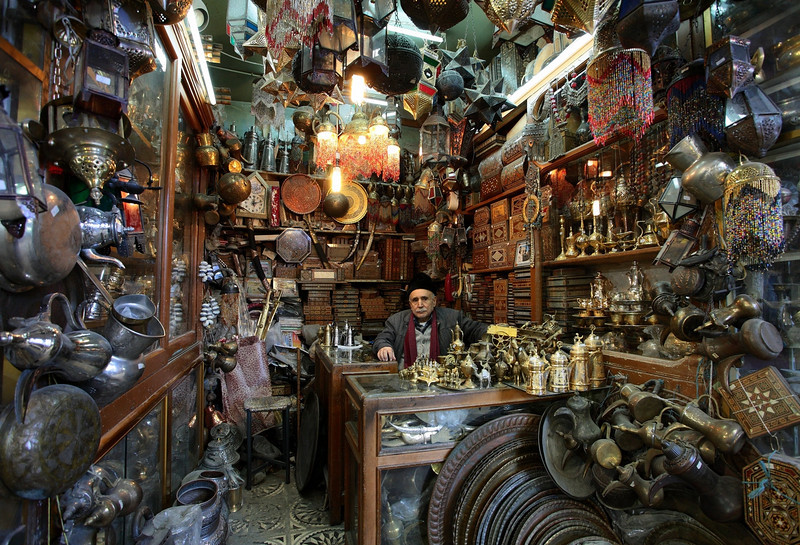
“The Return of the Old Middle East,” by Greg Gause

The Return of the Old Middle East
How to Win at Balance-of-Power Politics
F. Gregory Gause III
Foreign Affairs, March 12, 2009

F. GREGORY GAUSE III is Professor of Political Science at University of Vermont, Kuwait Foundation Visiting Professor at the Kennedy School of Government at Harvard, and a Fulbright Scholar at the American University in Kuwait.

As the United States has learned from its failures at transforming the Middle East, old-fashioned balance-of-power politics are once again driving events in the region.

In the 1990s, the Clinton administration hoped that settling the Arab-Israeli conflict would stabilize the region by marginalizing Iran and strengthening pro-American regimes, from North Africa to the Persian Gulf. In turn, the theory went, this would lead to unprecedented economic cooperation among states in the region and the emergence of what Shimon Peres, Israel’s prime minister in 1995-96 and its president today, called a “new Middle East.” The diagnosis was not bad, but the treatment did not work, and the patient remained as sick as ever.

Then, in the wake of 9/11, the Bush administration developed its own grand design for the region. The centerpiece of the plan was to replace the repressive regime of Saddam Hussein in Iraq with a thriving democracy. A successful U.S. intervention in Iraq was supposed to intimidate anti-American actors in the Middle East, start a democratic chain reaction throughout the region, encourage Arab-Israeli peace, and reduce the threat of terrorist attacks against the United States.

But despite some modest successes, the Bush administration’s “forward strategy of freedom” — much like Clinton’s efforts at engagement — ultimately failed to remake the Middle East. As Iraq became weaker, Iran grew stronger and both the fundamentalist parties within Iraq and Islamic groups elsewhere, such as Hamas and Hezbollah, gained political ground.

The Obama administration seems to have more realistic goals in the Middle East. The new team realizes that the Iranian leadership has to be engaged rather than isolated in the hope that it might just go away. The Obama administration seems appropriately humble about the prospects for achieving Arab-Israeli peace but also determined to try.

All this is sensible, but to best secure U.S. interests in the Middle East, the new administration needs to remind itself of the rules of the local game — the traditional contest for influence among regional states. It is played out more in political terms than in military ones, although the possibility of violence is never far. The players are the stronger regional powers (Egypt, Iran, Israel, Saudi Arabia, Syria, and Turkey) and the playing fields are the weaker powers (Iraq, Lebanon, and the Palestinian territories) whose governments cannot prevent outsiders from interfering in domestic politics. The tools of influence are money, guns, and ideology — and the scorecard is judged by the political orientations of the weaker states.

By this metric, Iran is doing rather well. In Iraq, its influence is greater than that of any other regional power. Iran’s closest Iraqi ally, the Islamic Supreme Council of Iraq, did not do well in recent provincial elections, but Tehran’s ties to the political party of Prime Minister Nuri Kamal al-Maliki and to the Sadrist movement, a Shia party built around Muqtada al-Sadr — both of which fared better in provincial elections — remain strong. Meanwhile, Hamas, Iran’s longtime client, emerged from this winter’s war against Israeli forces in Gaza bloodied but unbowed, much as Iran’s ally Hezbollah did from its own war with Israel in 2006. Hamas and Hezbollah now dictate the course of politics in the Palestinian territories and Lebanon, respectively — far more so than the central governments controlled by “moderate” Arabs with pro-Western inclinations.

Still, the game is far from over. In fact, it never ends. After World War II, the Hashemite kings of Iraq and Jordan hoped to unite the Arab world under their leadership. They played politics in Syria and among Palestinians to garner support for Arab nationalism. In the late 1950s, Egyptian President Gamal Abdel Nasser used Arab nationalism and a confrontational stance toward Israel to rally Arab public opinion behind his leadership and pressure Arab governments to do his will. Nasser looked to be a winner when he united Syria and Egypt in the United Arab Republic and helped cause the downfall of Iraq’s pro-Western monarchy. But regional alliances soon formed to balance against him, and eventually, Egypt’s defeat in the 1967 Arab-Israeli War fully ended Nasser’s regional appeal.

After the overthrow of the Shah in 1979, Ayatollah Ruhollah Khomeini hoped that the Islamic Revolution would spread beyond Iran’s borders. He had some luck in Lebanon — where Iran created Hezbollah after the Israeli invasion of 1982 — and elsewhere. But Khomeini’s revolution had limited appeal, and ultimately, no Arab government fell to a sister revolution. Saddam, who played an important role in checking Iran’s power, learned a similar lesson during the first Gulf War in the early 1990s. He combined Arab nationalism with Islamism to try to create instability in Arab states that had joined the coalition against him. He failed.

The U.S. government can learn three lessons from this history. First, the United States is not the only player that has failed to organize the Middle East under its own leadership and power. Lots of local players who understand the region much better than the United States have failed as well. Iran, for example, is unlikely to consolidate its regional hegemony either, so Washington should not overreact to Iran’s tactical victories.

Second, since the game is played in the region’s weaker states, where Tehran has recently done well, Washington should try to strengthen the central governments there. Iraq is a case in point. A year ago, Prime Minister Maliki appeared so weak as to be almost irrelevant, but now he seems to be emerging as the strongman of Iraqi politics. Washington helped him get there, and it makes sense to continue supporting him — even at the price of tension with America’s Kurdish allies (who fear that Maliki’s plans for a strong central government will lessen their autonomy). With the United States planning a military withdrawal, American influence over Iraqi politics is a wasting asset, but Washington can still use it to improve, on the margins, the governing capacity of the Iraqi state.

Third, the United States should also pay close attention to the Arab-Israeli peace process. Iran’s rulers — much like Nasser, Khomeini, and Saddam in the past — use the Palestinian issue to mobilize popular support at home and pressure pro-American governments throughout the region. At the moment, conditions are not propitious for solving the Palestinian question, and the results of the recent Israeli elections make them even less so. Strengthening the Palestinian Authority would be a positive step, but it would require reconciliation between Hamas and Fatah of a sort that seems distant. So working through Syria looks like a more promising approach — as the Obama administration has apparently recognized, judging from the recent stirrings of diplomatic activity on this front.

Israel and Syria have been negotiating indirectly for some time through Turkey — although Syria suspended talks during the war in Gaza — and the outlines of a settlement are clear. If Washington could help broker a Syrian-Israeli deal, it would open up some distance between Tehran and Damascus, refute Iran’s argument that confrontation pays, and give new momentum to the idea that the larger Arab-Israeli conflict is moving toward resolution.

Using traditional tools of influence to counter opponents and shift the strategic orientation of secondary regional actors would be a classic move — and just the sort to get the United States right back in the game.

News Round Up (5 April 2009)

Erdogan Auditions as Obama Broker With Mideast Ties
By Ben Holland

April 3 (Bloomberg) — Turkish Prime Minister Recep Tayyip Erdogan says his Middle East ties make him useful to President Barack Obama in his quest to connect with the region. Erdogan’s quarrels with the West may be his best asset.

For his first visit to the Muslim world, Obama picked a country that angered the U.S. by refusing to be a staging ground for the 2003 invasion of Iraq, reaching an energy accord with Iran over American objections and straining relations with Israel by criticizing its December incursion into Gaza.

At the same time, Turkey is cultivating Syria and Iran just as Obama, who arrives in Ankara on April 5, pursues a thaw with those traditional U.S. adversaries. And displays of independence, such as promoting Iran’s involvement in a planned gas pipeline, have enhanced Erdogan’s status with countries suspicious of the U.S.

“Turkey is key to Washington’s design to improve relations with the Muslim world,” said Josh Landis, co-director of the Center for Middle East Studies at the University of Oklahoma in Norman.

Still, fulfilling that role requires some delicate calculations on both sides. “As Turkey becomes more democratic, its leaders will be forced to oppose U.S. interests in order to gain public approval,” Landis said.

LA Times: Ziad Haidar and Borzou Daragahi:

Bill Rammell, Britain’s minister of state for foreign and Commonwealth affairs, said in a brief interview late last week in Damascus that despite protests to the contrary, the new U.S. administration does not object to the fledgling contacts with the political wing of the Lebanon-based Shiite Muslim group, which also has a heavily armed militia…..

France, with its deep historical and cultural ties to Lebanon, has long maintained relations with Hezbollah. Rammell said the British attempt to engage Hezbollah would proceed incrementally, in an attempt at “testing the waters.”

In a meeting last week with Syrian Foreign Minister Walid Moallem, Rammell also said London was ready to engage with the Palestinian militant group Hamas, which has its political headquarters in Damascus, Syria, if it renounced violence.

“I would like to talk to Hamas, but we need change before engaging in that position,” he said at the meeting.

He added that Hezbollah must also reject violence before any dialogue could broaden.

Rammell, who ended a two-day visit to Syria on Thursday, said the West must acknowledge what he described as “positive changes” that have taken place in Lebanon over the last few months, including the formation of a unity government and the appointment of a consensus president supported by U.S.-backed political groups and the Hezbollah-led camp.

Rammell noted Hezbollah’s increased involvement in Lebanon’s ordinary political life, with “Hezbollah [lawmakers] sitting side by side with their opponents” in the legislative chamber.

Lieberman Finished as Foreign Minister – Haaretz: The corruption investigation into Foreign Minister Avigdor Lieberman is likely to produce charges of money laundering, fraud and breach of trust, police sources said Saturday, adding that questioning of the Yisrael Beiteinu leader was nearing an end…. Lieberman was first questioned on the matter in April 2007, but last week was the first time he was asked about thousands of documents obtained by investigators since then. Sources at Yisrael Beiteinu said this weekend the party would not leave the government even if Lieberman is forced to withdraw from the governing coalition during the investigation.

New Egyptian Generation Sees Little Benefit from Peace with Israel by Slackman for NYTimes

Iran Willing to Export Natural Gas to Syria, Oil Minister Says
2009-04-02, By Will Kennedy

April 2 (Bloomberg) — Iran is willing to export natural gas to Syria through a pipeline running through Turkey, Iranian Oil Minister Gholamhossein Nozari said today, the state run Islamic Republic News Agency reported.

Assyrian Nationalists Cooperate with Kurdish PKK Insurgents Terrorism Monitor Volume: 7 Issue: 8, April 3, 2009. By Wladimir van Wilgenburg

New Wave of Violence Targets Christians in Iraq
The Middle East Times

A recent string of killings in Iraq is raising fear among Iraqi Christians after four Assyrian Christians were killed in areas ranging from Kirkuk in Northern Iraq to the capital, Baghdad.

Col. Pat Lang argues that Feltman is too preoccupied with an “Iranian-Syrian Conspiracy” to be even handed in the region and carry out Obama’s objectives.

RJC curious about Carter meeting
By Eric Fingerhut
March 31, 2009

The Republican Jewish Coalition wants the White House to “disclose the role of former President Jimmy Carter” in advising the administration on “critical foreign policy issues.” That’s after Seymour Hersh, in an article in this week’s New Yorker magazine, reports that Carter and President Obama discussed the Middle East for an hour during a meeting the two men had shortly before the inauguration.

The article says Carter refused to get into any details of his meeting, but did write in an e-mail that he hoped the new President “would pursue a wide-ranging dialogue as soon as possible with the Assad government.” An understanding between Washington and Damascus, he said, “could set the stage for successful Israeli-Syrian talks.”

“Carter believes that pressuring Israel will result in peace between Israel and those still openly dedicated to her destruction,” said RJC executive director Matt Brooks. “If this is the kind of advice that President Obama is turning to, that is indeed of great concern to us, to the Jewish community, and to the vast majority of Americans who support our ally Israel.”

Ignatius in the Washington Post

….The Obama administration has proceeded more cautiously with Syria. The issues were explored early this year by an Arab intermediary trusted by both sides. Through this channel, the Americans signaled their desire to talk about Syria’s role in Iraq, joint Syrian-American action against jihadists, and the future of Lebanon, including the role of Hezbollah. The emissary signaled that the United States couldn’t discuss return of the Golan Heights, which is a matter for Israel, or the international tribunal to investigate the murder of former Lebanese prime minister Rafiq al-Hariri, which is under U.N. jurisdiction……

Is Syria getting ready to come in from the cold?

President Assad is caught between America’s peaceful overtures and the bellicose language of Israel’s new leader. Donald Macintyre reports from Damascus …..

… Israel would no doubt like to see the displacement of Hamas and Islamic Jihad offices in Damascus as a precursor of any thaw. But some Western diplomats believe a more realistic olive branch might be a firm commitment to seal fully its border with Iraq to insurgents as American forces prepare to leave. “It’s a way of helping America and it’s a card that only has a limited shelf life”, said one. “They might as well play it now.” Some statements from Syrian officials have suggested it is only the US that needs to change its attitude to Syria, not vice versa.

On the other hand, John Kerry, the chairman of the Senate Foreign Relations Committee, is among those arguing that he is “willing to do the things that he needs to do” to change the relationship with the US.

Either way, average Syrians seem pleased at Bush’s replacement. “I am very happy about Obama,” said taxi driver Salah Qadri, 56. “I hope with a new [US] President things will change.” And no, on balance this was not only a matter of the US altering its attitude to Syria, “Maybe we need to change some small things on our side too.”

Netanyahu’s father discusses the peace process: excerpts from the exclusive Maariv interview (part I)

A: “I don’t see any signs that the Arabs want peace… we will face fierce attacks from the Arabs, and we must react firmly. If we don’t, they will go on and Jews will start leaving the country… we just handed them a strong blow in Gaza, and they still bargain with us over one hostage… if we gave them a blow that would really hurt them, they would have given us Gilad Shalit back.”

Q: Operation “cast Lead” was one of the worst blows we handed on a civilian population.

A: “That’s not enough. It’s possible that we should have hit harder.”….

UNRWA Breaks American Law by Holding Accounts with Commercial Bank of Syria, UN Secretary General Ban Ki-moon grilled on Capitol Hill.

?????? ????? ????????? ????? ????????? ????????
????? ???? ?????
?. ???? ?????? : ( ???? ????? )

Stocks Prices are Up – Peace is Down

The Damascus Stock Exchange traded shares worth over half a million SYP today for the first time. There were eight trades of 667 Shares valued at SYP 578,139 OR $12,500. 3 OF THE 4 companies traded rose by the limit of 2%.

Damascus Journal: Syria Finds Right Ingredients to Start a Stock Market From Scratch
By ROBERT F. WORTH in NYTimes

“It’s a baby that will grow,” said Abdullah Dardari…. Some analysts have even suggested that Syria’s economic challenges will force it to make such a deal. But interviews with Syrian officials here make clear they do not see it that way.

“Syria, no matter how bad the economy, will not bargain,” Mr. Dardari said. “In the 1980s we used to have to queue for Kleenex, but we did not bargain.”

Mr. Dardari and others say the American sanctions have had only a minor effect on Syria, which has little direct trade with the United States. Europe is far more significant, and Syria is eagerly pursuing a trade agreement with the European Union that is likely to be signed this year. Trade with Turkey — perhaps Syria’s closest ally — is also growing, to almost $2 billion in 2008 from less than $500 million in 2004.

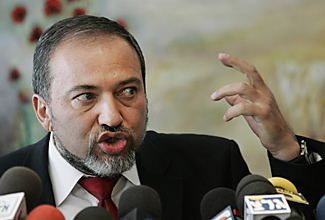
Avigdor Lieberman

Avigdor Lieberman

Israeli Minister Dismisses Peace Effort

Assad: ‘Through war or peace we’ll free Golan’
By BRENDA GAZZAR

Syria offers Israel chance to avoid war, PressTV

Syrian President Bashar al-Assad said Israeli policies encourage “resistance”, which only ensures that the day will come when Syria will free the Golan Heights “through peace or through war”.

Thu, 02 Apr 2009 14:13:35 GMT
Syrian President Bashar al-Assad says all Israeli governments have pursued hawkish policies only to give rise to the philosophy of resistance.

In an interview with the al-Sharq newspaper on Thursday, Assad said there is enough evidence to assume that Tel Aviv will never seek peace.

“All Israeli governments are the same: Ariel Sharon carried out a massacre in Palestine, and [Ehud] Barak aided the war in Gaza in that there is no difference between the right and the left in Israel,” he explained. “This enemy does not want peace.”

Assad described how normal citizens have grown tired of the sixty years of Israeli efforts to grab more land and occupy other territories.

“From the war of Palestine (in 1948) to the occupation of the Golan (in the Six Day War in 1967) people are becoming more hostile towards Israel. There may come a generation that is unwilling to talk peace,” he said.

His remarks are considered a reaction to a Thursday announcement by Israel’s new foreign minister, Avigdor Lieberman — who ruled out the possibility of Israel withdrawing from the Golan Heights.

“There is no cabinet resolution regarding negotiations with Syria, and we have already said that we will not agree to withdraw from the Golan Heights,” said Lieberman in an interview with Israeli daily Ha’aretz.

“Whoever thinks that he will achieve something by way of concessions – no, he will only invite more pressure and more wars. If you want peace, prepare for war,” he added.

Israel captured the Golan Heights following the 1967 Six-Day War and annexed the Syrian territory in 1981.

Under the auspices of Turkey, Israel and Syria last May launched peace talks aimed at reaching a comprehensive peace agreement.

Negotiations reached a stalemate in September after the resignation of former Israeli prime minister Ehud Olmert.

Syria then withdrew from the talks in protest at the latest Israeli military operations in the Gaza Strip — in late December 2008 and January 2009 — where at least 1,330 Palestinians lost their lives to the three-week carnage.

“When a citizen loses hope – he will turn to the path of resistance, in one from or the other,” Assad reacted to the new Israeli stance.

“What is the alternative?” he asked. “The parallel route to the peace process is resistance. The Israeli will not come by his own will, so there is no alternative but for him to overcome fear.”

“There is no escaping the fact that the day will come when we will free the Golan, through peace or through war,” he explained.

Observer gives us these pronouncements of Avi Lieberman

  • In 1998, Lieberman called for the flooding of Egypt by bombing the Aswan Dam in retaliation for Egyptian support for Yasser Arafat.
  • In 2001, as Minister of National Infrastructure, Lieberman proposed that the West Bank be divided into four cantons, with no central Palestinian government and no possibility for Palestinians to travel between the cantons.
  • In 2002, the Israeli daily Yedioth Ahronoth quoted Lieberman in a Cabinet meeting saying that the Palestinians should be given an ultimatum that “At 8am we’ll bomb all the commercial centers … at noon we’ll bomb their gas stations … at two we’ll bomb their banks …”
  • In 2003, the Israeli daily Haaretz reported that Lieberman called for thousands of Palestinian prisoners held by Israel to be drowned in the Dead Sea and offered to provide the buses to take them there.
  • In May 2004, Lieberman proposed a plan that called for the transfer of Israeli territory with Palestinian populations to the Palestinian Authority. Likewise, Israel would annex the major Jewish settlement blocs on the Palestinian West Bank. If applied, his plan would strip roughly one-third of Israel’s Palestinian citizens of their citizenship. A “loyalty test” would be applied to those who desired to remain in Israel. This plan to trade territory with the Palestinian Authority is a revision of Lieberman’s earlier calls for the forcible transfer of Palestinian citizens of Israel from their land. Lieberman stated in April 2002 that there was “nothing undemocratic about transfer.”
  • Also in May 2004, he said that 90 percent of Israel’s 1.2 million Palestinian citizens would “have to find a new Arab entity” in which to live beyond Israel’s borders. “They have no place here. They can take their bundles and get lost,” he said.
  • In May 2006, Lieberman called for the killing of Arab members of Knesset who meet with members of the Hamas-led Palestinian Authority.’

Turkey and Armenia Pave Way for Historic Accords:Neighbors’ Bid to Open Border and Establish Ties Could Sideline Genocide Dispute, Improve Security for Fuel Pipeline to West. Turkey and Armenia could soon announce a deal aimed at reopening their border and restoring relations, according to diplomats, a move that could help stabilize a region that’s increasingly important as a transit route for oil and gas. The timing of the deal is being choreographed with the schedule of U.S. President Barack Obama, who visits Turkey next week, these people say.

Petraeus Says Israel Might Choose to Attack Iran

“..Mr Gates said he does not expect Israel – which believes the US estimate for when Iran could develop a nuclear weapon is too sanguine – to take military action this year. “I guess I would say I would be surprised…if they did act this year,” said Mr Gates…”

UN Hariri court seeks Beirut file

An international court in the Hague has asked Lebanon to hand over documents relating to the murder of the former Lebanese Prime Minister, Rafik Hariri.

The UN-backed tribunal also asked for a list of all suspects Lebanon is holding in connection with the 2005 killings.

The court has been set up to try those suspected of being behind the blast which killed Mr Hariri and 22 others.

The court’s Canadian prosecutor, Daniel Bellemare, has until the end of April to ask the Lebanese authorities for suspects to be transferred to the Special Tribunal for Lebanon.He has said he would submit an indictment when satisfied that he had sufficient evidence.

The requests bring the tribunal closer to asking Lebanon to hand over four of the suspects within weeks.

The ruling, issued on Monday but only just made public, asked the Lebanese judicial authorities to “defer to the tribunal’s competence” in the Hariri case, the AFP news agency reported.

It requested that Beirut “as soon as possible and at the latest within 14 days of receiving this order, refer to the prosecutor the results of the investigation and a copy of the court’s records regarding the Hariri case”.

Mr Hariri’s allies have accused Syria of involvement in his death, a charge Damascus denies.

Iraq Seeks F16 as Protection Against Iran and Syria

The commander of the Iraqi air force Anwar Ahmad, currently in Washington, said Iraq wants to buy a squadron of F16 fighter aircrafts of the type C/D Block 50/52, currently being assembled for Poland, Israel, Greece and Pakistan. Subject to Parliament’s approval, Iraq would like to eventually buy as many as 96 jets, and to have the first two jets flown by Iraqi pilots by 2012.

General Ahmad said that the jets are required to face the probable dangers from Iran in addition to dangers from Syria which has become “a gateway to terrorists” who seek to undermine the government of prime minister Nouri al-Maliki.

News Round Up (April 1, 2009)

Qifa Nabki gives us some April Fools fun: Failure to Coordinate Grand Gesture Ends in Embarrassment for Israel, Syria. The only clue I will give is this graphic.

Syria cut diesel fuel prices on Tuesday by 20 percent
, or from 50 cents to 40 cents a liter, as oil rates declined in world markets.

The move appears to be aimed at preventing the smuggling diesel fuel from neighboring Lebanon and Turkey where diesel prices dropped recently due to drop in global oil prices. Smugglers have been bringing diesel from Lebanon and Turkey to sell in Syria where prices had been higher.

Nadim Issa’s reporting has been invaluable on the Damsacus Stock exchange.  Damascus Exchange Grants Licenses to Six Brokerage Companies

2009-04-01. (bloomberg) — The Damascus Securities Exchange gave its approval for six new brokerage companies to start operating in Syria. They are Ahl Al-Sham Islamic Financial Services, Mega Investment-Syria Co., Daman Al-Sham for Brokerage & Financial Services Co., Sanabel for Financial Investments Co., Osoul for Brokerage & Securities Co. and Shuaa Securities-Syria, the exchange said today in a statement on its Web Site.

Greg Gause: On Prince Nayef and the Succession Greg gives us a good antidote to much overheated analysis.

Mark Lynch on the Doha summit. His Aardvark on Cable at the Foreign Policy website is consistently good.

John J. Mearsheimer: Please tell me, where is Israel headed?

Assyrian ?????? ???? Sulaiman Yousef, an Assyrian activist has asked that Syria establish a ministerial position for Assyrian affairs because the Assyrians are the original people of Syria who are threatened with disapearing and being scattered. (in Arabic at Levant News)

Shamel Azmeh’s Blog on economic matters in Syria and the Middle East should make a very good addition to blogs on Syria. It is smart.

Foreign Office Minister Bill Rammell is visiting Syria

on 1-2 April for a series of high level discussions with prominent Syrian politicians and opinion formers. During the visit Bill Rammell is due to have meetings with Foreign Minister Walid Muallem and Europe Minister Abdul Fattah Ammoura. He will also meet the Minister of Awqaf (Religious Affairs). Discussions will be wide ranging and will include cooperation on counter terrorism, the Middle East Peace Process and regional issues.

British Man’s plea for wife held in Syria: A mother has been missing for more than two weeks since her arrest in Syria.

Syria jails dissident despite detente with West
By Khaled Yacoub Oweis, Reuters, March 15, 2009

A Syrian court sentenced a 64-year old dissident on Sunday to three years in jail for “weakening national feelings” after he published articles critical of the political system, human rights activist said.

The sentencing of Habib Saleh, who had already spent five years as political prisoner over two terms between 2001-2007, reflects a tougher approach by authorities in crushing dissent as Syria undergoes rapprochement in the West, they said.

“Saleh only wrote articles and he still got three years. He was not even active in any organisation,” said one activist who attended Saleh’s trial at the Palace of Justice. Mohannad al-Hassani, Saleh’s lawyer, said the law used against his client could only be invoked if Syria was officially at war….

???? ???? ??? ????? ???? ?? ??????? – ????? ?????

As Netanyahu takes Israel’s helm, Syria skeptical of peace prospects: Syrian diplomats say Damascus is serious about making peace, and hope Washington will lean on Israel’s new government. By Nicholas Blanford

Even if the Netanyahu government agrees to negotiate, any peace deal with Syria has to be put to a national referendum. And Israeli polls show that more than two-thirds of the Israeli public are against handing back the strategic heights.

George Mitchell, the Obama administration’s point man on the Mideast, is expected in the next two weeks to begin putting proposals into action once he has finished building his team.

US officials with insights into the administration’s thinking on the Mideast say that Obama is serious about striking peace between Israel, Syria, and the Palestinians, but question whether the parties themselves are ready to make the necessary commitments for peace. They warn that Obama is being pressured to focus on the domestic economy, not foreign policy, and will not waste time pushing for Mideast peace if the Israelis and Arabs procrastinate.

Israeli Military Closes Probe: Allegations of Troop Misconduct in Gaza Called ‘Hearsay’

Israel’s Covert War on Iran Faces Disapproving White House
By RICHARD SALE

Sarah Birke has three new articles on Tourism and the effort to Brand Syria; Let’s Get Physical“; “Controversial training for Iraqi refugees“.

American Language Center to reopen in Syria

Damascus set to receive MiG 31E planes: “”With regard to its external defense, Syria’s military remains in a defensive posture and inferior to Israel’s forces, but it is upgrading its missile, rocket, antitank, aircraft and air defense inventories,” Maples told the committee. “Recent Syrian contracts with Russia for future delivery include new MiG-31 and MiG-29M/M2 fighter aircraft.”

Buthaina Shaaban speaks with Fox News about US-Syrian relations under Obama


Syria leader explains failure of talks with Israel
By BASSEM MROUE

BEIRUT (AP) — Syria’s president said indirect peace talks with Israel failed last year because the Jewish state would not make an unambiguous commitment to return all the territory captured in the 1967 Middle East war, according to an interview published Wednesday.

The comments to the Lebanese daily As-Safir were Bashar Assad’s first on why the Turkish-mediated negotiations collapsed. Previously, Syrian officials said they suspended the talks in protest against Israel’s war in Gaza, which began in late December.

However Assad outlined another major point of contention. He suggested Syria insisted on the complete return of the strategic Golan Heights, while Israel wanted to keep some disputed land around the Sea of Galilee, its main water source.

Assad said Syria had “specified some points” of land on the Galilee shores and the Jordan River he wanted returned.

“We asked the Israelis to prove their seriousness on these points and of course they agreed in principle,” Assad said. “But when it came to drafting, they wanted to draft it in a way that is somehow ambiguous and obscure,” he added.

“We said no. We do not discuss. These points are either approved or not. … The discussions ended at this point and the talks failed,” Assad said. The president’s office confirmed to The Associated Press that the As-Safir report was accurate.

Syria and Israel held direct talks in the late 1990s and early 2000. They also broke down over the extent of a withdrawal from the Golan Heights, a strategic plateau captured from Syria in 1967. Israel sought lines closer to the 1923 colonial border and insisted on retaining sovereignty over the strip of land also claimed by Syria along the Galilee shores.

The late Syrian President Hafez Assad, the current president’s father, also insisted on the return of all the Golan, including the eastern shore of the Sea of Galilee. At a meeting with then-U.S. President Bill Clinton in Geneva in March 2000, the elder Assad spoke nostalgically of his own visits to the sea.

“I would swim in the Sea of Galilee, I would have barbecues there, I ate fish,” he told Clinton.

Israelis have argued in the past that a 21-square-mile area along the sea was originally Palestinian, not Syrian, and therefore need not be returned to Syria with the rest of the Golan.

Bashar Assad was also asked in the interview what concessions Israel wanted for peace with Syria.

“No Iran, no Hezbollah and no Hamas,” he said, referring to Syrian alliances with Tehran and the Lebanese and Palestinian militant groups. He did not say how he responded to those demands.

The two Mideast foes held four rounds of indirect talks mediated by Turkey last year.

Recounting how the contacts came about, Assad he agreed to Israeli Prime Minister Ehud Olmert’s overtures after “we reached a point when Olmert was ready to fully return the Golan Heights.”

Olmert’s office did not immediately comment on the interview. Government spokesman Mark Regev said the “basis of the talks with the Syrians was a formula that we know exactly what the Syrians expect from negotiations and they know exactly what we expect.”

“No progress was achieved with the Turkish mediation unfortunately,” Regev said.

Summit Shame and Hersh’s “Syria Calling”

Here are some extracts from Seymour Hersh’s excellent New Yorker article on the state of US-Syrian relations (copied below). Hersh quotes from the main actors and analysts to give us a sense of what is at stake and how likely real progress is to be made. Perhaps one has to discount a bit because most of those quoted have a stake in the success of a Syrian-Israeli peace. These who would throw up obstacles can remain silent.

The main debate at this stage is whether Israel and the US should demand Syria make a clean break with Iran or whether it is wiser, and perhaps more realistic, to try to bring both along in a larger deal where everyone gets something.

Gadhafi speaking during the opening session of the Arab Summit in Doha, Qatar, Monday, March 30, 2009.

Gadhafi speaking during the opening session of the Arab Summit in Doha, Qatar, Monday, March 30, 2009.

The Arab Summit was pretty much a disaster. Qadhafi stole the show again by calling Saudi King Abdullah a dupe of Britain and the US before he stormed out of the meeting, which lasted only one day of the intended two. Egyptian President Hosni Mubarak skipped the summit, apparently upset that Qatar has been stealing the diplomatic limelight. Jordan’s King Abdullah II left early, reportedly because he was received at the airport by a member of the Qatari royal family instead of the emir. The Palestinians were overlooked, due to the failure to broker a unity government between Hamas and the PLO.

Everyone is horrified that the single agreement was to rally around Sudan’s president Bashir (see  the New York Times), who has been called before an international tribunal for crimes against humanity. The usual American interpretation of this is that the Arabs are incorrigible miscreants and their kings are only concerned about the West establishing a precedent that could threaten their own throwns. The Arab leaders respond by pointing to Iraq and its unhappy fate ever since “altruistic” Westerners strung up Saddam in the name of human rights, international justice, and improving the neighborhood.

Here are the Hersh bits.

Syria Calling
The Obama Administration’s chance to engage in a Middle East peace.
by Seymour M. Hersh in the New Yorker

…The consensus, as an ambassador now serving in Tel Aviv put it, was that the two sides had been “a lot closer than you might think.”

At an Arab summit in Qatar in mid-January, however, Bashar Assad, the President of Syria, angrily declared that Israel’s bombing of Gaza and the resulting civilian deaths showed that the Israelis spoke only “the language of blood.” He called on the Arab world to boycott Israel, close any Israeli embassies in the region, and sever all “direct or indirect ties with Israel.” Syria, Assad said, had ended its talks over the Golan Heights.

Nonetheless, a few days after the Israeli ceasefire in Gaza, Assad said in an e-mail to me that although Israel was “doing everything possible to undermine the prospects for peace,” he was still very interested in closing the deal. “We have to wait a little while to see how things will evolve and how the situation will change,” Assad said. “We still believe that we need to conclude a serious dialogue to lead us to peace.”

American and foreign government officials, intelligence officers, diplomats, and politicians said in interviews that renewed Israeli-Syrian negotiations over the Golan Heights are now highly likely, despite Gaza and the elections in Israel in February, which left the Likud Party leader, Benjamin Netanyahu, at the head of a coalition that includes both the far right and Labor. Those talks would depend largely on America’s willingness to act as the mediator, a role that could offer Barack Obama his first—and perhaps best—chance for engagement in the Middle East peace process.

A senior Syrian official explained that Israel’s failure to unseat Hamas from power in Gaza, despite the scale of the war, gave Assad enough political room to continue the negotiations without losing credibility in the Arab world. Assad also has the support of Arab leaders who are invested in the Israeli-Palestinian peace process. Sheikh Hamid bin Khalifa al-Thani, the ruler of Qatar, said last month when I saw him in Doha that Assad must take any reasonable steps he can to keep the talks going. “Syria is eager to engage with the West,” he said, “an eagerness that was never perceived by the Bush White House. Anything is possible, as long as peace is being pursued.”

A major change in American policy toward Syria is clearly under way. “The return of the Golan Heights is part of a broader strategy for peace in the Middle East that includes countering Iran’s influence,” Martin Indyk, a former American Ambassador to Israel, who is now the director of the Saban Center for Middle East Policy, at the Brookings Institution, said. “Syria is a strategic linchpin for dealing with Iran and the Palestinian issue. Don’t forget, everything in the Middle East is connected, as Obama once said.”

A former American diplomat who has been involved in the Middle East peace process said, “There are a lot of people going back and forth to Damascus from Washington saying there is low-hanging fruit waiting for someone to harvest.” A treaty between Syria and Israel “would be the start of a wide-reaching peace-implementation process that will unfold over time.” He added, “The Syrians have been ready since the 1993 Oslo Accords to do a separate deal.” The new Administration now has to conduct “due diligence”: “Get an ambassador there, or a Presidential envoy. Talk to Bashar, and speak in specifics so you’ll know whether or not you’ve actually got what you’ve asked for. If you’re vague, don’t be surprised if it comes back to bite you.”

Many Israelis and Americans involved in the process believe that a deal on the Golan Heights could be a way to isolate Iran, one of Syria’s closest allies, and to moderate Syria’s support for Hamas and for Hezbollah, the Lebanese Shiite group. Both Hamas and Hezbollah are listed as terrorist organizations by the U.S. State Department. There is a competing view: that Assad’s ultimate goal is not to marginalize Iran but to bring it, too, into regional talks that involve America—and perhaps Israel. In either scenario, Iran is a crucial factor motivating each side.

…. Assad said, “The land is not negotiable, and the Israelis know that we are not going to negotiate the line of 1967.” But he suggested that compromises were possible. “We only demarcate the line,” he said. “We negotiate the relations, the water, and everything else.” Many who are close to the process assume that an Israeli-Syrian settlement would include reparations for the Israelis in the Golan Heights, and, for a time, the right of access to the land. Assad said, “You discuss everything after the peace and getting your land. Not before.”

If Israel wants a settlement that goes beyond the Golan Heights, Assad said, it will have to “deal with the core issue”—the situation in the West Bank and Gaza—“and not waste time talking about who is going to send arms to Hezbollah or Hamas. Wherever you have resistance in the region, they will have armaments somehow. It is very simple.” He added, “Hezbollah is in Lebanon and Hamas is in Palestine. . . . If they want to solve the problem of Hezbollah, they have to deal with Lebanon. For Hamas, they have to deal with Gaza. For Iran, it is not part of the peace process anyway.” Assad went on, “This peace is about peace between Syria and Israel.”

In his e-mail after the Gaza war, Assad emphasized that it was more than ever “essential that the United States play a prominent and active role in the peace process.” What he needed, Assad said, was direct contact with Obama. A conference would not be enough: “It is most natural to want a meeting with President Obama.” …

…Itamar Rabinovich, a former Israeli Ambassador to Washington, who was Israel’s chief negotiator with Syria under Prime Minister Yitzhak Rabin and informally advises his government on Syrian issues, argued that the war in Gaza had not changed Israel’s essential interest in a Golan Heights settlement: “Gaza is Gaza, and I say that Bashar Assad definitely wants to go ahead with the talks. And he may find a partner in Bibi Netanyahu. Bibi would prefer to make a deal with Syria rather than with the Palestinians.”

But if the talks are to proceed, Rabinovich said, “they will have to be transformed to direct negotiations.” This would require the support and involvement of the Obama Administration. Rabinovich said that he thought Obama, like Netanyahu, “after weighing the pros and cons, will see a Golan Heights settlement as being more feasible” than a deal with the Palestinians. “The talks are serious, and there is a partner.”

…Obama said that he would be willing to sit down with Assad in the first year of his Presidency without preconditions. He also endorsed the Syrian peace talks with Israel. “We must never force Israel to the negotiating table, but neither should we ever block negotiations when Israel’s leaders decide that they may serve Israeli interests,” he said at the annual conference, last June, of the American Israel Public Affairs Committee (AIPAC). “As President, I will do whatever I can to help Israel succeed in these negotiations.”

….As the Bush era wound down, U.S. allies were making their own openings to Syria. In mid-November, David Miliband, the British Foreign Secretary, distressed the White House by flying to Damascus for a meeting with Assad. They agreed that Britain and Syria would establish a high-level exchange of intelligence. Vice-President Dick Cheney viewed the move by Britain—“perfidious Albion,” as he put it—as “a stab in the back,” according to a former senior intelligence official.

Obama Did Pressure Israel — somewhat — on Gaza

…The Obama transition team also helped persuade Israel to end the bombing of Gaza and to withdraw its ground troops before the Inauguration. According to the former senior intelligence official, who has access to sensitive information, “Cheney began getting messages from the Israelis about pressure from Obama” when he was President-elect. Cheney, who worked closely with the Israeli leadership in the lead-up to the Gaza war, portrayed Obama to the Israelis as a “pro-Palestinian,” who would not support their efforts (and, in private, disparaged Obama, referring to him at one point as someone who would “never make it in the major leagues”). But the Obama team let it be known that it would not object to the planned resupply of “smart bombs” and other high-tech ordnance that was already flowing to Israel. “It was Jones”—retired Marine General James Jones, at the time designated to be the President’s national-security adviser—“who came up with the solution and told Obama, ‘You just can’t tell the Israelis to get out.’ ” (General Jones said that he could not verify this account; Cheney’s office declined to comment.)

Iran

… yria’s relationship with Iran will emerge as the crucial issue in the diplomatic reviews now under way in Washington. A settlement, the Israelis believe, would reduce Iran’s regional standing and influence. “I’d love to be a fly on the wall when Bashar goes to Tehran and explains to the Supreme Leader that he wants to mediate a bilateral relationship with the United States,” the former American diplomat said, referring to Ayatollah Ali Khamenei.

An Israeli official acknowledged that his government had learned of “tensions between Syria and Iran in recent months.” Before Gaza, he said, there had been a noticeable change in the Syrian tone during informal contacts—“an element of openness, candor, and civility.” He cautioned, however, “You can move diplomatically with the Syrians, but you cannot ignore Syria’s major role in arming Hamas and Hezbollah, or the fact that it has intimate relations with Iran, whose nuclear program is still going forward.” He added, with a smile, “No one in Israel is running out to buy a new suit for the peace ceremony on the White House lawn.”

Martin Indyk said, “If the White House engages with Syria, it immediately puts pressure on Iran, Hamas, and Hezbollah.” He said that he had repeatedly sought, without success, to convince the Bush Administration that it was possible to draw Syria away from Iran. In his recent memoir, “Innocent Abroad,” Indyk wrote, “There is a deep divergence between Iran and Syria, captured in the fact that at the same time as Iran’s president threatens to wipe Israel off the map, his Syrian ally is attempting to make peace with Israel. . . . Should negotiations yield a peace agreement, it would likely cause the breakup of the Iranian-Syrian axis.”…

A Pentagon consultant said, “If we ever really took yes for an answer from Syria, the Iranians would go nuts.”

The official Syrian position toward Iran, which Assad repeated to me, is that Iran did not object to the Golan Heights talks, on the principle that any return of sovereign land was to be applauded: “They announced this publicly . . . and I went to Iran and I heard the same.”

….Alastair Crooke, a former British intelligence officer who operated in the Middle East and later served as an adviser to the European Union and a staff member for a fact-finding committee on the Middle East headed by Mitchell, said that the new Administration should not assume that Bashar Assad could be separated easily from Iran, or persuaded to give up support for Hamas and Hezbollah. “Bashar now has enormous standing in the Arab world, and it comes from these pillars—he was among the first to oppose the American war in Iraq and his continued support for Iran, Hezbollah, and Hamas,” Crooke said. “He cannot trade the Golan Heights for peace with Israel, and cut off his allies. What Syria can do is offer its good standing and credentials to lead a comprehensive regional settlement.” But, he said, “the Obama Administration is going to make it really painful for Syria. There will be no bouquets for Syria.”

He went on, “The real goal of Assad is not necessarily an agreement on the Golan but to begin to engage America and slice away the American demonization of his state.” ….

….Khalid Meshal said that he believed that the Iranians would not interfere with negotiations between Israel and Syria, although they were not enthusiastic about them. Meshal also said he doubted that Israel intended to return the Golan Heights to Syrian control. But, he said, “If we suppose that Israel is serious, we support the right of Syria to negotiate with Israel to attain its legitimate rights.”

….“Of course, the Iranians are nervous about the talks, because they don’t fully trust the Syrians,” Itamar Rabinovich said. “But the Assad family does not believe in taking chances—they’re very hard bargainers. They will try to get what they want without breaking fully from Iran, and they will tell us and Washington, ‘It’s to your advantage not to isolate Iran.’ ” Rabinovich added, “Both Israel and the United States will insist on a change in Syria’s relationship with Iran. This can only be worked out—or not—in head-to-head talks.”

Conclusion

The White House has tough diplomatic choices to make in the next few months. Assad has told the Obama Administration that his nation can ease the American withdrawal in Iraq. Syria also can help the U.S. engage with Iran, and the Iranians, in turn, could become an ally in neighboring Afghanistan, as the Obama Administration struggles to deal with the Taliban threat and its deepening involvement in that country—and to maintain its long-standing commitment to the well-being of Israel. Each of these scenarios has potential downsides. Resolving all of them will be formidable, and will involve sophisticated and intelligent diplomacy—the kind of diplomacy that disappeared during the past eight years, and that the Obama team has to prove it possesses. ?

“A Night at the Theater with Saadallah Wannous” by Ali Khan

“A Night at the Theater with Saadallah Wannous”
Dispatch from Damascus 19 (29/03/09)
Ali Khan, “Syria Comment” (Photo by Ketan Gajria)

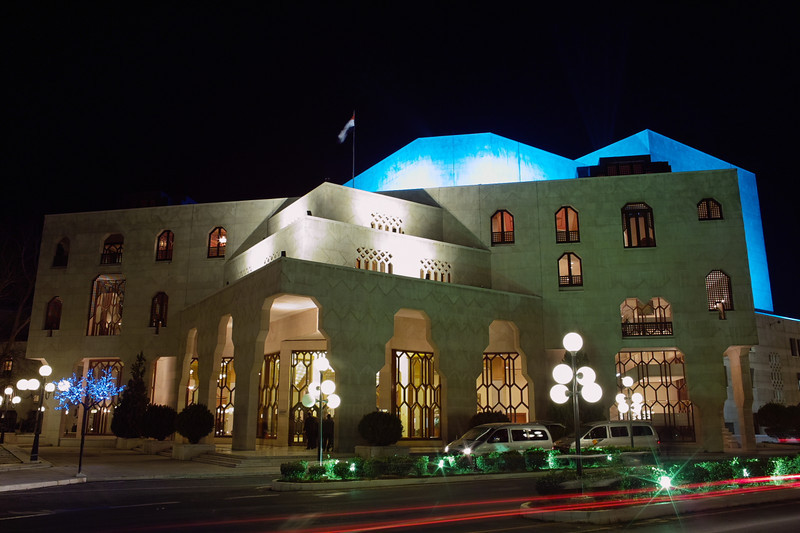
Damascus Theater by Ketan Gajria 2009

Damascus Theater by Ketan Gajria 2009

A group of us from my class decided to go and see a play in the main theatre in Ummaviyeen Square. I went to buy tickets a few days in advance and was impressed by the modern building, the cleanliness and the organisation; the booklet listing the various plays, musical concerts and other performances even had a little colour-coded map at the back to help one choose the seats. However, I was most impressed with the prices of the tickets. A balcony seat was only slightly more than two dollars. Like any other place in Syria, just like in India, there were more people working there and milling about than seemed necessary but all of them were keen to help.

I had asked around whether I needed to wear formal clothes, as it indicated on the back of the ticket, but most people had assured me that as long as I didn’t show up in a Manchester United shirt, not that I have one or would ever dream of committing such an offence, and a pair of shorts, I would be alright. The evening was cold and windy and I softly uttered a few expletives as I saw Audi A8s and BMW X6s pull in to the theatre. I am always shocked by the number of new models of various cars that I see in Syria, some of which I have not even seen in London or New York. From a distance, I had seen a large sculpture in front of the main gates of the theatre. On closer inspection my fertile imagination interpreted it to be one of the symbols of the Anti-Christ, an upside down cross, with lots of colourful glass stuck on to it to add a modernist touch. However as soon as I triumphantly declared this to my friends they burst out laughing and said that it was actually meant to be the sword of the Umayyad Caliphs! The main building in the complex seemed to be having an identity crisis of sorts as the colour of its roof changed every few minutes from fluorescent pink, to yellow, to marine blue to emerald green!

Outside the main doors and large crowd had collected and all seemed dressed to the nines. The men wore sharply cut designer suits with patent leather shoes and the women carried frilly fur overcoats and gleaming handbags. Apart from the group of these mutathaqifeen, or would be cultured people, (it is amazing to ‘play’ with Arabic verbs) there was an odd mix of acting students, academics in their existentialist black, a few language teachers from the university and a group of French ladies in red anoraks. We all felt somewhat shabby and quickly headed inside and found some seats in the lobby. A group of young Syrians struck up a conversation with us. After the usual questions about where we live in Damascus (I have a sneaking suspicion that some people ask this so as to figure out ones ‘social and financial status’ rather than genuinely wanting to know where foreigners live), why we study Arabic and if we like Syria, I asked one of the long haired men who was lolling about on the sofa what he did. In the typical nonchalant yet studied way in which actors answer questions, he looked towards the ceiling and proclaimed: “Oh, I am an actor.” Meanwhile he was trying to appear aloof yet interested in the constant throng of women that were coming up to him. Later someone said that he was part of the “theatre scene” in Damascus.

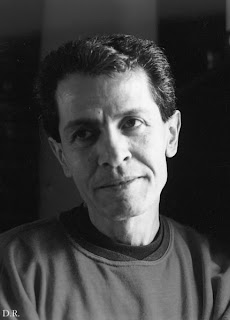
Saadallah Wannous: We are doomed by Hope.

Saadallah Wannous: "We are doomed by Hope."

The play was called Tuqoos al-Isharaat wal-Tahavulaat, or Rituel pour une Metamorphose as the program card helpfully translated it, by Saadallah Wannous. In English it would roughly translate as Rituals of Signs and Transformations. Originally from Syria, Wannous studied in Cairo and was deeply influenced by famous existentialists like Camus and Satre. Later on having lived in France and having seen the works of famous socialist playwrights like Peter Weiss and Bertolt Brecht, Wannous became convinced of the need for ‘an ideology’ in theatre in order to educate the masses. Wannous is a legend in the Arab world for his astute plays about the human condition and political commentaries on the Arab world but unfortunately died in 1996 because of cancer.

Our seats were close to the stage and the theatre seemed to have all the necessary modern equipment and if it wasn’t for the large hijabi lady in front of me, I could have easily imagined that I was in any of the European capitals. The play began with an arrestingly explicit opening scene where a prostitute is shown cavorting with a married man. Above the stage, the French translation of the play was being projected on an empty space but for the French ladies who could not speak any Arabic, it was a choice between watching the play or reading the lines.

In short, the play depicts the shows how a girl, Wardah, who lived in a religious scholar’s house eventually becomes a prostitute and has sexual relations with the scholar. The scholar’s daughter, Almassa is married to man, Abdallah, who also has an affair with Wardah. Almassa’s brother, Safwan is gay. Abdallah is caught and thrown in jail and Safwan’s gay lover is also thrown in jail. Almassa decides that the only way in which she can redeem herself is by having her own body violated and so decides to become a prostitute. For this, her gay brother eventually kills her rather than bring ‘shame on the family.’ The revolving stage had two levels and worked wonderfully by interchanging the spaces used for the bordello, the jail, Almassa’s home and government offices. During the play there were various references to the decrees of the ‘Mufti’ of the town on various issues including the banning of liquor and lewd texts like 1001 nights.

I have tried, only somewhat successfully, to read the play and I talked to a few people who are familiar with the works of Wannous and all of them were surprised by the fact that one crucial dimension of the play had been deliberately left out by the directors. The play we saw successfully depicted Wannous’ cautious approach to religious authorities but neglected to portray his critique of an unjust government! I also found that many key scenes that portrayed the struggle between the Ottoman Wali and the Mufti had been removed from the play. Despite the fact that the play was heavily edited and therefore was not a fair portrayal of the author’s original intentions, the Brechtian influence on Wannous’ work was clear. The concept of ‘distancing,’ and the audience not just as passive receptors is evident from the attempt by Wannous to make people think about the play and not just empathise with the actors on the stage by stripping normal human acts and recreating them to be more arresting to listen to and view. This is why the play is set in the historical period of the Ottoman’s rule in Syria. This will inevitably trigger a historical search by the audience to think about the context of the play in real terms rather than just passively watching the play. Brecht too believed that theatre should try to make people think critically and induce self-reflection rather than just create a moment of false emotional empathy.

The actresses were both superb and very fluid in their movements and monologues but most of the men either overacted or were too stiff. Obviously, I am not at all qualified to judge the performance of the actors or for that matter the play itself but I do feel that the people who edited and chose the scenes did not do justice to Wannous or his play. I did however enjoy my first trip to the theatre in Damascus.

Dima Wannous

Dima Wannous

Until next week Ma’as Salaama!

p.s [landis] Saadallah Wannous’ daughter, Dima Wannous, recently published her first novel, called “chair” (kursi). Tafasil [Details], a collection of nine short stories, was published in 2007 (Dar al-Mada, Damascus). An extract of one story – “Sahar” – can be read in Banipal: A magazine of Modern Arabic Literature. Dima is married to Ibrahim Hamidi, al-Hayat’s bureau chief in Damascus and they have a son, Saad. See this Obituary of Wannous by Elie Shalala.

Syria’s Bourse – The Launch & Recommendations for Enhanced Liquidity

SYRIA’S BOURSE – THE LAUNCH & RECOMMENDATIONS FOR ENHANCED MARKET LIQUIDITY
BY Ehsani2 (who works for a global financial institution in the area of bonds and derivatives)
For Syria Comment, March 26, 2009

Syria launched its stock exchange last week after years of delays in the latest step to liberalize the country’s largely state-controlled economy. The first step toward creating a legal framework for the exchange was taken in June 2005 with the promulgation of law No. 22 following the Presidential order to establish the “Syrian Commission of Financial Markets and Securities.” The second step was made on September 2006 with the announcement of Decree No. 55, known as the “Damascus Securities Exchange Law.” In July 2008, Decree No 36 amended previous laws to facilitate limited liability companies and local banks in offering general financial services.

Between June 2008 and January 2009, the DSE formalized and announced a number of regulatory resolutions covering items such as the code of conduct, market fees, and listing and trading rules.

The delay in the DSE launch can be blamed in part to the U.S. economic sanctions imposed on Syria which bedeviled efforts by officials to secure the computer system to run the exchange. Most platforms use U.S. technology which is proscribed by the US government. The Syrian government must also bear some blame for the delay, however. Not until the summer of 2008 was the legal framework established to support the exchange.

While delays were frustrating to some, most Syrians have grown accustomed to the slow and awkward crab walk that characterizes their government’s approach to policy formulation. Launching a securities exchange has required a revolution in economic thinking. For bureaucrats brought up within the strictures of Syria’s centrally planned economy, opening a securities exchange is an act of self-reinvention. The new laws and regulations have had to be tailored to work within a largely outdated legal and regulatory system. Even so, the revolution is not complete as the directors of the exchange insist that it will promote investment and not speculation.

The Launch:

On the first day of trading, March 10, 2009, only six companies were listed and only one traded. The total volume traded was 15 shares at an average price of SYP 1050 per share for a total value of SYP 15,750 or USD 342.

On the second day of trading, March 16, again, only one company traded (same company). The total volume traded this time was 25 shares in 2 trades at an average price of SYP 950 for a total value of SYP 23,750 or USD 516.

On the third day of trading, March 19, the shares of two more companies traded. A total of 5 trades took place. The volume traded grew to 1407 shares with a total market value of SYP 476,139 or USD 10,351.

On March 23, the volume of shares traded dropped back to only 2. The number of shares traded also dropped back to 800 shares while the value amounted to SYP 159,000 or USD 3457.

On March 26, the fifth day of trading, the number of shares traded was 129 shares for a total value of SYP 29,250 or USD 636.

Bank Audi Indices:

On March 17th, Bank Audi Syria announced that it would create its own “Audi Indices for DSE”. The various indices would help market participants track the activity of the market in terms of size, prices and trading volumes.

According to the bank and by the close of business on March 23rd, the market capitalization of all six listed companies was at SYP 18,588,750,000 or USD 404 million.

Why the lack of market volume?

While one can take comfort from the fact that the market is finally up and running, it is clear that the trading volumes are extremely disappointing.

There are several reasons for this severe lack of liquidity. While there are between 7500 and 10,000 shareholders who can potentially sell their shares to willing new buyers, there are reportedly less than 100 accounts open to date. In order to trade on the DSE, an individual has to open an account at one of the five approved financial brokers.

The other reason for the lack of liquidity concerns two particular aspects of the trading rules of the DSE as announced on January 7th of 2009. Section 24 of rule No 231 (trading rules) stipulates that a broker cannot sell a security on the same day of purchase. Section 25 of the same rule stipulates that the price change of a security one any one day cannot exceed a certain percentage both on the way up as well as down. While this percentage was not fixed by the ruling itself, DSE has announced that this percentage is currently pegged at 2%.

Personal observations:

The main government agency in charge of regulating the DSE is the Syrian Commission on Financial markets & securities. The Commission’s main stated mission is “to establish a fair market with a high standard of transparency, efficiency and depth”.

In its zeal to protect investors, the commission seems to have concluded that both sections 24 and 25 above are an essential part of its attempt to protect against volatile movements in daily security prices.

While this is understandable, the side effect of these measures has been a severe lack of liquidity and a lack of market depth that is supposedly part of the commission’s mission.

For the DSE to enjoy higher trading volumes and liquidity, the commission must revise its 2% daily price movement limit by raising it to 10.0% and it must also allow investors to buy and sell on the same day. The notion that waiting one day to sell a security turns a “trader” into an “investor” is not credible.

On March 23rd, Nadim Issa of Bloomberg News reported how the bourse struggled to attract volume as investors shun transactions because of the 2% limit on share movement. It was argued that this limit is impeding trading as the high volume of buy orders meant that prices had to move beyond the 2% limit to draw the sellers who refused to sell their shares 2% higher than the previous day’s close.

“There were a lot of buy orders but not enough sell orders on the other five companies,” said Omar Ghraoui, chief operating officer at Damascus-based Bemo Saudi Fransi Finance SA, the brokerage unit of Banque Bemo Saudi Fransi SA. The fluctuation limit is impeding trading and the brokerages are hoping the bourse will change the regulation, he added…. “We had many shareholders from Banque Bemo who were willing to buy Bemo’s shares but no one wanted to sell,” Ghraoui said.

The reason that many want to buy but none will sell is the 2% limit. Everyone believes that the Bemo shares are worth more than yesterday’s closing price plus 2% so they hold on to it. Let us suppose that new information causes the stock owner to believe that his stock is worth 10% more than yesterday’s closing price, he will refuse to sell until the market advances by 10%. This would take four trading days if it rises by 2% each day. But if no one is willing to sell stock, the market will not register a trade and the stock will become frozen at its low price. Broker’s will have to engineer a price rise by selling a single stock to a friend in an arranged transaction in order to get the market to move. In theory the market will constantly be running after a “true” price but rarely reaching it because “speculation” is prohibited. Markets are speculative by nature. Forbidding a price movement greater than 2% will lead to a frozen market, as we have seen happen in the first week of trading. Fortunately this problem is easy to solve by lifting the fluctuation limit.

The 2% daily price limit means that a stock worth close to USD 20.0 cannot go up or down by more than 50 cents a day. Since brokerage is set by the DSE at a range of 0.0034-0.0054 of market price, one expects to pay around 8 cents in brokerage alone. The market cannot possibly function with such a constraint if for no other reason than that the six brokerage companies will struggle to stay in business for long given the exceedingly low trading volumes. Also, there is no tax on profits made in the market.

Of the six companies that decided to list on the DSE, four are banking institutions. The other two are in the fields of transportation (Hama based) and publishing (Damascus based).

The latest financial disclosures of these companies will be announced in April. Based on preliminary data, the six institutions seem to have earned a combined after tax profit total of close to USD 37 million. The four banks make up nearly 96% of this total. Both the publishing and transportation companies combined seem to have earned less than $2.5 million. Given that the six companies have a market capitalization of $404 million, the current price to earnings ratio for the total market is near 11.20. This is attractive.

A number of the banks that dominate the market capitalization are enjoying healthy growth in earnings. In order to ascertain whether the current share prices are attractive one needs to calculate a forward price earnings ratio. Given the trajectory of the earnings, it is clear that on a forward basis, the price multiple is well below the 11.3 level. Were profits to rise by 20%, the forward P/E ratio drops to around 9.3 at the current share prices. The market is rather under priced and presents a buying opportunity.

While it is difficult to know the precise order book to ascertain the number of buyers and sellers at these prices, it is safe to assume that there are many more buyers than sellers. The 2% price limit has brought the market to a standstill.

Addendum: It is worth noting the volume of other regional stock markets:

  • Lebanon trades around 100,000 shares a day
  • Egypt between 50 and 100 million
  • Qatar’s average is 10 million
  • Jordan = 30 million.
  • Saudi and UAE = 300 million each
  • GCC Region – the top 200 companies trade between 500 million and one billion shares
  • Iran = 50 million
  • Israel = 150 million
  • The U.S. Trades an average of 1.5 billion a day in the S&P 500 and another 800 million on Nasdaq

Conclusions:

The DSE and its regulators must take several urgent steps to improve market liquidity and encourage more public listings. The daily price limit of 2% must be increased immediately. Buying and selling on the same day must also be allowed. The DSE board must be given more authority to make recommendations and make changes as market conditions warrant. Large family owned businesses have yet to list on the exchange, which is a considerable weakness, given that most Syrian businesses are family owned. A committee should be formed to look for ways to accelerate this process. Tax laws are likely to blame for the low participation of this sector. Finally, procedures for opening accounts and encouraging public participation must be streamlined. Something is not working if less than 100 accounts have been opened to date.

addendum: See this NYTImes article by Robert Worth on the Stock Market – Syria Finds Right Ingredients to Start a Stock Market From Scratch

Aleppo Souq by Ketan Gajria 2009. Times are changing

Aleppo Souq by Ketan Gajria 2009. Times are changing (Click to enlarge)

Khalid Michal Interview by Paul McGeough

Khalid Michal Interview
By Paul McGEOUGH, exclusive 3hr meeting at his Damascus headquarters

McGeough is the author the new book – Kill Khalid: The Failed Mossad Assassination of Khalid Mishal and the rise of Hamas [New Press. 477 pp. $26.95]

Kill Khalid is the dramatic account of a botched Mossad assassination attempt in 1997 – and the improbable events that followed. Riveting drama combines with the accuracy of the investigative reporter as McGeough opens on this transformative moment in the history of Hamas, to chart the rise of the Palestinian Islamist movement against a series of bizarre miscalculations by Israel and the West.

[Landis: “I have read the book and it is excellent.”]

The Interview:

DAMASCUS: The tea-cup stops short of his lip, as Khalid Mishal pauses to consider the ironies of trench warfare in the Middle East – a lurch to the political right has anointed as Israel’s next prime minister the man who, 11 years ago, sent Mossad agents on a bizarre mission to assassinate Mishal.

It is late Wednesday evening – March 18 – and Mishal sits deep in a plump armchair, in a second-floor reception room. “Netanyahu…,” he asks, returning to his cup of tea. “Its fate, God’s destiny, but we can’t set policy on the basis of personal grudges.”

The Palestinian resistance leader, whose suicide bombers and assassins have taken their own toll on Israeli life over the years, then declares his would-be-killer to be a man of straw. “We’ve already experienced Netanyahu as prime minister of Israel, so Palestinians are not afraid of him second time round,” Mishal vouches.

“After the battle of Gaza [in December-January] and the steadfastness of our people in the face of the Zionist war machine, do you expect a single Palestinian to be scared of this man? It doesn’t matter if he tries again to kill me, because he’s already killed my people.”

At the time of the 1997 attempt on his life, Mishal was an unlikely target – a mid-level Hamas operative, based in Amman, the capital of Jordan.

These days he is the supreme leader of Hamas, hunkering in a bunker set against a scrabbly hillside in the southern suburbs of the Syrian capital, deep inside a secure enclave which is reserved for high officials of the Damascus regime, foreign diplomats and the staff of foreign NGOs.

It is an unmarked, nondescript apartment block that doubles as jihad headquarters and as Mishal’s family home, where his teenage children are just as likely to wander in, taking a seat for the most intense discussions on Hamas operations.

Festooned with swivelling security cameras, the building also is watched over by an outer ring of leather-jacketed security men who juggle firearms and walkie-talkies as they prowl the pavement.

A Hamas car collects select visitors from city hotels – only by prior arrangement. When discretion is needed, one of a fleet of heavy black Mercedes Benz sedans is wheeled out – black curtains are drawn behind the tinted glass.

When greater discretion is required, the Hamas driver jumps the car on to the pavement, easing to a halt under an outstretched awning that hangs from the perimeter wall of the Hamas HQ. The house guards, moving with practised precision, then seize the loose ends of two bunched canvas flaps suspended from the awning, and draw them quickly out to the edge of the pavement, enveloping vehicles as they arrive, before some of Mishal’s more mysterious callers dare to alight.

The arrival of an outsider is an emergency event for Mishal’s suit-and-tied inner security ring. These men frequently speak into microphones concealed in the cuff of their jacket sleeve. Their thoroughness reveals an understanding that their boss is a constant target for a determined enemy.

Beyond an airport-like, walk-through security scanner and up a set of stairs with a dog-legged turn, a heavy, double-bolted door leads into a hallway, from which a visitor is escorted through a set of big double doors into Mishal’s diwan, or meeting place.

Armchairs line the long walls and the décor is various shades of Hamas green. But upon entering, it is a wall of mostly gaunt faces that locks the attention of a visitor – arranged in a honeycomb pattern; they are 20 Hamas leaders, fighters and bomb-makers, all victims of Israel’s campaign of targeted assassination. It is a sobering achievement in life that Mishal has reached age 53 without his visage being added to this wall of death.

The Hamas leader holds forth expansively, negotiating the tripwires of the diplomatic and political minefields that he inhabits daily, with certainty and a confidence that verges on bombast, as he lectures a fast-changing world on how it should respond to his movement – not than the reverse.

This is the first interview in which Mishal, designated a terrorist by Washington and Europe, makes his first detailed response to the outcome of transformative elections in the US and Israel; the Gaza war; and the imminent return to power in Israel of his would-be assassin – Benjamin Netanyahu.

Mishal starts, on what he genuinely seems to believe is a conciliatory note. However, in the corridors of power in Washington and the other capitals of the Middle East Quartet, they likely will be heard as a challenge.

“We’re willing to open a new page with the US and Europe,” he says through an interpreter, daring President Barak Obama to chart a radical change of course in the Middle East as an acknowledgement of decades of failed US policy in the region. “He’ll continue to repeat the mistakes of those who went before him, unless there is a marked change.”

But as Mishal expanded on his ‘new page’ theme, it soon emerges that what he really means to say is that Hamas requires the US and the European Union to open a new page with the Palestinian Islamist movement.

“I don’t mean that Hamas will take a new [policy] position. I’m talking about a readiness on our part to deal with Washington and Europe. But they have to be serious about dealing with us on Palestinian rights.”

Arguing that Washington and its European allied need to abandon their policy of isolating Hamas until the movement folds to conditions set by the Middle East Quarter, Mishal lectures: “They’ve been trying the wrong way and the wrong approach.”

Then he takes apart what he sees as early signs that nothing has changed in Washington since George W. Bush departed the White House in January.

There is little value, Mishal says, in appointing the experienced Northern Irish peace-broker George Mitchell as a US envoy to the Middle East, if he is not authorised to talk to Hamas. “Would he have succeeded in Belfast if he was ordered to ignore the IRA?”

Mishal is derisory of Secretary of State Hillary Clinton’s ready acceptance of the Bush Administrations’ insistence that Hamas accede to Quartet demands that the Islamists renounce violence, recognise the state of Israel and abide by all previous undertakings on behalf of the Palestinian people.

He belittles Clinton’s warning that international donations for the reconstruction of Gaza had to be kept out of the “wrong hands.” And he ridiculed the seeming contradiction in her invitation to Iran to attend a regional conference on the future of Afghanistan, at the same time as she shunned Hamas on the grounds that not only was it a terrorist group, but “increasingly it was a client of Iran.”

“So despite a new presidency, it’s the same attitude in Washington,” Mishal says. “We expected real change from Obama – not just talk about change.

“They refused to accept the results of the Palestinian election because Hamas won – that failed. They resorted to imposing a siege on the Gaza Strip – that failed. Then they went to war against the Palestinians – and that failed.

“Despite all this, Hamas has advanced and grown, [so] within the logic of real politick, it is Washington that must reconsider its position if they want to achieve an outcome that is not failure.

“The US and Europe have become accustomed to insisting, that the change they demand of the Arabs will be that which is demanded by Israel, [but] the Israeli vision of peace creates only war and chaos.”

The bulk of the Hamas leader’s critique is aimed at Washington’s conduct of what Mishal calls the Palestinian file. And he denies there can be any reason for concern in Hamas at the Obama Administrations dramatic departure from the other policies of its predecessor in the region – its efforts to engage Tehran and Damascus, which could expose Hamas to uncertainties about its future.

Washington is seeking a thaw in its relations with Syria. At the same time it has asked Russia to intervene with Iran, hoping Moscow middlemen might persuade the Iranian regime to back away from its nuclear program. But Syria and Iran are Hamas’ principal sponsors in the region.

Mishal concedes that these indeed are significant events unfolding around his movement. But he prefers to cast them as Obama’s admission of the errors of the Bush II era, or as he puts it, “Washington having to deal with parties that have proved themselves on the ground.”

There’s more lecturing on this theme before he will address the question – which is about the risk that Hamas might become a sacrificial small-fry in any big-picture horse-trading between Washington and Damascus and or Tehran. Mishal inches up to the issue, warning that the U.S. should not seek to “isolate certain parties at the expense of other parties.”

Finally he bites in terms of the position of Hamas. “We’re not worried,” he says. “Hamas is not a card in anyone’s hand. We play an effective role, even in times of dramatic change. Nothing is going to happen in this region until the Palestinian issue is properly addressed – and many countries in the region, including Iran and Syria, hold a principled commitment to the Palestinian cause.”

As much as Mishal criticises Washington, he also pitches a quick plea that it not accept an argument in some quarters that perhaps the U.S. should seek achievable goals elsewhere, while leaving the Palestine-Israel diplomacy to regional players – like Cairo and an increasingly assertive Istanbul. “Israel doesn’t listen to the regional players. The only party that has the power to pressure Israel and to dictate terms to it is Washington.”

Does Khalid Mishal have any regrets about the extent of the damage Israeli forces inflicted on Gaza in December-January – about 1300 Palestinians dead, thousands injured and thousands of homes and other buildings damaged and destroyed? The assault came after Hamas refused to renegotiate a truce, on the grounds that Israel had consistently violated what Hamas understood to be the terms of the six-month ceasefire.

Reminded that the Hezbollah leader Hassan Nasrallah had publicly acknowledged that had he known the ferocity of the Israeli retaliation when it invaded Lebanon after the abduction of three Israeli soldiers in 2006, he would not have taken the soldiers, Mishal insists that Gaza and Hamas are different cases.

“The 2006 captures were an option, a choice for Hezbollah; so they are entitled to assess the validity of what they did in terms of the consequences for Lebanon. But for the Palestinians, Gaza wasn’t a question of choice.

“Israel was supposed to end the siege and open the border-crossings in return for a halt to the rockets – the rockets stopped, but the siege remained and the crossings stayed closed. It’s unfair to ask Palestinians if they want to die slowly under siege, or quickly under fire.”

Hamas senses a thaw in its isolation. Mishal’s visitors on the day he is interviewed, include parliamentary delegations from Greece and Italy. A few days previously, they came from the British and European parliaments.

These MPs come in a wave of publicity, challenging their governments to engage Hamas. But the trail-blazers came earlier – analysts from American and European think-tanks who decided the time had come to make discrete efforts to understand the Hamas mindset.

These are small, non-government delegations. But they are signs of different times for Hamas, of feelers being extended from corners of the world that till now have gone along with the US-led campaign to keep Hamas snap-frozen. And they are in marked contrast to the cold shoulder Israel is feeling around the world in the aftermath of its ferocious assault on Gaza, a chill that is billed in Israel as the country’s worst diplomatic crisis in two decades.

As Israel increases its PR spend in a bid to arrest its plummeting stocks internationally in the aftermath of Gaza, Hamas is buoyed by confirmation from Britain that, notwithstanding consternation in Washington, it is moving to ease its isolation of Hezbollah, Hamas’ counterpart in Lebanon, by agreeing to talk to its political wing.

London says the move is justified because Hezbollah joined a government of national unity. Given that national unity talks are on foot in the Palestinian Occupied Territories, an argument is being formulated in Hamas that it should be granted the same dispensation by London.

France too has intimated a willingness to open dialogue with Hamas and a growing army of former government officials and international peace negotiators is urging that Hamas be given a seat at the table. Led by former US president Jimmy Carter, who has visited Mishal in Damascus, it includes the likes of former British Prime Minister Tony Bair and the head of Saudi intelligence, Prince Turki Bin Faisal.

Despite, or perhaps because of the carnage in Gaza, the mood in the Hamas bunker is upbeat – support for the Islamist movement among Palestinians rose markedly after the January hostility, just as it fell for the US-backed Palestinian president Mahmoud Abbas and his enfeebled Fatah faction, whose writ is confined to the West Bank.

“More and more, the US and Israel and others in their camp understand that they cannot implement their agenda against us – because of the strength that we have acquired,” Mishal says. “Netanyahu destroyed the peace process the last time he was prime minister and his plan now for Palestinians to be limited to some kind of economic independence will fail too.”

Pressed on what policy changes Hamas might make as a gesture to a new regional order, Mishal offers little, arguing: “Hamas has already changed – we accepted the national accords for a Palestinian state based on the 1967 borders and we took part in the 2006 Palestinian elections. Where is the response by Washington and the others? All we got was hostility and negativity.”

In particular, Mishal refuses to entertain rewriting Hamas’ offensive charter, despite the chance that such a move could alter perceptions of the movement at the same time as it might serve to protect the movement’s underbelly from sniping by its critics.

In 2005, the Hamas had appointed a committee to review its controversial 1988 Charter – with its offensive language, its anti Semitism, its incitement to battle and is calls for the elimination f the state of Israel. In a costly fit of pique over being consigned to the sinbin by the US and others after its election win, Hamas shelved the review.

Policy changes by Hamas have rendered much of the document redundant. But the continued inclusion of the call for the destruction of Israel has exposes Hamas to regular atacks.

Revealing that the pique of 2006 is just as potent today, Mishal says: “They didn’t give us a chance after we won the election, irrespective of what we might have done.” Will the charter be rewritten – “not a chance.”

“The message to us from the world was absolute rejection of the election outcome, because the result was not acceptable to the US and to corrupt elements of the Palestinian community [read Fatah].

“Our approach is not by means of changing the charter, a document written in 1988, but by virtue of our policy program today. Judge us by what we do today – not by what was written more than 20 years ago.

“Hamas has declared it’s acceptance of a Palestinian state in the occupied territories; we have joined the political process; we have entered short-term truces with Israel – this is the reality that the world needs to deal with. You say people use the Charter as a weapon against us – well, let them.”

For now, at least, Mishal’s public face is that Hamas is prepared to engage the world – but on his terms.

He becomes irritable when questioned about a letter from Hamas to President Obama, which reportedly was passed to US Senator John Kerry during a recent visit to Israel and Gaza.

“I don’t want to talk about it,” he says. Pressed, he claims that the letter was on behalf of an individual – not the movement.

“If Hamas wishes to communicate with the US Administration, it will do so in a different way – at the right time; in the appropriate manner. Up to now, the Americans have rejected any communication with us. Hamas knows itself well and those who reject it today will find themselves compelled to deal with it tomorrow,” he says.

“In the meantime, Hamas will communicate with Washington through its actions on the ground – I’m talking about all our activities; about our weight and effectiveness; our social welfare and our resistance.”

If that’s how he feels about talking to Washington, what about direct talks with Israel?

Neither side likes to admit it, but Israel and Hamas have demonstrated that they actually can negotiate and in some circumstances, achieve outcomes that are acceptable to each other.

For all the squabbling over how the Gaza truce was breached and by which party, they did agree to a six-month ceasefire last summer – which Hamas held to, despite its view that Israel did not stick to its side of the deal.

There was no agreed text. This was an indirect understanding, arrived at through talks by negotiators for Hamas and Israel who met separately with Egyptian middlemen.

Israel believed that Hamas had agreed to stop the rain of rockets fired from Gaza into nearby Israeli communities. Hoping to breathe some life back into the strip’s comatose economy, Hamas understood that in exchange, Israel would end its year-long siege of Gaza.

Figures quoted by The New York Times, indicate that the rocket-rate was reduced by as much as 80-90 per cent as Hamas curbed its own fire and that of the lesser militia groups in Gaza.

But in comparison, the number of trucks entering Gaza increased only marginally. By closing its border crossings into Gaza, Israel can stop the movement of goods, fuel and people, often allowing a trickle of movement that imposes a level of hardship that amounts to total economic collapse.

Under the June deal, the daily rate of trucks entering Gaza did increase – but only from about 70 a day to about 90 which, according to the figures quoted in The New York Times – well short of a pre-siege delivery-rate of 500-600 trucks a day.

In light of that experience, would Hamas negotiate directly with Israel, to produce documented deals that might allow third parties to more accurately verify compliance or violations?

“Direct or indirect is not the point,” Mishal says. “What really matters is will Israel be truly ready to recognise Palestinian rights and to end the occupation? When Israel is ready to accept this,” he goes on, “we will decide what to do … but we’ll not give them a platform for useless negotiation, for trying to improve their image internationally [because] they always try to buy time and to create new facts on the ground.”

When the shooting stopped in Gaza earlier this year, there were more indirect talks. But Hamas refuses to buckle to Israel’s terms and as Mishal describes it, rather cumbersomely, “the situation is not war like it was in January … and it’s not a state of calm.”

At this point, the Hamas leader stubbornly refuses to acknowledge a more colourful description of events on the ground by one of his colleagues, who told reporters in February, “the [smuggling] tunnels are still operating and rockets are still being fired.”

Mishal refuses to take the question. Pressed to explain, he says: “I am a leader. From my position as leader, I describe and express myself in a manner which I deem to be best when I speak about the situation.”

“But the tunnels are open and rockets are firing, aren’t they?” he is asked. At this point, Mishal becomes Delphic: “You know my way of talking. There is an Arab proverb -‘every situation has its way of being expressed’!”

Mishal insists that it is the Israelis who must explain why the latest truce negotiations collapsed – including their failure to agree terms for the release of the captured Israeli soldier Gilad Shalit. But in what Israel will read as a threat, he warns there is a risk that more Israeli troops will captured by Hamas – to increase the pressure for Israel to agree to Hamas’ demand for the release of as many as 1400 Palestinian prisoners held in Israeli jails.

Asked about reports the accuracy of reports that Hamas is seeking freedom for 1400 prisoners, Mishal explains the calculus of the negotiations – from Hamas’ perspective.

In the most celebrated exchanged in the past, three Israeli soldiers were swapped, in 1985, for 1150 Palestinians – almost 400 Palestinians for each Israeli.

Asked how Hamas now could demand more than three times that many Palestinians in return for Shalit’s freedom, he says: “Israel’s prisoner numbers were relatively low in ’85 – 1150 would have been most of those they held. The number we are seeking for Shalit is only one-tenth of today’s number of Palestinians in Israeli jails.

“The Israelis just don’t learn. When they refuse to release Palestinians, it forces the Palestinians to resort to other means to gain their release – and inevitable this incudes the capture of more Israeli soldiers.”

In the March 18 interview in Damascus, Mishal recommits Hamas to the electoral process in the Occupied Territories – despite Israel rounding up and jailing more than 30 of Hamas’ West Bank MPs in the aftermath of the 2006 election. And in the days after the interview, taking in 10 senior Hamas figures in the West Bank, including four MPs, who Israel described as ‘terror operatives’ – reportedly in a bid to pressure Hamas to accept Israel’s terms in the haggling over Shalit.

Underlying Mishal’s analysis is Hamas’ determination to avoid what it sees as the pitfalls, for the Palestinian side, of the years that followed the 1993 Oslo Accords.

Under the leadership of Yasser Arafat, the Fatah movement and the PLO renounced violence as a weapon and recognised the state of Israel, but achieved little in endless rounds of so-called peace talks as Israel continued to carve up the Occupied Territories to suit its own needs. Since Arafat’s death at the end of 2004, his successor Mahmoud Abbas has made no headway either.

Finishing up, Mishal lays out the pieces of the geopolitical puzzle and he laughs. Despite Islam’s prohibition on gambling, he concludes: “If the Palestinian people were gamblers, they would bet on Hamas.”

  • Paul McGEOUGH is Chief Correspondent for The Sydney Morning Herald (Australia)

Arab Unity? Yes on Kurds, No on Palestinians, Perhaps on Lebanon

Jordan’s King Abdullah and Syrian President Bashar al-Assad held talks in Amman on Friday, part of a flurry of diplomatic moves to close Arab ranks ahead of a summit later this month in Qatar, officials said.

A palace statement said the talks between the two leaders focused on “efforts to crystallise a joint Arab stance to confront the common challenges facing and developments in the region.”

Conservative Arab states led by Saudi Arabia are mending ties with Syria to restore a semblance of Arab harmony before the Doha summit later this month.

This was Assad’s first visit to Jordan since 2005 and it followed the Syrian president’s meeting last week with the leaders of Saudi Arabia, Egypt and Kuwait.

ISRIA: President al-Assad and King Abdullah II underlined the importance of intensifying efforts in order to realize the Palestinian reconciliation in the interests of the Palestinian people.

It should be noted that the Jordanian Premier Nader al-Dahabi paid a visit to Damascus last November during which the emphasis was made on pushing the economic integration process forward and handling any administrative difficulties or obstacles facing it and activating the role of businessmen, Chambers of Commerce and Industry in a way that leads to increasing the volume of trade exchange and launching joint investment projects.

King Abdullah stressed Jordan’s support for Egypt’s efforts to achieve Palestinian reconciliation, compelled by Palestinian and pan-Arab interests.

Mark Lynch explains why the Doha summit may fail like the summits before it: “Another Arab summit hits the skids.

The Arab Summit slated to be held in Doha on March 29-30 had been shaping up to be a pivotal moment in Arab reconciliation, bridging the sharp divisions between the ‘moderate’ and ‘resistance’ camps and consolidating rapprochements between Saudi Arabia and Egypt on the one hand and Syria and Qatar and the other. The idea seemed to be that the Arab states would arrive at Doha with a united Arab front, a Palestinian national unity government, and a renewed Arab peace initiative. But it has been running into some pretty heavy turbulence and now may have quite the opposite effect. As I’ve noted in some earlier posts, the Palestinian reconciliation part isn’t going so well….

Syria appoints first ambassador to Lebanon

BEIRUT (Reuters) – Syria has appointed its first ambassador to Lebanon and Lebanese President Michel Suleiman accepted his diplomatic accreditation Tuesday, according to a statement from the Lebanese presidency.

The Lebanese presidency named the diplomat as Ali Abdul Karim Ali. Lebanon last week opened its first embassy in Damascus and has named its ambassador as Michel Khoury. Syria had opened its Beirut embassy last year….

Establishment of formal relations had been a central demand of anti-Syrian Lebanese factions that won an election in 2005 following the Hariri killing and the withdrawal of Syrian troops who had first entered Lebanon in 1976.

The United States and France had led pressure on Syria to establish formal ties with Lebanon. Syria had resisted the move, citing the countries’ shared history and close ties. Syria and Lebanon were carved out of the Ottoman Empire by imperial powers France and Britain in the 20th century.

Syria has yet to meet international demands to formally demarcate its border with Lebanon.

Netanyahu, Barak draft Israel coalition pact

Prime Minister-designate Benjamin Netanyahu won Labor chief Ehud Barak’s agreement on Tuesday to a political partnership that could help Israel’s next government avoid friction with Washington on Middle East peace.

Under the coalition deal with Barak, an administration led by Netanyahu’s right-wing Likud would respect all of Israel’s international agreements, a Labor Party negotiator said, a formula that includes accords envisaging Palestinian statehood.

Netanyahu has shied away from declaring support for a two-state solution that is at the heart of U.S. peace efforts. Indirect acceptance of that goal might keep him off a possible collision course with President Barack Obama…..

With center-left Labor in his corner, Netanyahu would have a ruling majority of 66 seats in the 120-member parliament, a margin he could still widen before an April 3 deadline to form a government following Israel’s February 10 election…..

Monday, Netanyahu sealed a coalition deal with the Orthodox Jewish Shas party. He had already signed up the Yisrael Beitenu party led by ultranationalist Avigdor Lieberman.

Syria: Al-Moallem: Syria Will Spare no Effort to Complete the Arab Reconciliation to be Comprehensive:
ISRIA

Foreign Minister Walid al-Moallem has said that Syria’s efforts, through presiding the Arab Summit, has not stopped one day seeking to achieve Arab solidarity in order to confront the risks facing the Arab nation, pointing out that the title of Damascus summit was the “Summit of Arab Solidarity.”

In an interview Saturday evening with al-Jazeera TV satellite channel, al-Moallem underlined that President Bashar al-Assad has led the Syrian diplomacy throughout this period to get to where we are regarding the Arab reconciliation and in preparation for a successful Arab summit in Doha to be an important opportunity onthe way of the joint Arab action.

He stressed that Syria wants the summit to be a summit of Arab reconciliation to challenge and face up to the Israeli aggression as well as a summit of a new regional security.

The foreign minister pointed out that “Syria does not change its convictions. It is a front-line country and in a state of war with Israel, and its territories are occupied, so it is natural to seek to acquire factors of strength, and at the same time it believes that peace can not be achieved by political work only, but through supporting the resistance, which is a legitimate right to all peoples.”

“Syria will spare no effort to complete the reconciliation in order to be comprehensive, and Arab differences should be managed by mature and objective scientific thinking in order to avoid rupture,” he added.

He indicated that the Arab positive atmosphere has not been completed yet, and it is at the beginning of the right road to complete the reconciliation, adding that inter-Arab differences should be managed by a mature, objective and academic thinking to avoid alienation.

On the Syrian-Saudi relations, the Foreign Minister said when Syria found that the opportunity was proper for the initiative of King Abdullah bin Abdul Aziz of Saudi Arabia at the summit of Kuwait, it didn’t hesitate to activate it where the quartet summit in Riyadh was held, adding that the efforts will be completed to build reconciliation on firm basis of clear understanding of main goals of the Arab strategy.

The minister said the Palestinian issue is ranked the first on the Arab priorities, and Arab leaders unanimously agree on the stability and unity of Iraq’s people and lands and its Arab identity as an important part of the Arab nation.

The foreign minister said that Syria stands at an equal distance from all Palestinian resistance groups and the Palestinian Authority, encourages and calls for Palestinian national reconciliation and for those groups to be part of the Palestine Liberation Organization and to reach a Palestinian national unity government.

He added that if there is no resistance, then no body will think of something called political solution.

“Syria does not impose any decisions on the Palestinian side…. whoever accuses Syria that it influences the directions of the resistance factions can ask them about that… we adopt a positive approach towards them and we stand at one equal distance from them,” he said, hoping the inter-Palestinian dialogue would reach its sought-for results to safeguard the Palestinian people’s issue.

The foreign minister stressed that the Syrian people’s support for the steadfastness and resistance of the Palestinian people in Gaza was clear, as Syria embraced the resistance and was in continuous communication with it to strengthen its steadfastness. Syria did all of what was asked from it.

The minister pointed out to the position of the Turkish people in support of the Palestinian people, adding that Syria offered all needed facilities to Turkish assistance to reach Gaza Strip.

Regarding Lebanon, al-Moallem said that “we support the stability of Lebanon and the holding of the elections on time and in a safe and transparent way. Without the Lebanese national consensus, there would be no stability in Lebanon. There is a significant difference between the intervention and having friends standing by your side regarding your political position and vision of things… No one can cancel that.”

He saw that U.S. President Barack Obama’s statements pertaining Iran as a first step in the right direction.” We must wait to see how they will be carried out on the ground by practical steps.”

He pointed out that Iran is an Islamic state in the region neighboring the Arab countries, adding that Syria has established an excellent relationship with it based on the mutual respect.

He called on the United States to abandon all practices of the previous U.S. administration where the world, during the President George W. Bush administration, had faced many difficulties on all levels… Whoever reads the achievements of the US previous administration in eight years will find a continuous chain of wrong practices which did not bring security and stability to the world, so what any new administration must learn is that this policy was wrong and has to pursue a new policy that must be practiced on the ground.

On the Syrian-American relations and whether there are American conditions for these relations, al-Moallem pointed out that if there were conditions, then the dialogue between Syria and the United States would have faced from the beginning the same results it had already faced Former US. Secretary of State Colin Powell’s mission in 2003.

He added that the Americans have realized that Syria can not be dictated by conditions and doesn’t meet anybody’s demand ,but it looks to its interests and to the interests of the others and to where the interests meet. ANd when interests clash, then Syria would explain its point of view without abandoning its interests.

Regarding his meeting with Jeffrey Feltman, the Minister said Feltman is no longer the U.S. ambassador in Lebanon, but has become responsible for the Middle East Department and he represents a new U.S. administration’s policy. He had not come to Syria carrying demands or preconditions, but for taking the first step in the right direction in an open dialogue, adding that ” Syria wants America to separate between our bilateral relations and Syria’ points of view regarding the Middle East issues from Iraq to the Arab-Israeli conflict, combating international terrorism in addition to several issues. Syria is looking forward to normal relations with the United States.”

The foreign minister pointed out to the existence of meeting points in the interests of both countries such as security and stability of Iraq and its land and people’s unity, its independence and support of President Barack Obama’s decision to withdraw from Iraq, and for the establishment of the Iraqi national reconciliation and the Arab identity of Iraq.

Al-Moallem said Iraq needs its Arab brothers in this juncture stage with the start of the withdrawal of U.S. troops, and it is important that there should be Arab presence and interaction with Iraq,

About the expectations with regard to the forthcoming Israeli government, al-Moallem said: “There is no difference among all Israeli governments…The government of Ehud Olmert has yielded two aggressions against Lebanon and Gaza Strip and perpetrated most heinous war crimes…It is a government described by some in the west as moderate”

He pointed out that the leaning in Israel is to the right, and Syria has no concerns in this framework as it tested all the Israeli governments which put on the mask of peace while waging wars and aggressions on the ground…..

Gul Is First Turk to Call North Iraq ‘Kurdistan,’ Hurriyet Says

(Reuters) – Turkey’s President Abdullah Gul urged the prime minister of Iraq’s largely autonomous Kurdistan region on Tuesday to “take a clear position” against Kurdish separatist rebels using Iraq as a base to attack Turkey.

Gul met Kurdish Prime Minister Nechirvan Barzani for talks in Baghdad, the first time a Turkish leader has agreed to meet formally an official from the Kurdistan Regional Government (KRG), which has enjoyed de facto autonomy from Iraq since 1991.

Turkey accuses the KRG of not doing enough to crack down on rebels from the Kurdistan Workers’ Party (PKK), which operate out of northern Iraq to launch attacks on southeastern Turkey.

“I told him (Barzani) explicitly that the PKK terrorist organisation and their camps are … in your region (and) you need to take a clear position against them,” Gul told journalists after meeting Barzani.

“Once the PKK is eliminated there are no bounds to what is possible: you are our neighbours and kinsmen.”

Gul’s trip to Iraq was the first by a Turkish head of state for 33 years. Ties have been strained between Baghdad and Ankara over the PKK but a visit to Iraq by Turkish Prime Minister Tayyip Erdogan last year began a significant thaw in relations.

Syria and Kurds: “The Kurds of Iraq in the first half of next month will organize a national conference in Irbil. All Kurdish political parties, maybe among them the PKK itself, will participate in this conference,” Shoresh says.

“The aim of this conference is to reach a common understanding among the Kurds of Turkey, Iraq, and Iran, and Syria about how they can reach their national rights in the Middle East by peaceful means,” he adds.

Military operations have regularly spilled into northern Iraq, where Ankara says some 2,000 PKK militants maintain bases. Turkey has accepted the participation of KRG representatives in the three-country commission trying to disarm the PKK.

Iraq’s President Tells PKK To Disarm Or Leave Iraq

Ali Khan: Dispatches from Damascus and Lebanon

A few bits of news before getting to the main attraction of Ali Khan.

Al-Hayat is back!

al-Hayat is returns to the streets of Syria now that Saudi-Syrian tensions have eased. This is good news for us because the indominable Ibrahim al-Hamidi is back on the beat bringing us everything that is fit to be print.

al-Hayat returns to the streets of Syria now that Saudi-Syrian tensions have eased. This is good news for us because the indomitable Ibrahim Hamidi is back on the beat bringing us everything that is fit to be print.

See the review of Rashid Khalidi’s new book, Sowing Crisis, by by Basil Hakki at the “Middle East Open Forum.” The previous post about Morocco is interesting and passionate.

Correction:The “American” school does not have a date for reopening, as reported on FLC. It is the Cultural Center and American Language Center that are scheduled to open.

Earlier report: Damascus will soon reopen “American” school and Cultural Center, reports Friday Lunch Club. Info comes from Syrian officials in Washington.

The flap over Israel’s military conduct during the assault on Gaza continues in Haaretz here (the better article) and the Guardian here.

The flap over America’s torture techniques continues in Newsweek: Coming Soon: Declassified Bush-Era Torture Memos

From Bitter Lemons:
The good, the bad and the ugly by Elias Samo. Syria has lived without the Golan and it can continue to do so.

The China syndrome by Mark Perry. Can we talk to Iran, but not to its ally? Will we shake hands with Avigdor Lieberman, but not with Khalid Meshaal?

Washington and Damascus: a new strategic alignment? by Moshe Maoz. Syria will insist on two conditions for joining the US-led alignment: the Golan and Lebanon.

Will Obama go beyond the superficial? by Karim Makdisi. What Syria is prepared to do does not particularly interest an Iran-obsessed Obama administration.

Daily Mail (GB): Syria: Stunning sights, sparkling sun, lovely: [charming]

….I hope that I am not naive about the nastiness of some Middle Eastern societies. I last visited Syria with the Israeli Army 35 years ago. But this time, with my wife and two friends, we basked in a highly rewarding holiday experience….

Ali Khan has been traveling for a month to Lebanon and Yemen. He has been prolific during these travels and his reports wonderful. I have been remiss in not publishing them. I am publishing his Damascus home coming as well as two earlier reports from Lebanon. Ali writes to say:

Since you put my Dispatches on your website, a lot of people have written to me and have been encouraging about my writing. Some people even wrote to me over the last month asking why I had stopped writing the dispatches. Obviously, they did not know I was traveling. As you can see from the new Dispatch even the teacher knew of me!!Anyway, thank you again.

Dispatch from Damascus-18 (22/03/09)

Damascus by Ketan Gajria

Damascus skyline by Ketan Gajria

I thought one months traveling was a lot until I met an Australian who had been traveling for fifteen consecutive months. I got back to Damascus at night and unfortunately the first contact I had with a Syrian was with a taxi driver. Firstly he tried to find out all about my life in the first five minutes and even though I normally humour them, I was in no mood to chat! Then he tried to tell me a shortcut which involved a half an hour detour and when I told him that I would get off unless he went my way, he became grumpy, put on a cassette of the Quran and started to chain smoke. My whole street was draped in coloured lights and banners to celebrate the birth of the Prophet. It had been raining and so the streets were empty and walking up The Straight Street towards my house, with the puddles on the road reflecting the coloured lights, I felt like I had walked into a painting; that is until an insane servees driver decided to drag race down the road without any headlights.

The next day I woke up late, or rather I was woken up by the smell of fattayeh, meat with pine nuts and raisins in a Mielle Feuille pastry, wafting in from the ovens in the courtyard. I poked up head out of the window to see Abu Bashir hard at work, singing to himself. He looked up and before I could say anything, he screamed ‘Alloosh’ and then went to the stairs to tell the others and shouted ‘Alloosh has returned.’ I am sure he succeeded in informing the whole street. I went down to say hello and I was handed a large fresh fattayeh for breakfast. Later when I went down to the shop, I was handed Ma’amool by Mumtaz who insisted that I had lost too much weight. It was wonderful to be home!

I had arrived back in Syria just in time for registration for the university classes. Unfortunately the fees have been hiked yet again and if they continue going at this rate, a lot of people will be unable to attend the classes. I am not sure whether the fees are so high because the university authorities want to squeeze ‘wealthy Westerners’ but I do know that a lot of people who attended the courses a few years ago who say they cannot afford it anymore. I have managed to make my way to Level 6 and showed up to the first day of class a bit early. It seemed like I had been away for much longer because all the faces that I become used had gone and new, slightly more eager looking faces had replaced them. However I did notice that the Italians were still smoking in the same corner while the other Europeans hovered outside Abu Muhammad’s tuck shop. What really made me step back was the amount of bling on display amongst the Syrian students. ! The shabaab, I think ‘lads’ would be a good translation, had even more gel in their hair and their T-Shirts seemed to bring a whole new meaning to ‘skin tight.’ As far as the ladies are concerned, it seemed like their clothes too had shrunk even more, their jeans had become tighter and the make up even more garish! I soon realised that nothing had changed and my reaction was basically because I had only seen women with the full hijab, an all black robe with the headscarf just revealing the eyes, for the past couple of weeks and so seeing someone who might as well have been a walking advertisement for Revlon was a bit of a shock!

The teacher entered the class at nine exactly. She is a young, elegant Palestinian woman and she proudly wears the demi-hijab, as I call it, with her hair and neck covered by a scarf but wearing normal clothes, jeans most often. Much to the chagrin and surprise of some of the other students in the class, the first thing she announced was that people who were late, even by a few minutes, would have to wait outside class until the next break. For those who thought that she was all talk, she made an example of a Turkish girl and a gigantic Palestinian from Germany. I find the class much more productive than some of my previous courses and it is good to have a teacher who insists on pushing the students because all too often there are people on their study abroad programs from Europe or America who seem to moan and groan more than study Arabic. During the introductions amongst the class, when I told the teacher I preferred being called Ali, she asked if I was the same Ali Khan who wrote on SyriaComment. I nodded my head as nonchalantly as possible but I must admit I was rather flattered. Later, she told me that her husband had been reading some of the Dispatches and had asked her whether she knew me from the university!

While traveling I tried to follow the news in the Syria and thought that a lot might have changed in the month that I was away. The BBC website informed me that a Syrian stock exchange was about to open. It was of course an entirely different matter that only 6 companies would be traded on it, 4 of them banks. The Al-Jazeera website kept me abreast of the developments vis-à-vis America and Syria, the initial rumblings of a potential dialogue and the Syrians President’s offer to act as a mediator between Iran and America. Some people are saying that these new discussions are a ruse to get Syria to abandon its ties to Iran, a country that it has been an ally with for nearly three decades, because in the scenario that Mr. Netanyahu’s government decides to take military action against Iran, Syria would not take Iran’s side. However, nothing much has really changed and nearly everything is as I left it!

I was hoping that the weather would have changed by the time I came back but unfortunately it is still cold at night and often windy too. In many of the houses in the old city, the wind finds all kinds of nooks and crannies through which it can create irritating sounds and make one feel cold. Spring is a bit late.

Until next week Ma’as Salaam!


Dispatch from Lebanon- Tripoli!
2/14/2009

Tripoli, Lebanon as seen from the Citadel

Tripoli, Lebanon as seen from the Citadel

When I walked out of the cafe after finishing the last dispatch, my friend and I heard sporadic gunfire coming from nearly all directions but it seemed to be far from us. I turned back to look at the reaction of my fellow game-laying shabab in the cafe and no-one seemed to be bothered at all. After a minute or two someone volunteered that the sound might be og Dabkay, a traditional Arabic dance, another said that children might be playing and someone finally said, ‘no it is the sound of rifles.’ I still have not figured out what the reason for the random gunfire was, children playing with assault rifles at eleven thirty at night seems a bit rich for me. I suppose it could be something to do with the elections or the fact that the anniversary of the murder of Rafiq Hariri was two days away. Anyway, we wandered into the main square to find taxi drivers congregated around the clock tower and young men munching shawarma. Obviously this was nothing out of the ordinary. After walking towards Al-Mina, the port, we spotted soldeirs piling into a truck and decided it would be best to go back to the hotel.

Tripoli is a largely conservative Muslim town and does not feel like the rest of Lebanon. I suppose nothing really is stereotypical about Lebanon, as one minute one drives through a mediterranean costal town that looks like it might be in Italy or Spain and then the next one passes through a town with posters of ‘La illaha illallah’, there is no God but God, everywhere, complemented with pictures of people from the Hariri clan. We had walked around Trablus, the Arabic name for Tripoli, earlier that night and the whole place was deserted by seven o’clock. Literally, there was not a soul in sight and apart from the odd soldier here and there. We had been to a sweet shop to buy some Arabic sweets for our drive into the mountains later in the week. Our hotel, situated in an alley off Tall Street, was clean and apart from an old Lebanese grandmother in a pink nighty who refused to get off the couch, it was quiet too. Once in a while she would shout at her son to bring her something but for the most part, she just smiled at us toothlessly everytime we came out of our room. The sweet shop was on Tall street and was called Hallab Brothers. Founded in 1861, there seemed to be a few different branches next to each other and on further inquiry it transpisred that there had been something of a feud in the family a few generations ago. I went in primarily to ask where the patisserie run by the Arja family had been. One of the young Arjas is a dear friend of mine in America and I knew that their business was famous in the region before they closed shop and left. The shopkeeper was surprised that I knew of the name and then pointed out where it was. We then started to sample various delicacies. My American friend, Ketan, was rather partial to Faisaliyya, Christoph liked the Baklava and I was rather keen on the Billouriyya. The only way to compromise on our different tastes was to get a bit of everything and we ended up buying a kilo of sweets. The gentleman was keen to make us taste some of the other sweets. Having a spoon of Jazairay M’aroufi shoved into my mouth was particuarly memorable. The actual sweet consists of a pile of Honey with every nut you can imagine embedded in it. Imagine a tray stacked with golden honey which in turn is embedded with emerald green pistachioues, red almonds, brown cashews and other equally colourful and delcious nuts. As we were leaving, we were also handed a large ma’amoul each and I must admit that the taste rivaled that of the ma’amoul in Damascus. In fact the ma’amoul in Trablus was slightly better as the pastry had a hint of orange blossom water which combined superbly with the Pistacheos inside. Before we were spoiled with anymore sweets we quickly exited and said our goodbyes.

The next day, despite promising to make an early start to the day, we emerged slightly late, wolfed down breakfast, packed up and left for the citadel. On the way we stopped off in the souks, which had been described to us as better than those in Damascus. I think I will disagree though the characters of the two are a world apart. The two main souks in Damascus are Medhat Pasha and Hamidiyya. They are both long, wide and spacious. The souk in Trablus is much smaller and narrower and is much more authentic in that it is not lined with shops for tourists like its counterparts in Damascus. The souk is being restored but is still mainly used by the locals and as soon as one enters, one is greeted by an orgy of colour. Bright yellow bananas hang from pegs, ravishingly red tomatoes glisten while all kinds of fershly washed green vegetables shine in the little shafts of light that break through the broken roof of the souks. Butchers advertise their meat as fresher than the others and stooped old women inspect pink, yellow and fluroscent green pickles while talking to the shopkeepers, softening them up for a solid bit of bargaining. I think if someone who is a bit overgrown, Christoph comes to mind, was to stand in the middle and spread his arms out then he would be able to touch the shops on either side. I suppose the souk is similar to the one near the end of Medhat Pasha in Damascus, outside the old city, called Bab Sarija! The souk had transformed from the night before. We had wandered through at about seven thirty thinking that the shops would be open. Apart from being shut, there was rubbish lying everywhere and there was no lighting. Thankfully, all this had changed by the morning and the continous flow of people hid the rubbish under a swirl of colourful hijabs and hurrying gallabiyas. Having traveled to the south as far as Sidon and obviously having seen Beirut and the coastal cities all the way to Tripoli, I had not seen men wearing gallabiyas or even men with long beards for that matter and neither had I seen the full hijab, until Tripoli. We squeezed our way past the shoppers and were temporarily waylaid by a loud patatoe seller who wanted Ketan to set up his tripod and take a picture of his shop. It was actually a cart with crates piled up on either side instead of walls. Ketan persuaded him that his tripod would take long to set up and that he would return later.

In order to get out of the souk we darted into The Grand Mosque which was built in the 13th century and parts of it incorporate Frankish architecture. Some people think that the Mosque tower actually used to be the bell tower. There was a frenzy of activity inside as renovations were being carried out but we managed to see a little bit.

It was Friday and some old men had started to congregate in the corner under the turquoise coloured domes. One rather venerable looking gentleman with a snowwhite beard and a skull cap that looked like it would slide off any minute, stared down the end of his spectacles and read out bits of news to his fellow octagenarians. We left after a man with a plastic bag full of tour guides decided to accost us and tell us about how he had lived in Europe most of his life. He insisted on speaking in English and perhaps if he had spoken Arabic, we might have stayed and listened. As prayers were about to start we went off to the Soap Souk. Again like countless other cities, Aleppo being prominent amongst them, Tripoli claims to have the oldest tradition of handmade natural soap.

The souk is an old Khan, big house where caravans would stop, and is being renovated as part of an effor to promote tourism. I went in and sat next to the gate when suddenly a bold young lady appeared and asked us if we might want to see her soap shop. I saw no harm and so off we went into the corner and while we stook there patiently she explained the uses of various soaps. At the end she triumphantly took us to a shelf from which she took down a box and declared gleefully that this particular sample was an aphrodisiac. She then proceeded to take off a spray from the same shelf and after spraying it onto my hands, she massaged it in and kept saying very good, very good. I must say that after not having spoken to a hijabi girls in Damascus for the past six months, apart from saying hello, getting massage oil rubbed into my hands was a bit alarming. We made excuses about buying the amative soap, and instead opted for a less intrepid variety, claiming that it was for our mothers. As we left we were given little samples of other products which we stuffed into the bag.

We followed a winding staircase and went to the citadel which still towers above the old city. It was orignally built by Esendemir al-Kurji who was the governor of Tripoli in the 14th century and was constructed over the remains of the castle of Saint Gilles after the Mamliks captured the city. Many buildings here have a layercake of history as they passed from one ruler to the next. Today the citadel is just a skeleton of its former self and the insides are just a maze of arches and empty rooms, though the top of the citadel affords a fantastic view of the old city and the sea. On the way in we had been stopped by a soldier who checked our bags and then cheerfully waved us in. At the ticket counter, I told the man that I lived in Syria and so he charged me five thousand lira instead of the five dollars that he charged Christoph and Ketan. As he gave me my stub he said; I do this because Syrians and Lebanese people are brothers. Christoph was understandably a bit peeved at this situation and later asked how can he (the ticket seller) call the people who have f$%&ed his country brothers!!! Having wandered around the remains for a while we went back to our car and set off east towards the Qadisha valley!

Until the next Dispatch Ma’as Salaam!

Lebanon Dispatch #3 Qadisha Valley,  2/16/2009

Qadisha Valley

Qadisha Valley

As we drove towards the Qadisha valley, we passed through a couple of villages where the signs were all in either French or English with the Arabic written as an afterthought! We stopped at a small supermarket to stock up on some water and snacks and I obviously bought my supply of Kinder Bueno! We had seen the snow capped mountains from the citadel in Tripoli and as we drove towards them we could not help but notice how the air was so much cleaner than it had been near the coastal areas. In fact since moving to Damascus, it was so wonderful to be able to breathe fresh, cool crisp air without worrying about inhaling the air from a half broken old Mercedes 240E. The whole area is refreshingly green, particularly if one comes from Syria and the roads are well made. In India, people often complain about the abundance of roadside shrines and how they often take up more space than is safe on winding mountain roads. I was happy to see that we are not the only nation that constructs pit-stop shrines and as we snaked our way towards the top of the mountain we passed lots of niches and mock creches, carved into the rock with a figurine of Jesus or the Virgin Mary. Every couple of kilometers there were also crosses painted high onto the rocks so that oncoming traffic could see them. Most of these were blood red and a few were white with red outlines.

Ehden

Ehden

Eventually we reached a village called Ehden and upon entering it , we were greeted by a sign that said: “This area is a WiFi zone! Beinvenue” I had not brought my laptop but it seemed absurd to me that the whole village was covered by wireless internet. This was made all the more unbelievable because there was not a single person in the entire town. We drove through and all I could see was an endless amount of construction and empty houses. As the village curled around the side of the mountain we followed a small narrow road up to the top where there was a church. I was already beginning to get the feeling that we had mistakenly wandered onto the set of a horror movie but then I saw that the church was not built in a normal way. It was a pyramid with a huge statue of Our Lady, hands spread out, on top.

There was something very sinister about the whole place and as I wandered in, I caught myself being glared at by a bust of the man who built the church. Behind him too was a small pyramid. Next to the new church is an ancient chapel that is built in the more comforting traditional style and was open unlike the bigger modern Church that was bolted shut from all sides. Ketan decided that he wanted to take photos of the panoramic views but Christoph and I thought it would be better to wait in the car. Apparently, the village is occupied in the summer when its wealthy inhabitants return to get away from the ‘blistering’ heat of Beirut!

We soon set off again and eventually reached Bcharre, the village where we had planned to spend the night. The whole area is Maronite Christian and I thought it was quite amusing that I was planning to spend a night in the middle of what is called the “home and base of the right-wing Phalangists.” There is still a grave from Phoenician times from about 750 BC and now there is an abundance of small churches and monasteries. At lunch we stopped off at Cafe Makhlouf.

Bcharre

Bcharre

Ketan and Christoph went in and I was about to follow them in when a red-faced, balding man with a very aggressive looking paunch walked up to me and enquired whether I was Syrian. I said no and then made it known that I was Indian. Without blinking an eyelid, or saying hello, he said: ‘oh really, well i need three Indians to work for me.” I looked at him, waiting for him to finish his sentence and then realised that he was actually asking me a question. I told him that I could not help him neither did I know anyone who might be able to.

Before I could finish my sentence he had ambled off. Later, it turned out that he was the brother of the local parish priest. Inside, the man who was serving us turned out to be from Damascus. Syria is never far away! The owner of the cafe changed the channel to Polish pop music and it was surreal to sit in a Lebanese mountain village, that looked more like a Swiss ski resort, eating hommous and watching Dorota Rabcwezska, the lead singer of Virgin, a Polish pop group (Don’t ask how I know) prancing about in a two piece on a beach.

After Lunch we set off for the cedars at the top of the mountain. There was snow everywhere and we must have been at an altitude of about 2000 meters. When we reached the top we saw a small road with ski chalets on either side and a shop that had skis for rent. I don’t think that Indians are made to ski and having done it once, I do not fancy the idea of sliding down the side of a mountain with two sticks to help me balance and control by speed. The sun was setting as we drove down and little orange lights began to appear in the valley below the mountains. The view is absolutely incredible because from the top of the mountain, one can see the gorge and the Qadisha valley floor, both of which are incredibly green and dense. As we navigated our way past threatening looking SUVs, the darkness below was interrupted by the swarms of orange lights and the snow behind us emitted a comforting reddish light whilst catching the last rays of the sinking sun.

February is still not tourist season here, apart from backpacking Australians and New Zealanders and we managed to find a hotel room without any problems. The hotel was actually a house and the owner had converted some rooms into dormitories. As we entered the sitting room, we were greeted by a huge picture above the mantle piece, of the owner when he was younger wearing gigantic blue aviators, hugging his wife while lying in the snow. He looked like one of those Italian playboys from a bad seventies film. Nonetheless, Tiger House was going to be our home for the night and so we quickly dumped our bags and set off for town. There are two bigs churches in town, both relatively new. The local population are all Maronites and Becharre is also famous as the hometown of Khalil Gibran, the famous Lebanese poet. Gibran, perhaps most famous for his book ‘The Prophet’, migrated to America, and spent most of his life there but is buried, according to his will, in a monastery just outside the village. We walked into the bigger church and a large bumbling man greeted us and asked where we were from. Upon hearing that Ketan and I were Indian he began to address only Christoph, probably assuming that he was the only Christian amongst us. The interior of the church is not that special, though from outside it looks beautiful with its red-tiled dome and two bell towers providing a welcome bit of colour.

I wanted to check my email and so we went into a Billiards parlour that also advertised itself as a cafe and even though the connection was not working I managed to spend a little bit of time there talking to the girl who was watching the pool tables. Eventually she told me about another cafe further down the village. As I drove down, I noticed a group of Ethiopian women blocking the road and despite the fact that my headlights were on they refused to get out of the way.

Eventually I had to honk at them. It was the most unexpected sight to see them in the middle of a Maronite village in Cedars. I found the internet cafe. At first it looked like a cross between a second hand electronics shop and a castle cellar. For a moment I wanted to imagine it as the apothecary shop run by Gibran’s father and also perhaps as the place where his father had gambled away his savings. Inside, there was an old chandelier with a white neon bulb hanging precariously from a stone arch and the darkness was broken by the hazy white glare of twenty computer monitors. Most of the young people there were playing online poker. This seems to be something of a craze in both Syria and Lebanon. I wandered further into the cafe and at the back was a large space that looked like it had not been used for ages. There were dusty pool table everywhere, a broken bar and a whole Austin had been snuggly fitted into a space between two arches. It seemed as if the cellar actually used to be a medieval store room, then became a nightclub and now is a space for young Maronites to hang out, play online games and smoke incessantly. Even more perplexingly, the patrons of the internet cafe also seemed to be fans of Polish Pop music and there was a big flatscreen TV that was blaring out the latest hits. As it happens the internet connection was also rather medieval and so after an agonsing fifteen minutes I decided to go back to Tiger House and call it a night. When we got back we discovered that there was someone else sleeping in the dormitory. On closer inspection it turned out to be another Ethiopian girl. She had fallen asleep while reading the bible. It seems a bit uncaring to not give the poor girl a room of her own and now I realised that the shouting we had hear earlier when we entered the house was because the lady of the house was screaming at this girl. I managed to secure a top bunk away from everyone and Ketan, after a lot of thinking, went to sleep too on the bunk next to hers, though not without complaining about how he had lived in Syria for nine months and was not comfortable sleeping in the same room as a girl. Poor chap!

The next day we got up later than we had planned to, though this is not really surprising anymore. Apart from a jeep that drove past blaring political music at six in the morning it had been a comfortable night. Christoph had had some problems fitting into his bed but that is what is to be expected if one is unnaturally tall. The day was glorious though the breakfast that had been promised to us turned out to be more of a disappointment with only tea and some cheese being handed to us by the girl who was sleeping in the dormitory. Over breakfast we had met two Australians who wondered in with their huge backpacks and proudly announced that they had slept in the apple orchard outside the village. They wanted to go skiing and so wanted to leave their backpacks at Tiger House. The younger one looked like a dozy version of Wallace from Wallace and Gromit, and had the same toothy smile. He sleepily said that ‘it was bewtiful autsaaide’ and then disappeared into the bathroom. Outside the valley looked breathtaking and the snow crowned the mountain magnificently while the sun poured onto the valley floor below, revealing the luscious greenery. We drove out of the town towards the monastery where Gibran is buried but it turned out to be closed because of Valentines Day! I wonder what the poet would have said about this. There were hoardes of Malaysian tourists everywhere and so we quickly left, following the winding road down to the valley floor!

Once we reached the bottom we were greeted by the only other people there. They looked a bit out of place. The lady was dressed as if she was about to go to a nightclub and the gentleman, with his blonde mop, brown patent leather shoes and expensive Italian suit looked rather lost amidst the green pine tress, cascading river and mud track. We kitted up and started to hike towards Deir Qannoubin. The guidebook did not really elaborate as to how far it was and after a while I started to have flashbacks of my trek up to Deir Mar Musa in Syria.

Only this time, we could not even see where we were eventually meant to reach whereas one can see Mar Musa at the end of the path, which is much more reassuring. I walked ahead of the other two hoping to be the first to come accross it and in my eagerness I took a wrong turn and managed to end up walking all the way to the valley floor. There was a cottage there but no monastery though I must admit, for a minute I thought i had found it. At the end of the near vertical incline was a river and a man, a lebanese lumberjack to be precise, chopping wood and loading it into his tractor. I asked him where the Deir was and he said back at the top and then another half an hour walk. Realising that he had nowhere to go but up, I asked him whether he could give me a ride in his tractor but he simply raised his eyebrows and then said too much weight. I am not sure if he was referring to the gigantic bits of tree trunk or me! Nonetheless I managed to crawl my way back up and saved the other two the trouble of going all the way down. The view from the track was incredible. The rocks are porous in this region and so there were small and bigger waterfalls at various points shooting out of the sides of the gorge.Towards the valley floor someone had created steppes in order to plant fruit trees and everywhere else there were all kinds of trees. Along the sides little yellow and purple flowers had boldy come out in eager anticipation of spring and gave the valley a tinge of colour that made it all the more beautiful. As we were trekking wearily, a servees that had Matam Abu Joseph written on the windscreen, rattled up to us and a white haired gentleman told us to get in. We piled in eagerly and asked the driver where the monastery was. He kept saying, “after a little while” and eventually after a fifteen minute drive we came to his restaurant. I must admit that I am impressed with the entrepreneurial spirit here but I suppose having ancestors like the Phonecians explains the success of Lebanese businessmen all around the world.

He pointed us in the right direction and we set off. What was meant to be two hundred meters turned out to be more like a kilometer but it was completely worth it. The old monastery still exists and is built into the side of the gorge. The gorge splits off into two and so the main building is perched precariously on the edge with a view of the valley floor, the two densely green gorges and on one side the snow of on what I presume was Qornet al-Sawda, Lebanon’s highest peak. There is some dispute as to who founded it. Some say Theodosius the Cenobite while others claim Emperor Theodosius the Great. It is about seventeen hundred years old and has been renovated in parts. However, when we arrived there was noone there except a very angry dog and three donkeys that the dog seemed to be guarding. After sitting around for a while we went back to Abu Joseph’s restaurant, hoping that if we ate lunch there, we would get a ride back. We sat on an open terrace and apart from the pylons dotted around the buildings, we had an uniterrupted view of the entire gorge. The food was hearty and delicious and we wolfed it down. The only other guests were two couples, one Lebanese and the other Italian. They were dressed in their Sunday best and I was wondering how they had managed to walk all the way here. As we found out on our walk back, Abu Joseph had guests to serve, they had driven to the monastery in a silver Volkswagen SUV.

The hike back was not as excruciating. On either side of the valley there were two villages precariously balanced on the side of the gorge. The buildings looked like they might slip off at any moment and their red tiled roofs made them seem like Alpine resorts, with the snow in the background. We eventually reached our car, I collapsed into the backseat and slowly fell asleep while we sped past signs that said ‘Beinvenue’ in different villages. I woke up again at a army checkpoint near the coast. We had not had any problems yet and the soldier peeked in and then nodded his head ever so slightly. Christoph, and I for that matter, try and avoid contact with uniforms as much as possible and in his nervousness to leave, we stalled. I had to prevent myself from laughing and as we zipped off. I turned around to see the soldiers face and there was a hint of a smile!

Back on the coast, we were attacked by advertisments from all sides. The most conspicuous one seemed to be from Smint, the mint company, and it boldly declared “Kiss Me Again!” There were also hoardings of processed meat, boxed wine and various Lebanese singers who all looked like they had been painted orange for the photoshoot. The other regular hoardings were from the Hariri party. The first one had pictures of the people who had been killed with Rafiq Hariri and stated: They are the martyrs and you are the witnesses. It sounds much better in Arabic as the root verb of martyr and witness is the same.

We drove south towards Beirut. Intially we were planning to spend the night in the Chouf mountains but because of the lack of accommodation there, we decided to stop in Beirut.

We drove to the Corniche to catch the setting sun and then I suggested that we drive to south Beirut since we had a car. When we got near Sabra, I saw that the streetside cafe where I had talked to young Yassir and his sister a few months ago was still open. We pulled in and I went to ask if there was any tea. The mother did not recognise but after a few minutes Yassir popped up and said hello. I think we were both equally surprised to see each other, though I was hoping that he would be there. Once we said hello, his mother recognised me too. Yassir’s whole family had congregated there and the older men were smoking nargileh while the women puffed away on cigarettes.

Behind them there were hoardings put up by Hizbollah. They had a yellow background, the colour of the Hizbollah flag, and then had pictures of different martyrs. The caption read: Our Martyrs. Our History! It was interesting to see how Hariri’s party and the Hizbollah, both use the same vocabulary and language even though ideologically they are diametrically opposite. It was getting dark and we said our goodbyes. I went over to Yassir and found that he was busy explaining to his sisters who we were. He turned around to ask me everyone’s name and then whispered to his giggling sisters. The drive back from Sabra back to Downtown for me is inevitably quiet.

We chose to eat Chinese for dinner because we assumed that no-one goes out to a meal on Valentines days for Chinese food. Unfortunately, apparently the Lebanese do and we had to sit, not only surrounded by doey eyed couples but also suffer from the fact that all the most beautiful ladies of that area had decided to eat Chinese food that night. Afterwards we wandered around Rue Gouraud, where many popular restaurants, cafes and clubs are and this too did not help our painful situation. To top it all up, the hostel that we had decided to stay in, Talal’s on Avenue Charles Helou did not have any rooms so sent us accross the street. Our room was above a nightclub and the music did not stop until nine the next morning, which I think would be a record anywhere in the world. In the morning, from my balcony, I saw two young ladies walk out of the club entrance and they looked perfectly made up, not at all as if they had spent the night in a dark, smoky, and might I add terribly antisocial nightclub. We had breakfast in Hamra at Costa Cafe, which seemed to have been taken over by the all the pensioners living in the area. Apparently, the young people of Hamra and Manara had not woken up from the previous night’s celebrations! Christoph was very reluctant to go because ‘Americans do not know how to make coffee’ and he was proven right when my cappucino arrived in a ghastly gargantuan cup that looked more like the prize trophy in a tennis tournament than a mug. He looked up from his newspaper and without even a hint of a smile said; ‘That is so inelegant.’ Afterwards, we set off for the Chouf mountains with a weary eye westwards on the threatening grey clouds that had started to collect over the Mediterranean.