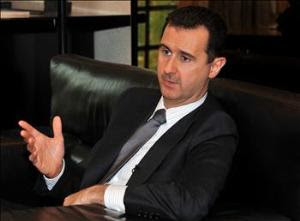
Netanyahu goes for Palestinian over Syrian Track; Lebanon Elections

Israel’s effort to switch the discussion to Iran is likely to be met in Washington and in European capitals with the assertion that it is precisely because of the need to build an alliance to confront Iran that Israel must move ahead vigorously with the Palestinians as well as with the Syrians.

Israel’s effort to switch the discussion to Iran is likely to be met in Washington and in European capitals with the assertion that it is precisely because of the need to build an alliance to confront Iran that Israel must move ahead vigorously with the Palestinians as well as with the Syrians.

[Landis Comment] The Netanyahu government has rejected peace talks with Syria in favor of those with Palestinians. Why has Netanyahu decided to put the Palestinian track before the Syrian track? Many analysts were predicting that he would turn to Syria first. Martin Indik argued that Netanyahu would sacrifice the Golan in order to keep the West Bank. He also argued that the Golan is comparatively simple to solve.

According to Oxford Analytica, Netanyahu is mischievous. He can more easily sabotage the Palestinian negotiations once he has begun them than talks with Syria. The Palestinians are easy to manipulate and problem is complex. The Golan issue is simple and most problems have already been worked out. Oxford Analytica’s analysts argue:

Netanyahu is unlikely to reject US regional policy outright, or say ‘no’ to the president. Instead, he is more likely to emphasise caveats, confronting the Obama administration with a frustrating set of obstructions, delays and diversions.

In short, Netanyahu will accept process and no peace. The Palestinian track has already proven to deliver lengthy process and little peace.

Aluf Benn , writing in Haaretz, argues that Netanyahu is not primarily Machiavellian, but genuinely fears a holocaust carried out by Iran. Thus, he will cede no land to Iran’s leading Arab ally, Syria. Benn writes:

Prime Minister Benjamin Netanyahu’s actions are shaped by a profound conviction that Israel will be in danger of extermination if Iran has nuclear weapons at its disposal. [This is why] Secretary of State Hillary Clinton made it her business to explain to him that the Arab countries will not stand with Israel against Iran if Israel does not advance the peace process with the Palestinians.

Lebanon: The US seems to be reconciling itself to the notion that it can live with a win by March 8 so long as Hizbullah remains largely invisible and Hariri’s people are given a veto in the cabinet. One surmises this because so many Israeli analysts are becoming apoplectic about Obama’s refusal to take more active measures to kill Nasrallah, Hizbullah’s leader, or provide more covert aid to anti-Syria forces in Lebanon.

Israel’s former IDF Chief of Staff Dan Halutz “confirmed that Israel had attempted to kill Hizbullah chief” Hassan Nasrallah.

We tried to get to him, but couldn’t find him. I personally cannot accept that he is still free to shuttle between his bunker and his tunnels.

Obama seems to be preparing to return an ambassador to Syria. Feltman and Shapiro are due in Damascus this week for a second time. The Syrians are also asking for sanctions to be lifted or, at the very least, eased.

If Netanyahu continues to refuse to negotiate with Syria, there is no reason that Washington should hold off making concessions to Damascus based purely on US interests. So long as Israel is unwilling to pay to play, Washington should feel no obligation to shut down the gaming table.

News Summary follows:

al-Khaleej: “US’s Ambassador return to Damascus Imminent” Thanks FLC

“…According to Syrian sources, the U.S. will return its ambassador to Damascus before the end of May, and this will be resolved during the visit to Syria by Acting Assistant U.S. Secretary of State Jeffery Feltman and U.S. National Security Council official Daniel Shapiro. Also to be discussed during the visit are the developments in Iraq and Lebanon, the Middle East peace process, and U.S.-Syria relations. The sources added that Syria expects the U.S. to refrain from renewing the sanctions on Syria, or at least to reduce them..”

Israel Will Accept Palestinian State, Rejects Syria Peace Talks
By Gwen Ackerman and Jonathan Ferziger

May 4 (Bloomberg) — The new Israeli government of Benjamin Netanyahu gave the strongest signal yet that it would accept a Palestinian state, while rejecting peace negotiations with Syria.

“We do want to see peace and do understand that long-term peace and stability will entail a two-state solution,” Deputy Foreign Minister Daniel Ayalon said in an interview.

Israel will honor the previous government’s commitments and accept the internationally backed 2002 peace plan, or road map, which calls for the creation of a Palestinian state, Ayalon said, in the most explicit acceptance of Palestinian statehood since Netanyahu formed a government in March.

In an interview yesterday in his Jerusalem office, Ayalon, 53, said Iran is “vulnerable” and called for stronger sanctions against the country to halt its nuclear program. Iran’s links to Syria are “very, very worrisome,” he said.

Mark Lynch, “Imad Moustapha’s view on the future of relations with the US,” Mark Lynch for Foreign Policy

…. Like every other Arab official I’ve seen in the last few months, Moustapha praised Obama’s public commitment to working for a two-state solution and the appointment of George Mitchell….That sounds great, but…. at the same time, Moustapha continued to fall back on the old style in his own responses to questions and challenges — exactly the litany of complaints about Israel …. His low point came in his response to a Syrian man who asked him to speak about human rights abuses and repression inside of Syria. His response, equating the Syrian questioner with the Israelis and WINEP and then going on about Israeli war crimes, drew audible grumbling from the audience. If the Obama administration has indeed adopted such a fresh new style with Syria, it does not yet seem to be reciprocated in Syrian public diplomacy….

STUMBLING BLOCS by Elias Muhanna in The National

The formerly pseudonymous author of the excellent Lebanese politics blog Qifa Nabki — looks toward next month’s elections in Lebanon and concludes that the country’s era of high-stakes, zero-sum politics is over…..

….Power-sharing will help insulate Lebanon from civil unrest (if March 14 wins) or from a disruption in economic ties with the West (if March 8 wins), but it seems likely to provide yet another pretence for both coalitions to obstruct or avoid any far-reaching reform efforts. The systemic problems that cripple Lebanese politics – sectarianism, widespread corruption, massive public debt – are unlikely to be addressed without a strong executive mandate. The weakening of coalition ties may augur the end of an era defined by the rivalry between March 14 and March 8 – but merely reshuffling the existing sectarian alliances will do little more than prolong Lebanon’s paralysis.

Report From Damascus (May 3, 2009)
by Thomas Strouse, Georgetown graduate student in Damascus

Two critical elections will take place in early June that could potentially shape the direction that the Middle East region moves in the near future. Parliamentary elections will be held in Lebanon on June 7 and a presidential election will be held in Iran on June 12…..

Hizballah Victory?
The upcoming elections will also be Hizballah’s first major test of public support following its conflict with Israel in the summer of 2006. Any win by the current opposition will be portrayed in the West as a victory for Hizballah and its Iranian and Syrian supporters. Without getting too far into the complexities of Lebanese politics, it is not this simple.

Despite Hizballah getting tagged as the leader of the March 8 alliance, the party itself only won 14 seats in 2005. Hizballah’s two major allies in the broader alliance, the Amal Movement (Shi’a) and the Free Patriotic Movement (Christian), also each won 14 seats. Saad Hariri’s Future Movement won 36 seats. The second largest faction in the March 14 alliance along with Hariri’s Future Movement, the Progressive Socialist Party led by Druze leader Walid Jumblatt, won 16 seats. Other minor parties filled in the rest of the allotted seats.

In the upcoming election, Hizballah has decided to only run 11 candidates, three less than the number of seats that it holds in the current parliament. These candidates are likely to easily win their respective races, given the movement’s overwhelming support in these particular Shi’a districts. However, this demonstrates that much of Hizballah’s success depends on the success or failure of the other parties in its alliance. Specifically, Hizballah is relying on the success of its Christian allies in Aoun’s Free Patriotic Movement (FPM), which finds itself in some highly competitive races.

Hizballah … still has much ground to make up against the March 14 alliance…..

Jerusalem Post: One civilization clashing, 2009-05-01

On June 7 Hizbullah will likely take over Lebanon and formally bring the oldest Arab democracy into the Iranian axis. Iran’s stalking horse will not become the ruler of the largely pro-Western, non-Shi’ite majority country through a violent…

Elie Elhadj, 5/1/2009

For Israel and the United States to deny responsibility for having helped create the environment that allowed jihadism to grow in the Arab street is as deluded and dangerous to all concerned as the Al-Saud rejection of a connection between the Wahhabi way of life and the murderers of September 11.

Syria’s Assad urges US to talk to Hamas, Hezbollah, Sun May 3

PARIS (AFP) – Syrian President Bashar al-Assad urged the United States on Sunday to reach out to militant groups Hamas and Hezbollah as part of the search for Middle East peace, in an interview with French television.

Speaking to France 3, Assad welcomed what he said was a new willingness in Washington to listen to Syria’s views since President Barack Obama took office, and said Damascus was ready to help broker contacts with the groups.

The United States regards both Lebanon’s Hezbollah and the Palestinian group Hamas as terrorist movements, and does not recognise them, a stance which Assad said was counterproductive if Washington wanted to seek regional peace….

“I think if you want to solve the problem you can’t go about saying: ‘This is good and this is bad, this is evil and this is democratic, this is human rights and this is not politics’,” he said.

“Politics is when you deal with reality. When you deal with influential parties to influence the position in a positive or a negative way,” he said, calling on the United States to talk to both Iran and the militant groups.

“Hamas has influence and you can not ignore them. You can’t achieve peace while Hamas is outside this peace or against the peace,” he said, adding that the same was true of Hezbollah.

HERE COMES HILLARY; THERE GOES LEBANON

May 1, 2009 – Prof. Barry Rubin (GLORIA) – Suddenly, the United States has awoken to the fact that in one month Lebanon is likely to be taken over by a radical government and hijacked into the Iran-Syria alliance. Unfortunately, this apparently doesn’t mean it—or European states—are going to do anything about it.

In early June, the odds are—though one can still hope otherwise—that the parliamentary majority will be held by a coalition backed by Tehran and Damascus. Hizballah is not going to “take over” the country politically and that is a point no doubt which will be used by governments and media to prove that there’s no problem.

Even UN Secretary-General Ban Ki-Moon, not generally identified as an alarmist and activist, has just started sounding the alarm, “The threat that armed groups and militias pose to the sovereignty and stability of the Lebanese state cannot be overstated,” he said.

The new government is likely to consist of traditional Syrian-backed politicians, the Christian forces of Michel Aoun, Hizballah, and Amal, along with various independent figures. It will take power thanks to the money and guns paid for by Iran and smuggled in by Syria. It will be anti-American and anti-Western, though it won’t go out of the way to advertise that fact in English. And, most important of all, it will be a new base for the spread of Iranian influence as well as a signal as to who’s winning in the Middle East.

President Michel Sulayman who was, people seem to forget, the Syrian candidate for that post, will go along with this new situation, though in Western eyes he will still appear to be moderate. The Lebanese army is not a reliable guard against it, though it is likely to continue receiving Western military aid.

The Obama Administration’s words may be formally proper but what was and is needed is a massive effort by the United States in coordination with Europe and moderate Arab states, including covert assistance to the Lebanese independence forces, the May 14 coalition. That group is, of course, daily accused of receiving such help by Hizballah and company— Sometimes with the help of the New York Times—but has received little help.

Time: Clinton’s Beirut Blitz, by Andrew Butters, 2009-05-09

This U.S. Secretary of State Hilary Clinton’s lighting trip to Beirut was straight from the standard American playbook….

Feds toss out charges against pro-Israel lobbyists
2009-05-09, MSNBC:

Federal prosecutors moved Friday to dismiss espionage-related charges against two former pro-Israel lobbyists accused of disclosing classified defense information, ending a tortuous inside-the-Beltway legal battle rife with..

Is this the Palestinians’ Last Chance?, by Patrick Seale

Will the Palestinians seize the slim chance of statehood offered by President Barack Obama’s pledge to work for a two-state solution of the Israeli-Palestinian conflict? Or will they throw it away because of unresolved inter-Palestinian conflicts? These unspoken questions lay behind the talks which Fatah and Hamas held in Cairo this week, in a last ditch attempt at reconciliation…..

…The Palestinians are not alone in missing an opportunity. The ongoing ‘Cold War’ between regional states – and particularly the clash between Iran, Syria and Qatar, on the one hand, and Egypt and Saudi Arabia, on the other, means that the chance to make their collective voice heard in Washington is being lost.

Egypt, in particular, finds itself trapped in contradictions. It wishes to assert its leading role in the region against new challengers such as Iran and Qatar, while at the same time pursuing an ‘Egypt First’ policy. It is fearful that Hamas might radicalise Sinai’s Bedouin population and encourage the Muslim Brotherhood to rise against the regime. It accuses Hizballah of mounting terrorist operations within Egypt on Iran’s behalf. Above all, it dreads the thought that Israel might seek to dump Gaza and its problems in Egypt’s lap.

While the Arab states are crippled by their disputes, the Europeans are little better. Divisions remain inside the European Union over the Arab-Israeli conflict, particularly over how to deal with Hamas. The EU may applaud Obama’s engagement in the Middle East, but it remains reluctant to play an independent role. It therefore condemns itself to insignificance.

As for the Palestinians, not for the first time in their history they remain fatally absorbed in their quarrels, as if unaware that their national cause is in acute danger of extinction.

Israel picks historian Michael Oren as ambassador to U.S.

Reuters

Nadim Shehadi, a fellow at London’s Chatham House, linked faith in the tribunal with faith in the outside world’s ability to protect Lebanon, which he said had been badly dented by the failure to halt Israel’s 2006 war on Hezbollah guerrillas…”

BMW sales soar to 116% in Syria, 2009-05-02

Syria’s exclusive BMW distributor, Bahi Motors has reported a 116% growth in BMW sales for Q1 2009, compared to its performance in 2008 during the same period. BMW 7 Series is the top selling model achieving 423% increase in sales, followed by the BMW 3 Series with a 127% sales increase.

Nasrallah: Israel assassinated Hariri, 2009-05-02

Hizbullah Chief Hassan Nasrallah charged over the weekend that Israel could have assassinated former Lebanese Prime Minister Rafik Hariri, a claim which an Israeli government spokesman dismissed Saturday as ‘complete rubbish.’

Syria tightens control on media, Internet
Khaled Yacoub Oweis, May 03, 2009

DAMASCUS, May 3 (Reuters) – Syrian authorities have tightened their “mighty grip” on the media and Internet since ties improved with the West last year, the author of a new report on censorship in the Arab country said on Sunday.

“With Syria breaking free from its isolation, the need is greater than ever to ease the mighty censorship and grip over the media, which have only contributed to spreading ignorance and corruption,” Mazen Darwich, head of the Syrian Media Centre, told Reuters.

“Last year, however, was worse than the previous one. Internal and external conditions combined to make it easier to violate individual rights, which reflected on freedom of press and expression,” he added.

Western nations have intensified contacts with Damascus, after several years of strained ties, and backed efforts to reach a peace deal between Syria and Israel.

The United States and most European countries have also toned down their criticism of Syria’s human rights record and curbs on freedom of expression, which the government says are necessary considering a technical state of war with Israel.

NO FACEBOOK

The report, entitled “Syrian pens fall silent”, said 225 Internet sites were blocked last year, up from 159 in 2007. The sites include several Arab newspapers and portals, Amazon, Facebook and YouTube.

Twenty one percent of the sites banned were Kurdish — Syria has around one million Kurds, including tens of thousands without citizenship — and 15 percent are run by Syrian opposition groups.

Bans on a few sites, such as the Arabic language Wikipedia, were lifted, but the Internet remains under the monitoring of the security apparatus, Darwich said.

“We are a long way away from a free cyberspace, but at least supervision should be in the hands of the government, not security, and subject to a law,” he said.

The authorities also shut down eight publications last year and licensing remains difficult, the report said. A state agency holds a monopoly on advertising.

“We have seen some improvements on the margins, such as the possibility of lifting travel bans on some journalists, but there is no structural change,” said Darwich, whose centre is one of a few private organisations dealing with human rights allowed to operate in Syria….

The Artist In Syria, by Etel Adnan.

I just read Miriam Cooke’s “Dissident Syria” and feel that this work has to be brought to the attention of specialists of Arab and Middle Eastern studies, students of literature and the general public. We all have known for about 40 years that the Syrian regime is an authoritarian one, to say the least, and that in addition to the armed opponents that would be prosecuted in any country, Syria systematically tortures and imprisons intellectuals for long periods of time for no other reason than their having criticized the regime. Arab intellectuals in general, as well as those from the other countries of the world, pay little attention to the plight of Syrian intellectuals either out of fear, discouragement or indifference.  More…

“Trip Around and Across Syria!,” By Ali Khan #21

Trip around and across Syria! – Dispatch from Damascus 21
By Ali Khan
Syria Comment, May 3, 2009

Citadel in Deir Europos by Ali Khan
Citadel in Deir Europos (Dura-Europos) by Ali Khan

..

The day after university finished, two friends and I rented a car and set out on a journey that would take us on a 2000 kilometer loop of Syria eastwards and then back down to Damascus from the coast. I was nominated to negotiate the traffic of Damascus on the first day and I must say that compared to India it is fairly civilised, obviously not taking into account clinically insane servees drivers. Nono, an Estonian-American, had not been to Palmyra before, unlike Freddy and I, and so he wandered through the ruins.

Early morning panorama of Palmyra.

Early morning panorama of Palmyra.

We ate a quick lunch of Roasted Chicken with salad and hommous and then set off for Deir ez-Zor. The road was virtually empty apart from the odd truck and the landscape was monotonous with a rocky desert sprawling into the horizon. After a while I noticed that the wheel was shaking and so I pulled in to the hard shoulder and sure enough the front tire had developed been lacerated and was bubbling in places. Thankfully in India, when one learns driving, one also rapidly learns how to change a tire and so I set about putting the jack in place. However the bolts on the tire wouldn’t budge!

After a while Freddy hailed down some men on a motorcycle. They stopped and the passenger decided to wander off into the desert while the rider, wearing a red keffiyeh and a leather jacket, walked up and without uttering a word started loosening the bolts. A young boy stood there and whispered hello to us but other than that remained silent. As soon as the tire was changed he got up, dusted of his trousers, got on his bike and drive into the desert to pick up his companion. Unfortunately, we could only drive at a maximum of 80 km/h on the spare and when I spotted a stack of tires on the road I stopped to see if ours could be fixed. There were no men in sight but then a burly looking woman, in a purple velvet robe and a green hijab, shouted ‘Ghazi’ and suddenly five men appeared from the back. They all took turns to scrutinise the tire and then pronounced that it was unfixable and we would need to buy a new one in Deir ez-Zor. They then invited us to tea and offered us chairs but we preferred to sit on the carpet on the floor. By this time I had noticed that they spoke in an Iraqi accent and so asked them where they were from. It transpired that they were refugees from Mosul in Iraq. However, they refused to believe I was Indian and every so often Ghazi, the oldest man, would smile beamingly from under his walrus moustache and ask me: ‘really, where are you from? Tell me truly.’ The tea came and was very light so Ghazi told them to take it back and then explained to everyone that if I was Indian then I would not drink a light brew. He then apologised that he did not have any milk to go with the tea. We took a quick group photo and all congregated near the olive trees as Ghazi wanted and then set off. He gave us his telephone and asked me to call him if there were any problems further along the road.

We reached Deir ez-Zur by nightfall. The town was falling asleep and shopkeepers were slowly cranking down their shutters. The main souk is near the canal, which in turn runs parallel to the Euphrates. The roof of the souk is triangular and not rounded like in other cities. Alongside the canal, on the Corniche, young people were loitering about, couples stood in corners where the ghoulish orange light from the streetlamps couldn’t reach them and mothers with young children struggled to control their herds. We found a small hotel opposite the main souk. Inside the reception, an old man was pouring himself coffee, smoking and was watching a Raj Kapoor film. Suddenly he looked at his watch and switched the channel to Sayyid Hasan Nasrallah’s speech regarding the arrest of Hizbollah men in Egypt, but then he switched back to the Indian film after spending a fidgety few minutes watching the address. The hotel was lifeless, with the cheap white tiles reflecting the nauseating white tube lights. It looked like it had been a hospital or some sort of insane asylum in a past life. Someone had recommended a restaurant on the bank of the Euphrates so we trekked out in search of the French suspension bridge. The whole town had come close to being relocated when people thought that there were vast oil reserves underneath it but then fortunately it turned out that the reserves were quiet limited. We walked across the bridge and went towards the small clearing on the opposite bank. The restaurant was more like an outdoor café and there were tin sheds everywhere. We walked down towards the banks and sat down. Most of the other customers were either groups of shabab or giggling hijabi girls being courted by eager young men!

Deir ez-Zor Suspension Bridge. Photo from Wikipedia

Deir ez-Zor Suspension Bridge. Photo from Wikipedia

The workers were all Kurdish and once and a while we could catch a snippet of their conversations. Pharsi seems to have had a strong influence on Kurdish. I sat down and even though I could not see the river, I could hear the hushed sound of water as each wave gently pushed the other forward. There was something distinctly melancholic about the place. I am not sure whether it was the worried looking Kurds, the neon lights, the river or the broken and tragic voice of Om Koulthoum coming out from the cheap speakers. Maybe it was a combination of all of them. Earlier I was telling Freddy and Niko that it was particularly poignant for me to see this river that I had heard and read so much about because it was this very same river that had flown through the plains of Karbala fourteen hundred years ago.

The next morning we went to buy a tire and then had a filling breakfast of Phool, bread and tea. I knew I had forgotten something when I left and as I took the first sip of my brown sugar syrup, I thought of Earl Grey sitting on my breakfast table in Damascus. The previous night we had not really been able to see the suspension bridge and so we drove back to see it. On the way a man with a rifle stopped us saying that the road was one way but soon afterwards his superior, with a worried face and a crumpled suit came up and asked us where we were from and then allowed us to continue, waving us through with a friendly ‘Allah Ma’ak,’ God be with you!

There was nothing particularly eye catching about the bridge. A few weary looking photographers with their antique looking Yashica cameras loitered about near the entrance and stopped staring at us as soon as they saw our digital cameras. After a few touristy shots that we will probably never look at again, we set off towards Mari, downstream on the Euphrates in the far eastern corner of Syria. It is funny how on the one hand technology has made our lives so much easier yet because of the ease and inexhaustible supply of gadgets we no longer value things and in fact we often verge on irreverence. Taking a photograph is a good example of this. I remember when I was a child, how we used to be in awe of my mother’s old, clunky Minolta camera, how every shot was carefully thought out because there were only 36 shots on the film and obviously the excitement about going to the photographer and having films developed. I met a wonderful Canadian photographer, Jonathan Luckhurst, in Yemen who still uses film and it seemed that he really had to learn his art rather than just downloading photos onto Adobe and tinkering with them until reaching the desired effect. The road was surprisingly well signposted and we whizzed past blue boards that declared Iraq was only a hundred kilometers away. Niko interrupted Frank Sinatra to proclaim that if we were caught by wayward fedayeen who had popped across the border to find some foreigners, he would claim that he was a Chechen or Bosnian Muslim and if they pulled down his pants to inspect him, he would say that he was afraid of the knife! Needless to say the conversation did not continue for very long and we went back to listening to ‘Mack the Knife as we sped down the road. We could not see the Euphrates but on the other side, towards the south, I could make out the rugged outline of red cliffs. The villages were nearly all made of dull concrete dusty, though the green fields added a welcome bit of colour. People wore traditional dress. I saw more red keffiyehs than I have ever seen in Damascus and instead of the black hijab, the women wore long colourful robes with scarves wrapped like bandanas on their heads. The cliffs I had seen in the distance had undulated their way towards us and we suddenly came to a sharp climb, leaving the green fields behind. As we reached the top of the plateau, I managed to see the other side, which was a frightening expanse of sand interspersed with the odd electric pylon.

We stopped, wondering if we had gone to far and missed Deir Europos. As I turned to look at the plains below us, a cluster of palm trees and a scraggly looking wall caught my eye. We drove towards the remains of what was built as a Macedonian military colony in the 3rd century BC. Over time it passed through several hands and was eventually abandoned and desereted after Shapur I of Persia conquered it in 256. The breadth of diversity of religious buildings is astounding with monuments from Palmyrene, Persian, Semitic, Jewish, Christian and ancient Greek religions, which, are all ruins now and ostensibly, are no longer different from one another. However, it was amusing to see that the synagogue was in better condition than the other buildings because it was built on the outskirts of the town near the ramparts and ironically it was this exclusion that preserved it.

Scenes from the Book of Esther from the Dura-Europos synagogue, 244 CE

Scenes from the Book of Esther from the Dura-Europos synagogue, 244 CE

I walked in past the massive walls facing the desert and into the vast expanse of ruins inside. We headed towards the back of the site where the citadel is built. The town was built on a plateau, protected on one side by the Euphrates, on the others by deep gorges and the entrance overlooked the desert. The view from the top of the remains of the citadel was magnificent with the sandy and rusty red ruins behind me, a clear blue sky dipping into the horizon and the dazzling green fields beneath me, next to the sparkling waters of the Euphrates. Women in colourful floral dresses were working in the fields hunched over while hoards of children were trying to scramble up the sides of the cliff. Niko joined me and after sitting in silence for a while, ponderously wondered if New York would one day be like this, and then disappeared into the warren of rooms below us.

Some Syrian Shabab had wandered into the ruins and before they had a chance to start playing music on their mobiles or begin an impromptu debka session we left. I waved to the man who sold us the tickets earlier. He thought that I was Freddy and Niko’s guide and so only charged me a fraction of the actual cost of the ticket.

We drove further along on the same road until we came to the ruins of Mari. Even though the ruins are not as visually arresting as Deir Europos, it is incredible to even start thinking about how the Sumerian settlement in front of us dated back to the fourth millennium BC. Mari was occupied and flourished in the Early Dynastic period and then changed hands from Akkadian to Amorite rulers. According to historians this was the period of greatest prosperity and it was under an Amorite ruler that Mari became famous for its lavishness and luxury. King Zimri Lim, who I fancy may have been a forbear of Kim Jong Il’s, built a vast pleasure palace that was so famous that the Lord of Ugarit wanted to visit it.

Mari by Ali Khan

Mari by Ali Khan

Hammurabi of Babylon destroyed Mari thus making Babylon the center of civilisation but some parts of the palace still survive and it is possible to walk into the remains of the palace that dates from the second millennium BC. The site is protected and supported by girders and steel pillars and from above it is sheltered by huge plastic roof. However, I could not help but wonder how long we would manage to preserve the mud building until it disappears permanently. As I walked back to the car, I reeled from the thought that we had just walked beneath four to five thousand year old ramparts. As we were leaving a huge group of Germans had arrived, seated themselves in one of the open-air tents and were gorging themselves on tinned meat, olives and salad. The ticket vendor waved goodbye to us; he too had thought I was a Syrian guide and it was only when I insisted that I was Indian did he enter my name on his logbook.

We had not eaten and the sight of the Germans made us even hungrier. We discussed how if the group had been Arab, they might have invited us to eat with them and while shaking our heads at the lack of hospitality we got into the Kia and left for Hassakeh

“Dialogue is the Best Startegy,” Austrian F.M. Interview with Hamidi

Ibrahim Hamidi interviews Austria’s Foreign Minister Michael Spindelegger. He is accompanying President Bashar al-Assad on his visit to Vienna and Bratislava.
.

Austrian F M : Dialogue with Syria is the best Startegy
By Ibrahim hamidi, In Vienna

1- President Bashar al-Assad’s visit to Vienna is his first official visit to an EU state since 2004, when the US sought to isolate Syria. What does the visit mean?

We believe that dialogue is the best strategy to overcome the stagnation we experience in the Middle East. After the Doha Agreement and the following re-establishment of the constitutional order in Lebanon, Syria has shown readiness to contribute to stability and peace in the Middle East. The European Union and Austria want to respond to this welcome development by demonstrating preparedness for a serious dialogue.

A friendly, open and frank exchange between partners has been at the centre of my meeting with Foreign Minister Walid Al-Mouallem and of the meetings of President Mr. Assad with Federal President Fischer and other high-ranking Austrian political representatives. Austria with its traditionally excellent relations to the Arab world and Syria can serve as a door opener.

2- Is there a EU unified policy- to engage Syria? Is there a Political decision?

There have been a considerable number of visits to Syria by high-ranking EU officials in the recent past. We witness a gradual rapprochement which should be broadened in line with further steps taken by Syria. Syria has potential to be a constructive force in the Middle East and prove its commitment to regional cooperation and partnership.

3- Do all EU members want engagement at the same speed?

We cannot expect fundamental changes to happen over night. Instead, we are seeing a gradual approach which should be to the benefit of both the EU as well as Syria and the entire Middle East. After all, stability and prosperity in our neighboring region is as much in our interest as it is in the interest of Syria and its people.

4- What about the association agreement. Do you think that it will be signed in the coming months? In July?

A political decision is being prepared on the Association Agreement between the EU and Syria. But no final decision has been taken yet; the European Union is following Syria’s policies on the regional level as well as internally.

5- What is the Austrian role in making peace in the Middle East?

Austria is traditionally engaged in the Middle East and we have a keen interest in the positive development of the region. We have established trustful relations with all countries in the region.

Additionally, we are currently serving as non-permanent member on the UN Security Council. Literally from day one of our membership on the Council we have been involved in efforts to stop the escalation of the conflict in and around the Gaza-Strip, finally leading to the adoption of Security Council Resolution 1860 (2009) that laid the ground for the current, albeit fragile, calm between Israel and Hamas.

We will continue our active efforts to further peace in the Middle East. The most visible contribution has been the presence of Austrian troops on the Golan Heights. More than 25.000 Austrian UN-soldiers have been deployed in the course of the last 35 years. Moreover, since January 2007 an Austrian, Major General Wolfgang Jilke, has been Force Commander of UNDOF.

6- Can Vienna play a role in the resumption of indirect talks between Syria and Israel?

Austria has always been ready to offer a platform and its good services to parties that are willing to engage in dialogue and negotiations. We continue to work in this tradition. We also support efforts by other countries, such as Turkey, that are aimed at bringing Syria and Israel back to the negotiating table. Nevertheless, in case we were asked to help, we would definitely do so.

7- What can the EU do to make the Israeli right-wing government commit to peace on all tracks?

The European Union and the other parties in the Middle East Quartet are continuously insisting on the parties to remain committed to the peace process and implement their respective obligations under the Roadmap. This includes in particular the freeze of all settlement activity in the occupied territories.

The Quartet and the international community can offer their assistance but they cannot replace the indispensable political will of the parties themselves. We call on all actors in the region to assume their responsibilities and return to the negotiating table. At the end the day, only negotiations can offer lasting and comprehensive peace, security and prosperity for future generations.

8- To accept two-state solution?

The two-state-solution continues to be at the heart of any durable peace settlement. On this, the international community is united and steadfast.

We also commend the Arab States on their strategic commitment in the Arab Peace Initiative. We hope that all parties concerned will play their part to make this important vision a reality.

[end]

From all4Syria ?????? ?? “?????” ????????? ?????? ??? ?????? ???? ????

The Media Relations Department of Hizbollah Wishes You a Happy Birthday: Unexpected Encounters in the Changing Middle East
by Neil MacFarquhar

A New York Times correspondent’s affectionate, irreverent portrait of the Middle East he’s known since childhood—an unexplored place hidden behind the usual headlines.

Since his boyhood in Qadhafi’s Libya, Neil MacFarquhar has developed a counterintuitive sense that the Middle East, despite all the bloodshed in its recent history, is a place of warmth, humanity, and generous eccentricity.

In this book, he introduces a cross-section of unsung, dynamic men and women pioneering political and social change. There is the Kuwaiti sex therapist in a leather suit with matching red headscarf, and the Syrian engineer advocating a less political interpretation of the Koran. MacFarquhar interacts with Arabs and Iranians in their every day lives, removed from the violence we see constantly, yet wrestling with the region’s future. These are people who realize their region is out of step with the world and are determined to do something about it—on their own terms.

Between Arab and White: Race and Ethnicity in the Early Syrian American Diaspora (University of California Press, 2009)
by Sarah Gualtieri

This multifaceted study of Syrian immigration to the United States places Syrians- and Arabs more generally-at the center of discussions about race and racial formation from which they have long been
marginalized. Between Arab and White focuses on the first wave of Arab immigration and settlement in the United States in the years before World War II, but also continues the story up to the present. It
presents an original analysis of the ways in which people mainly from current day Lebanon and Syria-the largest group of Arabic-speaking immigrants before World War II-came to view themselves in racial terms and position themselves within racial hierarchies as part of a broader process of ethnic identity formation.

Hariri Tribunal Releases Lebanese Generals for lack of Evidence

The release of four Lebanese generals imprisoned as suspects in the killing of Rafiq Hariri in 2005 is good news for Syria. It suggests that the investigation has turned up little or no evidence of Syrian responsibility for the assassination of Lebanon’s leader. The hope of anti-Syrian politicians that the Tribunal would act as a sword of Damocles hanging over Assad’s head is diminished. Neocons, in particular, believed that the ongoing investigation would confound attempts by the Obama administration to engage just as it would prevent Syria from successfully pressuring Israel to return the Golan Heights, which Israel snatched in its surprise offensive in 1967 and is obliged by UN resolution 242 to return to Syria in exchange for peace. [see more Landis comment below]

Men carried former domestic security chief Ali Hajj after his arrival home from prison in Beirut on Wednesday.By

UN Court Releases Lebanese Generals in Hariri Case
By Massoud A. Derhally

April 29 (Bloomberg) — A United Nations tribunal investigating the 2005 assassination of former Lebanese Prime Minister Rafiq Hariri ordered the release of four Lebanese generals held in connection with the killing.

Judge Daniel Fransen of the Special Tribunal for Lebanon said the four generals held in Lebanon since 2005 are to be freed because there isn’t sufficient evidence to continue their detention, given that some witnesses have modified or retracted their statements. Proceedings were aired live from The Hague by Arab and Lebanese broadcasters and on the Internet.

There were “inconsistencies in the statements of key witnesses” and a “lack of corroborative evidence to support these statements,” Fransen said.

Former Canadian Deputy Attorney General Daniel Bellemare, who took over the investigation last year and became the court’s chief prosecutor on March 1, said he wouldn’t appeal the ruling.

The judge ordered the immediate release of Mustafa Hamdan, former head of the Presidential Guard; Jameel al-Sayyed, the former general security chief; Ali al-Hajj, the former internal security head; and Raymond Azar, the former army intelligence director. All four were arrested in 2005….

Saad Hariri, the second-eldest son of Rafiq Hariri and the leader of the ruling March 14 coalition, said “we accept and respect” the decision. Hariri said in a televised news conference from Beirut that he expects the tribunal to uncover the person or group responsible for the assassination.

“We do not want revenge,” he said. “All we want is justice.” He urged his supporters to accept the ruling and said today’s decision affirms the court’s credibility.

In December 2005, Lebanon’s government asked the UN to set up a tribunal to try those responsible for the Feb. 14, 2005, killing of Hariri and 22 others by a roadside bomb.

Al-Sayyed arrived at his home in the Lebanese capital today, and was greeted by Hezbollah lawmakers and dozens of supporters who threw rose petals in the air and cheered as he walked by, live video footage aired by al-Jazeera showed….

“This verdict underlines how politicized the investigation was,” Lebanese American University Professor Amal Saad-Ghorayeb said in a telephone interview from Beirut. “It also discredits the Lebanese judiciary and the politicians who accused these generals.” The ruling has “far-reaching political implications,” she said. “It may weaken the pro-Western coalition in the upcoming elections and strengthen Hezbollah and its allies.” Lebanon holds parliamentary elections on June 7.

Robert Worth of the NYTimes adds:

The first prosecutor in the case, Detlev Mehlis, released a report in 2005 that said that the assassination had been planned by high-level Syrian and Lebanese officials, including some in the inner circle of the Syrian president, Bashar al-Assad.

[Landis Comment] Technically, it is not correct to write that the UN released a report that sadi that the assassination had been planned by high-level Syrian and Lebanese Officials.” Mehlis sent his report to the UN headquarters where it was released after redaction. The released copy did not name any Syrians, although the report argued that Syria had the means and motive. Journalists discovered that if they clicked on the “uncorrect” button on Microsoft Word, the eliminated names of Syrians appeared in an earlier unredacted version. I remember this because in 2005 Nick Blanford, the Christian Science Monitor reporter in Beirut, called me in Damascus in excitement to explain to me how to get the Syrian names. The UN mistake caused major excitement among reporters who could claim to be true investigative sleuths by doing little more than pressing a key on their computers. It was sensational and seemed to nail Syria – something the Bush-Cheney team in the White House was eager to do.

The UN did not meant to “release a report in 2005 that said that the assassination had been planned by high-level Syrian and Lebanese officials.” Instead cautious leaders took out the names, presumably because they did not believe the evidence was strong enough or because they did believed it unwise to release names. As it turned out the UN leaders that redacted the report were correct in their caution. The evidence implicating Syria gathered by Mehlis was based on the testimony of witnesses that later recanted and  explained that they were paid by Hariri operatives to give false testimony. One was Husam Husam [see this article about how he recanted] and another was Sadiq [see this article on his recant by Alex] claimed to have been pressured to testify or offered money give false testimony. Nevertheless, reporters have continued to write that the UN named the Syrians, when this is only partly true and largely misleading based on what we subsequently learned. Brammertz, the UN investigator who came after Mehlis, dropped Mehlis’ more sensational accusations and seriously toned down the report. Most reporters at the time suggested that this was due to tactical caution in order to lure the Syrians into cooperating and entrapping themselves. But Fransen stated: “There were “inconsistencies in the statements of key witnesses” and a “lack of corroborative evidence to support these statements.”

The Brammertz report, however, made it clear that a new avenue of investigation was being pursued that would not necessarily end at Syria’s door. A “criminal network” was being blamed for executing the car bomb. This was a vague term, but by reading the report carefully, one could determine that Islamists, many based in Tripoli, had planned and carried out the attack. Brammertz did not drop the possibility that Syria would be connected to the Islamist criminal network, but equally he suggested that there was nothing more than circumstantial evidence to implicate Syria; this was means and motive.

October 2005

Anyone wanting to get a sense of the impact of the Mehlis report on Syria and US relations with Syria need only scan through the October 2005 entries to Syria Comment. I was living in Damascus at the time.

Here is a quote from Damascus on the eve of the release of the first Mehlis report

Thursday, October 20, 2005
“Waiting for Mehlis” by Joshua Landis

The media Tsunami has hit. Journalists of every color have been flooding into Damascus these last few days to study the grimaces of the regime as it must submit to the delicate tortures of the Mehlis report, international condemnation, and very likely, UN resolutions.

A journalist just called to ask me if I could be standing by at 12:00 midnight when the first inklings of the Mehlis report begin to filter out. The main office suggests it will be bad for Syria and it wants immediate reactions. The political class has been bracing itself in Damascus and trying to manage the reporters as best they can, but everything is done in a ham-fisted way here. At such times of crisis, one realizes just how much of a third world country Syria is. Like a dear in the headlights, it has little clue what sort of terrifying machine is bearing down on it.

Ironically, the ordinary people are largely oblivious that their fate is being decided in the halls of distant capitals. Many don’t even know that a major clash is brewing between the US and Damascus. One taxi driver I spoke to yesterday had never heard of the Mehlis report and seemed surprised to be told that America and Syria were at loggerheads. He asked, “Is America going to invade?” When I reassured him that was not in the cards, he waved his hand in relief and said, “Oh, well, then it isn’t important.”

But even those who have some idea of what is transpiring believe it is a tempest in a tea pot. They have no influence over events anyway and seem oddly detached from “high politics,” as they call it. The streets are packed with Ramadan revelers looking for amusement and walking off their iftar…..

Here is the kind of spin “unnamed US Diplomats” were giving the New York Times reporters at the time of the issuance of the Mehlis report:

“There is evidence in abundance,” the diplomat said. “But to get every piece of the puzzle they need more time.” He spoke on condition of anonymity because of what he described as the extreme sensitivity of the matter.

Mr. Shawkat is considered the second most powerful man in Syria and has been seen as a likely candidate to take over the country if the embattled Mr. Assad were removed from office.

The diplomat, describing Syria as a “country run by a little family clique,” said the involvement of any one in Mr. Assad’s inner circle would be a severe blow to the government.

“There is absolutely no doubt, it goes right to the top,” he said. “This is Murder Inc.”

Here is more Robert Worth summing up the political stakes well:

The tribunal has always been controversial in Lebanon. Many supporters have seen it as a way to punish Syria and its proxies here, which they tend to blame for all the assassinations since 2005. By contrast, those in the political opposition, including Hezbollah, see it more as a political weapon aimed at their Syrian ally. They also ask why such a tribunal is warranted for the death of a billionaire politician, Mr. Hariri, and not for the deaths in the many massacres and other assassinations that have taken place here in recent decades.

Rafei in LA Times:

“This is the moment of truth,” Hassan Fadlallah, a Hezbollah member of parliament, told reporters on Lebanese television. “This is the day of the fall of the [March 14] group, which based its judgment on falsification.”

Naharnet adds:

Speaking from their respective homes after their release, the generals said they had been vindicated by the court and insisted they had nothing to do with Hariri’s 2005 murder in a massive car-bombing that also killed 22 others.

“Four generals were freed today but the only remaining inmate is Rafik Hariri and his jailer is Lebanon’s justice system,” security services director Jamil Sayyed told a crowd of cheering supporters outside his home that included several MPs from Hizbullah.

Saad Hariri agreed to “exchange his father for the sake of politics. He embraced people who do not want the truth to be uncovered,” he said, referring to al-Mustaqbal Movement leader.

“I thank everyone who stood by us, and above all Hassan Nasrallah,” he said, referring to the head of Hizbullah. “Never in the history of Lebanon have people been jailed for four years with no charge or evidence.”

US Plans New Talks With Syria, Wall Street Journal

The Obama administration is dispatching two high-level envoys to Syria in coming weeks for a second round of talks focused on securing the Iraqi border and supporting the Arab-Israeli peace process, said officials briefed on the trip.

Jimmy Carter: US and Syria to restore full diplomatic ties soon, Ha’aretz

Jimmy Carter on Tuesday said that the United States and Syria are close to restoring full diplomatic ties. “I wouldn’t be surprised if it happens this year,” Carter said

Clinton Reassures Arab Allies as Iran, Syria Outreach Begin, Bloomberg

Secretary of State Hillary Clinton completed a three-day Middle East trip intended to reassure Arab allies of U.S. support as the Obama administration begins to pull forces out of Iraq and engage with Iran and Syria. Clinton’s message in Lebanon, Iraq and Kuwait was consistent.

Ben-Eliezer: Netanyahu will surprise us with ‘serious’ Syria talks
By Yossi Verter, Haaretz Correspondent, 30/04/2009

Prime Minister Benjamin Netanyahu intends to conduct “serious negotiations” with the Palestinians and the Syrians, Minister Benjamin Ben-Eliezer (Labor) told Haaretz. The full interview will appear Friday in Week’s End.

“Netanyahu is going to surprise us all,” said Ben-Eliezer, who is industry, trade and employment minister, after several tete-a-tetes with the prime minister over the past month.

He said Netanyahu had assured him, both before and after he set up the government, that he would continue negotiating with the Syrians.

Regarding the Palestinians, Netanyahu’s plan will be based on a two-state solution, said Ben-Eliezer.

“It’s not the same Bibi,” Ben-Eliezer said. “He’s much more open, patient and relaxed. He’s not alarmed or dogmatic. Something happened to him. He realizes that he cannot afford another crash like the one in his previous term.

“He understands that there’s a new administration in the United States, which is neither the Clinton Administration nor the Bush administration, and that if we don’t come up with a peace plan, someone else will call the shots for us.”

“If we find that Bibi lied to us, we’ll quit [the coalition],” said Ben-Eliezer, who is a member of the security cabinet.

He said that he and Netanyahu believe the Iranian issue should be solved diplomatically, not militarily.

Ben-Eliezer said the Labor Knesset members who objected to party chairman Ehud Barak’s decision to enter the coalition were “terrorizing” the party, and called their conduct over Barak’s dismissal of party secretary general Eitan Cabel “insanity.”

Syria’s Credit Rating Sees Unique Boost
Written by The Media Line Staff, April 28, 2009

Syria’s international credit rating has been raised by the Organization for Economic Co-operation and Development (OECD) for the first time in over a decade. The report, issued earlier this month, raised Syria’s risk rating by one level from 7 to 6.

The OECD regularly rates credit risk – the likelihood that a country will service its external debt – on a scale of 7 to 0. Among the 181 economies surveyed by the organization, Syria was the only country to see an improvement in its credit rating, a positive sign of the country’s historically protracted path towards fuller integration into the global economy.

“Syria’s rating is still low and this does not mean Syria has become a country whose business environment has improved tremendously,” Jihad Al-Yaziji, publisher of the business newsletter Syria Report, told The Media Line.

“But it shows an overall improvement in the Syrian business environment after several years of changes to the investment, commercial and consumer legal and regulatory environments.”

The OECD also reported a significant increase in the ease of starting a business in Syria, bumping up the Arab republic to 124th place from last year’s 171 among the 181 economies surveyed.

The organization boosted Syria’s overall “Ease of Doing Business” rank by eight and reported noticeable improvements in the ease of cross-border trade, employing workers and registering property in Syria.

“What’s important is that the efforts of the government are starting to pay off,” Al-Yaziji explained. “Over the past few years a big chunk of Syria’s foreign debt was wiped out and GDP has grown steadily. Private banks and insurance firms have been allowed into the country and you can now import almost anything into Syria. None of this was the case 10 years ago.”

Al-Yaziji added that, “It’s still not very easy to launch a business in Syria, but the process has improved tremendously. One of the new incentives, for example, is that a business in Syria can now be owned entirely by foreigners. This is not the case in many other Middle East countries.”

The OECD puts the current cost of launching a business in Syria at 18.5 percent of the country’s per capita gross national income (GNI), about $1,760 at current levels.

ABBAS OFFERED WRITTEN PEACE PROPOSAL TO OLMERT
2009-04-27

Jerusalem (dpa) – Palestinian President Mahmoud Abbas submitted a far-reaching, written peace proposal to the former Israeli government during the final days of the Bush administration, a top aide said Monday. Chief Palestinian negotiator Saeb Erekat said he presented the document to former US president George W Bush during a previously secret trip to Washington on December 18. Abbas had asked then outgoing Israeli premier Ehud Olmert to reply to the proposal in writing, but Olmert had failed to do so, Erekat told foreign correspondents in Jerusalem. Instead, Olmert chose to use his final weeks before leaving office and before Israel’s February 10 elections to launch the offensive in Gaza just days later, he charged……

Damascus Securities Exchange Volume Reaches Record $55,770
2009-04-27 11:17:51.461 GMT

Damascus Securities Exchange Volume Reaches Record $55,770, 2009-04-27

Damascus Exchange Sees Trading Volume Drop Ahead of Dividends: 2009-04-30

By Nadim Issa: April 30 (Bloomberg) — Trading volume on the Damascus Securities Exchange tumbled 61 percent compared with the last trading day as investors await their cash dividends. “Four companies out of the total of eight listed approved a cash-dividend distribution and this process will be completed in the coming two to three weeks,” said Sufiyan Haikal, operation manager at Damascus-based Cham Capital LLC. The total volume of traded shares reached 1.01 million Syrian pounds ($21,500) from 2.59 million pounds on April 27. The bourse opens two days per week. Shares of seven companies advanced, reaching the 2 percent fluctuation limit.

Economic reforms to continue, but speed unclear
Oxford Analytica, Friday, April 24 2009

SUBJECT: The outlook for economic reform in Syria.

SIGNIFICANCE: The recent opening of the Damascus stock exchange is the latest milestone in Syria’s reform programme and underlines the government’s commitment to the liberalisation of the economy. While the speed of reform will depend upon external factors, it will be sufficient to boost growth over the medium term.Go to conclusion

ANALYSIS: Several factors have historically undermined the economy’s growth:

· short-term macroeconomic policies, such as government expenditure, inflation and the current account deficit; and

· structural factors, including the financial system and trade policy.

Syria has put forward a reform programme to tackle these issues However, some argue that financial liberalisation and increasing openness to trade and investment will not achieve growth unless accompanied by cuts in government expenditure. While this view is exaggerated, there is no doubt that the global slowdown will have a negative impact both on the timing of the reform programme’s implementation and the country’s economic outlook.

Government spending. The immediacy of Syria’s difficulties has been underlined by the 2009 budget deficit of 9.25% of GDP (). While according to the government, the budget (including public spending) is in line with the tenth five-year development plan, the size of the deficit inevitably sets off warning bells about state finances:

· Government spending has been increased recently by the large numbers of Iraqi refugees in Syria and, over the longer term, by the commitment to a larger than average sized (by developing country standards) public sector.

· As a result, instead of job cuts, privatisation and the sale of public enterprises, the government will continue on the path of gradual liberalisation with the emphasis on facilitating private investments in sectors such as construction and tourism.

Inflation. Syria’s emphasis on achieving social harmony means that some scheduled reforms will be postponed. According to the IMF in October, inflation was just below 5%. However, Syria’s three-year drought and the removal of some subsidies have pushed up prices:

· This means that, although the introduction of a value-added tax (VAT) has been approved in principle, its implementation has been delayed until 2010.

· Exchange rate liberalisation will also be delayed.

Current account deficit. Senior officials have said recently that the price of the Syrian pound is determined in the market, and suggested that allowing the pound to depreciate would encourage exports. However, it is unlikely the pound will float freely in the foreseeable future as the current account, which is already in deficit, is expected to widen in 2009 to 1.0-1.5 billion dollars (more than 2% of GDP):

· Oil revenues. This year sees the end of net oil revenues, with the value of imports of refined products exceeding earnings form crude exports.

· Remittances. Remittances from Syrians working in the Gulf have fallen as a result of GCC governments seeking to reduce expenditure on foreign workers in the face of the global slowdown. Of an estimated 50,000 Syrian workers currently employed overseas, most are in the Gulf, and these hold middle-management positions making their remittances more significant than those of casual manual workers in Lebanon who have not been as badly affected. Remittances by Syrian workers in the Gulf have increased steadily over the past decade, reaching an estimated 850 million dollars in 2008.

Stock exchange. The most high-profile of the recent reforms has been the opening of the Damascus Securities Exchange (DSE) on March 10, after a hiatus of 50 years and frequent delays in the past few years:

· In theory, the exchange will widen the sources of finance available to listed companies, so allowing them to expand their activities.

· This is an enormous task as Syrian companies typically fund their expansion through internal finance and, thus, do not even have a tradition of banking relationships to prepare them for the leap of opening up to the scrutiny of publicly listed ownership.

· It is difficult to tell how successful the market will be over the long term at channelling funding to listed companies, although the initial signs are promising.

The first hurdle lies with the listing of a sufficient number of companies across the different sectors of the economy:

· The DSE began trading with six listed companies, although on the first day was it confined to one company, Banque Bemo Saudi Fransi.

· Another four companies have received initial approval, and a number of Initial Public Offerings (IPO) are also planned.

· Estimates of the number of companies expected to be listed by the end of the year range between 20 and 35 companies, with the former a more realistic number.

· So far the diversity of listed companies is promising, with publishing, transport and tourism as well as the ubiquitous financial sector well-represented.

At the moment, demand is difficult to gauge. Although the DSE is open to foreign investors, falls in values in regional stock markets mean that much cross-regional investment will not immediately be forthcoming. Also, the type of legislation — such as providing tax breaks for retirement plans — that will trigger a surge in domestic investment is many years away.

Trade policy. Syria has long been criticised for being insufficiently open to foreign trade. However a major step was taken to rectify this in December, with the initialling of an updated version of the EU Association Agreement:

· The Agreement, which should encourage greater trade with, and investment by, European companies in Syria, is now awaiting approval from European member states.

· Last month, the government formed the ‘Higher Council for Syrian European Association’ with the mandate of finalising the agreement. Its membership — which includes the prime minister, deputy prime minister for economic affairs, the head of the State Planning Commission, the governor of the Central Bank and the presidents of the Chamber of Commerce and of Industry — underlines the seriousness with which Damascus is viewing it.

· It is likely that the agreement will be signed before the end of the year.

Foreign investment. With Western investments adversely affected by regional geopolitical insecurity and US sanctions, the main source of funding in Syria continues to be the Gulf:

· While the regional economic slowdown will inevitably affect current Gulf investment, the outlook will improve over the medium term.

· Gulf investment will be increasingly attracted by Syria’s common language, geographical proximity and untapped resources.

· Investment will focus on tourism, banking and construction, with Gulf Arabs taking holidays closer to home, and wealthy Syrians requiring more sophisticated banking services.

Thus, although Dubai-based Emaar Properties, whose credit rating was recently downgraded by Standard & Poor’s, has temporarily placed on hold its second project in Syria, the ‘Damascus Hills’, the 500 million dollar ‘Eighth Gate’ project remains underway. Last month, the company invited investors to a reception to assure them of the project’s progress and show them developments at the site.

Last November, the governments of Syria and Qatar signed an agreement to establish a 5 billion dollar joint holding company to invest in real estate, tourism and industry projects. The property arm of the Qatar Investment Authority has recently announced its intention to develop two real estate projects. The Al-Khurafi Group, from Kuwait, also continues to show interest in developing infrastructure projects including electricity and water management.

CONCLUSION: Syria’s longstanding problem of rising government debt has been exacerbated by the global slowdown. Reforms will continue to take place but at a pace determined by external events, such as the global slowdown and drought. Gulf and — eventually — local investment will underpin future growth.

US Will Work with Lebanon Opposition – Experts Say

The US will work with a March 8 led Lebanon even though it includes terrifying Hizbullah, such is the conclusion of smart Lebanese analysts.

“The era of the M14/M8 rivalry is dead” concludes Qifa Nabki:

The era of the M14/M8 rivalry is dead. The game has already begun to change (as we’ve seen with the Jumblatt bloopers, Nassib Lahoud’s resignation, and Hariri’s welcoming of Syrian arch-crony Michel el-Murr on his Metn list). Unless Hariri and/or AIPAC can persuade the Americans that there is a politically expedient reason to make life difficult for a M8 majority, I’m sure the Americans will be able to get their heads around it…..

A March 8th win is really going to be all about the Free Patriotic Movement (Aoun’s Christian bloc). No matter how Fox News spins it, the reality is that the onus has been placed entirely upon Michel Aoun’s Change & Reform bloc to pony up the seats to push the opposition over the top. And while there may be a congressional effort to introduce something like a Lebanon Accountability Act, I just can’t see a politically expedient reason to do it if the Syrians are adding value to Obama’s Mideast efforts.

See Qifa’s full post:Will the U.S. Punish Lebanon For Electing The Opposition?

Ex Oriente Lux offers another smart analysis of the Clinton visit to Lebanon: Clinton in Beirut, hints at post-June 7 US policy towards Lebanon?

Perhaps the Obama administration is bracing for a March 14 loss in June and seeking to establish President Suleiman as the prime US interlocutor in Lebanon. Also in the as-Safir piece, Clinton reportedly asked Suleiman whether or not he will have a bloc in the next Parliament. This seems to hint that the Obama administration would prefer not to cut off aid to Lebanon in the event of a March 8 win in June. It is possible that the Obama administration would seek to work with Suleiman, March 14, and independents to temper the political program of a March 8 government and not cut off aid a la the Hamas win in January 2006….

Also see Lux’s analysis of Jumblatt’s crabwalk away from Hariri (pro-American) and toward Berri (pro-Syrian) in advance of the elections. Jumblatt is a key bellwether of Lebanon’s political future. He was out in front of the anti-Syria zig under the Bush administration and may also be in front of a pro-Syrian zag under Obama – at least that is the presumption of Lux’s smart article. Ex Orient Lux is a welcome new addition to the Lebanese blog world: he translates from the Arab press; he adds value with choice quotes to back up his argument, and he eschews invective and bombast for sharp opinion.

POMED writes:

Respecting Democratic Outcomes?
During the recent Summit of the Americas, President Obama noted that his administration would respect the “legitimacy” of all democratically elected governments, even when it “might not be happy with the results of some elections” and that he “condemn[s] any efforts at violent overthrows of democratically elected governments, wherever it happens in the hemisphere.” It remains to be seen whether the Obama administration will extend these principles to democratic governments in other regions. But the administration’s apparent intention to allow for U.S. assistance to be provided to a Hamas-Fatah unity government suggests a willingness to apply this democratic “doctrine” even when politically risky.

Israel ‘Troubled’ by Turkish-Syrian Military Exercise
2009-04-27

By Steve Bryant
April 27 (Bloomberg) — Turkey and Syria began joint military exercises on their border today, training that Israeli Defense Minister Ehud Barak said was a “troubling development.”

Israel rejects Syria preconditions for peace talks

Sun Apr 26, 2009
JERUSALEM, April 26 (Reuters) – Israel’s new government would talk peace with Syria if it dropped preconditions such as an Israeli commitment to return the Golan Heights, Foreign Minister Avigdor Lieberman said on Sunday.

“I would be happy to hold negotiations with Syria this very evening, but without preconditions and without ultimatums,” Lieberman told Israel Radio…. “Each of the sides has a position. Syria may want sovereignty on the Golan Heights, while we ask for a 200-year lease on the Golan Heights,” Lieberman said.

China backs Syria’s quest to recover Golan

DAMASCUS (AFP) — Chinese Foreign Minister Yang Jiechi wrapped up a regional Middle East visit in Damascus on Sunday saying Israel should return the Golan Heights to Syria.

“China supports Syria’s efforts to recover the Golan,” which Israel seized during the 1967 war and annexed in 1981, Yang told reporters during a joint news conference with Syrian Foreign Minister Walid Muallem.

Obama move alarms Israel supporters, By Paul Richter

The administration seeks changes that would permit aid to Palestinians even if officials backed by Hamas, which has been designated a terrorist group, become part of a unified Palestinian government.

Is Clinton’s Visit to Lebanon a Challange to Syria or just a pep rally?

Clinton on the stump in Lebanon

Clinton Campaigning for pro-US factions in Lebanon

Is Clinton’s Visit to Lebanon tantamount to throwing down the gauntlet? Is it a challenge to the Lebanese not to vote for March 8 and notice to Syria to help throw the elections in Hariri’s favor if it wants engagement, relief from sanctions, and help with Israel?

Clinton’s decision to campaign for anti-Syrian zaims in Lebanon does not mean that the US will not engage Syria in a meaningful way. Clinton’s visit to Lebanon, prompted one Syrian friend to write:

“Clinton has finally made her move, and how predictable it is? Forget it. They will never give Syria what it wants. The status quo is back. Obama is no different from any previous president.”

I don’t agree with this conclusion. If the pro-Syrian coalition wins the elections, Washington will have to find a way to finesse. Why would the US punish the Lebanese for their decision to elect a party that is pro-Iranian? Obama is different from Bush, who decided to punish the Palestinians for voting contrary to US interests.

Clinton has threatened that the US will cut off US aid to Lebanon – a warning to the Lebanese not to vote for March 8. But it the Lebanese defy the US and vote for March 8 anyway, the US can cut aid but continue to finesse the situation by allowing the French and British to step forward and engage the new Lebanese government. Britain has begun a direct dialogue with Hizbullah. France has stated that it can live with any outcome of the elections so long as powersharing is respected in the new government. Both Britain and France have made it clear that they are willing to accept Lebanon’s democratic results without a major tantrum if their prefered party doesn’t win.

The US manages to shut its eyes to Hizbullah’s presence in Lebanon’s government today. What is to stop it from doing this even if March 8 wins? Eye shutting will admittedly be harder to do if March 8 forms the next government; but March 8 has already made a number of suggestions about how pro-American elements can play a big role in any new government. This compromise could be used as a basis to assuage US anger and mollify any desire on the part of Washington to pick up its marbles and go home.

After all, if Obama uses a March 8 victory in Lebanon to join Israel in refusing to engage Syria in a meaningful way, he will make a mockery of his campaign promises to do something about Arab-Israeli peace. Syria can soft peddle its influence in Lebanon, but it will not abandon it. The notion that Syria will realign its regional alliances as a prerequisite for engaging the US is a non-starter. It is also hard to believe that Washington is insisting that Syria throw the Lebanonese elections to March 14 in order to gain US engagement.

Washington has only said that it does not want coercion or violence in the elections, which is fair enough. We have already read about the massive amount of money that is flowing into Lebanon to influence the elections – presumably to help America’s and Saudi Arabia’s allies win. It will be interesting to see if Clinton speaks out about this as well.

Syrian diplomates are being reasured that Obama means business on Arab-Israeli peace. They insist that administration figures are not speaking the old language of conditions, i.e. give up Hamas, Hizbullah, and influence in Lebanon in order to get engagement, a fair hearing on the Golan, and relief from sanctions. I guess we will have to wait and see if my anxious Syrian friends are reading too much into Clinton’s surprise visit to Lebanon in advance of the June 7 elections.

Syria’s Assad “Not Optimistic” About Talks With Israel-Report

VIENNA (AFP)–Syrian President Bashar al-Assad insisted on the return of the Golan Heights but said he could not foresee peace talks with Israel anytime soon, in an interview with an Austrian daily published Sunday.

“What counts in the end, is that there is occupied territory that must be returned to Syria, and then we can talk about peace,” Assad told the newspaper Die Presse, ahead of a visit to Austria Sunday.

“We do not make a peaceful solution dependent on the Israeli government. Governments in Israel come and go, whereas peace is a fixed goal that one must work towards consistently, even when there is no partner,” he said.

But he added: “I am not very optimistic about this government,” describing it as an “extreme, far-right government that does not support peace.”

Assad’s comments came as a split appeared Sunday within the Israeli government of hawkish Benjamin Netanyahu on possible peace negotiations with Syria.

After firebrand Foreign Minister Avigdor Lieberman said he could not see Syria as “a real partner for any type of agreement” in a newspaper interview Saturday, Defence Minister Ehud Barak told reporters that Tehran had an interest in holding talks with Damascus.

Clinton reassures Lebanon on overtures to Syria
The Associated Press

“There is nothing that we would do in any way that would undermine Lebanon’s sovereignty,” Clinton said. “I want to assure any Lebanese citizen that the United States will never make any deal with Syria that sells out Lebanon and the Lebanese people. You have been through too much and it is only right that you are given a chance to make your own decisions,” Clinton said.

“It’s a complicated neighborhood you live in and you have the right to your own future,” she added.

Hezbollah spokesman Ibrahim Mussawi said Clinton’s visit could have a negative impact on the pro-U.S. factions in the country. … But he added that American “interference in the past was never positive.” He also criticized what he termed a “double standard and deception” when the U.S. calls for Islamic factions to participate in elections and then refuses to accept the results if they win.

…U.S. officials have said they would review aid to Lebanon, including military assistance, depending on the composition of the new government.

Associated Press Thanks to FLC

“… While urging free and fair elections, the Obama administration is treading carefully. The Bush administration encouraged the Palestinian legislative elections in 2006 and then saw the radical Hamas movement win handily and badly damage efforts to broker an Israeli-Palestinian peace deal.

Reflecting that concern, Clinton met during her brief stay with just one senior official, President Suleiman. U.S. officials say her meeting with Suleiman only is because the U.S. doesn’t want to be seen as taking sides in the elections. Suleiman is considered a consensus leader and neutral in the political struggle…” After the visit, Clinton, still hoping not to be seen as taking sides, visited the shrine of rafic hariri accompanied by his son….

April 26 (Bloomberg) — Israeli Defense Minister Ehud Barak said he favors a resumption of peace talks with Syria, after Foreign Minister Avigdor Lieberman said he opposed talks with Damascus if there were “pre-conditions.”

6 years in prison for airing Hezbollah TV in NYC, By LARRY NEUMEISTER

NEW YORK (AP) — A Pakistani immigrant described by prosecutors as “Hezbollah’s man in New York City” was sentenced Thursday to nearly six years in prison for airing the militant group’s television station. “He is a businessman and sought to provide services he thought would generate profits,” Dratel wrote.

Iqbal, who has lived in the U.S. for more than 20 years, will most likely be deported once he has completed his prison sentence, Dratel said. Iqbal, a former car mechanic, is married with five children and a sixth child due in July. Dratel called the airing of Al Manar “one discreet and narrow aspect” of an otherwise legitimate broadcasting company that also aired Christian programming, adult entertainment, a Jamaican channel and a gay and lesbian channel.

Iqbal, who has lived in the U.S. for more than 20 years, will most likely be deported once he has completed his prison sentence, Dratel said. Iqbal, a former car mechanic, is married with five children and a sixth child due in July.

Lieberman, the perfect foil – Lebanon

Israel FM hits out at Iran, Syria(AFP)
24 April 2009

JERUSALEM – Israeli Foreign Minister Avigdor Lieberman said in an interview published Friday Iran is a key obstacle to resolving the Middle East conflict and spoke out against resuming indirect talks with Syria.

It would be impossible, Lieberman told the English-language Jerusalem Post, ‘to resolve any problem in our region without resolving the Iranian problem.’

The biggest obstacle to any comprehensive solution, the right-wing minister said, ‘is not Israel, it is not the Palestinians. It’s the Iranians.’

The daily, which did not publish the full interview, also said Lieberman cited Syria’s deepening ties with Iran-Israel’s archfoe-and added that he saw no point in resuming the indirect talks with Damascus conducted by the last government.

‘We don’t see any good will come the Syrian side. Only the threats like: ‘If you’re not ready to talk, we’ll retake the Golan by military action’,’ Lieberman said…..

….The Jerusalem Post said Lieberman would not say whether he ruled out or accepted the concept of a Palestinian state.

He said the new government, which took office on March 31, would complete its foreign policy review over the next two weeks and announce it when Prime Minister Benjamin Netanyahu meets US President Barack Obama at the White House in May.

Netanyahu on Two State Solution and Golan on YNET

“…Regarding Israel’s borders, Netanyahu says he plans on keeping 50% of the West Bank, including the Jordan Valley. The prime minister also says he is willing to adopt the two-state solution but demands restrictions be imposed upon any future Palestinian state. Among other things his government is demanding control of the Palestinian state’s airspace as well as its border crossings, and the power to limit its relations with countries such as Iran.

Regarding relations with Syria, Netanyahu is expected to inform the US president that Israel will not cede the Golan Heights. “Syria has armed itself, and its armament is endangering Israel’s security,” a Jerusalem official said. “However the balance of power has been maintained thanks to the IDF’s prowess and our control of the Golan.”…

Clinton Counters Israeli Stance on Palestinians and Iran

Progress on establishing a Palestinian state must go “hand-in-hand” with efforts to stem Iranian influence in the Middle East, Secretary of State Hillary Rodham Clinton said yesterday, implicitly rejecting the emerging position of the new Israeli government.
(By Glenn Kessler, The Washington Post)

Daniel Kurtzer: I would be a little bit cautious regarding what seems to be the new vogue in peace-process thinking that substitutes the traditional thinking about “land for peace” with the idea of “land for strategic realignment.” The situation in Region ‘Looks Pretty Dreary’.

Yad Vashem fires employee who compared Holocaust to Nakba
By Yoav Stern

Yad Vashem has fired an instructor who compared the trauma of Jewish Holocaust survivors with the trauma experienced by the Palestinian people in Israel’s War of Independence…. “Yad Vashem talks about the Holocaust survivors’ arrival in Israel and about creating a refuge here for the world’s Jews. I said there were people who lived on this land and mentioned that there are other traumas that provide other nations with motivation,” Shapira said. …

Syria

Syria reaches out to ‘friend’ Iraq by Sami Moubayed. Asia Times Online

Iraq, Syria agree on plan to repair Kirkuk-Banias oil line

LOS ANGELES, Apr. 24 — Iraq and Syria, following broad-ranging talks between Iraqi Prime Minister Nuri Al-Maliki and his Syrian counterpart Mohammed Naji Otri, have agreed on a new plan to repair the bomb-damaged Kirkuk-Banias oil pipeline.

“Discussions led to a strategic agreement in the areas of oil, gas, power, and trade,” said Al-Maliki, adding, “The two sides also reached agreement on repairing the pipeline across Syria.” “We have a timeline set for work on the pipeline, which will expand our oil export options. Our oil export volumes so far have been unacceptable,” said Iraqi Deputy Premier for Economic Affairs Barham Ahmed Saleh.

At the time, Saleh also said Iraq had invited Russia’s Stroytransgaz to submit an offer to reactivate the line. “We will discuss with Stroytransgaz what they come up with,” said Saleh, adding, “We are clear and serious about this project.”

Stroytransgaz eventually signed a protocol with Iraq to reactivate the line, but Iraqi officials recently said the work had not been undertaken.

“The Russian company failed to do the job and now we are seeking other foreign firms to evaluate the damage and rebuild the pipeline,” said a spokesman for the Iraqi oil ministry on Apr. 21.

Iraq is seeking to upgrade and expand all of its oil export infrastructure in order for it to handle projected output increases.

Under a plan announced in March, current Iraqi production of 2.4 million b/d would be increased to 2.9 million b/d by yearend 2009 and to 6-8 million b/d by 2013.

Earlier this month, a senior Iraqi official said his country was seeking to increase its oil exports through the construction of two pipelines to Jordan (OGJ Online, Apr. 17, 2009).

Syria gets the message – al-Ahram

European delegations flocking to Damascus have listened to what the Syrians had to say, but seemed less than totally satisfied, reports Bassel Oudat from Damascus

European and American delegations have held high-level talks with Bashar Al-Assad and members of the Syrian government over the past two weeks. First to arrive was a British delegation led by Bill Rammell, minister of state for foreign and commonwealth affairs. Then a US congressional delegation led by Democratic representative Stephen Lynch showed up. Spain’s Foreign Minister Miguel Angel Moratinos and Italy’s Foreign Minister Franco Frattini followed. As expected, the talks focussed on Syria’s relations with Lebanon, Iran, as well as future talks with Israel.

The visitors voiced cautious optimism about Syria’s foreign policy. The Italian foreign minister said that Syria is a country with certain clout in the Middle East as well as a considerable political, social and cultural role. He praised Damascus for opening up to dialogue with the outside world and urged it to help consolidate stability and security in the region.

The British minister said that he sensed a positive change on Syria’s part but added that his government still disagrees with Damascus on certain issues. He added that the UK is interested in maintaining good ties with the Syrian government and in keeping the dialogue going.

British Foreign Office Spokesman John Wilkes said that the talks were held in an atmosphere of “goodwill” and that the UK was interested in Syria’s point of view.

Mostly, the European delegations seemed interested in finding out how far the Syrians were ready to help disentangle regional problems. And their tone mostly reflected that of French President Nicolas Sarkozy, who advises dialogue rather than isolation and threats.

Europe seems to be pleased with the flexibility Syria has shown on more than one front. Damascus has initiated indirect talks with Israel, monitored closely its borders, and talked to the Iraqi government, and generally treated Lebanon with respect. Europe would like to see Damascus do more; for example, distance itself from Iran and rein in militant Palestinian and Lebanese groups. …..

Damascus seems to be getting the message. It has, for example, brought down the pitch of its rhetoric to a point close to that of moderate Arab countries. But as Europe asks for more, Damascus may not be in a hurry to oblige. Before giving up their bargaining chips, the Syrians want to make sure of what they’ll be getting in return.

JIhad Makdisi, Spokesman of the Syrian Embassy in London, explains that an official US diplomatic presence at the National Day Celebrations is good news for the normalization of relations between the two countries that have been at dagers’ drawn ever since the US decided to invade Iraq and transform the Middle East some 8 years ago. Also, Abdelnour pulishes photos of the Washington reception for National Day.

????? ???? ????? ??????? ???? ??????? ??????? ????? ?????????? ?????????? ?? ???? ????????? ??????? ??? ????????? ???? ????? ??????? ??????? ????? ??????? ??? ?????? ???? ??????? ??????? ??????? “??? ????? ? ???? ??? ??? ??? ???? ?? ??? ????? ????? ?? ?? ???????? ?? ???????? ??????? ???? ???? ??? ???????? ???? ?? ????? ??? ???? ????? ??????? (????? ????? ???????? ????????? ????? ????? ??????) ?? ???????? ???? ??? ???? ??????? ?? ??????? ??? ???? ????? ??????? ??? ????? ?????? ???????? ????? ?????? ????????? ?? ??????????? ????? ?? ?? ?????? ? ?????? ?? ???? ???? ? ?????? ?? ?????? ????? ?????? ??? ?????”.

Prince Turki

“The leaders in the Middle East, they want to be pushed by this big bear behind their backs to do things, so that they can say to whatever opposition they face in their own governments, ‘The big bear made me do it’,” he said…

“Although we most appreciate some of the statements he made, nothing was accomplished. The U.S. simply has not pushed enough,” the prince said.

He said he was hopeful that Obama is going in the right direction, but warned that all of his beautiful speeches would come to nothing unless he acted on them, and quickly.

“We are holding our breath and waiting. But I think President Obama has exhausted the lead time for things to be done,” he added. “I hope that by the middle of summer if not sooner we will see something happen on the ground.”

….”Bush had turned his back to peace in the Middle East and almost abandoned all that Clinton had done. The Crown Prince sent him a letter stating that we were coming to a crossroads and either we go together in the road that we choose or we go our separate ways,” he said.

Eventually, they came together and established what Prince Turki described as a preferable institutional dialogue, rather than being subject to the “whim and will” of two heads of state.

He said this more diffused approach has served well as the two nations tackle sensitive subjects like Palestine, Lebanon, Iran “and all the other hot spots.”

He went on to outline some specific advice for several of these contentious areas. In regards to Lebanon, Prince Turki said Obama should ask Israel to withdraw immediately from Shebaa Farms, arguing that doing so would also remove Hezbollah’s excuse to maintain armed conflict in the area…

He argued that American use of pilotless aircraft in Pakistan should be stopped, as it only galvanizes anti-terrorist sentiments there. “People blame Pakistan for the Taliban, but they forget that Pakistan is a victim of those same terrorists,” he said.

For Syria, where leaders have indicated a willingness to talk, he urged Obama to get on with it.

“Go ahead and talk. You don’t need a midwife to bring you together.”

He said Obama seemed to be following the right policy in Afghanistan by going after terrorists there, but he urged him to be even more aggressive in soliciting support from other nations around the world, and to pull out as soon as victory was achieved.

And in Iraq, he said it is vital that a U.N. Security Council resolution be passed to guarantee its territorial stability before total troop withdrawal, to prevent civil wars from breaking out and sucking the entire Arab world into a conflict it doesn’t want.

He also had some advice for Hamas: Follow the examples of Mahatma Ghandi and Martin Luther King Jr., who used civil disobedience to achieve their objectives.

“You are choosing the wrong weapons,” he said. “How can you challenge the Israeli might with a few rockets and suicide bombs? Challenge them on humanitarian grounds, make them out to be the bullies that they are. That’s how you win.”

Washington’s Take: “Michel Sleiman wants a ‘stalemate’ in Lebanon’s Elections …” Thanks to FLC
Saturday, April 25, 2009

1. Elections 2009. The view from Washington is that while the Administration wants March 14 to win, they think Michel Sleiman wants a stalemate, with independent candidates holding the balance. The best informed US officials have noted the absence of violence, so far. They believe that is because both sides expect to win. Should either side [especially the Opposition] feels it is going to lose, Washington Officialdom believes that violence will erupt prior to the election.

2. There also has developed something of a split between the US and France with regard to Lebanon. With Chirac gone, the “tilt” towards Hariri has gone as well. US officials say the French would like to see the “balance” created by Doha to be continued and enhanced. They, however, are quietly pleased with themselves that they have been able to keep the tilt towards the government despite the change in Administrations in Washington.

3. Israel. Not much importance is given to Bibi Natenyahu’s call for the Arabs to accept a Jewish state. It’s like his latest idea that nothing can be done on the Palestinian issue until Iran is solved. It’s Bibi being too clever by half. He will back down on both, especially if, as expected in Washington, the Administration will play it just a little bit tough.

4. Lieberman, is a very important player [unless and until he is indicted]. He is a member of the inner Cabinet of 5 (considering the full Cabinet has over 30 members, the largest in Israeli history). Barak is also one of the five and the Administration consider it to be an excellent political pairing with Bibi for a US audience.

5. Syria. Inside the beltway, people in the know believe that both, Bibi and Bashar are playing games. Each wants to use the prospect of progress to gain advantage with the US: Bashar to unravel the sanctions & isolation regimen, and Bibi avoids pressure on the Palestinian front.(…)

Lebanon – Bucking the trend: A surprising economic success amid the usual political gridlock.
Apr 23rd 2009

….Lebanon’s GDP grew during 2008, not at an annual rate of 7.5%, it seems, but at 9% or better.

Yet even that trend-bucking number looks modest compared to other milestones scored by this small, almost comically turbulent country. Last year the value of deposits in Lebanese commercial banks rose by 15% to an impressive $94 billion, equal to 327% of GDP. Industrial exports surged 24%. Tax revenues, tourist arrivals, banking profits and the number of construction permits all soared by a third or more. A giant 46% leap in net capital inflows helped Lebanon post a record $3.5 billion surplus in its balance of payments, and boosted the Banque du Liban’s own reserves to a cosy $22 billion, nearly double its holdings a year ago.

Nor does this upswing show much sign of slowing. Sales of new cars are up by 19%, and the number of tourists arriving in the country in the first three months of this year increased by 50% compared with the same period last year.

Lebanon: The head of the Nasserite Popular Organization MP Osama Saad accused Saudi Arabia of “interference in the electoral process by paying larges sums of money and in exerting pressure” in favor of his opponent Prime Minister Fouad Saniora in Sidon. … He added, “The battle for Sidon sums up the electoral battle for Lebanon, the country must remain at the heart of the conflict with the Israeli enemy and not neutral, Lebanon should not slip into the American axis because we all saw what happened to those that placed their confidence on U.S. policies in the region.”

Mossad-Linked Cell Arrested in South

Security forces arrested on Saturday a cell linked to the Israeli Mossad in southern Lebanon, Future News TV reported. The TV station said police arrested three members of the cell during raids in Jezzine, Nabatiyeh and Sidon.

Voice of Lebanon radio said, however, that security forces arrested a suspect named Ali Mantash in Nabatiyeh and a Palestinian whose family name is Awad in Sidon. It added that authorities were still looking for the third suspect.

A source also told Kuwait News Agency (KUNA) that one of those arrested is Ibrahim Awad, the cousin of Abdul Rahman Awad, the successor of Fatah al-Islam leader Shaker Abssi.

Police lately uncovered an Israel spy network dubbed “al-Alam cell.”

Former security services officer Brigadier General Adib al-Alam, his wife Hayat Saloumi and nephew Joseph Semaan al-Alam — also a security official – were charged on Thursday with spying for Israel.

They are accused of informing Israel about Lebanese and Syrian military and civilian sites with the aim of facilitating Israeli attacks. The retired general told interrogators he had worked for Israel for more than 10 years and regularly met with his Israeli contacts at European destinations.

Armenians Side with Hizbullah The Guardian

“….This small community of barely 150,000 (Armenians) look set to abandon its traditional neutrality and back the Hezbollah-led opposition…. Saudi Arabia, Jordan and Egypt have tried to whip up hostility in recent years by presenting Hezbollah as part of a wider Iranian-led Shia threat to Sunnis in the region, while Iran and Syria have made little effort to dispel such accusations…”

The Status of Women in Syria – A debate

Striding ahead without fear by hubha Singh [Thanks *Norman*]
Women Empowerment: Syria stands out as a leader in the Middle East when it comes to women power.

Syrian Women have won several rights not available to women in other Arab countries. An important one is the custody of children till the age of 15 years in case of marital disputes. Another hard-won right on the cards is the right to children of marriages between Syrian women and non-Syrian fathers to take the nationality of their mother. It is in actual fact a right given to children to be able to retain Syrian nationality, but has been a matter of concern to women in Syria…. [Josh L. Arab countries which have granted women the right to give their nationality to their children are Iraq, Algeria, Morocco and Tunis and Egypt. See Bassam AlKadi’s article on this, 20 February 2009]

Syria has 86 per cent literacy. Women’s literacy levels went up from 33 per cent in 1980 to 79 per cent in 1999. Primary education is free and compulsory in Syria; over 51 per cent of university graduates in Syria are women. … Women are well represented in the judicial system, the General Prosecutor is a woman and there are 170 women judges and 250 assistant judges. Statistics are difficult to come by but the most favoured jobs for women are in teaching, medicine and healthcare. 57 per cent of teachers in Syria are women although fewer hold senior positions in higher education….

OTW – an SC commentator adds:

Syrian women are better off then many in the neighborhood. Compared to a North African countries, literacy among Syrian women, especially in the country side, is much higher. However, in 2004, Morocco made a giant step by enacting a new family code, which is to be applied without deference to religious affiliation (universal as opposed to sect based). In the new law, much of the offensive language against women was removed. It also established equal rights including the rights to initiate divorce, custody, and to share marriage assets were also established, along with significant improvement in inheritance, and strict controls on polygamy. Many of these are rights that Syrian women, particularly Muslim women, have yet to attain.

At the same time, a woman in Morocco still needs her husbands approval before she can get a job. And especially in rural areas, as I mentioned above, illiteracy continues to be a much bigger problem in Morocco than in Syria.

I am extremely proud of Syrian women and I do not have to look further than my own family to see reasons for such pride. Yet, I do believe that the road is still long and arduous, and with the recent increase in religiosity, it is becoming harder, especially regarding the enactment of modern universal personal status laws (including family laws), that are applicable to all Syrians independent of religion. Even Syrian penal code, continues to treat “honor crimes” with offensive leniency, opening the door for economically motivated murderers to hide behind it. This is not to mention the absurdity of the notion of “honor crime” in itself.

Alle – another commentator adds:

The article portrays Syria as if it was outstanding in the region, which it isn’t. It’s among the top five Arab countries or so, but by any global standard, it’s still in a poor place. One should be realistic about that, but the article completely avoids all the downsides to these issues (eg. family law being run on sectarian grounds by religious courts).

Read: “Some Observations about Syrian Women” by Damascus Dreams

Syrian Women protest the 2003 US war on Iraq

Syrian Women protest the 2003 US war on Iraq

No one in Damascus wears traditional Arab clothing (the colorful abayas and jilbabs you see in the souq). Everyone wears Western clothing, i.e., long skirts (denim is really in), pants, jeans etc. …. Most women here wear hijab, and many also wear the monteau. Monteaus are basically chic coats, similar to the kind women wear in the U.S. over a suit or a dress, but they are ankle length, and worn over normal clothes when a woman goes outside of her home. It’s like a jilbab, but it’s not loose or flowy, but more fitted. The typical Syrian hijab is tucked in, tight around the face, and not flowy or big. Women almost always wear high-heeled shoes, and a coordinating purse. The overall effect is a look that’s “smart” in the British sense of the word: Women always look well-dressed, neat, ironed, and well-groomed, with nothing shabby or untidy.

Dr. George Jabbour, “Syrian Women and Human Rights.” Paper presented at the “Woman in Syria Today” conference, Rida Said Hall, Damascus University, 25-26 June 2006.

Article 7 prohibits the subjection of anybody to torture. Sometimes, there are references to torture in Syria. There are those who claim that some cases of torture have ended in death. At any rate, I know of no woman who has been tortured, or died as a result of torture. It is worth mentioning that Syria has recently joined the International Agreement against torture.

The first paragraph of Article 8 provides that it is prohibited to enslave anybody, and that slavery and slave-trade are banned in all forms.” Syria, of course is committed to this prohibition. Yet, an issue relevant to this paragraph should be discussed. In the past, there used to be cases of young girls hired to serve in the houses of the rich; in some cases all contact between the girl and her parents was cut off for ever. Now, was this hiring a form of slavery? These cases are receding; but have they ended completely?…..

Article 12 & 13, about the freedom of movement and the right of departure raises some questions. The rules of departure constrain a wife’s right, since she cannot leave Syria without permission from her husband…. The advocates of women’s rights in Syria are actively trying to abrogate this restriction, whose implications become more complex when the wife is of non-Syrian nationality or ethnicity. The attempts of non-Syrian wives of Syrians to run away with their children from Syria are not rare….

Article 18 invites some meditation. It concerns the freedom of creed and the freedom of every individual to embrace any religion he/she may choose. Here there are factors suspected of contributing to the change of religion without real conviction of the newly-adopted religion. How? In Syria, a Muslim man may marry a non-Muslim wife, often Christian; but a non-Muslim man (a Christian) cannot marry a Muslim woman. A non-Muslim wife has full freedom to retain her religion. But the inheritance system prevents inheritance when the religions are different. So, a Christian woman will lose her natural right to inherit her husband if she keeps her religion. Thus, there is a factor to convince her to embrace Islam, even if she is not convinced of it….

VI Concluding Remarks
Women in Syria enjoy their rights more than in most Arab and Islamic countries. This has been the result of a large scale of opening-up to contemporary civilization at an early stage in which only Egypt and Lebanon have preceded Syria. The government in Syria is keen to empower women; it is capable of doing so, and practices what it preaches…..

I conclude with something that happened several years ago. I was teaching the subject of human rights in a course of the high police command (of colonels nominated to be promoted to the rank of brigadier). I found it difficult to convince them to accept the ideas of Fatema Al-Mernissi about women or to take her ideas seriously. The colonels vied with each other in speaking against the principle of equality between men and women. That was years ago; but I think the situation has already undergone a radical change since then.

Syrian Women’s Rights Activist Bassam Al-Qadhi: “Because Of Articles 548 And 192 of the Penal Code, [A Man Who Perpetrates An Honor Killing] Gets Only Three Months to Three Years in Jail”…

Some facts about Syrian Women:

  • Women first entered the diplomatic corps in 1953. In 2004 women made up 15% of the corps. The first lady ambassador was appointed in 1998 in Syria’s mission to Belgium. Mrs. Seba Nasser.
  • Currently Syria has four women ambassadors in Athens, Paris, Kuala Lumpur and Bragh.
  • The percentage of women in the Syrian parliament is 14% which is the highest in the region, 3.4% on average in other Arab states.
  • Syria has 170 women judges, 250 assistant judges.
  • Syria appointed the 1st woman minister in the Arab world in 1976. Since, women have been ministers of culture, expatriate affairs, social affairs, labor, and higher education.

On Laws about disciplining children…(in Arabic)

Jane Gabriel speaks to four women
from different organizations based in Damascus in this podcast:

In Syria, decree 121 specifically bans organisations working for women’s rights, but many women’s groups and associations have met informally in private places for years. In this podcast, women from four different organisations based in Damascus speak to Jane Gabriel about their efforts to improve the status of women through research, campaigning and education. Some are working with social surveys of public opinion; others are in dialogue with moderate religious leaders. All of them are trying to get the personal status and punishment codes reformed. As activist Mouna Ghanem says “it is very very discriminatory….for example the punishment of rape, whereby if the man rapes a woman and decides to marry her he will not be punished, they don’t really ask the women if she wants to marry this man or not, she just has to marry him because he raped her, so she is the victim twice”.

Syria: Women’s role in agriculture

Women’s labour input is disproportional to their control of agricultural resources. An FAO study in Syria found the following pattern of ownership among women:

  • land: only 5%
  • animals: about 7%-8%, but with variation according to the type of livestock and the area of the country (males own about 97% of sheep, 93% of cows, 96% of goats and even 98% of chickens); and
  • agricultural machinery: 1%.

The agrarian reform of the late seventies redistributed land to all farmers, and Shari’s law recognizes the right of women to inherit. But practice has not yet caught up with the law. Most Syrian women are apparently culturally pressured to waive their right to land inheritance in favour of their brothers or sons.

Socio-demographic correlates of psychiatric morbidity among low-income women in Aleppo, Syria, by Wasim Maziak, Taghrid Asfarb, Fawaz Mzayekc, Fouad M Fouadd and Nael Kilziehe….

Women generally suffer more than men from common mental disorders, and discrimination against women adds to their mental sufferings….Predictors of women’s mental health in the logistic regression analysis were; physical abuse, women’s education, polygamy, residence, age and age of marriage. Among these predictors, women’s illiteracy, polygamy and physical abuse were the strongest determinants of mental distress leading to the worse outcomes….

Why most women in Syria do not smoke,” by Wasim Maziak, Taghrid Asfara, and Jeremiah Mock, Syrian Center for Tobacco Studies.

Beliefs and attitudes related to narghile (waterpipe) smoking among university students in Syria

Conclusions: The rise in narghile smoking as a trendy social habit appears to be occurring despite considerable appreciation of its potential health risks. Permissiveness of adult family members towards narghile use by young female members, especially in the presence of a strong taboo against female cigarette smoking may contribute to the continuous spread of narghile smoking among women in Syria.

Jean Leon Gerome

Jean Leon Gerome

Upper class Syrian women speak to ABC

Assad to Austria, 5 New Ministers, Oil, and Lebanon Elections

Assad plans to go to Austria after 4 year delay due to US pressure

A delegation of 65 people business personalities are accompanying the Presidential trip to Austria. It will be led by Kuzbari, one of Syria’s richest businessmen.

In 2005 I wrote for the Council on Foreign Relations:

Syria is totally isolated. Bashar Assad had visits lined up to go to Austria and Brazil, but both were stopped due to U.S. pressure. The Turkish Prime Minister [Recep Tayyip Erdogan] was supposed to come here a few months ago and he ultimately had to apologize and not come, but all the papers were saying it was because of U.S. pressure. The Europeans are not opening their doors to the Syrians….

Jerry Seinfeld’s mother is from Aleppo!! Who knew?

Money From Abroad Floods Into Lebanon to Buy Votes: NYT, 2009-04-23 By Robert Worth

Election posters in Tripoli, Lebanon. Spending limits are imposed for the June elections, but only during the last two months.

Election posters in Tripoli, Lebanon. Spending limits are imposed for the June elections, but only during the last two months.

BEIRUT, Lebanon — It is election season in Lebanon, and Hussein H., a jobless 24-year-old from south Beirut, is looking forward to selling his vote to the highest bidder.

“Whoever pays the most will get my vote,” he said. “I won’t accept less than $800.”

He may get more. The parliamentary elections here in June are shaping up to be among the most expensive ever held anywhere, with hundreds of millions of dollars streaming into this small country from around the globe….

…“We are putting a lot into this,” said one adviser to the Saudi government, who added that the Saudi contribution was likely to reach hundreds of millions of dollars in a country of only four million people. “We’re supporting candidates running against Hezbollah, and we’re going to make Iran feel the pressure.”….

Here is a note I received by email from an American Lebanese who is 40 and will be flown to Lebanon to vote:

My Mom called me this morning…. she was in Tripoli to get me an ikhraj qaid [birth certificate] that I need to submit at the naqabeh [court]. She told me the moukhtar was flooded with ID requests for the elections. he told her, let’s make one for your son so he can come and vote. She did not have extra pictures so they took an old one, copied it and generated 5 extra one on a color copier with photo paper, Incredible. He told her it will be ready in time for the elections and for me to make sure to see him when I am there. Wink wink, lord knows who he wants me to vote for! 🙂

Hezbollah win in Lebanon poll would be big upset By Sam Ghattas © AP, 2009-04-23

BEIRUT (AP) – With quiet campaigning and moderate talk, Hezbollah is building its strength for Lebanon’s June 7 parliamentary elections _ and the militant Shiite Muslim group and its allies stand a good chance of winning.

That could mean a stunning shake-up for one of the Middle East’s most volatile countries, replacing a pro-U.S. government with a coalition dominated from behind the scenes by Hezbollah, the political movement and guerrilla group widely seen as the proxy of Iran and Syria in Lebanon.

The U.S. and Israel consider Hezbollah a terrorist organization, and their biggest fear is that a win by the group and its allies would increase the sway of Iran and Syria. The U.S. ambassador in Beirut has already expressed concern, and Hezbollah’s opponents warn the consequence may be the West isolating Lebanon and Washington reducing its millions in aid…. U.S. Ambassador Michele Sison warned that American relations with Lebanon _ and future U.S. aid _ «will be evaluated in the context of the new government’s policies and statements.» Since 2006, the United States has committed over a billion dollars to Lebanon, including $410 million to the country’s security forces.

But Hezbollah, whose name means «Party of God,» has taken the strategy of a low-key election campaign with a moderate message, aiming to show that a victory by its coalition should not scare anyone….

The Obama-Netanyahu Divide
By Sadie Goldman, Senior Policy Associate, Israel Policy Forum
Wednesday, April 22, 2009 – 5:57pm

After his meeting with Jordan’s King Abdullah yesterday, President Barack Obama said of the Israeli-Palestinian peace process, “We can’t talk forever. . . . At some point steps have to be taken so that people can see progress on the ground.”….

Netanyahu Government Tells Obama What He Can Do With His Peace Plan
MJ Rosenberg, Washington Director of Policy Analysis, Israel Policy Forum, April 22, 2009

“…Netanyahu .. thinks Obama is a lightweight and that he can just roll him. Today’s Washington Post quotes Deputy Foreign Minister Danny Ayalon as saying that “the new Israeli government will not move ahead on the core issues of peace talks with the Palestinians until it sees progress in U.S. efforts to stop Iran’s suspected pursuit of a nuclear weapon and limit Tehran’s rising influence in the region.”

US Pushing for Two States Within Four Years [Thanks to IPF]

Reserve General Danny Rothschild was deputy head of military intelligence and former coordinator of government activities in the territories. He is President of the Council for Peace and Security, an association of former senior Israeli officers who advocate for a negotiated solution of the Israeli-Palestinian conflict.

Pulse: How do you view the developing US position on the Israeli-Palestinian conflict?

Rothschild: I see real persistence on the American side.  I met with Special Envoy Mitchell and others in the administration and what I heard from them coincides with the recent comments by Rahm Emanuel – – the message coming out of Washington is very persistent: they are pushing for a two-state solution within four years.

Michael Young in the Daily Star, via Qifa Nabki and FLC.

“….. more worryingly for Jumblatt, his statements have marginalized him within March 14. The Druze leader has always been a good triangulator – someone who gains from positioning himself between contending forces. He’s lost that capacity now. Saad Hariri is emerging as the most forceful guardian of the March 14 political line; he has stuck to his Christian allies, despite the improvement in relations between Saudi Arabia and Syria;……….Jumblatt’s analysis of Christian, particularly Maronite, electoral mistakes is sound. The excessive representation of the Phalange and the Lebanese Forces in candidate lists, at the expense of non-party independents, will doubtless lose March 14 votes……. his statements only reinforce that likelihood. If the Druze leader is preparing to alter his approach with respect to Syria and Hizbullah, isn’t it better for him and his partners to win the elections first and negotiate that change from a position of strength? The leaked video backfired, and now we may have to prepare for the grim fact, as King Abdullah of Jordan predicted this week, that the Hizbullah-led opposition will come out of the elections a winner.”

Syria Says Iran’s Ahmadinejad’s Speech Reflected Arab Views

Syrian FM says large proportion of public opinion in Arab world supports Iranian president words.

DAMASCUS – Iranian President Mahmoud Ahmadinejad’s speech at a UN conference on racism had widespread Arab support even if it stirred a walkout over his anti-Israeli stand, Syria said on Wednesday.

“A large proportion of public opinion in the Arab world supports the words of the Iranian president,” Syrian Foreign Minister Walid Muallem said at a joint press conference with his Luxembourg counterpart Jean Asselborn.

The president used his podium in Geneva on Monday to criticise the creation of a “totally racist government in occupied Palestine” in 1948, branding the Israeli administration “the most cruel and repressive racist regime.”

Ahmadinejad said the West “sent migrants from Europe, the United States … in order to establish a racist government in the occupied Palestine.”

“The Palestinians should not be turned into victims of a Holocaust which they did not commit. It should not serve as a pretext for the Israelis to commit a Holocaust in Palestine, Gaza, the West Bank or Lebanon,” Muallem said….

Jerusalem Post

“… Rahm Emanuel said, “In the next four years, there will be a peace agreement with the Palestinians on the basis of two states for two peoples, and it does not matter to us who is the prime minister.” Katz wrote: “For many Israelis, this report is a cause for worry because it reveals a condescending attitude toward our prime minister and Israeli public opinion. This is an attitude that Israel does not expect from a real friend such as the US, and all the more so from an Israeli Jew who has succeeded in being appointed White House chief-of-staff.”

Refugee Chess
by Frederick Deknatel | 19 Apr 2009

They lived well in Baghdad; their eldest daughter had two cars. Six years later, the Iraqi couple moves their mattresses out of the bedroom each night to sleep on the living room floor. The only bedroom is left for their daughters while they live in this concrete refugee suburb of Damascus.

Can the al-Asad Regime Make Peace with Israel?
By J. Scott Carpenter
April 21, 2009
Washington Inst. for Near East Policy

U.S. and European observers believe that Israel’s new government will seek peace with Damascus in an attempt to pry the Syrian regime away from Tehran. Pursuing the Syrian track would also give the Obama administration an outlet for its peacemaking energies, given the ongoing dysfunction of Palestinian politics. Syrian president Bashar al-Asad, however, poured cold water on such prospects at the Arab League Summit in Doha, calling efforts toward peace with Israel “useless.” Rhetoric notwithstanding, advocates of the Syrian track hope an isolated and economically desperate Damascus will grasp the olive branch, ushering in a strategic regional realignment and a period of relative stability. Although these are laudable objectives, such a peace with Syria remains highly unlikely for a fundamental reason: without Israel as an enemy, Syria’s minority regime loses its sole rationale for retaining power……

Syrian president reshuffles cabinet with five new Ministers. 2009-04-23

DAMASCUS, Apr 23, 2009 (Xinhua via COMTEX) — Syrian President Bashar al-Assad on Thursday reshuffled the Syrian cabinet with the appointment of five new ministers and the establishment of a new ministry, the official SANA news agency reported.

The president issued a decree in which he named Saeed Sammour as the new interior minister, Ahmad Younes as the new minister of Justice, Rida Said as the new minister of health, Tamer Fouad al- Hejjeh as the new minister of local administration, and Mansour Azzam as the new minister of presidential affairs.

The Ministry of Environment, headed by Kawkab al-Sabah Dayeh, was established according to the decree, the report said.

The decree also included the appointment of Mohammed Nabil al- Khatib as chairman of the Central Commission of Inspection.

It’s Assad’s second major reshuffle of his government since February 2006, when Assad changed 14 posts in the Syrian cabinet, including key foreign and interior ministers.

Last year, the president replaced five ministers, including housing and electricity ministers, in another reshuffle.

Iraq and Syria move closer to opening Oil Pipeline

BAGHDAD, April 23 (UPI) — Syria and Iraq moved a step closer to normalizing relations during meetings in Baghdad by moving on plans to repair an oil pipeline between the two countries.

U.S. forces bombed the pipeline to Syria shortly after the 2003 invasion. Plans to repair the route have moved along in various stages since then. Iraqi oil officials opened invitations for bids to examine the pipeline and necessary repairs, The National newspaper in the United Arab Emirates reports.

The Kirkuk-Banias oil pipeline extends 500 miles from oil fields in northern Iraq to the Syrian port of Banias. At its peak, the line carried around 300,000 barrels per day. Repairs to the line would give Iraq a vital avenue for oil exports to Europe while providing much-needed economic incentives to Syria…..

The National Salvation Front Folds

The following articles by Phil Sands and Bahiya Mardini, copied below, explain how the National Salvation Front – Syria’s largest exile opposition party that sprung up in the wake of the Hariri murder and Syria’s withdrawal from Lebanon – disintegrated. The Front was formed in March 2006 (See my coverage) when ex-Vice President Abdel Halim Khaddam joined with Ali Bayanouni, the head of the Muslim brothers. I wrote the following paragraphs to conclude a recent article written with Joe pace on “The Syrian Opposition: The struggle for Unity and Relevance, 2003–2008,” that has recently appeared in Fred Lawson, ed., Demystifying Syria, Saqi Books (August 1, 2009)

The combination of international engagement and regime crack downs has ended all significant opposition activity inside Syria. Ayman Abdul Nour, who produces the web-based newsletter “All4syria” and who now lives in exile, explains that Syria’s improved relations with the West provided the regime “shelter to use force against its militant enemies, and even against civil society, without generating a global outcry.” (Abdel Nour 2008).

Yasin Hajj Salih, perhaps the government’s most articulate leftist critic who has not been jailed, wrote in al-Hayat in October 2008 lamenting the complete fragmentation and debasement of the opposition by the government. He argued that “the opposition must change itself first in order to be an example of change to society.” He continued, “neither communism nor Arab nationalism can solve the problem. The democratic opposition … needs new ideas about Syrian patriotism and about the current economic and social transformation taking place in Syria…. It must be independent from the outside.” Salih concludes, “The only way to exit this crisis of failure is to focus on rebuilding the self and developing knowledge of Syrian society which the opposition in all its different branches lacks completely.” (Hajj Salih 2008) Such scathing self criticism is prevalent within the ranks of Syria’s opposition. The opposition is busy trying to explain why the ordinary Syria citizen did not rally to its call and to devise a plan for rebuilding itself.

Hassan Abdul Azeem, the leader of the Democratic Arab Socialist Union Party. Phil Sands / The National

Hassan Abdul Azeem, the leader of the Democratic Arab Socialist Union Party. Phil Sands / The National

Syrian opposition group collapses
Phil Sands, Foreign Correspondent
April 22. 2009

DAMASCUS // The birth of the National Salvation Front (NSF) in the spring of 2006 prompted intense speculation that the Syrian opposition, for so long weak and divided, had unified and would launch a serious challenge to the leadership of Bashar Assad, the president.

Syria had just been forced to withdraw its army from Lebanon, a major setback for the regime, and was under intense pressure from the international community for reform. Abdelhalim Khaddam, the former vice president, had defected to Brussels and vowed to reveal many regime secrets and a political storm was brewing over Damascus.

In this turbulent atmosphere came the unlikely union between Mr Khaddam, a one-time regime stalwart, and Ali Sadreddin Bayanouni, the leader of the banned Syrian Muslim Brotherhood who lives in London, and a flurry of media reports on the newly formed government-in-exile that for the first time could really vie for power with the regime.

But when the NSF alliance collapsed this month, it caused hardly a murmur in Syrian circles.

According to opposition figures inside Syria, the NSF had long been irrelevant and was from the very start a fragile alliance.

Up until his resignation, Mr Khaddam was a senior figure in Mr Assad’s administration and had been a loyalist of the former president, Hafez al Assad, the same man who led a bloody operation against the Brotherhood during the 1980s. “It was always about opportunism and the National Salvation Front was always an illusion,” said Hassan Abdul Azeem, the head of the Democratic Arab Socialist Union and one of the founding members of the Damascus Declaration, a domestic opposition alliance from which it has now split.

The NSF and the Damascus Declaration never saw eye to eye because of Mr Khaddam’s involvement in the former. No domestic political opposition group could afford to associate with him for fear of censure, but more than that there was little interest among the opposition in aligning with a character they felt had no credibility.

“Khaddam believed the Syrian regime would be finished after pulling out of Lebanon and he thought that the NSF would form the new government. He and the Muslim Brotherhood were betting that foreign pressure and foreign forces were going to be about regime change in Syria as they had done in Iraq. They were wrong.”

One of the major criticisms of the NSF was that its main leaders were living overseas – Mr Bayanouni in London and Mr Khaddam in Brussels.

“We were always concerned that any Syrian opposition groups should be built from inside the country,” Mr Azeem said. “They need to be legitimate and close to the real situation, they need to understand conditions on the ground and they need to be independent of foreign interference.”

The Muslim Brotherhood is banned in Syria and membership is technically punishable by death. Nevertheless, it is thought to have some grassroots popularity and a natural constituency among Syria’s Sunni Arab majority. In teaming up with the former regime insider, the Brotherhood hoped to widen its appeal, both to Baath Party members inside Syria and foreign powers wary of Islamist politics but keen to see a new regime in Damascus.

In reality the alliance appears only to have stained the Muslim Brotherhood’s reputation; Mr Khaddam, long viewed inside Syria as a highly corrupt member of the old guard, is now widely regarded as a traitor after fleeing abroad and trying to overthrow the president.

Already cool relations between Mr Khaddam and Mr Bayanouni deteriorated rapidly after the January war in Gaza, during which the Brotherhood suspended its activities against the Syrian regime, which was supporting Hamas, effectively its arm in Palestine.

By that stage, the cracks had become impossible to avoid. There was already speculation the Brotherhood had entered into mediated talks with the Syrian authorities about lifting capital punishment for membership in the group and allowing exiles to return, though neither step has been taken.

“There is always speculation around such talks,” said Ammar Qurabi, the head of the National Organisation for Human Rights in Syria. “In reality the NSF was always weak and it has done nothing. The Muslim Brotherhood thought Khaddam would bring international contacts and regimists but that amounted to nothing.”

The dissolving of the NSF alliance, in which at least some opponents to the Syrian regime had placed their faith, has, however, given others a slim reason for hope. “This opens the door,” said Mr Azeem of the Arab Socialist Party.

“In the past some people were gambling on the Americans to come here and change the regime. The collapse of the NSF will encourage the domestic opposition to focus and to unify their efforts on bringing about change from the inside.”

He also said that the withdrawal of the Muslim Brotherhood from the NSF made it possible for the Islamic group to improve its ties with the domestic opposition. Although the Muslim Brotherhood endorsed the Damascus Declaration, a number of other signatories regarded its membership in the NSF as a de facto resignation.

“The Muslim Brotherhood had a history in the opposition and they have given their blood for that,” Mr Azeem said. “If Bayanouni asked to co-operate with my party I would welcome that, I would welcome co-ordination and dialogue.”

Herven Oce of the Kurdish Future Movement – which is outside of the Damascus Declaration – also saw possibilities in the NSF’s failure. “Maybe in [the] future this will help with the restructuring of the opposition,” she said. “There will be more clarity in the coming period.”

With the advent of the Obama administration and re-engagement between the United States, Europe and Syria, there are hopes that the tough stand on pro-democracy campaigners would be eased and political prisoners released. So far there have been no concrete steps in that direction, according to Mr Qurabi, who said the opposition’s weakness remained its principal characteristic.

“We can talk of the NSF split, but the Damascus Declaration is the same,” he said. “Some groups have split from it, the other leaders are in prison.

“At the moment, none of the opposition groups has any real influence … both inside and outside of Syria. At the moment the strongest thing [is] the security [services], the strongest thing is the regime.”

“Bashmann” resigns from Khaddam’s National Salvation Front (NSF)

Bashman, who served as the program manager of Khaddam’s NSF satellite TV station, believes that change in Syria will not come from the outside – not from opposition members working in hotels, cafes, or on internet sites. He also stated that there are red lines that any opposition member should not cross, such as being backed by countries which have goals that are not consistent with Syria’s interests.

Bishar al-Sibai ???? ???????.

Bashar Elsbihi ???? ???????

???? ???? ?? ???? ?????? ?????? ???????? ?? ?????
????? ???? ?????
???? ??????? – ?????
22/ 04/ 2009
????? ??????? ?????? ??” ??????? ???? ???? ???? ?????? ??????? ???????? ?? ?????? ?? ?????? ????? ?? ??? ???????? ???? ????? ? ??? ?????? ??? ??????? ????????? ?????? ???? ???? ???? ???? ???? ??? ???????? ?? ?????? “.
???? ?????? ??????? ??????? ?????? ??? ???? ?? ????? ??? ??????” ????? ??? ??? ???? ????? ???????? ??????? ???? ???????? ????? ???? ?? ???? ??? ???????? ???? ??? ???? ?????? ?????? ???????? ????? ????? ???? ???????? ??? ?? ???? ????? ?????? ??? ??????? ? ???????? ??? ????? ??????? ???? ???????? ?? ????? ??????” .
???? ???? “?? ???????? ??????? ???? ??? ?? ???? ??? ???????? ? ???????? ?? ??? ????? ???? ?????? ???????? ???? ???? ???? ?? ?????? ??? ???? ????? ?????? “.
????? ??? “??? ????? ?? ???????? ?? ????? ?? ????? ????????? ??????? ???? ??????? ?????? ??????? ??? ???????? ???? ?? ????? ?????? ???? ?? ????? ??????? ????? ?? ?? ???????? ?????? ??? ?? ????? ?????? ?????? ???? ??? ?????? ???????? ???? ???? ?? ???? ??? ????? ??????? ??? ??? ??? ????? ???? ???? ???????? ??? ???????? ?? ???????? ????? ??????? ??????? “.
?? ????? ??? ??????? ???? ???? ???? ??????? ??????? ????? ??????? ?? ????? ?? ????? ??? ??????” ???? ?? ??? ???? ?????? ????? ??? ???? ?????? ???? ????? ???? ?? ??? ???? ????? ??????? ???? ????? ????? ” ? ?????” ???????? ??????? ????? ??? ???? ??????? 49 ???? ??? ??? ??????? ???????? ?? ?????? ???? ?????? ?????? ?? ????? ??? ????? ??????? ??????? ??????? ??? ?????? ????? ???????? ???? ????? ??? ????? ?? ?????? ????? ?????? ??? ????? ??? ??? ????? ???? ????? ???? ???? ???? ???? ” ? ??????” ??? ????? ???? ????? ??????? ???????? ??????? ??? ???? ?? ??????? ????? ?? ???????????? ??? ????? ?? ???? ???????? ??????? “.
???? ???? ??????? ???? ???????? ?? ???? ???? ???? ???? ?????? ??????? ???????? ?? ?????? ???????? ?? ????? ?????? ?????? ???? ? ?????? ??????? ?? ???? “?? ??????? ???????? ??????? ?? ????? ?? ???? ??? ??? ?????? ?? ????? ??????? ?????? ???? ?? ????? ?????? ????? ????? ???????? ???? ????? ??????? ?????????”.

????? ????? ????? ??????? ???????? ?? ????? ????? ???????? ?? ???? ?????? ???? ????? ???? ?????? ?????? ?????? ?????? ??? ?????? ???? ?? ??????? ?? ?????? ?????? ?????? ????? ????? 2006? ????? ???? ????? ??? ?????? “????? ????? ??? ?????? ?????? ?????? ????? ?? ?????? ???????? ??????? ?????? ??????? ??????????” ? ??? ???? .

????? “?? ?? ????? ?? ?? ??? ?????? ?? ???? ?? ????? ??? ???? ?????? ????????? ????????? ?? ????? ?? ?? ???? ??? ???? ???? ????? ??? ??? ??? ????? ?????? ????? ????? ??? ???? ??????? ??????? ??? ?? ????”.??? ??? ????? ????? ???? ????????? ?? ???? ?????? ??????? ?????? ??????

Read Bashar Elsbihi’s announcement of his withdrawal from the NSF on his blog: Damascus Spring

???? ?????? ?? ???? ?????? ?????? ?? ????? ???? ????????