Leaving for Syria

I am setting out for Syria today and will stop in Rome for several days followed by travel in Syria to Latakia and the Beit al-Murj in the mountains to visit Manar’s family. We will be continuing our on-going language experiment. Kendall Shaaban learned to speak ARabic passibly during the summer of 2007 when he spent two months in Syria. He promptly forgot how to speak on returning to the US. He has a good passive knowlege of Arabic because Manar speaks to him in Arabic at home. His accent when trying to speak now is very American. He will spend two months in a totally ARabic speaking environment this summer, playing with cousins and among family. Will his Arabic spring right back to what it was? He should learn new grammar rules and vocabulary as he develops speaking skills. We will see and I will report to you at the end of the summer. Little Jonah Firas does not speak any language yet, eccept for “biddi” and “dada’, etc.

Alex and Ehsani will pick up some of the slack on Syria Comment while I am out of commission. I am not sure when I will be able to post again and report on my first impressions from Syria.

Joshua

News Round Up

Hezbollah Denies Involvement in Al-Hariri’s Killing
2009-05-24, By Alaa Shahine

May 24 (Bloomberg) — Hezbollah, the Iranian-backed Lebanese group and political party, denied German newsmagazine Der Spiegel’s report that it was involved in the killing of Rafiq Al-Hariri, Lebanon’s former prime minister. The report is a “fabrication” intended to “influence the electoral atmosphere in Lebanon,” Hezbollah said today in a statement in Beirut. The Shiite Muslim group, which has representatives in the current Lebanese cabinet and parliament as well as an armed wing, and its allies may emerge strengthened in parliamentary elections taking place on June 7.

[SYR] Microsoft blocks Messenger access to Syria and Iran
2009-05-24

Microsoft has confirmed that it is blocking Windows Live Messenger access to users in Syria and Iran in the Middle East, as well as Sudan, Cuba and North Korea. It cited that they are “subject to United States sanctions” without providing further details. Industry analysts questioned the timing behind move however, pointing out that many of these sanctions date back eight years or more.

Turkey Raises Water Flow to Syria as Wheat Crop Fails to Meet Expectations:Turkey has agreed to increase the water flow from the Euphrates River to Syria and Iraq, according to Turkey’s Foreign Minister Ahmad Davutoglu.

Economy: FDI Cross the USD 1 billion Mark for the First Time
Foreign Direct Investment crossed the USD 1 billion mark last year for the first time, according to statistics from the Central Bank of Syria

The Syrian Stock Market expands trading to three days in an effort to increase liquidity. It also opens up to foreign brokers. See the following article from syria-news in Arabic

?????? ?????? ??????? ???????? ???????? .. ????? ????? ???????? ???? ?? ??????

??????? ??????????

???????: ?? ??? ??? ???????? ?? ???? ???????

???? ?????? ???????? ???? ???? ??????? ??????? ?.???? ??????? ??”?????????” ??? ????? ????? ?? ??? ?????? ?????? ???? ??? ????????? ???? ?????? ????? ??? ???????? ???? ???? ??????? ??? ???? ???? ?? ???????? -??? ?????? ??????- ?? ????? ????? ??????? ??? ????????.

??? ????? ??? ???? ??????? ????? ???? ??????? ???????? ???? ???? ??? ???? ???? 3 ?????? ???????? ????? ?????? ???? ???? ??? 12 ????? ???? ??????? ?? ??? ????? ??????.

???? ??????? ?? ????? ??? ??”?????????” ??? ????? ????? ???? ??? ??????? ??? ???? ??????? ???????? ??????? ???? ???????? ????????? ???????? ?? ???? ???? “???? ??? ????????? ?? ?????? ?????? ??????? ??????? ???? ??? ??? ????? (?????? ??????) ???????? ??? ???? ??????? -???? ????? ??? ????? ???- ????? ???”.

The Reasons for ‘Syria’s Positive Caution’ Toward Obama Policy,” By Ibrahim Hamidi

????? ?? «????? ?????? ????????» ?? ?????? ?????? ????? ????? ??????
?????, 23 ???? 2009
al Hayat ???? – ??????? ?????

?? ??? ???? ?????? ???????? ????? ?????? ????? ???????? ??????? ?? ?? ???? «????? ?????? ?????» ??????? ??? ????? ??? ?? ?????? ?? ??? ?? ???? ?????? ?? ??? ????????? ?????? ?????????? ?? ?????? ?????? ?? ??????. ??? ?? ??? ???????? ?? ???? ?????? ?????? ?????? – ???????? ????? ?????? ???? ???? ?????? ???? ???.

????? ????????? ??? «????????» ???????? ?? ????? ?????? ??? ?????? ??? ?????? ?? ?? ????? ?????? ???? ??? ????? ????? ???? ???????? ???????? ????? ????? ?????? ???????? ????? ??????? ?????? ????? ?????? ?? ???? ????? ?????? ?????? ?????? ??? ???? ?? 27 ????? ?????? ??????: ?????? ????? ????? ????? ????????? ??? ???????? ????? ????????. ??????? ??? ????? ???? ????? ???? ??? ????? ???????? ??? ???? ??? ???? ?????? ??? ?????? ?? ????? ????????.

??? ?? ?????? ???? ??????? ????????? ???? ????? ???????: ???????? ????? ???? ??????? ??????? ?? ?????????? ????? ???? ???????? ????? ????? ?????? ????? ??????? ????????? ???? ?? ?? ???? ????? ???????-?????? ??? ????? ?? ???? ???????. ??? ?? ?????? ??????? ?? ???? ?? ????? ????????.

?? ????? ??? «???????? ?????????»? ???? ?????? ?????? ???? ???? ??????? ??????? ?????? ??????? ?? «???» ?? ?????? ??????? ?????? ?? ????? ?????? ???????? ???? ??? ???? «?????? ??????» ??? ??? ???????? ??? «???? ??????»:

?????? ??? ?????? ?? ?????? ?????? ???? ?????? ??? ????? ?????? ???????? ?????? ????????? ??????? ????? ?? ????? ?? «??? ??????? ?????? ??? ?????? ????? ???? ???? ?????? ???? ?????? ?????? ??????? ??????»? ???? ?????? ??? ????????. ?? ?????? ?????? ?? ?? ??? ???????? ????? ??? ????? ?????? ??? ?«????????? ?????». ??? ??????? ???? ?? ????? ????? ??? ???? ??????? ????????? ?? ???????. ?????? ??? ??? ????? ?? ????? ????? ????? ?????? ?????? ???? ?? ??? ????? ??? ????? ??????? ???? ??????? ?????? ?? ??????? ??????? ??????? ??? ??? ??? ????? ????? ?????? ?? ????? ????? ?????? ??? ??? ????? ???? ?? ???????. ??? ?????? ??????? ?????? – ???????? ?? ?? ?? «????» ? «??? ????» ???? ?? ????? ???????? ?????? ??? ??? ?????? ?? ??????? ???????.

?? ??? ?????? ?? ????? ??? ????? ???? ??????? ????-??????? ?? ????? ????? 2006? ?? ?? ???? ?????? ?????? ?? ????? ???????? ??? ???? ?????? ???????? ?????? ????????? ???? ????? ??? ???? ????? ?? ????? ??????? ????? ????? ????????? ??????? ??????? ???? ???? ?????? ??? ????? ????? ????????? ?? ????? ??????.

?? ?? ?? ?? ?????? ????? ???? ?????? ?? ????? ???? ?????? ?????? ???? ????? ??? ???? ??????? ?? ?????? ??????? ?????? ??? ????????? ????????? ??????? ?? ???????? ?????? ?? ???????. ??? ????? ?? ?????? ??? ????????? ????? ????? ??????? ?? «??? ??????» ?????????? ????? ????? ?????? ????? ??? ????? ????????? ??????? ?? ???????? (???? ?? ???? ????? ?? ????? ??????? ?? ???? ???? 10 ?? ????? ?? ???????? ?????????? ???????? ?????? ????? ???? ????? ?????? ???? ??????? ??????) ??????? ????? «??????» ?????? ?????? ??? ?????? ????? ??? ???? ?? ??? ?????? ??????? ??? ????? ??????? ??? «?????? ??????? ??????» ???????.

??????? ?????? ?? ??????? ??????? ?????? ?? «??????? ???????? ??????» ???? ??? ????? «?????? ????» ??? ???? ??????? ??????? ??? ??????? ?? ????? ???? ???? ?? ??? ????????? ?? ?????? ?????? ????? ???????? ??? ????? ?? «???????». ????? ???? ??? ??? ?????????? ?????: «??????? ?? ??? ????? ?????? ???? ??? ?????? ?????? ?? ??????? ?? ??????? ?????? ?? ??????».

???? ?? ????? ???????? ?? ??? ????????? ?????????? ???? ???? ??? ??? ??????? ??? ?? ????? ????? ??????? ????? ???? ??????? ?? «??????? ??????» ?? ??????. ???? ????? ?????? ??????? ??????? ???????? ?? ??????? ????????? ???????? ?? ????? ?? ?? ???? ??????? ???????. ??? ???? ????? ??? ???? ???? ????? ??????? ??? ????? ???????? ???????? ?? ??? ????? ?????? ?? ?????? ???????? ?? ?????? ???????. ??? ??? ?? ???? ?? ??? ????? ??? ???????? ?? ??????? ???? ?? ?????? ?????? ????????? ???? ?????? ?????? ????????? ????????? ?????? ????????? ?????? ?? ????? ?????.

???? ?????? ????? ???????: ??????? ?? ?????? ???????? ?? ???? ??? ???? ?????? ????? ????????? ??? ???? ??????? ???????? ???? ?????? ????????. ??? ??? ????? ??? ??????? ?????? ???????? ????? ???? ?????? ??????? ??????? – ????????? ?????? ?? ?????? ??????? ???? ????? ?????? ???? ???????? ???? ?????? ????? ??????? ???? ???? ???? ??? ?????. ?????? ???? ????? ?????? ??????? ??? ????? ??????? ?????????? ?? ???? ?????? ????????? ????????? ???? ??? ?????? ????? ?? ?????? ????? ?????? ?????? ??????? ???????. ??????? ????????? – ??????? ?????. ?? ???? ?? ????? ??? ???? ?? ????? ?? ?????? ??????? ??? ????????? ??????? ?????? ?????? ?? ????? ????? ????????? ?????? ???? ?????? ?????? ???? ????? ????? ?????? ???? «????????» ???????? ?? ????? ?????? ????? ????? ???? ????? ??? ???????? ????????? ????? ??? ???? ?????? ???????? ???????.

???? ?????? ?????? ?? ????? ?? ????? ?????? ??????? ?????????? ??? ?????? ?? ?????? ?? ??? ?? ???? ???????. ??? ???? ??????? ?????? ?? ?????? ?????? ????????? ??? ?????? ?? ?????? ???? ???????? ??? ????? ????????? ????? ???? ????? ?? ???????? ??? ?????? ??????. ??? ???? ??? ?????. ?? ????? ?????? ??? ???????? ?????

???? ??? ?? ?????? ???? «????? ???????????» ???. ??? ???? ??? ??????? ???????? ?? ?????? ?????? ???? ??????? ??? ????????? ?????? ?????? ?????? ??? ???? ?????? ??? ???? ?????? ?? ????? ???????? ??????? ??????? ??????? ???? ????? ????? ????? ?????.

??????? ???? ???? ?? ??? ??????? ??? ??????? ?????? ?????? ???????? ??????? ??? ??? ?????? ?? ???? ?????????? ??????? ?????? ??? ?? ??????? ???????. ???? ???? ?? ???? ?? ???? ????? ?????? «???? ????» ???? ?????? ??????? ?? 4 ?????? (?????) ??????. ?? ?? ?? ?? ?????? ????? ???? ??? ????? ?? ?? ?????? ?????? – ?????????? ???? ?????? ??????? (??? ?? ?????? ???????? ???????? ?? ????? ??????? – ?????????)? ??? ????? ????? ??? ??? ????? ??? ???? ????? ?? ?????? ??? ??? ????????? ??? ?? ???? ????? ?????? ????.

???? ?????? ??? ?? «????» ?? ????? ????? 2005 ???? ??? «?? ????????» ???? ???? ???? ???????. ??? ???? ??? ??? ????? «??????» ???????? ???: ??????? ????????? ???????? ???????? ??????? ?? «???????? ???????» ?«????? ??????»? ????? ??? ??? ????? ?????? ????? ?? ??????? ???? ??????? ?? ????? ?????? ????????? ???? ?????? ?? ?????? ?? ????? ??? ??????? ???????????. ????? ??? ????? ?? ??????? ??????? ????? ?? ???? «?? ????????» ?????? ???????? ??? ?????? ???? ??? ?? ?????? ?????? – ?????????? ?????? ?????? ???????? ?? ?????? ? «?????» ????? ???? ???? ?? ?? ????.

????? ???? ???? ?????? «???? ??????» ??????? ?? «???? ???» ??? ???? ????? ?? ????? «?? ?????? ?????? – ?????????? ?????? ?????»? ?? ?? ?? ?????? ??????: ?????? ????? ??????? ??????? ?? ????? ?? ????? ????? ??? ????? ??????? ???????? ????? «?? ????????» ???? ?????????? ???????? ?? ????? ??? ????? ?????? ?? ??????? ???????? ???? ????? ??? ??? ???? «?????? ?????????» ??? ???? ????? ?????? ????????? ??????? ?????? ???? ???????. ??????? ?????? ??? ??????? ??????? ?? ????? ???? «???? ??????». ??? ???? ??????? ?????? ??? ???????? ?? ?? ?? ????? ????? ????? ?????? ???? ????? ??? ???? ????????? ???? ????? ??????? ?????? ???????? ??????? ????? ?? ?? ???? ????? ????? ????? ?? ???? ?????? ???? ????? ?????? ?????????? ?????? «???? ??????». ??? ?? ???? ????? ????? ?????? ?? «????» ????????? ?????? ??????? ?? ?????? ??????????. ?????? ?? ????? ????? ?????? ???? ????? ??? ????? ?????? ????????? ????? ????? ????. ???? ???????? ?? ????? ?? ??? ????? ?????? ?? ?????? ?????? ????? ??????? ?????? ??? ?????? ????? ?? ????? ??????. ??? ??? ??????? ?? «??????» ???? ??? ?????? ??? ????? ?? ??????? ?? ??? ????? ?? ???? ??? ????? «???». ??? ?????? ?? «????» ?????? ???? ?????? ????? ????????? ?? «?? ????????» ????? 1967.

??????? ???? ?? ??? ??????? ?? ????? ?????? ?? ???? ????? ??? ???? ??? ????? ?????? ?? ????? ??? ?????????? ????????? ?? ????? ????? ??????. ???? ??????? ???????????? ???? ???? ??????? ????? ??? ??????? ??????? ?????? ??? ?????? ?? ??? ??? ????? ??????? ?? ????? ?? ??? ???? ????? ??????? ??? ??? ??? ?? ????? ??????? ????. ?? ?????? ?????? ?????? ??????? ?? ?????? ?? ????? ????? ?????? ???? ??????? ???? ???????? ?????? ??? ????? ?? ??????? ?????????? ?? ????? ????? ?? ????? ????? ?? ????? ?????? ??? ????? ??????? ??????? – ????????.

??? ???? ?????? ?????? ?????? ?? ???? ??????? ?????? ???????? ??? ?????? ??? ???? ??????? ???????? ????? ?? ??????? ??? ???? ????????. ?? ????? ??????? ??????? ?????????? ?? ?????? ??? ????? ?????? ??????. ????????? ??????? ?????? ?????? ??????? ?? ???? ??????? ???? ??????? ??? ???? ?????? ???? ??????? ???????? ??????? ?? ????? ??????? ?????? ??????? ??????????.

???? ??? ???? ????? ????? ?? ????? ??? «?????????» ?? ????? ???? ?? ?? ?? «????» ?????? ?????? ?????? ?????? ????? ?? ????? ????? ?????? ??? ????? ???? ?????? ?? ??? ??? ???????? ????? ?? ???????? ??????? ???? ???? ????? ???? ??? ????? ??? ????? ??? ??? ??????? ??????? ????? ?????? ??????????? ????. ??????? ??????? ???????? ?????? ??? ????? ??????? ?? ????? ??????? ??????? ??????? ????? ??????? ??? ????? ??? ???? ?????.

“Raqqa and Beyond” by Ali Khan: Dispatch 23

Raqqa and Beyond: Dispatch from Damascus 23
By Ali Khan
May 22, 2009

Checkpoints are not as abundant in Syria as they are in Lebanon. While driving on the road to Al-Raqqa I saw a group of men standing around near a white and red barrier as I slowed down for the speed bump. When the car was near enough for them to see the number plates, a man dressed in a red T-shirt and green army issue camouflage trousers, tipped his gun and pointed to the side of the road. It seemed as if they were expecting us. I rolled down the window and Nono, half asleep, asked whether we had reached. He must have got a bit of a shock when he saw the soldier peering into the car. The first two minutes were spent exchanging pleasantries. They asked me how the roads were compared to India, how we liked Syria and what we were doing here. Dutifully I collected all our passports and answered that we were all students of Arabic. He took our papers and asked for our names. Nono, probably still a bit rattled from our earlier encounter with the Peugeot 504, mumbled ‘adab ‘arabi, Arabic literature. The man looked puzzled and then burst out laughing and said so your name is fe’al, verb, or mubni al majhool, the passive tense? Nono had probably not heard the question properly and so had answered the soldier’s previous question about what we studied rather than giving his name. Nevertheless, the mistake helped in making light of the situation and we all had a good laugh about it. In the meanwhile another man in a suit had ambled over and taken our passports into the office. After about fifteen minutes he returned, handed the passports back to us, asked where we were planning to spend the night and then waved us on with a friendly wave. I must say I was impressed with the smooth way in which they handled the situation because often such encounters are tense and can be worrying for people who are stopped.

We reached Al-Raqqa in the early afternoon. The round, horseshoe shaped layout of the old city, a copy of Baghdad’s circular plan, was designed by the Abbasids. However, the city was first founded by the Macedonians and served as a border town straddling the Persian and the Roman Empires. Most of monuments were hidden by modern concrete constructions as we drove in. Harun al-Rashid used to summer in Raqqa away from the heat of the Baghdad summer and also occasionally used it has a base from which he could attack Byzantine areas. We drove past the main street, which looks like it could be from any of the other cities in Syria. We did not stop for long and we were soon on our way to Rasafa.

We didn’t encounter much traffic, apart from the occasional farmer on a motorcycle stacked with fresh vegetables, headed for the souks. We passed a small cluster or dark Bedouin tents on the way. The colourful robes of the Bedouin women were hanging out to dry on the ropes holding the tents in place and a scrawny looking donkey raised its head ever so slightly to look at the intruders but then immediately went back to searching for something to eat amongst the desert shrubs. Outside the main tent a group of children were wrestling each other in the sand next to a couple of metal drums, presumably for storing water. In the distance behind the tents I could see huge steel silos that dominated the otherwise bleak landscape. It was a poignant juxtaposition of the traditional life of the Bedouin slowly being overtaken by the ‘progresses’ of modernity. Wilfred Thesiger, before crossing the Rub al-Khali in the Arabian Peninsula with a group of Bedouin, lamented the fact that the way of life of the Bedouin was doomed to extinction and that the nobility of spirit, and the richness of language would die with it. It had long been a tradition for poets to go out to the desert to live with the Bedouin in order to learn from their language and their fascinating verbal imagery. We would do well to sometimes remember Thesiger’s saying that “the harder the life, the finer the person.” We must also remember that this decline is in part of our own making. The Bedouin in Jordan no longer get good prices for their cattle because of the competition from lamb from New Zealand. The drive between the main road and Rasafa is bleak and we were flanked on both sides by an arid and seemingly endless desert.

Rasafa unexpectedly appears in the middle of the desert and if it wasn’t for the blue signs announcing that we were about to reach, arriving there would have been even more striking. Just before we reached, a lone soldier, who looked terribly bothered by the heat and the solitude of his check post, lazily waved is through. The huge walls suddenly dominate the skyline and the walls glittered in the sunlight because of the white crystalline stones embedded in the walls. Rasafa was a Roman outpost even though it was not on any of the great trade routes. It became famous because of the shrine of St. Sergius. He was a Christian officer in Emperor Diocletian’s army and was tortured to death by his fellow officers. Soon his shrine attracted pilgrims from all over Greater Syria. The Byzantines expanded the city so that it initially withstood the attacks of the Persians. Khusrau II managed to conquer it and later the Umayyads restored parts of the city but after the collapse of their empire it gradually became neglected. We drove around the city to the back. Unfortunately, the first thing we saw was a fleet of huge luxury buses. Thankfully the tourists, this time Spanish, were busy sitting in the cafeteria eating lunch.

We took advantage of the empty site and went to climb the ramparts in order to get a good view of the ruins. The earth coloured buildings undulated in and out of sight. In the middle the remains of a basilica stood better preserved than the other structures. The rectangular outer wall was punctuated by a series of arches through which I could see patches of green fields on the western side. We climbed down and Fred went off to try and find the underwater cisterns. Eventually we located them and peered down past the iron railings into these vast underground chambers. Fred had been told that it was possible to go down into them but we could not locate the stairs. After a while Nono pointed out some stairs that disappeared into the ground beneath us. It had started to drizzle and so we decided to walk down. After a few minutes of feeling our way down the stairs we crouched to go through a small hole that opened out into one of the cisterns. I joked with Fred that maybe the archaeologists had got it wrong and that this was a secret underground cathedral where the Christians held secret services in order to avoid being persecuted. The scale of the water cisterns is beyond description. While we were walking around, a group of Spaniards were straining to get a look from the iron railings. We all hid behind pillars and I took a photo with a flash, hoping to scare the old ladies. It didn’t work and soon a group of men with their fishing vests and floppy hats climbed down into the cistern. It was sobering to think about how people managed to build these gigantic underground structures to harvest water. Today, despite all our technology and progress, we waste so much and pay little attention to the world’s depleting fresh water supplies.

We quickly wandered through the rest of the site, carefully stepping around chunks of fallen pillars with the decorative motifs still visible. The remains of an Umayyad mosque have been recently discovered in the precinct but I only found this out later while reading about Rasafa. With the passing of time, all ruins look the same anyway. As we wandered out, a Syrian lady, who was leading the group of Spaniards, walked up to me and asked me if I was Nono and Fred’s driver. Before I could reply she thrust a book into my hand and said that she had found it near the entrance of the cisterns. We still had a couple of hours of sunlight and so we decided to head to Lake Assad. The drizzle abruptly stopped and soon the sun was out again. Just before entering the compound to Lake Assad we were again stopped at a checkpoint, though this time because we had to register to in order to enter the protected security area around the dam. When the lake was being created a huge number of archeological sites were flooded. Amongst some of the more important sites that have been lost was Mureybit, which, historians and archeologists have said, might have dated back to 11000 BC. It was possibly one the first sedentary settlements of its kind in the area. We drove past a thicket of electric pylons and wires and crossed over the dam.

As we reached the other side I managed to get a peek at the immense body of water that was being held back. The land on both sides was green and obviously exceptionally fertile. Instead of seeing sandy earth with patches of green, one could only see patches of red earth in between huge green fields. We drove towards the ruins of the Qil’a al-Jabar that survived because it is on a cliff. The main door had been shut and a group of middle-aged men were pacing up and down near the massive entrance. Fred decided to try and persuade the director to open the castle for a short while. I wandered off into the trees to get a better look at the lake. A young couple was sitting on the edge of the stonewall holding hands but as soon as they heard me coming, they shuffled away from each other. Surprisingly, the director was happy to help and opened the doors with a giant key. The main entrance is through a series of steps built in a tunnel. It is hard to imagine how they managed to bore through the dense stone. The castle dates back to the time of Nur-ed-dine but had previously been in possession of the Crusaders of Edessa.

All of us went off in different directions. I circled around the ramparts and climbed onto the highest part of the ruins. On the opposite bank, I could see the plains of Siffin, where Imam Ali, the cousin and son-in-law of the Prophet fought against Mu’awiya, the founder of the Umayyad Dynasty, in 657, in a battle that played a crucial role in defining the future of the still nascent Muslim community. The waves gently shattered against the bottom of the cliff and thousands of little suns were reflected in the rippling waters. However, there was something extremely unsettling about the place. I shuddered just thinking about what might happen to the whole area if the dam developed a fault or was sabotaged and ruptured.

I climbed back down to find Fred and Nono surrounded by a group of Syrians and Turks. They were business partners and lived close to each other near the Syrian-Turkish border. Judging from their accents, it seemed to me that they were Kurds. Two of them argued about whether I was from the Gulf or North Africa and when I eventually told them I am Indian, a third chimed in and said that it was clear I was from India because my nose is not Arab. I am not sure what an Arab nose looks like. In university in Damascus I have seen very conceivable shape of nose possible. They continued to argue and only stopped when I suggested we take a group picture. The doors clanked shut as everyone exited. We went to the little open-air café to drink some Arabic coffee and eat some food. The weather was perfect and there was no wind. We sat in the open with a roof of vines cascading around us. A cat sat on the table next to ours, eating someone’s leftovers. After sitting in silence for a while, I experienced the same melancholy that I had felt in Deir Ez-Zure, though this time I was certain that it was because of the sound of the water.

The light was fading and as we drove back towards the main road, Nono observed that parts of the area looked like California. Automatic sprinklers were rolling across huge wheat fields and clusters of trees filtered the orange light. We stopped again at the checkpoint so that they could make sure everyone who entered was leaving. The soldier was apologetic for making us wait and soon enough waved us through. The traffic on the main road had increased as we turned north towards Aleppo.

Until the next Dispatch Ma’as Salaama!

Spiegel article Probably a Plant

The Der Spiegel article is suspicious for many reasons. Here are a few put forward by SC readers:

1. The timing suggests that the story was released to provide maximum damage to Hizbullah’s and Aoun’s likely success in the elections.

2. The most recent UN investigative teams (in contradistinction to Mehlis) have been excellent at not politicizing or leaking evidence from the case.

3. Nasrallah has no record of assassinating Lebanese political figures that stand in his way.

4. The accusations against Syria in 2005 and 2006 turned out to be based on false witness, why should we trust this bombshell?

5. There are accusations that Der Spiegel and Israeli intelligence are in close cahoots. 

6. Ehsani notes that the article claims that investigation reached surprising “new” conclusions a month ago. 

Are we to believe that the court was set up on march 1, 2009 without a formal and concrete case at the time, and that somehow this case took a new turn very recently?

7. Alex writes: This article is the ultimate manifestation of the on-going politicization of the Hariri tribunal.

All the evidence in this article is twisted, starting with the 8 cell phones, which for your information, belonged to a Sunni group in Trablus, not to any one in Hizbullah. And this is a confirmed fact even during the Mehlis phase of the investigation

8. T.desco alerts us to the similarities between the Spiegel article and the Le Figaro article of 2006.

I think you should also post the Figaro article, because it’s more fun:

Der Spiegel 2009:

“The pace of the investigation stalled under Mehlis’s Belgian successor, Serge Brammertz. (…)

But now there are signs that the investigation has yielded new and explosive results. (…)

Tribunal chief Bellemare and his fellow judges apparently want to hold back this information, of which they been aware for about a month.” (!) (my emphasis)

Le Figaro 2006:

“LES ENQUÊTEURS libanais, en charge de l’assassinat de Rafic Hariri, travaillent depuis quelques mois sur une nouvelle piste, qui conduit au Hezbollah. «L’enquête internationale dirigée par le juge Serge Brammertz s’oriente également dans cette direction», confirme, au Figaro, un proche de Saad Hariri (…).” (my emphasis)

Der Spiegel 2009:

“Damascus’s view of the situation could be more mixed. Although the Syrian government is not being declared free of the suspicion of involvement, at least President Assad is no longer in the line of fire.”

Le Figaro 2006:

“Elle ne modifie pas l’orientation générale de l’enquête : la Syrie reste pointée du doigt. «Les Syriens ont cloisonné l’opération, en confiant à leurs différents alliés au Liban le soin de préparer cet attentat, sans que l’un sache ce que l’autre avait à faire», estime un spécialiste des questions de sécurité.”

Ehsani Writes:

The story goes out of its way to highlight the fact that “although the Syrian government is not being declared free of the suspicion of involvement, at least President Assad is no longer in the line of fire. There is hardly anything to indicate he was aware of the murder plot”.

Presumably, the release of the four Lebanese Security Chiefs has put to rest the theory that Damascus was to blame.

With Syria out of the picture, the story goes on to shift the blame to Iran and HA. Here are the key parts:

“SPIEGEL has learned from sources close to the tribunal and verified by examining internal documents, that the Hariri case is about to take a sensational turn.”

Is it the source that examined the internal documents or is it spiegel that examined these documents. If it is the latter, was the source able to take these documents outside the tight security building? Surely, the investigation should be able to track this so-called source?

The article claims too much knowledge: “He is believed to be Abd al-Majid Ghamlush, from the town of Rumin, a Hezbollah member who had completed training course in Iran. Ghamlush was also identified as the buyer of the mobile phones. He has since disappeared, and perhaps is no longer alive.”

How did they know that he completed training in Iran? Did they see him board a flight to Tehran and followed his bus ride to a training camp?

“Salim has largely assumed the duties of his notorious predecessor, with Mughniyah’s brother-in-law, Mustafa Badr al-Din, serving as his deputy. The two men report only to their superior, and to General Kassim Sulaimani, their contact in Tehran.”

How did the investigators identify General Kassim Sulaimani in Iran? Did he have a caller ID? Was this general dialing in from his Tehran office into salim’s cell phone? Also, how does the reporter know the secret chain of command at the top ranks of Hizbullah?

“New Evidence Points to Hezbollah in Hariri Murder,” by Erich Fallath

The terror attack in Beirut on Valentines Day, 2005: Intensive investigations in Lebanon are all pointing to Hezbollah and not Syria.

The terror attack in Beirut on Valentine's Day, 2005: Intensive investigations in Lebanon are all pointing to Hezbollah and not Syria.

BREAKTHROUGH IN TRIBUNAL INVESTIGATION
New Evidence Points to Hezbollah in Hariri Murder
SPIEGEL, By Erich Follath, 05/23/2009

The United Nations special tribunal investigating the murder of former Lebanese Prime Minister Rafik al-Hariri has reached surprising new conclusions — and it is keeping them secret. According to information obtained by SPIEGEL, investigators now believe Hezbollah was behind the Hariri murder.

It was an act of virtually Shakespearean dimensions, a family tragedy involving murder and suicide, contrived and real tears — and a good deal of big-time politics.

The terror attack in Beirut on Valentine’s Day, 2005: Intensive investigations in Lebanon are all pointing to Hezbollah and not Syria.
On February 14, 2005, Valentine’s Day, at 12:56 p.m., a massive bomb exploded in front of the Hotel St. Georges in Beirut, just as the motorcade of former Prime Minister Rafik al-Hariri passed by. The explosives ripped a crater two meters deep into the street, and the blast destroyed the local branch of Britain’s HSBC Bank. Body parts were hurled as far as the roofs of surrounding buildings. Twenty-three people died in the explosion and ensuing inferno, including Hariri, his bodyguards and passersby.

The shock waves quickly spread across the Middle East. Why did Hariri have to die? Who carried out the attack and who was behind it? What did they hope to achieve politically?

The Hariri assassination has been the source of wild speculation ever since. Was it the work of terrorist organization al-Qaida, angered by Hariri’s close ties to the Saudi royal family? Or of the Israelis, as part of their constant efforts to weaken neighboring Lebanon? Or the Iranians, who hated secularist Hariri?

At the time of the attack, it was known that Hariri, a billionaire construction magnate who was responsible for the reconstruction of the Lebanese capital after decades of civil war, wanted to reenter politics. It was also known that he had had a falling out with Syrian President Bashar Assad after demanding the withdrawal of Syrian occupation forces from his native Lebanon. As a result, the prime suspects in the murder were the powerful Syrian military and intelligence agency, as well as their Lebanese henchmen. The pressure on Damascus came at an opportune time for the US government. Then-President George W. Bush had placed Syria on his list of rogue states and wanted to isolate the regime internationally.

In late 2005, an investigation team approved by the United Nations and headed by German prosecutor Detlev Mehlis found, after seven months of research, that Syrian security forces and high-ranking Lebanese officials were in fact responsible for the Hariri murder. Four suspects were arrested. But the smoking gun, the final piece of evidence, was not found. The pace of the investigation stalled under Mehlis’s Belgian successor, Serge Brammertz.

The establishment of a UN special tribunal was intended to provide certainty. It began its work on March 1, 2009. The tribunal, headquartered in the town of Leidschendam in the Netherlands, has a budget of more than €40 million ($56 million) for the first year alone, with the UN paying 51 percent and Beirut 49 percent of the cost. It has an initial mandate for three years, and the most severe sentence it can impose is life in prison. Canadian Daniel Bellemare, 57, was appointed to head the tribunal. Four of the 11 judges are Lebanese, whose identities have been kept secret, for security reasons.

As its first official act, the tribunal ordered the release, in early April, of the four men Mehlis had had arrested. By then, they had already spent more than three years sitting in a Lebanese prison. Since then, it has been deathly quiet in Leidschendam, as if the investigation had just begun and there were nothing to say.

Hezbollah supporters in Beirut listen to a speech given by the movement’s leader, Hassan Nasrallah. Hariri’s growing popularity could have been a thorn in the side of Lebanese Shiite leader Nasrallah.
But now there are signs that the investigation has yielded new and explosive results. SPIEGEL has learned from sources close to the tribunal and verified by examining internal documents, that the Hariri case is about to take a sensational turn. Intensive investigations in Lebanon are all pointing to a new conclusion: that it was not the Syrians, but instead special forces of the Lebanese Shiite organization Hezbollah (“Party of God”) that planned and executed the diabolical attack. Tribunal chief Bellemare and his fellow judges apparently want to hold back this information, of which they been aware for about a month. What are they afraid of?

According to the detailed information provided by the SPIEGEL source, the fact that the case may have been “cracked” is the result of a mixture of serendipity à la Sherlock Holmes and the state-of-the-art technology used by cyber detectives. In months of painstaking work, a secretly operating special unit of the Lebanese security forces, headed by intelligence expert Captain Wissam Eid, filtered out the numbers of mobile phones that could be pinpointed to the area surrounding Hariri on the days leading up to the attack and on the date of the murder itself. The investigators referred to these mobile phones as the “first circle of hell.”

Captain Eid’s team eventually identified eight mobile phones, all of which had been purchased on the same day in the northern Lebanese city of Tripoli. They were activated six weeks before the assassination, and they were used exclusively for communication among their users and — with the exception of one case — were no longer used after the attack. They were apparently tools of the hit team that carried out the terrorist attack.

But there was also a “second circle of hell,” a network of about 20 mobile phones that were identified as being in proximity to the first eight phones noticeably often. According to the Lebanese security forces, all of the numbers involved apparently belong to the “operational arm” of Hezbollah, which maintains a militia in Lebanon that is more powerful than the regular Lebanese army. While part of the Party of God acts like a normal political organization, participating in democratic elections and appointing cabinet ministers, the other part uses less savory tactics, such as abductions near the Israeli border and terrorist attacks, such those committed against Jewish facilities in South America in 2002 and 2004.

The whereabouts of the two Beirut groups of mobile phone users coincided again and again, and they were sometimes located near the site of the attack. The romantic attachment of one of the terrorists led the cyber-detectives directly to one of the main suspects. He committed the unbelievable indiscretion of calling his girlfriend from one of the “hot” phones. It only happened once, but it was enough to identify the man. He is believed to be Abd al-Majid Ghamlush, from the town of Rumin, a Hezbollah member who had completed training course in Iran. Ghamlush was also identified as the buyer of the mobile phones. He has since disappeared, and perhaps is no longer alive.

Revelations Will Likely Harm Hezbollah

Ghamlush’s recklessness led investigators to the man they now suspect was the mastermind of the terrorist attack: Hajj Salim, 45. A southern Lebanese from Nabatiyah, Salim is considered to be the commander of the “military” wing of Hezbollah and lives in South Beirut, a Shiite stronghold. Salim’s secret “Special Operational Unit” reports directly to Hezbollah Secretary-General Hassan Nasrallah, 48.

A Lebanese demonstrator holds a portrait of ex-prime minister Rafiq Hariri and a sign reading “justice” in Arabic.
AFP

A Lebanese demonstrator holds a portrait of ex-prime minister Rafiq Hariri and a sign reading “justice” in Arabic.
Imad Mughniyah, one of the world’s most wanted terrorists, ran the unit until Feb. 12, 2008, when he was killed in an attack in Damascus, presumably by Israeli intelligence. Since then, Salim has largely assumed the duties of his notorious predecessor, with Mughniyah’s brother-in-law, Mustafa Badr al-Din, serving as his deputy. The two men report only to their superior, and to General Kassim Sulaimani, their contact in Tehran. The Iranians, the principal financiers of the military Lebanese “Party of God,” have repressed the Syrians’ influence.

The deeper the investigators in Beirut penetrated into the case, the clearer the picture became, according to the SPIEGEL source. They have apparently discovered which Hezbollah member obtained the small Mitsubishi truck used in the attack. They have also been able to trace the origins of the explosives, more than 1,000 kilograms of TNT, C4 and hexogen.

The Lebanese chief investigator and true hero of the story didn’t live to witness many of the recent successes in the investigation. Captain Eid, 31, was killed in a terrorist attack in the Beirut suburb of Hasmiyah on Jan. 25, 2008. The attack, in which three other people were also killed, was apparently intended to slow down the investigation. And, once again, there was evidence of involvement by the Hezbollah commando unit, just as there has been in each of more than a dozen attacks against prominent Lebanese in the last four years.

This leaves the question of motive unanswered. Many had an interest in Hariri’s death. Why should Hezbollah — or its backers in Iran — be responsible?

Hariri’s growing popularity could have been a thorn in the side of Lebanese Shiite leader Nasrallah. In 2005, the billionaire began to outstrip the revolutionary leader in terms of popularity. Besides, he stood for everything the fanatical and spartan Hezbollah leader hated: close ties to the West and a prominent position among moderate Arab heads of state, an opulent lifestyle, and membership in the competing Sunni faith. Hariri was, in a sense, the alternative to Nasrallah.

Syrian President Bashar Assad with his wife Asma: Although the Syrian government is not being declared free of the suspicion of involvement, at least President Assad is no longer in the line of fire. There is hardly anything to indicate he was aware of the murder plot.
DPA

Syrian President Bashar Assad with his wife Asma: Although the Syrian government is not being declared free of the suspicion of involvement, at least President Assad is no longer in the line of fire. There is hardly anything to indicate he was aware of the murder plot.
Whether Lebanon has developed in the direction the Hezbollah leader apparently imagined seems doubtful. Immediately after the spectacular terrorist attack on Valentine’s Day in 2005, a wave of sympathy for the murdered politician swept across the country. The so-called “cedar revolution” brought a pro-Western government to power, and the son of the murdered man emerged as the most important party leader and strongest figure operating in the background. Saad al-Hariri, 39, could have become prime minister of Lebanon long ago — if he were willing to accept the risks and felt sufficiently qualified to hold office. After the Hariri murder, the Syrian occupation force left the country in response to international and domestic Lebanese pressure.

But not everything has gone wrong from Hezbollah’s standpoint. In July 2006, Nasrallah, by kidnapping Israeli soldiers, provoked Israel to launch a war against Lebanon. Hezbollah defied the superior military power, solidifying its image as a resistance movement in large parts of the Arab world. If there were democratic opinion polls in the Middle East, Nasrallah would probably be voted the most popular leader. The highly anticipated June 7 elections will demonstrate whether the Lebanese will allow Nasrallah to radicalize them again. Once again, he is entering into the election campaign in a dual role. He is both the secretary-general of the “Party of God,” represented in the parliament since 1992, and the head of Hezbollah’s militia, part of a state within a state that makes its own laws.

Hezbollah currently holds 14 of 128 seats in parliament, a number that is expected to rise. Some even believe that dramatic gains are possible for Hezbollah, although landslide-like changes in the Lebanese parliamentary system are relatively unlikely. A system of religious proportionality ensures, with list alliances arranged in advance, that about two-thirds of the seats in parliament are assigned before an election. In the cedar state, a Sunni must always be prime minister, while the Shiites are entitled to the office of speaker of parliament and the Christians the relatively unimportant office of the president.

Hezbollah has not managed to upset this system, adopted decades ago, even though it objectively puts its clientele at a disadvantage. As a result of differences in birthrates, there are now far more Shiites than Sunnis or Christians in Lebanon. Some say that Nasrallah isn’t even interested in securing power through elections, and that the “Party of God” would be satisfied with a modest share of the government. By not taking on too much government responsibility, Hezbollah would not be forced to dissolve its militias and make significant changes to its ideology of resistance.

The revelations about the alleged orchestrators of the Hariri murder will likely harm Hezbollah. Large segments of the population are weary of internal conflicts and are anxious for reconciliation. The leader of the movement, which, despite its formal recognition of the democratic rules of the game, remains on the US’s list of terrorist organizations, probably anticipates forthcoming problems with the UN tribunal. In a speech in Beirut, Nasrallah spoke of the tribunal’s “conspiratorial intentions.”

The revelations are likely to be just as unwelcome in Tehran, which sees itself confronted, once again, with the charge of exporting terrorism. Damascus’s view of the situation could be more mixed. Although the Syrian government is not being declared free of the suspicion of involvement, at least President Assad is no longer in the line of fire. Hardly anything suggests anymore that he was personally aware of the murder plot or even ordered the killing.

One can only speculate over the reasons why the Hariri tribunal is holding back its new information about the assassination. Perhaps the investigators in the Netherlands fear that it could stir up the situation in Lebanon. On Friday evening, the press office in Leidschendam responded tersely to a written inquiry from SPIEGEL, noting that it could not comment on “operational details.”

Detlev Mehlis, 60, the German senior prosecutor and former UN chief investigator, has his own set of concerns. He performed his investigation to the best of his knowledge and belief, questioning more than 500 witnesses, and now he must put up with the accusation of having focused his attention too heavily on Syrian leads. The UN tribunal’s order to release the generals who were arrested at his specific request is, at any rate, a serious blow to the German prosecutor.

One of the four, Jamal al-Sajjid, the former head of Lebanese intelligence, has even filed a suit against Mehlis in France for “manipulated investigations.” In media interviews, such as an interview with the Al-Jazeera Arab television network last week, Sajjid has even taken his allegations a step further, accusing German police commissioner Gerhard Lehmann, Mehlis’s assistant in the Beirut investigations, of blackmail.

Sajjid claims that Lehmann, a member of Germany’s Federal Criminal Police Office (BKA) proposed a deal with the Syrian president to the Lebanese man. Under the alleged arrangement, Assad would identify the person responsible for the Hariri killing and convince him to commit suicide, and then the case would be closed. According to Sajjid, the authorities in Beirut made “unethical proposals, as well as threats,” and he claims that he has recordings of the incriminating conversations.

Mehlis denies all accusations. Lehmann, now working on a new assignment in Saudi Arabia, was unavailable for comment. But the spotlight-loving Jamil al-Sajjid could soon be embarking on a new career. He is under consideration for the post of Lebanon’s next justice minister.

Translated from the German by Christopher Sultan.

Israeli poster pulled from the London subway after the Syrian Embassy complained

Posted By Alex:

An Israeli tourism poster is being pulled from the London subway after the Syrian Embassy complained that the map on it appeared to show the Golan Heights and Palestinian territories within Israel’s boundaries, officials said Friday.

Britain’s Advertising Standards Authority received more than 300 complaints about the ad, a promotion for the Israeli Red Sea resort town of Eilat, according to the agency’s spokesman Matt Wilson.

The Syrian Embassy and pro-Palestinian groups complained about it because the featured map appeared to show the territories Israel captured in the 1967 Mideast war – the West Bank, the Gaza Strip and the Golan Heights – within the borders of the Jewish state, according to the Israeli Tourism Ministry and the British standards authority.

Syrian Embassy spokesman Jihad Makdissi said the move follows days of lobbying to get rid of the ad, which he called offensive. Although Israel pulled out of Gaza in 2005, Israel maintains a tight blockade on the narrow strip of land and remains in the West Bank.

Full story Associated Press Writer

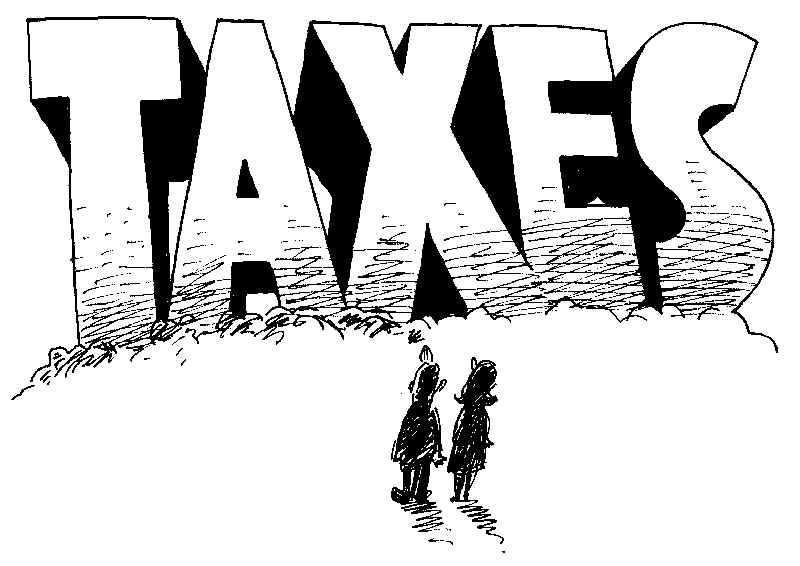
Syria’s New Tax Code

Addendum by Ehsani2 (May 22, 2009)

The initial impetus for my comment on taxes came from reading the latest change in Syria’s tax code. The amendment concerned the initial tax bracket that is exempt from taxation. Income up to SYP 5,000 was exempt from tax. This number was raised to just over SYP 6,000. The rationale of the amendment seems to be an acknowledgment that an income as low as SYP 6,000 ($130 per month and $1,560 per year) ought to be exempt from tax.

In the U.S., a taxable income (after deductions and exemptions) of $100,000 per year ($8,333 per month) is taxed around $22,372 for the year ($1,864 a month). Households are then taxed at the state and local levels in addition to the above federal taxes. Indeed, starting next year, those making over $373,000 per year will be taxed at 39.6% up from 35%. Total taxes for high income residents of the state of NY are likely to pay just over 50% of their income. Europeans are already very familiar with such tax brackets. Syrians “were” all too familiar with this too. There was a time when the highest income bracket in Syria faced a tax levy approaching 80%.

The Syrian tax code has been streamlined significantly since then. To encourage compliance, the highest tax bracket has been lowered to 22%.

I am jealous. I wish my American taxes would be as low. What is considered a socialist country (by its own constitution) taxes its highest earners a maximum of 22% while the world’s leading capitalist nation chooses to tax its own high earners as high as 52%. It was in this context that I made my initial observation.

What bothers me about the Syrian tax system is the following:

It is hard to live on $130 or even $1600 a month. Paying any tax on income over $130 a month seems harsh. People working for the government and those on fixed income get their taxes deducted from their income at the source. The current tax code assumes that the highest tax bracket is $1630 a month and this is taxed at 22%. As many people may agree, making $1630 a month does not go a long way in Damascus and is certainly not in the spirit of being a high earner.

When I asked a leading business man in Damascus how he feels about paying “only” 20% on income, I got this response:

“Why should I pay 20%? What do I get for that? What services does the Government provide me with?”

This response is rather common for most high rollers in the country.

The fact is that the Government provides plenty of services but gets very little credit for doing so. Education is free at all levels of schools and universities. Many commodities and finished products are heavily subsidized. Yet, no one thinks of these as “services”. Most people see them as a right.

Tax compliance for high income earners is difficult in most less developed countries. Syria is no exception. Not only that the 22% highest tax bracket is rather low by world standards, most high rollers seem to find a way to avoid paying it altogether. One business man boasted to me once that he does not recall the last time he paid any tax.

Syria faces fiscal pressures going forward. Its population doubles roughly every 22 years. It has very expensive subsidy program that it finds hard to dissolve. Its tax collection and compliance program for non-fixed income earners is weak. Those that are wealthy enough to pay the tax are too connected and too powerful to pay their fair share. Low paid government employees in charge of collecting the tax are no match for the business tycoons and their ample resources.

Ehsani2 writes about Syria’s new tax code:

Even a capitalist like me finds Syria’s economic system too capitalist. The fat cats pay hardly anything while those on fixed incomes pay the following based on the new decree.

Monthly earning range Tax rate
$0-$131 0%
$132-$261 5%
$262-$348 7%
$349-$435 9%

More on Syria’s tax system:

if you make $ 1,000 per month, your tax is $106 or 10.6%
if you make $ 2,000 per month, your tax is $311 or 15.5%
if you make $ 5,000 per month, your tax is $971 or 19.4%
if you make $10,000 per month, your tax is $2,071 or 20.7%
if you make $50,000 per month, your tax is $10,871 or 21.7%
if you make $100,000 per month, your tax is $21,871 or 21.9%
if you make $500,000 per month, your tax is $109,871 or 22.0%

…….WHAT ARE WE DOING HERE? ……..The poor pay that 20%….while the rich, capped at 20% do not pay it ………In effect people on fixed incomes pay while the fat cats watch.

414 Syrian intellectuals banned from Travel. The following article published in Kulina Shuraka reveals that a new report describes the many Syrians who have had their passports taken away.

????? ???????? ??????????? ????????? ?????????? ????????? ?? ?????
????? ???? ?????
??? – (???? ?????)
22/ 05/ 2009

??? ????? ???? ????? ?? ????? ??? ( 414 ) ????? ???????? ????? ??????? ???????? ?????? ??????? ?? ????? ???? ?????? ?????? ??????? ???? 71% ??? ????? ??? ????? ???? ????? ???? ???? ????????? ?? ????? ??? ????? ???? ????? 24%.
???? ??????? ?????? ?? ?????? ?????? ??????? ????? ???????? ?? ????? ??????? ????????? ?? ????? ?? ???? ?? ??? ??? ??? ????? ?? ????? ?? ???? ???? ???????? ???????? ???????? ????? ????? ??? ????? ??????? ?????? ?????.
??? ????? ???? ????? ??????? ????? ????? ?? ????? ?? ?????? ???? ?????? ??? ???? ????? ?? ???????? ????? ( 3.7 % ) ???? ???? ??????? ?? ????????? ?? ????? ?? ???????? ???? ????? ??????? 3% ???? ????????? ??? ????? ?????? ??????? ?????? 2%
????? ??????? ?? ?????? ?????? ?? ????????? ?? ????? ?????? ??? ?????? ?????? ????? ?????? ???????? ????? ?? ??????? ????…
??? ???? ?????? 91% ?? ??? ????????? ?? ?????? ??????? ?? ??????.
??? ?? ??? ????????? ????????? ?? ????? ????? ??????? ???? ?? ?????? ????? ????? ?????? ?? ?????? ?????????? ???? ???????? ?????????? ?????? ????? ?????????.

Syria to Open Its Economy to Foreign Investors
By JAY SOLOMON, MAY 14, 2009

WASHINGTON — Syrian President Bashar Assad’s government is pushing ahead with steps to open up its economy to investment, senior Syrian officials said, although the U.S. is maintaining broad economic sanctions on the Arab nation.

Damascus is preparing to grant new private-banking licenses to foreign investors, while expanding the Damascus Securities Exchange, which made its debut in March, these officials said. It’s also wooing foreign investment in manufacturing and tourism to support economic growth, which has averaged about 5% over the past five years.

“This economy is virgin. There are many opportunities to explore,” Central Bank Governor Adib Mayaleh said in an interview.

Two men in a Damascus café beneath a poster showing Syrian President Bashar Assad, right, and Hezbollah leader Hassan Nasrallah of Lebanon. The U.S. is hoping to improve relations with Mr. Assad’s government in an effort to weaken Syrian alliances with Iran and groups such as Hezbollah.

Two men in a Damascus caf[eacute] beneath a poster showing Syrian President Bashar Assad, right, and Hezbollah leader Hassan Nasrallah of Lebanon. The U.S. is hoping to improve relations with Mr. Assad’s government in an effort to weaken Syrian alliances with Iran and groups such as Hezbollah.

Two men in a Damascus caf[eacute] beneath a poster showing Syrian President Bashar Assad, right, and Hezbollah leader Hassan Nasrallah of Lebanon. The U.S. is hoping to improve relations with Mr. Assad’s government in an effort to weaken Syrian alliances with Iran and groups such as Hezbollah.

It’s a new direction for Damascus, which has maintained one of the Middle East’s most closed economies in recent decades. Middle East analysts also question whether Mr. Assad can achieve his economic goals without changing his authoritarian political system and improving relations with Washington.

President Barack Obama has said he is interested in developing better ties with Syria and sent two high-level diplomatic delegations to Damascus. But last week, Mr. Obama renewed five-year-old economic sanctions on Damascus because of U.S. concerns about Syrian support for militant groups, such as Hezbollah and Hamas, operating in Lebanon and the Palestinian territories.

U.S. officials also charge that Damascus continues to facilitate the flow of foreign fighters into Iraq, an allegation Syria denies.
[Syria]

Mr. Assad assumed power from his late father, Hafez Assad, in 2000 amid high hopes that the new leader’s youth and Western education could lead to changes in Syria’s rigid one-party state.

Mr. Assad, 43 years old, has displayed little appetite for opening Syria’s political system, say Middle East analysts, imprisoning pro-democracy activists in recent years and closing independent media outlets. The International Monetary Fund and other financial institutions, however, praise Mr. Assad and his economic planners for liberalizing finance and trade while reorienting Syria’s economy away from a dependence on oil as their domestic production dwindled. Damascus has moved from exporting nearly 700,000 barrels of oil a day in the mid-1990s to becoming a net importer of oil.

As recently as 2004, the state controlled the banking system. Today, about a dozen private banks — mostly Arab-owned — operate, Syrian officials said. Damascus pegged the Syrian pound to an IMF-administered basket of currencies and allowed its largely free conversion into U.S. dollars. The government is privatizing some state-owned firms and bringing in independent managers to help oversee others. Foreign direct investment in Syria jumped to $2.1 billion last year from $400 million in 2004, according to the IMF. Syria’s non-oil exports, meanwhile, are projected to grow to more than $9 billion next year from less than $4 billion in 2004.

“We see a clear move toward economic reforms in Syria,” said Khaled Sakr, the IMF’s mission chief for the country. “It’s cautiously and steadily moving in the right direction.”

Mr. Mayaleh, the central-bank governor, said another seven to eight private banking licenses will be put up for bidding, and Damascus hopes to see an additional 10 companies listed on the Syrian stock exchange. “We’re open for investment in our economy,” he said.

Analysts say Syria’s economy still faces significant challenges. Damascus is running sizable annual budget deficits, and it is unclear whether the country can develop new streams of revenue to offset dwindling oil supplies. Mr. Assad has been criticized by Washington for directing contracts to his family and political allies.

The Truth About Richard Bruce Cheney
by Col. Lawrence B. Wilkerson
The Washington Note

Report: Russia won’t sell Syria fighter jets due to Israeli pressure
By Reuters, 20/05/2009

Russia has halted plans to sell MIG-31 fighter jets to Syria because of pressure from Israel, the Kommersant daily reported on Wednesday citing an unidentified source in Russia’s defense industry.

In 2007, Russia agreed to supply Syria with eight MiG-31 fighters, known in the West by NATO codename Foxhound, for about $400-$500 million, the paper said.

Kommersant, a commerce-oriented newspaper published in Russia, quoted an unidentified person close to Russia’s state arms exporter as saying that Moscow had halted the contract due to pressure from Israel.

The paper quoted another source in an unidentified Russian ministry as saying that the contract had been halted because Syria could not produce the money to pay for the fighters.

The MiG-31 is a supersonic, high-altitude fighter plane. It has a maximum speed of 3,000 km/hour (1,860 miles/hour) and a combat radius of 720 km (450 miles.)

Russia’s state arms exporter, Rosoboronexport, declined to comment on the report. A spokesman for the Syrian embassy in Moscow was unavailable for comment.

Russia’s defense industry, which says it is starved for investment, was rattled last year when Algeria returned 15 MiG-29SMTs to Russia, saying the aircraft contained some substandard parts.


Syria and the ‘China Growth Model’

Ben Simpfendorfer, 05.21.09
Chinese traders say Syria is no ‘Axis of Evil.’

HONG KONG — Below is the last of three excerpts from “The New Silk Road,” by Ben Simpfendorfer, reproduced with the permission of Palgrave Macmillan.

In July 2004, President Bush spoke of an Axis of Evil during his State of the Union Address. It was a bold declaration made in the aftermath of September 11.

Iran, Iraq, and North Korea were the original members of the Axis of Evil. But Under Secretary of State John Bolton added Syria to the list the following year. Washington imposed economic and political sanctions in 2004, later tightening them. Although the European Commission signed a Partnership Agreement with Syria in 2004, they said it was “difficult to imagine deepening our relations” given the current political circumstances.

Relations with America and Europe remained frosty a few years later, especially after accusations of Syrian involvement in the assassination of former Lebanese President Rafiq Hariri. It was as if the country had fallen off the map.

But many Chinese traders disagreed with the West’s assessment. Instead, they have labeled Syria a “cohesive force” (ning jiu li) for the Arab world.

It was their personal view, rather than official Chinese policy. But the expression recognizes the important historical role Syria has played as a terminal point for the Silk Road and as a trading hub for the region. These traders are willing to bet that Syria will continue to play this role despite the economic and political sanctions imposed by America and Europe. They assume that the underlying tides of history are too powerful for the sanctions imposed by a foreign government. Indeed, China itself is rising on much the same historical tide that has buoyed Syria. The number of Chinese traders walking the streets of Damascus continues to grow even as Washington tries to wall the country off from the rest of the world.

Syria’s status as a “cohesive force” is aided by its relative stability. This is no small achievement. The country suffers from the same sectarian divisions between Sunni, Shi’a, Christian, and Kurd that afflict Iraq and Lebanon. The country also shares borders with Iraq to the east, Lebanon to the west, and Israel to the south. An intrusive security apparatus helps keep the peace. And, although the Syrian government has openly defied America and Israel in past decades, it has avoided inciting armed conflict.

This strategy is now paying off handsomely. Chinese traders refer frequently to Syria’s “stability” as a reason to base their operations in the country. How long the country will remain stable is debatable. But at least for now the rise of China is helping to ignite memories of the country’s historical role as a trading hub.

The Adara Free Zone is a poster child for the chance that Syria may choose to take the second, more optimistic, path before it. The industrial park enjoys duty-free status and is a major transshipment hub for the region. Zhou Dongyun has recognized the value of the Adara Free Zone as a commercial hub. Her newly constructed China City is especially popular among visiting Iraq officials. Its two-storey exhibition halls sell everything from office equipment to factory equipment.

Chinese traders are also using the Adara Free Zone to sell to the broader region, in particular Lebanon, as reconstruction efforts after the 2006 war have spurred demand for construction materials. The industrial park is playing a similar role to the open-air squares in the old city of Damascus that once hosted traders arriving along the Silk Road.

Lebanon: Suspected Israeli spy involved in death of Hizbullah official
05.21.09, 09:04 / Israel News

Nasser Nader, one of the main suspects in the Israeli espionage affair in Lebanon, confessed in his investigation to his involvement in the assassination of senior Hizbullah member Ghaleb Awali on July 19, 2004, a Lebanese security source told the as-Safir newspaper.

According to the report, Nader, who was the source said was “one of the most important personas for the Israeli Mossad”, confessed to his involvement in “preparing the grounds for the assassination of Hizbullah officials”. (Roee Nahmias)

“Kilo Set Free,” by Khaled Oweis

Syrian political writer set free after 3 years in jail
Tue May 19, 2009
By Khaled Yacoub Oweis

DAMASCUS (Reuters) – Syrian authorities released prominent writer Michel Kilo from prison Tuesday after he completed a three-year sentence for political crimes related to his calls to mend relations with neighboring Lebanon.

“Michel Kilo was set free tonight. I spoke to him. He is now at home,” Kilo’s lawyer Mohannad al-Hassani told Reuters.

Kilo’s jail term expired last Thursday. He was moved to a security compound and kept under arrest there for another five days before he was released, the Syrian observatory for Human Rights said.

“Congratulations on your return to freedom, Michel Kilo. All prisoners of conscious in Syria must be set free. Arbitrary arrests must cease,” a statement by the group said.

The 69-year political writer was a leading signatory of the Damascus-Beirut Declaration, a 2006 document signed by 500 intellectuals and political activists from Syria and Lebanon.

Shortly after the declaration was issued, Kilo was arrested and charged with weakening national morale.

The document urged the Damascus government to establish diplomatic relations with Lebanon, a move demanded by the international community and taken by Syria two years later.

The declaration also called for demarcating the Syrian-Lebanese border and an end to political killings in Lebanon following the assassination of Rafik al-Hariri, a parliamentarian and former prime minister, and other figures who were mostly opposed Syria’s role in Lebanon.

Human rights lawyer Anwar al-Bunni, another signatory, received a five year sentence on the same charge as Kilo. He is still in jail despite Western calls on Syria to release him.

Unlike other non-violent critics of the government, who sometimes are let free after completing three quarters of their sentence, Kilo, served his full term.

The United States and the European Union had called repeatedly on the Syrian government to free Kilo and French President Nicolas Sarkozy intervened in vain with President Bashar al-Assad during a visit to Damascus last year.

Kilo had tried to operate within the confines of Syria’s political system, which has been monopolized by the Baath Party since it took power in a 1963 coup, banned all opposition and imposed emergency law still in force today.

His captivity sent a signal that even milder forms of dissent were not allowed in Syria, human rights campaigners said.

“Kilo had concluded a while before his arrest that the regime was not interested in any meaningful political reform,” one opposition figure said.

The Syrian government has stepped up a campaign of arrests against opposition figures since its relations with the West improved sharply last year. Officials have dismissed Western criticism about lack of observance of human rights in Syria as interference in internal Syrian affairs.

Is Obama Turning into a Bust?

Middle Eastern disappointments are mounting and some of the Arab hopes in Obama have begun to fade. The Syrians are saying that in three months Obama’s policies in the Middle East should be clear. By that time elections in Lebanon and Iran will be over and the dust will have had time to settle. If US policy changes have not taken shape by then, they probably will not take shape at all.  A number of Syrian officials got mud on their faces with the sanctions fiasco. They had supported the notion that Washington had indeed turned a new page.

Palestinian officials said they were disappointed that Monday’s round of U.S.-Israeli talks in Washington produced no clear progress on the removal of Jewish settlements in the occupied West Bank or other issues they feel are crucial to rejuvenating stalled peace negotiations.

Israel stood firm against demands from Barack Obama on Monday to cease the construction of Jewish settlements and embrace the “two-state solution” to achieving peace in the Middle East.

MJ Rosenberg in the PULSE, (via FLC) explains that Prime Minister Netanyahu is up to the same thing that Yitzhak Shamir was in 1992 when he had just been defeated by Yitzhak Rabin and announced that he wanted to drag out peace talks with the Palestinians for a decade while vastly increasing the number of Jewish settlers in Israeli-occupied territories.

Mr. Shamir reportedly said, ‘ I would have conducted negotiations on autonomy for 10 years and in the meantime we would have reached half a million people” in the West Bank.’ ” Shamir, of course, is one of Netanyahu’s heroes and mentors. Sixteen years later, he has the same strategy Shamir did. He says he will negotiate but he will not commit himself to Palestinian statehood.

Syria-US Thaw Awaits Concrete Steps
By Edward Yeranian, Cairo, 18 May 2009

Relations between the United States and Syria remain rocky after a series of recent developments, including the arrest of a Syrian man involved in terrorist activities in northern Iraq, coupled with U.S. accusations that Damascus is still not controlling its border.

U.S. President Barack Obama has been carefully seeking to improve ties with Syria, after several years of ostracizing Damascus by the Bush Administration and the world community.

Senator George Mitchell applied for Syrian visa, he may visit Damascus

Word that U.S. peace envoy George Mitchell may be visiting Damascus soon is raising speculation of a new U.S. push to jumpstart stalled peace talks on the Israeli-Syrian track.

Jordan’s King Abdullah indicated several days ago the United States was “preparing a new Middle East peace initiative.”

Syrian Ambassador to Washington Imad Mustapha revealed, last week, that Senator Mitchell had applied for a Syrian visa, although State Department spokesman Robert Wood indicated that such a trip is not necessarily imminent.

Acting Assistant Secretary of State Jeffrey Feltman and National Security Council Senior Director Daniel Shapiro visited Damascus earlier this month. It was their second visit to the Syrian capital since President Obama vowed in January to engage with all Middle Eastern countries, including longtime foes Syria and Iran…

Professor Joshua Landis of Oklahoma University’s Center for Middle East Studies, who authors the popular Syria Comment website, thinks the United States and Syria are frustrated:

“They have hit a wall. The Syrians were very upset about the way sanctions were renewed by the Obama Administration,” he said. “I think that they understood that there was going to be a renewal of sanctions, because talks have only just begun. But there was no change in language, and no softening of tone, and they were upset. Now, the Americans obviously want to see a number of things. They want to see good-faith measures being taken by Syria and they want action on this Iraqi border.”

Syria’s main issue: the return of the Israeli-occupied Golan Height

“Syria wants linkage: they want America to send back an ambassador, they want peace talks to go forward,” added Landis. “So how do you proceed? That is the question. You know, Syria, of course, is very worried that America is going to ask it to take a lot of steps and it is not going to get very much in return. America is saying: “Trust us, you do these things and Obama is going to change the Middle East.”

Paul Salem, who heads the Beirut-based Carnegie Center for Peace in the Middle East, says Syria’s main ambition is the return of the Israeli-occupied Golan Heights:

“The main issue for Syria has been restarting the peace track with Israel to regain the Golan Heights,” he said. “What has clouded that process is statements by the Israeli government that they do not seem interested in restarting the peace track with Syria. But if there is no life on the Israeli side of the Israeli-Syrian track, then I think Syria will probably reconsider its overtures and the United States and Syria would have to figure out how to manage their relations, while Israel continues to occupy the Golan Heights.”

Salem thinks that the United States is cautiously “biding its time and not rushing” to resume ties with Syria:

“The United States is not completely positive in its orientation towards Syria. It has a lot of misgivings and a lot of things it is not happy with,” said Salem. “But I think President Obama understands that in order to make a real change in terms of Syria’s regional policy will require some concessions from Israel.”

Salem stresses that Syria’s positions are connected to the issue of the Golan Heights. Everything else depends on it, he says, and ” it is hard to get something for nothing.”

The following article by David Rose is excellent. The same deals as were struck with the Iraqi Sunnis could have been struck with Syria, which should have been part of a larger “awakening” in the region. The US Defense Department’s refusal to work with Syria was ideological. Even after the Bush administration had accepted the necessity of working with the Sunni tribes in al-Anbar province and elsewhere, it could not bring itself to do the same with Syria.

Heads in the Sand
By David Rose in Vanity Fair. May 12, 2009

The so-called Sunni Awakening, in which American forces formed tactical alliances with local sheikhs, has been credited with dampening the insurgency in much of Iraq. But new evidence suggests that the Sunnis were offering the same deal as early as 2004—one that was eagerly embraced by commanders on the ground, but rejected out of hand at the highest levels of the Bush administration…..

Peres: If Assad wants Israel-Syria peace, why is he shy?
By Avi Issacharoff, Haaretz Correspondent and The Associated Press

President Shimon Peres on Sunday urged his Syrian counterpart, Bashar Assad, to agree to engage in direct peace negotiations with Israel.

“The Syrians should be ready to talk. If President Assad wants peace, why is he shy?” Peres said after participating in an international economic meeting sponsored by the Geneva-based World Economic Forum.

“We suggested many times direct talks,” he added. “[Assad] thinks direct talks is a prize to Israel. It’s not a prize. It’s normal.”…

Just a few days ago, Netanyahu said he would not return the Golan.

Peres said a gesture by Syria would be more important than all the negotiations. “Change the air,” he said. “There stands the president and he said he doesn’t want to meet. Why? You want us to give back something, but he doesn’t suggest to give us back anything.”

Please, with might
By Gideon Levy
17/05/2009, Haaretz Commentary

……Now is the time for the occupier to end the occupation, immediately, unconditionally, moments before the two-state solution draws its final breath and passes beyond the realm of possibility, if it hasn’t already. Which is why Obama should be standing with a stopwatch, too: Time is running out.

There’s one message that should emerge from Washington: Israel is beginning to act, not to talk but to act, to end the occupation. Freeze the settlements without any lies, dismantle the outposts without tricks, give Palestinians freedoms without feints, and establish a rigid agenda to dismantle the entire settler enterprise. Anything less will be seen as failure, any move less daring will ensure a deadlock that will bring more bloodshed and the eventual establishment of a permanent binational apartheid state.

Does it sound big and pretentious? Well, there’s a big, pretentious president now sitting in Washington. The Arabs have already learned that Israel understands force and force alone; all its limited concessions were carried out after bloodshed, never before. It’s time Washington learns the same lesson: Please, with might, Barack Obama, because there is no other way…

Syria upset over ‘big stick’ diplomacy
Published: May 18, 2009 at 4:04 PM

WASHINGTON, May 18 (UPI) — Damascus was deeply insulted by a Washington decision to renew economic sanctions while U.S. diplomats pursued an engagement strategy, a scholar said.

U.S. President Barack Obama renewed diplomatic sanctions against Damascus in early May for its support of militant organizations in the region and other actions, following a visit by acting U.S. Assistant Secretary for Near Eastern Affairs Jeffrey Feltman and Daniel Shapiro, U.S. National Security Council senior director.

“The national emergency with respect to Syria remains in effect because Syria continued to not meet its international obligations,” Feltman said. “We continue to have serious concerns about Syria’s actions.”

University of Oklahoma Assistant Professor Joshua Landis, author of the revered Syria Comment blog, described Syria as being “at the center” of Washington’s Middle East policy, saying it lies at the crossroads of issues pertaining to Lebanon, Iraq and the Israeli-Palestinian conflict.

Damascus reacted with outrage to the renewed sanctions, calling Washington’s actions “foolish.” In an interview with the Council on Foreign Relations, Landis said the sanctions’ renewal ran counter to Syrian hopes for engagement.

“They want the United States to stop treating Syria like a rogue state and start showing it respect,” he said. “Give us some hope; don’t just use the big stick.”

“Hassakeh,” By Ali Khan (Dispatch 22)

Hassakeh: Dispatch from Damascus 22 (16/05/09)
By Ali Khan

Early morning street scene in Al Hassakeh

Early morning street scene in Al Hassakeh

Instead of taking the main road we decided to take a shortcut across the Euphrates that would later connect us to the road to Hassakeh. Food was still on our minds as we drove past huddled little villages. The sun was still warm as it slowly sank into the horizon and families of farmers walked back towards their houses. We stopped at the first shop we saw and managed to secure some provisions. Styrofoam crisps and plywood chocolate was on the menu of the day, washed down with some Ugarit Cola. As we curved northwards the greenery slowed faded away and was replaced by rocks and sand, although because of the melting light, the desert did not look as harsh as it might have in the midday sun. Finally, after an hour of meandering on small roads, which were paved well enough to rival some of our motorways in India, we managed to join up with the main road. There was not much traffic on the road apart from the odd bus and a wayward truck or two. Unfortunately, people sometimes drive without headlights here, even at night and the reason I was once given was that they think it might prolong the battery life and save petrol. We were talking about this when a motorcycle suddenly appeared out of nowhere and Nono managed to swerve just in time because we noticed the glowing dot of his cigarette dangling from his mouth. The cigarette had saved him! The rider seemed quite unfazed and even though one would expect such a person to at least scream a few obscenities, albeit to no avail, he waved at us grinningly and with a deft flick of his hand tied his keffiyeh over his mouth.

Eventually we made it to Hassakeh. Despite the fact that we arrived at night, it was easy to see that it is mainly an industrial town. There are virtually no surviving historical buildings and we had gone there because Nono wanted to attend the Syriac Orthodox Church’s Palm Sunday service. The manager of the first hotel we went to tried to argue with us that we must pay in dollars and wanted sixty dollars. Eventually after an exasperating five minutes we stormed out followed by a hail of expletives though we managed to sling some back before disappearing. The other option was tucked away in a little alley off the main souk and we drove around in circles for a while before figuring out where exactly it was. The whole town seemed to be out shopping and the main road was a blur of multi-coloured neon lights, Chinese counterfeit goods and busy shoppers. Fred spotted a sign for the Syrian Nationalist Socialist Party (SNSP) and we all agreed that I was exceedingly strange that they maintained an office in this farflung northeastern part of Syria. The manager of the hotel was a chain-smoking, slim man with chaotic facial scruff by the name Laurence. Before letting us into the room he gave us a grilling. Why were we in Hassakeh? Did we know anyone there? Where did we come from? When did we leave? Where did we stop on the journey? Where were we going next?

After a while he relented and showed us to our room. Later, we realised that it was probably because of the large Kurdish population in the area that the authorities were wary of foreigners coming to the area. Nono added that they probably wanted to make sure that we were not going to Qimishli, a town northeast of Hassakeh that is predominantly Kurdish. The most pressing concern was locating a restaurant and so we left. On the way Laurence offered to bring us food but when we insisted on walking around he showed us a little Kebab place opposite his hostel. The owners were Kurdish and everyone had congregated around the small TV in order to watch the Barcelona game. So far, the whole of the country seems to be awash in Barcelona, Manchester United and AC Milan supporters.

Kebabs

Kebabs

As one does, we ordered a kilo of kebabs and sat down to watch the game. One of the cooks came up to me and asked where I was from. After the usual disbelief and a slap on the back that meant, joke’s over, now tell me where you are really from, he frowned and asked if there were Kurds in India. I replied that there were none, which seemed to puzzle him, however, our kebabs were on the skewers and he went back to the oven, thus saving me from explaining why there are no Kurds in India, as I had done once before. A little boy in a Barca shirt plonked three plates of salad on our table and a jug full of a yogurt drink that tasted a bit like Iranian Doogh. We said our goodbyes and wandered into town. The streets were flanked by morose looking concrete boxes, and the fluorescent lights made the area look bleak. However, the throng of people, muhajjiba women pushing babies in prams, men in crumpled gallabiyyas, Christian women with huge crosses around their necks, and small groups of shabab added some much needed colour to the bazaar. On our way back to the hotel we wandered past a huge empty looking Church. The gate was open and the inside the building was only visible because of the dim street lights. On closer inspection it turned out that the builders had decided to style a huge Christmas tree in the brickwork. It looked like something out of a cheap Hollywood horror film.

Sinalco, your fav Syrian pop by nhraim (??????? ?????????).

Sinalco, your fav Syrian pop by nhraim (??????? ?????????).

As was to be expected, Laurence was still smoking when we got back but he was not alone. A young man in a leather jacket was inspecting his ledger. When we got there he too started with the barrage of questions. Where are you going tomorrow? Which road will you take? Where will you spend the night? After a while we simply said that we were too tired and went to the room.

The next day we bumbled out of bed early so that we could go to the service. As we got closer to the Church, I saw men in suits converging on the street from all sides and women in their gaudy Sunday best walking briskly towards the entrance. The older women were dressed more conservatively and had their head covered. By the front door there was a group of young people in scouts uniform who immediately spotted us and after applying a sticker to our chests, and loudly shouting welcome, ushered us into the church. They took us to the front despite the fact that there were no seats and so after sheepishly looking around we went back and found room to stand. It seems that there were meant to be different sections for men and women but some of the younger men had interspersed themselves in women’s pews. The church seemed to be new and the altar was separated from the main section by a heavy maroon curtain. This apparently signifies the veil between the earth and the heavens. Every so often one of the priests would draw the curtain during the service. There were many white crystal chandeliers hanging from the ceiling and would have been beautiful if it wasn’t for the neon candle lights in them giving off a ghoulish glow. I strained up to see the plaques that hung from each one and found that various people had donated all of them. The deacons wore white flowing robes with red and gold embroidered sashes and two of them carried long staffs that had a silver plate at the top. They would twist these to produce a clacking sound. It seemed to serve the same purpose as Tibetan prayer wheels.

Assyrian celebration in Hassakeh: ???? ?? ????? ?????? ??????? ?????? ?????? ???????

Assyrian celebration in Hassakeh: ???? ?? ????? ?????? ??????? ?????? ?????? ???????

Towards the end of the service a procession of sorts assembled. The priest led it and walked from the altar into the courtyard outside with families trailing behind them. Then they entered the church again. At the head of the column was a young deacon who was enthusiastically swinging an a bronze incense burner and behind him the older priests carried a golden cross and people from the pews leaned forward to touch it. Behind them were young families with their babies. The children were dressed in fantastical costumes. The girls were dressed in frilly skirts and mini ballroom gowns and the little boys in white and black dinner jackets and suits. All the children carried multi-coloured candles and most seemed rather annoyed by all the fuss but the doting mothers manage to keep them calm. At the end of the service when everyone had reconvened in the church the final prayers were said in a mixture of Syriac and Arabic. An old man who must have been the head priest came out and sat on an ornate wooden chair. His golden robes twinkled in the light of the altar and he promptly yawned and dozed off. While I was observing all this the man next to me whispered ‘musafaha’ in my ear and shook my hands and then touched his own hands to his face. Musafaha literally means handshake and I think the blessings from the service were being passed around the church in a sort of Mexican wave style. I did the same with the person to my right albeit a bit hesitantly because I had seen him picking his nose and scratching his ears earlier. The choir on the balcony behind us broke into song as the consecrated bread was passed around. Shortly afterwards another basket weaved its way through the crowds, announcing its arrival with the clinking of coins. I craned my neck up to get a look at the choir. They seemed oddly out of place there and their dress and manner of singing was more reminiscent of a Gospel choir from Brooklyn rather than how I would have imagined a Syriac Orthodox Choir.

There was a massive surge to get out of the church as soon as the service was over and we ploughed our way into the courtyard, through a sea of wayward elbows. It reminded me of the dangerous crowds of Iranian women in Damascus fighting their way out of Seyyida Ruqayya’s shrine on a Thursday night. There was scout band outside belting out catchy tunes but the music didn’t really appeal to us and we pushed out way out of the church. Our luggage was packed and so we set out straightaway for Raqqa. As I was negotiating the late morning traffic, I noticed that the same white Peugeot 504, a favourite of the security services in Syria, had been following us since we left the hotel. I pulled in and went into a shop to buy water thinking that I was just being paranoid and that they would just drive past. I glanced out of the shop window and saw that the car did continue but they pulled in just in front of the car behind which I had parked. Not exactly inconspicuous but then again maybe they wanted us to know they were watching! I got back in and started driving again but this time in the slower lane and I could see in the mirror that they too had adjusted their speed according to ours. Eventually, we took the exit for Halab and about twenty miles later they slowly disappeared from sight. We discussed why they might have been following us and came to the conclusion that it must have been because they thought we might be going to Qimishli. Freddy and Nono nodded off while we headed west. The land became greener again and the afternoon sun was merciless. I switched on the AC, put in a Najat al-Sagheera CD, glanced in my rearview to make sure we were alone and then changed into the fast lane.