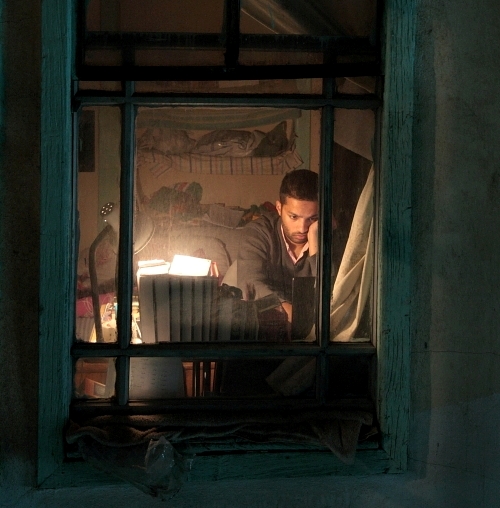
Opposition News and Bashar Sba’i’s Return

[I will be in Vermont for two weeks until Aug. 16, where I will have limited ability to post. My number there will be 802-767-9038]

Bashar Sba’i’s Return
By Joshua Landis, Aug. 1, 2009

Bashar Sba’i, a leading member of the Syrian opposition in exile, has thrown in the towel. He quit the opposition movement and has found an accommodation with the Syrian government that allowed him to return home after 28 years.

Syria’s opposition movement is in shambles. Obama’s victory changed the calculations of the opposition in exile. US government supplied MEPI money, which sustained some, has dried up. But mostly, Syrians, who had hoped that President Bush would “reform the greater Middle East” as promised, understood it was not to be. President Assad is firmly in control at home; the Iraq fiasco has re-legitimized authoritarianism in the Middle East, at least tmeporarily; and Obama has little choice but to engage with America’s erstwhile enemies in the region, as he is now doing.

The National Salvation Front, of which Sba’i was a leading member and articulate and passionate spokesperson, has crumbled. The Muslim Brotherhood announced it was pulling out of its alliance with ex-Vice President Khaddam in April and was seeking a new relationship with the Assad regime. The immediate pretext for this move was the Gaza war, but the M.B’s rational for linking up with old Baathists, such as Khaddam, disapeared with the departure of President Bush.

Bashar Sba’i, who had joined Khaddam’s effort as the director of his Zenobia TV, also decided the time had come to mend fences with the Syrian government. Having lived abroad since 1981, he was lonely for his homeland. The pull of family must be great. America, as well, is less the attraction that it was some years ago. In full recession, with a budget that has grown out of control, the US has seen its best days as a symbol of world leadership. Prejudice against Arabs and Muslims is at an all time high. Sba’i also tells us that the leadership of the Syrian opposition in exile was not inspiring.

It is in this context, that Bashar al-Sba’i, whose articles are copied below, must have negotiated a deal with the Syrian government to go home a short time ago.

Bashar al-Sba’i writes a long article extolling the wisdom of Assad’s rule in Syria, explaining that the president is responding to the demands of the age for stability, security and keeping the country from being torn apart by sectarian and ethnic divisions.

He apologizes for working with the opposition, claiming that the opposition painted an unjustifiably bleak picture of conditions in Syria and blamed the president wrongly. He claims that after living in the West and American, he was taken by the rule of law, democracy and progress he saw around him and naively wanted it for Syria. He did not take local conditions into account…..

Here is the original All4Syria, April 22 story about the break up of the Salvation Front. Bashar Sba’i’ announces and explains his resignation.

“Damascus Spring” is Bashar el-Sba’i’s blog. He wrote frequent and lively commentary on these pages under a pseudonym.  Many of the participants on Syria Comment had long conversations with Bashar, both on the phone and in the comment section over the last three years.

The following is a translation contributed by JAD of a only a part of Bashar al-Sba’i’s first article after returning to Damascus.

“All I can say today after having arrived a few days ago in my hometown, Damascus, is that Syria today is changing for the better, developing, flourishing, and enjoy security, tolerance and love under the same leadership whose good intentions I questioned for months. What I couldn’t imagine or expect, what I saw and heard about the President of the country exceed my expectation of enlightened thoughts and acts in the interest of the country, the homeland and the citizen, that was truly unexpected.

Today I am unable to find words to express my thanks and my gratitude for this leadership to allow me to be a witness and a participant on the ground in the building of this fatherland and it’s primacy in my future field of work.  I hope that my own personal experience is proof of the change and reform Syria is going through and is an example of trust and confidence for all Syrian citizens abroad to return home.” Bashar Siba’i

????? ???? ????? ?????? ??? ????? ?? ?????? ????..! !

???? ?? ???? ?????
07/ 07/ 2009

??? ????? ???? ??????? ????? ??????? ?????? ??? ?????? ??????? ??? ???? ?? ????? , ????? ?????? ?? ??????? ?????????? ???????? ?? ????? ?? ???????? ??????? ?? ?????? ????? ?????? ??????? ??? ??? ???? ?????? ??? ????? ?? ???????? ?????? , ??? ???? ??? ?????? ????? ?? ???? ??????? ?? ???? ??? ???? ?? ????? ???? ???? ??? ?? ??????? ??????? ?????? ?????? ?? ?????? .
??? ??? ?? ???????? ????????? ???? ????? ?? ????? ???? ??????? ???????? ??????? ?? ??????? ??????? , ???? ???? ????? , ?? ?? ????? ?? ????????? ???????? ???? ??????? ?? ????? ????? ?????? ???? ??? ?? ????? ???? ???? ?????? ???????????? ????? ??? ???? ?? ??? ???? ??? ??? ????? ???? ??????? ??????? ?? ??????? ???????? ????? ?????? ??????? ???? ?????? ?? ??? ???? ????? ??? ??????? ????? ???????? ????????? ??????? ?? ????? ??? ?????? ?? ????? ??????? ?????? ?? ???? ??????????? ??????? ????? ??????? ???? ?? ????? ???? ????? ??? ?? ???? ????? ????? ?? ?????? ??? ???? ????? ??? ???? ??? ?????? ?? ????? ??????? ?? ?????? .
???? ????? ?????? ???????? ????? ????? ???????? ??? ???? ?? ????? ???? ?? ????? ?? ?????? ????? ??? ??????? ????? ??????? , ???? ??????? ?? ??? ?????? ???? ??? ?? ??? ??????? , ?? ??? ??? ??? ??????? ????? ???? ?????? ?? ???? ????? ?? ?????? ???? .
?? ?? ?????? ?? ????? ????? ??? ???? ????? ?? ????? ??? ???? ???? ?? ????? ????? ????? ??? ?????? , ????? ?????? ????? ?????? ???????? ??????? ??? ??? ??????? ???? ??? ???? ?? ??????? ?????? ??? ???? ???? ?? ?? ??? ?????? ??????? ? ?? ?? ????? ??? ?????? ?? ???? ?????? ??? ???? ?????? ?? ??? ?????? ???? ?????? ?????? ?????? ???????? ? ??? ??? ???????? ???? ????? .
???? ????? ???? ?? ????? ??????? ??????? ?? ????? ????????? ???? ??????? ?????? ?????? ?? ??? ???? ?????? ???????? ??? ????? ?? ???? ??? ????? ???? ???? ?? ???? ???? ????????? .
?????? ?? ???? ????? ??????? ??????? ?????? ??????? ???????? ??????? ??????? ????? ?????????? ??? ????? ???? ?? ?????? ???? ?? ?????? ??? ???? ???? .
???? ?????
??? ???? ?????? ?????? ? ???? ??????? ???????? ?? ???? / ??????

Syria renaissance excludes human rights
By Lina Sinjab, BBC News, Damascus

In a quiet neighbourhood in the centre of Damascus Michel Kilo sits in his small flat sipping coffee as his wife shells beans for lunch…..

Weeks after finishing a three-year prison sentence, Mr Kilo dedicates his time to family life, while the enthusiasm that characterised his writing before his arrest is now directed solely at articles focusing on pan-Arab and regional issues, rather than local ones.

In 2006, Mr Kilo and 10 other activists were arrested after signing the Damascus-Beirut declaration….
Mr Kilo was in prison for three years after signing the declaration

But today, the situation has changed. The country is no longer isolated by the West and key Western leaders have approached Syrian President Bashar al-Assad to help stabilise the region.

The country has attracted both foreign investment as well as tourism – signs it is beginning to come in from the cold.

But the authorities show no sign of relinquishing the tight control which the Baath Party has exerted since it took power in a 1963 coup and banned all opposition.

“The priority is not to have any opposition or independent voices and it is successful in oppressing this scene,” says Yassin Haj Saleh, a writer and human rights activist.

Clampdown

A campaign of arrests has left an estimated 6,000 people in jail as political prisoners.

Meanwhile, about 400-450 people are subject to official travel bans, although the real number could be in the thousands, human rights groups say.

The measures are extended to young bloggers and some internet users, as well as civil society activists and some artists.

Civil society needs to be revived and reactivated and this is only in the hands of the authorities”
Mohannad al-Hassani
Lawyer and human rights activist

“There is a continuous deterioration in the human rights situation in Syria,” says lawyer and head of Syrian Human Rights Organization Mohannad al-Hassani.

But the worst situation is suffered by the Islamists, according to Yassin Haj Saleh.

“There are many young people who are arrested for their Islamic affiliation, but they are not organised. They are mostly villagers and their families are being harassed and pressured,” he says.

The crackdown has attracted little media attention, especially in suburbs and rural areas.

Last year, riots erupted in Sadnaya prison. A number of prisoners were reported killed. The government said then the prisoners were Islamists.

Human Rights Watch recently called on the Syrian government to provide information on the incident.

“The Syrian government should end the anguish of the prisoners’ families, disclose the names of those injured or killed, and immediately grant them access to their loved ones,” said Sarah Leah Whitson, Middle East and North Africa director at Human Rights Watch.

‘Lack of vision’

There is no organised opposition in Syria, just individuals who oppose government policies.

And even these figures are fragmented and lack vision says Omar Amirallai, an intellectual and filmmaker.
Syrians pass under poster of President Bashar al-Assad
President Assad maintains a tight grip on opposition

“The opposition in Syria is in need of self-criticism, reform and reconciliation,” he says.

But others believe that even with more vision and organisation, their efforts will come to nothing under current government restrictions.

The streets of Damascus have the feel of a relaxed and bustling city.

Around cafe and restaurant tables, discussions are heated about global and regional politics – but no one talks about the political situation in Syria.

Mohannad al-Hassani believes the country should embrace international and regional changes with its own progress on the level of civil and human rights.

“Civil society needs to be revived and reactivated and this is only in the hands of the authorities.

“They should look into these needs seriously as it is difficult for Syria to continue in isolation from what the whole world is moving towards.”

Syria: Human Rights Lawyer Held
By REUTERS, July 30, 2009 in NYTimes

Syrian authorities arrested a leading human rights lawyer, his colleagues said Thursday. The lawyer, Mohannad al-Hussani, who has been handling high-profile political cases, was summoned Tuesday to State Security, one of many intelligence agencies in Syria. Mr. Hussani has not been heard from since then and no charges have been lodged against him, his colleagues said. There was no comment from the Syrian authorities. Arbitrary arrests in Syria are common, international human rights organization say, and it is common for detainees to remain in jail for months before facing any charges.

See Siba’is most recent article (in Arabic)

??? ????? ??? 28 ??? ?? ????? ?????? : ???? ????? ??? ???? ???? ?? ?????… ??????? ?????? ?????

???? ??????? ??? ???? ?????? ??????
23/ 07/ 2009
???????? ?? ?????? ??? ??? ????? ???????? ????????? ??? ????? ???? ???? ??????? ??? ????? ?? ???? ??? ????? ?? ????? ???? ?? ???? ???? ?????? ?????? ?? ????? ????? ?????? ???? ?? ???? ???? ?????? ??????? ?????? ??? ?? ????? ??????? ?? ???? ????? ?????? ?? ??? ???????? ????? ??????? ???????????? ???????? ????? ?????? ??? ????? ????? ??????? ???? ?? ???? ?? ?????? ???? ??????? ???????? ???????? ????? ??????.

??? ????? ?? ????? ?????? ????? ?? ????? ??? 1981? ???? ????? ??? ??????? ????? ?? ???? ?????? ?????? ?????? ???? ??? (??????) ?? ?? ???? ???? ???? ???? ??? ???????? ??????? ????????? ?? ??? ????? ?? ???? ?????? ?????? ??? ?? ???? ??????? ?????? ???????? ?? ??? ??????? ?????? ?????????? ?????? ?? ??????? ???????? ?? ??? ????? ?????? ??????? ??????? ????????? ??????? ?????? ??? ??? ?????? ????????? ?????? ??? ??? ???? ?????? ?? ??????? ????????? ?????? ???????.
???? ????? ??????? ?? ????? ??????? ??????? ?? ??????? ???? ?????? ?? ????? ???????? ??????? ???? ???? ??????? ?? ?????? ?????? ??? ??????????? ?? ????? ????????? ????????. ?????? ?? ???? ??? ????? ?? ???? ?? ??????? ?????? ?????? ???? ??????? ??? ???? ?????? ??????? ??????? ??????? ?????? ???????. ??? ???? ?? ????? ????? ?? ????? ??? ???????? ?? ??????? ??? ?? ????? ??? ??? ???? ????????? ????????? ????? ?? ???????? ???? ???? ???? ????? ?????? ???????? ???? ?????? ????? ?? ????? ?????? ??????.
????? ???????? ??????? ?? ??? ??????? ???????? ??????? ??? ?? ???? ????? ????? ???? ????? ?????? ????? ?? ??????? ????? ?? ???? ??????? ?????? ??????? ???? ??? ???????? ??? ??????? ???? ??????. ??? ??? ?????? ?????? ???????? ??????? ?? ??????????? ?????? ?? ????? ???????? ?????? ?? ??? ?????? ?????? ????? ?? ????? ?????? ??????? ???????? ????? ??? ???? ?? ????? ???? ??? ??????? ??????? ????? ??????? ?????? ????? ??????? ????? ??? ?? ???? ??? ????? ?????? ????????? ???? ?? ??????? ??? ????? ???????? ??????? ?????? ??????? ??????? ??? !
??? ???????? ??? ????? ?? ????? ?????.
??? ???? ????? ?? ??????? ??????? ?? ???? ?????? ??????? ?????? ???? ????? ?? ????? ?????? ????????? ???????? ???? ???? ????????? ???? ????? ?????? ??? ????? ??????? ??? ?????? ??????? ????? ????? ??????? ?????????? ???? ??????? ??????? ???? ????? ????? ????? ???? ???? ??? ???? ??? ???? ?? ?????? ?????????? ????????????? ????? ???????? ????. ?????? ????? ????? ????? ???? ??? ???? ???? ??? ??? ?????? ????? ???????? ??? ?? ???????? ????????????. ???? ?????? ?????? ???????? ????? ??????? ????? ????? ???????? ??????? ?? ??????? ?? ???? !
?? ??????? ?? ????? ?????? ??????? ????? ??? ?????? ????????????? ????? ????? ?? ???? ????? ?????? ??? ????? ????? ?????? ?? ????? ?????? ???? ?????? ?????? ??????.
??? ?? ???? ?? ????? ????? ??? ?? ????? ??? ?? ??? ?? ????? ?? ??????? ???????? ??????? ??? ?????? ??? ???? ????? ?? ????? ????? ?? ????? ?? ?????? ??? ???? ???? ???? ?? ?? ?? ???? ????? ?????? ?????? ?????? ??? ?????? ??????. ???? ????? ??? ?????? ????? ??????? ???????? ?????? ?????? ?????? ???? ?????? ?????????? ???????? ??????? ???? ??????? ??? ????? ?? ???? ????? ?????? ??????? ???????? ?? ????? ????????? ????????? ?????????? ??????? ??????? ???????. ??? ??? ?????? ??????? ??? ??? ?????? ?? ???? ??? ?????? ??? ???? ???????? ?????? ?!
??? ????? ?? ????? ?????? ???? ????? ?? ?????? ?????? ???????? ???? ?? ???? ??????? ??? ????? ??? ?????? ?? ??? ??????? ?? ????? ?????? ?? ????? ?????? ???????? ???????? ??????? ?? ??????.
?? ?????? ?????? ?? ??????? ???????? ??????? ?????????? ?? ????? ?? ?????? ???? ?? ??????? ?????????? ??????? ??????? ???? ???? ????? ??????? ??????? ???????? ??? ????? ?? ????? ????? ?? ???? ??????? ??? ??????? ???????? ?? ?????? ?????? ??? ?????? ?????? ??? ?? ???? ?????? ?????? ????? ??? ?????? ???????? ?????? ??? ??? ??????? ???????. ???? ????? ????? ?? ??? ???????? ??????? ????? ???? ?? ??? ???? ??? ?????? ????? ??? ?????????? ?? ????? ???????? ?? ??? ??????? ?????? ???? ??????? ??????? ??????? ????????? ??? ????? ???? ??????? ?!
???? ????? ????? ?????.

???? ??????? ??? ???? ?????? ??????
????? ????? ??????? ??????

Commentary: Death in Iran touches lives in Syria
McClatchy, By Layal Demashqi | The Institute for War & Peace Reporting

DAMASCUS, Syria; I cried when I saw the video of Neda Agha-Soltan, covered in blood after being shot to death in the streets of Tehran…..I feel she died not only for her country but also for my freedom.

Before the protests began, I had never even thought that people brave enough to protest like Neda existed in Iran.

It’s no secret that Syrians don’t have much in common with Iranians. For the older generation, it’s a religious issue: Most Iranians are Shias; the majority of Syrians are Sunnis.

And younger Syrians, especially the Westernized ones, are appalled by the numerous restrictive religious rules their Iranian peers are forced to abide by.

Syrian dissidents regard Iranians with disdain for supporting the regime in Damascus, as well as other extremist groups in the region.

To many Syrians like me, Iran is populated by angry men and women endlessly chanting “Death to Israel and America” and blindly following their religious leaders.

When we come across Iranians in Damascus, the women are usually draped in black and the men wear long beards.

So the fact that there are young Iranians willing to take to the streets and courageously face the security forces came as a complete surprise to us.

Today, I hear a growing number of people around me say that they couldn’t believe that Iranians could speak openly about freedom and act so bravely.

The protests in Iran have become the most important topic of conversation wherever I go in Syria. Some Syrians are saying, “We wish we were with them.” Many young Syrians feel a desire to support their peers in Iran, but have done so only via the Internet. They send messages of support, sign petitions against the suppression of the marches, circulate updates on the protests and join electronic support campaigns.

Even a political prisoner here who is serving two and a half years in jail for supporting democratic change, made a statement from his cell condemning the Iranian regime and praising the Iranian people.

This solidarity stemmed from the fact that freedom matters to people everywhere. Like Iranians, we see ourselves enslaved and oppressed.

Every young Syrian who has ever prayed for change in their country has been touched by the bravery displayed by the young men and women marching in Iran…….

Our hearts are with the Iranians. I hope when it’s our turn to demand democratic change that their hearts will be with us.

And I hope we don’t wait too long for that to happen.

ABOUT THE WRITER: Layal Demashqi is a reporter in Syria who writes for The Institute for War & Peace Reporting, a nonprofit organization that trains journalists in areas of conflict. Readers may write to the author at the Institute for War & Peace Reporting, 48 Grays Inn Road, London WC1X 8LT, U.K.; Web site: www.iwpr.net. For information about IWPR’s funding, please go to http://www.iwpr.net/index.pl?top-supporters.html.

Iraqis Stay Silent on Protests in Iran

BY: DANIEL W. SMITH | THE WASHINGTON TIMES

No statements have been issued by Iraqi political parties that got their start in exile in Iran during the 1980-88 Iran-Iraq war. Although as many as 2,000 Iranian religious pilgrims enter Iraq daily, there have been no demonstrations, like the sympathy protests that have taken place from New York to Dubai….

?????? ???? ????? ?????? ?????? ???????? ???????!

????? ????

06/ 07/ 2009

???? ????? «?????? ????» ?????????? ?? ????? ????? ??? ?????? ??????????? ?? ????? ?????? ???? ????? ????? ?????? ???????? ????? ?????? ?????? ???? ???????? ??????? ??? ???????? ???? ???? ?? ??????? ??? ??????? ????? «????» ???? ?????? ??????? ?????? ???? ??? ?????? (??? ??????? ??????? ???????? ??? ????). ??? ???? ??? ????????? ????????? ??? ?????? ??????? ?????? ?????? ?? ?????? ?????? ???????? ???


Appropriations Bills Under Consideration
(Via POMED)

Today the House is expected to rule on the 2010 Department of State, Foreign Operations and Related Programs Appropriations Act (H.R.3081), which authorizes funding to expand State Department and USAID operations and oversight, funding global health and humanitarian assistance and supporting development, national security and counterterrorism capacities. Included in the legislation is the Democracy Fund intended “to promote democracy, including support for human rights, media, and the rule of law.”

In 2008, the Near East region experienced a period of political stagnation, with little significant democratic movement from a part of the world that has proven most resistant to democratic change.

The Administration has requested a substantial increase in GJ&D funding for the Near East from $309 million in FY09 to $328 million in the FY10 request, and requested funding in the area of Rule of Law and Human Rights is nearly doubled. Civil society would experience a significant cut in this budget, primarily due to a $48 million request decrease in Iraq from FY09 estimated levels. Individual GJ&D country levels are increased across the region in countries like ….Lebanon, which sees a GJ&D increase from $18 million to $27 million. These increases appear to recognize the difficult political challenges faced by these countries in the coming year. A sharp decline is requested in the West Bank and Gaza ($60 million to $42 million) and is due in part to inflated budgetnumbers in FY09 resulting from the U.S. response to the war in Gaza.

Debate over the Obama Administration’s democratization policies in the Near East region has been sharp. While Freedom House applauds the Administration’s financial commitment, we hope that the State Department will increase its efforts to diplomatically engage in the region on behalf of democracy and human rights activists. There are indications that some U.S. diplomatic missions do not share a common commitment to democratic activists for fear that these relationships would complicate relations with the host government and compete with other U.S. interests.

Despite the sharp cut in overall bilateral ESF funds for FY09, the Bush Administration had maintained democracy funding at a robust level of $45 million in Egypt. Unfortunately, the Obama Administration and the Congress cut FY09 funding for democracy and human rights by half to its current estimated level of $22 million. This led to dramatic reductions in the support provided to independent civil society activists in Egypt at a time of heightened pressures and restrictions on the more politically active groups and individuals within Egyptian society.

The reduction in assistance for democracy and human rights continues, with the Obama Administration requesting only $20 million for GJ&D in FY10. The Obama Administration should reassess this reduction in support and strengthen its diplomatic efforts on behalf of independent democracy and human rights activists in this important country. We were pleased to see that in the FY10 markup of the Foreign Operations Appropriations bill, the House of Representatives included a floor that would allow no less than $25 million to be spent on democracy support in Egypt.

While the Administration has requested substantial increases and robust funding for several countries in the region, there are noteworthy gaps in countries like Libya and Tunisia, where democracy funding has been zeroed out, and Algeria, where the commitment to democracy efforts totals less than $1 million. Civil society programming in Jordan also declines by $2.5 million, despite impressive gains made by groups working on minority rights and women’s issues.

Congress should address these shortfalls through the appropriations process. Within this region there are two funds dedicated to democracy support, the Middle East Partnership Initiative (MEPI) and the Near East Regional Democracy Fund. Both would receive substantial increases in funding through the President’s request and indicate sustained support to democracy and human rights actors in the region. It is assumed that this regional funding would support frontline human rights defenders and democracy activists in countries not slated for GJ&D funds in the Congressional Budget Justification, including Saudi Arabia, Kuwait, Bahrain and Iran.

No USAID GJ&D funding was requested in FY10 specifically for the following countries: Bahrain, Iran, Israel, Kuwait, Libya, Oman, Qatar, Saudi Arabia, Syria, Tunisia and the United Arab Emirates.

The Project on Middle East Democracy (POMED),
and the Heinrich Böll Foundation North America present:

FY2010 Appropriations and
Middle East Democracy

In May, the Obama Administration submitted to Congress the details of its first annual budget request for foreign operations, for Fiscal Year 2010. As the House and Senate now continue their debates over appropriations, POMED is pleased to announce the publication of a new report, The Federal Budget and Appropriations for Fiscal Year 2010: Democracy, Governance, and Human Rights in the Middle East.

What are the most significant changes in these portions of the budget request, as compared with the appropriations made in previous years? How does the budget impact US efforts to support democracy in the Middle East and North Africa? What does this budget tell us about the priorities of the new administration and its policy approach to the Middle East? And how are the appropriations made by Congress likely to compare with this request?

Please join us for a discussion of these issues with:

Stephen McInerney, Director of Advocacy, Project on Middle East Democracy.

Thomas Melia, Deputy Executive Director, Freedom House.

Marina Ottaway, Director of the Middle East Program, Carnegie Endowment for International Peace.

Moderated by Andrew Albertson, Executive Director, POMED

Tuesday, July 28, 2009
2:00 – 3:30 pm
Rayburn House Office Building, Room 2200

Sanctions on Hafiz Makhluf and Muhammad Nasif Khayr Bek Extended

Obama has extended Bush era sanctions on two Syrian officers. The sanctions were originally imposed on the two Syrians on August 1, 2007. They were applied on four people — two Syrians and two Lebanese, whose assets in the US were to be frozen. The US Treasury also forbade Americans from doing business with them. These sanctions are largely symbolic in nature because none of the four are known to have assets in the US; none are businessmen or have dealings with Americans. All the same, they had a chilling effect. The four sanctioned people are:

  • Assaad Halim Hardan, born in Rashayya al-Fakhar, Lebanon. Profession: Member of Parliament, Lebanon and Chief of the Syrian Socialist Nationalist Party.
  • Wi’am Wahhab
    DOB: 1964, born in Al-Jahiliya, Shouf Mountains, Lebanon. Former member of the Lebanese Parliament.
  • Hafiz Makhluf
    Position: General Intelligence Directorate senior official
    Military Rank: Colonel, DOB: Circa 1975. Makhluf is a maternal cousin to Syrian President Bashar al-Asad. He is also the brother of Rami Makhluf, Syria’s leading businessman.
  • Muhammad Nasif Khayr-Bayk, Damascus, Syria
    Position: Deputy Vice President for Security Affairs
    Military Rank: Major General, DOB: April 5, 1937. As of early 2007, Khayrbik was one of several key advisers to Syrian President Bashar al-Asad.

They are accused of “acting on Syria’s behalf to undermine the sovereignty of Lebanon” The reason behind extending the sanctions on Damascus was originally explained by the White House to be because of the continued Syrian attempts to destabilize Lebanon and “constitute a continuing unusual and extraordinary threat to the national security and foreign policy of the United States.”. See Haaretz: Obama extends sanctions on Syria despite diplomatic thaw. The sanctions include the freezing of assets of those individuals suspected of undermining Lebanon’s sovereignty on Syria’s behalf…. Here is the original bill:

November 5, 2007, HP-666

Treasury Designates Individuals Furthering Syrian Regime’s Efforts to Undermine Lebanese Democracy

The U.S. Department of the Treasury today designated four individuals affiliated with the Syrian regime’s efforts to reassert Syrian control over the Lebanese political system.

“Syria has used all means at its disposal – from bribery to intimidation to violence – to undermine the legitimate political process in Lebanon,” said Stuart Levey, Under Secretary for Terrorism and Financial Intelligence. “Today’s action exposes four individuals involved in such activities and serves as a warning to others who would do likewise.”….

Today’s designations freeze any assets the designees may have located in the United States, and prohibit U.S. persons from engaging in transactions with these individuals…..

Of much greater importance will be whether Obama renews the presidential sanctions issued against Rami Makhlouf which were imposed Feb 2008 by President Bush. He was proscribed for “public corruption.” This was a surprising and novel accusation, having nothing to do with US interests or foreign policy. It demonstrated the extent to which the Bush administration would go in its struggle with the Assad regime. The reason Makhlouf was chosen for sanctions is because he is believed to be the person closest to President Assad in the inner-circle of the regime.  He also symbolizes the nepotism and economic self-dealing at the heart of the government.

The Bush administration believed that placing pressure on Syria’s inner circle of leadership would force Assad to do a “Qadhafi,” bringing Syria into compliance with American demands to abandon its conflict with Israel along with its demand for the return of the Golan Heights, sophisticated weaponry, and a determining role in regional politics. The argument that motivated most Bush policy makers in their application of targeted sanctions was their assessment that Syrian leaders have no morality and act for purely personal reasons. They are uniquely interested in amassing power and money for themselves, according to the Bush analysis. In their supreme selfishness and immorality, it was believed, they would respond to sanctions directed against their money and lifestyle. What is more, the Iraq experience had discredited the imposition of broader economic sanctions. A number of UN agencies estimated that the Clinton administration managed to kill several hundred thousand Iraqis in its effort to apply sanctions on Iraq.

The Obama policy makers will argue that so long as Syria continues to support Hizbullah it is justified in continuing sanctions against Syrian officers and Lebanese politicians who participate in this alliance. If sanctions against Rami Makhlouf are renewed in February, it will be understood by Syrian authorities as a direct attack against the regime and not against its foreign policies. Unlike Bush, Obama has not sought to antagonize the Syrian government or President Assad.

The CABLE,

“Sen. Carl Levin (D-MI) lifted his hold today on the confirmation of Jeffrey Feltman to be assistant secretary of state for Near Eastern Affairs, a Levin staffer tells Foreign Policy.

Feltman, a well-liked career foreign service officer and former ambassador to Lebanon who assumed the role of acting head of the NEA bureau after the retirement of David Welch last December, has had some other unreported good news of late. …”

Norman writes:

This is one of the more important decisions to be taken in Syria’s reform process: district attorneys to be appointed in each county. This innovation could open the way to fight corruption starting on the local level. Syria is attempting to have what we have in the US, a district attorney in each county.

???? ????? ???? ???? ???? ???? “???? ???” ?? ??? ?? ?????????

???? ???? ????? ??? ???????? ???? ???? ???? ??? “????? ???” ?? ?? ?? ???? ???? ?????? ????? ????? ? ??? ?? ?????? ??? ????? ???? ???? ?? ??? ?? ????? ???????

Jad writes:

It’s so depressing reading domestic Syrian news lately, there is nothing positive to read;, it’s only crimes, pollution, destroying the environment, corruption, failing development, unsuccessful projects, suspicious government decisions and rules, shutting down media channels, jailing any Syrian who dares to speak his mind, blocking web sites..etc… What are we Syrians proud of the most at the moment and why?

Athens conference update (Thanks Alex)
Second track peace discussions held in Athens and led by Murhaf Juwaijati

? ?? ???????
????? ???? ?????
???? ????? ??????
29/ 07/ 2009

??? ??????? ????? ??????? ???? ??????? ??? ?????? ????? ??????? “?????????? ???? ??????” ??? ????? ? ??????? ????? ??? ?? ??????? ?????? 22 ????? ??? ????? ?? ??? ????? ?????? 15 ????/????? ??? ????? ?? ?????? ?????????? ????? ????? ????? ????? ?????? ?????????? – ?????? ???? ?? ??????????? ( ????? ???? -????? ???? -???? ???? -????? ???? ).
???? ????????? ?????? ??????? ????? ??? ?????? ??? ???? ???? ????? ??????? ?????? ?? ????????????????? ?????? ???? ???? ?????? ??????? ???????. ???? ?????? ????? ?????? ????? ??? ??????? ??????? ??? ???? ????????????? ???? ????????? ????????? ??? ?? ?????? ????. ???? ??? ?? ???? ??????? ????????? ???????? ?????? ??????? – ????? -???????? ??????? ???? ?????? ??????? ???? ??? ??? ???? ??????? ???? ???????? ????? ??????? ??? ??? ???? ????? ????? ???????? ?????????? ?? ??????? ??????? ? ????? ??? ?????? ???????? ?????????? ???????? .
??? ??? ????? ?? ??????? ??????? ???? ????? ?????? (??????? ???? ??????? ???? ???????? ?????? ???????? ????? ???? ??????? ?? ????? ??? ).

Murhaf Juwaijati meets President Assad to push forward the Peace agenda… (read the following article on all4syria (in Arabic)

???? ??????? ????? ????? ?????? ????? ?????? ?????????? ????? ?????? ?? ??????...

Prime Minister Benjamin Netanyahu has frozen a project for the construction of some 900 apartments in East Jerusalem, Channel 10 television reported late Wednesday.

The report of Netanyahu’s order to freeze the project came a day after he held talks in Jerusalem with U.S. President Barack Obama’s special envoy to the Middle East, George Mitchell.

Syria to mark 64th military anniversary

The Pulse: VIA FLC

“… Maya Bengal in Ma’ariv, however, reports that no agreement was reached regarding the settlement issue and that Netanyahu and Mitchell left the meeting with contradictory beliefs. While Netanyahu left believing that the US is more understanding of Israel’s situation and will dramatically reduce pressure on Israel for a settlement freeze, American officials state that the US will not back down on the issue.

At the end of the meeting, Netanyahu appeared pleased. “There is progress in the attempt to find a middle road,” said a source close to Netanyahu. Senior sources in Jerusalem said that the Americans were dropping the pressure from Israel, as of now, mainly with regard to the major bone of contention between Washington and Jerusalem: The demand to freeze construction in the settlements as a preliminary step to launching regional peace negotiations. “There has been progress in the American understanding that this is a freeze that can only exist after normalization measures have been obtained from the Arab states and as part of talks on a final status arrangement,” said a senior source yesterday. American officials involved in the talks said, however, that the US had not backed down. “The demand to freeze the construction in the settlements still stands,” said a US official.

Nathan Guttman in Ha’aretz reports:

So far, the Arabs have been resistant. Still, in the wake of Obama’s White House meeting with the Jewish delegation, Israeli, American and Arab leaders have, to varying degrees, shifted their rhetoric in ways that reflect acceptance of a new principle of reciprocity.

“The Americans now understand that if they get anything from us on the settlement issue, it will only be in the broader context of some kind of Arab return,” said an Israeli diplomat, echoing other similar comments from Israeli officials recently…”

DAMASCUS, Syria, July 29 (UPI) — Syrian forces will honor their 64th anniversary with an artillery display and a commemoration for national martyrs during weekend celebrations.

The Syrian Armed Forces mark their anniversary of the founding of the Syrian Arab army on Saturday with adornments honoring President Bashar Assad and banners commemorating Syrian pride, the official Syrian Arab News agency reports

Military commanders will mark the occasion with a visit to the tombs of national martyrs at a national memorial.

Syrian troops will also fire a 21-gun-salute in all of the 14 provinces during the morning hours with a fireworks display scheduled for Saturday evening.

Assad is the commander in chief of the Syrian armed forces, which number around 400,000 troops for mobilization. Syrian independence was formally recognized in 1946.

The Sixth Fateh Congress and Arab politics: Fateh Needs More Than Superficial Unity
by Lamis Andoni, 31 July 09

Fateh, the movement that has led the Palestinian struggle for decades, is at a dangerous crossroads. At stake is not only its unity but more significantly its mere survival.

It faces tough choices. In order to keep itself relevant on a regional and international level it would need to project itself as a “moderate” force committed to a non-existing peace process, thus risking the further demise of popular legitimacy. To salvage its legitimacy and unity it would need to disengage from the Palestinian Authority’s compliance to American and Israeli terms that aim at turning the movement into a malleable political tool and an enforcer of Israeli security.

But more so than ever in its history, Fateh is facing a real rival that has popular legitimacy and backing by key regional powers. Iran and Syria are seeking to further boost their negotiating credentials by supporting the Islamic Resistance Movement, Hamas, and are ready to accelerate the demise of both Fateh and the Palestine Liberation Organization. Qatar openly aids and promotes Hamas as the alternative movement, again to enhance its role as a regional power broker to be reckoned with.

Egypt, Jordan and other so called “moderate” countries, the supposed backers of Fateh, are junior partners of Washington in its plans to turn the movement into a huge security apparatus and ensure the Palestinian people’s submission. More significantly, they could easily switch sides if the US and Israel decide that Hamas is ready to accept the terms of engagement in the “peace process” or that it could be a more effective enforcer of Israeli security.

But the fundamental struggle for Fateh at this historic juncture is to restore its identity, unity and the core of its soul. Its merger into the Palestinian Authority after the signing of the Oslo accords distorted its identity and function. The one-time backbone of the Palestine Liberation Organization and embodiment of Palestinian national rights, Fateh has been reduced to a ruling party largely, but not solely, dependent on proving itself as a “peace partner” in a process that has so far consolidated Israeli occupation and expansionism.

Under the leadership of the late Yasser Arafat Fateh did not lose its soul: it walked a tightrope, balancing between its contradictory roles as the main pillar of a Palestinian Authority bound by agreements to contain resistance to the occupation and the role of a defiant movement that had not abandoned its main goal of leading Palestinians into freedom. Arafat himself personified that soul of Fateh and in broader terms the spirit of the Palestinian struggle. He became the master of compromise, earning the wrath of many disillusioned Palestinians. But when it came to the ultimate test he refused to sign away Palestinian rights, defying American and Israeli pressures at Camp David in the summer of 2000.

Arafat ultimately paid the price for his defiance, but his act revived Fateh and the Palestinian spirit of resistance, leading to the eruption of the second intifada less than two months after the failed Camp David talks.

But on the eve of the Fateh Congress, to be convened for the first time since 1989 next Tuesday in the Palestinian town of Bethlehem , the movement is struggling not only for its soul but for its mere survival. Years of exile, especially after the PLO lost its sanctuary in Lebanon in 1982, a failed “peace process”, the loss of Arafat, the ruthless Israeli clampdown on Fateh after the second intifada, combined with unprecedented divisions and a brewing power struggle, have eaten up the fabric of the movement’s unity.

The absence of Arafat as a unifying leader could prove fatal. It is not clear if Marwan Barghouti, a leader of the first and second intifadas, could inspire and lead the movement into recovery from his Israeli jail cell. Arafat himself had contributed to the slow but steady weakening of Fateh. His authoritarian style, failure to encourage new generations to assume leadership and even his decision to endorse the militarization of the second intifada dealt constant blows to the body of the movement.

But it was mainly the path pursed by the Palestinian leadership after his death that led the movement to lose its compass. President Mahmoud Abbas, the architect of the Oslo agreement, is a staunch believer that accommodation of the “peace process” and especially of the American terms will lead to the end of the occupation.

Abbas the president may be restricted by obligations to the agreements and conditions to secure the flow of international and Arab funding to the Palestinian territories. But Abbas as leader of Fateh failed to nurture the movement and instead marginalized and curbed dissent within Fateh, further weakening its spirit. ……
Lamis Andoni is a journalist and commentator on Middle East affairs.

Jones in Israel Haaretz, here
Jones and his team reported that a bill by Senator Joe Lieberman to curb sales of refined oil products to Iran is almost complete, and 67 senators have already signed it.
The Americans are proposing financial sanctions such as banning insurance on trade deals with Tehran, which would make it difficult for Iran to trade with other countries. They also want to impose sanctions on any company that trades with Iran and use this to pressure other countries, mainly in Asia, to resist making deals with Iran.
In the next stage, the Americans will consider even harsher sanctions, such as banning Iranian ships from docking in Western ports and, as a next step, banning Iranian airplanes from landing in Western airports. ……
Jones and his team presented the ideas that the administration is forging, together with France, Britain and Germany, on imposing additional sanctions on Iran via the UN Security Council if the dialogue fails. The Americans are also discussing this issue with Russia, which at this stage objects to further sanctions.
China, which has numerous interests in Iran, also objects to further sanctions. Jones told the Israelis that Obama will therefore go to China soon to try to enlist Beijing to join the coalition.”


Iraq in throes of environmental catastrophe, experts say
By Liz Sly

Now-frequent dust storms are just one sign of the man-made damage that has taken the country from Middle East breadbasket to dust bowl, they say.

Saudi says no deal until Israel quits Arab land

Saudi Arabia on Wednesday said in response to US calls for diplomatic overtures toward Israel that the Jewish state’s settlement expansion is jeopardizing efforts to revive peace talks….

Iraqi Raid Poses Problem for U.S.

BAGHDAD, July 29 — Violent clashes continued for a second day Wednesday between Iraqi troops and members of an Iranian opposition group whose camp the Iraqis stormed Tuesday, presenting the first major dilemma for the U.S. government since Iraq proclaimed its sovereignty a month ago.

At least eight Iranians have been killed and 400 wounded since Tuesday, when hundreds of Iraqi police and soldiers in riot gear plowed into Camp Ashraf, northeast of Baghdad, using Humvees donated by the U.S. military, according to group leaders and Abdul Nasir al-Mahdawi, the governor of Diyala province.

Camp residents described the day’s events as a massacre and the aftermath as a tense stalemate.

Behzad Saffari, a leader of the Mujaheddin-e Khalq, or MEK, said that Iraqi troops were preventing gravely injured people from being taken to hospitals outside the group’s camp and that residents feared soldiers would storm their living quarters. …

The raid and its aftermath represent a conundrum for U.S. officials. Some say they feel obligated to the MEK because its members have provided information about Iran’s nuclear program and because American officials vowed to protect them after the 2003 invasion of Iraq. But condemning this week’s events could be seen as an affront to Maliki’s government just as U.S. officials are talking up Iraq’s sovereignty, proclaimed June 30 when American troops withdrew from cities.

The stated goal of the Ashraf operation was to set up an Iraqi police station inside the camp, a move Iraq has described as the first step toward evicting the more than 3,000 residents. …
(By Ernesto Londono, The Washington Post)

Syria rejects French wheat ship, Sarkozy intervenes
07.30.09 By Khaled Yacoub Oweis

DAMASCUS, July 30 (Reuters) – Syrian authorities have rejected a French wheat shipment they said had failed to pass quality controls, drawing the intervention of President Nicolas Sarkozy.

France has led a European rapprochement with Damascus that has helped ease the economic and political isolation of Syria, which remains under U.S. sanctions.

A letter from Sarkozy to President Bashar al-Assad, a copy of which was seen by Reuters on Thursday, said the shipment conformed to international standards.

It urged the Syrian leader to find “a quick and positive solution to the dispute, which could affect the promising future” of French-Syrian commercial ties.

A Syrian commodities official confirmed that the Panama flagged vessel DD Vogue, carrying 21,544 tonnes of French soft wheat was prevented from unloading at Tartous port after failing Agriculture Ministry tests.

“It was a purely technical decision by the ministry,” the official told Reuters.

The shipment was the last of a 150,000 tonne purchase signed in April between the state’s grains division and Granit Negoce, the marketing division of French cooperative Epis-Centre.

Jean-Philippe Everling, director of Granit Negoce in Paris confirmed the cargo had been rejected but declined to comment further.

French port data showed the vessel had left France on June 4. Syrian trading sources said it arrived four days later and has been at anchor off Tartous since then.

The deal was priced at 180 euros a tonne, a market source said.

The supplier said that the cargo was well within quality specifications, after Syrian inspectors tested it twice — at the loading port of Nantes and upon arrival at Tartous — the market source said.

MAJOR COMPANIES WARY

An international trader said the dispute would further discourage major global suppliers, already wary of dealing with a labyrinth of state bureaucracies on wheat imports, from participating in Syria’s wheat tenders.

“A solution will not be easy, but it will likely involve measures to save face for the government and a cost to the French company,” the trader said.

Syria has sought to rebuild its strategic reserves of wheat after mismanagement of the water supply and droughts lowered domestic production, which was expected at 3.2 million tonnes this year, versus a planned 4.7 million tonnes.

It began issuing tenders to import wheat in July 2008 for the first time in 15 years, after production plummeted and it was no longer self sufficient in the crop.

The government contracted to import around 1.2 million tonnes of mostly East European wheat since July 2008, but only 300,000-400,000 tonnes have been received.

The official said most of the imports were due to be delivered between July and September this year and any delay was operational, but he acknowledged that unspecified volumes will be cancelled.

Wheat is a sensitive issue in Syria where an agricultural policy based on subsidies also relies on commercial imports and a 500,000 tonne wheat grant from the United Arab Emirates.

Une quinzième université privée inaugurée en Syrie
28 juillet 2009

Une quinzième université privée inaugurée en Syrie

La quinzième université privée de Syrie, l’Arab Private University for Science and Technology (APUST) a ouvert ses portes le 16 juillet dernier. Elle est basée à Hamas, dans le centre de la Syrie où est implantée une grande part de l’industrie pétrolière et gazière du pays.

L’APUST possède actuellement deux facultés, celle de l’ingénierie pétrolière et celle de l’ingénierie chimique qui accueilleront quelque 200 étudiants. L’université projette d’inaugurer bientôt des facultés de gestion, d’ingénierie informatique, de télécommunications et de sciences médicales.

Le campus de l’APUST s’étend sur plus de 400 000 mètres carrés. Son aménagement et sa construction ont coûté près de 800 millions de livres syriennes. Il devrait être élargi pour atteindre une surface totale de 2 millions de mètres carrés qui accueillera un millier d’étudiants.

Les principaux actionnaires de cet établissement académique sont les hommes d’affaire irakiens Abbas Fadel Khanjar qui détient 37,5 % de ses actions et Ahmad Khalil Chaker qui possède 15 % de ses titres. L’Union arabe des industries pétrochimiques qui est affiliée à la Ligue arabe possède de son côté 2 % des actions. Parmi les autres actionnaires, on recense également quatre hommes d’affaire irakiens et 42 investisseurs locaux issus des familles Sahloul, al- Barazi, Aswad, al-Rifaï, Jandali et Natfalji.

L’ancien ministre syrien de la Défense, Mustafa Tlass a été nommé président à titre honoraire de l’université.

Soulignons en outre que d’après le ministre de l’Enseignement supérieur, Giyath Barakat, quatorze universités privées offrent actuellement leurs cours à quelque 22 000 étudiants syriens, aux côtés des cinq universités publiques du pays.

Les universités privées ont été autorisées en Syrie en août 2001. L’un des objectifs de cette décision a été d’installer des institutions académiques dans les régions isolées où les établissements publics ne sont pas présents. Les universités privées n’ont donc pas été autorisées à s’installer dans les centres urbains comportant des établissements publics.

Il n’empêche que cinq universités privées se sont établies près de Damas et trois autres dans les environs d’Alep. L’est du pays a également attiré ces universités, une ayant ouvert ses portes à Qamishli, une autre à Raqqa et une troisième à Deir Ezzor. Cette dernière ville accueille également une université publique inaugurée après l’autorisation de la création d’établissements académiques privés.

Kassin Family Tree, By Leonard Fein, The Forward
July 30, 2009

I could be off by a dozen or so, but I count 70 rabbis in the family, going back to the year 1540. That makes the Kassin rabbinic dynasty one of the oldest on record.

The Syrian Jewish community, now in the news for exceedingly distasteful reasons, is fabled for its insularity, hence not much is known about it outside its own precincts. But the arrest on charges of alleged money laundering of Rabbi Saul Kassin, the leading rabbi of the Syrian community, in the great New Jersey sting, the one that netted 44 arrests — mayors rabbis, others — suddenly has changed that. It has demolished the virtual wall that long has shielded it from the view of its neighbors, this despite the fact that Brooklyn’s Syrian Jewish community is the largest concentration of Syrian Jews in the world, numbering some 75,000. I have neither appetite nor competence to examine the crimes in question. But it does seem to me worth spelling out some of what made the Kassin family noteworthy long before the current tawdry exposés.

The story actually begins in pre-expulsion Spain, but from that period we have only fragmentary details. Hard genealogical records begin in 1540 with Señor Shlomo Kassin, who in that year left Spain for Aleppo, in Syria. (Yes, it is curious: How did he survive as a Jew in post-expulsion Spain?) In Aleppo, he soon became head of the Jewish community. His grandson, Yomtov Kassin, was the first rabbi in the family, and the chief rabbi of the beit din (rabbinic court) of Aleppo. And from then until now, in Syria, Mexico, Egypt, Panama, Argentina, Palestine, Iraq and America, the family produced generations of rabbis, some men of great wealth, some paupers, many noted for their scholarship.

Enter Rabbi Jacob S. Kassin, born in Jerusalem in 1900 and a child prodigy. He was a learned student of Kabbalah, studying for some years with Rabbis Shalom Dweck and Shaul Hayim Dweck. (The last name may ring a bell: Solomon Dwek was the FBI’s informant and principal of its extensive criminal sting.) In 1933, Jacob Kassin accepted an invitation from the Magen David Congregation in Brooklyn to serve as chief rabbi and chief of the beit din. (For all these details, I rely on the published research of genealogist Sarina Roffe, an acknowledged expert on Aleppan Jewry and herself a member of Brooklyn’s Syrian community.) These posts he held for 60 years, until his death in 1994. During his tenure, it was clear that he was not only the leader of the Brooklyn community but the leader of Syrian Jewry worldwide. After his death, his son Saul — one of his three sons who became rabbis — succeeded him. And Saul, himself now 87 years old, is an alleged miscreant in the money laundering aspect of the criminal investigation.

Digression: Remember Rene Cassin? Not likely; few people do, although he was the Nobel laureate for peace in 1968. Wounded during the First World War, an active proponent of disarmament at the League of Nations between the wars (he was the French delegate to the league from 1924 to 1938), he became Charles de Gaulle’s minister of justice in exile in 1940. And — here’s the main reason for his Nobel — he was the principal author of the Universal Declaration of Human Rights, adopted unanimously in December of 1948. When Eleanor Roosevelt was chair of the U.N. Commission on Human Rights, Cassin served as its vice chair; from 1955 to 1957, he was the commission’s chair. The sorry state of human rights these days notwithstanding, the achievement of this French Jew deserves to be remembered; it set a benchmark for all.

And, though the specifics of the relationship are clouded, there is reason to believe that he, too, was a Kassin.

I was in Damascus in 1978, as Graham Greene-ish a city as I’ve ever visited. I stopped at an antique store I’d been told was the place to make contact with the Jewish community; the owner proposed that I return an hour later. It was as if jungle drums signaled my arrival; by the time I returned and was ushered to the second floor, the elders of the community had assembled. I dropped the appropriate names, and instantly became the beneficiary of genuine hospitality — including, most memorably, a prolonged visit to the underground academy where Talmud was being taught (in Arabic) to young boys. There I did an impromptu workshop for the teachers, working through the rabbi and his awkward Hebrew…..

Ali Khan says Goodbye to Damascus and SC readers

Ali Khan says Goodbye to Damascus and SC readers
Over the past year, Ali Khan, a native of India has studied Arabic in Syria and written regular dispatches from Damascus about his experiences and travels. They became a fixture of this blog. Many of us will miss him and SC wishes him all the best in his studies at Cambridge University. He is now headed for the foothills of the Himalayas where he will try putting his dispatches together as a book. [J.L.]

Ali Khan in his room in the Old City writing a dispatch

Ali Khan in his room in the Old City writing a dispatch

Ali writes:

Hello,

This is sadly my last dispatch for the year that I spent in Damascus. I hope however that I will continue to go there whenever I get the chance. I have returned to India and am writing this from New Delhi. I want to thank every one for taking the time to read my emails and for replying to them. A major reason that I was able to continue to write these weekly dispatches was the constant encouragement I received, often even receiving emails from people who had read the pieces on Syria Comment or on another online page. Prof. Josh Landis was extremely kind in putting up many of the dispatches on SyriaComment. The other day I was in the car with my brother and out of the blue, without paying attention to what I was saying, I said: ‘I miss her very much.’ He immediately looked up and paused his Worms game and then asked me with very inquisitive eyes. ‘Who?’ He probably thought that I had fallen for a Syrian girl and I was about to give him a juicy piece of gossip. I replied ‘Damascus’ to which he mumbled something and then went back to killing worms.

Even though the summer was getting very hot in Damascus and the day had to organised around where I could find the coolest room to read in or to nap in, because my room on the roof became a furnace after ten in the morning,I was happy. I particularly enjoyed my last few weeks. My father and brother both came to Damascus then. I spent three weeks with them traveling around Syria and the Lebanon. These travels only reinforced my love for these countries and for so many people and places that I have grown to respect and admire. I was mostly mistaken to be their Syrian guide much to my father’s delight and my brother’s sneaking admiration, even though they had to pay inflated tourist rates whereas I was assumed to be one of them and paid only a fraction. The excursions made me realize once again how much the world and the media choose to misunderstand and misinterpret this part of the world, its people, its culture and indeed even its politics.

I have been fortunate enough to live in a number of different cities and countries for extended periods of time and I have to say that Damascus is possibly the only place where I felt at home as soon as I arrived. Often people live in places for a long time and slowly become disenchanted and disillusioned. Shaam continued to captivate, fascinate, intrigue and surprise me until the day I left for home. I hope that I shall be able to accompany my mother,aunt and cousin to Dimishq, before I go on to England to pursue further studies. They could not come earlier.

Many people have written to me suggesting that I should try and compile the dispatches into a book. This is going to be my project for the next two months. After that I hope to be going to Cambridge University. I feel fortunate to have been offered a conditional offer. Inshallah, if I fulfill all their requirements (which seem to be essentially technical), I shall be there in October. I will keep you updated about the dispatches and would sincerely welcome any ideas that you may have about how to tie them together. Do write whenever you get a chance. I apologise for the long silence. I seem to have lost a sense of time being back in the embrace of family.

Yours, Ali (al-Hindi, as my Arab friends used to call me)

Mitchell Moves Ahead With Normalization of US-Sy Relations for Iraq Security and More

Received this note from a reliable source in Damascus:

“The Syrians are very comfortable with the visit. We will see many concrete steps being taken between the US and Syria on all fronts, bilateral and regional.”

NYTimes: BY: SHARON OTTERMAN

….Mr. Mitchell said the American government would try to expedite the process for obtaining individual exemptions to the sanctions, which prohibit the export of all American products to Syria except food and medicine.

The move will particularly affect “requests to export products related to information technology and telecommunication equipment and parts and components related to the safety of civil aviation,” said a State Department spokesman, Andrew J. Laine.

While the shift does not change the letter of the law of the sanctions, which were passed by Congress in 2003 and cannot be modified without Congressional consent, administration officials said it was significant because it indicated a change in how the White House would view requests by companies for waivers to sell their wares to Syria.

It is also another notable instance of the Obama administration opening the door to Syria on what it calls a basis of mutual interest and respect — and as part of a broader strategy of trying to get the country to turn away from its alliances with Iran and Islamic militant groups.

….The sanctions have powerful backers in Congress, and the initial reaction against any effort to ease them was swift.

Representative Ileana Ros-Lehtinen of Florida, the ranking Republican on the House Foreign Affairs Committee, said she was “deeply troubled that the United States would make unilateral concessions to the Syrian regime and ease pressure on Damascus, even as the State Department recently reported to Congress that Syria continues to pursue advanced missile and chemical, biological and nuclear weapons capabilities and to sponsor violent Islamist extremist groups like Hezbollah and Hamas.”

Representative Eliot L. Engel, a Democrat from New York, who helped write the sanctions bill, said that while granting such exemptions was “perfectly legal” under the act, he would urge caution. “Syria, from what I can see, has not changed its spots,” he said.

… Mr. Assad also tentatively agreed that a future delegation from the United States Central Command and Iraq would travel to Damascus, Syria’s capital, and discuss greater cooperation in securing the Syria-Iraq border against insurgent traffic, a high priority of the Obama administration….

U.S. Woos Damascus by Easing Export Ban
By JAY SOLOMON
The Wall Street Journal, JULY 28, 2009

DAMASCUS — The Obama administration has told Syria that it will work to ease U.S. sanctions against Damascus, as Washington intensifies its pursuit of détente with a longtime Middle East rival.

The U.S. decision targets spare aircraft parts, information-technology products and telecommunications equipment, sales of which have been restricted by U.S. sanctions on Syria enacted in 2004. The step was conveyed Sunday by Washington’s special Mideast envoy, George Mitchell, to Syrian President Bashar Assad during an hour-long meeting in Damascus.

Syrian President Bashar Assad, left, meets with Washington’s Mideast envoy, George Mitchell, at al-Shaab palace in Damascus on July 26.

The move represents the latest action in a rapidly accelerating rapprochement between Washington and Damascus initiated after President Barack Obama took office this year, said officials from both countries.

Messrs. Mitchell and Assad also discussed Sunday the possibility of the Pentagon dispatching to Damascus its second delegation of officers from the U.S. Central Command to discuss greater cooperation in preventing the flow of al Qaeda militants and other foreign fighters into Iraq through Syrian soil, said Syrian officials.

The White House hopes to woo Mr. Assad away from his strategic alliance with Iran, in an effort to stabilize Iraq, Lebanon and the Palestinian territories.

For Syria, Mr. Obama’s decision could mean relief from pervasive sanctions that have crippled Syria’s airlines and slowed the Middle East nation’s entrance into the information age. Among the companies that could be affected are airplane maker Boeing Co.; software companies Intel Corp. and Microsoft Corp.; and information-technology companies like Cisco Systems Inc.

“We received assurances that the relations between the two countries should resume on the basis of mutual interests and most importantly on the basis of mutual respect,” Syria’s deputy foreign minister, Fayssal Mekdad, said Monday in an interview. “We really welcome such a new approach.”

While significant, U.S. officials said Monday that Washington’s move doesn’t mark a formal lifting or easing of its sanctions on Damascus. President George W. Bush authorized the sanctions in 2004, under legislation known as the Syria Accountability Act, specifically because of Damascus’s support for the militant groups Hezbollah and Hamas, which are fighting Israeli forces from Lebanon and the Palestinian territories.

Administration officials said Mr. Obama would seek to use his waiver authority under congressionally mandated sanctions to aid purchases of U.S. products deemed important to the welfare of the Syrian people…..

Syria vocally opposed the U.S.-led 2003 invasion of Iraq, despite Damascus’s long-running disputes with Saddam Hussein. Some Syrian officials even worried Mr. Bush’s government could seek to topple Mr. Assad’s government after occupying Baghdad. Today, Syrian officials say that President Obama’s announcement of a clear timetable for withdrawal has provided Damascus with new incentives to cooperate on Iraq.

“Now with a new administration, when we have assurances that the Unites States will withdraw from Iraq by 2011, then we do believe that full cooperation between Syria and the United States in different fields, not only security issues, will definitely be welcomed,” Mr. Mekdad said.

The Obama administration’s moves toward rapprochement with Mr. Assad, however, are raising concerns among some U.S. allies in the region, such as Israel and Egypt, as well as some Syrian democracy activists. They worry that relieving pressure on Damascus could lessen its willingness to cut ties to Hezbollah and Hamas and to open Syria politically.

“The regime feels very confident politically now,” said Ammar Abdulhamid, a Syrian democracy activist based in Washington. “Damascus feels like it’s getting a lot without giving up anything.”

Currently, U.S. companies seeking to sell specific waiverable products to Syria can seek a license to move forward with the transactions. But under the Bush administration, many of these requests were denied, said Syrian officials, and the bureaucratic process also hindered acquisitions. The State Department said in a statement Monday that Mr. Mitchell told Mr. Assad Sunday that the U.S. now “would process all eligible applications for export licenses to Syria as quickly as possible.” The State Department added that any future move to actually lift sanctions on Syria “would require close coordination and consultation with Congress.”

Syrian officials say that the sanctions have severely hit the country’s national airline, Syrian Arab Airlines, by denying it spare parts. “The sanctions are creating a significant barrier, as multinationals don’t want to come in,” said Nabil Sukkar, a former Syrian World Bank economist.

Messrs. Mitchell’s and Assad’s discussion about sending the Centcom, or central command, mission to Damascus is designed to develop better cooperation between the Pentagon and the Syrian military in securing the Syria-Iraq border, according to Syrian diplomats. Syrian officials said this week that they are open to receive such a delegation, but want it to include Centcom commander, Gen. David Petraeus. A State Department official declined to comment on the issue.

Ibrahim Hamidi writes in al-Hayat that Hamas and US officials as well as Europeans met in Geneva to talk about a two-state solution on June 16 and 17.

?????? ???? ??? «????» ????????? ????????? ?????? «?? ????????» ????? «?????? ????????»
????????, 28 ????? 2009
???? – ??????? ?????
???? ????? ???????? ?? «??????» ?? ??????? ?? ???? «????» ???????? ??????? ????? ????? ???????? ?? ??????? ????? ???????? ????????? ?????? ??????? ?? ???? ???? 16 ?17 ?????? (?????) ??????? ???? ?? ???? ???? ??? ??????? ?? ??????? ??? ???? «????» ?? ?????? ???? «?? ????????» ????? «?????? ????????» ???????.
????? ?? ?????? ?? ?? ??? ?????? ??????? ?? «????» ???? ???????? ?????? ?? ??????? ??????? ????? ??????? ????? ????? ???? ????? ??????? ???? ??????? ???? ??????? ?????? ???????? ???????? ?? ??????? ?????? ?? ????? ????? ?????. ????? ???????? ????? ?? «??????? ??????» ????? ?????? ?? ?? ???????? ?????? ????????? ?«?????? ??????» ??????? ??? ????????? ??????? ?? ??????? ????????? ??????? ????? ????? ???????? ????????? ??? ????? ?????? ??? ?????? ???.
????? ????????? ?????????? ???? ?? ???????? ?? ?? ???? ????? ???????? ???????? ?????? ????? ??????? ?????? ?????? ????? ?????? ?? «?????? ??????? ???????» ????? ????? ??????? ????????? ?????? ?? ??????? ??? ????? ????? ????????? ????? ???????? ??????? ?????? ????? ??????? ????? ???? ?????? ???????? ?? ???????? ???????? ????? ??????? ????? ??? ?????? ?????? ???????? ????????? ????? ????? ???????? ???????? ?? «????».
?????? ??????? ?????????? ?? ?????? ???? ???? ?? ?????? «??? ?? ?????? ?? ??? ?????? ??? ??? ?? ??????? ??? ?????????? ?? ??? ?? ???? ?????? ??». ?????: «???? ????? ??????? ?? ???? ???? ?????? ???????? (???????? ???????? ??????????? ??????? ???? ???? ?????)? ?? ??????? ??? ?????????? ??? ?????? ??? ??????? ?? ???? ??? ??? ???? ????? ?????? ????? ?? ??????? ????? ??????? ???? ?????? ?? ????? ????? ????? ????????? ?? ??? ????? ?????? ?? ?????????? ????? ?????? ?? ??????» ???? ??? ?? ??????? ?????????. ??????? ??????? ???? ?????? ????? ?????? ????? ?? «????? ??? ??? ?????? ??????»? ?«?????? ????????? – ?????????»? ?«????? ??? ?????? ?????? ?? ??????? ??? ????? ??????»? ????? ??? ?????? ???? ????? ????????? ?????? ??????? ??????????.
????? ??????? ??????????? ??? ??? «????» ???? ?????? ????? ????? ????????? ???: ?? ???? ?????? ??? ????????? ??? ???? ???? ?????? ???? ???????? ??? ???? ????? 1967 ???????? ??? ????? ????????? ?????? ??????? ?? ????? ?????? ????? ????? ??? ???????? ????????? ????? ?????? ??? ??????? ???????? ?????? ???? ????? ?????.
???? ???? ?????? ??????? ?? «????» ???? ???? ??? ?? ???? ???? ?? ?????? «?? ????» ?? ?? ????? ??? ???? ?? ???????. ????? ?? ??????? ??????? ????? ???? ???? ???????? ?????? ??????? ???????? ???? «????» ????? ??? «????????» ?? ???? «????????»? ??? ????? ?????? ????? ??? ??????? ???? ?????? ?????? ?? ?????? ??????? ?????? ?? ???? ????: ???? «????» ?? ???? ????? ????? 1967? ?????? ?? «???? ????? ?????»? ????? «??????» ????????? ???????? ?? ???? ???? ?? ?????? ?? ??????? ???? ?????. ????? ??????? ?? ?????? ?? ?????? ?????? ?????? ??????? ?????? ??????? ????? «???? ???? ???? ?? ???? ?? ???? ???????? ?????????? ????? ??? ??????? ????? ????????»? ?? ?????? ???? ????? ??????? ???? ????????.

Sami Moubayed: “The Syrians are capable and willing to help the Americans in Iraq, but want Obama to pull the right strings – a la James Baker in 1991 – to get the Israelis to change course vis-a-vis Middle East peace”

Obama lifts some sanctions on Syria
July 27, 2009, United Press International

….Imad Mustafa, the Syrian ambassador to Washington, said the embassy was informed that Washington had lifted economic sanctions related to civilian aviation and the export of communications equipment to Syria, the official Syrian Arab News Agency reports….

Mustafa said U.S. President Barack Obama had suspended several of the sanctions measures, noting more restrictions could be lifted in the future.

“We are focusing with President Obama’s administration on using the U.S. president’s executive authority to suspend the execution of the important articles in the sanctions law,” he said.

Mustafa said the effort was part of a growing sign that Damascus was a vital player in the region. …..

Human Security in the Arab World:

The UNDP released its new Arab Human Development Report on Tuesday, which concluded that “fault lines” in the region have deepened, and that a lack of human security has become a primary factor inhibiting human development. Stressing the importance of rule of law, the report cited the role of Arab states in undermining the human security of their citizens.

Syria back as regional player impossible to circumvent .. Bashar Assad assumes his late father’s regional power….


La Syrie redevient un acteur régional incontournable

LE MONDE | 27.07.09 | 14h20
BEYROUTH CORRESPONDANTE

ans les luttes d’influence qui agitent le Moyen-Orient, Bachar Al-Assad peut se targuer d’avoir remporté une belle victoire en récupérant, au moins provisoirement, la place qu’avait jadis occupée son père, Hafez Al-Assad, celle de leader incontournable dans la région. En atteste la visite, dimanche 26 juillet à Damas, de George Mitchell, l’envoyé spécial de la Maison Blanche pour le Moyen-Orient. Le 14 juin, George Mitchell rencontrait déjà Bachar Al-Assad à Damas pour ce qui constituait alors la première visite officielle d’un diplomate américain de ce rang en Syrie depuis 2005.

En quatre ans, Bachar Al-Assad est parvenu à hisser la Syrie de statut d’Etat infréquentable au rang de puissance incontournable, courtisée par presque l’ensemble de la communauté internationale, sans pour autant avoir répondu concrètement aux exigences des uns et des autres.

Entre 2005 et 2008, le régime syrien apparaissait fragile, menacé par l’administration américaine de George Bush, boycotté par la France, l’Arabie saoudite et l’Egypte qui le suspectaient d’avoir partie liée à l’assassinat du premier ministre libanais Rafic Hariri en 2005.

Aujourd’hui, la situation du leader syrien est à ce point confortable qu’il peut appuyer verbalement l’aile dure de Téhéran, incarnée par l’ayatollah Ali Khamenei et le président Mahmoud Ahmadinejad, en pleine crise iranienne, tout en se voyant offrir par les Etats-Unis un signe tangible de normalisation avec le retour, annoncé le 24 juin et après quatre ans d’absence, d’un ambassadeur américain à Damas.

Le 3 juillet, M. Assad, décontracté, invitait, sur la chaîne britannique Sky News, son homologue américain Barack Obama à venir à Damas. “Le président Obama est jeune. Le président Assad est aussi très jeune. Peut-être est-il temps pour ces jeunes dirigeants de faire une différence dans le monde”, avait déclaré son épouse Asma.

L’Arabie saoudite, à l’instar des Etats-Unis, très préoccupée des ambitions nucléaires iraniennes, a elle aussi décidé de dépêcher un ambassadeur en Syrie, à un poste vacant depuis un an. Sans avoir renoncé à soutenir ni le Hezbollah libanais ni le Hamas palestinien, deux menaces armées aux portes d’Israël, Damas a également repris langue, indirectement, avec Tel-Aviv, grâce à la médiation de la Turquie. “Les Syriens possèdent la clé de la région”, souligne le président turc, M. Abdullah Gül.

Le même constat avait été fait, en 2008, par la France qui, pour sauver le projet d’Union pour la Méditerranée (UPM) cher au président Sarkozy, avait initié le retour tangible de la Syrie dans les bonnes grâces internationales. M. Assad figurait ainsi parmi les invités d’honneur au défilé du 14 juillet, en 2008.

L’élection d’un président libanais après des mois de blocage, l’échange de représentations diplomatiques entre le Liban et la Syrie et le bon déroulement des législatives libanaises du 7 juin ont été autant de démonstrations, selon la France, de la fiabilité de la Syrie. Elle se voit récompensée pour sa “non-nuisance” dans le dossier libanais.

ANCIEN RÔLE D’ARBITRE

Les rapports entre Claude Guéant, le secrétaire général de l’Elysée, et le maître de Damas sont officiellement “constructifs”, voire amicaux, en tout cas réguliers. Le chef de la diplomatie française, Bernard Kouchner, a aussi présidé dans la capitale syrienne une conférence régionale des ambassadeurs français le 11 juillet. A cette occasion, il a rencontré les autorités syriennes, auxquelles il n’accordait pourtant que peu de crédit lors de ses premières tentatives de démêler l’écheveau libanais.

Le pari stratégique français visant à éloigner la Syrie de son allié iranien a montré ses limites. En revanche, les bonnes dispositions françaises ont drainé ce que Damas espérait : une reprise des relations avec Washington.

La Syrie occupe aussi un rôle pivot dans la résolution de la crise interpalestinienne entre le Hamas et le Fatah. Parce que la capitale syrienne est la base arrière des radicaux palestiniens. Mahmoud Abbas, le président palestinien, s’en va consulter très régulièrement Bachar Al-Assad. Début juillet, Omar Suleiman, le chef des moukhabarrat égyptien, infatigable mécano du processus de réconciliation, a envoyé son adjoint et son directeur de cabinet à Damas.

Mais le rapprochement le plus spectaculaire, reste celui entamé avec l’Arabie saoudite en janvier, à l’occasion du sommet arabe du Koweït. De sources informées, cette “réconciliation” a été décidée par le roi Abdallah, qui s’en est ouvert à Bachar Al-Assad dans un tête-à-tête en marge du sommet, sans avoir consulté au préalable son partenaire égyptien, Hosni Moubarak. Une visite du roi Abdallah à Damas est attendue prochainement. Le sort d’un nouveau gouvernement libanais pourrait se jouer à cette occasion.

Ainsi la Syrie, dont l’armée avait été chassée sans ménagement du Liban après l’assassinat de Rafic Hariri, retrouve son ancien rôle d’arbitre des querelles libanaises. Malgré la victoire du clan dit “anti-syrien” aux législatives du 7 juin. L’importance de la représentation de l’opposition (dont le Hezbollah) dans le gouvernement libanais sera négociée sous l’égide de la Syrie.

Fortement symbolique de la “victoire” syrienne dans la région sera, enfin, la visite à Damas du nouveau chef du gouvernement libanais, Saad Hariri. Il avait pourtant accusé la Syrie d’avoir assassiné son père. Mais comme tant de Libanais, avant lui, il devra reprendre l’éternel chemin de Damas. – Cécile Hennion

Juan Cole points to one Obama appointment-disappointment

… In the White House, I think it would be hard to find a worse choice than the new Special Assistant to the President, Dennis Ross. Three examples of his skill: a) in the early negotiations between the Israelis and the Palestinians, when he was supposedly the honest broker, he took a more disruptive position than even the Israelis, apparently shocking even them; b) in the build-up to the Iranian elections he sponsored and organized a program to “electronically invade” Iran with destabilizing messages trying, more subtly to be sure than the 1953 CIA-MI6 coup, to “regime change” it. Whatever else could be said about the “Iran-Syria Operations Group” , it played right into the hands of Ahmadinejad and the rightwing of the ulama and the military, giving them a proof text for American interference in the elections and thus may have backfired since no issue in Iranian politics is as sensitive as the fear of foreign espionage; (c) just before his appointment to be the chief honcho on all the Middle East, Ross published a book whose message was essentially ‘let’s try a bit of diplomacy for a short time. Of course it won’t work, but it will justify our attacking.’ That is, his approach to peace-seeking is consistent and negative. Since he is now Obama’s point man, we are in for deeper trouble….

Syria: Building Foundations
Oxford business group, 28 July 2009

Syria’s construction industry can look to the future with a degree of confidence, as investor interest in the country increases and state reforms take hold, though in the shorter term the sector still has a few obstacles to surmount. ….

As part of its wide-ranging reform programme, the government has put in place new regulations governing foreign investment, especially in the financial and tourism sectors. This in turn has resulted in a ramping up of construction work on business centres such as the $500m Eighth Gate project in Damascus and the $217m resort being built by Kuwait’s Al Kharafi Group on the outskirts of the capital.

However, progress of the reform process has not been even. According to the World Bank’s 2009 Doing Business report, which measures and compares regulatory requirements across 181 countries, it has actually become slightly more complex to build a warehouse in Syria over the past year.

The report ranked Syria 132nd overall in its category of dealing with construction permits, down from 124th for 2008, and well behind the UAE, which came in 41st, or Saudi Arabia at 50th. The World Bank cited 26 separate steps that had to be taken before a warehouse could be completed, with the whole process taking 128 days.

Though Syria had slipped down the overall rankings, the report did note some significant improvements, including the speeding up of the process of registering property and an easing of regulations governing trading across borders, important when the import of building materials is taken into account.

On the reverse side of the coin, Syria was ranked near the bottom of the ladder, at 178th, in terms of ease of obtaining credit for construction work, a massive 94 rungs below neighbouring Lebanon.

Although investors are becoming more active in the Syrian construction trade, and demand for large-scale projects is growing thanks to the government’s reforms, still more work needs to be done to promote development and fast track the expansion of the building industry.

Syria: No Exceptions for ‘Honor Killings’
Penal Code Change Positive, but it Still Eases Punishment for Some Who Murder Women

(Beirut, July 28, 2009) – The Syrian government should treat all murders alike and not make exceptions for so-called “honor killings,” Human Rights Watch said today. On July 1, 2009, President Bashar al-Assad abolished Article 548 of the Penal Code, which had waived punishment for a man found to have killed a female family member in a case “provoked” by “illegitimate sex acts,” as well as for a husband who killed his wife because of an extramarital affair. The article also lowered penalties if a killing was found to be based on a “suspicious state” concerning a female family member. The article that replaced it still allows for mitigated punishment for “honor killings,” but requires a sentence of at least two years.

STRATFOR has been closely tracking the slow-going rapprochement between Syria and the United States.

“The “pessoptimist” George Mitchell”
July 28, Al-Watan, by Ibrahim Darraji

“The Arabs placed too much hope in Mitchell, believing he will be able to force the American administration to threaten to impose sanctions on Israel to contain its wild building of settlement projects, which forced the spokesperson of the American Department of State, Philip Crowley, to anticipate Mitchell’s visit by saying: “There have been some reports that were misunderstood about the United States’ intention to place financial and economic pressures on Israel (due to the settlements dossier). This is not true and this is why Mitchell headed to the Middle East”… Amid this climate, questions are being raised about the way George Mitchell will handle the situation and his ability to succeed where others have failed throughout the past decades. However, it seems to be too soon to raise such questions as it would be wrong to show excessive optimism or pessimism since George Mitchell is known for his patience….

Cairo answers Jumblatt: “He is Making Advances to Syria and Hezbollah”

The PSP leader Walid Jumblatt, in his most recent weekly editorial in an-Anbaa, attacked Egypt for having hosted Israeli President Shimon Peres and Israeli Prime Minister Benjamin Netanyahu at a ceremony held last Thursday to commemorate the July 23rd Revolution. His criticism has led to tension with Cairo, which answered him back through their Foreign Ministry Spokesman,Husam Zaki.

Zaki said : “No one should forget that Jumblat, a leader in the March 14 coalition and who had received Egyptian support, said things like this about Egypt, which had received him more than once,”

“We categorically reject any speculation on Egyptian stances or Egyptian history,” Zaki said in remarks published by pan-Arab daily Al-Hayat on Wednesday. “We are fully aware of the objectives behind Jumblatt’s remarks,” he added

Al-Hayat, however, quoted official Egyptian sources in Cairo as saying that Egypt was “not surprised” by Jumbulatt’s statements.
“We are aware that Jumblatt has been undergoing political re-positioning and is making advances to Syria and Hezbollah,” the Egyptian official said; adding sarcastically, “Jumblatt is a sectarian leader and his oratory is filled with political slogans, without real convictions behind them.”

Frederick Deknatel
has a lovely story of Iraqi artists in Damascus:

Iraqi artist Alaa Ismael paints in his Damascus apartment.
(Frederick Deknatel)

Syria: Iraqi artists, now refugees, struggle to pursue art in exile
, | 07.28.09

DAMASCUS, SYRIA – To support his art in Baghdad, Alaa Ismael opened an interior-design office in a commercial area near his house. But after the American invasion, customers dwindled as checkpoints choked the city.

In 2004, his office was burned and robbed by extremists. “They killed everyone, not only artists,” he said. “Jihadis would threaten us, calling us ‘kafirs’ [unbelievers] because of our art, because of the style or subject of our work.” While he was never threatened personally, “threats were all around.”

So Mr. Ismael left with his wife, sister, and nephews for Syria, where he has been for the past five years. He quickly shakes his head when asked about going back. His oldest daughter was an infant when they left Iraq; his second daughter was born here this year.

They all share the same apartment in a ramshackle hillside neighborhood overlooking Damascus. One of its rooms is his studio, where large finished canvases and rolled-up paintings are stacked, unsold.

Ismael is one of dozens of Iraqi refugee artists here, struggling to paint and sell his work to support himself and his family and maintain a semblance of his former life in Baghdad.

“Before the war, Baghdad was the cultural and artistic center,” Ismael said. “There were galleries, art schools, universities. There was movement.”

For him, more opportunities in art exist abroad now – through friends and fellow artists in the Gulf and Europe – than in exile here in Syria.

“There are few galleries,” he says, “and with competition between Syrian and Iraqi artists, Syrians are always preferred. We want to show our pictures to the world, but the problem is always how to sell them.”

The United Nations High Commissioner for Refugees agency has supported many Iraqi artists with local exhibitions and other promotional projects in the past few years, and a handful of galleries in Damascus show Iraqi art. “But a Syrian artist is here in his own country, where everything is in his or her own place,” artist Omar Odeh explains. “We’re here from war.”

Mr. Odeh, who unlike Ismael travels occasionally to Baghdad where his family has returned, hopes the Iraqi government will use growing oil revenues to support displaced Iraqi artists. “Of course, it’s not the first thing our new government is thinking about after security and reconciliation. But if the government for me is like a parent, they should be the first one supporting you. You can trust in yourself if you have your nation,” he says.

Today Odeh works at a busy rate, his paintings hang in galleries in the Old City and even at the new Four Seasons hotel. “It’s not the rule, because some Iraqis succeed in Europe or America. It’s possible for an artist to succeed outside his home during war,” he says. “Look at Picasso and ‘Guernica.’ ”

First analysis of the Mitchell Meeting

First analysis of the Mitchell Meeting
by Joshua Landis
Syria Comment, Sunday July 25, 2009

Mitchel did not say what the United States expected from Syria, especially on Hamas as he left his meeting with Assad. Mitchell said after meeting President Bashar al-Assad that restarting talks between Syria and Israel was a “near-term goal” for Washington. “If we are to succeed, we will need Arabs and Israelis alike to work with us to bring about comprehensive peace. We will welcome the full cooperation of the government of the Syrian Arab Republic in this historic endeavor,” he said. “I told President Assad that President Obama is determined to facilitate a truly comprehensive Arab-Israeli peace,” Mitchell told reporters.

Mitchell’s brief is Israeli-Arab peace. The main sticking point in US-Syrian relations at this time is the Iraq intelligence sharing deal, the details of which seem to be concluded, but which Syria is not implementing. Some analysts suggest that Damascus is dragging its feet out of fear of al-Qaida, which might launch a terror campaign against Syria. I find this argument dubious. Damascus insists on US compliance on concerns it has been raising with Washington for some time. I do not know exactly what these concerns are other than having an ambassador appointed, ending the era of public demonization of Syria, and normalizing relations.

Speaking of normalizing relations, the Airbus export license on which Syria had hung it hopes of reviving Syria Air and launching Pearl airlines was rejected last month. Because the US refuses to sell new Boeing planes to Syria and has put every impediment in the way of Syria purchasing spare parts to repair its aging fleet, Syria Air is all but grounded. To remedy this embarrassing situation, President Assad has sought to buy European planes, but it turns out that over 10% of these planes are manufactured in the US, permitting the US treasury department to refuse permission to the Europeans to sell them to Syria. This means that Obama can effectively close down the Syrian air industry, which it is doing. The embargo on planes and aviation parts is just one aspect of the US imposed economic sanctions Syria believes Obama should end.

The US clearly has a pack of economic, military, and political cards to play. If, for example, the US demands Syria satisfy US concerns on an entire portfolio, such as intelligence sharing and Iraq, in exchange for normalizing one element of economic relations, such as aviation, Syria will have to hand over much of its foreign policy bag of tricks simply to purchase normal relations with the West. This is undoubtedly not an exchange rate Damascus likes.

Western diplomats are not sympathetic to Syrian complaints that they are being treated unfairly. “Syrians think they are the center of the World,” one non-American Western diplomat complained to me in June. I replied that most Syrian officials I know become indignant when Westerners reminded them that they are bit players on the world stage. They insist that they have “nafis tawiil,” or long breath, meaning that they will refuse deals on terms they consider humiliating or bad even if refusal costs them a heavy price.

To predict how negotiations may turn out is pointless. It is too early to say. We don’t know what sort of deal is shaping up in Damascus or where the stickiest points are. Syrian officials explain that US-Syrian relations have been dormant for eight years and suggest that it is quite natural that only a few months of dialogue cannot break down the great distrust and misunderstanding built up by the Bush years.

Addendum (July 27, 2009): US lifts Syrian aviation and IT industry sanctions (Via Syria1)

According to the Kuwait News, United States President Barack Obama lifted bans on exporting goods and materials to the Syrian aviation industry.  Also lifted were bans on exporting Industrial Technology products, including hardware and software. Obama was considering lifting more bans with Syria. The sanctions had been in place since the mid 1980’s.  Imad Mustafa, the Syrian envoy the to US said these economic sanctions would be discussed thoroughly this week with President Bashar Assad and US special envoy to the Mideast, George Mitchell in order to improve bilateral relations between the two countries. © 2009 Al Bawaba (www.albawaba.com)

“I don’t see any major changes on Bashar’s part,” Andrew Tabler, an expert on Syria at the Washington Institute for Near East Policy, told The Jerusalem Post last week.

“And whatever changes there are, [they] are very incremental and very hard for the US to pick up.” …

“What I think is they want to be able to get the Golan [Heights] back in exchange for some sort of change in their relationship with Iran, which is not described, and where they can politically support Hizbullah and Hamas but perhaps without supplying them” militarily, Tabler said. …

“The question is: Are Israelis the kind of people that will give back the Golan [in a peace agreement] for a maybe?” Tabler said. “Probably not. I can’t see it.”

U.S. wants Syria help in Israel-Palestinian talks
Sun Jul 26, 2009
By Khaled Yacoub Oweis

DAMASCUS (Reuters) – The United States wants Syria’s help in forging a deal between Israel and the Palestinians, U.S. envoy George Mitchell said on Sunday. Mitchell, the U.S. special envoy for the Middle East, said after meeting President Bashar al-Assad that restarting talks between Syria, which backs the Palestinian group Hamas, and Israel was a “near-term goal” for Washington. “If we are to succeed, we will need Arabs and Israelis alike to work with us to bring about comprehensive peace. We will welcome the full cooperation of the government of the Syrian Arab Republic in this historic endeavor,” he said.

The indirect talks between Syria and Israel, which were being mediated by Turkey, were suspended during the Israeli offensive on the Gaza Strip in December. Turkey said this month it was ready to resume mediation of those talks. Israeli-Palestinian peace talks backed by a quartet of international mediators — the European Union, the United States, the United Nations and Russia — are also frozen. Mitchell, who is on a regional tour that includes Israel, described his discussion with Assad as “very candid and positive” but he did not say what the United States expected from Syria, especially on Hamas.

The Islamist group, which has controlled Gaza since defeating forces loyal to Palestinian President Mahmoud Abbas in 2007, opposes Abbas’s approach to peace with Israel. Hamas has also resisted international pressure to renounce violence, recognize Israel and accept past agreements between Israel and the Palestinian Liberation Organization.

U.S.-SYRIA TIES IMPROVE

Syria’s support for Hamas has contributed to deteriorating ties between Damascus and Washington in the last several years, which improved after President Barack Obama came to office in January, and said Middle East peace was a U.S. priority.

Syria remains under U.S. sanctions but Obama has decided to return a ambassador to Syria. Washington withdrew its envoy in 2005 to protest against the assassination in Beirut of Rafik al-Hariri, a Lebanese parliamentarian and former prime minister.

“I told President Assad that President Obama is determined to facilitate a truly comprehensive Arab-Israeli peace,” Mitchell told reporters. Syrian officials privately say Damascus has played a role in bringing Hamas to a more accommodating position on peace with Israel, including recent statements by the group calling for the establishment of Palestinian state within the borders of land occupied by Israel in the 1967 Middle East War.

Abbas has said he will not revive the negotiations unless Israel halts settlement expansion in the occupied West Bank, in accordance with a 2003 peace “road map” that also commits the Palestinians to control militants.

Israel has been trying to work out a compromise on the settlement issue with Washington, linked with progress toward normalization of relations with Arab countries.

Mitchell said the normalization issue was “the ultimate aim” that a five-year-old Arab peace initiative also backs.

Reuters Video of Mitchell’s visit.

How Many Lebanese Were Flown In To Vote? Qifa Nabki has done some extraordinary sloothing to argue that money did not buy the vote for Hariri in the June elections.

Eat and Drink in Damascus, What the Lonely Planet left out,” – See the Syrian Foodie in london – Blog. It is new, fun and promising.

Haaretz: Miliband said Syria was in a “unique position to influence Iranian policy choices.” …

How to Stay in Charge: Not Just Coercion, Sham Democracy Too.” Economist on Middle East and Syria.

Tal Pavel writes: “In Syria, Twitter enabled a wave of protests against the decision by the website, ‘LinkedIn’ – a social networking geared towards those interested in business – to block its services in Syria, and the decision was ultimately reversed.”

Water crisis uproots Syrian farmers

By Khaled Yacoub Oweis SHAIZAR CASTLE, Syria, July 27 – Only a few decades ago, fish were plentiful in the Orontes river which for thousands of years has …

FEATURE-Water crisis uproots Syrian farmers By Khaled Yacoub Oweis SHAIZAR CASTLE, Syria, July 27 – Only a few decades ago, fish were plentiful in the Orontes river which for thousands of years has …

Arab paper: Major breakthrough expected in Israeli-Syrian talks

A major breakthrough is expected in peace talks between Israel and Syria in the next few days, London-based Arab daily Al-Quds Al-Arabi reported Saturday.

The paper, quoting ‘senior sources,’ reported that the progress was the result of “unprecedented” intensive action on the part of US Middle East envoy George Mitchell and Turkish mediators in recent weeks.

According to the report, Israel has relayed messages to Damascus that it is willing to withdraw from the Golan Heights in return for Syrian guarantees and a commitment to cut ties with Iran and Hizbullah.

What is Mitchel up to in Damascus?

Change for Syria? – listen
Public Radio International – “The World” interview with Joshua Landis, July 24, 2009 ?

US special envoy George Mitchell will be in Syria soon. Anchor Katy Clark speaks with Syria expert, Joshua Landis, about the prospects for change in the Middle East. Landis is associate professor of Middle Eastern Studies at the University of Oklahoma.

Mitchell’s assistant, Fred Hof, has been in Damascus preparing the ground for Mitchell’s arrival.

In The Washington Note: Via FLC
BY Brian Till

….A pair of anecdotes from Shepherdstown, 2000:

Martin Indyk recalls riding with Ehud Barak on flights from Israel to Washington as often as possible in order to glean as much as he could about the prime minister’s thinking. At the time, it was apparently a rather battered old 707, with a bedroom that had been hastily installed with little room for more than a bed. On the eve of the summit, Indyk, then an assistant secretary of state, was waiting for Barak’s arrival at Andrews AFB. After the delegation filed off the plane the prime minister failed to emerge, Indyk climbed aboard and found Barak in his bedroom. Barak motioned for him to sit on the bed alongside him. He told him he couldn’t cut a deal with Assad — there would be no peace in exchange for the Golan.

Danny Yatom also recalls going to the gym with Barak and finding Syrian Foreign Minister Farouk al-Sharraa there working out. Barak tried to make a joke, saying that he would follow al-Sharraa through the routine so they could see who was stronger; al-Sharra picked up his belongings and left without a word.

So where are we now, nearly a decade down the line?

While Washington seems to be content to quibble about whether Hillary was upstaged by the White House’s decision to return an ambassador to Damascus — apparently without a quo to match the quid — the difficult question remains unanswered: can Damascus really offer what Israel’s after?

Far more than recognition; more than a peaceable border — Hezbollah seems to be the one issue looming in the minds of the Israeli leadership.

Hezbollah, the dominant Lebanese political movement, or Hezbollah the militant lung through which Iran breathes?

If Israel attacks next year, we’ll certainly find out. But until then, post-election Hezbollah, the better equipped, more strategically positioned, and more internationally credible incarnation — having proved willing to play both sides of the democracy game — remains an insufferable ire for Netanyahu.

Bashar is looking for concessions that are quite tangible — one can wrap the mind around 1,200 square kilometers of strategic high ground.

But networks of support connecting Syria to Nasrallah’s army, contacts and friendships intertwined with intelligence and armament deals — these are less concrete, less severable bonds.

If Bashar is as eager to get the Golan back as we’ve all believed — and as David Lesch, who literally wrote on the book on the new lion, suggested while presenting a paper at the National Press Club last week — he’ll have to be less fixated on dangling his feet in lake Tiberias than his father was, and more devoted to delivering on the Party of God.

The Israeli leadership is rightfully wary of what the new lion can deliver.

— Brian Till

Syrian Sephardic Communities Shaken by Charges Against a Leading Rabbi
By PAUL VITALLY, 24 July 2009
The New York Times

The young receive free educations and the old get free geriatric care. Family businesses connect relatives in a web of interdependence to the furthest reaches of kinship. Wedding receptions with 1,000 guests are common. A Friday night Sabbath dinner with 40 people is the norm.

And that enveloping tradition among the Syrian Jewish communities of Brooklyn and New Jersey seemed to redouble the shock and outrage among their members Thursday after the arrests of five Sephardic rabbis in a New Jersey corruption investigation.

”Shock and disbelief — my cellphone, my office phone, they’re ringing off the hook,” said Assemblyman Dov Hikind of Brooklyn, who represents an Orthodox Jewish community adjacent to the southern Brooklyn neighborhoods where about 75,000 Sephardic Jews live. ”People do not believe it.”

In a criminal complaint, the F.B.I. said the rabbis used their congregations’ charitable organizations to launder about $3 million — passing what they were told was a donor’s ill-gotten gains through their charities’ bank accounts, and then returning the money to the donor in exchange for a cut of 5 to 10 percent.

The donor turned out to be an apparent F.B.I. informer, Solomon Dwek, who, like the rabbis, is a Sephardic Jew of Syrian descent.

One of the five rabbis, Saul J. Kassin, 87, a slight, soft-spoken man who has written several books on Jewish law, leads the largest of about 50 Sephardic synagogues in the United States, Shaare Zion in Brooklyn. He is considered the leading cleric of the national community.

The congregation was founded by his father, Rabbi Jacob S. Kassin, who was known from 1932 until his death in 1994 as the chief rabbi of Brooklyn’s Syrian Sephardic Jews.

David G. Greenfield, executive vice president of the Sephardic Community Federation, a group representing the approximately 100,000 Sephardim in Brooklyn, Manhattan and New Jersey, said in a statement, ”The community is shocked and saddened by these allegations, which go against every value and teaching the community holds dear.”

He added, ”If over time these allegations are proven, we must remember that these are the isolated actions of a few individuals.”

Sephardic Jews trace their ancestry to Spain and various parts of North Africa and the Middle East, as distinct from the Ashkenazic Jews from Eastern Europe. They include Moroccans, Turks, Iranians and Iraqis. But most belong to families that emigrated to the United States from the Middle East, especially Syria, because of anti-Jewish attacks there after the establishment of the state of Israel in 1948.

Unique among groups within Judaism, Sephardic leaders have tried mightily to strike a difficult balance between preservation of identity and participation in the American entrepreneurial dream, said Prof. Aviva Ben-Ur of the University of Massachusetts, author of ”Sephardic Jews in America: A Diasporic History.”

In 1935, Rabbi Kassin’s father issued an edict forbidding both marriage outside the faith and marriage to Jewish converts, she said. At the same time, Sephardim, unlike the ultra-Orthodox who live at a remove from American society, attend public schools in the lower grades and are encouraged to succeed in business.

Among the successful businesses founded by Sephardic Jews are Jordache and Bonjour, the jeans makers, and the Conway and Century 21 department stores.

Phone messages left at Rabbi Kassin’s home were not returned. At the home of his son, Jacob S. Kassin, a woman answered and said the son would not be available to comment.

David Ben-Hooren, a member of the congregation and publisher of The Jewish Voice and Opinion, a conservative monthly newspaper, spoke to reporters at the synagogue, on Ocean Parkway.

”When the facts come out, we’ll find out that those rabbis never broke the law,” he said. ”I believe they’re going to be vindicated. Knowing those rabbis for many years, I know that they devoted their lives to charity, and there’s no way that they benefited from any of those activities.”

Israel expels ‘Nakba’ from schools (or did it just flee on its own?)
by Philip Weiss on July 22, 2009

Reuters reports it. So does Israel Hayom:

The Nakba is leaving the education system: Education Minister Gidon Saar decided yesterday to cancel the subject of the Nakba in the Arab sector. The Nakba is the description used by the Palestinians for Israel’s victory in the War of Independence, and literally means “catastrophe.

The topic was studied until today as part of the geography subject, after a decision made on the matter during the period of Limor Livnat, and was officially introduced into textbooks during the term of the previous education minister, Yuli Tamir. “There is no reason for the official curriculum of the State of Israel to present the state’s establishment as a Holocaust or catastrophe,” Saar said yesterday. “The education system is not supposed to contribute to processes of delegitimizing the state, which heighten the processes of extremism in the Arab sector. In particular, there are no reasons to legitimize this concept for teaching eight-year olds.”
Related Posts

Obama Sends His A-Team to Israel
By: Laura Rozen | Foreign Policy

Waking From Its sleep
The Economist
Syria-Saudi Ties Improve
By: Ben Gilbert | Global Post

Mitchell to Syria; Arafat Murdered?

US Middle East envoy Mitchell heading to Syria

(AP) – The U.S. State Department says the Obama administration’s special Middle East envoy is heading to Syria.

State Department spokesman P.J. Crowley says George Mitchell plans to arrive Friday for his second visit in Damascus since he took up his post.


State Department Walks Back Suggestion U.S. Will Exert Financial Pressure on Israel
By Nina Donaghy, FOXNews, Thursday, July 23, 2009

The State Department on Thursday brushed aside any suggestions that the United States is contemplating financial or economic pressure against Israel to prevent it from building settlements and push it back to the negotiating table with Palestinians.

The State Department on Thursday brushed aside any suggestions that the United States is contemplating financial or economic pressure against Israel to prevent it from building settlements.

Spokesman P.J. Crowley told reporters that there had been a “misinterpretation” of remarks made by deputy spokesman Robert Wood earlier this week.

Wood said reports of such action were “premature,” setting off alarm bells among the Israeli media that the U.S. is considering that option.

“We are not contemplating such action,” Crowley said. “Clearly, this is why George Mitchell is in the region today talking to all of the parties that we believe what they need to do is to set conditions, to resume negotiations so that all of these issues can be resolved through peaceful negotiations.”

Mitchell will visit Israel and the Palestinian territories Sunday and Monday, following a weekend stop in Damascus where he will meet Syria’s Foreign Minister Walid Moualem, Mitchell’s second visit to Syria since being appointed special Mideast peace envoy.

Turkey has also said it is prepared to resume mediating peace talks between Syria and Israel but Crowley would not comment directly on the prospect of the talks re-starting.

“We’re trying to see what Syria’s prepared to do, you know, to move toward a comprehensive process. We’re also trying to develop bilateral issues that we have with the Syrians, as well.”

In Israel, Mitchell will meet with Israeli Prime Minister Benjamin Netanyahu.

Netanyahu has so far said he is ready to pursue a peace process but Israel will only accept a demilitarized Palestinian state. Washington and Israel are also deadlocked over where to draw the line on a freeze of Israeli settlements. Washington wants to see an end to all settlement activity. In the meantime, it is also calling on Arab neighbors to show signals of recognition toward Israel.

Arafat’s Death: What is behind the Qaddoumi Accusations of Murder?

Tarek writes:

I think the story of Qaddoumi’s accusation toward Abbas that he had something to do with Arafat’s death is worth looking at. This has Syria written all over it. Qaddoumi as you already know is Syria’s man in Fateh and while Assad has alluded to Arafat’s assassination a few years back everyone discredit his comment as a ploy to deter attention from the Hariri tribunal. So it’s interesting that Qaddoumi, or more likely Damascus, have chosen to reignite this accusation now.

I can only guess that it is some sort of (desperate?) payback for what Abbas has been doing to undermine Hamas in the territories or the unlikely attempt of coup within Fateh. I am not sure how much can this damage Abbas & co, i guess it really depends on what type of evidence they have. But audio tapes can be easily discredited and if there is more convincing evidence i am sure a backdoor deal would be made long before it could ever reach the public. That said, as the author of the Khaleej Times article states, negative public perception could very well be bad enough.

Here are some interesting articles.

Sami Moubayed, Who really killed Arafat?

Al-Jazeerah (in Arabic)

Alex writes:

Tarek this is not a desperate move against Abbas … Syria does not do that. Remember that at the height of pressure from Lebanon’s M14 figures, the Syrians never shared in public anything against Hariri and Jumblatt for example … after decades of Syrian presence in Lebanon, they surely have plenty to share if they wanted to.

Syria’s deal with Saudi Arabia (and the US) is getting stuck partially because of Egypt. Mubarak seems to be not able to make any deal that gives Syria the Ok to be the main Arab party in peace negotiations (and one of the main players in Iraq, and Lebanon …)

This is probably intended as a warning … to weaken the only card Mubarak can play: His alliance with Fatah and Abbas.

When Hamas took over Gaza from Fatah they collected a number of documents which were sent to Damascus … Syria never used them publicly against Fatah. I heard there is so much serious dirt to be used if and when Syria decides to.

Tarek replies:

“I tend to agree with you Alex. The word (Desperate) was added to cater to the Syria’s critics who will call this another desperate ploy to hinder the US-KSA-EGYPT allies in the region. Obviously this is a calculated move, if they were desperate they would’ve pulled this card years ago during the Hariri tribunal fiasco.”

In FP, (Via FLC)

“… these five intelligence chiefs have leveraged their skills and connections to gain influence far above their pay grades.
* Omar Suleiman, Director of Egypt’s General Intelligence Service
* Meir Dagan, Director of Israel’s Mossad
* Qassem Suleimani, Commander of the Quds Force, IRGC
* Muqrin bin Abdul Aziz, Director general of Saudi Arabia’s General Intelligence Presidency (GIP)
* Assef Shawkat, Former commander of Syria’s military intelligence agency, current deputy chief of staff of the Syrian military

David Ignatius on the CIA: A generation ago, former officials say, the CIA had recruited and trained a team of Lebanese agents to assassinate people involved in the 1983 bombings of the U.S. Embassy and Marine barracks in Beirut.

Haaretz: US Loan Guarantees

“… He added that Israel would prefer not to use them. “I don’t see any need to use them in the near future,” Steinitz said. “But it’s good they are there.”

The guarantees have been instrumental in allowing Israel to raise money more cheaply and in sovereign ratings upgrades by credit rating agencies. Israel still has $3.8 billion left to use by 2011 after already issuing $4.1 billion in bonds backed by the U.S. and a $1.1 billion deduction for Israeli settlement building and concerns over the West Bank security fence…….

…………Palestinians are looking to set up a state in the West Bank and East Jerusalem, land Israel captured in the 1967 Six Day War.”

The Obama Peace Engine Splutters

Analysis by Joshua Landis (Monday July 20, 2009)

US-Syrian rapprochement seems to have hit an impasse. There has been no good news about the formation of a Lebanese government. Feltman recently stressed that the US has a problem with Syria’s continued support of Hizbullah. The US has not named an ambassador to Damascus, although it promised to do so some time ago. The Charge d’affairs has departed leaving the third in command to run things.

The Saudis are also dangling the notion of an ambassador in front of Syria, but haven’t made the final arrangements to send one, just as they have not made arrangements for a meeting between the King and Assad, although there has been plenty of talk about a Syrian-Saudi confab.

The Palestinian front remains as paralyzed as ever. Hamas and the PLO are far from agreeing to form a national unity government.

Iraq security arrangements between Damascus and the US also appear to have stalled. The fact that a CENTCOM delegation preceded Mitchell to Damascus last month suggested that military cooperation would begin in tandem with the return of a US ambassador. The fact that no US ambassador has been named to Damascus suggests to me that Syria will likewise drag its feet on military cooperation.

Finally, Israel has stonewalled US and Syrian attempts to get talks on the Golan back on track. Netanyahu’s insistence that Israel retain a major portion of the Golan and the Syria abandon its allies as a prerequisite to talks are both killers.

Quite possibly, US policy makers believe that they can squeeze Syria to better their advantage now that Damascus’ two regional allies have run into headwinds at the polls. The Lebanese opposition lost elections in Lebanon and the Iranian government is in turmoil over its election misdeeds.

Damascus is unlikely to to concede to last minute US bargaining tactics, however. It will likely stand firm, allowing Lebanon’s emulous factionalism to paralyze progress in forming a government. Assad can also stand back as Netanyahu and Obama play their game of chicken over settlements and the future of Palestinian land. If Obama blinks and allows Netanyahu to continue to expand Israel’s control over Palestinian land, as most expect him to do, it will be Saudi Arabia, Egypt and Jordan — America’s allies — which will take the most heat for America’s failure. They have gambled on Obama and the ability of the US to play a constructive role in the region. The Saudis have insisted that the Palestinians must pursue the path of non-violence, following the practices of Mahatma Gandhi and not those of Hamas and Hizbullah which advocate violent resistance.

In the face of US pressure, Syria may have to remind the West that it also has cards to play. Perhaps that is the purpose of President Assad’s public hosting of Muqtada al-Sadr in Damascus?

[End: J.L.]

Syria’s al-Assad urges Iraqi unity in talks with al-Sadr
by Elijah Zarwan, Senior Middle East Correspondent
dpa Deutsche Presse-Agentur: Monsters and Critics, July 20, 2009

Damascus – Syrian President Bashar al-Assad urged Iraqi Shiite cleric Moqtada al-Sadr to press forward with Iraqi national reconciliation efforts in a Damascus meeting on Monday, Syria’s state news agency said.

Al-Assad stressed ‘the importance of promoting national reconciliation among the Iraqi people and Syria’s keenness to support any effort aimed at achieving this goal for the sake of preserving the security and stability of Iraq,’ according to an official statement from the president’s office.

The meeting sought to reinforce the ‘ties of brotherhood, friendship and common interests that bring together the peoples of both countries, Iraq and Syria, and to discuss the latest developments in the Iraqi arena,’ the statement said.

Al-Sadr expressed his appreciation for Syria’s support ‘for the interests of the Iraqi people’ and for the unity of the country and its people, Syria’s state SANA news agency said.

Joshua Landis, co-director of Middle East studies at the University of Oklahoma, saw a subtext to al-Assad’s hosting al-Sadr in Damascus.

‘Al-Sadr is the bete noir of Americans in Iraq. The United States considers him a tool of Iran and a thug,’ he said. ‘His invitation to Damascus may be an indication to the Americans that ‘You need us (Syria); we do have a central role. You can’t just put us in deep- freeze’.’

‘The quid-pro-quo that emerged during (former US president George W) Bush’s administration was ‘You give us security cooperation in Iraq, and we’ll give you an ambassador’,’ Landis said. ‘That quid-pro-quo seems to have continued under (US President Barack) Obama.’

Earlier this month, US media reported that the Obama administration might soon appoint an ambassador to Damascus. Bush withdrew his ambassador to Syria in 2005, after the assassination of former Lebanese prime minister Rafik Hariri.

‘Nothing is working out for the Syrians now,’ Landis said. ‘The Americans believe that with the trouble in (Syrian ally) Iran and (Syrian ally) Hezbollah’s loss in the Lebanese elections, they can play hardball with the Syrians.’

By hosting al-Sadr, Landis said, ‘Syria is saying, ‘Don’t get smug. Things can turn very quickly. We’re still important’.’

Sheikh Ra’id al-Kazami, the head of al-Sadr’s office in Damascus, earlier told the German Press Agency dpa that the cleric, who maintains a broad following – particularly among poor, Iraqi Shiite Muslims – would discuss ‘the situation in Iraq after the withdrawal of US soldiers from Iraqi cities’ at the end of June.

During his last visit to Damascus, in February 2006, al-Sadr urged Sunni and Shiite Muslims to set aside their differences to counter ‘the Western offensive against Islam and the Middle East.’

‘The occupation is what is causing instability in Iraq,’ he said in remarks widely carried by the press at the time. ‘The exit of the occupier will be a victory for Iraq, and not, as it is said, a victory for the terrorists.’

Middle East is changed forever
By Hamid Dabashi, Special to CNN

Tehran, I believe, is ground zero of a civil rights movement that will leave no Muslim or Arab country, or even Israel, untouched……

However things may turn out, Mahmoud Ahmadinejad comes back to the global scene with a lame-duck presidency …… there is a domino effect of Ahmadinejad’s weakened second-term presidency in the region.

Syria’s position in its immediate regional context is seriously compromised. The rushed and injudicious siding of Hezbollah’s Hassan Nasrallah with Ahmadinejad has wedded the fate of the Lebanese group with that of the discredited Iranian president.

Hamas would now be more inclined to strike a deal with Fatah and join President Obama’s renewed peace process. And the Mahdi Army now has to fend for itself in more pronouncedly Iraqi (even nationalist) terms, making easier for the U.S. military to leave.

The domino effect, however, is not limited to the allies of the Islamic Republic ….

A must read is
Doubts over Obama’s ‘peace engine’

By Jerrold Kessel and Pierre Klochendler
Asia Times, July 21, 2009

….Everything seems to be interconnected in the structure Obama is building. The rationale seems to be that all parties must do what is demanded of them according to a strict timetable….

… the US and Saudi Arabia are prodding Syrian President Bashar al-Assad to re-delineate his western frontier with Lebanon in order to allow for an Israeli withdrawal from the Sheba Farms area that straddles the border between Lebanon and the Israeli-occupied Syrian Golan.

Should that obstacle be removed, and Israel indeed withdraw from Sheba, that would further undermine Hezbollah’s raison d’etre and argument that it cannot disarm, and must continue the armed resistance against Israel.

Even more significantly, Syria appears to be acquiescing in the US call (through Egypt) for it to encourage the process of internal Palestinian reconciliation. Reliable reports from Damascus suggest that Syria has already begun blocking funds that were previously earmarked for the Palestinian group Islamic Jihad. The radical group is already under pressure from Hamas not to resume the shelling of Israeli towns and villages near the Gaza border, and to align more closely with Hamas.

Everything seems to be interconnected in the structure Obama is building. The rationale seems to be that all parties must do what is demanded of them according to a strict timetable. Without Syria there can be no Palestinian reconciliation, without which there will be no Palestinian unity government, without which the Palestinian leadership would have a hard time making concessions and the Arabs remain aloof, without which Netanyahu would feel he could brush off the US demand on settlements.

Obama is banking on the peace machine moving into high gear as soon as all the interlocking wheels are in place, and as soon as all the parties have understood the potency of his moral dictate about all sides needing to come to terms with the needs of the other side….

Israeli Middle East analyst Zvi Barel says that “Obama – rightly from his perspective – is trying to steer clear of a comprehensive plan with a specific timetable. But this is a dangerous gamble. There are too many reciprocal processes, too many loopholes, too many landmines.” ….

… Listening to talk from Netanyahu officials, one’s left with the distinct impression that the unspoken …anti-Obama joke is: “He’ll do the talking, we’ll do the policy-making.”

Laura Rosen in the CABLE (Via FLC)

“Mitchell says [the claim] is an utter fabrication,” a State Department official told Foreign Policy on behalf of Mitchell Monday. “Mitchell said, ‘I have never experienced the thought, let alone expressed it.'”….

Chatter that Mitchell may not be around in the job for long could be seen as a way to embolden those in Israel and abroad who think Israel should buck the Obama administration’s call for a settlement freeze.

Mitchell has been expected to travel to the region this week, but his exact itinerary was said to be in flux. Israeli media are reporting that his plans to come to Israel at this time have been canceled for now. “I think the travel delay may be politics,” Abrams, now with the Council on Foreign Relations, said. “I.E., that there’s no agreement yet and he doesn’t want a failed trip.”

Erdogan to make surprise trip to Syria
By HERB KEINON, J-Post

Turkish Prime Minister Recep Tayyip Erdogan will travel to Syria on Wednesday for a surprise trip, with the Turkish press speculating that reviving talks between Israel and Syria will be the most important item on the agenda.

Syrian President Bashar Assad shakes hands with Turkish Prime Minister Recep Tayyip Erdogan in Damascus last year.

Erdogan, who was last in Syria in December, will be accompanied on his one-day visit by his foreign minister, Ahmet Davutoglu. Israeli officials had no comment on the visit.

Sabah, a daily paper considered close to the Turkish government, speculated that the visit had something to do with the recent visit to Damascus by Fred Hof, in charge of the Lebanese and Syrian portfolio inside the office of US Middle East envoy George Mitchell….

‘No difference to U.S. between outpost, East Jerusalem construction’
By Akiva Eldar, Barak Ravid and Jack Khoury, Haaretz, July 20, 2009

The United States views East Jerusalem as no different than an illegal West Bank outpost with regard to its demand for a freeze on settlement construction, American sources have informed both Israel and the Palestinian Authority.

This clarification came in the context of a growing crisis in U.S.-Israel relations over the planned construction of some 20 apartments for Jews in the Shepherd Hotel, in East Jerusalem’s Sheikh Jarrah neighborhood. The U.S. has demanded that the project be halted, but Prime Minister Benjamin Netanyahu told the cabinet meeting Sunday that “Israel will not agree to edicts of this kind in East Jerusalem.”…

“In my previous term [as premier], I built thousands of apartments in the Har Homa neighborhood of Jerusalem, defying the entire world,” Netanyahu added. “Therefore, it is clear that I will not capitulate in this case – especially when we are talking about a mere 20 apartments.” …

Al-Jazeera journalist imprisoned in Guantánamo Bay to sue George Bush
Gwladys Fouché in Oslo
Friday 17 July 2009, guardian

Sami al-Haj – freed in May 2008 after more than six years – to launch legal action against former US president.

RIA-Novosti, here

Following modernization, the Russian naval maintenance site in Tartus will become fully-operational,” he added.

The Navy maintenance site near Tartus is the only Russian foothold in the Mediterranean. Russian navy commanders have long been calling for the expansion and modernization of the Tartus base.

“The base in Tartus will provide all necessary support for the Russian warships which will be engaged in protecting commercial shipping around the Horn of Africa,” the official said.

According to the Russian Navy, the naval base in Syria significantly boosts Russia’s operational capability in the region because the warships based there are capable of reaching the Red Sea through the Suez Canal and the Atlantic through the Strait of Gibraltar in a matter of days.

Col. Gen. Anatoly Nogovitsyn, the deputy chief of the General Staff of the Russian Armed Forces, said in January that the General Staff had backed the Navy command’s proposal to develop naval infrastructure outside Russia.

Russia has reportedly been involved in talks to establish naval facilities in Yemen, Syria and Libya, among other countries in the Mediterranean.

News Round UP (Sunday 20 July 2009)

Asma al-Asad Glam Shots in the Huffington Post

and don’t miss the obligatory debate over whether Asma or Rania is the fairest princess of them all at Kabobfest.

Syria softens stance on hosting Hariri
Phil Sands, July 19. 2009, National

DAMASCUS // Syria is ready to host Saad Hariri, the Lebanese prime minister-designate, a man not long ago considered persona non grata in Damascus and viewed as one of Syria’s central opponents in the Middle East.

“The doors to Damascus are open to all Lebanese and if Saad al Hariri becomes prime minister he is welcome here,” said Umran al Zaubie, a Syrian lawyer and political analyst with close ties to the government. “Syria will never close the door, despite all of the lies that were told and all of the allegations that were made against her…….

…..Damascus has always denied any role in the death of Rafik Hariri, insisting it was the victim of a political vendetta, and in recent months the case against Syria has weakened significantly.

A UN special prosecutor investigating the assassination once claimed that the inner circle of the Syrian regime appeared to be involved in the killing, an assertion that was undermined after a UN court ordered the release of four main suspects in April for lack of evidence. Other suspects have had their testimony discredited.

As Syria has grown increasingly confident that the Hariri tribunal will not find against it, Saad Hariri has also begun to tone down criticism of Damascus, and has said that he will stand by the outcome of the investigation into his father’s death, whatever the findings. It is a far cry from 2005.

“Traditionally the first visit by a new Lebanese prime minister or president is to Syria,” said Mazen Bilal, a Syrian journalist and political commentator. “There is no longer any political problem preventing Saad Hariri coming to Damascus, now that he says the assassination of his father is in the hands of the UN tribunal and it has found nothing against Syria.

“If Saad Hariri does come to Syria, it will show there has been a real political settlement in Lebanon. If he doesn’t come then it will show there has not been a real settlement.”

JERUSALEM — Prime Minister Benjamin Netanyahu rejected Sunday an American call to hold off on a planned Jewish housing development in East Jerusalem, saying Israel’s sovereignty over the disputed city could not be challenged. (NYTimes)

David Harris of American Jewish Council declines to debate Walt and Mearsheimer after all
Philip Weiss….

Laura Rosen in the Cable

Former U.S. ambassador to Saudi Arabia Chas Freeman …told Foreign Policy, “From the American side, Washington has repeatedly misunderstood or been deluded about the Saudis on issues connected with Iran and Israel. The notion that somehow or other the Saudis will turn a blind eye to an Israeli strike on Iran — it does not compute.” Freeman also said Riyadh would reject the idea that an Israeli halt in settlement building “would bring forward some gesture from the Arabs.”….

Gause said….Their line on this is, ‘We have done that already and gotten nothing. We did that in 2002 with the Abdullah peace plan and renewed it in 2007, and got the entire Arab league to sign on. Now why do more? We did that and got nothing.'”……

Aluf Benn in Haaretz,: All the reports emanating from Washington indicate that Obama will not issue a detailed peace plan any time soon.

Obama meets the Lobby
By Stephan Walt, Foreign Policy, July 16, 2009

The failed Lebanon war of 2006 and the brutal onslaught against Gaza earlier this year have also raised concerns that Israel has lost its moral and strategic compass. You know a country is in trouble when it routinely attacks respected human rights organizations like Amnesty International and Human Rights Watch, or when a group of its own soldiers releases damning personal testimony about their own misconduct in Gaza. (The courage and candor of these Israeli dissidents remains a redeeming feature of Israel’s otherwise troubled democracy). And you know the hardliners in the lobby are getting desperate when they have to hire a professional spinmeister to come up with Orwellian talking points defending the occupation, such as the bizarre claim that removing illegal settlers from the West Bank would be a form of “ethnic cleansing.” (For more on the latter shenanigans, see Richard Silverstein’s valuable commentary here, here, and here.)

Third, it is also clear that the hard-line leadership remains trapped in old-think on a lot of these issues. For example, ADL head Abraham Foxman complained before the meeting that “What troubles me most is a lack of consultation and the need [for the administration] to do things publicly. There’s a [U.S.-Israel] relationship of 60 years and all of a sudden they’re treating Israel like everyone else. I find that disturbing.”

Israel: UN learned of Hezbollah arms cache months ago

UNIFIL learned a few months ago about the cache of Katyusha rockets that exploded in the southern Lebanese village of Hirbet Salim last Tuesday, a government source in Jerusalem said. The source said UNIFIL had precise information about the cache and a number of other installations where Hezbollah is storing rockets, but that UNIFIL had done nothing.

A discussion is scheduled in the UN Security Council for late August on renewing UNIFIL’s mandate in southern Lebanon; Israel hopes last week’s explosion will show the need to strengthen UNIFIL. Israel believes that UNIFIL could sharpen its rules of engagement and act more forcefully with the Lebanese army in southern Lebanese villages. (…) Haaretz

Inquiry on 1994 Blast at Argentina Jewish Center Gets New Life
By ALEXEI BARRIONUEVO, July 17, 2009, NYTimes

BUENOS AIRES — In the 15 years since the bombing of the Argentine Jewish Mutual Aid Association here, the deadliest terrorist attack in this country’s history, the case has become a symbol of the failings of Argentina’s judicial system.
Skip to next paragraph

Despite all the international attention, despite investigative help from Israel and the United States, no one has been convicted for the July 18, 1994, bombing of the community center, in which 85 people died and more than 300 were injured.

Obama, Foxman and Israel’s purpose
By Tony Karon, Rootless Cosmopolitan, July 16, 2009

The summit that never was
The Syrians are hoping for an end to their four years of estrangement from the Saudis.
ByBassel Oudat in Al-Ahram

Unconfirmed reports published in Syria and Lebanon spoke of a possible visit to Syria by Saudi King Abdullah, perhaps for a mini-summit with Syrian President Bashar Al-Assad and Lebanese President Michel Suleiman, one that Saad Al-Hariri, the Lebanese prime minister-designate, may attend. As it turned out, neither Syria nor Saudi Arabia confirmed the reports, and the Saudi monarch has yet to show up in Damascus.

Syrian presidential adviser Bothayna Suleiman said that no date has been decided for such a visit, adding that the Saudi king is welcome in Syria at any time. She noted that Syrian-Saudi relations are “relations between two brotherly countries, related to all Arab concerns, and cannot be confined to the Lebanese dossier alone.” She further stated that there is no “Lebanese complex” impeding relations between the two countries.

According to Syrian sources, Saudi Arabia has named a new ambassador to Damascus, following 16 months in which the post remained vacant. The new ambassador is Abdullah bin Abdel-Aziz Al-Ayfan, a man known to be close to King Abdullah.

Saudi Arabia withdrew its last ambassador to Damascus, Ahmed Al-Qahtani, in March 2008. It named him envoy to Qatar in a move many saw as the start of a possible long- term diplomatic estrangement.

….Syrian-Saudi differences cast a shadow over the region. At one point, the Saudis were said to have asked some Arab countries to stay away from the Damascus summit of March 2007.

Syrian semi-official media became particularly critical of Saudi Arabia, breaking with the reconciliatory tone they maintained for four decades under late President Hafez Al-Assad. Despite his numerous differences with the Saudis, the late president never involved the media in the dispute.

Syrian-Saudi reconciliation efforts began in earnest last January, with Qatar, Egypt, Syria and Saudi Arabia meeting on the sidelines of the economic summit in Kuwait. That was followed by a meeting in Riyadh in March between Saudi King Abdullah, Syrian President Bashar Al-Assad, Kuwaiti Emir Jabir Al-Sabbah, and Egyptian President Hosni Mubarak.

In February, Saudi Chief of Intelligence Prince Moqren bin Abdel-Aziz visited Syria, bringing a verbal message from the Saudi King. The visit was a surprise to observers who failed to see the strategic and long-term implications of the four-way reconciliation session in Kuwait. A week later, the Syrian foreign minister took a message back from Al-Assad to King Abdullah.

Nothing has been disclosed about the content of the exchanges apart from the usual statement that the two leaders were exchanging views over “developments in the region and the need for Arab solidarity in the face of challenges.” It is a stock phrase that the Syrian media uses whenever President Al-Assad receives Arab officials. News about the Syrian president is usually written by his press officers and appears in the media without change.

Early this month, Prince Abdel-Aziz bin Abdullah, a personal envoy of the Saudi king, and Saudi Culture Minister Abdel-Aziz Khoja visited Damascus. Prince Abdel-Aziz was the highest level official from the Saudi royal family to visit Syria in years. Syria didn’t disclose the aim of the visit, but there has been speculation that the prince was preparing for a summit between the Saudi and Syrian leaders in Damascus.

Although the summit never came to pass, an official Syrian source told me that “apart from the conflict between the two countries in recent years, which has taken on a personal dimension involving the two leaders, the relations between Saudi Arabia and Syria need to be urgently improved for the sake of the region and its future.”

Fayez Ezzeddin, a leading figure in Syria’s ruling Baath Party, said that “Syria is maintaining an open door policy towards Saudi Arabia and other Arab countries, and the Saudis can use this to build strong ties with the Syrians.” He added that the Syrians are acting out of the belief that the two countries share similar concerns and a common future, and that the regional situation now calls for the cooperation of all Arabs. Recently, he said, Saudi Arabia has reviewed its policy towards Syria and realised that “quarrelling was useless and that it was wrong to turn its back on Syria.”….

Many, however, suspect that the Syrian-Saudi rapprochement is little more than lip service. ….

For now, however, it seems that Syrian-Saudi tensions are being defused. The two countries acknowledge their differences, but go on talking. And few would be surprised if President Al-Assad and King Abdullah were to meet face to face before the summer is over.

Norman writes:

This is a joke,

“We are reminding [the Syrians] of the natural links that we share,” said a Saudi royal adviser. “We have presented a way for them to get out of the hole that they have dug for themselves” with their alliance with Iran, the adviser said. It Is Syria that is bringing KSA back to the Arab fold and away from the Israeli-Western connection.”

Opening to Tourism, Syria Flaunts Hidden Treasures
2009-07-17 00:25: By Khaled Yacoub Oweis

DAMASCUS (Reuters) – Iranian pilgrims pray beside Arabs at the 8th-century Umayyad Mosque, one of Islam’s grandest sites. Down a nearby alley, European tourists watch restoration work at an Ottoman-era palace being converted into a hotel. ‘I’ve not …

But Syria’s modern history has been dominated by its struggle with Israel and Soviet-style policies since the Baath Party’s 1963 coup that reduced it to an economic backwater.

The United States imposed sanctions on Syria in 2004 and the government faces two United Nations investigations, although tensions have eased in recent months and Washington said in June it would appoint an ambassador to Damascus after a four-year hiatus.

“The business environment in Syria is still poorer than its neighbors, but this is a virgin market and the fact that so many investors are coming shows that the risk is worth taking,” said Jihad Yazigi, editor of the Syria Report online newsletter.

Only in the past decade has Syria eased restrictions on foreign exchange and banking and allowed companies to transfer profits abroad. But it remains among the world’s hardest places to do business, according to World Economic Forum study.

Courts lack safeguards against political interference and the workforce lacks language skills and training. Yet the risks have not put off investors from the oil-exporting Gulf.

Qatari Diyar, a real estate company owned by the Qatar Investment Authority, is building a $350 million resort on the Mediterranean coast. Kuwait’s Kharafi group is building a 361-room hotel in Damascus. Global hotel brands including Movenpick, Kempinski and Holiday Inn also plan developments…..

“Syria needs to do more preservation. I was in Lebanon and the level of indiscriminate construction made me never want to go back,” said Swiss tourist Roland Diethelm, who was having a drink on a hotel terrace overlooking the ruins at Palmyra.

Repeated wars have left scars on Syria’s neighbor Lebanon but those tourists who do make the journey often combine it with a short drive to Damascus.

Construction across Syria has been chaotic but investors are taking increasing care to preserve the character of Old Damascus and Aleppo, realizing that this is what many Europeans crave…..

Idea for a Nature Park on the Golan begins with Imad (Ed) Jazairi

Where did the idea of turning the Golan into a nature park originate?

It would seem that Imad (Ed) Jazairi of Houston Texas was the first to propose it in 2001. A Syrian-American Biologist and Naturalist with no interest in politics, Imad Jazairi is a descendant of Emir Abdul Kader Al-Jazairi the illustrious Algerian warrior who was sent into exile in Damascus following the conquest of Algeria by the French. [Read the wonderful new book by John Kiser, Commander of the Faithful: The Life and Times of Emir Abd el-Kader] The al-Jazairi name has many positive connotations for Syrians, Sephardic Jews and North Africans. Imad points out that “not only Israelis or Americans can dream of such peace resolutions….but so can Arabs and, in particular, Syrian-Americans like myself.”

Imad Jazairi adds:

Please kindly note that I have sent you a hard copies of the proposed subject matter including but not limited to a letter from Mr. Edward Dejrejian, president of the Baker Institute. A copy of a letter from former President Bill Clinton regarding the subject matter as well as a copy of a letter of acknowledgment from the office of Kofi Anan, former Secretary General of the United Nations acknowledging the same proposal.

First there was the former Israeli official at the foreign ministry [Alon Liel] and his buddy the Syrian-American Businessman by the name of Ibrahim Soleiman. Now Fred Hof, a US Ambassador attached to George Mitchell is advocating a Nature Park be established on the Golan separating Syria and Israel. Here is my proposal of 2001-2002, which precedes these proposals.

A Proposal regarding peace between Syria & Israel.
By Imad (Ed) Jazairi
Houston, TX. 77057

Introduction: The following proposal can be suggested to both parties of the conflict, Syria & Israel, with a hope that it will ultimately lead to a permanent peace between the two parties. The idea is so simple, nifty and novel that both parties may find it acceptable and neutral in its concepts with a possible positive outcome for ALL.

Here it is: It came to my attention that the dispute revolves around a few hundred square meters bordering what is known as the Sea of Galilee, in Syria it is known as Lake Tiberius named after one of the Roman Emperor and in Israel as Lake Kenneret. By resolving this issue may usher a new path that may lead to peace between the two nations. The following is a step by step toward resolving this problem:

1- The Disputed Area
: Both sides, Syria & Israel, will relinquish sovereignty and claims of sovereignty of the area to a non-governmental international body or non-governmental international organization concerned with environmental issues and progressive environmental programs.
2- Area Transformation: The disputed area under the direction and supervision of the named environmental organization can transform the formerly “disputed” area into a Nature Reserve & Wild Life Sanctuary. Both countries can add a few miles here and there to enhance the size of the area to make it more attractive and establish a viable piece of land, ecologically speaking, that can not only serve both countries but the entire region at large.

3- Research and Education: A center for environmental research, wild life management, and land restorations can be established in the area. Scientists, engineers, technicians, laymen and even lawyers from both countries and the world at large can gather for seminars, lectures and symposiums and be able to discuss the environmental problems facing the region and other regions of the world with similar problems.

4- Some candidates: Possible candidates for administering this are The Nature Conservancy and the Wild Life Fund. No, I am not a member of either.

5- Security: The security of the area can be provided by a small contingent of a police force drawn up from various countries on a rotating basis and supervised by the United Nations.

6- The Public Perceptions: I do believe that the public sentiments in both countries, Syria & Israel, would be more receptive to the idea of establishing a nature reserve and wild life sanctuary on the border between the two states. The entire idea for which I am proposing can substitute the ideological and demagogical divide prevailing the cultures of the antagonists. No more piece of rock here and there, no more inches and centimeters of disputed soil marking some artificial lines drawn up in the 1920’s.

Thank you,

Imad (Ed) Jazairi

[end]

[Praise for John Kiser’s, Commander of the Faithful: The Life and Times of Emir Abd el-Kader]

For more than 40 years he was a world figure, his renown stretching from the American Midwest to Moscow to the Middle East. As he neared death in 1883, The New York Times wrote that he “deserves to be ranked among the foremost of the few great men of the century.”

Earlier, he had received accolades and awards from France, Britain, Russia, the Ottoman sultan, the papacy and President Abraham Lincoln, who sent him not a medal but, in quintessentially American fashion, a matched pair of fancy Colt pistols.

The man being honored was Abd el-Kader, a learned and fervent Muslim, who for 15 years had organized and led a jihad against a Western power.

After he ceased hostilities, his four-year detention, in violation of a promise of safe passage into exile, became an international cause célèbre. Released and feted, even by his captors, he came to live in Damascus.

There, in July 1860, el-Kader braved mobs and saved thousands of Christians from a murderous rampage through the city’s Christian quarter.

In this, the bicentennial of his birth, el-Kader’s name is known to only a tiny fraction of Americans. That fraction includes those knowledgeable about modern Algeria, where his resistance to French colonization places him among the founding figures of an independent nation.

And then there are the 1,500 residents of Elkader, a town in northeastern Iowa, founded and named in 1846 by a frontier lawyer who admired the freedom-fighting exploits of this “daring Arab chieftain.”….

Jane Geniesse, Former NYT reporter….. an absorbing and beautifully written story of a great hero who is a model warrior for Muslims and non-Muslims alike. The reader is bound to be moved by the life of this remarkable man who was the very opposite of a fanatic jihadist….