“Engagement is Still On,” by Joshua Landis


Israeli soldiers on the Golan

Israeli soldiers on the Golan

Engagement is still on. The United States has invited Syria’s Deputy Foreign Minister Faysal al-Mekdad to Washington. It is the first time in five years that the US has invited a high ranking Syrian official to make the westward journey. Washington’s desire to improve relations with Damascus has not come to an end, despite the claims of several Kuwaiti and Lebanese papers, which have been insisting that US engagement with Syria is over. Their false reports have been accompanied by a barrage of articles produced by Bush era diplomats proclaiming the failure of Obama’s engagement with Syria. These Syria bashers insist that Damascus only understands force and cannot produce anything positive because its DNA matches that of … well, the Devil. I kid you not. They really say things like this. Read Nicholas Noe’s excellent article: “Revenge rules for Middle East hawks.” He cherry picks their best accusations and demonstrates how silly their logic is.

The spark that set off this spin was the accusation by Iraqi Prime Minister Maliki that Syria was behind the mid-August car bombs that targeted several ministries in Baghdad. No regional leaders seem to take Maliki’s accusations at face value. Indeed, most top Iraqi officials have discounted their own Prime Minister’s claims. Andrew Lee Butters of Time Magazine explains why Iraqis believe that Maliki’s accusations are “politically” motivated.

Al-Hayat pointed out last week how US and Syrian officials continued to meet, despite Maliki’s efforts to stop engagement. It claimed that US officials were happy with the intelligence they had been getting from Syria as a result of engagement.

????? «??????» ?? ????? ?????? ?? ???????? ????????? ???? ???????? ??????????? ?? ?????? ?????? ?????? ?? ??????? ???????? ??? ???? ????? ???????. ???? ?? ?????? ????????? ???? ??? ??????? ??? ??? ?????? ??????? ????? ??????? ???? ??????? ?? ???? ??????? ?????? ????? ?? ?? ???? ??????? ?????? ????????????? ?????? – ????????.

The real problem for Obama’s Mid East policy is that Netanyahu is refusing to pursue peace. The lynch pin of Obama’s Middle East policy is Arab-Israeli peace. Everything else on his agenda flows from his promise that he can deliver on a two state solution. Syria will end its support for militant groups that fight Israel if it gets back the Golan and a credible effort is made to provide a modicum of justice for Palestinians. Iran would lose much of its influence in the region as a result. Ahmedinejad’s anti-Israel rantings would lose their purchase. As it is now, almost every Arab is hoping that Iran will get the bomb – if only to counterbalance Israel’s overwhelming military superiority. It is this superiority that allows it to scoff at both Syria and the Palestinians – and, indeed, scoff at the US. If America could only muster up the courage to apply international law – or something resembling it – to the border problems between Israel and its neighbors, a main source of anti-Americanism in the region would be relieved. Watch Queen Rania’s address at Yale University a few days ago on this subject. It is compelling.

But Obama will not pressure Israel to give up land. Fifty six US congressmen traveled to Israel during the summer recess in order to visit Israeli settlers and tell them that they are misunderstood and just regular folks. House Minority whip Eric Cantor headed the Republican group and House Majority leader Steny Hoyer, who has been to Israel 12 times, led the Democrats. The scale and seniority of the recent visits sent a clear message to President Barack Obama that he should not pressure Israel in any way or he will face bipartisan opposition, opposition that he will not be able to overcome. Tel Aviv insists that the real threat to peace in the Middle East is Iran. Dutifully, Cantor like the others, Democrat or Republican, followed his AIPAC script closely, expressing his concern about the “…focus being placed on settlements and settlement growth when the real threat is the existential threat that Israel faces from Iran .” Read this article by Phil Giraldi about the congressional trips to capture the breath-taking display of American lawmakers’ disdain for their president’s two-state policy. It doesn’t stand a chance. Netanyahu knows Obama will be paralyzed by congress. He is enjoying his power. One can only wonder whether the US president will have a better bargaining position with Israel once Iran has acquired a nuclear bomb?

Mark Landler, writing in the NYTimes: analyzes these “troubling” developments for Obama’s foreign policy. “In Israel,” he writes, ” a right-wing government took power, dealing a blow to Mr. Obama’s hopes.” What Landler does not explain is that one of the main reasons a right wing government was elected by Israelis is because of Obama’s pusillanimous response to the Gaza war in January 2009. By insisting that he would respond the same way as Israel in a similar situation, Obama signalled Israelis to vote for the right wing parties. In essence, he gave Israel carte blanche to solve its Palestinian problem by the use of brute force, which was the campaign promise of Netanyahu, rather than by territorial compromise, which Obama claims to support. Had Obama made it clear that Israel’s use of such lop-sided force in Gaza was unacceptable, Israeli voters may well have thought twice about voting for the far right. Obama might now be trying to work with a more understanding Israeli Prime Minister.

This brings us back to Engagement with Syria. So long as Israel occupies the Golan Heights, Syria and Washington will remain adversaries, and engagement will be very difficult and limited. The question that hovers over Syria-US relations today is whether the Obama administration will turn to the Syrian peace track in the hopes of salvaging something of its Middle East policy. There seems to be no positive movement on the Palestinian peace track, so Obama may be forced to look north.

So far the US has given Syria nothing of real substance as a result of engagement. It has sent officials to Damascus, causing a relaxation of the Bush era isolation policy, but it has refused to drop economic sanctions or to stop proscribing prominent Syrian officials. It has said it will resend an Ambassador but refuses to name a candidate or begin the process with congress.

Equally, Syria has been reluctant to grant the US any concessions of real substance. It has restarted intelligence sharing, but we can presume that nothing major has yet been shared. Lebanon remains paralyzed. Hamas and the PLO still won’t talk to each other. All of this could change, but it is clear that neither side is giving anything away for free.

Syria has only to look at Israel’s ability to undermine Obama’s policies in Palestine to know that US engagement with Syria is likely to remain narrow and difficult. The chances that Netanyahu will give up the Golan are very small. Washington cannot make it do so. In fact, Washington will remain Israel’s number one policeman, ensuring that the military balance of power in the region remains skewed firmly in Israel’s favor. Washington will continue to deny Syria its right to resist the occupation of its land and will persist in naming its efforts to do so, terrorism. Without being able to put the Golan on the table, Washington has only sanctions to trade for Syrian concessions – and even sanctions are subject to congressional approval. Obama has limited ability to maneuver.

The seeming failure of America’s Palestine policy means that Damascus, while hoping for the best, will expect little. US diplomats are constantly reminding Syrian officials that it is not in their power to rescind sanctions. They invoke the strength of the pro-Israel lobby in congress as an excuse for their impotence. What is Syria to make of this? Naturally, Syrian officials are loath to do favors for Americans who claim to be able to do little in return. Why spend Syrian diplomatic capital in Beirut, Gaza, or elsewhere? in exchange for honeyed words?

US-Syrian engagement is still on, even if it moves slowly. Sanctions give Obama some bargaining power with Damascus – bargaining power he seems to lack with Israel.

[End Landis analysis]

News Round Up
Foreign Direct Investment in Syria reached USD 2.1 billion in 2008, an increase of 70 percent compared to the previous year, according to UNCTAD. (Read the Syria Report)

(From L to R) Lebanons former Prime Minister Fouad Siniora, Saudi Petroleum Minister Ali al-Naimi, Yemens President Ali Abdullah Saleh, Saudi King Abdullah, Syrias President Bashar Al Assad and Kuwaiti Emir Sheikh Sabah al-Ahmad al-Sabah attend the opening ceremony of the King Abdullah University of Science and Technology (KAUST) in Jeddah

Siniora and Bashar al-Assad come together at the opening ceremony of the King Abdullah University of Science and Technology (KAUST) in Jeddah.

Abdullah-Bashar talks ‘reflect warm relations’ : JEDDAH: The talks between Custodian of the Two Holy Mosques King Abdullah and Syrian President Bashar Assad in Jeddah on Wednesday were distinguished for their warmth and positive results, high-level Syrian. Also see: Syrian President Bashar al-Assad “stole the spotlight” in Saudi: And even Siniora enjoyed a very warm 4 minute personal discussion with Asad.

Syrian rappers hop to controversy
2009-09-25, Al Jazeera

Sham MCs, a collective of nine rappers, and their debut album Crossword has provoked more than a few cross words in Damascus.This is the modern crashing head-on into the traditional. The album launch was held in a centuries-old, traditionally …

George Moukhtar, Syria’s fabled goal keeper of the national team in the seventies, passed away. All of us above 40 used to be big fans, and were sad to hear the news.

The Pulse

Ynet reports that Hamas Prime Minister, Ismail Haniyeh, sent a postcard to Secretary General Ban Ki-Moon saying “We said that we will not place stumbling blocks in front of any effort to achieve an independent Palestinian state in the 4 June 1967 borders with Jerusalem as its capital.”

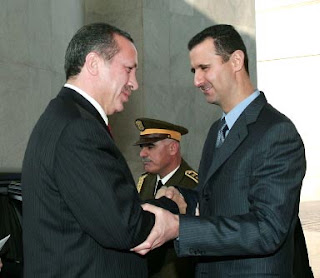
Turkish Chief Rabbi Haliva Met with al-Assad September 24, 2009

Turkish Rabbi Yitzchak Haliva reportedly met with Syrian leader Bashar al-Assad, Kav HaChadash reports.

It appears Turkey’s prime minister invited religious leaders from Turkey to join him and al-Assad in Saudi Arabia to mark the end of Ramadan.

Turkish Prime Minister Recep Tayyip Erdogan explained he wanted local religious leaders to get to know the Syrian leader. Rabbi Haliva met with Assad together with Erdogan. Assad reportedly told the rav there is Jewish community in Syria, resulting in the rabbi replying that he is aware because his community sends them matzos for Pessach. In addition, he plays a vital role in providing “religious services” like schita and bris milah.

The rabbi reportedly called on the Syrian leader to do everything possible towards advancing peace with Israel to bring an end to the orphans on both sides. The Turkish leader added that he is doing his utmost towards achieving this goal.

CALL FOR PROPOSALS:

Authoritarianisms, Regime Resilience and State-Society Relations: Comparing Political Change in Syria and Iran: Deadline 30 October 2009

Steven Heydemann (U.S. Institute for Peace and Georgetown University) and Reinoud Leenders (University of Amsterdam) are pleased to invite you to submit a proposal for writing a paper within the framework of a joint research effort on Authoritarianisms, Regime Resilience and State-Society Relations: Comparing Political Change in Syria and Iran. The paper is to be presented in a project workshop and will be considered for publication in an edited volume or a special edition of a major academic journal. The project is part of the Knowledge Programme Civil Society in West Asia based at the University of Amsterdam, the Netherlands.*

“American ambassador will return to Damascus” mideastwire.com

An-Nahar, a Lebanese daily reported on September 18, 2009, carried the following opinion piece by Sarkis Naoum: “An Arabic media outlet carried a few days ago news…about the relations between Syria and the USA saying that these relations are reverting back to being cold after they had started to take a positive direction when President Obama began implementing a policy of dialogue with Syria,the news about calling off the return of American ambassador to Damascus is totally untrue as the State Department in Washington is still looking for the most fit diplomat to represent the US in Damascus, and this is not an easy task…as many have refused this mission for many reasons including the closure of a school that used to host children of American diplomats in Syria by the Syrian authorities…In short, all this means that Obama’s administration will send an ambassador to Damascus in the near future…but this does not mean that the ambassador will be able to carry out his administration’s expectations as his ability is dependant on the openness of the “Syrian administration”…

“In the meantime, Washington might slow down its dialogue with Syria while trying to make [Syria] understand that luring [the US] into a deal on the expense of Lebanon will not be possible…”

In the Pulse

“In the indirect negotiations last year between Israel and Syria, mediated by Turkey, Syrian President Bashar Assad asked the Israelis for tangible answers in relation to six topographical coordinates. Essentially, this means that Assad asked the Israelis to draw the border. As Ofer Shelah in Ma’ariv reports:
At issue is not the somewhat vague “Rabin deposit,” certainly not promises that Ron Lauder gave in Netanyahu’s name. At issue are negotiations from a year ago, and if they resume, will be from a point from which there is no return. Therefore, the decision on whether to renew the negotiations is almost identical to a decision to conclude it with an agreement.

A key player in any future Israel-Syrian dialogue is IDF Chief of Staff Gabi Ashkenazi. Ashkenazi, former OC Northern Commander and a member of the Shepherdstown talks under Ehud Barak has been intimately involved in the Syrian track. Apropos Shepherdstown, according to Shelah:
The chief of staff shares the feelings of quite a few people-that an historic opportunity was missed. Ashkenazi was among those who shaped the concept that the IDF presented at discussions: an agreement with Syria could be the central factor in fundamentally changing around the situation in the region, from Beirut to Tehran.
In his closer, Shelah intimates:

There is no reason to think that his position has changed: the IDF is talking, at this time, of the fact that Syria’s deteriorating economic situation-it will soon, it seems, change from an oil exporter to an importer-is only pushing Assad more toward the West and creating another opportunity to remove it from the circle of hostility against Israel and isolate it from Iran.

Severe drought affects 1.3 million in Syria
By Dania Akkad | Contributor to The Christian Science Monitor, from the September 18, 2009 edition

More than 800,000 people have lost their livelihoods in a four-year dry spell exacerbated by climate change and rising food prices. Almost half of them live in urban makeshift camps.

Deraa, Syria – The acute drought that has driven an estimated 300,000 Syrian farmers, herders, and their families to abandon home for makeshift urban camps may not be the worst in the region’s history; the Fertile Crescent has often experienced cycles of drought.

But now climate change, an exploitation of water resources, and higher food prices brought about by the global financial crisis have all severely sharpened the impact of this dry spell, now in its fourth year. The numbers of Syrians affected – an estimated 1.3 million, 803,000 of whom have entirely lost their livelihoods – point to a serious humanitarian crisis.

With Syria’s population expected to triple by 2025, the severity of the drought presents yet another challenge for a leadership isolated internationally and struggling at home to maintain a broken state system while slowly introducing capitalism.

“It’s going to underline for the everyday person the vulnerabilities and inadequacies of the Syrian state,” says Joshua Landis, codirector of the University of Oklahoma’s Center for Middle East Studies.

What to Read on Syrian Politics,Foreign Affairs. By STEVEN HEYDEMANN,

Obama Aides Started Group Pressuring Siemens on Iran
By Lorraine Woellert

Sept. 22 (Bloomberg) — A group co-founded by two of President Barack Obama’s Middle East advisers is pressuring corporations to abandon business with Iran as the U.S. prepares for talks aimed at keeping the country from developing nuclear weapons.

United Against Nuclear Iran will launch television and print advertising today to coincide with Iranian President Mahmoud Ahmadinejad’s trip to New York this week for the United Nations General Assembly. The group lists Dennis Ross, a National Security Council adviser, and Richard Holbrooke, Obama’s special envoy on Afghanistan, among its founders; both have now severed ties with it.

The New York-based group wants Congress to ban government contracts to companies, such as Munich-based Siemens AG, that do business in Iran. It has told businesses they can avoid protests and letter-writing campaigns if they sever ties.

“When we run a campaign, companies come squealing,” said the group’s president, Mark Wallace. “I’m not out to get these companies, we just want them to change their behavior.”

Obama’s strategy, in contrast, stresses diplomacy backed by a threat of stricter sanctions if Iran doesn’t cooperate.

“The president is trying to approach this thing with some degree of nuance and sophistication,” said William Reinsch, president of the Washington-based National Foreign Trade Council, which represents the largest U.S. exporters.

‘Harder Line’

The advocacy group’s approach is “designed to try to force him into pursuing a much harder line than he’d like,” Reinsch said. ….

Aluf Benn in Haaretz Thanks to FLC

…. Two major differences were apparent Tuesday between Obama’s summit and those hosted by his predecessor, George W. Bush (in Aqaba in 2003 and in Annapolis in 2007). The Bush administration put an emphasis on synchronizing statements and agreements between the two sides. As soon as the summits were over, the Israelis and Palestinians were sent on their way to hold talks on their own – with American supervisors.

However, Obama does it differently. He read his statement as a command directed at the two sides, and not as a joint statement. The president is planning to lead active American mediation efforts, spearheaded by his Middle East envoy George Mitchell. The envoy’s first task will be relaunching the peace talks.

In his statement, Obama explained that the Americans are not interested in suggestions raised by Israel which mainly benefit Netanyahu. He also made clear that Washington does not accept Abbas’ refusal to enter into talks until Israel completely halts settlement construction. The President is satisfied with Netanyahu’s (so far privately made) promises to limit construction, and places the resumption of peace talks at the top of his priority list.

“Can Former Iraqi Baathists in Syria Ever Go Home?” by Andrew Lee Butters

Plastic flowers are placed along the rim of the blast crater by relatives and friends of victims of the bomb site outside the Foreign Affairs Ministry building in central Baghdad.

Plastic flowers are placed along the rim of the blast crater by relatives and friends of victims of the bomb site outside the Foreign Affairs Ministry building in central Baghdad.

Can Former Iraqi Baathists in Syria Ever Go Home?
By Andrew Lee Butters / Damascus, Sunday, Sep. 27, 2009

At the height of the civil war in Iraq, a tidal wave of refugees crossed the border into Syria, changing the face of the capital, Damascus, with their clothing, accents and shell-shocked appearances. Years later, many of the 1.5 million Iraqis remaining in Syria have become a part of the fabric of life. Many own homes or businesses and have children who speak Arabic with a Syrian accent. But one sector of the immigrant population still feels ill at ease: the 400,000 or so Iraqis with ties to the former regime of Saddam Hussein.

Former Iraqi Baathists in Syria have become the subject of an escalating dispute between the Iraqi and Syrian governments that began when suicide bombers blew up government buildings in Baghdad in August, killing 95 people. Iraqi Prime Minister Nouri al-Maliki blamed the bombings on former Baathists in Syria and accused Damascus of harboring and supporting groups that are orchestrating attacks in Iraq. Syria denied the allegations and offered to turn over any suspects in the bombings if Iraq could provide evidence of their guilt. A standoff ensued, dampening the slowly warming relations between the two countries and putting cooperation on a number of issues on hold. (See pictures of Iraq’s revival.)

Apparently lost in the dispute, however, are the facts that Syria has been slowly changing its attitude toward securing its border with Iraq and that many former Baathists are now seeking repatriation, having expressed a desire to participate peacefully in Iraq’s nascent democracy. Of course, not all Baathists have turned from hawks to doves, and many observers believe that Syria won’t stop all insurgent operations on its borders until a regional peace settlement is reached with the U.S. and Israel. But Maliki’s government has shown little interest in even opening a dialogue with Syria or the former Baathists about their eventual return to Iraq. (See a video of displaced Iraqis vulnerable in Syria.)

Iraq may have good reason to be less than trusting. Syria has long been a haven for refugees from around the Arab world, particularly those without clean track records. In the aftermath of the invasion of Iraq in 2003, Syria not only allowed anti-American Baathists to organize and hold political conventions in the country, it also permitted jihadist insurgents from other countries to pass through its territory to launch attacks in Iraq. At the time, American officials compared the region where the Euphrates River crosses the Syria-Iraq border to the Ho Chi Minh Trail.

In the last few years, however, Syria has started to clamp down on insurgents trying to infiltrate Iraq, and in August a U.S. military delegation visited Damascus to discuss increased cooperation on border security. Even more promising has been the change of attitude of many former Baathists in Syria, who are broadly split into two factions: a hard-line group led by a former vice president in Saddam’s government, Izzat Ibrahim al-Douri, and a more moderate but less powerful group led by Muhammad Younis, a former adviser to Saddam’s executive council. Younis’s group began reaching out to the Iraqi government in 2007, holding a conference to reevaluate the mistakes of the Saddam regime, reject their old Baathist ideology, and adopt more democratic policies. (See pictures of Saddam Hussein.)

Following the August bombings in Baghdad, al-Douri’s faction has also shown signs of moderating. In an interview with TIME earlier this month, the unofficial spokesman for the group, Nizar Samra’y, said it is more concerned about the growing Iranian influence on Iraq’s government than in forcing U.S. troops out of the country. “We need to have a strong state in Iraq that works [toward] an Iraqi agenda not an Iranian one,” he says. “We know America has an interest to return Iraq as a strong country and to stabilize the region. If America withdraws from Iraq now it will have a criminal responsibility.” In order to stabilize the country, however, he said the U.S. needs the help of the former Iraqi political leaders and army commanders in Syria. Those leaders are now willing to negotiate a return to Iraq, so long as they have security guarantees and the laws that prevent former Baathists from working in government are revoked.

The U.S. has been quietly pushing the Iraqi government to begin a process of national reconciliation to reduce the risk of sectarian violence as the U.S. withdraws its forces. But Maliki’s decision to blame Younis for the August bombings and demand Syria extradite him is a sign that he has no interest in negotiating with former Baathists, says Fadil al Roubai, an Iraqi political analyst in Syria. “It’s a political accusation to keep Syria from pushing Iraq to engage this wing in the political process,” he says. (See pictures of U.S. troops’ 6 years in Iraq.)

Syria is not about to hand over former Baathists for prosecution, either. Syrian officials point out that their country protected many members of the current Iraqi government when they were exiled by Saddam, including Maliki himself, who spent 20 years in Damascus. “There are [now] 1.5 million Iraqi refugees in Syria,” Fayssal Mekdad, Syria’s Vice Minister of Foreign Affairs tells TIME. “When they came here we didn’t ask them what party they belonged to. We just opened our doors.”

“Tea on the Axis of Evil,” a film by Jean Marie Offenbacher

A new film documentary about Syria, “Tea on the Axis of Evil”, will be screened on Friday Oct 9 at 9 pm as part of the United Nations Film Festival at the Kennedy School’s Wiener Auditorium. The 67 minute screening will be followed by Q&A with filmmaker Jean Marie Offenbacher.
film clips on YouTube:
Syria Film Clip: Damascus College Students

A Second Clip: Men and Women

A third clip: Everyone comes to Syria to look at Stones, but the people are the richness

Excerpts from the film and notes on the filmmaker’s three years in Syria are at www.reorientfilms.org

notes from the selection committee

Syria’s Integration: What Changes Will it Bring?

Turkish-Syrian relations are going through dramatic changes, as the four articles copied below suggest. All are from Turkish papers. (Shami kindly pointed us to them. )
Let us review some of the more important changes that free trade and the circulation of people and ideas between Syria and Turkey may bring.

  1. psychologically: The estrangement between Turk and Arab will break down. For too long suspicion and distrust has divided the two. Turks have tended to look down on Arabs as backward and un-Westernized. Arabs have looked on Turks as oppressors who colonized them, undermined Islam, shoved Arabs onto the margins of world history, degrading their culture and national purity, not to mention Islam. Also, Arabs have viewed Turkey’s fixation with joining Europe and willingness to ally with Israel as a betrayal. The fact that Turks seemed so willing to turn their backs on Arabs reenforced the ethnic distrust founded in Arab nationalism and hardened by Baathism.
  2. Many Syrians have Turkish relatives, traditions, and a powerful Ottoman heritage. Rather than hide this background for fear of being accused of being less than 100% Arab, they will now be able to take pride in their cosmopolitan and multi-ethnic background and perhaps even exploit it to make money and gain social cachet.
  3. Sectarian impact: Sunni opponents of the Assad government accuse it of  “Shiitizating” Syria because the government has allied Syria with Iran and Hizbullah. Both are allowed certain liberties to preach and build mosques in Syria. For their part, Syria’s non-Sunnis have long complained of the flow of Saudi and Gulf money into Syria, which they insist has Wahhabized the country. They speak in horror of how Saudi influence since the post 1973 explosion of wealth has flattened the texture of Islam in Syria, undermining Sufi orders, imposing a uniform and traditional dress code on Syrians, in particular on women, as well as undermining Syria’s religious tolerance and openness. Now, presumably, Turkish religious groups will have a countervailing impact. This should help variegate the texture of Sunni Islam once again and tip the balance away from Wahhabism. Sufi orders have always had a powerful presence among Turks. Along side the older orders, such as the Bekdashis, Mevlevis, and Shazilis, new movements, such as the Gulen movement, have become a driving force in Turkish Islam.  They will put down roots in Syria in short order.
  4. Turkish minorities are also coming out of their shell and will surely influence their brethren across the border. Turkish Alawites, Alevis, Kurds, and even the remains of Christian sects will reconnect with communities across the border. President Assad mentioned that Turkey’s policy toward the Kurdish Communist Party would impact Syria. But more generally, Turkey is a bellwether for regional relations with Kurds. If Erdoghan can find an accomodation between Turks and Kurds, it will have a major impact on the way Syria treats its Kurds.
  5. Baathism and regime stability: Improved relations with Turkey will help strengthen the Assad government in the short run. This will distress some opposition members as it will annoy neocon and some pro-Israeli analysts, who insist that only way to end one party rule and the sway of Arabism and the Assads in Syria is to uproot the present government violently. For chronic Syria bashers, Damascus’ integration into the region is distressing. For those who seek change without violence and force, it is promising. Evolutionary change can only be hastened by Syria’s improved relations with its neighbors. It gives the lie to those who argue that Syria exports violence and can deal with its neighbors only through force.  This is why analysts such as Shenker, Young, Tabler, Abrams, Milhem, Bolton, have engaged in a feeding frenzy on Maliki’s accusations but ignore the more important news coming from Turkey. Those who want more sanctions can only be dismayed.
  6. In the long run, better regional integration that comes from recognized borders and ending irridentism will moderate the  xenaphobic edge of Arabism and strengthen the inclusiveness of Syrianism. Economic growth will bring rising expectations and dampen fatalism. It should bring more travel and education which can only undo some of the sectarian estrangement and ignorance that plagues Syrian society.  It will bring Syria out of its fortress mentality.
  7. Economy: The impact can only be possitive. Sure some industries will face harsher competition, but growth will be the rule.
  8. Israel: Regional integration will create political unity. This will attenuate divisions between Arabs and between Middle Easterners in general. It will allow Syria to press more effectively for the application of international law on the Golan. It weaken support for Damascus’ detractors who claim it is a rogue nation, underserving of regional, not to mention, world support.

This change will be slow, as Soli Öze explains below.

Deal with Syria brings European Union spirit to Middle East
by AY?E KARABAT, 18.09.2009, Zaman

[News Analysis]Deal with Syria brings European Union spirit to Middle East
Turkey and Syria’s decision to remove visa requirements for the nationals of the two countries and establish a high-level strategic council is bringing the spirit of the European Union, based on integrated economic relations and political cooperation, to the Middle East, pundits say.

Experts add that cooperation between Ankara and Damascus will gradually spread throughout the Middle East and that extra-regional powers that really want peace and stability in the region should support this process.

Turkey and Syria announced on Wednesday evening that they would create a high-level strategic council, modeled on a similar mechanism launched earlier by Turkey and Iraq, and would remove visa requirements between the two countries, during a one-day visit by Syrian President Bashar al-Assad to ?stanbul.

“You will travel to Syria as you have been traveling from ?stanbul to Ankara. Likewise, travel to Turkey for Syrian citizens will be like traveling between Aleppo and Damascus,” Syrian Foreign Minister Walid al-Moallem said after signing an agreement with his Turkish counterpart, Ahmet Davuto?lu.

Prime Minister Recep Tayyip Erdo?an, who spoke with Assad at a meeting and a fast-breaking dinner on Wednesday, said during the dinner that the Middle East should no longer be a region whose name is associated with problems. Assad added that with these agreements, it has been proven that the people of the Middle East have the ability to determine their own future.

Sedat Laçiner from the Ankara-based International Strategic Research Organization (ISRO/USAK) told Today’s Zaman that these decisions are the core of a future integration, if not a union.

“Freedom of movement, very high economic relations and trade volume, joint cabinet meetings, integrated energy corridors, close cooperation on water issues — all these are functional principles of the EU,” he said.

According to Laçiner, when the other countries in the Middle East realize that the cooperation between Ankara and Damascus is working, they will joint it.

“Turkish-Syrian cooperation will be an enlargement corridor toward Egypt, Jordan and also toward North Africa and Gulf countries,” Laçiner said.

He noted that the personal efforts of Foreign Minister Davuto?lu were an important element for the development of the Turkish approach. Another analyst, Bülent Uras from the Foundation for Political, Economic and Social Research (SETA), said that after Davuto?lu became the foreign minister, Turkey stepped up its foreign policy. “Until recently the aim of Turkish foreign policy was zero problems with neighbors. Now it is maximum cooperation,” he said.

According to Uras, Turkey is trying to change the status quo in the Middle East, which is currently based on freezing problems. “Turkey’s message is: ‘We don’t have any chance to put our problems on a shelf any longer. We have to solve them.’ The Middle East is being reshaped. Turkey is participating in this reshaping process through democratization, mediation and pushing away the possibility of a conflict. The problems of the Middle East cannot be solved by one country; there is a need for coordination, and Turkey is trying to do this,” Uras said.

He also underlined that such cooperation would bring Syria closer to the West via Turkey, while its other option is to become closer to conflict via Iran. “Under these circumstances, powers such as Israel and US should be happy about this development,” he said.

Hüsnü Mahalli, a journalist and an expert on the Middle East, also believes that the future Middle East will be very different from today’s in a positive way. He added that whatever its name will be — integration, union or something similar — through the agreements between Turkey and Syria, a common platform has been established and the destiny of the Middle East is now in the hands of its people. Other Arab countries will join in, and even Iran in the near future, he said, noting that he believes that despite the traditional policies of Iran, Syria will be able to draw Tehran into this process.

But another expert, Soli Özel from Bilge University, has a cautious approach. According to Özel, Middle Eastern countries should cooperate more and the status quo cannot continue and must be changed, but that does not mean that this will happen easily.

“For Turkey to even realize the realities of life and enter into a process of change took a very long time. I think for Syria, starting the process of change will take time, too. Sure, there is an intention for it, but the abilities are limited,” he said.

Özel recalled that in the past, there was criticism of Davuto?lu’s efforts for regional cooperation, but everyone now understands that his efforts are paying off. “My impression is that Turkey’s efforts are highly coordinated with the US administration,” he said.

Syria-Turkey strategic cooperation
BER?L DEDEO?LU
19.09.2009, Zaman

Syria and Turkey have signed an agreement on high-level strategic cooperation, which means that these two neighbors will pursue, from now on, a very close relationship, maybe the closest ever in the history of their bilateral relations.

Although its content hasn’t been completely released, it seems that the agreement aims to create something like a Schengen zone in our region. The abolishment of visas and the development of bilateral free trade will be accompanied by the joint fight against terrorism and against other transborder threats. Naturally, the general thought of good neighborly relations constitutes the basis of this agreement. The peaceful core in the region established by Turkey and Syria can be expanded to a wider area in the future, including Iraq, Lebanon, Jordan, even Israel and Palestine, or even the Caucasus, including Armenia.

It’s not possible to predict to which point this initiative will be developed. Yet it is possible to predict how the world will perceive this close relationship between Ankara and Damascus. Some will think that this is a natural outcome of Turkey’s process of transformation. They will admit that it is wise to chose Syria as a key player in Turkey’s foreign relations, while Ankara’s “zero problems with neighbors” policy necessitates the simultaneous resolution of Turkey’s problems with Iran, Iraq, Israel and EU countries. Those who will defend that this agreement brings Turkey closer to the EU will say Turkey is succeeding in what the EU failed in its common foreign and security policy and neighborhood policy.

Nevertheless, others will believe that this is one of the signs that Turkey intends to abandon the EU path. For them, Turkey is trying to become a pivotal country in its region using its geographical advantage, at the crossroads of the Middle East, the Caucasus and the Balkans instead of joining the EU. Some people will even see it as the resuscitation of Ottomanist policies, thinking that this may help Europe get rid of Turkey more easily. But it would be a mistake if they think that is worth celebrating. I don’t believe that Turkey will adopt such a plan, but if it does, the EU will not be the one that will benefit from it.

In today’s world, where policies of exclusion are no longer favored, Turkey is trying to apply a strategy aiming at winning over its neighbors. It appears that the US and Russia support the rapprochement between Turkey and Syria but also the one between Turkey and Armenia. After all, one shouldn’t think that the initiatives on Syria and Armenia were implemented without consulting Washington or Moscow first.

These initiatives can please countries that want Turkey to become the leader in a newly shaped region. But there is another initiative, which is of key importance for determining whether Turkey will stay on the EU track or not: the Kurdish opening. If the newly designed “region” will include only countries with doubtful democracies and countries with no democracy at all, then a democratic leap like the Kurdish opening will be irrelevant. But it appears that Turkey wants to pursue the development of good relations with neighbors and Turkey’s process of democratization simultaneously. This is compatible with the philosophy of the Copenhagen criteria, or it can even be seen as the first demonstration of the “Ankara criteria.” The appellation will not really matter as long as the content of these two criteria remains. Hence, these initiatives may help both to accelerate Turkey’s accession process and to help build a new and stable region. And perhaps this is the beginning of a period during which Europe will think how to win Turkey back.

BÜLENT KENE? Chief foreign correspondent of Zaman, who recently visited Damascus to report on Syria in advance of Assad’s visit to Turkey.

We found a part of ourselves in Damascus

I must confess that our interview with Syrian President Bashar al-Assad on Sunday in Damascus had a very special meaning for me. Thanks to this interview, I made my first visit to Damascus, which gave me the enthusiastic sensation I would feel if I were paying a visit to relatives that I lost years ago.

I felt the same sensation, which sent chills down my spine when I went to Athens for the first time several years ago. At that time, the following words had come out of my mouth involuntarily: “So close, yet so far away.”

Actually, these words do not hold true for the current state of bilateral relations between the two countries. During the 1990s, which corresponds to my career as a foreign news editor at the Zaman newspaper, when I had a closer interest in foreign policy and diplomacy, the main items on the agenda included the support Syria gave to the Kurdistan Workers’ Party (PKK) terrorist organization and claims about land and conflict over Turkey’s water policies toward Syria. Likewise, the never-ending disputes between Turkey and Greece over the territorial waters in the Aegean Sea, the flight information region (FIR) demarcation, small islands, the mutual armament race, Cyprus, military excises and dogfights were our main areas of occupation. Bilateral relations were so complicated that a friend of mine who is an academician and an expert on Turkish-Greek relations had once joked, “As long as there are hostile relations between the two countries, I will never lose my job until my retirement,” and we had burst into laughter at this tragicomic revelation. Today, those unlucky years when Turkish-Greek and Turkish-Syrian relations were defined as hostile are long past. The concrete results of the “policy of zero problems with neighbors,” the theoretical framework of which was drawn up in the post-2002 era by Ahmet Davuto?lu, acting first as a chief foreign policy adviser to the prime minister and then as a foreign minister, are now visible everywhere.

Seeing that we were engulfed by a friendly atmosphere during our visit to Damascus struck not only me but also the editors-in-chief of leading Turkish newspapers with whom I was touring around the streets of Damascus, which felt so familiar to us. We were extremely happy to observe that despite the false stories about hostility that we have been hearing since the 1970s, we are so close to the beautiful people of this beautiful country, and we are like each other.

The fact that when the last of the Ottoman sultans, Vahdettin, who is depicted by our distorted official education system as a traitor, died in Italy in exile with many debts, our Syrian sisters and brothers brought his corpse to Syria and laid him to rest in a tranquil place that they carefully selected shows me a gleaming sign of the loyalty our Syrian sisters and brothers feel toward us Turks and to their past. While we failed to ask the simple question, “How can a sultan betray the country that is accepted as his own property?” and we labeled Sultan Vahdettin a traitor with blind fanaticism. The Syrian subjects of Sultan Vahdettin did not regard him a traitor but brought his corpse from Italy in order to bury him in the cool courtyard of Suleymaniye Complex, built by Mimar Sinan, in Damascus.

If we recall the sad story of Sultan Vahdettin, the following can be said: On Oct. 17, 1922, 16 days after the bill abolishing the sultanate was passed on Oct. 1, 1922, he left ?stanbul and spent his last years in San Remo, Italy, where he died on May 15, 1926. When he died, he was so poor that even his coffin was confiscated, and his corpse was transported first to Beirut and then to Damascus in the company of his son-in-law Ömer Faruk Efendi. The Syrian government had held an official funeral ceremony which then-Syrian President Ahmed Nami Bey, who was the first husband of Ay?e Sultan, the daughter of Sultan Abdülhamid II, attended, too. Later, some other members of the Ottoman dynasty who were living in several European cities were also laid to rest next to him. His burial place, which is held in high esteem by Syrians, and Suleymaniye Mosque are now being renovated with sponsorship from the Ministry of Culture and the Turkish Cooperation and Development Agency (T?KA). Learning that Turkey has done something, though a bit late, to place importance to its past, which was never betrayed by Syrians, was like receiving a nice present in Damascus.

Actually, the warm welcome offered by Syria, which very much resembles Turkey, and by Syrians, who embrace Turks with strong feelings of love and fraternity was the real present we got in Damascus. When we walked in the majestic Hamidiye Bazaar, which was crowded until very late at night, and when we visited the grand 1,300-year-old Umayyad Mosque, which was converted from a church, Damascus always gave us that striking sensation of happiness one can get when he meets relatives whom he hasn’t seen for years.

Compared to the atmosphere of hatred and hostility and the likelihood of an imminent war just 10 years ago, there is a completely different climate between Turkey and Syria. No doubt that not only the existing Turkish government’s foreign policy, which radically changed the way Turkish people view their neighbors, and also Syria’s young, moderate and far-sighted leader, al-Assad, have played a big role in this meeting between two countries who have long established friendly ties. At this point, I would like to express my thanks and gratitude to all the leaders who contributed to the creation of this friendly atmosphere that brought these two sister nations together once again.

Strengthening Turkey-Syria ties put Israel on backburner
FULYA ÖZERKAN
ANKARA – Hürriyet Daily News
Friday, September 18, 2009

With its policy of developing a regional vision and maintaining ’zero problems with neighbors,’ Turkey is turning to Syria to transform its relationship from cooperation to integration. Turkey’s move raises questions about whether the strengthening ties with Syria signal a shift in regional balances and its strategic alliance with Israel

With Turkey’s foreign policy appearing to shift toward the Middle East, the government’s rapprochement with Syria and Iraq is raising questions about the country’s future political relations with Israel, its close ally since the early 1990s.

Turkey and Syria announced plans to establish a high-level strategic cooperation mechanism to deepen ties in every sphere, similar to Turkey’s agreement with Iraq.

Analysts have confirmed a considerable change in Turkish-Syrian relations compared to the 1990s, when strained ties were evident due to the Kurdistan Workers’ Party, or PKK, problem. Relations with Israel, however, received a boost in the 1990s when the two countries struck military deals, sowing the seeds of a strategic alliance. The Turkish-Israeli relationship has since moved in the opposite direction in the wake of the Gaza war. This is the current reality, although, both sides downplay the diplomatic chill, saying that it is only temporary.

“It is too early to say that what was often described as Turkey’s strategic alliance with Israel is being replaced by Syria,” Bülent Alir?za, director of the Turkey Project at the Washington-based Center for Strategic and International Studies, told the Hürriyet Daily News & Economic Review.

“However, the increasingly close relationship with Damascus, combined with the recent strains in the relationship with Tel Aviv, seems certain to raise additional questions about a possible change of direction in Turkish foreign policy in the Middle East,” he said.

The government’s sharp criticism of Israel’s military campaign in Gaza opened a rift with Israel. Ankara’s frustration was also revealed in the suspension of Turkish-mediated indirect talks between Israel and Syria, which were on the edge of being raised to the direct level. However, the Gaza war and the recent election of a right-wing government in Israel have since frozen talks.

Now, with its policy of developing a regional vision and maintaining “zero problems with neighbors,” Turkey is turning to Syria to transform its relationship from cooperation to integration. Both sides have already announced a decision to lift mutual visa requirements.

“For Syria, it is important that Turkey distance itself from Israel but it probably does not realistically expect that the Turkey-Israel relation will be ended and replaced by relations with Syria,” according to Raymond Hinnebusch, professor of international relations and Middle East studies at the University of St. Andrews, who has written a series of books on Syria and the Middle East.

“Rather, the heart of the alignment with the two countries is political: to manage the shared water, to avoid problems of irredentism from escalating, to avoid destabilizing interventions or civil wars in the region. The relation also has an economic dimension with cross-border business increasing,” said Hinnebusch.

“And in identity terms the perceptions of Turks and Syrians/Arabs as rivals or even enemies has been replaced by a feeling of amity, even some overlap in identity,” he added.

Political relations vs military enthusiasm

Despite strengthening relations with Damascus, some observers say that the Turkish military’s enthusiasm is not the same as that of the government. In the case of Israel, improved relations began with a military partnership and developed on the civilian level. This prevents a complete breakdown in relations with Israel, as military exercises and deals are ongoing despite occasional problems on the political level.

However, Syrian President Bashar al-Assad said on the eve of a visit to Turkey that his country would welcome PKK members if they decided to lay down arms, which was interpreted as clear support of the Turkish government’s Kurdish initiative. Thus, security concerns over a PKK-originated threat could bring the military into the picture, alongside the fostering of political ties with Damascus.

“I would not expect the Syria-Turkey relationship to be military-centered; the two sides do not really share the same threats, except for a shared perception of the dangers created by the U.S. invasion of Iraq, particularly in empowering the Kurds,” said Hinnebusch.

“Syrian and Turkish weapons systems are different so I’m doubtful there is much scope for cooperation along these lines. Perhaps intelligence sharing, confidence-building measures etc. can develop at a fairly low level of salience,” he said.

Hisham Milhem

Is Syrian-US Engagement at an End?

Assad in Turkey to Upgrad Ties and Talk to Iraqis

Assad in Turkey to Upgrad Ties and Talk to Iraqis

The Neocon anti-Syrians are coming out in full force in an effort to stop engagement between Syria and the US. The pretext is the Iraqi dust up with Damascus over the car bombings in Baghdad last month. Maliki accused Syria of protecting the perpetrators and has demanded Syria hand over a list of ex-Baathist officials living in Syria. Damascus responded that there is no proof of the Iraqi accusations. Syrian officials claim that far from trying to destabilize Iraq, they have every interest in helping to stabilize it now that American troops are on the way out. Syria’s economic plans depend on a prosperous Iraq. It has signed deals for new pipelines between the two countries. Syria was among the first Arab countries to recognize the Maliki government and send an ambassador, something some Gulf countries have not done. David Ignatius, Oxford Analytica and numerous reporters have argued that Maliki is playing politics in his heated campaign to retain the premiership in Iraq.

There is no denying that relations between the US and Syria are on hold. Certainly, there was never a “honeymoon” to justify notions of a divorce. Right now, Mitchell has his hands full with the Israelis and the settlement issue, which is his main focus. All the same, Syria and the US have taken concrete steps toward rapprochement, which remain on target. There are certain people, even at the Department of State, who are not too pleased with such a rapprochement, but by and large, administration figures are keen to keep the engagement on track and are trying not to let the Iraq kerfuffle be blown out of proportion. The Saudi paper alsharq alawsat has weighed in, suggesting that Malaki is being ungrateful. Both Saudi Arabia and Turkey are trying to smooth over the controversy, in the belief that Syria is not trying to destabilize Iraq,and that moving ahead with engagement in the region is the way to overcome the wounds salted by the Bushites. Talks between Syria and Iraq being held in Turkey today should be telling, although both sides seem prepared to dig in their heals, at least until the Iraqi elections are decided, there is considerable pressure on Maliki by just about everyone to calm down this controversy. Most Iraqi authorities are trying to isolate Maliki on this; the president and vice-president of Iraq have come out solidly against Maliki’s irresponsible accusations. Even Shiite leaders are accusing him of manufacturing this fight in order to play the sectarian and nationalist card for election purposes.

As one friend wrote me yesterday:

I think Marc Lynch is correct – there is a coordinated media push from the neo-con folks – in one week Abrams, Young, Bolton all had nearly the exact same message on Lebanon and Syria – force and pressure is what is really needed… it was truly a Jon Stewart moment!… I mean they literally read like someone’s “war room” circulated a talking points memo – although Michael Young took the cake by accusing Obama of being “artless and arrogant” in his Mideast policy!”

Perhaps David Shenker was trying to outdo them when he wrote: “For the past six years, the Assad regime has provided Al-Qaeda carte blanche to attack neighboring states via its territory.” Such statements are simple propaganda. Of course, Syria encouraged Jihad on Americans in Iraq when the US threatened to attack Syria. As soon as George Bush took broadening his military campaign off the table, reportedly by April 2003, Syria also began to moderate its defensive position and sought a dialog with Washington. Today Syria has that dialog and is trying to work out positive relations with the Iraqi government.

I would also like to add a correction to an earlier post where I wrote:

there aren’t any American officials visiting Beirut this days. They aren’t making grand statements about Lebanon. Anyway, why would the US expend capital to form a Lebanese government that cannot change the status quo in any meaningful way?”

Nicholas Noe, who manages mideastwire.com wrote to correct me:

Thats not really accurate – Fred Hof stayed here for several days ….. Mitchell is on his way supposedly…. there has been a rash of high level military figures – Petreus, Congress people … not to mention Feltman….and key figures from the NSC as well! Lets also not forget the recent visits of ex-Bushies – Khalilzad, David Schenker …. Moreover, Amb Feltman, it seems, has in fact been giving a number of anonymous interviews which sound unfortunately very much like the old, momentarily defeated Bush era rhetoric…. with Hisham Melham for example only recently, but especially in the pro-Saudi/March 14 Arab media.

An example of that pro March 14 media is this article copied below from the Kuwaiti paper, al-Rai. The author is a Syria basher earlier mistranslated remarks made by Ambassador Mustapha at the Middle East Institute a few months ago, which caused a bit of a brohaha. The same newspaper, Al-Rai, mentioned that the Ambassador was not invited to the Iftar dinner thrown by Hilary Clinton. He was not there because he was out of town, but he was invited. His Deputy Chief of Mission Zuheir Jabbour attended the Iftar in his place. Here is a taste of the article:

“American-Syrian honeymoon over...” 2009-09-15
mideastwire.com

On September 15, the independent Al-Rai al-Aam newspaper carried the following report by its correspondent to Washington Hussein Abdul Hussein: “The American anger toward Syria has reached its peak with the announcement made by the team of American peace envoy George Mitchell regarding the fact that his tour in the region will not include Damascus. For its part, Al-Rai al-Aam learned that the American administration has completely excluded the idea of reinstating the American ambassador to Damascus, less than 100 days after the announcement of this step. Sources in the American capital thus stated that the honeymoon between America and Syria which started after the election of Barack Obama as president ended today, and that the coming weeks heralded an escalation especially on Washington’s end.

“The sources believed that the collapse of the project to restore the relations went back to before the assassination of Lebanon Prime Minister Rafik al-Hariri in February 2005, saying: “The Syrians do not understand [what] the normalization of relations [means] and Syria’s behavior [is such that it is acting] as though it had defeated America in a world war.” They added with anger: “(President Bashar) Al-Assad has started counting the American eggs in his basket before offering us anything in return”, continuing: “Al-Assad would launch a rocket here or there and expect us to run to him. This is a security blackmail which no longer works in the United States”. However, according to senior American officials, what broke the camel’s back between Washington and Damascus was the Syrian behavior following Mitchell’s last visit and his meeting with Al-Assad in July.

“They said: “During the meeting between Mitchell and Al-Assad in Damascus, the Syrian president asked the American envoy to explain to him the articles of the sanctions on Syria. Mitchell took the draft, read it and explained it to Al-Assad in detail. This lasted over one and a half hours. Mitchell then concluded by explaining the mechanism of the imposition and the lifting of the sanctions and said that these sanctions were reviewed every year and could be lifted in the presence of the required conditions. For its part, the Syrian side which is always in a hurry to say that its relations with Washington are definitely heading toward a breakthrough, intentionally or by mistake, leaked that the United States promised to lift the sanctions imposed on Syria.

“They continued: “Before Mitchell’s plane had landed in the Dallas International Airport in Washington on the way back from the Middle East, an overwhelming wave of anger had come to prevail over the decision-making hallways in Washington,….

More accurate is the analysis by Oxford Analytica. Here are the last paragraphs:

“Feud will hurt Maliki but not Damascus”

International reactions. Maliki’s accusations against Syria were received cautiously by other states, even though many of them had already condemned Damascus for keeping its borders open since the 2003 US invasion of Iraq. Significantly, Washington remained largely silent about Maliki’s accusations, suggesting a lack of support for the charges or Maliki’s handling of the dispute.

Most Arab states have remained quiet for similar reasons,…… The Saudi media has reminded Maliki of Syria’s willingness to meet the costs of sheltering 1.5 million Iraqi refugees.

CONCLUSION: It is unlikely that Damascus was behind the Bloody Wednesday bombings. The accusation has had little effect on international attitudes towards Syria, and will not have any significant impact on its other foreign policy advances. Maliki is likely to stand firm in demanding Syrian action to curb militant infiltrations across the border, in an attempt to avoid the blame for his poor security record. However, it is Maliki who will most likely pay the political price, as his upcoming campaign for re-election could be further undermined.”

Iraqi Official: Talks With Syria Over Attacks Fail
2009-09-16, By QASSIM ABDUL-ZAHRA

Baghdad, Iraq (AP) — Talks between Iraq and Syria over Iraqi charges that Damascus is harboring militants involved in deadly bombings in Baghdad have failed and will not be repeated, the Iraqi government spokesman said on Wednesday. The talks in Ankara, Turkey, aimed at easing tensions between the two neighbors collapsed after Syria refused to accept a list of people Iraq wants extradited for their alleged involvement in a recent spate of bombings, including an Aug. 19 blast that killed more that 100 people. Iraq accuses Syria of harboring Saddam Hussein loyalists wanted in those bombings. “We consider this security meeting as the final one. Such a meeting won’t happen in the future unless Syria positively responds to the unchallenged evidence and proof presented by Iraq. This is the final meeting,” government spokesman Ali al-Dabbagh told The Associated Press.

The Jerusalem Post is pushing the Shenker spin, as it usually does

Analysis: US believes Syria is overplaying its
2009-09-17, Jerusalem Post:

The scheduled meeting Thursday of the Syrian and Iraqi foreign ministers is unlikely to lead to a swift resolution of the simmering feud between the two countries. A huge crater still remains in front of the Iraqi Foreign Ministry, one week after …

The government of Iraq is furious at the mounting evidence of Syrian involvement in the car bombings last month in Baghdad which left 95 dead. Prime Minister Nouri al-Maliki has issued a formal request to the UN Security Council for an inquiry into the bombings….

David Schenker, a former Syrian affairs adviser in the office of the US secretary of defense, noted in a recent analysis that Iraq’s accusation of Syrian involvement in the insurgency did not emerge from nowhere….

The administration had sought to make Iraq a focus for US-Syrian rapprochement. Washington assumed that Syria and the US shared a common interest in a stable, peaceful Iraq. This assumption does not appear to have been borne out. Rather, the Syrian interest is in maintaining instability.

The pattern is, of course, repeated in other countries with which Syria shares a border….

More significant is this news, which will have a very big impact on Syria and the region….

Turkey continued its decade-old quest to expand its influence in the Middle East, announcing the end of visa restrictions for travel to Syria.

Turkey continued its decade-old quest to expand its influence in the Middle East, announcing the end of visa restrictions for travel to Syria.

LA Times [Reg]: TURKEY, SYRIA: Nations sign historic accord, end
2009-09-17 13:56:39.560 GMT

The two nations’ foreign ministers announced that Syrians could travel to Turkey without visas, and … The two countries also signed a cooperation deal similar to one Turkey penned with Iraq. For years Iranians and Turks have been able to cross their border without visas.

Though a member of the North Atlantic Treaty Organization which hosts a major United States military base, Turkey maintains strong diplomatic and economic relations with many of the Middle East’s main players, including U.S. rivals Iran and Syria….

Turkish Foreign Minister Ahmet Davutoglu was candid about Turkey’s new aim to cement economic and political ties to the region.

“When all of these mechanisms are brought together, we are sure that the environment of economic integration, welfare and peace will make great progress,” he said.

“We want this understanding to spread into our region and the region to turn into a very wide zone of welfare and strong stability,” he said. “We may establish similar mechanisms with Iran and other mechanisms. We want our relationship with our neighbors to turn into maximum cooperation via the principle of zero problems.”

The same newspaper, Al-Rai, and others, such as the notorious Tony Badran, have mentioned that the Ambassador was not invited and not present at the Iftar dinner thrown by Clinton. Actually, he was not there, as he was out of town, but he was invited. His deputy, the Deputy Chief of Mission, attended the Iftar in his place and stayed for a while.

Muhammad Atta in Aleppo; Muslim Brothers; Oil

Muhammad Atta

Muhammad Atta

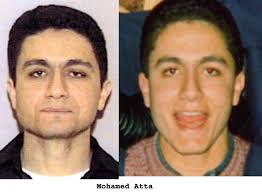
In Aleppo, Syria, Mohamed Atta Thought He Could Build the Ideal Islamic City
By Daniel Brook, Thursday, Sept. 10, 2009

Eight years after 9/11, we still almost know Mohamed Atta. We can almost see him, a gaunt and spectral figure making his way through Hamburg’s red-light district en route to his radical storefront Al-Quds Mosque. We still vividly recall his ominous visa photograph. But the man in that photograph remains a cipher, his eyes vacant. How did those eyes see the world?

We’ll never know for sure, but part of the answer may lie in a document he left behind, one that has strangely gone largely unexamined: his master’s thesis in urban planning. While the bulk of the 9/11 hijackers were Saudi Arabian street toughs tapped for their brawn, Atta was chosen for his brains. Trained as an architect in his native Egypt, he went on to pursue a master’s degree in city planning at the Hamburg University of Technology, in Germany…..

The subject of the thesis is a section of Aleppo, Syria’s second city. Atta describes decades of meddling by Western urban planners, who rammed highways through the neighborhood’s historic urban fabric and replaced many of its once ubiquitous courtyard houses with modernist high-rises. Atta calls for rebuilding the area along traditional lines, all tiny shops and odd-angled cul-de-sacs. The highways and high-rises are to be removed—in the meticulous color-coded maps, they are all slated for demolition. Traditional courtyard homes and market stalls are to be rebuilt.

For Atta, the rebuilding of Aleppo’s traditional cityscape was part of a larger project to restore the Islamic culture of the neighborhood, a culture he sees as threatened by the West. “The traditional structures of the society in all areas should be re-erected,” Atta writes in the thesis, using architectural metaphors to describe his reactionary cultural project. In Atta’s Aleppo, women wouldn’t leave the house, and policies would be carefully crafted so as not to “engender emancipatory thoughts of any kind,” which he sees as “out of place in Islamic society.” …..

[Landis: The following story on the Muslim Brotherhood is hard to believe. From President Assad’s interview with Zaman, which I published in the last post, it seems clear that the President believes that he has taken care of the Muslim Brotherhood problem. Speaking of Syrian militants who belong to the Kurdish Communist Party, he said:

“If some people, be they in Syria or in Turkey, decide to abandon terrorist activities, then we must accept and afford protection to them. We did the same thing with the Muslim Brotherhood issue in the 1980s. As a state, we embrace those who have abandoned terrorist practices. We will embrace and pardon again. A state should pardon, because our aim is to eliminate terrorism, not to take revenge.”

From this quote, it would seem that President Assad believes that he has already pardoned the leading Muslim Brotherhood members of the 1980s who sought pardons and has solved “Muslim Brotherhood terrorism.” The premise of the following IWPR article, it thus a bit hard believe. Rather, I would agree with the Kurdish activist quoted at the end of the article who is doubtful that the Syrian government is nearing an acceptance of the Muslim Brotherhood as a Political organization.

Is regime ready to talk to Muslim brotherhood?
Signs of dialogue with exiled opposition 27 years after Hama massacre.
By an IWPR-trained reporter (SB No. 75, 09-Sep-09)

Syria appears to be planning to open a dialogue with the outlawed Muslim Brotherhood, MB, to pre-empt the Islamisation of society and the rise of Islamic groups in countries around Syria, local political analysts say.

The regime is said to be concerned about growing fundamentalism. “Syrian society is witnessing a return to religion to face the difficulties of life,” said one analyst, who spoke on condition of anonymity.

It also sees MB branches becoming increasingly influential in neighboring countries like Jordan and Egypt, he said. Even Iraq and Turkey are currently ruled by Islamist groups, he added.

The analysts said a number of moves in the past months could signal that the leaders of the organization – who live in exile in Europe and in some Arabic countries – were inching towards less hostile relations with Damascus.

Earlier this year, the MB announced that it would suspend all “opposition activities” against Syrian authorities as a display of unity in the face of the Israeli attack on the Palestinian Gaza Strip.

In April, the organization withdrew from the National Salvation Front, a coalition of exiled Syrian opposition groups formed in 2006 and grouping Islamist, secular and Kurdish dissidents.

The coalition had stated as its main objective changing the Syrian regime by peaceful means.

The MB explained its withdrawal from the group in a statement saying that the coalition proved it was unable to achieve its national goals.

The Syrian branch of the organization issued a statement in August confirming its earlier decision to suspend hostile activities against the regime in Damascus. The group said that it wanted “to give a true and honest chance for breaking the circle of evil enveloping the Syrian people for the past 40 years”.

But Abdel-Halim Khaddam, a former Syrian vice-president who is currently in the opposition, accused the Islamist group in a newspaper interview in April of establishing contacts with the regime in Syria.

He said that meetings were being held in an Arab country to prepare for reconciliation between the two parties.

Attempts by IWPR to contact the Muslim Brotherhood’s exiled leadership in London for comment were unsuccessful.

A number of Arab media reports said in August that prominent Syrian opposition figures are expected to return to Syria soon.

Another leading opposition figure said that he had information indicating that Turkish figures as well as Islamist groups in Jordan were mediating an easing of relations between the MB and Damascus.

Talks between the government and the organization were also reported by private United States-based intelligence organization Stratfor in January.

“The negotiations now appear to have reached a more critical stage and are focused more on following the Jordanian model of working with the more moderate elements of the MB as a way of containing the Islamist populace,” it said.

The report argued that as a minority regime, the Alawite-Baathist leadership had always supported more radical Islamist groups such as Hamas and Hezbollah to maintain its legitimacy in the eyes of Syria’s sizable Islamist community.

But now that Syria was trying to pursue peace negotiations with Israel it needed to distance itself from these radical groups and approach more moderate Islamist trends “to maintain its credibility and safeguard the regime from popular backlash”.

In the early 1980s, the MB was in open armed revolt against the government, culminating in an insurrection in the town of Hama in 1982 which was violently crushed by the army, killing many thousands.

A Kurdish activist, who also spoke on condition of anonymity, said that the withdrawal of the MB from the main opposition coalition abroad was probably the result of a “deal” between authorities and the Islamist group. He said he believed the Syrian regime was ready to give the MB some legitimacy in return for the Islamists taking a stand against the democratic secular opposition in the country.

The activist argued that the regime in Syria allowed religious institutions to exist but repressed non-religious civil society groups.

Most recently, a widely circulated media report said that the Syrian authorities were planning to cancel a law that allows the death penalty for anyone found to be a member of the MB.

The Arab news website Al-Bawaba in an August 29 article quoted unnamed Syrian and Arab sources as saying that a legal committee formed by the Syrian Baath party command had just finished drafting a proposal to revoke the law in question. The website, which describes itself as a portal for Middle East news and information and has offices in a number of Arab countries, said that this was a preparatory step for the return of some of the MB cadres to Syria.

The Syrian foreign minister, Walid Muallem, at a news conference the next morning denied any knowledge of what was reported. Although the regime has not carried out capital punishment against any alleged member of the MB, it continues to arrest any individuals or groups suspected of political Islamist activity.

“The Syrian regime has succeeded in causing the opposition abroad to splinter after crushing all internal opposition,” said a Damascus-based political analyst, who asked not to be named.

He added that the Syrian regime could be trying to control religious movements to use them as a bargaining chip in its relations with the West.

Some critics, however, believe that it is unrealistic to expect any warming of relations between the MB and the Syrian government.

A former Kurdish dissident did not trust the regime to change its colors and said it was not ready for dialogue with political groups that oppose or criticize it. The system in Syria is not open to the existence of political groups other than the one in power, he said.

Published under partnership agreement with IWPR. Normal copyrights applied. Visit the IWPR website at:The Institute for War & Peace Reporting. IWPR11/09/2009 . © Copyright KurdishMedia.com 1998 – 2008. All rights reserved.

WSJ [Reg]: Diplomacy Fuels Interest in Syrian Oil
By JULIEN BARNES-DACEY, 2009-09-14

DAMASCUS — Oil-industry executives here anticipate a surge of interest by international petroleum companies amid a recent thaw in the country’s diplomatic relations …

Syria’s location on the Mediterranean and its relatively unexplored geology make it a potentially profitable frontier for smaller international companies. Mtanios Habib, a former Syrian oil minister, says the country holds significant potential, including oil-sands reserves on the Jordanian border. He says 40% of Syria’s land hasn’t been explored.

The country’s near-pariah status in recent years kept out most companies. Now, improved relations with Washington and other Western capitals, along with recent oil discoveries, are fueling hope that foreign companies might help to revive the industry.
[Dwindling Output chart]

In August, Gulfsands Petroleum PLC of London began production of 16,000 barrels a day at one of its recent discoveries, at the Khurbet East field, in northeast Syria. The company says it expects to ramp up production to 35,000 barrels a day by the end of next year.

“In terms of Syria being finished, we’ve proved otherwise,” says Mahdi Sajjad, Gulfsands’ co-founder and general manager.

Gulfsands bet big on Syria when most other companies shied away. The company made its Khurbet East find in 2007. That year, it entered a strategic partnership with Cham Holding, controlled by tycoon Rami Makhlouf, a cousin of Syrian President Bashar Assad and a target of recent U.S. sanctions.

In November 2008, Gulfsands made a second discovery in the northeast. Executives say they believe that find could hold commercially extractable reserves of 12 million barrels.

Syria needs the foreign know-how. Oil accounted for 17% of government revenue in 2007, according to the International Monetary Fund. But short-term Syrian forecasts predict steep declines — as much as 25,000 barrels a day of lost production each year — if new fields aren’t found or extraction technology isn’t improved.

Since 2000, Damascus has opened up swathes of the country to exploration by foreigners, and Chinese, Indian and Russian companies have entered the market.

The state Syrian Petroleum Co. has a longstanding joint venture with a unit of Royal Dutch Shell PLC, India’s Oil & Natural Gas Corp. and China National Petroleum Co.

U.S. economic sanctions, imposed in recent years because of Syria’s support of militant groups Hezbollah and Hamas, impede any meaningful oil-industry work by U.S. companies.

This summer, however, the Obama administration said it would make it easier for Syria to import items such as aircraft parts and other technology. Washington also has agreed to reinstate its U.S. ambassador.

Meanwhile, European nations, including France, have warmed to Damascus after Syria appeared to support political détente among Lebanon’s squabbling factions.

“Under the current sanctions in place in Syria, it would be close to impossible to have any American oil company work in that country,” said Ray Irani, chairman and chief executive of Occidental Petroleum Corp. “If the political situation changes, that would be a different story.”

Wael Tabbaa, chairman of Petro Services, a privately run Syrian oil-services company, says Western companies could be drawn into Syria if sanctions are eased.

“There are still 400,000 barrels per day, and that’s still a lot of work,” Mr. Tabbaa said.

Syrian blogger jailed for ‘spreading false news’
Posted on : 2009-09-13 | Author : DPA
News Category :

Damascus – Syria’s Supreme State Security Court on Sunday sentenced a blogger to three years in prison on charges of “spreading false news,” a Syrian human rights organisation reported. The court found that Karim Arabji, a 31-year-old business consultant, was guilty of “spreading false or exaggerated news that could harm the morale of the country,” in connection with remarks posted by users of a website he edited, the Syrian Observatory for Human Rights said.

Officers from Syria’s military intelligence service arrested Karim Arabji in June 2007. He has been in detention since then.

You can see the following Video reports by Tharwa foundation :

?????????? ?? ?????
The Unplanded Communities in Syria

??????? ??????? ?? ?????
The Kurdish Question in Syria

Turk & Syria – Assad Interview: Muslim Brothers, Kurds, Iraq, Israel

President Assad heads to Turkey Wednesday, Sept 16, 2009. The Turkish paper Zaman has carried a number of articles on Syria in preparation for his visit.

Syrian President Bashar al-Assad met with the editors-in-chief of several Turkish newspapers, including Today’s Zaman Editor-in-Chief Bülent Kene? (L), over the weekend.

An article by Muhammet Minhac Çelik – Turkey’s role in Syrian detente with West crucial, experts say.

The article quotes me, but I copy below the fuller version of what I wrote to Muhammet in response to his question: “Was Turkey an influential player in the recent reconciliation between Syria and the US as well as the EU? (I mean the fact that the US is considering retunring an Ambassador to Damascus and the EU’s future signing of the Partnership Treaty with Syria.)” I wrote him:

Dear Muhammet,

Turkey is a key player in the new Middle East and has great leverage with Syria, Israel and the US. This was very clear in the central role it played in initiating talks between Israel and Syria 2008.

Syria values Turkey’s support over almost all other Middle Eastern countries, and it should. This gives Turkey considerable influence in Damascus. When Ankara asked Damascus to begin talks with Israel, Damascus complied, in part, to strengthen its relations with Turkey.

Turkey is the central player in Syria’s plans for economic growth. Turks form the largest number of foreign entrepreneurs opening new businesses in Syria. Syrian-Turkish trade doubled in three years from 1 billion dollars US in 2005 to 2 billion in 2008. Syria and Turkey plan to double this again in the next three years and they stand a good chance of doing it. Turkey is the doorway for Syrian goods into European markets. Oil and Gas pipelines to and from Syria go through Turkey.

Also, because of Turkey’s leadership of the Ottoman Empire, its economic success, and its pioneering role in developing democracy in the Middle East and finding a progressive balance between Islamic and secular government, Syrians of all classes and ideological outlooks look up to Turkey.

I could also add the importance of Turkey in Syria’s approach to the Kurdish question – not only in Iraq, but in Syria itself. The Turkish government’s success in forging a new, more equitable relationship between Turks and Kurds will surely influence Syria. If Turkey is successful in finding an accommodation with Kurds, it will help Syria do the same. In particular, it will pave the way for the Syrian government to offer citizenship to those 250,000 Kurds living in Syria, who have been denied Syrian citizenship because their male ancestors are believed to be refugees from Turkey or Ottoman Anatolia.

Many Syrians look to friendship with Turkey as an important addition to friendship with Iran.

When Imad Mustapha – Syria’s ambassador to Washington – came to speak at the University of Oklahoma, he was asked by one Syrian doctor, “Why does Syria have Iran as its best friend?” He answered, “Turkey is Syria’s best friend.” Many Syrians believe that Syria would not have come out of its struggle with George W. Bush so well had Turkey and Syria not been on friendly terms.

The importance of Turkey to Syria goes back a long way in history. Before Syria sent its army into the 1948 War in Palestine, one parliamentarian – Farzat Mamlouk – argued passionately in Parliament that Syria and the Arabs should postpone war and wait until Turkey was on their side before taking on Zionist forces. He argued that Turkey had great influence in the West, had major moral importance in the Islamic World, and had the strongest military of all Middle Eastern countries. He insisted that Syria should not go to war without Turkish backing and diplomatic support. This was wise advice in 1948; it is wise advice today.

Bashar al-Assad is keenly aware of Turkey’s role in assisting Syria to break out of isolation, grow its economy, and improve its leverage within the Middle East and international community. The fact that the Syrian government gave up Ocalan, ended its support for Kurdish militias fighting Turkey, and tried to put the Hatay or Liwa affaire behind it, as well has opening up the border with Turkey to free trade and easy movement of people is a very big turnaround. Syria has done all this despite Turkey’s very ambitious plans for Euphrates water, which hurt Syria.

In improving relations with Syria, Ankara is building a very important bridge to the Arab World and a good neighbor.

Best, Joshua

Democratic initiative will affect Syria as well, says Assad
Zaman, Interview with President Assad by BÜLENT KENE?, 15.09.2009

Syrian President Assad spoke to Turkish journalists in Damascus before heading to Turkey for a visit on Wednesday.

Syrian President Assad spoke to Turkish journalists in Damascus before heading to Turkey for a visit on Wednesday.

Syrian President Bashar al-Assad has said he appreciates the efforts undertaken by Turkey, which rushed to mediate between Syria and Iraq in order to ease the tension that arose between the two countries after several bombs recently exploded in Baghdad.

Pointing out that he supports Turkey’s democratization initiative, which aims to settle the Kurdish issue, as well as its Armenian initiative, Assad said Syria is ready to do its part to help, particularly with respect to the Kurdish initiative. He noted that whatever its results, Turkey’s democratic initiative will also affect Syria.

At the Qasr al-Shaab (the People’s Palace) in Damascus, where special guests were hosted ahead of Assad’s visit to Turkey scheduled for Wednesday, Assad held a press conference specifically for the editors-in-chief of some Turkish newspapers, including Today’s Zaman Editor-in-Chief Bülent Kene?. Assad said that if the terrorist Kurdistan Workers’ Party (PKK) decides to lay down arms, his country can accept the return of the PKK’s Syrian members in support of Turkey’s democratization initiative. Noting that they will pardon these militants, the Syrian president underlined that the outcome of the democratization initiative would inevitably affect Syria. “If some people, be they in Syria or in Turkey, decide to abandon terrorist activities, then we must accept and afford protection to them. We did the same thing with the Muslim Brotherhood issue in the 1980s. As a state, we embrace those who have abandoned terrorist practices. We will embrace and pardon again. A state should pardon, because our aim is to eliminate terrorism, not to take revenge,” he said.

Syrian President Assad says his country can accept the return of Syrian PKK members, in support of Turkey’s democratization initiative. He also warns that a possible US or Israeli attack on Iran would destabilize the Mideast

On the other hand, Assad stressed that they do not welcome the idea of holding direct talks with Israel without Turkey’s intermediation. He said they want indirect talks conducted through Turkey’s intermediation to reach concrete results before moving on to the direct talks. He also underlined that while they are against any Middle Eastern country’s efforts to acquire nuclear weapons, they also do not want Iran to face a military intervention by the US or Israel as a result of this issue.

The Syrian president also responded to the following questions posed by Turkish journalists:

Since the war in Iraq, there have been a number of developments that closely concern Syria and Turkey. After these numerous developments, do you think the region is now safer than before for Syria?

There are both positive and negative aspects to the developments that occurred after the occupation of Iraq. On the negative side, in terms of the consequences of the war, the security situation in Iraq, as we all know, is very bad. Confusion and chaos create a suitable environment for terrorism everywhere. And terrorism will use this environment in order to strike other countries. In this respect, the postwar region is no more stable than before. But, as you know, there are always “buts,” and there were things that we have learned from this process. In the first place, we must note that we have learned that the attitudes and views of Turkey and Syria were right and correct. As you know, before the war in Iraq, the leaders of some countries had come to us and lectured us. But, it came out that they were wrong and we were right. By the way, we have learned another thing: The solution offered from outside the region does not always solve the issue. We have insistently asserted that this occupation will not be a solution, but will have destructive effects. That is, we need to make this distinction: We need to stress that there is a difference between having good relations and surrendering.

As you know, Iraq claims that Syria is responsible for the recent bombings in Baghdad. What do you say in response to these accusations? What do you think of Turkey’s intermediation efforts between the two countries? Can you say that the problem with Iraq is close to being settled?

Turkey’s intermediation efforts arrived really quickly. Timing was an important factor. Moreover, Turkey’s approach was really objective and realistic. As a matter of fact, Turkey’s general approach is, “If some problems arise among my neighbors, this will affect me in some way or another.” Before Turkish Foreign Minister Ahmet Davuto?lu came to Damascus, Prime Minister Recep Tayyip Erdo?an called me, and I immediately responded positively to his offer of intermediation and supported Turkey’s efforts. In several days [on Wednesday], we will hold a meeting in Turkey to discuss this problem.

But Syria was held responsible for the explosion in Baghdad. And Iraq accused your country. What really happened there?

We were really shocked to hear those accusations because we had signed a strategic cooperation agreement with [Iraqi Prime Minister Nouri] al-Maliki only two days before. Moreover, about 1.5 million Iraqi refugees are living in Syria. Despite this, we are accused of killing Iraqi people. Some claim that Baathist insurgents are backed by Syria. Such a thing is illogical. The problem is inside [Iraq]. There is an atmosphere of conflicts and clashes in Iraq, but Iraqis tend to put the blame on external forces, and they accuse us. Since 2004, they have applied to us many times, demanding that we extradite people from the Iraqi opposition to them. But they do not offer us any proof of the crimes these people are accused of. We tell them that we will give those people to them if they submit evidence to us, but until now, they have failed to provide any such evidence.

Turkey will soon hold a joint cabinet meeting with the Iraqi government, and it has been declared that it may hold a similar meeting with Syria. What is the Syrian side’s approach to such cooperation? Do you welcome this proposal?

During my visit to Turkey, we will clarify this matter. There is already a similar mechanism in place between Syria and Iraq. It is our opinion that any good relations between two neighboring countries will prove beneficial to all neighbors. For instance, if Turkey had not had good relations with Iraq, how would it have been possible for it to initiate intermediation efforts between Iraq and us? For this reason, if bilateral relations are improved to the highest extent possible, this will be beneficial to all countries in the region.
‘The Armenian initiative closely concerns us’

Turkey has recently launched an initiative to open the common border between Turkey and Armenia. Simultaneously, it has launched a Kurdish initiative. The Armenian initiative may not be of much interest to you, but how do you think the Kurdish initiative will affect Syria? How do you see these initiatives from the Syrian perspective?

You may be surprised to hear this, but the Armenian initiative closely concerns us. And, this is not only because it is a problem that is of interest to the Armenian minority living in Syria. We believe that if the relations between Turkey and Armenia ease, this will lower tension in the region. For this reason, we need more initiatives and settlements. For instance, international trade does not occur just between two countries. Many nearby countries are involved in the process.

The Turkish government has not informed us officially about the Kurdish initiative. We follow the issue through the press. Overall, I can say that every initiative may have dozens of steps and dozens of right moves. But things may still go wrong. But for us, the important thing is: What is the framework of this settlement? Whether the framework of the settlement is national or racial/ethnic is important. Be it national or ethnic, the important thing is how this settlement will be beneficial to the country’s territorial integrity. Also, even if a framework is delineated, its implementation may take a long time. Moreover, you need to take into consideration events around the country while you implement an initiative. In my opinion, any initiative in any area is a positive thing. But this initiative should be within the framework I mentioned above.

Do you think this initiative could end in the country’s division? How might Syria be affected by such an unwelcome consequence? Do you see this initiative as an end or as a means?

In my opinion, the initiative is not an end, but a means. The main target is to ensure the country’s stability and development. As for political division, this is one of the greatest sins or one of the greatest evils. Whatever you do, you must maintain the unity, indivisibility and territorial integrity of the country as your most important target. But, in any case, we will eventually be affected by what goes on in Turkey. Therefore, we want this process to result in stability.

Were these issues on the agenda during Mr. Davuto?lu’s visit to Damascus? Did you discuss this issue with him?

I will discuss it with Mr. Erdo?an on Wednesday.

There is a technical aspect to this issue that concerns Syria. It is said that the PKK’s Syrian members do not hold Syrian citizenship, and if they lay down arms, their status will be uncertain, and this is a factor that complicates Turkey’s Kurdish initiative. What is the Syrian approach to this problem? Can Syria make any contribution to the Kurdish initiative in this regard?

If some people, be they in Syria or in Turkey, decide to abandon terrorist activities, then we must accept and afford protection to them. We did the same thing with the Muslim Brotherhood issue in the 1980s. As a state, we embrace those who have abandoned terrorist practices. We will embrace and pardon again. A state should pardon, because our aim is to eliminate terrorism, not to take revenge.
‘There must be a comprehensive settlement’

Does that mean that you will re-naturalize the 1,500 Syrians who are, according to intelligence reports, members of the PKK?

Here, we must acknowledge that the PKK issue concerns three neighboring countries. Any settlement of this issue should be discussed among these countries. At that time, I had stressed that we could not solve the terrorism issue through the US method, i.e., by hunting down terrorists. This is because the terrorists you kill will be replaced by new ones. For this reason, there must be a comprehensive settlement. The factors that cause terrorism should be assessed and analyzed exhaustively. We need to discuss how this issue can be solved through joint efforts because there are common factors in Syria, Turkey and Iraq. We need to seek ways to improve our cooperation in security and policy areas in this context. We, as Syria, have always stressed the need for cooperation on security issues.

Was the method that was applied to the Muslim Brotherhood successful in Syria?

I can say that it was relatively successful because some wanted to renounce violence and terrorism, while others did not. Thirty years later, some are still insisting on creating terrorism. But those who continue terrorism will definitely be bound to give an account before the law.
‘The Turkey-Syria friendship initiative has a very short history’

Mr. President, relations between the two countries improved significantly during your tenure. Which development sparked these relations? How can bilateral relations be developed to the desired advanced level in the economic area?

The first spark began when Mr. Ahmet Necdet Sezer visited Damascus in 2002 for Hafez al-Assad’s funeral. Later, Mr. Abdullah Gül came to Damascus in his capacity as prime minister. This was followed by my visit to Turkey in 2004. Naturally, political relations between the two countries can develop more rapidly, while developing economic relations can take some more time. Bureaucracy cannot inhibit the development of political relations because there is a strong political will behind it. But, it takes time until this will is reflected in the economy. Do not forget that the Turkey-Syria friendship initiative has a very short history. Naturally, businessmen want initiatives to be implemented quickly. But this is all we can do. The ?stanbul Stock Exchange [?MKB] opened in 1980. As for us, we were able to open a stock exchange just this year. Private banks have been operating in Turkey for 50 years, but in Syria they’ve only been able to start operating in recent years. Despite this, many Turkish companies operate here. There are factories set up by Turks.

Unfortunately, we encounter problems even in privatization tenders from time to time. When there is non-compliance in tender criteria, problems arise. But my advice to businessmen would be to make assessments that are not solely based on the current situation. They should use foresight when making investments. A businessman who takes steps to invest in our country today should know that he will be in a more advantageous position in the coming period. If he waits too long, others will take this position. I am very optimistic about this issue. We achieved a trade volume between Turkey and Syria that exceeds $2 billion in a very short period of time. Our current target is to make it $5 billion. I think we are on a good path. We are moving fast, but perhaps we need to move much faster.

During US President George W. Bush’s term in office, relations between Syria and the US were very strained. Have you observed any difference in the US’s policies toward the Middle East and Syria following the election of Barack Obama as president?

From the perspective of the general political frame, we do not see any positive development in practice. If there is anything that has changed, then it is the differences in the approaches toward existing problems. There is no longer a US policy of dictating to us. There is a US that is more willing to listen to our opinions. There used to be a sentiment in the US that “think tanks in America could solve the problems in the Middle East.” Now the mentality that problems can be solved by working with countries in the region is being instilled.

To give a concrete example, in contrast to the Bush administration, there is a US administration that is more open to Turkey’s mediation efforts in the region. But in terms of solving problems, the US administration’s viewpoint is not very clear, although we do hear general things such as “comprehensive peace” in the region. This is very important from our perspective. Comprehensive means including Palestine, Israel, Lebanon and Syria [in the peace process]. There was nothing like this during Bush’s time. [Obama] needs to fill in the details under the main heading. This needs to be followed by an implementation/action plan. Nine months have passed since Obama came to office, and this is a very important period in a four-year tenure. We think he needed to act more quickly so that we could say “OK, the Obama administration is different.” All in all, I can say that there are intentions, but we need to see results as well.

Like Turkey, Syria is an important country in regional policy. We also know that like Turkey, Syria can take up an initiative with respect to regional policy. The region is currently in the middle of a critical process. The US is withdrawing an important portion of its soldiers from Iraq. In this respect, what do you envisage for the future of the Middle East?

We live in a geography that has a very rich social fabric. This social mosaic will determine upcoming developments the same way it influenced the past. First we must identify the social mosaic so that we can determine our political vision accordingly. We could create a political vision to dissolve the social fabric. This way, the human fabric would dissolve along ethnic and denominational lines. Or to the contrary, this fabric could be united by strengthening it even more. After making this kind of analysis, we can say that some countries in this region will either dissolve in this process or come out stronger. This inevitably leads to these questions: How do we view ourselves? How do we define ourselves? How do we perceive ourselves? What is our identity? How do we conduct our denominational or ethnic or secularism debates?

I think even debating these issues today is the wrong method to pursue because by debating these topics we are accepting dissolution. This debate took place in Syria as well. We debated how we could extensively establish accord between secularism and religion. By removing the perception that the secular system was hostile toward religion, we carried it to a platform where secularism meant freedom of religion. I give this example because there is a similar debate in Turkey. If a unifying instead of a dissolving approach is adopted in debates, you will help in bringing the society together. Another example is Turkish-Arab relations. Up until a few years ago, there were immense discrepancies in Turkish-Arab ties. Now, it’s vastly different. What has changed? Turks are the same and so are the Arabs. But because perceptions between the two societies changed, we are able to talk about brotherhood and friendship now. When the thought mechanism changes, so do the results. What will I gain by being hostile or the complete opposite toward Turkey? More importantly, we were always trying to define ourselves and understand who we are by looking at the West. I studied and lived in the West, and there are many things that I like about the West. Many people in Turkey and Syria may have an interest in the Western lifestyle. But despite all this, I see myself as a person of this land. This is a cultural viewpoint, and the political view should be compatible with this.

Is Turkey’s mediating role between Syria and Israel a matter of discussion again?

Turkey’s role is a very fundamental one. There are many reasons for this. As a country in this region, Turkey is more concerned with every aspect of this land than any other country. Turkey is a very skillful country both in its efforts to solve problems and in removing obstacles that lead to problems. Secondly, there is unconditional trust between Syria and Turkey both at the political level and between the peoples, and this is very important for us. There is no mistrust on any issue. Furthermore, Turkey has proven in a short period of eight months how skillful and rational it is in mediating, although this was Turkey’s first effort concerning the Arab problem.

How do you evaluate Israel’s offer to meet directly? Is your outlook positive or do you insist that Turkey mediate?

We had direct meetings with Israel in the 1990s. But we were not able to talk about concrete issues. There were main headings but no subheadings; in other words, there were no details. There were uncertainties. Because there was a failure to fill in the details, the 1990s meetings were not successful. When we started to meet again, but with Turkey as mediator, we started to talk about the details. When we reach a concrete point, we will be able to hold direct meetings. It is for this reason that we always want to shift to direct meetings once we reach a certain point through indirect meetings with Turkey’s mediation.

So should we take this as a clear “no” to Israel’s offer to directly meet?

Yes. Our answer is “no” until meetings achieve a proper and healthy foundation.

How do you assess Erdo?an’s stance at Davos and his attitude toward the attack on Gaza?

Mr. Prime Minister’s stance incited an emotional joy among Syrians. But as president, I cannot talk emotionally. There was a demonstrative situation there, and that had consequences. When the prime minister was displaying that stance, he was not displaying his personal stance. He displayed that stance as the prime minister of Turkey. This stance proved how Turkey can adopt a respectable stance based on its own sovereign decision. This stance was completely a “made in Turkey” stance. It is very important because it is Turkey’s sovereign stance.

Is a potential US or Israeli attack on Iran a current problem for you? What is your view on this?

If Iran is attacked, the region will enter a very critical phase that will last for several decades. The region will not be able to emerge from this situation for many years. Not only will the attack prevent stability in the Middle East, it will also impose a heavy cost on the region as well as the entire world.

How does Syria view Iran’s nuclear activities? Does it see it as a threat? As you know, Turkey is trying to complete its security defenses prior to a possible Iranian attack by purchasing Patriot missiles from the US for $7.8 billion. Does Syria have similar concerns?

The important question here is who will Iran target with these weapons. Will it use these weapons against Turkey? I don’t think so. Will it use them against Israel? I don’t think that’s likely, either, because there are many Arabs living in Israel and its surroundings. Nuclear arms are owned not for use but to benefit from their deterring effect. Take Pakistan and India; they became more peaceful after becoming nuclear powers. Besides, I don’t think Iran is after nuclear weapons. But we are against nuclear weapons regardless of what country is pursuing them. We introduced a resolution on this issue at the UN Security Council.

Are your demands related to Turkey’s overuse of water being met? Are good neighborly relations dominating this issue as well?

The winter before last, Prime Minister Erdo?an called me. He told me there was a drought in southeastern Turkey. He requested that the amount of water in the Orontes (Asi) River, which originates in Jordan, flows through Syria and into Turkey’s Hatay province, be increased. Although we had water problems as well, I ordered that the amount of water provided to Turkey be increased. In the recent past, Turkey fulfilled all its commitments regarding the Tigris and Euphrates rivers. But this year it has not been able to fulfill a portion of its commitments. The amount of water that was left to us was little due to some investments Turkey made. However, the prime minister has said the amount of water which was supposed to be left over to us will be provided in the near future. Iraq, Syria and Turkey have reached an agreement over the Tigris. Relations over water were brought to a very good level by establishing a common commission.
15.09.2009
Interviews

BÜLENT KENE?

Iraq-Syria Row Calming, but Maliki Needs to Shift Blame for Elections

Iraqi Foreign Minister Hoshyar Zebari,

The Iraqi-Syrian row is calming down, although Maliki is insisting on additional Syrian concessions. Increasingly analysts are arguing that Maliki is failing in his gambit to blame Syria for his security failures in order to stanch the bleeding of his Shiite support in the run up to elections. His own Shiite Vice President Adel Abdul-Mahdi issued a statement saying that blaming others for failures while taking credit for successes was not the ideal way to deal with Iraq’s problems.

Maliki’s allies in the Shiite coalition that dominates parliament recently dumped him and his Dawa party, deeply hurting his chances of keeping a majority behind him after the upcoming vote.

Iraq’s president Talibani has taken “the unusual step of publicly scolding the prime minister over the dispute with Syria.”

Iraqi analyst Hadi Cahlou said al-Maliki has to divert attention from the security failures, and Syria was the perfect target. “Al-Maliki was smart to export his problems,” said Cahlou. “I think he will push this all the way because he needs Syrian concessions in order to defuse the anger of Iraqis.”

David Ignatius writing in the Washington post, calls for an “international support group,” as was recommended in the Baker-Hamilton Report, that can draw together the neighboring countries to keep Iraq from blowing apart. He writes that “This is where America still has the leverage to help, by drawing together all the volatile powers on Iraq’s borders — Syria, Jordan, Turkey, Saudi Arabia and, yes, Iran. A regional security framework will aid Baghdad, but it can also reduce tensions in an area that resembles a ticking time bomb.”

Land First, Then Peace By TURKI al-FAISAL is the best reiteration of the Arab position on Netanyahus demands that Arabs make concessions to stop Israeli colonial expansion. (copied below.)

Iraq, Syria agree to stop media campaigns, speed up returning ambassadors

CAIRO, Sept. 9 (Xinhua) — Syrian Foreign Minister Walid al-Moallem said on Wednesday that he reached an agreement with his Iraqi counterpart Hoshyar Zebari to stop media campaigns between Syria and Iraq, speed up returning ambassadors and form security committees.

Al-Moallem told a joint press conference with Arab League (AL) Secretary General Amr Moussa in Arab League headquarters that he reached this agreement during a quadrilateral meeting included Iraqi Foreign Minister Hoshyar Zebari, Turkish Foreign Minister Ahmet Davutoglu and Moussa.Al-Moallem stressed that during his meeting with Zebari that the latter did not present any evidence to the recent accusations by Iraq to Syria, adding that Zebari said that Syria is not accused but there are some elements in Syria who are against achieving political reconciliation in Iraq.

Arab foreign ministers held a meeting in Arab League headquarters on Wednesday in a bid to defuse the recent tension between Iraq and Syria in addition to discussing Israeli-Palestinian conflict….

Earlier on Wednesday, Al-Moallem said: “We are ready to solve the crisis with Iraq,” describing the tension in relations between the two countries as “something regrettable that does not serve the interests of both Syria and Iraq.”….

Iraq says Syria must show will to stop militants
Fri Sep 11, 2009
By Muhanad Mohammed

BAGHDAD, Sept 11 (Reuters) – Iraq wants to see a serious effort from Syria to stop militants using it as a base before they can talk about restoring diplomatic ties, the government spokesman said on Friday……

Analysis: Iraq’s spat with Syria backfiring on PM
By HAMZA HENDAWI, Associated Press,  Sept. 12, 2009

BAGHDAD – Iraq’s prime minister is feeling a backlash over a bitter fight he picked with Syria, which he accuses of harboring Saddam Hussein loyalists suspected in deadly bombings in Baghdad. Critics say he just wants to divert attention from his own government’s security failures.

Prime Minister Nouri al-Maliki, a Shiite, is trying to shore up his position ahead of January parliamentary elections after the increase in violence in recent months deeply hurt his security credentials and after the Shiite coalition that once backed him split.

But the spat with Syria has only isolated him among Iraqi politicians. It also could set back U.S. efforts to improve Iraq’s relations with its Arab neighbors and normalize its own ties with Syria after years of tension.

Significantly, the United States, which has 130,000 troops in Iraq, has remained largely silent about al-Maliki’s accusations. That, say analysts, could suggest that it too does not fully support the charges or his handling of the dispute.

Another explanation for U.S. wariness is that it does not want to appear to be meddling in Iraqi affairs after al-Maliki was angered when the Obama administration sent officials to Syria last month to discuss security on the Iraq border without inviting the Iraqis.

Al-Maliki has blamed two Syria-based senior members of Saddam’s now-outlawed Baath Party, along with al-Qaida, for planning massive bombings on Aug. 19 in Baghdad that killed more than 100 people. Syria says the Iraqi government has failed to provide proof, rejecting its requests for their extradition.

A U.S. military spokesman in Baghdad, Brig. Gen. Stephen Lanza, said the attacks bore the hallmarks of al-Qaida, but declined to be drawn into whether Syrian-based Baathists were also involved.

“It’s important to note that Iraq’s Ministry of Interior continues to investigate the bombings. It would be purely speculation on my part to comment now on the investigation’s findings,” he said.

Michael W. Hanna, an expert with the Century Foundation in New York, argued that the Syria-Iraq tiff created a “less than ideal” situation for the United States.

“If there was a serious belief that these bombings were in fact masterminded in Damascus, I think you would have seen a more overt U.S. role,” said Hanna. He also held out the possibility, however, that Washington’s reluctance to speak publicly on the Syria-Iraq dispute may have been out of a desire to avoid the appearance of meddling in Iraqi affairs.

Many Baath loyalists fled to Syria after the 2003 fall of Saddam, including several who are widely thought to be financing or planning attacks in Iraq. The U.S. and Iraq have long accused Damascus of not doing enough to prevent them and al-Qaida militants from crossing the border to carry out attacks in Iraq.

Ties had markedly improved between Baghdad and Damascus over the past year.

… Al-Maliki may have calculated that turning up the heat on Syria — usually a safe political bet, especially among his Shiite constituents — would boost his weakening chances of retaining his position in the parliamentary election. His status as prime minister once seemed a sure thing, after an alliance he led scored major victories in provincial elections last January. But his allies in the Shiite coalition that dominates parliament recently dumped him and his Dawa party, deeply hurting his chances of keeping a majority behind him after the upcoming vote.

Last month’s attacks discredited his claims that Iraqi forces were capable of handling security after U.S. forces pulled out of Iraqi cities in June. Increasing violence has undermined his carefully manufactured image as the leader who oversaw the insurgency’s defeat.

Now his rivals may be taking his spat with Syria as a further opportunity to erode his standing.

Shiite Vice President Adel Abdul-Mahdi issued a statement this past week pointedly saying that blaming others for failures while taking credit for successes was not the ideal way to deal with Iraq’s problems.

Iraq’s president, Jalal Talabani, and his two deputies — Abdul-Mahdi and Tariq al-Hashemi — took the unusual step of publicly scolding the prime minister over the dispute with Syria, counseling calm and complaining that he was not consulting them on issues of national interest.

Still, al-Maliki has persisted. He called on the U.N. Security Council to create an international tribunal to investigate the attacks, a move likely meant to touch a raw nerve in Damascus. President Bashar Assad’s regime has for years feared being implicated by a U.N.-appointed court investigating the 2005 assassination of a former Lebanese prime minister.

Iraqi analyst Hadi Cahlou said al-Maliki has to divert attention from the security failures, and Syria was the perfect target. “Al-Maliki was smart to export his problems,” said Cahlou. “I think he will push this all the way because he needs Syrian concessions in order to defuse the anger of Iraqis.”

But veteran Arab affairs commentator Hoda al-Husseini saw al-Maliki’s tactic as a risky gamble. Blaming Syria wins Damascus the sympathy of Sunni heavyweights Egypt and Saudi Arabia, two close U.S. allies that have always distrusted al-Maliki.

“The problem al-Maliki has is that he doesn’t have proof of Syrian involvement in the bombings,” she wrote in the newspaper Asharq al-Awsat. “Al-Maliki is all alone in this standoff.”

Land First, Then Peace
By TURKI al-FAISAL
September 13, 2009
Op-Ed Contributor, New York Times

Jeddah, Saudi Arabia: THE United States and other Western powers have for some time been pushing Saudi Arabia to make more gestures toward Israel. More recently, the crown prince of Bahrain urged greater communication with Israel and joint steps from Arab states to revive the peace process……

Shortly after the Six-Day War in 1967, during which Israel occupied those territories as well as East Jerusalem and the Sinai Peninsula, the United Nations Security Council passed a resolution stating that, in order to form “a just and lasting peace in the Middle East,” Israel must withdraw from these newly occupied lands. The Fourth Geneva Convention similarly notes “the occupying power shall not deport or transfer parts of its own civilian population into the territory it occupies.”

Now, Israeli leaders hint that they are willing to return portions of these occupied territories to Arab control, but only if they are granted military and economic concessions first. For the Arabs to accept such a proposal would only encourage similar outrages in the future by rewarding military conquest…..

In order to achieve peace and a lasting two-state solution, Israel must be willing to give as well as take. A first step should be the immediate removal of all Israeli settlements in the West Bank. Only this would show the world that Israel is serious about peace and not just stalling as it adds more illegal settlers to those already occupying Palestinian land.

….

There have been increasing well-intentioned calls for Saudi Arabia to “do a Sadat”: King Abdullah travels to Israel and the Israelis reciprocate by making peace with Saudi Arabia. However, those urging such a move must remember that President Anwar el-Sadat of Egypt went to Israel in 1977 to meet with Prime Minister Menachem Begin only after Sadat’s envoy, Hassan el-Tohamy, Sadat’s envoy, was assured by the Israeli foreign minister, Moshe Dayan, that Israel would withdraw from every last inch of Egyptian territory in return for peace. Absent a similar offer today from Israel to the leaders of Palestine, Lebanon and Syria, there is no reason to look at 1977 as a model.

President Obama’s speech in Cairo this summer gave the Arab and Muslim worlds heightened expectations. His insistence on a freeze on settlement activity was a welcome development. However, all Israeli governments have expanded settlements, even those that committed not to do so.

No country in the region wants more bloodshed. But while Israel’s neighbors want peace, they cannot be expected to tolerate what amounts to theft, and certainly should not be pressured into rewarding Israel for the return of land that does not belong to it. Until Israel heeds President Obama’s call for the removal of all settlements, the world must be under no illusion that Saudi Arabia will offer what the Israelis most desire — regional recognition. We are willing to embrace the hands of any partner in peace, but only after they have released their grip on Arab lands.

Prince Turki al-Faisal, the chairman of the King Faisal Center for Research and Islamic Studies, is a former director of Saudi Arabia’s intelligence services and ambassador to the United States.

Iraq says Syria must show will to stop militants

Fri Sep 11, 2009 12:36pm EDT

[] Text [+]

Featured Broker sponsored link

By Muhanad Mohammed

BAGHDAD, Sept 11 (Reuters) – Iraq wants to see a serious effort from Syria to stop militants using it as a base before they can talk about restoring diplomatic ties, the government spokesman said on Friday.

EU postpones Syrian accord; Ignatius on Syria; Butters on Beirut

EU postpones Syrian accord

BRUSSELS, Sep 11, 2009 (UPI via COMTEX) — Diplomats from the European Union have temporarily postponed a decision on whether to sign an association agreement with Syria, a Netherlands diplomat says.

The delay is the result of Dutch objections that the accord does not allow for suspension in the case of gross violation of human rights, the diplomat told the Brussels-based EUobserver in an article published Friday. The Netherlands indicated it wanted to wait until after the United States, Israel and the Palestinian authorities hold talks at the end of September, the diplomat said.

EU diplomatic sources also revealed that the European Union is likely to restart debate on upgrading relations with Israel should the summit result in a deal halting Israeli settlement building in occupied Palestinian territories.

The European Union has made no official link between an agreement with Syria and upgrading relations with Israel but the two policies are entangled for all practical purposes, observers say.

Security From Iraq’s Neighbors
By David Ignatius
Sunday, September 13, 2009

How can America help a fragile Iraq as U.S. troops and influence there decline? The Obama administration should revisit one of the good ideas proposed by the 2006 Baker-Hamilton commission — namely an “international support group” that can draw together the neighboring countries to keep Iraq from blowing apart.

The Baker-Hamilton recommendations are mostly forgotten, swept away by President George W. Bush’s 2007 surge of U.S. troops. That certainly improved security, but the recent bombings in Iraq are a reminder that the surge didn’t usher in a new era of peace and love. Political reconciliation is still more slogan than reality — and the neighbors are more a lurking menace than Baghdad’s partners.

This is where America still has the leverage to help, by drawing together all the volatile powers on Iraq’s borders — Syria, Jordan, Turkey, Saudi Arabia and, yes, Iran. A regional security framework will aid Baghdad, but it can also reduce tensions in an area that resembles a ticking time bomb.

In the “be careful what you wish for” department is Iraqi Prime Minister Nouri al-Maliki. For several years, the United States has wanted him to be a strong leader who could assert Iraqi sovereignty. But Maliki’s erratic behavior in recent weeks has complicated the regional dynamic. Rather than working to solve problems with his neighbors, he’s making new ones — despite U.S. efforts to mediate.

An example of the tricky regional dynamic is Syria. The Obama administration has been working carefully to rebuild U.S.-Syrian relations. Representatives of Central Command made two visits to Damascus this summer to discuss security cooperation on Iraq. This led to a tentative agreement that U.S. and Syrian military representatives would meet Aug. 20 on the Iraq-Syria border. U.S. officials proposed including Iraq, as well.

Not so fast, protested Maliki. He warned Chris Hill, the U.S. ambassador to Iraq, that policing Iraq’s border was an issue for Iraq, not America.

When Maliki visited Damascus on Aug. 18, he told President Bashar al-Assad that he opposed the Syrian-American plan to discuss Iraqi security and would boycott the Aug. 20 session. Maliki also demanded that Assad turn over Baathist leaders who were living in Syria. Assad refused, saying that these Baathists had opposed Saddam Hussein’s regime and posed no threat. The Maliki-Assad summit meeting “was a failure,” says one Arab official.

Then things exploded, quite literally. On Aug. 19, terrorists in Baghdad attacked the Iraqi Foreign and Finance ministries, killing more than 100 and wounding at least 500. Maliki’s government quickly blamed Damascus, and Iraqi TV broadcast the alleged confession of a Sunni Baathist named Wisam Ali Khazim Ibrahim, who said the attack was planned in Syria. On the morning of Aug. 20, the U.S. Embassy in Damascus informed Syria that the planned meeting that day was canceled. Maliki has since demanded an international tribunal to assess Syria’s alleged complicity.

But several senior U.S. officials say that the evidence doesn’t support Maliki’s charges. Instead, they say, the Aug. 19 bombings were most likely the work of al-Qaeda in Iraq. “Given everything that we know, it seems very unlikely the plot was hatched in Syria,” says one U.S. official.

Why is Maliki picking a fight with Damascus?
The most likely answer is Iraqi domestic politics. With parliamentary elections scheduled for January, Maliki wants to show that he’s a tough guy — and it’s easier for him to stand up to Syria (and Washington) than, say, to Iran. His anti-Syrian blasts are also said to have earned him grudging respect from other regional powers, such as Saudi Arabia.

U.S.-Syrian bilateral relations are still moving forward. U.S. officials have given Syria intelligence about terrorist cells operating inside the country that allegedly are moving “foreign fighters” into Iraq, and the Syrians have indicated they will take action. Meanwhile, the two countries are discussing a gradual relaxation of existing sanctions against Damascus.

What’s missing is a regional security framework that would allow postwar Iraq gradually to regain its place with Syria, Iran and the rest as a power player. Building such an architecture would be the diplomatic equivalent of a three-cushion shot in billiards — drawing all the fractious neighbors into a constructive dialogue.

This is the kind of game-changing diplomacy that is possible only for a superpower such as the United States. It’s the last big thing that America can do for Iraqi security as the United States withdraws, and, mercifully, it doesn’t involve any troops. Henry Kissinger would be on the plane already. Any takers in the Obama national security team?

Breakdown in Lebanon: A New Round of Brinkmanship
By Andrew Lee Butters / Damascus Friday, Sep. 11, 2009

Lebanese parliament majority leader Saad Hariri addresses the media at the Élysée Palace in Paris on Jan. 2, 2009

Lebanon is an eternal exception to the maxim that all politics is local. With so many foreign powers meddling in the country’s perennially sectarian struggle for control, Lebanon functions as a kind of political barometer of the Middle East. And that’s why the news Thursday, Sept. 10, that Prime Minister–designate Saad Hariri had given up trying to form a consensus government three months after his ruling coalition won the country’s parliamentary elections is a sign of a more general unease in the region: Lebanon’s political crisis — and the broader Middle East cold war of which it is an expression — is far from over…..

[My own hunch is that the Lebanese paralysis is not so much about Syria, Saudi Arabia, the US, or international politics this time around. Rather, it is homemade and local. Syria could have lived with the Hariri cabinet as he proposed it. It certainly didn’t present a threat to Syria. But why would Syria want to lean on Aoun or Hizbullah to get such a government if their allies are not happy with it? ent that they aren’t happy with? Syria is fine with Lebanon without a government. It would not be worth expending important capital to help Hariri. Damascus would contemplate such an effort if such pressure would win Syria important concessions from the US, but perhaps American officials are not so keen themselves to expend political capital on Lebanon. They did so to get free elections and Syria stayed scrupulously out of them. But there aren’t any American officials visiting Beirut this days. They aren’t making grand statements about Lebanon. Anyway, why would the US expend capital to form a Lebanese government that cannot change the status quo in any meaningful way?  Why would the US government fight for a Hariri government that is bound to be paralyzed from inception? The Obama administration is not interested in Bush’s forward agenda of freedom or democratization of the Middle East.  It wants to nudge Lebanon off center stage as much as Syria does. Lebanon was Bush’s fixation; why would Obama want such a headache? Perhaps a bit of benign neglect is just what Lebanon needs? ]

France has Led the West out of Bush Think and into Engagement with Syria

The 27 EU countries are preparing to sign the Euro -Mediterranean partnership. Oddly enough, this may be one of the more concrete results of President Obama’s engagement policy with Syria. By abandoning the Bush administration’s enmity for Syria, the Obama administration has in turn freed the EU to reverse its policy of isolating Syria and restart the Mediterranean Partnership process. Launched in 1995, the Partnership aimed to establish a common area of “peace, stability, and shared prosperity in the Mediterranean region” through lower tariffs and expanded trade.

Syria was on the verge of signing the agreement when the US invaded Iraq in 2003, bringing Washington into direct conflict with Syria. The Bush administration, not content to merely transform Iraq, broadened its Middle East ambitions to “transforming the Greater Middle East.” This included wresting Lebanon from Syria’s sphere of influence and isolating Damascus in preparation for phase two, or regime change in Syria. Of course, phase two never materialized because phase one — nation building in Iraq — sunk into the swamp of Iraqi factionalism and resistance. The Bush agenda suffered a second setback in the swamp of Lebanese factionalism and resistance. The bankruptcy of Bush’s strategy of violence became clear when Israel’s 2006 invasion of Lebanon failed to dispatch Nasrallah, destroy Hizbullah or deliver a weakening shock to Syria. Nevertheless, Western leaders spent two additional years trying to confront Hizbullah through the UN and by building up the Lebanese Army before recognizing the obvious – that they could neither overpower Hizbullah nor outfox it.

Understanding the futility of the West’s Lebanon policy, Nicolas Sarkozy made his first foreign policy initiative on becoming leader of France outreach to Syria. He reversed President Chirac’s ill-fated decision to join Bush’s anti-Syrian campaign. Actually, one can forgive Chirac for joining his wagon to Bush, for in doing so, he repaired relations with Washington, which had been damaged over the Iraq invasion. The cost to Lebanon of this Franco-US embrace, however, was high; it pushed the fragile country into chaos for five years; Rafiq Hariri and close to 2000 Lebanese lost their lives in the ensuing tug of war, not to mention the damage that was done to lebanon’s economy and infrastructure. Defenders of the Bush policy will trumpet the claim that only confrontation forced Damascus to withdraw its military from Lebanese soil. This claim is dubious. Syria had already halved its troop levels in Lebanon and eliminated its presence in urban centers. It was negotiating further reductions to 4,000 men. Hariri had every hope of reducing Syria’s role in Lebanon further through diplomacy and emoluments. It is in no way clear that the Bush policy of confrontation, which Hariri did his best to avoid, was a wise policy. It bought Lebanon quasi-independence at a much higher price than Hariri’s diplomacy might have. Instead of Syrian missiles, Lebanon now sports Hizbullah missiles. Israel is less secure; Hizbullah is better armed; Lebanese sectarian relations are more frayed; and Syria retains an important degree of influence in Lebanese politics.

Nicolas Sarkozy, realizing that there could be no victor in Lebanon, pushed for the Doha agreement, which brought much needed compromize to Lebanese factions. He consolidated Western gains won with the withdrawal of the Syrian army in exchange for giving Syria’s allies recognized powers in the Lebanese government. He then re-launched the Mediterranean partnership as the “Union for the Mediterranean” at the Paris Summit for the Mediterranean, where President Bashar al-Assad and his glamorous wife stole the show. The Bastille Day festivities signaled Syria’s return to the international stage.

France’s example was followed by Britain and Germany, which helped Obama engage Damascus. Sarkozy’s deft diplomacy allowed the West to remove Lebanon as the centerpiece of its relations with Syrian. Indeed, Sarkozy was able not only to improve France’s relations with Syria, but to bring his country closer to both Israel and US at the same time – a masterstroke of diplomacy. Now the EU as a whole is preparing to sign the Euro-Med Agreement, returning the region to relations as they were before the invasion of Iraq. Holland had been resisting a final reconciliation with Syria in the name of human rights. But the notion that political standards in the Middle East will be improved by restricting the economic activity of offending countries has achieved little save to make poor people poorer. Sanctions backfired in Iraq. They are not working in Iran. Washington is preparing to ease sanctions on Sudan because they prevent the rebuilding of the country and have reduced US influence in the region. The same is true of sanctions on Syria.

US engagement with Syria is changing regional politics. The recent uproar between Iraq and Syria is a case in point. The way the row is playing out is partly a product of Washington’s new relationship, not only with Iraq, but also with Damascus. Only months ago, Washington would have assumed responsibility for Iraq, taking the lead in blaming Iraqi instability and car bombs on Syria while the Iraq government itself would have hung back. But today Washington is staying out of the Iraq-Syria row, both because it is distancing itself from Maliki and because it has engaged with Syria.

US officials in Baghdad are arguing that there is little evidence to suggest Syrian culpability. Major General John Johnson, who is the deputy commanding general of operations at Multinational Corps-Iraq explained the other day that “our evidence points so far to elements here in Iraq” when asked “whether any of these groups [which set off the bombs in Baghdad in mid-August] are based in Syria.

The Iraqi government will increasingly be on its own in carrying out its foreign policy. US officials are not only silent because they have business with Damascus, but also because Maliki is alienating Washington and undoing the policies Washington spent years imposing on Iraq. Most importantly, Maliki is busy purging his interior ministry and intelligence forces of high ranking Sunnis officers as well as bringing down political opponents. He is undoing the kind of “sectarian balance” that the US believed would lock in “democracy” and “power sharing” in Iraq.

Is Maliki laying the foundations for the same form of sectarian and personalistic authoritarianism that defines state power throughout the Middle East? It is too early to tell, but it would hardly be surprising if he were. No other form of government has proven durable within the Arab World. Washington will want to distance itself from Maliki if he consolidates power too narrowly into his own hands. Washington will also stop criticizing Damascus for providing asylum to Iraqi Sunni leaders. As one Syrian parliamentarian pointed out, Maliki himself would have been long dead had Syria not protected him from Saddam Hussein’s demands to turn over dissidents during their exile in Syria.

Spanish Foreign Minister Miguel Angel Moratinos, whose country takes over the EU presidency on January 1, “expressed Spain’s support for signature of a partnership between Damascus and Brussels as soon as possible.” The EU’s move to bring Syria into the Mediterranean Partnership as well as Obama’s engagement with Damascus would not have been as swift without the deft policies of Nicolas Sarkozy. Damascus has reason to raise a fine glass of Beaujelais.

[End of Landis analysis]

Reuters, here

” … The European Union is close to agreeing an offer to Syria of closer ties, the 27-country bloc’s commissioner for external relations, Benita Ferrero-Waldner, said on Friday….

“Engaging with Syria is absolutely in our interest,” Ferrero-Waldner told journalists at a meeting of EU foreign ministers in Stockholm.

“I would say that we are coming to an agreement. There are still some modalities that have to be found, there are some reserves … but I am confident that in the near future we will get this agreement really going.”….

Ferrero-Waldner said the EU should keep Syria’s actions under scrutiny, but should also encourage the country to respect human rights, the rule of law and to be a positive influence in the Middle East….

A rapprochement could help liberalise Syria’s economy and improve its image after being treated as a pariah state by several Western countries because of its role in Lebanon and Iraq and support for militant groups…”

France Praises Syrian Role; Criticizes Aoun

French Foreign Minister Bernard Kouchner has lauded Syria for not “interfering” in Lebanon’s internal affairs while criticizing MP Michel Aoun for setting “impossible” preconditions that are hindering the formation of a government.
He was speaking at a press conference Friday on the sidelines of the 17th conference for French ambassadors.

Koucnher said that Syrian President Bashar Assad “repeated three times that he was not insisting on veto power or on supporting Hizbullah.”

He pointed to Syria’s “new diplomatic approach and its openness to Saudi Arabia and Iraq, prior recent accusations.” However, he added, this “does not mean the absolute absence of Syrian interference in the formation process in Lebanon.”

On Iran, Kouchner did not rule out “a negative Iranian interference” pointing to “the continuous flow of Iranian weapons to Hizbullah which possesses 15,000 missiles.”