“Has Syria Won?” in the Economist

Syria: Has it won?
by Oliver August
Nov 26th 2009 | DAMASCUS
From The Economist

Under its surprisingly durable leader, Syria has stubbornly nudged its way back into the heart of regional diplomacy. It can no longer be ignored

Illustration by Peter Schrank

SIX years ago, President Bashar Assad looked weak, stumbling and isolated. In the words of the neoconservatives dominant in Washington after the conquest of Iraq, his regime was “low-hanging fruit”. Its fall would complete a circle of Western influence in the area, with Turkey, a NATO member, to the north-west and Israel to the south. The decline of Syria seemed to hasten when, after it was widely blamed in 2005 for the murder of Lebanon’s five-times prime minister, Rafik Hariri, it ignominiously lost its place as master of its small neighbour. Only Iran, among Syria’s friends, stood fast against the West. Yet now the position has drastically changed. Mr Assad is increasingly viewed as an essential part of the region’s diplomatic jigsaw. He is fast coming back into the game. Even America would like to embrace him.

Nothing illustrates this better than the recent flip-flop of Walid Jumblatt, hereditary head of Lebanon’s Druze minority. He has cause to loathe Syria. Its agents were thought to have killed his father in 1977, a crime that eased Syria’s penetration of Lebanon as a peacekeeper whose forces lingered long after the end of its civil war of 1975-90. Still, Mr Jumblatt reconciled himself to Syria’s then president, Hafez Assad, Bashar’s father, for many years doing his bidding. But the Druze chieftain broke openly with Mr Assad’s filial successor after the murder of Mr Hariri, an old ally. Championing the movement that ousted Syria from Lebanon, Mr Jumblatt drew applause in Washington for calling it “a country hijacked by a family and a mafia”.

Yet Mr Jumblatt has recently changed tack again. Syria, he now says, is the core of the Arab world; Lebanon is destined to be on its side. If he had once spoken ill of Bashar Assad, it was only in the heat of emotion, Mr Jumblatt told al-Manar, the television station run by Hizbullah, Lebanon’s Shia party-cum-militia, which is staunchly backed by Syria and Iran. Only last year Hizbullah’s forces clashed with Mr Jumblatt’s.

The Druze boss, one of the Middle East’s more accurate weathervanes, is far from alone in pointing to Damascus, Syria’s capital. A flurry of foreign dignitaries has recently courted Mr Assad, including the Saudi king, the French and Croatian presidents, the prime ministers of Turkey, Jordan, Iraq and Spain, and a stream of ministers and MPs, plus a string of prominent Americans. Mr Jumblatt himself is expected in Damascus soon, as is another Lebanese leader with a personal animus, Saad Hariri, now filling his slain father’s shoes as Lebanon’s prime minister.

This sudden popularity marks a triumphant turnabout for the 44-year-old Mr Assad. As a hereditary ruler in an ostensibly republican system, as a member of Syria’s historically marginal Alawite minority, and as a second son with a background in medicine rather than war or statecraft, he looked unlikely to succeed when he took power nine years ago.

His tenure has not been easy. The period from 2002 to 2006 was especially grim. Not only was Syria vilified in the West for its long-standing alliance with Iran, its support of violent Islamist groups pitted against Israel, and its nasty human-rights record. Mr Assad also stood accused of busting sanctions against Saddam Hussein and then, after the Iraqi dictator’s fall, of sheltering Baathist renegades and sending jihadists to kill Americans. Many Lebanese said Syria plotted a rash of bombings in their country between 2005 and 2008, to perpetuate its influence after the forced withdrawal of its troops in 2005. The killing of Mr Hariri, a friend of France’s then president, Jacques Chirac, and of an array of Saudi royals, prompted the UN to launch an investigation that many expected to finger top Syrian officials.

Syria also seemed to face looming economic collapse. Decades of central planning under the Baath party’s stifling rule had left it with few competitive industries and surging unemployment, even as its meagre oil resources rapidly shrank. An influx of more than a million Iraqi refugees, plus the sudden return of hundreds of thousands of Syrian labourers from Lebanon, added extra burdens.

America piled on the pressure, slapping on sanctions in 2003, recalling its ambassador in 2005 and staging raids across Iraq’s border until as recently as last year. Israeli fighter aircraft buzzed Mr Assad’s beach house in a humiliating display of effortless aerial supremacy. The European Union, for its part, suspended talks on an association agreement in 2004, leaving Syria the only Mediterranean country without a preferential trade deal.

Yet Mr Assad’s regime has not only endured but thrived, along with Syria’s economy. Its GDP, its foreign trade and the value of loans to its private sector have all nearly doubled in the past four years, as reforms have tapped suppressed entrepreneurial vigour. For decades Damascus looked as dour as Bucharest under communist rule. Now it pulses with life. New cars throng its streets. Fancy boutique hotels, bars and fully booked restaurants pack its rapidly gentrifying older quarters, while middle-class suburbs, replete with shopping malls and fast-food outlets, spread into the surrounding hills.

The revenue of Damascus’s swankiest hotel, the Four Seasons, is said to have doubled between 2006 and 2008. Bank Audi Syria, one of several Lebanese banks prospering there, made a profit within six months of launching in 2005. It now boasts $1.6 billion in deposits, and recently led Syria’s first-ever private syndication to finance a cement plant, a joint venture between France’s Lafarge and local businessmen costing $680m. In March Syria relaunched its stock exchange, moribund since the 1960s and still tiny. But with new rules allowing foreign ownership of equity, investors are showing keen interest.

Abdullah Dardari, deputy prime minister for economic affairs since 2005, lists simple reasons for the turnaround. By slashing widely evaded taxes and import duties while reducing subsidies, the state has boosted revenue and reduced its dependency on oil. A liberalisation of banking, prices and trade has released pent-up potential in a country that 50 years ago was the most prosperous in the region.

It is not just the promise of Syria’s own market of 22m people. Trade with Iraq, a traditional market for Syrian goods, has surged. Syria is a natural transit hub for the region’s energy exports. In October it signed a series of agreements with Turkey. A decade ago the Turks had threatened to invade; now they can drive across the border without visas. Last month the EU also abruptly signalled its eagerness to sign a long-delayed association agreement, leaving the Syrians to ponder whether it needs revision in light of their stronger bargaining hand.

Many businessmen credit Mr Dardari with crucial policy changes. Yet they worry that he lacks institutional backing. They also fret about the longer term. Flashy new private industries and services outshine the rusty socialist economy that still employs a quarter of the workforce, but they have yet to replace it. The reforms so far have been the easier ones. Pervasive corruption and creaky infrastructure will impede progress. So will a school system that, despite the opening of some 15 private universities, is far from supplying the skills needed for a modern economy.

Free the politics too

Moreover, economic reforms have not been matched by a liberalisation of politics. On taking power, Mr Assad lifted hopes for change by such gestures as closing the notorious Tadmor prison, in Syria’s eastern desert, where thousands of political prisoners had rotted—hundreds of them dying there—in the 1980s. Damascus enjoyed a brief spring of dissent in 2001, but as international pressures mounted, the opening was quickly slammed shut. Repression is far less severe than under Mr Assad’s father, who ruled from 1970 to 2000. But it is equally effective. The secret police remain unaccountable, ruthless and omnipresent. Human-rights workers, bloggers, and members of the 1.5m Kurdish minority all risk imprisonment under such charges as “spreading false information” and “weakening the national spirit”.

But although Syrians whisper about palace intrigues and bumps in the night, a striking number reckon silence is a reasonable price to pay for stability. Punishment is harsh but at least the rules are clear. Syrian society is as complex in sectarian m ake-up as neighbouring Lebanon and Iraq, and harbours similarly volatile groups, including jihadist cells that the government ruthlessly squashes. Yet it has experienced minimal unrest in recent years. The most serious incident was a car bomb that killed 17 people in Damascus last year. The calm, say some, results less from heavy policing than from clever intelligence, including the co-opting and manipulation of extremist groups. With the exception of the Kurds, Syria’s minorities enjoy a sense of security envied elsewhere in the region.

AlamySweeter times ahead

If Mr Assad’s hard line at home has earned grudging respect, so has his firmness in foreign relations. Rather than flipping on Iran or abandoning ties to Hizbullah or the Palestinian Islamist group, Hamas, in order to please the West, his regime has upheld “resistance” as the best way to apply pressure on Israel, while offering to negotiate with it. Frightened by the invasion of Iraq, Syria nevertheless yanked the American lion’s tail by letting insurgents slip into the fray. Such nerve, along with Syria’s generous accommodation of Iraqi refugees, improved Mr Assad’s Arab nationalist credentials just when America’s moderate Arab allies looked callow and spineless.

For sure, Syria’s dogged refusal to kowtow has been costly. Its hurried exit from Lebanon was humiliating. Its failure so far to accommodate itself to the new establishment in Baghdad has been expensive too, with Iraq’s rulers accusing it of plotting recent deadly bombings. Israel, meanwhile, clobbered Syria’s Hizbullah ally in 2006 and its Hamas friends in Gaza earlier this year. Israel also bombed a suspected nuclear site in the Syrian desert in 2007 and recently intercepted a shipload of Iranian arms apparently bound, through Syrian ports, for Hizbullah.

The rewards of saying no

But Mr Assad’s tenacious immobility has proved a winning course overall, reinforcing Syria’s centrality to regional issues. As stalemate prevails, from Iraq to Palestine, Mr Assad has slowly regained many of the cards he appeared to have lost.

The case of Lebanon is instructive. Since retreating in the face of a popular uprising against its interference, Syria has clawed its way back to a position of less overt but almost as effective dominance. Exploiting Lebanon’s fractiousness, Syria pushed its allies to undermine the pro-Western coalition that won Lebanon’s general election in 2005. Though pro-Syrian parties failed to end the coalition’s parliamentary majority in a more recent election, in June, they have hamstrung its attempts to govern. Only when the pro-Western coalition, known as the March 14th alliance, frustrated in politics and outgunned on the street, quietly addressed Syria’s concerns did Mr Assad’s Lebanese allies suddenly fall into line. The price appears to be that Hizbullah will keep its private army and that March 14th will not press for the UN to implicate Syria in its investigation of Mr Hariri’s death. Moreover, with Mr Jumblatt now hinting that he may jump ship, March 14th may well sink.

Syria’s stubbornness over Israel, while letting militia allies in Lebanon and Gaza harry the Jewish state, has paid dividends too. The Israelis’ assault on Gaza and their willingness to put only partial limits on expanding Jewish settlements in the West Bank, outlined this week, have made it easier to bring Syria in from the cold. And Israel’s continuing failure to squelch Hamas or Hizbullah has left Syria with some useful chips. It hosts Hamas’s exiled leadership and still serves as a conduit for Iranian arms and money to Hizbullah. This gives Syria bargaining power in its long-standing demand for Israel to return the Golan Heights, which Israel occupied in 1967.

Israel’s prime minister, Binyamin Netanyahu, tried to provoke a reaction from Mr Assad, when visiting President Nicolas Sarkozy in France, by calling for negotiations without preconditions. Syria had no preconditions, answered Mr Assad on his own Paris visit, but rather rights that everyone recognised. Indeed, Mr Netanyahu’s predecessor, Ehud Olmert, seemed to accept that the Heights would one day have to be returned to Syria.

In the capitals of America’s Arab allies, a sense is growing that, in the light of the persistent stalemate between the Palestinians and Israel, stubbornly bloody-minded Syria has been canny all along. In the past, countries such as Saudi Arabia and Egypt have been waiting for Syria to come truckling back into the moderate fold.

Now people in Damascus think the moderates may come truckling to them.

“La Syrie est le grand gagnant…” Le Monde, [Thanks Nur al-Cubicle]

As Ankara continues to eclipse that pariah state, Egypt, there is only good news for Syria..

Israel wants to resume Syria talks: minister
www.chinaview.cn 2009-11-24

ANKARA, Nov. 24 (Xinhua) — Visiting Israeli Minister of Industry, Trade and Labor Benjamin Ben Eliezer said on Tuesday that Israel wanted to resume peace talks with Syria, noting Turkey could act as a mediator, the semi-official Anatolia news agency reported.

Israel was willing to work for peace in the region, said Ben Eliezer, adding that it was his 10th visit to Turkey, which aimed to boost trade and investment between Turkey and Israel.

During a meeting with Ben Eliezer on Tuesday in Ankara, Turkish President Abdullah Gul stressed that the Israelis must “prove their sincerity and determination to find a solution to the conflict with the Palestinians,” according to Anatolia.

The National has a good overview of Taraf, Turkey’s courageous newspaper that has been exposing the military’s efforts to undermine the AK party.

Blame game threatens Iraq’s ties with Syria
Phil Sands, Foreign Correspondent
November 26. 2009, UAE / November 26. 2009

DAMASCUS // Relations between Baghdad and Damascus have fallen to a new low after fresh allegations claiming Syrian complicity in bombings were aired on Iraqi state-run television.

The damage to ties between the Iraqi prime minister, Nouri al Maliki, and his Syrian counterpart, the president, Bashar al Assad, is now “permanent”, Syrian and Iraqi politicians and analysts have warned.

“If Maliki is re-elected as Iraq’s leader, his relations with Syria will never be warm,” said Mohammad Ghrawi, the Islamic Supreme Council of Iraq’s (ISCI) chief representative in Syria. “There is always hope that things will improve and that the two countries can function together on an official basis. But they will never be close, personal relations.”…..

Pro-Israel lobby group bankrolling Tories, film claims –  Guardian
50% of MPs in the shadow cabinet are Conservative Friends of Israel members, according to Channel 4’s Dispatches
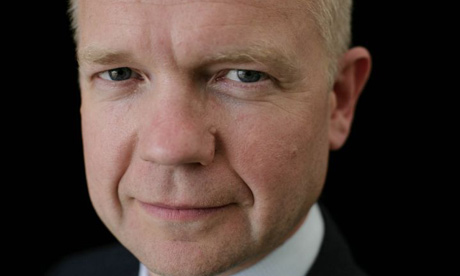
William Hague Photograph: Martin Godwin

Channel 4’s film alleges that William Hague faced threats of a withdrawal of funding from CFI after he described a retaliatory attack by Israel on Lebanon in 2006 as ‘disproportionate’.

Pro-Israeli organisations in Britain look set to see their influence increase if the Conservatives win the next election, a film scrutinising the activities of a powerful but little-known lobby warns today.

At least half of the shadow cabinet are members of the Conservative Friends of Israel (CFI), according to a Dispatches programme being screened on Channel 4. The programme-makers describe the CFI as “beyond doubt the most well- connected and probably the best funded of all Westminster lobbying groups”.

Inside Britain’s Israel Lobby claims that donations to the Conservative party “from all CFI members and their businesses add up to well over £10m over the last eight years”. CFI has disputed the figure and called the film “deeply flawed”.

The programme also describes how David Cameron allegedly accepted a £15,000 donation from Poju Zabludowicz, a Finnish billionaire who chairs Bicom (the Britain Israel Communications and Research Centre). Zabludowizc, the film reveals, has business interests in an illegal West Bank settlement. He also gave £50,000 to Conservative Central Office. Zabludowicz says his contributions “are a matter of public record”.

William Hague allegedly accepted personal donations from CFI board members totalling tens of thousands of pounds after being appointed shadow foreign secretary. More than £30,000 from CFI supporters went to the campaign funds of members of Cameron’s team who were first elected in 2005, the film claims, using publicly available information. The programme-makers say that while this is legal, it is not well-known….

You can see the Channel Four Dispatches film on Britain’s Israel lobby here at Pulse.

News Round Up (25 November 2009)

Special Envoy for Middle East Peace George Mitchell
November 25, 2009

Washington, D.C. MR. MITCHELL: Great. Good afternoon, ladies and gentlemen. Prime Minister Netanyahu has just announced his government’s moratorium on new settlement buildings. I think it’s important to look at this issue in a broader context, particularly how it affects the situation on the ground and how it can contribute to a constructive negotiating process that will ultimately lead to an end to the conflict and to a two-state solution.

It falls short of a full settlement freeze, but it is more than any Israeli Government has done before, and can help move toward agreement between the parties. As President Obama has said many times, we believe that a two-state solution to the conflict is the best way to realize the shared goal of Israelis and Palestinians to live in peace and security. It is also in the national security interest of the United States. It is urgently needed….

… while they fall short of a full freeze, we believe the steps announced by the prime minister are significant and could have substantial impact on the ground.  For the first time ever, an Israeli Government will stop housing approvals and all new construction of housing units and related infrastructure in West Bank settlements.  That’s a positive development.  The Israelis have said that the only exception will be a small number of public buildings, such as schools and synagogues, within existing settlements.  Under the moratorium, those buildings already under construction will be completed.  But the number of buildings under construction will decline since, as each new building is completed, there will not be a new building started.  So implementation of the moratorium could mean much less settlement construction than would occur if there is no moratorium….

there will be much less settlement housing construction activity than there would have been if there were no moratorium.  That’s a fact….

Nothing like this occurred during the Bush Administration.  From 2000 to 2008, there were new housing construction starts on nearly 20,000 new housing units, 9,000 of them between 2004 and 2008.  In the moratorium just announced by the Government of Israel, there will be no new housing construction starts during the 10-month period.  None.  There will be no approval of any housing projects during the 10-month moratorium.  None.  No Israeli Government has ever taken this step, and nothing remotely like this occurred during the Bush Administration….

while this discussion has understandably focused on the Israeli-Palestinian negotiations, when the President addresses his vision of comprehensive peace, he includes, in addition, Israel and Syria, Israel and Lebanon, and the full normalization of relations between Israel and all of its Arab neighbors.  And we’re going to continue to pursue those objectives at the same time with the same vigor….

Obama still has leverage over Israel
By David Gardner // The Financial Times // November 23 2009

The Arabs believe that in 1992-96, at the height of the peace process, Israel got a peace dividend, without ending the occupation. Diplomatic recognition of Israel doubled, from 85 to 161 countries, leading to doubled exports and a six-fold increase in foreign investment, while per capita income in the occupied territories fell by 37 per cent and the number of settlers increased by 50 per cent.

The settlers now number close to half a million Israelis, including those in east Jerusalem. The system of segregated “bypass” roads, some 600 military checkpoints in an area the size of Lincolnshire or Delaware, and the “separation” barrier that cuts deep into the West Bank, foreclose on any practical possibility of a self-governing Palestinian state.

“Defense Minister Ehud Barak on Tuesday warned Lebanon that it, not Hezbollah, would be the target of retaliatory attacks should the militant group escalate tension along Israel’s northern border….” Haaretz

Eastern Syria becoming a new al Qaeda haven
ByBill Roggio, November 24, 2009

US intelligence officials are concerned that Syria is becoming an al Qaeda haven, as the terror group becomes increasingly intertwined with Ba’athist groups operating from Iraq’s neighbor to the west.

Al Qaeda has refocused its efforts to build an infrastructure in eastern Syria after its network in Iraq was decimated by Iraqi and US security forces from 2007 to 2009, and now the organization is partnering with former Ba’athists from Saddam Hussein’s regime.

“A major concern is that eastern Syria will begin to look like northwestern Pakistan,” where al Qaeda has joined forces with the Taliban and directs attacks to destabilize Afghanistan, a senior US military intelligence official told The Long War Journal.

In late 2008, the situation in eastern Syria came to a head when US special operations forces struck at al Qaeda’s facilitation network in the town of Sukkariya near Abu Kamal in eastern Syria, just five miles from the Iraqi border. US troops killed Abu Ghadiya, al Qaeda’s senior facilitator, and his senior staff during the October 2008 raid.

After Ghadiya was killed, al Qaeda sent a senior ideologue from Pakistan to Syria to partner with a dangerous operative who runs the network that funnels foreign fighters, cash, and weapons into western Iraq. Sheikh Issa al Masri is thought to have entered Syria in June 2009, where he paired up with Abu Khalaf, a senior al Qaeda operative who has been instrumental in reviving al Qaeda in Iraq’s network in eastern Syria and directing terror operations in Iraq, a US intelligence official told The Long War Journal.

Sheikh Issa is believed to be based in Damascus and is protected by the Mukhabarat, Syria’s secret intelligence service. The two al Qaeda leaders are thought to be behind some of the most deadly attacks in Iraq, including the deadly bombings in Baghdad in August and October that targeted government ministries and killed more than 230 Iraqis and wounded nearly 1,000 more.

The Iraqi government has implicated both al Qaeda and former Ba’athists as being responsible for these suicide attacks. Just one week after the August bombings, the Iraqi government asked Syria to turn over senior Ba’athists Sattam Farhan and Mohammad Younis al Ahmed, who were accused of ordering the attacks.

Iraqi blackmail!
by Janbulat Shakai in al-Watan, Nov. 25, 2009

On November 25, the state-controlled Al-Watan daily carried the following opinion piece by political editor Janbulat Shakai: “A deputy close to Iraqi Prime Minister Nouri al-Maliki threatened to reconsider the economic and trade relations with Syria if Damascus were to refuse to surrender the Iraqi refugees accused by Baghdad of being behind the violence seen in the country. This coincided with the deployment of additional troops by the Iraqi authorities in the Al-Qa’em border region with Syria, after they said they thwarted an attempt to detonate a booby-trapped truck. The old and renewed Iraqi tune took us back to a policy which the former Iraqi regime under President Saddam Hussein tried to adopt, not only with Syria but also with all its neighboring states, to the point where it placed the country in a big prison after its relations with all the Gulf states, Iran, Turkey and Syria became extremely tense. …

…. “However, we started hearing voices rising in Baghdad and calling for the sanctioning of Syria, while forgetting that Iraq is the occupied country and that its people are the ones being humiliated on a daily basis to the point where around four million of them fled the fake democracy that was imported on tanks, a million and a half of whom are currently living in Syria and sharing the Syrian people’s bread, water and electricity. Do these voices want Syria to close its border with Iraq, recognizing the fact that this border is allowing around 2,000 Iraqis to go back and forth every day and that it has become one of the greatest passageways for Iraq and its people wishing to elude the security tragedies seen in their country?

“What would these political blocs do if they were to wake up one day and hear that Syria decided to send back one and a half million Iraqis [living on its territories]? Certainly, Damascus does not think the same way as the small politicians in Baghdad, but the latter should calculate their words very carefully before threatening with something they do not possess… However, if this Iraqi tune is upheld, I call on the Syrian government to seriously consider the closing of the border with Iraq, since as the saying goes: “The door from which the wind blows, close it and rest once and for all.” –

Read more: http://www.longwarjournal.org/archives/2009/11/eastern_syria_becomi.php#ixzz0XsqZIk8a

Hamas leaders in Syria for ’24 critical hours’
Ynet, 11.25.09

Movement sources say organization’s leaders at odds over impending prisoner swap deal: Some believe Hamas should insist on every name on list, while others are more pragmatic. Arab media report of four names of arch-terrorists delaying deal

The next 24 hours will be critical in terms of the prisoner exchange deal with Israel, senior Hamas sources told Arab media on Wednesday morning. The organization’s leaders, who left Cairo on Tuesday evening, are meeting in the offices of Hamas’ political bureau in Damascus to decide whether to accept Jerusalem’s latest offer.

According to one of the sources, who spoke to London-based Arabic-language al-Hayat newspaper, the organization’s leaders – including those who arrived from Gaza – are at odds over the issue. Some believe Hamas should insist on releasing every single prisoner on the list handed over to Israel, while others hold a more pragmatic approach and understand that not everything can be achieved in the negotiations.

According to another newspaper, al-Sharq al-Awsat, the deal is being delayed over four names of arch-terrorists, led by Ibrahim Hamed, who was arrested in 2006 for his involvement in deadly terror attacks. Israel, according to some of the reports, is only willing to release him if he is deported outside the Palestinian territories.

The three other prisoners delaying the deal, according to the report, are Abdullah Barghouti, Abbas al-Seid, and Ahmed Saadat.

Lebanon cabinet deal signals Syrian return

New Lebanese cabinet meets (10 November 2009)
The formation of Lebanon’s unity government took more than four months

By Natalia Antelava
BBC News, Beirut

A new joke has been making the rounds in political circles of Beirut: “The birth of Lebanon’s new government was so long and painful that in the end, a Caesarean had to be performed.”

But it is the punchline that makes some politicians here cringe: “The obstetrician was Syria,” it says.

“We are back to the Syrian hegemony,” said one pro-Western politician who did not want to be identified.

“Officially, I am supposed to tell you that this is a fresh start, a new era; that this government will work towards the national unity. But, believe me, everyone is very depressed,” he added.

In this case “everyone” refers to the allies of Lebanon’s new Prime Minister, Saad Hariri, who is backed by the US and Saudi Arabia….

But as Lebanon heads towards more uncertainty, one thing is clear – while Washington’s allies may have won the election, many of them say they have lost a much bigger battle.

Clinton’s life jacket
by Sami Moubayed
Nov 24, 2009 – Gulf News

Last week, US Secretary of State Hillary Clinton raised eyebrows in Lebanon when she differentiated between a military branch and a political one in Hizbullah. Clinton’s statement on the Charlie Rose Show came only 24-hours after Saad al-Harriri had created a cabinet of national unity, which includes two members of Hizbullah.
Clinton seemingly extended a thin blanket for Harriri to cover himself with—a life jacket—implying that the while the political branch of Hizbullah, represented in the cabinet, was fine, the “military wing” that engages in war, is frowned upon by the US.

Not since the US placed Hizbullah on its “terrorist list” in 1999 has such a groundbreaking statement been made by a senior US official….

Lebanon Is Still an Occupied Country
by Elias Youssef Bejjani, 25 Nov 2009, IAN

Israeli Defense Minister Ehud Barak on Tuesday 24/11/09 warned that Lebanon , not Hezbollah, would be the target of retaliatory attacks should the militant group escalate tension along Israel’s northern border. “Lebanon grants Hezbollah permission to operate on its soil,” said Barak. “We must clarify for the international community that we do not accept that a militia like Hezbollah exists in Lebanon, a sovereign country, and even sits in its parliament.” Barak added that it holds Lebanon responsible for any conflict with Hezbollah. “Hezbollah is not our target,” in such a case, said Barak. “Our target will be the state of Lebanon.”

Keeping the Golan won’t protect Israel from Syria
By Reuven Pedatzur in Haaretz

Jordan’s King Abdullah dissolves parliament

King Abdullah

King Abdullah’s decree called for early elections, but did not name a date

Jordan’s King Abdullah has dissolved the country’s parliament halfway through its four-year term and called for early elections, state TV has said.

No reason was given in the royal edict, but the lower house had been accused of handling legislation ineptly.

Critics say that, since being elected in 2007, MPs have failed to address key issues like unemployment and poverty.

But opposition MPs said the government had dissolved parliament so it could pass legislation under emergency laws.

The Chamber of Deputies has the power to dismiss prime ministers and cabinets appointed by the king, and can veto government bills.

The cabinet recently failed to get approval for changes to the election law that would have further reduced the influence in parliament of the opposition Islamist group, the Muslim Brotherhood.

Unknown date

“Clearly the government wants things its own way,” Hamza Mansour, whose Islamic Action Front is the political arm of the Brotherhood and holds six seats in parliament, told the Associated Press.

Jordanian parliament (2007)

Constitutionally, the new chamber must convene within four months

In the last election in November 2007, the Islamic Action Front saw its number of seats in parliament fall from 17 to 6 as a result of the current election law, which reduced the representation of urban areas – traditional Islamist strongholds – in favour of rural areas, which subsequently elected independents loyal to the king.

In many tribal areas, each MP represents only 2,000-3,000 voters, compared with more than 90,000 voters per MP in the capital, Amman.

The royal decree, issued on Monday evening, told the government to organise early parliamentary elections, but did not name a date.

According to the constitution, the new chamber must convene within four months. However, MPs say the king could delay elections.

This was the second time King Abdullah has dissolved parliament since he acceded to the throne in 1999.

Syria and Iraq and Lebanon and ….

 	 Eric Schwartz (center), US Assistant Secretary of State for the Bureau of Population, Refugees, and Migration, talks to schoolgirls during his visit at a United Nations Relief and Works Agency (UNRWA) girls school at a Palestinian refugee camp in Zarqa near Amman, on Monday. Ali Jarekji/Reuters

Eric Schwartz (center), US Assistant Secretary of State for the Bureau of Population, Refugees, and Migration, talks to schoolgirls during his visit at a United Nations Relief and Works Agency (UNRWA) girls' school at a Palestinian refugee camp in Zarqa near Amman, on Monday. Ali Jarekji/Reuters

I am off to Middle East Studies Association meeting in Boston for 5 days. I hope Alex and Ehsani will entertain you all.

Nicholas Noe believes Hizbullah is looking for a fight with Israel, which will come soonish. He writes: “The overwhelming sentiment within the party [Hizbullah] seems to be that a confrontation is not only inevitable, but that when it comes it will finally lead to the total collapse of Israel. This means, above all else, that the relative quiet of the past few years has not brought restored Israeli deterrence, but instead the deferment of a conflict that Hizballah feels vastly more secure in waging.”

It is hard to believe Hizbullah is really as confident as they make out. Certainly, “the resistance,” and that includes Hamas and Syria, must do something. The ball is in their court. Israel has won, at least it would seem that way for the time being. What do I mean by won? The Gaza solution. Israel has defied Obama, who claims that only the two-state solution is viable. It has presented an alternative solution, the Gaza solution. By bombing Hizbullah hard and bombing Hamas hard Israel has mapped out a policy. It seems to be working. No Western power complained when Israel smashed Gaza, nor have they complained since. No Hizbullah attack in over 3 years and quite on the Gaza front as the population languishes in its tents – that is success of the starkest kind. If the “resistance” does not respond within the year, there will be precious few remaining Israelis – or Westerner politicians for that matter – who will  argue that concessions need to be made for peace. Hizbullah may talk a confident game, but the Israelis have promised that Lebanon will be Gaza’ed if Hizbullah strikes. I believe them.

BBC: Iraq-Syria border tensions
2009-11-18

Relations between Iraq and Syria have worsened sharply in recent weeks. Iraqi officials led by Prime Minister Nouri al-Maliki, blame Damascus for a recent series of huge bomb explosions in Baghdad, accusing it of harbouring hostile elements and …

Al Qaeda in Iraq becoming less foreign-U.S. general

“Al Qaeda in Iraq has transformed significantly in the last two years. What once was dominated by foreign individuals has now become more and more dominated by Iraqi citizens,” Odierno told reporters at the U.S. military’s main base in Baghdad.

“There’s still a small foreign element to al Qaeda, there are some who used to be Sunni rejectionists or ex-Baathists who are involved in this because of course they don’t want the government to succeed.”

Overall violence in Iraq has fallen sharply in the past 18 months and November so far has experienced one of the lowest civilian casualty levels since the 2003 U.S. invasion.

But attacks by suspected Sunni Islamist insurgents like al Qaeda remain common.

The twin suicide bombings in Baghdad on Oct. 25 devastated the Justice Ministry and the Baghdad governorate headquarters, while two similar suicide bombings on Aug. 19 killed almost 100 people at the foreign and finance ministries.

“We believe that there will be attempts to conduct more attacks between now and the elections because they want to destabilise those,” Odierno said.

The election is expected to occur between Jan. 18-23 but the date has been cast into doubt after Vice President Tareq al-Hashemi vetoed a law needed for the ballot to take place.

Odierno said multiple investigations had been launched into the Oct. 25 bombings, involving U.S. and Iraqi investigators.

“My experience is there probably was some movement of fighters or explosives coming from Syria,” he said when asked if the investigations had indicated any links to Syria.

Iraq refugees face dwindling UN funds, creating concerns of unrest
The UN has had trouble securing international funds to support as many as 2 million Iraq refugees throughout the Middle East who are barred from working in their host countries.
By Julien Barnes-Dacey | Correspondent of The Christian Science Monitor
November 19, 2009

Damascus, Syria – More than six years after the invasion of Iraq, up to 2 million refugees remain stranded in neighboring countries and fears are rising that international support for them is fading, threatening more long-term regional unrest.

This week Eric Schwartz, the Assistant US Secretary of State for Population, Refugees and Migration, made his first regional tour since assuming his position in July and offered a grim assessment while in Damascus.

“This is a critical moment,” said Mr. Schwartz in an interview Wednesday. “I am extremely concerned at the inadequate response to the appeals of the UN to support humanitarian assistance to Iraqis.”

For 2010 the United Nations Refugee Agency (UNHCR) in Syria, where up to 1 million Iraqi refugees reside, requested an operational budget of $166 million. The agency only secured $55 million in international donations, down from $83 million in 2009. The story is similar elsewhere in the region.

Nearly all support for the refugees is channeled through UNHCR and observers worry that dwindling aid could provoke greater social and economic problems, extremism, and violence among the refugee community.

“The international community wants to believe that things are getting better in Iraq and so it’s going to pay less attention to refugees outside the country,” said one Western diplomat in Syria speaking on condition of anonymity.

Even as talk about the return of stability to Iraq reverberates internationally, more than 1,000 new refugees continue to register with the UNHCR region-wide every month, roughly matching the number of refugees who return to Iraq or are resettled in third countries. And with Iraqi national elections scheduled for January the potential for renewed instability could provoke a fresh surge…..

Be sure to read Qifa Nabki on Lebanon’s Palestinian Refugees, and on Hizbullah and other important Lebanon things.

Kuzbari – one of Syria’s most accomplished businessmen, executive with Sham Holding,who has lived in Austria and is often referred to as the “Paper King” – he recently took over a government run paper factory in Deir ez-Zor – has an interesting interview in al-Iqtisad. He argues that businessmen should be at the heart of the government and in the economic ministries. He also explains that the Syrian government does not want to privatize, but adds, “I have my own feelings.” Read the interview in Arabic.

Government Salaries to Go Up
Syria News

Minister of Finance Hussein says that he will raise government salaries as soon as the funds are available. Ehsani writes, “there is no way they can afford it…this is just lip service.. the deficit seems to be about 8% of gdp…subsidies are responsible for over 60% of that.”

Finanance Minister wants to Force Companies to List on Stock Exchange
Syria Steps.

Sarkozy’s Middle East Summit Plan
Wed, 18 November 2009
Randa Takieddine

This summit, which could give Sarkozy international and domestic momentum, is doomed to fail as long as the US administration does not pressure Netanyahu effectively to change his policy toward the Palestinians and move truly toward a peace negotiation track. The French president hopes to mobilize leaders around his plan, and he is aware that the US role is essential here. However, why would Obama give him this gift, while he is in need of the same success on this difficult track, which he has promised to solve? In fact, the French president believes that the White House erred in its policy of specifying for the Israelis a halt to settlements as a condition for returning to negotiations.

France believes that all issues should be put on the table and negotiated, namely halting settlements, Jerusalem, borders, etc. However, Sarkozy’s summit plan might be an unachievable dream because the Israeli prime minister is maneuvering and does not want any Palestinian state or any concessions, or any peace. Only the US president can exercise true pressure….

As for the Syrian-Israeli track, it was Sarkozy’s desire to receive, from his new Syrian friend, a certain role on a negotiation track that has been halted since the Gaza War, and the deterioration in Israeli-Turkish relations. The Israeli prime minister is maneuvering on this front as well, leaking information about an Israeli message via France to al-Assad, and that Netanyahu prefers Sarkozy as a mediator, to the Turks. The Syrian president, meanwhile, has openly affirmed that he is determined to retain the Turkish mediator and that the only request he has made to his friend Sarkozy is to pressure Israel to accept the Turkish mediator and resume negotiations.

The Syrian president’s visit to France was successful and important for the Syrian president, who received a “loftier” reception than usual in traditional working visits. He was able to conduct unprecedented level of public relations in the French capital. Al-Assad was not stingy when it came to media interviews and television appearances. Meetings were held for him with the leading French intellectuals and media figures, who saw the president’s attractiveness, modernity and skill in dealing with the media, in contrast to the Syrian embassy in France, which has been the subject of criticism. However, the visit did not give anything to Sarkozy, whether on the Syrian-Israeli track, or the alliance with Iran (al-Assad criticized European dealing with Iran on this nuclear issue), or the French-Iranian girl being held in Tehran, Clothilde Reiss. The Syrian president recommended to French officials that if they wanted to solve this issue, they should take the legal track and send lawyers and legal experts for her trial in Iran, or the political track, and solve it by paying a political price on the nuclear issue, and take Iranian proposals into consideration. Sarkozy’s warnings about an Israeli military strike against Iran and his fear that a fire could ignite in the region have not caused a change in the Syrian position. As for Lebanon, the Syrian president observed that disputes inside Lebanon were due to the Lebanese themselves, and that Syria had nothing to do with Lebanese disputes. He also said that Lebanon’s stability and prosperity were in Syria’s interest. The French agreed with him about an improvement in conditions in Lebanon and there was no additional French demand on this issue, which tooks up only a short period of the discussions….

Israel no longer trusts Turkey, Erdogan says
18 November 2009, Reuters

* Israel does not want Turkey to mediate with Syria, PM says
* Syria not likely to join French-mediated talks, he says

ISTANBUL, Nov 18 (Reuters) – Israel no longer trusts Turkey to mediate peace talks with Syria, Turkish Prime Minister Tayyip Erdogan said on Wednesday, signalling how much relations have deteriorated between the regional allies in recent months.

Erdogan singled out Prime Minister Benjamin Netanyahu for failing to trust Ankara, unlike his predecessor Ehud Olmert, and also said he did not think Syrian President Bashar al-Assad would accept a French role in mediating with Israel.

Turkey, NATO’s only Muslim member, last year facilitated contacts that focused on Syrian demands for a full withdrawal from the Golan Heights — which Israel captured in 1967 and annexed — and Israel’s accusations that Damascus arms militants in Lebanon and the Gaza Strip.

They only aired about half of it and cut out some of the juicy parts where it gets heated (like when he defends quoting that diplomat on the Alawites and I attack him on that front). I tried to avoid at first the whole “state where people look over their shoulder”, but he pressed me on the issue and so I responded. It starts on the 43rd minute so just drag the button till you get there

Syria has easy answers, but ducks the hard questions
Emile Hokayem, political editor
November 18, 2009

A beaming Bashar al Assad visited the Elysee Palace in Paris last week to crown a series of foreign policy coups that are returning a once-shunned Syria to the international fold.

The French president Nicolas Sarkozy, who hopes to carve himself a role as a major regional player by facilitating Syria’s reintegration, is not the only one to have been bamboozled by the Syrian president (although so far Mr Sarkozy has done better at breaking taboos than obtaining tangible concessions from his new partner).

Mr Assad’s allies in Lebanon managed to strong-arm the prime minister-elect, Saad Hariri, into giving them the government share and portfolios they demanded, despite losing the election in June. Of course, they could not have done so without using weapons transported through Syria to intimidate and paralyse political activity.

Kiss the Independence Intifada goodbye
Michael Young in Daily Star

“The death of the Independence Intifada of 2005 has been prematurely announced many times. However, today we have in front of us a genuine corpse, the end of the fleeting aspiration four years ago, at least in its more restricted form, of establishing a system emancipated from Syria. The Syrians, who left Lebanon through the window after Rafik Hariri’s assassination only to re-enter by the front door in recent months, have done so thanks to an understanding with Saudi Arabia. There are differences between what we have today and the Syrian-Saudi condominium after Taif, above all that the Syrian Army is no longer deployed in Lebanon. The latest contract is more equitable and is complicated by the fact that Iran has a powerful stake in the system through Hizbullah. However, it is familiar in leaving Lebanon with little discernible sovereignty, in large part courtesy of Lebanese divisions.

It’s no secret that the Saudis put considerable pressure on the prime minister-elect, Saad Hariri, to come to an arrangement over the new government with the opposition, one reason why he was forced to spend much time negotiating with Michel Aoun, to the irritation of his Christian partners. The Syrians, too, kept their end of the bargain, apparently with Turkish prodding, by bringing Aoun into line. After five months, the Hariri government was made in Lebanon only in the narrowest of ways.

This represents a fundamental shift from what Lebanon had between 2005 and 2009. From 2004 on, the country was placed under an effective, if highly imperfect, form of international trusteeship, ….began with Resolution 1559,…….
That international scaffolding has been substantially eroded in recent years, by action or omission. Resolution 1559 has been implemented only in the sense that Syrian soldiers have left Lebanon. However, Syrian meddling in Lebanese affairs has been unrelenting, and in late 2007 France significantly undermined the letter of the resolution, which it had co-sponsored, by actively bringing Damascus into the Lebanese presidential election. As for the disarmament of Hizbullah or pro-Syrian Palestinian groups, nothing has happened, and the Cabinet is preparing to find a consensual rhetorical formula in its statement to evade the question. The initial optimism surrounding the Hariri investigation has, similarly, worn off…..

The Wisdom Of AdMob’s Founder Omar Hamoui
Venture Capital Dispatch, November 9, 2009. WSJ Blog

By Scott Austin
Google Inc.’s announcement that it will buy AdMob Inc. for $750 million brought a media spotlight on Accel Partners, an investor in both AdMob and Playfish Inc., which said today it will sell to Electronic Arts Inc. for at least $275 million. Several blogs, including this one, hailed Accel Partners for its impressive and quick investment returns at a time when deals like these are hard to come by.

But AdMob’s founder and CEO, Omar Hamoui, really deserves the attention for building a company that in three years became the largest player of mobile Web ads and ultimately, a coveted jewel for the largest Internet company. [Hamoui was born in LA of Syrian parents.]

Reuters: Obama Talks of More Sanctions on Iran

“Western powers are gearing up for talks on a fourth round of U.N. sanctions against Tehran over its nuclear program but will not target Iran’s energy sector to ensure Russia’s and China’s support…… the scaling back of the West’s expectations for new U.N. steps against Iran for defying Security Council demands to stop enriching uranium shows that the Europeans and Americans have accepted that Moscow and Beijing, with their close trade ties to Tehran, will not let Iran’s economy be crippled.

Diplomats said the Western powers are eager to ratchet up the pressure on the Islamic Republic. But they also need to keep Moscow and Beijing on board to send a clear signal to Tehran that the world’s big powers are united against it…..

Just a few months ago U.S. Secretary of State Hillary Clinton, Israeli Prime Minister Benjamin Netanyahu and other leaders warned Iran that it could face “crippling sanctions” if it continued to reject U.N. demands about its nuclear program….

A senior Western diplomat said the Western powers had other options independent of the United Nations. Those options would not be symbolic, he said.
He said that if European governments were to forbid Iranian banks from engaging in any transactions in euros, it would have “quite serious consequences” for Iran. Such a measure is both feasible and possible if the “political will” exists in Europe, he added.

Other diplomats said the West could prevent Iran from getting hold of the lucrative technology to produce liquefied natural gas (LNG). Tehran has been eager to acquire LNG technology for some time but has been unable to get top industry players to close deals with it….”

Syria Stalls on Signing Trade Deal With EU
By JULIEN BARNES-DACEY

DAMASCUS — After years of pursuing a free-trade pact with the European Union, Syria is now balking at signing a deal as local businesses express worry about competition from European goods.

The European bloc is already Syria’s biggest trade partner. Such an agreement would reduce tariffs and spur the inflow of sought-after European goods. It would also be another symbolic sign of Syria’s recent diplomatic rehabilitation.

Syrian President Bashar Assad, touring a natural gas plant Wednesday, has pushed through economic liberalization.
The EU-Syria trade deal was first raised in 2004. A deal stalled in recent years after a political falling-out between Syria and European capitals. Amid accusations by Washington of Syrian complicity in allowing insurgents into Iraq, and allegations that Damascus may have had a hand in the 2005 assassination of former Lebanese Prime Minister Rafik Hariri, momentum stalled.

But the prospects for a deal picked up again earlier this year, when the EU in October invited Syria to sign a so-called Association Agreement with the bloc. The agreement promises closer political and economic cooperation.

Instead of embracing the invitation, however, Syria balked, perplexing European diplomats who had thought Damascus was still eager for a deal. Syrian officials here now say they need more time to study the ramifications on their economy, which is already undergoing significant reforms.

Recent trade liberation with other countries has been welcomed by consumers here. But it has hurt local industry. Some manufacturers have complained they can’t compete with better-quality goods that are now flowing in from other Arab countries, China and Turkey.

“We are taking our time to see the impact on our agriculture, our industry, and when we have finished the study we will inform the Europeans,” Syrian Deputy Prime Minister Abdullah Dardari said in a recent interview.

Syrian businessmen are lobbying hard against the partnership, saying that new competition with European goods could have devastating effects on local industry. At the Badr Chocolates factory, located in the southern suburbs of Damascus, the challenges facing businesses here are clear.

Aging machines sputter, cranking out chocolates that would have a hard time competing with European alternatives. European products are already easy to come by here. They are made expensive, however, by import duties that the EU deal would remove.

“It’s as if I have a 1945 model car, and you’re asking me to compete with a 2010 model,” said Adnan Dakhakhni, Badr’s owner and a Syrian member of parliament. He warns he would have to lay off as many as half of his 60 employees if the EU deal goes through.

Syrian industrialists are already reeling as a result of the country’s 2007 free-trade agreement with Turkey. Scores of firms have been forced shut, fanning a public backlash against economic liberalization enacted by the authoritarian regime of President Bashar Assad.

Mr. Dardari, the deputy prime minister, says the government is still committed to its economic reform.

“Definitely many industrialists in Syria should be concerned,” he said. “But they are also aware of our policy, which is no more protection. Competition is healthy, and it’s good ultimately for the economy.”

Commentary: Piece of cake?
By ARNAUD DE BORCHGRAVE

WASHINGTON, Nov. 19 (UPI) — “It will be just like Syria,” said the strategic scholar just back from Israel and speculating about the much-debated question of whether Israel will eventually bomb Iran’s nuclear installations.

It was a private conversation, and the erudite Middle Eastern expert was referring to Israel’s Sept. 6, 2007, bombing of a suspected nuclear site in Syria that had been secretly erected in a remote part of the country with the help of North Korean experts. The Israeli air force “can drop their guided missiles down a smokestack, and their submarine-launched cruise missiles can single out any building, and the Iranians, like the Syrians, will keep quiet about it.”

And why would Iran’s leaders keep quiet instead of issuing a general call to arms to all Muslims? Because, he reasoned, President Mahmoud Ahmadinejad has bragged publicly that Iran’s anti-aircraft defenses are “impenetrable.” Unmentioned is the distinct possibility that Ahmadinejad and some ayatollahs would welcome Israeli bombs as a way of uniting both Shiite and Sunni wings of the global ummah against Israel and the United States.

For an armchair strategist to be that far removed from reality is a little frightening. Syria’s nuclear site was located in a deserted part of the country near the Turkish border. Iran’s targets are deliberately implanted among heavily populated areas. A single bomb, however accurate, would translate into pictures and TV footage of dead women and children — and worldwide condemnation.

The U.S. brass is unanimously opposed to any Israeli and/or U.S. attack against any of Iran’s 27 known nuclear installations. Joint Chiefs Chairman Mike Mullen and the four service chiefs can see the Strait of Hormuz — through which 25 percent of the world’s oil transits — mined and supertankers sunk, and vital oil installations up and down the Persian Gulf swept up in the maelstrom.

France Champions Syria While US Says Differences with Damascus are “Profound”

France's President Nicolas Sarkozy (L) greets Syria's President Bashar Al-Assad at the Elysee Palace in Paris November 13, 2009.
France’s President Nicolas Sarkozy greets Syria’s President Bashar Al-Assad at the Elysee Palace in Paris November 13, 2009.

[Landis analysis] France is getting ahead of the US and Israel in championing Syria and possible peace with Israel. Feltman says US differences with Syria are “profound.” This is the same language I have heard from the Syrians. They love the new demeanor of the Obama diplomats but doubt the “structural problems” between the US and Syria can be overcome. Why? It’s Israel stupid. Syrian support for Hizbullah and Hamas make it a terror loving state in the eyes of America. Syria, naturally, views its support for resistance to occupation as a fundamental right supported by international law.

The number of conservative journalists who have taken the time out of their day to pen attacks on Syria has gone way down in general since the Obama administration started to improve relations with Syria. In the last week or so, however, a small but perceptible spike in articles employing anti-Syrian trash talking seems to have taken place. Lee Smith, Michael Totten, David Shenker and Barry Rubin have put their shoulders to the wheel this week. God bless them. The explanation? Possibly the right is worried that the US will make some sort of demarche toward the Syrians now that the Palestinian track is dead. Washington could heat up the Syrian track or at the very least give a push to Sarkozy’s diplomacy. This seems to be what Sarkozy and Assad are hoping for. Netanyahu has headed it off at the pass by blowing his “no preconditions” love kisses. In Syria’s lexicon, “No preconditions” means, “We aren’t giving you back any land.” Assad is not biting; he wants the Golan — all of it.  I don’t think the conservatives have much to worry about. Netanyahu has outflanked Obama at every turn.

All the same, Syria has gotten more or less what it needs from the US, which is a pass on the sanctions front. Syria does not need the US to lift its sanctions, which congress will not do so long as Syria objects to Israel occupying its land. It just needs the US to stop intimidating international companies and foreign banks from investing in Syria. The one major ticket item that US sanctions does impede the sale of is airplanes, but Europe seems to be reevaluating its refusal to sell Airbuses to Syria, despite their having 10% US content. The world is big enough in the Twenty First Century so that if the US wants to lock itself out of Syria, Damascus can afford to turn the other cheek. Many countries are making this calculation as US influence in the region declines. This is why US efforts to sanction Iran will not work. Turkey, India, Russia, China and Brazil are beginning to discount Washington’s ability or willingness to punish them over sanctions. America is still big enough and powerful enough that they say “yes” — but in most cases, they mean “no.”

US policy in the Middle East remains linked to Israel by golden handcuffs. Israel’s enemies are accepted as America’s enemies. This prevents the US from recalibrating its relations in the region. It is no longer preventing other Middle Eastern countries and emerging world powers from recalibrating their relations to countries like Syria and Iran. The result of Washington’s inability to ween itself from its constricting and destructive relationship with Israel, will be that the US increasingly isolates itself. More and more friends will defect from its interpretation of “security” in the region. Both Saudi Arabia and Egypt are complaining that they are becoming irrelevant. Turkey and Brazil announced warm relations with Iran in an effort to inoculate themselves from an impending US-Iranian crisis. India and China have already done so. They cannot afford to have their energy prices increased by further sanctions on Iran. The US is boxing itself in.

Feltman Says Differences with Syria are Profound Naharnet

U.S. Deputy Assistant Secretary of State for Near Eastern Affairs Jeffrey Feltman said Washington was eager to cooperate with the Hariri Cabinet, but warned that arms export from Iran to Hizbullah “puts Lebanon at great risk.”

“The United States is looking forward to cooperating with the new Lebanon government in a spirit of partnership in various fields after it obtains confidence,” Feltman said in an interview published Sunday by the daily An-Nahar.

His remarks were translated into English by Naharnet.

Feltman said he congratulated Prime Minister Saad Hariri on his new post and denied accusations by some Lebanese political leaders who charges that the U.S. administration had intervened in the government formation process.

He accused Iran of continuing to export arms to Hizbullah and hoped that the Lebanese government would realize the “risk” of Israeli attacks in response to firing of rockets from Lebanon into the Jewish state.

Feltman said delay in the appointment of a new U.S. ambassador to Damascus was due to “political and bureaucratic reasons.”

While acknowledging that a visit to Washington by Syrian Foreign Minister Faisal Miqdad was “positive and constructive,” he described the differences between the U.S. and Syria as “profound.”

Feltman said peace efforts have so far not led to find the “key to open the door to negotiations in order to reach constructive talks between Syria and Israel.”

“But we are committed to achieve peace,” he said, adding that there was a “high degree of cooperation” between the U.S. and France on peace in the Middle East.

Damascus Revels in Its New Allure to Investors
Syria, a Former Pariah State Whose Isolation Sheltered It in the Economic Crisis, Sees New Gains in a Western Embrace
CHIP CUMMINS, NOVEMBER 17, 2009, WSJ

DAMASCUS, Syria — From the corridors of Syria’s stately central bank to the capital’s winding, barrel-vaulted souk in the heart of the Old City, it is hard to remember that 18 months ago Syria was a diplomatic and economic pariah state.

Growth is expected to come in this year at a respectable 3%, despite a big knock from the global financial crisis. European tourists spill out of recently renovated boutique hotels in the capital’s Old City. American accents boom across the dining room of the Four Seasons. In the tony Maliki neighborhood nearby, tourists, foreign businessmen and fashionably dressed Damascenes sip $4 lattes at one of several bustling cafes.

Central-bank chief Adib Mayaleh is practically giddy about Syria’s new allure to foreign investors. Amid warming ties between the West and Syria, executives from two French banks recently dropped by his office to talk about opening branches here. The same French bankers “previously said they would have nothing to do with me,” he says, gloating.

“We see more and more banks coming here to investigate the market,” Mr. Mayaleh says. “Syria is virgin territory to explore.”

In fact, Syria’s still-isolated economy protected it from the worst of the global financial crisis. Banks here haven’t been hit by defaults. Tourism receipts dipped but are recovering again. A recent private-sector-led investment boom in real estate shows no signs of the bust felt in other regional markets like Dubai.

Earlier this year, real-estate adviser Cushman & Wakefield listed Damascus office space as the eighth most expensive in the world. That is behind Paris and two spots ahead of midtown Manhattan.

“The only Syrians that can buy houses are those that can sell one first,” says real-estate agent Ayman al-Saman, from his closet-size agency in the center of town. Residential real-estate prices have tripled since 2004, he says.

On top of all that, the West’s recent embrace of Syrian President Bashar Assad is translating into a booster shot of economic optimism.

Bassel Hamwi, deputy chairman of Bank Audi Syria, one of the largest private banks in the country, said the barrage of U.S. sanctions the Bush administration slapped on Syria starting in 2004 never was a real barrier to economic growth. But warming ties with the world’s largest economy can’t help but make a difference. “Syria used to be a ‘frontier’ market,” the Texas- and Harvard-educated banker says. “As of 2009, I personally consider this an emerging market.”

It has been a long road, with plenty of obstacles still ahead. When Mr. Assad took over here after his father’s death in 2000, he kept tight control of the state, suppressing dissent. But he also ushered in economic overhauls. Lower import tariffs allowed foreign goods from China and Europe to flow in. In 2003, banking reform opened the door to a handful of private lenders. The overhauls brought with them galloping inflation, but everyday Syrians embraced the new consumer culture.

“We have lots of industry in Syria that produces everything we need, but people prefer things from abroad,” says 27-year-old shopkeeper Manhal Moujarid, in a packed appliance store full of Chinese-made heaters, tucked into the mountainside souk of Damascus’s poorer Muhajireen neighborhood.

Shortly after the U.S.-led invasion in Iraq, Washington accused Mr. Assad of allowing fighters across the border to battle Americans, and in 2004 imposed sanctions. In 2005, the U.S. held Syria accountable for the assassination of former Lebanese Prime Minister Rafik Hariri and pulled its ambassador. (Syria denies both allegations.)

The sanctions didn’t directly affect much business here since American companies weren’t that active anyway. But U.S. Treasury officials suggested European firms risked being frozen out of the U.S. banking system if they didn’t play ball.

“Foreign banks were intimidated by the American sanctions,” says Mr. Mayaleh, the central banker.

Then, in what could be one of the most significant diplomatic rehabilitation acts in recent memory, Mr. Assad turned the tables. Last year, he agreed to indirect peace talks with Israel. He also helped to broker a deal between warring Lebanese politicians. Earlier this year, U.S. commanders traveled to Damascus to discuss Syria-Iraqi border security cooperation.

French President Nicolas Sarkozy invited Mr. Assad to Paris in the summer of 2008 and flew to Damascus later that year. Mr. Assad traveled to France again on Friday.

President Barack Obama made outreach to Syria a plank of his campaign. This summer, he promised to reinstate an ambassador and ease some economic restrictions. Washington has stopped short of offering to lift sanctions outright. And there has been little recent movement on naming an ambassador, triggering grumbling among Syrian officials.

Still, the thaw has boosted confidence here, as shown by the sudden rush of Western bankers calling on Syrian officials. In an interview in his marble and wood office, Abdullah Dardari, Syria’s deputy prime minister for economic affairs, gestures to two business cards left on his coffee table by executives representing big U.S. financial firms.

“Finally,” he says, “we put Syria on the map for foreign investors.”

Israel, Syria, Turkey and France
Judah Grunstein | Bio | 16 Nov 2009

“… Sarkozy has been criticized for shifting the traditional French pro-Palestinian alignment towards a more Israel-friendly approach. But all of his moves since taking office, including the engagement with Assad, suggests he has put his eggs in the Syria basket. The two-state solution… is by now both universally accepted and close to dead. In any event, the negotiations no longer benefit from France’s support for the Palestinians, and France no longer has much to gain from investing too much in it. Syria, on the other hand, is a doable deal, and France’s contacts in all the major areas in play make Paris a good fit to help the process along.”]

Sarkozy tried in vain to replace Turkey as peacemaker
Zaman

It has emerged that French President Nicolas Sarkozy had planned to bring together the leaders of Israel and Syria in Paris in an attempt to revive a peace process between the two countries which collapsed early this year, but his efforts failed when Syrian President Bashar Assad, who insists on Turkish mediation to return to peace talks with Israel, opposed the idea.

The Syrian president was in Paris on Friday, two days after Israeli Prime Minister Benjamin Netanyahu visited the city and said he was ready to meet the Syrian president anywhere, at any time, without pre-established conditions, to re-launch talks over the Israeli-Syrian dimension of the broader Mideast peace process.

Sarkozy, who apparently wanted to steal the show in the Middle East process, tried to arrange the two leaders’ visits to Paris at the same time. This way, even if he could not succeed in gathering Assad and Netanyahu together, he would be able to introduce their simultaneous presence in Paris as “France’s great role in peace efforts.” However, Assad said he would not land in Paris until Netanyahu’s plane departed the city, spoiling Sarkozy’s plans.

Moreover, following talks with Sarkozy, Assad highlighted on Friday the importance he attaches to Turkey’s role in any new negotiation process with Israel — an emphasis which pleased Ankara. “If Mr. Netanyahu is serious, he can send his teams of experts, we will send our teams of experts to Turkey. They can then talk, if they are really interested in peace,” Assad said following talks with the French leader. In an interview broadcast on Friday evening, Assad said France “should support the role of the Turkish mediator and persuade Israel to return to the negotiating table with the Turkish mediator,”

Netanyahu, meanwhile, said on Sunday Turkey would not be an “honest broker” in any renewed peace talks with Syria. He said he preferred direct talks, but “if a mediator is involved, he should be impartial. The Turkish prime minister has not reinforced his image as an objective, unbiased mediator,” he was quoted as saying…”

The Leveretts at RFI

“The Obama Administration remains attached to a delusional sanctions policy.”….

Moscow may well end up supporting another Security Council resolution expanding the existing sanctions regime against Iran—giving just enough to keep the United States from taking the issue out of the Council and forging a “coalition of the willing” or of the “like-minded”. Beyond its interest in keeping the Iranian nuclear file in the Security Council, Moscow is not happy with Tehran’s ambivalent reaction to a proposal that Russia helped to develop and advance, to refuel the Tehran Research Reactor using a significant portion of Iran’s current stockpile of low-enriched uranium. Conversations with Russian officials suggest that Moscow may also be looking for ways to show displeasure with alleged Iranian slowness in making payments for various weapons purchases and (perhaps) on the Bushehr nuclear reactor project.

Furthermore, while Russia does not want to see a military confrontation between the United States (or Israel) and Iran, Moscow also does not want to see an overly rapid rapprochement between the United States (or Europe) and Iran. Among other considerations, Russian policymakers and the leadership of Gazprom are keen to prevent head-to-head competition between Russian and Iranian gas, especially in Europe.

These considerations notwithstanding, it remains highly unlikely that Russia will support proposals from the United States and its European partners to go beyond exclusively proliferation-focused sanctions and target key sectors of Iran’s economy….

Haaretz: IAEA deepens Syria nuclear probe over uranium traces
2009-11-16

Last update – 21:21 16/11/2009  IAEA deepens Syria nuclear probe over uranium traces  By Reuters  Tags: Israel news, IAEA      Syria’s initial explanation of uranium traces U.N. inspectors found at a Damascus atom research reactor is unconvincing …

The fortnightly Middle East International has just been re-launched, under the stewardship of some very able editors and advisors. Some of you may recall the highly-regarded magazine during its first run from the early 1970’s up until 2005. Well, it’s back, and I have to say that it looks very good.

Cover of MEI

Cover of MEI

The first issue is available for free download on the website. Beginning next week, you’ll have to pay for a subscription. I wager that it will be well worth it, judging from the quality of the contributions. (There are pieces by several very smart journalists and analysts, including Jim Muir, Omayma Abdel-Latif, Graham Usher, Nick Blanford, Abigail Fielding-Smith, and others.)

Report: Syrian official helped Mossad kill Mughniyeh
Roee Nahmias, 11.14.09

Western diplomat in Damascus tells Alrai newspaper former Syrian customs official would leave border unsupervised for hours at a time, allowing for infiltration of Israeli agents responsible for assassination of Hezbollah commander Imad Mughniyeh

Did a Syrian customs official assist the Mossad in the assassination of Hezbollah’s military commander Imad Mughniyeh ? A report published Saturday in Kuwaiti Alrai newspaper claims so.

According to a western diplomat stationed in Damascus, the official received large sums of money to leave the border unsupervised, which allowed for the entrance of Israeli agents.

Israel has denied any involvement in the Hezbollah operative’s assassination.

According to the report, which cites the diplomat as a source, the Syrian intelligence opened an investigation after the February 2008 assassination which led them to former head of the customs authority in Syria, Hassan Makhlouf, who holds a rank similar to brigadier-general.

The investigation focused on suspicions that Makhlouf received around one million dollars in exchange for opening the border crossings with Syria to smugglers for a number of hours at a time without supervising or overseeing activity at the site.

According to the source, the Israeli Mossad was aware of this, and used it to get to Mughniyeh by infiltrating cells including Israeli agents of Iraqi descent. The agents reportedly carried Iraqi passports, spoke perfect Iraqi Arabic, and officially entered Syria a number of times during hours where only one clerk was stationed at the border.

Did official know who he was assisting?

The Syrian intelligence’s investigation focused mainly on whether Makhlouf gave the agents information on Mughniyeh or his movement from Lebanon to Syria and within Syria itself.

According to the diplomat, after the assassination, Makhlouf directed most of his staff to only one border crossing – a move which some believe was meant to ease the flight of the assassins from the Syrian border.

The report, which has not been confirmed by official sources, does not mention whether Makhlouf was aware of the fact that he was assisting Israel or doing so unknowingly.

Makhlouf, who was terminated from his position following bribery charges, held hundreds of millions of Syrian pounds as well as dozens of houses and real estate plots in various locations around Syria.

The diplomat said that in the times when Makhlouf left the border unsupervised, the agents carried out a number of activities in Syrian territory, including surveillance of the al-Kibar site near Deir ez-Zor where, according to foreign reports, Israel attacked a Syrian nuclear plant.

Al Manar, via the Silver Lining, via FLC
“Hezbollah knows everything about the IDF’s activities”
by Hanan Awarekeh, al manar

12/11/2009 One day after Hezbollah General Secretary Sayyed Hassan Nasrallah warned Israel not to try to launch any aggression against Lebanon, promising it with humiliating defeat; Israeli media revealed Thursday that Hezbollah knows every single detail about the activities of the Israeli occupation army.

Israeli daily Yediot Aharonot said it has got a document confirming that Hezbollah knows every detail about the activities of the Israeli army and the command of the northern area and brigade 91 in the border area.

The Israeli paper says in its report issued Thursday morning, “The bulletin shows to what extent Hezbollah intelligence succeeded in penetrating into the Israeli army, and proves that Hezbollah has enough sources of information.”

According to Yediot Aharonot, “the bulletin consists of 150 pages, and describes in detail the deployment of the Israeli army, and its land, naval and aerial activities.” The Israeli daily quoted an officer who was occupying a senior position in the so-called northern region leadership as saying, “I was shocked when I read the information that came in the bulletin.”

The Israeli officer added that it dealt with information on the “binoculars monitoring, surveillance cameras, aerial alarm systems, land alarm systems, and an abundance of information about the drones, those aircrafts which we thought were working in complete secrecy.”…..

“Israel jolted by Hezbollah intelligence ‘infiltration'”
by Mohamad Shmaysani, al manar

” …. Perhaps the most pressing concern for the Israeli command is that Hezbollah might have been able to infiltrate sensitive security services thus acquiring top secret documents and data.

“Israeli experts and retired servicemen who served in the north have said that the data gathered by Hezbollah by means of the document was highly sensitive and that part of it had been cloned by Hezbollah from secret documents belonging to the 91st brigade. Hezbollah might have gathered the data by means of spies or by infiltrating into the Israeli side to take pictures,” Ronen Bergman, an Israeli expert in intelligence affairs told Israeli television Thursday….

“There is no doubt that Hezbollah knows the weapons used in every Jeep of every patrol. They even know the diameter of every mortar in the Jeep and the time of every patrol, including the documents that are usually sent from the division chief to the brigade chief. In fact they have information that cannot be seen through binoculars, so how did they get it?” an Israeli Channel 10 commentator asked.

The former head of Israel’s National Security Giyora Eiland admitted – after Hezbollah Secretary General Sayyed Hasan Nasrallah’s speech on Wednesday – that Israel will undoubtedly fail in any coming war. He added that the outcome will not be different than that of the 2006 war ‘because Israel and Hezbollah’s capabilities have improved in parallel.

“Should the Third Lebanon War erupts tomorrow, it will not be different than the Second Lebanon War despite of all the improvement in the army. Israel cannot win over an organization that possesses thousands of missiles on the other side of the border. If we want to win, the war should instead be waged against the Lebanese government and its infrastructures of which Hezbollah has become part of,” Eiland told Israeli television…”

Syria unveils new gas, oil production plant
15 November 2009

Damascus — Syria has opened a new oil and gas processing station to help boost the country”s production capacity, local media reported Sunday. The Hayyan station opened Saturday near the city of Palmyra, some 200 kilometres north-east of Damascus. It has the capacity to process 600 barrels of oil per day and 650,000 cubic meters of gas. Oil Minister Sufyan al-Allawi said the cost of the project was about 450 million dollars, The German Press Agency “DPA” quoted the local media as saying. Another new station with a production capacity of 3.7 million cubic metres of natural gas is scheduled to open in 2011, officials said.

Syria turns to France to defuse tensions
by Phil Sands in The National, November 14. 2009

DAMASCUS // Increasingly frustrated by US unwillingness to take a tougher line on Israel, Syria is looking to France for help in defusing regional tensions, politicians and analysts in Damascus say….

In the WSJ

“U.S. Air Force chief of staff General Norton Schwartz called on the Arab states in the Persian Gulf to coordinate defense strategies to counter the threat from Iranian missiles. “All Gulf council states need to have a mechanism to share more information and net together an integrated air defense,” General Schwartz told reporters at a conference ahead of the Dubai Airshow. “The U.S. could play a role in that.”

General Schwartz said it is “accurate” to describe the U.S. as concerned about Iran’s ability to strike with ground launched missiles. Iran test-fired on Sept. 28 its Shahab-3 missile, which has a range of 1,240 miles, far enough to hit Israel and Arab sheikdoms in the Persian Gulf that control vast oil reserves.

General Schwartz’s comments come a day ahead of the Dubai Airshow where leading U.S. defense companies including Lockheed Martin Corp. (LMT), Boeing Co. (BA), Northrop Grumman Corp. (NOC) and Raytheon will market their latest weapons in the region.

U.S.-based Raytheon Co., the world’s largest producer of guided weapons, signed last year a $3.3 billion Patriot missile defense contract with the United Arab Emirates, the region’s second-largest Arab defense spender.
Saudi Arabia, the U.A.E., Kuwait and three other Arab states in the Gulf Cooperation Council have already jointly established an aircraft identification and tracking system known as Hizam Al Taawun to help them monitor the regions skies for threats….”

Commentary: Damascus Reverts to Form
2009-11-16 by Toten

Well, that didn’t last long. Last week, Syrian President Bashar Assad announced he would resume peace negotiations with Israel without preconditions, but now he suddenly says it’s impossible. “What we lack is an Israeli partner,” he said, …

[Lee Smith wrote much the same article for “The Conservative” magazine.]

Transparency International 2009 Corruption Index (Table)
2009-11-17, By Giovanni Salzano

Nov. 17 (Bloomberg) — Following is a table ranking 180 countries according to the perceptions of the degree of corruption as seen by business people and country analysts.
Syria 126
Tanzania 126
Honduras 130
Lebanon 130
Libya 130
Maldives 130
Mauritania 130 ……
Russia 146
Sierra Leone 146
Timor-Leste 146
Ukraine 146 ……
Iran 168
Turkmenistan 168
Uzbekistan 17
Chad 175
Iraq 176
Sudan 176
Myanmar 178
Afghanistan 179
Somalia 180

Azmeh and Zubaida Join the Neolibralism Debate.

Neo-liberalism in Syria: Long live the TINA Argument

By Shamel Azmeh (See his Blog)

Margaret Thatcher used to challenge her critics by employing what became known as the TINA argument (There is no alternative). Following her example, and for about two decades, neo-liberals, using their influence in governments, media, and academic institutions, managed to convince the world that TINA is a valid argument and that unless you provide an alternative policy, you are not entitled to criticize the dominant political and economic paradigm.

Luckily, the TINA argument has been discredited in most countries and people across the world have become aware that there are always alternatives and that the issue is not the existence of these alternatives but, rather, the balance of interests in a certain country that allows some alternatives to become dominant and unchallengeable.

Probably one of the few places where the TINA argument is still considered a valid argument is Syria. It is very normal in Syria to hear economists and officials using the TINA argument to corner their critics and to discredit their opinions just as Ehsani tried to do with Dahi’s comment. Let me be very clear here. The TINA argument is totally unacceptable. When someone is in a policy-making position, he/she is in charge of designing policies and people are totally entitled to criticize these policies even without providing alternatives. And if the policies in place are not working and if the policy-maker is unable to come up with alternative policies, he/she should step down and let other people try to develop such policies. The job of the policy-maker/researcher/commentator is not to suggest a certain policy because he/she thinks that there are no alternatives but to show us why and how the strategy he/she is suggesting is superior to other alternatives.

Now, and more into the topic of discussion, Ehsani is suggesting what Dahi rightly calls a typical neo-liberal prescription. The idea here is that all problems are created by government intervention in the market and that if we deregulate and liberalize the economy internally and externally, the market will magically produce the most efficient allocation of resources and economic growth will follow.

Now, in short, this theory is as outdated as it gets. Some of the most prominent economists in the world including Paul Krugman, Joseph Stiglitz, Ha-Joon Chang, Dani Rodrik and others have made it perfectly clear that this is far too simplistic to capture the reality and how “the economy” functions and particularly in the case of developing country’s economies. These economists also explained how this theory is not only flawed empirically, judging by the results of the World Bank’s Structural Adjustments Programs (SAP), but it is also flawed theoretically as the theoretical underpinnings of it are highly simplistic.

A nice summary of this transition in economic thinking can be found in the following excerpt from Harvard’s prominent economists Dani Rodrik: “Once upon a time, economists believed the developing world was full of market failures, and the only way in which poor countries could escape from their poverty traps was through forceful government interventions. Then there came a time when economists started to believe government failure was by far the bigger evil, and that the best thing that government could do was to give up any pretense of steering the economy. Reality has not been kind to either set of expectations. Import substitution, planning, and state ownership did produce some successes, but where they got entrenched and ossified over time, they led to colossal failures and crises. Economic liberalization and opening up benefited export activities, financial interests, and skilled workers, but more often than not, they resulted in economy-wide growth rates (in labor and total factor productivity) that fell far short of those experienced under the bad old policies of the past”.

It seems to me that Ehsani is still at the second stage; the stage when people thought that government failures is the biggest evil of all and that deregulation, liberalization, and privatization are the magical solutions to these failures. Ehsani is not only putting forward the same argument but also using the exact same terms that prevailed in economic literature at this stage. Examples include the idea that the “reform” process is difficult and painful (this is the nice way of saying that millions of people will lose their jobs and go into poverty and that consumer prices will soar so that a large part of the population will not be able to afford their food) but the results will come at the end. And the argument that if there are difficulties on the road, the reason is the reluctance of the “reformers” and the medicine should be more of the same (the example of the car is heartened by neo-liberals in this regard). Reflecting on this kind of arguments in regard to free trade, Stiglitz argues that according to neo-liberal economists, when the economy is liberalized, the resource will move from low-productivity activities to high-productivity activities. In most countries however, Stiglitz says, what has actually happened is that resources moved from low productivity activities to zero productivity (i.e. unemployment). Of course, the neo-liberals will respond to this argument by analysing that the labour market is not de-regulated enough and that the solution is to implement more reforms regardless of the disastrous results of the current policies.

Ehsani uses the example of Brazil to argue his point (although I am not sure if citing a country with a socialist president who thinks Chavez is the best president Venezuela had in the last 100 years is a point for or against neo-liberalism). To me, the best example is not Brazil but Asia which is rising today to become a huge economic power. The “Asian tigers” have achieved the fastest technological and economic upgrading in history and their story does not fit nicely with the neo-liberal model. Probably with the exception of Hong Kong, not a single Asian country has adopted the laissez faire economic strategy neo-liberals would have us to believe. In Japan, South Korea, Taiwan, Singapore, Malaysia, and China, the government have been highly involved in directing the economy and in allocating resources using all means possible such as active industrial policy, active trade policy, state ownership of enterprises, etc. The examples here are numerous. I can think about the story of the Taiwanese IT industry. Taiwan today is one of the biggest centres of the IT industry producing more than 50% of the laptops that are sold across the world. The Taiwanese government played a crucial role in developing this industry. It first identified the industry as a strategic sector to support (an intervention with the market allocation of resources!!) and it invested directly in the industry while at the same time encouraging local entrepreneurs and foreign investors to take part in the process. A number of Taiwanese public and quasi-public organizations such as the Industrial Technology Research Institute (ITRI) were established to help upgrade the industry and diffuse the needed knowledge. These organizations have played a crucial role in transforming Taiwan from a low-wage assembly platform into a technologically advanced centre of innovation. The stories of South Korea shipbuilding and steel industries are also illustrative in this regard.

These stories should not, however, be surprising as historically government support has been crucial in building industrial and technological capabilities. Cambridge economist Ha-Joon Chang uses the story of Toyota as an example. When Toyota started to produce cars, encouraged by a monopoly of the local market and a range of subsidies by the government, most free trade economists in Japan were highly sceptical.  Japan comparative advantage is in silk, they believed, and it will be impossible for Japan to compete in the automobile industry. After decades of protection and support, Toyota exported the first car to the US. This proved to be a huge failure to the degree that Toyota had to withdraw the cars from the US market. The free trade economists said: We told you from the beginning. Japan will never be able to compete in this industry and it is now time to focus on our comparative advantage and forget about cars and leave it to the market to decide what we should produce. Luckily for Japan, the government decided to continue with the effort to promote the automobile industry and Toyota is considered today one of the most efficient automobile producer in the world.

I think my point is clear. Economic development is essentially a process in which countries move from low-value added activities and sectors to high-value added ones. While it is possible for this process to take place through the market mechanism, history shows us that a number of market failures prevent this and require an external role to facilitate this process. This role may take different forms. The most successful way has been a strategy that incorporates the important role of the market with a set of interventionist tools (industrial policy, trade policy, state ownership, etc) to steer the market in the right direction.

What Syria needs is such a strategy; A strategy that focuses on achieving results and not on adhering to certain ideologically-driven theories whether these are the state-led development theories or, the equally ideologically-driven, neo-liberal theories. To develop such a theory, we need people who understand how the economy really works and who are capable of understanding the lessons from other countries. But, before that, we need people who believe that there is always an alternative.

* Shamel Azmeh, MSc Globalization and Development,
PhD CandidateInstitute of Development and Policy Management
University of Manchester

___ End

Some Historical Context

by Zubaida (An economist who reports for a leading economic intelligence outfit.)

May I throw some empirical and historical context into this debate, which has been cast as being between neo-liberal and statist models of development. The roots of Syria’s state sector were laid down during the UAR period, during which Syria had the misfortune to fall under the most doctrinaire phase of Nasserist state socialism. Nasser backtracked as early as 1968, and Sadat started the very slow process of rolling back the state’s domination of the Egyptian economy in 1974. The state sector is still a powerful part of the Egyptian economy to this day, but the contribution of Egyptian and foreign private investment to the relatively rapid growth in production of goods and services in recent years has been of critical importance. I would argue that Egypt would be in much worse shape today without the reforms that have been enacted over the past 35 years, and in particular in the mid-1980s, mid-1990s and since 2004.

Syria’s recovery from its damaging encounter with Nasserism has been much more limited, although the successive Assad regimes have shown little ideological affinity with state socalism. Hafez al-Assad made accommodations with Syrian merchant families in the 1970s and 1980s, and kicked off his own version of “open door” policy in 1991 with Law 10. Hafez al-Assad also recognised that the Barcelona process, under which the EU Association Agreements fall, provided a means for his government to sketch out an economic reform programme with the help of European finance and technical assistance. The decision to allow the establishment of private banks and a stock exchange was taken towards the end of Assad senior’s rule, and this has resulted in the rapid expansion of Syria’ financial services industry over the past few years.

It is thus nothing new for the Syrian government to recognise the validity of some neo-liberal ideas. The difficulty has been the hesitancy with which reform has been pursued. This can be ascribed to various factors: politically generated finance from Arab states, Iran and (in the form of weapons effectively free of charge) the Soviet Union, which alleviated the pressure for reform; vested interests in the state and Baath party that were resistant to reform; rent-seeking behaviour from privileged economic elites closely connected to the centres of power.

The Bashar al-Assad government has made some limited progress towards creating the conditions for the Syrian private sector to become an effective engine for sustainable growth and job creation. It is likely to continue to try to build on these achievements through further gradual steps. Ehsani and his supporters are right to be concerned that this is all far too little too late.

Omar Dahi Replies: (Addendum Nov. 15 2009)

Friends,

Thank you all for a very interesting discussion. I will try not to repeat myself and to focus on the substantive issues raised by Ehsani’s reply. I apologize for not joining in earlier, but from reading the comments made here I can see several interesting and valuable interventions by others. I’ll try not to repeat those either and I apologize if this comes off as written in haste because it is:

  1. “The sad news is that he offered no real solutions.” This is perhaps legitimate, although I think I make the case for an industrial policy. Having said that, this is a case of the pot calling the kettle black. As Carlos-Diaz Alejandro famously said, neoliberalism is not a development model, it’s the negation of a model.
  2. “If Mr. Dahi is right that “most” of us would want just such a job (I know that I do), we must find a sucker that is willing to pay for our risk-free salaries and benefits and also our retirement.” I’m baffled by this comment. First, I am glad that Ehsani agrees with me that most people do not want to be entrepreneurs. However, I am not sure why he sees wage-labor as equivalent to sinecue. Moreover I did not argue that everyone should be employed by the state. I have to say I do not get this critique: all of capitalist industrial development was based on wage-labor; were all those employers suckers? Or perhaps you see all those workers are insignificant: it’s the bosses who produce, not the workers. If that’s the case our disagreement may be bigger than I thought.
  3. “He, of course, conveniently forgets to talk about where these countries are today precisely because they followed and stuck to those “neoliberal” policies. Brazil.” This statement by Ehsani is supported by everything except the empirical and historical evidence (that I already cited some and won’t repeat). My comment and the literature I referenced shows that the precise opposite of what Ehsani is arguing. I just returned recently from the Southern Cone where I spent the months of June through August researching the Southern Common Market (Mercosur). Argentina and Brazil (along with Paraguay and Uruguay) signed this agreement in 1991 and the gap between them since has skyrocketed. If i was to identify one major difference between the two it’s that Brazil remained committed to a national industrial policy. I happen to have interviewed a wide spectrum of people in Argentina and even the most committed neo-liberals (someone who was still calling for a NAFTA style agreement for all of of the Western Hemisphere) acknowledged as such. Studies of Brazilian industrial development and state support can be found in some of the literature I cite including Amsden. Peter Evans has written a lot about this. See his articles. His book Embedded Autonomy: States and Industrial Transformation (Princeton, NJ: Princeton University Press, 1995) is a must read on state-firm relations.
  4. “Hugo Chavez has squandered his country’s…My thoughts on this experiment were detailed in a dedicated post here on this forum” I read through Ehsani’s post which he links to and along with his reply to my statement there has not been one single reference to an academic study, refereed journal article, or multinational institution publication. So let me do it on his behalf: Francisco Rodriguez makes the arguments Ehsani is echoing (against Chavez) in many articles (one example is here:). While Mark Weisbrot of CEPR argues the opposite, readers can read through Rodriguez and Weisbrots various articles on this subject and come to their own conclusion. Unlike Ehsani, I won’t refer you to “my thoughts.”
  5. Finally, to avoid any confusion, I didn’t make any arguments that there is no role for the private sector, or that the state should own all industries, etc. Most of the states I refer to as success stories could be described as having undergone state-led capitalist development. However the lines between the public and private sector were rather blurry. The point is that there was a serious commitment to industrial policy.
  6. Ehsani makes other points on the need for job creation, etc. etc. To risk repitition and try to simplify the main argument: Ehsani’s prescriptions will not get us to where he wants us to go,they will lead us to a situation even worse then we are now.

Best, Omar

___ End

Ehsani Replies: (Addendum, Nov. 16, 2009)

Mr. Azmeh introduces the interesting catchy phrase of TINA but he gets confused with its application.

He makes it sound like my proposals are Syrian policy and that Mr. Dahi’s opinions are being cornered and discredited. This is laughable.

Mr. Dahi wants to preserve the status quo. He and his supporters are trying to convince us that there is no alternative (TINA). I am the one who is saying, “yes there are alternatives.” Speaking of privatization has long been considered a taboo subject in Syria. Mr. Dahi wants it to remain that way by arguing that there is no alternative to what we have. It is remarkable to read how Mr. Azmeh misapplies a concept that he picked up from the Thatcher days and ends up arguing in favor of an argument he is trying to ridicule.

Both Mr. Dahi and Mr. Azmeh are yet to explain why their solutions have not worked in Syria. They point to fancy academic articles and point us to examples from Asia to Bolivia and Venezuela. They conveniently gloss over the subject at hand; the Syrian experience.

State-led intervention in the economy has been around for four decades. Protectionism has been around for as long. Attempts to make the private sector partner with the public sector have been around for just as long. What have the results been? I don’t need to bore the readers with my list.

Mr. Dahi concluded his comment from the previous post by saying:

“Ehsani’s prescriptions will not get us to where he wants us to go,they will lead us to a situation even worse then we are now.”

I don’t think I could do that even if I tried.

Mr. Dahi continues to cite the need for “industrial policy”. I would appreciate it if he could explain in layman terms what he means by that from a Syrian perspective. What specifically does this mean? And how can this recommendation be financed and implemented in today’s Syria?

Zubaida makes a number of very interesting observations drawing our attention to how this movie got its beginning during Nasser’s UAR.

As to the power projects, I am sure that the Syrian government would have jumped at the chance to borrow at 3% from the institutions listed above. My guess is that the funding was not there. The Cham holding deal (yet to be finalized) involved loans from the local private banks to the tune of $100 mm while Cham holding puts up the other $100 mm. Incidentally, the recent law to increase the capital of the local private banks is precisely to enable them to make such project finance loans; their current balance sheets are too small to allow them to participate in such projects.

__ End

Shamel Azmeh Replies:

I am quite surprised with the response from Ehsani on my comment. I am not sure if he read the comment or he just grouped me with the “state-led development” supporters and conveniently used the same arguments that he uses against this camp despite that what I was saying is significantly different from what classical state-led development scholars argue for (and as argued by Rodrik, few economists still believe that the old theories of state-led development can be successful in today’s world).

I am not arguing for a return to blanket protectionism and state-ownership of business enterprises. What I am arguing for, as is clear in my comment, is a mixed strategy that understands the role of the market and the private sector but also understands that to achieve upgrading and a shift from low value added activities to technology-intensive high-value added activities, a steering role of the state using active industrial and trade policy is needed.

He is saying that what I am saying has been tried in Syria and failed. This is laughable because the economic strategy in Syria over the last few decades has moved from a classical state-led development theory that views protectionism and state-ownership of firms as an end rather than a tool to an end (which is the transformation of the economy and the move into technology-intensive sectors) to a theory of a passive role of the state in which the state is only required to maintain the regulatory framework in which the economy functions (it doesn’t matter if there are some enterprises that are still owned by the state because the basic issue here is not the ownership of some enterprise but the active or passive role of the state regarding the process of upgrading and structural change). So, the strategy I am arguing for (and which was implemented successfully in the Asian countries) was never implemented in Syria.

Now, Ehsani is asking Dahi to explain what industrial policy is. Of course, it is beyond the scope of a comment here to explain this but I can refer him to the following papers to see what industrial policy is and how it can be used to promote economic development. Many of these policies can be used in Syria and it is always possible to invent creative policies at a general and a sectoral level.

Dani Rodrik “Industrial Policy for the twenty-first Century”

Sanjaya Lall “Reinventing Industrial Strategy: The Role of Government Policy in Building Industrial Competitiveness”

Hope that I won’t be “accused” of using “fancy academic articles”!!!

___ End

[ Landis comment] It should be added that the entire comment section stimulated by the Dahi-Ehsani debate on the last post is excellent. I should really publish a broad selection of the many thoughtful comments. I recommend everyone read them. I cannot thank SC readers enough for being so smart and interesting. It does Syria a great service.

Omar Dahi and Ehsani Debate “Neoliberalism” and Economic Reform

Omar S. Dahi Critiques Ehsani and “Neoliberalism”

Nov. 2009
For Syria Comment
Omar S. Dahi is Assistant Professor of Economics, Hampshire College.

With an estimated 40% of the total population of 80 million Egyptians living under the poverty income line of $2 per day, despite five years of strong economic growth in Egypt, many people depend on heavily subsidized bread provided at distribution centers and bakeries across Egypt. When prices doubled in early 2008 because of a variety of inflationary factors, even more people relied on the subsidized bread than normal, forcing Egyptian leader Hosni Mubarak to convene emergency cabinet meetings and even to order the army into action baking bread for the country’s poor. Egypt’s goal is to cut the proportion of people living on under $1 a day to 12.1 percent by 2015, from 20.2 percent now , a U.N. document said. Between 2000 and 2005 the absolute poverty rate rose to 19.6 percent from 16.7 percent of the population. Poverty is widespread in Egypt, affecting 40 percent of the population, and there are deep pockets of poverty. During 2000–2005, absolute poverty increased, but there was a reduction in the number of near-poor, leading to a decrease in the ‘all poor’ ration. —Arab Republic of Egypt Poverty Assessment Update, World Bank, 2007

According to arguments made by Ehsani on this blog, and elsewhere by other like-minded scholars, government officials, business people, and private citizens (henceforth the neoliberals), the solutions to the failures of the Syrian economy are straightforward. Decades of socialist state led management have resulted in widespread developmental problems. Aside from the clear failures of the State Owned Enterprises (SOEs), a culture of handouts, a stifling of private initiative and entrepreneurship, and rampant corruption mean that the current economic structure has reached a dead end and must be dismantled. An opening up of the economy, coupled with a structural shift from state-led to private sector led development, as well as the lifting of barriers for private initiative domestically as well as trade and capital flow barriers externally is the solution. This is a painful process:  “The Baath has been in charge of economic policy for over 40 years. Undoing the damage caused by extensive reliance on subsidies amid a population explosion and persistently weak economic growth will not be easy.” Various iterations of the meta-narrative include mystical effects of openness, such as an unearthing of an entrepreneurial spirit that lays latent inside Syrians who, if only given the chance, can prosper through their own initiative. This spirit too has been crushed, but it can be revived, if only the government would get out of the way. Indeed, casual observations and empirical evidence from Syria seems to support the criticism mentioned above. However, does the trinity of deregulation, liberalization, and privatization hold the promise of rapid social development and prosperity in Syria? In short the answer is: no.

The neoliberals enjoy mocking defenders of state-led development as anachronistic remnants of “old-thinking.” However it is the neoliberals themselves who are stuck in a time warp. The comments by Ehsani seem like World Bank literature in the late 1980s or early 1990s. His (and others) discourse ignores all the changes in both the global economy as well as development theory since the late 1990s. It is true that starting in the 1980s (after the debt crises) and early 1990s (after the collapse of the Soviet Union), there was a full-scale attack on the role of the state in development by multinational institutions (World Bank, IMF, and after 1994 the WTO) as well as U.S. and Western governments. However while these had been deaf to any objections at the time, the glaring failures of their advocated policies, as well as the success of countries with heterodox economic policies have become too difficult to ignore. The neo-liberal “model” has failed. Serious work in development today is to figure out how to bring the state back into development and not the reverse. I am not referring only to infrastructure, such as building roads and bridges, targeting health care, or education. The goal must be for a meaningful industrial policy, as hard as it is for some to see how this particular state can do so.

There are three main reasons why: 1) aside from a few exceptions, no currently wealthy country (including Western Europe; North America; Japan) has done so without substantial and long-lasting state intervention in economic development and direct protection and promotion of national industry; 2) the newly industrializing countries, including the so-called Asian tigers and certainly China and the emerging South American power Brazil have used even more direct and varied methods of state intervention; 3) countries which have closely followed the neoliberal path have witnessed disappointing results in economic growth, but more importantly have also been subject to increasing inequalities, social fragmentation, and periodic financial crises.

The first argument is simply historical: no country in the world has successfully managed sustained levels of growth and human development through free trade and free markets. All countries that are now rich, including the industrial powers of Western Europe, North America, and Japan as well as the newly emerging countries such as the so-called Asian tigers (South Korea and Taiwan, Singapore) have become rich through extensive and persistent state intervention to promote industrialization (the oil-rich low population countries are a different story of course) . In fact the extent of state intervention in the late industrializing states mentioned above has been much deeper and varied, using a wide variety of carrots and sticks measures. The main defense for the claim I just made can be found in various sources, but I will just name two: Alice Amsden’s The Rise of the Rest, and Ha Joon Chang’s Kicking Away the Ladder. Chang concentrates on protectionism and state intervention while Amsden demonstrates the mechanisms used by the late-industrializers to develop. Among other factors, the most successful countries were a) those with more equitable land and income distribution, achieved through state intervention, b) those who decided to “make” technology domestically and rather than “buy” or simply import it and used domestic savings or bilateral loans to finance development rather than foreign direct investment, c) those who successfully enforced a reciprocal control mechanism of government protection in return for monitorable performance.  On the other hand, countries that underwent rapid (trade and financial market) liberalization, deregulation, and privatization have witnessed disappointing results. There is a depressingly large literature on this, documenting, among other aspects such as lower growth and increased inequalities, the periodic crises following capital account liberalization (Mexico 1994-95, Turkey 1994, 2000-2001; Argentina 1995, 2001; Russia 1998; South East Asia 1997-98; Brazil 1999)[1].

However the process of liberalization in Syria has facets other than the increased inequality and levels of unbalanced regional development. There is also a process of social marginalization of the interests and concerns of less-desirable constituencies who do not fit the image of a “modernizing” Syria. Even on the level of discourse, the focus is shifting away from solidarity with the working and peasant class and the focus on the prospects for personal enrichment. Rather than programs like“?? ??????” or  “?? ??????” we have “??? ???? ??????? ?????”. Rather than focusing on, say the problems facing peasant women in the fields performing back breaking labor 10 hours a day, we have the stories of well-heeled westernized urban youth who apparently love the night life as much as any of their counterparts in the West. The normalization and legitimization of massive monetary gains in various media and the exclusion of the peasants and the poor from the national social space not only allows an uninterrupted success story to emerge, unhindered by actual social reality, but also has the effect of changing the aspirations of an entire sector of middle class and working poor who have no realistic chance of achieving the same social status, and try to bridge this lack of ability through conspicuous and unproductive consumption. This will likely exacerbate rather than mitigate social cleavages.

The discourse of ‘entrepreneurship’ is also key here, often repeated by Ehsani. Here again, Syrian neo-liberals did not invent this, but draws on thirty years of a bourgeois utopia promoted by the World Bank and other institutions (though it has its origins earlier). In this utopia everyone is an entrepreneur, everyone wants to start a business and work for themselves. This not only provides an excuse for state withdrawal from development, but also hides a key historical fact since the emergence of capitalist development: most people do not want to be self-employed and for a very good reason. The average rate of return from self-employment is low and risky. What most people really want is to be employed as wage laborers with job security. If entrepreneurship has a role (which it does), it must be subsumed within a larger developmental model whereby entrepreneurs are responding to the ‘right’ incentives. After all, both the venture capitalist and the street peddler are entrepreneurs.

Finally, there is the fetishization of the word “reform,” giving it an independent existence outside of space and time.  The problem is that Ehsani and others (including some Western scholars writing on Syria) suffer from what Dani Rodrik calls as “the reformer’s conceit” which is : we know what the right reform policy is, but special interests and politics are preventing. Only in this mindset do we see crusading free traders fighting the archaic and parochial state apparatus who can’t see beyond their noses. So let me be clear: there is no such thing as reform.

Reform in all countries is a socially constructed process, shaped by the strength of social forces to suit their interest. The “promised land” the neoliberals point towards, if only we’d listen, is a fiction. What they’re advocating is an illusion, a myth which, in the name of its pursuit provides an avenue for the powerful and well-connected to bend the political economy to their own interests, as it has happened elsewhere near and far (from the homeland, that is) and is happening now. To make it clearer, there is no evidence that the ‘reform’ Ehsani advocates will lead to the elimination of corruption, patron-client networks, etc. etc. The more likely outcome is that the state simply safeguards the interests of a different set of clientele, with “corruption” and “hand-outs” going in different directions than earlier.

So what is the appropriate model for development? The lessons mentioned above are quite clear.  That said, I do not view it as my role necessarily to “spell out” what path Syria should take. But I know my role should not be as a cheerleader for a policy that is likely to lead to cataclysmic results, and that has been tried and failed everywhere. Our role should be to continue to insist on the inclusion and empowerment of weak and under-represented social groups (such as peasants and workers in the informal economy) who are most vulnerable during a process of rapid change. Second it should be, when possible, to draw upon the positive lessons being formulated in other countries. Here I mention in passing Venezuela and Bolivia who have made rapid progress and social indicators through empowerment of previously marginalized groups, and direct targeting of illiteracy, poverty, and gender inequalities.

Of course there’s much more to the neo-liberal project than just removing the role of the state from playing a leading role in development. Once the population is re-configured as a “burden on the state,” [as it has in the official economic team’s discourse] every form of social spending is up for elimination and it won’t be too long when health care and education which until now have been thought of as rights also turn into privileges to be subjected to the logic of markets. Or maybe then Syria will have finally arrived: a nation overflowing with entrepreneurs.

Omar S. Dahi, Assistant Professor of Economics
Hampshire College [email protected]
His Ph.D. is from the University of Notre Dame, Indiana. His research and teaching interests are in the areas of economic development and international trade, with a special focus South-South economic cooperation, and the political economy of the Middle East and North Africa. See this article: The Middle East and North Africa by Dahi and Demir.


[1] I will summarize a broad literature, but you can go to the following sources for more information. On capital account liberalization: L. Taylor 2000. “The Consequences of Capital Liberalization,” Challenge; 1997. “The Revival of the Liberal Creed,” World Development. G. Epstein, ed. 2006. Financialization and the World Economy, Edward Elgar. On theoretical and empirical evidence on trade liberalization, globalization, and growth see: Darity and Davis 2005. “Growth, Trade, and Uneven Development: a critical survey”, Cambridge Journal of Economics. D. Rodrik and F. Rodriguez. 2001. “Trade Policy and Economic Growth: A Skeptic’s Guide to the Transnational Evidence,” Macroeconomics Annual 2000. Milanovic 2003. “The Two Faces of Globalization: Against Globalization As We Know It, World Development. On new thinking in development see: Dani Rodrik. 2006 Goodbye Washington Consensus, Hello Washington Confusion? A Review of the World Bank’s Economic Growth in the 1990s: Learning from a Decade of Reform, Journal of Economic Literature. H.J. Chang and I. Grabel 2004. Reclaiming Development: an alternative economic policy manual. Zed Books. On historical experiences of now rich countries see: H. J. Chang, 2002. Kicking Away the Ladder: Development Strategy in Historical Perspective, Anthem Press, and 2008. Bad Samaritans: The Myth of Free Trade and the Secret History of Capitalism, Bloomsbury Press.; and A. Amsden 2001. The Rise of the “Rest”: Challenges to the West from Late-Industrializing Economies. Oxford University Press.

Ehsani Replies


Last week, Dr. Landis shared with me a brief note from Mr. Dahi. In it, the assistant professor in economics wrote that he felt compelled to respond to the recent statements that I made in support of Mr. Dardari’s economic reform agenda as he took heavy criticism from the new head of the state planning commission.

My response was to ask Dr. Landis if he could convince Mr. Dahi not only to expand on his note but to also make sure that he offers his solutions to the challenges facing the Syrian economy.

The good news is that Mr. Dahi did expand on his critique of my writings as the fine note above illustrates. The sad news is that he offered no real solutions when he wrote:

“I do not view it as my role necessarily to spell out what path Syria should take”.

To be sure, Mr. Dahi’s note is organized, professorial and well meaning. Most readers are likely to be attracted to its concerns for the “working and peasant class” and its criticisms of multinational institutions, U.S. and Western governments as well as “conspicuous and unproductive consumption”.

The note pits “neoliberals” where I seem to belong against “defenders of state-led development” where Mr. Dahi’s heart lies.

The most telling and remarkable quote from Mr. Dahi’s note is the following:

“Most people do not want to be self-employed and for a very good reason. The average rate of return from self-employment is low and risky. What most people really want is to be employed as wage laborers with job security”

Coming from an Assistant Professor in Economics, this is a shocking statement.

Of course, I would myself love to have a job that pays me with no risk. I would love it further if it came with a generous medical and pension plan. Free coffee and breakfast in the morning to go with this secure job would be fantastic.

But who is going to pay for it?

If Mr. Dahi is right that “most” of us would want just such a job (I know that I do), we must find a sucker that is willing to pay for our risk-free salaries and benefits and also our retirement.

Well, that is easy. Let us ask the state to be our friendly employer.

This is precisely what the Syrian government has done for the past 40 years as they got into the business of running 250 constantly losing businesses. Mr. Dahi and his supporters keep pleading with us for time and patience before the state-led sector miraculously turns around and suddenly prospers. If we just agree to reform the system one more time. If we just reorganize the way in which the sector is managed one last time, profits will flow and we will all be one big happy family. The working and peasant class will no longer be marginalized looking from the outside. Those conspicuous and unproductive consumers will no longer “exacerbate social cleavages”.

Mr. Dahi claims that countries which have closely followed the neoliberal path have witnessed disappointing results in economic growth. He offers the examples of Mexico 1994-95, Turkey 1994, 2000-01; Argentina 1995, 2001: Russia 1998; South East Asia 1997-98; Brazil 1999. He of course conveniently forgets to talk about where these countries are today precisely because they followed and stuck to those “neoliberal” policies. Brazil has seen so much in capital inflows recently that it imposed a tax on new capital coming in to prevent its currency from appreciating further. Its equity market is up 73% in Dollar terms and 132% in local currency this year alone.

Defenders of state-led developments are more concerned about “income inequalities, social fragmentation and periodic financial crises” than economic growth. The size of the cake is not important enough to their thinking so long as we cut it as equally as we can. Hugo Chavez has squandered his country’s vast natural resource revenues to promote what Mr. Dahi supports as the “empowerment of previously marginalized groups”. My thoughts on this experiment were detailed in a dedicated post here on this forum.

Sadly, Syria is not blessed with substantial oil revenues. Any spending that the state embarks on in the shape of subsidies and/or expansion of the public sector must be financed through tax revenues, borrowing or printing of its currency. As none other than the country’s own Prime Minister recently remarked, how many electricity generating grids, irrigation projects and roads and highways could the country have built if it were not for the subsidies that were spent on those that did not deserve it or which have gone to the benefit of the smugglers.

Unless economic policy delivers real economic growth that matches the country’s potential growth, unemployment will rise, standards of living will drop and sooner or later, the state will run out of money to finance socialist projects.

Potential growth is defined as labor force growth plus productivity growth. In the case of the U.S., potential growth is 3%. Unemployment will rise if the economy grows at 3% or less. In the case of Syria, most estimates put the country’s potential growth in the range of 6% to 8%. As Syria’s young population grows, those entering the labor force will accelerate. Syria’s number one economic challenge is create close to 300,000 jobs annually to help absorb those entering the labor force seeking employment.

GDP is defined as C (consumption) + I (investment) + G (government) + X (exports) – M (imports).

Syria’s consumers suffer from low purchasing power and lack of personal credit to keep powering consumption much further. Imports are already high and are unlikely to subside hence continuously subtracting from GDP. The Government is already burdened with an expensive subsidy program, low tax revenues, lack of other sources of funding and constantly having to plug the hole in its money losing enterprises. This leaves private Investments and exports to carry the load.

For private investments to increase, interest rates, taxes and red tape need to be reduced. The government monopolies over certain businesses have to be dismantled so that the private sector fills the void. In the past, I offered the tire, beer and bottled water industries as examples. There are many more. For exports to increase, the value of the Syrian Pound has to become more competitive. Electricity has to be more widely available. Tax and rebate incentives to exporters must be offered.

No one should be duped into thinking that this process will be easy and painless. You cannot undo 40 years of misplaced economic policies and expect no pain. Regional and global competitors have had a huge leg up on us already. The leadership must explain to the public that this transformation is likely to be hard on a large segment of the society. The quicker the private sector finds it profitable to invest and grow, the faster they will increase employment and income. Government policy must make it easier for private entrepreneurs to make money by assuming risk. After all:

“It is not from the benevolence of the butcher, the brewer, or the baker, that we expect our dinner, but from their regard to their own interest.”

Adam smith realized this back in 1776. The difference between Mr. Dahi and me is that I agree with the above 233 year-old quote. He does not. His prescription is the same outdated policy of state-led development but that can now expand into a “meaningful industrial policy”. Regrettably, his note does little to explain how the outcome will be different this time around.

_____End

Financial superstar analyst and former chief global strategist for Morgan Stanley, Barton Biggs, argues in Newsweek that Syria may represent “the next hot market“.

Also read Qifa Nabki

Assad in Paris

CNN: Syria’s Assad hopeful on Israel talks
2009-11-13

Syrian President Bashar Assad says peace talks with Israel could resume if the Jewish state showed willingness to fully engage in the process. “This peace process cannot only be relaunched by one party. Syria wants peace and we have a mediator, Turkey, which is ready to use its mediation role as well as the European partnership. What we are missing is the Israeli partnership, and we need it in order to renew peace talks and obtain results,” Assad told reporters…..

In Paris, Benjamin Netanyahu Finds Growing European Doubt on Middle East Peace
BY: ROBERT MARQUAND | THE CHRISTIAN SCIENCE MONITOR

Europeans, and the French in particular, strong backers of Washington’s efforts to broker a Mideast deal, are starting to register frustration with the White House’s handling of Israel-Palestinian relations.

Palestinian leader Mahmoud Abbas is threatening to quit in January, and efforts toward Israeli-Palestinian peace are completely stalled. Now the Europeans are searching for ways to push both Americans and Israelis to solve what they see as a deteriorating situation in the West Bank and Gaza, with the French leading the way.

Despite French President Nicolas Sarkozy’s close ties to Israeli Prime Minister Benjamin Netanyahu, who was in Paris on Wednesday, Mr. Sarkozy told the Israeli leader that progress on peace with the Palestinians remains a priority, diplomats said.

Europeans do not have a strong hand, diplomats here admit. Yet the recent shift by President Barack Obama from demanding a “freeze” on settlement expansion in June to a call for “restraint” on settlements, is regarded by many here as a step in the wrong direction.

In Paris, President Obama’s shift in position is seen as abrupt, and as the principal reason Mr. Abbas announced he was quitting, potentially depriving the peace process of the Palestinian leader that America, Europe and Israel must trust.

In Paris there’s both understanding that Obama is tackling a historically intransigent problem and keen disappointment.

“The disillusion with the Americans is growing stronger. We are starting to feel an opportunity is being squandered, and there is growing irritation with Israel’s stance,” says Dominique Moisi, the founder of the French Institute for International Relations. “Time is running short. Do we want Hamas to be the sole representative of the Palestinian people? If not, the only person who can do something about that is Netanyahu.”

While Mr. Moisi said the French are ready “in principle” to push their US allies, he asked “Will Netanyahu care?”

François Heisbourg of the Foundation for Strategic Research in Paris says the Europeans are trying to push the Americans to arrive at a two state solution. “But no one knows what the American policy is at this point. Obama’s position on a settlement freeze was unacceptable to Israel. Clinton’s 180-degree reverse was unacceptable to the Palestinians, and it may have destroyed the Palestinian Authority,” he said.

Off to Gaza

French Foreign Minister Bernard Kouchner expects to travel to Gaza next week. He appealed Monday for Mr. Abbas not to leave his post as head of the Palestinian Authority, as he has threatened to do. Ahead of Netanyahu’s visit, Mr. Kouchner questioned publicly whether Israel is truly interested in making peace. One senior senator in Sarkozy’s party, Phillipe Marini, issued a report this week stating it was time to consider removing the diplomatic “cordon sanitaire” around Hamas and end its isolation, though he said talk should be considered later.

The report came in the wake of a proposal by Shaul Mofaz, a leading Israeli opposition figure and former military leader, who said he would consider talks with Hamas as part of a peace plan – breaking a taboo.

“The Europeans are not in a position to create a breakthrough, but they are in a position to exert pressure on both sides,” says Middle East scholar Robert Malley of the International Crisis Group in Washington.

If there is a consensus in Europe, it is against Israeli settlements. “Settlement activity is where Europe is united. If the fourth Geneva Convention means anything, settlements are a violation of international law,” says Nicolas Vercken, the French director of Oxfam who has been lobbying Israel to allow Kouchner unrestricted access to Gaza.

Abbas’ position has also been weakened. At America’s behest, he briefly opposed sending the Goldstone Report to the UN human rights council in October, which angered many Palestinians. That, plus the White House’s climbdown on a settlement freeze, has left Abbas “playing his last card,” as one French diplomat put it.

Jean-François Legrain, a French specialist on Palestine, assessed Abbas’ five year presidency this week as “catastrophic. I can think of no positive aspect. Gaza and the West Bank are separated from both a political and a humanitarian point of view. Negotiations with Israel are in a deadlock,” he said. “The Palestinian authority has regressed to the point that it is now in the situation of the PLO before the Six Day war. It is weaker and has become a receptacle for the diverging interests of the Arab states and Western powers.”

Newsweek: Barton Biggs on the Next Emerging Market
2009-11-13

…. This writer, under the auspices of a prominent Syrian expat, just visited the country and met with President Assad, the deputy prime minister for economic affairs, and the finance minister. We also met businesspeople, academics, bankers, and leaders of the Baathist party. These sessions weren’t all hummus and chocolates by any means. Arguments were heated but frank, a few of the presentations were pathetic, and Syrians in general are angry about what they see as America’s one-sided support of Israel, the economic sanctions the U.S. has imposed, and the recent (and ridiculous) refusal to give Assad a visa so that he could attend the September U.N. meeting in New York.

Bashar al-Assad is a fascinating figure. …. Now in his mid-40s, he is articulate, enlightened, and very charismatic.

He makes no bones about the fact that his government needs to deliver rising per capita incomes and jobs to the Syrian people. He describes himself as an enemy of extremism, committed to a gradual liberalization of the economy, and to peace. He knows Syria needs  foreign investment to build power plants, dams, schools, and roads. Fortunately, it is in an excellent position to attract FDI. The currency is stable versus the dollar, and its external and internal debt is extremely low. FDI last year was a mere $2 billion and has been mostly from other Arab countries. The deputy prime minister for finance is bright and sophisticated, and understands what has to be done. Already in the last few months, a rudimentary stock exchange has been created.

The political system is not exactly -Western-style democracy. Security is tight, but Assad says he is committed to gradual political liberalization. However, he admits there are factions in the country opposed to change. As Syria bends away from Iran and toward Turkey and the United States, the Obama administration is beginning to smile. Bear in mind that a wise benevolent dictator has proved to be the best leadership for a developing country pulling itself up by its bootstraps. Singapore with Lee Kuan Yew and China are among the most obvious examples. This brief essay is a gross simplification of a complex situation, but keep your eye on Syria.

Biggs is managing partner of Traxis Partners hedge fund in New York.

US-SYRIA: Diplomatic Thaw Just Penetrating the Surface
Analysis by Ellen Massey, Nov 5 (IPS) –

Four months ago, the Barack Obama administration announced that it would appoint an ambassador to Syria, ending a four-year freeze on diplomatic relations between the two countries.

That announcement came as a part of a larger foreign policy rhetoric that emphasised dialogue with both friend and foe. But what real impact has this new approach had?

There have been measurable steps taken to unthaw a Syrian-U.S. relationship that has been decidedly chilly since early 2005 and the assassination of Lebanese Prime Minister Rafik Hariri.

Since the Obama administration moved into White House in January, there have been six high-level meetings between Syrian officials and the executive branch, including a visit to Washington by Syrian Deputy Foreign Minister Fayssal Mekdad in September, the highest-ranking Syrian official to visit the city in more than five years.

While the fact that the ambassador to Damascus is yet to be named might be troubling at first glance, the still vacant post may be more a result of bureaucratic haggling than anything else.

“The progress towards an ambassador is still on,” said Joshua Landis, director of the Center for Middle East Studies at the University of Oklahoma and author of the widely-read blog, Syria Comment.

Landis noted that Imad Moustapha, Syria’s ambassador to the United States, went to the State Department at the end of last week and communicated that things were positive.

“Talking with the U.S. today is night and day between Bush and today,” Landis reported the ambassador as saying.

Yet despite the outward attempts at mutual rapprochement, deep undercurrents threaten the progress of this fledgling relationship. ….

Video of Imad Moustapha Debating WINEP’s Robert Satloff at American University

Der Spiegel: Disillusioned with Europe, Turkey Looks East
2009-11-12

Nostalgia for the Ottomans Disillusioned with Europe, Turkey Looks East By Daniel Steinvorth in Istanbul REUTERS A Turkish policeman stands guard on a boat in the Bosphorus during the Organization of the Islamic …

Hariri’s to Visit Damascus

Hariri’s Damascus trip would most likely take place two or three days after the government gets a vote of confidence in Parliament.

Why US Sanctions on Syria Will Kill American Soldiers
By AFSHIN RATTANSI

France speculated to broker between Israel, Syria
www.chinaview.cn 2009-11-12
by David Harris

JERUSALEM, Nov. 12 (Xinhua) — During a week in which Israeli Prime Minister Benjamin Netanyahu and Syrian President Bashar al-Assad pay visits to Paris successively, both men have talked about the possibility of renewing peace talks between their countries.

Arabic-language satellite TV channel al-Arabiya reported, citing “knowledgeable sources”, that Netanyahu told his host, French President Nicolas Sarkozy, on Wednesday to pass a message to Assad, calling for immediate and unconditional negotiations.

Meanwhile, also speaking on Wednesday, Assad talked of both peace and resistance. These developments have led to speculation among media and analysts that France tries to broker a peace agreement between the old enemies. ….

Ahmadinejad Wants a Nuke Deal with US – Reformists Oppose Him Because of Internal Political Rivalries

Ahmadinejad’s speech and tone Wednesday suggested that a deal is still possible. Powerful Iranian officials and even Ahmadinejad’s reformist adversaries have derided the fuel swap idea as being against national interests in what appears to be an internal debate over whether to accept, reject or attempt to modify the proposal.

Senior officials and leaders of Russia, Qatar and Turkey, all countries that maintain strong relations with Iran as well as the West, have met with Iranian counterparts in possible attempts to coax Tehran into cooperating.

Ahmadinejad said it was time for Iran to lock in its nuclear gains.

Syria: Restore Jailed Lawyer’s Credentials

Muhanad al-Hasani Disbarred for Monitoring Trials, Defending Political Activists

(New York, November 13, 2009) – The Damascus Bar Association should reverse this week’s decision to permanently disbar the lawyer and rights activist Muhanad al-Hasani, Human Rights Watch said today. Human Rights Watch also urged Syrian authorities to free al-Hasani, who is in detention awaiting trial on charges of “weakening national sentiment” and “spreading false information.”
On November 10, 2009, the bar association’s disciplinary tribunal issued a decision to permanently disbar al-Hasani because he “headed an unlicensed human rights organization without obtaining the prior approval of the bar association” and “attended sessions of the State Security Court to monitor its proceedings without being appointed as a defense lawyer by the accused.” The State Security Court operates outside the ordinary criminal justice system, with its proceedings closed to the public and families of detainees.

“The Damascus Bar Association should be defending lawyers who try to promote the rule of law in Syria, not punishing them,” said Sarah Leah Whitson, Middle East and North Africa director at Human Rights Watch. “The bar association should immediately reinstate al-Hasani and work for his release.”

Following the decision, al-Hasani issued a public letter http://www.shril-sy.info/modules/news/article.php?storyid=4952from his cell in `Adra jail noting that his role as a lawyer requires “taking positions to promote the basic rights of the citizen, including civic, political, social, economic, and cultural rights.”….

Netanyahu Talks Peace for the Press; Syrian Subsidies

Jerusalem Post: Analysis: When in doubt, turn to Syria
2009-11-11

The last time Prime Minister Binyamin Netanyahu found himself differing with a US president amid faltering talks with Palestinians, he tacked towards Syria. Opening up discreet talks with Damascus, he positioned himself as a would-be peacemaker …

Peres to Assad: Engage Israel in immediate, direct peace talks
By Shuki Sadeh, Haaretz Correspondent and The Associated Press, 10/11/2009

President Shimon Peres on Tuesday urged Syrian President Assad to engage in direct peace talks with Israel without delay.

Netanyahu to Sarkozy: Israel ready for Syria talks without preconditions
By Barak Ravid, Haaretz

Prime Minister Benjamin Netanyahu said Wednesday that Israel would be prepared to hold immediate peace negotiations with Syria, as long as the talks were held without preconditions.

Netanyahu made the remarks in response to a question from French President Nicolas Sarkozy, with whom he met for more than an hour and a half in Paris on Wednesday. Their talks focused on reviving Middle East peace efforts and Iran’s contenious nuclear program.

After the meeting, the two shook hands but did not speak to reporters……

Two days after Netanyahu’s visit, Assad will also be in Paris for talks with Sarkozy. French officials have said the two meetings are not linked, seeking to kill off any speculation that France might try to act as middleman between the two nations.

French Foreign Minister Bernard Kouchner said on Tuesday ahead of Netanyahu’s visit that France fears that Israel no longer desires a Middle East peace deal. He also said that Paris remained deeply opposed to settlement building in the West Bank.

Speaking on France Inter radio, Kouchner made clear he was not expecting any swift break through in Israeli-Palestinian peace negotiations.

“What really hurts me, and this shocks us, is that before there used to be a great peace movement in Israel. There was a left that made itself heard and a real desire for peace,” Kouchner said.

“It seems to me, and I hope that I am completely wrong, that this desire has completely vanished, as though people no longer believe in it,” he added.

Hezbollah Leader Lashes Out At Obama
2009-11-11, By ZEINA KARAM

Beirut, Lebanon (AP) — Hezbollah’s leader on Wednesday accused President Barack Obama of absolute bias in favor of Israel and disregard for the dignity of Arabs and Muslims.

Sheik Hassan Nasrallah said Obama has gone even farther in his military support for the Jewish state than his predecessor, George W. Bush — who was reviled in much of the Arab world for his support of Israel and war on Iraq.

The remarks were Nasrallah’s strongest criticism yet of the American president since Obama took office almost a year ago.

Nasrallah said Obama’s earlier statements calling on Israel to freeze settlement building and then going back on that demand was a “tactic” agreed on by both Israel and the U.S……

Beneath Lebanon’s New Political Deal, a Fear of Violence
By Andrew Lee Butters / Beirut Wednesday, Nov. 11, 2009, Time Lebanon's Prime Minister Saad al-Hariri pays father, assassinated former Lebanese Prime Minister Rafik al-Hariri, in Beirut new unity government on Monday that iministers Hezbollah.

Lebanese Prime Minister Saad Hariri visits the grave of his father, assassinated former PM Rafiq Hariri, in Beirut on Nov. 9, 2009

It’s been an almost endless summer in Lebanon, with beach weather and relative political harmony continuing well into November. The only thing marring what could have been a perfect year for a country more accustomed to serving as a battleground in regional power struggles was the fact that Lebanon has had no government since parliamentary elections in June. That was until Monday, when the majority U.S.-backed political bloc and its rivals in the Syria- and Iran-backed minority coalition finally agreed on a new power-sharing Cabinet. But while the deal ends the three-year political crisis that brought the country to the brink of civil war, it doesn’t address the question underlying the dispute: Should Lebanon be a Westward-looking business-oriented tourist playground, or a frontline bastion of resistance to Israel?

Although the Western path edged out the militant posture of Hizballah at the polls in June, Lebanon’s weak political system, structured according to sect, and Hizballah’s status as one of the world’s most dangerous nonstate armies, guarantees that the Shi’ite militia will remain a force to be reckoned with in Lebanese politics. (See pictures of the youth of Hizballah.)

Ever since it survived a 33-day onslaught by Israel in the summer of 2006, Hizballah has accused the American- and Saudi-backed ruling coalition of doing Israel’s work by seeking to disarm the organization’s armed wing. (The argument by its rivals is that no state can tolerate the existence of private armies independent of the sovereign government.) After the issue provoked more than a year of massive demonstrations and sit-ins in central Beirut, Hizballah tried to settle matters the old-fashioned way in May 2008 by storming pro-government positions in West Beirut. But while its highly trained fighters easily overran the government supporters, the move alienated many Lebanese, and a democratic victory — which would have given Hizballah’s military wing all the political cover it desired — proved to be elusive. While Hizballah and its allies easily carried the Shi’ite vote, the Christian ally it would have needed to form a government was soundly defeated in that community’s polls.

Although it accepted defeat in its effort to win control of the government at the ballot box, Hizballah has since maneuvered behind the scenes to rig the composition of the Cabinet in its favor. First it demanded veto power over all decisions, but eventually it accepted a compromise formula that left the ruling coalition without a large enough majority to make big decisions on its own. Still not content with that, the opposition pushed for control of Lebanon’s telecommunications system, which would give Hizballah added operational security from Israeli intelligence — but could also help it hamper the activities of the U.N. tribunal investigating the 2005 assassination of former Prime Minister Rafiq Hariri. That tribunal has implicated Syrian officials in the killing, and much of its evidence comes from telephone records. Though Hizballah has denied wanting to derail the investigation, such pressure on its patron could disrupt the flow of weapons over the Syrian border to the Shi’ite group’s arsenal. (Read a brief history of Hizballah.)

Saad Hariri, son of the murdered former Prime Minister and leader of the ruling coalition, initially balked at Hizballah’s terms, but eventually had no choice but to give in. Lebanon’s longstanding deadly rivalries and the ever present threat of violence have made Lebanese politicians wary of acting unilaterally, which is why Hariri invited Hizballah and its allies into the Cabinet in the first place. And Hariri is increasingly isolated, with none of his allies being prepared to confront Hizballah head-on given the experience of the May 2008 mini–civil war.

While the Bush Administration regarded the withdrawal of Syria from Lebanon in 2005 — as a result of international pressure and Lebanese street protests — as one of its biggest successes in the Middle East, the new Obama Administration has been less aggressive in its backing for the pro-U.S. Lebanese government. Lebanese media also suggest that Saudi Arabia was dismayed that Hariri’s Future movement, which had been building a militia with Saudi money, was so easily routed by Hizballah in the May 2008 street fights. Last month, Saudi Arabia’s King Abdullah traveled to Damascus for a state visit with Syrian President Bashar al-Assad, in part to bury the hatchet over Lebanon. Even Hariri’s coalition is breaking apart. Walid Jumblatt, the leader of Lebanon’s Druze community and one of the architects of the anti-Syrian movement (he once told a Washington audience that America should send car bombs to Damascus), has seen which way the wind is blowing and transformed himself into an ardent Syria-phile.

But the government’s caving in to Hizballah and Syria will have its consequences: most importantly it’s a message to those in Lebanon — and the wider Middle East — who put their trust in the U.S. and political reform that guns are still more powerful than votes. Watching the Syrian-backed opposition hamstring the investigation into his father’s murder will have been a bitter pill for Hariri and his followers to swallow. When the time comes to settle scores, they may be more likely to choose bullets rather than ballots to do the job.

???? ???? ????? ??????: ?? ?????? ????? ????? ?????? 720 ????? ? ??? ????? ???? ?? ?????? ??? ???? ?? ?????? ???? ????? ???????..

? ?? ???? ?????? ??? ????? ?? ??? ?????? ??? ???? ?? ???? ???? ? ?????? ???? ???? ??? ????? ???? ??????? ?????? ???????? ???????

The previous Arabic quote: Syria’s Prime Minister Utri, ended a talk by saying that the government has spent syp 720 billion over 6 years in subsidies for various goods and industries. This equals USD 2.6 billion a year in subsidies, which is over 5% of the country’s GDP. [Thanks Ehsani]

OBG:

According to findings by the World Bank, developing countries such as Syria should be dedicating around 10% of GDP towards infrastructure spending should they wish to fully capitalise on, and keep pace with, their growth potential. Abdullah Dardari, the deputy prime minister for economic affairs, recently told OBG, “We estimate the need to spend a massive $50bn on infrastructure from now until 2015…. On the financing side, while Syria has seen the arrival of 11 private banks since the sector was liberalised in 2001, they lack the balance sheets and capital to fund mega projects….

West Bank rabbi: Jews can kill Gentiles who threaten Israel

Gulf Al-Qaida chief: Shi’ites, like Iran, more dangerous than Jews

Iranian government’s upcoming visit to Brazil. Gaining Brazilian support would lend credibility to Iran’s government, something that Israel wants to avoid, analysts say. Israel views Iran as a major strategic threat, fearing it is developing a nuclear weapon and noting its development of long-range ballistic missiles.

[Landis Comment:] Brazil has developed enrichment capacity exeeding Iran’s, with less UN oversite. It is worried that the US will set new precidents restricting the enrichment abilities of countries which have nuclear programs. Any new precidents established for Iran would hinder Brazil’s enrichment efforts. Hilary Clinton said this about Iran following the rigged elections this summer:

….you have rights and responsibilities. You have a right to pursue the peaceful use of civil nuclear power. You do not have a right to obtain a nuclear weapon. You do not have the right to have the full enrichment and reprocessing cycle under your control.

Japan and South Korea are countries that have developed enrichment capacity just short of weaponization. They can be hurt by Washington’s Iran policy if it establishes new precidents. Clinton’s language quoted above must have had them scratching their heads.

“Syrian experts criticize the partnership agreement with the EU …” Translation by mideastwire.com

On November 9, the London-based Saudi-owned Al-Hayat daily carried in its paper edition the following article by a correspondent in Damascus Nourreddin Al-Athar: “Syrian economic experts are studying the partnership agreement with the European Union and its compatibility with Syrian national interests after Damascus declared it preferred cooperation with the European Union over partnership for the time being.

“Damascus had signed the first draft of the agreement in 2004, before the European Union decided to freeze the accord in 2005. Negotiations were then resumed in December 2008 and resulted in an agreement to sign the accord on the 26 of October 2009, but Syria requested a delay in order to review all its sections. It is important to note that Syrian President Bashar al-Assad recently announced that his country was giving priority to cooperation rather than partnership with the EU… The Syrian change of heart came after the important transformations seen at the level of Syrian economy during the last five years, since many of the partnership requirements were already functioning in Syria and many other reforms and legislation had been formulated by the government…

“Syrian economic experts considered that the requested tax exemptions for European products will lead to an unfair competition with local, national products, will make it impossible for new industries to develop and grow and will lead to the loss by the Syrian treasury of important sources of revenue which will in turn increase the state deficit. The experts told Al-Hayat that they had warned the government against catastrophic results affecting Syrian economy if the partnership agreement were to be signed. Mounir Al-Hamash, a Syrian [non-governmental] economic analyst, thus stated to Al-Hayat: “It is in Syria’s best interest not to sign the partnership agreement because if it does, the relationship will be an unequal one. We have a giant that includes twenty seven nations capable of imposing all its demands and conditions on another small country, so how is that fair? The result will be the destruction of the Syrian economy and the failure of our national industries and prod ucts. This will drive many industrial plants to simply declare bankruptcy and close their doors. Honestly, I do not see any positive outcome for us from this entire partnership process.”

“Al-Hamash added saying: “In case we do sign the agreement, our products will face fierce competition not only from European products but also from Chinese and Malaysian products, since this partnership will force us to open up the importation of foreign products… Moreover, it will not only impose on us the exportation figures, but also very harsh conditions in regard to the quality of the products we can export to the EU. And I do not think that these conditions are even present in our agricultural products. In order for us to meet European standards, we will need a lot of time and many years…” In the meantime, while the European Commission considered that it was in Syria’s best interest as well as in the interest of Europe to sign the partnership agreement, Syrian economist Samir Saifan considered that the agreement will make it impossible for the Syrian economy to develop and grow and will render the Syrian market dependent on European exports.” – Al-Hayat, United K ingdom


Angelina Jolie and Brad Pitt adopting baby #7 from Syria

November 11, 2009 10:29 AM EST
views: 37 | comments: 2

According to various reports, Angelina Jolie and Brad Pitt will be adopting another baby. The Immigration and Naturalization Service has confirmed that the celebrity couple is in the process of filing papers for a girl from Syria. This makes number seven for Brangelina; the baby will join their three biological and three adopted kids.

RPT-Zain cuts sales forecast; talked to Syriatel
Mon Nov 9, 2009 8:45am EST

BEIRUT, Nov 9 (Reuters) – International mobile operator Zain (ZAIN.KW) expects the global financial crisis and currency market turmoil to cut $1 billion from its forecast revenues of $9 billion this year, the company’s chief executive told Reuters on Monday.

Saad al-Barrak also disclosed that Zain had held talks to buy Syriatel, the top mobile company in Syria, which is under U.S. sanctions, but the talks have been “postponed” for reasons he did not reveal.

Barrak, who is attending an International Telecommunication Union conference in the Lebanese capital, said Zain’s revenues would reach $8 billion this year, compared with a $9 billion forecast and actual 2008 revenues of $7 billion.

“The financial crisis has changed the consumption patterns… exchange rate differences have also been a main factor,” Barrak said.

He said Zain, which is listed on the Kuwaiti bourse, would make a statement with profit figures in several days. (Reporting by Khaled Yacoub Oweis; Editing by Hans Peters)

Al-Assad’s Surprising Advice
10/11/2009,  By Tariq Alhomayed

The Syrian President surprised both Turkish and Arab public opinion when he advised Turkey on the importance of cultivating good relations with Israel, as this would allow Turkey to perform the role of mediator between Damascus and Tel Aviv. [Syrian] President Bashar al-Assad made this comment whilst answering a question put to him by the Turkish “Hurriyet” newspaper on whether he approved of Islamic countries having bad relations with Europe and Israel, or whether [Islamic] countries should cultivate good relations with Europe and coexist with Israel.

Assad’s answer was that “if Turkey wishes to help us on the subject of Israel then it must have good relations with this country” adding “otherwise how else can it [Turkey] play a role in the peace process?”

What the Syrian President said is completely true, and the popularity that Turkey has gained as a result of the straining of its relations with Israel is not useful, especially if Ankara wishes to have a role in the peace process and the region’s issues. Of course such issues also include Iran, and this is particularly important as the most recent statements from Turkey made by Turkish Prime Minister Recep Tayyip Erdogan on the Iranian nuclear file revealed a flexibility contrary to that of the Western or Arab position. This surprised many people, and raised concerns over Turkey’s position [towards Iran]. Turkey no longer appears to be holding the middle ground, but exists on one extreme after it came out appearing to defend Iran. It is true that while Arab countries have not publicly objected to the Turkish statements [defending Iran] they remain doubtful about Ankara’s sincerity and the helpfulness of Turkey becoming involved in regional issues.

Therefore Turkey’s position towards Israel, whether its protest on what took place in Gaza or Israel’s intransigence on the peace process, does not mean that the Turks should join the ranks of the frustrated. There is no frustration in politics, only hard work and interests which can be influenced; this is not something that is made more feasible by boycott or chasing after popularity.

CBC: Canadian border guards nab Syrian with $800K in gold
2009-11-11 20

A Syrian man is awaiting a detention hearing in Vancouver after he was caught crossing the U.S.-Canada border with nearly $1 million in gold and several items that could link him to a listed terrorist organization. When Khaled Nawaya, 35, pulled up …

Influence of Egypt and Saudi Arabia Fades
By MICHAEL SLACKMAN, November 10, 2009, New York Times

RIYADH, Saudi Arabia — Even before Mahmoud Abbas announced that he would not seek re-election as the Palestinian president, throwing the Palestinian Authority into chaos, America’s closest Arab allies, Saudi Arabia and Egypt, had begun to despair over Washington’s Middle East missteps, government officials and political experts said.

Many Arab leaders were unhappy with remarks by Secretary of State Hillary Rodham Clinton in Israel.

With Israel having rebuffed American calls to freeze settlement-building, and with the prospects for substantive peace talks fading, Saudi Arabia and Egypt are increasingly viewed in the region as diminished actors whose influence is on the wane, political experts say.

They have been challenged by Iran, opposed by much smaller Arab neighbors, mocked by Syria and defied by influential nonstate groups like Hamas and Hezbollah…..

Lebanon Gets a New Government

Lebanon has a new government. I will not be surprised if Syria receives official notice that an Ambassador has been named to return to Damascus, pending congressional confirmation. We turn to Qifa Nabki for smart analysis. (Also see his breakdown of the cabinet). I have also copied Blanford, who is wise on things Lebanon and fair.

Qifa Nabki

2) National Unity, the sequel:…. The March 14 coalition, or what’s left of it, doesn’t command a majority in parliament, so what’s the point of trying to maintain it anymore?

If Hariri wants to be able to govern effectively, he needs to build a new coalition. Or, at least, he needs to re-build the kinds of partnerships that his father constructed and manipulated so masterfully, reaching across the aisle to court erstwhile opponents like Hezbollah, AMAL, and the FPM. Those are the parties with the real clout in their communities and the seats in parliament. If I had to guess, this is more or less what’s in the back of the young PM’s mind.

3) Hezbollah’s Arms & Israel: The final major issue on the horizon is how Hariri decides to deal with the issue of Hezbollah’s weapons, in the cabinet statement. Given the change in the regional atmosphere (moving from confrontation to reconciliation and diplomatic engagment), I’d say it’s almost certain that the same language is going to be used that went into the previous statements: Hezbollah is not a militia, it’s the legitimate expression of the Lebanese people’s resistance to regain their land, etc.

What happens if Israel decides to test Hariri’s tight-rope act? We’ll have to wait and see.

Lebanon’s Hariri, Hezbollah form new government
Five months after a Western-backed coalition narrowly beat the Hezbollah-led opposition in in Lebanon’s June elections, the two sides reached a deal Monday night.
By Nicholas Blanford | The Christian Science Monitor
November 10, 2009

… The March 14 bloc, a coalition of mainly Christians and Sunnis that is supported by the West as well as Saudi Arabia, received 15 seats. The Hezbollah-led parliamentary alliance, which includes mainly Shiites and Christians, was handed 10 seats – two of which went to Hezbollah politicians. The remaining five portfolios were filled by people chosen by the politically neutral president.

“… after a Western-backed coalition narrowly beat the Hezbollah-led opposition in in Lebanon’s June elections, the two sides reached a deal Monday night…..
“The cabinet will either allow the Lebanese to renew trust in their institutions, or it will lead them to repeat their past failures to achieve consensus,” Hariri said (read the later!)……

The next stage is the drawing up of a government policy statement. The key element of the statement will be the status of the “resistance” – Hezbollah’s military wing, …. The previous national unity government granted legitimacy to the “resistance” to seek the liberation of remaining Lebanese territory under Israeli occupation.

“The drafting of the ministerial statement will not be a problem at all, on the grounds that in parallel to Lebanon’s commitment to Resolution 1701 it is the right of the resistance to restore land by all means available,” Suleiman was quoted as saying in Lebanese newspapers Tuesday, echoing the phrase contained in the previous government’s policy statement. The new government is expected to reaffirm that clause, …. says Ousama Safa, director of the Lebanese Center for Policy Studies. “We should experience a modicum of stability for a while, but do not expect any earth-shattering changes from the government.”…

Lebanon’s domestic disputes often reflect the broader power struggles between regional rivals that back competing factions here. But the wrangling over the distribution of cabinet portfolios this time appears to have been a homegrown affair. The deadlock was finally broken last week, when Syria and Saudi Arabia leaned on their respective Lebanese allies.

Obama, Netanyahu and Assad
Judah Grunstein | Bio | 10 Nov 2009
WPR Blog

The big winner from yesterday’s frosty meeting between U.S. President Barack Obama and Israeli Prime Minister Benyamin Netanyahu? Syrian President Bashar al-Assad. With the Palestinian peace track once again derailed, that leaves Syria as the only credible peace player in town.

That’s the guiding logic behind a diplomatic fact-finding report just delivered to French President Nicolas Sarkozy, anyway. The advantage of an Israel-Syria deal preceding the Palestinian track being that Hamas would almost certainly be forced to adapt to the changed landscape in ways that would favor intra-Palestinian reconciliation and facilitate a subsequent Israeli-Palestinian deal. It’s in that context that France believes the offer of lifting its diplomatic embargo on Hamas, if played at the right time, could move negotiations forward.

Iraq, Syria’s Main Trading Partner in 2008 – See Jihad Yazigi’s Syria Report
Iraq was Syria’s main trading partner last year according to data from the Central Bureau of Statistics.

The Richest Syrian Businessman finds himself below water

French Ship Line CMA CGM Losing $148 Million a Month, JDD Says
2009-11-07, By Helene Fouquet

Nov. 7 (Bloomberg) — CMA CGM SA, the world’s third-biggest container-shipping operator, is losing 100 million euros ($148 million) each month, Journal du Dimanche reported, citing unidentified government officials.

Marseille-based CMA CGM has debt of 7 billion euros that includes bank loans, orders for 49 new ships that cannot be canceled and 1 billion euros of losses after speculation on the oil market, JDD said. CMA CGM, which is wholly owned by the Saade family, is currently seeking investors’ help to reduce its debt, JDD said.

No-one from CMA CGM’s office was immediately available for comment when called by Bloomberg News. A French Finance Ministry spokesman declined to comment when contacted by telephone today.

Scholars hunt missing pages of ancient Bible
2009-11-10, MSNBC

JERUSALEM – A quest is under way on four continents to find the missing pages of one of the world’s most important holy texts, the 1,000-year-old Hebrew Bible known as the Crown of Aleppo. Crusaders held it for ransom, fire almost destroyed it and …

Russia-Saudi Relations: The Kingdom and the Bear
Saurav Jha | Bio | 09 Nov 2009
World Politics Review

Saudi Arabia’s possible purchase of at least $2 billion of Russian military equipment has the potential to be the most significant Russian arms deal in the Middle East since the Soviet Union transferred SA-2s to Nasser’s Egypt. By all indications, it seems that the two countries have reached an agreement for the arms transfer, after a two-year negotiation period. The deal may be part of a larger process that leads to a significant realignment in the external relations of both parties.

The arms transfer agreement, which covers a broad spectrum of weapons, is guided by the agreement on cooperation in military technology that was initiated during a visit of Russia’s then-President Vladimir Putin to Riyadh in 2007, and later signed by the two countries in 2008. According to Russian sources, Saudi Arabia may purchase up to 150 helicopters (30 Mi-35 attack helicopters and 120 Mi-17 transport helicopters), more than 150 T-90S tanks, around 250 BMP-3 infantry fighting vehicles (IFVs), and “several dozen” air defense systems (including possibly the S-400 Triumf). Contracts for the sales of the helicopters, tanks and IFVs — worth a combined $2 billion — seem imminent, with more negotiations required on the air defense systems. In all, the Saudi market may absorb up to $7 billion worth of Russian equipment in the future.

The precise timing for the deal seems to have been guided by the worsening Iran nuclear crisis and the increasing enmity between the Iranians and the Saudis. The Saudi defense requirements also come at a time when Russian newspapers are awash with reports of the monetary loss — in the billion-dollar range — that Moscow must incur on the sale of S-300 air defense systems to Iran. That deal has been stalled due to pressure from Washington and Tel Aviv. Clearly, handsome compensation seems to be in the pipeline from Saudi quarters.

Beyond the Iranian angle lies the Saudi need to diversify its sources of military equipment and thereby raise its bargaining power as a buyer. With the deal, Russia has beaten out the French, who have fallen out of favor lately with the Saudi establishment, especially since King Abdullah has been directly overseeing weapons procurement. The French practice of bundling additional weapons not sought by the buyer in a consolidated package has irked the Saudis. The turn to Russia effectively thwarts French pressure to buy weapons that the Saudis do not need, allowing them to focus on those that they do.

Saudi Arabia also seems to have responded favorably to Russian feelers with respect to coordinating production and pricing on the international oil market. These two countries lead the world in oil exports and have huge reserves of gas as well. In the future, the Saudis may provide a bridge for the Russians to OPEC.

Henry Siegman in Haaretz (Thnaks to FLC)

“Bradley Burston is offended by my characterization of Israel’s inability to let go of the occupied territories as a pathology, a characterization he says can only be made by someone who hates Israelis…….
I challenge Burston to cite a single instance of my having touched on the subject of the “venality” of Israel’s leaders (i.e. that they can be bought with money) in any of the hundreds of columns I have written over the past forty years, although it is a subject that Israeli columnists have had a field day with. I have avoided it entirely, because my concern has been the damage that Israel’s occupation policies and its denial of the human rights and national rights of the Palestinian people are doing to Israel’s ability to survive as a Jewish and democratic state.

It is not true, as Burston claims, that I said Israelis lie when they tell pollsters they favor peace. I said that when the peace they favor is for all practical purposes defined as requiring Palestinians to accept the status quo, that is not a choice of peace over territory.

Yes, I have repeatedly written about the deceitfulness of proclamations by Israeli governments about their commitment to a two-state solution. The relentless pursuit by these governments of the settlement enterprise can only be understood as a commitment to prevent such an outcome.

…… Prime Minister Ariel Sharon claimed that he removed the settlements in Gaza as a prelude to further withdrawals from the West Bank and a peace agreement with the Palestinians. But the man who negotiated the deal for President Bush’s letter of April 2004 to Sharon on the subject of settlements, Dov Weisglass, told Ari Shavit of Haaretz that Sharon’s real purpose was to “effectively remove this whole package that is called the Palestinian state from our agenda indefinitely.” ….. To blame Palestinians, rather than their occupiers, for their responsibility for remaining under a forty-year, oppressive military occupation when Netanyahu’s government refuses to consider anything resembling a viable or sovereign Palestinian state, insists on retaining far more Palestinian land than was demanded by previous Israeli governments, rejects the idea of equal land exchanges, and has taken Jerusalem entirely off the table, is to add insult to injury. ….”

News Round Up (6 November 2009)

The Rise and Rise of Turkey
By PATRICK SEALE in New York Times
Op-Ed Contributor, November 4, 2009

It is generally accepted that America’s destruction of Iraq overturned the balance of power in the Gulf, opening the way for the Islamic Republic of Iran to emerge as a major regional power, able to challenge the dominance of Sunni Arab states and pose as a rival to both Israel and the United States.

Its influence has spread to Iraq itself — now under Shiite leadership — and beyond to Syria, Lebanon, Palestine and even perhaps to Zaidi rebels in northern Yemen fighting the central government in Sana‘a, a development that has aroused understandable anxiety in Saudi Arabia.

However, the Iraq war has had another important consequence that is also attracting serious notice. America’s failure in Iraq — and its equal failure to tame Israel’s excesses — has encouraged Turkey to emerge from its pro-American straitjacket and assert itself as a powerful independent actor at the heart of a vast region that extends from the Middle East to the Balkans, the Caucasus and Central Asia.

The Turks like to say that whereas Iran and Israel are revisionist powers, arousing anxiety and even fear by their expansionism and their challenge to existing power structures, Turkey is a stabilizing power, intent on spreading peace and security far and wide.

Turkey is extending its influence by diplomacy rather than force. It is also forging economic ties with its neighbors, and has offered to mediate in several persistent regional conflicts. It has, however, not hesitated to use force to quell the guerrillas of the PKK, a rebel movement fighting for Kurdish independence.

But even here, Turkey is now using a softer approach. The rebels have been offered an amnesty and Turkey’s influential foreign minister, Ahmet Davutoglu, has this past week paid a visit — the first of its kind — to the Kurdish Regional Government in northern Iraq. There is even talk of Turkey opening a consulate in Erbil.

In recent years, Turkey’s diplomacy has scored many successes, winning great popularity in the Arab world and strengthening Turkey’s hand in its bid to join the European Union. Some people would go so far as to argue that there is no future for Turkey without the E.U., and no future for the E.U. without Turkey.

Turkey’s dynamic multi-directional foreign policy started to take shape when the Justice and Development party, or AKP, came to power in 2002 under Prime Minister Recep Tayyip Erdogan and Abdullah Gul, now president of the Turkish Republic. These men are rightly considered to be conservative and moderately Islamic — their wives wear headscarves — but they are careful to stress that they have no ambition to create an Islamic state. Turkey’s population may be largely Muslim, but the state itself is secular, democratic, capitalist and close to both the West and the Arab and Muslim world. Indeed, Turkey sees itself as a bridge, vital to both.

Ahmet Davutoglu is credited with providing the theoretical framework for Turkey’s new foreign policy. He was Mr. Erdogan’s principal adviser before being promoted foreign minister.

Two visits in October illustrate Turkey’s activisim. Prime Minister Erdogan, accompanied by nine ministers and an Airbus full of businessmen, visited Baghdad, where he held a session with the Iraq government and signed no fewer than 48 memoranda in the fields of commerce, energy, water, security, the environment and so forth.

At much the same time, Foreign Minister Davutoglu was in Aleppo, where he signed agreements with Syria’s foreign minister, Walid al-Muallim, of which perhaps the most important was the removal of visas, allowing for a free flow of people across their common border.

Turkey also broke new ground in October by signing two protocols with Armenia, providing for the restoration of diplomatic relations and the opening of the border between them. Not surprisingly, Turkey’s ally Azerbaijan has strongly objected to this development, since it is locked in conflict with Armenia over Nagorno-Karabakh, an Armenian-populated pocket of Azerbaijan occupied by Armenian forces.

Indeed, Turkey’s protocols with Armenia are unlikely to be fully implemented until Armenia withdraws from at least some of the districts surrounding Karabakh — but, at the very least, a historic start has been made toward Turkish-Armenian reconciliation.

From the Arab point of view, the most dramatic development has undoubtedly been the cooling of Turkey’s relations with Israel. The relationship has been damaged by the outrage felt by many Turks at Israel’s cruel oppression of the Palestinians, which reached its peak with the Gaza War.

Even before the assault on Gaza, Prime Minister Erdogan — a strong supporter of the Palestine cause — did not hesitate to describe some of Israel’s brutal actions as “state terrorism.” A total breach between the two countries is unlikely, but relations are unlikely to recover their earlier warmth so long as Israel’s hard-line prime minister, Benjamin Netanyahu, and his foreign minister, Avigdor Lieberman, remain in power.

Underpinning Turkey’s diplomacy is its central role as an energy hub linking oil and gas producers in Russia and Central Asia with energy-hungry markets in Europe.

One way and another, a resurgent Turkey is rewriting the rules of the power game in the Middle East in a positive and non-confrontational manner. This is one of the few bright spots in a turbulent and highly inflammable Middle East.

TEHRAN, Nov. 2 (UPI) — The governments of Iran and Turkey announced a $2 billion joint venture to establish a crude oil refinery in northern Iran for possible exports to Europe. Also, the Turkish government announced plans recently to invest as much as $4 billion to develop the South Pars gas field in the Persian Gulf.

A NATO Without Turkey?
BY: DAVID SCHENKER | THE WALL STREET JOURNAL

….Nearly a decade after Islamists took the reins of power in Ankara, the central question is no longer whether Turkey should be integrated into Europe’s economic and political structure, but rather whether Turkey should remain a part of the Western defense structure….. Ankara is increasingly pursuing illiberal policies at home, for instance by attacking independent media, while aligning itself with militant, anti-western Middle East regimes abroad. …. it would appear that the West is losing Turkey. Should this occur, it would constitute the most dramatic development in the region since the 1979 Islamic Revolution in Iran.

YNET news

Ya’alon also spoke about Turkey, and said Israel was keeping track of its policies with concern. “Their tendency is to look eastward, to Iran and Syria. This necessitates an analysis of the situation on our part,” he said.”

“Did Egypt just “sell out Lebanon?” And if so, for what? by Kifa Nabki

Al-Sharq al-Awsat: “Israel working with Al Qaeda against Hizbullah
Haaretz (original in A-Sharq al-Awsat,) Via FLC

” A senior Lebanese defense source said Friday that militants allied with Al-Qaida are working in collaboration with Israel against Hezbollah, A-Sharq al-Awsat reported on Friday.  According to the official, the Lebanon-based Al-Fatah al-Islam fired a Katyusha rocket at northern Israel last month precisely so that the finger of responsibility could be pointed at Hezbollah. This is not the first claim from within Lebanon regarding collaboration. Lebanese President Michel Suleiman last month suggested that Israel had arranged for collaborators in his country to fire Katyusha rockets at the Galilee earlier this week, in a bid to keep tensions high in the area.

According to the Lebanese newspaper A-Sapir (yup…), Israel’s declarations that it would not cease its intelligence activities on Lebanese territories validate Suleiman’s accusations. A panel of inquiry established by the Lebanese Army found that the rockets, fired from Houla in southern Lebanon, were launched from the home of the village’s mayor. The mayor was not present in his home, according to the panel, and has no connection to the rocket.”

Israel seizes ship with alleged Hezbollah-bound arms
By Richard Boudreaux in LATimes

Israel’s navy intercepts a vessel off Cyprus that it says contained 300 tons of weapons being smuggled by Iran to Syria, bound for Hezbollah militants in Lebanon. Iran and Syria deny the charge.

Haaretz: Report: U.S. stopped Israel from attacking ‘Hezbollah
2009-11-06

The United States informed Israel of a ship carrying tons of weapons allegedly en route from Iran to Hezbollah, but vetoed Israel’s plans to attack, the A-Sharq Al-Awsat newspaper reported on Friday.

The cargo did not include rocket launchers or advanced weaponry that would alter the balance of power with Israel. Nonetheless, the army said, the rockets that were seized are the equivalent of about 10 percent of Hezbollah’s existing stock, and could have been used for weeks of intensive shelling of northern Israel.

Saudi Jets Bomb Rebels in Yemen
BY: AHMED AL-HAJ | ASSOCIATED PRESS

Saudi Arabia sent fighter jets and artillery bombardments across the border into northern Yemen on Thursday in a military incursion apparently aimed at helping its troubled southern neighbor control an escalating Shi’ite rebellion, Arab diplomats and the rebels said.

Exxon-Shell Consortium Signs Deal to Help Boost Output at Iraqi Oil Field
BY: ERNESTO LONDOÑO AND QAIS MIZHER | THE WASHINGTON POST

Exxon Mobil and Royal Dutch Shell signed a deal with the Iraqi Oil Ministry on Thursday to develop a major field, marking the first foray by a U.S.-led consortium into Iraq’s promising but uncertain oil industry.

People’s Daily: “Made in China” further booms in Damascus
2009-11-06

China Mall, a store specializing in goods from China in Bab Tourna district, looks like other stores in Damascus, except for its Chinese slogan “Sheng Yi Xing Long” which means “good business.”     However, this store, along with the increasing …

Syria launches its first electricity privatization tender
Daily Star, 3 November 2009, by Khaled Yacoub Oweis of Reuters

DAMASCUS: An Arab-Finnish consortium is well placed to win Syria’s first private power concession and help solve big electricity shortages, a senior executive in the group said on Monday. The Syrian state, which has been controlled by the ruling Baath Party since 1963, is seeking private sector investment after decades of Soviet style policies to overhaul the rundown infrastructure and boost electricity output that falls one third short of demand.
“Syria, out of necessity, not luxury, is moving to private-public partnerships because they don’t have sufficient money to finance infrastructure,” Mahmoud al-Khoshman, chief executive officer of Marafeq, a venture between Syria’s Cham Holding and the Kuwaiti conglomerate Al-Kharafi.

“To the consumer we will ensure one thing – reliability, There will be electricity when they need it,” said Khoshman, referring to the 240 megawatt project in Nassserieh, northeast of the Syrian capital.
Marafeq bid for the project several months ago as a consortium with Finnish engineering company Wartsila, whose role Khoshman said would include a turn key contract for the design, construction and commissioning of the 200 million euro plant.

Electricity Minister Ahmad al-Kayali said Marafeq and Terna Energy of Greece qualified as last stage bidders. The project is Syria’s first power privatization deal in decades, but officials avoid referring to it as so, with the government struggling to shed the legacy of a command economy that has transformed Syria, a once-open country, into an anomaly among more prosperous neighbors.

Under the 25-year build, own and operate deal, the Syrian government would provide fuel free of charge to run the power plant, buy and distribute the electricity. Syria at present produces around 7,000 megawatts of electricity, compared with a 10,000 megawatt demand. Power cuts for five hours a day in Damascus are common.

“What is stopping the Syrians primarily is the lack of knowledge about how to structure this project. The process has to go proper,” said Khoshman, adding international banks would not otherwise finance it.

Khoshman, a Jordanian, said Marafeq was seeking 100 million euros ($147.7 million) in loans for the power plant from Europe, including DEG, a division of Germany’s government controlled banking group KfW, and 45 million euros from six Syrian banks. Syrian businessmen founded Cham Holding, which has a $365 million capital, in 2006 as Syria relaxed restrictions on private investment.

The main player in the group is 40-year-old tycoon Rami Makhlouf, a cousin of President Bashar Assad under specific US sanctions for suspected corruption. Makhlouf denies any wrong doing. The sanctions, which were first imposed in 2004, have also helped to undermine the ability of Western banks to deal with Syria.

Basam al-Qadi: Honor Killing in Syria
October 29, 2009

.. It was a sad and somber day, in which a Syrian court has decided that a man who killed his sister is a hero just for having committed murder in the name of honor (he was sentenced to only two and half years, which meant his immediate release because this is exactly the time he spent in custody awaiting trial. The subject has shown no remorse at any time). Hundreds of women are killed each year under this pretext, while the Syrian government keeps a silent accomplice to such barbarous crimes.

Thousands of women are killed in Syria, Jordan, Iraq, Palestine, Egypt, Saudi Arabia, Algeria, Morocco, Libya and other countries where governments do not move to address one of the main reasons being: Protect life its citizens.
Tens of thousands of women are killed worldwide every year in so-called “honor crimes”, reflecting at least the deterioration of the human being and feeling. This happens before the eyes of the world without producing reactions beyond symbolic sentences.

It is time to end these vile crimes. We live in the XXI century and it is time to reject insignificant actions and convictions soft on murderers in the name of honor. It is time to implement deterrent punishments to those who commit, encourage or support such killings. Therefore, by October 29 as World Day of Solidarity with Victims of Crimes of Honor, a day to emphasize that such crimes will not go to the dark side of history if we join together to fight these murders without wavering. We call on the United Nations, human rights associations and women’s rights, all political forces and parties that uphold social justice, and all media of all kinds to establish that day in their diaries as a way of confronting the defenders of these crimes and thus establish it as an added tool against the killing of women in the name of honor. ”

US blocks ‘Syria torture’ lawsuit
Posted: 03 Nov 2009

US blocks ‘Syria torture’ lawsuit Al Jazeera, November 3, 2009 A US federal appeals court has ruled that a Canadian man cannot sue the US after he was held at a New York airport and then transferred to Syria, where he alleges he was tortured. Maher Arar, a Syrian-born software engineer, was detained by US authorities during a […]

MEMRI: In an op-ed titled “Silence That Chatterbox Ambassador!” in the pro-Syrian daily Al-Safir of November 2, 2009, the paper’s owner, Talal Salman, accused U.S. Ambassador to Lebanon Michele Sison of interfering in Lebanon’s affairs, inciting civil war in the country, and making provocative statements. Also in the article, Salman attacked March 14 Forces leaders, saying that they were taking orders and dictates directly from Sison and that she was forbidding them to include Hizbullah in the new government that has yet to be formed. Read article

Haaretz: Lieberman blames Assad for stalled Israel-Syria peace, 2009-11-01

Der Spiegel: How Israel Destroyed Syria’s Al Kibar Nuclear (For a backgrounder on who Erich Follath is read this interesting post: Time to Think: Erich Follath, “der Spiegel´s”secret chief and a very good friend of the Mossad.

“Through the cracks,” The Drought in Syria, which is causing mass migration and exploitation of those who have lost their livelihoods. By Sarah Birke in the The National.

Syria submits to Interpol arrest warrant against Siddiq…” [Translation thanks to mideastwier.com]

On November 5, the Saudi-owned London-based Asharq al-Awsat daily carried the following article by its correspondent in Damascus Souad Jrouss: “Syrian lawyer Hussam Eddin Habash expected the United Arab Emirates to surrender Mohammad Zuheir al-Siddiq to Damascus, the Syrian witness in the assassination of Lebanese Prime Minister Rafik Hariri in 2005, after the Interpol office in Damascus received an arrest warrant from the proper Syrian military judicial authorities.

“Al-Habash who is head of the “Arab legal committee for the defense of Syria” was quoted by Asharq al-Awsat as saying: “After a complaint was filed before the Syrian courts against Siddiq for having committed a number of crimes, the martial judge special adviser Abdul Razzaq al-Homsi issued an arrest warrant against him. The warrant accused Siddiq of committing acts and taking positions which were not approved by the Syrian government, thus endangering the lives of Syrian citizens, of spreading lies and openly calling for an invasion against Syria and giving false testimony before the international investigation commission.” …

Syria warns UN credibility at stake
Nov 04, 2009 (Xinhua via COMTEX)

Syria said here Wednesday that with Israel’s continued refusal to comply with United Nations resolutions, as well as recommendations from the report by UN fact- finding missions on Gaza conflict, puts the “credibility of the UN at stake.”

Global Voices: Syria: The Best or the Worst Article Ever?
2009-11-03

One of many billboards in Syria featuring President Bashar al-Assad (photo by jilliancyork) Syrian bloggers frequently decry travel writing about their country – often it’s too stereotypical, sometimes downright false. And for a country considered …

IEE CN: Deploys iseemail(TM) Blackberry-Like Service with MTN Sy
2009-11-03

iseemedia Inc., a leading provider of Blackberry-like services to the mass mobile phone market today announced that it has begun deployment of iseemail(TM) with Syria’s leading mobile network operator, MTN, with more than 3.5 million subscribers. The commercial launch is expected to be completed next month. “We are excited about the opportunity to introduce our Blackberry-like email service in Syria,” said Anthony DeCristofaro, President and CEO, iseemedia. “After extensive testing and promotion with select Nokia phones, we believe we have the optimum push email service in a market where consumers and business users alike are clamoring for mobile email. We expect to attract at least 100,000 regular subscribers in a short period of time.”….. iseemail(TM) eliminates the need for expensive data plans or high-end phones to receive emails and rich attachments on the go. The iseemail(TM) platform enables operators the opportunity to promote mobile email as a mass market solution as it provides full email functionality on nearly 100% of available devices……

Half of Greek Households Pay No Income Tax, Business Group Says
2009-11-04 By Maria Petrakis

Nov. 4 (Bloomberg) — More than half of Greek households declare incomes of less than 12,000 euros ($17,800) a year and pay no income tax, leaving 2 percent of families to pay about a third of the country’s personal-income tax. The 54 percent of families who fall under the tax-free threshold make an average of 6,000 euros a year, according to a study of 2007 tax declarations released today by the Federation
of Greek Industries. Of 5.5 million tax declarations filed, 3 million didn’t pay any tax. Tax evasion in Greece is estimated at 30 billion euros annually,…