
News Round Up (14 April 2010)
Posted by Joshua on Wednesday, April 14th, 2010
 Syria
Syria
Report: U.S. confirms Syria gave Scuds to Hezbollah
By Haaretz Service
United States officials have confirmed Israeli allegations that Syria supplied Hezbollah with ballistic missiles capable of inflicting heavy damage on Israel’s cities, according to reports in the United States Wednesday.
U.S. officials briefed on the intelligence told the Wall Street Journal that they believe Syria transferred Scud missiles built with either North Korean or Russian technology to the Lebanese militant group.
The American confirmation comes after Israel on Tuesday publicly accused Syria over the missiles.
“Syria claims that it wants peace, while simultaneously delivering Scud missiles to Hezbollah, which is constantly threatening the security of the state of Israel,” President Shimon Peres told Israel Radio.
Later the same day, he said: “Syria is playing a double game. On the one hand it talks peace, yet at the same time it hands over accurate Scud missiles to Hezbollah so that it can threaten Israel.”
The allegations are already having repercussions on Washington’s efforts to restore full diplomatic ties with Damascus. According to the Journal report, senior Republican politicians will press the U.S. Congress to block plans to reappoint an ambassador to Syria. But allegations over the Scuds have led to calls for Obama to rethink his policy of conciliation.
“It’s increasingly hard to argue that the engagement track has worked,” the Journal quoted Andrew Tabler, a Syria analyst at the Washington Institute for Near East Policy, as saying.
The House of Representatives Foreign Relations Committee on Tuesday approved Ford’s nomination, but three Republican senators registered their objection.
The Washington Post quoted congressional aides as saying that a full floor vote may be delayed until the administration can provide answers to the Israeli allegations.
Government officials responded to speculation by saying that provocations such as the Scud transfer made a U.S. diplomatic presence in Syria all the more necessary.
“If anything, we need (an ambassador) in Damascus full time just to ensure that reality gets its day in court now and then,” the Wall Street Journal quoted a senior administration official as saying.
….Asked whether U.S. intelligence agencies think Scud missiles have been moved into Lebanon, a U.S. official briefed on the matter said, “I don’t think we know whether they’ve gone over or not.” But he said that “there has been significant concern in the intelligence community” that Syria had provided missiles to Hezbollah or was poised to do so….
Syrian Ambassador Imad Moustapha denounced the reports as a “ridiculous story” created by Israel and its allies to spoil the possibility of a rapprochement with the United States. He said no U.S. official has raised the issue with him.
Israeli officials called Scud missiles “game-changing” armaments that mark a new escalation in the Mideast conflict. They alleged that Mr. Assad is increasingly linking Syria’s military command with those of Hezbollah and Iran…. A senior U.S. official involved in Mideast policy said… Syria’s arms transfer could have been meant as a form of deterrence.
Oxford Business Group, 14.04.2010
Syria’s oil and gas sector is gearing up for a rejuvenation of sorts, with the minister of oil, Sufian Alao, announcing recently that the government expects oil production in the country to rise this year following 13 years of steady decline. The announcement came as the Syrian hydrocarbons sector prepared to welcome 265 companies from 41 countries to the Seventh Syrian International Oil and Gas Exhibition (SYROIL 2010), held in Damascus April 5-8.
Oil production in Syria currently stands at around 383,000 barrels per day (bpd), a decline of around 7000 bpd from last year’s average figure, and around 200,000 bpd below the all-time high of 583,000 bpd reached in 1993. While Syria’s 13-year decline would appear to place it firmly in the rank of nations experiencing the phenomenon of “peak oil”, the country nonetheless still has estimated reserved of some 2.5bn barrels and expects to produce 2bn barrels of oil by 2025. Alongside oil, Syria also currently produces 28m cu metres of gas a day, using around 20m cu metres for domestic electricity generation. Alao announced that he also expects gas production to rise this year…….
Investment in the energy sector currently accounts for around a quarter of total government investment – around $5.5bn. Meanwhile, a further $3bn of foreign investment has also been attracted. One area where the government is likely to prioritise new foreign investment is in expanding Syrian refinery capacity.
Alao announced on April 5 that a long-planned 140,000-bpd refinery deal with Kuwait’s Noor Financial, anticipated to involve investment of some $1.7bn, had been cancelled…..
Iraq: Iran, Turkey, Saudi Arabia and Syria are pressuring Iraqi leaders to include Sunnis in the next Iraqi government. They look favorably on Allawi, as does America. Maliki understands that they are trying to push him out.
The Iranian Embassy in Baghdad said Sunni participation was essential in the next government; that was interpreted as a subtle endorsement of Allawi. On a visit to Saudi Arabia, Talabani said Sunday that Iraq’s neighbors favored a unity government with all Iraqi components. Saudi Arabia has also welcomed Maliki’s main Shiite rivals in the last two weeks.
Representatives of Allawi’s coalition are expected to visit Iran this week. Parties have also made stops in Turkey, Qatar and Jordan.
Shiite supporters of Maliki have described Allawi as the choice of Sunni Arab states and Turkey. Some of Maliki’s allies have accused the CIA and State Department of trying to topple him.
Lebanon
13 Apr 10
Good days ahead for Hezbollah
By Sami Moubayed
DAMASCUS – The Arab World is going through tremendous and very unexpected – yet positive – upheaval. A few years ago, nobody would have imagined that a secular former Ba’athist such as Iyad Allawi could win elections in Iraq, while Iran-backed religious parties like the Supreme Iraqi Islamic Council would be defeated within their strongholds.
Nobody would have imagined a Turkish prime minister, in this case Recep Tayyip Erdogan, championing the rights of Palestinians and standing at dagger’s end with both the United States and Israel.
In Lebanon – given all the tension that erupted between the ruling March 14 coalition, backed by the West, and the Hezbollah-ledhttp://asianmedia.com/GAAN/www/delivery/lg.php?bannerid=27&campaignid=23&zoneid=36&loc=1&referer=http%3A%2F%2Fwww.atimes.com%2Fatimes%2FMiddle_East%2FLD13Ak01.html&cb=8df9640595
opposition, backed by Syria, after the 2005 assassination of former prime minister Rafik al-Hariri – nobody would have imagined such an harmonious outcome.This month, Prime Minister Saad al-Hariri gave verbal instructions to media officials at his Future TV that they should refrain from criticizing Syria in any of their broadcasts – a far cry from what was has been said on the television network over the past five years. He also stressed that Syria should receive the same respect accorded to his traditional patron, Saudi Arabia.
Meanwhile, youth elements in his Future Movement were instructed to refrain from criticizing Syria either in private or in public, in light of the prime minister’s December 2009 visit to Damascus, which by all accounts was a thundering success.
Druze leader Walid Jumblatt, a ranking member of March 14 who regularly fired insults against Syria in 2005-2008, has since repeatedly apologized to the Syrian leadership and people and he was this month allowed to visit Damascus for a high-profile meeting with the Syrian president.
Jumblatt was only pardoned after he patched up his relationship with Hezbollah, meeting with its chief Hassan Nasrallah last summer, and effectively revoking all earlier remarks that called for disarmament of the Lebanese party. He is now championing its arms, claiming that they should be protected and embraced by the Lebanese government.Hezbollah, needless to say, is happy with the results, having orchestrated Jumblatt’s Damascus visit, where the Druze leader was told that any future contacts between him and Damascus would run through Nasrallah. Earlier, all of Hezbollah’s demands had been met by the March 14 coalition after the summer 2009 parliamentary elections in Lebanon.
Hezbollah got to name all of its ministers, received veto power in the Hariri cabinet and managed to empower its Christian ally, Michel Aoun, by securing key portfolios like that of telecommunications for his Free Patriotic Movement (FPM). Additionally, the Hariri cabinet promised to “protect and embrace” the arms of Hezbollah, this in a cabinet statement hammered out by the prime minister in late 2009. This week, Hariri is expected in Damascus for another high-profile visit.
The prime minister will discuss internal security with the Syrians, who want to see Hariri establish full control over the Palestinian camps in Lebanon, to make sure that lawlessness is eradicated so al-Qaeda-inspired Islamic groups like Fatah al-Islam, which surfaced in 2007 and carried out a terrorist attack within Syria in 2008, do not resurface in Lebanon. On security, they want to coordinate efforts to see that Hezbollah is sheltered from all talk about involvement in the murder of Rafik al-Hariri. Such talk has surfaced in the Western media, but remains unofficial since nothing has come out of the international tribunal investigating the Hariri case.
In an interview this month on al-Manar, a television station, Nasrallah made clear that no members of Hezbollah were suspected in the Hariri case, although several “members and friends” have been summoned as witnesses since 2008.
He added, “We will also cooperate and watch [the performance of the international tribunal]; we will refuse politicization and refuse accusations with no proof.” Any reference to Hezbollah’s involvement, he added, would trigger another confrontation in Beirut with those trying to blame the affair on Hezbollah – a clear reference to the men of Christian leader, Samir Geagea, who are the only ones still trumpeting such a line within March 14.To avoid raising emotions too high, however, given that he is a charismatic and inflammatory spokesman, Nasrallah decided to speak calmly in the interview, rather than deliver a fiery speech. The Syrians made it clear that their number one request in Lebanon was the protection and empowerment of Hezbollah, and this was said very clearly to Jumblatt while he was in Damascus. In order to maintain the relationship with Damascus, Hariri has to see to it that Nasrallah remains happy with the operation of the cabinet.
Additionally, the Syrians want to coordinate efforts with Lebanon, which is now serving on a rotating seat at the United Nations Security Council, to see to it that that body’s resolution 1559, which calls for the disarmament of all non-governmental groups, be considered fulfilled. The argument, being marketed by Foreign Minister Ali al-Shami, is that 1559 calls for the disarmament of non-governmental militias, whereas Hezbollah is not a militia but a resistance organization.
Perhaps explaining how smooth the relationship is between Hezbollah and Hariri is the recent action of his trusted Interior Minister, Ziad Baroud. The latter was expected to send a group of Lebanese soldiers from Internal Security for United States military training in Jordan, aimed at counter-terrorism (as agreed on with the US in 2007).
Before accepting to sign off on the travel permits, Baroud requested that all clauses in the agreement that make derogatory statements vis-a-vis Hezbollah be removed from the original text of the Lebanese-US agreement. That text, it must be noted, had been signed by Hariri’s predecessor and protege, ex-premier Fouad al-Siniora.
Additionally, behind-the-scenes talks are currently underway to create a National Opposition Front to the cabinet of Saad al-Hariri, headed by ex-prime minister Omar Karameh, scion of a leading political family in Tripoli. Former president Emille Lahhoud, under whom Karameh had served in 2005, has already given his blessing for such a grouping, through his son, ex-member of parliament Emille Lahhoud Jr.
The new coalition will include important Sunni politicians like Abdul Rahim Murad and Usama Saad, another former member of parliament, and Abdul Rahman Bizri, the head of the municipality of Sidon. Albert Mansour, Elias Firizli, George Qorm and Elias Saba, and the Druze politician, Wiam Wahhab, will represent non-Sunni politicians. Karameh hopes to invite the Lebanese Communist Party and the Syrian Social Nationalist Party (SSNP) to join, in addition to the ex-Beirut member of parliament, Najah Wakim.
According to sources in Beirut, neither the Marada Movement of Suleiman Franjiyeh nor the Free Patriotic Movement of Michel Aoun has agreed to join the new group, which Karameh is now describing as “a shadow cabinet that will keep checks and balances on all ministers in the Hariri cabinet”. Pro-Hariri elements immediately fired back, saying that this front was an immediate response to the reconciliation talks that kicked off in early March at Baabda Palace, given that all of its members – with the exception of the SSNP – were not invited to the roundtable talks.
Reportedly, the front will be announced on April 18 at a luncheon held by ex-minister Wahab in honor of ex-prime minister Karameh. Murad hopes to send off a message to Syria by hosting a reception at his home also this April, honoring the Syrian ambassador to Beirut, Ali Abdul Karim. All of the front’s players are staunch allies of Syria.
Many are questioning the timing of such a front; and whether it will be able to challenge the policies of Hezbollah, which is a key player in the Hariri government, given that Karameh and Nasrallah are strong allies. A closer look, however, shows a behind-the-scenes role for Hezbollah in the formation of the front. Hezbollah wants to play the go-between, walking the tight rope between Hariri and other Sunni figures like Karameh, while maintaining excellent relations with both.
It needs to maintain a strong relationship with Hariri, and yet, keep its back-channels open with men who were very supportive of its policies during the difficult years in the Hariri-Nasrallah relationship, in 2005-2008. Ultimately, Hezbollah is interested in bolstering the policies of those “left out” of the current cabinet, men like Karameh who are more worthy of cabinet posts, they believe, than Samir Gagea’s Lebanese Forces (LF).
Hezbollah might be toying with the idea of an internal change within the Hariri cabinet – granting the prime minister enough ammunition to get rid of his two LF ministers and replace them with someone from the camp, formerly known as March 8, whose remains now coalesce into Karameh’s front. There is no reason for Hariri to remain allied to Gagea, they believe, given that the two men have nothing in common.
The only reason they were brought into one camp in the first place in 2005 was with the common objective of reaching power – back then – and getting the Syrians to leave Lebanon. Now that Hariri is firmly in power, he is more in need of Hezbollah support, and that of Damascus, than he is of LF support.
The Christian umbrella that Hariri needs has already been granted by Michel Aoun, meaning he can effectively rid himself of Gagea’s men, with minimal damage to his cabinet coalition and no damage to his credibility in the Christian street. Karameh, it must be noted, would never approve joining a cabinet that has Gagae’s men in it, given that the latter was convicted and jailed for the 1987 murder of his brother, ex-prime minister Rashid Karameh. For Karameh to jump onboard today, Gagea would need to leave the ship of Saad Hariri.
Deep inside, Hariri wants it as well, seeing the Gagea alliance as an embarrassment enforced on him when he first rose to the political stage of Beirut in 2005. Breaking with Gagea, therefore, would effectively be a blessing in disguise for the prime minister, and yet another thundering victory for Hezbollah.
Sami Moubayed is editor-in-chief of Forward Magazine in Syria.
 Palestine:
Israel’s latest population transfer scheme
Posted By Amjad Atallah Tuesday, April 13, 2010
Foreign Policy
“A new military order aimed at preventing infiltration will come into force this week, enabling the deportation of tens of thousands of Palestinians from the West Bank or their indictment on charges carrying prison terms of up to seven years. When the order comes into effect, tens of thousands of Palestinians will automatically become criminal offenders liable to be severely punished.”
This concise summary by Israeli reporter Amira Hass describes the latest round in increasingly dangerous provocations by the Israeli government in its attempt to ensure Israeli control over the occupied Palestinian territory. And for the Palestinians, it clearly sets out the potentially fatal weakness of American government efforts to represent Palestinian interests in any meaningful way. (For an excellent fact sheet on the new regulation, also see Yousef Munayyer’s analysis today.)
First, what does the military order really mean? In effect, it confirms that all Jews who are in the Occupied Territory (but which is labeled as “Judea and Samaria” on Israeli government maps) are subject to Israeli domestic legal jurisdiction. For purposes of Israeli law, there is no difference between an Israeli settler living in the middle of Hebron and one who is living in Tel Aviv, just as Israeli Prime Minister Benjamin Netanyahu keeps trying to remind President Barack Obama.
But this order takes this de facto annexation one step further. Now those who are not Jewish who reside in the West Bank are effectively there illegally according to Israeli military regulations. The rule requires Palestinians to hold a “valid permit”, but the rule does not define what these permits are, who would issue them, or where they would come from.
Israeli human rights groups have already filed complaints before the Israeli High Court to challenge the regulation. The New York Times cites Israeli human rights lawyer Elad Cahana as noting that “the concern was less of a mass expulsion than of the military deporting those officially registered as residents of Gaza, as well as Palestinians or their spouses who moved to the West Bank from abroad.”
Palestinians are rightly in a panic over the new regulation. Fatah and Hamas have been desperately trying to contain any new outbreak of violence against Israeli provocations, convinced that Israel may seek a new round of violence to deflect American pressure for a two-state solution. Hamas in the last week has detained members of Palestinian Islamic Jihad and Fatah in the Gaza Strip to force their compliance with the cease-fire. Today’s clashes between Israel and Palestinians in Gaza which have left two Palestinians dead are a reflection of just how difficult maintaining a cease-fire in these conditions will be.
Fatah has attempted to deflect Palestinian outrage into public campaigns to assert Palestinian sovereignty in the West Bank and boycotts of settler products. And yet, the only real strategy to confront this latest in a series of provocations is to rely on international support to pressure Israel to back off.
There are two trends of thought on why the Israeli government has accelerated its integration of the West Bank into Israel. The first is that the Likud government is attempting to “train” the American President in much the same way as it deals with Arab leaders. When asked to do something it doesn’t want to do, Israel will do the opposite of what it’s asked. Ultimately, it assumes that it will stop being asked to do things. As former US Secretary of State Jim Baker noted in 1991 when dealing with the Likud leadership in Israel at that time, “Every time I have gone to Israel in connection with the peace process…I have been met with an announcement of new settlement activities. It substantially weakens our hand in trying to bring about a peace process.”
In fact, a cursory look over the last year of President Obama’s administration shows the pattern has been accelerated with various types of provocations in response to several US visits or demands increasing qualitatively and quantitatively.
The following table links the Foundation for Middle East Peace’s Settlement Report and other news events with major US diplomatic visits with Israeli leaders. It reveals a clear pattern consistent with Baker’s observation almost twenty years ago.
Israel:
“Israel’s Holy Warriors,” by Eyal Press, April 29, 2010, New York Review of Books
China and Iran:
Walt in Foreign Policy (Cable)
The New York Times and other news agencies are now reporting that China is preparing to get behind the U.S.-led effort to toughen economic sanctions on Iran. The Times’s headline (in the print version) reads “China Supports Iran Sanctions,” but the actual story tells a rather different tale. It says that President Hu Jintao agreed yesterday to “join negotiations” for a new sanctions package, but reminds readers that China has a well-established pattern of using negotiations to delay and deflect stiffer measures. In particular, the article reports that former President George W. Bush tried three times to “corral Chinese support ” for tougher penalties on Iran, only to have China use its participation to “water down” the resulting resolutions.
China has every reason to drag its feet on meaningful economic sanctions. To begin with, China wants to safeguard its access to Iranian oil and gas and protect its ability to invest in Iran. Iran is now China’s second largest source of oil and gas (providing about 15 percen of its consumption), and China is Iran’s second largest customer. China has also become a substantial investor in Iran’s economy. With demand for oil likely to grow in the future, this is not a relationship Beijing is likely to jeopardize.
Second, China is sanguine about the prospects of an Iranian bomb because it has a more realistic view of what that development would mean. China’s leaders know that they didn’t gain a lot of geopolitical clout when they tested their own nuclear weapon in 1964, and being a nuclear power didn’t enable them to dictate or blackmail Taiwan, Vietnam, the Koreas, or anyone else. China’s rise to great power status was driven by its economic development, not its modest nuclear arsenal, and Bejing knows that same would be true for a nuclear Iran. While China would probably prefer that Iran not develop nuclear weapons, it hasn’t succumbed to worst-case paranoia….
| Report: U.S. confirms Syria gave Scuds to Hezbollah | |||
 |
|||
| By Haaretz Service | |||
|
|||
| Tags: Israel news, Hezbollah, Syria | |||
    |
|||
| United States officials have confirmed Israeli allegations that Syria supplied Hezbollah with ballistic missiles capable of inflicting heavy damage on Israel’s cities, according to reports in the United States Wednesday.
U.S. officials briefed on the intelligence told the Wall Street Journal that they believe Syria transferred Scud missiles built with either North Korean or Russian technology to the Lebanese militant group. The American confirmation comes after Israel on Tuesday publicly accused Syria over the missiles.
Later the same day, he said: “Syria is playing a double game. On the one hand it talks peace, yet at the same time it hands over accurate Scud missiles to Hezbollah so that it can threaten Israel.” The allegations are already having repercussions on Washington’s efforts to restore full diplomatic ties with Damascus. According to the Journal report, senior Republican politicians will press the U.S. Congress to block plans to reappoint an ambassador to Syria. President Barack Obama in January decided to return a U.S. ambassador to Syria after a four-year absence, appointing Arabic-speaking diplomat Robert Ford to the task of wooing Damascus away from its closest ally, Iran. But allegations over the Scuds have led to calls for Obama to rethink his policy of conciliation. “It’s increasingly hard to argue that the engagement track has worked,” the Journal quoted Andrew Tabler, a Syria analyst at the Washington Institute for Near East Policy, as saying. The House of Representatives Foreign Relations Committee on Tuesday approved Ford’s nomination, but three Republican senators registered their objection. The Washington Post quoted congressional aides as saying that a full floor vote may be delayed until the administration can provide answers to the Israeli allegations. Government officials responded to speculation by saying that provocations such as the Scud transfer made a U.S. diplomatic presence in Syri all the more necessary. “If anything, we need (an ambassador) in Damascus full time just to ensure that reality gets its day in court now and then,” the Wall Street Journal quoted a senior administration official as saying |
|||
|
|||
 U.S. delays Syria envoy over Hezbollah arms deal
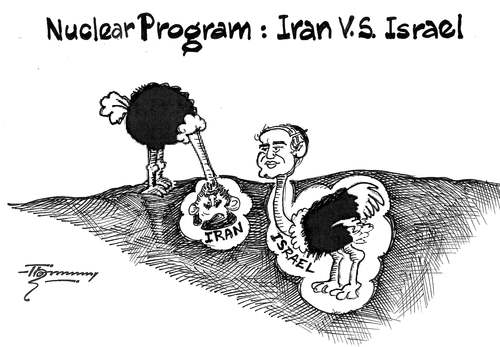 The coupling of US policy toward Iran and Israel is assailed from a number of directions. The Leveretts argue that the US needs better relations with Iran in order to exert enough pressure on Israel. Ray Takeyh arrives at the the opposite conclusion. He argues that the US needs better relations with Israel in order to exert enough pressure on Iran.
 The Obama Peace Plan trial balloon has set off an all points push bacj in Israel. (Many thanks to
  Both David Ignatius of the Washington Post and Helene Cooper of the New York Times were briefed by the White House about the possibility that Obama will come up with his own peace plan that could be unveiled soon. (See articles copied below)
 The great mending of fences continues as Syria and Egypt patch up their relations. It was announced today that


 The Turkish Judicial System: Guardians of the Ancient Regime
 Kerry’s visit to Damascus has inspired Syria to put its best foot forward. Ahmed Salkini’s OpEd (copied below) expresses Syria’s eagerness to meet the US half way. “When peace is achieved,” he writes, “the cause for resistance vanishes.”
 Contacts between Cairo and Damascus to secure Assad visit to Egypt…”