“A Brief Introduction to the Shebaa Farms Problem” by Matthieu Cimino

Will It Be the Solution? A Brief Introduction to the Shebaa Farms Problem
by Matthieu Cimino for Syria Comment
May 2010

During his March 27 speach this spring, President Bashar al-Assad was asked why Syria did not clear up ambiguities about Lebanon’s ownership of the Shebaa farms’ region by providing an official Syrian map of the region, that Israel claims belongs to Syria and that Syria and Lebanon both claim belongs to Lebanon.  Syria’s President responded:

It’s simply because you can’t give a document that you don’t have. There are some measures that should be adopted to obtain such a document. I mean legal and judicial measures that specify the ownership of properties, which country was given these properties before and after Independence, Lebanon or Syria? When these measures are finalized, we start demarcating the border. But giving this document for political reasons doesn’t seem to be rational.

His announcement emphasizes the complexity of the Shebaa Farms question. Located atop a hill, the Shebaa Farms (or hamlets) are important to both water resources and politics in the region. On May 21st, 2000, after Israel withdrew from Lebanon, ending its occupation that lasted over 20 years, Hezbollah and Syria claimed that the Jewish State still occupied a piece of land northeast of Mt. Hermon in the Golan Heights. That territory, which few had heard about previously, is made up of 14 farms. It is located at the three corners where Lebanon, Syria and Israel share a border.

The problem lies in a geographical error. During the French mandate (1920 – 1946), the Lebanese, French, and Syrian authorities did not pay attention to the frontier between Lebanon and Syria. The former was still considering Lebanon as one of its provinces and seemed not to be interested in drawing the border between the two countries.

Despite the Shebaa area being small in size (approx. 16 sq.m), the problem is difficult. The village of Shebaa is located in Lebanon, northeast of “Djebel ech-Cheikh” (Mount Hermon) while its farms are located south of the mountian. From the Mandate in 1920 to the Six-Day War of 1967, the farms were considered Syrian territories de jure, i.e. on the maps. During that period – and before – the Lebanese farmers used to cross the mountain area to reach their fields, which were cultivated with apple orchards.

Thus, Lebanon and Syria were artificially separated in the Shebaa region by the Wadi el-‘Assal, a stream. The Lebanese farmers considered that the river to be the border between the two countries.
French authorities did not take into account the Lebanese farmers who crossed the borders to their who had to reach their farms.

The Shebaa Farms case was at first nothing but a cadastral issue and border dispute. As a French diplomat noted in 1935, “this issue is linked to the delimitation of the border between Lebanon and Syria. All legal disputes will be resolved when we will be able to determine if a particular farm is located in Syria or in Lebanon. Everything else is irrelevant”.

In 1950, after the 1948 War, Syria installed an advanced military observation post and carried out topographical surveys in the farms. Thus, from 1920 to 1967, the Shebaa Farms were deemed to be Syrian land on military maps despite the fact that almost all the cultivator of the region were Lebanese and few Syrians lived there. In 1967, Israel invaded the Golan Heights and took the Shebaa Farms. The Israelis expelled the Lebanese farmers that were living there.

It seems that Israel did not realize it had invaded a de facto Lebanese territory.

In 1978, the Israeli Defense Forces transformed the farms into a buffer zone and adorned them with Hebrew road signs. Israel distributed national ID’s that were refused by the majority of the farmers. When Israel withdrew from Lebanon in 2000 after 18 years of occupation, the Shebaa Farms became central to Hezbollah’s continuing justification for war against Israel. In 2006, during the “33-days War”, the Shebaa Farms issue took central stage.

For Hezbollah, it is absolutely essential to have a justification to maintain its arms which are a guarantee to its survival. In his March, 27th speech, Bashar al-Assad maintained ambiguity about the Shebaa Farms. For Syria, the Shebaa Farms are Lebanese but the Syrians refuse to provide official documents proving it. In fact, Syria alleges that it possesses documents showing that the farms are Lebanese territory but that those documents still have to be clarified with precise topographical and cadastral studies. Unfortunately, neither Lebanon nor Syria have access to the area.

The Syrian position is clear: Israel must withdraw from all occupied territories, especially the Golan Heights, which includes the Shebaa Farms area. Then Syria and Lebanon will be able to resolve their border issues. However, if Syria and Lebanon have not demarcated their borders since 1920, it is doubtful they will do so in 2010.

In this article, I argue that the Shebaa Farms present an opportunity for normalization between Israel, Lebanon and Syria. In 2010, a comprehensive and ecological solution can be found to what has become the flash point between Hezbollah, Syria, and Israel – one that may again lead to war.

Matthieu Cimino, PhD Candidate – SciencesPo. Paris
[email protected]

Beyond Image: The Effects of the Visual Noise in the City of Damascus. By S. Farah for Syria Comment

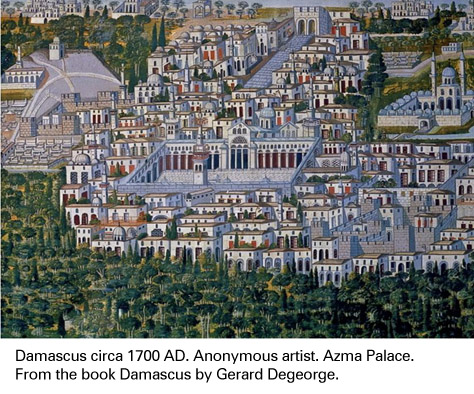
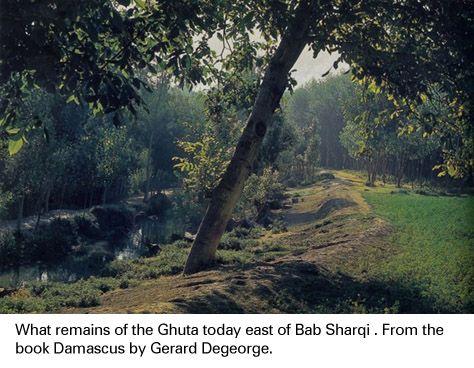
Damascus is a legendary city. Described by the Roman emperor Julian as the “Pearl of the East”, its landscape is defined by three natural features that also have historical significance: The Kassioun Mountain where Cain is believed to have murdered Able; the Barada River where St. Paul was baptized; and the Ghuta, the legendary lush green belt that once encircled the city and earned it the title “Paradise of the Orient”. It is said that the Prophet Muhammad refused to enter Damascus because he believed that “man should only enter Paradise once.”

Damascus_circa_1700ad

The past 50 years however saw a confluence of factors that put tremendous pressure on the city. The most notable is an exponential population growth. This was the result of several factors. First, for a strange and as of yet unexplained reason, Syria’s birthrate has been one of the highest in the world, higher than any other country in the Middle East and North Africa. In addition, the Arab Israeli war brought to the city waves of Palestinian refugees who are still languishing in refugee camps, their number today is estimated to be around 400,000.  Furthermore, the proximity of Damascus to the frontline with Israel necessitated a massive military build up around the city that brought with it a large numbers of military personals.  All this, plus a large migration of people from the rural area seeking better jobs and government jobs concentrated in the capital that otherwise could be located in other cities, resulted in a ten-fold growth of the city’s population over the past 50 years.  Today it is estimated that 3.6-4 million people live in Damascus — this, even before the recent wave of Iraqi refugees that flooded the city after the US invasion of Iraq. For many years Syria’s GDP lagged and government spending on infrastructures stalled. The results have been devastating on many levels with around 40% of the city now an unplanned development. The city is suffering from one of the lowest ratio of parks and open areas per capita in the world and the stress on its infrastructure is beginning to show by the acute shortage of water and electricity.

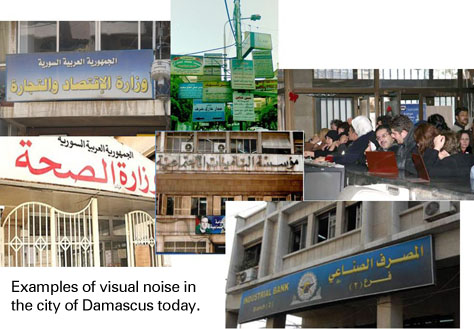
While the big, apparent and most pressing planning and infrastructural issues are being addressed, perhaps the most destructive force that is contributing to the degradation of the city has been the lax enforcement of the city’s building code.  Residents feel free to install whichever accessory they wish on the facade of their apartment or store.  Today in any one building each floor can have different windows and shutters, and balconies are modified, screened, glazed or enclosed.  One balcony might be converted into a sunroom, another balcony on the same building can have ornate byzantine style stone wall decoration, and yet another balcony above can have a modern style wood finishing with recessed lights.  People are free to hang their laundry to dry off of these balconies even if they face the main street.  Signs and posters also litter the seen with no guiding style or rule.  Government buildings are some of the worst offenders; these buildings are often rundown with big signs announcing the occupant of the building, in addition to haphazardly placed banners disfiguring the entire façade.  Posters advertising entertainment events, the passing of a member of the community, or introducing a new plumbing service can be plastered on any surface.  The worst of all signs are the long fabric signs that can be stretched across the street, often torn and forgotten months after the event had ended.   Any city pole seems to be a free for all to hang their advertisement or sign.  All this leads to the loss of the original architectural features of buildings, and either destroys or creates an unruly character of the city.

Crowd control is another big challenge. You can hardly find a stanchion anywhere in the city; consequently people mostly crowd for services, and seldom queue for anything. Again this is worst at government agencies.

Littering is also becoming a major concern. On my last trip to Damascus the road to the airport was littered with plastic bags stretching along the right side of the highway all the way from Bab Sharqi to the parking lot of the airport.  As a matter of fact this problem has began to attract the attention of tourists. Martina Schmidt, an art historian and archaeologist fascinated by Syria and its treasures, was so offended by this seemingly ubiquitous plastic litter she thought it was one of the worst examples she has ever seen even worse than Vietnam.  Unfortunately, these plastic bags, which seem to litter the whole country, are now a part of the world literary heritage as they were referred to by the author Stephanie Saldana in her wonderful book The Bread of Angels about her one-year experience living in Syria. All this disorder contribute to a seen of chaos and visual noise.

Damascus_visual_noise

The broken windows theory, the brainchild of the psychologists James Wilson and George Kelling, can help explain and pave the way toward a solution to this crisis of visual noise in Syria. Willson and Kelling argue that if in a neighborhood windows are broken and left unrepaired, people walking by will conclude that no one cares and no one is in charge. Soon more windows will be broken and the sense of anarchy will spread from one street to the next, sending a signal that anything goes. In a city, minor problems like the unsightly electric wires traversing the exterior of buildings, litter, laundry on balconies and unsightly satellite dishes contribute to the broken window psychology — the sense that no one is in control. The famed author Malcolm Gladwell used this theory in his book The Tipping Point, to explain how trends spread and become contagious.

Today, social psychologists and police officers tend to agree that if these minor violations are left unrepaired, they will, as a contagious disease, spread from one street to another. This is as true in affluent neighborhoods as in poor ones.

What’s fascinating is that the mere perception of disorder, even with seemingly irrelevant petty minor violation of building code, precipitates a negative feedback loop that can result in total disorder. Violation of building codes leads to perception of corruption, even when they are merely due to Lack of enforcement.  One also has to wonder whether the recent rise in crime in Damascus like purse snatching and home burglaries is not a result of the continuation of the downward spiral of this negative feedback loop.

So what start as a simple violation, can lead to wide spread visual noise and may lead to larger challenges in community control and increase in crime. The police department In New York city was highly successful in recent years in reducing the crime rate throughout the city and in the subway system by among other measures combating graffiti, and other manifestation of visual noise, and cracking down on petty crime in communities across the city.

These challenges are besetting all the Syrian cities and, are said, to be much worse in the countryside.  Today, the Syrian government seems to be acutely aware of these problems and is taking action.  The ministry of municipal administration is undergoing a modernization project with the help of the EU. There are no less than three groups working on grand municipal plans and urban design for all the Syrian cities and the government introduced a new real estate development law.  The President recently honored the sanitation workers in Syria with a reception and dinner during Ramadan.  There are plans for a tax on plastic bags, and in a pilot project the city of Damascus signed a contract with a private company for cleaning and the disposal of waste in several neighborhoods.  There are also plans for major architectural landmarks, such as the future Rose Center for Childhood Development and Education on the banks of the Barad River, and the government is planning to invest $50 billion in new infrastructures through a BOT model.

Damascus_Rose_Center

Experts and people inside the government today believe that there is an urgency to clean up the city and its countryside from the litter and visual noise.  The facades of buildings are public property, and this should be made clear through a public campaign and also put into the law. It is important to protect the special character for each city and village. All building permits should be approved by the local city council to ensure an architectural and aesthetic standard. Once a building permit has been issued no alteration should be allowed to the exterior of a building without the prior approval of the council.  There is a need for the creation of new enforcement agency to ensure compliance with the building code and law.  A similar agency (such as the one is Singapore) should be created to penalize littering.  These enforcement systems should have zero tolerance for violation to avoid contagion.  Some community leaders are advocating stiff fines for violators and a government backed loan program for individuals to clean up current violations.  The government should also set the example by restoring the façade of the buildings it occupies and it should also set the standard for crowd controls by employing well-groomed hospitality and information agents that help manage the flow of people through its agencies.  These measures will enhance the image of the city, create jobs, and will be a great resource of revenue to the city.  Finally, all these new government urban initiative will fail in the long run unless Syria’s seemingly uncontrolled birthrate moderates to international average. One urban designer familiar with the issues facing Damascus put it in medical terms and said “uncontrolled growth is like cancer; it will lead to death unless it is addressed with decisiveness and urgency.”

Damascus_Ghuta

News Round Up (May 6, 2010)

Can Israel fend off a Hezbollah armed with Syrian rockets? (Via FLC)
Top IDF intelligence officer says alleged Scud shipment could be just the tip of the iceberg of Syria’s arms transfers to Hezbollah.
By Amos Harel, Haaretz

M-600s

“… aside from the new Scud-D variant, the missiles are not very accurate. But this is not what’s most important: Hezbollah’s very possession of Scuds attests to its murderous intentions…
That same day, the military censor, after months of delay, finally permitted publication of the fact that Hezbollah now has Syrian M-600 rockets – which carry smaller warheads than Scuds, but are much more accurate. With enough M-600s, Hezbollah could systematically bombard Israel’s most strategic sites.

Moreover, unlike the Scuds, M-600s can be launched quickly, and Hezbollah has undoubtedly concealed them in urban neighborhoods to make them harder to locate. Thus M-600s are the true threat Hezbollah poses to Israel.

Israel’s missile defense systems, meanwhile, are far from adequate. The army has ordered only two experimental Iron Dome systems against short-range rockets….. Israel’s enemies have massively increased their missile stockpiles. And it is far from clear that the IDF has a good answer for a situation in which massive, accurate rocket fire shuts down ports and airports, impedes the operation of air force bases and forces the reserves to convene under heavy fire – or whether the home front, and the politicians, will have the stamina to hold out until an offensive produces substantive military gains. Therefore, unless the IDF starts bolstering its defensive capabilities – and not just its offensive ones – it risks being prepared for the most convenient scenario, rather than one that is actually likely to happen.”

On Tuesday the army’s head of intelligence research, Brigadier General Yossi Baidatz, told the Knesset that the Scud transfer was the “tip of the iceberg”.

Baidatz said that despite strong backing for Hezbollah, Syria remained keen to strike a peace deal with Israel. “A political settlement with Israel is high on Syria’s list of priorities and intelligence shows a will to reach an agreement – but on their terms, meaning a return of the Golan Heights and American involvement,” he said.

Syrian Foreign Minister Walid al-Moallem denied that the Middle East was on the brink of armed conflict, telling Radio Monte Carlo on Thursday that Israel was unlikely to declare war without first consulting Washington.

Moallem told the radio that the Arab side was taking responsible steps to preserve the security of the Middle East.

BBC Newsfile: Syrian TV sharply criticizes US extension of sanctions, Obama
2010-05-05
Text of report by Syrian television on 4 May

[Announcer] US President Barack Obama renews unilateral US sanctions against Syria. This clearly contradicts several US and Western officials, some of whom visited Syria and all stressed its importance in the region. This measure is a piece of evidence that the US attitude has not changed. It is also indicative of US inability to refurbish its image. The question is: How would Washington play the role of the seeker for peace while turning a blind eye to what is taking place in Palestine and the region, and being dragged behind the lies of Israeli intelligence services, which are known for their criminality and fabrication of reports and information.

[Reporter Ibrahim Hasan] The US measure [to extend the sanctions against Syria] is a new US violation of the international law and the UN principles. Moreover, it is a contradiction to the US Administration’s desire to seek to achieve peace and stability in the region and show openness to the countries of the region, based on the belief in the principle of dialogue and dispatching various delegations to Damascus, on the one hand, and its continuation of the logic of applying pressure, imposing sanctions, and resorting to economic weapon, on the other hand. The announcement by US President Barack Obama to extend the sanctions imposed by his predecessor George Bush in 2004 against Syria for one more year under Israeli pretexts is a new regression by Obama in his second year in the White House. How astonishing!

The US national security faces danger if Israel is threatened with a Palestinian stone, a Lebanese shell, or a Syrian rejection of the killing of the sons of its ummah [community of Muslims and Muslim nations worldwide] or Judaizing the Arabs’ holy places. Meanwhile, this national security would not even bat an eyelid for the killing of thousands of Palestinians in Gaza with white phosphorus or the destruction of the houses above the heads of the Palestinians and the Lebanese by the US-made Israeli warplanes.

The United States is the United States. It only sees the region through the eyes of Israel. It has been doing the same old thing; that is, applying pressure on the countries of the region through economic sanctions and siege to wrest concessions for Israel. The fate of the free nations is to defend their dignity.

Syria, which always insisted on adhering to its right and the rights of its ummah, will not acquiesce to the logic of dictates and threats. Nowadays, and more than ever before, Syria insists on regaining every grain of its soil and adhering to the rights of its ummah in facing up to the terrorism of Israel. The US Administration should realize that its sanctions, which are imposed for Israeli reasons, do not serve the interests of the United States, but rather flare up the hatred of the sons of the region for it and step up the brutality of the Israeli policy against the Arabs. [Video shows President Obama making speech, Israeli army tanks firing shells, and destruction scenes from Gaza.]  Originally published by Syrian TV, Damascus, in Arabic 1731 4 May 10.

Syria says US sanctions on Damascus fuel hostility
By ALBERT AJI, The Associated Press
Updated 2:57 PM Wednesday, May 5, 2010

DAMASCUS, Syria — Syria on Wednesday criticized the United States’ renewal of sanctions against Damascus and warned that the penalties reinforce hostilities in the region.

The U.S. renewed the six-year-old economic and diplomatic sanctions Monday, saying Syria has made some progress containing terror networks that Washington says use the country to infiltrate Iraq but that Damascus continues to support terrorists and pursue weapons of mass destruction.

The Obama administration has reached out to Syria, trying to pry it away from the influence of Iran and encouraging it to end its support for Lebanese and Palestinian militant groups.

Deputy Foreign Minister Faysal Mekdad said the sanctions decision shows Washington “has lost its credibility” and failed to live up to its promises to Syria.

Mekdad acknowledged that privately the tone from Washington was more positive.

“What is being heard publicly from the Americans is exaggerated and what is happening behind closed doors is the exact opposite,” he told the Al-Watan daily.

The Al-Thawra newspaper, considered a government mouthpiece, called the sanctions “a disappointment” but added that Damascus was not surprised. It warned that the U.S. decision “would keep the region in a state of antagonism and wars.”

I’m Sure There Are No Scuds: UNIFIL Commander
Xinhua

“UN Interim Forces in Lebanon (UNIFIL) Commander General Alberto Asarta Cuevas stressed in remarks published on Wednesday that there was no proof that Syria had transferred Scud missiles to Hezbollah. “We have around 12,000 soldiers and three Lebanese army brigades in a small area. We haven’t seen a thing, …..Scud missiles are big. I’m sure there are no Scuds because it is very difficult to hide them,” he added….

Asked about the possibility of the eruption of a new war, the UNIFIL commander said no one intends to cause war. … The United Nations special coordinator for Lebanon Michael Williams also said in April that he did not believe there will be a war in the region despite rising tensions over the Scud missiles allegation.”

Dennis Ross is the Latest American Diplomat to Slam Syria

Dennis Ross also had some harsh words for Syrian President Bashar al-Assad, whose government the Obama administration believes may have considered transferring sophisticated weapons to Hezbollah.

“By transferring weapons including long-range weapons to Hezbollah, Syria is engaging in provocative and destabilizing behavior,” said Ross, borrowing language from earlier remarks by Secretary of State Hillary Clinton. “President Assad needs to make a decision whether he wants war or peace in the region.”

[Ross may have recommended the Syria parts of Clinton’s speech that she delivered at the American Jewish Committee … to balance the administration’s recent perceived bias against Israel]

Medvedev to Syria
VOR

“President Medvedev’s visit to Syria, due to take place on May 10th and 11th, should add more impetus to the rapidly developing bilateral ties. A statement to that effect was made by a Syrian government official in Damascus. President Medvedev will meet with his Syrian counterpart Bashar al-Assad to discuss prospects for bilateral relations and the situation in the Middle East. Syria’s Economy and Trade Minister Amer Lotfi praised the growing ties with Russia. As instances of successful bilateral cooperation he cited Russia’s participation in the construction of gas-processing plants near Hims and near Deir ez-Zor… “

Sham Life

[Sent by Ehsani] Syrian Government subsidies cost syp 504 billion in losses every year – This is the equivalent of Syp 2100 ($43) a month for every Syrian man, woman and child. In other words, you can pay every single Syrian syp 2100 a month by eliminating these losses. The oil subsidies alone are responsible for over 90% of these losses…and this is AFTER raising the mazout from syp 8 to syp 20.

La production de blé devrait augmenter de 10 à 15 % grâce aux précipitations de février

Syria Again Sanctioned for Role in Middle East
Edward Yeranian | Cairo 04 May 2010

Syrian President Bashar al-Asad is playing a more prominent role in the Middle East, buttressed by his alliance with Iran and links to Lebanon’s militant group, Hezbollah.  Syria’s recent stances have put the country at odds with its moderate Arab neighbors and prompted the United States to renew sanctions against Damascus. ….

Peter Harling of the Crisis Group in Damascus says the rhetoric signals the level of instability in the region.

“This revolving talk of war today in Lebanon, tomorrow in Gaza, the day after in Iran and back to Lebanon and so on and so forth just says a lot about the state of the region,” he said.  “All key issues remain unsolved and the region as a whole is very unsettled. I think that the potential belligerents are preparing for a confrontation that they would like to avoid, but which they see as probable.”

University of Oklahoma Political Science Professor Joshua Landis writes the popular blog “Syria Comment.”  Landis believes Damascus has made it clear it will pursue a path of “resistance” against Israel if the Jewish state does not return the occupied Golan Heights.

“If Israel wants to keep [the Golan] and no one is willing to make it give it up, that means war, unless Syria is prepared to give it up, and Syria has said that it is not prepared to give it up and it will resist,” he said.  “That means, if I were Syria, you have to build up the military readiness of your allies, and missile technology is the best way to do that.”

Editor Alex Vatanka of Jane’s Islamic Affairs Analyst argues Syria and Iran have started to use more aggressive language, demonstrating their confidence their strategic position in relation to Israel is improving.

“What I detect in recent months is a shift from what you could have called the sort of defensive mode to an offensive approach to dealing with issues like we have had with the SCUD missiles,” he said. “We have gone from first denial by the Syrians and Hezbollah to [Hezbollah leader] Nasrallah and others saying ‘so what if we have received missiles, not only do we want missiles, but we want the best arsenals we can have to defend ourselves against Israel.”…

Yediot’s defense analyst: Settlement construction spree in September dooms negotiations
Didi Remez | May 6, 2010
Op-ed, Alex Fishman [defense correspondent], Yediot, May 6 2010

Syria rehabilitation masks deep economic problems
Published Date: May 06, 2010
By Khaled Yacoub Oweis

Syria wants more than $40 billion in private investment over five years to overhaul its infrastructure and create jobs, but its chances of obtaining it look slim based on the Baathist government’s previous failed attempts to woo foreign capital. President Bashar al-Assad relaxed bans on trade and private investment after taking over from his father in 2000, yet there has been little inflow of capital despite government enticements including giving away land for free.

Unemployment, poverty, poor competiveness and corruption still dog Syria, which remains under US sanctions due to its support of militant groups and corruption. Unless things change, there will be little hope of boosting income for an overwhelmingly poor population expanding at 2.5 percent a year. But economists said Syria’s authoritarian system would continue to scare investors. The government has also failed to realise it needs to put some of its own money up for hefty investments, such as oil refineries
, foreign executives say.

It’s difficult to see significant improvement without a proper climate and a legal system that inspires investor confidence,” said Aref Dalila, a top Syrian economist. “Without that Syria’s social and economic problems are likely to compound and we will continue to see more emigration, deeper poverty, rising unemployment and falling education standards,” said Dalila, who was jailed from 2001 to 2008 after criticising the government’s economic policies.

Overall unemployment is officially at 10 percent, but independent estimates put the rate at 25 percent, with the average wage officially at $240 a month. An official in the government-backed Peasants Union says poverty levels in the agricultural regions of Eastern Syria stand at 80 percent, with most people in that region living on several dollars a day. With consecutive droughts and poor water management reducing much of the country’s former breadbasket to a wasteland, economic growth has mainly come from
consumption and tourism. This accounts for 8-10 percent of the national income and is where officials see the main potential for expansion.

Nonetheless, the government is optimistic. “Whoever visits Syria can see the results of the reform process in private banks, insurance companies, private schools and universities and hundreds of investment projects,” Prime Minister Naji Al-Otri told a Bulgarian business delegation. But net foreign investment was only $1.2 billion at the end of 2008, according to Al-Khabar, a private Syrian newspaper. While this was up from virtually zero 10 years ago, it is still low compared with nearby Lebanon. This is d
espite government attempts to lure back Syrian capital that fled nationalisation half a century ago, including offers to give land to investors free or at huge discounts and laws that exempt projects from taxes and import duties.

Syria still lacks proper laws to enforce arbitration and mortgages and guarantee employee and property rights. The Syrian ruling hierarchy, led by Assad, has scored points by steering the country out of Western isolation. But Assad has kept intact an emergency law and the political system inherited from his late father, Hafez Al-Assad, making clear his priority is the confrontation with Israel, not political reform. Foreign companies outside the small oil sector remain few, led by France’s Lafarge and Ital
cementi, which started building two cement factories last year.

While government power generation schemes have drawn Gulf interest, Wilhelm Icke of Germany’s DEG, development finance bank, said international banks would not finance these projects without a commitment by the Syrian state to the rule of law. “Serious international businesses will not come without assurances that Syria is a country of laws. Even China had to allow some political freedoms for its economy to take off,” one Western banker visiting Syria said.

The country’s infrastructure is shabby after decades of neglect, with huge water shortages and electricity generation that meets two-third of demand. The government has also failed to lure investment in refineries. This has cost billions of dollars in fuel imports, although Syria produces 380,000 barrels per day of crude, down from a 590,000 bpd peak in 1996. “The government thinks that it can attract $3 billion to build a refinery by just providing crude oil, without putting any money itself and sharing t
he risk,” an oil executive said.

The oil sector accounts for a fifth of gross domestic product of $53 billion, but the size of Syria’s budget almost matches that of its tiny neighbour Lebanon, which has one quarter of its population and no oil resources. The government acknowledges that more needs to be done and that it has failed to bridge the gap between the rich and poor in the country, but says it will stick to its policy of avoiding former Soviet block style shocks and making laws that raise standards and allow more business freedom.

Maariv: Foreign Ministry considering stopping lectures in US and UK because of heckling
Didi Remez | May 6, 2010 at 10:45 | Categories: Diplomacy, Direct Action, Hasbara
Foreign Ministry considering stopping lectures

Eli Bardenstein, Maariv, May 6 2010 [page 16; Hebrew original here and at bottom of post]

Foreign Ministry officials are considering stopping the lectures by senior figures around the world, particularly in Britain. The reason: The outspoken verbal attacks by students and pro-Palestinian activists, which render them ineffective. The attacks peaked last week, when demonstrators assaulted the Israeli deputy ambassador to Britain at the end of a lecture she gave at the University of Manchester.

Ma’ariv has learned that Israeli diplomats stationed in the US have significantly reduced the number of public lectures that they give to students, as a result of the frequent heckling. The last [lecture] was given by Israeli Ambassador to the US Michael Oren in February at the University of California…..

Turkey gets cold feet in Iran: Iran also recently shelved a $7 billion deal with Turkish Petroleum International Co. to develop another part of the South Pars field after the Turks failed to commit.

U.S. SEC Probing Companies Operating in Terror Hubs, WSJ Says
2010-05-04 20:29:52.111 GMT

By Greg Chang
May 4 (Bloomberg) — The U.S. Securities and Exchange Commission is probing whether companies that operate in countries labeled as state sponsors of terrorism have adequate safeguards against bribery, the Wall Street Journal reported, citing unidentified people. The SEC has sent letters to pharmaceutical and energy companies that have operations in the four countries designated as sponsors of terrorism, Cuba, Iran, Sudan and Syria, according to the report….

The SEC’s corporation finance division, which reviews company disclosures, has sent letters to companies seeking information about business dealings in any of the four designated countries. Federal securities laws don’t require disclosure unless the operations there are significant, or material, to the overall company’s business.

Last week, SEC Chairman Mary Schapiro told Congress that the agency was considering whether it should require disclosure regardless of whether the business is material.

In 2007, the SEC published on its website a list of companies that disclosed they had business with the countries identified by the State Department as sponsors of terrorism. The Web page was pulled after companies complained.

The SEC probe, which is in its early stages, comes as the Justice Department’s criminal fraud section has sent letters in recent weeks to a number of pharmaceutical companies asking about payments made to foreign officials in several nations, beyond those countries designated as terrorism hubs, these people said…..

Safehaven: Syria Appeals For More Foreign Oil Money Yet Bureaucracy Remains A Questionable Obstacle
2010-05-05

As Syria aggressively courts foreign investors to rescue its dwindling oil and gas sector, government corruption and problems settling disputes remain sticking points for some interested international players.

Random facts about the destruction of education in Iraq. A recent UNESCO report “Education Under Attack 2010 – Iraq”, dated 10 February 2010, concludes that “Although overall security in Iraq had improved, the situation faced by schools, students, teachers and academics remained dangerous.”[4]

The destruction of Iraq’s education is ongoing. Let’s present a few random facts that give an idea of the scale of the destruction of Iraq’s education sector under occupation. The director[5] of the United Nations University International Leadership Institute published a report[6] on 27 April 2005 detailing that since the start of the war of 2003 some 84% of Iraq’s higher education institutions have been burnt, looted or destroyed[7].

Like most higher education institutions across Iraq, Baghdad University escaped almost unscathed from the bombing. In the subsequent looting and burning, 20 of the capital’s colleges were destroyed. No institution escaped: the faculty of education in Waziriyya was raided daily for two weeks; the veterinary college in Abu Ghraib lost all its equipment; two buildings in the faculty of fine arts stand smoke-blackened against the skyline. In every college, in every classroom, you could write “education” in the dust on the tables. [8]

Ongoing violence has destroyed school buildings and around a quarter of all Iraq’s primary schools need major rehabilitation. Since March 2003, more than 700 primary schools have been bombed, 200 have been burnt and over 3,000 looted.[9]

Between March 2003 and October 2008, 31,598 violent attacks against educational institutions were reported in Iraq, according to the Ministry of Education (MoE)[10]

Since 2007 bombings at Al Mustansiriya University in Baghdad have killed or maimed more than 335 students and staff members, according to a 19 Oct 2009 NYT article, and a 12-foot-high blast wall has been built around the campus.[11] Education under Attack (2007) reported that 296 people serving as education staff were killed in 2005; and 180 teachers were killed between February and November 2006.[12]

Former terror detainee Hassan Almrei sues feds for false imprisonment
The Canadian Press
May 04, 2010

OTTAWA – A Syrian-born man who was held for more than eight years on a national security certificate is suing the federal government for negligence and false imprisonment.

Hassan Almrei filed his claim today in Ontario Superior Court.

In mid-December, Federal Court Justice Richard Mosley struck down the security certificate against Almrei, who was arrested in October 2001 on terror suspicions.

Almrei, 36, came to Canada in January 1999 on a false United Arab Emirates passport and attained refugee status the following year.

Mosley said there were reasonable grounds to believe Almrei was a security danger when he was detained just after the 9-11 attacks — but there’s no reason to support that belief now.

Almrei, whose claims have not been proven in court, is seeking $16 million in damages.

UK ‘blocking’ Mossad return to London

Official reportedly prevented from taking up embassy post after Israel refuses to commit itself not to misuse British passports

Israel Steps Up Campaign Against ‘Incitement’
Wednesday, May 5, 2010
Joshua Mitnick And Gary Rosenblatt

Jerusalem — In an effort to ratchet up international pressure on the Palestinian Authority to combat what the Netanyahu administration calls hatred against Israel as peace talks move forward, Israel plans to unveil this month an “Incitement Index,” The Jewish Week has learned.

Accusing the Western-backed PA of condoning anti-Semitic remarks in its media, the glorification of terrorists and the denial of Israel’s existence on official maps, officials in Jerusalem believe that focusing on incitement will ease diplomatic pressure on Israel in other areas.

“We’re hoping that this effort will take some of the focus off of Jerusalem, and its policy on settlements,” a senior official in the Netanyahu government told The Jewish Week, “and [put] more on whether the PA is doing anything toward creating a climate for negotiations leading to peace.”

Who is Changing the Regional Balance of Power?

Obama has renewed sanctions on Syria for another year. This was expected. In fact, Ian Black of the Guardian makes the point that relations between Syria and the US will remain bad for a long time to come. It can be expected that the US president will renew them every year because Syria remains at war with Israel and supports both Hizbullah and Hamas.
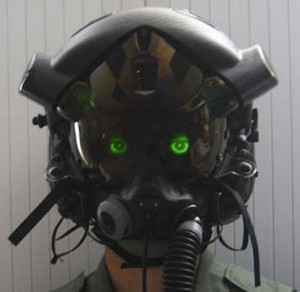
F35 Fighter Pilot Helmet

In short, the US is asking that Syria cede to Israel the Golan Heights, which it occupied in 1967. When Israel seized the Heights, it forced some 100,000 Syrian inhabitants to evacuate their homes and abandon their villages. Farms were  turned over to Israeli colonists, who have, not surprisingly, done well on the rich Syrian land that gets plenty of water. Israel annexed the Golan in 1981, which the UN condemned in resolution 497.

Although Washington recognizes these acts as illegal, neither Clinton nor Obama has mentioned that Israel is obliged to give up the Golan. They do not mention that the Golan issue is at the root of Syria’s support for resistance organizations and they do not link the two.  Syrians can only conclude that Washington’s true policy is to help Israel keep the Golan for eternity. Otherwise the US would not place sanctions on Syria while refusing to condemn Israel. In fact, Washington is negotiating the sale of F35s to Israel. These are Americas new and most improved fighter planes.

Patrick Seale points out the inverted logic of Hilary Clinton’s latest diatribe against Syria and her insistence that America’s commitment to Israel’s security is unshakable. He writes:

To any independent observer, the statements by Mrs. Clinton and Ehud Barak are an extraordinary inversion of the situation on the ground. It is not Israel which faces “real and growing threats,” but rather its neighbours, who live in constant fear of renewed attack from an incomparably stronger and better armed Israel.

Lebanon has not yet recovered from Israel’s devastating assault of 2006, which killed some 1,500 civilians, while Gaza — under cruel siege and denied building materials for reconstruction — still lives in the rubble caused by Israel’s invasion of December-January 2008-2009, which killed another 1,500 people, and wounded thousands more. As for Iran, it faces a constant — and publicly stated — threat of attack on its nuclear sites.

Quite apart from Israel’s nuclear arsenal of some 200 warheads, some of them deliverable by its Dolphin class submarines, the American-supplied Israeli Air Force is by far the most powerful in the region, able to attack targets up to 1,500 miles away with air-to-ground missiles and “bunker-buster” GBU-28 bombs.

As is well-known, the United States has pledged to maintain Israel’s “qualitative military edge” over any combination of Arab states, and never to acknowledge Israel’s nuclear military capability in any public statement.

The inescapable conclusion one must draw from Mrs. Clinton’s remarks is that Israel’s neighbours have no right to defend themselves, but must meekly submit to Israel’s repeated blows and to its overall military hegemony.

Here is the official White House statement about the dangers Syria poses to US security. In congress, Obama explained that “the Syrian government had made “some progress” in suppressing the infiltration of foreign fighters into Iraq. But he added that Syria’s “continuing support for terrorist organizations and pursuit of weapons of mass destruction and missile programs, continue to pose an unusual and extraordinary threat to the national security, foreign policy and economy of the United States.”

In a small conciliatory gesture, The US removed its customary opposition to Syria’s inclusion in the World Trade Organization. It had twice blocked Syria from becoming a WTO member since 2001. Netanyahu could have blocked Syria’s accession to observer status, but decided not to as this would have made Israel the sole country to oppose Syria.

How Contiguous is Contiguous?

On Jan 10, 2008, George Bush is called for a contiguous Palestine. This turn of phrase is now being used by Obama. But how contiguous is contiguous? Dan Kurtzer and Scott Lasensky, in their book, Negotiating Arab-Israeli Peace, explain that “contiguity” is not always continguous:

[since the 1990s] Washington has reinforced rather than ameliorated some of the most fundamental asymmetries between Israel and the Palestinians… The U.S. did not push back when Israel redefined contiguity of territory to mean transportation linkages between Palestinian areas instead of territorial linkages.

Sharon would often speak about “transportational contiguity.”  What he meant is if you can drive from here to there, we’ll call it contiguous, even if you have to go underground through a tunnel (whose both ends are controlled by Israel) or up in the air over a bridge (whose both ends are controlled by Israel) . This is definition of contiguity is important as more and more land in East Jerusalem and the West Bank is developed for Jewish only roads and settlements.

World View – the new radio show that I co-host on our local NPR affiliate has posted its first show. This week we discuss the likelihood of war between Israel and Hizbullah, US policy in Afghanistan, and we interview David Sanger, the New York Times correspondent on National Security issues. He talks about Iran, Korea and nuclear arms. We ask him if Iran can be contained or if it must be stopped. Listen, here.

News Round Up

U.S.-Israel Ties Remain Intact
MAY 4, 2010

A serious accusation, one rarely heard previously, was leveled against the Obama administration on Monday. The charge: It is too vigorously defending Israel.

Patrick Seale, a prominent British writer on Middle East affairs, published an article declaring that the administration “is beginning to adopt the vociferously pro-Israeli, anti-Arab rhetoric of its predecessor—the neocon-dominated administration of former President George W. Bush.” He cited a speech last week by Secretary of State Hillary Clinton in which she “used unusually strong language” to warn Syria and Iran that “America’s commitment to Israel’s security was unshakable.”

Hyperbole aside, Mr. Seale’s assertion points to an important but little-noted reality. The very public feuding between the Obama administration and Israel over the Palestinian peace process has gotten lots of attention, as has the strained relationship between President Barack Obama and Israeli Prime Minister Benjamin Netanyahu.

But beyond those headlines, the two countries actually have undertaken a broad effort at military and strategic cooperation—including supplying Israel with sophisticated American military equipment—to counter threats from Iran and Hezbollah fighters armed by Syria.

While there may be public feuding between the Obama administration and Israel over the peace process, the two countries have also begun a high level of military and intelligence cooperation in other areas, WSJ’s Jerry Seib explains.

In a week when Iranian President Mahmoud Ahmadinejad is at the United Nations to talk at a nuclear nonproliferation conference—an ironic appearance given that most of the world worries he’s seeking to proliferate—the level of security cooperation between Israel and the U.S. is of more than passing interest.

Israel believes Iran and Syria are creating a here-and-now threat by supplying Hezbollah fighters in Lebanon and the Gaza Strip with rockets and, possibly, missiles. But, of course, for Israel the real long-term threat lies in Iran’s potential development of nuclear arms.

In the face of those dangers, the crucial question is simply: What are the U.S. and Israel doing about them?

Actually, they’re cooperating more than most people think. It’s important to note that this cooperation isn’t designed to facilitate an Israeli attack on Iran’s nuclear facilities. Actually, it’s more the opposite. By making Israel feel its has, on its own and in conjunction with the U.S., the defenses needed to either deter or defend against Iran, the Obama administration undoubtedly hopes to reduce Israel’s inclination to launch a pre-emptive strike on Iran, which the chairman of the Joint Chiefs, Adm. Mike Mullen, for one, has openly fretted might be ineffective and destabilizing.

Beyond that, making it clear that there is a robust American-Israeli security relationship is one way of preventing miscalculations by the Middle East’s more dangerous characters.

If Iran, Syria, Hezbollah or their extremist friends think U.S.-Israeli relations are so strained that Washington is backing away from its commitment to defend Israel, the perception of a newly vulnerable Israel might well invite attacks that could spin out of control.

That’s one reason why both Secretary Clinton and Defense Secretary Robert Gates have gone out of their way in the last two weeks to publicly restate America’s commitment to Israeli security.

And in fact, officials from both countries say that military and security cooperation has weathered the political storms of recent months, and in some areas actually thrived. An advanced American radar system, for example, has been deployed to Israel’s Negev Desert, whence it can help the burgeoning Israeli missile-defense network.

A large military exercise last fall, code-named Juniper Cobra, was used to practice linking up that radar with American defense systems. The U.S. is funding the development of an advanced Israeli long-range, high-altitude system for knocking out ballistic missiles of the kind that might come from Iran. Israel is discussing purchasing the new American F-35 fighter jet, now nearing completion.

At the heart of much of this joint work is the relationship between Mr. Gates and his counterpart, Israeli Defense Minister Ehud Barak. Both men are veteran political survivors and hard-eyed realists, and their ties seem to have grown stronger even as political strains between the White House and Prime Minister Netanyahu have increased. The two defense chiefs met last week and emerged uttering strikingly similar statements of warning to Israel’s enemies.

U.S. officials also say there is a high level of intelligence sharing. One outgrowth appears to be a significant effort to detect and then stop arms shipments going from Iran to Syria, and potentially on to Hezbollah fighters in Lebanon.

Last fall, for example, U.S. forces stopped and inspected a ship called the Hansa India, which was carrying shipping containers that originated in Iran and were headed for Syria. …

It simply means that, as in all matters Middle Eastern, the situation isn’t entirely as it appears on the surface.

What Comes After Mideast Talks Draw a Blank?
By Tony Karon in Time

After months of arm-wrestling over terms and conditions, the Obama Administration has finally gotten its Israeli-Palestinian “proximity” back on track. …The new talks will be launched without any pageantry, however, because there’s very little optimism on any side of substantial progress toward an agreement. More likely, the various parties are mulling over what to do once it is established that no breakthrough is likely….

The Netanyahu coalition with parties even more hawkish than his own is unlikely to accept the terms of any plausible final-status agreement. And Israeli analysts warn that the large presence of settlers and their supporters in the officer corps of the Israeli Defense Force makes any attempt at large-scale evacuation of settlements — which settlers have vowed to resist — a high-risk option for any Israeli government…..

Maariv: Ron Lauder now acting as go between Netanyahu and Jordanians By Didi Remez

Ties between Israel and Jordan are at an all-time low and very tense. In the past year, King Abdullah has been making ever more frequent statements concerning the deteriorating situation of the Middle East and the risk of war. He has also been a harsh critic of the Israeli government as well as of Netanyahu’s policies.

Only last week the king warned, referring to construction in East Jerusalem, that Israel was playing with fire and mentioned that according to Israel’s peace accord with Jordan, the latter had rights to Jerusalem’s holy sites. He said that all options were on the table when it came to protecting he holy sites as well as Jordan’s interests in the city….

Prime Minister Binyamin Netanyahu will meet today with Egyptian President Mubarak at his Sharm el-Sheikh residence…

Netanyahu will ask Mubarak to withdraw the Egyptian proposal that the Middle East be made a nuclear free zone — a proposal that is expected to come up in the nuclear summit in New York that begins today. The two will also discuss the expected renewal of the proximity talks between Israel and the Palestinians on Wednesday.

Tonight special US envoy to the Middle East George Mitchell is to arrive in Israel for the expected talks. The talks are to be conducted in rounds between Jerusalem and Israel under Mitchell’s mediation. On the Israeli side, the prime minister himself is to meet with Mitchell, along with his emissary Attorney Yitzhak Molcho. Sources in the Prime Minister’s Bureau have said that the negotiating team will be “limited and compartmentalized,” and will include only Netanyahu and Molcho, with other advisors of the prime minister joining as necessary.

Related recent developments
1.  Abdullah delivers withering criticism of Israeli polices in April 6 2010 Wall Street Journal interview.
2.  J Street leadership meets Abdullah in Amman on May 1 2010.
3.  Major General (Res.) Uri Saguy chronicles the results of Lauder’s efforts at brokering talks between Netanyahu and Assad in the ’90s.

Syria to establish first renewable energy project
2010-05-0, (Xinhua via COMTEX)

— Syrian CHAM Holding Group and the world largest wind energy company VESETAS signed an agreement to develop the first wind energy project in Syria, the Syrian Arab News Agency SANA reported on Monday. The agreement, which was signed Sunday, aims to provide abilities and skills to construct and operate wind farms with generation capacity of 50-100 MW at two sites to the south Damascus.

The project, which costs around 300 million U.S. dollars, will be funded by a group of Syrian and Arab investors, in addition to local and international financial foundations. The wind farm is to be developed by CHAM Holding Group, which was founded in 1996 and invests in various domains including the infrastructure and industry. However, the project will be technologically supported by VESTAS with its headquartered in Denmark. Mahmoud al- Khoshman, CHAM Holding Group’s Chief Executive Officer, pointed out that Syria contains a considerable wind energy potential in a variety of locations, promising to offer clean energy to meet the increasing electricity demand in Syria in an environmental-friendly manner, SANA said….

Poll: Majority of Israel’s Jews back gag on rights groups
More than half of respondents agree that ‘there is too much freedom of expression’ in Israel.
By Or Kashti Tags: Israel news

More than half of Jewish Israelis think human rights organizations that expose immoral behavior by Israel should not be allowed to operate freely, and think there is too much freedom of expression here, a recent survey found.

The survey, commissioned by the Tami Steinmetz Center for Peace Research at Tel Aviv University, will be presented Wednesday at a conference on the limits of freedom of expression.

The pollsters surveyed 500 Jewish Israelis who can be considered a representative sample of the adult Jewish population.

They found that 57.6 percent of the respondents agreed that human rights organizations that expose immoral conduct by Israel should not be allowed to operate freely.

Slightly more than half agreed that “there is too much freedom of expression” in Israel.

The poll also found that most of the respondents favor punishing Israeli citizens who support sanctioning or boycotting the country, and support punishing journalists who report news that reflects badly on the actions of the defense establishment.

Another 82 percent of respondents said they back stiff penalties for people who leak illegally obtained information exposing immoral conduct by the defense establishment.

“Israelis have a distorted perception of democracy,” said Daniel Bar-Tal, a professor at the university’s school of education, and one of the conference’s organizers. “The public recognizes the importance of democratic values, but when they need to be applied, it turns out most people are almost anti-democratic.”

CBS News: Political Satire Rocks the Boat in Syria
by George Baghdadi, 2010-04-30

A sharp political comedy is taking the Syrian capital by storm by pushing the envelop of acceptable government criticism to a point seldom scene on the stage in Arab countries.

The play, entitled “Academic Corruption,” mocks dirty politics, Syrian officials and Arab leaders alike.

All four months’ performances of the play have sold out at the rickety Ramita Theater in downtown Damascus. Such politically inflammatory speech is rarely heard by the capital city’s five million inhabitants, or their countrymen across Syria.

It’s not the first satire by 51-year-old actor and director Humam Hout, who has been on stage in the country for more than two decades, but it is without question his most daring.

The curtain rises on act one to reveal a ceremony for dozens of graduates from the “University of Corruption”.

“The bribe is not a shame – the one who doesn’t take a bribe is an ass. This is the time for the intelligent people,” boasts the narrator.

Jibes like this, aimed clearly at the nation’s leaders and others in the region, had only been heard as whispers for years. But such a joke, or a misplaced word, will no longer land them in jail.

The play, performed by a mix of amateurs and professionals, catalogs corruption through the story of the inhabitants of a poor alley thrown into scandal after a building falls over, killing 47 people and wounding hundreds more.

Abu Jamal, a resident who has just lost his house in the collapse, approaches a TV correspondent. “I will tell you everything about all the thieves in the country, because my heart is filled with anger,” he tells the reporter before a military intelligence agent strides in with a pistol in his hand.

Jamal changes his tone.

“I seize the opportunity of the collapse of this building… to extend my thanks to the comrade and all the people in charge,” he says before lavishing grand praise on the performance of the government. ….

Israel Land Fund group intends to expand Jewish East Jerusalem
By ABE SELIG, 03/05/2010

Despite immense international pressure to halt Jewish construction in east Jerusalem and in all areas over the Green Line, Israel Land Fund founder Aryeh King on Sunday presented a plan that would see nearly 200,000 new housing units created there.

Speaking at a conference at the Menachem Begin Heritage Center to discuss future development initiatives in the capital, King described a plan that would use privately owned land and property belonging to the Jewish National Fund to provide roughly 187,000 new homes in east Jerusalem, E-1 (between Jerusalem and Ma’aleh Adumim) and a chain of territory extending from Ramallah to Bethlehem.

“If Jerusalem doesn’t expand, and expand eastward, it will become the Gaza Strip,” King said.

Using a blown-up map of the city and its surrounding areas, King showed the audience where hundreds of dunams of land outside the northern Pisgat Ze’ev neighborhood could contain roughly 12,000 new housing units.

Around the southern Gilo neighborhood, King said, “there is enough similar land to build 60,000 units.”

“There are 800 dunams [80 hectares] in E-1, owned by a wealthy, Jewish philanthropist, that could prove room enough for 100,000 housing units,” King said. “The potential is enormous.”…

Maariv: Italian support for Israel wavering
Didi Remez translates| May 4, 2010
Eli Bardenstein, Maariv, May 4 2010 [page 7]

Is Israel about to lose its best friend — maybe its only friend — in western Europe, Italy?

Political officials in Jerusalem say that Rome recently relayed a message that it would not be able to continue to defend sweepingly Israel’s construction policy in the territories and in Jerusalem at international forums, as it has until now. This was stated in talks that Israeli diplomats held in Berlin, Paris and Rome. This is because Italy feels that its unreserved support for Israel has turned it into an “ugly duckling” in the view of its fellow EU members and, as a result, it is gradually becoming isolated and irrelevant in the Europe community.

For example, every time that Italy wants to raise a subject that is pro-Israel, important countries of the European Union in western Europe do not join in, and only countries like the Czech Republic and Poland, which are less important, do. In other cases, Italy is unable to influence the wording of proposals relating to Israel because it is viewed as pro-Israel from the outset. Italian officials are also concerned that continued absolute support for Israel will damage its relations with the Arab and Muslim world.

The change in the Italian position is part of a change for the worse that is taking place in many countries of the EU, which are stepping up the pressure on Israel to make progress in the peace process and to completely stop construction in the settlements. This emerges from reports received in Jerusalem……That said, it should be noted that despite Italy’s difficulty in automatically supporting Israel, just recently — in the course of a reception that the Israeli embassy in Rome held for Independence Day — Italian Prime Minister Silvio Berlusconi publicly repeated his demand for including Israel in the EU.

Nuclear Gamesmanship: Clinton vs. Ahmadinejad
Tony Karon in Time Magazine

….The U.S. narrative on the Iranian nuclear threat portrays it as a menace against which all the moderate countries of the Middle East are united. But the Egyptians are bluntly pointing out that Iran can’t be confronted while turning a blind eye to Israel. “We don’t think that there should be first-class countries that are acquiring nuclear weapons and second-class countries that are not in possession of nuclear weapons in the Middle East,” Egypt’s U.N. Ambassador Maged Abdelaziz said last week. “We say that in order to be able to deal with the Iranian issue, you have to address the nuclear capabilities of Israel.” The Egyptians, on whose support the U.S. depends for isolating Iran, want both Israel and Iran brought into an NPT-led regional conference on a nuclear-free Middle East next year, and are demanding that the U.S. sign up to the effort to make both compliant with a regime of transparency and disarmament.

When pressed, Obama Administration officials say that Israel should sign on to the NPT, although Washington has never pressed the issue. (It can’t very well advocate for Israel to be exempted from the laws it says should apply to all.) On the Egyptian proposal, the U.S. position as articulated last Friday by Under Secretary of State for Arms Control Ellen Tauscher is that “the best chance we have to achieve a WMD-free zone in the Middle East is to reach an agreement on a lasting and just peace in the Middle East.” But that could be read by many in the region as tacit endorsement of Israel maintaining nuclear weapons, which would, in the regional argument, work in Iran’s favor.

The conference will run for most of this month, and is unlikely to produce any major breakthroughs. But the first-day scorecard in the U.S.-Iran showdown produced no clear winner — and that, in and of itself, could qualify as big news…..

Weissglas in Yediot: By fighting with US over settlements, Israel is risking pressure on nuclear policy
Didi Remez | May 4, 2010
Bitter or sour
Op-ed, Dov Weissglas, Yediot, May 4 2010s

A lot has been said and written that the growing sourness in Israel-US relations—the main cause of which is the dispute on the matter of settlement in Judea and Samaria and in East Jerusalem—is liable to erode vital areas of Israel’s security.The bumpy road that the US administration was forced to walk to bring about the beginning of any sort of peace process focused entirely on the issue of freezing construction and settlement. The somewhat mocking consent to “proximity talks” may fall apart even before the talks begin because of the matter of settlement. This insistence on settlement caused Israel, precisely at a time of being tested, to face an angry and bitter administration.

When running a country, a government must distinguish between the main issue and the secondary issues, between the important and the less important. The current US administration never downplayed, from the moment of its establishment, its intent to reexamine subjects that for many years had been perceived as fundamental values in US domestic and foreign policy. It does this both in domestic American matters as well as matters of foreign policy and regional and international security.

The US administration almost goes out of its way to appease the Muslim and Arab world, less than 10 years after the Twin Towers tragedy and the warfare against fanatic Islamist forces. It is reexamining American nuclear and military policy, both in the US and in western Europe — which has always and forever been perceived as a part of the world whose security the US guarantees. It is also examining the American security arrangements vis-à-vis Russia, which at the time, in its relationship with the US, reached the brink of a third world war.

Such an administration is not to be “annoyed” unnecessarily. And since it appears that in the near future the administration may focus its attention to fundamental questions regarding Israel’s security — such as the continuation of nuclear ambiguity— you do not provoke it, not even for settlement matters.

The interest that the Obama administration has begun to show in a Middle East that is “clean” of nuclear weapons imposes on the Israeli government a supreme obligation to ensure a considerate and supportive administration, as much as possible. A “clean” Middle East should hardly trouble the Arab states, since there is no danger to their existence. It should not trouble Iran, which ignores the current administration, but it should greatly trouble Israel, for whom nuclear ambiguity is one of the most important components of its ability to deter those who seek to destroy it, and a basic condition for its security in an animosity-filled region.

The review committee of the member states of the Nuclear Non-Proliferation Treaty — a treaty that Israel, as long as the region around it does not recognize its existence, must not join — is a suitable opportunity for the administration to begin to wonder aloud—with varying degrees of intent to act—about rethinking traditional US policy toward Israeli ambiguity. Obliging Israel to joint the treaty and to accept international supervision would prevent ambiguity and ensure certainty that Israel indeed will not have the nuclear military means that are necessary for its self defense, those means whose existence we don’t know of, but as residents of the wild Middle East, we hope and pray that we do have, and a lot of them, in our warehouses.

It was recently reported that the matter was examined by the US administration together with the Egyptians. If there is anything — even a little — to these reports, Israel should be very worried. When such a vital Israeli security interest is liable to soon be placed on the American discussion table, it would be a terrible mistake to continue to quarrel with an already angry administration on settlement matters — weighty as they may be.

Translated by MEMRI

In an article in the Syrian daily Al-Watan, which is close to the Syrian regime, the paper’s editor, Waddah ‘Abd Rabbo, wondered why the Arab countries and Iran should not obtain nuclear weapons as deterrence against Israel…..

“Why Shouldn’t an Arab Country, or Iran, Obtain Nuclear Weapons as Long as Israel Possesses Such Weapons?”

“…Despite the call by Syria and other countries to prevent the spread of weapons of mass destruction in the Middle East, I wonder, and I think that this question has become legitimate: Why shouldn’t an Arab country, or Iran, obtain nuclear weapons as long as Israel possesses such weapons, takes pride in doing so, and ignores every call, Arab and non-Arab, for the elimination of WMDs?

“In other words, who threatens security and stability in our region? Isn’t it Israel, which occupies lands, kills dozens of Palestinians every day, and threatens to send Syria back to the Stone Age and to destroy Lebanon’s infrastructure?

“In the face of all the threats and the danger that Israel poses to all the Arabs, aren’t the threatened Arab countries entitled, and [in fact] obligated, to obtain nuclear weapons to deter Israel from taking its aggressive steps?”

“All the Countries in the Region Are Going to Need [Nuclear Technology]”

“The West has tried for decades to prevent the Arabs from obtaining [nuclear] ‘know-how’ on the pretext that it could threaten Israel’s security, and prevented them from obtaining advanced weapons on the same pretext…..

Rabbi Lerner’s Home Attacked by Right-Wing Zionists
Berkeley, Ca. May 3, 2010
Release dare: May 4, 2010

Berkeley police today confirmed that the attack on Rabbi Lerner’s home late Sunday June 2nd or early morning Sunday July 3rd was in fact a crime and was being investigated.

The attackers used a powerful form of glue to attach posters to his door and around the property of his home attacking Lerner personally, and attacking liberals and progressives as being supporters of terrorism and “Islamo-fascism.” They posted a printed bumper sticker saying “fight terror–support Israel” next to a carcature of Judge Goldstone whose UN report on Israel’s human rights violations in its attack on Gaza last year has been denounced as anti-Semitic and pro-terror by right wingers in Israel and the U.S.. The caricature has Goldstone talking about his being kept from his grandson’s bar mitzvah, and the caricature of Rabbi Lerner responds by saying “any enemy of Israel is a friend of mine.”

This attack and vandalism follows on a week filled with Lerner and Tikkun staff receiving hate mail, prompted apparently by Tikkun’s announcement that in case the South African Zionists had succeeded in preventing Judge Goldstone from attending his grandson’s bar mitzvah, as they threatened several weeks ago, that Rabbi Lerner would gladly hold the bar mitzvah in the SF Bay Area instead, and following Tikkun’s announcement that in light of Goldstone’s courageous willingness to stand up for human rights in Israel….

Joshua Holland, a senior writer for AlterNet, ties the vandalism at Michael Lerner’s house to the Jeff Goldbergesque charge that criticizing Israel is indistinguishable from calling for genocide. Also See Richard Silverstein on this. He points out that:

It is absolutely no accident that Alan Dershowitz singled Rabbi Michael Lerner out for special opprobrium in his most recent Jerusalem Post and Huffington Post columns.

Iran, Syria, and US in War of Words as West Bank is Digested by Israel

Iran on Friday threatened to “cut off Israel’s feet” if the latter attacks Syria, AFP reported.

During a visit to Damascus, Iranian Vice President Mohammad Reza Rahimi said: “We will stand alongside Syria against any [Israeli] threat … If those who have violated Palestinian land want to try anything we will cut off their feet,” he said.

Rahimi called Syria a “strong country that is ready to confront any threat” and said Iran “will back Syria with all its means and strength.”

The Obama administration Thursday warned Iran and Syria that America’s commitment to Israel’s security is unshakable, and they should understand the consequences of threats to the Jewish state.

Clinton warns Iran, Syria on threats to Israel
2010-04-29, MSNBC:

The Obama administration warns Iran and Syria that America’s commitment to Israel’s security is unshakable and that they should understand the consequences of threats to the Jewish state…

“These threats to Israel’s security are real, they are growing, and they must be addressed,” she said in the speech to the American Jewish Committee. The speech was the administration’s latest effort to reassure Israel that its ties to the United States remain strong despite tensions that flared last month.

Clinton told the group that Israel is “confronting some of the toughest challenges in her history,” particularly from Iran, Syria and groups they support like Hezbollah in Lebanon and Hamas in the Gaza Strip, and reaffirmed U.S. determination to get them to change course.

“Transferring weapons to these terrorists, especially longer-range missiles, would pose a serious threat to the security of Israel,” she said….

“We are concerned about the broader issue of the nature of Syrian support to Hezbollah involving a range of missiles, including that one,” Crowley said. He added that U.S. intelligence was looking at “multiple systems” from “multiple sources,” including Syria, that Hezbollah may have.

Getting Syria to stop, he said, is one of the administration’s prime goals in returning an ambassador to Damascus.

Syria warns U.S. on accepting Israel scud claims
Reuters

“We warn the United States not to adopt false Israeli allegations and we say what destabilizes the security of the region is in fact beefing up Israel with all the latest U.S. weaponry and abetting Israeli allegations at our expense.”

France tells Syria to toughen border security AFP

“The situation is serious, dangerous,” Kouchner told Europe 1 radio. “There is a stockpile of weapons, short-range, medium-range and perhaps even long-range missiles and we are concerned.”  “We are asking the Syrians to guarantee the security of that border,” Kouchner said. “I am not saying that it’s a sieve because a certain number of facts have not been established. “But this is dangerous and reinforces extremism,” he added.

Palestinian Roads:  Cementing Statehood, or Israeli Annexation?
By Nadia Hijab & Jesse Rosenfeld New evidence indicates that the PA’s ambitious road-building program–heavily funded by the United States and Europe–is being used by Israel to facilitate settlement expansion.
April 30, 2010, The Nation

Palestinian Authority Prime Minister Salam Fayyad has staked his political credibility on securing a Palestinian state by 2011 in the entire West Bank, Gaza and East Jerusalem, a program enthusiastically embraced by the international community. Ambitious PA plans include roads and other infrastructure across the West Bank, with funds provided by the United States, Europe and other donors.

Fayyad has argued that development will make the reality of a Palestinian state impossible to ignore. However, many of the new roads facilitate Israeli settlement expansion and pave the way for the seizure of main West Bank highways for exclusive Israeli use.

For decades Israel has carried out its own infrastructure projects in the occupied West Bank and East Jerusalem. These include a segregated road network that, together with the separation wall Israel began building in 2002, divides Palestinian areas from each other while bringing the settlements–all of which are illegal under international law–closer to Israel.

Now, armed with information from United Nations sources and their own research, Palestinian nongovernmental organizations are raising the alarm. Their evidence spotlights the extent to which PA road-building is facilitating the Israeli goal of annexing vast areas of the West Bank–making a viable Palestinian state impossible. ….

The Future of Palestine: Righteous Jews vs. the New Afrikaners
John J. Mearsheimer on P U L S E

My talk is about the future relationship between Israel and the Occupied Territories.

Of course, I am not just talking about the fate of those lands; I am also talking about the future of the people who live there. I am talking about the future of the Jews and the Palestinians who are Israeli citizens, as well as the Palestinians who live in the Occupied Territories.

The story I will tell is straightforward. Contrary to the wishes of the Obama administration and most Americans – to include many American Jews – Israel is not going to allow the Palestinians to have a viable state of their own in Gaza and the West Bank. Regrettably, the two-state solution is now a fantasy. Instead, those territories will be incorporated into a “Greater Israel,” which will be an apartheid state bearing a marked resemblance to white-ruled South Africa. Nevertheless, a Jewish apartheid state is not politically viable over the long term. In the end, it will become a democratic bi-national state, whose politics will be dominated by its Palestinian citizens. In other words, it will cease being a Jewish state, which will mean the end of the Zionist dream…….

Playing peace to target Iran
Graham Usher in Al-Ahram

Every time the US president tries painstakingly to build a coalition against Iran up pops Israel, writes Graham Usher in New York

Obama needs Palestine merely to pursue his scheme to isolate Iran, says Khaled Amayreh cynically in occupied Jerusalem

Desperate to achieve progress of any kind on the Israeli- Palestinian track, the Obama administration is pressuring, even bullying the weak and vulnerable Palestinian Authority (PA) to agree, at least in principle, to an Israeli proposal that would see the creation of a Palestinian “state” on some 60 per cent of the West Bank.

However, such an entity as proposed by the Israeli Prime Minister Binyamin Netanyahu in recent talks with US officials, would be devoid of any semblance of sovereignty and conspicuously lacking control of its borders, which would be temporary in any case and tightly controlled by Israel…

One PA official present at the Al-Quds University conference described Mitchell’s talks with PA officials in Ramallah as “a tedious repetition of the same old platitudes about the beauty of peace and need to restart talks.”

“The Americans, unable or reluctant to pressure Israel, are trying to pressure us, given the fact that we are the weaker party. They think that the key to isolate Iran in the current standoff with the West lies in far-reaching Palestinian concessions to Israel on cardinal issues such as Jerusalem and the refugees. And I want to tell you something. Even if all Arab states say yes for such concessions, we, the mother of the child, will say a clarion no because this is our land, our future.”

The official, who demanded that his name not be mentioned, said the bulk of the PA leadership was fully aware of “Netanyahu’s tricks, deception, mendacity and stalling tactics”.

“Netanyahu wants to gain more time to create more irreversible facts in Jerusalem and the rest of the West Bank, and the Americans have come to think that we are merely obsessed with the symbol of statehood, even at the expense of losing Jerusalem and one third of the West Bank, in addition to the right of return for the refugees. Well, all I can tell you is that they are dreaming if they think that we will succumb to their designs and wishful thinking.”

Needless to say, the Palestinian official’s scepticism is more than justified. Netanyahu, while telling Mitchell and Secretary of State Hillary Clinton that he is willing to conduct “frank and honest discussion” over all core issues, has been telling settlers, leaders and his own coalition partners that there is no way Israel would leave any part of Jerusalem to the Palestinians and that settlements west and east of the Annexation Wall would continue to grow irrespective of the peace process with the Palestinians.

Ten reasons why East Jerusalem does not belong to Israel

Israeli hawks say that Jerusalem is theirs because of a long, romantic national history there. Too bad it’s made up….
By Juan Cole in Salon.com

The French spy, the CIA, and the Syrian reactor
By Jeff Stein, April 29 (Washington Post blog)

September, 2007: CIA officials peered at the “overhead” — satellite photos.

The pictures were crystal clear: A clandestine Syrian nuclear facility, bombed by Israeli jets, lay in ruins on the edge of the desert, 90 miles south of Damascus.

Most important, the photos showed that the core of the reactor, built with secret North Korean help, had been totally destroyed.

But at CIA headquarters, Deputy Director Stephen R. Kappes was chafing — at what he didn’t have, according to two former intelligence officials, recounting the tale only on condition of anonymity because the incident remains sensitive.

Recently returned from a self-imposed, two-year exile, the career spy wanted somebody to eyeball that wreckage — get in close, point a camera at it, maybe even take a radiation reading.

Days had passed, however, and the CIA, with an estimated budget of $10 billion in 2009, had not been able to get a spy out there.

It wasn’t that close-in photos would be crucial: It was a point of pride. This is what first-class intelligence services do. They dispatch spies to watch and hear things that their fabulous technology might have missed.

And Kappes, who had quit the agency in 2004 rather than take instruction from the staff of Bush’s CIA Director Porter Goss, wanted to show what the spies under his direction could do. Alas, somebody else was about to beat him to it.

How galling it must have been for the CIA: It was the French.

According to the former officials, the French military attaché in Damascus simply took it upon himself to drive out to the reactor on his own and take pictures.

One of the former officials said that the attaché, whose name could not be learned, drove out to the desert site, near the village of At Tibnah, trailing a virtual caravan of Syrian “minders,” domestic security agents assigned to follow him around.

When he pulled up to the reactor site, according to this source, the attaché jerked his thumb over his shoulder and told the bewildered guards, “They’re with me.”

Apparently that bought him enough time to snap some pictures.

But the second former official said “there was no sign of security personnel being present” at the site.

The attaché “drove there and took the photos from his vehicle,” said the former official. “A few had the steering wheel and dashboard prominently featured.

“He was never out of the vehicle, and he never got into the wreckage itself. But he was damn close, and it was a really ballsy move,” the source added.

A little while later, the French presented the photos to the CIA.

Iraq a Catalyst for Rapprochement?
By Marwan Kabalan in Qantara

From mid-2007, Syria and the United States, notwithstanding the hostile rhetoric, started to explore common interests regarding Iraq. On this particular matter, they could increase their cooperation and stop their deteriorating relationship, says Marwan Kabalan…

Iraq’s banned Baath holds first public meeting in Syria (AFP)

DAMASCUS — Iraq’s banned Baath party, booted out of power in the 2003 US-led invasion, held its first public meeting in the Syrian capital on Thursday.

“We have launched negotiations to reunite the party,” Ghazwan Qubaissi, the number two in a wing led by Mohammed Yunes al-Ahmad, a former governor of Mosul under now executed dictator and Baath chief Saddam Hussein, told AFP.

“There is no difference between Baath party members here and those there (inside Iraq) … All are contributing to the liberation of the country,” he said at a meeting in a Damascus cultural centre attended by 300-500 people.

He was referring to a wing led by Ezzat Ibrahim al-Duri, Saddam’s number two and the highest-ranking party official still at large, seven years after the invasion which split the Baath into Duri- and Ahmad-led factions….

Several senior Iraqi Baath officials fled after Saddam’s ouster to neighbouring Syria, which itself is ruled by a rival wing of the Baath party, an Arab nationalist movement…. Qubaissi at the meeting also hit out at Iraq’s new leaders who had “strayed from national reconciliation because they are in the process of sidelining all Baathists and nationalists.”

Iraq’s Justice and Accountability Committee barred about 500 candidates from the country March 7 general election on account of their alleged links to the Baath party….

Hezbollah leader won’t confirm or deny Scud claims

“… Hezbollah leader Sayyed Hassan Nasrallah has refused to confirm or deny Israeli allegations his group has obtained long-range Scud missiles from Syria. Nasrallah, in an interview with Kuwait’s al-Rai television broadcast on Thursday, said the claims were an attempt to “intimidate” the armed Lebanese political organization, but he did not see a repeat of the 2006 Israeli-Hezbollah war on the horizon.

“I cannot say that it is close. Myself and brothers in Hezbollah see that all this intimidation does not hide behind it a war. On the contrary, if there was silence and quietness, then everyone must be vigilant,” he said. “But when you see all this American and Israeli noise, this means they want to use this noise to achieve political, psychological and certain security advantages without resorting to the step of war.

“Today it’s Scuds, yesterday other kinds of rockets … the aim is one, and that is to intimidate Lebanon, to intimidate Syria and to put pressure on Lebanon, Syria, the resistance movement and the Lebanese and Syrian people,” Nasrallah said. “Regardless of whether Syria gave Hezbollah this type of rockets … of course Syria denied, and Hezbollah as usual does not comment.”

Freeman: Israel is useless to US power projection

Freeman: “Israel is useless to US power projection”
by Chas Freeman,  April 30, 2010

The other day Stephen Maher published a piece on Electronic Intifada saying that American thirst for hegemony in the region, and not the Israel lobby, is the prime motivator of US policy in Israel and Palestine. What follows is an excerpt of a private email exchange responding to Maher’s post, reprinted by permission of the author, Chas Freeman, a former assistant secretary of defense.This is also published on Mondoweiss, written by Philip Weiss, who participated in the exchange.

Maher’s account is far from novel on any score but he is describing Japan’s, the UK’s, or Qatar’s role in US strategy, not Israel’s. A few facts to ponder when considering his assertion that Israel is a huge and essential asset for US global and regional strategy:

— the US has no bases or troop presence in Israel and stores only minimal military supplies in the country (and these under terms that allow these supplies to be used essentially at will by the IDF).

— Israeli bases are not available for US use.

— none of Israel’s neighbors will facilitate overflight for military aircraft transiting Israeli territory, let alone taking off from there. Israel is useless for purposes of strategic logistics or power projection.

— Israel is worse than irrelevant to the defense of Middle Eastern energy supplies; the US relationship with Israel has jeopardized these supplies (as in 1973), not contributed to securing them.

— US relations with Israel do not bolster US prestige in Middle Eastern oil-producing countries or assist the US to “dominate” them, they complicate and weaken US influence; they have at times resulted in the suspension of US relations with such countries.

— Israel does not have the diplomatic prestige or capacity to marshal support for US interests or policies globally or in its own region and does not do so; on the contrary, it requires constant American defense against political condemnation and sanctions by the international community.

— Israel does not fund aid programs in third countries to complement and support US foreign or military policy as other allies and strategic partners do.

Japan provides multiple bases and pays “host nation support” for the US presence (though that presence as well as the fact that Japan is paying for a good deal of it are growing political issues in Japan). The air base in Qatar from which the US directs air operations throughout the region (including in both Iraq and Afghanistan) was built and is maintained at host nation expense. So too the ground force and naval facilities we use elsewhere in the Gulf. The US is paid for the weapons and military services it provides to its European and Asian allies as well as its Arab strategic partners. Washington has never had to exercise a veto or pay a similar political price to protect any of them from condemnation or sanctions by the international community. Japan and various Arab countries, as well as European nations, have often paid for US foreign assistance and military programs in third countries or designed their own programs specifically to supplement US activities.

Washington has made Israel our largest recipient of foreign aid, encouraged private transfers to it through unique tax breaks, transferred huge quantities of weapons and munitions to it gratis, directly and indirectly subsidized the Israeli defense industry, allocated military R&D to Israeli rather than US institutions, offered Israeli armaments manufacturers the same status as US manufacturers for purposes of US defense procurement, etc.. Almost all US vetoes at the United Nations and decisions to boycott international conferences and meetings have been on behalf of Israel. Israel treats its ability to command support from Washington as a major tool of diplomatic influence in third countries; it does not exercise its very limited influence abroad in support of US as opposed to its own objectives.

As others have said with greater indirection than I have here, one must look elsewhere than Israel’s strategic utility to the United States for the explanation of its privileged status in US foreign policy, iniquitous as Maher considers that policy to be.

Ketan Gajria’s Photo – the Aleppo Souq – is a Winner

Remember this photo of the Aleppo Souq? It is by Ketan Gajria and was printed last year by Syria Comment? It is a winner!

Aleppo Souq by Ketan Gajria 2009. Times are changing.

Ketan Gajria writes:

The Canon company’s Middle East division recently sponsored a photography competition entitled “Celebrate My City” which was open to all photographer residing in the Middle East. Participants were asked to upload one photo each for the country that he or she resides in with the theme that the picture expresses something special about that country. I submitted my photo, “The Aleppo Souq,” which was previously used on Syria Comment in a post last year. As it turned out, the photo won first prize for the Syria bracket! The full list of winners for each of the countries can be found here:

http://www.gulfphotoplus.com/canoncompetition/winners.php

Thanks Professor!

Is a Hizbullah – Israel War Likely?

A reporter asked me two questions about the possibility of war between Israel and its enemies. They were:

1. Does war between Hizbullah and Israel seem increasingly likely?
2. On what factors does keeping the calm depend?

Here is my answer:

1. War grows ever more likely the longer President Obama fails to organize his effort at Arab-Israeli peace and put some muscle behind it.

2. There are two sides to the conflict. One side is made up of Israel, which hopes to expand its borders into Arab land it captured in the 1967 war. It is backed by Egypt and Jordan, countries which have made peace with Israel and to which Israel has returned the land it conquered.

The other side is made up of Syria, Lebanon and the Palestine, all of which have lost land to Israeli conquest and annexation. Iran is backing the Syrian side. They have stated that they will resist this annexation and fight to get their land back. This makes war inevitable.

There are two ways to resolve this dispute. One is to make peace and find a compromise over land. This is the long-term solution.

The second is for Israel to continue preemptive bombings and incursions to weaken its enemies. This is the short term fix, but it can continue for an indefinite period so long as the US is willing to back Israel and help prevent its enemies from improving their weapons systems or acquiring nuclear capacity.

The down side is that these wars radicalize the region and draw America ever further into a costly and never ending “Global War on Terror.”

The war option has prevailed over the last decade, ever since the Oslo process died in 2000. The 2006 Israeli invasion of Lebanon, the 2007 bombing of Syria’s purported nuclear plant, and the 2009 bombing of Gaza are the most obvious cases in point.

Resistance and preemptive wars are likely to continue as the chosen policy unless a sincere peace process is jump started soon.

Unfortunately, as US elections loom on the horizon, the prospect that the Obama administration will want to get into a test of wills with its close ally, Israel, diminishes. This makes war look ever more likely. In the short term, neither side wants war. It would be too costly. They will raise the rhetorical heat and go through the motions of a stare down in preparation for a game of chicken… But what happens if no one holds them back after all the growling, teeth gnashing and head feints?

[End]

News Round Up

Scud fiasco opens door for Israeli aggression
‘With or without the missiles, there is a crisis now … of broad proportions,’ says Analyst
By Michael Bluhm
Daily Star, April 29, 2010

….Whatever the truth about the Scuds, Israel has been building the case for another assault on Hizbullah and Lebanon since shortly after UN Security Council Resolution 1701 ended the 34-day war in 2006, said Paul Salem, head of the Carnegie Middle East Center. Israel then widened its argument for another war based on the “new alignment” in Lebanon after May 2008, when the Doha accord ended days of civil strife by creating a government including Hizbullah representatives, Salem added. With Hizbullah part of the state structure, Israel would be free to destroy any part of the Lebanese state in any future combat, Salem said.

Israel will not begin any armed strike on Lebanon in the short term, however, because of the region’s more pressing and significant problems, the analysts said. For example, the US is hammering out details with Russia and China on a new round of UN sanctions against Iran over the Islamic Republic’s disputed nuclear program, and Israel will have to wait out US diplomatic efforts to defuse the Iranian crisis before commencing a new war in the Middle East, Salem said.

“The main issue remains Iran,” he said. “I don’t think there will be a war in the next six months.” The Scud crisis “is saber-rattling, but it increases the risk of war, certainly,” he added. “Tensions are higher, certainly. Israel has more justification,” he added…..

Retired General Elias Hanna said, “In any case, the Scud crisis reaffirms that Lebanon sits firmly in the Iran and Syria-led camp opposing Israel and so would absorb the consequences should that enmity explode into war. It means that Lebanon is really f****d,” he said.

Qatar blasts Israel on Scud claims
Thu, 29 Apr 2010

Qatar’s Prime minister has charged Israel with posing new threats against Lebanon and Syria by accusing Damascus of supplying Scud missiles to Hezbollah. …. “Launching threats against Lebanon or Syria is unacceptable and we’ll do whatever we can to foil Israeli foolishness,” said Sheikh Hamad at a press conference quoted by Lebanese daily Naharnet. “Israeli threats are not strange and it’s very important for Israel to realize the failure of its previous military adventures and hopefully they have grasped the lessons,” he added.

Gates: “No One in this Department Believes that the Lack of Progress in the Peace Process is Costing American Lives”
Laura Rosen via FLC

“… “Don’t forget that the office of the Secretary of Defense [sees its role as to] ride herd on the uniformed personnel,” the Washington Institute for Near East Policy’s Patrick Clawson said. Part of their job “is to keep the uniformed military [from] speak[ing] out on policy issues.”
The suggestion is that Gates’s showing of high honor to the Israeli defense chief may have been a message to those specifically in the office of the Joint Chiefs of Staff and Central Command to, in essence, clam it. ……

…… At a joint Gates-Barak media appearance at the Pentatgon Tuesday, Israeli Channel 10’s Gil Tamari asked … “Secretary Gates and Minister Barak, …. if you can just explain us, why do you host this press availability now?” Tamari asked. “Is it because this administration would like to portray a feeling of business as usual with the Israeli government when the general perception, as you well know, is that business is not so usual between Israel and the United States right now?

“And … is the real perception of the Pentagon — that, like [Centcom commander] General [David] Petraeus suggested, that the United States is paying a price with the life of American soldiers when Israel is not reaching peace with the Palestinians?” Tamari continued.

Gates jumped in to answer the second question.

“First of all, General Petraeus did not say that the lack of progress in the peace process is costing American lives,” Gates said. “And no one in this department, in or out of uniform, believes that.”

In Washington, Jerusalem mayor asserts no freeze
April 28, 2010

(JTA) — Jerusalem Mayor Nir Barkat called the Obama administration’s demand for a construction freeze in eastern Jerusalem a “slap in the
face.”

Barkat during a meeting with reporters in Washington on Tuesday night also denied that there is a de facto freeze on building in Jewish
neighborhoods of eastern Jerusalem.

“There are more buildings being built right now,” Barkat said. “In a place like Jerusalem, we need to build for both Jews and Arabs. If we
give the Palestinians any hold at all on the city, it will be a Trojan horse for the Jews in Jerusalem.”

Regarding the strained relations between the United States and Israel, which began after the Jerusalem municipality approved new housing
construction in eastern Jerusalem during a visit in March by Vice President Joe Biden, Barkat said, “It takes time to recover from an
attack by an ally such as the U.S., but I believe that the tensions are now behind us.”

….At his news conference with U.S. House of Representatives minority whip Rep. Eric Cantor (R-Va.) and Rep. Peter Roskam (R-Ill.), the
Republicans took shots at the White House.

“You see strong bipartisan support” in Congress for Israel’s claim to Jerusalem, Cantor said, “as opposed to what is coming out of the White
House.”

From MEMRI Blog: Event in Damascus today Involving Iraqi Ba’thists

… The High Committee of the National Democratic Front [a Ba’th-centered group] called for “a carnival” to be held in Damascus today to support the Iraqi resistance [which often translates into acts of violence.] The carnival, organized by a wing of the Iraqi Ba’th party under Yunis Al-Ahmad, who was accused by the Iraqi government of carrying out terrorist acts in Baghdad, will be held in one of “cultural centers” in Damascus “to underscore the role of the Iraqi national resistance.” One objective of the “carnival” is to unify the various elements of the so-called resistance movement. This will be the first such event, held publically, in Damascus.

The Iraqi Ba’th party comprises two wings – the one that is organizing the event in Damascus under Yunis Al-Ahmad, and the other which is under former Iraqi vice president Izzat Al-Douri. The two wings differ on strategy.

26 Convicted in Egypt Attack Planning
By MICHAEL SLACKMAN, April 28, 2010, NYTimes

CAIRO — An Egyptian court on Wednesday convicted 26 men of belonging to a Hezbollah cell that was charged with planning to attack Israeli tourists in the Sinai Peninsula, fire on ships passing through the Suez Canal and smuggle weapons, supplies and people through tunnels to the Gaza Strip.

The men’s sentences ranged from life in prison to six months in jail. Prosecutors had asked for the death penalty for several defendants, including Muhammad Youssef Mansour, also known as Sami Shehab, who had been sent by Hezbollah to set up the cell in Egypt.

The decision not to issue death sentences was seen as a calculated effort by Egypt to avoid inflaming relations with Syria, a prime sponsor of Hezbollah, a militant, social and political organization in Lebanon, regional experts said. Egypt and Syria have been at odds for several years over the handling of the Palestinian crisis and over Syria’s relations with Iran.

“This is a sign of an Egypt that is interested in de-escalating and finding moderate solutions for an issue that loomed very big in the background in its relations with Syria and Lebanon,” said Amr Hamzawy, regional director for the Carnegie Endowment for International Peace in Beirut.

As the verdict was read in a packed Egyptian courtroom, 22 defendants sat behind bars in the prison dock. They shouted “Allahu Akbar,” or God is great, when the verdicts were read.

The other four defendants, including the leader of the cell, Mohammed Qublan, were tried in absentia. Mr. Qublan and two others who were on the run were given life sentences.

The case against the group arose as relations between Egypt and the Hezbollah chief, Hassan Nasrallah, grew extremely heated. Mr. Nasrallah had publicly criticized President Hosni Mubarak, saying that Egypt was not doing enough to aid the Palestinians during the Israeli offensive in the Gaza Strip in late 2008. Mr. Nasrallah effectively called for a popular uprising against the president, while Egypt accused Hezbollah of being a proxy for Iran.

Mr. Nasrallah acknowledged setting up the group in Egypt but insisted that it was organized only to help the Palestinians, not to conduct terrorist attacks on Egyptian soil. Mr. Mansour’s lawyers had said that their client had proposed attacks in Egypt but that Mr. Nasrallah had rejected that plan.

In court on Wednesday, the judge, Adel Abdul Salam Gomaa, dismissed the defense’s claim.

“Is targeting ships in the canal support for the Palestinian cause?” the judge asked as he read the verdict. “Is preparing explosives and targeting tourist resorts support for the Palestinians?”

Laura Kasinof contributed reporting.

Turkish-Syria Military; How to Sanction Syria? Obama Keeps Jewish Leaders Happy

Turkey, Syria to hold joint army drills
26 April 2010

AFP – Turkish and Syrian soldiers will hold joint drills this week to enhance border security cooperation, the Turkish general staff said Monday.

The announcement came as yet another sign of the flourishing ties between the two neighbours, came to the brink of war in the late 1990s after decades of hostility.

The three-day exercises, starting Tuesday at two border outposts on the Turkish side of the frontier, aim to “boost cooperation and confidence between the land forces of the two countries and raise border units’ level of training and ability to work together,” the statement said.

Turkey has significantly improved ties with Syria in recent years, much to the annoyance of Israel, its once close ally with whom relations have badly deteriorated.

The Syrian and Turkish militaries held joint exercises in April last year, stirring criticism from the Jewish state.

from JPost

….Until Operation Cast Lead last winter, the IAF frequently flew over Turkey, and had participated in several annual exercises with the Turkish Air Force. Following the offensive against Hamas and the deterioration in Israeli-Turkish relations, Ankara has refused to allow Israel to deploy its fighter jets in Turkey.

… Israel is concerned that the border-protection exercises between Syria and Turkey will lead to full-fledged defense ties between the countries and to the possible transfer of Israeli technology from Turkey to Syria.

Nevertheless, the two countries are pursuing joint business ventures and are in talks with the Colombian military about the possible sale of upgraded M60 tanks, the same tanks that Israel Military Industries together with Turkey’s Aselsan upgraded for the Turkish military.

Internal report on Syria says embassy lacks clear guidance on sanctions
Posted By Josh Rogin at FP’s Cable Via FLC

What good are sanctions if the people on the ground don’t know how to implement them?
That’s a question lawmakers are sure to ask at today’s opening of the conference on new Iran sanctions legislation, and that’s the criticism levied in a new State Department inspector general’s report on Syria.

“The most immediate issue requiring greater clarity concerns economic sanctions,” reads the IG’s latest report on the U.S. Embassy in Damascus. “There is no front-channel guidance on the issue. The inspection team reviewed email and informal traffic regarding sanctions and waiver policy, and found several areas in which the guidance appeared to be contradictory.”

The major U.S. sanctions against Syria are laid out in the Syria Accountability and Lebanese Sovereignty Restoration Act of 2003, which limits U.S. exports there to food, water, and a select list of items approved by the Commerce Department. And while the embassy staff in Damascus, who have been without an ambassador since 2005, is great about reporting on the Syrian government’s wide-ranging efforts to subvert the sanctions, the report found there was “inadequate guidance regarding how embassy officers should advise potential U.S. exporters of sanctions and possible waivers.”

The report also states that although the Obama administration’s initial announcement last summer that it was restoring an ambassador to Syria yielded some diplomatic benefits, those benefits have trailed off and the Syrian government’s engagement remains poor almost one year later.

Although the embassy has noticed some increased access to Syrian officials, for the most part, they avoid contact with U.S. diplomats for any reason, the report explained. For example, the chargé d’affaires, Charles F. “Chuck” Hunter is not able to meet with Syrian Foreign Minister Walid Mouallem. “Economic officers have no access to officials in key ministries such as the finance, energy, or industry ministries, and the situation is similar for officers elsewhere in the Embassy,” the report states. “Most Embassy business, routine and otherwise, is conducted through diplomatic note or during visits by senior Washington officials and congressional delegations, when access is granted.”

One of the problems could be the fact that since 2005, there have “excessive changes” in the embassy’s front office personnel, including five chargés d’affaires and seven acting deputy chiefs of mission. “However, this situation can be expected to improve with the return of an ambassador to Damascus,” the report says.

And if and when Obama’s ambassador nominee, Robert Ford, ever gets to Damascus, he faces a herculean task in resurrecting an embassy that has taken a series of beatings over the last few years. “Embassy Damascus operates in an exceptionally difficult political and physical environment,” the report notes, citing Syrian government activities to thwart the embassy’s attempts to conduct public diplomacy as well as security threats, such as the car bombing of the embassy in 2006.

Our sources report that the State Department hasn’t been pushing hard recently for Ford’s nomination to move forward. Several GOP senators have placed holds on the nomination, partly because they want more information about alleged Syrian weapons shipments to Hezbollah……

The inspector general is calling on the Bureau of Near Eastern Affairs, headed by former U.S. ambassador to Lebanon Jeffrey Feltman, to “initiate an interagency review of all sanctions-related issues and provide the embassy with explicit, formal guidance on how to address them, including specific clarification regarding the rules of engagement.”…

Syria to set up electronic civil registry database

DAMASCUS, Apr 28, 2010 (Xinhua via COMTEX) — The Department of Civil Affairs at the Ministry of Interior announced that it would replace the civil registry from paper with digital form to preserve citizens’ data, the local web SyrianDays reported on Wednesday.

The computerization of the civil registry is one of the largest information projects in Syria, as it aims to build a national electronic database containing the electronic fingerprint of Syrian citizens and connect the civil registry secretariats via a network.

Brig. General Hassan Jalali, Assistant Minister of Interior for Civil Affairs said that the project includes providing a national number for each citizen on his or her own ID card as a main key to access to his or her data with additional personal identifications such as a photo or fingerprint, the report said.

Jalali pointed out that establishment of a civil national database server would form the main structure of the electronic government on which all of ministries would rely to access the needed data.

This initiative by the Syrian Ministry of Interior aims to boost the administrative work of the governmental information systems and to facilitate the access process to the individual data of the Syrian citizens, in addition to save effort, time and money.

Settlement Freeze? What Settlement Freeze?
Michael Isikoff, April 28, 2010, Newsweek

Say this much for Nir Barkat, the multimillionaire venture capitalist who serves as mayor of Jerusalem, the world’s most contested city: he doesn’t pull his punches.

Just one day after press reports that Israeli Prime Minister Benjamin Netanyahu’s government had ordered a freeze on new Jewish construction in contested East Jerusalem, Barkat offered his own blunt message to the Obama administration and special Mideast envoy George Mitchell: forget about it.

“There’s no freeze,” Barkat told a group of reporters at a Washington restaurant Tuesday night. “There is building going on. There will be more building going on.”

Lebanese Municipal Elections on Time, But Reform Delayed by Karam Karam (here is the Arabic original from Arab Reform Bulletin)

A question for Aaron Miller
Posted By Stephen M. Walt Wednesday, April 28, 2010

In his FP essay, The False Religion of Mideast Peace, David Aaron Miller is in effect saying that the peace process is dead, yet his analysis also unintentionally illustrates the myopia that has doomed U.S. efforts for twenty years or more. ….

Miller’s main message is that the United States simply lacks the capacity to advance the peace process at present. Give up the “peace process religion” he suggests, it just ain’t gonna happen. He offers a familiar laundry list of obstacles (divisions among the Palestinians, the dysfunctional nature of Israeli politics, the absence of strong leaders, other regional issues looming larger, the United States is now chastened by its difficulties in Iraq and Afghanistan, etc.). But none of these elements explain why the United States cannot exercise the enormous potential leverage that it has over the relevant parties. …

So here’s the question I’d really like Miller to address: if it becomes clear that “two states for two peoples” is no longer an option, what does he think U.S. policy should be? Should we then favor the ethnic cleansing of several million Palestinian Arabs from their ancestral homes, so that Israel can remain a democratic and Jewish state? (By the way, that would be a crime against humanity by any standard.) Or should we then press Israel to grant the Palestinians full political rights, consistent with America’s own “melting-pot” traditions? (That is the end of the Zionist vision, and may be unworkable for other reasons). Or should we back (and subsidize) their confinement in a few disconnected enclaves (in Gaza, around Ramallah, and one or two other areas in the West Bank), with Israel controlling the borders, airspace, and water resources? (This is the apartheid solution, and it’s where we are headed now.) I fear that some future president will have to choose between these three options, and it would be interesting to know what an experienced Middle East negotiator like Miller would advise him or her to do then….

Syria’s smoking ban leaves cafes empty
By Roueida Mabardi (AFP)

DAMASCUS — Damascus’s oldest cafe, the Havana, used to be packed with customers whiling away the hours sipping coffee and puffing on a water pipe, but today it is three-quarters empty.

Like so many other places in the world, Syria has been hit by a ban on smoking in public places.

Smoking nargiles, or water pipes, in the country’s ubiquitous coffee-houses is a firmly established tradition in Syria, as in most of the Middle East.

“It helps me to relax and makes me happy,” says Nayla, 30, who often goes out with her friends for a nargile.

Syrians are heavy smokers of nargiles and cigarettes, with official figures showing 60 percent of men and 23 percent of men indulging in the habit, for which they collectively spend about 600 million dollars (448 million euros) a year.

A packet of cigarettes here costs 50 to 80 Syrian pounds (1.10 to 1.60 dollars/82 euro cents to 1.19 euros) and the average smoker spends eight percent of his annual salary on tobacco, says Societe Generale Pour le Tabac, the state-owned tobacco entity…….

Radwan Ziadeh on behave the Syrian Human Rights Movement receives the Democracy Courage Tributes ? award from the World Movement for Democracy Sixth Assembly in Jakarta.

Growing number of Palestinians back one-state solution: poll
(AFP) – 21 April 2010

JERUSALEM — A growing number of Palestinians support the establishment of a single state for Jews and Arabs including Israel and the occupied territories, according to a poll released on Wednesday.

The survey by the Jerusalem Media and Communication Centre (JMCC) found that support for a bi-national state in which Israelis and Palestinians would have equal rights had grown to 33.8 percent from 20.6 percent in June 2009.

During the same period, support for a negotiated two-state solution dropped from 55.2 percent to 43.9 percent, while 32.1 percent of respondents said the “peace process is dead” in response to a separate question.

Most Palestinians, 43.7 percent, support peaceful negotiations, while 29.8 percent support armed struggle and 21.9 percent support peaceful resistance as the best strategy for ending the Israeli occupation, the poll found.

Concerning internal politics, the poll found that 39.7 percent of voters would back the secular Fatah movement if elections were held this year, compared to just 14.4 percent would would vote for the Islamist Hamas.

The Western-backed Palestinian president Mahmud Abbas remains the most popular leader, and would receive 19.1 percent of the vote compared to his closest Hamas rival Ismail Haniyah, who would receive 11.2 percent.

However, nearly 30 percent of Palestinians said they would not vote in legislative or presidential elections if they were held now. Pollsters conducted face-to-face interviews with 1,198 adults throughout the West Bank and the Hamas-ruled Gaza Strip on April 10-15. The survey had a margin of error of three percent.

Obama spreads the love, keeping Jewish leaders happy—for now
By Ron Kampeas · April 27, 2010

WASHINGTON (JTA) — The Obama administration is projecting a new attitude when it comes to Israel, and is selling it hard: unbreakable, unshakeable bond going forward, whatever happens. Jewish leaders have kicked the tires and they’re buying — although anxious still at what happens when the rubber hits the road.

“It’s a positive development,” Alan Solow, the chairman of the Conference of Presidents Of Major American Jewish Organizations, said of the recent Jewish outreach blitz by the administration. “There are two questions, though, that will only be answered over time: Will the outreach be sustained, and will the policy be consistent with the positions being expressed in the outreach?”

Obama renews push for peace in Middle East
By Daniel Dombey in Washington, April 27 2010
Financial Times

Barack Obama on Monday stepped up his push for Middle East peace talks as some diplomats said the rift between Israel and the US was narrowing.

In a manoeuvre often seen as a sign of presidential favour, the US President “dropped by” on a meeting between James Jones, his national security adviser, and Ehud Barak, Israel’s defence minister. He also called Hosni Mubarak, Egypt’s president, whose backing would be important if the Palestinians are to begin indirect talks with the Israelis.

Mr Obama made his moves amid indications that Israel has come closer to meeting US demands to halt or restrict announcements about the construction of settlements in occupied East Jerusalem.

Washington says such a halt is necessary to give the Palestinians confidence to begin talks. George Mitchell, Mr Obama’s Middle East envoy, has been in the region in recent days, in an attempt to kick-start the process.

“It looks like we may be getting some kind of gentleman’s agreement that there won’t be anything new in East Jerusalem,” said a foreign diplomat in Washington. “[Israeli prime minister Benjamin] Netanyahu is not going to publicly declare a freeze in Jerusalem, but it is possible to have a mechanism to make sure that there are no unpleasant surprises,” the diplomat added.

The diplomat hailed the meeting between Mr Obama and Mr Barak as a sign the two sides were “back to normal” after strains in recent weeks.

He said Israel was now discussing a “menu” of possible steps to build confidence with the Palestinians, including discussing “core issues” such as Jerusalem in the negotiations; a prisoner release; allowing a Palestinian institution to be set up in East Jerusalem and easing restrictions on the Gaza strip. Israel argues that the next step is up to the Palestinians, amid expectations that Mahmoud Abbas, Palestinian Authority president, will soon seek the support of the Arab League over returning to the talks.

The White House said Mr Obama had talked to Mr Mubarak about “the importance of creating an atmosphere for peace in the Middle East”. It added that Mr Obama and Mr Barak had discussed “challenges to regional security, how to deal with threats that both the US and Israel face, and how to move forward toward a comprehensive peace”.

Tuesday, April 27, 2010 by CommonDreams.org
Iran a Threat? I Mean, Really?
by Ray McGovern

With all the current hype about the “threat” from Iran, it is time to review the record — and especially the significant bits and pieces that find neither ink nor air in our Israel-friendly, Fawning Corporate Media (FCM).

First, on the chance you missed it, Secretary of State Hillary Clinton has said publicly that Iran “doesn’t directly threaten the United States.” Her momentary lapse came while answering a question at the U.S.-Islamic World Forum in Doha, Qatar, on Feb. 14…..

“Part of the goal — not the only goal, but part of the goal — that we were pursuing was to try to influence the Iranian decision regarding whether or not to pursue a nuclear weapon. And, as I said in my speech, you know, the evidence is accumulating that that [pursuing a nuclear weapon] is exactly what they are trying to do, which is deeply concerning, because it doesn’t directly threaten the United States, but it directly threatens a lot of our friends, allies, and partners here in this region and beyond.” (Emphasis added)

Time to do a reality check. Former French President Jacques Chirac is perhaps the best-known world statesman to hold up to public ridicule the notion that Israel, with between 200 and 300 nuclear weapons in its arsenal, would consider Iran’s possession of a nuclear bomb an existential threat.

In a recorded interview with the New York Times, the International Herald Tribune, and Le Nouvel Observateur, on Jan. 29, 2007, Chirac put it this way:

“Where will it drop it, this bomb? On Israel? It would not have gone 200 meters into the atmosphere before Tehran would be razed.”

Chirac concluded that Iran’s possession of a nuclear bomb would not be “very dangerous.”….

Time to do a reality check. Former French President Jacques Chirac is perhaps the best-known world statesman to hold up to public ridicule the notion that Israel, with between 200 and 300 nuclear weapons in its arsenal, would consider Iran’s possession of a nuclear bomb an existential threat.

In a recorded interview with the New York Times, the International Herald Tribune, and Le Nouvel Observateur, on Jan. 29, 2007, Chirac put it this way:

“Where will it drop it, this bomb? On Israel? It would not have gone 200 meters into the atmosphere before Tehran would be razed.”

Chirac concluded that Iran’s possession of a nuclear bomb would not be “very dangerous.”….
Resisting Pressure

Nevertheless, the intelligence admirals, generals and other high officials seem to be avoiding the temptation to play that game, so far.

The Director of the Defense Intelligence Agency, Gen. Ronald Burgess, and the Vice Chairman of the Joint Chiefs of Staff, Gen. James Cartwright, hewed to the intelligence analysts’ judgments in their testimony to the Senate Armed Services Committee last Wednesday.

Indeed, their answer to the question as to how soon Iran could have a deliverable nuclear weapon, in fact, sounded very familiar:

“Experience says it is going to take you three to five years” to move from having enough highly enriched uranium to having a “deliverable weapon that is usable… something that can actually create a detonation, an explosion that would be considered a nuclear weapon,” Cartwright told the panel.

What makes Cartwright’s assessment familiar — and relatively reassuring — is that five years ago, a previous DIA director told Congress that Iran is not likely to have a nuclear weapon until “early in the next decade” — this decade. Now, we’re early in that decade and Iran’s nuclear timetable, if you assume it does intend to build a bomb, has been pushed back to the middle of this decade.

Indeed, the Iranians have been about five years away from a nuclear weapon for several decades now, according to periodic intelligence estimates. They just never seem to get much closer. But there’s no trace of embarrassment among U.S. policymakers or any notice of this slipping timetable by the FCM.

Not that NIEs — or U.S. officials — matter much in terms of a potential military showdown with Iran. The “decider” here is Netanyahu, unless Obama stands up and tells him, publicly, “If you attack Iran, you’re on your own.”

Don’t hold your breath.

Ray McGovern works with Tell the Word, the publishing arm of the ecumenical Church of the Saviour in inner-city Washington. During his 27-year career as a CIA analyst, he chaired National Intelligence Estimates and prepared and briefed the President’s Daily Brief. He serves on the Steering Committee of Veteran Intelligence Professionals for Sanity (VIPS). ….

Bruce Maddy Weisman – The Impotent Summit

…The Arab summit conference in the coastal Libyan town of Sirte at the end of March offers a snapshot into the current state of the Arab system.,,,

The most significant axis of tension in inter-Arab affairs at this point in time is between Egypt and Syria, which was reflected in a variety of ways at the summit.

Syrian President Bashar Asad has managed to substantially strengthen Syria’s regional weight in recent years, restoring its preeminence and patronage over Lebanon’s feuding communities, deepening its ties with Turkey, maintaining its strategic relationship with Iran while achieving a thaw in Saudi-Syrian relations, and extending its support to Hizballah and Hamas, thus blocking Egypt’s efforts to achieve intra-Palestinian reconciliation.

All of this has been deeply disturbing to Egypt: indeed, the editor of the al-Ahram daily newspaper, in commenting on the summit, called Syria Iran’s “Trojan Horse.” Overall, the impact of what one Palestinian commentator termed “the impotent summit” appeared to be close to zero, reflecting the overall state of Arab fragmentation and weakness.

Who Speaks for the Palestinians?
Fifteen months of Obama diplomacy have undermined Palestinian autonomy.
BY Elliott Abrams, April 28, 2010 in Weekly Standard

Will proximity talks between Israel and the Palestinian Authority soon begin? While both Israeli Prime Minister Netanyahu and Palestinian Authority President Abbas have said they hope so, the matter is no longer in the hands of the Palestinians but in those of the Arab League foreign ministers–who meet May 1…..

There are two remarkable elements here.

First, Abbas is now refusing to make any decision about peace, instead deferring to Arab states. With all the talk about the critical importance of Palestinian independence, this is a giant–even historic–step backwards…..a return to the days when the Palestinians were under the control of Arab states rather than masters of their own future.

Second, putting the Arab League in charge magnifies the influence of bad actors. To get negotiations going, the Obama administration now has to convince not only Abbas, but Bashar al Assad. Perhaps this helps explain why George Mitchell has visited Damascus and why the administration persists in “outreach” to Syria despite its continuing evil conduct (most recently, reports of the shipment of Scud missiles to Hezbollah). Having committed itself to the “peace process,” the administration simply cannot afford to treat Syria as it deserves; Syria has too much clout now.
…….

Abbas certainly bears great responsibility for this development, but one can’t hold George Mitchell and Obama policy harmless. Fifteen months of Obama diplomacy have not only badly damaged U.S.-Israel relations and produced no peace talks, they have also undermined Palestinian autonomy. It is a keen measure of the fall of American influence in the region when a Palestinian leader responds to intense American pressure to go to the negotiating table by waiting to see if Arab League foreign ministers will let him take that step.

Elliott Abrams is a senior fellow for Middle East studies at the Council on Foreign Relations.

Seguy: “It Was Not about Dipping Assad’s Feet into the Water of the Kinneret that Prevented Peace”

The wonderful Didi Remez, writing at his blog “Coteret,” has  translated an interview by Maj. Gen. (res.) Uri Saguy in Maariv about the negotiations he held with the Syrians in 1999 and 2000. Here it is:

Maariv: Gen. Saguy reveals details of Lauder brokered Bibi-Assad negotiations in the ’90s
Didi Remez | April 27, 2010
Netanyahu and Hafez Assad: The agreement that was not reached
Ofer Shelah, Maariv, April 27 2010 [page 8]

The most fascinating interview you did not read appeared this month in Halohem, the newsletter of the IDF disabled veterans organization. Maj. Gen. (res.) Uri Saguy tells in the interview, in rare detail, about the negotiations he held with the Syrians in 1999 and 2000: “A strategic diplomatic failure of the first order,” says Saguy, who was the director of Military Intelligence and head of the negotiating team for the talks with Syria in Ehud Barak’s days as prime minister, referring to the missed opportunity to reach an arrangement with Hafez Assad; such an arrangement could have prevented all the wars in the past decade and fundamentally changed Israel’s situation in the region.

According to Saguy, it was not the question of Syrians dipping their feet in the water of the Kinneret that prevented an arrangement, but rather the weakness of the leaders. After lengthy negotiations throughout the world, the secret part of which included envoys of president Hafez Assad and military officers, and the open part of which was led by foreign minister Farouk al-Sharaa, the sides managed to bridge their differences in most of the disputed issues. “I feel uncomfortable about quoting Bashar Assad,” Saguy says, “but he’s right when he says that 80 percent of the problems were resolved.” It is also clear to him that despite the Israeli declarations about “returning to negotiations without preconditions,” any future talks with Syria will have to be renewed from the same point.

Saguy reveals in detail the facts that Israel’s leaders over the past two decades have been trying to distort or conceal: He says explicitly that five prime ministers, from Rabin to Olmert, including Netanyahu, accepted the principle that an agreement would include a full withdrawal from the Golan to the June 4, 1967 borders. Sources close to the talks held at the time corroborate his statements, and add that agreed-upon ways were also found to bridge the disagreement over the question of where the border line passed on June 4, which was demarcated in the past by 41 boundary markers. In stating this, incidentally, Saguy is contradicting Netanyahu’s statements made after he lost the elections in May 1999, according to which his envoy Ron Lauder did not consent to a withdrawal to the June 4 borders. As the person who inherited the negotiations with the Syrians from Netanyahu’s aides, as Ehud Barak’s envoy, Saguy should know.

Saguy goes on to say that solutions were found to most of the questions pertaining to borders, security and water: On the latter matter, it has already been said that the drop of the Kinneret level in recent years has created a completely different situation than the one discussed a decade ago. The line referred to by the Syrians was the water line at the Kinneret’s maximum height—208.9 meters below sea level. The drop in the water level in recent years has shifted the disputed points of the shore hundreds of meters to the west, to a place that everyone agrees is in Israeli territory.

But more than the historical revelation, one sentence that Saguy says in the interview is important. “Israel berates itself after military failures in wars, (but) does not examine itself after strategic diplomatic failures—and in 2000 it was a strategic diplomatic failure of the first order for the State of Israel,” he says—and does not explicitly address Israel’s strategic diplomatic failure of the first order that occurred nine years later, in the talks that Ehud Olmert conducted with Syria through Turkish mediation. In the last conversation, according to informed sources, Bashar Assad asked Olmert concrete questions intended to bolster and restore the 2000 understandings, mainly on border issues. The Israeli prime minister’s response was supposed to confirm that he indeed stood behind his predecessors’ assurances. “Olmert exhausted the foreplay with the Syrians,” an informed source says. But then, the Israeli prime minister cut off the meetings, returned to Israel, and a few days later launched Operation Cast Lead….

Read more of this post