New Round Up (Feb. 18 2009)

On Thursday Feb 19th I will be speaking at Harvard’s Weatherhead Center for International Affairs on “Syria and its Neighbors: What Lies Ahead” which is co-sponsored by the Center for Middle Eastern Studies.

Iran’s President Mahmoud Ahmadinejad is asking the same Question that Bashar al-Asad asked yesterday in his interview with the Guardian. He said his country is waiting for the U.S. to show “signs of real change” under the Obama administration, calling it “a necessity” for improving relations between the two countries.“Is the outlook of the U.S. renewed?” Ahmadinejad said in an interview with Iranian state television broadcast late today. “Is it willing to respect the nation? Is bullying going to disappear?”

Jeffrey Feltman is likely to become Assistant Secretary of State for Near Eastern Affairs, sources say. Feltman, a former U.S. ambassador to Lebanon said to be well liked by colleagues in the bureau, declined to comment. This appointment will be cheered by the March 14 coalition of Saad Hariri and booed by the March 8 coalition and Syria. Feltman was a vociferous and hard working supporter of Hariri’s and Bush’s Lebanon policy.  Although George Mitchell has been appointed as the president’s special envoy to the Middle East gave Syria considerable reason for optimism about a changed Obama policy, the appointments of Feltman, Levey suggest there will be no smooth sailing for Syria.

Dennis Ross’ Chairmanship of an Israeli Government funded think tank seems to have torpedoed his appointment to the Iran Envoy Job, because it raised questions about his being a foreign agent. All the same, the State Department and White House wanted him on the job, which suggests that there are not many people within the White House who are actually pushing for change in the way the US does business in the region. Perhaps this is why both Iran and Syria are complaining about the lack of “real change?”

Qifa Nabki on Nasrallah’s speech and what Hizbullah’s leader had to say about Lebanon’s upcoming parliamentary elections:

One of the most interesting parts of the speech, from my perspective, came toward the end, when Nasrallah discussed the upcoming elections. He said (and I paraphrase): Lebanon is not Switzerland. We are not a nation of political parties. We are a nation of sects, and even those parties established on the basis of a political identity are de facto sectarian parties because their constituents come primarily from one sect (i.e. like the PSP and the FPM). Perhaps, one day, Lebanon will have evolved to the point where its parties are purely political; in that scenario, it would be possible for a party or coalition to rule in a dominant manner after winning an election in a decisive fashion. However, we are not at that stage yet, and therefore, a ruling coalition must govern through a process of consensus, respecting the concerns of its opposition.

He continued: This is why we are telling you from now, that should our coalition win a majority in the upcoming elections, we will be prepared to form a national unity government with the other side, granting them a blocking veto. We do this in the spirit of consensus, and in the spirit of confronting together the many economic, political, and security-related challenges that face our nation.

Nasrallah then threw down the gauntlet, saying: If the other side rejects our offer and chooses to boycott the new government, our coalition will not hesitate to rule on its own (while respecting the interests of the nation.) In making this point, Nasrallah was sending a very clear message to those on the March 14th side who had been publicly contemplating boycotting the government in the event of a March 8th win. In all cases, Nasrallah mused, Hizbullah is not even that interested in getting involved in the cabinet, and would be happy if its allies in the opposition were to occupy its share of seats, leaving the Hizb to manage the resistance.

Translation? Hizbullah would like to avoid a Hamas-style coming out party at all costs, in the event of a March 8th win. They would like, more than anything else, to go back to the old arrangement: we’ll mind our business if you mind yours.

Project on Middle East Democracy’s Weekly Wire writes:

Congressional Hearings
On Thursday (2/12), the Subcommittee on the Middle East and South Asia of the House Foreign Affairs Committee met for a hearing titled Michele Dunne, Senior Associate at the Carnegie Endowment for International Peace; Danielle Pletka, Vice President for Foreign and Defense Policy Studies at the American Enterprise Institute.

After the witnesses presented testimony, members of the committee asked questions. In one exchange, Rep. Burton (R-IN) asked whether the U.S. should consider influencing Hamas through engagement with Syria. Makovsky and Pletka disagreed on this front, with Makovsky arguing for it’s worth and Pletka stating that we should not “engage in this fantasy.” Another question also focused on Syria’s potential role. Rep. Ellison (D-MN) mentioned potential Israeli Prime Minister Benyamin Netanyahu’s opposition to two states. Makovsky expressed that Netanyahu may provide for some surprises, citing the fact that he met with Arafat and that meeting with Syria is not out of the realm of possibility.

… Some argued that getting off to a good start with Saudi Arabia should be a first priority for the new administration, while others claimed “the key to the future of the Middle East” is improved relations with Syria.

Claims Of Anti-Kurd Employment Discrimination In Syria: Memri blog

Ismail ‘Amr, chairman of the Syrian Kurdish party Social Democratic Unionists, has revealed that thousands of Kurds have found themselves out of work after the Syrian security apparatuses ordered owners of companies and commercial enterprises not to employ anyone without Syrian citizenship unless they have given permission. (Source: qudspress.com, February 17, 2009)

Syria reportedly stepping up production of chemical weapons
By Yossi Melman, Haaretz

Syria has stepped up production of its chemical weapons recently, according to a lengthy article featured in the latest edition of Jane’s defense news Web site.

Photos shown on the Web site of a DigitalGlobe’s WorldView-1 satellite between 2005-2008 illustrate defining features of a chemical weapons facility.

According to the article, the Al Safir facility in northwest Syria shows “significant levels of construction,” including a production plant and an adjacent missile base.

Asad, “An ambassador is important… There is nothing real yet.”

Assad urges US to rebuild diplomatic road to Damascus Interview by Ian Black, Guardian

Syria expects the US to send an ambassador to Damascus soon to make good on Barack Obama’s offer to engage in dialogue with countries the Bush administration shunned, President Bashar al-Assad told the Guardian today.

Assad used a rare newspaper interview to set out his hopes for a new relationship with the US now the Bush era is over – one he hopes will see Washington act as the “main arbiter” in the moribund Middle East peace process. “There is no substitute for the United States,” Assad said.

Referring to Obama’s call for countries to “unclench their fists” , Assad said he believed the new US president had been referring to Iran. “We never clenched our fist,” he declared. “We still talked about peace even during the Israeli aggression in Gaza.”….

An ambassador is important,” Assad said. “Sending these delegations is important. This number of congressmen coming to Syria is a good gesture. It shows that this administration wants to see dialogue with Syria. What we have heard from them – Obama, Clinton and others – is positive.” But he added: “We are still in the period of gestures and signals. There is nothing real yet.”…

Underlining his hopes for a significant shift from Washington, the Syrian leader said he would welcome a visit to Damascus by General David Petraeus, the head of US central command, to discuss collaboration over Iraq and other issues. A planned visit by Petraeus was blocked by the Bush White House. “We would like to have dialogue with the US administration. We would like to see him [Petraeus] here in Syria,” Assad said….

Assad also urged the US and Europe to engage with Iran and not to pin false hopes for change on this summer’s presidential elections. “This is an Iranian issue,” he said. “In Iran there is unity about the main national issues. Forget about the rhetoric. “I would say to Obama and the Europeans: ‘Don’t waste your time on this. Go and make dialogue.’ The only way is to go for direct engagement.”

Assad, who is also mending fences with Saudi Arabia, a longtime rival, said he backed a return to the format of the Madrid peace conference of 1991, when all Arab states agreed to negotiate a comprehensive peace with Israel. Yasser Arafat’s launch of the Oslo process with Israel had been a mistake, he believed.

The Syrian leader made it clear he would not be pressured into making gestures. The US and Britain would like him to send an ambassador to Beirut after last year’s historic establishment of diplomatic relations between Syria and Lebanon. But he warned: “We will not send an ambassador to Lebanon because Britain, France and the US want us to. This is a sovereign issue. We are not doing it for Europe or for anyone else.”

Assad said he was unconcerned by the opening on 1 March of the UN tribunal investigating the Hariri assassination, which some observers feel was driven by a US political agenda and could become a significant barrier to the accelerating rapprochement with the west. Any request for the handover of Syrians to the tribunal would require Syria’s agreement, he said.

Syria will run up its largest budget deficit in its history this year At 9.25 percent of GDP.
Syria Today

…The the budget deficit will balloon to SYP 266bn (some USD 5.32bn) over 2009, some 17.6 percent higher than the 2008 deficit and 168 percent more than that of 2007. At 9.25 percent of GDP, this is the largest deficit in the country’s history in both absolute terms and as a percentage of GDP.

It is also a long way from the goal of the country’s Tenth Five-Year Plan which stipulates that the budget deficit should not exceed 4 percent of GDP by 2010. The alarming rise in the budget deficit has led the government to roll out a range of measures, including controversial public spending cuts to reduce the amount of red ink on the books.

Tom Dine writes, “Getting U.S.-Syria Relations Out of the Deep Freeze” for The MidEast Peace Pulse blog of Israel Policy Forum. He is former Executive Director of AIPAC, Advisor to IPF & Search for Common Ground, Posted February 17, 2009

…..To return to normal bilateral relations, early, mid-course, and long term steps need to be taken.  I suggest three early and mid-term ones.

  1. Reestablish trust.  Positive moves are badly needed, including official contacts and exchanges, as well as continued gestures by top officials in both capitals.  Syrian negativity should cease; the U.S. should make it very clear that it will not follow any of the previous Administration’s policies aimed at regime change.  Both sides can join hands on the issue of 1.5 million Iraqi refugees now living in Syria, starting by acknowledging the hardships Syria is encountering and the fact that it is dealing with its new residents with compassion in the areas of housing, health care, and education.
  2. Normalize the status of each nation’s embassies in each other’s capital city.  A new American ambassador should be nominated, approved by the Senate, and sent to Damascus by June 30th.
  3. Publicly support and join in mediating a conclusion, with guarantees of troops and early warning systems, to the long-delayed, long-awaited Syria-Israel treaty of peace.  This international contract could dramatically change the dynamics of the region, recasting a new environment of peace and stability over the Levant, including with the Palestinians, if not further east.  It would also alter the nature of Syria’s relationship with non-state actors such as Hamas, Hezbollah, and Islamic Jihad.

The most important long-term challenges:

  1. Engage the two business communities, ending the Syria Accountability Act, helping Syria with its WTO application, and putting Syria on the road of economic growth, the same road that its neighbors Turkey, Lebanon, Israel, and Jordan are on.  Syria wants American trade and investments and foremost technology.
  2. Engage Syria, engage Iran.  A U.S.-Syria rapprochement would provide America with a credible partner in future contact with Tehran.  Additionally, Iran’s regional influence could be greatly curtailed by depriving it of unhindered access to Syrian resources.

It is time for days of warmth in a normal U.S.-Syrian relationship.

Syria and Iraq
USIP and Stimpson Inst. based on recent visit: Overview (Summary by FLC)

“…Throughout our extensive consultations with Syrian leaders, as well as interviews with foreign policy experts, diplomats and business people, it was clear that Iraq by itself is not a top concern. Syrians tend to view Iraq as one element in an integrated, comprehensive view of the entire region, including other crises (mainly Israel-Palestine and Lebanon) and their relations with other regional players (particularly the U.S.). Our discussions about Iraq inevitably covered these other subjects, particularly due to the war in Gaza, which was at its peak during the Study Mission. In keeping with this more integrated outlook, Syrians still tended to discuss Iraq in terms of U.S.-Syria relations.

Even specific questions about the Iraqi government tended to elicit responses about the U.S. Syrians still see Washington as the dominant player in Iraqi politics. They seem not to have fully absorbed the implications of the U.S. withdrawal commitments and the newly empowered Iraqi government. …This could indicate that they are skeptical about the degree to which the improvements in Iraq of the past two years are sustainable and about U.S. commitments to withdraw.

President Assad indicated his support for a phased withdrawal of U.S. forces accompanied by a conference of all political factions (excluding Al-Qaeda) in order to draft a new constitution. Many Syrians the group encountered appeared uninformed about certain recent developments in Iraqi politics. They described Iraq as cut off, even mysterious to outsiders, and not well integrated into the rest of the region. Nonetheless, Syria has begun to engage with Iraq. Syria has an ambassador in Baghdad and there have been high-level visits between the countries. One Syrian analyst read these moves as a signal to the Iraqi Sunnis — particularly the resistance — that the Iraqi government is legitimate and that they should take part in the political process. In general, however, Syria has relatively limited influence in Iraq, and almost no ability to project power and influence into Iraqi political, security or economic affairs, particularly when compared to Iraq’s more powerful neighbors Turkey, Saudi Arabia and Iran—states that have the means and the capability to be more involved on the ground. Still, Syria is by no means unimportant. It exerts influence in indirect and less costly ways, for instance by playing host to both a range of Iraqi opposition figures and the largest and most diverse community of Iraqi refugees. President Assad emphasized that Syria’s principal concern vis-à-vis Iraq are maintaining its territorial integrity. ……..They described relations with Iran as based more on common interests, as currently configured, rather than on ideology or a shared vision for the region.

The group encountered considerable curiosity about President Obama and a strong desire for improved relations with the U.S., even amidst the Gaza crisis. Specifically, it heard a great deal about common interests, whether in terms of stemming the spread of Islamist militancy and sectarianism, a stable and unified Iraq, or a comprehensive Arab- Israeli settlement. There was also much talk (and hope) that Syria and the U.S. could turn a new page with the new administration, the return of an American ambassador and the relaxation of sanctions. …Damascus remains cautious and watchful. In our conversations about Iraq, they made it clear that Damascus and Tehran do not see eye to- eye. Although not stated explicitly, the group detected an undercurrent of ambivalence about Syrian-Iranian ties, which remain grounded on interests and pragmatism, rather than a shared vision for the region.

Specific Issues

Iraq blowback:

The top concern expressed about Iraq was that assertive ethnic and sectarian identity and Islamist extremism could spill over from Iraq. Syrians were quick to blame the U.S. for unleashing these currents in Iraq and were emphatic in describing how this has worked against common U.S. and Syrian interests. Syrian officials claimed to deal “with Iraqis as Iraqis,” while other powers in the region (whom they did not name but presumably meant Saudi Arabia and Iran) promoted the interests of Sunnis and Shia and thereby fueled sectarianism in Iraq and in the region.
Conversely, they lauded Turkey’s efforts to deal with Kurdish militancy, and several analysts interviewed described the two countries’ efforts on Kurdish issues as in sync. The regime believes that Kirkuk and its disputed status has the potential to spark a regional conflict and listed it among Syria’s top concerns with regard to Iraq.

Lebanon.

Foreign fighters.

The movement of jihadi fighters across the Syria-Iraq border seems to have been reduced but not eliminated completely. It is likely the case that in the immediate, post-Saddam period, Syria actively facilitated the movement of jihadi fighters into Iraq, possibly calculating that it would keep the U.S. military tied down and engaged in a costly war. Promoting instability in Iraq and fanning the flames of Islamist militancy and sectarianism were always against long-term Syrian interests due to the risk of blowback. However, the regime likely calculated that these interests were worth sacrificing in the face of a hostile U.S. government they believed was intent on regime change in Syria.

As for the foreign fighter movement that continues, Syrian officials and analysts described security on the Iraqi border in terms of Syrian, rather than Iraqi, security. Syria faces its own internal threat from Islamist militants. Keeping these groups from harming the regime and disrupting internal stability takes precedence over keeping fighters out of Iraq. “You think of this as a border security issue,” our group was told, “(we) think of it as a city security issue.” In other words, it is easy to see why Syria might allow some movement across the border: either to keep these militants out of Syria, to maintain intelligence access to militant networks, or to avoid provoking a violent response bydenying passage.

Despite the Syrian regime’s angry public response following the U.S. military operations in Syrian territory in October 2008, the issue was rarely brought up in our meetings. The group did hear complaints that the U.S. does not treat Syria as a partner in combating Islamist militancy—a clear mutual U.S.-Syrian interest, according to some interviewees—but rather sees Syria as merely “the bad guy.” Pressed on the prospect of greater Iraqi-Syrian cooperation on the border, President Assad and others argued that there remained a serious capacity problem on the Iraqi side. (more on Syria & Saudi Arabia, here)

Signs Show Possible Thaw in US-Syrian Relations
By Edward Yeranian, VOA
Cairo, 17 February 2009

Professor Joshua Landis of the University of Oklahoma, who runs the well-known Syria Comment website thinks that there is an attitude of optimism in Damascus which reveals a sea-change in relations in recent weeks.

 “The Syrian attitude towards Obama’s presidency is quite hopeful. They’re hoping for the best and, of course, they’re preparing for the worst, because Syria has had a lot of bad experiences with the United States and relations are always tough,” said Landis. …..


Joshua Landis concurs with Paul Salem that Syria has made major strides towards accommodating some long-standing U.S. demands of Syria, recently, but the professor believes that the United States is still looking for more changes in Syrian policies that irritate Washington. “There are a number of important things that the U.S. wants from Syria. First of all, it wants Lebanese sovereignty and elections in Lebanon are coming up. So, Syria hasn’t appointed its ambassador, yet. All this going on now is a bunch of confidence-building measures, because nobody trusts the other,” he said.

“The Syrian attitude towards Obama’s presidency is quite hopeful. They’re hoping for the best and, of course, they’re preparing for the worst, because Syria has had a lot of bad experiences with the United States and relations are always tough,” said Landis. …..

……Mr. Assad says the word “peace” is linked to the word “land,” which he says means returning the entire Golan Heights.

However, Paul Salem, who heads the Beirut-based Carnegie Center for Peace in the Middle East, thinks that a new hardline Israeli government could be a set-back for both peace in the Middle East and Syrian relations with the United States.

“There has been a lot of stock put in Israeli-Syrian peace talks and, before the Israeli election, a lot of the talk was waiting for that to be the cornerstone of U.S. engagement with Syria and with Israel,” said Salem. “I think that the Israeli elections have dampened that aspect of the relationship and I think the U.S. now will have to look for ways to move forward with Syria, even if Israel is not ready to take a land-for-peace deal over the Golan.”

Salem has no doubt that the new Obama administration wants to improve relations with Syria and he believes that Damascus has been shifting its policies, in recent months, to match U.S. expectations of it: “There is no doubt that the Obama administration wants to very much engage with Syria, wants Syria to further change its behavior, but very clear that the Obama Administration is interested in improving relations with Syria and wanting Syria to play a more positive role in the region,” he said…..

Landis argues that Washington has sent mixed signals to Damascus and that President Obama has been non-committal in lifting the many Bush-era economic sanctions imposed on Damascus since 2004. He says Senator Kerry’s visit and the sale of spare parts for two Syrian planes are being touted as exceptions, not the rule. Worst of all for Syria, he underlines, is the re-appointment of Treasury Undersecretary Stuart Levey, who he says is responsible for applying economic sanctions on Syria and other so-called “rogue states.” He says that is being viewed in Damascus as a clear “shot across Syria’s bow.”

Syria’s position strengthening internationally, regionally
Posted by Helena Cobban
February 16, 2009

Syria’s place in the world community– which the ideologues in the Bush White House did so much to attack and delegitimize– has been strengthening noticeably in the past few days/weeks.

Later this week, Sen. John Kerry, the new chair of the Senate Foreign Relations Committee, will visit Syria. Ahead of the visit, he said the Obama administration is eager to talk to Syria. The US has not had an ambassador there since 2005, though it does have an embassy.

From a domestic US perspective, it is extremely important that this rapprochement win solid support in both houses of Congress, since under pressure from the pro-Israel lobby– as well as the Bush administration– Congress has itself been another major driver of the “isolate and attack Syria” campaign.

At a regional level, Syria has won some new influence, too. Yesterday, the head of Saudi Arabia’s intelligence service, Prince Muqrin bin Abdul-Aziz, visited Syria where he met President Bashar al-Asad and conveyed from King Abdullah (his older half-brother), a message about “bilateral ties and the importance of consultation and coordination between the two sides”, according to the Syrian official news agency….

Western spinmeisters and MSM have made a huge point about the depth and alleged intractability of the rift between the alleged “moderates” and “extremists” in the Arab world, a rift that seemed particularly evident during the most recent Gaza crisis.

But most western commentators often have little idea about the depth and complexity of the regional dynamics that continue to underlie regional– and in particular, inter-Arab– relations. I find it interesting that these two regimes, in particular, now apparently see it in their interest to move towards some degree of rapprochement.

The political fallout from the Gaza crisis continues. Egypt has been, I think, somewhat strengthened in its role in the region– as I wrote last week. But so, too, has Syria. So the whole regional system remains dynamic, and certainly not easily reducible to some form of a zero-sum “moderates versus extremists” template.

Mark Lynch at Foreign Policy, Arabs closing ranks

Arab reports suggest that Egyptian mediation is close to producing a Hamas-Fatah reconciliation (with a unity government to be chosen within 60 days) and a truce with Israel. Meanwhile, a high-level Saudi envoy (King Abdullah’s head of intelligence Prince Muqrin) recently appeared in Damascus — followed by Arab League head Amr Moussa ….

Stephen Walt on the possible death of the two-state solution. Part 2 is here:

Also, Bernard Avishai’s article on the tribes of Israel is not to be missed

Elliot Abrams to JPost:

But I do not think [President Bush] ever did or will change his view of the possibility of democratization, because it is based on his view of the individual. In other words, it is not fundamentally a political judgment; it is fundamentally a religious one: that is that individual rights are God-given, and that no state has the right to take them away. Therefore, individual rights have to be protected in every system. The only way to do that is through democratization, and ultimately all cultures will move toward that. As Bush used to put it: “You don’t need to impose democracy; you need to impose dictatorship.”

What he meant was that human rights are the natural desire. He has often been misunderstood to have said that this all has to take place within the next five years. In fact, he always said this is the work of generations. One question is whether it’s the work of two generations or 10. Another is what do you do about the human rights abuses going on now – and what do you do about the people in those countries who are fighting for democracy now?

It cannot possibly be the position of the US to say, “Well, they’re a bit too ambitious, this is premature; to hell with them; they may just have to spend their lives in jail.”

That is why I think we have an obligation to keep calling for their liberation, and for the expansion of human and political rights in those countries.

While on that subject, the Washington-based Reform Party of Syria has said repeatedly that it would be terrible for the US and/or Israel to make a deal with President Bashar Assad, claiming that this would serve to jeopardize even further the condition of moderate Syrians. Doesn’t this put democracies in a bind? Unable to make peace with the those elements within totalitarian societies who would welcome it, we are left to engage in deals with dictators. Isn’t this a way of weakening any chance for peace or democracy?

Israel is in a very different situation from that of the US. Your margin of security is smaller. And you don’t live between Canada and Mexico and two big oceans. So, while we can sort of experiment with Syria – and if we get it wrong, so we get it wrong – you, obviously, can’t afford to get it wrong with a place like Syria.

It’s really hard to envision a government worse than Assad’s, for Israel or for the people of Syria. Indeed, if it had played any worse a role than it did with respect to Iraq, the US would have attacked it, I suppose. There is no reason in the world to think that the people of Syria wish to be governed by this tiny – and, in the eyes of many of them, no doubt – heretical minority, which is covered in blood, including Syrian blood.

Al-Karamah Channel Voice for the Secular Syrian Opposition” (Quds Press Agency) – Mideastwire.com

On February 13, the Quds Press Agency reported: “A leadership source in the Damascus Declaration (opposition grouping) abroad has said that the Al-Karamah Satellite Channel, which is scheduled to begin broadcasting in March 2009, will be a media forum for what the source called “secular democratic opposition” in Syria. The channel will not speak for the Damascus Declaration and will not be a forum for the Muslim Brotherhood or the National Salvation Front. In an exclusive statement to Quds Press, Abd-al-Hamid al-Atasi, member of the committee of the Damascus Declaration, denied that the Al-Karamah Satellite Channel, which will be launched soon, is a Saudi or US product.

“He said that the channel is a forum for the secular democratic Syrian opposition and is not an official spokesman of the Damascus Declaration or the Justice and Construction Movement. The channel is a purely Syrian effort in terms of the idea and financial support. Neither the Kingdom of Saudi Arabia nor the United States has anything to do with it.

“Al-Atasi said that “sincere Syrian businessmen stand behind the channel, and had it not been for security circumstances, we would have announced their names.” On whether he means by saying that the Al-Karamah Channel would be a forum for the opposition that it would not be open to the Muslim Brotherhood, he said: “The Al-Karamah Channel will not be a forum for the Muslim Brotherhood. Al-Karamah will defend the democratic voice inside the country, and the brotherhood is not a part of it. It will not be a voice for them. They always sing alone. They do not exist inside, and they are not members of the national council of the Damascus Declaration grouping.”

“Al-Atasi added that the channel “will embrace the democratic Islamic trend inside the country. They include Ahmad Tu’mah, Ali al-Abdallah, Yusuf al-Najjar, and others. The channel will not be a forum for Abd-al-Halim Khaddam, former Syrian vice-president and a leader in the National Salvation Front. In brief, it is a forum for the democratic secular opposition in Syria.”

“The Damascus Declaration website, which announced the launch of an Arabic version on its website on the Internet, said that the Al-Karamah Channel will be launched soon and that it will be “a free forum for the patriotic Syrian people who look for democracy,” as the site said.” – Quds Press Agency, United Kingdom

Rumyal wrote this weeks before the Israeli elections: “The upcoming Bibi term will be a rerun of the Shamir term from the late 80’s. It will be characterized by a declared willingness to negotiated on the basis of allowing some form of self-determination for the Palestinians while at the same time deepening the settlement enterprise. Whomever thinks that the two-state solution is still possible will have new facts on the ground to contend with in 3-4 years from now. While there’ll be a lot of suffering involved, mostly for Palestinians but also for Israelis, the bluntness of Bibi’s and Liberman’s ideology will hasten the realization in world view that the situation in Israel requires a treatment similar to that of SA.”

Syria attracts Gulf retail investors as it opens up economy
Syrian budget deficit widens to US$5.32 billion in 2009
Aoun sees ‘bright future’ for ties with ex-foe Syria

Works underway for Turkey-Syria train line

TCDD chairman Erol Inan said trains on the Aleppo-Mersin and the Aleppo-Gaziantep routes would run twice a week, noting that train cars would be provided by the CFS.

Inan said they attached great importance to train transportation between Turkey and Syria.

CFS chairman Georges Mokabari said the train service on the two routes would enliven trade and tourism between the two countries.

February 2009

Syria and the West: Enough of the Small Talk
Words Sarah Birke

In case you missed it, Syria is back in from the cold. After being sidelined by the West for several years, the second half of 2008 saw a flurry of European officials visit Damascus, the headlining acts including French President Nicolas Sarkozy and British Foreign Minister David Miliband. On December 14, the long-delayed Association Agreement (AA) with the European Union was initialled. Its ratification will lock Syrian-EU relations into a robust regional framework and greatly increase the amount of EU funding to Syria.

Moves by Damascus to help pass the Doha Agreement on Lebanon, stimulate the peace process with Israel, establish an embassy in Beirut and broker a now-defunct ceasefire in Gaza all won Damascus much praise from European capitals. A change in the tenant at the White House has also generated much hope for a more constructive Syrian-US relationship. It is a remarkable adjustment in a remarkably short period of time. Even more so given that many of the points raised by Europe and America for downgrading ties with Damascus in the first place – the assassination of former Lebanese Prime Minister Rafik Hariri in February 2005 and Damascus’ ties with the likes of Iran, Hezbollah and Hamas – still stand.

A new era?

So why have relations changed now? EU, British and French sources attribute their newly open arms to Syria’s important role in calming many of the region’s flashpoints…..

US-SYRIA: Signs of a Thaw, But Differences Run Deep (Feb 17, 2009)
By Ali Gharib,  (Inter Press Service)

“Obama is preparing for serious engagement with Syria,” said Oklahoma University professor Joshua Landis, who also writes the popular Syria Comment blog. “Obviously, Syria is trying to come in from the cold, but it’s not easy.”…

“The Lebanese lobby [in the U.S.] is up in arms,” Landis said about the potential thaw between Washington and Damascus. “Their stance is, ‘Okay, engage Syria. But make sure you have a laundry list of demands, all having to do with Lebanese sovereignty.'”…

“There are people who say that [Netanyahu] doesn’t mean what he says and that he’s the best choice for making peace with Syria,” said Landis. “He says he is happy to talk to Syrians, but not about land. And he says he is going to build settlement. …But Landis suggests the remote possibility that, just as Menachem Begin negotiated peace with Egypt by giving away the Sinai Peninsula, thereby deflecting criticism of the occupation of the West Bank, Netanyahu may be willing to cede the Golan to keep attention off Israel’s internal Palestinian problems…..

“It raises the question of, ‘Can you get anything done?'” said Landis. “How much capital can you spend on [Syria] when you need every farthing you have to spend at home?” “If Obama is going to carry out a revolution in the Middle East, God bless him. He’s got a lot of revolutions to carry out,” he added…

Ambassadors, Kerry, Levey, Sanctions, and Peace

Fredric C. Hof‘s name was floated in a Kuwaiti paper as the next ambassador to Damascus. Sami Moubayed picked up the story, but soon published a denial from Hof, who explained that he had not been offered the job. Hof wrote,

“To paraphrase Mark Twain, rumours of my impending appointment are greatly exaggerated. Indeed, they are false. I have maintained a lifelong habit of not accepting jobs I’ve not been offered, and this one will be no exception.

When I was an American Field Service exchange student in Damascus in 1964 I promised my Syrian friends I’d someday return as Ambassador. Some of them will be disappointed to learn that your report has no basis in fact. Others will be relieved.”

The last sentence of Hof’s denial highlights the struggle now being waged in the halls of the State Department and White House over the selection of the next ambassador to Syria. His name was probably leaked to the notorious Kuwaiti “source” in order to “burn” Hof’s candidacy, as one Syrian official suggested to me. Read this article by Aimee Kligman in the “New York Foreign Policy Examiner” to see how threatening the Hof selection is to some. Not only does Hof speak Arabic, but he lived for almost a year near Shahbandar square in the Mazraa section of Damascus and enjoyed it. He has spent a lifetime studying the Syrian-Israeli conflict and Lebanon – Israel border problems. He knows the technical aspects of the Golan problem better than anyone and has written brilliantly on it. Worse yet, he speaks to Arab organizations.

But read his speech: “FROM MITCHELL TO ANNAPOLIS AND BEYOND: THOUGHTS ON THE AMERICAN ROLE IN PALESTINIAN-ISRAELI PEACEMAKING,” given at the The Palestine Center of the Jerusalem Fund March 20, 2008 to understand why alarm bells went off in certain quarters when his name was leaked as a contender for such a sensitive and important post when Obama claimedmhe would work for peace from day one.

Hof is close to Mitchell and acted as the expert on and author of the Mitchell Committee of 2000-2001, which was mandated to recommend ways in which the US could put out the flames of Intifada II. Hof explains:

The … Mitchell Committee [taught me] that effective American facilitation and mediation are absolutely essential. I came away from the experience firmly believing that the parties are incapable of making serious progress absent a central role for the US. I think I also learned that such a role would require intensive, on-the-ground, back-breaking labor. Moreover, without the personal, periodic intervention of the President of the United States, it makes no difference how hard people work or how brilliant the strategy might be.

This is just what many influential Israelis did not want to hear. Vice President Cheney’s office was hostile to the report from its inception, Hof explains. Israeli Minister of Foreign Affairs Shimon Peres wrote to protest the report’s equation of continued Israeli settlement activity with Palestinian violence as provocations that undermined the peace process. Peres explained:

“Being one of the core issues to be dealt with in the future permanent status negotiations, settlements must not be prejudged as a reason for the outbreak of Palestinian violence.”

According to Elliot Abrams in an interview today in the Jerusalem Post.

When we came in, in 2001, the intifada was going on. It seemed to us pretty clear – and we were right – that there could be no negotiations in the middle of a giant, ongoing terrorist attack….

Later…

We took the view that negotiations had to take place between Israelis and Palestinians – that the American role should not be to invent solutions, or to pressure Israel or the Palestinians into a particular compromise, but rather that we should all get behind an Israeli-Palestinian effort. And at that point, there was an Israeli-Palestinian effort.

Secretary of State Powell distanced himself from the report by insisting that the US “cannot impose solutions on them. The decisions are theirs to make.” As we all know, and Hof makes clear, without direct and firm US leadership there will be no two-state solution.

The new Israeli elections underscore the intelligence of Hof’s warning. If Livni creates a government, it will be too weak to stop settlements and if Netanyahu does, it will be ideologically opposed to stopping them. Ambassador Edward Walker notes that Bibi is a realist and “recently refused to sign a loyalty oath that ruled out a Palestinian State.” But it must be noted that the Likud Party, of which Netanyahu is the leader, states unequivocally that “The Government of Israel flatly rejects the establishment of a Palestinian Arab state west of the Jordan river.”  The Israeli government objects to  Hamas’ refusal to recognize a Jewish state in Palestine, but oddly finds nothing wrong with denying the existence of a Palestinian state. Netanyahu also declared during the last days before the elections that he would not give up the strategic Golan Heights for peace with Syria.

If Mitchel is unable to name an ambassador to Syria that he respects, he will have a difficult time doing the hard work of building trust and pushing peace forward. I do not know whether Hof ever was or remains a candidate for the ambassadorship in Damascus, but I hope for the sake of honesty, US interests, and peace that he does.

A congressional delegation including John Kerry, chairman of the Foreign Relations Committee, Senator Howard Berman, chairman of the Foreign Affairs Committee and Senator Benjamin L. Cardin, chairman of the Terrorism and Homeland Security Subcommittee, is on its way to Syria. The Lebanese are telling them to hold Damascus’ feet to the fire on sovereignty issues. But it seems that John Kerry is eager to get relations with Syria on a proper footing that may lead to advances in Obama’s Middle East agenda.  As he said:

“I will be having some frank discussions about where our relations are and where they ought to be,” Kerry said, adding that he will press the Obama administration to send a US ambassador.

But Kerry said reappointing a US ambassador to Syria would not be “a punishment or a reward.” “It helps you communicate so that you are not guessing. It seems to me that it is very self-defeating not to do it.”

The Syrians have been told that there will be a US ambassador by the end of the month. We will see. Kerry took the initiative to go to Syria to meet Asad, perhaps he is lending his shoulder to the effort to pave the way for renewed diplomatic relations between the two countries? His visit seems to indicate that a regime of confidence building measures can be established and that Obama has not forgotten his promises in the midst of the economic crisis.

The US is interested in constraining Hizbullah and ensuring that Lebanese elections go off without foreign interference.  Syria has yet to name its ambassador to Lebanon, just as the US has yet to name its ambassador to Syria. At the same time, Washington cannot look on Syria as a punching bag or pin cushion, as Bush did. If Obama is going to make any progress on peace in the region, Damascus has to be treated as a partner. This is particularly true as Palestinian arena seems even more hopeless following Israel’s elections. The weakness and division within both the Palestinian and Israeli leadership is profound.

Very right wing Israel supporters were infuriated by the release of Boeing spare parts to Syrian Airlines. They insist that it prefigures the dismantling of sanctions against Syria. Maybe they are right to be concerned?

Obama’s people immediately responded by insisting that sanctions remain firm. The release of parts is a one off thing supported by the need for safety. All the same, it is good business as well as being an important first step in developing confidence building measures for the eventual lifting of sanctions and peace.

Deputy Prime Minister Abdullah Dardari is arguing that lifting sanctions should be a vital part of Syria’s reengaging with Washington. Syria needs foreign investment badly in order to prosper. See my last post with Ehsani on SC. It will be hard for the US to engage without lifting sanctions. Syrians will not believe Washington is motivated by anything but meanness so long as it is trying to starve Syrians and keep their country backwards.

In this regard, Stuart Levey, the central figure in imposing sanctions on Syria  was recently reappointed to his post as head of the secretive Office of Terrorist and Financial Intelligence in the Treasury Department. Levey is entirely a political creature, so this is not necessarily bad for Syria, although he is a loyal republican who began working for government after helping with Bush’s electoral recount in Florida.  Martin Peretz, the New Republic’s editor in chief, was Levey’s Harvard thesis adviser. Levey’s loyalty to President Bush forced him to go back on his word at least once. The Syrians bent over backward in 2004 to prove to Levey that the Commercial Bank of Syria was not laundering money, as it was accused of doing.  Imad Moustapha and the then newly appointed head of the Commercial Bank, which serves as Syria’s central bank, bent over backwards to cooperate with the US. They invited a team of over a dozen US officials to spend close to a month in Damascus scrutinizing the records of the Commerce Bank, which at the time were still recorded in over-sized ledger books, just as was first done when the bank was established by Khalid al-Azm in the 1950s.

To make a long and extraordinary story short, Levey’s team came home without finding any evidence of money laundering at the Commerce Bank. US lawyers were even allowed by Syria to write a new set of bylaws for the bank to specifically prohibit the sort of transactions the American officials were concerned about. Syria spared no effort to indulge the Americans and demonstrate its good will in cooperating. Finance Minister Hussein came to Washington at the end of the precess to get confirmation from Levey that his office was satisfied with Syria’s cooperation. Levey assured him that he was happy with Syria’s cooperation. Hussein insisted that if Levey or others ever had any further questions, they should call him directly. But only a short time later, Stuart Levey appeared in front of Carl Levin in congress, who asked him about Syria’s cooperation with his department. Levey testified that Syria had not cooperated and that the bank would be sanctioned as a “primary money laundering concern.” The next day Levey explained to Syrian officials, “You cannot expect me to say anything nice about your country in congress when my president says that Syria is a terrorist supporting country?” The following is Levey’s official language:

in [May of 2004], we issued a proposed rule, designating the Commercial Bank of Syria (CBS) as a “primary money laundering concern,” pursuant to Section 311 of the USA PATRIOT Act. The designation was premised on concerns about financial wrongdoing at that bank, including terrorist financing. In connection with the proposed rule, we presented a series of demands to Syrian authorities, ranging from reform of their banking sector to immediate, effective action to cut off the flow of funds across the Syrian border to the Iraqi insurgency.

We will continue to use the tools available to us to press Syria to take concrete actions to address our concerns.

This event taught the Syrians that the Bush administration was hopeless and that there was little benefit in cooperating with it. Syria made further attempts to reestablish proper relations with the Bush White House, and in particular with the Powell led State Department, but to no avail. It increasingly became clear that Powell was being cut out of the loop in Washington and that the US government was going to go after Syria, no mater what Damascus did. Syria forced through the extension of Lebanon’s presidential term several months later and relations between Syria and the US went from bad to worse.

A small aside, Al-Akhbar and other Arab newspapers wrote yesterday that Syria Comment published Hof’s retraction. this was not true.

The Hariri tribunal remains a cloud on the horizon.

Here is how Grant Smith describes Stuart Levey’s office:

Will Obama Break the Law for Israel’s Sake?
by Grant F. Smith in antiwar.com

George W. Bush responded to Israel lobby pressure to target Iran by creating a new U.S. Treasury Department unit by executive order in 2004. The secretive Office of Terrorist and Financial Intelligence (TFI) delivers most of its public briefings at an AIPAC-sponsored think-tank, the Washington Institute for Near East Policy, and even contracts the think-tankers for “consulting.” Like other agencies during the Bush presidency, TFI denied FOIA requests [.pdf] for detailed information about its activities, but it is known to be targeting commercial shippers, international banks, and companies that do business with Iran. Clearly, if this quiet commercial and financial blockade were being waged by some powerful foreign entity against the United States, Americans would consider it a casus belli. But rather than slow or shut the operation down in preparation for promised attempts at U.S.-Iran diplomacy, Obama’s new Treasury Secretary Tim Geithner recently announced that Stuart Levey will continue to lead this financial blockade unit at Treasury. This particular clandestine operations component of Obama’s Middle East policy may soon spark a senseless military conflict with Iran, but perhaps that’s the plan. Obama’s policy, if honestly verbalized, may be the following: As your president, I will continue to deceive you about Israeli nuclear weapons, so that my administration can violate the Symington Amendment and deliver unwarranted amounts of taxpayer dollars to Israel. My administration will negotiate in bad faith with Iran while clandestinely attacking it, in order to preserve Israeli nuclear hegemony in the Middle East.

Treasury’s Levey Says He’ll Stay in Anti-Terror Post
By Alison Fitzgerald

Feb. 1 (Bloomberg) — Stuart Levey, the U.S. Treasury Department official in charge of disrupting terrorist finances, said he has agreed to remain in the job under the department’s new secretary, Timothy Geithner.

Levey, 45, said in an interview that he announced his decision to his staff two days ago after discussions with Geithner and President Barack Obama’s chief of staff, Rahm Emanuel. He was appointed to the newly created post of undersecretary of the Treasury for terrorism and financial intelligence in 2004 by President George W. Bush….

The Treasury division that Levey oversees is a combination of the agency’s executive office of terrorist financing and foreign crimes, the financial crimes enforcement network and the office of foreign assets control. Officials there work to enforce economic sanctions. As undersecretary, Levey aided in the Bush administration’s efforts to flag companies to the financial risks of doing business with Iran, part of measures aimed at pressuring the country to give up its suspected nuclear-arms program….

ICG Report on ‘how to engage Damascus’ (Thanks to FLC for the summary)

“…Set in place effective channels of communication, by:

  • nominating an ambassador;
  • requesting that Syria treat U.S. diplomats respectfully and doing likewise with Syrian diplomats posted in the U.S.;
  • establishing a privileged, personal and direct channel between President Obama and President Assad, possible through Middle East Peace Envoy George Mitchell; and
  • conducting a relatively early visit by a high-level U.S. military official in order to establish U.S.- Syrian-Iraqi security cooperation…..

The Bush administration employed three principal tools to alter Syrian behaviour: economic sanctions; multilateral political pressure; and democracy promotion. Some successes notwithstanding, it is difficult to deny that the policy has failed….

Whether March 14’s sense of U.S. disloyalty was justified or not, officials in Washington conceded that events had dealt a severe blow to their allies’ confidence. One went so far as to analogise the situation to the U.S. encouragement of the Hungarian uprising in 1956 or the 1991 betrayal of Iraqi Kurds. There is little dispute that U.S. inaction contributed to March 14’s acceptance of the 21 May 2008 Qatari-brokered Doha accord, which yielded to core opposition demands. In the words of another U.S. official: The backdrop to Doha was that March 14 felt abandoned and had to accept the deal once Hizbollah won. The U.S. was consulted by the Qataris, who constantly asked if the deal was acceptable to us; Rice said it was. Hardliners within the administration held another view, and this is reflected in the very different tones adopted by the State Department and National Security Council in their public statements. State was relaxed, the NSC less so.

Since then, U.S. options in Lebanon have further narrowed. There is no realistic option of confronting Hizbollah, at least in the foreseeable future. Extending support to March 14 remains official policy, but the coalition’s ability to deliver on its earlier promises is in growing doubt. “March 14 is disoriented. Engagement with Syria is taking place and being condoned by the Lebanese government. Even those policy options could become far more complicated should the current opposition prevail in the June 2009 parliamentary elections. While that likely would lead to a new national unity government in which March 14 holds an important number of ministries, including possibly the prime minister – a post traditionally reserved for a Sunni – Washington inevitably would find it more complicated to deal with. Military assistance programs could well come to a halt and institution-building efforts be in jeopardy if Hizbollah were involved, given U.S. legal constraints. Perhaps most significantly, an opposition victory by any margin would strike a psychological and political blow to the March 14 coalition. …….

…..isolation proved short-lived. The first serious cracks were prompted by the 2006 war in Lebanon; more than one Western country concluded that engaging Syria was essential to prevent a far more dangerous escalation.

Prominent Americans, Europeans and Israelis argued strongly for a policy change,123 while European diplomats began visiting Syria at the height of the fighting. In October, the European Parliament called for dialogue, and the UN Special Coordinator for the Middle East Peace Process urged talking to “all parties” involved in the Israeli-Arab conflict. Later that month, UK Prime Minister Tony Blair sent his top advisor, Nigel Sheinwald, to Damascus. Annoying to the Bush administration without being particularly gratifying to the Syrian regime, this ad hoc, uncoordinated European approach yielded little…….. cracks soon were felt within Washington itself. In December 2006, a prominent bipartisan committee headed by former Secretary of State James Baker and former Congressman Lee Hamilton released the Iraq Study Group Report. Among its key recommendations was the need to talk to all of Iraq’s neighbours, Syria and Iran included. ….

The challenge is not merely to close the Bush chapter but to invent a new one.

Bush leaves behind a legacy of additional sanctions and international resolutions that will be impossible to ignore and difficult to undo. Obama cannot simply erase the sanctions, nor will he wish to as they have become an important source of pressure and leverage. For the U.S., the challenge will be to relax them gradually and judiciously, particularly in response to Syrian steps; for Syria, it will be to understand that they cannot be eliminated by an early stroke of a pen and that the country will have to live with these additional constraints for some time to come.

U.S. attitudes have hardened, and official scepticism will outlast the transition. For many in the U.S., including in the new administration, Syria today is associated with actions that led to American casualties in Iraq and to death in Lebanon. That will be hard to erase. A former U.S. official put it as follows: “Syria is a puzzle for the U.S. It remains little known. What is known of it, above all, is its alliance with Iran and the crossborder issue. Syria last was in the news positively, so to speak, eight years ago [when U.S.-mediated peace talks were still ongoing]”. Moreover, the lesson appears to have been learned in the U.S. that the more Syria is courted, the less pressure it feels to act; conversely, only when Damascus senses Washington’s lack of interest in Syria or focus on the Israeli-Palestinian track will it feel compelled to prove its goodwill. This legacy too likely will result in a cautious, go-slow approach.

Promotion of Lebanon’s sovereignty and independence has become a strong, bipartisan U.S. consensus. Unlike in the 1990s, the U.S. is now adamant that Syrian interference in Lebanese affairs or any infringement on Lebanon’s sovereignty cannot be countenanced….. As a result, there would be great resistance toward any step which would have the perceived or actual effect of undermining Lebanon’s sovereignty and strong negative reaction toward Syrian meddling in its neighbour’s affairs.

The proceedings of the Hariri tribunal could interfere with any U.S.-Syrian rapprochement. As a corollary to the above, bilateral ties might well be affected by the tribunal’s finding of Syrian involvement in the former prime minister’s assassination. If Damascus were to reject the court’s legitimacy and, for example, refuse to turn over a suspect, pressure in the U.S. to retaliate and halt any improvement in bilateral relations would be strong. Added to this is the possibility that the findings of the International Atomic Energy Agency’s investigation into Syria’s alleged nuclear program could further contaminate the atmosphere.

The regional context will complicate efforts to normalise bilateral ties. As a result of three wars – in Iraq, Lebanon and most recently Gaza – together with the spread of sectarianism, popular radicalisation and deepening inter-Arab polarisation, there are new obstacles to improved U.S.-Syrian relations and an Israeli-Syrian agreement. Syria has grown closer to states and movements with which Washington wishes it would break, and the regime must closely manage those relations even as it considers policy changes toward the U.S. or Israel. As a result, relations cannot be considered a strictly bilateral affair any more than can Israeli-Syrian negotiations;far more than in the past they are deeply connected with and require attention to a host of complex regional issues…..A rapprochement with the U.S. and peace agreement with Israel necessarily will require the regime to undergo a significant strategic readjustment. This would be hard for it to contemplate under any circumstances given the proven usefulness, durability and reliability of its alliances with Iran, Hizbollah and Hamas. It will be virtually impossible to achieve if the regime lacks a clear vision of what it will receive in exchange.

Traditionally pro-American Arab countries could seek to slow down any rapprochement. This is particularly true of Saudi Arabia and Egypt, both of which are locked in a cold war of sorts with Syria – the former mainly over Lebanon, the latter principally as a result of the Gaza war. In the absence of quick inter-Arab reconciliation, which is improbable as of this writing, Riyadh and Cairo likely will seek to persuade the Obama administration to move very slowly vis-à-vis Damascus and focus chiefly on the Israeli-Palestinian track; Washington – keen to retain its alliances with traditional Arab partners – is likely to pay heed.
Working with Syria to improve the situation in Iraq has become less of a priority. Unlike the pre-surge situation, the U.S. no longer views conditions in Iraq as rapidly deteriorating and in need of a significant corrective.The argument that the U.S. needs Syrian cooperation – central to the Iraq Study Group report – arguably has far less resonance today, despite a far more sympathetic administration, because the situation appears to have stabilised in the interim. Although Obama’s team probably will seek to fashion a regional strategy to ensure a successful withdrawal, Syrian leverage has been reduced substantially. As a U.S. official put it, “we are doing much better in Iraq now and need the Syrians less; in effect, we are succeeding without them”.

Among realistic goals: resuming direct Israeli-Syrian negotiations in the context of a comprehensive peace process; diluting the strategic importance of Syria’s relationship with Iran by strengthening alternative ties (with the U.S., Turkey, France, the UK, the EU); developing trilateral security cooperation between Damascus, Washington and Baghdad; and consolidating achievements in Lebanon (a depoliticised international tribunal)….”

Syria economy: Government secures fresh loans for electricity
Bloomberg, 9 February 2009

The government has secured more than US$600m of fresh loans from the European Investment Bank (EIB) and the Kuwait-based Arab Fund for Economic & Social Development (AFESD) to finance electricity and other development projects. A €275m (US$355m) loan was signed in early January with the EIB to cover some of the costs of the construction of a 700-mw extension to
the Deir Ali power station, south of Damascus. A consortium of Metka of Greece and Ansaldo Energia of Italy was awarded the €650m contract for the combined-cycle plant last year. Philippe de Fontaine Vive Curtaz, the EIB’s vice-president, said during a visit to Damascus on January 19th that he hoped that the bank’s project financing for Syria would increase once the Association Agreement with the EU had been formally signed. An amended text of the agreement was initialled in December. Mr Hussein, the Syrian finance minister, also signed three loan agreements with the AFESD during a visit to Kuwait ahead of the Arab economic summit. They comprised KD45m (US$156m) for an extension to the Deir al-Zour power station, KD16m for a highway to link Deir al-Zour to Bukamal, on Iraqi border, and KD10m for the third phase of the Arab Gas Pipeline.

A Syrian cure to Mideast travails by Sami Moubayed

The much-loathed US-embargo on Syria is weakening, thanks to joint efforts of Washington and Damascus in acting in good faith since the inauguration of US President Barack Obama in January. The initiatives started when Syrian President Bashar Al Assad sent Obama a congratulatory letter on his inauguration, promising cooperation on a basket of Middle East issues, mainly regional peace.

This offer was followed by two back-to-back speeches by the Syrian leader, on BBC and at the Doha Summit over Gaza, stressing that Syria was ready for peace and wanted to cooperate with Obama, for the sake of restoring the occupied Golan Heights to their rightful owners. Al Assad has said he hopes the new US leader will be different from his predecessor.

Last week, the US approved the rehabilitation of two Boeing 747 airplanes on the Syrian fleet, turning a blind eye to the Syria Accountability Act, which prohibits American government and companies from doing business with Syria. The Syrians broke the news, adding through several Syrian websites, that “sources” in the US had confirmed that Obama was reviewing the law.

The Syrians realise that lifting the sanctions at once will be difficult, since it takes time to do away with provisions after they become embedded in US law. The sanctions on Syria are picked from a menu, however, and what can be done is establish a “de-ticking” process in which they are lifted on a gradual basis, in anticipation of removing them altogether.

Another welcome step for the Syrians would be the removal of Syria from the state sponsors of terrorism list. That would be easier, since this does not need Congress, and is related to the State Department. Sending a new ambassador to Damascus is also a must, filling a post that has been vacant since 2005.

In January, a team from the Congress-funded US Institute of Peace (USIP) visited Syria and met Al Assad. It included Ellen Laipson, a former adviser under Bill Clinton and a member of the Obama team, and Bruce Jentleson, an adviser to ex-vice-president Al Gore, who described the meeting in the following words: “His phrasing [Al Assad’s] was 70 per cent of our interests are potentially shared and 30 per cent are not. And he said: let’s work on the 70 per cent.” Shortly afterwards, a senior Congressional delegation landed in Damascus, headed by Adam Smith, a Democratic member of the House Foreign Relations Committee. In a significant remark before leaving Syria, he expressed America’s willingness to turn a new leaf in relations with Syria.

Former president Jimmy Carter is expected in Damascus in the next two months for his third visit in one year, and is to be followed by Obama’s Middle East envoy George Mitchell, after the forthcoming Israeli elections. Another senior delegation is expected on February 17, followed by a high profile visit by Howard Berman, chairman of the House Foreign Affairs Committee.

Clearly, the Americans are seeking solutions to the Middle East crisis through Syria. After many years of deliberate neglect under George W. Bush, the Americans realise that if they want solutions to Hezbollah, Hamas, or Iraq, they need Syria’s help. That doesn’t come without a price as the Syrians have always said and that price would include: removing sanctions imposed on Syria by Bush, starting a dialogue with Damascus, hearing out Syrian worries, and giving Syrians the Golan Heights.

Smaller gestures would be finding a solution to the issue of 1.5 million Iraqis in Syria, and ending the media war against Syria in the Western press, spearheaded previously by the US.

Renewed peace talks are a must, but they cannot be bilateral, either direct or indirect, between Syria and Israel, after what happened in Gaza. The Syrians are waiting to hear of a comprehensive peace plan from the US leader, or as some are putting it, a continuation of the Madrid dialogue, chaired by Obama. They also think that any mention of Syria’s relationship with Iran, Hamas or Hezbollah cannot be a pre-condition for peace talks.

Syrians want to be seen as problem-solvers rather than problem-seekers. They want to show the world – mainly the US – that just as they can deliver on Palestine, they can deliver in Iraq and Lebanon. Former US secretary of state Warren Christopher wrote in The Washington Post about his encounter with Syria in the 1990s and how the country influenced the leaders of Hezbollah to stop the conflicts with Israel in 1993 and 1996. He said: “We never knew exactly what the Syrians did, but clearly Hezbollah responded to their direction.”

The Syrians can still “do things” in the Middle East and Obama seems to understand that well, and is learning fast from the mistakes of his predecessor.

Report: US providing parts for Syrian airline
The Associated Press
Sunday, February 8, 2009

DAMASCUS, Syria: A Syrian government newspaper says the U.S. Trade Department has agreed to provide Syria with spare parts to rehabilitate two Boeing 747 planes out of service for years.

Sunday’s report by Al-Baath newspaper could signal a move by the new U.S. Administration to reach out to Damascus and end an economic embargo of Syria.

Al-Baath quoted Syrian Transport Minister Yarub Badr as saying his ministry received the U.S. approval to repair the two planes two days ago.

An official at the U.S. Embassy refused to comment on the report.

In May 2004, then-U.S. President George W. Bush issued an executive order banning all U.S. exports to Syria except for food and medicine.

Jerusalem Post: Israel may reject Turkish arms request
Jerusalem Post, 1 February 2009

John McGlynn, a correspondent from Japan, writes the following analysis of how Japan and China are changing their attitudes toward the Middle East crisis and US leadership:

IAEA chief Mohamed ElBaradei (as reported recently in Syria Comment, calling out Israel for having “violated the rules of international law”), Prime Minster of Turkey Tayyip Erdogan (who had the now-famous run-in with Israeli President Shimon Peres at Davos), President of the United Nations General Assembly Miguel d’Escoto of Nicaragua (who more than once strongly denounced Israel’s invasion of Gaza and looked for ways the General Assembly could circumvent a weak, toothless Security Council resolution on the Gaza).

It seems the cast of characters critical of Israel, its chief supporter the US and the inadequate reaction of the UN to Israeli/US aggression in the Middle East is now attracting members of the world’s high officialdom willing to be outspoken.

How will the foreign policy hawks that Obama has assembled around him react?

Meanwhile, here in Japan the Democratic Party of Japan (DPJ), currently the opposition but with a solid chance of gaining power in elections required to take place by September, is mulling over a new policy that “would call on the United Nations to press for the withdrawal of U.S., NATO and Pakistani forces stationed in Afghanistan, and establish an international team of truce monitors, including Japan and several Arab countries not involved in the conflict.” (Feb. 2 UPI) Other reports indicate the DPJ favors sending in unarmed peacekeepers to work with local Afghanis. “We will make it clear that this will be different from the past involvement of foreign troops,” a DPJ party member said.

What will become of the “Britain in the East” after the next election?

On the economy, the Jan. 29 Wall Street Journal reports that “Chinese Premier Wen Jiabao squarely blamed the U.S.-led financial system for the world’s deepening economic slump, in the most public indication yet of discord between the U.S. government and its largest creditor.” Without directly naming the US, Mr. Wen “blamed an ‘excessive expansion of financial institutions in blind pursuit of profit,’ a failure of government supervision of the financial sector, and an ‘unsustainable model of development, characterized by prolonged low savings and high consumption.'”

The various crises in the Middle East need diplomatic attention but reports indicate that in her new role of Secretary of State Hillary Clinton’s first trip abroad will be to East Asia to visit China, Japan and South Korea. (Los Angeles Times, Feb. 4)
John McGlynn

Israeli envoy to Australia: Gaza op a ‘pre-introduction’ to attack on Iran
By Asaf Rone
Haaretz, 2 February 2009

The Gaza operation was merely a “pre-introduction” to the challenge Israel would face from Iran, which will become a nuclear power within a year, the Israeli ambassador to Australia said Sunday.

According to Australia’s Channel 7 television, Ambassador Yuval Rotem made the statement at a meeting with leaders of the Sydney Jewish community, having first asked that the cameras be switched off.

While being filmed before the discussion, Rotem said, “The best thing to do is to have a very open dialogue if there are no reporters or journalists here,” before telling the cameraman to stop filming.

“He said that Israel’s recent military offensives were a pre-introduction to the challenge Israel expects from a nuclear-equipped Iran within a year,” Channel 7 reporter Sarah Cummings said. She also quoted Rotem as saying “Israel’s efforts in Gaza were to bring about understanding that we are ready to engage in a decisive way.”

Before the cameras were turned off, Rotem said there was room to build new alliances to face Iran, which he called the strategic threat facing all of us. He said Qatar moved toward Iran in 2009, along with radical Islamic elements, seeming to believe no one will prevent Iran from going nuclear.

Asked to clarify his statements, Rotem said Israel was committed to the diplomatic and economic effort to stop Iran, but that like the Americans, it considers nuclear weapons to be a strategic threat. Uranium enrichment by Iran must be stopped – period, said Rotem.

DJ White House Distances Itself From Dialogue With Iran, Syria
AFP, 2 February 2009

WASHINGTON (AFP)–The White House Sunday sought to distance itself from advisers to Barack Obama who reportedly met with Syrian and Iranian officials during Obama’s transition to power.

“The president made it very clear to the transition team that there would be no contacts with foreign government officials during the transition,” said National Security Council spokesman Mike Hammer.

Obama officially took over the White House Jan. 20, after winning the Nov. 4 presidential election to replace outgoing president George W. Bush.

A group of experts under the auspices of a think-tank known as the United States Institute of Peace announced Thursday that they met for more than two hours in Damascus with Syrian President Bashar al-Assad. The group included Ellen Laipson, a former White House adviser under president Bill Clinton and a member of the Obama transition team.

That meeting took place Jan. 11, said USIP, a bipartisan think tank financed by Congress.
In addition, nuclear non-proliferation experts had several “very, very high-level” contacts in the last few months with Iranian leaders, Jeffrey Boutwell, executive director for the U.S. branch of the Pugwash group, an international organization of scientists which won the Nobel Peace Prize in 1995, said Friday.

Former defense secretary William Perry, who served in Obama’s election campaign, participated in some of these meetings focused on “a wide range of issues that separate Iran from the West: not only their nuclear program but the Middle East peace process, Persian Gulf issues,” Boutwell said….

“Many leading financial institutions have either scaled back dramatically or even terminated their Iran-related business entirely,” Levey said in a March 2007 speech to a conference in Dubai.

Funding Terrorism

“They have done so of their own accord, many concluding that they did not wish to be the banker for a regime that deliberately conceals the nature of its business — too often the business of funding terrorism, and defying the UN Security Council in pursuing a nuclear program,” Levey said in the speech.

Other targeted countries have included Iraq, Syria and North Korea. Sanctions ranged from freezing the assets some companies may have had under U.S. jurisdiction to asking U.S.
banks not to deal with financial institutions accused of helping in the proliferation of weapons of mass destruction and terrorism.

Carsten Wieland predicts that a peace deal between Syria and Israel is possible in 2009. He writes:

Because Syria has the potential to be both problem and solution in the Levant, it remains indispensable to any plan for regional peace and security. At present, the time for successful peace negotiations with Israel is not yet ripe. The protagonists are interested, but not yet strong enough to contemplate the painful compromises and secure the political backing that will be necessary. But the progress made in 2008 may yet survive the destruction and embitterment of the Gaza war, and bear fruit in 2009….

Report: Mughniyeh’s Israeli Killers Infiltrated to Syria from ‘Kurdistan
The Israeli daily Yediot Aharonot has said in a report that the assassins of Hizbullah commander Imad Mughniyeh were Israelis who infiltrated from ‘Kurdistan’ into Syria.
The paper said that operational planning for Mughniyeh’s Feb. 2008 assassination started with the arrest of Ali Moussa Daqdouq, a Hizbullah ‘foreign operations’ official, near Karbala, Iraq, in January the same year.

Iraqi security forces later handed over Daqdouq to U.S. intelligence agents who also questioned him regarding Mughniyeh.

The man has reportedly provided the CIA with many details about Mughniyeh, including his phone numbers.

The Americans, according to Yediot, provided the Israeli Mossad with all the information unveiled by Daqdouq.

The paper said that Mughniyeh was assassinated because he committed one big mistake.

The mistake was that several people knew that he would visit Iran’s new ambassador to Damascus, on the occasion of the 29th anniversary of the Islamic revolution on Feb. 12.

The paper added that the Israeli assassination team sneaked into Syria from Iraqi-Kurdistan in three vehicles and monitored Mughniyeh’s move a day before his assassination, including wiretapping his phone line.

According to Yediot Aharonot, the Israeli team reached Mughniyeh’s Mitsubishi Pajero and exchanged the headrest with another loaded with explosives. The Israeli team did not use a time bomb because it feared unforeseen changes.

Once Mughniyeh was seen seated next to the driver’s seat, the headrest blew up by remote control, the paper said.

Yediot Aharonot added that Israel fears Hizbullah and its backer Iran would avenge Mughniyeh’s killing on the first anniversary of his assassination.

Goetz Nordbruch, Nazism in Syria and Lebanon: the ambivalence of the German option, 1933 1945 (London: Routledge, 2009)

The increasingly vibrant political culture emerging in Lebanon and Syria in the 1930s and early 1940s is key to the understanding of local approaches towards the Nazi German regime. For many contemporary observers in Beirut and Damascus, Nazism not only posed a risk to Europe, but threatened to take root in Arab societies as well.

In the first publication to reconstruct Lebanese and Syrian encounters with Nazism in the context of an evolving local political culture and to base its analysis on a comprehensive review of Arab, French and German sources, Götz Nordbruch examines the reactions to the rise of Nazism in the countries under French mandate, spanning from fascination and endorsement to the creation of antifascist networks.

Against a background of public discourses, local politics and the shifting regional and international settings, this book interprets public assessments of and contact with the Nazi regime as part of an intellectual quest for orientation in the years between the break-up of the Ottoman Empire and national independence.

Goetz Nordbruch is assistant professor at the Centre for Contemporary Middle East Studies, University of Southern Denmark, Odense. His research interests include the history of Arab-European relations and the development of modern Arab political culture.

Syria Faces Triple Economic Whammy
AFP, 9 February, 2009

DAMASCUS (AFP) Syria is bracing itself for a tough financial year as drought, falling oil exports and losses by state-owned industries aggravate the impact of the global credit crunch.

Finance Minister Mohammed al-Hussein has admitted the economy faces “a very difficult year” and says the worldwide financial crisis “combined with the drought” which is parching Syria for the third year in a row makes him “very worried” about the outlook.

An economy ministry study forecasts that the credit crunch will cause a 30% drop in foreign investment, along with price increases plus a fall in remittances from Syrians working in other countries, worth $850 million in 2008.

Analysts also highlight the plunge in the price of crude oil, the country’s main source of income, and a fall in all the country’s exports. These sank by half in the final months of 2008 and could weaken again in 2009…

Syrian manufactured products are no longer competitive with goods from China, India and South East Asia, especially following the scrapping of government subsidies, according to Edouard Mkarbne, vice-president of the chamber of trade in the northern city of Aleppo, the country’s economic hub.

The authorities are also worried by the difficult position of state-owned businesses, which are a drain on public finances.

“Of 260 public sector companies, only about 20 generate revenue for the treasury,” Hussein said, highlighting the national oil company, the commercial bank and the telecoms operator. The others make a loss or just break even…

Syria to seek financial sector investment
Middle East Online, 10 February 2009

DAMASCUS – Economic experts have welcomed a statement by Syria’s central bank chief that the government is considering giving foreign investors a chance to buy controlling stakes in financial-sector companies.

“Syria will consider allowing foreign investors to own majority shares in local companies, including banks,” said Adib Mayaleh, governor of Syria’s Central Bank.

“There is a plan for this,” Mayaleh told reporters in mid-January on the sidelines of an Arab economic summit in Kuwait. He did not set out any timeframe for the change.

Economists have interpreted Mayaleh’s comments as a sign that the government is serious about pulling in more foreign investment, especially from Gulf states.

Syrian economy faces ‘very difficult year’
By Roueida Mabardi
AFP, 11 February 2009

DAMASCUS: Syria is bracing itself for a tough financial year as drought, falling oil exports and losses by state-owned industries aggravate the impact of the global credit crunch. Finance Minister Mohammed al-Hussein has admitted the economy faces “a very difficult year” and says the worldwide financial crisis “combined with the drought” which is parching Syria for the third year in a row makes him “very worried” about the outlook.

An economy ministry study forecasts that the credit crunch will cause a 30 percent drop in foreign investment, along with price increases plus a fall in remittances from Syrians working in other countries, worth $850 million in 2008.

Analysts also highlight the plunge in the price of crude oil, the country’s main source of income, and a fall in all the country’s exports. These sank by half in the final months of 2008 and could weaken again in 2009…

Syrian manufactured products are no longer competitive with goods from China, India and Southeast Asia, especially following the scrapping of government subsidies, according to Edouard Mkarbne, vice president of the chamber of trade in the northern city of Aleppo, the country’s economic hub.

The authorities are also worried by the difficult position of state-owned businesses, which are a drain on public finances…

Emerging from economic shadows
By Stephen Glain
The National, 9 February 2009

For years, Zhouheir Yassar Sahloul was the most powerful rogue trader in Syria. As the head of the country’s largest money changer, he was the linchpin between Syria’s struggling, isolated economy and its huge diaspora that remits billions of dollars a year to families back home.

In a country that was saddled with strict foreign exchange laws, it was Mr Sahloul’s agents who ensured Syrian merchants had enough hard currency to do business with partners overseas.
In 2005, when the Syrian pound was on the verge of collapse because of regional political tensions, the Syrian government turned to Mr Sahloul because the country’s central bank lacked the resources to support the currency on its own.

All of this was happening underground. Money changers were illegal but tolerated in Syria, particularly when it came to heavyweights such as Yassar Sahloul and Sons. Ordinary citizens would troop to Mr Sahloul’s offices with plastic shopping bags swollen with banknotes and the authorities would cast a blind eye.

That is changing, however. In recent years, a reformist government has liberalised the Syrian economy and Yassar Sahloul and Sons is now a licensed foreign exchange trader. In June, it will launch an Islamic bank with a Yemeni partner and a capital base of US$100 million (Dh367m). Mr Sahloul hopes that someday Yassar Sahloul and Sons will be the holding company for a diversified concern that will include shipping and property investment assets, as well as banking and finance. Everything will be registered with the government.

“My vision is for a group of companies with the right combination of advisers and a smart board of directors to guide us through investments like real estate development,” he says. “It is important to have outsiders as part of an independent board…”

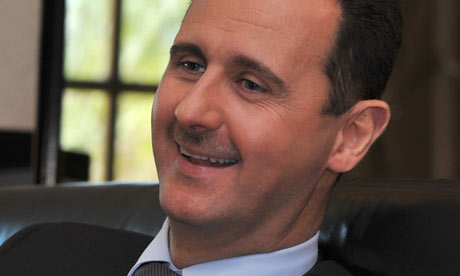
A New Middle East Strategy for the Age of Obama

By Marc Gopin for Syria Comment

The key to the future of the Middle East is a revolution in the Syrian/American relationship that will help to re-balance the American historical bias in favor of reactionary forces in Israel. The shift of Syria towards an alliance with the United States will signal a significant shift away from a geographical and religious divide between the Northern and Southern Belt of the Middle East, between Sunni and Shi’ite, and between pro-Western and anti-Western divides, that have all plagued the region for decades. It will also usher in the possibility for Iran to follow, especially now that Khatami, smelling the tea leaves from the Obama Administration, has thrown his hat into the presidential race.

Syria’s friendship with Turkey and its alliance with Hezbollah and Hamas also have the potential to usher in an era of Islamist empowerment that will be based for the first time not on force, threats, violence and revolution but on power sharing. From Turkey to Lebanon to Palestine the potential exists for the tolerant forms of Islam that are indigenous to Syria and Turkey to form the basis for a new approach to politics in the Middle East.

This sounds odd, considering the track record of Hamas and Hezbollah, but that track record of violence is largely related to the Arab/Israeli wars. That is precisely where Syria’s alliance with America could lead us in an utterly new direction. If the United States embraces Syria, then it will set the stage for a greater place of leverage for Syria to play in surrounding the Israeli leadership with states and movements that are unambiguously offering Israel full peace for full return of the occupied territories and full engagement in the establishment of a viable Palestinian state.

Not only should the United States remove permanently the threat of regime change in Syria, it should promote a strategic and military alliance with Syria and Turkey. This will have the effect of encouraging moderate nonviolent Islamic ideologies in the region, pulling it back from radicalization and splits along Sunni/Shiite and secular/extremist lines. Syria, Turkey and even Lebanon can be helpful in this regard. Syria has a history of deliberate religious pluralism and moderate, Sufi Islam, and it is the same with Turkey. The key is an ideological shift toward an economic and military alliance with the West.

If Syria moves in this direction it will make it that much harder for the Israeli hardliners to make the case in Washington that ‘there is no one to talk to’. This myth needs to be put to rest once and for all, but it cannot happen without significant efforts on the part of the new generation of excellent Syrian policy makers and their supporters. Let me explain.

The extremists in the pro-Israel camp will see a Syrian/American rapprochement as a setback for Israel. Not so. With America in the middle, guaranteeing everyone’s security, there is a far better chance of reaching a deal that includes Syria, Israel and Palestine, with Saudi, Egypt, and Jordan acquiescing to a Palestinian democracy that will surely include Islamists.
In this regard, Turkey is paving the way for the de-militarization of Islamism. With coaxing this may be the necessary transition for Egypt as well. Ironically enough the secular Syrian regime is leading the way to a new Middle East with Islamist parties like Hamas as part of the ruling elite. Religious commitments to nonviolence, such as are embodied in the philosophy of the Grand Mufti of Syria, are the key to these peaceful transitions. Islamist politics will be eliminated as an existential threat to all regimes, and will instead become just another Arab experiment with politics and governance, in a similar way that it is being handled by Jordan. The key is that Islamist political empowerment does not come through subterfuge, force and revolution, the terrible mistake of the Brotherhood in Syria over thirty years ago. Turkey is the key model, and it must lead to serious discussions on the demilitarization of Hezbollah or its nationalization.

The problem of demilitarization of Hamas and Hezbollah is that they are the key focal point to resistance of Israel and the continuation of a military approach to the Palestinian/Israeli conflict of almost a century. This can only be addressed through aggressive U.S. mediation and satisfaction of all parties, especially the full gamut of Palestinians, as to their needs and interests in developing an independent Palestinian state. And certainly a very tough negotiation will be Iran’s nuclear weapons program, but this too can be managed with full normalization of American/Iranian relations.

Here is the most important point. If all tracks are pursued vigorously and simultaneously then the nonviolent wagons of diplomacy will start to circle around Israel with the Arab Peace Plan in hand, with the United States, and the Quartet, at the helm.

Here is the big caveat, however. The American people, their agents in Congress, need to be on board with this process, or at least confused by it. They cannot be a fifth column, a stealth weapon of radical Republicans, to demonize the White House as anti-Semitic, a nightmare which would set the stage for a bitter battle in America over anti-Zionism and anti-Semitism; this will only benefit Sarah Palin, Rush Limbaugh and Karl Rove as they seek some raw issues that could divide America from the White House. And Netanyahu is not beneath stimulating a Lobby-induced war on the White House as antisemitic.

The United States is a far more pro-Jewish, philo-semitic country than the Arab world wants to face, for a variety of historical and ethical reasons. But it is also a country that likes to see itself standing for justice and freedom for all peoples.

An emotional war over anti-Semitism and Israel’s fate could be spawned in the United States, a war that will take down this President from his ambitious and idealistic agenda. That is why Mitchell and Obama will not move aggressively unless there is a counter-strategy in place that comes from outside the White House, a lobbying strategy that has yet to receive serious backing from the progressive or the Arab worlds.

In this regard there has emerged in the last few years a significant progressive Jewish strategy in Washington, which is dovetailed by an important resurgence of realist thinking of the variety of Brzezinski and Scowcroft. The Jewish community voted by over 83% for Obama, in addition to over 70% of them expressing a clear commitment to a two-state solution. The Jewish establishment and the Lobby do not represent these people and they have not had a voice until now. The same problem pertains among evangelicals. 50% agree with a two-state solution according to Pew polls, but their lobbyists will vote for or against whatever the so-called pro-Israel Lobby tells them to do.

J Street and Brit Tsedek are beginning to change this. They are still woefully underfunded by comparison to the Lobby, but they are setting a precedent for a contest with the Lobby for money and votes. Money and votes are the two elements of a Washington strategy. They are expressed by contributions, by promise of votes. But mostly it is about attention to congressional offices which is targeted, specific, and constant. Brit Tsedek now has 40,000 Jewish members and a thousand rabbis ( a third of American rabbis!), the largest ever number for Jewish progressive voices in Washington, and J Street’s favorite candidates won overwhelmingly on November 4. J Street has a mailing list of over 100,000, and more importantly they understand the Obama strategy of empowerment of average people through the technical wizardry of social networking and ‘click-friendly’ contributions. The central and contagious message of these groups is that they are pro-Israel and pro-Peace.
If they truly care about the Palestinians then the Arab world and the Muslim world, and Syria in particular, need to enter the fray in Washington with a level of investment never seen before.

There must emerge a parallel strategy between the progressive Jewish world embodied in J Street and Brit Tsedek, and the Arab world. Syria must play an essential world in this capture of the imagination of Americans, including Jews and evangelicals. This will take a concerted campaign with serious money, media, extensive international visits and exchanges of all sectors of the populations, and the coaxing of many Arab states into an allied strategy for the heart and soul of Washington and the American people.

It is essential for this public relations campaign to be accompanied by public and citizen diplomacy that will help more and more of the American electorate, including Jews and evangelicals, to envision the possibility of new Middle East. It would be enormously helpful if this public relations blitz included very highly publicized alliances and exchanges between serious Israeli peacemakers who the Syrians know are substantive–of which there are hundreds–and their Arab counterparts. This will be the real emotional glue that cements a new Jewish and American attitude to the region. The key with public relations is creating a compelling and utterly new vision of future possibility, but in this case the product is not a vacuum cleaner or a car, it is coexistence, tolerance, a region at peace, a region worth investing in and engaging, in the deepest sense.

All of this is in the long-term interests of Israel and the future state of Palestine. All parties may not know this yet, but this is the only way for them to live securely in the Middle East. They just don’t know that yet, and the hard line of Israel will wring everything they can from fear and violence at the ballot box. They have to be outfoxed politically by the Arab world, but not militarily, and the answer is in America. The race must begin for the soul of America.

Everything in this struggle is about persuasion, the persuasion of millions of people in the Middle East to take a chance on peace, but the most important constituency is in the United States. Most Jews and Arabs want a viable two state solution but their way of dealing with each other is presently out of control, especially these days from Israel’s side. But the real spoilers here are unwittingly the people of the United States. They have been conned, sold a ‘bill of goods’ as to what will keep Israel safe–force and violence. Shifting their opinions even slightly is what Obama, Mitchell and Clinton, need in order to finally be the honest brokers in this conflict. The more of the American public that is calling and visiting congressmen the bolder they can be. This is power. The Arab Peace Initiative should be plastered on every bus, in every journal, just as the environmental movement is doing now to finally create the necessary paradigm shift. Boycott and anti-apartheid paradigms are not the answer, media and congressional blitz is the answer, votes, contributions. This is how Washington works.

This is not undignified. This is not the Syrians or the Arab world proving that they are nice people. This is the way Washington changes, for better and for worse. The Obama election has proved the positive potential of this. The Chinese understand it, the Saudis understand it, the Indians understand it. Now it is time for there to be a clear Arab message in America that is not anti-Israel but pro-Palestinian, and pro-comprehensive peace.

This is the surest path to a prosperous Syria flooded by Western tourists, a Syria at peace, a Syria in a productive relationship with all its neighbors, including the new State of Palestine, a Syria in possession of the Golan, and under no more threats. The path to a new Syria lies in a psychological evolution of the American electorate, and there is no better time for such a change than right now.

_______________________________________
Marc Gopin is the James H. Laue Professor of Religion, Diplomacy and Conflict Resolution, and the Director of the Center on Religion, Diplomacy and Conflict Resolution at George Mason University’s Institute for Conflict Analysis and Resolution.

Is Syria Putting a Price Tag on a US Brokered Peace with Israel?

Is Syria setting a Price Tag on a US Brokered Peace with Israel?
By Ehsani2 and Joshua Landis
Syria Comment, 6 February 2009

Aleppine Textile Merchants

Aleppine Textile Merchants

No country has escaped the recent global economic catastrophe. The world is now caught in a vicious negative loop in which weakness begets more weakness. The Titans of banking are almost all insolvent.  Indeed, the recent global economic data have been breathtaking in their depression-sized declines. Although slow to respond, policy makers have recently thrown everything they have at the problem, but to little avail. Global wealth destruction has been too great and too fast to reverse. Stock markets have swooned by nearly 50%, losing some $30 trillion in wealth. The global drop in house prices is estimated to have caused a further $30 trillion in losses. The world’s pocketbook is $60 trillion lighter than it was a little over a year ago. This number is higher if one adds to it other assets that have also declined in value. The staggeringly large bailout packages are but a drop in the bucket when compared to the problem they are designed to solve.  At the beginning of the crisis, the consensus was that only the US would be effected by a problem that many saw as being distinctly American, but as 2008 wore on, it became clear that Europe and the emerging markets were being hit just as severely as the U.S. While the effect on individual countries has varied, no country has escaped unscathed.

What about Syria?

With an embryonic banking sector, low leverage ratios, and no stock market, Syria seemed ideally positioned to escape the brunt of the global rout.  But Syria has not been so lucky.  Gathering storm clouds are evident in the shifting statements of Syrian Government officials.

I list below a few examples of the worried pronouncements of Syria’s economic leaders during the last month.

Mohamed Al-Hussein (Finance Minister, Jan 26th): “If the Syrian economy slows down while the drought of the past few years continues, then the situation will be difficult” –

Two days later on the 28th, the Government decided to call a special cabinet meeting to “discuss the state of the manufacturing sector and the need to help and modernize it to help it confront the effects of the global economic crisis”

On Feb 3rd, the finance ministry issued a new decree restricting importers of Chinese products to stick directly to the country of origin. This measure was aimed at “protecting the local manufacturers”.

On the same day, the President issued legislative decree No. 6, establishing a commission for the development and promotion of exports.

Amer Loutfi (Minister of the Economy and commerce):  “The new challenges that Syria expects to face as a result of falling petroleum revenues, increased competition in global markets, and adherence to lower tariffs demanded by world trade organizations forces us to develop and diversify our exports and to help our domestic manufacturing base.

These statements and decrees indicate growing government anxiety. Syria is headed for difficult economic times. But it is Deputy Prime Minister for the economy, Abdullah Dardari’s interview with Reuters that really captures Syria’s revised economic outlook:

Here are some key quotes:

“The U.S. should lift its economic sanctions on Syria before relations improve between the two sides. The lifting of such sanctions will likely have a positive effect on increased foreign investment in the country”.

“Though the effect of the sanctions has been limited judging by the nearly 30% increase in foreign direct investment, the lifting of sanctions will remove psychological barriers for some foreign investors”.

On the subject of the impact of the global economic crisis on Syria, Mr. Dardari was blunt:

“Syria’s foreign trade makes up 70% of GDP and this means that the country’s dependence on external factors is very large. We are studying the ways this crises is affecting investments into the country. Syria hopes to attract investments in infrastructure projects that include energy, electricity, better roads and airports and it hopes to do this through a partnership between the private and public sectors.”

Mr. Dardari proceeded to specify that “Syria’s infrastructural needs are estimated to cost 50 billion dollars over the next 10 years.

In addition, Syria needs to build some 200,000 residential units within five years;  it must construct some 40,000 additional hotel rooms by 2015 in order to accommodate the expected 8 million tourists by that year.

Conclusions:

Syria’s politicians are much like those in other countries.  Few predicted the extent to which their economy would be hit by the global credit crisis. The Russian ruble is under serious attack by currency traders and has fallen more than ten percent over the last few days. On Wednesday, Kazakhstan was forced to devalue its currency by 25 percent. Scores of countries are experiencing the same economic losses.

While it is tempting to blame the global crisis for the inevitable economic weakness ahead, Syria’s manufacturing sector has been battling on a number of fronts for the past few years.  For decades, it enjoyed protection from foreign imports under a program called “national protection or Himaye wataniye“.  High tariffs on imports gave local producers a false sense of security as they sold inferior products at high prices.

Recent economic reforms have opened Syria’s doors to a great array of new imports; tariffs between Arab states have been eradicated, forcing Syrian manufacturers to compete with inexpensive imports for the first time. Chinese goods, falsely labeled as “made in the UAE” are now entering Syria with few mark ups. To make matters worse, the Syrian pound has risen in value against the dollar at the same time that the government has slashed subsidies on petroleum and electricity.  Local producers are reeling from these many challenges.

Government officials have responded with a few stop gap measures to protect local producers, such as restricting the source countries of products and by threatening to buy the products that carry suspiciously undervalued invoices. Importers commonly avoid paying import duties by low-balling purchase prices on their invoices for non-Arab produced imports. While such measures sound reassuring, they are notoriously hard to implement and police. Syrian import duties are simply too high and importers will continue to find ways to avoid exorbitant duties, whether by outright smuggling or by falsifying invoices. It is very hard to keep inexpensive foreign manufactures from getting into Syria. This is a war that local producers stand little chance of winning.

Syria needs to use the recent drop in commodity prices to devalue its currency and improve its export competitiveness. It also needs to broaden its tax collection base. This can be done by lowering exorbitant import duties that force merchants to cheat and by tightening income tax collection on the country’s wealthy and well off. If Syria’s burdensome system of subsidies is continued, the  government will have to find ways to rob Peter in order to pay Paul.

Mr. Dardari’s interview is noteworthy for two reasons.  Until recently, the official line of the Syrian government has been that the economic sanctions imposed by the United States were harmless because the country was able to attract the foreign investment it needed despite them.  Mr. Dardari now admits that the lifting of the sanctions will “remove a psychological barrier” to new investment.  Indeed, Mr. Dardari argues that the lifting of economic sanctions should be an important condition for resuming full dialogue with Washington.  One can only conclude that US sanctions have been a serious impediment to foreign investment in Syria and a drag on the economy. Undoubtedly, so long as President Bush was in the White House and calculating how he could hurt Syria, Damascus had to put on a good face and deny that sanctions were working, whether out of stuborn pride or simply to notify Washington that it would not “do a Qadhafi” or knuckle under to threats. Now that Obama is speaking the language peace and reconciliation, Damascus can be more honest.

While it is true that Damascus has incurred little foreign or domestic debt, the fact remains that Syria’s infrastructure must undergo massive improvements on the order of $50 billion over the next ten years in order to grease the wheels of commerce and keep its main industries, such as textiles, cotton spinning, plastics, cement, and canning from being done in by cheap imports. Oil refining, electric plants, modern ports, well built highways, and modern airports are all in short supply. Syria needs major capital outlays in order to prosper. Without proper infrastructure and dependable and inexpensive electricity, no company will chose to open a new factory in Syria. This is the first time that a Syrian official has attempted to place a price tag on the task at hand.  Attracting close to $ 5 billion a year will not be an easy, but it is not impossible if Syria’s stars are all alligned.

What are the political implications of Dardari’s statements?

  • Is the elimination of sanctions and $50 billion worth of infrastructure improvements a price tag being placed on a potential US brokered peace with Israel? Gulf countries, the World Bank, and other international investors and donors will undoubtedly be asked to contribute to Syria, whereas US taxpayers will have to subsidize the large compensation package that Israel will demand in for Golan.
  • Is Dardari floating a balloon in the never ending internal war between socialists and free traders? Is this only the latest chapter in the skirmishes between those officials who seek to protect vested interests in state-run companies, subsidies, worker unions, and Baathist politics and those merchants who want modernization, peace now, and pro-Western policies that place development needs over Syria’s regional role?
  • Is Dardari merely warning Syrians that they face tough times ahead?
  • Is he trying to shift blame for his inability to push economic growth to 7% by the year 2010, something he promised he would achieve five years ago?

Old Damascus – Restored or …? Beit Rumman as an Example

Beit Rumman - One of the nicer new Boutique Hotels next to Bab Touma

Beit Rumman - One of the nicer new Boutique Hotels next to Bab Touma

Beit Rumman, the boutique hotel in old Damascus pictured above, gets wonderful write ups, and typifies the handful of new hotels that have opened in the old city last year. The renovation process took years to complete. A crew of skilled artisans from Maaloula polished every stone and chiseled new ones to replace those that had been lost. The central fountain and mosaics were restored with great care, new plumbing, electricity and carved woodwork was put in. Maria Rumman and Ghimar Deeb, the owners, spent every weekend trolling the souq for old antiques to adorn the six luxurious rooms and piano bar and sauna in the basement. They oversaw every aspect of the restoration. hiring an art historian and a super architect to return the house to its 19th century glory. Newly carved wood ceilings were installed in each room and elaborately painted according to original Ottoman styles and patterns. It is hard to imagine the amount of work and love that goes into restoring one of these hotels. Maria Rumman is the head of the International Organization of Migration office in Damascus. She helps resettle Iraqis once the UNHCR has cleared their details, she oversaw the Iraqi elections among refugees in Syria. Her husband Ghimar is the head of the UNDP’s office of Good Governance in Damascus. He is a lawyer who got his master’s degree at the University of Iowa as a Fulbright student after graduating from Damascus U. For the past four years, they have poured their hearts into restoring Beit Rumman. Don’t be surprised if you see them in the piano bar with their beautiful daughter, Meso, having a drink after work and welcoming guests.

Old Damascus struggles to cope in the new Syria

DAMASCUS, Syria (AP) – Scenes from the old, walled city of Damascus: A carpet dealer skilled at multilingual bargaining is cajoling a tourist into his showroom. A rhythmic tap-tap-tap resonates from a doorway as an artisan hammers silver strips into a richly decorated brass tray. A Syrian woman does the day’s shopping, visiting one stall for meat, another for olives, a third for flat bread.

The charm of the ancient part of the Syrian capital has always been the easygoing harmony with which tourists and Damascenes share the narrow alleys and covered markets. But now this crowded district – at the center of what’s believed to be the world’s oldest continuously inhabited city – is in danger of losing this endearing character.

Aggressive investors flush with cash have pushed property prices so high that homeowners increasingly are selling longtime family properties and moving away. Others are fleeing the pollution and congestion generated by dozens of new trendy restaurants and boutique hotels catering to wealthy visitors and Damascus’ expanding hip and rich crowd.

The threat to the old quarter – by one estimate, its population already has dropped by about half from some 60,000 in about 15 years – is a byproduct of Syria’s disorderly shift from socialism to a free-market economy, which began in the early 1990s and accelerated after President Bashar Assad took office in 2000.

The ideological shift created a virtual free-for-all climate for ambitious businessmen linked to the Syrian political elite, even as it deepened the potentially dangerous division between the city’s rich and poor.

Now, the debate on how much latitude to give private enterprise is gathering steam as authorities try to balance revitalizing the 316-acre old city with preservationist goals. Already, some 50 hotels and 120 restaurants and cafes have been licensed, and among the many up and running are some shoddy imitations of traditional Arab architecture.

“This city is being turned into an amusement park,” complained Hikmat Shatta, a French-educated architect, describing the changes overtaking the neighborhood where he grew up and still lives.

“In some parts, I walk with my eyes fixed on the ground,” Shatta said. “I am ashamed to look up and see what is happening. We are moving from the authentic to the bizarre and ridiculous.”

Shatta’s two-story home dates to the 19th century, and it’s such old Arab houses that are the primary victims of the entrepreneurial onslaught. These are spacious dwellings whose splendor – richly tiled floors and intricately inlaid wooden ceilings – is revealed only as a visitor steps through the entryway, typically an unpretentious iron door set into plain brick walls.

In the maze of alleys, cobblestone streets, Turkish baths, coffeehouses and historical sites that form the old city, the prospect of most residents disappearing is especially troubling because the area once exemplified Syria’s religious and ethnic harmony. Most of the Jewish inhabitants are gone, but the Muslims and Christians who remain live in peace, their places of worship sometimes just steps apart.

The human diversity is reflected in the historic sites. The Omayyad Mosque, built in the 8th century, is on a site that earlier held a temple dedicated to the Roman god Jupiter and a Christian church. Today the mosque has shrines housing what are said to be the heads of both John the Baptist and Hussein, the grandson of Prophet Muhammad.

Nearby is the tomb of Saladin, the 12th century Muslim warrior who fought the Christian crusaders. The old city also is home to storied Straight Street where, as the Bible recounts, St. Paul regained his sight and was baptized.

The area, believed to have been continuously inhabited from as early as 5,000 B.C., also has hundreds of small, vibrant businesses trading in everything from oriental spices and gold jewelry to brass trays, Persian rugs and Damascene furniture with mother-of-pearl and woods of different hues inlaid into geometric designs.

The old city was long shielded from development because Syria’s radical politics isolated the country, but now it is attracting European tourists, and this poses complex changes, says Nazir Awad of the state’s Antiquities Authority. He says authorities must simultaneously try to curb pollution, protect existing homes, attract new residents, and revitalize the area without changing its character.

“It is not easy, for example, to turn the old city into a no-traffic zone to reduce pollution levels, but we are curbing industrial activity and looking to move some of it out,” he said at his downtown office. “We also need investment, but of the kind that protects the area and creates jobs. The old city cannot remain strictly residential.”

Not everyone opposes the developers’ invasion. Some longtime residents say the area was slowly dying, with many inhabitants leaving for modern neighborhoods to escape the high cost of maintaining old homes built of mud bricks and plaster.

As a result, poor migrants from rural Syria moved in, lured by spacious homes and low rents, and the area went downhill. Some old-timers say that until the old city attracted investors’ attention in the mid-1990s, many of its streets were deserted once stores closed shortly after nightfall.

“What we have now is the better of two evils,” said Samer Antoine Kozah, an art dealer who lives in an eight-room house that has been in his family for about 150 years.

“Yes, the old city is threatened, but let us be realistic – it was dying. The restaurants and hotels have changed my life and disturbed me, but I thank their owners for doing business here,” said the 51-year-old Kozah, sitting in his gallery before a large photograph he took of the old city at sunset.

Not far away, architect Hakam Roukbi was overseeing the final stages of a two-year, multimillion dollar project to restore a large Arab-style house once owned by a prominent Jewish family. He chuckled politely when a visitor asked whether the house would be turned into a museum.

The Farhi family home, he said, would be a hotel of 22 opulent rooms and suites catering to VIP guests of the government. Roukbi, the point man for a group of wealthy investors, suggested that the hotel’s guests would be people who appreciate the strict attention to detail in the restoration.

“We spent six months just clearing up the rubble from the house,” he said at his onsite office as workers sandpapered walls nearby. “And we did all the work with the same material used when the house was first built.”

Balancing “Change” and “Prudence” will be an arduous process for President Obama

by Alex for Syria Comment

I thought of writing “an open letter to President Obama”. But I kept remembering that he has a Ph.D. From Harvard, and I don’t. For the first time in many long years, I do not feel the urge to lecture the US president about everything that he does not seem to understand about the Middle East.

Then again, President Obama’s first comments about Gaza were not very assuring. Immediate reactions on the Arab side were of two kinds. “I knew it, he is just like Bush”, or “Give him time, the man can not upset AIPAC from day one”

During his inaugural speech President Obama said: “our power grows through its prudent use; our security emanates from the justness of our cause, the force of our example, the tempering qualities of humility and restraint…”.

Besides prudence and temperance, the president often promised … “change”. Yet, his approach to the Middle East until this date, clearly constrained by the obvious sensitivities of the traditional allies represented by established Washington lobby groups, does not reflect a degree of fortitude necessary to change America’s shattered foreign policy in the Middle East.

Watching and reading coverage of the events in Gaza it was clear that when it comes to the Middle East, the United States has been systematically and successfully brainwashed. Aside from the few cautious and polite exceptions, the only politically correct analysis by American politicians or journalists about Gaza had to stay focused on the importance of “Israel’s security” to the United States. If anyone felt the need to express his or her concern about the thousands of Palestinian children and mothers killed or injured, “civilian casualties on both sides” was the proper way to express concern.

The audacity to equate Israel’s 3 civilian casualties to the 1335 Palestinian ones.

Those who clearly deviated from the strict guidelines of Israel’s numerous watchdogs were mostly the 80+ year old former officials who did not care anymore about their political future in the United States … 81 year old Zbigniew Brzezinski, and 85 year old President Carter.

To understand how far President Obama needs to “change”, compare his stated position on the events in Gaza with those of respected Jewish intellectuals like Uri Avneri, Gideon Levy, Henry Siegman

Arab moderate / Arab resistance Cold war

Aside from the difficulty of taking a more balanced approach to the Arab/Israeli conflict, President Obama will also need to reevaluate his country’s position on the various conflicts in the Middle East which are complicated by an obvious cold war between two Arab camps: “Arab Moderates” such as Egypt, Saudi Arabia, Jordan and the Palestinian Authority facing Syria’s “resistance” camp that includes popular Palestinian and Lebanese factions and is reliably backed by the two large non Arab Muslim countries in the Middle East, Turkey and Iran, in addition to many Arabs countries like Algeria and Qatar, home to the CNN of the Arab world, Aljazeera.

Mubarak gets a hug from the Israeli prime minister, while Syria's Assad turns his back

Mubarak gets a hug from Olmet, Assad turns his back

Opinion polls have shown that the resistance camp represents the feelings and aspirations of the vast majority of “the Arab street”.

Besides the very active and influential Likud lobbyist group (falsely promoted as an American Jewish lobby), there is also a number of smaller lobby groups representing the interests of “Arab Moderates” in Washington (mainly Saudi Royal family and Lebanese M14 warlords) who are still actively working with their Neocon friends to convince the new President not to speak to Syria and Iran just like they continuously, and successfully, lobbied, and constrained, his predecessor for years and years.

Although there is a welcome new humble tone from President Obama, symbolic gestures like granting his first interview to a Saudi TV station Al-Arabiya, were already tried by the Bush administration.

It is widely known that Syria wants America’s help in negotiating a settlement with Israel that includes the full return of Syria’s occupied Golan Heights. But what is not recognized by many is that a prerequisite to a genuine friendship between the United states and Syria’s resistance camp will be for the United states to recognize the right of all countries in the Middle East (and not only Israel) to exist as friends of the United States, without forcing them to become “American puppets” like America’s current set of friends in the Arab world.

Will president Obama be willing to champion such an arrangement? Is the rest of old Washington ready for this “New Middle East”?

There is probably no going back to the old Middle East. President Bush’ war in Iraq, and Israel’s two unnecessary destructive wars in Lebanon (2006) and in Gaza (2008), in addition to all the other disasters that were produced in Tel Aviv or in Washington the past eight years, led to irreversible changes in the Arab world. Israel’s actions are driving more and more Arabs to believe in resistance as the only language Israel (and its supportive friends in the “international community”) can understand and respect.

I can not publish all the emails I have been receiving from secular, Christian or Muslim, highly educated Arab friends who wrote variations of the following: “they [the Europeans and Americans] are all S.O.B.’s, … we need to forget about them and build our strength to show them we are not insects they can kill whenever they wish”.

These are the secular intellectuals. You probably can guess how the younger and angrier ones now feel.

No one respects Israel anymore (many Arabs used to). No one is afraid of Israel and its friends anymore … very few still want to have peace with Israel before that country is treated for its dangerous psychological sicknesses.

Read the comments in Arab blogs for yourself. Angry Turkish Prime minister Erdogan, and not the “moderate” Hosni Mubarak, is everyone’s hero. Israel’s many friends in the media can not control blogs, they can not control YouTube, they can not control email attachments. Online, It is not Israel versus the “Arab terrorists”, it is Israel versus 1.3 billion Muslims.

The Middle East is in motion, and leaders of the “resistance” block who have been fighting for the steering wheel for the past few years, seem to be set to take exclusive hold of it. Next time there is an Israeli led (and Moderate Arab supported) slaughter fest in Gaza or in Lebanon, Mubarak may not be able to deliver and the “international community” may not be able to save him through another well attended summit in Sharm El-Shaeikh. Many believe he is already on his way to follow the Shah of Iran and President Sadat. Both of them American allies that were promoted and supported despite increasing internal opposition.

Sharm El-Sheikh Summits

The latest summit to be held at Sharm El-Sheik, Egypt, was hurriedly organized, and attended, by only (I’ll explain later) ten Arab moderate and Europeans leaders in order to reach a convenient closure to the bloody results of Israel’s “the boss has gone mad” strategy of dealing with “Hamas”, or “Palestinian people’s resistance” as the rest of the Arab world calls it.

The other reason for holding that summit was to give Egyptian President Hosni Mubarak and Palestinian authority President Mahmoud Abbas the essential reinforcement they required.

How effective or necessary was the 2009 Sharm El-Sheikh Summit? Why did the leaders of Italy, Spain, England, Germany and France need to sit on that table?

Thirteen years ago, in 1996, there was an even more impressive Sharm El-Sheikh summit … 27 world leaders assembled on a short notice (after receiving last minute invitations from President Bill Clinton) to … again, support Israel against Hamas and to support Egyptian President Hosni Mubarak and the head of the Palestinian authority at the time, Yasser Arafat.

When the summit ended, CNN’s reporter concluded “… at its close, some doubted whether the hastily assembled meeting had any real substance.

Syria was invited, but refused to attend the 1996 Sharm Summit.

Isn’t it about time to recognize that, the number of “Arab moderate” and world leaders assembled not withstanding, all the regional “peace” initiatives that did not respect the legitimate concerns of the the Arab people did not go anywhere?

Throw the donkey a carrot:

The notion that visits to Arab countries by American or European leaders should be used (except in emergencies) as a rewarding tool for good behavior is something that President Obama might need to reconsider if he is genuine about change.

He made it clear that he intends to talk to his enemies and his adversaries. Yet, this week, the president dispatched Mr. George Mitchell, his new envoy to the Middle East to visit Israel, Egypt, Jordan, Saudi Arabia … but not Syria.

Is it not prudent to talk to Syria? … or is the Obama administration hoping to again use future visits as potential carrots in exchange for a change in Syria’s behavior?

The real Cost of conflict in the Middle East

Can any of you guess what is the total cost of conflicts in the Middle East? Do you know how many Iraqi children are not in school because of war and sanctions? What would be Israel’s per household yearly dividend if peace breaks out?

India’s Strategic Foresight Group, a Bombay based think tank, came out with a new report on the Cost of Conflict in the Middle East. It is the first report of its kind, with 97 parameters to measure cost, moving beyond the usual economic and political costs and looking at social, human, environmental and other areas, covering Israel-Palestine, Lebanon, Iraq, the broader Middle East region as well as a section on the costs borne by the International Community.

The report was prepared after a series of workshops with neutral agencies such as the governments of Turkey, Norway, Switzerland, and the first lady of Qatar

Here is a promotional video that shows some of the report’s depressing figures.

For those in Israel who think they are fooling the Arabs through perpetual negotiations that are designed to go nowhere, and for my Arab friends who want to wait another 50 years until they defeat Israel, the total cost of the conflicts of the Middle East since 1991 is estimated at … 12 Trillion dollars.

We all need President Obama to succeed as a peace maker. There is no other hope, but he can only succeed if he seeks peace among equals.

Obama Talks with Syria Begun

President al-Assad Meeting US Congressional Delegation

President al-Assad Meeting US Congressional Delegation

Obama has begun discreet talks with Iran, Syria

WASHINGTON (AFP) – US President Barack Obama has already used experts within the last few months to hold high-level but discreet talks with both Iran and Syria, organizers of the meetings told AFP.

Officially, Obama’s overtures toward both Tehran and Damascus have remained limited.

In an interview broadcast Monday, Obama said the United States would offer arch-foe Iran an extended hand of diplomacy if the Islamic Republic’s leaders “unclenched their fist.”

Meanwhile, his secretary of state Hillary Clinton warned that the Israeli-Syrian track of the Middle East peace negotiations took a back seat to the Israeli-Palestinian track, especially because of the recent war in Gaza.

However, even before winning the November 4 election, Obama unofficially used what experts call “track two” discussions to approach America’s two foes in the region.

Nuclear non-proliferation experts had several “very, very high-level” contacts in the last few months with Iranian leaders, said Jeffrey Boutwell, executive director for the US branch of the Pugwash group, an international organization of scientists which won the Nobel Peace Prize in 1995.

Former defense secretary William Perry, who served in Obama’s election campaign, participated in some of these meetings focused on “a wide range of issues that separate Iran from the West: not only their nuclear program but the Middle East peace process, Persian Gulf issues,” Boutwell told AFP.

The Pugwash official declined to name the other participants, except to say they had considerable clout.

“We had very, very senior figures from both the Iranian policy establishment and from the US; people who have very close, good access to the top leaders in both countries,” Boutwell said.

“The Cable,” the blog of the specialist magazine Foreign Policy, said Iran’s permanent representative to the International Atomic Energy Agency (AIEA), Ali Asghar Soltanieh, was “among the Iranian officials who attended the Pugwash dialogues.”

Meanwhile, a group of experts under the auspices of the think tank, the United States Institute of Peace (USIP), announced Thursday that they met for more than two hours in Damascus with Syrian President Bashar al-Assad.

The experts included Ellen Laipson, a former White House adviser under president Bill Clinton and a member of the Obama transition team.

Assad struck positive notes, the participants in the meeting said during a press conference at the Washington headquarters of USIP, a bipartisan think tank financed by Congress.

“His phrasing was 70 percent of our interests are potentially shared and 30 percent are not. And he said: let’s work on the 70 percent,” said Bruce Jentleson, who was the disarmament advisor to former vice president Al Gore.

The Syrian president himself revealed on Monday that “dialogue started some weeks ago in a serious manner through personalities who are close to the administration and who were dispatched by the administration.”

The United States accuses Syria of supporting “terrorist” groups such as Hezbollah and Hamas, of destabilizing Lebanon and of allowing armed men to transit its territory to fight US-led forces in Iraq.

Washington and Tehran, which have had no diplomatic ties for nearly 30 years, differ sharply over Iran’s nuclear program. Washington charges the program is a covert military one, but Tehran says it is for nuclear energy.

Elbaradei: Israel violated international law in Syria
Yitzhak Benhorin
Published: 02.01.09 / Israel News

IAEA chief says that instead of using unilateral force, Jewish state should have provided nuclear watchdog with intelligence on alleged Syrian reactor

WASHINGTON – Mohamed ElBaradei, the director of the International Atomic Energy Agency (IAEA), said Saturday that Israel “violated the rules of international law” by bombing an alleged Syrian nuclear reactor in September 2007.

Speaking to the Newsweek magazine, ElBaradei said that instead of using unilateral force, Israel should have provided the nuclear watchdog with the intelligence it had.

Stick and Carrot

US demands Syria cooperate on nuke plan / Roee Nahmias

American ambassador to UN nuclear watchdog says Damascus must decide whether it plans to follow in Iran’s footsteps or cooperate on its alleged atomic program. A failure to do so, he warns, would lead to punishment measures.

“I have been very harsh on Israel because they violated the rules of international law on the use of unilateral force, and they did not provide us with the information before the bombing (with) which we could have established whether Syria was building a nuclear reactor,” the IAEA chief said.

In a sarcastic remark directed at the United States, ElBaradei said that the US was also to blame for “sitting on the information” for a year and a half after the bombing.

“Now we are doing our best to try to see what Syria was doing, but it’s like Iran. I cannot jump the gun and say Syria was building a nuclear facility because what we are doing now is trying to verify what was there,” he added.

During the interview, which was held at the margins of the World Economic Forum in Davos, Switzerland, ElBaradei also referred to the Iranian nuclear program, noting that Japan was also advancing a nuclear technology like Tehran.

The interviewer reminded the IAEA chief that Japan was not threatening to destroy Israel. ElBaradei replied that there had been a lot of offensive statements made by Iran, but that as far as he understood, Iran was interested in a one-state solution rather than in seeing Israel wiped off the map.

Direct dialogue without preconditions

ElBaradei went on to say that the world was facing a problem because the Middle East had become more extreme and Iran was very popular in the Muslim world. We must bolster the moderates and find a solution, and Tehran could be a very positive element in finding such a solution, he added.

He said the nuclear issue covered a lot of security-related, diplomatic and economic issue, and that what was needed was a “major deal” like the one US President Barack Obama has been talking about.

“You’re not going to have trust unless you have a direct dialogue. President Obama right now is saying he’s ready to have a direct dialogue without preconditions, based on mutual respect. I say this is absolutely overdue,” he said.

“You cannot treat Iran like a donkey, with carrots and sticks. This is a competition for power in the Middle East… It’s a competition between Iran and the West … Iran wants to have its role as a regional security power recognized.”

A report issued by nuclear monitors in Vienna last November determined that the building destroyed in an Israel Air Force strike in Syria had characteristics similar to those of a nuclear reactor. It also ruled that uranium had been found near the facility, which could have been used for enrichment.

The report stressed, however, that the findings were preliminary and that additional inspections should be held and Syrian documents should be probed before reaching clear conclusions.

A week after the report was released, ElBaradei told the Los Angeles Times that Damascus’ request for help in building a nuclear power station did not constitute a threat, and that the West’s efforts to hinder the project threatened to hurt the agency’s reliability.

The nuclear watchdog chief added that it was too early to judge the Syrian plan, noting that the American claims on weapons of mass destruction in Iraq had turned out to be wrong.

A Conversation with Mohamed ElBaradei, Sunday, February 1, 2009; B03, Washington Post

I have said for the past six years that the policy of building trust between the West (and the United States in particular) and Iran has failed completely. We haven’t moved one iota.

Do you think it is possible?

I think it is possible. I have been counseling privately and publicly that this is not going to happen unless there is a direct dialogue.

Cyprus stops Iranian arms ship to Syria-report
Fri Jan 30, 2009

JERUSALEM, Jan 30 (Reuters) – Cypriot authorities have detained an Iranian ship en route to Syria with a cargo of weapons, Israel’s Haaretz newspaper reported on Friday.

Quoting a European Union diplomatic source, it said Cyprus had acted after Israel and the United States requested that the Cypriot-flagged vessel be stopped.

Authorities contacted the ship and demanded that it dock in Limassol for inspection. Customs officials had unloaded part of the cargo and a large amount of weaponry, including artillery rounds and rockets, the paper said.

Cypriot authorities declined comment.

Israel believes the weapons were destined for the Lebanese Islamist guerrilla group Hezbollah or for Islamist Hamas militants in the Gaza Strip, Haaretz quoted Israeli sources as saying.

On Wednesday, U.S. military officials said personnel from the U.S. Navy vessel San Antonio last week boarded the Cypriot-flagged “Monchegorsk”, a cargo vessel travelling from Iran to Syria, and found a weapons shipment but for legal reasons did not confiscate the cargo.

The officials declined to say what kind of weapons were found or how many. They also would not be specific about where or when the incident occurred.

It was unclear whether this was the same ship which Haaretz reported had been apprehended by the Cypriot authorities.

Officials in Washington said the search was conducted as part of the U.S. Navy’s normal maritime security role in regional waters that stretch from the Arabian Sea to the Mediterranean.

The U.S. officials said the arms could not be shown to violate U.N. weapons sanctions against Iran and the vessel was allowed to continue on to Syria.

The incident came to light amid media reports that the U.S. navy has been ordered to intercept suspected Iranian shipments to rearm Hamas following Israel’s 22-day Gaza offensive against the Palestinian Islamist group Hamas

2009, une « année très difficile » pour l’économie syrienne
De Jihad Yazigi, En coopération avec : The Syria report, [email protected]

L’économie syrienne passera par « une année très difficile » en 2009, a affirmé le ministre syrien des Finances. Il s’agit de la première déclaration d’un officiel syrien sur l’impact négatif de la crise économique mondiale sur l’économie locale.

« La crise mondiale combinée à la sécheresse qui sévit dans le pays pour la troisième année consécutive me rend très inquiet » pour les perspectives de l’économie syrienne en 2009, a souligné Mohammad Hussein lors d’une réunion au ministère des Finances.

Le ministre a évoqué certains facteurs à risques, comme la baisse des transferts des expatriés syriens, la chute du prix du brut qui creusera le déficit public, le recul des investissements étrangers, notamment de la région du Golfe, la baisse du tourisme, le repli des exportations syriennes, et la baisse des intérêts sur les fonds gouvernementaux déposés à l’étranger. M. Hussein n’a toutefois pas donné d’estimations chiffrées.

L’autre source d’inquiétude est la situation difficile des entreprises publiques qui drainent les finances publiques, a-t-il ajouté. Sur environ 260 compagnies publiques, seule une vingtaine génèrent des revenus pour le Trésor, dont la compagnie pétrolière syrienne, la compagnie de télécommunications, la banque commerciale de Syrie et l’Organisation générale du tabac. Toutes les autres sociétés enregistrent des pertes ou des bénéfices nuls.

Le manque de données et l’absence de communication de la part du gouvernement sur le sujet empêchent les analystes de mesurer précisément l’impact de la crise sur l’économie syrienne.

Les grands projets de développement immobiliers, dont plusieurs sont menés par des investisseurs du Golfe, semblent se poursuivre. D’autres événements, comme la fermeture de certaines usines à Alep, suggèrent toutefois que les craintes de M. Hussein ne sont pas infondées.

Obama’s Long Shot for Peace
By NICHOLAS D. KRISTOF, Published: January 31, 2009, The New York Times

In any discussion of the Middle East at the World Economic Forum here in Davos, the central figure is a man who isn’t even here: President Obama.

Mr. Obama’s first moves are being greeted with vast relief by a broad range of players in the region. There’s also a whisper of hope that a serious American peace effort by Mr. Obama just might transform the Middle East, with the most promising route passing through Syria.

President Bush’s problem was that he loved Israel too much. He embraced Israeli leaders even when they responded to provocations by killing more than 1,300 people in Gaza, according to Gaza health officials – in retaliation for shelling that had killed fewer than 30 Israelis since it began in 2001.

This tilted policy was catastrophic for Israelis as well as Palestinians, for it undermined any chance of a peace agreement that is Israel’s best hope for long-term security. Now we’re starting over.

The way Gaza has raised tensions was evident in a panel discussion in Davos on Thursday when the Turkish prime minister, Recep Tayyip Erdogan, complained furiously that he wasn’t given enough time to respond to Israel’s president, Shimon Peres. Mr. Erdogan then stormed off the stage and threatened never to return to Davos.

Those pyrotechnics overshadowed a much more positive undercurrent here – enthusiasm for more American engagement in the region, in a more evenhanded way.

Ban Ki-moon, the United Nations secretary general, told me he was “very encouraged” by Mr. Obama’s first moves, like appointing George Mitchell as special envoy. “It’s high time for the Americans to take a bold initiative,” he said.

Tony Blair, the former British prime minister, praised Mr. Obama’s “good start” on the Middle East. Hoshyar Zebari, the Iraqi foreign minister, joined the praise and added: “There is an opportunity. I hope this opportunity will be exploited to the limit.”

Amr Moussa, the head of the Arab League, declared, “There are prospects of the U.S. returning to the role of honest broker, which we missed.” That view seems widespread here, and is shared by many in Israel as well.

“You have a complete breakdown of trust: ‘It’s my toy!’ ‘No, it’s my toy!’ ” said David Rosen, the former chief rabbi of Ireland, now based in Jerusalem as head of interreligious affairs for the American Jewish Committee. “We need someone who can move the parties beyond their own pain and vulnerability.”

There are two major ways in which the Obama administration can do that.

First, it must push to reduce the misery in Palestinian territories. A peace deal with the Palestinians is not possible today, partly because the Palestinians themselves are bitterly divided between Fatah and Hamas. But nothing can be done anywhere as long as scenes of Gaza suffering are unfolding on television screens.

That means that Israel must lift the siege of Gaza, completely opening the crossings. If Hamas resumes its unconscionable rocket attacks on Israeli civilians, then bomb the tunnels or strike Hamas targets in a proportional way, but don’t escalate.

Mr. Obama should also insist on a complete halt of settlement activity on the West Bank, and on an easing of the West Bank checkpoints that make life wretched for Palestinians. All that would also bolster moderates in the Palestinian Authority, making an eventual deal more likely.

Second, the United States should focus on a peace deal between Syria and Israel. With a Palestinian deal impossible for the time being, the path forward is to try to peel Syria away from Iran. If that strategy succeeded, Iran’s subversive influence would be reduced, Hamas might be moderated, and there would be momentum for further gains.

Turkey has been mediating talks between Syria and Israel, and Prime Minister Erdogan said those talks had been making great progress. “We were very close until the Gaza events,” added the Turkish foreign minister, Ali Babacan. That peace effort must be revived with strong American participation.

Most of the elements of the Israel-Syria deal were agreed upon years ago, and one of Syria’s main aims is better relations with the United States. That is something that the Obama administration can provide.

Mr. Ban has been conducting his own relentless shuttle diplomacy in the Middle East, and he said he was hopeful after recent conversations with Syria’s president and Israel’s prime minister.

All this is a long shot, of course. But Mr. Obama knows something about long odds coming home, and few people have made money betting against him.

Is an Israeli Jewish sense of victimization perpetuating the conflict with Palestinians?
By Akiva Eldar
HAARETZ, 30/01/2009

A new study of Jewish Israelis shows that most accept the ‘official version’ of the history of the conflict with the Palestinians. Is it any wonder, then, that the same public also buys the establishment explanation of the operation in Gaza?

A pioneering research study dealing with Israeli Jews’ memory of the conflict with the Arabs, from its inception to the present, came into the world together with the war in Gaza. The sweeping support for Operation Cast Lead confirmed the main diagnosis that arises from the study, conducted by Daniel Bar-Tal, one of the world’s leading political psychologists, and Rafi Nets-Zehngut, a doctoral student: Israeli Jews’ consciousness is characterized by a sense of victimization, a siege mentality, blind patriotism, belligerence, self-righteousness, dehumanization of the Palestinians and insensitivity to their suffering……

‘Erdogan-led Turkey can’t broker talks’

Turkish Prime Minister Recep Tayyip Erdogan “has lost all credibility as an honest broker in peace discussions,” a senior Israeli diplomatic official told The Jerusalem Post Saturday night, citing Erdogan’s recent anti-Israel rhetoric.

“As long as he is the prime minister of the country, Turkey has no place in peace negotiations or discussions,” the official added. “It is not a trustworthy diplomatic partner anymore.”

Until recently, Turkey had played a key role in quiet discussions between Israel, Syria, and other regional players.

The loss of the Turkish diplomatic channel was a serious blow to these discussions, said Foreign Ministry officials.

“The only parties that could reasonably play that mediating role now are the Americans under Obama, or, in theory, a European party,” the diplomatic official surmised.

At the Davos World Economic Forum on Thursday night, Erdogan launched a blistering attack on Operation Cast Lead, Israel’s offensive against Hamas infrastructure in Gaza.

This was followed by an impassioned defense of Israel’s actions by President Shimon Peres, Erdogan’s fellow panel member at the prestigious conference.

When Erdogan tried to respond, he was cut off by the moderator, and quickly stormed off the stage, accusing Peres of lying.

“It’s not that he criticized Israel,” said the Israeli official. “Other countries, such as the French, criticize Israel whenever they see fit. But Erdogan launched accusation after accusation and did everything possible to be disrespectful, including telling outright lies. He went as far as to publicly shame the president of the state of Israel,” the official said.

The Davos incident was the culmination of a month of angry tirades against Israel by the Turkish prime minister. Throughout the Gaza fighting, Erdogan blamed Israel alone for the escalation and called for it to be barred from the UN.

He accused Israel of “inhuman actions which would bring it to self-destruction. Allah will sooner or later punish those who transgress the rights of innocents,” he said.

In a January 13 speech to Turkey’s parliament, he accused “media outlets supported by Jews” of “disseminating false reports on what happens in Gaza, finding unfounded excuses to justify targeting of schools, mosques, and hospitals.

Israel plans to build up West Bank corridor on contentious land

The recent visit to Israel of George Mitchell, the former Senator returning for another turn as special U.S. envoy to the Middle East, was described in Israel as having been ‘not too bad.’

New Round Up (31 Jan 2009)

Palmyra by Ketan Gajria

Palmyra by Ketan Gajria

Israel’s army of bloggers to flood comment pages on the net..

Some 1,000 new immigrants and foreign-language-speaking Jews volunteer to army of bloggers set up by Absorption Ministry and Foreign Ministry with the stated objective of flooding blogs with pro-Israel opinions…

The Absorption Ministry is recruiting new immigrants and Jews living abroad who have access to a computer and who speak a second language to a volunteer effort to improve public relations for Israel on the internet. The campaign was launched last week.

In the cross hairs are problematic blogs, talkbacks, online social networks, online polls, Youtube videos, and more.

The ministry was amazed by the massive response to the effort. More than 1,000 interested applicants contacted them, of which 350 are Russian speakers, 250 English speakers, 150 Spanish speakers, 100 French speakers, and 50 German speakers.

A range of other European languages are also represented among the volunteers: Portuguese, Swedish, Dutch, Italian, Romanian, Hungarian, Polish, Greek, Bulgarian, and Danish. Persian-, Turkish-, and Arabic-speaking Jews also offered their services. The ministry even got an application from a Chinese speaker.

Some 60% of the applicants are immigrants, old and new. The rest are Jews living in the Diaspora, Israelis living abroad, and even non-Jews who support Israel and want to help out.

The Absorption Ministry forwarded the volunteers’ details to the Foreign Ministry, which briefed them via email and provided up-to-date material on the situation, including video clips that could help them in the field.

While the Absorption Ministry is tasked with recruitment, the Foreign Ministry will be responsible for directing the volunteers online. Each time the ministry identifies an anti-Israel trend on a foreign-language blog, news site, or other website, it will immediately put out a message to the volunteers to flood the site with pro-Israel opinions.

Absorption Ministry Director-General Erez Halfon commented, “This provides an important opportunity for new immigrants, who have always been a strong Zionist nucleus, to feel like they are contributing to improving Israel’s image in the world. The foreign-language-speaking immigrants are a real asset, and it is important to take advantage of this. From our perspective, it was like an emergency call up, and I am thrilled that the response was so great.”

Noam Katz, director of the Foreign Ministry’s PR department, said, “We are in the process of thinking how to utilize these volunteers not only during conflict, but also during regular times as well.”…

‘Palestine Today Is an Open-Air Prison’
Turkish Prime Minister Recep Tayyip Erdogan
Saturday, January 31, 2009; A15
Washington Post

Tensions between Israel and Turkey broke into the open at the World Economic Forum in Davos this week when Turkish Prime Minister Recep Tayyip Erdogan blasted Israel for its offensive in Gaza.

Do you expect President Barack Obama to play a more even-handed role between the Palestinians and the Israelis?

There is no justice right now. We expect justice from now on.

And did Bashard Assad agree?

President Assad from the start had a very positive attitude toward these talks. On that night, we were very close to reaching an agreement between the two parties. It was agreed they were going to talk until the end of the week to come to a [positive] outcome.

So you felt you were close to coming to an agreement?

These talks on that night went on for five or six hours. . . . When I was talking with Prime Minister Olmert, I said regarding the Palestine-Israeli talks it would not be correct not to include Hamas in the negotiations. They entered the election in Palestine and won the majority of seats in the parliament. But Prime Minister Olmert said he could not do something like that. Moreover during that talk, I said . . . that I believed I could be successful in freeing the kidnapped Israeli soldier Gilad Shalit.

Why do you have such a close relationship with Hamas, which is an arm of Iran and is run by Khaled Meshal, who lives in Damascus?

First of all, Hamas is not an arm of Iran. Hamas entered the elections as a political party. If the whole world had given them the chance of becoming a political player, maybe they would not be in a situation like this after the elections that they won. The world has not respected the political will of the Palestinian people. On the one hand, we defend democracy and we try our best to keep democracy in the Middle East, but on the other hand we do not respect the outcome of . . . the ballot box. Palestine today is an open-air prison. Hamas, as much as they tried, could not change the situation. Just imagine, you imprison the speaker of a country as well as some ministers of its government and members of its parliament. And then you expect them to sit obediently?….

Turkey Urges Obama to Redefine Mideast Terrorism
by Edith M. Lederer (The Associated Press)
Turkey’s prime minister had a message Thursday for U.S. President Barack Obama: redefine terror and terrorism in the Middle East and use it as the basis for a new American policy.

Recep Tayyip Erdogan, whose country has played a key role in trying to mediate among Israel and Syria and the Palestinians, said Obama’s new Mideast envoy, George Mitchell, will be in Turkey for talks Sunday.

Hamas must be brought into peace process, says Tony Blair, The Times, January 31, 2009
Hamas must be brought into peace process, says Tony Blair
Philip Webster, Political Editor
Hamas must somehow be brought into the Middle East peace process because the policy of isolating Gaza in the quest for a settlement will not work, Tony Blair has told The…

‘Israel warned Syria during Gaza op: If Hizbullah attacks we’ll attack you’

During Operation Cast Lead, Israel warned Syria that it would bomb sites and facilities in Damascus if Hizbullah fires rockets on Israeli towns and communities in the North, Egyptian paper Al Ahram reported Tuesday.

The report said Israel conveyed the warning to Syrian President Bashar Assad through a European interlocutor.

Israel warned Hizbullah leader Sheikh Hassan Nasrallah against entering a confrontation with the Jewish State and even demanded he make an official statement on the matter, according to Al Ahram.

The Jerusalem Post could not independently verify the report.

Syria denies French envoy’s statements on its role towards Hezbollah
www.chinaview.cn 2009-01-31 02:49:38 Print

DAMASCUS, Jan. 30 (Xinhua) — Syria denied on Friday statements made by French President Nicolas Sarkozy’s Envoy Philippe Marini in Beirut that Syrian President Bashar al-Assad had played a positive role in Hezbollah’s self-restraint during the Israeli war on the Gaza Strip.

A Syrian official source denied the statements by Marini in which “he said he understood from President Assad during a meeting in Damascus that Syria has played a positive role towards Hezbollah for self-restraint during Gaza acts,” said the official SANA news agency.

“During the meeting, President Assad didn’t refer to the Hezbollah issue and he has never mentioned it,” the source told SANA.

According to the Lebanese As-Safir daily on Thursday, Marini said in Beirut that Assad told him “he used his influence to make sure that Hezbollah shows restrain and adopts a responsible attitude during the Israeli war on Gaza.”

The Syrian role was “positive” and the conflict did not expand, added the French envoy, noting that the Lebanese rival leaders, who are involved in the national dialogue, have expressed their appreciation for Hezbollah’s performance during the Gaza war.

U.S., Arab Allies Nix Israeli Airstrike on Syrian Site
By RICHARD SALE (Middle East Times Intelligence Correspondent)
Published: January 30, 2009

Hamas leader Khaled Meshaal was, along with a dozen top Hamas leaders, the target of an aborted Israeli assassination plan to decapitate the group’s leadership as they held a meeting in Syria during the recent war on Gaza. Meshaal has survived two earlier assassination attempts by Mossad. In one he was injected with poisoned hypodermic needles by two Israeli agents.

An Israeli plan to launch an airstrike against a Palestinian camp in Syria during its recent invasion of Gaza was vetoed by the George W. Bush administration using pressure from allies like Egypt and Turkey, according to administration officials.

“There was zip support for expanding the war,” one State Department official said.

The targeted was the Hamas camp in the town of Yarmouk, Syria, some 15 kilometers east of Damascus, where Hamas opened an office in 1991 and which quickly became the operational nerve center for the group’s military wing, these sources said.

More than a dozen senior Hamas leaders were to attend a meeting at the refugee camp, and the Israeli strike was designed to decapitate the group’s top leadership at a single stroke including Khaled Meshaal, chief of the movement’s political bureau, these sources said.

The United States got wind of the operation through its human sources in Israel as well as by technical means, former U.S. intelligence officials said. The National Security Agency (NSA) and other U.S. groups stepped up scrutiny of Israel during “Operation Cast Lead,” launched in late December.

The NSA has a Ground Remote Listening Facility or GROF based on Cyprus which sends data in real time to the agency’s headquarters at Ft. Meade, MD. Flights of Rivet Joint flights consisting of RC-135s, an extension of the former Senior Stretch program, which fly from Athens, were also stepped up. Such aircraft contain Hebrew linguists who send their take to Menden Hill in England where it is forwarded to the U.S. embassy in London.

Other NSA resources included Six Fleet ELINT aircraft and RC-135s based in Spain, these sources said.

The joint-run NSA/CIA listening post in the U.S. embassy in Tel Aviv was also utilized, they said.

Since Syria had assisted the United States in killing a senior al-Qaida official in Lebanon recently, U.S. opposition materialized quickly.

“Syria was acting in strict neutrality during Cast Lead,” suppressing any attempt by Hezbollah in Lebanon to aid Hamas, a U.S. official said.

Soon, Turkish President Abdullah Gul, a friend of Israel, and Egyptian leader Hosni Mubarak bluntly told Israeli Prime Minister Ehud Olmert that extending the war to Syria would be “reckless,” according to one U.S. official.

Although some in the administration warmly supported Israel’s mauling of Hamas, several former U.S. intelligence officials expressed disapproval. “The Hamas-Israel cease-fire was not a useless cease-fire,” said former U.S. Ambassador David Mack.

Hamas was exercising some restraint even though there were violations of it on both sides. For example, Hamas did fire rockets, and last November, Israel sent in a sizeable ground force into southern Gaza to destroy tunnels used for smuggling weapons, U.S. officials said.

But Mack blamed the severity of the Israeli economic blockade as a key cause of the Israeli-Hamas breakdown. “When you drive legitimate commerce underground and make it difficult for people to earn a living, it’s clear the population will turn to other things like weapons smuggling. Israel never eased its economic blockade.”

Meshaal has proved a particularly embarrassing thorn in Israel’s side. On Sept. 25, 1997, in Amman, the capital of Jordan, Meshaal was attacked by two men as he got out of his car. One of them jabbed a hypodermic needle behind his ear and the other stuck a needle in his arm. Meshaal, gravely poisoned, soon found himself in an emergency room fighting for his life, and Israel was frantically trying to dig its way out of a mountain of embarrassment.

Meshaal’s two attackers were agents of Israel’s Mossad, and both had been captured by Meshaal’s bodyguards in Jordan, a country with which Israel had a peace treaty. Jordan’s King Hussein quickly announced that the Israeli agents would be executed if an antidote wasn’t sent to Amman in 48 hours. Prime Minister Benjamin Netanyahu quickly sent the antidote that would save Meshaal’s life.

Jordan then pressured Israel into releasing Sheikh Ahmed Yassin, the spiritual leader of Hamas who had spent eight years in prison for ordering killings of Israeli soldiers and executing Israeli spies among the Palestinians. A few years later, Israel assassinated Yassin.

As for Meshaal, Israeli had no intention of letting go. In 2004, Israel sent five agents into the camp at Yarmouk, where all were captured by the Hamas leader’s bodyguards and interrogated. They confessed they had been assigned by Mossad to assassinate Meshaal and had entered Syria through Jordan.

In July of 2006 again Mossad sent agents into Syria, disguised as aid workers, to kill the Hamas leader, but Meshaal was tipped off and escaped.

The foiled airstrike would have been the third attempt on Meshaal’s life.

Hizbullah Planning Attack on Israeli Target in Europe Haaretz

“A massive terror attack against an Israeli target in Europe has been thwarted in recent weeks, Channel 2 quoted security officials as saying Wednesday. The attack, linked to the Lebanese militia Hezbollah, was foiled thanks to intelligence sharing between Israel and an undisclosed European country.

Israeli officials believe that as the one year anniversary of the February 14 assassination of Hezbollah second-in-command Imad Mughniyeh approaches, attempts to attack Israeli targets around the world will intensify. Hezbollah’s 1800 Unit is reportedly working on possible attacks inside Israel. Hezbollah leader, Sheikh Hassan Nasrallah, said: “The Zionists will discover that the war they had in July was a walk in the park if we compare it to what we’ve prepared for every new aggression,” the Times reported. The report also stated that the Egyptian intelligence broke up a Sinai-based Hezbollah cell headed by Sami Shehab, a Lebanese citizen. The cell, which also included Palestinians members, had allegedly planned to attack Israeli targets.”

Obama’s al-Arabiyya interview.  Many found this interview refreshing and promising. I did. All the same, Obama’s statement that Israel’s security is “Paramount for America,” suggests that Obama can change the tone and style of American foreign policy but will continue the main thrust of Middle East policy.

After the Crusader
With one outstretched hand, Obama can start to heal Bush’s malevolent legacy in the Middle East
By Rageh Omaar, The Guardian, Saturday 31 January 2009

I could not have been in a better place to witness Barack Obama elected president of the United States. I may have been thousands of miles away from that windswept Chicago park where he made his victory speech to a delirious multicoloured and multi-faith crowd, but the Middle East is where much of the “change” he has promised to America and the rest of the world will be first tested.

I was in northern Syria, close to the border with Lebanon, filming a documentary about the impact of the Crusades on relations between the west and the Islamic world. The five Syrians I was with, Muslims and Orthodox Christians and, like most people in the Middle East, still in their 30s, each said they had prayed for an Obama victory. But when I asked them if they really thought he would deliver meaningful change in US policy in the Middle East, every one said it was unlikely. What mattered, they said, was a change in attitude and language; a belief that conflict need not be the only basis for a relationship between the US and the Arab and Muslim world – the legacy of George Bush’s administration….

…. It is hard for the authorities to make the ideals of the Islamic revolution relevant for such a generation; an American president who says “let’s talk”, therefore, is a challenge. Refusing Obama is a tough proposition domestically – and it’s not just in Iran that this is true: Obama is also a challenge for Syria and Hamas.

As a CIA official admitted last week, Bush was “the perfect foil” for groups and countries as diverse as Iran, Syria, al-Qaida and Hamas. Obama may represent their hardest challenge. One that hopefully involves ideas, rather than bullets.

• Rageh Omaar’s Crusades, the fourth film in the series Christianity: a History, is broadcast on Channel 4 at 7pm tomorrow

Thomas Strouse [[email protected]]a US student in Damascus writes:

….From this anecdotal evidence from the streets of Damascus, it seems to me that there is a clear window of opportunity for Obama to shape U.S. relations with Syria and other Arab states in the region, even if this window is small and shrinking with time. I’ve noticed that Syrians often conclude this discussion by saying “Obama is good, Inshallah” (God Willing). The people here have actually been quick to ask me what I think about Obama, soon after discovering that I’m an American and living in Washington D.C. Several people have needed to be convinced that Obama actually is a Christian, which has been interesting to discuss. “He has a Muslim father and his middle name is Hussein. He is Muslim!” many have argued. I’ve already met a handful of Christians that are skepitcal that Obama holds Christian values and that his true Muslim colors might come out in the next few months. Many Syrians are also fascinated that the U.S. would elect a black man as president, expressing hope that Americans may be tolerant toward others after all. It’s hard to imagine that this is a bad thing.

In Damascus earlier today, Syrian President Bashar al-Assad met with a U.S. delegation of seven members of Congress led by Congressman Adam Smith (D-WA). Assad reportedly pointed to the “importance of opening a positive and constructive dialogue between Syria and the United States based on common interests and mutual respect,” according to the official SANA news agency. Before leaving Damascus this evening, Rep. Smith told reporters that the delegation had a very positive meeting with President Assad, who was “very open, frank, and sincere.” He went on to say that Assad listened to the delegation, answered their questions, and that the delegation feels that this is a very good start…..

…. Large posters of President Hosni Mubarak can also be found throughout Egypt, but it’s nothing like what can be found in Syria. Thus far, I’ve heard nothing negative said about Assad and I’ve only heard praise. While there may be some self-censorship and ingrained beliefs, this praise appears to be quite sincere. Large posters of Assad can be found in homes, in businesses, at the University, on windows of cars, on giant billboards, in bathrooms, and on everything in between…..

DAMASCUS (Reuters) – Syria wants to have a constructive dialogue with the United States after years of tension, Syrian President Bashar al-Assad told a visiting U.S. congressman Saturday.

Syria and the United States are on poor terms because of Damascus’s support for the Palestinian group Hamas and the Lebanese movement Hezbollah.

But Damascus sees new U.S. President Barack Obama as less ideological than George W. Bush and as more likely to engage Syria, possibly bringing about a thaw in relations.

Assad stressed the importance of “constructive dialogue between Syria and the United States based on mutual respect and common interest,” the official news agency quoted him as telling Adam Smith, the first U.S. lawmaker to visit since Obama took office on January 20.

Assad presented Smith with an assessment of Middle East politics in the wake of Israel’s 22-day offensive against the Gaza Strip, the agency said. Syria backed Hamas during the conflict.

Smith, a member of the House Foreign Relations Committee, said the United States and Syria had thorny issues to solve but that a process had to begin.

“We also believe that we have common interest. We all want peace in this region and we all want to fight terrorism. We are hoping that these common interests lead to more dialogue,” Smith, who headed a seven-member delegation, told reporters.

The Syrian capital’s long-awaited stock exchange began its first operations in Damascus on Thursday, giving what investors hope will be a much-needed jolt to the country’s sluggish economy after decades of socialist-style policies.

The fledgling market is due to trade on a tentative trial basis for three weeks before being officially inaugurated in early March.

The interim operations of the Damascus Securities Exchange included five large Syrian companies: the International Bank for Trade and Finance, Bank of Syria and Overseas, Arab Bank-Syria, Banque Bemo Saudi-French, and Al-Ahliah Company for Transport.
Story continues below ?advertisement | your ad here

The companies and others that hope to list their stocks have yet to obtain final government approval to trade once the stock market becomes officially operational.

Syrian President Bashar al-Assad issued a decree establishing the bourse’s operator in October 2006. It is meant to operate as an independent entity responsible for regulating and developing financial markets and related activities.

The official inauguration of the stock market will be on March 9.

Assad has taken some steps toward liberalizing the economy since taking power in 2000, including allowing private ownership of banks and currency exchange bureaus.

Rateb Shallah, head of the bourse’s board, praised the tentative operations, calling the stock market “a big chance for ambitious businessmen.

Life in the Gaza Strip is not ‘back to normal’
By Amira Hass

GAZA – “Only aerial photographs of the Gaza Strip will make it possible to show and to comprehend the extent of the destruction,” a number of Western civilians said this week.

You lose ability, when you lose credibility, S. Farah

S. Farah, for Syria Comment

In a recent interview with the BBC, President Bashar al Assad cautioned the European capitals that they stand to lose their ability to exert influence in the Middle East if they lose their credibility.

European credibility
and its commitment to the values it professes are being tested today in Gaza. The majority of the 1.5 million Gazans who are crammed into the roughly 140 square miles of the Gaza Strip are not there by choice. They came from towns and villages outside Gaza from places like Ashkelon and Beersheba. They were farmers and landowners who were driven off of their lands and out off their homes into refugee camps in Gaza by the Israeli Army in 1948.

Europe’s commitment to democratic reforms in the Middle East was questioned when it joined the boycott of the democratically elected Palestinian Government when Hamas won the Palestinian Legislative Council elections in January 2006.

Europe’s commitment to human rights was also questioned when it supported Israel’s blockade of Gaza which has grown increasingly stringent since Hamas won the Palestinian Legislative Council. Fuel, electricity, imports, exports as well as the movement of people in and out of the strip are choked off, leading to life-threatening problems of sanitation, health, water supply and transportation. The blockade has resulted in massive unemployment, and malnutrition. This amounts to the collective punishment of a civilian population.

Europe’s stand against extrajudicial punishment is being questioned now as Israel assassinates in broad daylight Palestinian activist without regard to human life such as in the recent assassination of the Hamas activist Nizar Rayan. According to the Associated Press The missile “hit on Nizar Rayan’s home obliterated the four-story apartment building and peeled off the walls of others around it, creating a field of rubble in the crowded town of Jebaliya in the northern Gaza Strip… Eighteen other people, including Rayan’s wives and nine of his 12 children, also were killed”.

While Israel should have full right to defend its citizens, it should also be held to account when its soldiers commit atrocities and possibly war crimes. No one would have expected or accepted England to target civilian in its efforts against the “terrorist” Irish Republican Army even if it had intelligence that the most militant and wanted elements of the IRA were barricaded in a civilian areas. Yet Israel was given a free hand to target homes, schools, and places of worship for over three weeks as the body counts of civilians, women and children, continued to mount day after day. Children like the three daughters of Dr. Izz el-Deen Aboul Aish’. Dr. Aboul Aish, an obstetrician works in a hospital in Israel and lives in Gaza. Since his wife’s death from cancer, his girls were all he lived for. He was a strong believer that Arabs and Jews should live side by side. His home was shelled just minutes before he was scheduled to speak to Israeli television about life is Gaza under blockade and bombardment. All three of his three daughters, Bisan, Mayar and Aya, were killed instantly. In all more than a thousand Palestinians were killed in this indiscriminate shelling and more that five thousands were injured by the end of Israel latest assault on Gaza.

It is not just the credibility of Europe that is at stake here. It is also the credibility of all of us in the Arab world, the reformers, who point to Europe as an example of prosperity, liberty and human rights.

Europe should shoulder its responsibility and keep the light shining bright on its shore as a beacon for us to guide the Middle East to a better tomorrow. To let that light out is to leave the Middle East sailing in the dark led by extremists and violence.